An uncluttered thought or two

weezen

Yesterday the library was closed in observance of Independence Day, and I have been using the time to get a little closer to my minimalist goals. This is a constant undertaking, an intermittent weekend project. Although I am frequently given pause by the thought of how much else I have to do — how far away it seems I am from my goal of a clutter-free life —  my memory is good enough to give me perspective. I  can compare what is now with what was two years ago, and in that comparison I find much progress.  So I press on!

When I approach an impasse, when I encounter items that I know I don’t want to hold on to forever, but what I cannot prompt myself to do away with just yet, I asked myself a question. It’s something of a meditation.  If worse came to worse and I lost everything I owned, save for the clothes on my back,  what would I seek to restore? What clothing, what books and DVDs?  What tools?     This question always throws light on a subject for me, because it makes me realize that I can live without the thing in question.     It gives me hope for the future, too,  because when I ask the question the answer in the back of my mind always surprises me:  astonishingly little.   In the last year I’ve drastically reduced my wardrobe and found that a boon to my daily routine, for instance, and these days I almost always give away the books I buy, and I steadily chip away at my book, CD, DVD, and game disc collections.    I can see myself at peace — one day.  The question is more interesting on a deeper level, too….stripped of of all our things and the sense of security they provide,  how would we cope as individuals? Do we find our meaning in the things we possess?  That was one of the largest burdens for me in attacking my book collection, because I was so proud of my enormous library and the variety of subjects it contained. It was a monument to vanity. Now  it’s just my TBR pile  that serves that function, doing double-duty as a monument to my gluttony as well…!

Anyhoo, enough rambling. Review to come for Clutter Free tomorrow.


Posted in Reflection | Tagged | 5 Comments

Music to dump tea by


Once an honest man could go from sunrise to its set
Without encountering agents of his state or government
But a sorry cloud of tyranny has fallen across the land
Brought on by the hollow men who did not understand
That for centuries our forefathers have fought and often died
To keep themselves unto themselves, to fight the rising tide
That if in the smallest battles we surrender to the state
We enter in a darkness whence we never shall escape
When they raise their hands up our lives to possess
To know our souls, to drag us down, we’ll resist

Watt Tyler led the people in 1381
To meet the king at Smithfield to issue this demand
That Winchester’s should be the only law across the land
The law of old King Alfred’s time of free and honest men
‘Cause the people then they understood what we have since forgot
That the government will only work for its own benefit
And I’d rather stand up naked against the elements alone
Than give the hollow men the right to enter in my home
When they raise their hands up our lives to possess
To know our souls, to drag us down, we’ll resist

Stand up, sons of liberty, and fight for what you own
Stand up, sons of liberty, and fight, fight for your homes
Stand up, sons of liberty, and fight for what you own
Stand up, sons of liberty, and fight, fight for your homes
Stand up sons of liberty, and fight for what you own
Stand up sons of liberty, and fight, fight for your homes
Stand up sons of liberty, and fight for what you own
Stand up sons of liberty, and fight, fight for your homes
So if ever a man should ask you for your business or your name
Tell him to go and [screw] himself, tell his friends to do the same
‘Cause a man who’d trade his liberty for a safe and dreamless sleep
Doesn’t deserve the both of them and neither shall he keep!


Posted in General | Tagged , | Leave a comment

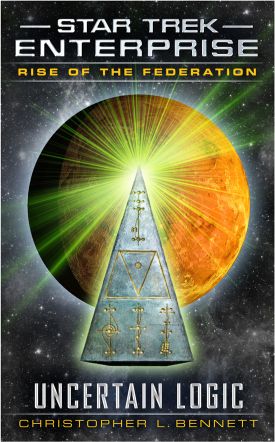
Uncertain Logic

Star Trek Enterprise, Rise of the Federation:   Uncertain Logic
© 2015  Christopher L. Bennett
401 pages

uncertainlogic

Okay, reader. Have a seat. This book is a bit busy.   Let’s begin with the Starship Endeavour‘s investigation of several automated stations that rely on captured organics for their processing power.  Away from the frontier, Vulcan is being unsettled by evidence that the document under-girding their entire society,  the Kir’Shara, has either been stolen and replaced by a fraud, or was a fraud to begin with.  Admiral Archer, already facing rumors that he’s about to be promoted to Commander in Chief of Starfleet,  is now called into court to  offer testimony on his original discovery of the document.    And then there’s the Deltans, everyone’s favorite race of lusty bald coeds. The Orions have caught wind of their sexiness, and desire to crush the competition.  Oh! And Trip is taking a break from his Secret Agent Man business to be a chief engineer again, because he’s needed for the investigation of the automatics  — who,  Endeavor discovers, have overtaken entire planets. Oh, oh,  and do you remember that Methuselah fellow from “Requiem for Methuselah”? ….yeah, he’s here, too.

That’s a lot to take in in one novel, but Bennett  is an old hand, and the stories running together here were never overwhelming or confusing.  While I was fairly by the diplomatic goings on of the last novel, this one has so much variety it would have been hard to strike out.  I’m usually impressed by Bennett as an author, and here is no exception, despite the fact that the plot is more politics and action than science.   A solid portion of the book involves Vulcans’ dispute over their future — over the meaning of Surak’s teachings,  and how Vulcan political society should orient itself. Bennett does a excellent job of making  the antagonists credible,  grounding their arguments in interpretations of Surak’s teachings. (At least, until we find out that the dissidents are being manipulated by an another power altogether.)  The investigation into the “Ware”, as the automatics come to be know, is equally interesting —  mechanical civilizations are hard to come by in the Trek verse, the closest thing to them being the Borg, and they were steadily made less aliens as they were used. (Oh, for the Borg of “Q Who“, who were only interested in technology….) The ongoing character dramas are also winsome — especially Travis Mayweather’s difficulty in accepting that not only is Trip alive, but that he’s been living a lie for well over five years, working for some section of Starfleet Intelligence.

Uncertain Logic is a solid read all around, with a variety of content, and and a very PrimeTrek-esque ending,  complete with a speech by a Cardassian exile who warns Vulcan not to make the same mistakes his own planet did.   This was a welcome way to scrub the bitterness of ST Picard away.


As usual, Bennett provides annotations for the book at his website, Written Worlds.


Posted in Reviews | Tagged , , , | 6 Comments

Picard: Last Best Hope

ST Picard: Last Best Hope
© 2020 Una McCormack
335 pages

picard

I bought this on the strength of Una McCormack, nothing else. She’s contributed ably to the Treklit universe, delivering several superb novels. Even with her talents, however, there is only so much polishing one can do with such a turd of a premise.

ST-P ‘builds’ off the plot of Star Trek 2009: the Romulan star is about to go supernova. While in that film Nero’s rage against Starfleet was fueled by their “doing nothing” to help the Romulan people, here Captain Picard leads a charge to turn Starfleet into one massive service fleet for Romulan refugees. That comes at a cost: Starfleet’s mission is abandoned, its research and development is re-oriented for building and equipping fleets of transport ships, and its minor worlds are told to keep a stiff upper lip and help the Federation see this mission through. The Romulans, for their part, are not receptive of Federation help, and even once they’ve accepted the need for it, they continue to impede Federation efforts for the sake of saving face. Eventually something goes catastrophically wrong.   Last Best Hope is thus a prologue of sorts for Star Trek: Picard.

As stupid as I find the entire storyline of Star Trek 2009, I figured in the hands of a Treklit author, it might be redeemed. And it was, to a degree — there’s a lot to appreciate about the story as it develops here, in pitting Picard’s moral certitude against Starfleet pragmatism, in seeing Federation relief workers try to find a way to reach the suspicious Romulans. And there are fun moments, nice bits of dialogue. But LBH is …disconnected from onscreen Star Trek. Why is the Star Empire not making its own efforts in conjunction with Starfleet? It has considerable resources, enough to compete with both Starfleet and the Klingons, and enough to make it a significant factor in the Dominion War. Was the Empire weakened by the effects of Nemesis? We have no idea: despite the entire senate being wiped out, the only references to Nemesis all concern non-Romulan factors. There are no familiar faces among the Romulans, and the only meager connection to the Trek universe as a whole is the inclusion of Bruce Maddox.

Making matter worse is the fact that most of the characters here don’t seem like they belong in the Star Trek universe. They’re cynical, vulgar people, dropping expletives as though they were on The Sopranoes. Call me a snob, but Star Trek to me has always reminded me of the best in humanity; it was utterly urbane. Even during crises, characters acted with dignity, uttering phrases like “My god, Bones, what have I done?” These characters just swear like longshoremen, and it grows worse and worse as the novel progresses. At one point I’m fairly sure the F-s per minute outpaced Goodfellas. It’s in keeping with the Picard show,  unfortunately, and that combination of despair and vulgarity is the reason I stopped watching Picard to begin with.

It pains me to one-star a Trek book, especially by an author whose work I’ve enjoyed mightily in the past, but there’s only so much an author can do with a franchise whose storytelling now resembles The Avengers more than it does classic Trek.

Posted in Reviews | Tagged , , | 2 Comments

Reads to Reels: Er Ist Wieder Da

eiderdamovie

So there I was, innocently looking to see if Netflix carried  older WW2 films like 36 Hours,   when I spotted Hitler. “Look who’s back?” I said. “Oh dear.”  I’d previously watched The Death of Stalin (Jason Isaacs is a ball as Zhukov)  and thought this might be something similar, a kind of lampooning of various Nazis. It…wasn’t.   For those who haven’t seen any reviews of the book,  its premise is simple: Hitler inexplicably appears in modern-day Berlin,  and after stumbling around in confusion he comes to grips with his situation,  realizes that people are the same as they ever have been, and becomes a sensationally popular social media star. The book is incredibly amusing, despite its being narrated by an interpretation of Hitler,  but I wasn’ t sure what its attraction would be for those not conversant with Germany’s domestic issues. The film is much different, with general appeal. It’s in the same dark comedy genre,  but its ending is far more serious.

The film is a richer story all around, with characters other than Hitler getting fleshed out, some getting their own arcs; this proves especially important for one elderly character.  Despite not being able to  bombard the reader with puns, the movie manages to be similarly amusing: when Hitler is taught to use a computer and prompted to search, in Google, for anything he’s interested in, he promptly types in “WORLD DOMINATION”.  The film also mixes in real scenes of Hitler interacting with people on the streets — and while some are disgusted, many others are amused and drawn to him —  seeing in him, perhaps, a broadside against censorship, or more darkly a voice for their own contempt of others.

Although there are plenty of laughs to be had,   the movie is more serious under the hood. Hitler’s criticisms of the world, for instance, are not simply racist tirades. In one scene, he is given a bunch of anti-immigrant jokes by the media to tell, but he ignores them —  choosing instead  to confront the stupefying  effects of television,  deadening people to the poverty and unemployment around them.  “It is 8:45 P.M,” he says, “”And broadcasting is returning fire.”  But  Hitler is Hitler, not a social critic in costume, and this is made clear by another scene. Introduced early in the film as suffering from dementia,  one character’s grandmother sits in her own world — until  Hitler attends a dinner where she is present to celebrate the media company’s success, and the little girl within  the grandmother recognizes the man who  instigated the deaths of her entire family.  Her sudden impassioned rebuke of him, puts those who find the ‘comedian’ amusing and useful — including the viewer —  into an uncomfortable spot.  Ultimately, the filmmaker begins to realize the truth, and confronts Hitler….but the ending has a twist which  I don’t want to spoil.

What I can share, perhaps, is one of Hitler’s final lines. “You can’t get rid of me,”  he says, staring at Berlin beneath his feet. “I’m part of you — of every one of you.”      For Germans this line may simply mean that Hitler is part of their past, and no amount of denazification will remove him; no amount of rules censoring discussion will make him a nonentity.  For me, though, having read The Gulag Archipelago, the line resonated strongly with me, given Solzhenitsyn’s observation that the line between good and evil divides each of our hearts. We all have the germ of a monster inside, one that might sprout if fed. Of late I’ve been investigating Timothy McVeigh and Ted Kaczynski,   and their lives  reinforce the lesson.  Neither was  an irredeemable sociopath,  but they were warped by experiences which they lacked the inner strength or the outside help to overcome.  There is no one righteous; not one.   Less philosophically,   the film’s footage of Vermes-Hitler’s interactions with real people is disturbing, but, I don’t know how representative the footage is:  it could be easily edited to show more positive reactions on the whole than there were, much like late-night hosts on the idiot box do those “man in the street” sketches so that their viewers can get their jollies feeling superior to the rubes.  In this case the viewers would be basking in their moral superiority rather than their command of trivia.

This is, in short, a film which is entertaining, disturbing, and thought-provoking. Like Her,  I find myself re-watching it,  considering its issues despite the discomfort they provoke.  We will never be shed of violence or leaders who promote it,  and we should be ever on our guard against supporting it  — especially when we think our cause is just. Man never does more evil or mischief than when he thinks he is in the right.  This is a lesson demonstrable not just by history’s wars, but our own burning streets.


Posted in Reviews | Tagged , , | Leave a comment

Er Ist Wieder Da

Er Ist Wieder Da  |  Look Who’s Back!
© 2011 Timur Vermes
401 pages

widerda

“Herr Hitler … I’m calling to ask whether you’d like to write a book?”
“I already have,” I said. “Two, in fact.”

Hitler’s back, and boy is he popular on YouTube. Look Who’s Back!, as translated into English,  opens with an extraordinary premise: Adolf Hitler,  who for the west is the Face of Evil,  has found himself….unexpectedly alive. One moment he was in the Fuhrerbunker,   conducting the last-ditch defense of Berlin against an even more murderous dictator than himself, and the next…he was lying in the grass in the middle of Berlin,  nearly seventy years later.  Mistaken for a street performer using a controversial appearance to speak out against various social issues, and snatched up by a media company, Vermes-Hitler roars again to national prominence…this time, through social media.   So begins a dark comedy with a serious point.

I encountered this story through its superior movie dramatization, and found it amusing and provocative. Vermes-Hitler is an outsider, trying to understand the world around him, with varying results. Everyone believes he’s a comedian, and that his constant questions about the world around him, or his pointed opinions about them, are part of his act. He’s received with a mix of discomfort and delight, sometimes simultaneously. As one flirty barfly comments, “You may be awful, but at least you’re not boring.”  Traveling throughout the country and speaking with both the poor and influential, he builds an enormous following through his sharp and forceful commentary on everything from Turkish immigrants to the dangers of vehicular cellphone use.   Between a practiced stage presence and personal charisma, Vermes-Hitler overwhelms even those who find him patently offensive. The people are his piano, he says; and he is their Mozart.

Having a version of Hitler in my head while reading this was a disconcerting experience,  but Vermes’ frequent use of Hitler as a comic character eases that quite a bit. He’s not sympathetic, of course; even if  the reader finds unexpected common ground with his comments on the impotence of Germany’s present politicians, or the need for this economic reform, or for more conservation, etc,   Vermes-Hitler frequently reminds the reader of his nature by making mental notes to have this-or-that person thrown into the prisons once he’s rebuilt the movement and reclaimed his role as leader of the “Volk”.   Shock and laughs have an odd dance in this book.   In addition to Hitler’s use of Cockney rhyming slang, there are puns and jokes for those who know German, or German history: a frustrated secretary suggests her new boss get a cellphone; they’re “handy“, she says.  Hitler asks to see a mirror and is handed Der Spiegel, and refers off-hand to ‘my struggle in Munich‘.    The history in-jokes go beyond puns, as when Hitler finds the thought of his old PPK pistol to give him a headache.

What is the point of Er Ist Wieder Da?     I assume it gives voice to frustrations in Germany over various domestic issues (Germany’s milkcow role in the EU,  immigration,  environmental concerns, etc),   but what about non-Germans?   In reading this one can certainly appreciate why a creature like Vermes-Hitler would have made himself popular;  he is forceful and charming at the same time, speaking   his mind with quick clarity and never prevaricating.   The movie certainly has a powerful message for all viewers , but I’ll save that for the Reads to Reels followup.  At most we can say  it offers an imagined glimpse into why Germans found Hitler compelling, and reminds us that many of the issues and frustrations are still alive today, and ripe for an opportunist to build on.  The book is prescient, given the surge in populist parties in Europe following the migrant crisis, and  the appearance in the US of a forceful politician who achieved fame through provocative remarks and populist appeal.

Although Er Ist Wieder Da‘s story is  weaker than anticipated, if you’ve seen the movie which utterly eclipses it,   experiencing Vermes-Hitler’s internal narrative adds to the cinematic experience.  The book is entertaining and laudably daring, especially in an age in which so little can said without sending the bobble-heads on Twitter into an apoplectic rage.  In reading, though, I can only compare it against the movie which so succeeded it.

Some highlights:

To put it another way, conditions were absolutely perfect for me. So perfect that I resolved at once to examine the international situation in greater detail. Unfortunately I was detained from my research by an urgent communication. Someone with whom I was unacquainted had turned to me with a military problem, and as I was currently without a state to govern I decided to lend my comrade my support. Thus I spent the following three and a half hours engaged in a naval exercise by the name of “Minesweeper”.

I moved forward and readied myself to speak, but then merely crossed my arms – at a stroke the noise level dropped further by one hundred times, one thousand times even. Out of the corner of my eye I could see Gagmez the dilettante starting to sweat as he watched apparently nothing happening. I realised straight away that this man feared silence, and knew nothing of its power. His eyebrows contorted into a grimace, as if I had forgotten my script. An assistant tried to give me a sign, tapping furiously on her wristwatch. I prolonged the silence even further by slowly raising my head. The tension in the room was palpable, as was Gagmez’s anxiety. I enjoyed it. I let the air flow into my lungs, straightened up and broke the silence with a barely audible sound. When everyone is listening for cannon fire, a falling pin can suffice.

And much as I appreciate the careful handling of Volk property, I cannot recall large numbers of buildings having been damaged during my time in government, despite the generous use of candles. But I do concede that, from 1943 onwards, the statistics become rather less meaningful given the increasing absence of buildings.




Posted in Reviews | Tagged , , | 1 Comment

Aerial Geology

Aerial Geology: A High Altitude Tour of North America’s Spectacular Volcanoes, Canyons, Glaciers, Lakes, Craters, and Peaks
©
2017 Mary Caperton Morton
308 pages


airgeo

It was love at first sight, me and this book. There  I was, cruising BooksAMillion with coffee in hand, looking for a cute title to take home with me, and from across the way —  Aerial Geology, perched on the shelf.   It’s a guide to one hundred of North America’s most interesting geological spectacles.  In addition to the expected stunners (the Grand Canyon, White Sands, Niagara Falls),  other features that people may not expect, like the Mississippi delta and the Oregon coast,  also appear.    The book’s large size allows for generous spreads, and the visual information varies:  shots of the feature from multiple perspectives, yes, but there are also generated graphics to illustrate the processes at work.   Each feature’s formation is explained — or speculated on, in the case of those where there’s still debate   — and the author also includes suggestions for the best way to see them from the air. Most can be viewed from commercial liners, but a few in Alaska and the southwest are so remote that a plane would need to be chartered. Some locales, like Shiprock are strictly off-limits for in-person visitation, or highly restricted, like “The Wave” in northern Arizona. Although the writeups aren’t extensive (1-3 pages, depending), they’re most informative.   This book is definitely a joy to view and read, and one to return to:  despite my current efforts to greatly reduce my physical collection, this one is staying!


Posted in Reviews, science | Tagged , , , | 5 Comments

Top Ten Books I Read and Read Again

Today Top Ten Tuesday is celebrating its tenth birthday. I’ve been participating off and on since a month or so after its inception, and I’ve enjoyed it over the years. Today its host is asking readers to revisit or expand a favored list from the past.  I decided to share books I revisit over and over!

  1. The Black Widowers series, Isaac Asimov.   I’ve mentioned this series numerous times over the years. Imagine being able to join six professional men at the table of a fine restaurant every month,  meet a new guest with an odd story, and then sort through the mystery they present through reason and a good general-knowledge background.  I especially love reading the Widowers stories when I’m forced to eat alone.
    kunstler
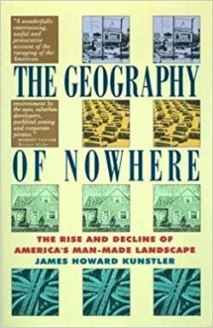
  2. The Geography of Nowhere, Jim Kunstler.   This curiously titled book tackles both culture and land-use policies, then rips off their helmets and drop-kicks them.  It manages to amuse and enrage me simultaneously while explaining a great deal of my own unease with the American landscape.
  3. Foundationor at least, the few few stories in the original Foundation book, the ones that follow Seldon’s persecution by the Empire,  the creation of Foundation at Terminus,  and the early triumphs of Salvor Hardin and the other Mayors over the empire and their neighbors.
  4. Jayber Crow, Wendell Berry.  Jayber Crow is my favorite novel, period,  and it’s one I read and listen to via audiobook form every year. After I read the book  I was lucky enough to spot its audio version on sale for $0.99, and quickly took advantage of it.  (It’s actually on sale for $8 right now from the same source.)
  5. Ready Player One, Ernest Kline.  RPO is unusual in that within three months, I listened to its Audible version (read by Wil Wheaton – incredible), read the real book, and watched the movie based on it.    RPO fits me like a glove.
  6. The Rainmaker, & The Last Juror, John Grisham.  The Rainmaker probably holds the record for “Book I’ve read through most times”.  I’ve completely destroyed my original copy of it, half-destroyed another copy, and now have a hardback that’s a bit more worthy of the constant abuse.  To me, it’s the perfect legal novel, and The Last Juror stands apart — a unique chronicle of life in a small southern town from the sixties to the seventies,  with a legal case and its consequences tying it together.
  7. Harry Potter and the Philosopher’s Stone  /Prisoner of AzkabanI read them, I watch them, I listen to their audiobooks.  They’re less books and more habits!
  8. Stargazer: Gauntlet.   Michael Jan Friedman was my earliest favorite Trek writer (until being supplanted by Christopher L. Bennett and David Mack, Destroyer of Worlds) , and the first two Stargazer books were much of the reason why.  The first one, especially:  the young captain is tasked with hunting a pirate, and he and his crew have to come up with all kinds of creative ways to track the pirate and evade his traps in a nebula. The ending is a big twist, too.  My battered copies of these books bear witness to how much I loved them in high school and beyond.
  9. The Airman’s War, Albert Marrin.   This book and Marrin’s other WW2 titles (Overlord and Victory in the Pacific, I think) blur together for me,  but The Airman’s War is the volume I remember and dote on the most. It gave me an obsession for World War 2;  an irrational fondness for P-51 Mustangs and B-17 Bombers, not to mention a sober appreciation for how many lives were lost flying daylight raids over Festung Europa.   Both high school and college saw me writing papers on the air wars of WW1 and WW2,  and that passion owed squarely to Marrin.
  10. The Many Loves of Dobie Gillis, Max Shulman. Before I met P.G. Wodehouse, I knew Max Shulman. His writing was dirtier, his language not nearly as fun  — but the absurdist humor is similar in both.    I’ve been reading and re-reading this collection of college stories since 2003.


Posted in General | 9 Comments

Seven of Nine

Star Trek Voyager: Seven of Nine
© 1998 Christie Golden
233 pages

resistanceisfutile

Sing a song of sixpence,
A pocket full of rye
Four and twenty blackbirds,
Baked into a pie

It began with a bird. A single black bird — a raven? A crow?  — perched in an alien marketplace, its eyes boring into Seven’s own.  Then the memories, the tide of sensations from a being who was not heard, overwhelming her. It was only the beginning for poor Seven, who found herself losing her mind even as her skills were desperately needed aboard Voyager.  Making its way through a vast empire fond of red tape, Voyager has become the target of a vicious insectoid species, intent on destroying it for reasons unknown. At risk are not only Voyager and her crew, but also a meager band of refugees from a planet which has been destroyed by war and plague.  They’re such nice people, so mild and pleasant.

Seven of Nine, so succinctly titled,   can’t be dismissed like so many of the numbered novels.  Although it carries some of the usual baggage — one-off aliens who we’ll never see again,  and language so vanilla it makes B’Elenna Torres say things like “hurts like the dickens” —    there’s more here than meets the eye.  Golden’s writing chops were enough to let her write the first two novels in the Voyager Relaunch, and there are little hints here as to why. Beyond the awkward language, which may have been imposed by Pocketbooks,  characterization is solid;  Seven relates to people in a unique way,  and Golden has a good grasp on that. There are dashes of humor, even though most of the story is full of bewilderment and fear as Voyager fights for its life and Seven struggles for her mind.   Golden not only introduces a premise that will later be explored in a full episode of Voyager (Seven being exposed to  and overcome bythe memories of those she’s assimilated — see “Infinite Regress“), but sheds a little light into one of the Borg’s more unique abilities.

Although there were warts and weaknesses, Seven of Nine still recommends itself to those who find its titular character as compelling as I do.

Some Kindle highlights:


“This is not a place for—for popular songs,” she said in a disapproving tone. The computer cheerfully belted out a song in which all the little birds went tweet, tweet, tweet. Seven found it annoying in a manner she could not articulate.

“Yes, it is I.” Peculiar word, that. One letter in the English alphabet, and yet it meant so much—more than her mind had even been truly able to grasp, yet. I. Me. Myself. The question of identity, of individuality, of a singular, unique entity dreadfully alone in the universe.

“Captain,” said the Doctor in a voice she couldn’t interpret, “I would like to introduce you to Annika Hansen.”

Disaster had not happened, and she, Seven of Nine, was in control. It felt … good.

“A Warm,” it said, its voice translated as harsh and mechanical. “A Borg warm. Better even. We will dismember and devour you, Warm, when our commander gives us the word.” “You are incorrect,” said Seven calmly. She stepped forward, lifting the phaser. She knew exactly where to place it, between the compound eyes, and fired before the Tuktak even knew what had hit it.

Posted in Reviews | Tagged , | 4 Comments

Scams, beer, and the Constitution

This past week I’ve read a few books which haven’t gotten full reviews, but I wanted to mention them anyway:.

scam

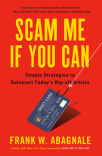
Scam Me if You Can, Frank Abanagle Jr. If that name sounds familiar to you, Abnagle’s youthful feats in fraud and bamboozling earned him a brief prison sentence, a movie based on his life called Catch Me if You Can, and a new vocation as a security consultant.  In that last light he writes this guide in conjunction with the AARP. While it’s targeted toward seniors who have to worry about investment scams and the like, there’s also a lot of general advice on protecting your digital information online, and not being roped into rackets run by scammers pretending to be IRS agents.

booze

Next up, The United States of Beer. It’s…an entertaining if light survey of beer’s history in America, beginning with the Anglo-Saxons bringing it with them from the continent. Beer’s role has fluctuated enormously with politics, long before prohibition:     it was touted as an American drink against British-imported rum and other spirits, at least until being undermined by an even MORE American drink:  corn whiskey. I enjoyed it well enough, but it wasn’t altogether compelling.  (It probably didn’t help that I’m not a beer enthusiast, preferring more ardent spirits.)

fpimdersgiode

Last was Brion McClanahan’s Founders Guide to the US Constitution, a review of the Constitutions meaning as ratified. McClanahan examines the arguments within the convention, and those made in the public forum as the Constitution was being debated, to determine what constitution people thought they were getting. I was going to do a full review but writing about the excesses of the US government does things to my blood pressure. Long story short:  strong Congress, much smaller president, and supreme court; much larger role for the States as States, etc. As McClanahan concludes, if today we lived under the Constitution as ratified, we’d have little reason to fear the government.    Instead — –

*deep breath*

Well, that’s it for the quickies.    Later this week…the Navajo in WW2,   geology by airplane, annnd maybe international crime.


Posted in history, Reviews | Tagged , , , , | 1 Comment