American Illiad | Reluctant Voices

As part of my attempts to scale Mount TBR,  I read two smaller works on the Civil War this week. They may be later joined by This Republic of Suffering,  a survey of the war’s unprecedented death toll and its postwar consequences.

 

americanilliad

American Iliad was one of the texts assigned to my US History freshman course, though not one I purchased — my copy of this is a library discard.   Having encountered it, I can see why my professor assigned it; it’s an extremely readable survey of the war, which manages to be concise despite including sections on the war’s background, the political & social scene of the South & Union during the war,  and so on.   I was pleasantly surprised by both its impartiality and the fact that it still managed (despite its brevity) to introduce new-to-me material —  on the abusive way freedmen were treated, for instance, sometimes being press-ganged into Union army units.
old

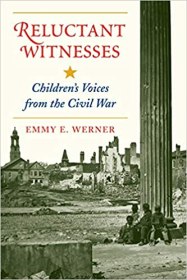
Reluctant Voices was another library discard, and reviews the American Civil War experience as lived through various minors who were exposed to its horrors. These include boy soldiers — both children serving as drummer boys, or young teenagers who fudged their ages to take up arms —  as well as numerous civilians.   Although the titular focus of the book was of children’s reactions to what they saw unfolding around them, for the most part I would have been hard-pressed to separate this from a narrative history of the war from civilian perspectives —  in part, I suspect, because 19th century adolescents were forced by the circumstances of their society to mature far more quickly than their counterparts of today.  I’m glad I snatched this title up on its way out of the library, as in addition to the narrative which follows the general course of the war, there are special sections on the siege of Vicksburg, and the grisly spectacle of Andersonville:  although I’m familiar with its sad story, I had no idea there were such young soldiers contained within its death-filled walls.  The work is a valuable read for readers who want to experience something of the home front, made especially poignant through the letters of children who dearly missed their fathers and brothers,  and as a reminder that the hell unleashed by war often visits those who had no say about being involved — like  the children who were killed during the siege of Vicksburg, for instance.

More to come on the war….I paid a visit to Shiloh over the weekend, touring its battlefield, and I took with me Winston Groom’s Shiloh 1862 to help understand the ground before me.

Posted in history, Reviews | Tagged , | 5 Comments

Selections from “How Dante Can Save Your Life”

chartres
Review of Book

Great art speaks with wisdom and authority to what is eternal in the human condition.

The presence of God radiated from the Chartres cathedral so powerfully that it even pierced the dark wood into which I had retreated to escape my father, whom I loved and hated and could not quit. I knew God was there; I had experienced him in that old church. As long as I held Chartres in my imagination, there was hope.

There is no exile quite like being a stranger in the midst of your own family.

The spiral design symbolizes how we fall into the depths of sin and how we may ascend out of them. Few of us lose our soul in a single moment. To become captive to sin typically requires slowly circling around vice, descending a bit more each time, barely perceiving our descent, until finally we arrive at the bottom: circling only around ourselves, prisoners to the ego.

Living to serve others is usually a virtue. But if the worth of your life depends on the judgment of others—your parents, your spouse, your children, your employer, anybody—then it becomes a vice. When you cannot live without the approval of others, you grant them power that they do not have a right to have, and may not even want. Worse, you expect more of them than they can give.

Thinking of sin as law-breaking, as many of us do, disguises the way it works on our hearts and minds, and keeps us from dealing with it effectively. Here’s a better model: Think of love as light, and sin as gravity, a force that bends light. The stronger the gravitational field, the farther love will fall from its mark. Hell is a black hole, where the light of love goes to die. Your goal in life: to put as much distance between your heart and the black hole’s deadly gravity field as you can. Passing too close to it will make even your most sincere acts of love land far from their intended destination.

I knew now that we condemn ourselves to misery not so much because of what we hate but because of what we love and the way we love. This gave me a new way to think of sin and brokenness, both in myself and in others.

Whatever idol you worship—and all of us, religious or not, are tempted by idolatry—the ultimate idol you worship is yourself. No discerning reader gets out of Dante’s inferno without having had at least one soul-shaking encounter with their ugliest self.

You start by separating your thoughts and desires from your self. Your thoughts and desires are not the same thing as you and only define you if you let them. Thoughts and desires that assault us and tempt us to do the wrong thing are called, in Greek, logismoi.

“To expect too much is to have a sentimental view of life and this is a softness that ends in bitterness,” Flannery O’Connor wrote.

.

Posted in quotations, Religion and Philosophy | Tagged , , | 4 Comments

How Dante Can Save Your Life

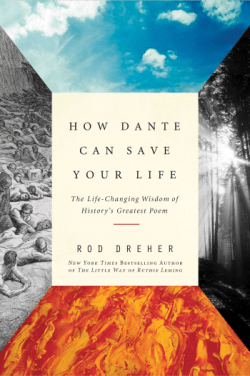
How Dante Can Save Your Life: The Life-Changing Wisdom of History’s Greatest Poem
© 2015 Rod Dreher
322 pages

dante
Selected Quotations

How Dante Can Save Your Life is one man’s account of how that Renaissance poet’s epic  tale of a man who had lost his way helped him survive  the darkest time in his life.  By way of offering thanks, and reflecting on his journey, Dreher guides readers through Dante’s Divine Comedy,   recounting both his and the Commedia’s narrator’s journeys. It’s a profoundly intimate encounter with poetry  that moved me like few other books.

For Dreher, this is an incredibly personal book;  he encountered  the Commedia during an intensely troubled time in his life, and his six-month slow read of the trilogy (Inferno, Purgatorio, Paradiso)  happened in tandem with counseling from his priest and a clinical psychologist.  The story begins with Dreher’s family background — his status as the odd, bookish duck  in a family of  rural traditionalists (“bayou Confucians”) who could not understand young Rod’s  attraction to the big city, his aversion to hunting, and so on.  Torn between love for his folks — especially his father — and their constant rejection of him,  Dreher tried to escape the conflict by moving away.  But when his sibling-rival Ruthie was stricken with lung cancer at age 40,  Dreher was moved by how deeply invested his sister had been in the life of her local community — and inspired by it.  There was meaning to be found in the little way of Ruthie Leming.  But if he’d expected to be welcomed home like the prodigal son,  one who had at last embraced Starhill, he found only pain:  despite actively trying to be involved in the lives of his  sister’s kids, and to reconnect with his parents,   the meaningful connections he longed for remained absent — and he remained the family outsider.  The stress and pain of this triggered his dormant Epstein-Barr syndrome, and for two years he was nearly an invalid.  Enter Dante.

Slowly studying Dante — in conjunction with frequent conversations with a priest and his counselor — granted Dante the vision to understand what had gone wrong in his life.  Traveling through the downward spiral of the Inferno,  sin by sin, Dreher examined his own conscience and found it wanting. He saw himself reflected in the lives of those in the pit, and ultimately realized that he had made his family into the god of his life, expecting more out of those relationships than they could bear. He realized that sin can be found in loving the right things too much, or in  — just as it can be found in loving the wrong things at all.    Ultimately,  although Dreher doesn’t realize his heart’s desire — to suddenly experience the fullness of southern small-town community like Ruthie —   his extensive immersion in Dante and the related spiritual studies finally allowed him to find peace —  and make peace with his father.

For me, Dreher is an incredibly sympathetic figure  — he and I were both the otherworldy freaks in our southern clans, and both tried to come back home only to realize there were some distances that can’t be closed.  Like him, I encountered this book at a time when I needed it, though for different reasons.  I was frequently and deeply moved by Dreher’s writing here, because his relationship with his family is so complicated  — a mutual mix of love and conflict–  and because of the depth of his soul-searching to find some answers.   It’s less a guide to Dante, though, and more of one man sharing his experience with the literature; the parts that spoke most strongly to him were Inferno and Purgatorio.   It’s inspired me to add both of the latter book to my “Classics Club Strikes Back” list, for whenever I do a new CC challenge.

One to remember!


Posted in Religion and Philosophy, Reviews | Tagged , , , , , , , , | 8 Comments

Wisdom Wednesday: Merlin’s Advice

Well, it was bound to happen. I forgot to schedule a Wisdom Wednesday.  I blame  the library’s very odd Monday,  in which we were sent running from the building a half-hour into our workday by noxious fumes coming through the AC system.  On the urging of the fire department, we closed for the day so our HVAC people could replace some part that had gone afoul, and the air could be refreshed.   I couldn’t complain about a day off, but it has disrupted my mental calendar.   This quote comes from Goodreads;  someone sent me a friend request and I discovered this quote in their profile. I must read the sourced book!

koenig

“The best thing for being sad,” replied Merlin, beginning to puff and blow, “is to learn something. That’s the only thing that never fails. You may grow old and trembling in your anatomies, you may lie awake at night listening to the disorder of your veins, you may miss your only love, you may see the world about you devastated by evil lunatics, or know your honour trampled in the sewers of baser minds. There is only one thing for it then — to learn. Learn why the world wags and what wags it. That is the only thing which the mind can never exhaust, never alienate, never be tortured by, never fear or distrust, and never dream of regretting. Learning is the only thing for you. Look what a lot of things there are to learn.”

-T.H. White, The Once and Future King

Posted in quotations | Tagged | 6 Comments

The Left, The Right, and The State

The Left, The Right, and the State
© 2009 Lew Rockwell
556 pages

lew
“Society is held together not by a state but by the cooperative daily actions of its members.”

Who’s up for six hundred pages of essays on politics and economics? I read this over the course of half a year,  owing to its size, its nature as a large set of independent pieces, and  the common tattoo being drummed out throughout the collection.  The book  brings together Rockwell’s views on American politics, from the late eighties through to the 2008 election  with Clinton and George W.’s admins attracting the most content.   Such a massive collection of material defies summation, but I’ll give it the old college try.

Lew Rockwell has been active in political and economic circles at least since the seventies, co-founding the Mises Institute alongside Murray Rothbard, the father of anarcho-capitalism.  I’m familiar with Rockwell through his frequent appearances on the Tom Woods show, and so for the most part there were few surprises here, content-wise. Rockwell is a welcome and consistent voice — if sometimes an overly acidulous one —  haranguing the state for its wars, its abuse of civil liberties, its bullying of its people, its manipulation of the money, etc.   Rockwell is as I mentioned consistent, sometimes astonishingly so:  his essay written on September 12, 2001, was particularly  impressive:   here we were with a massive gaping wound in the American heart, and Rockwell says: stay calm. Don’t let the pain and righteous anger of this time carry us away into making a costly mistake in the middle east. The alterations of the American state after 9/11, its final corruption through the Patriot Act, the explosion of warrant-less surveillance, etc,  were the events that began waking me up to the dangers of the modern state — and Rockwell saw them coming. He  also writes — in 2003 — on the potential for mischief with oil prices because of Bush & Cheney’s interests in the industry.  Not all of the content is political, though; one essay concerns Y2K and the banks, and I found the essays on historic events I remembered from the nineties on to be especially interesting, prompting me to think on how I interpreted those events then and now.

Many of the essays are Rockwell riffing off of contemporary events, or using them to argue a more pressing point. When Clinton complained that his private life was being invaded by the press, quick on the scent of the Lewinsky scandal,  Rockwell chuckles in a fit of schadenfreud and points out the ways that DC has invaded the private lives of everyone.   In another example, he discusses subsidiarity and secession amid the Soviet Union’s breakup, promoting the latter as self-determination. In other sections, he moves away from current-events contemporary to write more generally:  reviewing the works of various economists,or discussing the role of inflation in economic busts, and the perverse effects of war on the economy. By far the weakest section is that on the environment; Rockwell dismisses conservation and hazard containment altogether, regarding progress and industrial  growth as absolute goods.  Although environmentalism and libertarianism are often at loggerheads over the heavy-handed ways that environmental legislation is handled,  there are perfectly plausible arguments to be made for environmental concerns from the libertarian camp. The first time I saw Rockwell in person, for instance, I was attending the 2015 conference of Young Americans for Liberty, and several of the booths selling books outside were from green libertarian groups.  Rockwell’s stance in this is so strident and narrow that it undermines credibility.

Despite this, Rockwell’s collection of writings here  was worth plowing through over the last few months. In the beginning, I  appreciated the view that libertarian-leaning individuals who work with the government to help it function better by introducing some ersatz market measure —  school vouchers, say, or social security privatization — do the cause of liberty a disservice by making it the handmaiden of its enemy. Liberty, he writes early and emphasizes throughout, is not a public policy. It is the end of public policy.  Despite being familiar with and sympathetic to many of Rockwell’s viewpoints, I also delighting finding a lot of content here that challenged me, like Rockwell’s defense of planned obsolescence.  I still don’t like planned obsolescence,   but it’s good to consider the arguments for or against a thing.  The collection could have used some tighter editing,  at least in the beginning.

In the balance, this collection was worth reading for me — but I was trying to coax someone into Liberty’s camp I’d use something less bellicose.  There’s a lot of good content here,   and some lamentable blind spots.


Posted in Politics and Civic Interest, Reviews | Tagged , , , | 6 Comments

Top Ten Tuesday: Books I Loved But Didn’t Review

This week’s TTT …books we read, loved, but didn’t review.

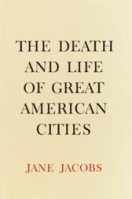
The Death and Life of Great American Cities,   Jane Jacobs. This book  completely revolutionized my worldview before I made halfway through. One day I’ll make some meager attempt at reviewing it, but it won’t be sufficient.

Unnatural Selection: How We are Changing Life, Gene By Gene,  Emily Monosson.  Captivating survey of how nature is adapting to some of humanity’s worst behaviors.  Cautious grounds for optimism that nature will continue to survive despite its badly-behaving tenants.

The Age of Absurdity: Why Modern Life Makes it Hard to be Happy, Michael Foley.  I was introduced to this by Cyberkitten, and read it in 2011 It’s at my bedside. I’ve read it three times over the years and am no closer to finding an approach to reviewing it that I like — and I like the book too much to simply dismiss it with an also-read mention.

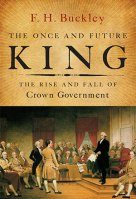
The Once and Future King, F.H. Buckley. On the rebirth of one-man rule in the United States,  the United Kingdom,  and the commonwealth countries. Fascinating comparative legal review. I have a review of it long-written, but I keep meaning to re-read the book to fine-tune my thoughts about it.

braveneworld

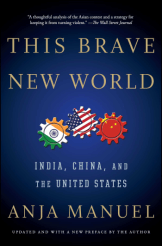
Brave New World: India, China, and the United States,  Anja Manuel. I often cite it but have yet to re-read it for a review. Manuel evaluates the progress and growing influence of India and China in the 21st century, and argues that the US should chart a course that favors neither power over the other.

ordnung

The Roots of American Order, Russell Kirk. My first encounter with Kirk was his The Conservative Mind,   which I found thought provoking —  I’ve since read several of Kirk’s work, Order among them, but this is the most memorable. Kirk examines the philosophical and moral underpinnings of American governance; Judaism and Stoicism were two of the sources  considered, as I remember.

wayofmen

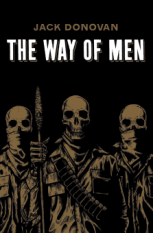
The Way of Men, Jack Donovan.   Imagine if Tyler Durden wrote a book …

omni

The Evolution of Everything, Matt Ridley.  On emergent order.  It’s a deep-topic, and I don’t know that I could do it justice.

market

The Mind of the Market, Michael Shermer. I read this in 2018, but I must have been distracted — I didn’t even remember to add it to that year’s “What I Read” list!

brain

The Tell Tale Brain, V.S. Ramachandran.  Ramachandran’s Phantoms in the Brain (read 2006) was one of the first science books to blow my mind, and I was eager to read this one. Despite finishing it soon after release, though, I never got around to reviewing it!

There is hope for these books to be reviewed: over the years, Happy City, Surprised by Joy, and The Cult of the Presidency are all titles which languished unreviewed for years until I did right by them.

Posted in Reviews | 17 Comments

COVID has infected my gaming

Between the corona chill and the sweltering heat outside, I haven’t been doing much out-and-abouting with friends  —  I had a close circle who I was seeing every weekend, but  now it’s more of a every two-weeks kind of thing because people go in and out of isolation.  So…I turn to games.

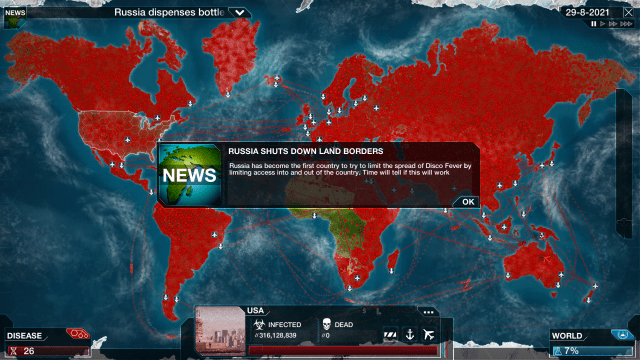
A few weeks back I picked up Plague, Inc which allows players to create a disease (beginning with the basic bacteria/viral/parasite variants, before getting into more esoteric ones like prions, and then fanciful ones like alien mind-worms and a zombie plague),  and  nurture it to destroy humanity.  The player chooses a country for Patient Zero, and then it spreads based on various factors —   traffic in and out of the country, climate, etc.  As the plague spreads,  it racks up DNA points which can be spent on new abilities. What I most appreciate about this game is that every disease has a different profile and so requires a different strategy.  I’ve yet to beat all the levels: the Zombie scenario thwarts me again and again, although I’ve found an approach that should work with a little RNG luck.  The zombie level is an odd duck, because in addition to the usual disease stuff, the player is also a zombie general, continually resurrecting bodies from the field and sending them forth to invade healthy countries. It has all the frenzy of a game of Red Alert 2!

killjoys

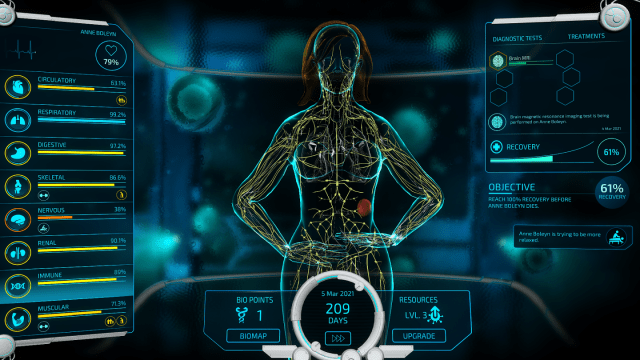
More recently, tonight, I started playing Bio, Inc. This game allows the player to choose Life or Death;   in the Life campaign, they are a doctor analyzing a patient’s symptoms,  running tests based on given symptoms, then treating diseases if the tests establish the need. They can also urge the patient to adopt better lifestyle choices, like exercise or mindfulness practices.   In the Death campaign, they play as…Satan or something, trying to kill the same poor patient by methodically targeting his or her systems one by one.   I love the puzzle aspect of the game, and the graphics are quite well done — the beating heart, the pulsating lungs, etc.  What I don’t like is the..game-y ness of it.  If the player choses Life, it doesn’t matter if they figure out what the disease is quickly, because there’s an AI playing “Death”, and they will continue  inflicting new ones on the patient until a timer runs out.  This may not be true in all game modes, though.

anneyouwench

Anne Boleyn was a mess here. She turned out to be  an anorexic with ovarian cancer, and she didn’t help matters while picking up a smoking habit under treatment.

homer

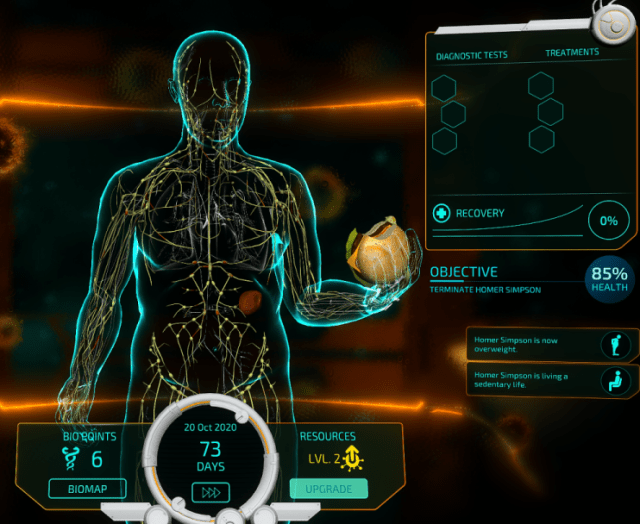
Testing out the Death campaign.  I slowly undermined Homer’s health with insomnia, kidney issues, diabetes,  and a few minor sundries. It took a long time for him to go to the doctor, and by that time I had enough of this game’s equivalent of DNA points to give him both lung cancer and leukemia while the doctor was busy with the other stuff.


Posted in General | Tagged , | 2 Comments

Progress report of sorts

A few weeks back, I read an article from Leo Babauta, of Zen Habits,  which  offered readers both an observation and a challenge:

You can go to the latest memes and viral videos (which are fun!) … or you can find a text and study it.

You can get caught up in frustration with how others are acting during this crisis … or you can practice opening in compassion, with compassion meditations.

This is a great opportunity to deepen into mindfulness and practice, to learn to face head-on the uncertainty and fears that arise in us, and to connect to the humanity going through this rather than disconnect from them.

We’re all monastics now — how will we use this time?

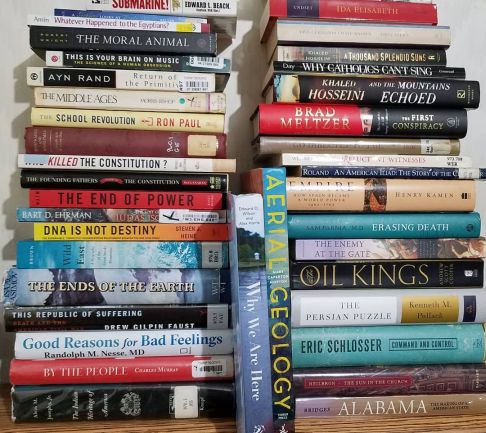
I haven’t had the same corona experience as most;  our library team has shrunk over the corona period because of retirements and the like,   so those who remain are working more hours and covering more responsibilities.  Nevertheless, I’ve been trying to use my off time productively, in a mindful way — if only to keep my mind from dwelling on the problems of corona (isolation, loneliness,  restlessness, etc).     Following my morning coffee, on Saturdays I usually give my living space a good shellacking,  working to reduce books, clothes, and physical media.  One of my smaller campaigns within the broader minimizing mission is to destroy Mount Doom — as I affectionately call the towering mass of books in my bedroom.

soprepared
Shot taken in April. Some of these titles have since been read (or in the case of Submarine! & The Middle Ages, donated)

At the end of July I drew up a little schedule called “Scaling Mt. Doom”,  with its objective being to read at least two TBR books per month. As I did with the classics club (speaking of, I really should get to Brothers K), I’ve been trying to pair them based on some shared attribute.   August’s scheduled reads are The Architecture of Happiness and How Dante Can Save Your Life, both being about meaning;  September will feature two books related to education, October has two titles of German history,  etc.  It’s still a work in progress because I haven’t determined my Nov and Dec reads, though I think The Ends of the Earth, with its focus on the North and South poles, would be an amusing one for December.

Away from Mount Doom,  my biggest literary goal for this year was to read 20 science books, which I  accomplished much earlier than expected. I’m still one book shy for my science survey, though I have a title in mind for it.  I wondered in June if I might make 30 science books this year, but Mt. Doom is a more important goal.

Here’s hoping we start escaping this corona business before 2021 starts.  Losing spring and summer to it is bad enough, but there will be riots in the South if SEC football is cancelled…and I don’t want to think about Christmas’ prospects.


Posted in General | 4 Comments

The Architecture of Happiness

The Architecture of Happiness
© 2006 Alain de Botton
280 pages

de botton

I never thought much about the meaning of architecture until attending a lecture by James Howard Kunstler, given at my university in autumn 2008, entitled “Peak Oil and the Suburban Fiasco”, or something like that.  In that lecture, and in his book The Geography of Nowhere which I later read,  Kunstler stressed among other things the importance of a sense of place, and the role our building and street design can play on nor only our own sense of well-being, but our national fate:

kunstler

A land full of places that are not worth caring about will soon be a nation and a way of life that is not worth defending,


In my review of The Geography of Nowhere, I commented that it had me ‘itching’ to read The Architecture of Happiness.  I knew de Botton from The Consolations of Philosophy, one of my very favorite books,   and I’ve read much of him since. He is an extremely art-ful writer,   who can make the mundane seem utterly captivating — who can throw,  with pen and ink, new light onto an object and make it seem sublime.  I expected great things of The Architecture of Happiness and was not disappointed in the author’s usual thoughtfulness, his explorations  into the human condition and illuminated by the buildings around us.

He opens with an apology for the subject,  because who cares about architecture?  That question is a new one, for  the built environment  was a subject of considerable importance to seemingly every age but our own. The Greeks, for instance, regarded its study in equal importance to politics and personal virtue.   The Christian and Islamic worlds both recognized the importance of both architecture and public design  in making the material world reflect the ethereal —  they knew how to use buildings to draw the mind to God and elevate the spirit. Somehow, though, in the last century we have become self-conscious about making things beautiful, or indeed — even caring if they are.   The Architecture of Happiness therefore addresses the role of beauty in human welfare, not merely how beauty is expressed in our constructs.

de Botton muses that perhaps not everyone shares the same levels of sensitivity to beauty. Perhaps we need to have entered into ‘dialogue with pain’  to realize its value — to be able to realize that a beautiful thing hints at happiness which is the exception to our experience.  Our personal interactions with a building, a room, or an object frequently appear here. In the beginning, de Botton observes that a messy environment can coagulate our loose misgivings about our own lives, while a sun-lit one set with honey-colored tiles encourages the hope within us.  He wonders later on if we appreciate buildings not for the shared values they express, but the values we wish to possess — those we sense to be lacking in ourselves.  Perhaps that’s rugged simplicity in one person, or a touch of refined elegance in another.  There’s no simple answer,  as we all seem to be walking a tightrope between chaos and order. A building can reflect this: we want too much of neither one.  A building like the Palace of the Doges works because it offers both symmetrical order and variety: it is neither chaotic nor sterile.

There’s more to the book — including an interesting discussion of Japanese vs western  aesthetic sensibilities — but I’m still chewing over much it. That’s one of the reasons I love de Botton: since my first encounter with him, he’s become a permanent resident in my head, a voice I enjoy returning to again and again. This work is utterly consistent with his usual thoughtfulness,  his attention to detail, and artful integration of varying media:  this text’s discussion is always accompanied photos that  add the finishing touch to the point at hand.   I’m glad I finally — after ten years! – -decided to sit with it.

Below follows my favorite quotation from all the various de Botton I’ve read,  and I think it summarizes how I feel about his books & authorial voice:

I explained — with the excessive exposition of a man spending a lonely week at the airport — that I was looking for the sort of books in which a genial voice expresses emotions that the reader has long felt but never before really understood; those that convey the secret, everyday things that society at large prefers to leave unsaid; those that make one feel somehow less alone and strange.
Manishankar wondered if I might like a magazine instead.”

Posted in Reviews | Tagged , , | 5 Comments

Wisdom Wednesday: Perspective

This week, I’m bringing together four different quotes, all with a similar perspective —   one on the value of books to the pursuit of wisdom.

perspective

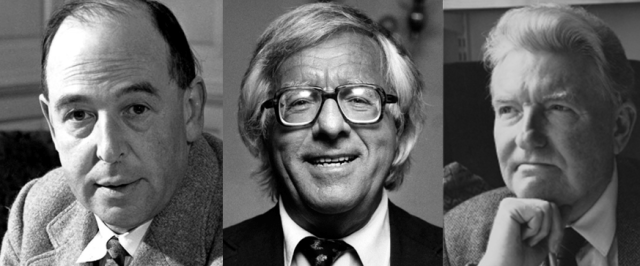
“Every age has its own outlook. It is specially good at seeing certain truths and specially liable to make certain mistakes. We all, therefore, need the books that will correct the characteristic mistake of our own period. And that means the old books.”  – C.S. Lewis

“The books are to remind us what asses and fools we are. They’re Caesar’s praetorian guard, whispering as the parade roars down the avenue, ‘Remember Caesar, thou art mortal’. Most of us can’t rush around, talking to everyone, know all the cities of the world, we haven’t time, money, or that many friends. The things you’re looking for, Montag, are in the world, but the only way the average chap will ever see ninety-nine percent of them is in a book. Don’t ask for guarantees. And don’t look to be saved in any one thing, person, machine, or library. Do your own bit of saving, and if you drown, at least die knowing you were headed for shore.”  – Ray Bradbury, Fahrenheit 451

“The process of living seems to consist of coming to realize truths so ancient and simple that, if stated, they sound like barren platitudes. They cannot sound otherwise to those who have not had the relevant experience; that is why there is no teaching of such truths possible and every generation starts from scratch.” – C.S. Lewis

“The study of history is a powerful antidote to contemporary arrogance. It is humbling to discover how many of our glib assumptions, which seem to us novel and plausible, have been tested before, not once but many times and in innumerable guises; and discovered to be, at great human cost, wholly false.” – Paul Johnson


Posted in quotations | Tagged | 11 Comments