Here we are in that sweet, weird spot between Christmas holidays and New Year’s Eve. The end is near for 2020, not that the Cursed Year will stop giving. I’m sure corona will follow us into 2021, though — knock on wood — surely it won’t mess the entire year up as it did 2020. I’ve taken the last few days ‘off’, book & blogging wise, and have focused instead on hiking, spending time with family, and getting the dashcam I bought last year working. Check out my little Christmas eve drive in town!
I have thoughtfully muted my singing and included instead some royalty free music from Youtube to play. (Although if you want to hear me sing, there is a recording on youtube of me doing “Good King Wenceslas”….)
The final reads for 2020 will be The Ends of the Earth by Isaac Asimov (almost done), and Mama’s Last Hug, on animal emotions. That one is very good but my progress is continually slowed by all the holiday goings-on. There’s five days yet, so I may knock out The Awakening of Miss Prim or A Time for Mercy before January 1st arrives — but I’m plotting more hiking this weekend, so who knows. Speaking of January 1st, there’s a post scheduled for that day: the unveiling of the Classics Club Strikes Back, the next set of fifty classics I’ll be working through for the next 3-5 years.
Next year’s plans include the Classics Cub Strikes Back, the final conquest of Mount Doom, and (hopefully) more content with an Alabama & southern lit focus. I anticipate a strong 2021 for both historical fiction and science, and am hoping to start including the odd bit of video content with a history focus. Last year I began thinking about ways to share information about interesting people and places in my area that I’ve encountered, and a lot of camera time this year (thanks to livestream activities) has made me a little more comfortable moving beyond text.
Whoever and whereever you are, a very Merry Christmas to you and yours. May the day be filled with good food, good times with people you love, and all the joy in the world.
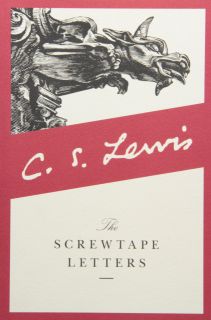
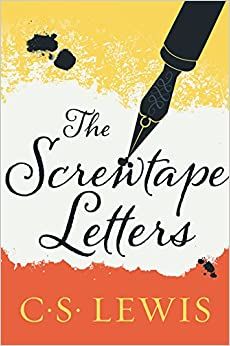
In the 1940s, as war waged in Europe, another war raged in England: a struggle for one man’s soul. Advised by his uncle Screwtape, a young demon faced with a new convert to Christianity must work overtime to stifle his target’s growing inner life. The Screwtape Letters consists of 31 letters chronicling the demons’ twin efforts to lead ‘the patient’ off the straight and narrow. The result is a fascinating and insightful volume which indicates why CS Lewis is held as a titan of modern religious literature.
Screwtape’s advice to Wormwood reveals the obstacles that the spiritually concerned trip over in their attempts to live more mindfully, or in the Christian case here, to live abiding in the spirit of God. The chief goal of the demons is to keep their patient out of that spirit; anything that helps them in their cause, even if it’s counterintuitive like enticing him to become overly zealous, is embraced. They play a sensitive game, where small moves are key. They don’t want to lead their patient into so great a sin that he’s horrified by what he’s become and is reduced to a weeping, repentant sinner. The trick is leading him steadily off the path with distractions, and quietly, subtly snaring him with small sins. When he’s in reflection and starting to grow dangerously close to realizing something about himself, they make him think of a chore that needs doing, or suggest that he’d think better if he took a walk. If he insists on going to church, they distract him by pointing out thenoisyness of other parishioners’ kids, or the oratorical inadequacies of the preacher. They can even pervert the attempt at virtue into vice – to have him constantly pray for the sins of others (and thereby have him constantly focus on people’s failings, and not their person), or by inducing pride in his own humility. If nothing else, there’s always politics: make the patient more concerned about being with the right ‘set’ at church: a man consumed with ambition and in-fighting is a lock-in for Hell.
The book is rich in jarring observations, including a beautiful one at the beginning when Screwtape suggests that Wormwood keep his man thinking about the sins of those around him, and basking in the hypocrisy:
All you then have to do is to keep out of his mind the question “If I, being what I am, can consider that I am in some sense a Christian, why should the different vices of those people in the next pew prove that their religion is mere hypocrisy and convention?” You may ask whether it is possible to keep such an obvious thought from occurring even to a human mind. It is, Wormwood, it is! Handle him properly and it simply won’t come into his head.
Lewis’ gift for pointing out subtle snares we are prey to makes this book an eternal classic, in part because the wisdom is universal, not applicably only to Christians. Epictetus could read this and recognize the man making classical mistakes: dwelling on matters outside his control, for instance, and relating to people not as they are but as we’d wish them to be. The volume has tremendous value as a guidebook to spiritual formation, alerting the reader to marvelously subtle pitfalls, but through Screwtape’s lectures to his young ward we also see Lewis reflecting on the human condition as a whole. It’s an all-around fascinating little book.
This is a much better cover than the dark, ominous one of the Kindle edition.
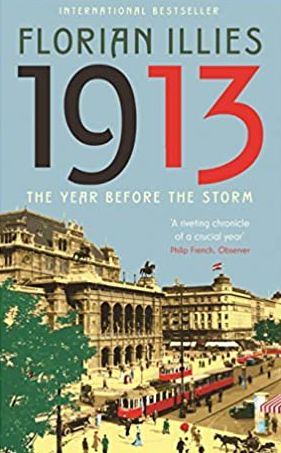
I reviewed this title on goodreads, I described it as “People magazine for prewar Germany & Austria, with Louis Armstrong and a stray Frenchman thrown in for good measure.” There’s no traditional narrative, more a long series of vignettes that immerse the reader into the year’s artistic and social scene. Here, those two converge, since Illies principally shares the lives of artists, painters, and so on. There are exceptions: Freud and Hitler both appear several times. Some of the content has been gleaned from letters, diaries, and the like, but some passages don’t have an obvious source. Interviews, perhaps. Although my unfamiliarity with many of the subjects and my acute disinterest in their torrid sex lives meant that I poked through much of this, there are many interesting moments — the recovery of the Mona Lisa, for instance, and Kafka’s frankly hilarious wedding proposal, in which he advises his intended that she would “lose Berlin, the office you love, your friends, little pleasures, the prospect of marrying a healthy, cheerful, good man, and of having beautiful, healthy children, which you, if you stop to think about it, really long for. And on top of this inestimable loss, you would gain a sick, weak, unsociable, taciturn, sad, stiff, pretty much hopeless human being.” A marketing man, he was not. Though I would not read a book of this approach again, there is value in this style of writing, and the way it immerses us in the personal reality of a year — experiencing the romantic anguish, the bliss of an unexpected warm day in the chilling autumn, etc — rather than using mere facts about those lives to build a narrative that’s about something other than the world they experienced.
Some quotes, to give a flavor:
The winter day is already drawing to a close, the noise in the square is deafening, it’s the busiest square in Europe, and passing in front of him are the city’s main arteries, but also the lines of tradition and the modern age: come up out of the U-Bahn into the slushy streets of the day and you will see horse-drawn carts delivering barrels, side by side with the first high-class automobiles and the droschkes trying to dodge the piles of horse droppings. Several tram lines traverse the big square, the huge space rings with a mighty metallic scrape each time a tram leans into the curve. And in among them: people, people, people, all running as if their lives depended on it, above them billboards singing the praises of sausages, eau de cologne and beer.
So, in the first months of the year 1913, Stalin, Hitler and Tito, two of the twentieth century’s greatest tyrants and one of its most evil dictators, were, for a brief moment, all in Vienna at the same time. One was studying the question of nationality in a guest room, the second was painting watercolours in a men’s boarding house, and the third was circling aimlessly around the Ringstrasse to test how well various automobiles handled the corners. Three extras, or non-speaking parts, one might think, in the great play that was ‘Vienna in 1913’.
For a long time the Anthroposophical Centre in Berlin was at the rear of 17 Motzstrasse. Rudolf Steiner lived there with his wife, Anna, but he insisted that his loyal companion and lover Marie von Sivers move in too, which, of course, didn’t work well for long.
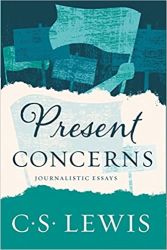
Although Present Concerns’ title makes it sound as though it consists of essays by Lewis written about 1940s issues, the contents still speak to our present day. One of the passages, quoted to me from a friend, leapt out to me as so applicable to a world deep in the abyss of covid-19, that I had to find and buy the collection for myself immediately. I found and relished the essay I was after (“On Living in the Atomic Age”), along with a medley of others — each just as quotable as the next. Some fall into predictable Lewisian themes: there are three on the importance of a traditional liberal education, for instance, as Lewis writes to its importance for both the person who is strengthened by them and the effects of liberal education on preserving democracy, but there are also the novelties, like his thoughts on sex in literature. Lewis often turns an apparently mundane topic into a theme of greater interest; one of the essays is a reflection on bicycles, for interest, wherein Lewis uses his evolving relationship with bicycles (un-enchantment, enchantment, disenchantment, re-enchantment) to explore how humans relate to the world in general, including with one another in close bonds. It’s a fascinating little collection, and well worth finding for Lewis readers.
DEMOCRATIC EDUCATION “I am a democrat because I believe in the Fall of Man. I think most people are democrats for the opposite reason. A great deal of democratic enthusiasm descends from the ideas of people like Rousseau, who believed in democracy because they thought mankind so wise and good that everyone deserved a share in the government. The danger of defending democracy on those grounds is that they’re not true. And whenever their weakness is exposed, the people who prefer tyranny make capital out of the exposure.[…] I don’t deserve a share in governing a hen-roost, much less a nation. Nor do most people—all the people who believe advertisements, and think in catchwords and spread rumours. The real reason for democracy is just the reverse. Mankind is so fallen that no man can be trusted with unchecked power over his fellows. Aristotle said that some people were only fit to be slaves. I do not contradict him. But I reject slavery because I see no men fit to be masters.”
IS ENGLISH DOOMED?” “The effect of removing this education has been to isolate the mind in its own age; to give it, in relation to time, that disease which, in relation to space, we call Provincialism. The mere fact that St Paul wrote so long ago is, to a modern man, presumptive evidence against his having uttered important truths. The tactics of the enemy in this matter are simple and can be found in any military text-book. Before attacking a regiment you try, if you can, to cut it off from the regiments on each side.”
IS HISTORY BUNK? “‘We call a man free whose life is lived for his own sake, not for that of others. In the same way philosophy is of all studies the only free one: because it alone exists for its own sake’”
There will always be people who think that any more astronomy than a ship’s officer needs for navigation is a waste of time. There will always be those who, on discovering that history cannot really be turned to much practical account, will pronounce history to be Bunk. Aristotle would have called this servile or banausic; we, more civilly, may christen it Fordism.
ON CHIVALRY “The medieval ideal brought together two things which have no natural tendency to gravitate towards one another. It brought them together for that very reason. It taught humility and forbearance to the great warrior because everyone knew by experience how much he usually needed that lesson. It demanded valour of the urbane and modest man because everyone knew that he was as likely as not to be a milksop. In so doing, the Middle Ages fixed on the one hope of the world. It may or may not be possible to produce by the thousand men who combine the two sides of Launcelot’s character. But if it is not possible, then all talk of any lasting happiness or dignity in human society is pure moonshine. […] If we cannot produce Launcelots, humanity falls into two sections—those who can deal in blood and iron but cannot be ‘meek in hall’, and those who are ‘meek in hall’ but useless in battle—for the third class, who are both brutal in peace and cowardly in war, need not here be discussed.
VARIOUS AND SUNDRY
“Friends are not primarily absorbed in each other. It is when we are doing things together that friendship springs up—painting, sailing ships, praying, philosophising, fighting shoulder to shoulder. Friends look in the same direction. Lovers look at each other: that is, in opposite directions. To transfer bodily all that belongs to one relationship into the other is blundering.”
“The true aim of literary studies is to lift the student out of his provincialism by making him ‘the spectator’, if not of all, yet of much, ‘time and existence’. The student, or even the schoolboy, who has been brought by good (and therefore mutually disagreeing) teachers to meet the past where alone the past still lives, is taken out of the narrowness of his own age and class into a more public world. He is learning the true Phaenomenologie des Geistes; discovering what varieties there are in Man.
“There is in all men a tendency (only corrigible by good training from without and persistent moral effort from within) to resent the existence of what is stronger, subtler, or better than themselves. In uncorrected and brutal men this hardens into an implacable and disinterested hatred for every kind of excellence.”
“Democracy demands that little men should not take big ones too seriously; it dies when it is full of little men who think they are big themselves.”
“If you want a man to refuse the nasty medicine that he really needs, there is no surer way than to ply him daily with medicines no less nasty which he perceives to be useless.”
“In the last few years I have spent a great many hours in third-class railway carriages (or corridors) crowded with servicemen. I have shared, to some extent, the shock. I found that nearly all these men disbelieved without hesitation everything that the newspapers said about German cruelties in Poland. They did not think the matter worth discussion: they said the one word ‘Propaganda’ and passed on. This did not shock me: what shocked me was the complete absence of indignation. They believe that their rulers are doing what I take to be the most wicked of all actions—sowing the seeds of future cruelties by telling lies about cruelties that were never committed. But they feel no indignation: it seems to them the sort of procedure one would expect. This, I think, is disheartening. But the picture as a whole is not disheartening. It demands a drastic revision of our beliefs. We must get rid of our arrogant assumption that it is the masses who can be led by the nose. As far as I can make out, the shoe is on the other foot. The only people who are really the dupes of their favourite newspapers are the intelligentsia. It is they who read leading articles: the poor read the sporting news, which is mostly true. Whether you like this situation or not depends on your views.
I recently re-read The Screwtape Letters for Advent, and would have posted a review but realized I rather liked the draft review I’d written in 2013 more, so now I’m trying to graft the best of one onto the other, and we’ll see how it turns out. In the meantime, here are some choice quotes!
“Think of your man as a series of concentric circles, his will being the innermost, his intellect coming next, and finally his fantasy. You can hardly hope, at once, to exclude from all the circles everything that smells of the Enemy, but you must keep on shoving all the virtues outward until they are finally located in the circle of fantasy, and all the desirable qualities inward into the Will. It is only so far as they reach the Will and are there embodied in habits that the virtues are really fatal to us.”
“It is, no doubt, impossible to prevent his praying for his mother, but we have means of rendering the prayers innocuous. Make sure they are always very ‘spiritual’, that he is always concerned with the state of her soul and never wit her rheumatism. Two advantages will follow. In the first place, his attention will be kept on what he regards as her sins, by which, which a little guidance from you, he can be induced to mean any of her actions which are inconvenient or irritating to himself. […] In the second place, since his idea about her soul will be very crude and often erroneous, he will, in some degree, be praying for an imaginary person, and it will be your task to make that imaginary person daily less and less like the real mother.[…] In time, you may get the cleavage so wide that no thought or feeling from his prayers for the imagined mother will ever flow over into his treatment of the real one.”
“By the very act of arguing, you awake the patient’s reason; and once it is awake, who can forsee the result? Even if a particular train of thought can be twisted so as to end in our favour, you will find that you have been strengthening in your patient the fatal habit of attending to universal issues and withdrawing his attention from the stream of immediate sense experiences. Your business is to fix his attention on the stream. Teach him to call it ‘real life’ and don’t let him ask what he means by ‘real’.”
“[…]the safest road to Hell is the gradual one – the gentle slope, soft underfoot, without sudden turnings, without milestones, without signposts.”
“Your patient has become humble; have you drawn his attention to the fact? All virtues are less formidable to us once the man is aware that he has them, but this is especially true of humility. Catch him at the moment when he is really poor in spirit and smuggle into his mind the gratifying reflection, ‘By jove! I’m being humble’, and almost immediately pride – pride at his own humility – will appear.”
“[…] nearly all vices are rooted in the future. Gratitude looks to the past and love to the present; fear, avarice, lust, and ambition look ahead.”
“Men are not angered by mere misfortune but by misfortune conceived as injury. And the sense of injury depends on the feeling that a legitimate claim has been denied. The more claims on life, therefore, that your patient can be induced to make, the more often he will feel injured and, as a result, ill-tempered.”
Recently a friend was kind enough to bring this article to my attention. It’s from C.S. Lewis, written in 1948 to address the growing fears of his contemporaries, who were shaken by the spectre of Hiroshima and unnerved by the growing tensions between the United States and the Russians. At any moment the world could go up in a radioactive puff: what were we then to do? The below passage consists of excerpts from Lewis’ full article. I found this exact arrangement online, and have since read the essay in full. It’s worth finding!
ON LIVING IN THE ATOMIC AGE
In one way we think a great deal too much of the atomic bomb. ‘How are we to live in an atomic age?’ I am tempted to reply: ‘Why, as you would have lived in the sixteenth century when the plague visited London almost every year, or as you would have lived in a Viking age when raiders from Scandinavia might land and cut your throat at night; or indeed, as you are already living in an age of cancer, an age of syphilis, an age of paralysis, an age of air raids, an age of railway accidents, an age of motor accidents.
In other words, do not let us begin by exaggerating the novelty of our situation. Believe me, dear sir or madam, you and all whom you love were already sentenced to death before the atomic bomb was invented… It is perfectly ridiculous to go about whimpering and drawing long faces because the scientists have added one more chance of painful and premature death to a world which already bristled with such chances and in which death itself was not a chance at all, but a certainty.
If we are all going to be destroyed by an atomic bomb, let that bomb when it comes find us doing sensible and human things—praying, working, teaching, reading, listening to music, bathing the children, playing tennis, chatting to our friends over a pint and a game of darts—not huddled together like frightened sheep and thinking about bombs. They may break our bodies (a microbe can do that) but they need not dominate our minds…
What the atomic bomb has really done is to remind us forcibly of the sort of world we are living in and which, during the prosperous period before, we were beginning to forget. And this reminder is, so far as it goes, a good thing. We have been waked from a pretty dream, and now we can begin to talk about realities…
It is our business to live by our own law not by fears: to follow, in private or in public life, the law of love and temperance even when they seem to be suicidal, and not the law of competition and grab, even when they seem to be necessary to our own survival. For it is part of our spiritual law never to put survival first: not even the survival of our species. We must resolutely train ourselves to feel that the survival of Man on this Earth, much more of our own nation or culture or class, is not worth having unless it can be had by honorable and merciful means.
Nothing is more likely to destroy a species or a nation than a determination to survive at all costs. Those who care for something else more than civilization are the only people by whom civilization is at all likely to be preserved. Those who want Heaven most have served Earth best. Those who love man less than God do most for man….
Ruth at A Great Book Study shared a fun little book game called “The Twelve Days of Christmas”, where a book is used to fit the lyrics of the song. She did a Little House on the Prairie spin! I had to try it out.
2 Turtledoves — book about a long-lasting relationship Jayber Crow, Wendell Berry.
3 French Hens — a book that takes place in France A Far Better Rest, Susanne Alleyn. (A retelling of Tale of Two Cities from Sydney Carton’s perspective.)
9 Ladies Dancing — a book with a dance scene Pride and Prejudice, Jane Austen
10 Lords A-leaping — a book about athletes For the Love of the Game, Michael Shaara. An aging pitcher who’s about to be put out to pasture has one last game to prove himself.
11 Pipers Piping — a book with someone playing a musical instrument Frank: The Voice, James Kaplan
Feeling the words, and remembering how Billie could tell you her whole life story in the glide of a note, Frank began to sing the lyrics as if he really meant them, and something happened.
The girls, dancing with their dates, began to stop mid-step and stare at him.
12 Drummers Drumming: a book with characters in the military Sharpe’s Eagle, Bernard Cornwell.
This week, the Artsy Reader Girl is taking a look at our Top Ten Books on Winter TBRs! What are you reading as Christmas approaches and hope for a corona-free future looms?
Ends of the Earth: The Polar Regions of the World, Isaac Asimov. Ho, ho, ho.
In Search of Zarathrusta: Across Iran and Central Asia in Search of the World’s First Prophet, Paul Kriawaczek. Hopefully an introduction to the highly impactful but often overlooked influence of Zoroastrianism on global faith.
Heaven and Hell: A History of the Afterlife, Bart Ehrman. Based on reviews I suspect this won’t be nearly as comprehensive as its sweeping title suggests, but we’ll see.
The World Ending Fire, Wendell Berry. Collected essays.
Live Not by Lies: A Manual for Christian Dissidents, Rod Dreher.
Mama’s Last Hug: Animal Emotions and What They Tell Us About Ourselves, Frans de Waal.
The Old Man and the Boy, Robert Ruark
Rebecca, Daphne de Maurier.
Forgotten Continent: A New History of Latin America, Michael Reid
Star Trek: The Weight of Worlds, Greg Cox. There’s always Star Trek.









 Reading Freely