Why Rick Bragg Writes

Quoted from Where I Come From, by Rick Bragg:

“I write about home so I can be certain someone will. It is not much more complicated than that.” 

“Home is not a thing of position, or standing. My home is where the working people are, where you can still see a Torino ever now and then,  and people still use motor oil to kill the mange.  It is where the churches are small, and the houses, too. It is where people cheer for a college they have never seen, where propane tanks shine silver outside obile homes with redwood decks, where buttercups burst up out of red mud, encircled by an old tire. 

“These are not the people of influence who have their names carved into the concrete of banks and schools and churches, whose faces stare back from the society page. As I’ve said, maybe too many times, these are the descendants of people who could only get their names in the newspaper or the history books if they knocked some rich guy off his horse. 

“I do not, greatly, give a damn about writing about people who history will handle with great care, anyway, by birthright. 

“I will write about a one-armed man who used to sling a sling-blade out by the county jail, and a pulpwood truck driver who could swing a pine pole around like a baseball bat. 

“I will write about dead police chiefs who treated even the most raggedy old boy with a little respect, and old men who sip beer besides the pool tables in Brother’s Bar, and then go take some money off the college boys. 

“I will write about the wrongdoers, because sometimes doing right is just too damn hard, and the sorry drunks, and the women who love them anyway. I will write about mommas, not somebody’s Big Daddy. I will write about snuff, not caviar. 

“I will write and write as long as somebody, anybody, wants me to, till we reminded one more brokenhearted ol’ boy of his grandfather, or educate one more pampered Yankee on the people of the pines.” 
Posted in quotations | Tagged , , | 1 Comment

Sunshine Blogging: Survey via Classics Considered

Marian over at Classics Considered just posted a survey, and I figured — why not?

If you go back and read one book for the first time again, which would it be?

Probably the first Wodehouse novel I read, just for experiencing that language for the first time.

Do you eat ice cream, and if so, what is your favorite flavor?
Ice cream is too delicious a treat to indulge in too much. My favorite kind of ice cream treat is vanilla with a chocolate ‘shell’: think Klondike bars!

What was the most memorable event or concert you ever attended?

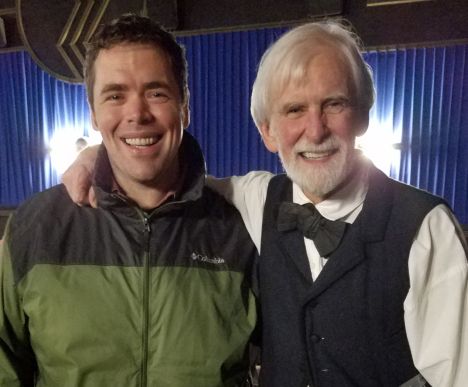
I hate crowds and loud noises, so I’ve never been to a ‘traditional’ concert. I have attended smaller musical performances, like chamber music recitations, but the most memorable performance I’ve ever attended was Bobby Horton’s celebration of Alabamian folk music back in December 2019. I’ve been listening to his music since the nineties, and it inspired my college senior thesis. Meeting him was an absolute joy! Horton has released many ‘homespun’ collections of folk music, chiefly from the Civil War years but throughout the 18th and 19th centuries. They’re home-spun because he does all of the vocals and instrumentation separately, and then combines them. I’m embedding a favorite, “The Rose of Alabama”, below. He’s done numerous Union and Confederate collections, Songs of the 19th century, Songs of Faith, and Songs of the Revolution.

What do you like best about yourself?

I’ve never lost the universal curiosity of childhood that I fear many adults have.


Is there a book you would never, ever read?

Fifty Shades of Gray. Not happening.

Second-best way to spend a rainy day? (Reading is the best, right?)

Breaking my record for pots of coffee consumed while listening to music and..probably playing a PC game, if I’m honest.

Cats or dogs?

Oh, easy. Dogs. They’re smelly, noisy, and an all around mess — but they’re pals. Cats have their pleasures, but dogs are easier to get along with in general.


Best pizza topping combo?
I’m partial to pepperoni, green peppers, and olives. Quite boring.

If you could recommend one fictional book, what would it be?


Jayber Crow, Wendell Berry. It’s only my absolute favorite novel.

Earliest reading memory?
Lying in bed with my father, listening to him read The Adventures of Tom Sawyer aloud.


What’s something you’re looking forward to this year
?
Spring…and that’s really about it. 2020 has disabused me of the habit of hoping for much. Flowers, though, those I can count on. Especially the Cahaba lilies

Posted in General | Tagged | 14 Comments

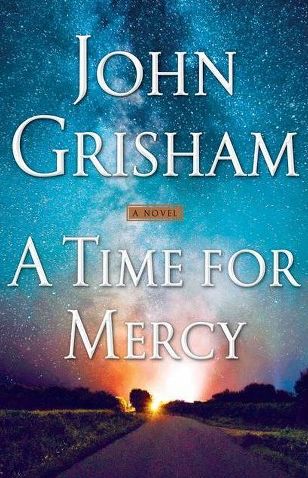
A Time for Mercy

A Time for Mercy
© 2020 John Grisham
480 pages

A woman lies beaten and unconscious in the kitchen; her children quiver in fear in a back room while the man they’re terrorized by lies in a drunken stupor in his bedroom. A sheriff’s deputy, he always wiggles free of abuse charges. But he stirs, as if to rise, and a young boy makes a fateful decision. A Time for Mercy returns readers to Clanton, Mississippi, with a morally challenging case reminiscent of A Time to Kill. Unlike A Time to Kill, however, Mercy simply ends rather than concludes; those who find themselves absorbed by the drama will leave frustrated at the lack of real resolution. Although a welcome return to Clanton, Mercy has its limits.

In Grisham’s first-ever novel, a man took justice into his own hands and shot two cretins who raped and beat his daughter, who had been released by a biased jury. Young Jake Brigance took on the man’s defense, at considerable risk to both himself and his family, and prevailed. Now he’s at it again, defending a young teenager who believed his mother had been killed by her abusive boyfriend, the same boyfriend who had also repeatedly raped his sister. That teenager, Drew Gamble, also took justice into his own hands and (contra Bob Marley) shot the sheriff’s deputy. Clanton is again sharply divided, though this time they’re largely against Brigance’s client: although the deceased deputy was known as a drunk hell-raiser on his off-time, on-duty he was one of the department’s best. Brigance finds former friends giving him the cold shoulder, and is harassed at length by the deputy’s ornery and combative family.

My enthusiasm for Grisham has waned considerably over the years, in part because he’s slowly morphing into James Patterson, pumping out too many books without enough polish. Mercy, for instance, meanders all over the place: we spent a considerable amount of time focusing on another case Jake is involved in, when it goes absolutely nowhere in the timeframe of the novel. This section introduces a considerably interesting sideline when we learn that the golden boy, the Captain America of the law office Jake Brigance, has committed a bit of an ethics violation in discovering a potentially destructive witness to his case, then not sharing knowledge of this witness with the prosecution. The sudden exposure of this fact further isolates Jake, but it never comes up again.

What saves Mercy, as much as it is saved, is the inherent moral interest of the case: yes, Drew did wrong in murdering a violent and angry drunk in cold blood..but boy, if ever a man needed killin’, the victim did. The reader can’t help but be a sympathetic to both sides, and the way Grisham ends things is frustrating because there’s no real ending as such, no resolution. Mercy is also greatly supported by virtue of being a Clanton, MS novel, so that regular Grisham readers will feel themselves surrounded by old friends and stories. We know the characters in this novel, without needing introductions; we know the story of the town and even of Jake’s house, because Grisham has developed them in so many other books (The Summons, The Last Juror, Sycamore Row, etc). This also allows Grisham to be a bit lazy, and he confesses in the afterword that he has — not even bothering to re-read his Clanton books, but relying on the memory of those who have. Frankly, it’s a little insulting to the reader that Grisham can’t be bothered, but we keep buyin’ them. (Or, in my case, relatives keep buying them and giving them to me as Christmas presents, because my willingness to spend money on Grisham stopped in 2007/2008 or so.)

Posted in Reviews | Tagged , , , | 2 Comments

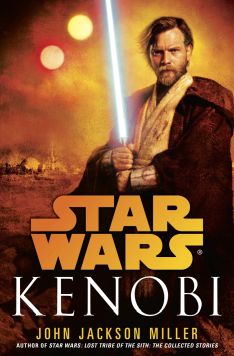
Kenobi

Star Wars: Kenobi
© 2014 John Jackson Miller
464 pages

Hello, there.

The Republic is fallen, and the Jedi are no more. The few survivors of Emepror Palpatine’s purge have fled, scattered across the galaxy with their own individual missions. For Obi-Wan Kenobi,  that entails a quiet watch over the son of Anakin Skywalker,  whose life Kenobi was compelled to take on Mustafar.   The boy, Luke, has been deposited with Anakin’s step-family for safe-keeping,   and Obi-wan must keep him from harm at a distance while he reels in pain from Anakin’s breathtaking fall into the dark side, and the destruction of the Order.   It’s going to be hard for Kenobi to find peace and do his job, though, because he’s unwittingly settled on the outskirts…..of a western. 

The scene: the Pika Oasis,  where the rural economy of moisture farmers sustains a general store known as Dannar’s Claim. Run by a widow named Annileen, it’s also the headquarters of the Settler’s Call, a community-supported posse  that responds to Sand People attacks with extreme prejudice.  Into this quiet, apparently stable, community comes Obi-Wan – or as he’s known to them, “Ben”.    Although intending to blend in, the Obi-Wan in Ben keeps coming out; he can’t see someone in peril without dashing in to save them.  Despite his name on the cover, though, Kenobi is not the viewpoint character of Kenobi; we alternate instead between Annie,  the tough-as-teak  store owner;  Orrin Gault,  posse leader and friend of everyone but the Sand People;    and…A’Yark, leader of the local tribe of Sand People, who burns for vengeance against the settler-scum. Kenobi appears in occasional meditations to Qui-Gonn,  but otherwise we see him as the settlers see him – a stranger, who is helpful and friendly enough but mysterious enough to be frustrating.  As Kenobi progresses,   readers learn that members of the community are hiding a secret, one that could destroy them, putting Ben into an awful bind:   still reeling from the moral downfall of his brother-at-heart Anakin,  how can he turn his back when he sees good people making decisions that will ruin everything they’ve worked for, including themselves?   Despite the lack of a full Kenobi spotlight, we still get his story as he constantly works with the ‘real’ viewpoint characters to find a path through the chaos.     

Amusingly, this felt less like a Star Wars novel and more like a western, between the unforgiving landscape, the frontier-town defended by an armed posse of farmers,  and the constant attacks of the natives. One of Miller’s more interesting choices was to use the Sand People’s chieftan, A’Yark, as a viewpoint character. Presumably this was with the intention of making them less ‘other’,  more like people and less like mysteriously implacable  hostiles.   It doesn’t work for me, though, because the Sand People are still one-trick ponies: they attack, or they wait to attack,  and it’s hard to disassociate them with my first memory of them:    ambushing Luke Skywalker with those awful URRRRRRRRRRR-URRK-URK-URK-URK! cries.

Although this was not the novel I was expecting, I definitely enjoyed it. Given how pathetic the sequel trilogy was, it’s nice to be reminded of a time when Star Wars had characters who, you know, grew. Here we see the outgoing Jedi knight of Obi-Wan slowly surrendering to the sad wisdom of Old Ben.

Related:
Star Trek: Takedown, John Jackson Miller. That might explain why Takedown was such an odd story — JJM is mostly a SW writer!
Star Wars: Revenge of the Sith, Matt Stover. The best SW movie novelization I know of, and one with a heavy focus on Anakin and Obi-Wan’s brotherly bond.

Posted in Reviews | Tagged , | 4 Comments

A Walk Around the Block

A Walk Around the Block: Stoplight Secrets, Mischievous Squirrels, Manhole Mysteries & Other Stuff You See Every Day (And Know Nothing About)
© 2020 Spike Carlsen
336 pages

One of my favorite books to think back on is Scott Huler’s On the Grid, one man’s attempt to understand the various systems (electrical, plumbing, internet, sanitation, etc) that sustained everyday life in his neighborhood. Spike Carlsen’s A Walk Around the Block does much of the same thing, but it goes broader and breezier. Carlsen doesn’t do as much in-depth digging as Huler, but he’s also looking up more, and in addition to more casual chapters on the water system, asphalt, etc, he also writes about squirrels, pigeons, and trees, the other residents of our neighborhoods. Drawing on both interviews with his local technicians and background reading, A Walk Around the Block covers some familiar ground for me but is no less diverting for it.

A Walk around the Block is fun reading, and I don’t mean just infrastructure wonks like myself who read books on plumbing, electricity, and garbage disposal for entertainment. Think of it as more a social history, an exploration and celebration of the everyday, mixed in gushing advice on how to recycle more effectively or create an insect-friendly lawn. Despite my own reading in the general subject, I still learned a thing or two here; I didn’t realize how self-defeating a lot of recycling practices are, for instance. Lithium-iron batteries are constant fire hazards, and plastic bags used to group recyclables gum up the works something fierce. (Carlsen often ventures into advocacy: one chapter largely consists of appreciating bike infrastructure.) The chapters on squirrels and pigeons were an amusing novelty in an ‘infrastructure’ book, but they were fun to take on, and I was grateful for the author’s appreciation for trees not just as beautiful objects to admire, but as useful urban elements — in giving shade to pedestrians, in shielding the sidewalk from automobile traffic, etc. Carlsen truly gets into the weeds of neighborhood composition, writing about the history of asphalt, the prior and potential use of alleys, and the fate of roadkill. (In south Alabama, they apparently feed it to a gator conservancy. Who knew?)

It appears Carlsen has done book on wood, so I expect to see his name again, and am glad to have spotted this little title on the shelf. I love a title that makes the everyday come alive.

Related:
On the Grid: A Plot of Land, and Average Neighborhood, and the Systems that Make Our World Work, Scott Huler
The Works: Anatomy of a City, Kate Ascher

Posted in Politics and Civic Interest, Reviews | Tagged , , , , | 5 Comments

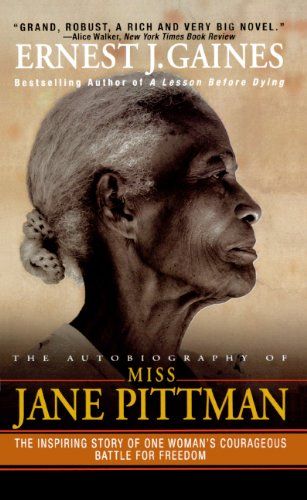
The Autobiogaphy of Miss Jane Pittman

The Autobiography of Miss Jane Pittman
259 pages
© 1982 Ernest Gaines

A young girl carries water for both exhausted rebels and the jubilant army chasing them.  An elderly lady who has seen sorrow after sorrow visited on herself and her loved ones witnesses a final tragedy, but one that carries with it hope for the future. These two women, nearly a century apart, are one and the same: Miss Jane Pittman.  Her Autobiography, while fictional,  is a fascinating way to experience a century of history, in the life of a ‘Luzana’ girl born into slavery, who sees her people failed  time and again by themselves and the government, but always picking up and carrying on.  

Experiencing a century of American history through the eyes of one person is a fascinating premise to me, though Gaines errs on the side of plausibility rather than letting his premise dominate the novel.  Jane isn’t some Gilded Age Forrest Gump, wandering from the plantation into various highlights of the late 19th and early 20th century.   Following the end of the war,  young Jane attempts to migrate north with a handful of other freedmen, headed toward Ohio;  most of the group runs afoul of some proto-Klansmen, brigands and ex-slave patrollers who are out to harass roaming blacks, but Jane and another young child escape, navigating by night and taking help as they can and avoiding snares. Eventually they find a safe haven, and from there the narrative shifts into more domestic and personal drama. “History” is still rolling along, witnessed as people debate the merits of Frederick Douglass and Booker T. Washington,  but it becomes more like scenery rather than the driver.  The personal and historical come together at the very end, when Jane sees a young man she’s helped nurture become a Civil Rights martyr. (Don’t get terribly attached to any of the characters besides Jane.)

The novel is framed as being based on interviews with Jane, and is rendered largely in her voice, with  lots of vernacular; think of Huck Finn’s narrative style.  Gaines and Jane offer the reader much to think about along the way. One of the more poignant chapters in the book details  unrequited love with a tragic ending, and Jane reflects on how everyone, black and white, is  trapped by the past, perpetuating its mistakes.   I found much to appreciate here, from little bits of folklore — Jane’s skeptical use of a ‘hoo doo’ (witch) , old marriage customs, that sort of thing — to seeing the evolving black struggle for membership within the American nation.

This is a unique work in American literature, one well worth reading for understanding one aspect of the American story.

Posted in Classics and Literary, Reviews | Tagged , , , , | 6 Comments

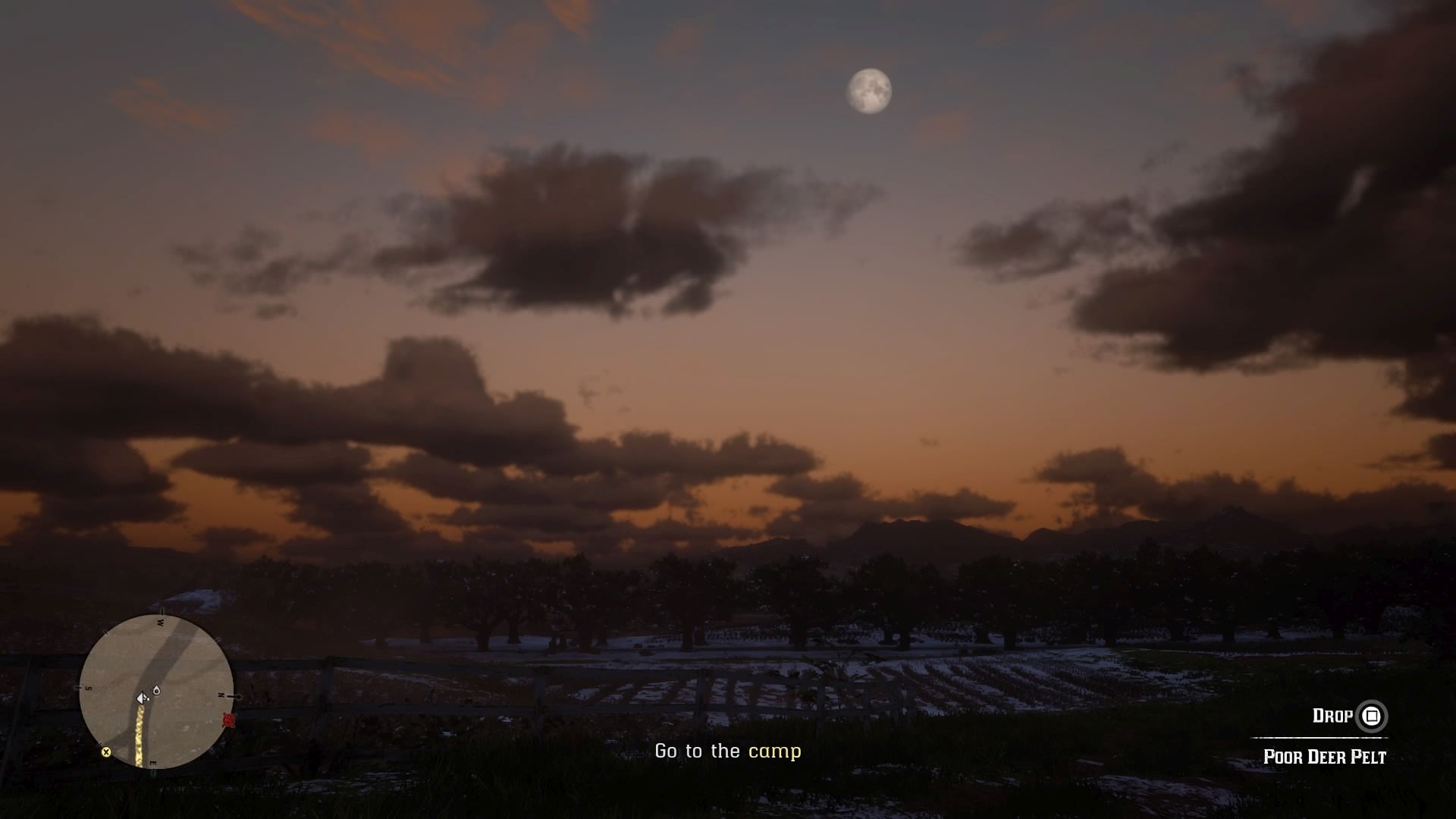
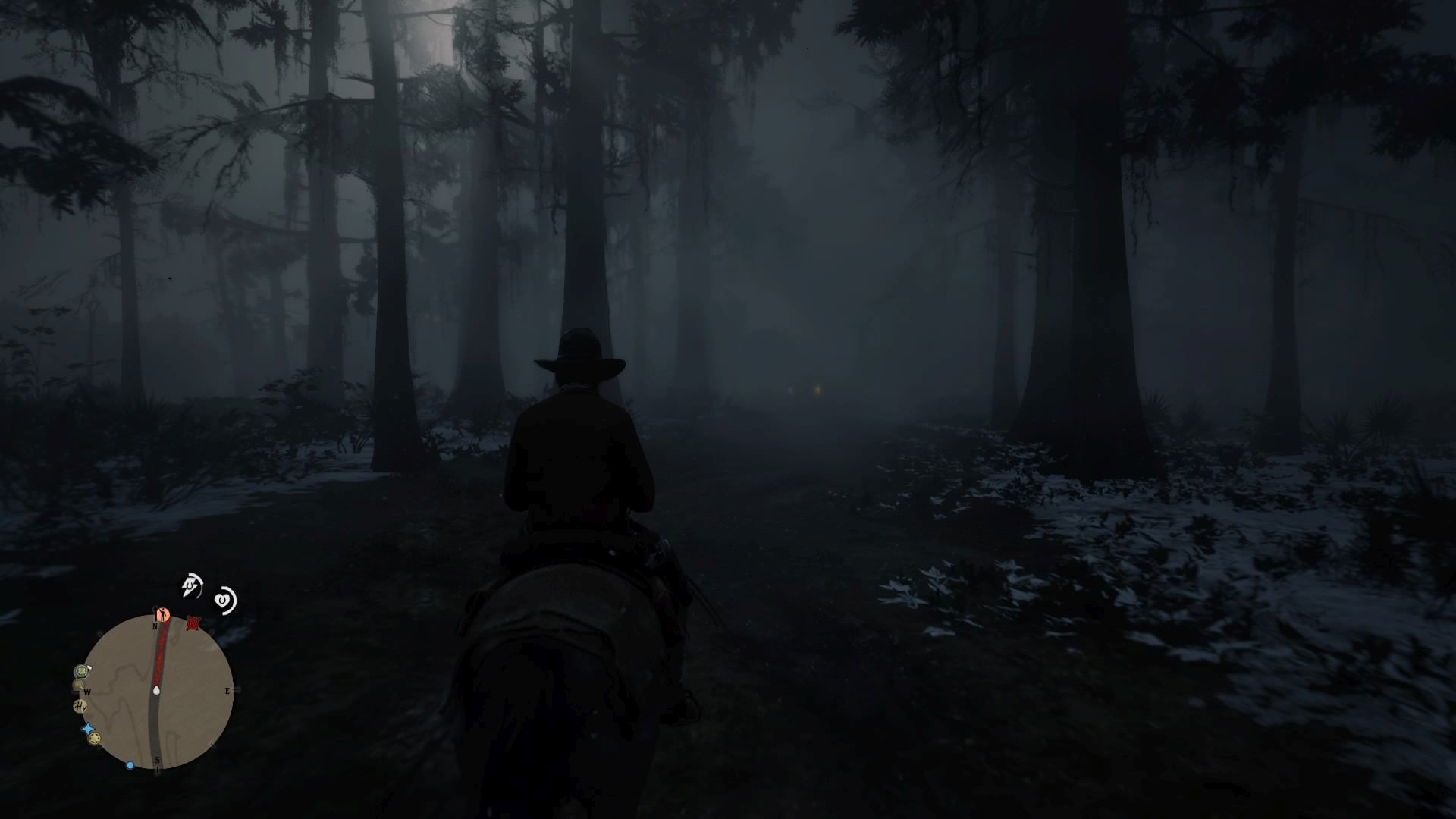
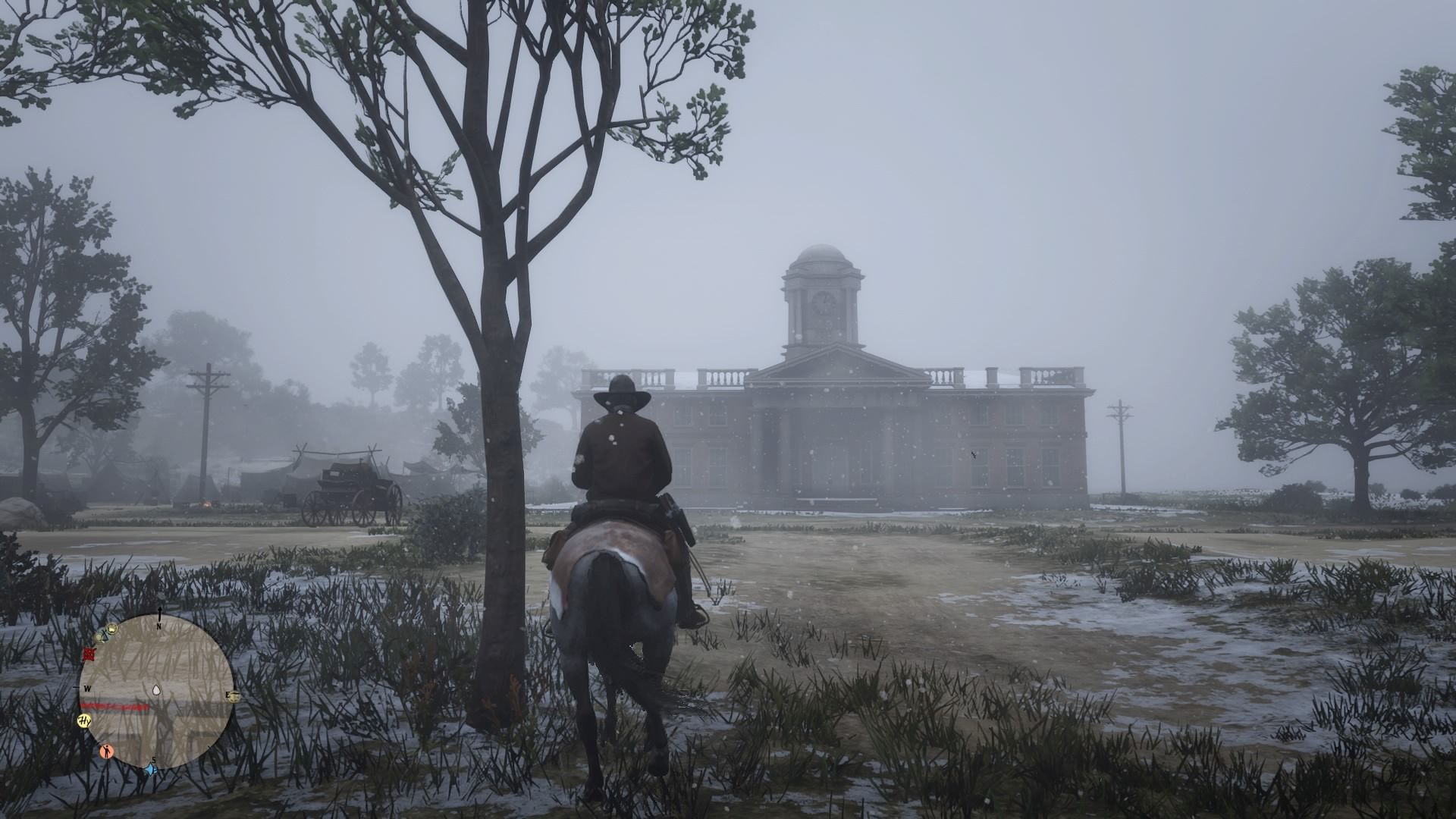
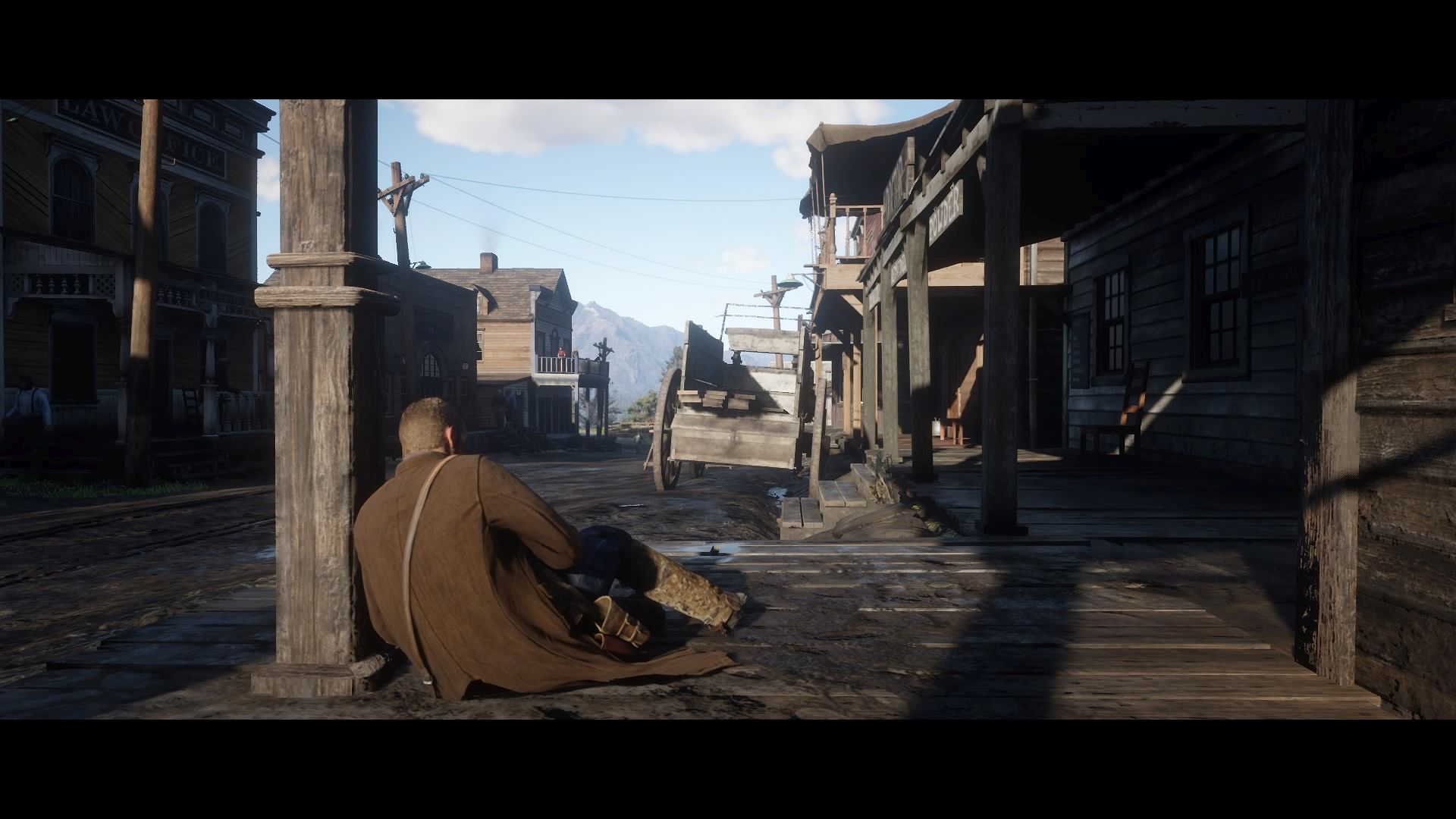
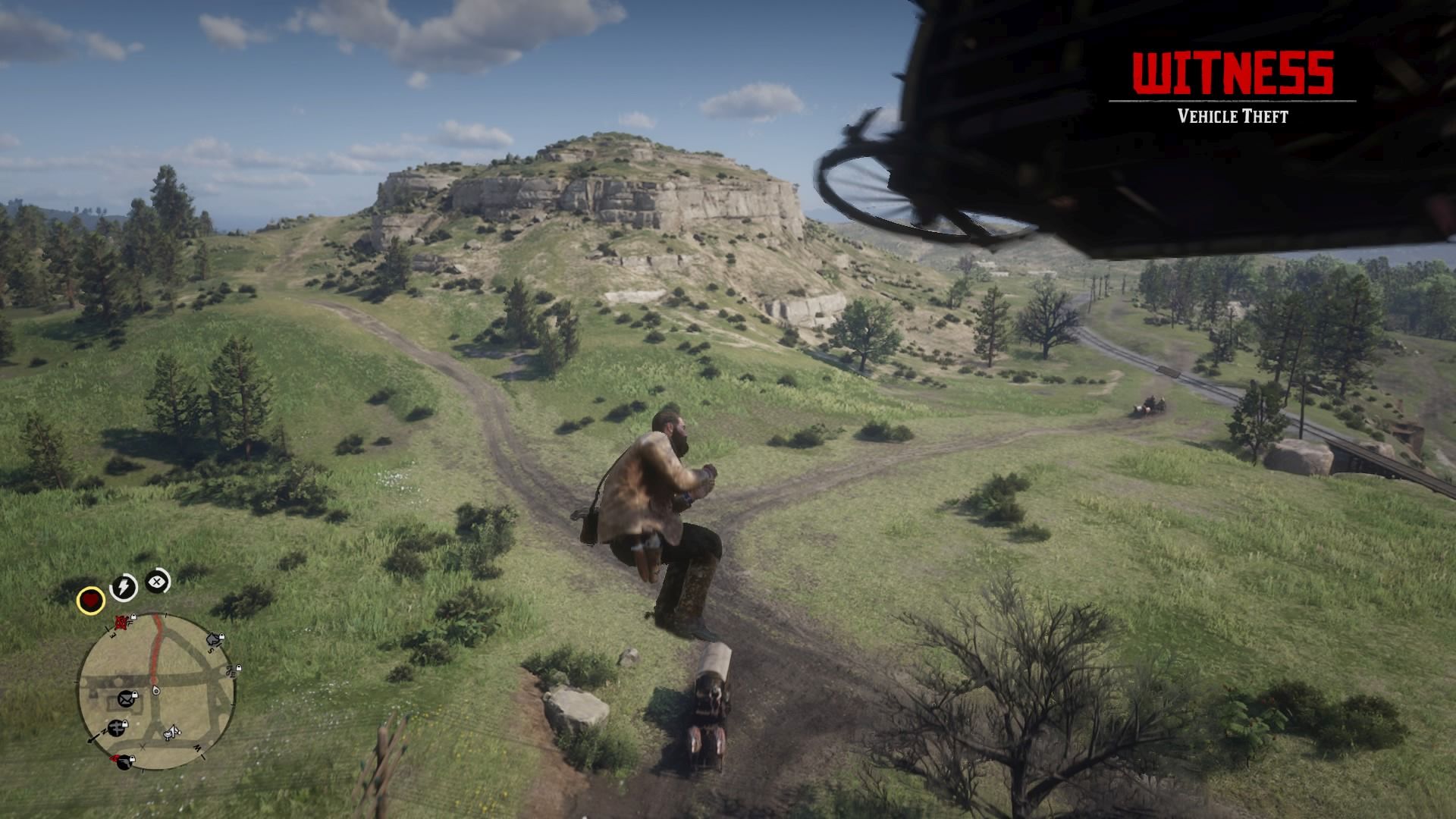
Off-topic: RDR2 shots with snow

During the Christmas season, the world of RDR2 online got a wintry makeover — somehow making an already pretty game even more dazzling.

Braithwate Plantation
Outside St. Denis
The woods are lovely, dark, and deep….
Blackwater
Just another Saturday night in Valentine.
Sunday morning in Valentine. “Oh, brother…”
Bourbon and bar fights, it’s like PB&J.
Never drink and hijack stagecoaches.

Posted in General | Tagged , | 2 Comments

Top Ten Tuesday: Bookish Hopes for 2021

This week, the Artsy Reader Girl is taking a look at bookish hopes for 2021.

  1. A strong start to the Classics Club Strikes Back. By strong,  I’d like to have read at least 20 entries from my list by the time 2022 rolls around. It’s not as far-fetched as it sounds: I did it before, in 2019, and this time around the books are mostly smaller and tend toward the modern, with many being 20th century titles.  
  1. The End of Mount Doom.  Scaling Mount Doom isn’t just about finishing my TBR, it’s about being able to move closer to minimalism. I’m always fighting towards it and never seem closer, somehow.  
  1. More southern literature. As a librarian in a southern river town, I’m acutely aware of how little southern lit I’ve read, both classic and contemporary.  That’s why CCSB has a large southern lit section !
  1. If time permits,  some progress in my Peoples of the Americas series. In 2018 I announced that the reading project for the year would be exploring the histories and cultures of American nations,  past and present, from the Inuit and Canada all the way down to the Incas and Chile, with a Caribbean sideline.  I read 4 titles that year and have kept the theme in mind ever since either as an annual project or as a long-term series.  
Read in 2011. It’s been a decade. .
  1. Re-reading. I’m hoping to adopt purposeful re-reading as a discipline, not only to give un-reviewed books their due, but to reinforce what I’ve learned.  (Bitter laughter: in 2016 I resolved to re-read and review some books. The titles I showed are still 2/3rds unreviewed. )

That’s it for reading goals – frankly,  the first two alone are enough to keep my nose buried in the pages!  

Posted in General | 8 Comments

The Old Man and the Boy

The Old Man and the Boy
© 1957 Robert Ruark
303 pages

Of the various titles on my Classics Club Strikes back list, The Old Man and the Boy is something of an outlier; I’d venture to say that most people haven’t heard of it. I hadn’t heard of it until  I started fishing for southern-lit reads that weren’t by William Faulkner.  (Faulkner scares me.)     I was charmed immediately by the preview I found online, and my entrancement only continued once it’d arrived in the mail.  The book is semi-fictional, semi-memoir, and consists of vignettes from Ruark’s perspective recounting his grandfather’s (the Old Man) and his adventures together. The writing mixes nature writing with philosophy,  and delivers a taste of Carolina country living in the 1920s, from ambling around in a Model T to hunting.    In reading, one experiences the energy and wonder of youth and the wry humor and wisdom of age.  It’s an extraordinarily engaging, lovely book to read, an instant favorite for me.  

I commented to a friend as I was gushing about this title that it’s a little Aldous Leopold, and a little Rick Bragg.  Although more than one year passes by throughout the stories, they’re arranged in such a way that we’re experiencing a year in the Carolina coastlands. Both the Old Man and the Boy are keen studiers of the natural world, and one of the Old Man’s common refrains is respect for the land and respect for the creatures in it. This respect isn’t just about stewardship, although it’s one of the reasons the Old Man teaches his grandson about conservation;    it’s also the realization that you don’t know everything, and  should tread softly. (When it comes to hunting quail, for instance, the Old Man believes an experienced dog should train a boy, and not the other way around.)  

Although hunting excursions are the basis of most of the stories (they also fish),  this is not a ‘hunting’ book, per se;   sure, the boy learns what to look for and what not to do as far as hunting tactics and strategy go,  but the Old Man is often philosophical as they walk and stalk together, giving advice and insight that applies equally in the field and in town. The boy is sometimes receptive to this advice, and sometimes he doesn’t know what to make of it; but he apparently remembered it.   The Boy is very much like Tom Sawyer; eager to escape the schoolhouse,  always ready to flee into the woods. The Tom Sawyer aspect extends to building a boat and taking off on his own,  fishing and camping and not returning until late at night.   The Boy couldn’t get away with that today; the neighbors would call the cops on the Old Man for letting the Boy leave his eyesight, and the boy wouldn’t want to touch one dead goose, let alone improvise a way of carrying home four.   Although I appreciated this title most for the wonderful mix of adventure and advice about life,  the entire historical context is worth appreciating on its own, as are the little stories the Boy mixes in.  I would have never expected that moonshine was once an integral part of Holiness revivals. If they’d kept that particular practice, I might’ve had a lot more fun growing up in Holiness-Pentecostal circles!  

I will be sharing passages from this book a little later, but this is one of those sticks-to-the-ribs kind of books, savory and warming.  

Related:
Where the Red Fern Grows, Wilson Rawls

Posted in Reviews | Tagged , , , , , , , , | 8 Comments

Permanent Record

Permanent Record
© Edward Snowden
352 pages

Nearly a decade ago we bore witness to magnificent acts of rebellion and alarm-calling, as dissidents like Julian Assange and Edward Snowden began exposing DC’s global surveillance state and abuses of power. DC acted with rapid malice, cancelling Snowden’s passport in an effort to prevent him from traveling. Marooned in Russia, which he’d been passing through from Hong Kong to Educador, Snowden was immediately tarred by DC and its obedient servants as a traitor. Five years after Snowden’s revelations, the world has only grown more complacent about our existence within the Panopticon, eager to fill our homes with the ever-open ears of Alexa, Google, and the like, and more interested in arguing about the cause célèbre that the television and social media promote. We have learned nothing and sunk ever-deeper into becoming total subjects of the security state. Permanent Record, Snowden’s biography and explanation as to why he threw away a promising career to become an exile, should remind us all of what is truly important, what we should be focusing on besides masks and policing people for wanting to get a haircut.

Permanent Record begins with Snowden’s coming of age, as the future rebel shares how eagerly he took to the brave new world of the internet, a place where one could re-invent themselves on a daily basis and explore as far and wide as their phone bill would permit. But 9/11, which ended the optimism and prosperity of the 1990s and replaced it with fear, vengeance, and skyrocketing gas prices, permanently altered the future development of the internet. The web was already evolving into something else, pushed by commerce and the opportunities afforded by tech; the smart gadgets that so many were eager to play with all needed to constantly report their location, and devices like iphones kept records of where they’d been. New web services like Gmail and social media made it easier to store everything online — for “free”! What we didn’t realize then was that those services were being paid for by information about us. We were the product; the services were merely the bait. In this atmosphere, a young Ed Snowden who was inspired by 9/11 to enter the armed services but prevented from doing so by a training accident began working for the intelligence community, using his savvy for the subject to become a leading member of the new generation of analysts. Snowden notes that after 9/11, DC’s push for rapid expansion meant that it entrusted the most vulnerable parts of of its burgeoning infrastructure to civilians who were in it just for the money, not any idea of service. Although Snowden’s on-paper bosses were Dell or Booz-Allen, in reality he was working for both the CIA and NSA, depending on the year.

Snowden’s work overseas, analyzing China’s own digital security state, made him realize: the Intelligence Community couldn’t possibly know this much about China’s internal surveillance mechanisms without having a similar system itself. Snowden began exploring that possibility, using the stupefying amount of information he had available to him (first as a contractor, then an official member of the service), and tools that he and other technicians had been building over the last few years. When Snowden began to realize the staggering capabilities that he and other tech enthusiasts had unthinkingly established for DC — when he realized he was complicit in turning the open web into the glass cage — his health took a dramatic downturn. He had been living a double life: Snowden the tech helped build the security state, and Ed the user valued his privacy to the point of using Tor for regular browsing. Now, increasingly, Ed couldn’t countenance the realities of the work he’d been doing. At first he tried to rebel by simply spreading the word about the need for protecting privacy, in general, or by giving people the tools and knowledge to bypass surveillance in countries hostile to free expression, like Iranians subjected to the role of the ayatollahs, he eventually decided that the most effective way of fighting back was to reveal what was being built.

The last four years in particular have served up plenty of distractions from the pickle that we’re all in — and when I say “all”, I mean all, for the US internet infrastructure is a lynchpin of the global internet. Everyone’s data is being hoovered up and stored. There has been pushback against the total surveillance state — local governments not permitting the NSA to build server sites, for instance — but not nearly enough. We all seem to have just given up the fight against Google, facebook, and the DC surveillance state. Our grievances now focused on how much money they make rather than how much of our lives they claim to own. Permanent Record is thus a timely, welcome, and surprisingly cleverly-written reminder of the fix we’re in.

Related:
No Place to Hide, Glenn Greenwald. The original Snowden story.
Data and Goliath: The Hidden Battles to Collect Your Data and Control Your World, Bruce Schneier
Playing to the Edge: American Intelligence in the Age of Terror, Michael Hayden.

Posted in General, Reviews | Tagged , , , | 6 Comments