Backroads Alabama: Looking for Creeks, trains, and a dog named Fred

For the last several weekends I’ve been visiting various places throughout Alabama, ranging north and south, many with a connection to Alabama’s role in the Creek war. On the agenda were Fort Mims, Claiborne, and St. Stephens.
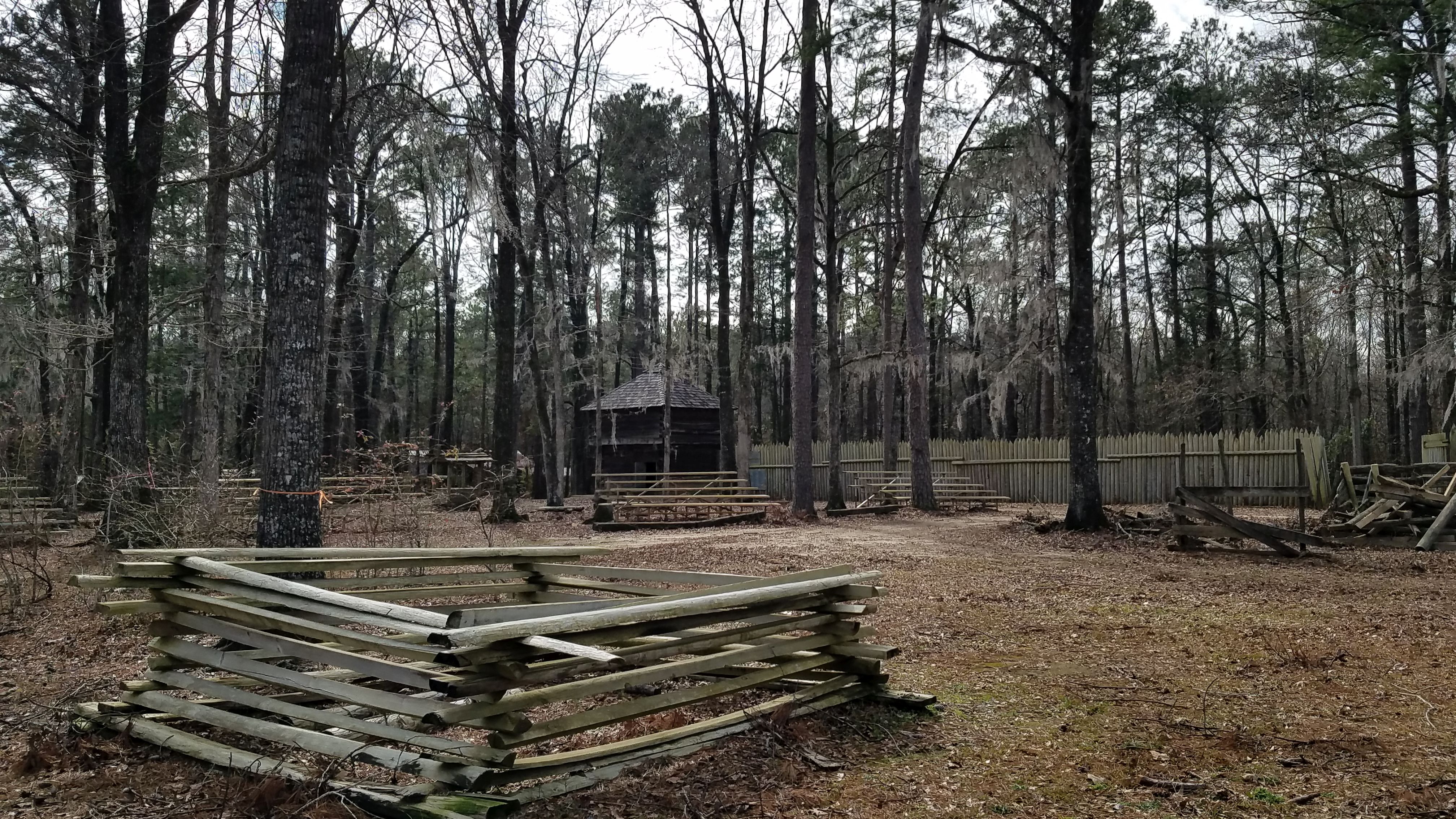
I often read around the Creek war, but never about it. From what I’ve gathered this weekend, tensions rose sharply in the early 19th century between the Creek peoples of the area and early American settlers, who were pushing past Georgia into the ‘southwest’ territories. In one instance, a Creek faction known to be belligerent sought arms and ammunition from the Spanish in Mobile, and were ambushed by American settlers, then counter-attacked. In the resulting tit-for-tat fracas, civilians took took refuge in a homestead turned fort, along with soldiers and allied Creeks. The belligerent faction of the Creeks, the Redsticks, launched an attack that caught the fort’s residents off-guard, and used the fort’s defenses against it — using the portholes built into the walls to fire into the fort. Hundreds died, but the Redsticks would only have a short-lived victory.
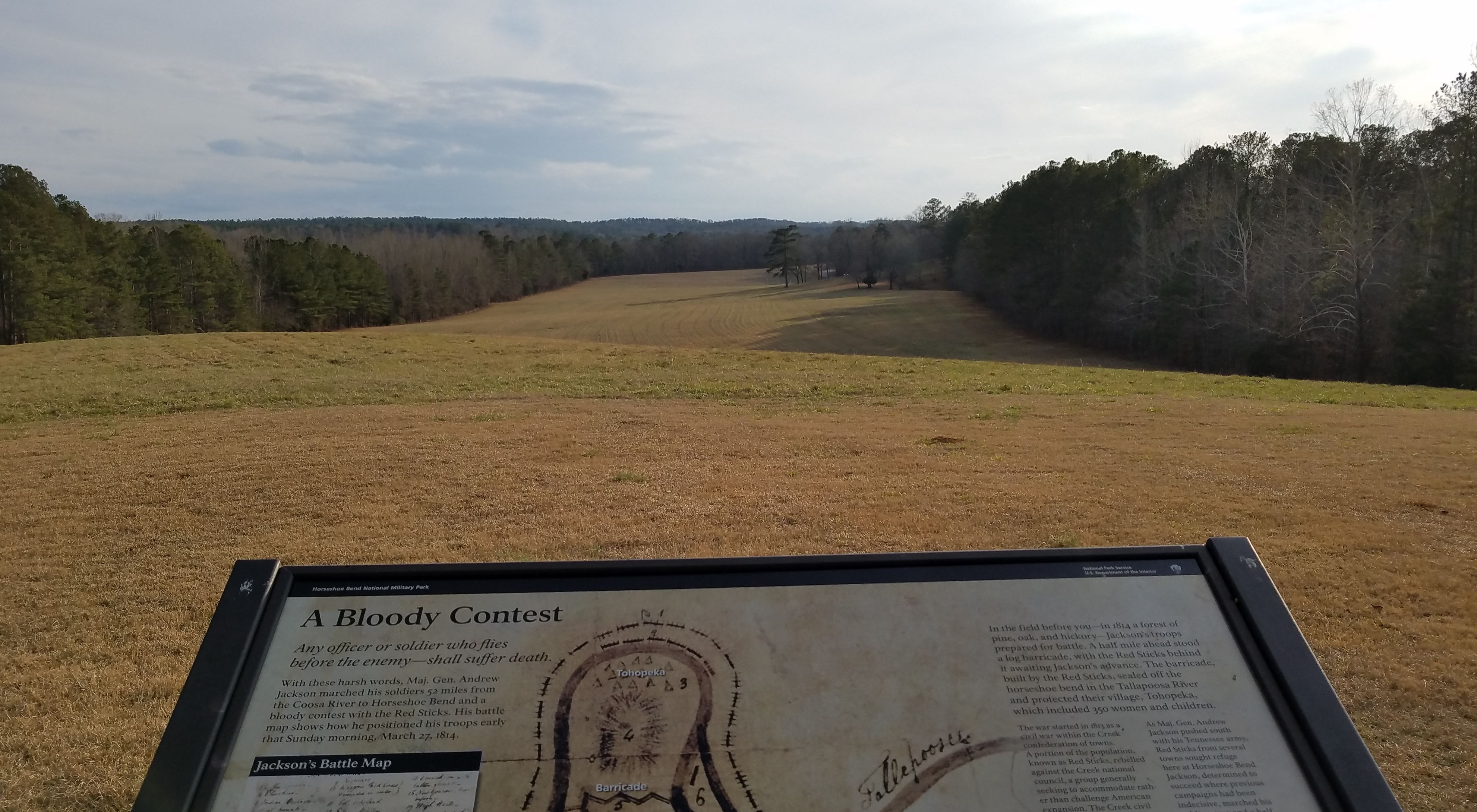
The Redstick faction was then expressly targeted by the full U.S. army, throughout the Southeast, with battles across the Alabama Territory and Georgia. The most famous reprisal came when Andrew Jackson, confronted the Redsticks at one of their own fortified sites, in a bend of the Tallapoosa river. Although the Redstick commander arranged his barricade to invite attackers into a reverse U, Jackson waited with artillery booming until his Creek allies across the river began a rearguard attack, and then commenced his own assault. Surrounded, and their only possible line of retreat likewise cut off by Jackson’s men on Bean Island, 80% of the Redstick forces were killed. Their commander, Menawa, survived; interestingly, he was the son of a Creek woman and a Scottish fur trader.
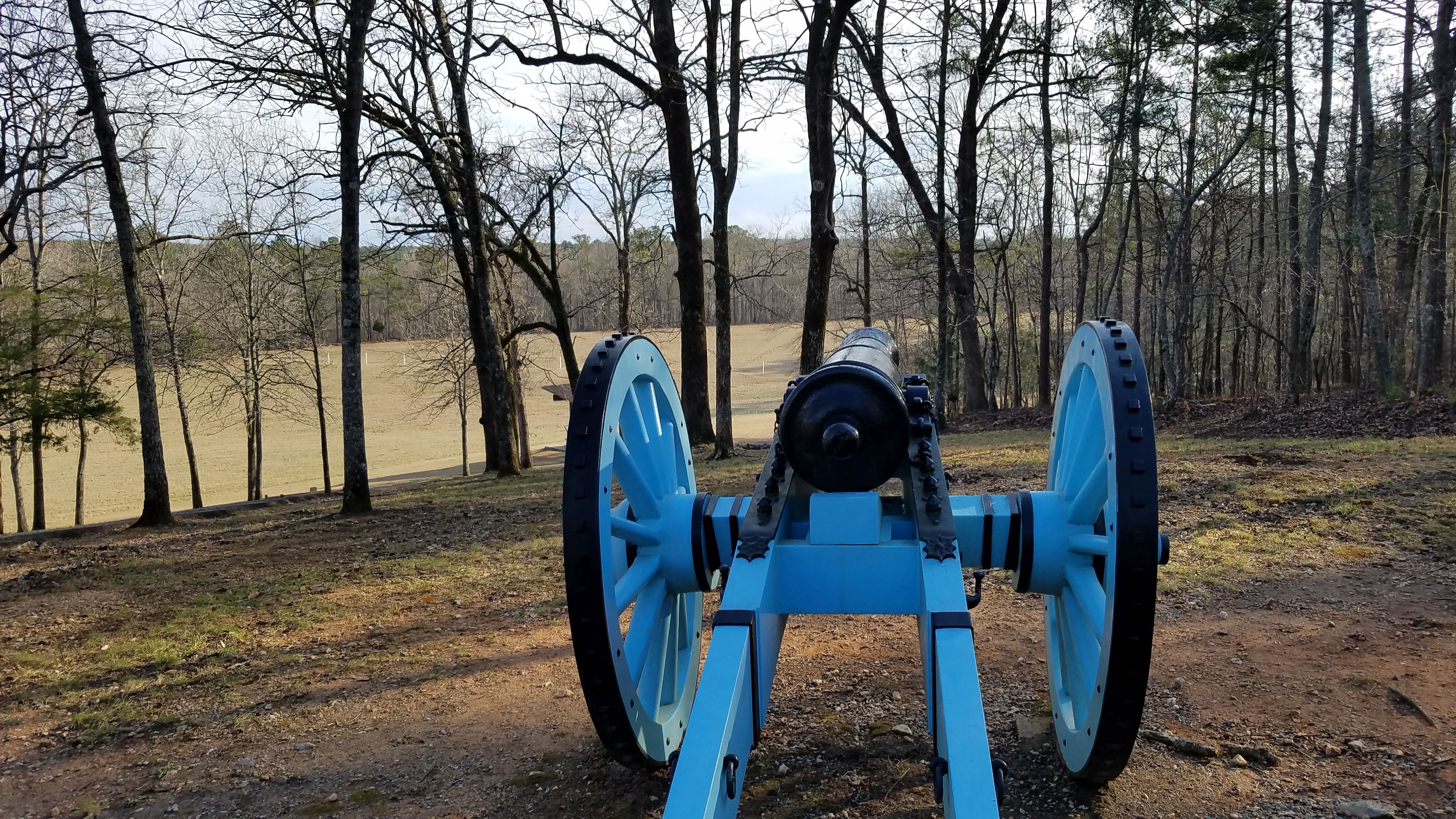
Through the trees there’s a series of white posts; that’s where the Red Sticks had their barricade. American cannons were painted blue in honor of the French practice.
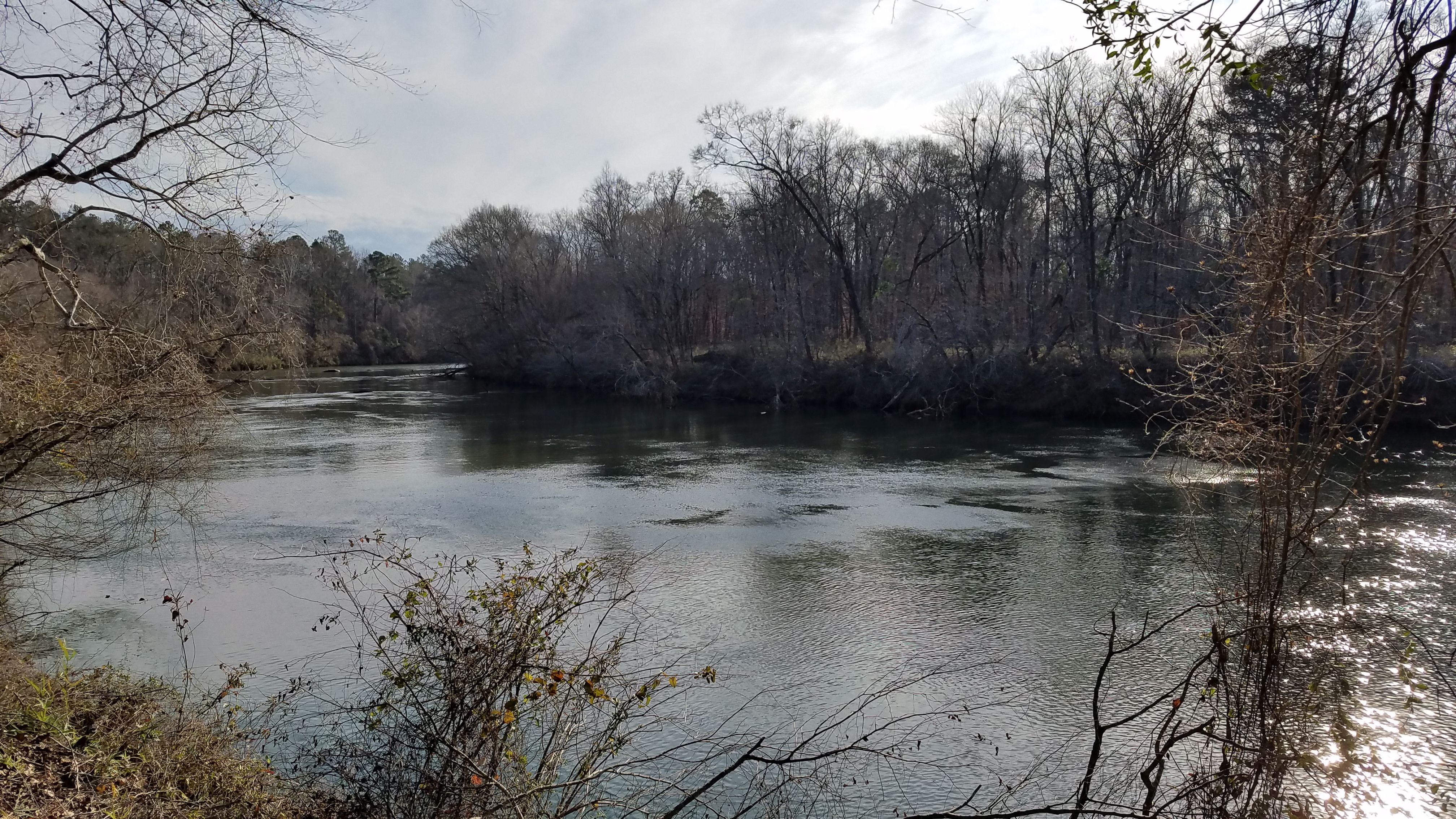
The river, and across from it Bean Island. Here Jackson stationed troops to prevent a sideways escape across the river, effectively hemming the Red Sticks in from three directions.

The commanding general at Fort Mims, Ferdinand Claiborne, gave his name to a nearby stockade-turned-river town, Claiborne. I’d never heard of Claiborne until last year, when reading parts of Rivers of History; Claiborne was named as one of Alabama’s early river towns, one larger than Cahaba and St. Stephens, both sites of early Alabama government. One of its more famous sons, William Travis, died at the Alamo; the town itself appears to have peaked in 1830 and withered away after the Civil War. General Claiborne is all over the place during the Creek wars; he appears to have had general supervision of many of the forts.
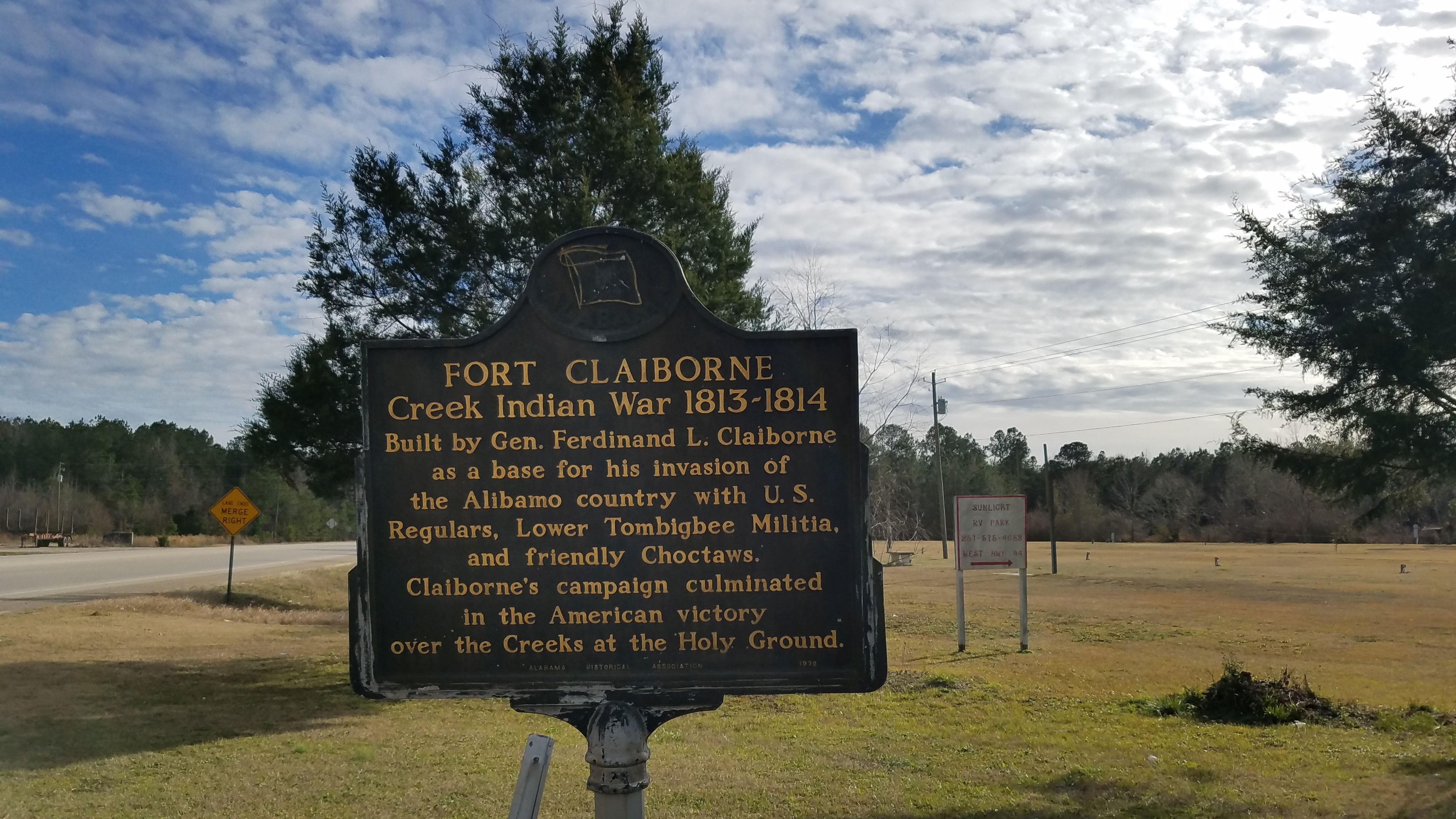
The fort itself is no more; only a sign in a lot not far from the river bears witness to its existance. The battle at Holy Ground took place midway between Selma and Montgomery; it was there that one of the Redsticks’ more flamboyant leaders allegedly drove his horse over a ridge into the water to escape. Not far from the Claiborne signpost is a Masonic lodge, the oldest building in Monroe County and possibly once part of the town.
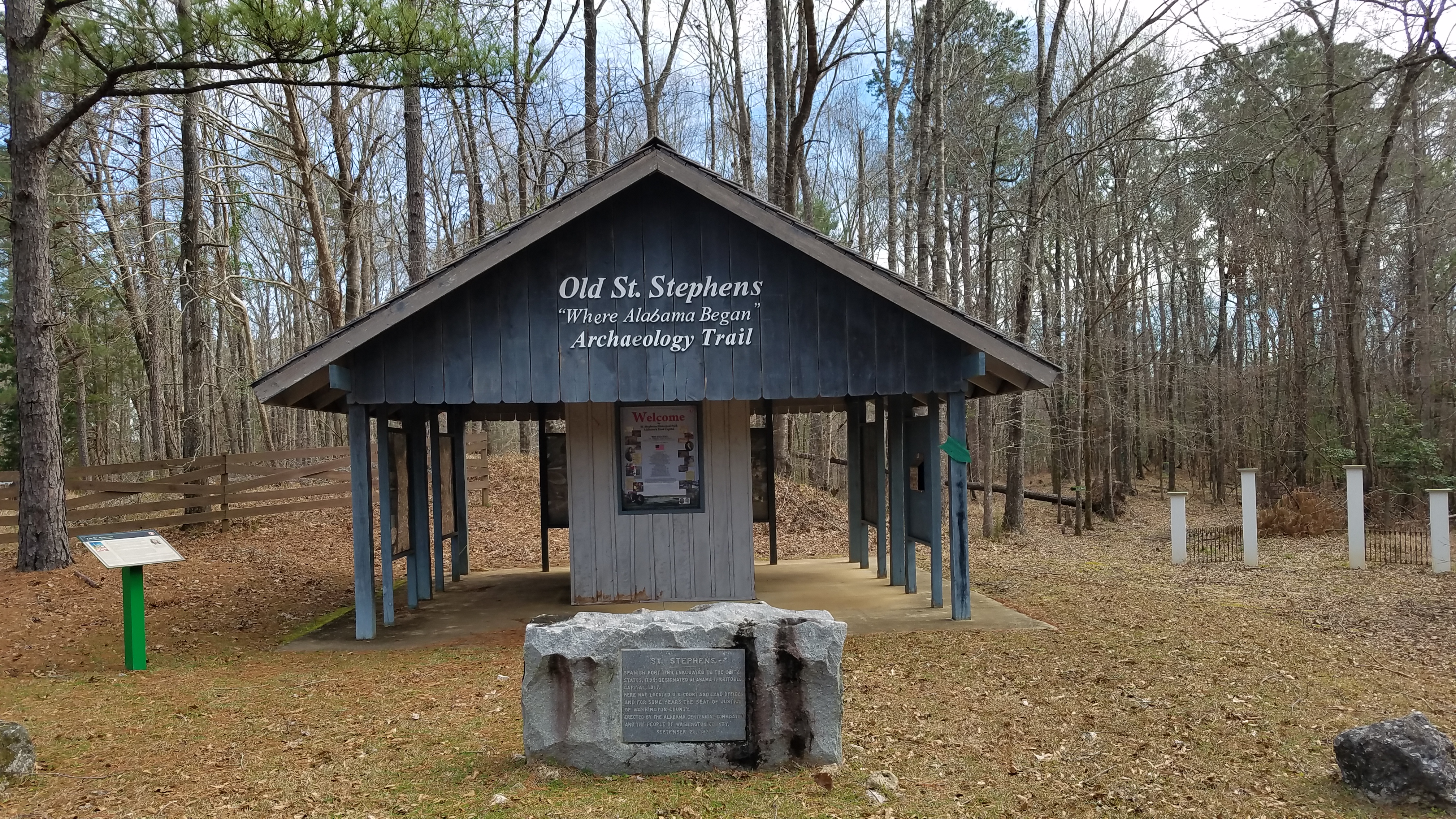
Marker for the old fort

St. Stephens, a fort-settlement created by the Spanish, had been ceded to the English and then passed into American possession, is nearby. I haven’t done any background reading into the fort and its brief history, but it sits in the granddaddy of dozens of Mississippi and Alabama counties, Washington, and was the territorial capital of Alabama before statehood. According to the signage, the old town was deserted by the 1820s, though apparently the incorporated village of St. Stephens (a couple of miles away from it) was formed in 1830.
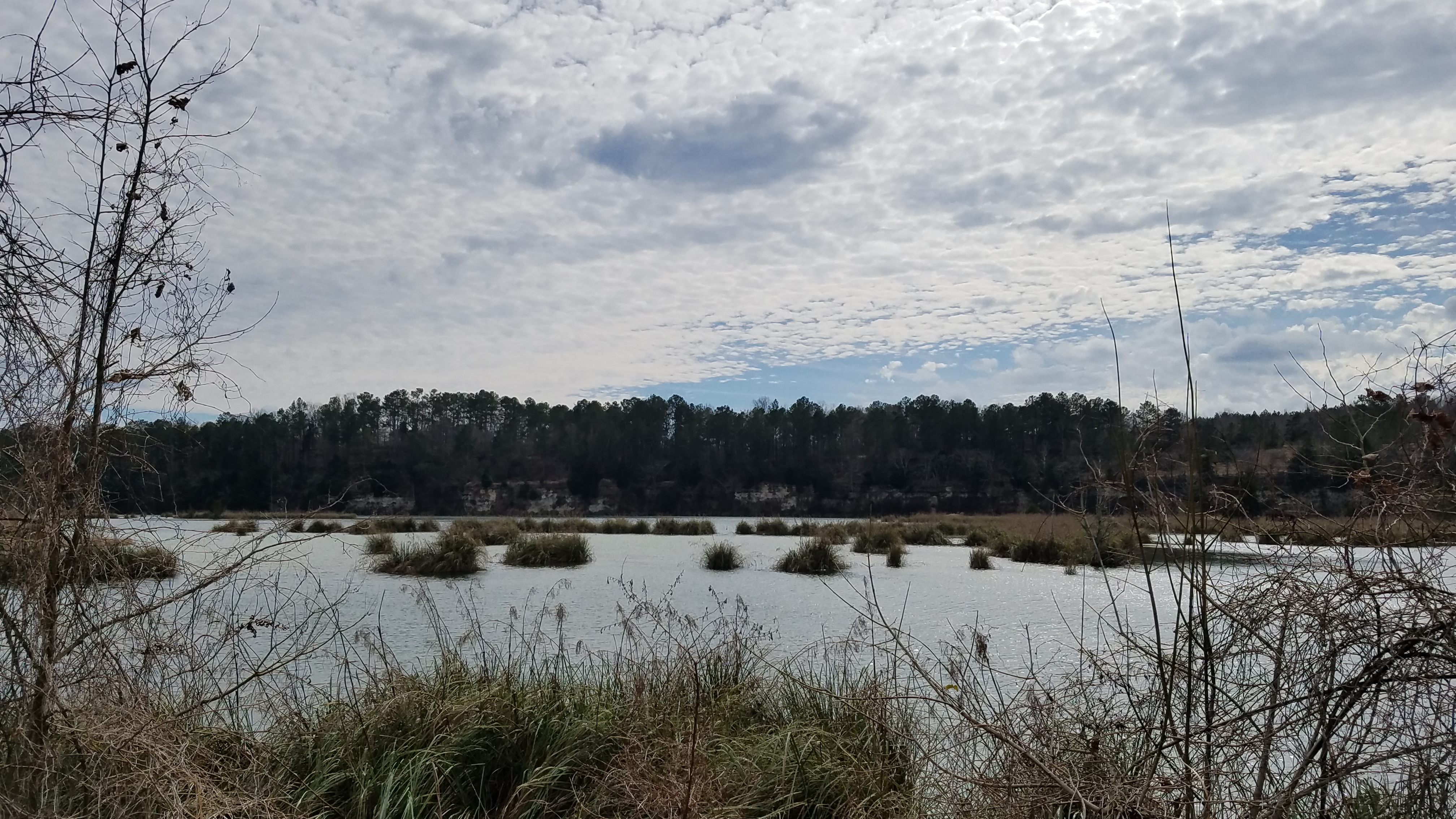
That ridge across the lake is where the fort was.

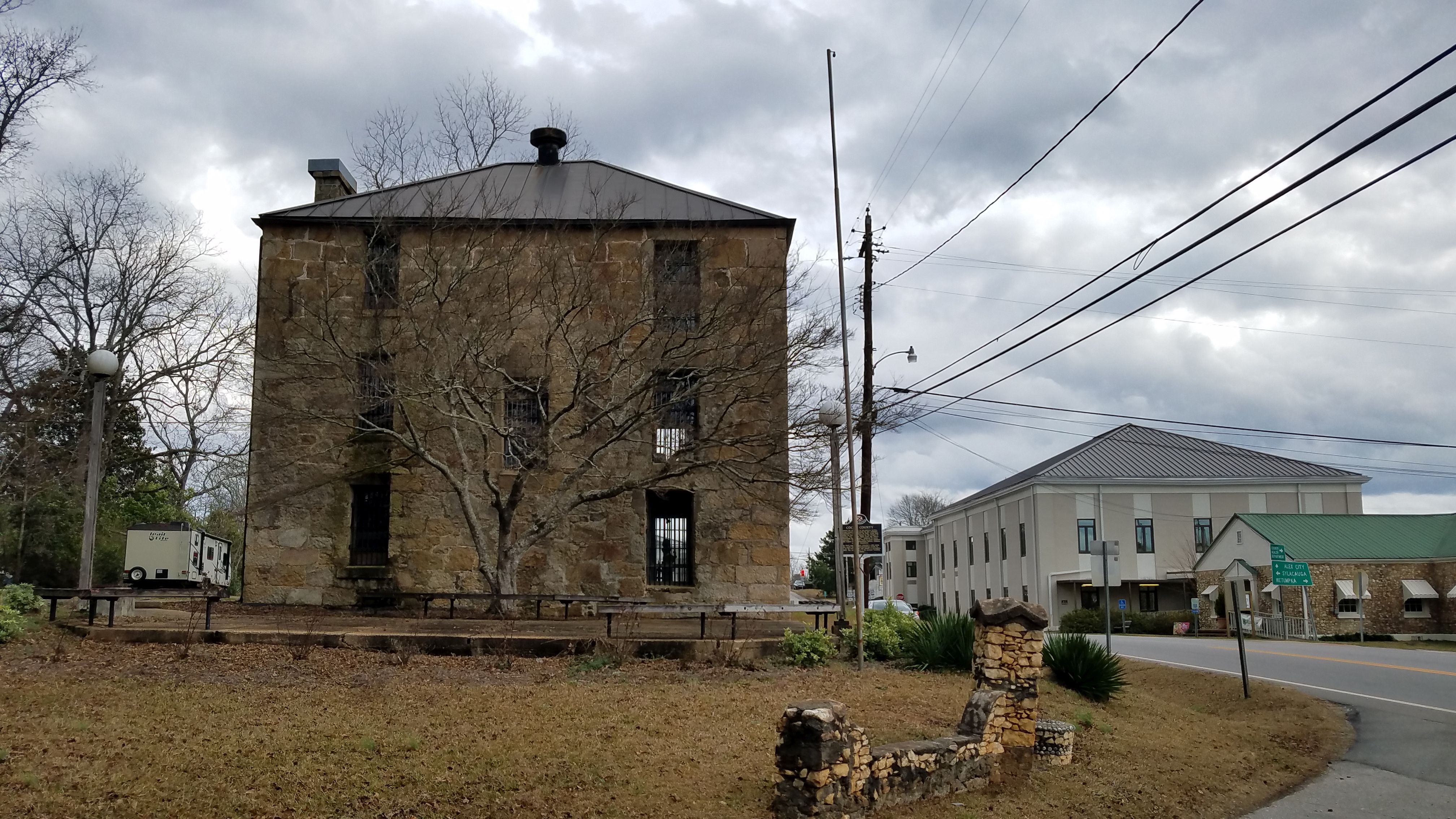
In eastern Alabama, I paid a visit to Rockford to see its old jailhouse, built entirely of rock; and to pay my respects to Fred the Town Dog. I was told he was buried near the rock jail, but I only found a sidewalk leading to a tree stump and a pile of stones. Possibly a grave, but surely Fred the Town Dog had a placard, at least. He was Fred the Town Dog, appearing in Christmas Tales of Alabama and an Animal Planet special! After wandering around downtown Rockford chatting with people, I found someone in the post office who knew exactly where Fred was.
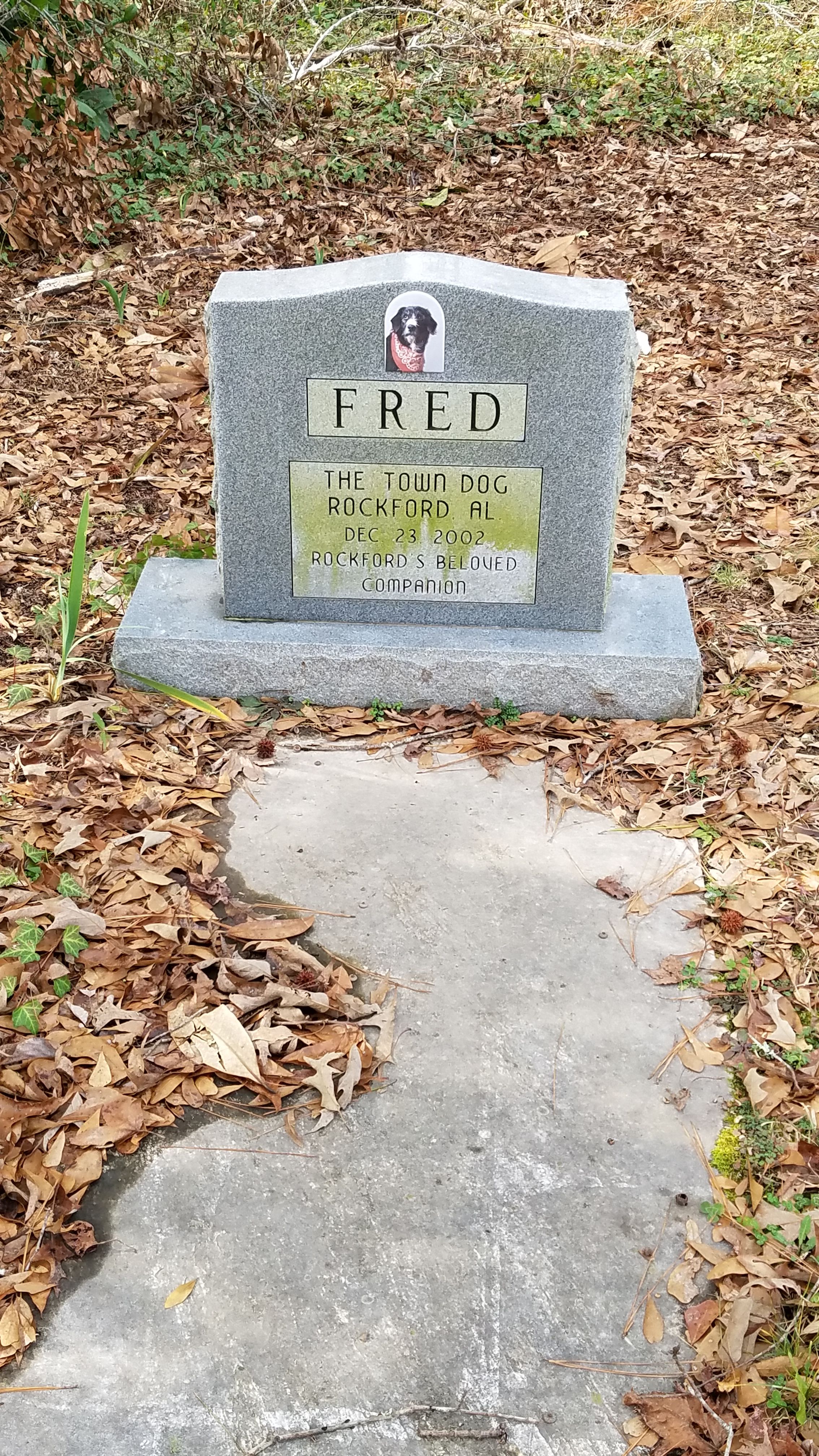
The goodest of boys, I’m told Fred wandered into town with the mange, took up residency near the liquor store, was nursed back to health by the town residents, and later became the ‘author’ of a newspaper column. Then he was bitten by something Mysterious and died. (“Mysterious” is always used to describe the animal bite in the Fred accounts I’ve read.)
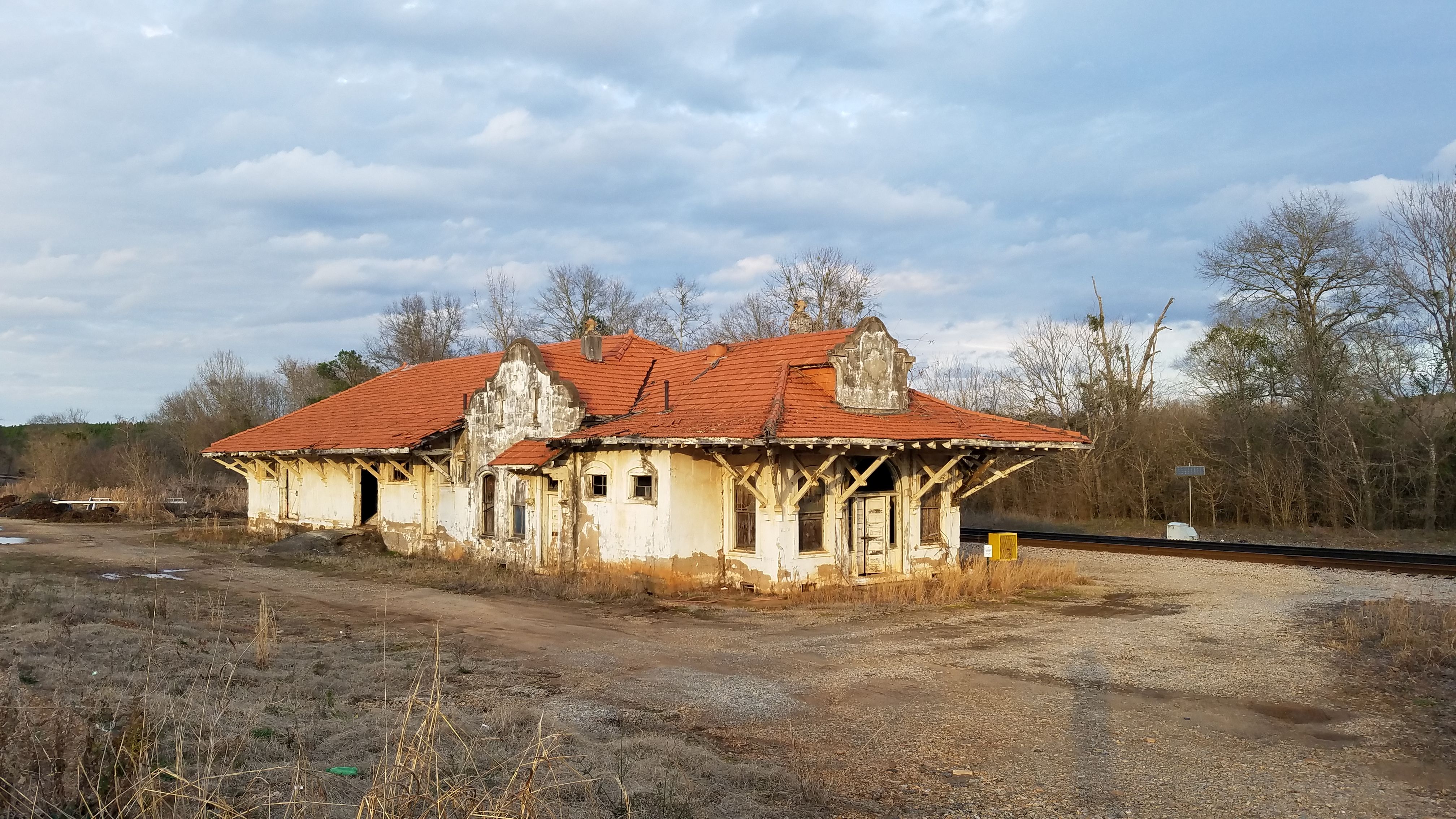
Much further east is the small town of Wadley, which I reached late in the afternoon after exploring Horseshoe Bend. I went there to see one of Alabama’s four extant Mission Revival train stations. Judging by appearances there may soon be only three extant Mission Revival train stations in the state. The inside looked rather junked up; I was curious but didn’t have a flashlight or company, so I decided not to tempt fate.

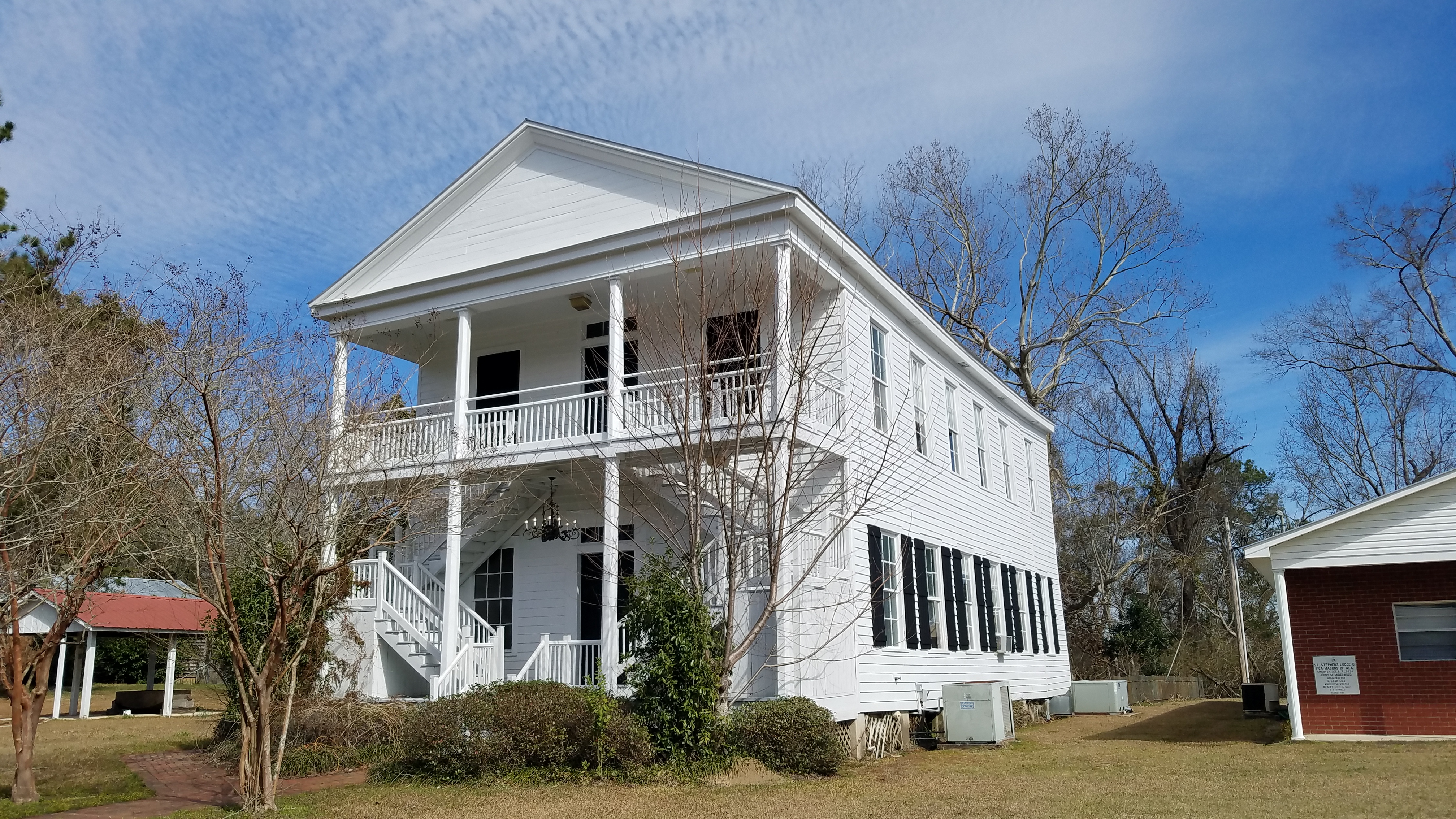
Let’s wrap up by looking at a couple of buildings in good shape: the Masonic lodges in Claiborne and St. Stephens!
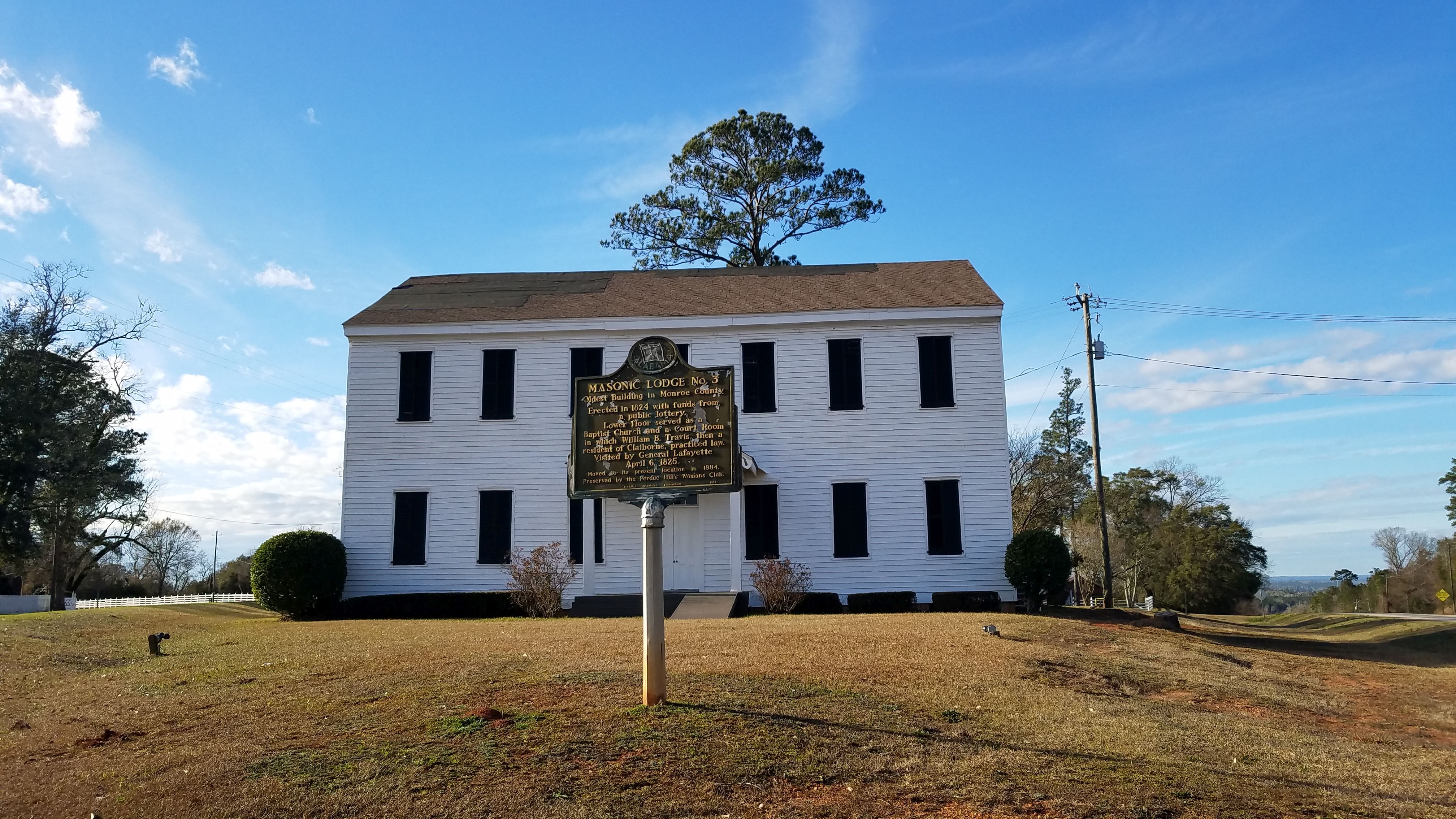
The oldest structure in Monroe County. (And yes, that’s the same Monroe County that Harper Lee’s Monroeville is in.I drove through it several times last weekend!)
Lodge in St. Stephens, Al.
Posted in General | Tagged , , | 7 Comments

Plague, Inc: The Cure

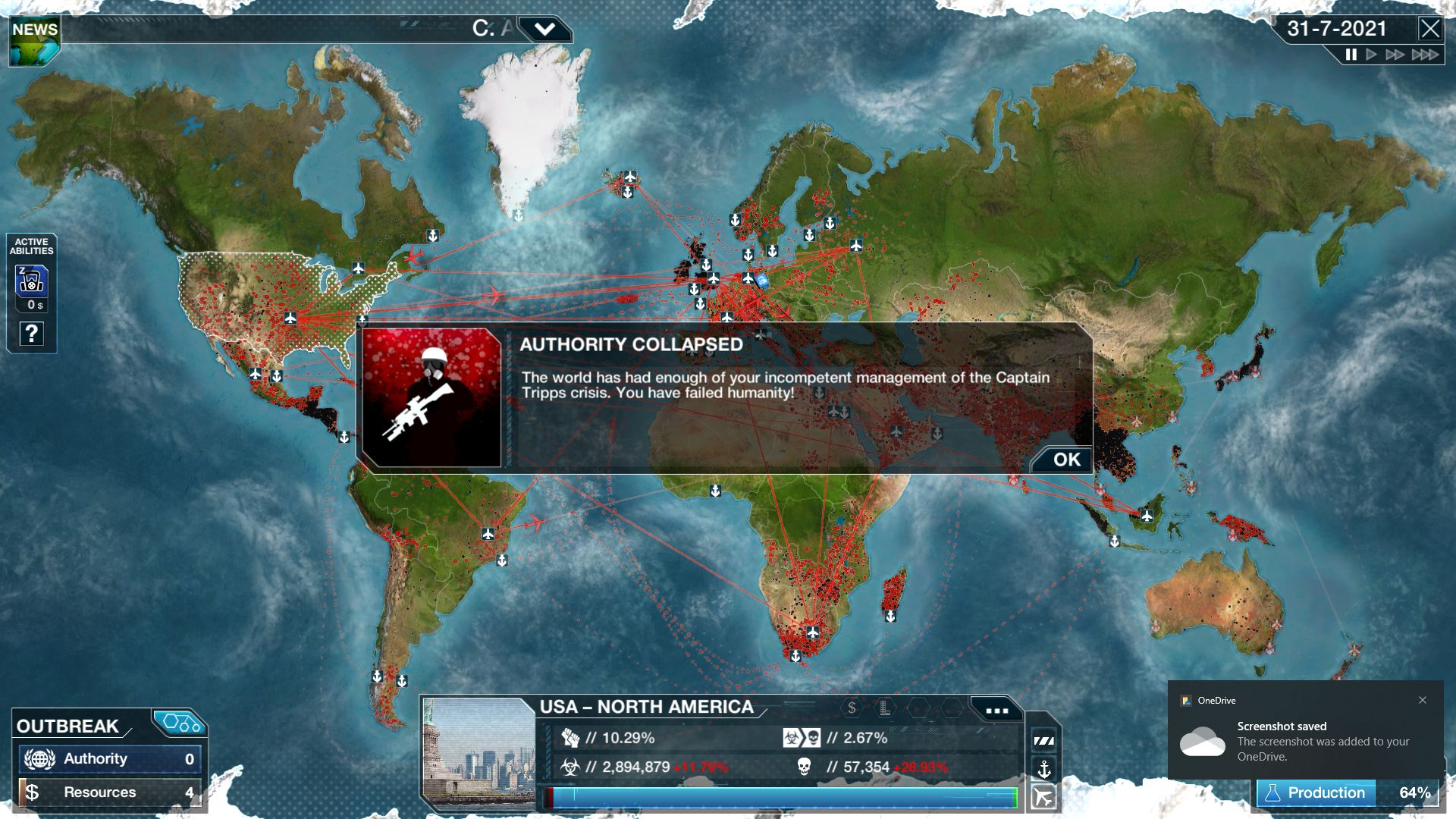
Back in August I made mention of a game I’d been playing during all my free quarantine-time, Plague, Inc. It’s a pandemic simulator in which the player’s goal is to actively destroy humanity with a disease; I’d heard of it because its publishers had announced that they were working on a new game mode, The Cure, in which the player instead is spearheading a global fight against a pandemic. It was released yesterday, and I’ve been failing at it since. It’s FREE TO PLAY (apparently), until “Covid-19 is under control”.

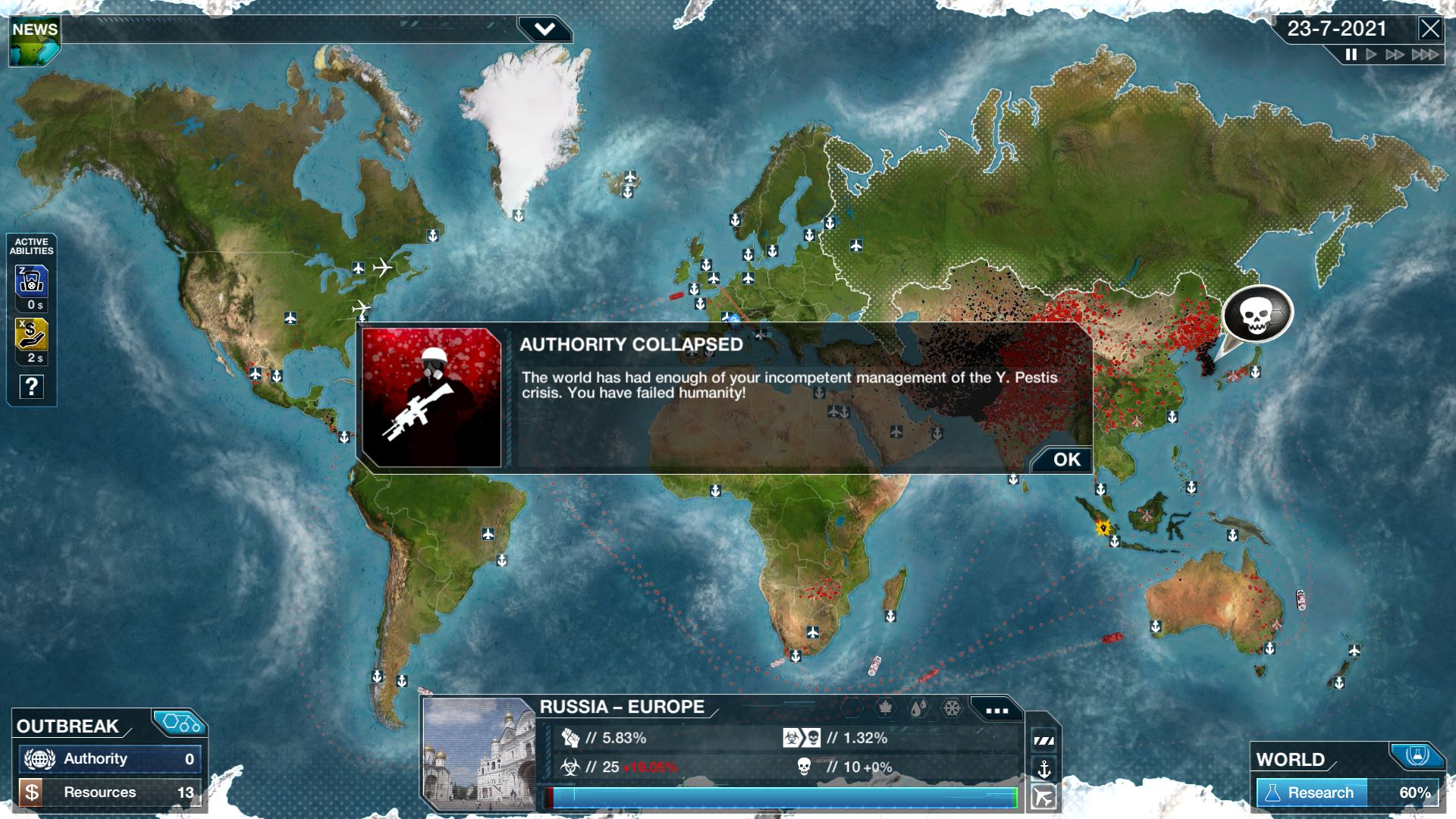
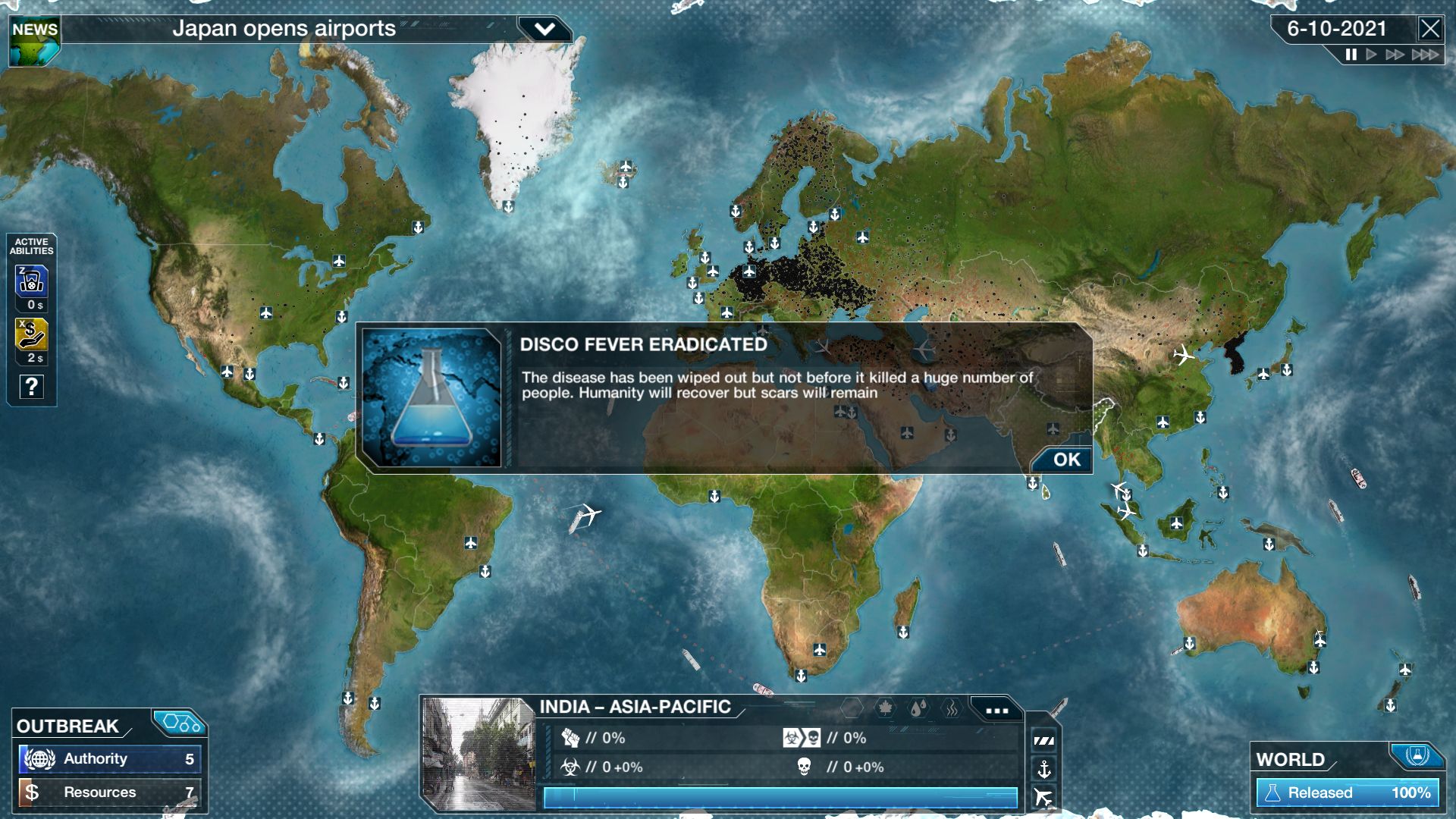
Part of the game unfolds as one is used to: tiny red dots slowly fill the globe as a disease breaks out and spreads across the planet, following the lines of transit. This time, though, instead of guiding the plague to different symptoms and increasing potential vectors, the player attempts to thwart the virus by building a response network, imposing quarantines, educating the populace, expanding treatment options, etc. Strong quarantines are an option, but they can backfire just like strong symptoms do in the regular game mode, provoking a counter-response: this time, populaces can start not-complying, and they’ll do so even as the country is collapsing around them from the dead. So far I’ve played five games and…failed 4/5ths of them.

My first attempt was oddly the most effective, despite my not knowing what I was doing: I didn’t even know how to access tools until the game yelled at me to do something before it was too late, and I was slow to explore the various options, so by the time 93 million people were dead, I’d slowly woken up to the fact and and was starting to issue vague announcements that people should you know, wash their hands and stuff. Eventually the plague spread too far and killed too many and I was fired. But hey, we had a vaccine and it was just about to start being distributed!

My second and third attempts also resulted in my being fired, apparently because I was imposing too many strictures and people were still dying. I’ve gotten better at not letting the disease spread, though. I mean, all of Central Asia is dead, and so is South Korea, but they had it coming — noncompliance was at 100%! All I did was close everything and order everyone to stay at home and watch Netflix.

Finally, on my fourth attempt, I managed to not get fired long enough to see the vaccine finished, manufactured, and distributed. It was a close-run thing: I got all the way down to 2% authority before I imposed censorship to stop people from complaining. Those wicked Canadians broke the gag order, but by that time I’d already started shipping vaccines and my authority rose.

Posted in General | Tagged | 8 Comments

Alabama: Making of an American State

Alabama: the Making of an American State
© 2016 Edwin C. Bridges
264 pages

In December of 2019,  the streets of Montgomery were thronged with people as the citizens of Alabama celebrated its 200th anniversary. The three years prior had been full  of special events, lectures, etc themed around the history and heritage of the state; Alabama: The Making of an American State was one of the many books published during that period, offering a generously illustrated narrative history of the State from its earliest residents to the present day.   A recent weekend trip exploring sites connected to the Creek War in Alabama  prompted me to begin reading this for background information, and I was greatly impressed by its content and presentation.  

Although a historical overview doesn’t necessarily need a thesis, Bridges offers one, arguing that Alabama has played a surprisingly central role in many of the United State’s pivotal moments. This goes well beyond the obvious roles Alabama played in the Civil War (hosting the first capital of the Confederacy, and providing 2/3rds of the South’s munitions in the latter years of the war) and the Civil Rights movement.  Bridge’s account shows how Alabama’s early settlement contributed to rising tensions with the Creeks; in the intertwined conflicts of the War of 1812 & the Creek Wars,  Alabama was the site of several decisive battles. The masssacre at Fort Mims by a belligerent faction of the Creeks prompted not only swift and merciless reprisal, but propelled men like Andrew Jackson into the national spotlight. Alabama led the way in creating the New South,  embracing rails and industry with enthusiasm, and one of its native sons, John H. Bankhead,  was instrumental in the creation of a national highway system.  The 20th century story is more  familiar – industrialization and wars,  economic diversification, Civil Rights,  the Huntsville contributions to the space race, etc.  

Despite being a lifelong Alabama resident and student of history,  I learned more than a few things from Bridge’s artful history.  I didn’t realize how complicated the Creek wars were, for instance: they didn’t simply pit white settlers against native Creeks, but often mixed populations and people of mixed loyalties against one another.  I didn’t realize how long it took the plantation oligarchy to fully establish itself, triumphing over Alabama’s far larger freeholding population. Though fiercely independent,  the yeoman class’s zeal to be not dictated to often resulted in their being subtly manipulated, instead,  generally to their detriment.  Although the yeoman freeholders are long gone,  their spirit lives on – as does their steady manipulation by both state and national politicians. 

If you’re looking for a survey of Alabama history, Bridge’s work recommends itself. The narrative is easy to follow, doesn’t drift into partisan editorializing, and absolutely abounds with quality photographs.

Posted in Reviews | Tagged , , | 1 Comment

The Wonder Boy of Whistle Stop

The Wonder Boy of Whistle Stop
© 2020 Fannie Flagg
304 pages

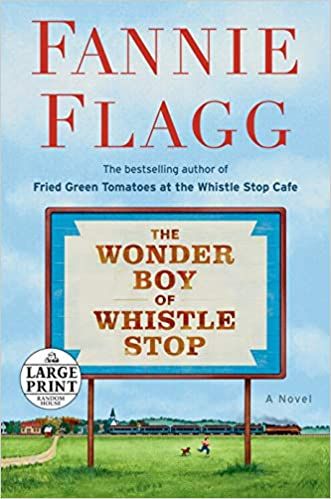
One of my favorite movies growing up was Fried Green Tomatoes at the Whistle-Stop Cafe: why on Earth this movie became a favorite in my very sheltered household, I cannot say; it was a story of a woman struggling to find a path forward for herself, of the interesting relationship between two women in the ’30s of Alabama, of Klansmen and murders and possibly cannibalistic barbecues — not exactly family friend stuff. I most loved it for the character of Imogene “Idgie” Threadgoode, whom I’d call an irrepressible tomboy if that didn’t feel like a disservice to her character; Idgie was no one to be boxed, labeled, and dismissed. I read the book that the movie was adapted from in high school, and recognized the story though I found its presentation in the book to be…fragmentary and disjointed. Fannie Flagg adopts that same odd style for its sequel, The Wonder Boy of Whistle-Stop.

If you’ve never encountered the book, or the movie, it’s two intertwined stories that intersect in the small town of Whistle Stop; of the extraordinary bond shared by two women, Idgie & Ruth, as they survive the death of the man who brought them together, Idgie’s brother and Ruth’s husband. — and become parents to Ruth’s son, as they run a cafe together, frustrated the Klan, and possibly kill a man. Their tale, unfolding in the thirties, is told decades later by Idgie’s sister-in-law Ninnie, who encounters a down-in-the-dumps woman (Evelyn Couch) and seeks to inspire her by Idgie’s example. (Now, I haven’t read the novel since high school, so it’s liable I’m mixing it with my impression of the movie.) Wonder Boy is a sequel in that it follows the lives of several Fried Green Tomato characters, chiefly Ruth’s son Bud and Idgie herself — but it also revisits the original story. Because of the fragmentary narrative style, we bound from 1930s Whistle Stop to 2009 Atlanta with the turn of a page, there and back again, going back and forth and seeing our main characters as they are and as they become; Bud as a small child, Idgie his doting aunt/co-mother; Bud as an old man with grandchildren, and Idgie a distant memory. I’ve watched the film so many times over the years that only a gentle stir was needed to bring everyone to life again. Frankly, I’d forgotten that Evelyn Couch was even in the original book, but here she plays a much more active role, no longer the spellbound hearer of Ninnie’s tale. In fact, she plays a lyinchpin role in the novel’s almost too-perfect ending, in which all the loose ends are tied up and every tear dries. It’s sweet to the point of saccharine, but sometimes there’s a need for that.

Those who are familiar with the characters and the story of the original book will find themselves right at home; it’s messy but fun, and filled with characters both known and loved. It’s left me wanting to revisit the original novel, and soon!

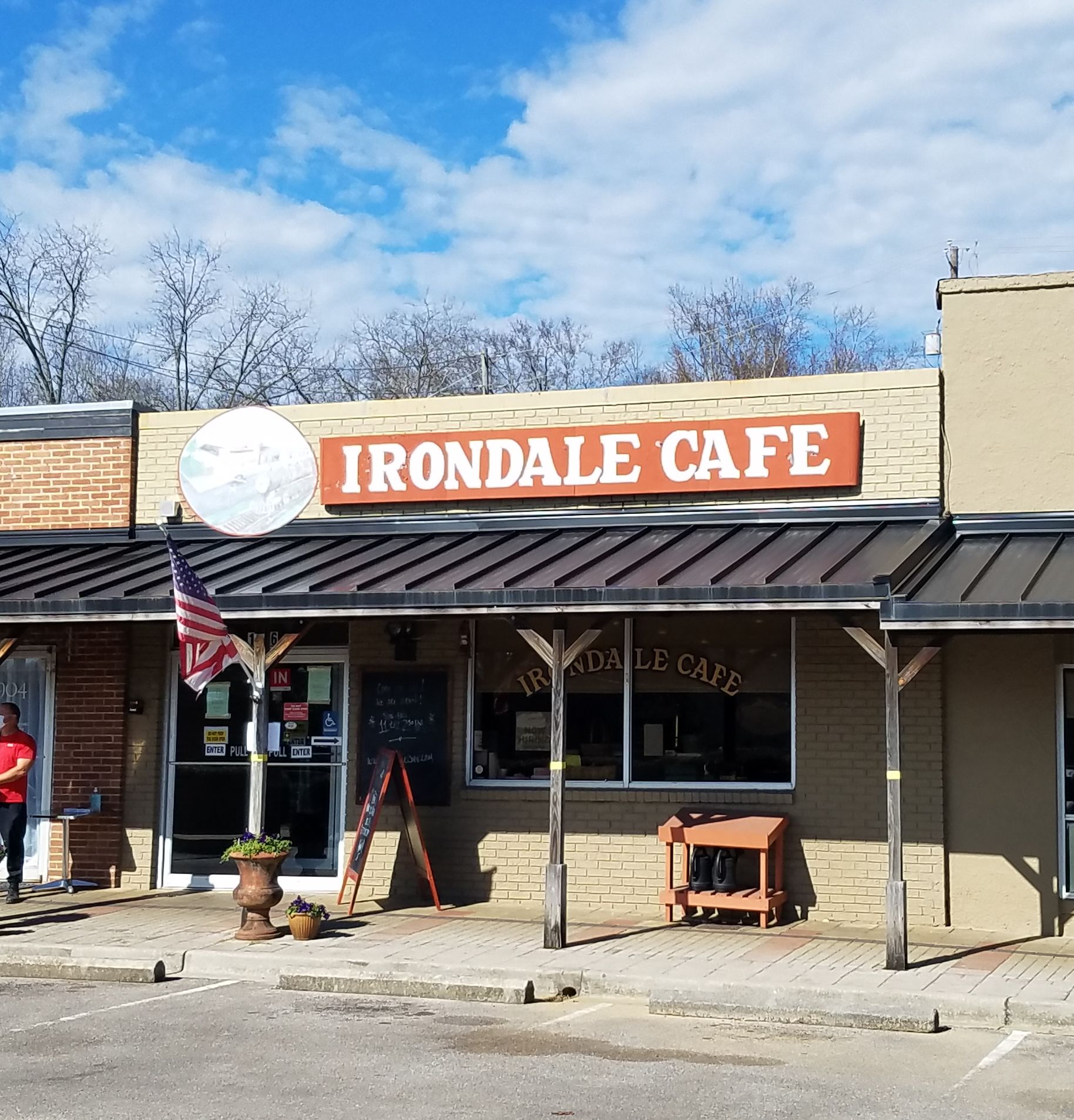
Incidentally, I recently paid a visit to the the inspiration for the Whistle Stop Cafe. Unlike Whistle Stop, Irondale AL is not deserted; it has instead become a suburb of Birmingham. The cafe was run by three women in its original heyday, and is incredibly popular still today. I was there when the doors opened, and when I’d finished some of the best fried green tomatoes I’ve ever tasted, the line was out the door.

Posted in General, Reviews | Tagged , | 4 Comments

Where I Come From

Where I Come From: Stories from the Deep South
© 2020 Rick Bragg
256 pages

“I write about home so I can be certain someone will. It is not much more complicated than that.”

What a joy Rick Bragg is to read! A native son of Alabama, Rick Bragg is a journalist-turned-folklorist in the tradition of Kathryn Tucker Windham, who here collects a series of articles inspired by the people and places of the Deep South (sans Mississippi, amusingly), resulting in a title of steady humor and down-home nostalgia. I’ve previously enjoyed his tribute to his mother’s cooking, and an oral-history reflection of the fate of a mill village, but this varied series of vignettes will keep me digging into Bragg’s bibliography.

Most of the pieces are fairly representational of what I’ve come to expect from Bragg. There are the semi-biographical musings, as Bragg tells stories about characters in his family or his youth. ‘Characters’ are usually people, but not always; many of them are dogs, and one frequently-hailed character in this collection is a now-shuttered hotel in New Orleans. Although most pieces have a Bama connection, Bragg’s love for New Orleans manifests itself repeatedly in fond vignettes set in the city, and a few other places of the Deep South receive attention as well. There are odder ducks in the collection, like Bragg’s letters to Santa…..and Santa’s reply! Several pieces hail southern luminaries after their deaths; Bragg’s friendship with Pat Conroy and his one encounter with Harper Lee are the basis of two such items. As a whole, Bragg’s latest is a fascinating hodgepodge of topics, from the opening tale of his hooking an already ill-tempered goat while fishing, to his ruminations on the popification of country music.

While I’ve not read many of Bragg’s works (this makes three), I readily admire his celebration of the South’s unique quirks that leaves politics where it belongs — outside. Even when his people are an absolute mess, he still looks on them with love, reminding me a bit of Bill Kauffman’s affectionate tales of Batavia that wander in through all his writing. Bragg sums up his appeal for me in a short piece on why he writes about ‘home’ — so he knows someone is, so the stories of characters of common clay won’t be forgotten. Bragg always reminds me of a world that’s fast fading away, one in which no everyone has been homogenized by the television to think and talk in predictable patterns. The people and places he brings to mind are those that were Characters, who gave to the world real joy in their diverse quirkiness.

Posted in Reviews | Tagged , , , | 3 Comments

Why Rick Bragg Writes

Quoted from Where I Come From, by Rick Bragg:

“I write about home so I can be certain someone will. It is not much more complicated than that.” 

“Home is not a thing of position, or standing. My home is where the working people are, where you can still see a Torino ever now and then,  and people still use motor oil to kill the mange.  It is where the churches are small, and the houses, too. It is where people cheer for a college they have never seen, where propane tanks shine silver outside obile homes with redwood decks, where buttercups burst up out of red mud, encircled by an old tire. 

“These are not the people of influence who have their names carved into the concrete of banks and schools and churches, whose faces stare back from the society page. As I’ve said, maybe too many times, these are the descendants of people who could only get their names in the newspaper or the history books if they knocked some rich guy off his horse. 

“I do not, greatly, give a damn about writing about people who history will handle with great care, anyway, by birthright. 

“I will write about a one-armed man who used to sling a sling-blade out by the county jail, and a pulpwood truck driver who could swing a pine pole around like a baseball bat. 

“I will write about dead police chiefs who treated even the most raggedy old boy with a little respect, and old men who sip beer besides the pool tables in Brother’s Bar, and then go take some money off the college boys. 

“I will write about the wrongdoers, because sometimes doing right is just too damn hard, and the sorry drunks, and the women who love them anyway. I will write about mommas, not somebody’s Big Daddy. I will write about snuff, not caviar. 

“I will write and write as long as somebody, anybody, wants me to, till we reminded one more brokenhearted ol’ boy of his grandfather, or educate one more pampered Yankee on the people of the pines.” 

Posted in quotations | Tagged , , | 1 Comment

Sunshine Blogging: Survey via Classics Considered

Marian over at Classics Considered just posted a survey, and I figured — why not?

If you go back and read one book for the first time again, which would it be?

Probably the first Wodehouse novel I read, just for experiencing that language for the first time.

Do you eat ice cream, and if so, what is your favorite flavor?
Ice cream is too delicious a treat to indulge in too much. My favorite kind of ice cream treat is vanilla with a chocolate ‘shell’: think Klondike bars!

What was the most memorable event or concert you ever attended?

I hate crowds and loud noises, so I’ve never been to a ‘traditional’ concert. I have attended smaller musical performances, like chamber music recitations, but the most memorable performance I’ve ever attended was Bobby Horton’s celebration of Alabamian folk music back in December 2019. I’ve been listening to his music since the nineties, and it inspired my college senior thesis. Meeting him was an absolute joy! Horton has released many ‘homespun’ collections of folk music, chiefly from the Civil War years but throughout the 18th and 19th centuries. They’re home-spun because he does all of the vocals and instrumentation separately, and then combines them. I’m embedding a favorite, “The Rose of Alabama”, below. He’s done numerous Union and Confederate collections, Songs of the 19th century, Songs of Faith, and Songs of the Revolution.

What do you like best about yourself?

I’ve never lost the universal curiosity of childhood that I fear many adults have.


Is there a book you would never, ever read?

Fifty Shades of Gray. Not happening.

Second-best way to spend a rainy day? (Reading is the best, right?)

Breaking my record for pots of coffee consumed while listening to music and..probably playing a PC game, if I’m honest.

Cats or dogs?

Oh, easy. Dogs. They’re smelly, noisy, and an all around mess — but they’re pals. Cats have their pleasures, but dogs are easier to get along with in general.


Best pizza topping combo?
I’m partial to pepperoni, green peppers, and olives. Quite boring.

If you could recommend one fictional book, what would it be?


Jayber Crow, Wendell Berry. It’s only my absolute favorite novel.

Earliest reading memory?
Lying in bed with my father, listening to him read The Adventures of Tom Sawyer aloud.


What’s something you’re looking forward to this year
?
Spring…and that’s really about it. 2020 has disabused me of the habit of hoping for much. Flowers, though, those I can count on. Especially the Cahaba lilies

Posted in General | Tagged | 14 Comments

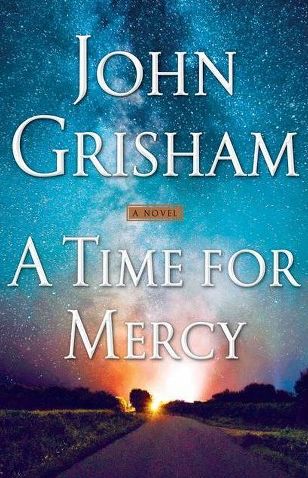
A Time for Mercy

A Time for Mercy
© 2020 John Grisham
480 pages

A woman lies beaten and unconscious in the kitchen; her children quiver in fear in a back room while the man they’re terrorized by lies in a drunken stupor in his bedroom. A sheriff’s deputy, he always wiggles free of abuse charges. But he stirs, as if to rise, and a young boy makes a fateful decision. A Time for Mercy returns readers to Clanton, Mississippi, with a morally challenging case reminiscent of A Time to Kill. Unlike A Time to Kill, however, Mercy simply ends rather than concludes; those who find themselves absorbed by the drama will leave frustrated at the lack of real resolution. Although a welcome return to Clanton, Mercy has its limits.

In Grisham’s first-ever novel, a man took justice into his own hands and shot two cretins who raped and beat his daughter, who had been released by a biased jury. Young Jake Brigance took on the man’s defense, at considerable risk to both himself and his family, and prevailed. Now he’s at it again, defending a young teenager who believed his mother had been killed by her abusive boyfriend, the same boyfriend who had also repeatedly raped his sister. That teenager, Drew Gamble, also took justice into his own hands and (contra Bob Marley) shot the sheriff’s deputy. Clanton is again sharply divided, though this time they’re largely against Brigance’s client: although the deceased deputy was known as a drunk hell-raiser on his off-time, on-duty he was one of the department’s best. Brigance finds former friends giving him the cold shoulder, and is harassed at length by the deputy’s ornery and combative family.

My enthusiasm for Grisham has waned considerably over the years, in part because he’s slowly morphing into James Patterson, pumping out too many books without enough polish. Mercy, for instance, meanders all over the place: we spent a considerable amount of time focusing on another case Jake is involved in, when it goes absolutely nowhere in the timeframe of the novel. This section introduces a considerably interesting sideline when we learn that the golden boy, the Captain America of the law office Jake Brigance, has committed a bit of an ethics violation in discovering a potentially destructive witness to his case, then not sharing knowledge of this witness with the prosecution. The sudden exposure of this fact further isolates Jake, but it never comes up again.

What saves Mercy, as much as it is saved, is the inherent moral interest of the case: yes, Drew did wrong in murdering a violent and angry drunk in cold blood..but boy, if ever a man needed killin’, the victim did. The reader can’t help but be a sympathetic to both sides, and the way Grisham ends things is frustrating because there’s no real ending as such, no resolution. Mercy is also greatly supported by virtue of being a Clanton, MS novel, so that regular Grisham readers will feel themselves surrounded by old friends and stories. We know the characters in this novel, without needing introductions; we know the story of the town and even of Jake’s house, because Grisham has developed them in so many other books (The Summons, The Last Juror, Sycamore Row, etc). This also allows Grisham to be a bit lazy, and he confesses in the afterword that he has — not even bothering to re-read his Clanton books, but relying on the memory of those who have. Frankly, it’s a little insulting to the reader that Grisham can’t be bothered, but we keep buyin’ them. (Or, in my case, relatives keep buying them and giving them to me as Christmas presents, because my willingness to spend money on Grisham stopped in 2007/2008 or so.)

Posted in Reviews | Tagged , , , | 2 Comments

Kenobi

Star Wars: Kenobi
© 2014 John Jackson Miller
464 pages

Hello, there.

The Republic is fallen, and the Jedi are no more. The few survivors of Emepror Palpatine’s purge have fled, scattered across the galaxy with their own individual missions. For Obi-Wan Kenobi,  that entails a quiet watch over the son of Anakin Skywalker,  whose life Kenobi was compelled to take on Mustafar.   The boy, Luke, has been deposited with Anakin’s step-family for safe-keeping,   and Obi-wan must keep him from harm at a distance while he reels in pain from Anakin’s breathtaking fall into the dark side, and the destruction of the Order.   It’s going to be hard for Kenobi to find peace and do his job, though, because he’s unwittingly settled on the outskirts…..of a western. 

The scene: the Pika Oasis,  where the rural economy of moisture farmers sustains a general store known as Dannar’s Claim. Run by a widow named Annileen, it’s also the headquarters of the Settler’s Call, a community-supported posse  that responds to Sand People attacks with extreme prejudice.  Into this quiet, apparently stable, community comes Obi-Wan – or as he’s known to them, “Ben”.    Although intending to blend in, the Obi-Wan in Ben keeps coming out; he can’t see someone in peril without dashing in to save them.  Despite his name on the cover, though, Kenobi is not the viewpoint character of Kenobi; we alternate instead between Annie,  the tough-as-teak  store owner;  Orrin Gault,  posse leader and friend of everyone but the Sand People;    and…A’Yark, leader of the local tribe of Sand People, who burns for vengeance against the settler-scum. Kenobi appears in occasional meditations to Qui-Gonn,  but otherwise we see him as the settlers see him – a stranger, who is helpful and friendly enough but mysterious enough to be frustrating.  As Kenobi progresses,   readers learn that members of the community are hiding a secret, one that could destroy them, putting Ben into an awful bind:   still reeling from the moral downfall of his brother-at-heart Anakin,  how can he turn his back when he sees good people making decisions that will ruin everything they’ve worked for, including themselves?   Despite the lack of a full Kenobi spotlight, we still get his story as he constantly works with the ‘real’ viewpoint characters to find a path through the chaos.     

Amusingly, this felt less like a Star Wars novel and more like a western, between the unforgiving landscape, the frontier-town defended by an armed posse of farmers,  and the constant attacks of the natives. One of Miller’s more interesting choices was to use the Sand People’s chieftan, A’Yark, as a viewpoint character. Presumably this was with the intention of making them less ‘other’,  more like people and less like mysteriously implacable  hostiles.   It doesn’t work for me, though, because the Sand People are still one-trick ponies: they attack, or they wait to attack,  and it’s hard to disassociate them with my first memory of them:    ambushing Luke Skywalker with those awful URRRRRRRRRRR-URRK-URK-URK-URK! cries.

Although this was not the novel I was expecting, I definitely enjoyed it. Given how pathetic the sequel trilogy was, it’s nice to be reminded of a time when Star Wars had characters who, you know, grew. Here we see the outgoing Jedi knight of Obi-Wan slowly surrendering to the sad wisdom of Old Ben.

Related:
Star Trek: Takedown, John Jackson Miller. That might explain why Takedown was such an odd story — JJM is mostly a SW writer!
Star Wars: Revenge of the Sith, Matt Stover. The best SW movie novelization I know of, and one with a heavy focus on Anakin and Obi-Wan’s brotherly bond.

Posted in Reviews | Tagged , | 4 Comments

A Walk Around the Block

A Walk Around the Block: Stoplight Secrets, Mischievous Squirrels, Manhole Mysteries & Other Stuff You See Every Day (And Know Nothing About)
© 2020 Spike Carlsen
336 pages

One of my favorite books to think back on is Scott Huler’s On the Grid, one man’s attempt to understand the various systems (electrical, plumbing, internet, sanitation, etc) that sustained everyday life in his neighborhood. Spike Carlsen’s A Walk Around the Block does much of the same thing, but it goes broader and breezier. Carlsen doesn’t do as much in-depth digging as Huler, but he’s also looking up more, and in addition to more casual chapters on the water system, asphalt, etc, he also writes about squirrels, pigeons, and trees, the other residents of our neighborhoods. Drawing on both interviews with his local technicians and background reading, A Walk Around the Block covers some familiar ground for me but is no less diverting for it.

A Walk around the Block is fun reading, and I don’t mean just infrastructure wonks like myself who read books on plumbing, electricity, and garbage disposal for entertainment. Think of it as more a social history, an exploration and celebration of the everyday, mixed in gushing advice on how to recycle more effectively or create an insect-friendly lawn. Despite my own reading in the general subject, I still learned a thing or two here; I didn’t realize how self-defeating a lot of recycling practices are, for instance. Lithium-iron batteries are constant fire hazards, and plastic bags used to group recyclables gum up the works something fierce. (Carlsen often ventures into advocacy: one chapter largely consists of appreciating bike infrastructure.) The chapters on squirrels and pigeons were an amusing novelty in an ‘infrastructure’ book, but they were fun to take on, and I was grateful for the author’s appreciation for trees not just as beautiful objects to admire, but as useful urban elements — in giving shade to pedestrians, in shielding the sidewalk from automobile traffic, etc. Carlsen truly gets into the weeds of neighborhood composition, writing about the history of asphalt, the prior and potential use of alleys, and the fate of roadkill. (In south Alabama, they apparently feed it to a gator conservancy. Who knew?)

It appears Carlsen has done book on wood, so I expect to see his name again, and am glad to have spotted this little title on the shelf. I love a title that makes the everyday come alive.

Related:
On the Grid: A Plot of Land, and Average Neighborhood, and the Systems that Make Our World Work, Scott Huler
The Works: Anatomy of a City, Kate Ascher

Posted in Politics and Civic Interest, Reviews | Tagged , , , , | 5 Comments