I’m currently without internet (going on a week now) because AT&T is as efficient as one might expect a bloated former monopoly with decades of entrenched bureaucracy and labyrinthine phone trees to be. I’m still reading, though: I recently finished When Darwin Comes to Town and am a third through Dark Matter and Dinosaurs; I also read two pieces of nonfiction by Cory Doctorow, as well as a handful of smaller ebooks. This post, though, is about a SF collection from Amazon Original Stories.
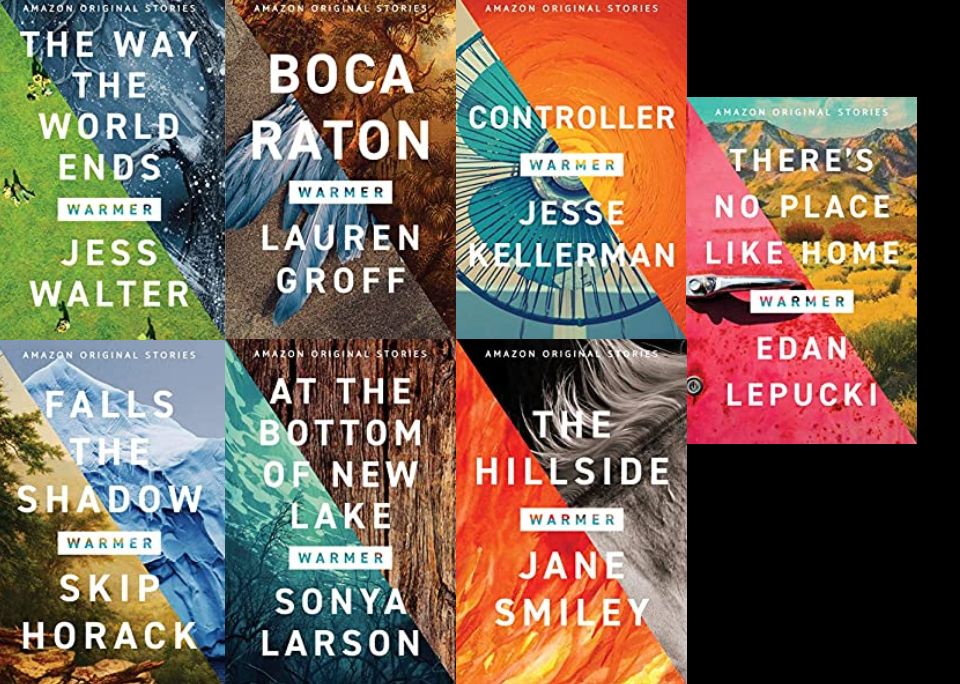
Last year I read the Forward collection, an interesting set of near-future SF stories. I noticed then that Amazon had another such collection, Warmer, collecting stories about human life in the wake of climate change. Unlike the Forward collection, they were disappointing on the whole: the stories are short, largely unimaginative, and often pointless. I’d assume anyone reading a series of short stories about climate change is already concerned about it, so it was disappointed to see nothing but low-hanging fruit here: people complaining about the heat, thinking about extinct polar bears, and pondering coastlines where land used to be. I enjoyed two of the seven stories.
This is the Way the World Ends follows two professors competing for the same job, marooned in Mississippi during a freak blizzard. This story was unique in the collection in focusing on the ‘weirding’ effect of climate change, instead of heat and sea levels.
Controller features a man’s frustrations living with his elderly and miserable mother as they battle for control of the AC.
Boca Raton kicks off when a young woman discovers something ghastly on the beach and drifts into a week of insomnia, brooding, depression, and madness.
There’s No Place Like Home is one of the few stories in this collection that has an actual plot, and follows a young woman reeling in the wake of her father’s suicide. She’s a member of the ‘youngest generation’, a large cohort of young people whose poor health in wake of food shortages has caused them to miss puberty. This is set in an increasingly deserted Los Angeles, as much of the city’s population has fled to cooler climes.
Falls the Shadow sees a paratrooper turned environmental commercial actor attend a sustainability conference. Yes, that’s the plot.
The Hillside is….the sort of thing you might read in middle school. In some fantastical future where human civilization has collapsed and the world is now run by a bureaucracy of animals whose main activity is lecturing humans (who they keep kenneled in a little valley) on how terrible their ancestors were for destroying the planet.
At the Bottom of a New Lake was the other interesting title in this collection, set on the East Coast after flooding turns the seaside into a new lake and returns the waterfront to the working class. A young Chinese girl sees the lake as a beautiful thing – her place, and one with buried treasure to boot – and can’t understand her teacher’s moaning about the world that was lost to the waters.
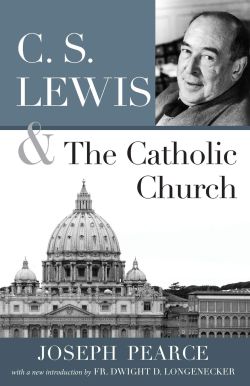
When C.S. Lewis began writing on Christian belief and practice in the mid-20th century, reviewers at the time took it for granted that he had joined the Catholic church, despite his Mere Christianity purposely avoiding controversial issues that divided Christendom. Despite that assumption, however, Lewis never converted to Catholicism, and often made pains to insist he was no papist –even as he took theological positions more in keeping with historic Christendom than protestant modernism. Joseph Pearce here offers a biography of Lewis focusing on his background and conversion, shifts to a study of Lewis’ theology that examines his overlap and differences with the Catholic church, and ends with Pearce’s suggestion that Lewis never fully escaped the anti-Catholic prejudice of his Ulster youth.
Although Americans may naively think of Lewis as an Englishman, he was born in northern Ireland and raised in what he’d later dismiss as “Puritania”, a Protestant enclave created by King James to assert authority in Catholic Ireland. Lewis’ autobiography suggests that his faith was shallow indeed in his youth, little more than praying to God to give him what he wanted, and the tragedy of his mother’s death overwhelmed it. In college, Lewis developed his critical thinking skills, explored philosophy and occult, and began developing friendships that would alter his life. During this period of exploration and debate, Lewis encountered the work of G.K. Chesterton, and that famed convert to Catholicism was instrumental in Lewis’ own reconversion. The final push, however, came from friendships Lewis developed around the same time, particularly with Hugo Dyson and J.R.R. Tolkien — the latter a devout Catholic whose religion permeated the works he’d eventually create at Lewis’ urging. Lewis and Tolkien were alike not merely because of their interest in myth, but for their contempt for modernity: they rejected not only the shape of early 20th century society, but the conceits that drove it. After his conversion, Lewis was particularly concerned with the invasion of modernism into the church, and used works like The Screwtape Letters and The Great Divorce to mock clerics who were more concerned with what academics had to say about Christ than with what Christ had to say to the world. Theologically, Lewis’ views were often square with the Church’s: he rejected, for instance, the Manichean idea popular among Puritans and kindred protestant denominations that the body is irredeemable. Lewis pointed instead to God’s use of the material world to embody grace – through Christ and the Eucharist, most notably. His view of sin and the afterlife were far more Catholic than protestant, including a belief in Purgatory borne not not just by The Great Divorce, but by letters to his friends. Of the Sacraments, Lewis received all seven despite including only three in his Mere Christianity. Most interestingly, in one letter penned in the 1950s, Lewis hinted that he was considering conversion but never took the final step.
The only major departure Pearce could consistently find in Lewis’ writings from Church teaching was his emphatic rejection of Marian devotion, and relatedly, his skepticism about the large profile that saints play in the Catholic and Orthodox tradition. Pearce suspects that for Lewis, Marian devotion was a signal-flag for Catholicism, and that his ingrained prejudice against Catholicism was invariably triggered by it. This prejudice, Pearce suggests, hurt Lewis’ scholarship in other ways: his Discarded Image analyzing medieval literature neglects to mention the role Mary would have played in medieval culture. Although Pearce is successful in illustrating how formative Catholic sources were in Lewis’ adult faith, and how compatible much of Lewis’ beliefs were with Catholic doctrine, the core issues dividing protestants from Catholicism (the authority of the pope) are never directly addressed. Pearce ends the book with biographical listing of writers and other personalities who attribute their conversion to the Catholic church to Lewis, despite his own Ulsterian reservations.
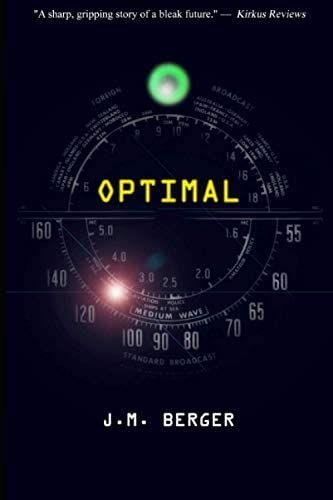
Jack has known nothing but the System his entire life. He rises when it tells him to, he dresses in the outfit its algorithms choose for him, he follows prompts to a selected diner and finds a delicious and nutritionally-varied meal waiting for him at the table, no waiting required. From his work to his social life (romantic interactions included), the System has taken good care of him. When the System assigns him a new task – finding a man who has disappeared, somehow dropping off the System’s grid – his tidy, content world will begin to unravel. Optimal offers us food for thought as we travel through a world only different from ours by degree.
Most of us can still remember a world before big data: we’d come of age when Gmail arrived and when we began learning that Apple, Microsoft, Google, and others routinely collected and analyzed the data our online activity generated, we were properly horrified – at least, for a few minutes. Then another news story pushed itself to the top of the feed, Amazon alerted us to a new book that was exactly the kind of thing it knows we liked to read, and we forgot. Imagine a world, though, so completely ruled by algorithms that most people needn’t make any decision at all: their clothes, food, and even leisure activities are suggested to them. The System is always watching, always making helpful suggestions. Optimal’s main character was reared in such a world, and he’s found it works very well for him, most of the time. Sure, there are times when the System’s benevolent administration of Jack’s life doesn’t square with what he’d like( he yearns to be an artist, for instance, despite the System insisting that he has the soul of an accountant) but on the whole, he can’t complain. He’s a happy, safe hamster on his wheel – until he begins investigating the disappearance of a man whom he discovers was sharply critical of the System. An antique radio reveals an illicit broadcast that blows into Jack’s mind and awakens him to new possibilities.
There’s not much I can say about the plot of Optimal that won’t give it away and deny potential readers the sinister thrill of learning about this Brave New World and its hidden flaws. Perhaps what’s most notable about Optimal’s world is that there’s no obvious coercion: the System rules by suggestion. If its prescriptions are followed, users can expect a steady stream of rewarding moments: if not, they encounter subtle friction, to the point that the desired object loses interest for them: the juice is no longer worth the squeeze. For some, though, impulse and reward are insufficient: they demand fulfillment, meaning, purpose – agency. Optimal creates a picture of a world that is dystopian despite its idyll, and bears thinking about given how much of our own reality is shaped by algorithms. It’s not an accident that the rule of the System came about through ‘information wars’, chaos created by people living in different intellectual worlds from the other – each living in their own filter bubble, in increasingly smaller conceptions of the outside universe. (Berger has done previous work on the origins of extremism, making his analysis particularly interesting despite the fictional setting.) How many people evaluate their own view of reality, moderated as it is through TV and social media feeds? How many people deliberately consider the view from other eyes? Entertainment queues, too, push our being: we Flanderize ourselves by allowing the discovery menu to make part of our interests become the whole of our viewing consumption.
Optimal is a fascinating, thoughtful thriller about the world to come. Definite reccommendation.
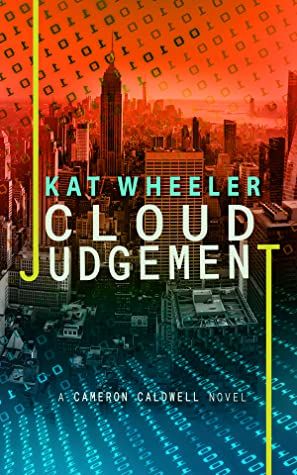
Cam Caldwell was a conscientious saleswoman whose interest in a product defect inadvertently threw her into the middle of a murder mystery. The culmination of that drama in There is no Cloud cost Cam her job, and nearly her life. Now, despite running her own consultancy and steering clear of her old job, Cam is being drawn back in – lured in by both an interesting-looking fella, a compelling mystery, and the possibility of having more money than the pocket change she’s currently living off of. Cloud Judgment sees Cam drawn into two mysteries, both equally dangerous, and is a fun sequel to Kat Wheeler’s debut novel.
I much enjoyed There is no Cloud last year, as computer-technical thrillers are a relatively rare breed (who writes them besides Doctorow and Russonovich?), and Wheeler used that novel to explore the even-more untapped world of ‘smart’ homes and IoT gear. That trend continues in Cloud Judgment, as the central mystery Cameron chews over involves a series of house fires that appear to be connected to IoT equipment – though there’s no obvious pattern to the equipment used. The other mystery inaugurates the novel, as Cam is approached by a handsome chap who makes her heart go pitty-pat and solicited for cybersecurity work. When beginning the job, she realizes something isn’t kosher and bolts, reporting the incident to her ex-boyfriend, a cop, who doesn’t take her seriously but instead asks her for help with the arson case. Relationship tension pervades the novel, not only between Cam and her two love interests / consultees, but between Cam and people she consults: one relationship proves to be particularly important during the novel’s finale. There’s also a lot of humor in the novel, as Cam and her colleagues frequently rib one another: no one can understand how a saleswoman keeps getting herself mixed up in abductions, conspiracies, and desperate grapples.
If you are looking for a relevant technical thriller that doesn’t get into the weeds like the Jeff Aiken series, the Cam Caldwell books should be of interest, prompting thought about the kind of tech we admit into our homes unsecured. I know it’s kept any interest I have in one of Google or Amazon’s smart speakers properly squelched!
Fifteen years ago, Apple inaugurated a technical and social revolution when it released the first iPhone. It did so in close partnership with Google, advertising the inclusion of its Maps and YouTube apps with the device. Within five years, however, Steve Jobs regarded Google as a treacherous competitor, for promoting a competitor to his new wunderkind. The growth of Android isn’t as simple as being a copycat iphone, though, and in Dogfight Fred Vogelstein argues that the competition between these two tech giants has done consumers a service, even as he speculates that one day the fight will conclude in one giant owning an effective monopoly, like Microsoft in the 1990s.
‘Smart’ phones and tablet computers were not a new concept in the early 2000s, as numerous tech companies from IBM to Apple had tried and failed to make them a reality. By the 21st century, though, miniaturization and battery technology were just advancing to the point that pocket devices could become a functional possibility. Prior to the iphone announcement, Google had been at work on its own smartphone, using a newly-acquired mobile OS, Android. The release of the iphone made Google developers realized their prototype device ‘Sooner’ would be an inadequate alternative, relying as it did on the same D-pad navigation that digital cameras, cellphones, and similar devices were still employing. Despite Jobs’ showmanship and the sharp look of the iphone, though, Android developers could see shortfalls in Job’s new baby – its outdated cellular radio, for instance, and the inability to add custom apps – or indeed, customize anything. The smartphone market was too lucrative to abandon to Apple, especially given that iOS was a closed system, pushed out to consumers as a finished product that they needn’t worry their pretty little heads about modifying or changing. In response, Google created the Open Handset Alliance, bringing together industrial manufacturers, network providers, and software developers to create a less proprietary ecosystem. Apple didn’t rest on its laurels: not only did it begin aggressively using patent lawsuits to slow the growth of Android, but it released the iPad – a revolution in its own right, one that began fundamentally altering people’s relationship with media, just as the iPod had ten years prior. The rivalry between Apple & Google thus forced each to improve the quality and scope of their own offerings.
Dogfight is only a partial history. The author believes that the Google-Apple rivalry will one day end in one party have the final victory, but a decade after this book’s release that seems unlikely. They continue to spar – Apple attempting to create alternatives to Google services like AppleTv and Apple Map, Google abandoning the pretense of being strictly a software developer and creating not only a line of Pixel devices, but the ChromeOS as well – and have developed two rival ecosystems, but that competition is contained mostly within the United States. Globally, Android prevails – and Google arguably has a larger target in its sights, competing with Microsoft with Workspace & Chrome. Although Dogfight is more oriented toward corporate deals and lawsuits than the technically-based One Device, it’s an interesting look back at a fight that continues to transform our world. Neither Apple’s signature devices nor the Android alliance are ignorable.
If you can’t tell, dear readers, I’m in something of a reading funk — nibbling at many books but not immersed in any. Life has gotten busy recently: I’m now officially on a transplant list, a friend was just married, and I’m studying 3-4 hours a day for Google & CompTia certifications. The only days I’m not absorbed in exercise or lectures on network protocols are dialysis days, when I’m too tired and spacey to concentrate on anything besides the latest episode of Better Call Saul. (Speaking of which: I am bitterly disappointed to learn that Gus Fring wears clip on ties. )
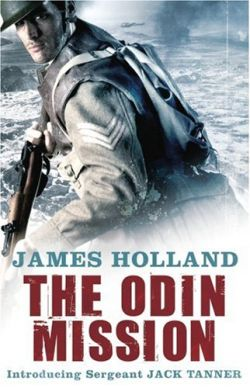
Two weeks ago I started what I trust will be an excellent series, reading James Holland’s The Odin Mission on Cyberkitten’s reccommendation. A World War 2 espionage and small-group action thriller, it’s set in the early days of World War 2 (the invasion of Norway, specifically), and follows a small group of British rangers who were cut off from their unit and then stumbled onto a mission of vital import for the war: guiding a mysterious Norwegian scientist to safety. As the British expeditionary force stumbles backwards in defense, crippled by lost supply ships, German forces envelop the country. We follow Sergeant Jack Tanner and his men as they survive the harsh Scandinavian landscape, made all the more savage by the lingering winter, and work desperately to evade capture by German forces. The task is made all the more challenging by an incompetent French lieutenant who asserts command, and the presence of a traitor within the ranks. I’ve got the other books in the series on order from Britain and hope to dive into them soon.
One of my last RoE reads was intended to be Bandersnatch, a guide to collaboration inspired by the Inklings. The book reviews different aspects of the Inklings’ shared writing lif, like the inspiration and criticism Lewis and Tolkien offered the other, for instance, or joint projects like Lewis/Tolkien’s intended space-and-time travel set. The book attempts to divine tips for successful collaboration from the study of these men, but I was reading it purely for the company: I’m very fond of the Lewis brothers and Tolkien. Thanks to DT, owner of Broad Street Books, for lending me that!
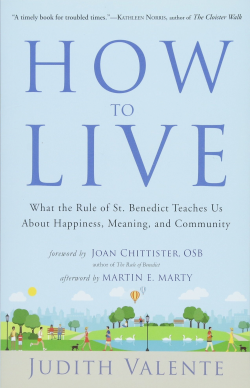
For devotional reasons, I re-read a book I read last year: How to Live, an introduction to Benedictine spirituality. The author, Judith Valente, is a journalist working for NPR who is also an oblate at a monastery. The book is a walkthrough of Benedict’s Rule, and a reflection on how non-monks can infuse their own spiritual lives with its wisdom. A lot of the content is focused on attention and mindfulness: Benedict and Valente urge us to wake up, to pay attention to the sacred in one another and to the present moment, to live in awareness of our own mortality and of the limits of our power. We are urged to create space for contemplation, by dropping out of the sea of noise that is modern life — creating sabbath moments for ourself to meditate, pray, and even sing. Valente also reminds us that the cultivation of virtue within us, the realization of holiness, is a constant battle — and that we must keep in mind that every moment is a choice. Valente also shares insights on the importance of building community, and exercising fair and humble leadership. I’ve been more deliberate in my approach to the spiritual-philosophical life in recent weeks, inspired by this in part: one rule I’ve incorporated is to meditate and go for a walk before I have coffee or turn my computer on, allowing me to start the day focused and energized naturally and not bombarded with stimulation from the word go.
A smaller work I also read was The Tao of Tranquility, an appraisal of the Quinjing Jing, a short work in verse that combines Taoist and Buddhist themes. The Buddhist insights were more obvious and easier to appreciate ( the connection between desire and suffering) than the Taoist ones. I’ve read a commentary on Taoist writing before and still find it a bit mysterious. How to Live often connected Benedictine insights to those of other wisdom traditions, and I found myself thinking again about the overlapping approaches of men like Buddha, Gandhi, and Jesus — and their differences.
Moving from philosophy to the utterly prosaic, I’ve read several books on computers.
Teach Yourself Visually: Chromebooks is a guide not only to Chromebooks, but the Chrome browser and Google’s various services the chromebook relies on – particularly Gmail, GoogleDocs, and GoogleDrive. I’m presently pursuing a Google certification via Coursera, and hoped this would contain something about the Google ecosystem I was unaware of. No such luck on my end, but this would be a good resource for your self-proclaimed “computer illiterate” relation who wants some basic competence at using chromeboooks.
Teach Yourself Visually: Windows 11 was an item I checked out to see if it documented changes from Windows 10 to Windows 11, but the book looks fairly identical to its Windows 10 predecessor: McFedries explains the basics of the Windows userspace, and offers visual guides to using its features and included apps. Nothing for the serious user, but it’s ideal for beginners given the heavy visual guidance. I recently upgraded my laptop (not my gaming PC!) to Win11 to start getting familiar with it. It’s really more of a facelift than anything else.
Windows Command Line Beginner’s Guide by Jonathan Moeller is not a visual guide, because it’s all about learning to use the Windows terminal, also known as the C:\ prompt or the MS-DOS prompt (if you’re of a certain age). I started practicing with this before I even began studying for the CompTia, in part because I was awed by LGR’s fluency in MS-DOS operations and wanted learn to interact with the computer at that level. It also helps at work: we used to have frequent issues with IP conflicts, and then I learned how to use the C:\ prompt to remedy that. (IPCONFIG Release/Renew did the trick.) Although I’m still getting used to the language of the command prompt & powershell (practicing mostly with powershell), I thought the guide especially useful for beginners, because it’s not a list of commands and switches and a terse description of their use. Moeller explains the context of commands, so in the chapter on networking tools, he explains what an IP address is, how it’s assigned, etc. He has a similar book on the Linux terminal which I’ll probably be looking at as well: the current course I’m taking, Becoming a Power User, will test users on basic command line/terminal operations in both operating systems.
Welcome to the world, baby boy, I’ll paint you red and white and blue
The indoctrination starts as soon as you come out the womb
Pretty quick we’ll make you stupid with curriculums at school
And if the classroom doesn’t do the trick, we’ll make you watch the news
Pick your team, right or left, pick the red pill or the blue
You can vote, but even if you win, still everyone will lose
Don’t forget to buy designer because Gucci makes you cool
We prioritize material belongings over truth
Get a job that you can’t stand so you can buy some cans of food
Go overseas and die for freedom, there’s some oil we could use
Our democracy exists so that you think that you could choose
But our algorithms make you do what we want you to do
What’s the problem, you’re depressed? Society has you confused?
We got medication for you that you’ll probably abuse.
Tom MacDonald has the most world-relevant lyrics of any artist I’ve heard. I love how he targets aspects of post modernity — the capture of humanity by consumerism, big pharama, identity politics — without falling neatly into any political tribalism. He’s not a republican, a democratic, a socialist, a libertarian — he’s just Tom, a guy singing truth to a compelling beat.
April on ReadingFreely is always marked by Read of England, my annual focus on English literature and history. This year it was half history and half historical fiction.
Climbing Mount Doom: Dr. Johnson’s London, Liza Picard Dangerous Passions, Deadly Sins: Learning from the Psychology of Ancient Monks, Dennis Okholm Lionheart, Ben Kane The Age of Fighting Sail, C.S. Forester
Science Survey / Readin’ Dixie / Classics Club
Zero, nada, bupkis. I should have done some English classics, but I was in a history-and-adventure mood, as the RoE list demonstrates!