The Ghost Brigades

The Ghost Brigades
(c) 2006 John Scalzi
384 pages

“We’re in the wrong universe for fair.”

John Scalzi’s Old Man’s War introduced readers to a harsh future, in which humanity competes for space in a crowded galaxy, fighting tooth and nail against a variety of alien baddies. Out of sheer necessity, the Colonial Defense Forces have been forced to create an army of augments — but within its ranks are even more altered troops, the Special Forces — or, as common soldiers call them, the Ghost Brigades. Scalzi’s expansion of the Old Man’s War story focuses on them specifically, beginning with a betrayal and a desperate scramble for answers. The CDF’s attempt to find out why one of their own researchers would fake his own death and join alien ranks sees them attempt to infuse a recording of the traitor’s consciousness into the body of a newly-grown clone, in hopes that the clone will give them answers. Instead, the clone — Jared Diroc — becomes his own person, and takes his place in the Special Forces. Before long, though, the dormant personality within Jared will begin to assert itself, and lead him down an entirely separate road.

I commented in my review for Old Man’s War that its most interesting element was consciousness transferal, and that takes center stage here, driving the plot and creating both our main character and his antagonist. The Ghost Brigades are interesting in their own right, however, from a techno-humanist perspective: they’re not only genetically augmented, but have internal brain implants that allow them to process and absorb information rapidly, almost like Neo in The Matrix, and connect them to one another so that squads are tightly integrated. Jared Diroc is perfectly happy with his squadmates as they tend to the business of the Defense Forces — killin’ aliens — but an experience on shore leave suddenly brings to life the other man inside his brain, and there the action really picks up. Humanity was already in trouble, facing a potential alliance of three alien races at once, but once Jared begins to struggle with his alter-consciousness, he realizes the danger is even more acute than previously realized. This leads to a desperate gamble in which everything goes wrong — but results in a seat of the pants action thriller all the way to the end.

Although I found the premise of Old Man’s War interesting enough, having read The Ghost Brigades I’m sold on reading the rest of the series. Plot developments herein point to a far more interesting galactic scene than previously thought!
Posted in Reviews, science fiction | Tagged , | 6 Comments

Of shotgun riders and serial killers

Medical update: I saw the doctor today and he was extremely pleased with my progress. According to him, my blood chemistry could not look better! I managed a 4-block walk today from the hospital back to my hotel room, after using the shuttle bus to arrive for my appointment.


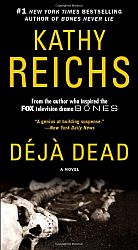
Temperance Brennan is a forensic anthropologist with academic associations in North Carolina, but has a current position with Canadian law enforcement in Quebec. When a shallow grave reveals a collection of body parts collected in trash bags, she has a sickening feeling that this death and dismemberment might be connected to several prior cold cases. Pursuing the hunch against the disdain of the police, who feel this civilian is overstepping her office, she soon finds herself exposed to a serial killer’s obsession. Deja Dead is first in a series of forensic mystery novels by Kathy Reichs, who like her main character is both an academic and a forensic detective. The result is a forensic thriller with no shortage of grisly detail, though as a story there are a few very-convenient plot twists. I think I’ll try a few more in this series once I return home, to see if the author’s skills matured.

Shotguns and Stagecoaches is a collection of biographical sketches, drawn from some of the colorful riders, shotgun messengers, and detectives who defended Wells Fargo’ cargo, especially gold bullion. There are some golden tales in here, my favorite being the guard who was set up by a pretty lass in cahoots with highwaymen, but resolved he’d still marry her if he met her again. As the author noted, if that story is not true, it should be. Another musing story involved one shotgun messenger tricking his friends into a jail cell so he could launch into a long-winded story about his more recent exploits with a captive audience. As a proper history, Stagecoach: Wells Fargo and the American West is better, but for fans of the Old West this is replete with fun stories of robberies, manhunts, and shootouts. The author adds an epilogue that takes Wells-Fargo for trying to sanitize its history and downplay the dangers its officers faced, and the triumphs they achieved in the fight against highwaymen. This is great fun for a casual history reader who has an interest in the Old West.

Posted in history, Reviews | Tagged , , , , , , | 4 Comments

Beauty and the Werewolf

500 Kingdoms: Beauty and the Werewolf
(C) 2011 Mercedes Lackey
408 pages

Isabella Beauchamps is accustomed to being the mistress of her house, keeping the servants and her twin stepsisters in line while her stepmother spends her days gazing out the window and gossiping. A chance encounter with a werewolf in the woods, however, sees her taken by the king’s guards and effectively imprisoned in a remote rural manor house that looks more like a fortress than a residence. There she learns that her new host, Duke Sebastian, was the werewolf who bit her — and that for the sake of the region’s safety, she’s to be secured here for three months to ensure that she has not been werewolf’d herself. Not content to be an idle prisoner, Bella immediately goes to work putting the Duke’s household to order, including his dozens of invisible spirit-servants. Her arrival into the sleepy household and its absentminded lord’s life begins to expose the mystery of the Duke’s curse, and threatens the life of both. With a cover that brings to mind Little Red Riding Hood, but a story that’s definitely more of a spin on Beauty and the Beast, Beauty and the Werewolf is interesting but limited as a novel. A lot of space is given to Bella simply trying to understand the setting, to the point that we’re seeing Lackey’s worldbuilding as she hammered it out. That could be interesting in its own right, but it seems like filler within the novel itself. The big bad of the novel is also telegraphed fairly early on, although Lackey does her best to misdirect readers halfway through. The story isn’t helped by Bella being obnoxious and bossy to the point of imperial. Still, I liked the idea of the traditional Beast being a werewolf.

Next up: I’m still plodding along in Dark Matter and the Dinosaurs, and have recently received two books that will complete a series I started in…erm, 2011.

Posted in Reviews | Tagged , | Leave a comment

The Sleeping Beauty

A Tale of the Five Hundred Kingdoms #5: The Sleeping Beauty
(c) 2010 Mercedes Lackey
352 pages

Rosamond has the bad luck to be an orphaned princess in a wealthy little kingdom surrounded by larger, hostile enemies, any one of whom will invade at the news that her warrior-king father has finally surrendered to battle exhaustion and depression over losing his wife, her mother, the sainted Celeste. Still worse, Rosamond lives in a region where narrative magic is an active force in the lives of all, constantly attempting to entrap people into reliving and fulfilling stories from Tradition. Princesses are doomed to become prey to evil stepmothers and find themselves locked in towers or trapped in deep sleeps, waiting for the kiss of some prince charming, and young men are forever having to prove themselves in battle against dragons decimating the countryside. Now, with her parents dead, Rosamund stands fully exposed to the whims of Tradition — and even her fairy Godmother can only do so much to corral the chaos. The Sleeping Beauty is a unique spin on several fairy-tale stories, featuring several strong characters who are determined to live their own lives despite the forces attempting to push them down predetermined paths.

From the cover alone, this is not the kind of book you’d normally find me reading: it looks for all the world like a romance. The book and its connected series were given to me by a friend, though, one who recently introduced me to Into the Woods and Shrek the Musical, both of which also play with fairy tale tropes. The setting at first appears a conventional medieval-fantasy arena: castles, horses, men-at-arms, dragons, magic, that sort of thing. What makes the Five Hundred Kingdoms series is that the people who live within the novel are aware (to varying degrees) of how The Tradition can alter their lives: certain castes like royals, young men, and innocent shepherdesses are especially exposed to it. The masters at reading and manipulating tradition are Godmothers, who advise kingdoms and attempt to help their wards bend to The Tradition without being broken by it. Godmother Lily is the star here, being an especially talented Godmother whose expertise has been forced by having to advise a kingdom in constant mortal and magical peril: after Rosamund disappears in the woods, fleeing a treacherous servant in the pay of an unknown mischief-maker, she creates a grand contest to secure the Kingdom and Rosamond once and for all. Although the title of this book hints that Rosamund is fulfilling the Sleeping Beauty story, there are other narratives mixed in, including those from Norse mythology: The Tradition isn’t necessarily picky about which Path it forces on young princesses, so long as they find themselves far enough down one path to fulfill it.

The Sleeping Beauty surprised me: I expected something of a chick book, to be honest, but this was imaginative and funny, with about as romance as I usually encounter in one of my more ‘manly’ war stories. I’m interested in reading more of this series.

Posted in Reviews | Tagged , , | 3 Comments

Of kidneys, the Lionheart, and Star Trek

Ever since my kidney transplant Tuesday, I’ve seen doctors, surgeons, and nurses on a daily basis with updates. They’re all very pleased about the progress I’m making toward recovery: my new kidneys (I received two, from a deceased juvenile) are fully online, and my blood toxins continue to fall despite not having had dialysis since Monday evening. It appears I am forever done with that period in my life, for which I am profoundly grateful. The doctors told me this morning that I’m surpassing their usual milestones, so they will discharge me Sunday morning. They were tempted to do it as early as Friday! This won’t mean a return home, as I’ll require frequent checkups with the clinic to make sure there’s no risk of rejection and that the kidneys are continuing to work away. Since I’ll be seeing them three times a week, I will be staying in a nearby hotel with shuttle service to the hospital. I’m hoping once I’m more mobile to explore downtown Birmingham a bit, but I don’t want to overexert myself. I’m been able to get out of bed and walk around my room and the hospital already, but this is an environment altogether different than the chaotic city streets!

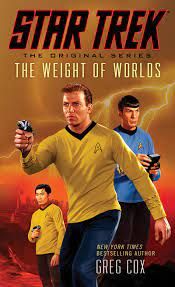
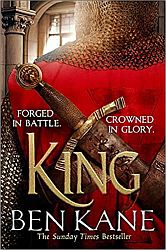
In other news, this week I finished off Ben Kane’s King, the conclusion to his Lionheart trilogy; How to Think Like a Roman Emperor; and Greg Cox’s The Weight of Worlds. The latter is an Original Series adventure, set during the original run of the show and features a plot that would have fit in on the show were it not for the technical limitations at the time. The Enterprise is hailed by a remote science station who have come under attack: after arriving in orbit, Enterprise realizes the station’s inhabitants have been attacked by some kind of gravity weapon, and naturally the command staff beam down to investigate. In quick time, Kirk and Spock find themselves marooned on an alien world, Sulu and a redshirt are forced to pretend to be new cult members of an alien Crusade that’s intent on converting the galaxy to The Truth, and the Enterprise isn’t faring much better, being targeted by a gravity cannon. In true TOS style, Kirk goes head to head against a ‘god’, but readers are also treated to Uhura in the captain’s chair. The premise and execution are a bit goofy if you’re more accustomed to serious Treklit, but it’s always nice to have an old-school episodic-like novel.

‘King Richard.’ Heinrich spoke in French. ‘Emperor.’ Richard’s tone was even. ‘Men are supposed to kneel in my presence.’ ‘Men.’ Richard stood up straight, emphasizing his great height. ‘I am a king.’ How proud of him I was in that moment.

More recently, I finished Ben Kane’s excellent Lionheart series by reading King, which dramatizes the last years of King Richard’s life. It opens with his return to a largely hostile Europe, where every road leading home routes through territories of men who would be eager to capture the King to hold him to ransom. Despite his best efforts, Richard and a few of his most faithful men are indeed captured. With Richard’s blessing, Rufus effects an escape, and on his orders returns to Normandy to investigate the damage that Richard’s perfidious brother John has done in his absence. Many of Richard’s possessions in Europe have been promised or directly surrendered to the French dog Phillip Capet, and “Johnny’s” treachery is made worse when Rufus realizes his suspicions about one of Richard’s men, FitzAldelm, were true: the man is an agent of the French court! As Richard’s nobles work to secure his release, Rufus attempts to fulfill his long-burning war against FitzAldem (a man who has tried to kill him numerous times) and disarm one of the Frenchies’ agents at the same time. Rufus also has personal struggles to contend with: his love for Princess Joanna, who can never be his own, even though Richard recognizes their bond and is gratified for the happiness that they brought to one another in Outremer. Even once Richard is released, the war against the weasel Capet continues, and brings the novel to its predestined, tragic end.

A review for How To Think Like a Roman Emperor is in the works. I’m currently reading Dark Matter and the Dinosaurs, and a lady friend has introduced me to an interesting fantasy series — and delivered several volumes of them to me in the hospital!

Posted in historical fiction, Reviews | Tagged , , , , , , | 4 Comments

Update

Good morning, all. Yesterday around 5 am I was taken down for transplant surgery. I am in recovery now. Lots of discomfort and some pain but those will pass in time. Kidney appears to be working.

Posted in General | 6 Comments

Exciting update

Earlier today at work I received a call from UAB, which at first sounded very routine: I was asked if anything had changed in the last few months. Then “Gregory” announced that they had a possible kidney for me, and how quickly might I be able to get to Birmingham? One fillup and obligatory dash to Walmart later, I’m in my hospital room between various tests. So far the docs are very pleased with me, and surgery, if the bloodwork locks me in, is scheduled for tomorrow. One of the first things I did after I left the hospital last year was purchase a laptop to replace my chromebook, and the wireless is strong here. I’ve got a bag of books, so don’t be surprised if I post away during recovery. I am sure things will go well, but if not — it’s been fun reading with you all.

Until later!

Posted in General | 9 Comments

Collateral Damage

Star Trek TNG: Collateral Damage
© 2019 David Mack
383 pages

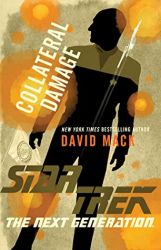
Years ago, the decisions of Federation leadership and Starfleet command placed Captain Picard and the Enterprise between a moral Scylla and Charybdis, and his dogged efforts to keep the peace were covered in the A Time To… series. Now, after a succession of crises — the Borg war, ongoing tensions with the Typhon Pact, and the revelation of Section 31 — the dust is settling and the past must be reckoned with. Captain Picard is summoned to Paris to attend a hearing which may result in his being court-martialed. Meanwhile, the Enterprise responds to a Nausican raid on a Federation outpost that proves to be far more dangerous than anyone reckoned with, after it’s revealed that the Nausicans also stole a superweapon from a Starfleet Intelligence operation. As Commander LaForge works to keep the outpost aftermath from growing worse, Commander Worf and the Enterprise tackle the Nausicans. The result is a superb mix of legal, military, and engineering drama, as the Enterprise crew and Titan scramble to head off disaster. I’d expect nothing less from David Mack.

I missed the prolonged ‘Tezwa Crisis’, in part because I was a penniless high school grad when it started, and by the time I had money there were a lot more interesting ST series out there to consider — chief among them, David Mack’s Destiny trilogy. In the near-twenty years since that series began, Picard and others have referenced the Crisis enough that I’ve grown some appreciation for how big a deal it was, despite not knowing its specific details beyond its resulting in the Federation president disappearing courtesy of Section 31. A prior read of that series isn’t necessary to enjoy Collateral Damge, as the details of the crisis come out during the trial. The trial is well done, though I find it difficult to believe anyone in the Federation could be as hostile to Picard as the opposing lawyer: however true her professed belief that everyone should be held to the same legal standard, even Heroes of the Federation, her antagonism appeared more personal than professional. Far more interesting were the conjoined B&C plots, Starfleet’s response to the Nausican raid and the resulting plot. The Nausican homeworld was destroyed by the Borg during the Destiny trilogy, and the Alpha Quadrant’s favorite chaotic bikers blame the Federation for the destruction of their world. Hunting them down and putting an end to their Marvin the Martin-esque plan isn’t straightforward, though, because Starfleet Intelligence has an outrageous agent working his own op, and SI’s interests aren’t aligned with Enterprise’s. The Big E is crippled twice in this book, and all while Picard is being grilled by a vicious lawyer. Worf’s resolution was a little unexpected, but absolutely in keeping with Star Trek idealism.

Collateral Damage is (yet another) great work in David Mack’s continuing contributions to Treklit.

Posted in Reviews | Tagged , , | 1 Comment

CS Lewis, alt-history Brits, and a Trek repast

Still offline, so — quickie reviews.

Call C.S. Lewis’ friends to mind and the mental image, invariably, will be that of Lewis and the Inklings gathered around a table at the Eagle and Child, drinking and talking.  But one of Lewis’ closest friends, the person whose death moved him to tears, was a woman – Dorothy Sayers, an English novelist and playwright who bonded with Lewis over their shared love of literature and their unexpected roles as Christian apologists.  Dorothy and Jack examines their friendship, drawing on their extensive letter-writing to one another,  with an eye for how the two challenged one another and helped the other to grow. Sayers was a particularly invaluable friend to Lewis, Dalfonzo suggests, because she was his first genuine female friendship after an early life spent in all-male environments: a motherless home, male-only boarding schools and the similarly exclusive arenas of the Western Front and Oxford. Sayers was someone who Lewis could respect, even given prejudices he might have had about her sex, and in addition to supporting one another as creative writers and defenders of the faith, as their friendship grew they could unburden themselves about their private challenges — Sayers’ marriage and Lewis’ difficult relationship with Mrs. Moore, particularly. Definitely worthwhile for a Lewis or Sayers fan.

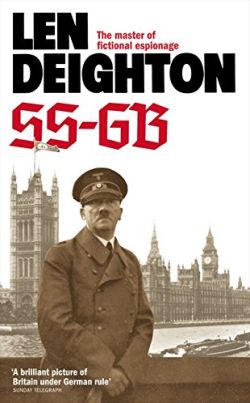
In a completely different genre, I finished Len Deighton’s SS-GB. Deighton has written histories of the air war in World War 2, as well as novels set in the same period, including Bomber. SS-GB is alternate history, or rather is a detective novel turned political thriller set in a 1942 where Britain lost its independent fight against Nazi Germany and is an occupied territory. Europe is at ‘peace’, with the Nazis and Soviets pledging eternal friendship to one another, and the United States is thoroughly distracted by Imperial Japan. A senior inspector for Scotland Yard, Douglas Archer, is toeing the line between law and injustice, balancing his need to keep his German superiors happy with his own self-loathing at being a collaborator with the occupiers. A murder that attracts the attention of the S.S. and connects to rumors of the King being rescued from the Tower of London, and of an German attempt to create a super-bomb, makes Archer’s position all the more untenable: suddenly he has two bosses, one in the Wehrmacht and the other in the S.S., and both are actors in their respective organizations’ struggle for power within the Nazi scheme, a struggle that sometimes takes priority even over the need to consolidate Britain into the Greater German Reich. Deighton’s eye as an historian is helpful in creating a finely detailed version of Occupied Britain, complete with subtle market stresses induced by the occupation costs. I enjoyed the tale well enough, but found it mostly interesting for the setting. I couldn’t figure out what the exact point of departure was, though — why did Sealion happen in this timeline when it didn’t happen in ours?

Finally, a bit of rare good news on the Trek front: Star Trek Strange New Worlds is good. Ever since the 2009 movie, I’ve had to tolerate-at-best Trek’s television & movie offerings, but SNW actually looks and feels like Star Trek. The episodes are episodes, and begin with the “Space….the final frontier” recitation that is Trek’s signature. It’s a prequel series like Discovery, set aboard Captain Pike’s tenure on the Enterprise. He’s joined by characters both old and new, and from the episodes I’ve watched the focus is definitely more ensemble-oriented than being dominated by one personality. More importantly, though, Strange New Worlds is drawing on what made Trek so popular to begin with — its focus on human potential, on what we might achieve through courage and creativity. One of the things I’ve missed most about PrimeTrek, particularly TNG – DS9, is its incorporation of the arts: that made a splendid comeback in “The Children of the Comet”. I am actually excited about SNW, and that hasn’t been true about Trek-on-the-screen since…well, Star Trek (2009). I actually checked Amazon for SNW novels, and am pleased to see that one will be released in September. Although I still hate the death of the PrimeTrek lit verse, I won’t mind seeing what novels emerge from this new show.

Coming up….a foresensic thriller, Stoicism, Star Trek, and cosmology.

Posted in Reviews | Tagged , , , , , | 8 Comments

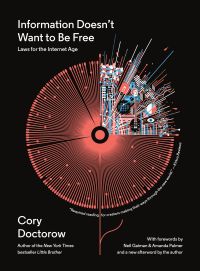
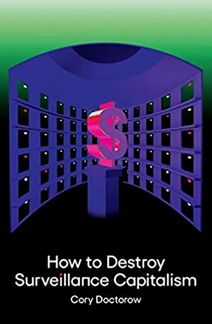
Doctorow duo on digital rights activism

I recently read two short titles by Cory Doctorow, a SF author and internet freedom activist.

For  at least the last twenty years, Cory Doctorow has been thinking about the future of intellectual property, copyright, and the open internet. He often works these themes into his novels, but in Information Doesn’t Want to be Free,  he addresses them directly.   Although it initially appears aimed at content creators, who he urges to resist the urge to use Digital Rights Management on the grounds that it would make them subservient to publishers,   Doctorow’s argument should be of interest to everyone – for, as he points out, technocratic schemes powerful to stymie any and all  violations of IP or copyright law are potent enough to destroy any veneer of privacy online, not to mention the cost to human creativity.  Although I understood why DRM is a bad deal for consumers, I’ve noticed and wondered why Doctorow’s own works were purposely published without it  – until now.  I’ve never  tried to understand the vagaries of international copyright treaties before, so Doctorow’s explanation of them was helpful, especially his analysis of the SOPA/PIPA bills that were narrowly defeated ten years ago.   Part of the book’s contents are expressly aimed at creatives,  as when Doctorow suggests different models for monetizing work that don’t depend on intrusive digital locks, but the book recommends itself more generally to those interested in the future structure of the Internet. 

Doctorow’s second work, How to Destroy Surveillance Capitalism, argues that the rise of big tech powerhouses (Google & Facebook, chiefly) who command much of the Internet’s traffic or serve as giant platforms for destructive minorities to broadcast their views and radicalize others owes not to the unique nature of these industries, but to their growth during a period of deregulation: he points to the concentration of other services and industries in the same timeframe as proof that the legal environment of American tech corporations has been the main reason for their success, not necessarily their unique nature or skill for innovation. Google innovated and mastered one thing, Doctorow writes — Search — and the rest of its commercial dominion has come from purchasing other products like Android and then fusing them with its own. I was disappointed that an author as deeply immersed in the culture of the free web (witness his characters’ frequent evasions of corporate-state spyware in the Little Brother and Pirate Cinema books) could only suggest More Regulation as the solution, especially given that Doctorow frequently pointed out how often the regulators of industries are drawn from the industry’s own executive pool. That is not a unique quirk of big tech: it happens in every industry that’s regulated, and it’s how corporations create rules to shelter them at the expense of their competitors. And it gets worse, because as Doctorow points out, the state has a vested interest in maintaining the potency of big tech, using the corporate mesh of surveillance and data collection to feed its own desires for information about potential reichsfeinde. Doctorow’s analysis is fine, but the recommendation is feeble and uninteresting to anyone who is seriously concerned about solutions for subverting big tech.

Posted in Reviews | Tagged , , , , , | 4 Comments