Over the last twenty years, ‘climate change’ has been subject to the same abuse as ‘terrorism’: it’s levied so often with such enthusiasm that it’s lost much of its effective meaning. In 2005 and 2006, for instance, a sudden rise in hurricane activity was attributed to cycles that played out over decades: when another spurt happened ten years later, gone were the mentions of El Nino or Atlantic Multi-Decade Oscillation. No, the one and only factor responsible was Climate Change – nevermind that the preceding decade had been quiet and that climate change was happening then as well. For those of us lay citizens who take both science and the potential threats posed by environmental turbulence seriously, this leads to a frustrating scenario, in which valid information is drowned by overzealous claims, and a threat is watered down through boy-who-cried-wolf antics. In Unsettled, Steve Koonin examines the data we’ve gathered, the models used create projections of what the future holds, and offers a pragmatic view of how we should respond to the anticipated threat.
Readers should be warned from the outset that this is not a casual book. The majority of it consists of chewing over data, so if you’re a liberal-arts major who echoes J.K. Rowling (“Oh dear, maths”), this is going to be a bit of a challenge. I have to count myself in that category as well. To sum up Koonin: the Earth is warming, and humans are contributing to this. We don’t know exactly how much of the warming is directly attributable to human activity, however, because climactic conditions are complex: human activity creates both heating and cooling effects, and there are factors outside humanity at play. It is extremely different to untangle human contributions from other sources. The models used to create projections are limited and flawed, often unable even to recreate known results from older data. Any ordinary citizen who has paid attention to the repeated doomcasts of Al Gore and the like (how many times have we been told the ice caps will be gone in a decade?) already appreciates the limits of our future-casting ability. The plugged-in person, however, who lives entirely in the updated-by-the-moment newsfeed of pseudo-reality, may be surprised that the confident predictions of paid gabbers are nothing more than what Hayek called the pretense of knowledge. Such pretense is especially on display when predicting agricultural and economic doom, popular grist for the news and political mill, generating ratings and campaign energy, but only loosely moored in reality. The findings of scientific endeavor pass through an array of filters — precis of studies, scientific journalists, talking heads badly summarizing the science journalists, political opportunists mischaracterizing the media’s own summaries — so that certain facts are blown up out of proportion, or ignored completely, becoming that convenient political beast…The Science. We’ve seen that mephistan creature growing ever larger and more aggressive in the last few years of coronamania.
Ultimately, Koonin offers, we can’t say with confidence what will happen – not to the temperature, or to the seas, or to agriculture. All we can do is plan prudently now and adapt to the future as it happens, as humans have always done. That’s not a prescription I can dispute, although the fact that Koonin is telling me what I already believed sets some alarm-bells klanging.
Sean Dietrich and his wife Jamie’s collective world was shaken when their doctor said the C word. Cancer. The emperor of all maladies, the ticking timebomb in each of us. Rather than crumbling into a weeping ball of woe-is-me, Jamie looked at Sean and suggested that now was the time for them to do Something Big. Something like cycling the Great Allegheny Passage. Nevermind that neither were cyclists, let alone campers, and that Sean’s back problems limited him to a recumbent bicycle. If there was ever a time to seize the day, this was it – and so they took it. You Are my Sunshine is the memoir of that journey, of the arduous trek through mountains blasted by a hurricane, the couple weighed down by gear and the thoughts of what the future might bring, but buoyed by the beauty of nature, the strength of those they’d met who had overcome similar battles, and the joy of their daily little triumphs over the mountain – snakes included. This proved a quick read, and I liked the mix of travel and personal reflection. Dietrich’s honesty about his and his wife’s past and present sufferings was more compelling than the humor, which ranged from the slightly corny to the genuinely amusing. Dietrich’s accounts of his repeated interactions with another cyclist on the trail who was fighting cancer, as well as his talks with a traveling priest, were especially touching. As a hiker and sometimes-cyclist, sometimes-camper, the travel accounts were interesting all around. I was greatly amused by the thought of a recumbent bike tackling mountain trails, and it holds up about as well as one might expect – -poorly. I’d never heard of Dietrich until he appeared at my library to a sell-out crowd, and after listening to him on a few podcasts will be trying some of his other works in the future to see what the buzz is about him.
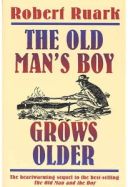
Back in 2020 I stumbled on what would become one of my favorite books, Robert Ruark’s The Old Man and the Boy. The collection invited readers into a young boy’s childhood, one spent roaming the woods and coasts of the Carolinas in the twenties and thirties, absorbing lessons on life – from philosophy to the best approaches to hunting duck. The book’s star was the Boy’s grandfather, who could be both comic and stern at the same time, dispensing both folk wisdom and dissecting Montaigne over a single snort of whiskey. Although he’s the Boy’s guardian, he takes young Robert seriously, as the young man he might become. Ruark seems to spend most of his childhood in the company of the Old Man and his hunting friends, which is just as well: the one time he goes out on an adventure with his school friends, they end up with a live deer in a Tin Lizzie. The Old Man’s Boy Grows Older consists of a few more similar stories, this time in conjunction with Ruark’s own tales of his hunting expeditions in India and Africa, as he connects life lessons the Old Man imparted to his adult adventures. In this mix it’s rather like The Lost Classics, as each combined boy-Ruark and adult-Ruark adventures and connect them with wisdom from the Old Man – -but Lost Classics was far more dominated by the overseas adventures. The Old Man is as funny and insightful as ever, and I especially enjoyed Ruark’s account of determining to buy his grandfather’s house and restore it after a foreclosure, so that it might bring future generations the joy he found as a boy.
Today’s Teases come from The Old Man’s Boy Grows Older.
“You know any more rich people?” “No,” I said. I was beginning to feel depressed. “That’s where you’re dead wrong,” he said quietly. “You know two rich people. You and me. We’re both rich, right now. Richer than them Willies-off-the-pickle-boat. Richer than any of them cotton people. Stinkin’, filthy rich you are, and so am I.” “What’s rich, then?” “Rich,” the Old Man said dreamily, “is not baying after what you can’t have. Rich is having the time to do what you want to do. Rich is a little whisky to drink and some food to eat and a roof over your head and a fish pole and a boat and a gun and a dollar for a box of shells. Rich is not owing any money to anybody, and not spending what you haven’t got.”
We had a difference of opinion, as I recall, my people and I, and I determined to run away and embark on a life of piracy, rapine, and highway robbery. I was a red-hot six years old, and the Irish was showing. The whole world was wrong, and you could have called me Parnell. “Good-bye, cruel world,” I said, more or less, and departed for a life of shame. I must say that the Old Man took it in stride when I announced my intention to trek. “You sure you going to give us all up and run off to live with the Injuns?” he said gently. “I mean, we don’t get no chance to mend our ways and maybe keep you with us until you get out of the sixth grade?” The Old Man had a dirty twinkle, but this was dirtier than usual, and made me even madder. “You’ll be sorry when I’m gone,” I said. “There won’t be nobody around the place to fetch the firewood and run the errands and clean the fish. You’ll be sorry, all right.” The Old Man heaved a sigh. “That’s what I was afeard of,” he said. “Without I got you, they”—he gestured in the general direction of Miss Lottie and the other grownups—”they’ll be making me do your work. Maybe I could run away with you?” “No sir.” I was very firm. I figured even at my tender age that running away was something a boy had to do all by himself or it didn’t count.
Well, this has been an interesting month for reading. My best-intentioned plans to read more southern literature finally woke up after attending a lecture by Dr. Wayne Flynt on Harper Lee, leading to my reading his memoir about his friendship with her, followed by Go Set a Watchman, a biography of Atticus Finch, a look at the Civil War, and a Rick Bragg binge. Mix that with a hangover from October’s focus on mental health and substance abuse (that’s …continuing), plus some science fiction and it was a varied month.
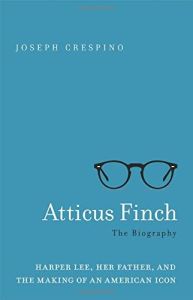
Atticus Finch: The Biography deserves more than a one-paragraph write-off here, but my thoughts on it and the titles that bookended it shared so much common ground that I didn’t want to repeat myself. This is a curious book, though — beginning as a biography of Harper Lee’s father, A.C. Lee, who inspired the character of Atticus Finch. A newspaperman and legislator, his character is plumbed in the opening before the author moves on to Harper’s struggle to reconcile the moral ideals of the South with the antagonism inherent in segregation. From here we review the character of Atticus Finch as he evolves in first To Kill a Mockingbird, its movie, and then Go Set a Watchman. Of great interest to Harper Lee and TKAM fans, obviously, but I most enjoyed the survey of A.C. Lee’s editorials, a look at the Depression and World War 2 through the critical and learned eye of a leading citizen of a small southern town.
New Acquisitions:
……
Yep, nothing. I’ll have you know I was sorely tempted, too. There were several Star Trek Voyager novels on $1 sales, and I wanted them. I’ll see about my Mexican dessert reward later this week. The book-buying ban will continue with the bribe repeated.
Plans for December:
Expect at least a couple of titles relating to southern lit and a nod to the Pacific War. The focus will be TBR titles.
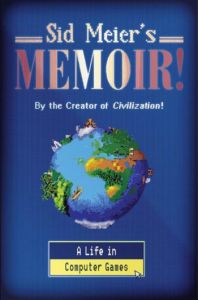
Dear readers, I cannot tell you how much of my life has been spent in worlds of Sid Meier’s making – discovering his talent for historically-grounded but still-compelling gameplay in Gettysburg, becoming a convert in full with Civilization III, and then exploring more of his works with Pirates and Railroads. His name is a legend in the industry, for he was there from the beginning – and at least since the 1980s, that name has been used to sell games, a guarantee of quality. Although this wasn’t Meier’s idea, he’s apparently learned to live with it, using the convention playfully for the title of his memoir. The same playfulness is present throughout this chronicle of his life in the gaming industry, as the text is peppered with literary Achievements, like having read the word “Civilization” a hundred times.
It is as its subtitle declares, “a life in games”: the focus is on Meier’s work, not his personal life, though one inspires the other. We learn about how and why Meier and his coworkers were inspired to try a particular game or challenge, the difficulties of realizing their vision, and trivia about the games themselves. It’s at its strongest in the 1980s and 1990s, though, with increasingly little detail on later titles that he was linked to only in a supervisory role. The biggest disappointment is his lack of commentary on his collaboration with Will Wright, another gaming legend: the two have a similar interest in modeling complex systems like cities, train networks, skyscraper ecosystems, etc in computers, and making said systems fun to tinker with, so I would have loved more content about their joint project, SimGolf. Throughout the work, Meier comments on his approach to programming games – above all, make the player the star and their experience fun – and his thoughts on the creative process. Although I missed all of his early titles (not even being aware of computer games in the 1990s), someone who’s thoroughly enjoyed every title I’ve tried by him, this was an enormously rewarding book with surprising details – like Meier’s professional connections to both Robin Williams and Tom Clancy.
What do you call a heart that is simultaneously full and breaking? Maybe there’s no word for it, but for some reason, it makes me think of rain falling through sunlight.
Upgrade, Blake Crouch
“Most people,” [The Old Man] had said, “go through life looking and never see a thing. Anything you see is interesting, from a chinch bug to a barnacle, if you just look at it and wonder about it a little.” Then he would send me to the swamps or out in the boat or off along the beach with a firm command to look and tell him later what I saw. I saw plenty and in detail, whether it was ants working or a mink swimming or a tumblebug endlessly pushing its ball.
The Old Man’s Boy Grows Older, Robert Ruark
“Losing faith in your own willfulness and capacity to act, you eventually lose freedom,” noted an early critic of victim culture. “That was one lesson of totalitarianism, which succeeded by organizing masses of the disaffected, politically inactive, self-centered people who felt helpless and victimized, believed that they didn’t matter and sought ‘self-abandonment’ in the state.”
San Fransicko: Why Progressive Policies Ruin Cities, Michael Shellenberger
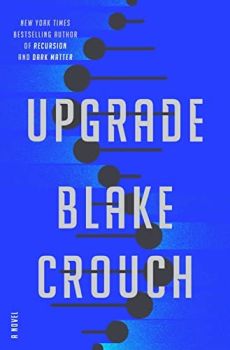
Growing up, Logan Ramsey idolized his brilliant mother, a cutting edge bioengineer. Then a tool of her device that worked perfectly in proving trials killed over two hundred thousand people by accidentally inducing a global famine. Logan grew up not to be another geneticist, but a cop who arrested those suspected of violating the new Gene Protection act. It was not a duty he enjoyed, but it felt like atonement of a sort, if not for his mother’s hubris then for his part in her work. Then, a raid on a suspected genetic-modification lab went sideways, and Logan found himself in quarantine – exposed to a viral-dispersal bomb. A bad flu proved to be the least of his concerns when he realized the virus was the dispersal agent for a genetic-modification package rewriting him by the hour. This is an unwilling fall from grace that sees him on the run from the very agency he worked for, isolated from his family and coworkers. Logan struggles to make sense of what has happened – why would terrorists want to improve someone with an explosive, instead of making them patient zero in a new pandemic? – and realizes he’s on the front line of a new war. Upgrade lives up to the increasingly high expectations I have of Blake Crouch’s work, with a far more plausible scenario than some of his prior SF titles, as thrilling and emotionally potent as they were.
I think I’ve been fascinated by the idea of genetically modified superhumans since encountering stories of augments in Star Trek, but I encounter few stories about them and fewer still that handle them well. In Star Trek, augments were always instavillains: superior ability, Kirk informed us in “Space Seed”, bred superior ambition. Crouch puts us in Logan’s skin, though, in a manner that reminded me a bit of Flowers for Algernon, but without the depressing evaporation of Charlie’s mental gifts, and reminds us that Kirk’s admonition is not necessarily the case. What’s happening to Logan is terrifying, threatening him with the loss of his very identity. Pleasure at his increasing skills – physical, mental, emotional – crowds out these reservations, but such pleasure carries the bitterness of isolation. He’s not alone, though: there’s at least one other person who shares his gift, and through her he begins to understand what has been done to him and why. Someone from their shared past is not quite past, and they have a mission to save humanity – by forcing a planet-wide genetic upgrade, virally transmissible. Struggling with his feelings of alienation even as he revels in his new abilities, and fully mindful of what his late mother’s ambitions created before – a graveyard for hundreds of millions – Logan has to wrestle against himself and a plan already set in motion.
Upgrade proved to be just as captivating as Dark Matterand Recursion, but drawing from an entirely different sector of science — one that makes for a more interesting, realistic, and thereby scarier thriller. Those previous books made the most of ‘out there’ technology, and succeeded much in part because of the emotional drama that the main characters were put through. Here, that drama is as strong as ever, given that Logan is isolated from loved ones and at odds with old intimates, but the SF aspect is much closer to home. The star is genetic modification, of course, but Crouch also comments slightly on life within the glass cage of big data and the omnipresent corporate-government surveillance state. Upgrade therefore combines two essential aspects of strong science fiction, commenting on not only what emerging trends in science and technology are capable of, but reflecting on what they might mean for human life — not merely the mass of H. sapiens, but to our individual beings.
Quotes:
We lived in a veritable surveillance state, engaged with screens more than with our loved ones, and the algorithms knew us better than we knew ourselves.
“If she’s not wrong about our impending extinction, what do we have to lose?” I stood and looked down at [her].“Everything it means to be human.”
I suspect that, if we all had perfect memory, we would all grieve the older versions of who we used to be the way we grieve departed friends.
What do you call a heart that is simultaneously full and breaking? Maybe there’s no word for it, but for some reason, it makes me think of rain falling through sunlight.
This is completely irrelevant to anything on the blog, but I stumbled across it and was so impressed by it that I had to share. I’ve mentioned RDR2 here a time or two (usually as an obstacle to my reading, since nearly four years after its release, I still play it to the exclusion of everything else when I’m in a mood to just relax with a game). The video’s creator visits various real-life sites that were incorporated into the world of RDR2, usually in cosplay as the game’s main character, ride horses, and uses firearms that were also in the game. Very high-effort work!
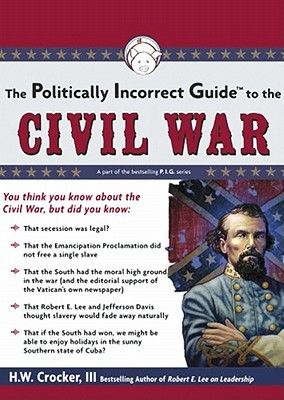
This is not a book I’d expected to read, because as a Southerner who’s been reading different views about the war for twenty years, I figured I knew what its take was already. Crocker’s comic novel about George Custer, though, piqued my interest in more of his works. I found in this politically incorrect guide a double surprise; first, it’s largely biographical, telling the history of the war through the lives of the men who made it happen, with friends meeting each other across the battlefield – and secondly, it’s distinctly Southern but not obnoxiously biased. Crocker’s appraisal of the men on both sides of the conflict makes it possible to find them interesting an admirable even if a reader disagrees with their politics or actions. While it has an odd structure, those who know little about the War and want to learn more about its background and the characters who fought in it will find it entertaining and often provocative.
Crocker begins the book with a history of the sectional disputes that led to the war, as well as the cultural and legal background that the South drew on to inspire, explain, and defend its bid for independence. In short: the States began as separate colonies, created separate Constitutions for themselves prior to the Revolution, and agreed as sovereign states to create a confederation for mutual benefit. Each region of the new country had its own economic and political interests, and increasingly those interests conflicted: the South did not like shouldering 90% of the tariff-funded Federal government’s expenses, especially when those same tariffs made the industrial goods it needed more expensive, and the North resented the wars that Southern expansionism often embroiled the Union in. Slavery was an indelible part of the competition between the sections, as the North wanted to constrain slavery not only to prevent Southern political power from growing, but to squelch competition between free labor and cheaper slave labor. The increasing militancy of northern abolitionists, which threatened to create chaotic slave revolts that could and would claim the lives of innocents (as happened with Nat Turner and John Brown’s attempted revolts – Brown’s claimed the life of at least one free black man), created a poisonous identification with and perverse loyalty between the South and the wretched institution. Faced with the threat of reckless abolitionism instigated by its political proponents, the new Republican party, the Deep South responded to Lincoln’s election by seceding from the Union. They joined it voluntarily; they would leave it voluntarily. Lincoln responded with a call to arms, prompting the Upper South to join its sister States. Few wanted a national divorce, but fewer still would tolerate remaining in an abusive relationship. A union that could only be maintained through jackboots and bayonets was no union at all.
After creating an outline of the war by taking readers quickly through a score of the conflict’s most pivotal battles, Crocker moves to the meat of the book – the biographies of a dozen or so generals from both sides who played their parts in the drama to come. This is the meat of the book not only because it constitutes nearly 2/3rds of the book’s text, but because in getting to know these men readers realize how poorly conventional narratives fit the facts. A narrative survey of a war makes it easy to reduce things to a story that makes sense, but human personalities, human characters, are rarely tidy enough to box up. Crocker’s array of characters includes titans with instant name recognition, like Robert E. Lee, Stonewall Jackson, U.S. Grant, and Sherman – but he deliberately includes men with little name recognition today, like the southern Unionist George Thomas, and the slavery-opposed Confederate A.P. Hill. The review of these notables makes it obvious that while slavery was a central political cause of the war, it had almost no bearing on the reasons why men supported or opposed secession, let alone fought in the war . Many of the Union personalities here were as racist as any stereotype of the Klan, and actively despised abolitionism, while the Southern men who have grown up alongside blacks are more charitable, if paternalistic. Lee and several other Confederates believed in the Union, despaired to see it rent asunder – but their loyalty to their home states, which they considered their nations far more than the abstract entity that was a fifty-year old political agreement, took precedence. One Union general wrote to his Confederate friend before the war began that, as much as he hated to see his compatriot on the Other Side, had he been born a Virginian instead of an Ohioan, he could see himself making the same choice. The biographies deliver full, complicated takes on these men’s lives, making it possible to admire and mourn them at the same time. I found myself interested by most of the men, even the loathsome Sherman, who along with Sheridan brought total war to the American continent, denuding the southern landscape and reducing thousands of civilians to starvation. Crocker engages in some light historical editorializing along the way, commenting (for example) that Longstreet’s doubts about Lee’s plan to attack the Union center at Gettysburg became a self-fulling prophecy: he delayed his advance so long that there was little artillery ammunition left to cover the advance, exposing the his corps to far more abuse during its advance.
Although I found much of interest in this book, as a standalone title it’s a bit limited, being chiefly biographical. I didn’t need anything in the way of background personally because of prior reading in this subject, but readers new to the subject might appreciate more detail. The biographical studies, though, go a long way to helping paint a picture of the actors’ mixed motives and divided loyalties, which are overlooked in the “Civil War as anti-slavery Crusade” narrative that has lodged in the minds of people who are so badly served by the education system that they’re not positive what century the war was in. Unfortunately, as with many books, those who would learn the most from engaging with it are the least likely to try. (One thing I’ve learned about goodreads is how cretinous many readers are — one-starring books they’ve never read and never plan to read. )
Some Interesting Quotes:
“Lincoln may have been right in thinking that he was bound to preserve the Union. But it was not the Union that was preserved. A union implies that two different things are united; and it should have been the Northern and Southern cultures that were united. As a fact, it was the Southern culture that was destroyed. And it was the Northern that ultimately imposed not a unity but merely a uniformity.” – GKC
“I saw in States Rights the only availing check upon the absolutism of the sovereign will, and secession filled me with hope, not as the destruction of but the redemption of Democracy….Therefore I deemed that you were fighting the battles of our liberty, our progress, and our civilization: and I mourn for the stake which was lost at Richmond more deeply than I rejoice over that which was saved at Waterloo.” – Lord Acton
“I wish to live under no other government, and there is no sacrifice I am not ready to make for the preservation of the Union save that of honour. If disruption takes place, I shall go back in sorrow to my people and share the misery of my native state, and save in her defence there will be one soldier less in the world than now. I wish for no other flag than the star-spangled Banner and no other air than ‘Hail Columbia’. I still hope that the wisdom and patriotism of the nation will yet save it.” – General Robert E. Lee
Rick Bragg is one of those authors I gave a shot simply because people around me wouldn’t shut up about him. It’s easy to understand why, after only a page or two; he has a gift for storytelling, one he inadvertently has described himself while reflecting on his ancestors:
I grew up at the knee of front-porch talkers, of people who could tell a story and make you believe you had been there, right there, in the path of the bullet or the train, in the warm arms of the new mother, in the teeth of a mean dog. The men, sometimes dog drunk, sometimes flush with religion but always alight with the power of words, could make you feel the breath of the arching blade as it hisssssssed past their face on the beer joint floor, could make you taste the blood in your mouth from the fist that had smashed into their own, could make you hear the loose change in the deputy’s pocket as he ran, reaching for them, just steps behind. The women in my world could telegraph straight to your brain the beauty of babies you never touched, songs you never heard, loves you never felt. They could make you cry about a funeral you never saw, make you mourn for a man you never met. They could make you give a damn about the world around you.
Somebody Told Me
After The Best Cook in the World gave me my first taste of Bragg, I was hooked but good, and have been reading him steadily since – all I have left to read of his books now, in fact, are two biographies and a tribute to wooden churches. This past week I’ve read two of his collections, My Southern Journey and Somebody Told Me. For those who are familiar with Bragg’s family books or his more recent collections, Somebody is a definite outlier, without the personal intimacy that makes his books as a whole so compelling. It’s a collection of his newspaper articles from the 1980s and 1990s, and tends toward the depressing – particularly the series on the Oklahoma City bombing, in which the peace of a wholly anodyne midwestern town was destroyed by a man whose hatred for an abusive government turned him into the very monster he hated. This is followed by a series of articles about a woman who killed her own children, and a series of pre-Columbine school shootings. There are some articles in here that warm the soul, though, like a tribute to New Orleans’ last ‘voodoo priest’ (gotta love genuine Characters in an age of consumerized homogeneity) , and some amusing pieces on football. The most interesting pieces to me were those on the late George C. Wallace, for whom getting shot was something of a come-to-Jesus moment. Although not as compelling as his family stories, Bragg’s gift for connecting people’s lives to readers’ hearts and minds is no less strong when it’s strangers’ stories he is sharing.
My Southern Journey is more typical Bragg fare, consisting of articles penned by Bragg for Southern Living, Garden & Gun, and (once) GQ, and organized into broad categories like food and sports. The section on food should not, under any circumstances, be read on an empty stomach, or indeed on anything less than a painfully full stomach. Otherwise Bragg will call forth demons of temptation and the reader will find himself wondering if it’s too late to cook up some sausage gravy at eight in the evening. The stories largely draw Bragg’s personal life (comparing a grandfather’s gift with carpentry to his own ability to glue himself to the wall, or regaling readers with the tale of how his mother’s adoption of two cats quickly turned into a menagerie of cats and miniature goats, but this collection’s central subject is the South, not his family. Pieces cover food, football, the joys (and trevails) of old homes, regional talents like storytelling and buck-dancing, and reminiscences of long childhood summers. It is a celebration of a place that, while flawed, sings to Bragg more than any other place he’s been to in his long career as a journalist. I found it utterly enjoyable, enough to knock it out in one long evening sitting.





 Reading Freely