“My people tell their stories of vast red fields and bitter turnip greens and harsh white whiskey like they are rocking in some invisible chair, smooth and easy even in the terrible parts because the past has already done its worse. The joys of this Southern life, we polish like old silver. We are good at stories. We hoard them, like an old woman in a room full of boxes, but now and then we pull out our best, and spread them like dinner on the ground. We talk of the bad year the cotton didn’t open, and the day my cousin Wanda was Washed in the Blood. We cherish the past. We buff our beloved ancestors till they are smooth of sin, and give our scoundrels a hard shake, though sometimes we cannot remember exactly who is who.”
“People ask me, often, why I love a place so imperfect, where the mosquitos dance between the lukewarm rain and the summer heat turns every stretch of blacktop into a shimmering river of hot tar, where the football-mad fling curses and sometimes punches and forget their raising on call-in radio, and the politicians seem intent on a return to 1954. I merely answer: How do you not love a place where the faded beads of a a parade six years before still hang in the branches of live oak trees.”
“I am an imperfect citizen of an imperfect, odd, beautiful, dysfunctional, delicious place. But at least we ain’t dull.”
“A year later, I spoke at her funeral. I surprised myself, blubbered like an old fool. For the first time in a long time it mattered what came out of my head, but the words crashed together inside my skull and I lost the fine things I wanted to say, and stood stupidly in front of people who loved her.”
“I know my mother was saddened when she recently lost her dog. That is no reason to fill the hole in her hearts with 13 cats.”
“The children start school now in August. They say it has to do with air-conditioning, but I know sadism when I see it. […] People ask all the time, what’s wrong with kids today? I have long held that they have been brain-mushed by too much screen time, but as summer races past me now I think it is something else. I think they do not know how sweet it is to feel the mud mush between their toes.”
(Following a story about his neighbors rallying to help one another after a hurricane) “So I wonder. If a street is made of people, not of oaks and tulip trees, how can this place not be as fine as it ever was? I think the best I heard it put was by Mary Pitts. ‘I always thought we lived on a good street,’ she said. ‘Now I know.”
“In restaurants, I am forced to eat my meatloaf with the television tuned to two mental giants ranting about a topic they manufactured that morning, apparently from mud and straw. At any given moment, on a plane, in a lobby, anywhere, I hear the TV at war with a dozen personal electronic devices. I am certain that, if I were sitting on a rug woven from palm fronds and dead army ants in the middle of the Amazon, I could hear the ubiquitous song of an iPhone. It is enough to wish for a lightning storm. There’s that moment when the lightning flashes and the thunder shakes the house. The power flickers and dies, and a dark stillness falls. And you’re swallowed up by a pure, old-fashioned silence, free of the hum of the refrigerator or the air-conditioner, free from all the man-made background noise that makes you feel less human.”
“I guess the best way to tell the story of how I glued myself to the wall of my house, of how such a thing could even happen, is to tell it chronologically. Otherwise, I might appear stupid. But if I walk you through it, tiny misstep by tiny misstep, you will come to see that such a thing could happen to almost anybody, even a smart person. It began, as all great disasters do, with a plausible theory. It began with the simple thought, I can fix that.”
“I guess the best way to tell the story of how I glued myself to the wall of my house, of how such a thing could even happen, is to tell it chronologically. Otherwise, I might appear stupid. But if I walk you through it, tiny misstep by tiny misstep, you will come to see that such a thing could happen to almost anybody, even a smart person. It began, as all great disasters do, with a plausible theory. It began with the simple thought, I can fix that.”
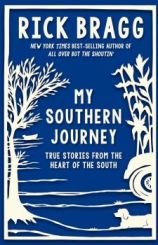
My Southern Journey, Rick Bragg
Doctors prescribed opioids in 20 percent of all patient visits with pain symptoms in 2010, nearly double that of 2000. Opioids became the most prescribed class of drugs, surpassing blood pressure, cholesterol, and anxiety medications. Americans, who represent less than 5 percent of the world’s population, were consuming 80 percent of the opioids supplied and 99 percent of the supply of hydrocodone, an opioid pain medication also commonly used as a cough suppressant.
San Fransicko: Why Progressive Policies Ruin Cities, Michael Shellenberger
People are generally open about their physical health; indeed, for men of a certain age, it’s their favorite topic of discussion — at least, judging by the chatter I hear nursing a morning coffee at the diner across the street from where I work. Mental health, though, is usually buried away like it’s a shame, evidence of personal failings – and loneliness is no exception. Vivek Murthy’s Together reviews various facets of loneliness, its consequences for our overall health – both for private individuals and for society at large – and then shares ways in which people are restoring connection in their own lives. One of its more interesting lessons, though, is that loneliness is pervasive – torturing its victims with double isolation, for they believe themselves to not only be alone in their lives, but alone in their suffering. But, Murthy notes, the loneliness engendered by the modern world affects nearly everyone, respecting no boundaries of sex, class, religion, or political affiliation. .
Loneliness, Murthy begins, is not a disease. It is instead feedback from our brain – a warning sign, like pain. Mental and emotional trauma are not fictitious simply because they occur in our heads: our brains light up from emotional pain in the same way they light up from physical attack. The pain of loneliness is a warning that we are disconnected from the tribe, weaker by isolation and more exposed to danger. Instincts born of a hundred thousand years of human evolution, of small tribes intensely dependent on their members for mutual survival, do not go quiet simply because we have paved over the world and suffer more from diseases of material prosperity than from poverty and environmental dangers. We are hardwired for social connection, even self-described loners. Ted Kaczynski and Henry David Thoreau may have been hermits living in the woods, but Kaczynski regularly visited the local library to enjoy company, and Thoreau often invited friends to join him for dinner at Walden. We need connection at multiple layers, Murthy suggests: intimate connection, like that of a spouse or close friend who knows our inner being and supports us, as we do them; social connection, of solid core friendships, and collective connection, or a feeling of being tied to the society we live in. It is possible to be fulfilled in some degrees and impoverished in the others, as might happen when newlyweds focus solely on one another and let their friendships wither. The difference between the pain of loneliness and physical pain, though, is that loneliness is not self-correcting: a burned hand drives us away from the hot stove, a cutting wind sends us scurrying for shelter and warm clothing. Loneliness, however, creates a positive feedback loop: feeling isolated, we grow wary and defensive, and withdraw further from the company of people whose presence could give us comfort. It’s crucial that we be aware of this and fight it, going against our protective instincts — because just as communion with one another brings us benefits like increased creativity and optimism, loneliness carries with it increased risks for heart disease, hypertension, dementia, and other diseases. Loneliness puts our brains into chronic low-grade stress, taxing our bodies and interrupting our ability to sleep. Murthy muses that one of the reasons women may outlive men is that women in retirement are far more likely to seek out opportunities to stay socially active, joining clubs and classes, whereas men are more likely to conceal their feelings of newfound loneliness and fall prey to further isolation and feelings of uselessness that foster depression and weaken overall health.
American society has been unraveling for decades now: Robert Putnam first drew attention to it with his Bowling Alone, on the cratering of civic and social participation across the board. One may look for reasons where they may: blame television, suburban sprawl, the establishment of the Individual Consumer as God. Murthy shares thoughts on additional factors, particularly technology — which promises connection but often makes us more self-absorbed and distracted, and is changing so rapidly that we’re unable to create social norms to moderate abuses inherent in experimental phases. The ubiquitous use of technology to make things more efficient has also increasingly removed or marginalization human connections. It is now possible for someone to live their existence completely from within their home, picking up groceries from their patio after a contactless, person-less dropoff. Even if they go into a store, it’s increasingly possible not to to have to talk to clerks at all: in Walmart, for instance, an app can tell people where to find a given item, and most checkouts are self-checkouts. I couldn’t help but think of Kurt Vonnegut’s resistance to this: any time he mailed a letter, he said, he insisted on walking to the drug store to buy An Envelope, then walking to the post office to buy A Stamp. Yes, he wrote, he could buy a box of envelopes and a page of stamps, but he valued his amiable chats with people in shops and on the street more than he valued convenience. There’s also the fact that we are rarely who we pretend to be on social media: our presented selves are curated, and while they may receive validation in the form of likes and shares, it’s only a fleeting hit of a dopamine which is ultimately empty. This has a bearing on political polarization, because when we see content from the other side, we’re getting the public offering — the controversial, the aggressive, the smarmy. We see only Joe Biden doing a bad Palpatine impression, not the grief-crushed and declining father anxious to leave a positive mark on the world.
After reviewing the consequences and some origins of loneliness (more factors are covered in The Lonely American), Murthy switches gears and shares the stories of those who have used their suffering as fuel to effect something good in the world — returning fire against loneliness by creating connection. One of the more inspiring stories in this book is that of Derek Black, the son of the man who created the internet’s chief gathering spot for racists and antisemites. When Black left for college, he encountered people not only different from him, but people he’d explicitly been told to hate — but, bonding over common interests, he fell into friendship and discovered his and ‘the other’s’ humanity. The story is doubling inspiring because one of his friends, an observant Jew, realized who Black was but persisted in the friendship because of his own hope that redemption was possible. From these stories, Murthy focuses on four key lessons: first deliberately spend time with people you love every day. Make the time. Don’t simply wait for a door to open – open the door yourself, or at the very least knock and rattle the doorknob. When you are with people, be with them — put distractions aside. Some activities, like singing or dancing together, are especially conducive to bonding and fulfillment.
This topic has weighed on my mind for over a decade, ever since I left an isolating background, experienced the socially rich world of university, and came home intent on finding or creating ways of experiencing that richness outside of the college experience. I especially appreciated Murthy’s long look at the socially disruptive effects of technology, and am glad that I’ve previously read criticism from writers like Neil Postman and Sherry Turkle that helped me prioritize authentic connection against the often erstaz forms offered by the internet. This is an important book to consider, especially in the coronamania era where we have witnessed not only the eagerness of the state to impose inhuman measures like nationwide lockdowns, but their willful obliviousness to the consequences of sustained “social distancing”, particularly regarding mental health. Murthy, C.S. Lewis, and Jordan Peterson have all observed that we find ourselves in one another. I’m grateful to Murthy for not only writing a book like this that details the problem, but gives people insight into how they can resist atomization in their own lives.
More people are expected to die from accidental drug overdoses in the next five years than have died in the previous fifteen, part of an overall spike in what is sometimes called ‘diseases of despair’, including suicide and alcohol-linked deaths: in 2021, overdose deaths broke records with over a hundred thousand lives cut short – and most of these deaths owed to opioids. The opioid crisis is particularly troublesome because it’s a manufactured one, largely being the direct byproduct of an aggressive marketing campaign for OxyContin by Purdue Pharma in the late 1990s. The promotion of opioids for chronic pain was a seed of despair that found fertile ground in regions of the country increasingly destitute, left behind by globalization. In Dopesick, Beth Macy offers a history of the opioid crisis, an investigation into its roots, and an exposure of the human costs of not only government policy, but the apathetic response of the American public – a response created both by disinterest in the suffering, and by an increasing feeling that the problem is too pervasive to tackle. There is hope, though, and the book ends in Macy’s argument for an approach centered in healthcare rather than punitive measures.
Most drug problems begin in the cities, where there are concentrated markets. The opioid crisis, however, began in rural areas like backwoods Maine and Virginia. These were not places marked by white-collar work: instead, men and women worked long hours in mines and factories, pushing their bodies to the limit and looked for relief from their pain from professional men in white coats who they were supposed to trust. In the mid-1990s, pain was being recast as a ‘fifth vital sign’, something that merited immediate treatment – and as luck would have it, there was suddenly a new effective painkiller on the market, one that a weak study declared was not an addiction risk for those suffering chronic pain. It was aggressively marketed to doctors, who were told over cozy dinners and in offices filled with new OxyContin-branded equipment that it was perfectly safe. The pills were potent enough that physical addiction followed quickly, and those doctors who paid attention and became wary about subscribing them were bypassed by new addicts to figure out ways to game the system – -getting prescriptions from multiple docs, for instance, or faking pain from kidney stones. Less scrupulous doctors embraced their increasingly compulsive repeat customers – and some became addicts themselves, writing fake scrips to increase their access to pills. Increasingly desperate opioid addicts sank to criminality to feed the new monster in their head – stealing and pawning goods, for instance, or becoming dealers in the burgeoning non-pharmaceutical heroin market. (Sam Quinones covered the link between Oxy addicts and the increase of cheaper, more readily available heroin in his bookDreamland, but it’s addressed more broadly here.) Heroin dealers, well aware of the addictive potential of their product, often ‘hot-load’ initial samples by giving newcomers especially potent doses of the drug — enough to hook with one bite.
Although the opioid wave began as an irresponsible remedy to physical pain, Macy notes that it quickly evolved. As coal mines and factories closed, selling pills and later heroin on the side became a viable source of income to people whose other options were relocating (difficult to do with no income) or becoming perpetual ‘draw-ers’, those who lived off of frequently fraudulent disability claims or other forms of state handouts. The growing market embraced its more natural customer base – young people of wealthier classes with plenty of disposable income and a party-prone lifestyle, who had been groomed to be pill poppers by a lifetime of exposure to Ritalin and other stimulating prescriptions. Those, too, were overkill – prescribed by doctors too eager to diagnose bored boys as having an attention disorder, and too sure that neuroactive drugs were the only solution. Wherever opioids went, they left death and sorrow in their wake – -and as Macy’s many extensive interviews showed here, even those most primed to succeed in life could be destroyed by it. Opioid addiction rewires the brain more quickly and more comprehensively than other drugs, and time and again readers witness people in this book going through rehab, valiantly putting their life together, and then – as if they were possessed – succumbing to temptation or crumbling under pressure and finding themselves in the gutter again. The story with which Macy closes the book is especially effective at conveying the awful drama of addiction, recovery, and self-destruction. Despite the misery that saturates this book, her interviews with recovery specialists and those who have made the journey themselves indicates that Medication-Assisted Therapy, which uses opioid-like drugs to help wean addicts off of the real thing, is the most promising path forward. Macy also maintains that more government support (via Medicaid and food assistance) is needed to bouy addicts up so that they don’t resort to using their old contacts and selling drugs just to get by. Being convicted of a felony (exceedingly easy to do in Police State USA) is often the first step into a mire of unhirability and poverty that effectively forces the convicted to become perpetual clients of the welfare state or (for those with imagination or ambition) actors in criminal or black market economies.
Drug overdose had already taken the lives of 300,000 Americans over the past fifteen years, and experts now predicted that 300,000 more would die in only the next five. It is now the leading cause of death for Americans under the age of fifty, killing more people than guns or car accidents, at a rate higher than the HIV epidemic at its peak.
Dopesick, Beth Macy
When we’re on the digital tether, she says, we’re not fully present in either our virtual or our physical life. Also, we’re not fooling anyone. Others can tell when we’re not paying attention, and it makes them less likely to share as much or as deeply. No wonder the constant presence of our phones and other communication technology has been shown to reduce the emotional quality of our conversations. As Andrew Przybylski and Netta Weinstein found in their experiments, the mere sight of phones during conversation negatively impacted “the extent to which individuals felt empathy and understanding from their partners.”
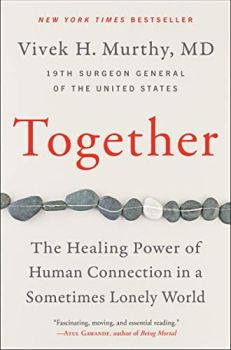
Together: The Healing Power of Human Connection in a Lonely World, Vivek Murthy
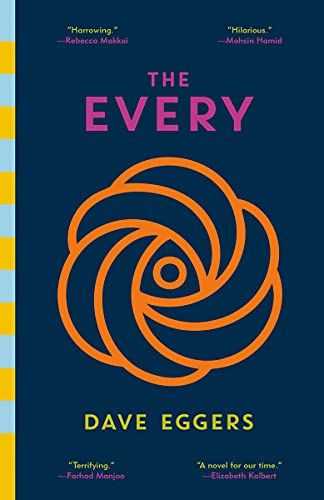
Nearly ten years ago, Dave Eggers published The Circle, about the rise of an uber-corporation whose products had transformed not only the digital world, but were beginning to shape society as well. Think of Google, but add to its influence that of facebook and Apple, and you have some idea of The Circle’s power – but that was only the beginning. Having devoured a company that sounds an awful lot like Amazon , the Circle has further metastasized into something far larger, more influential, and (to some) insidious: it is The Every. To Delaney Wells, The Every is an architect of human tyranny that needs to be destroyed – but no legislator has the will, let alone the power, to break it. She needs to get inside and find some way to make it implode, burying her aversion to Everything about this company long enough to subvert it. The result is a novel far darker but just as humorous in its satire as The Circle, targeting the technological prison we are building for itself as well as the culture of modern corporations in general.
Delaney is not quite alone in her quest to destroy the beast; she’s aided and abetted by her roommate and friend Wes, who shares her loathing of it in part, though he’s a techie who also occasionally mesmerized by the potential of new tools. His ability to see and use the promise of tech makes him Delaney’s key ally: their idea to destroy the Every is to feed it ideas that fit its appetites perfectly, but will be so obnoxious and invasive to most people that consumers will rise up in rebellion against the new Panopticon. As a new employee, Delaney is rotated through departments to gain a concept of The Every’s scope of operations, and at nearly every stage she and Wes feed ideas into the beast. To their rising horror, though, upping the ante doesn’t work: the few consumers who resist the invasiness are quickly overwhelmed by popular opinion (which is God in this hyperconnected world where thoughtcriminals can be shamed into oblivion and poverty) or otherwise marginalized. Delaney and Wes are expanding and perfecting the dystopia, not sowing the seed for its destruction – and because of its global scope, the goings-on of the Every have drastic repercussions for society. That’s part of the problem, the sugar coating the poison of The Every’s command and control of most of the global market and most of the global populace: its tyranny can make some things better, reducing waste, improving health, and eliminating violent crime. The only price is human flourishing.
The Every succeeds as a tech thriller, with few kinks in the narrative to keep things interesting. Having read Eggers before, I had some suspicion of the ending, but there were surprises enough to keep me wondering. Where’s it’s most effective, though, is where it doubles down on the growing horror of The Circle, in slowly painting a picture of humans completely possessed by their own devices. We saw in The Circle how experiences were completely reduced to sharable moments, newsfeed fodder: everything became tragically shallow, yet was taken all the more seriously by the book’s hyperconsumer characters. This has only increased in The Every, but is made far worse. Various Every apps constantly ping their users to prompt them to pay attention to certainly daily goals, so we witness characters stop in mid-conversation to start jogging in place (need those steps!), laughing randomly, or shouting words to increase their vocabulary. More unsettling is that this is regarded as normal behavior, at least within the Every’s campus – an island unto itself, where skintight lycra is the norm, and language is insipid and inoffensive when it’s not incomprehensible corporate jargon. Although members of The Every are adapted to being nothing more than human rats in an elaborate digital Skinner box, Delaney’s connections with those outside allow us to see more of the human costs, but more disturbingly, the ways people justify their rapidly decreasing agency by pointing to superficial material improvements. Sure, I live in a home where every system is controlled by algorithms created by an company with its own agendas, but it’s a comfortable place and I never have to go shopping again. It’s a new vision of Huxley.
The Every is both amusing and deeply disturbing; amusing in the way it mocks corporate culture and demonstrates what fools we can make of ourselves, dancing to the tune played by algorithms and bowing before big data and its technocrat handlers — but profoundly disturbing in its depiction of how small and enfeebled technology and contemporary culture can and are making us. Unimaginable is the human of old, who strode across continents, enduring all kind of weather and who put his mind and muscle to work creating civilization: here we find oversized toddlers, incapable of navigating their world without the constant voice in their head telling them where to go. We find people who, at the least amount of friction, opposition, or stress, shut down and shrink into themselves — who are always plugged in, always striving to be at the center of attention and constantly fearing that they’re being left out. It’s sad because this is not fiction, merely an exaggeration of what we already witness on a daily basis, the subjugation of a given person’s humanity by the Matrix-jacked consumer-creature, his inner Gollum forever trying to find his precious among the endless newsfeed.
Related: Optimal, J.M. Berger. A novel set in a world controlled by The System, in which every aspect of human life is provided and guided by algorithms. The Warehouse, Rob Hart. Another technocorporate dystopia.
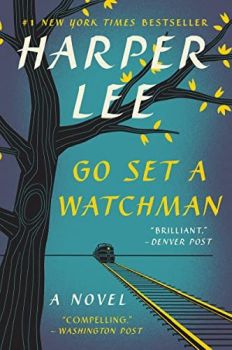
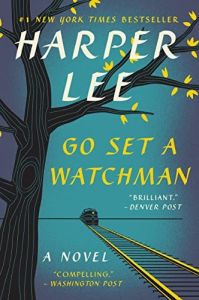
When it was announced that Harper Lee had published a sequel to her legendary book, Go Set a Watchman, I was skeptical, as were many. Given how close its author was to death, the book’s sudden ‘discovery’ and publication appeared to be nothing more than rank opportunism from her lawyer. A recent lecture by Dr. Wayne Flynt, an Alabama historian who was friends with Lee for years prior to her death, piqued my curiosity in the title: even if Lee didn’t initiate its late publication, Flynt indicated that she didn’t fight it, either. The moral questions explored in the book were interesting enough that I wanted to read it, doubts about its legitimacy aside. Although continuity issues discredit it from being regarded as a proper sequel, Watchman is nonetheless thought provoking.
As most readers know, To Kill a Mockingbird was a racial & legal drama about a socially prominent southern attorney defending a black man accused of raping a young white woman, going against the demands of respectability and squaring off against his peers and a would-be lynch mob for the sake of his conscience. That man, Atticus Finch, became a moral icon, idealized by his young daughter Jean Louise, or ‘Scout’.In Go Set a Watchman, however, young Scout is older: Jean Louise has reached early adulthood, that charming period where the confidence of adolescence hasn’t yet been tempered by the burden of time and experience, and she has returned home for a two-week visit with her family and her part-time beau. Jean Louise finds her hometown altered from her youth: the Civil Rights movement is sweeping the nation, disrupting the old order and making tension in town palpable. She’s at first confused and distressed to experience cold distrust from blacks she’s known all of her life, but outright horrified when she finds her father Atticus and her suitor Hank attending a meeting of the White Citizens Council – the upright and respectable sitting side by side of sleazy, corrupt demagogues. To see Atticus keeping company with that ilk, to see him giving an ear to the cause of resistant segregation – voicing a distrust of a community he now viewed as Other even though he once defended the common humanity of all – breaks Jean Louise’s heart and destroys her world. If her father, the paragon of virtue, could be compromised, what was left?
If Go Set a Watchman were merely a book about a young idealist discovering that her father is guilty of being human and preaching to him about the virtues he’s apparently forgotten, it would be sanctimonious and boring. Instead, we find characters who are all riven with conflict. Scout fled Maycomb, but retains attachment to the world she knew: she’s dismayed to learn of property sold, of church hymns changed, and of the muted antagonism she witnesses between her town’s people, black and white. In her great confrontation with her father, she expresses her own reservations about the recent court decision (Brown vs. Board) on constitutional grounds – reservations that make her father chuckle, for he declares she makes him look like a Roosevelt democrat by comparison. Their shared attachment to what they know, though, and their shared concern over the steadily-ballooning power of DC only go so far. Jean Louise has been absent from Maycomb and has no idea what’s been happening in the community, and neither she nor the reader are given details about the recent trouble — we only witness fragments of hostility. Whatever has been happening is enough to make Atticus and his brother Dr. Finch staunch opponents of the new activism, which they see as nothing more than the creation of outside pressure groups creating unnecessary strife. They’re particularly opposed to the insertion of the Federal government into local matters, which to them matters more than race, more than peace, or even a good name. It’s the reason that when Scout releases a sailor’s vocabulary of condemnation against her father that he sits peaceably and doesn’t twitch an eye: he can tolerate any kind of name-calling, he says afterwards, so long as it’s not true. He for one is square with his conscience. Although Scout and the reader may be prepared (or resigned) to dismiss the Finches as bigots, the back and forth arguments that constitute the second half of the book indicate that the truth is more complicated than reaction and impulse will admit.
Go Set a Watchman is a compelling book, though it’s unfinished; it begins in story then switches purely to back and forth dialogue, and there are details missing that make trying to understand Atticus’s obstinence more difficult. Whether the reader will find it worth reading varies on the reader: I was drawn in by the tension of a good man having to make stands in a more murky moral area — resisting good causes being advanced through bad means, for instance. While it’s very easy for contemporary people to assert that had they been living back then, they would have made The Right Choice, that’s extremely unlikely — and would have made for a much less interesting story. Personally, Watchman was worth reading just for the character of Dr. Finch, who in retirement has retreated into the Victorian era and is a perfect southern eccentric. It helps to know something of the novel’s history before reading it, though — the fact that it was Lee’s first idea for a novel, and that she was advised to refine the story to better advance its moral arguments. The result was To Kill a Mockingbird, which has inspired people for decades. It’s neither a prequel nor a sequel, but an interesting look into Harper Lee’s attempt to come to terms with the conflict between her community’s values as espoused and those same values as practiced.
Happy Tuesday! Teasing from Dave Eggers’ The Every today, the story of one woman’s quest to destroy an uber-corporation that’s Facebook/Google/Apple/Amazon rolled into one.
“Now I’m thinking if I can just kill emojis, that would be enough,” Delaney said. “You see the Secretary of State use a few today?” Wes asked. “He was celebrating the anniversary of glasnost, and he used a dancing rainbow. On the official state account. Our species has no dignity. No path to dignity.”
Well, sometimes I’ll text a friend—just something like a rainbow emoji followed by a two-way arrow and a question mark. You know, to let them know I’m happy and hope they’re happy.” “And then you wait,” Delaney said. “Right!” Shireen said. “And while I’m waiting…” “You wonder if they hate you and are plotting against you and will spread lies about you and ruin your life and you’ll want to die?” Delaney said. She expected a laugh, but the faces of Shireen and Carlo had gone gray. “I wouldn’t use those words, exactly,” Shireen said, “but—”
Capital-P Play was last year’s management theory, following multitasking, singletasking, grit, learning-from-failure, napping, cardioworking, saying no, saying yes, the wisdom of the crowd > trusting one’s gut, trusting one’s gut > the wisdom of the crowd, Viking management theory, Commissioner Gordon workflow theory, X-teams, B-teams, embracing simplicity, pursuing complexity, seeking zemblanity, creativity through radical individualism, creativity through groupthink, creativity through the rejection of groupthink, organizational mindfulness, organizational blindness, microwork, macrosloth, fear-based camaraderie, love-based terror, working while standing, working while ambulatory, learning while sleeping, and, most recently, limes.
Starting October, I had two things in mind: one, a nod to Mental Health Awareness Month; two, a nod to Halloween that would come in either some appropriate nonfiction (I have books on blood and skeletons) or in a look at the future-horror of the atomic age, both through nuclear testing and the rise of UFO mania. I also wanted to squeeze in something about German history if I could, in observance of Unification Day. I managed….Life and Death in the Third Reich, 2 books relating to mental health, and a scattering of randos.
Classics Club I started reading Dune. It’s not grabbing me yet.
Hey, two books! That’s…something. Ignore the amount of books I bought last month and this month.
Science Survey 2022 The survey was fulfilled in September, but more fuel for the fire! An Immense Worldand The Skeptic’s Guide to the Future brought us up to 18 books so far. We’ll crack 20 easy, but I’d love to finish the year at 24.
Newly Acquired: The Politically Incorrect Guide to the Civil War, H.W. Crocker II. From the author of Armstrong, the funny alt-history novel about Custer surviving Little Bighorn and becoming a gun for hire. Adventures with Ed: A Portrait of Abbey Postcards from Ed: Dispatches and Salvos from an American Iconoclast Faces Along the Bar: Lore and Order in the Workingman’s Saloon Sid Meier’s Memoir! A Life in Computer Games The Every, Dave Eggers 8 Days in the Woods: The Making of the Blair Witch Project
Okay, new goal: make it to December without buying any books. If I do, I’ll reward myself with fried ice cream from my favorite Mexican place.
She walked down the steps and into the shade of a live oak. She put her arm out and leaned against the trunk. She looked at Maycomb, and her throat tightened: Maycomb was looking back at her. Go away, the old buildings said. There is no place for you here. You are not wanted. We have secrets.
“Remember this also: it’s always easy to look back and see what we were, yesterday, ten years ago. It is hard to see what we are. If you can master that trick, you’ll get along.”
“Very well, if you won’t let me tell you what Melbourne said I’ll put it in my own words: the time your friends need you is when they’re wrong, Jean Louise. They don’t need you when they’re right.”





 Reading Freely
