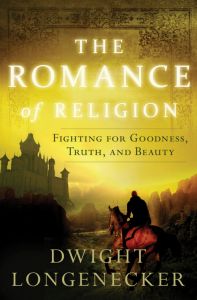
Today’s tease comes from The Romance of Religion by Dwight Longenecker. Reviews/comments for it, The Reactionary Mind, and Blood of Honour to come this week..
The truly romantic warrior sees the evil in the world and wants to fight it, but first of all he sees the evil in himself and wants to fight it. He realizes that he cannot hope to change the world if he cannot change himself. The truly righteous warrior, therefore, is not a person who knows he is right but a person who knows he is wrong. The righteous warrior realizes he is a hypocrite. He knows that in a dark corner of his own life, he is just as capable of monstrous crimes as the worst of humanity. In other words, the righteous warrior may be full of confidence, but he is also full of humility.
However, with his strength every romantic hero carries a weakness; he nurses a wound and aches with some tragic flaw. The way he treats his weakness distinguishes him from the villain. The villain is never a total monster. He is a hero gone wrong. He is a romantic hero who has given in to the dark side of the force. The villain has ceased to fight against evil—most importantly, he has ceased to fight against the evil within himself. He is a villain because he has no self-doubt. He has forgotten that he has a flaw; indeed, what should be his aching wound has become the defining characteristic of the villain. At some point he stopped fighting the darkness within and so became one with the darkness without. Because the villain refused to dominate his dark side, it has dominated him.
1. If you had to go into the witness protection program, and they gave you the option of moving inside a book, where would you like to go?
Oh, easy. The Awakening of Miss Prim, in which the main character takes the post of librarian in an idyllic little village where society is arranged along distributist lines, where everyone has their own home and small business, works just enough to take care of their needs, and spends the rest of the time cycling, drinking tea, puttering about in gardens, and discussing the classics and philosophy.
2. Have you ever claimed to have read a book you actually hadn’t read?
I claim to have read Hunchback of Notre Dame when I read an abridged version of it. I will atone for my sin eventually.
3. What author have you read the most books by?
Isaac Asimov (a hundred, at least, from fiction to nonfiction), followed by Bernard Cornwell.
4. Do you ever buy fun bookish merch like mugs, shirts, artwork, etc?
No, though I do enjoy looking at them.
5. Do you usually read only one book at a time, or do you have several going at once?
I usually have at least two, a ‘serious’ read and a fun read. This isn’t as simple as fiction or nonfiction, because the ‘fun’ read for me might be a book on transportation.
6. Are you a mood reader, or do you plan out your reads?
Yes.
7. If you could meet the author of your favorite book and ask them one question, what would you ask them?
“Can I live on your farm, Mr. Berry?”
8. Have you ever tried a new food or drink because you read about it in a book or story?
“Scotch and soda for a dying man!” was Thomas Trumbull’s usual greeting when he arrived a meetings of the Black Widowers in Asimov’s mystery series of the same name, and it’s why one of the first drinks I ever tried was Scotch.
9. Have you ever named a pet after a book character?
Yep! My first dog, Barkley (from Sesame Street, which I read books of) and my current dog Idgie (Fried Green Tomatoes).
10. What book are you reading right now?
Finishing Fr. Dwight Longenecker’s Romance of Religion, steadily working on Sarah Dry’s Waters of the World, on our air and oceans.
11. If you could spend a day with your favorite author, what would you do with them?
Wendell Berry would just want to work, and if I chose Bill Kauffman we’d just sit in a bar and tell stories all day, so I’m going to go with Tony Esolen and a visit to a classical art museum where hopefully he will begin lecturing and bringing the artists’ dreams alive with his words.
12. What is the longest book you’ve ever read, and did you like it?
The Gulag Archipelago, approximately two thousand pages across its three volumes. If we’re not counting multi-volume books, then War and Peace followed by The Age of Faith (Will Durant). I loved Gulag & Durant, and enjoyed War and Peace.
13. Have you ever cried over a fictional death scene, and if so, which one(s)?
The Pigman, in The Pigman. I remember vividly as the first book that made a dramatic impact on my emotions. Since we’re being more broad about ‘fiction’, though, the best example would be that of Arthur Morgan inRed Dead Redemption 2. I’ve played it numerous times and it’s never lost its impact.
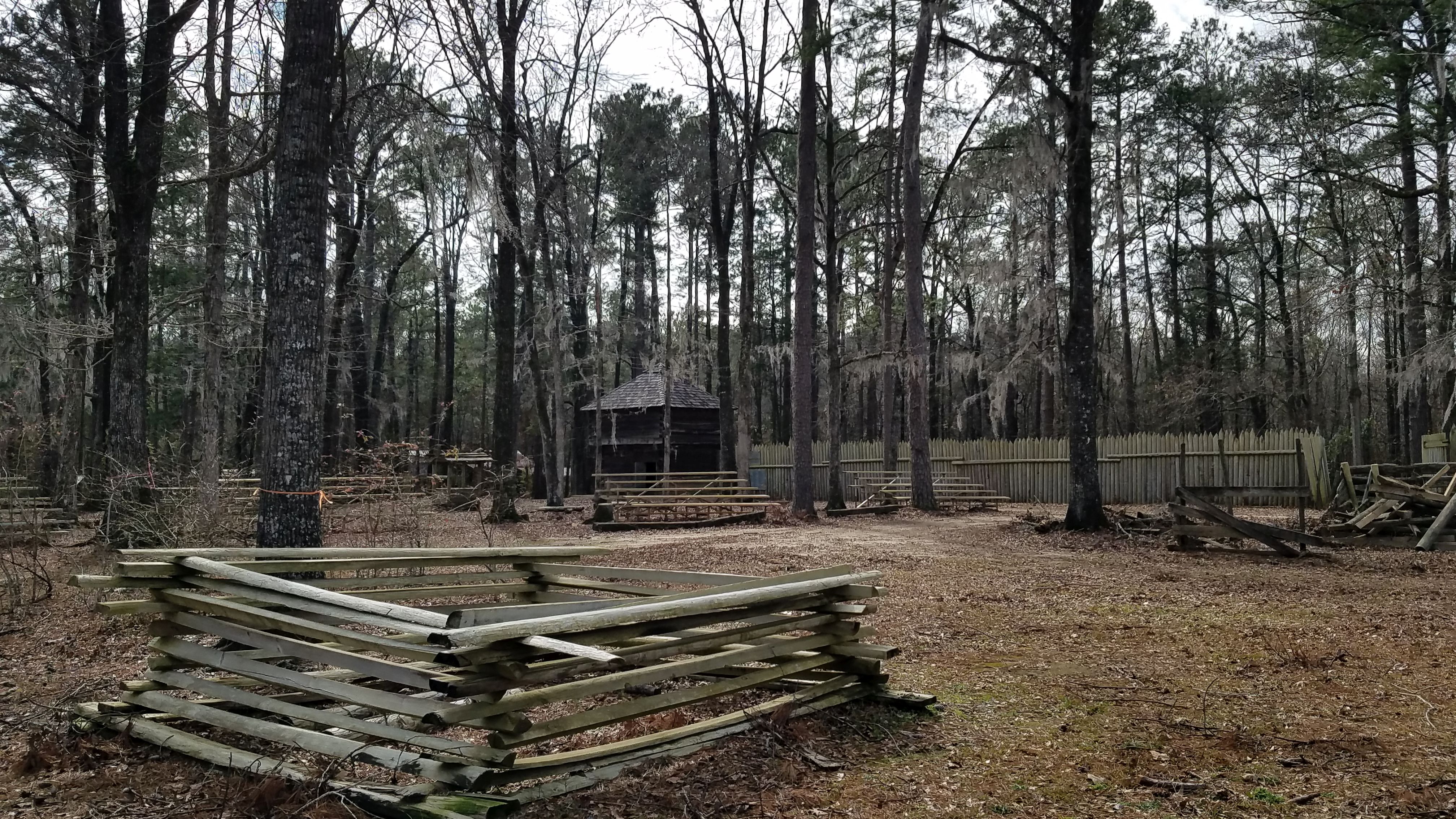
I can still remember the first day of fourth grade, walking eagerly to my desk and rummaging through the pile of books there to find what we’d be studying that year in history. This is the first time I remember being conscious of my love of history, a love that’s never waned over the course of decades. Anyone who reads this blog probably anticipated the answer, because year after year, history is the Queen of the Stacks, having lost once to science (2007) and once to religion and philosophy (2009). History was easy for me, and remains so, because as someone weaned on piles of books I approached it as just another story — only this time, a story that happened to be true. More than history being a drama that had happened, though, knowing history made the world around me more exciting. I took delight in visiting Old Cahaba and trying to imagine what was there before, or to see in my mind’s eye Creek war boats traveling down the Black Warrior river. The idea that things had once been so utterly different fascinated me, and this was increasingly the case when I got older and realized that events in history didn’t simply follow one another chronologically: they created what succeeded them, like the Crusades generating wealth for Italian merchants that led to the Renaissance, and creating interest in finding a way to the markets of the far east that did not involve paying the Turks money — and so resulting in the Age of Discovery, as the princes of Europe competed to find other paths across the world. As I age, of course, history becomes a way of rooting myself in the tradition that reared me, and in grounding me from the irrationality and absurdity of the modern age. And of course, imagining knights galloping across a field, wooden frigates deliver broadsides, and P-51s twist and dive in the sky is more exciting to me than grey boxes shooting missiles at one another.
The moving finger writs, and having writ, moves on, and now another month is gone. I think I quit myself reasonably well in February, making steady across across most of my challenges.
Do you anxiously wait all year for my big books-read pie chart, divided into genres? Do you long for graphical representation of strangers’ bookish data? Then behold! A bar graph!
I don’t think this is exactly what I was intending, but it’s close enough for the moment. Ideally, over the course of the year the grey bar will fill the orange bit. Goals for science, Dixie, and Classics Club are 2 a month or 24 all told: the goal for Climbing Mount Doom is 80. That may sound crazy, but I also have the option of casting TBR books into outermost darkness where there is wailing and gnashing of teeth (i.e. Goodwill), so it’s conceivable. The TBR titles also contain some science & cc titles among them, so I can double dip.
The Big Reads:
The Jewish Annotated New Testament: I’ve completed reading the Gospels and Acts, and have started on the essays that relate to basic background. Planning on posting the first recap at some point in March. The Shahnameh: I didn’t even look at it. I took it down from the shelf and now it’s wandering about in the mini-piles. I will commence a search, rescue, and read operation. My hope would be to post the first-third review on March 20th, the first day of the Iranian New Year.
Climbing Mount TBR: My Antonia, Willa Cather Darkest Hour, James Holland The Joyful Christian, C.S. Lewis DISCARDED: Roads to Liberty, F. Van Wyck Mason. Or rather, returned to the friend who lent it to me last year. PROBABLY DISCARDING: The Four: The DNA of Apple, Amazon, Google, and Facebook. The subject matter is interesting, but the author is too informal for me to take him seriously so far. I’ll give it another look before it goes in the box.
This past weekend I was privileged to see one of the final performances of Greta Lambert at the Alabama Shakespeare Festival, where she performed the role of Prospero in Shakespeare’s “The Tempest”. I’d never seen or even read “The Tempest” before, in any form, and prepped by watching Overly Sarcastic Productions’ ten-minute review. For the uninitiated, the play opens with a handful of Italian noblemen and their hangers-on being caught in a terrific storm at sea, and washing up on an enchanted isle, the ship’s passengers being widely separated and cut off from one another. As we learn watching the play, this was no ordinary storm, but one conjured up by a sorcerer, Prospero, who in youth was the duke of Milan. He (or in this case, she) was sent into exile with her young daughter Miranda, and usurped by her brother Antonio. Now, with young Miranda maturing into adulthood, Prospero has arranged things to enact vengeance by getting his daughter happily married to one of the noblemen’s sons. (Not his brother’s, obviously….), aided by a fairy spirit and a demon-like thing. As expected from ASF, the acting was superb all around, especially Lamberts’, and I particularly liked the background acting of the young lady who played Arial, the fairy. What made this production so entertaining, though, was the choice of music: the play’s comic relief, a pair of drunk soldiers, kept roaring Irish sea shanties.
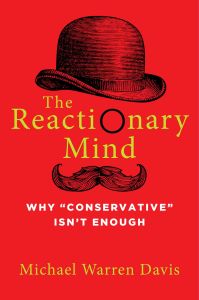
First up, Tuesday Teasins’, this time from Michael Warren Davis’ The Reactionary Mind.
We are always free to choose, but never free from choice. We lack the greatest freedom of all: freedom from desire, otherwise known as gratitude.
There’s no better word for the condition of modern man: restless. He is oppressed by his own false freedom, tortured by his inflamed appetites, and humiliated by his own ignorance. The things that might make him truly happy—gratitude and simplicity, peace and quiet—are kept forever out of his reach.
This week’s top ten list is a ‘genre freebie’, so I’m going to go with Ten Near-Future SF Tales.
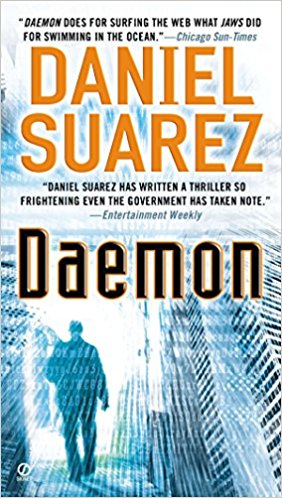
(1) & (2): Daemonand Freedom, Daniel Suarez. The first of these is a chilling conspiracy, as an AI with a distributed intelligence begins expanding itself and effecting a takeover of pretty much anything computerized, recruiting human agents to do its bidding through a videogame. The reader is drawn into this drama from the eyes of a cop investigating a mysterious murder, realizing right along with him how much more terrible the truth is. The story continues in Freedom, as the Daemon begins attempting to re-form human society around its technical apparatus.
(3) and (4). The Circle and The Every, Dave Eggers. Chilling looks into the world that Big Tech is creating, frightening not just for the power they have over politics and economics, but the way they are deforming the thoughts and desires of we poor creatures caught in their web.
(5) Optimal, J.M. Berger. Of life run by algorithms. My first SF read of 2021, and still memorable despite discovering Blake Crouch that same year.
(6) Player Piano, Kurt Vonnegut. Of people living in deep anomie in a world where machines do everything.
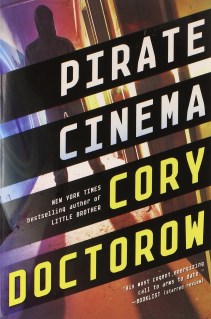
(7) Pirate Cinema, Cory Doctorow. One of the more ‘fun’ ones on this list, here Doctorow gives a story based on ‘remixing’ culture, of people creating new movies/songs/etc by taking pieces of other ones. As with many of Doctorow’s works, it debates the virtues of IP.
(8) The Warehouse, Rob Hart. A mystery/thriller set in an America dominated by an Amazon-on-steroids. Something like The Every, but not nearly as penetrating: Eggers’ critical strength lays in exposing how big tech warps human behavior.
(9) Upgrade, Blake Crouch. A look at the dawn of the transhuman revolution.
(10) That Hideous Strength, C.S. Lewis A sharp rebuke to those who lust after domination of the human soul, technical and otherwise.
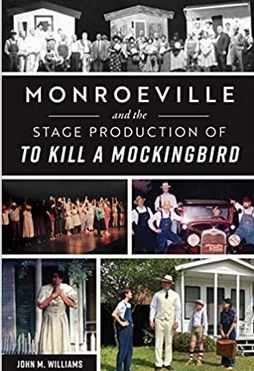
The first time I ever visited Monroeville, I had the dumb luck to arrive on a day when the courthouse-turned-museum was hosting a theatrical version of the story. I had no idea such a thing even existed. Monroeville and the Stage Production of “To Kill a Mockingbird” is the story of how the play came to be, and how it’s become part of Monroevillers’ lives over the last two decades. I say ‘story’ deliberately, because Williams hasn’t written a formal history. Instead, it’s more of a collection of accounts, typically centering around a personality who was involved or impacted in the story of TKAM and especially its stage production, and while the accounts generally follow a chronological drift, it’s very much a drift and not a purposeful drive. Through these accounts, we get a varied history of the town, the play, and how they give life to another: the town’s racial tensions giving birth to the original story, the novel keeping a post-industrial rural community alive and making it Alabama’s literary capital. We meet personalities who inspired those in the play, and those who embody the characters and bring them to life, both in Alabama and abroad, and come to know Monroeville better through the people who have heard its stories from their grandfather’s lap and now pass them on. It’s an interesting mix of local history and literary commentary – definitely of interest to both Alabamians and to those interested in TKAM in general.
A few years back I read a quote in Vonnegut’s Timequake that has stuck with me since.
”My uncle Alex Vonnegut, a Harvard-educated life insurance salesman who lived at 5033 North Pennsylvania Street, taught me something very important. He said that when things were going really well we should be sure to NOTICE it. He was talking about simple occasions, not great victories; maybe drinking lemonade on a hot afternoon in the shade, or smelling the aroma of a nearby bakery, or fishing and not caring if we catch anything or not, or hearing somebody all alone playing a piano really well in the house next door. Uncle Alex urged me to say this out loud during such epiphanies: ‘If this isn’t nice, what is?’”
Let’s say you’ve never read any of C.S. Lewis’ nonfiction, but you’ve heard his name constantly and are curious. Published fourteen years after Lewis’ death, The Joyful Christian collects excerpts from his more popular works into one volume. Although the drawn-from works vary (they include his biography Surprised by Joy, his Christian nonfiction like Miracles and The Problem of Pain, Letters to Malcolm, and even The Screwtape Letters), the collection is tightly focused on the Christian life. The title is somewhat misleading in that it’s not a book about mirth and merriment, but rather uses Lewis’ original use of ‘joy’ – those fleeting moments of feeling something transcendental, happening spontaneously and unpredictably, hints of something beyond than what is dreamt of in Victorian man’s philosophy. The volume proved an solid start to my Lenten reading, given that it begins with Lewis’ writing on the truthfulness of Christianity before shifting to faith practices. These were intended to be read devotionally, I think, since the multitude of short pieces (each is 2-4 paragraphs), but I’ve read most of the source material so I just enjoyed the refresher. Personally, as a Lewis devotional reader, I prefer A Year with C.S. Lewis, but this would be a good primer for someone who’s never read Lewis and is interested in the range of his Christian writing.
Longandshortreviews hosts a weekly blogging challenge with prompts for readers to response to. This week’s topic hit a sweet spot for me: the Internet! Nevermind that it’s Thursday. I had a computer before I had the internet, and having gotten tastes of it at friends’ houses I was squirmy with anticipation about the places I might explore once my parents decided to spring for dial-up at our house, keeping a little notebook with websites I heard about. The only ones I remember are scholastic.com, frenzmail.com, and whitehouse.com. The last was my seeing an official website for the White House in a book on the presidents, and not paying attention to the .gov. Back then, it was….well, not fit for an eighth-grader to visit, let’s just say. I can’t remember for certain which website I visited first, but a neighbor-friend of mine who showed me how to get started with computers and the internet was using Yahoo.com at the time for chatting, so if I were a betting man with a time machine that’s where my money would be. (Well, if I were a betting man with a time machine my money would be in Apple & Amazon!)
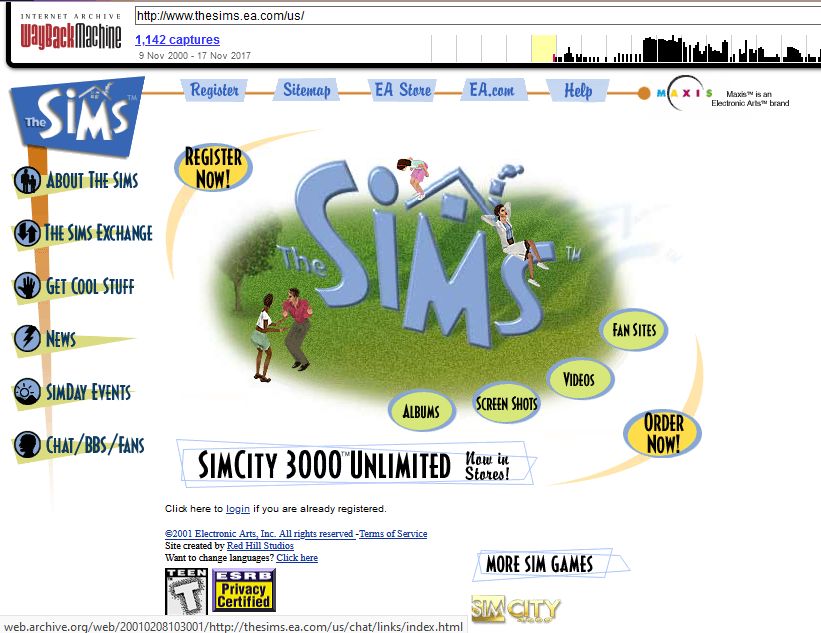
Although I did visit scholastic.com, it would have been a one-off thing. The websites that young me spent time on were The Sims.com and the multitude of fan websites offering downloads for the game; 3DO.com, for its unique forum system and thriving community of gamers; and Rinkworks’ “Computer Stupidities“, which I’m delighted to report looks exactly the same as it did way back when.
Just for fun: I found a website that tracks the most popular websites since 1993 on a month to month basis, a moving bar graph. Watch how Google just explodes in 2004-2005. Also, the host of the InternetHistory podcast has a superb book called How the Internet Happened if you want to go riding down memory lane. It’s about how we experienced the internet, not the technical bits. (For that, read Where Wizards Stay Up Late at Night.)





 Reading Freely