. “LOOK OUT FROGS, HERE COMES LEEEEROOOOOY JEENKINNNNS!”
Despite the fact that France is technically at war with Nazi Germany, a secret society known as the Order of the Black Pillar have dedicated themselves to destabilizing the Third Republic so that their thirst for vengeance against the Republic of Texas can be slaked. Nearly a century ago, France invaded Texas and behaved barbarously, and in the war that followed saw virtually all of her army in Mexico destroyed. To humiliated by the Germans was one thing, but by cowboys and Indians? For decades, the Order has developed their power within France, infiltrating various organs of government. Now, the time has come to make their mark.Scratching her bruised ego, France continues to harass Texan shipping on the open waters, and after an attempt by the French navy to capture a convoy of oil tankers ends with half of the French fleet destroyed, open warfare quickly becomes inevitable and the course of what would become World War 2 changes dramatically. TheLone Star, the Tricolor, and the Swastika is an unexpectedly strong sequel to Texas at the Coronation, with an enormous amount of naval and air military operations. It’s still checked with grammar issues (“it’s” is consistently used for “its”) and pulp-fiction villainy, but the new theater of war and the dramatic potential consequences for what might follow. The military-technical parts are very interesting, frequently driving me to google for information on various ships, torpedo designs, airplanes, etc. Unfortunately, like Turtledove’s War that Came Early, the book’s ending is veering strongly right back into the path of normal history, despite elements existing that could have mixed things up. I’ll drop a line below on that for those who are curious.
SPOILER! SPOILER! DIVE! DIVE!
So, Petain comes to power after the president is killed in a bombing. France then does a sneak-attack on Texas and bombs one of its major coastal cities with both conventional explodey-bombs and poison-gas bombs that kill thousands of civilians. France insists that Britain join it in prosecuting a war against Texas per their mutual-defense treaty, or else it will make a separate peace with Germany. Britain says “Not quite our cup of tea, thanks”, France begins its ceasefire, and Texas declares war on both France and Germany for some reason. I realize Hitler probably still wants Alsace-Lorraine, but if France is not opposing its movements in Poland, why would he want to waste men, time, and resources attacking it – -especially given Petain’s potential cultivation as an ally? And why is Texas going to war with Germany?
“We will do, and we will hear”. Such was the people’s reply when Moses descended from Mt. Sinai and presented the Ten Commandments to the Hebrews. There’s an inversion in that statement, alien to our modern age: imagine doing a thing before understanding why But, as Shtetl Days indicates, sometimes the beauty of a thing cannot be appreciate until it is engaged with. This is a novella set in roughly the present day, but in a world where Nazi Germany was victorious in what it calls the War of Retribution, and apparently successful in destroying most of the Jewish people. It is so successful, in fact, that it’s created a living-history village where tourists can come see how mid-20th century Poles and Jews lived, populated by method actors living as though they really are Poles and Jews. Veit Harlan, for instances, spends the majority of his time living as Jakub Shlayfer, an observant Jewish tinkerer. He talks in Yiddish to his fellow actors in the village, he argues Talmud, he says his prayers before every meal. Some actors are so committed to the part that they have themselves circumcised. Most of the actors are so immersed in their parts that they tend to live in a shadow of them even in their offtime, defaulting to Yiddish, thinking about and discussing Torah, and even saying a prayer over their food reflexively. The story follows Veit/Jakub as he rests after the annual pogram reenactment — in which the Polish actors begin rioting and beating the Jewish actors and even burning the Jewish quarter, although the only ‘actors’ who are killed are convicts who are introduced into the act for the purposes of being executed – and begins reflecting on the strange way he relates to being Jakub, on how what we think about and do shapes us. More interestingly, he admits to himself that he likes being Jakub more than he likes being himself: he likes living in a cozy, tight-knit community, likes living in a constant attitude of mindfulness and thankfulness, likes the dancing order of liturgy. What does it say of the Reich, that it had to destroy such things, such a people? His ‘life’ as Jakob isn’t clean and orderly as his life as Veit — he’s poorer in many ways — and yet there is a richness in this little village that surpasses those of the best of the Reich’s cities. I haven’t read Turtledove in nearly ten years because he’d gotten very lazy (The War that Came Early and Supervolcano were enough to put me off reading him altogether), but the premise of this one seemed interesting enough to give it a shot. I’m glad I did: it really brought to mind a quote from Narnia that I’ll post below a quotation from the story.
You needed to ignore the funny clothes. You needed to forget about the dirt and the crowding and the poverty. Those were all incidentals. When it came to living with other people, when it came to finding an anchor for your own life… He nodded once, to himself. This was better. Even if you couldn’t talk about it much, maybe especially because you couldn’t, this was better. It had taken a while for Veit to realize it, but he liked the way he lived in the village when he was Jakub Shlayfer better than he liked how he lived away from it when he was only himself.
Shtetl Days
“One word, Ma’am,” he said, coming back from the fire; limping, because of the pain. “One word. All you’ve been saying is quite right, I shouldn’t wonder. I’m a chap who always liked to know the worst and then put the best face I can on it. So I won’t deny any of what you said. But there’s one more thing to be said, even so. Suppose we have only dreamed, or made up, all those things—trees and grass and sun and moon and stars and Aslan himself. Suppose we have. Then all I can say is that, in that case, the made-up things seem a good deal more important than the real ones. Suppose this black pit of a kingdom of yours is the only world. Well, it strikes me as a pretty poor one. And that’s a funny thing, when you come to think of it. We’re just babies making up a game, if you’re right. But four babies playing a game can make a play world which licks your real world hollow. That’s why I’m going to stand by the play world. I’m on Aslan’s side even if there isn’t any Aslan to lead it. I’m going to live as like a Narnian as I can even if there isn’t any Narnia. So, thanking you kindly for our supper, if these two gentlemen and the young lady are ready, we’re leaving your court at once and setting out in the dark to spend our lives looking for Overland. Not that our lives will be very long, I should think; but that’s a small loss if the world’s as dull a place as you say.”
The year is 1937, and on the eve of His Majesty King George VI’s coronation, a naval review is to be held in the United Kingdom — and the president of The Republic of Texas shall be in attendance, the first time Texas has ventured beyond its immediate neighborhood. Of course, Europe has come a-calling to Texas before: France invaded in the 1860s, resulting in a vicious war that has destroyed any chance of relations in the half-century since. So, an aging cruiser is dispatched to Europe, and after being night-bombed by Klansmen outside of Virginia who were offended by the Republic’s racial egalitarianism and subsequently hazing the French, they arrive. And…that’s it. That’s the story.
This is an odd…novel. It feels strange to call it a novel because so little happens: it’s almost entirely dialogue, which is half-discussion of navy and airplane specs, and half-info dump. The latter is useful for the reader, giving us some context: evidently, in this timeline, the Republic of Texas never pursued entry into the Union, was invaded by France in the 1860s, and has recently annoyed the Germans by encouraging Jewish engineers and the like to immigrate to the Lone Star Republic. Well, if Germany doesn’t want them, warum nicht? I like the premise, though I don’t know that parts of the history make sense: Klansmen in the 1930s are anachronistic, since the Second Klan of the 1920s peaked in 1925 and dramatically collapsed after its leader was put on trial for raping, murdering, and trying to eat a woman, and I imagine the Civil War in this timeline played out rather differently. (No Sam Bell Hood!) Things abroad seem more or less normal: Roosevelt is in the White House, the right men are in the US Navy, that sort of thing: the French have a more difficult diplomatic position, as even the Brits and Japanese like annoying them. The villain characters are very villainy, more cartoons than anything. However, the premise is interesting enough — especially given that the second book appears to be about France attacking Texas even though it’s springtime for Hitler in Germany — that I will continue exploring.
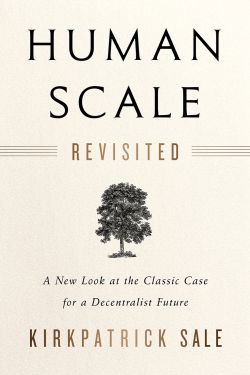
This week I’ve been finishing two works of nonfiction: Kirkpatrick Sale’s Human Scale Revisited and Ross Douhat’s Bad Religion: How We Became a Nation of Heretics.
Human Scale Revisited is, as its title implies, an update to Sale’s original Human Scale, which argued that everything has a limit beyond which further growth will tend toward its destruction. He begins the book first by re-introducing that concept (“The Beanstalk Principle”), and then exploring specific applications in society and technology, from probing the optimum size for human cities to the enormous promise that decentralized/distributed power via solar panels offers, wrapping up with a critical look at the ‘need’ for states. Some of this is updated from the original book, like the study of how organizations gain in function, peak, and then become encumbered by that size, and some strikes me as new: I don’t remember the essentially anarchist arguments of the latter third of the book, nor Sale’s delightful support of movements to re-localize their own politics. Sale is one of those authors who, like Bill Kauffman or Ed Abbey, cannot be boxed up, politically: he refers to himself as an eco-leftist, but his critique of government and analysis of big-biz monopolies could come straight from the Austrian school, and he regards populism as a natural expression of peoples’ discontent with being dominated by big business and big government.I enjoyed this thoroughly, but I’ve been highly sympathetic to localism and Sale’s critiques of the Cult of Big for over ten years: before I ever read this book I’d written a post called “The Emperor Drives an AT-AT” expressing my own thoughts on the subject.) I’m definitely going to be reading more Sale.
Bad Religion: How We Became a A Nation of Heretics addresses the sudden fall from influence of mainline Protestantism, and the explosive growth of pseudo-Christianities like the prosperity gospel, as well as Christianities that effectively worship Uncle Sam instead of Jesus The fundamental shift is one of Christianity becoming ego-oriented: – not ego as in “Benny Hinn is the greatest”, but rather on Christianity being about one’s personal feelings, so that a religion that used to both bind and shock, comfort and provoke, instead becomes an exercise in self-fixation. Although this is obviously linked to the explosive rise of consumerism, Douhat also reflects on Gnosticism at length, given its orientation toward the ego, and points to the explosive rise of narcissism. There’s a lot of teeth in this book, from Douhat’s criticisms of liberal Christianity, which has so watered down its message that there’s no reason to go to church save for feeling nice and being sociable, to his attack on politically-oriented Christianity, both left and right, that has become distracted by power, and deceived itself into thinking it is possible to build paradise on Earth. There’s a lot of food for though here, though I’m not confident I’ve adequately digested it. It’s one I picked up during a $1 sale a few years back, though, so I may revisit it.
Highlights:
In their quest to be inclusive and tolerant and up-to-date, the accommodationists imitated his scandalously comprehensive love, while ignoring his scandalously comprehensive judgments. They used his friendship with prostitutes as an excuse to ignore his explicit condemnations of fornication and divorce. They turned his disdain for the religious authorities of his day and his fondness for tax collectors and Roman soldiers into a thin excuse for privileging the secular realm over the sacred. While recognizing his willingness to dine with outcasts and converse with nonbelievers, they deemphasized the crucial fact that he had done so in order to heal them and convert them—ridding the leper of his sickness, telling the Samaritans that soon they would worship in spirit and truth, urging the woman taken in adultery to go, and from now on sin no more.
Given the climate of the 1960s and ’70s, these choices were understandable. But the more the accommodationists emptied Christianity of anything that might offend the sensibilities of a changing country, the more they lost any sense that what they were engaged in really mattered, or was really, truly true. In the process, they burned their candle at both ends, losing their more dogmatic parishioners to more fervent congregations and their doubters to the lure of sleeping in on Sundays.
“Liberal religion is adept at releasing energy,” James Hitchcock wrote in a 1977 essay, “freeing people from established obligations and prohibitions, but not at refocusing it.”
At its best, the prosperity gospel can be well-meaning, openhanded, and personally empowering; and it thrives as few other forms of Christian faith do in the soil of modernity. But like many forms of liberal Christianity, the marriage of God and Mammon half-expects somehow to undo the Fall, through the beneficence of Providence and the magic of the free market. In its emphasis on the virtues of prosperity, it risks losing something essential to Christianity—skipping on to Easter, you might say, without lingering at the foot of the cross.
An understanding that there can be strength in weakness and defeat; an appreciation for the idea that there might be greater virtue in poverty and renunciation, suffering and purgation, than there is in abundance and “delight”; a hard-earned wisdom about the seductions and corruptions associated with worldliness, power, and wealth. Shorn of these aspects of the faith, Christianity risks becoming an appendage to Americanism—a useful metaphysical thread for a capitalist society’s social fabric, but a faith that’s bound, perhaps fatally, to the rise and fall of the gross domestic product.
The narcissist may find it easy to say no to others, but he’s much less likely to say no to himself—and nothing defines the last decade of American life more than our inability to master our own impulses and desires. A nation of narcissists turns out to be a nation of gamblers and speculators, gluttons and gym obsessives, pornographers and Ponzi schemers, in which household debt rises alongside public debt, and bankers and pensioners and automakers and unions all compete to empty the public trough.
From our Hallmark cards to our divorce courts, the American way of love has become therapeutic to its very core. It emphasizes feelings over duties, it’s impatient with institutional structures of any sort, and it’s devoted to the premise that the God or Goddess Within should never, ever have to settle.
Yet many conservative Christians often make a similar mistake; they emphasize the most hot-button (and easily politicized) moral issues while losing sight of the tapestry as a whole. There are seven deadly sins, not just one, and Christianity’s understanding of marriage and chastity is intimately bound to its views on gluttony and avarice and pride.
We are waiting, not for another political savior or television personality, but for a Dominic or a Francis, an Ignatius or a Wesley, a Wilberforce or a Newman, a Bonhoeffer or a Solzhenitsyn. Only sanctity can justify Christianity’s existence; only sanctity can make the case for faith; only sanctity, or the hope thereof, can ultimately redeem the world.
A tease from Ross Douhat’s Bad Religion: How We Became a Nation of Heretics.
The way orthodoxy synthesizes the New Testament’s complexities has forced churchgoers of every prejudice and persuasion to confront a side of Jesus that cuts against their own assumptions. A rationalist has to confront the supernatural Christ, and a pure mystic the wordly, eat-drink-and-be-merry Jesus, with his wedding feasts and fish fries. A Reaganite conservative has to confront the Jesus who railed against the rich; a post-sexual revolution liberal, the Jesus who forbade divorce. There is something to please almost everyone in the orthodox approach to the Gospels, but something to challenge them as well. A choose your own Jesus mentality, by contrast, encourages spiritual seekers to screen out discomfiting parts of the New Testament and focus only on whichever Christ they find most cogenial. And our religious culture is now dominated by figures who flatter this impulse, in all its myriad forms — conservative and liberal, conspiratorial and mystical, eco-friendly and consumerist, and everything in between.”
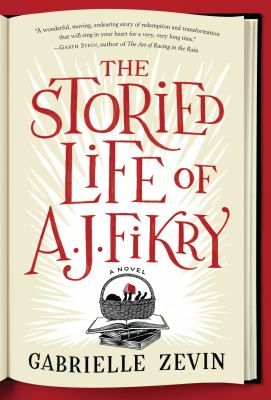
A.J. Fikry is a widower with a bookstore and an increasingly serious drinking problem. (He’s not an alcoholic, he says, he just drinks to the point of passing out at least once a week.) The one bright spot: he has Tamerlane, a rare volume from Edgar Allen Poe that could fetch hundreds of thousands of dollars once the economy shapes up a little. Then it’s stolen, and a two-year old appears in his store with a note asking him to take care of her. Well…crap.
Last year I checked out one of Ms Zevin’s titles but never got around to reading it, something I intend to repair immediately: I have no idea how she packed so much growth into such a little novel, growth whose substance I didn’t appreciate fully until I watched the movie version of this (immediately after finishing the book) and seeing how rushed the characters were by comparison. The A.J. who opens this book is a deeply troubled fellow who is absolutely hilarious to read, but who would be a pill to know in real life. There is something in him, though, that flowers when a child is introduced to his life –for what he thinks is a weekend, but which will become a lifetime. His soul is dislodged from its rut of depressed snarking and drinking and, forced to expand itself to include another person, and set free to flourish. He becomes a father, yes, but the leads to further growth, to friends, to changes in the bookstore that allow it and his community to flourish – and so, more impressively, we get the growth of other characters, and of the town itself. A man who appears very minor will be one of the main supporting characters by book’s end, and then of course there’s Maya. Parents would judge this better, of course — that particular door has never opened to me — but Maya begins this novel as a two year old and is a teenager at its end, and she grew physically and emotionally in a very plausible fashion. I can’t imagine that’s easy to pull off. And, of course, there’s the fact that this is a book about books and writers, with one especially delicious minor twist. Wonderful read!
Highlights:
“Yes,” said the cop. “It wasn’t anyone’s fault.” “People like to say that,” A.J. replies. “But it was someone’s fault. It was hers. What a stupid thing for her to do. What a stupid melodramatic thing for her to do. What a goddamn Danielle Steel move, Nic! If this were a novel, I’d stop reading right now. I’d throw it across the room.” The cop (who was not much of a reader aside from the occasional Jeffery Deaver mass-market paperback while on vacation) tried to steer the conversation back to reality. “That’s right. You own the bookstore.”
“My wife and I,” A.J. replied without thinking. “Oh Christ, I just did that stupid thing where the character forgets that the spouse has died and he accidentally uses ‘we.’ That’s such a cliché. Officer”—he paused to read the cop’s badge—“Lambiase, you and I are characters in a bad novel. Do you know that? How the heck did we end up here?
“If this were a short story, you and I would be done by now. A small ironic turn and out. That’s why there’s nothing more elegant in the prose universe than a short story, Officer Lambiase. If this were Raymond Carver, you’d offer me some meager comfort and darkness would set in and all this would be over. But this . . . is feeling more like a novel to me after all. Emotionally, I mean. It will take me a while to get through it. Do you know?
“I’m sorry about before when I referred to you as an ‘unimportant supporting character.’ That was rude and for all we know, I am the ‘unimportant supporting character’ in the grander saga of Officer Lambiase. A cop is a more likely protagonist than a bookseller. You, sir, are a genre.”
“Let’s get married,” he says with an almost pained expression. “I know I’m stuck on this island, that I’m poor, a single father, and in a business with somewhat diminishing returns. I know that your mother hates me, that I’m quite obviously crap when it comes to hosting author events.” “This is an odd proposal,” she says.
“It is the secret fear that we are unlovable that isolates us,” the passage goes, “but it is only because we are isolated that we think we are unlovable. Someday, you do not know when, you will be driving down a road. And someday, you do not know when, he, or indeed she, will be there. You will be loved because for the first time in your life, you will truly not be alone. You will have chosen to not be alone.”
How to account for its presence when I know it is only average? The answer is this: Your dad relates to the characters. It has meaning to me. And the longer I do this (bookselling, yes, of course, but also living if that isn’t too awfully sentimental), the more I believe that this is what the point of it all is. To connect, my dear little nerd. Only connect.
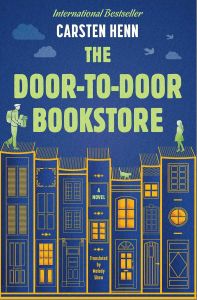
In the city of Munster, after the bookshop closes for the night, an aging fellow named Carl begins his rounds. Walking the city’s cobblestone paths, he visits a village within the metropolis that only he is aware of: a little community of ardent readers who Carl knows only by the literary names he’s given them, like Mr. Darcy. These readers prefer receiving their ordered books at home, hand-delivered (and hand-wrapped) by Carl, whose genial company and recommendations they welcome. Times are changing, though: the owner of the bookstore is in declining health, and his daughter, who regards the book delivery service as a waste, is eager to dismiss him. If one young woman sees him as a relic who needs to be forcefully retired, another — younger still, a ten year old girl named Schascha – finds him fascinating. She’s watched him make his rounds in the evening and has decided he could do with some company, and begun tagging along with him whether he likes it or not. A curious friendship develops between the old and young, the reserved and the exuberant: although he despair of her at first, thinking her a noisy intruder whose questions threaten the privacy of his customers, they soon grow attached to one another, and through her impetuousness Carl will be shaken from his reserve and become more involved in the lives of the little community that’s grown around him, even as his new boss is pushing him out the door and regarding him with so much contempt that you might think he shot her dog and kicked it for good measure. Ultimately Carl will meet his own trial and need to rally through his connections to Schascha and his little community. Door to Door Bookstore is an utterly sweet story. I enjoyed the inter-generational friendship and its slow growth enormously, especially because Schascha disrupts routines and sparks character and relational growth between Carl and all of his customers — and those customers themselves are to a man (and woman) interesting characters, especially the nun who lives in a closed cloister and can’t leave it because the authorities will board up the door the moment she steps outside to get the groceries. The book is checked only by the inexplicable hostility of Carl’s boss; there are some scenes that shed some light on why she’s so defensive, but overall she just comes off like an appointed villain. Another lovely little read!
Highlights:
Schascha took a deep breath, because what she was about to say needed to be announced in a full voice. “You need to take different books to your customers!” Carl frowned—a facial expression he could make to great effect, since he had acquired a great deal of forehead over the years. “But I take them the books they order.” “They’re all ordering the wrong ones.” “Aren’t they the best people to know what they want?” “Hah!” Schascha barked out a laugh. “Hah! I want to eat ice cream all day, but is that good for me? No!” “But books aren’t ice cream. They don’t hurt your stomach.” “You don’t understand!” Schascha would have stamped her feet, if only her legs could reach the ground. “So you’re saying I deliver the book equivalent of a stomachache?” “Books are much, much more dangerous than ice cream! They hurt your head. Or worse, your heart.”
There is a little underground cafe in Tokyo where, if you sit at a certain chair under the right conditions, you can find yourself in that chair in that cafe at some other time, where you can meet someone who was in that cafe at that time. You cannot change the past, but you can revisit it: you can see someone who is now gone, ask questions that lingered on the tip of your tongue for too long but never found life in breath. What happens in that seat cannot change the past, but it can change you — but you have to make the most of the time, completing your business before the time-changing coffee before you grows cold.
This is a fascinating little volume of stories, all tied to the same place: a chair that inexplicably serves as a limited time-travel device when paired with a certain blend of coffee. There are many rules to this travel: you can’t move from the seat when you arrive in the past, you have to be there to meet someone who was there in that moment, etc. In addition to the rules, there is a challenge: there is a ghost in the chair, a woman in white intently reading a book who responds to no one but the shop owner, who offers her periodic refills. She doesn’t look like a ghost — she looks human and living, and she’s physical to the point of being touchable – but she’s otherwordly, and only when she takes a brief bathroom break can anyone else saddle up and sally forth into time. Given the limitations — and the risk of being trapped like the woman in white – only someone who had serious emotional baggage to unpack would dare try, and those are the stories we get here. The stories are often sad, but sweet, and there are interconnections. One character, for instance, is a steady presence in the cafe, appearing in every story: we learn in a later piece that he continues coming in hopes of going back to see his wife so he can give her a letter, but how we learn this is that his wife comes in to go back in time herself: he has Alzheimers, and she wants to return to when he didn’t so she can find out what letter he’s wanting to give her. I most appreciated the fact that this is not a series of set pieces in which the cafe owner meets a series of randos who want to time-travel: most of the characters appear in several stories because they’re regulars of the cafe, and their lives are bound up together. The interconnectedness makes the cafe and the people’s dramas feel real, despite the fantasy elements like the woman in white.
This was a fascinating little collection of stories, and I see that it’s part of a series which I may continue exploring.
I realize it’s a bit early in the year for this, but What You are Looking For is in the Library will most likely be my favorite novel of the year. Of course, it’s not quite a novel, more of a series of interconnected short stories, in which characters who range from young people to the recently retired find their way into a library in search of something — skills for a possible new career, some place to go to and be around adults that also can keep a toddler entertained, an excuse to get out of the house. What they find is a reference librarian who, putting down her felting project, gives them exactly what they needed — even if they didn’t realize it at the time. In addition to giving them books related to their direct query, she will often throw something else in — an unexpected book recommendation that will change their lives. A young women frustrated by progress in her career receives a children’s book that inspires her to take up a new craft and regain her passion: a woman who came for children’s books is also given one on astrology that, while she doesn’t believe in, gives her perspective to reframe her own vocational frustrations. The beauty of it, though, is that this change is not something being imposed on people from a mystical source: the librarian merely provides the catalyst for a change that was waiting to happen, a change that was instigated by the people themselves who are often hovering at a transition point in their lives. The subjects range in age from young to old, at varying points of their lives, and as the book develops the reader will begin to see connections between the stories via shared characters, illustrating how we can impact those around us without knowing directly. This is a book about positive transformation through books and relationships, and it’s one I can see myself returning to or gifting.
Highlights:
“Madam Mizue put down her spoon. ‘Ah, Ms Sakitani, so you’re on the merry-go-round, too,’ she said gently. ‘The merry-go-round?’ With a chuckle she smiled at me. ‘It’s a very common condition,’ she said with apparent relish. ‘Singles are envious of those who are married, and married couples envy those with children, but people with children are envious of singles. It’s an endless merry-go-round. But isn’t that funny? That each person should be chasing the tail of the person in front of them, when no one is coming first or last. In other words, when it comes to happiness nothing is better or worse – there is no definitive state.’
Madam Mizue took a sip of water. ‘Life is one revelation after another. Things don’t always go to plan, no matter what your circumstances. But the flip side is all the unexpected, wonderful things that you could never have imagined happening. Ultimately it’s all for the best that many things don’t turn out the way we hoped. Try not to think of upset plans or schedules as personal failure or bad luck. If you can do that, then you can change, in your own self and in your life overall.’
Then she looked off into the distance and smiled.
While rolling the felted globe in my fingers, I was struck by an idea: Ptolemaic theory and Copernican theory; geocentrism and heliocentrism. Aeons ago, people used to believe that the Earth was stationary and the heavens moved around it. When in fact it was the Earth that rotated. Something clicked. That’s it. I was forced to move from Mila to the information resources department. And I have to do housework and childcare. If I put myself at the centre of everything, does that mean I always see myself as a victim? And why I always end up wondering why can’t people do things that work for me. I stared at the blue sphere on my palm. The Earth moves. Morning and night don’t stay – they go.
What do I want to do now? Where do I want to go?
~~~ Still looking at the rice ball in her hand, Yoriko continues, ‘I remember sitting in the passenger seat, looking at you and feeling devastated because I’d been fired, when in fact I hadn’t lost anything. I myself was no different from before. I’d simply left the company I worked for. That’s all. I still had the option to derive joy from my work and happiness from spending time with my loved ones. It all just depended on me, and what I did from then on. That’s when I realized that I wanted to work freelance in future.
“It’s funny. No matter where you go, or how many books you read, you still know nothing, you haven’t seen anything. And that’s life. We live our lives trying to find our way. It’s like that Santōka Taneda poem, the one that goes, ‘On and on, in and in, and still the blue-green mountains.’ ”
Days at the Morisaki Bookshop, Satoshi Yagisawa. Trans. Eric Ozawa
Then I raise my eyes to a signboard made from styrofoam that is pinned above the box, and experience a sudden jolt. Below the words ‘river crabs’ written prominently in red is a line in smaller black lettering that says, ‘For deep-frying! For pets!’ For pets …?
It is natural in the food section to expect that crabs would be sold for consumption, but when suddenly presented with the option of keeping them as a pet instead, I don’t know what to think. Be eaten or be loved. A lump forms in my throat at the thought of the utterly different fates awaiting these crabs huddled together in the plastic box. When I worked for the company, what kind of crab was I, I wonder? While still inside the box I was raised to be a manager, but ultimately wasn’t my fate to be eaten up by the organization?
What You are Looking for is in the Library, Michiko Aoyoma







 Reading Freely