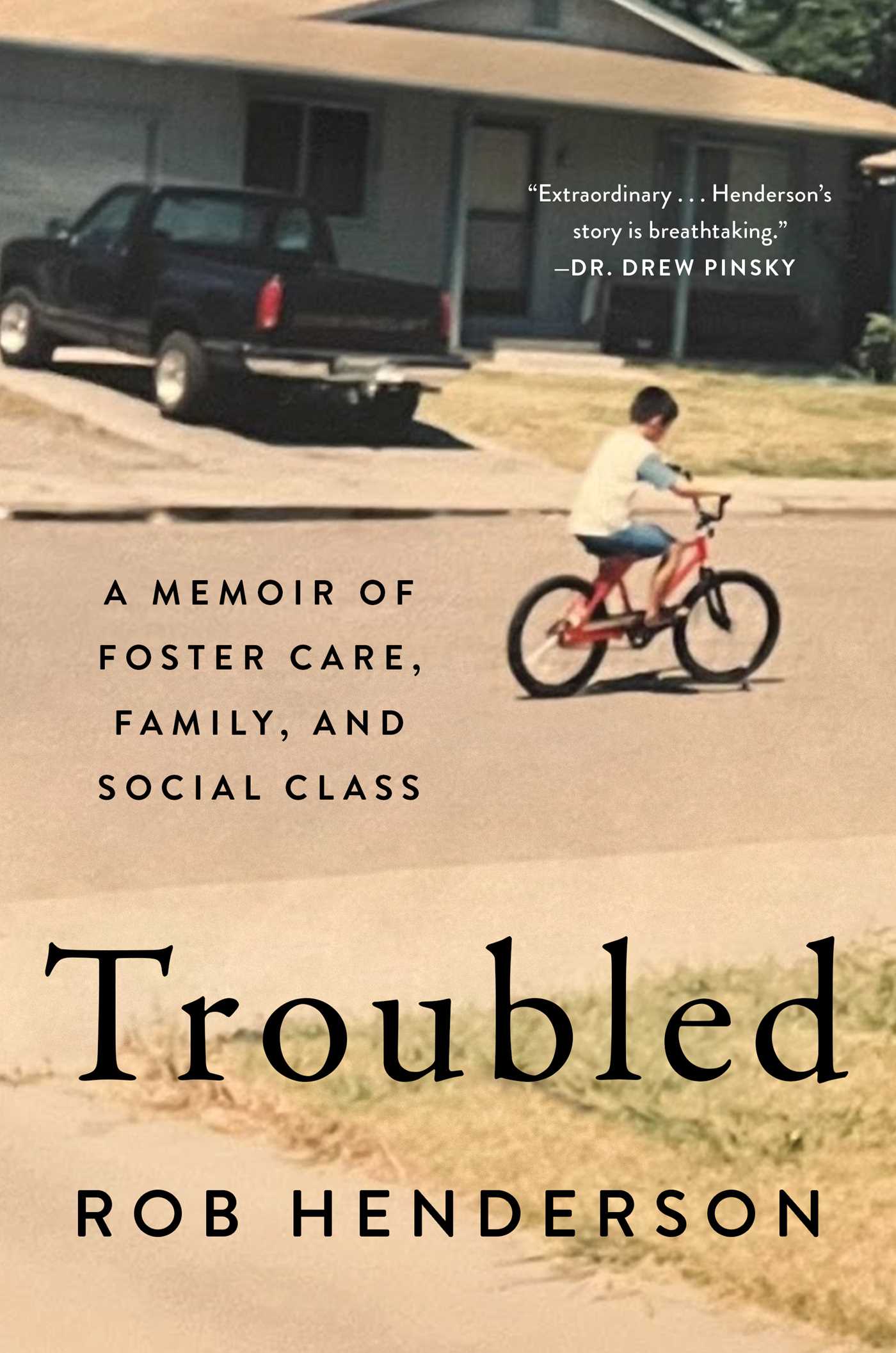
Each of my three names was taken from a different adult. Robert was the name of my biological father, who abandoned my mother and me when I was a baby. I have no memory of him. In fact, the only information I have about him is contained in a document given to me by the social worker responsible for my case when I was being shuffled around to different foster homes in Los Angeles. My middle name, Kim, is from my birth mother. It was her family name. She succumbed to drug addiction soon after I was born, rendering her unable to care for me. I have only two memories of her. I haven’t seen her since I was a child. And my last name: Henderson, which comes from my former adoptive father. After my adoptive mother separated from him, he severed ties with me to get back at her for leaving him. He figured that this would hurt me, and that my emotional pain would transmit to my adoptive mother. He was right. These three adults have something in common: All abandoned me.
The majority of jail inmates report being raised by single parents or non-parental guardians. Two of my childhood friends landed in prison, and another one would have if he hadn’t been shot to death first. Studies indicate that in the US, 60 percent of boys in foster care are later incarcerated, 3 while only 3 percent graduate from college. 4 What this means is that for every male foster kid like me who obtains a college degree, twenty are locked up.
Making good choices is hard enough, even in the best of circumstances. Just because you know something will benefit you doesn’t mean you’ll actually do it. As a kid, I knew a lot of the choices I was making in the moment were unwise. I just didn’t care. Knowledge alone isn’t enough. For children, having a stable environment with two parents who implement rules, provide attentive care, and cultivate a sense of security goes a long way. Even when you present opportunities to deprived kids, many of them will decline them on purpose because, after years of maltreatment, they often have little desire to improve their lives.
A team of psychologists found that compared to children raised in wealthier families, children raised in lower-income families are no more likely to engage in risky behaviors or commit crimes as adults. However, compared with children raised in stable environments, children raised in unstable environments are significantly more likely to engage in harmful or destructive behaviors later in life. Holding family income constant, the researchers found that the association between childhood instability and harmful behaviors in adulthood remained significant. 10 Plainly, being poor doesn’t have the same effect as living in chaos.
I’ve come to believe that upward social mobility shouldn’t be our priority as a society. Rather, upward mobility should be the side effect of far more important things: family, stability, and emotional security for children. Even if upward mobility were the primary goal, a safe and secure family would help achieve it more than anything else. Conventional badges of success do not repair the effects of a volatile upbringing.
I thought back to my first day in high school, and how my neighbor offered to sell me drugs. Now here I was at this fancy college, and this senior is offering to sell drugs, too. Later, I’d observe rampant drug and alcohol use on campus. This was at odds with the widespread belief, which I held at the time, that poverty was the primary reason for substance abuse.
Out of twenty students, only one other student besides me was not raised by both birth parents. Put differently, 90 percent of my classmates were raised by an intact family. I felt a sense of vertigo upon learning this, because it was so at odds with how I’d grown up. Later, Iread a study from another Ivy League school—Cornell—which reported that only 10 percent of their students were raised by divorced parents. This is a sharp juxtaposition with a national divorce rate of about 40 percent, which itself is quite low compared to the families I’d known in Red Bluff.
I had an apartment off-campus on Chapel Street. To get there, I had to walk through a lot of poverty—people suffering from drug addiction, homelessness, mental illness, and so on. Sometimes when I’d walk through those areas, I would think about my birth mother, the foster homes I’d lived in, and the people I’d met in rehab. And then I would think about my classmates: At Yale, more students come from families in the top 1 percent of income than from the bottom 60 percent, 4 and here they were ensconced in one of the richest universities in the world, claiming that they were in danger. Broadcasting personal feelings of emotional precarity and supposed powerlessness was part of the campus culture. Conspicuously lamenting systemic disadvantage seemed to serve as both a signal and reinforcer of membership in this rarefied group of future elites.
Frankly, I found that college extends adolescence to a laughably old age. It was surreal to hear people say that college students are adults when they are vastly outnumbered by working-class and poor people who face the full brunt of reality before they even turn eighteen. Interestingly, studies have found that people with adverse childhood experiences—physical or emotional abuse, neglect, poverty, parental divorce, and so on—seem to age faster. Children with stressful lives tend to get their adult teeth earlier, reach puberty sooner, and undergo accelerated changes in their brain structure.
Many students and graduates of top universities are terrified of being seen as what they really are. We don’t leave messes for other people to clean up, it’s those other elite students from that other school. We’re not xenophobic, it’s those unenlightened people who didn’t go to a fancy college. We haven’t cultivated an ideologically rigid environment, go back to where you came from.
My classmate and I discussed various moral dilemmas, and he said he would push a man off a bridge to stop a train from hitting five people. I asked if he would murder his mother to save five strangers. He promptly responded that he would. I doubted anyone I knew outside of college would have said yes to that question. I later read a study that found that upper-class people are more likely to endorse utilitarianism and the belief that “the ends justify the means.” One reason for this is that affluent people score relatively low on measures of empathy and favor cold calculations for decision-making.
Gradually, I developed the concept of “luxury beliefs,” which are ideas and opinions that confer status on the upper class at very little cost, while often inflicting costs on the lower classes.
But top universities are also crucial for induction into the luxury belief class. Take vocabulary. Your typical working-class American could not tell you what heteronormative or cisgender means. But if you visit an elite college, you’ll find plenty of affluent people who will eagerly explain them to you. When someone uses the phrase cultural appropriation, what they are really saying is, “I was educated at a top college.” Consider the Veblen quote, “Refined tastes, manners, habits of life are a useful evidence of gentility, because good breeding requires time, application and expense, and can therefore not be compassed by those whose time and energy are taken up with work.” Only the affluent can afford to learn strange vocabulary, because ordinary people have real problems to worry about.
The chief purpose of luxury beliefs is to indicate the believer’s social class and education. When an affluent person expresses support for defunding the police, drug legalization, open borders, looting, or permissive sexual norms, or uses terms like white privilege, they are engaging in a status display. They are trying to tell you, “I am a member of the upper class.
White privilege is the luxury belief that took me the longest to understand, because I grew up around a lot of poor white people. Affluent white college graduates seem to be the most enthusiastic about the idea of white privilege, yet they are the least likely to incur any costs for promoting that belief. Rather, they raise their social standing by talking about their privilege. In other words, upperclass white people gain status by talking about their high status. When policies are implemented to combat white privilege, it won’t be Yale graduates who are harmed. Poor white people will bear the brunt. The upper class promotes abolishing the police or decriminalizing drugs or white privilege because it advances their social standing, not least because they know that the adoption of those policies will cost them less than others.
Reflecting on my experiences with alcohol, if all drugs had been legal and easily accessible when I was fifteen, you wouldn’t be reading this book. My birth mom was able to get drugs, and it had a detrimental effect on both of our lives. That’s something people don’t think about: drugs don’t just affect the user, they affect helpless children, too. All my foster siblings’ parents were addicts, or had a mental health condition, often triggered by drug use. But the luxury belief class doesn’t think about that because such consequences seldom interrupt their lives. And even if they did, they are in a far better position to withstand such difficulties. A well-heeled student at an elite university can experiment with cocaine and will, in all likelihood, be fine. A kid from a dysfunctional home with absentee parents will often take that first hit of meth to self-destruction. This is perhaps why a 2019 survey found that less than half of Americans without a college degree want to legalize drugs, but more than 60 percent of Americans with a bachelor’s degree or higher are in favor of drug legalization. 14 Drugs are frequently considered a recreational pastime for the rich, but for the poor they are often a gateway to further pain.
Similarly, a 2020 survey found that the richest Americans showed the strongest support for defunding the police, while the poorest Americans reported the lowest support. 15 Throughout the remainder of that year and into 2021, murder rates throughout the US soared as a result of defunding policies, officers retiring early or quitting, and police departments struggling to recruit new members after the luxury belief class cultivated an environment of loathing toward law enforcement. 1
The luxury belief class appears to sympathize more with criminals than their victims. It’s true that most criminals come from poor backgrounds. But it’s also true that their victims are mostly poor. And the perpetrators tend to be young men, and their targets are often poor women or the elderly. Moreover, because there are many times more victims than there are criminals, to not stop criminals is to victimize the poor. Yet the movement to abolish the police is disproportionately championed by affluent people. A key inhibition against crime is the belief that our legal system is legitimate. Which means that those who promote the idea that we live in an unjust society also help to cultivate crime. The poor reap what the luxury belief class sows. Consider that compared to Americans who earn more than $75,000 a year, the poorest Americans are seven times more likely to be victims of robbery, seven times more likely to be victims of aggravated assault, and twenty times more likely to be victims of sexual assault. 17 And yet, as I write this, many affluent people are calling to abolish law enforcement.
Before my first year of college, I had never even been to a musical. No one I knew from Red Bluff had ever been to one. But it seemed like everyone on campus had seen Hamilton, the acclaimed musical about the American founding father Alexander Hamilton. I looked up tickets: $400. This was way beyond my budget. So in 2020, I was pleased to see that five years after Hamilton’s debut, it was available to view on Disney+. But suddenly, the musical was being denigrated by many of the same people who formerly enjoyed it, because it didn’t reflect the failings of American society in the eighteenth century. The creator of Hamilton, Lin-Manuel Miranda, even posted on Twitter that “All the criticisms are valid.” This reveals how social class works in America. It is not a coincidence that when Hamilton tickets were prohibitively expensive, affluent people loved it, and now that it can be viewed by ordinary Americans, they ridicule it. Once something becomes too popular, the elites update their tastes to distinguish themselves from ordinary people.
“Don’t you ever feel like a sucker for serving?”
I paused, unsure what to say. I didn’t feel like a sucker. But I would come to understand what he was getting at. “Something’s off about the whole thing. We swear that oath about upholding the Constitution. Then these rich kids who are the same age as us when we enlisted are actively undermining it. Pretty weird.” “Undermining how?” I asked. “The first two amendments,” he continued. “The general opinion at these schools is that the first needs a major overhaul and the second should be completely dismantled. Seems like we basically got duped into believing we are upholding American values while the future ruling class are figuring out ways to undermine them.
The luxury belief class claims that the unhappiness associated with certain behaviors and choices primarily stems from the negative social judgments they elicit, rather than the behaviors and choices themselves. But, in fact, negative social judgments often serve as guardrails to deter detrimental decisions that lead to unhappiness. In order to avoid misery, we have to admit that certain actions and choices are actually in and of themselves undesirable—single parenthood, obesity, substance abuse, crime, and so on—and not simply in need of normalization. Indeed, it’s cruel to validate decisions that inflict harm, especially on those who had no hand in the decision—like young children.
Successful people tell the world they got lucky but then tell their loved ones about the importance of hard work and sacrifice. Critics of successful people tell the world those successful people got lucky and then tell their loved ones about the importance of hard work and sacrifice.
In the US, 11 percent of kids from families in the bottom income quintile obtain bachelor’s degrees, compared with less than 3 percent of children who have been in foster care. 5 6 In other words, a poor kid in the US is nearly four times more likely to graduate from college than a foster kid.
We now live in a culture where affluent, educated, and well-connected people validate and affirm the behaviors, decisions, and attitudes of marginalized and deprived kids that they would never accept for themselves or their own children. And they claim to do this in the name of compassion. It’s fine if Antonio and I skip class and ruin our futures, but it’s definitely not fine if their kids do so. Many of the people who wield the most influence in society have isolated themselves and their children from the world I grew up in, while paying lip service to the challenges of inequality.
The reason I got where I am is because I had something I was running away from and something I was running toward. I was running away from the turbulence of my youth and running toward social mobility—money, education, esteem. I managed to channel my energy to striving to accomplish my goals. Upon obtaining a few totems of achievement, I came to realize that they are flawed measures of success. External accomplishments are trivial compared with a warm and loving family. Going to school is far less important than having a parent who cares enough to make sure you get to class every day. But it is important to remember that even if every foster kid graduates from college, that wouldn’t necessarily make them happier. A 2018 study found that people typically pursue higher levels of education because they believe it will lead to more leisure time. But, in fact, more educated people tend to have less leisure time. They earn more money, but also work more hours. This upends their expectations and ends up having a net zero effect on overall happiness.