….I wouldn’t notice and neither would my friends. I adopted a minimalist dress code years ago in which my t-shirts, underwear, and socks are all almost entirely black except in the case of some pre-code shirts/shorts that haven’t aged out yet; my pants are either jeans or khakis in one of two colors (black or tan); I have six shirts in the same style: three different colors in short sleeves, three different colors in long sleeve. When they age out I replace them, so on facebook there’s like a decade in which I appear to be wearing the same red shirt. Formal wear isn’t much different: a very tight but versatile collection inspired by articles like this. Things have changed a bit in the last two years — I’ve relented on my decades-old hatred of printed t-shirts to sport Strange New Worlds and Boston Red Sox t-shirts. I figure I’m hitting middle age, I might as well lighten up a bit. No one is going to print “When he perished, he had an impressively small and versatile wardrobe” in my obituary, after all.. :-p
My wardrobe is this shirt but in six different combinations of longsleeve/short sleeve, plus red/blue/green color options. I was doing a Walter Sobchak costume in that left one.
Baghdad is generally considered a good place for solo journalists to get kidnapped and sold to ISIS, whatever they’re there for. I was there for the drugs. (Scarcity Brain, Michael Easter)
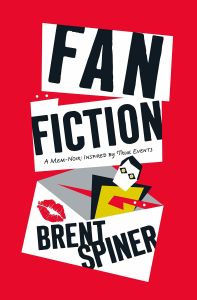
“I used to have an overzealous fan of my own,” Gene [Roddenberry] said. “Try as I might, I couldn’t get her to leave me alone.” “What did you do?” I asked, leaning forward and hoping for wisdom from the Great Bird of the Galaxy. “I married her!” (Fan Fiction, Brent Spiner.)
‘I blame you. Paris is a . . .’ She paused. ‘Was an immoral fool. But you were a married woman. You should have refused him.’ ‘Paris was a married man,’ Helen said. ‘Why does everyone always forget that?’ ‘He was married to a nymph,’ Hecabe replied. ‘She was hardly likely to besiege our city for his safe return.’ (A Thousand Ships, Natalie Haynes)
(1) Living in Wonder: Finding Mystery and Meaning in a Secular Age, Rod Dreher. A book on disenchantment and reenchantment.
(2) Sharpe’s Storm, Bernard Cornwell. New Sharpe novel!
(3) Precipe, Robert Harris. A novel set during the prelude to World War 1 in which a romantic liason gets mingled with spy stuff. Robert Harris is generally superb, with an outstanding range of historical fiction.
(4) Star Trek: Lost to Eternity, Greg Cox. Finally, a novel about the cetologist who hitched a ride to the future in Star Trek: The Voyage Home. Very interested in learning how an adult in the 1980s navigates in the world of the Federation.
Those are the books I’m waiting on, but what about interesting upcoming releases?
(5) Star Trek Open a Channel: A Woman’s Trek, Nana Visitor. Nana Visitor, who played one of my favorite characters, is apparently publishing a book on how Star Trek has portrayed women through the years, with lots of interviews spanning the decades. Cool! Trek has had some great female characters over the years: my current favorite is La’an.
(7) At the Edge of Empire: A Family’s Reckoning with China. A second-generation immigrant tries to come to terms with his father’s escape from Communist China.
(8) Ghost Station, S.A. Barnes. I’m told Barnes is an up-and-comer and combines SF with horror. Not exactly my bag, but the cover looks cool.
(9) Imminent: Inside the Pentagon’s Hunt for UFOs, Luis Elizondo
(10) The Future Was Now: Madmen, Mavericks, and the Epic Sci-Fi Summer of 1982, Chris Nashawaty
When I was searching for upcoming releases, I found this and want to share it for the sheer bizaareness.
Sing, muse, of the confusion of Croseus, and of the anguish of Penthesilea! A Thousand Ships collects stories about the women of the Illiad — mostly of Troy, but of Achaea, too, across the wine-dark sea — and framed by one of the Muses being begged by a poet to help him pen his next epic. Irritated at the constant stories about slaughtering men and burning cities, the Muse begins shaping the poet’s story another way — a way that looks at those forgotten by the war their lives destroyed. Although some of these stories could be read as historical fiction, with the gods being mentioned but not actively present as characters, later on the Olympians do become explicit characters, so this is a title solidly in the realm of mythological/fantasy fiction. Generally speaking, the more original stories are historical, while the ones drawn directly from the myth texts like Ovid’s Heroides, are more fantastical. The Judgement of Paris is one story, for instance, which features an ensemble cast of Olympians, including grey-eyed Athena squabbling over the golden apple like she’d forgotten she’s the goddess of wisdom, while the twins elbowing each other and laughing at the undignified display. Even when directly retelling a story from Ovid or so, Haynes also adds elements to make the retelling her own: in the story about the death of Polydorus, for instance, we learn about it when Odysseus takes Queen Hecuba (now his slave) to Thrace, where the late Priam had dispatched the boy for his safety. The stories are largely human-focused, though there are a couple of god-specific ones like a story about Eris and her malicious decision to spoil the wedding with her apple of discord. Given the context of the story, sorrow and pain beat a steady tattoo, but Haynes also adds in splashes of humor, mostly in dialogue. I’d seen this author pop up atBewitching Books, Ravenous Reads recently and am glad I tried her out, as there were a lot of stories in this I’d never encountered. Whenever I draw up my third Classics Club list, that’s something I need to remedy!
“I blame you. Paris is a . . .’ She paused. ‘Was an immoral fool. But you were a married woman. You should have refused him.’ ‘Paris was a married man,’ Helen said. ‘Why does everyone always forget that?’ ‘He was married to a nymph,’ Hecabe replied.
That’s what I can give you, Paris. I can give you wisdom, strategy, tactics. I can give you the power to defend what is yours from any man who would take it from you. What could matter more? Give the apple to me, and I will be your defender, your adviser, your warrior.’ ‘Is that your owl?’ he asked, as the tawny bird flapped across the clearing and settled on a rotten tree trunk to his right. ‘You cannot have my owl!’ she said, and thought for a moment. ‘I will get you another owl, if you want one.’
She isn’t a footnote, she’s a person. And she – all the Trojan women – should be memorialized as much as any other person. Their Greek counterparts too. War is not a sport, to be decided in a quick bout on a strip of contested land. It is a web which stretches out to the furthest parts of the world, drawing everyone into itself.
“Like most actors, I haven’t read my contract — but I’m pretty sure there’s something in it about not driving on Qualudes.”
First up: do not read this. Do not read this. Listen to it. Reading this is the equivalent of getting your knowledge of War and Peace from a Wishbone classics edition. Fan Fiction is an audiobook that’s transcended to the level of audio drama, with a full cast and regular sound effects — and that cast is largely dominated by Star Trek The Next Generation cast. Have you ever wanted to hear Geordie la Forge lecturing Data on how burning sage is good for dismissing evil spirits, Patrick Stewart declaring he can teach Brent Spiner the ways of karate, or Counselor Troi declare (in a rich Cockney accent) that if anyone comes after them, she’ll kick `em in the balls? Well, I never wanted to, but I got it and honestly Troi threatening to kick a stalker in the balls made my evening. So, what is Fan Fiction? It’s a partly biographical novel supposedly based on true events — but I’m sorry , I don’t quite buy there being a set of twin sisters — one an FBI agent, one a professional bodyguard — both falling for Brent Spiner after he attracts the attention of a stalker who refers to themselves as LAL.
The trouble begins when Brent Spiner-the-character receives a box at his Paramount trailer containing a severed pig penis floating in blood. It is the first of many such deliveries from “Lal”, who included letters addressing Brent Spiner as Daddy and promising that they’ll be together soon. Given that these deliveries include razor blades and bullets, the very-much shaken Spiner doesn’t think it will be a pleasant meeting. Things quickly spiral out of control, with a growing cast of strange women — another possible stalker at the VHS rental store, a neglected wife in Canada who believes Brent wants to have an affair with her — and two beautiful twins who immediately abandon any professionalism and begin flirting with Spiner. In this is intermixed memories from character-Brent’s traumatic childhood, and his strange dreams that become more surreal and frightening as he himself is being driven into paranoia by the constant threats from Lal. Lal even recruits a young child dressed as Data to deliver a letter from her at a Star Trek convention.
This is an interesting novel, easily one of the more unique I’ve read over the years. Spiner-the-author alleges that the first part of the story is completely true, detailing his arrival in New York, establishment as an actor, then moving to Los Angeles, and doubtless a lot of the world-establishing detail is true — I know from reading other memoirs that Spiner and Worf did spend the most time in the makeup trailer, arriving far earlier than everyone else, but I have no idea if LeBar Burton is the new age son of Aquarius he’s depicted here. I’m tolerably sure the Royal Shakespeare Company does not teach all of its actors martial arts. The bits about the fan(s) make interesting if increasingly confusing drama, and I wonder if the confusion owes to Spiner trying to bring in as many odd fan experiences over the year as he can. Make no mistakes, Trekkies can be an obsessive bunch: in Trekkies 2, I think, there’s a woman who had Conner Trinnear (Trip Tucker, ST ENT) tattooed all over her back. The story is frequently weird, sometimes feels like wish-fulfillment (the fact that everyone knows that Lal is Data’s daughter in “The Offspring”, which they also know was in season 2) , but it is consistently hilarious. Whether I was chuckling over hearing the TNG cast being very off-character, recoiling in cringe at some of the letters Spiner received or people he was approached by, this was a long train of muted or outright glee. It’s frequently off-color, but Trekkies in general will get a kick out of this. (But not Marina Sirtis’ kind) For those interested, this takes place during the fifth season of TNG.
“The eye that looks ahead to the safe course is closed forever”
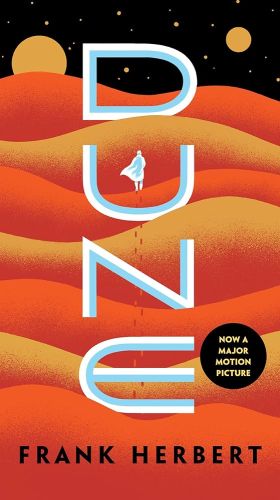
For as long as I’ve been online, I’ve heard of Dune, have heard expressions like “The spice must flow” and seen the “I must not fear / fear is the mind-killer / fear is the little death (etc)” recitation embedded in forum signatures. I’ve been aware of it, too, in PC gaming circles — mentions made of the games. And yet, despite being a fairly active reader of SF, not until recently did I attempt to read it. Part of the reason is its sheer scope: trying Dune is like starting the Star Wars Extended Universe, or the Star Trek Relaunch novels — thousands of pages all building on one another, with interwomen stories and evolving characters. It’s an epic space opera in the far future in which there’s a vast Imperium and warring houses within it. The story opens when the Emperor removes dominion of the Spice Planet Arakkis from House Harkonnes to House Atreides, for reasons known only to him. Duke Leto, leader of the House Atredies, knows this “gift” will bring only trouble, but is obliged to accept, bound by both lawful duty and — the hand of Fate? Although this is a science fiction novel, it is also a story rich in mysticism and prophecy — a book that tells its story not merely through the central narrative, but in sayings and poems interspersed throughout the text. It’s, in short, an epic, and lives up to its reputation.
Star Wars may start with a handy prelude telling you who the players are and what’s happening — rebellions, taxation on trade routes, that sort of thing — but Dune drops the reader into the middle of things. We open on a ducal capital in turmoil, as Duke Leto has just been ordered to take posession of his arch-enemy’s prize planet: Arakkis, a desert world that’s largely inhospital to human life but which is the only place that the substance known as Spice appears. Spice has all manner of uses which we learn about through the text. The main character of Dune, however, is not the Duke but his young son Paul who is in his mid-teens and being primed for adult responsibilities. He is a child of promise, of speculation: his mother was trained in secret arts, and she in turn has begun training him in these, wondering if he might be the one spoken of in her order’s prophecies. Paul will be thrown into adulthood after arrival on Arakkis, where the enemy Harkonnes have left traps and schemes that will soon see the Duke dead and Paul and his mother abandoned in the desert, where they find allies among the desert-folk Fremen and Paul’s destiny is put on speed. Biding his time in the desert, Paul will strike back — and claim a mantle of leadership far broader and heavier than his father the Duke’s, a mantle that will cover several more books.
Although it took a few tries to get into this, the incredible worldbuilding presenting something of an obstacle to an easily distracted reader who finds himself in the middle of things, once the ice broken and the skids greased by graphic novels and the movie, I was sucked wholly into the story like it was a sandworm’s open maw. There are a multiple levels of fascination: the core story of a young man suddenly being thrown into adulthood, forced to grapple with schemes from men and women more powerful and wealthy and he, but increasingly strengthened by the training he was given by his mother, as well as the invisible hand of Fate which lands him among people who view him as some kind of chosen one. There’s the political scheming, which features multiple factions using one another for their own private reason, and often through diobolical and subtle means: one man betrays another by delivering him into the hands of their mutual enemy, so that the betrayed man can serve as an instrument of reprisal by killing the mutual enemy! The world-building itself is compelling, with factions that are not “political” in the sense of being liked the House Atreides or the House Harkonnes, but utterly wrapped up in the politics: there are the Bene Gessirit, for instance, “weirding women” who are trained in mental and psi arts, and who are a bit like Jedi only they can’t do things like throw furniture or X-Wings around, but they also actively interfere in the life of society and the state in a kind of non-technical eugenics. They’re incredibly important to the plot given that Paul’s fate is tied up in their future reckonings, and his mother is one of their number. And then there’s the deep history, with plot-relevant consequences like the absence of computers — though I wonder if how that affects vehicles is ever really explored. Even B-29s in WW2 had some level of computerization! I especially enjoyed the way Herbert used literature and poetry from this world to illustrate it for the reader in the text, and his allusions to Earth culture (especially the Arabic world). The amount of pithy quotes was exceptional.
This book ends with quite the change for our main characters, and I’m interested in how things develop — though the descriptions for the next book seem pretty grim, so I’m very tempted to dip into the prequel novels by Herbert’s son Brian. At any rate, I can definitely understand why this series is so popular, and am looking forward to watching Dune Pt 2.
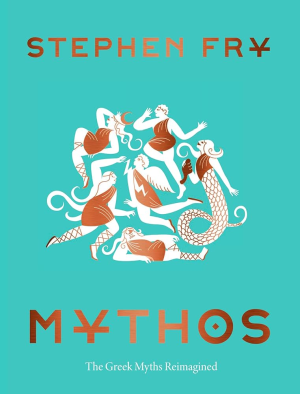
This book will hold a record for the title it took me the longest to complete, as I’ve been listening to it off and on since fall 2021, attracted by both the premise and (chiefly) the narrator, Stephen Fry — whose work I’ve loved so much in Blackadder and Jeeves and Wooster. Mythos is a collection and retelling of the foundational Greek myths, which begins chronologically before arriving at the Olympian age, at which point the stories are organized more thematically — stories of mortals and minor beings being punished for hubris, or stories of mortals being tested and found worthy or wanting. Although I’ve heard Fry voicing many characters before, I don’t know that someone can appreciate his sheer range without having experienced this, because he manages to convey a sense of imperious Zeus, a humiliated and pathetic Echo, mischievous old men and cocky young lads within the span of minutes. He probably displayed equal talents in his reading of the Harry Potter books, but we Americans had to settle for Jim Dale — no slouch, but surely not Stephen Fry. That said, this is not merely Stephen Fry reading a translation of the myths aloud: this is his own retelling, poignant and funny in its own right, and with frequent sidebars to make connections between the myths and our language, or human history more broadly. There’s also direct commentary: Fry does not approve of Alexander’s take on the Gordian knot. Although I’ve been distantly interested in Greek mythology all of my life, it’s been nearly twenty years since I read a full retelling of the myths proper — not since Edith Hamilton’s Mythology, perhaps. There were a great many tales here I’d forgotten or not heard before, and some I knew but only appreciated to a faint degree, like the many plights of King Midas. We speak of the Midas touch but without realizing what a tragedy that became! One new-to-me story was that of Arion, a musician who was thrown overboard so the crew could steal his goods: rescued by a dolphin, the boy showed up home early enough to tell his sale and commission a statue of the dolphin, which was used in a scene of marvelous comeuppance. The physical book, which I read from time to time, opens with useful family trees. Fry has recently produced Heroes, which covers lads like Heracles and Jason, and then Troy. I plan on trying those, and may do split-media like I did with this — doing some reading but more listening.
Jack and her husband, Gabe, are professional security analysts — pen-testers, red-teamers. Their job is to test the security measures of companies, both digital and physical, to find weaknesses. After one case goes a little sideways and Jack is briefly arrested, she arrives home exhausted to find her husband brutally murdered. Calling for the police, she finds herself again in the station being questioned, but increasingly believes the cops are trying to pin the deed on her. She’s had an acrimonious relationship with them ever since dating one of their number and discovering him to be a controlling psychopath: for months after she dumped him she was subject to frequent traffic stops and no-knock raids. Weighing the odds, Jack bolts.
In a way, she grimly reflects, this would be easier if she had brutally murdered her husband, because she would have had a plan in place. Cash, clothes, supply stashes. As it is now, she’s a woman without a phone or cash, trying to navigate a technocratic and increasingly unhuman world. She’s armed with her wits and deep experience in getting around physical barriers and subtly manipulating strangers into helping her, though. After a frantic race back home, she uses her infil skills to access the house from the back, where she spots the evidence of a break-in that the Metro people missed in their easy-option decision to get the wife. Unfortunately in her departure — the cops arrive to begin searching the house and formally arrest her — Jack is injured. Over the next week, Jack is constantly being hunted for by the cops while at the same time she’s trying to figure out why someone would have murdered her dear husband. There are clues: a missing hard drive at home, the arrival of a life insurance policy for her husband with someone else’ phone number on it. Jack finds some shelter with her sister and her and Gabe’s mutual friend Cole, but given the amount of heat she’s drawing, she can’t stay long — and as her investigation continues, as she begins growing weaker from the injury that’s getting infected while she’s desperately trying to find the truth and evade the cops, her searches attract the attention of the party responsible for this drama to begin with.
Given my interests in IT & cybersecurity, I enjoyed this far more than I expected to when I was only a quarter in. Ware included a lot of really petty and intricate details that slowed the narrative down, but this began getting useful when Jack’s investigation begins to grow. Far as as I can tell, this is the first of Ware’s books to have a strong technical-thriller compotent, (The ITGirl was a red herring) and this could be an education in the social engineering side of cybersecurity for casual readers. At one point, Jack needs to review the strange life-insurance policy’s account details to see if Gabe really took out the policy: she uses social media stalking and a series of impersonations and spoofs to get into the building and pull up account details, where a serious twist for the reader is in store. This is an area of cybersecurity that absolutely fascinates me, but it’s useful for everyone to know about given the amount of profile cloning that goes on, and the many ways we accidentally volunteer information to threat actors — from sharing and showing too much on social media (check your privacy settings!) to engaging in useful but dumb-risky moves like leaving passwords around in open view. (One character in this appeared to have a modicum of wariness: she hid her passwords in a Rolodex file, under a nondescript name.) The small details became increasingly useful, like Jack noticing that four keys in a pad were more worn than others, allowing her to simply begin cycling through the 16 available combinations. For lay readers, this offers a look into a very accessible side of information security and defense that requires little technical knowledge at all, unlike the very technical exploits used in Mark Russonovich’s tech-thrillers.
I’ll definitely be trying Ware again, though I realize the rest of her works don’t touch on computer goodness like this.
Related: The “Little Brother” series, including Little Brother and Homeland, followed by Attack Surface. All involve heavy amounts of cyber/computer activity. Mark Russonovich’s Zero Dayand Trojan Horse, two cybersecurity thrillers written by a programmer There is No Cloud and Cloud Judgement, thrillers with a strong cybersecurity element — though not nearly as technical as Russonovich.
Summer readin’, happening so fast….today’s TTT is top ten books on our summer TBR list! If that title got a song stuck in your head, I’m sorry/not sorry. But first, the tease!
“Once, men turned their thinking over to machines in the hope that this would set them free. But that only permitted other men with machines to enslave them.”
“The mind commands the body and it obeys. The mind orders itself and meets resistance.”
(Dune, Frank Herbert)
“You are in a small lobby,” I said to Gabe in a robotic voice. “Corridors lead to the north, east, and west. To the south of you is a lift. In the distance is a tall, gleaming white tower. No, wait, that last part’s from Colossal Cave Adventure.” “Drop USB device,” Gabe said, and I laughed. “A, that’s three words. And B, I’ve already done that. As you’d know if you’d managed to hack the CCTV system. So—which corridor?” (Zero Days, Ruth Ware)
(1) Dune by Frank Herbert. This has been on my list for a while, and after reading a version of the story in graphic novels, I’m ready to tackle the original itself. Should finish this week.
(2) Anxious Generation, Johnathan Haidt. A preorder that arrived in April, addressing mental illness in Gen Z.
(3) Zero Days, Ruth Ware. A cybersecurity thriller I’m currently reading alongside Dune. A woman is framed for the violent death of her husband. Finding Ware a little too petty detail-y (I don’t care what brand of phone your characters use) but will read anything that involves computers.
(4) Scarcity Brain, Michael Easter. On the psychology of desire, compulsion, addiction, etc. (I…hope.It’s a library book and honestly I’ll put anything brain-related on hold.)
(5) Star Trek: The Higher Frontier, Christopher L. Bennett. The plot sounds generic, but as a rule I’ll read anything written by Bennett, David Mack, or Greg Cox. Speaking of —
(6) Star Trek: Lost to Eternity, Greg Cox. The TOS maestro is at it again, but this won’t be released until the end of July.
(7) Dune: The Duke of Caladan, Brian Herbert and Kevin Anderson. I’m only halfway through Dune but Duke Leto is someone I want to know more about.
(8) Jumpnauts, Hao Jingfang. Chinese SF! Read a tease and enjoyed it.
(9) Breaking Bread with the Dead: A Reader’s Guide to a More Tranquil Mind, Alan Jacobs. I’ve been nibbling at this for ages — really should just sit down with it. But I just finished Mythos, which I’ve been listening to on and off since…2021….
(10) Star Trek: Firewall. I dislike ST Picard, but I love me some David Mack and Seven of Nine. This is a bridge novel that explains how Seven changed from her ST Voyager self to just being plain ol’ Jeri Ryan in ST PIC. Not that being Jeri Ryan is a bad thing, but when I watch her in PIC I don’t see the Seven I liked so much in VOY.
For those who that title did not trigger an earworm, here:
Today is Father’s Day in the United States, and to celebrate I’d like to share a father and son duet from Johnny and Nick Clegg. Johnny Clegg was a groundbreaking musician who, in apartheid South Africa, creating several illegal mixed-race bands in the 1980s. I encountered his music via George of the Jungle (I watched the credits for the first time ever because I wanted to know who did that song) and was able to explore it via limew- um, The Internet in the 2000s. One of his pieces was sung for his little boy, Jesse. Now, Jesse has followed his father’s footsteps and is a singer himself, and right before Johnny died of cancer they did a duet together. Since I’ve been following Johnny for twenty years, it’s one of the most beautiful things on youtube in my opinion.
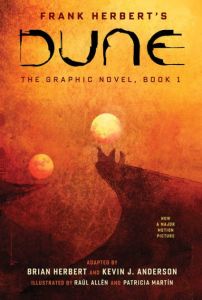
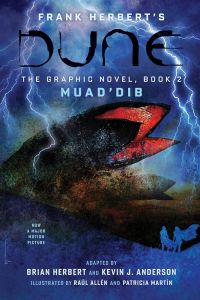
Purists may give me the stink-eye, but when I spotted these in our new acquisitions in the children’s department, I snatched them right up. I aim to read Dune this year, and I figured a graphic novel version might break the ice, so to speak. I’ve done similar with other works: watching a movie version of Sense and Sensibility to get me through the novel, and reading The Aeneid for Boys and Girlsbefore reading the epic poem, listening to an oral version of the Epic of Gilgamesh before reading the text. Because I haven’t read the Real Novel yet, I can’t speak to how faithfully they adapt Herbert’s work. Given that the adapters are Herbert’s son and another novelist who has collaborated with The Son of Herbert on Dune novels, though, my guess is they’re as faithful as fans could desire.
Volume I introduces us to the main story: in some distant star empire, the Emperor has abruptly given the House Atreides, led by Duke Leto, the desert planet Arrakiss. This world barren and hostile to life but contains ‘spice’, which is apparently very valuable. (We learn why as the book develops.) This is not the boon it seems, because the planet was previously under the dominion of Atreides’ rival, the House Harkonnes, and they’re evidently not the Queensbury Rules types. No one from Atreides is excited about leaving their world to live in a desert fortress surrounded by massive sand worms with suitable appetites, and living in a place ridden with booby traps and schemes. To make matters more complicated, there’s a level of anticipation that’s somewhere in the metaphysical realm — there’s talk of prophecy and of a figure referred to as the mahdi or messiah, and some of that anticipation is around the Duke Leto’s own son, Paul. In volume I, we witness Atreides’ assume control of their new realm and begin taking their bearings, but then Harkonnes’ schemes go into effect.
Volume II begins with young Paul and his mother the Lady Jessica trapped in the desert, a place where no human should want to be. Not only is it so inhospitable that humans have to wear special suits so as not to have their body moisture wicked away, but dangerous life-forms are as common as water is not. Betrayed, Paul and Jessica seek help from the “Fremen”, the indigenous humans of Arakkis who have adapted themselves to its hostile climes. Although the Fremen are initially wary, they’re impressed by Paul and Jessica’s cunning survival so far, and the two are able to win the regard of the tribe and earn a place among them. Connected to the mythology of the books, though, there are larger roles to be assumed, and the book ends with quite the cliffhanger.
When I started reading Dune last year, I felt a bit overwhelmed with the odd vocabulary and the fact that I was being dropped into the middle of things without any of that convenient Star Wars type prelude that catches readers up on the taxation of trade routes and such. Here, although those still applied, they were a lot easier to digest — possibly because of visual cues, possibly through repetition. I was pulled into the story easily here, and enjoyed the art style which plays a lot with the lighting and tone. The characters are all sdistiguishable, and in the larger crowd scenes there’s a good bit of variety. The art is most striking in big action scenes, especially during sandworm attacks, does a good job of conveying the vastness and harshness of Arakkis. Although the third and concluding volume of this is coming up in July, I’m going to try tackling the book again before this, and I’m excited about finally getting to see the Dune movie released a few years ago.






 Reading Freely