Debate Night 2024

Daily writing prompt
What are you doing this evening?

I’m supposed to be watching two people who I don’t like or respect debate on who should be el presidente, but knowing I have no real say in the matter, I am choosing to listen to beautiful music instead. Here’s a ‘debate’ between Sabine Devieilhe & Marianne Crebassa.

Posted in General | Tagged , , | 3 Comments

Teaser Tuesday Time

“You mean you ain’t going to drink no more?”
“I mean I’m taking it one day at a time.”
“But if you don’t drink no more, then how come you got beer in your refrigerator?” “Hard to say goodbye.”
“And you got a lot of whiskey under your kitchen sink too.”
“What are you, the Southern Baptist Convention?” (Kinfolk, Sean Dietrich)

Posted in Reviews | Tagged , | 5 Comments

DNA is Not Destiny

When I first learned about DNA, I formed a very elementary notion of it being a bit like lego blocks: this bit was the blonde hair, that gene was green eyes, that sort of thing. Later on, as I began my informal-but-earnest science education, I realized things were more complicated than that: DNA is just chemicals, after all, and it can react with other chemicals so that it’s not expressed the same way every time. There’s an entire science devoted to this, epigenetics. DNA is not Destiny was evidently written at least in part to the public fascination with commercially available DNA sequencing (23andMe, Ancestry, etc) and especially to the biological determinism, or ‘essentialism’ as Steven J. Heine puts it, that it was creating in its wake. Heine opens by the book by first explaining how complicated genetic expression actually is, and then examines a few topics like sexual orientation, race, and eugenics in the light of that complexity. The result is mildly interesting, but not provocative or memorable. The core lesson is that Gregor Mendel was absurdly lucky to have stumbled upon genetics by testing the traits he did, because they happened to be single-switch traits. This makes them a minority in the complicated world of our genes, since many traits depend on reactions from multiple genes (“polygenetic”) and many genes themselves are polytropic, i.e. when they’re active they have various expressions across the body. What is not covered is how the same gene can be expressed differently through in-utero clues, something that absolutely fascinated me in She Has Her Mothers Laugh. I could see this book as being useful to someone who has gotten a 23ndMe report and wants to know how seriously to take its summations: Heine advocates skepticism given that analysis of the same genes can vary from company to company, as what our genes make of us is extremely complicated, abd sensitive to an array of factors we still don’t have a full reckoning of. This was an enjoyable read, but for substance I’d greatly recommend She Has Her Mother’s Laugh over this.

Just for fun, I tried to get Bing Image Creator to make a lego-block human.

Posted in Reviews, science | Tagged , , | 4 Comments

Amadeus premiered majestically today 40 years ago

“Astounding! It was….beyond belief. These were first and only drafts of music, but they showed no corrections of any kind! Not one! He’d simply…..written down music, already finished, in his head! Page after page of it, as if he was just taking dictation! And music……finished as no music is ever finished. Misplace one note, and there would be diminishment. Misplace one phrase, and structure would fall. That sound I’d heard in the Archbishop’s palace had been no accident. Here again was the very voice of God. I was staring through the cage of those meticulous ink-strokes at an absolute Beauty.”
– F. Murray Abraham as Salieri
“Is it ….not good?”
“IT IS MIRACULOUS.”
“On the a page, it looked — nothing. The beginning was simple, almost comic! Just a pulse — bassoons, bassett horns. Like a rusty squeezebox. And then! Suddenly, high above it, an oboe……a single note, hanging there, unwavering! until — a clarinet took it over, sweetened it into such a phrase of such delight! This was no composition by a performing monkey. This was music I’d never heard. Filled with such longing, such unfulfillable longing! It seemed to me I was hearing the very voice of God!”
– Again, F. Murray Abraham as Salieri.

Posted in General | Tagged , | 8 Comments

Amazon just congratulated me for being a Kindle addict

In 2011, I posted some thoughts about why I had a dislike for e-readers, and my fears of what they would do to book culture in general, under the name “Go Go Gadget Literature“. Five years later, I sheepishly admitted to having bought a Kindle Fire, which I’d been reading a little on: I’m not positive what prompted the decision, though it was between the library beginning to offer ebooks and my needing to get familiar with the tech, and the fact that a lot of authors were starting to publish on Kindle exclusively. I first installed Kindle for PC on my computer when Niall Doherty, a YouTuber minimalist whose thought-provoking questions I liked, published an ebook exclusive called Disrupting the Rabblement. Well, today I received an email from Amazon congratulating me for having been a Kindle Unlimited member for 5+ years, or more than half KU’s life. Ebooks began growing as part of my reading beginning in the late 2010s and in the last few years has remained a close rival to physical books — sometimes leading, sometimes trailing. I suppose I drifted over through ease of use, but the ever-expanding Kindle Unlimited library and frequent sales also helped.

157 is an absurdly low number given that ebooks have consistently constituted half of my reading in the last few years (over half, in some): I think they’re only counting books I’ve read to 100% on, and it’s not like I’m reading the index. THAT, or they’re only counting books I’ve read on my Kindle Fire itself, and it’s rare that I know where it is. Since acquiring my first smartphone (a Galaxy S7 in 2017), I’ve used it almost exclusively as my e-reader: currently my Pixel 6 is serving in that capacity, but I will say the S7 was a better size for reading. The Pixel is a bit too large to hold in one hand comfortably for long stretches. Of course, I do a lot of Kindle Cloud reading, too.

The first was a library book, the second some solarpunk on Kindle Unlimted I found earlier in the year. I definitely get my money’s worth out of Kindle unlimited, and there’s a reason it constitutes the second-biggest category in my book stats under the “Source” column. This is my current KU shelf. We’re allowed up to 20 titles, but in my experience I tend to have 15 books that have been on there for months, whereas I’m actively looking at 2-3 of them. Some of the odder titles in here: a litrpg novel based on cozy farming games; an analysis of fascism from the Eastern Orthodox perspective; and Titanic with Zombies. (There are three Eastern Orthodox titles in here, I just realized….Dangerous Passions and Philokalia being the others.)

This is quite misleading: easily the largest title I’ve e-read was The Jewish Annotated New Testament, and “The Hillside” was a short story part of the Warmer collection.

Posted in General | Tagged | 7 Comments

The Dispossessed

So you say you want a revolution? Well, brother, you must be the revolution. Shevek of Anarres is a brilliant physicist who is on the cusp of a breakthrough that could revolutionize humanity’s use of space and time, but he’s increasingly obstructed by members of his society, for reasons he can’t quite understand. Is it personal jealousy? Fear? Or has the anarcho-syndicalist society in which he lives simply begun to ossify? Shevek makes the bold decision to return to the planet that his forefathers fled from generations before, Urras, to break down the walls of silence between the two societies and perhaps find room to finish his work. He finds a startlingly different society, both intriguing and disturbing in turns, but realizes the answer he seeks isn’t there, either. The Disposessed is a fascinating work of political science fiction that offers the reader much to think about, amid a compelling drama about a man searching for the truth while trying to remain true to his values.

The Disposessed follows an interesting structure, with alternate chapters taking place on either of the two worlds and on different, but related timelines. In even-numbered chapters, we follow Shevek on Annares and learn about its culture and anarcho-syndicalist approach to society. It is highly collectivist without being authoritarian, using cultural and social pressure to push its members towards behaving. The individual is so downplayed that possessive pronouns are regarded as suspicious. Although people often do the work they’re declined to do (physics, for Shevek; biology, for his partner), one organization called DivLab also assigns needed work on a rotating basis, so people are frequently pulled away from “their” work to do what is needed, regardless of what that might mean for romantic pairs like Shevek and Takver — and their daughter! In the odd-numbered chambers, we follow Shevek as he explores Urras, the planet his people fled from seeking a revolutionary new way of life. Urras is capitalistic but also highly militaristic, and is engaged in a proxy war with its Soviet Union-esque rival in another nation. It’s interesting to find a bit of SF that has a planet without a unified government, at least in my limited experience: this one has at least the three, plus Anarres on the moon. Urras’ society is relatively ‘normal’, though there are some interesting fashion choices like women going around with shaven heads and bare torsos save for navel jewelry. Shevek is bewildered by how wealthy life on Urras is, although he realizes as the plot wears on that he’s only seeing on how one fraction of the planet lives: after sneaking out with help, he sees what happens to those in this society without resources or the ability to acquire them: think Down and Out in Paris & London or The Jungle. After realizing that the powers on this world want to use his breakthrough to create tools that will allow them to dominate the others, Shevek has to bolt.

The book’s subtitle is An Ambiguous Utopia, and that makes more sense the further along Shevek goes, as we’re seeing not a Perfect Society arrayed against an Imperfect one, but two societies that both have their flaws. Personally, I’ve long stopped believing that any human society can be stable in the industrial-technological age, and a stable society wouldn’t even necessarily be a good or perfect one, just stable. By book’s end, Shevek still vastly prefers his world of meaningful, peaceful poverty to the riches and lusts of Urras, but actions unfolding on Anarres prove that it has changes to make as well. To be honest, I wish I’d read this back in 2010/2011 when I still identified as a left-libertarian: I don’t think it would have greatly changed the evolution of my political thinking, but it would’ve definitely had an effect and would have resulted in a fascinating review to read in retrospect. This book’s multiple rewards (and Cyberkitten’s multiple reads of it over the years) definitely make sense, and I intend to revisit le Guin!

SFF Book Bingo Slot: “Best Buds“, a book read with friend or club. Another bingo!

Related:
The Moon is a Harsh Mistress, Bob Heinlein. The story of a revolution on Moon, drawing from both the American Revolution and the Soviet seizure of power.
The Great Explosion, Eric Frank Russell. An amusing short novel about a distant State trying to impose itself on colonial worlds, in which an aggressively anarcho-libertarian planet plays a big part. Myob!
Anthem, Ayn Rand. An individual emerges in a collectivist world. As with le Guin and Orwell, language is used to corral thought: “I” is not even a known pronoun.

Highlights:

“Speech is sharing—a cooperative art. You’re not sharing, merely egoizing.”

“I never thought before,” said Tirin unruffled, “of the fact that there are people sitting on a hill, up there, on Urras, looking at Anarres, at us, and saying, ‘Look, there’s the Moon.’ Our earth is their Moon; our Moon is their earth.”
“Where, then, is Truth?” declaimed Bedap, and yawned.
“In the hill one happens to be sitting on,” said Tirin.

“No—no, I’m not. I’m trying to say what I think brotherhood really is. It begins—it begins in shared pain.”
“Then where does it end?”
“I don’t know. I don’t know yet.”

“I want to learn, not to ignore. It is the reason I came. We must know each other.”

“The Odonians who left Urras had been wrong, wrong in their desperate courage, to deny their history, to forgo the possibility of return. The explorer who will not come back or send back his ships to tell his tale is not an explorer, only an adventurer, and his sons are born in exile.”

“You can’t crush ideas by suppressing them. You can only crush them by ignoring them. By refusing to think, refusing to change.”

“What’s wrong with pleasure, Takver? Why don’t you want it?”
“Nothing’s wrong with it. And I do want it. Only I don’t need it. And if I take what I don’t need, I’ll never get to what I do need.”
“What is it you need?”

“If you can see a thing whole,” he said, “it seems that it’s always beautiful. Planets, lives…But close up, a world’s all dirt and rocks. And day to day, life’s a hard job, you get tired, you lose the pattern. You need distance, interval. The way to see how beautiful the earth is, is to see it as the moon. The way to see how beautiful life is, is from the vantage point of death.”

“You have, we do not have. Everything is beautiful here. Only not the faces. On Anarres nothing is beautiful, nothing but the faces. The other faces, the men and women. We have nothing but that, nothing but each other. Here you see the jewels, there you see the eyes. And in the eyes you see the splendor, the splendor of the human spirit. Because our men and women are free—possessing nothing, they are free. And you the possessors are possessed. You are all in jail. Each alone, solitary, with a heap of what he owns. You live in prison, die in prison. It is all I can see in your eyes—the wall, the wall!”
They were all looking at him.”

“There’s a point, around age twenty,” Bedap said, “when you have to choose whether to be like everybody else the rest of your life, or to make a virtue of your peculiarities.”
“Or at least accept them with resignation,” said Shevek.

He had thought to bargain with them, a very naïve anarchist’s notion. The individual cannot bargain with the State. The State recognizes no coinage but power: and it issues the coins itself.

To him a thinking man’s job was not to deny one reality at the expense of the other, but to include and to connect. It was not an easy job.

You cannot buy the Revolution. You cannot make the Revolution. You can only be the Revolution. It is in your spirit, or it is nowhere.

“We’re only just beginning to feel what it’s like to be revolutionaries, as Shev put it in the meeting today. And it isn’t comfortable.”

Posted in Reviews, science fiction | Tagged , , | 13 Comments

The Calculating Stars

The night is young and you’re so beautiful, can’t we get into the swing of – what was THAT?! The Calculating Stars opens with a rocket scientist and a math genius/former WASP pilot having a romantic night in the mountains, only to witness from afar a fireball embroiling DC. These science-savvy scientists quickly realize it’s not an atomic bomb, though, but a meteorite. They soon learn that DC and the American government have just been snuffed out and the eastern seaboard is completely devastated. It gets worse, though: when Elma begins seeing photography of the strike zone, she realizes that humanity is possibly facing an extinction-level event. The amount of water vapor added to the atmosphere means that, after the dust all settles, Earth will experience runaway greenhouse effect, leading possibly to the oceans themselves boiling away. Looks like it’s time to boldly go where no man or woman has gone before. The Calculating Stars is an alternate history of the push toward the moon, beginning ten years earlier and under far different circumstances. Written with counsel from actual astronauts, it’s a compelling if sometimes irritating story that sticks the landing. At its best, we’re seeing a fun take on the space race, set when computers were people and not machines, where the star is an intelligent and driven woman who becomes an unwitting celebrity in her desire to push the United States into leading humanity’s first real steps into the final frontier. At its worst, we get characters with anachronistic expectations maneuvering in an altered world that doesn’t make sense in some ways, where the promise of the general premise is somewhat wasted in preaching. It’s a fun story, just flawed.

One limitation of the book, I think is that it’s trying to do a lot at once — creating an alt-history world and following it over a few years, engaging in a little science fiction speculation, a lot of critique of 1950s culture from a 21st-century lens, plus the usual plot & character drama that novels need. That is a lot to juggle, especially when the author is more interested in certain elements than others. The core of the story is Elma’s determination that women take part in the space struggle: after all, if Earth is going to create colonies, it’ll need women. and the more quickly they begin establishing their space legs, the better. She meets nothing but total resistance, inspired by everything from basic 1950s culture to personal grudges. She breaks through eventually, in part because she accidentally makes herself into a minor celebrity by appearing as “The Lady Astronaut” on Mr. Wizard, inspiring young girls and older women alike to dream of a future in rockets. Her progress is dogged by an anxiety disorder, though, and when she begins taking a pill to manage it she has to worry if it will invalidate her as an astronaut candidate — and given that one of the key men in the astronaut office despises her for reporting him for sexual molestation during WW2, it could almost certainly be used against her as blackmail. This is the strongest thread in the book, and brings with it the second-most prominent thread, dismissal of 1950s mores by a 21st-century author. This leads to Elma being obsessive about the diversity of the female astronauts chosen, and her becoming angry that none of the seven women who make the cut are black. In a strictly American context, this would be fairly easy to explain: the astronauts had to have so many hours of flight time, and the white WASP-experienced women would overwhelm the pool. Given that the astronaut organization is more international in this, that’s an explanation that falls short, but how much so is hazy because there’s no clear idea as to how much non-American participation there is in the program. There are a few non-Americans who pop up now and again, but it’s a bit like Star Trek peppering its crews with aliens in a token effort at showing the diversity of the Federation. This is connected to the hazy worldbuilding in general: every so often something is mentioned to remind us this is an altered world (“Why are the generals worried? The Soviet Union dissolved”), but the altered world doesn’t really show itself in the story, and some of the mentions are extremely improbable, like the Chinese in the 1950s creating a space program. The Chinese in the 1950s had just recovered from Japanese occupation and civil war and were still trying to create an industrial economy, so that seems unlikely.

Although the historical messiness detracted from my enjoyment of the book, the notes appended afterward make it clear that Kowal was serious about the technical aspects, and I did thoroughly enjoy the story — beginning it at lunch and then reading it nonstop after work. Interestingly, Kowal was aware of the likes of Jackie Cochrane and Jerri Cobb, even though they’re no-shows in the text aside from slightly inspiring the development of two minor characters. I like the premise, appreciated a few of her historical in-jokes, and am on board for the next one despite the over-abundance of space-talk combined with bedroom scenes and rocket puns. I hope she starts developing further and making better use of the premise, though.

Related:
Fighting for Space, Amy Shira Teitel. A history of Jackie Cochrane’s efforts to get NASA to recruit female astronauts in the 1960s. Also see her Breaking the Chains of Gravity, a history of 20th century rocketry and space interest before NASA.
The Lunar Missile Crisis, Bruno & Castle. Alt-history in which humanity is actively creating stations & settlements on the moon.
Fly Girls: How Five Daring Women Defied the Odds and Made Aviation History, Keith O’Brien
Lucifer’s Hammer, Larry Niven. Asteroid apocalypse novel.

Posted in Reviews, science fiction | Tagged , , , , , , , | 11 Comments

WWW Wednesday

WHAT have you finished reading recently? Disaster!, Dan Kurtzman. A re-read for me, a mixed oral/narrative history of the San Francisco earthquake and fire of 1906.

WHAT are you reading now? The Dispossessed, Ursula le Guin. Should finish tomorrow. (I could finish tonight, but Wednesday is a designated movie night with a friend of mine.)

WHAT are you reading next? A 30-page article on COVID and library policies. Oh, for fun? I remembered last night I’d intended for September to have a SF focus (reprising the SF Sweep of last year), so something in that neighborhood. Most likely Becky Chambers’ Long Way to a Small Angry Planet.

Posted in General | Tagged | 6 Comments

Disaster!

I stumbled upon this title nearly twenty years ago while touring my community college’s library and checking out what it had to offer. I found a couple of titles (Disaster! and Good Life in Hard Times: San Francisco’s Twenties and Thirties) that I enjoyed so much that I later bought my own copies. Recently while contemplating any possibility of inflicting some order on one bookcase, I spotted this and wound up giving it a re-read. It’s a narrative & oral history of the Great San Francisco fire, which destroyed over 80% of the city. The fire began in the immediate aftermath of a significant earthquake, which also compromised the city’s water infrastructure and made it extremely difficult to staunch the flames. The city’s fire chief had been warning against this possibility, but he died from wounds inflicted during the quake and was not able to tell the mayor “I told you so.” The story of the quake, fire, and chaotic week of death and confusion that followed them is told here through the reports of those who witnessed it — a cross-section of humanity that includes newlyweds, a corrupt mayor, a desperate Chinese immigrant, an aspiring banker, and an Italian opera singer who couldn’t believe he escaped the flames of Vesuvius just to wind up in another disaster. On my first reading of this, I absolutely loved the immersion into the world of 1901, and the strange characters living in San Francisco. For me, it was a dive into what living in a 20th century city was like, and the photographs helped. Reading this again as an adult, I was mostly struck by how much death and mayhem was inflicted by the state itself, specifically through the Army troops who were illegally ordered into the city to restore order, but who themselves became agents of chaos. Countless citizens witnessed soldiers looting stores all the while shooting any citizen suspected of doing the same, without even bothering to ask things like “Hey, bub, is this your house?”. The casual shooting quickly escalated so that people were shot for letting their horses drink from open hydrants or ‘refusing’ to join work details and clearing streets. At the same time, the general who had declared his own martial law in the city was also having them blow up block after block, sometimes creating fires in the process or blowing themselves up because they were stumbling drunk at the time. There are “hope spots” in the text — people helping one another across racial lines, opening their homes to those in need — the constant unnecessary death-by-government makes the book increasingly grim. Although I enjoyed this re-read, adult me is more sensitive to the book’s need for editing: the structure could be tighter, and details were sometimes repeated unnecessarily. This is a fairly fast read. There’s a modern book called San Francisco is Burning which I may try to see if contemporary scholarship has added any new insights.

Related:
Disaster 1906: The San Francisco Earthquake and Fire, Edward F. Dolan. Purchased while trying to find this book.
Isaac’s Storm, a history of Galveston being flattened by a tornado.
Disaster by Choice: How Our Actions Turn Natural Hazards into Catatrophes

Posted in history, Reviews | Tagged , , , | 1 Comment

Top Ten Teasday: Books Involving Food

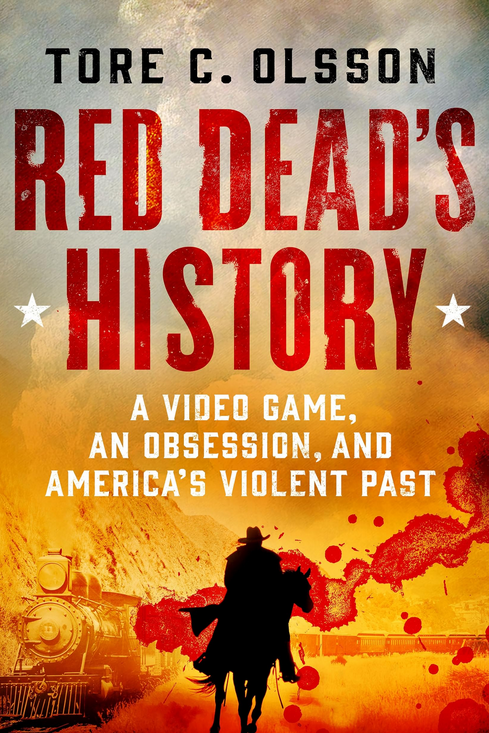
Happy Tuesday! I took the weekend off from….most everything, including reading unless you count an audiobook (still tolerating Red Dead’s History), but now I’m back in the saddle. Today’s theme is books involving food, so I’m going to split it between fiction and nonfiction. But first, a tease! In honor of the week’s theme, I’m going to fish around Kindle Highlights for a food-related tease. Or..I was. got to reading Wendell Berry highlights and oooooooo, it’s Jayber Crow.

Telling a story is like reaching into a granary full of wheat and drawing out a handful. There is always more to tell than can be told. As almost any barber can testify, there is also more than needs to be told, and more than anybody wants to hear.

(1) Lord of the Rings, obviously. But what about second breakfast?

(2) While We Were Watching Downton Abbey. The plot is built off weekly Downton screenings a condo, where British food & drinks are served.

(3) Fast Food Nation, Eric Schlosser. Read this book 15 years ago and I am still creeped out by the chapter on how these foods are loaded with synthetic chemicals to fool our tastebuds. We don’t seem to care, judging by the …..biscuits and gravy-flavored Pringles in the store.

(4) The Best Cook in the World, Sean Dietrich. Writing on his mama and the culinary traditions of the south. My intro to Dietrich and I have not stopped reading him. Bonus tease!

She does not cook chitlin’s, because she knows what God made them to do.

(5) In Defense of Food, Michael Pollan. A skeptical take on “nutritional science” and an argument for eating food, not processed food products — mostly plants, and not too much.

(6) The Secret History of Groceries, Benjamin Lorr. Equally fascinating and disturbing. I did not know that some of the Southeast Asian fish market is essentially built on slavery: there are ships at sea that stay at sea, with no opportunity for the captive workers to escape, because the ship’s goods are off-loaded to support vessels. Chilling, and a reason I now only buy local fish which is why I…don’t tend to buy fish anymore. :-/ (Alabama does catfish and mud-bugs. I will eat mud-bugs (craw-dads) at a social event but the appeal of them baffles me.)

(7) ANY WENDELL BERRY. His nonfiction essays touch on food and agriculture, and conversations over food are a staple in his novels. A quote from What are People For:

Like industrial sex, industrial eating has become a degraded, poor, and paltry thing. Our kitchens and other eating places more and more resemble filling stations, as our homes more and more resemble motels. ‘Life is not very interesting,’ we seem to have decided. ‘Let its satisfactions be minimal, perfunctory, and fast’. We hurry through our meals to go to work and hurry through our work to ‘recreate’ ourselves in the evenings and on weekends and vacations. And then we hurry, with the greatest possible speed and noise and violence, through our recreation — for what? To eat the billionth hamburger at some fast-food joint hellbent on increasing the ‘quality’ of our life? And all this is carried out in a remarkable obliviousness to the causes and effects, the possibilities and the purposes, of the life of the body in this world.”

(8 & 9) French Kids Eat Everything. Read this at a very strange period in my life where I was obsessed with France. It passed, but the book still makes me feel weird if I eat walking down the sidewalk. Oh, non, that was French Women Don’t Get Fat. It’s been some years…..

(10) The Year of No Sugar, Eve Schaub. Until I watched a lecture called “Sugar: the Bitter Truth”, I had no idea how much sugar is in everything, at least in American supermarkets. It’s useful as preservative. (also check out Salt, Sugar, Fat).

Posted in General | Tagged , | 20 Comments