Today’s TTT is a freebie about relationships, so I’m going to just throw out the first platonic relationships that pop up in my head. But first, teases!
I half joke that raising children inculcates the virtue of detachment. You learn not to love any physical belonging too much, because you know it might be destroyed any minute. (Family Unfriendly)
“I don’t want to mess us up,” you blunder on. “Keep talking like that, you will,” she shoots back. Light. Fast. A smile with glitter on it. You get the hint. Sunny is smiling but that is not a happy smile. It’s a smile that says: Shut up, Ducky.You’ve hurt my feelings. So you shut up. (Ducky, diary 3. Ann M Martin.)
Harper: So, you and me are going to stop a rebellion? Sharpe: Well I don’t see no bugger else.
(1) Battle-bros:Sharpe and Pat Harper. These two are great together. From their first meeting in a brawl, they grew to be family, and Cornwell’s gift for funny dialogue is never better than with these two.
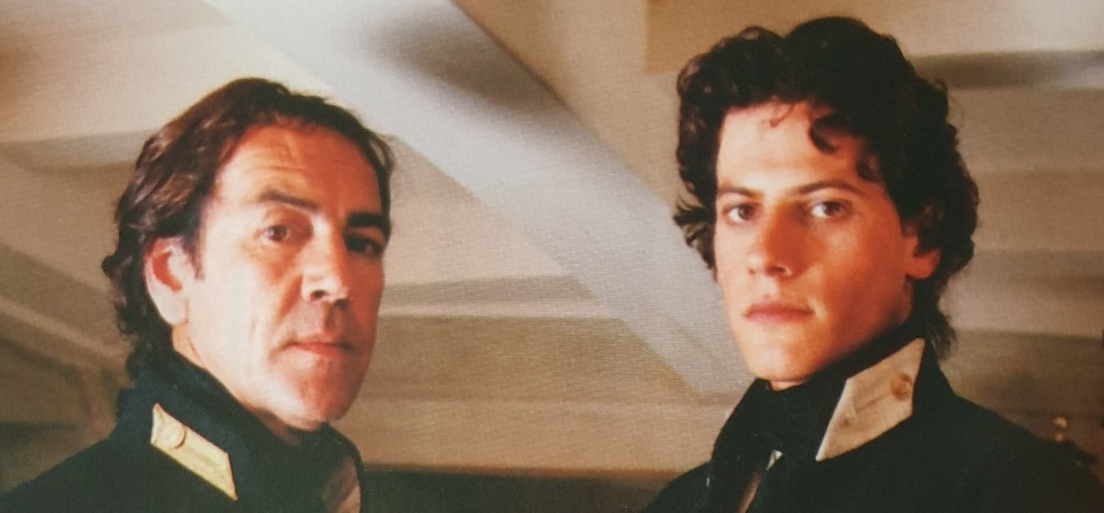
(2) Captain Dad: Sir Edward Pellew and his fictional protege, Horatio Hornblower. Realizing that Pellew (in real life) rose from the ranks himself throws Pellew’s paternal affection for ol Horry in a new light.
(3)We’re Neither of us Quite Sure, Ducky and Sunny. Ducky is a sixteen year old who rescued Sunny and her friends from a hazing incident, and became a taxi-driver and friend to them — but was especially close to Sunny, very much like a brother. Although all of their friends ship them, a kiss makes them realize that whatever their bond is, it’s not the romcom kind. Actually re-reading Ducky diary 3 now.
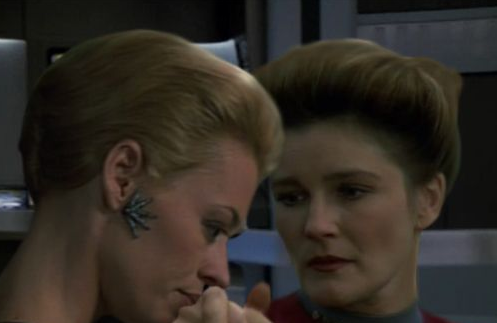
(4) Captain Mom. I love the near mother-daughter bond between Captain Janeway and Seven of Nine: Janeway made the decision to remove Seven from the collective, and as such feels a sense of responsibility for helping her reclaim her humanity. These two have both appeared in ST Voyager books, so I’m claiming it.
(5) My enemy, my unwitting ally: Gollum and Frodo. As you may know if you’ve read LOTR, there’s a moment when Frodo could kill the treacherous Gollum, but — in a moment of hesitation, wondering at what goodness the creature might still possess — he stays his hand. Given that Frodo falters at the last and it’s Gollum’s obsession with The One Ring that leds to it being destroyed, Frodo’s mercy essentially saves Middle Earth from Sauron.
(6) Jayber and Athey Keith. In Jayber Crow, a barber in search of the answers to Life, the Universe, and Everything washes up (literally — there’s a flood) in Port William, a declining agricultural village in Kentucky. He encounters a a great many people he will grow with over the years, none more important than Mattie Keith, a woman he loves unrequitedly, and whose father is an inspiration to him. Every time I read Jayber I’m touched by Jayber’s devotion to Athey in his declining years as they watch his work being steadily eroded by Mattie’s husband, a faithless and ambitious hound.
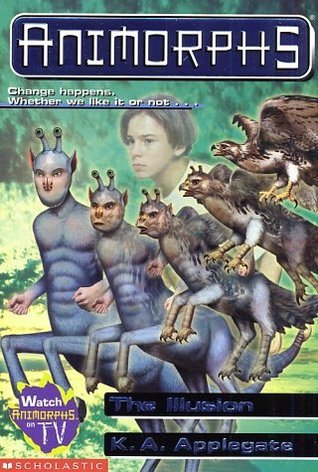
(7) Brothers across the stars: Tobias and Ax, from Animorphs. Early in the series, Tobias was stuck in his redtailed hawk morph, and the distance this put between him and his humanity made a stronger bond with Aximili (etc etc), the marooned Andalite teenager, easier to build. They also had a unique relationship with Elfangor.
(8) Aslan and Edmund. I always marvel at Aslan’s love and mercy toward the treacherous, cretinious Edmund of The Lion, the Witch, and the Wardrobe.
(9) Cato and Macro, the young pup and his grizzled mentor. They have an interesting dynamic because Cato quickly outstrips Macro in rank, but remains open to his guidance.
(10) Dex and Moss, just a monk and a robot out wandering and looking for answers.
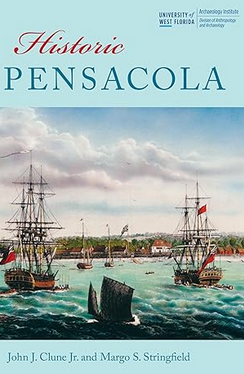
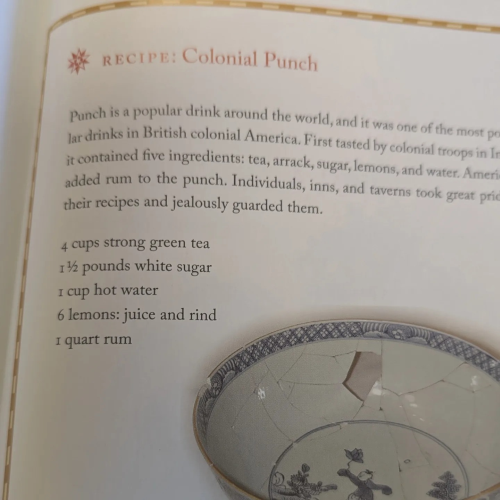
I don’t know that I’d ever given much thought to Pensacola before immersing myself in Florida’s colonial history prepping for my St. Augustine weekend a few years back, but reading those made me aware of how chaotic and interesting Florida’s history truly was — swapping hands between the Spanish and British, being invaded by Georgia, etc. I’m planning on visiting Pensacola in about a month and wanted to establish some background before I did. This attractive book is published by the University of West Florida, and features a lot of photos of archaeological finds. As we begin, the Spanish have a strong presence in La Florida, and another in New Spain, but there’s a vast gulf betwixt them with an alarming amount of English and French interest in the area. Early scouts vouched for both Mobile Bay and Pensacola Bay as potential areas to establish power, but an attempt to settle Pensacola in 1559 met with disaster as a storm destroyed the supply ships before the colony was even founded.It would be eighty more years before the Spanish returned to Pensacola Bay, distracted by wars and power plays in Europe. Pensacola would feature in those same struggles for power: established primarily as a military post, Pensacola fell to the British during the French and Indian War, but would return to the Spanish during the American Revolution — and remain Spanish until General Andrew Jackson attacked the city despite deliberately clear instructions from DC that he let sleeping dons lie. As mentioned, this is an archaeological history, and has no shortage of great color plates: reproductions of old maps, paintings of the bay and its people, archaeological finds like glassware, pottery, crucifexes, and the like. Most attractive. Interestingly, there are also recipes for colonial treats, like their version of punch which…golly, did they like their sugar. These, plus the margins, make this 200 page book read much more like a 100 page books, but it was a nice overview to early Pensacola. I’ll be staying downtown and plan on checking out the museum there: it will be interesting to see how many of its pieces show up here.
Blast from the Past II isn’t quite over — I’m doing another California Diaries post for sure — but the “normal” stuff will be filtering back in this week.
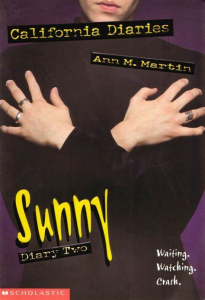
We open round two with Sunny, who is…still not doing well. Her last diary ended with her trying to run away from home with an older teenager, which ended in her being rescued by Ducky in the middle of the night. Her home life has deteriorated further, and she’s started crashing at Dawn’s place, where the attention she’s giving Dawn’s stepmother Carol is adding to the growing tension in the girls’ relationship. Dawn tries to get on with Carol, but the woman is immature, and — really, shouldn’t Sunny be focused on HER mother? You know, the woman dying of lung cancer? It’s not that Sunny doesn’t want to be there, but facing the increasingly imminent reality of her mother’s death isn’t something she appears able to do. Instead, she seeks escape in the attentions of older boys and the excitement of cutting classes to go rollerblading at Venice Beach. Although Sunny’s self-absorption and recklessness are very obvious to the reader here — especially when impatiently listening to Ducky vent to her his fear and sadness about his depressed and suicidal friend Alex — so too is her despair and pain — feelings she tries to escape from. Unfortunately, her flirtations with the fellas will lead to near-disaster and a massive fight with Dawn that ruins their sister-ship. There’s a lot of “Oh, Sunny” from the reader in this book — sometimes in sympathy, but at the end in exasperation.
Dawn the devoted. Dawn the perfect and perky. How. Can. She. Be. So. Up? “Hi, Mrs. Winslow. You’re looking so pretty, Mrs. Winslow. Is there anything I can do for you, Mrs. Winslow? Come on, Sunny, let’s prop up the bed/call the nurse/get your Mom some food/tell her about school today.” And now she’s in the bathroom, helping Mom, while I’m out here feeling like a jerk. I should be with Mom. I would be too if my best friend weren’t such a girl scout. I want to help. But whenever I’m about to offer it, Dawn speaks up first. I wish Ducky were here. He calms me down. Oh, well. He should be pulling into the parking lot any minute. With Maggie and Amalia. Just in time for our shopping spree. Maybe Dawn won’t come with us. Maybe she’ll decide to stay on as Mom’s personal aide. Maybe Mom will adopt her. Dawn and I can switch. I’ll become a Schafer, she’ll be a Winslow.
“Don’t waste time with people who take advantage of you,” I told Ducky. I should know. “He’s a good guy,” Ducky insisted. “Just seriously depressed. He’s been cutting school. Disappearing without letting his Mom know where he is. Acting hostile to everyone ” “Sounds like me,” I said. “Sometimes I worry about you too,” Ducky replied. “But I know Sunny. You’re there. With a heart and a soul. Alex is lost. You’re not.”
That’s what Dawn doesn’t see. She can’t have her heart broken at the sight of Mom’s body. She can’t look inside Mom’s eyes and see sorrows and triumphs and scoldings and kisses and late nights and lazy mornings and country walks and long drives and plays and pottery and softball games and sicknesses and years and years and years, all gone for good but somehow still there. I can see them. It’s like they’re crowded together in a room the size of Mom’s soul. And the door to the room is about to close.
Dawn, diary 2, kicks off with Dawn’s version of the argument that ended her and Sunny’s seven-year friendship, and shows how Dawn is really the ground of this series. She’s the most empathetic, able to see what’s happening from other’s point of view — but her own feelings are on top of that. She has some appreciation for Sunny’s pain but doesn’t think it excuses Sunny’s escapism and general recklessness. Stress is increasing in Dawn’s life in general: her stepmother has been confined to bed for the duration of her pregnancy, and Maggie is getting little….weird. Like, stressing out over her figure even though she resembles Twiggy. As finals approach and Dawn starts getting ready for a visit back to BCS-land, she yearns for reconciliation with Sunny but at least has the happy distraction of Carol’s successful delivery of a little sister, Elizabeth Grace — partially named after Mrs. Winslow. Both Dawn and Sunny are emotionally intense.
Quotes:
“It’s hard to be around someone who isn’t talking to you and keeps running away,” I muttered. “I know,” Ducky said softly. I realized that Ducky was thinking about Alex.
“Ducky,” I said with a laugh. “You should be a shrink. You would make a great one.” “You think so? I was sure my true calling was the taxi business.” “You could be Shrink-on-wheels,” I suggested.
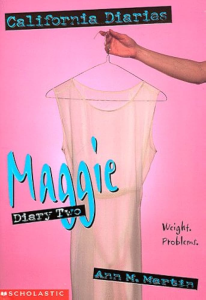
Maggie, diary two, opens with an ominious caloric recording with the declared goal of getting down to 90 lbs. She soon does away with this, declaring it gives food too much power over her life. School is out for the summer, but Maggie is staying busy: not so much with band or romance, since her refusal to eat much while on a date has soured her interest in both her potential fella and the band they’re both part of, but with helping a local animal shelter. At first she was just a dogsbody doing grunt work, but as her mother’s drinking problem escalates, Maggie finds herself taking on more of her mother’s own responsibilities toward the shelter — like organizing a fundraiser. She’s thirteen! Ultimately, the book ends in a ….bad night for the Blume family, with screaming and crying and statuary being broken, and Maggie herself is shattered as she begins realizing that she and her mother might have different but similar problems. Re-reading this, I was surprised that she realized she might have an issue so quickly, but when the books were originally being released, it was something the reader was already familiar with, having been developed in the previous diaries through the other kids’ eyes. Plus, as G.I. Joe cautioned, knowing is only half the battle: simply knowing she has a problem is only the beginning.
Quotes:
I wonder what would be worse: Mrs. Hayden Blume, HCA Benefit Chairperson, as a no show. Or, Mrs. Hayden Blume, HCA Benefit Chairperson, shows up drunk. I’m sick of the benefit. I’m sick of life. I’m going to bed.
When she poured her second drink, Dad said, “Eileen, I want you to stop this right now.” Mom kept pouring and replied, “Hayden, I want you to mind your own business right now.” As I wrote that, I had the strangest thought. Did I sound like that when Justin was trying to get me to eat?
“I don’t have a—” I began to say. I stopped myself. That was what my mother said about her drinking. And she has a problem.
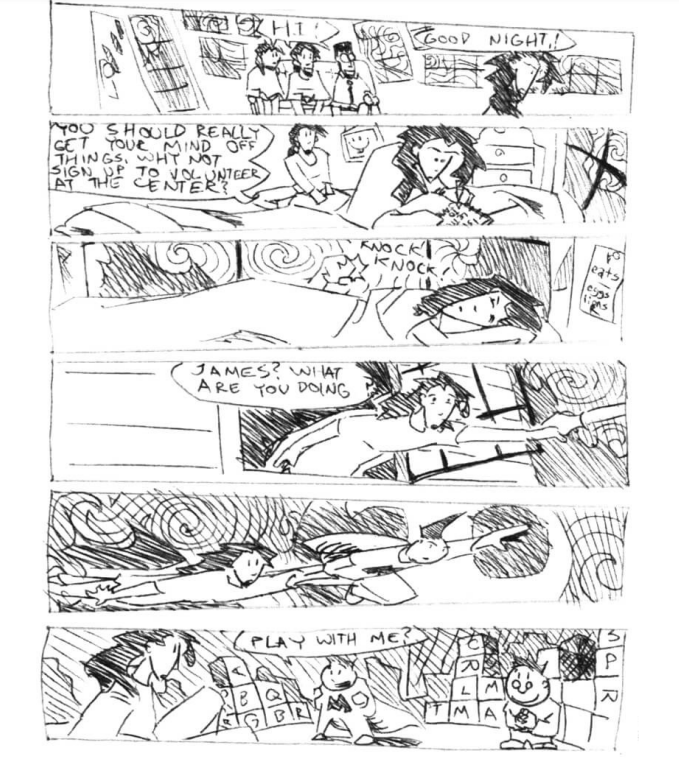
Amalia, diary 2 opens with intense worry over Maggie. Amalia’s been trying to ignore the obvious or excuse it as a nervous stomach, but after reading an article in a teen magazine she’s realized that Maggie may have a serious issue. A lot of the early part of this is Amalia diving into Cyberspace and downloading materials to help her understand and approach Maggie. Soon, however, her own problem resurfaces: James, the abusive ex, is now morphing into James the creepy-crawler stalker. As with her original journal, there’s a lot of art & drawing in this one: Amalia finds it easier to draw scenes than write them out, and the boon for the reader is that we get to see facial expressions, that sort of thing. (Er…to a degree.) In happier news, VANISH is starting to recover from the loss of its guitarist Creepy Crawler Stalker Boy and about to play its first paying gig.
Maggie admitted that she’s talked to me too. She swore Dawn to secrecy, but she doesn’t mind if Dawn and I discuss her problem. “Let’s just keep it in the family,” she tells Dawn. Family. I guess that’s what we are. Families care. Stick together. Support and love each other.
And finally, we close round 2 with Ducky, who is about to have adults back in his life. The parents are returning from Ghana, meaning his college party bro Ted can no longer destroy the house with his buds. And maybe, just maybe, Ducky can find some adult support for everything going on in his life, which is a bit much. You know, the one friend transforming into a Cro-Magnon, the other going down the lonesome road of drinking and depression, another friend dealing with a dying mom — all that. Plus, you know, high school. Except…whoopsie, they’re going back in a couple of weeks. Ducky, while being the supportive big bro & taxi driver, is struggling himself, and the girls are picking up on it — so much so that they try to ambush him with chocolates and flowers.Things bottom out when Ducky encounters Alex in another suicide attempt, one that can’t be excused as an accident– but the good news is now that Alex’s problem has become obvious to someone besides Ducky, Alex can get the help he needs and Ducky is no longer along in the burden. There are strong similarities between Ducky and Amalia’s diaries in this round — both of them sharing information with the reader on recognizing anorexia and depression, and help for talking to those with the issue, not to mention both characters being alone in being their friend’s support but then finding relief.
Quotes:
OK, nothing you can do now. Except CLIMB. Try to enjoy it. The way you used to. It’s the only athletic thing you and Alex were ever good at. Just make sure the ropes are secure and the pitons are tight. And TRUST him. You have to. The rocks are pretty steep. One false move, and you could be in serious trouble.
“Ducky, are you OK?” Amalia asks. “Yup. Fine.” “Do you need to talk?” You’re so preoccupied, you don’t hear the words right, most specifically the word YOU. Somehow you’re hearing HE, meaning Alex, and you reply, “He does, really badly. But I think he’s stopped seeing his therapist.” Amalia’s looking at you weirdly. “Not Alex. You.” You laugh and say no, not me, not Good Old Ducky, I don’t need to talk.
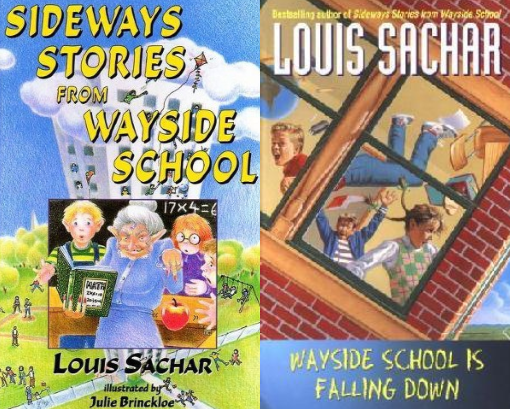
Wayside School was, I believe, my introduction to absurdist writing, and Sachar was a master at it in the realm of kiddie-fic. Imagine a school built sideways: instead of being 30 classrooms in a single-story campus, it’s a thirty-story skyscraper with a classroom on each floor. That’s Wayside High, and its residents are even screwier than the school. In each of the first two books (Wayside High Under a Cloud of Doom being somewhat different), we visit each student in Mrs. Jewls’ class in turn — at least, once mean Mrs. Gorf, their original teacher, does the class a favor and gets herself eaten by the janitor, Louis. (Louis isn’t a cannibal, it’s just that Mrs. Gorf had been tricked into turning herself into an apple, and she looked so shiny and red…) Most of the kids are extremely memorable, especially Sammy who is a dead rat pretending to be a child by wearing an abundance of coats. As that description implies, this is not a normal book of school stories. There are plenty of things that are “real” — Paul’s constant temptation to pull Leslie’s pigtails, the fight for the “good” equipment at recess, that sort of thing — but even the real elements have a spin on them. The quality of a kickball, for instance, depends entirely on its color, and in one story a girl who forgets that it’s Saturday and comes to school is interviewed by mysterious G-Men who want to know why. (The G-men appear to dwell in the basement and make an appearance every book.) And then there’s Ms. Jarves on the 19th story, who — as everyone knows — doesn’t exist. This is a running joke: one student who is inexplicably invisible stumbles into the 19th story, and in another an errant kickball strikes between the 18th and 20th stories and promptly disappears. Enjoyment for the reader is doubled by Sachar have the characters be aware of the absurdity to some, like when Rondi realizes she’s being complimented on clothes she’s not wearing and starts doubling down on it — and another kid realizes she can use Mrs. Jewls’ “no dead rats in the classroom” policy to get to recess in time quickly enough to get a green ball, by pretending to be a dead rat. When I looked for a copy of these, I found an omnibus series that also included Wayside School Gets a Little Stranger. I can’t remember if I’ve read it or not, but the substitute teacher with a third ear seemed vaugely familiar. Of the three, I still enjoy Sideways Stories the best, despite Falling Down being my first exposure to the series.
Coming up: edutainment, books boys aren’t supposed to read, and more California Diaries. That’ll do the week, I think..
Quotes:
Allison stood up. “I’m not a monkey,” she said. “I’m a girl. My name is Allison. And so is everybody else.” Mrs. Jewls was shocked. “Do you mean to tell me that every monkey in here is named Allison?” “No,” said Jenny. “She means we are all children. My name is Jenny.” “No,” said Mrs. Jewls. “You’re much too cute to be children.” Jason raised his hand. “Yes,” said Mrs. Jewls, “the chimpanzee in the red shirt.” “My name is Jason,” said Jason, “and I’m not a chimpanzee.” “You’re too small to be a gorilla,” said Mrs. Jewls. “I’m a boy,” said Jason. “You’re not a monkey?” asked Mrs. Jewls. “No,” said Jason. “And the rest of the class, they’re not monkeys, either?” asked Mrs. Jewls. “No,” said Allison. “That is what we’ve been trying to tell you.” “Are you sure?” asked Mrs. Jewls. “We’d know if we were monkeys, wouldn’t we?” asked Calvin. “I don’t know,” said Mrs. Jewls. “Do monkeys know that they are monkeys?” “I don’t know,” said Allison. “I’m not a monkey.”
“Boy, this is just great,” thought Calvin. “Just great! I’m supposed to take a note that I don’t have to a teacher who doesn’t exist, and who teaches on a story that was never built.”
Mrs. Jewls got very angry. She wrote Rondi’s name on the blackboard under the word DISCIPLINE. “The classroom is not the place for jokes,” she said. “But, Mrs. Jewls,” said Rondi. “I didn’t tell a joke.” “Yes, I know,” said Mrs. Jewls, “but the funniest jokes are the ones that remain untold.”
“The computer will help us learn. It’s a lot quicker than a pencil and paper.” “But the quicker we learn, the more work we have to do,” complained Todd
He looked around at his classmates. “Doesn’t anybody think I’m weird?” “No, you’re not weird!” said Sharie. “I’ll tell you what’s weird. What’s weird is bringing a hobo to school for show-and-tell. I’m the one who’s weird.” “That’s not weird!” said Bebe. “What’s weird is telling everyone you have a brother when you don’t. I’m the weirdo!” “You call that weird?” exclaimed Stephen. “I’m weird. Who else would choke himself just to look nice?” “That’s not weird,” said Jenny. “That’s normal. Try reading a story backward. That’s weird. I’m the weird one in this class.” “That’s a laugh!” said Rondi. “If you’re so weird, then how come you never asked Louis to kick you in the teeth? I’m the one who’s crazy!” “No, that’s not crazy,” said Todd. “I’ll tell you what’s crazy. What’s crazy is that we all go to school on the thirtieth floor, and the bathrooms are way down on the first!” Everyone agreed with that, even Mrs. Jewls. Benjamin shook his head. What a bunch of weirdos! he thought. Then he smiled. He felt proud to be in a class where nobody was strange because nobody was normal
Dana raised her hand. “I learned about exaggeration,” she said. “It was all my teacher ever talked about. We had like ten thousand tests on it and the teacher would kill you if you didn’t spell it right.” “That’s very good, Dana!” said Mrs. Jewls. “You learned your lesson well.” “I did?” asked Dana.
Dana walked to Mrs. Jewls’s desk. “I can’t think of anything that rhymes with pink,” she complained. “I’m sure you’ll think of something,” said Mrs. Jewls. She winked at her. “I can’t think,” said Dana. “My mind’s on the blink. I’m no good at poetry. I stink!” “Just keep trying,” said Mrs. Jewls.
“How do you know?” asked Leslie, although she sounded like Paul. “And how’d you know to smash a pepper pie in Mr. Gorf’s face “I wasn’t exactly sure,” explained Miss Mush. “But when I came up the first time, I heard Kathy say ‘Have a nice day.’ So, either Kathy had decide to be nice to me, or Mr. Gorf was a mean teacher who sucked children’s voices up his nose.” She shrugged. “I just didn’t think Kathy would be nice.
Miss Zarves taught the class on the nineteenth story. There is no nineteenth story. And there is no Miss Zarves. You already know all that. But how do you explain the cow in her classroom?
I was going to do a big Sachar post, but realized it would get…erm, unwieldly. Going to seperate Marvin and the Wayside kids up!
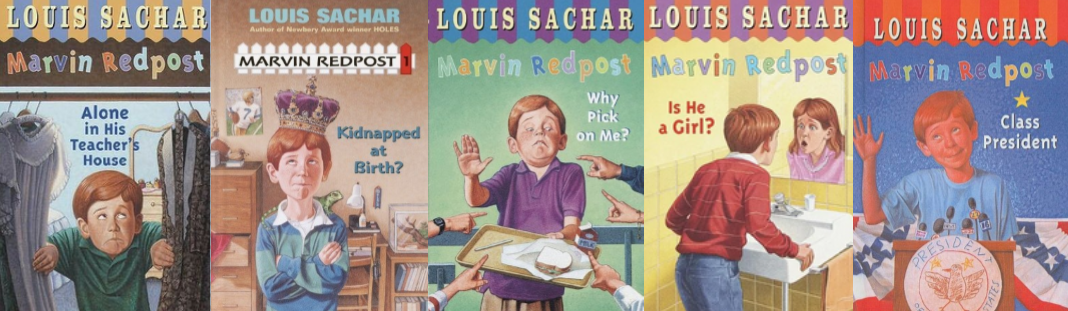
Marvin Redpost
When straining the ol’ cranium for books I was reading in the nineties, an image wafted before my eyes and disappeared into the breeze. It was a boy with with red hair, and a ….red fence. No, A red post! Marvin Redpost. I couldn’t remember much of anything except the first book involving Marvin thinking he was an abducted royal prince, but that was enough to induce ebay and Amazon to begin burping up book titles.
Abducted at Birth begins the series, with poor Marvin forced to scour the news for an article to share with the class. He learns of a royal prince who was abducted at birth — his same age, with his same red hair and blue eyes. No one else in his family has red hair and blue eyes. Maybe he was switched at birth! Writing down a phone number from a TV ad, Marvin calls the King and arranges for a blood test — but interestingly, when he’s a possible match (very possible, he has O- blood) and is sitting for a more in-depth HLA test, he decides he couldn’t possibly be the abducted prince because he doesn’t speak with the king’s funny accent. Reading this as an adult I was mostly amused by his parents’ deciding to play-take him seriously. Marvin was lucky to have parents with such good senses of humor.
Alone in His Teacher’s House sees Marvin, regarded by his teacher as responsible, asked to feed and walk her dog while she’s on vacation. Sachar has a little fun with the mystique kids have (had?) for teachers — he’s surprised to find her living in a normal house, and acting like a normal person. Unfortunately for Marvin, her dog is rather old and will go on to that great prairie in the sky during his tenure, leading to constant anxiety and fear because he has no way to tell her — she didn’t leave a phone number!
Marvin and the Class President (1999) is not about Marvin deciding to run for class president, as you might expect, but rather his classroom being visited by the president, who wants to talk to the class about being good citizens. The students are asked to give him questions (why, no, we’re not getting into another war soon, I never heard of al-Queda), and there’s a televised event. Marvin is so distracted by all this he forgets he was supposed to go shopping with his mom, and gets fussed at until they see him on TV with el presidente. I don’t think I read this one as a kid: I would have remembered having to look in the dictionary to find out what a “bar mitzvah” was.
Is He a Girl? is a silly little story about Marvin being told by one of his female classmates that he’ll turn into a girl if he licks the outside of his elbow — which he doesn’t believe, and yet keeps sneakily trying to do, out of the same curiosity that leads us to touching wet paint. After he gets tangled up his sheets, he accidentally does kiss it, and then tosses and turns all night having dreams about going to school and realizing he’s in a dress, that sort of thing. When he does go to school, he keeps interpreting any thought and feeling through the lens of “AM I TURNING INTO A GIRL” — growing paranoid if he notices a girl’s hairstyle as being cute, or wondering what different styles would look like. These days the book would be read far more differently, of course, instead of Sachar having fun with stereotypes about girls being smarter, that sort of thing, as well as mocking the superiority complex that both boys and girls have at that age. (And which persists in some adults!)
Why Pick on Me is….well, it’s a kid’s story. Marvin is accused of picking his nose, is subsequently bullied by it — doubly insulting because his two best friends know he didn’t pick his nose but are going along with it because they’re cowards — and then figures out a way to turn the tables.
The Redpost books were extremely light reading, to say the least, and not as complete fun as the Wayside books, but I appreciated Marvin’s character, especially his befriending the class pariah after he began stressing out over who he himself was.
WHAT have you finished reading recently? For “real” reading, I just finished Star Trek: The Higher Frontier, a TOS-MOVIE era novel. I also read three books in the Marvin Redpost series for Blast from the Past.
WHAT are you reading now? Halfway through Family Unfriendly, which examines different aspects of American life that are inimical to families (including social media abuse and suburban sprawl). Also finishing the Marvin Redpost books (they’re super easy, barely an inconvenience).
WHAT are you reading next? More Sachar — I appaarently didn’t spotlight Wayside School last year, so I’ll be re-reading a couple of its books. More seriously, there’s The Anxious Generation, which I need to commit to and finish.
Sorry, this isn’t Blast from the Past related, but Lower Decks is still two weeks away from airing and Strange New Worlds won’t return until 2025. Had to scratch my Trek itch. Got some Louis Sachar coming!
On Andor, the polar compound of the spiraling-to-extinction Aenar subspecies is attacked and its people savagely murdered, leaving only a few score of the Aenar remaining. The Enterprise is tasked with ensuring the remaining Aenars’ safety, as well as working with planetside authorities to determine who would perpetuate genocide against so peaceful a people. When the Enterprise itself is attacked by a small group of armored warriors, though, Kirk and Spock realize there’s more here than meets the eye: this is no disgruntled Andorian xenophobes trying to eliminate a sub-species they regard as inferior and undesirable, but an unknown party apparently targeting people who are “espers”, or who have some psychic abilities. The Higher Frontier is an early movie-era book, building off of events from The Motion Picture, but before more characters began leaving the Enterprise: Kirk still commands the Big E, Spock is still his right hand, Chekov is still holding down security and hasn’t yet shipped out to The Reliant. Bennett brings back Dr. Miranda Jones, featured in “Is There in Truth No Beauty“, one of the many TOS episodes I had completely forgotten about. Here, she’s a powerful psychic human bound to another intelligence, and she’s not alone in her gifts. Since the V’GR incident, humans who identified as espers are not only growing in number, but they claim their gifts are growing in prowess as well, so much so that they begin to identify as New Humans. There’s a lot in here to make lorists happy, as Bennett includes characters like Commander Thalin, who was the first officer of the Enterprise in that Animated Series alternate-universe story, as well as Xon, who would have been the Spock of Star Trek: Phase II had it ever reached filming. (And Saavik!) The plot also does a fair bit of cleaning and scene-staging to make parts of the red-sweater movies make sense, like why there are manual torpedos on the E and why Kirk is an admiral but apparently has The Enterprise attached to Starfleet Academy. (The two are related: the Academy wants officers trained in manual systems as backups.) Bennett is one of modern Trek’s strongest authors, especially on the science front, so I enjoyed this for the most part, especially the way Bennett deals with the TOS espers who have no presence in later shows, but thought the ending dragged out a bit.
Highlights:
Despite what has been rumored about me among Vulcans, I have not renounced logic or discipline. I have merely come to recognize that emotion is an integral part of the cognitive process, and it is thus logical to accept its presence and employ it—to integrate it with one’s reason rather than existing at odds with a part of one’s own being.”
Spock took a step closer to T’Nalae. “You say that you boarded the Enterprise to learn from me, Specialist. What I have to teach you may not be what you expected to hear … but that is the nature of true learning. I request that you ponder on that until we speak again.”
McCoy shook his head. “Unbelievable. An emotional Vulcan who’s having problems with telepathic humans. Did we cross over into an alternate universe again?
Spock tilted his head skeptically. “In my case, V’Ger provided only a negative example. It revealed to me that an existence of pure logic without emotion was sterile and purposeless. I came to understand that it was better to seek a synthesis of the two.” “And you seem to have succeeded.” “It is still a work in progress,” Spock demurred. “But so is life,” Kirk ventured to add.
Kirk wondered why Starfleet’s quartermaster corps could never seem to stick with a uniform design for longer than a single five-year duty tour. He kept coming back home to find himself behind the fashion curve.
“Sir!” Chekov called as a detection alarm sounded. “That dimensional rift you wanted? It’s opening nearly on top of us!” Why do I never get service that fast when it’s something good? Terrell wondered.
The auditory ambience of the Enterprise’s bridge had evolved over the decades that Spock had served within its various iterations, as equipment function had advanced and aesthetic tastes in auditory status indicators had evolved. However, one component of that ambience that had remained irritatingly consistent over the majority of the past fourteen years had been the grumblings of Doctor Leonard McCoy. The doctor rarely entered the bridge without promptly making his presence known through distracting and generally uninformative banter.
Today’s TTT is “Planes, Trains, and Automobiles”, which — no pun intended — is definitely in my wheelhouse. As longtime readers here know, transportation is a frequent nonfiction visit of mine, possibly because I come from a family of truckers and military flyboys. Here are some of my favorite transport reads!
But first, a tease!
Spock took a step closer to T’Nalae. “You say that you boarded the Enterprise to learn from me, Specialist. What I have to teach you may not be what you expected to hear … but that is the nature of true learning. I request that you ponder on that until we speak again.”
McCoy shook his head. “Unbelievable. An emotional Vulcan who’s having problems with telepathic humans. Did we cross over into an alternate universe again?
(Star Trek: The Higher Frontier, Christopher L Bennett)
Straphanger: Saving Ourselves and our Cities from the Automobile, Taras Grescoe. A study of the transit systems of thirteen cities, some traditionally urban and some auto-oriented, to find out what works and what doesn’t, and to see how technology is making systems run more seamlessly — like using the same card to get train access and rent bicycles at the train station!
The Box, Marc Levinson. A history of the standarized shipping container and its massive effect on cities and the global economy. Interestingly, the container was designed by a trucker.
Completely unrelated but it’s nostalgic music from the same period
Don’t wake me up Don’t wake me up if I’m dreamin’ California dreams Just let me lay in here in the Sun Until my dream is done…
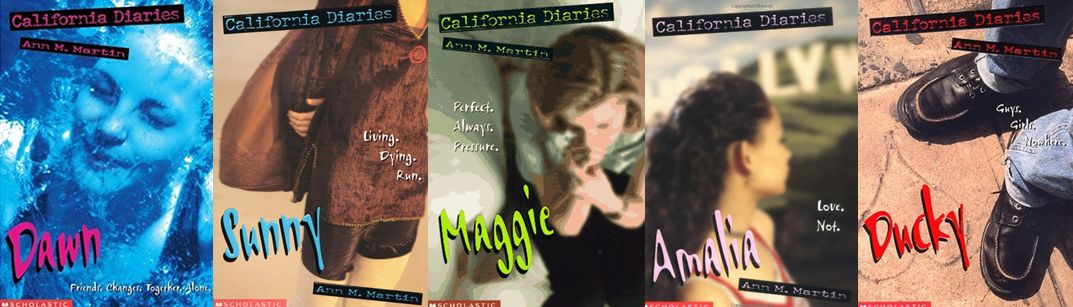
Years ago when the world was new and dinosaurs walked upon the face of the Earth, I saw a novel with an interesting cover and took a look. It proved to be a fictional diary, printed in a font that resembled handwriting — and it was part of a series including different characters who all had their own fonts! I was immediately fascinated, and as I progressed throughout the series over the years I loved the way Martin incorporated her characters’ creative sides into the journals, like Maggie’s song lyrics and Amalia’s drawing. The series as a whole takes us through a year in the life of five teenagers: four teenage girls (Dawn, Sunny, Maggie, and Amalia) as well as one slightly older teenage boy, “Ducky”. Each novel covers about a month in the next year of their lives. Each character has their own private struggles, as well as drama they experience together as they begin facing the challenge of growing up. I did an overview of the characters in a post a few years ago, when I was planning a re-read. Because the series consists of three rounds of journals in the same year, I’m going to re-read and review them one round at a time. Be forewarned: I read this series multiple times in high school, and am attached enough to the characters that I made versions of them in The Sims, so I’m not exactly going to be Mr. Critical Crankypants. This is more like “Family Photo Album” time, with the most serious criticism being “Oh, god, what is she wearing? They thought that was COOL?!”
Dawn introduces the series with Dawn Schaefer (yes, the Babysitters Club Dawn Schaefer), who is from a broken home and is struggling with getting used to her new stepmother, Carol. Dawn and her friends’ middle school building is so overcrowded that her grade is being shifted into the high school building. Suddenly, the eighth-grade “Rulers” of the school are the new kids on the block. As exciting as this is for some, some of Dawn’s friends are intimidated by it — and the high schoolers definitely don’t like a bunch of little brats suddenly wandering around their school. This leads to a substantial hazing incident that Dawn and her friends are rescued from by a tenth-grader named Ducky, leading to their becoming unexpected friends. This incident sets the stage for the series, introducing Amalia Vargas and Ducky to the established friendship of Dawn, Sunny, and Maggie. Dawn is the most grounded character in this series, her only rival for introspection being Ducky. She’s most cognizant of the changes the girls are going through — not just growing up, but of what’s happening to them in life. This is especially obvious with her BFF Sunny, who is not coping well with having a mother with cancer. Dawn is attached to Sunny’s mom, so she has her own sorrow to deal with as well as the uncertainly of how to deal with an increasingly unstable Sunny. Does she take Sunny’s weird behavior in stride out of love, or push back — out of love? That’s not to say Dawn doesn’t have her problems, especially coming to terms with her stepmother Carol who she regards as immature and meddlesome — not to mention pregnant, which is extra weird because it means she has a half-sibling on the way. And oh, Carol won’t tell her dad about it for some reason. Grown-ups, so weird, am I right?
Quotes:
I know why the teachers make us keep these journals, apart from the fact that this activity is a healthy habit, a creative outlet, good writing practice, and all that. The teachers never say so, but (since they were all kids themselves once) I bet they remember what it’s like to be consumed by feelings and to need an outlet for them. Or maybe that’s not a kid thing. Maybe it’s just a human thing.
We drove out to Jill’s house with Jeff making annoying duck noises the entire way. He was sitting in the front seat wearing a Donald Duck mask. (I WAS WRONG ABOUT THE ABSENCE OF DUCKS!)
Sunny is Dawn’s best friend, but she increasingly doesn’t live up to her name. For good reason, too: her mother is dying of lung cancer, and Sunny is struggling to deal with that. At the same time, her dad is attempting to renovate and run his bookstore, and she’s expected to pull more than her weight at home. The Sunny who appears in Dawn’s story is different than the Sunny we see in her own diary, because Sunny is performing. Sunny in Dawn’s story is outgoing, spunky, rebellious. Sunny herself is….anxious, depressed, angry. Despairing, and in denial about it. She wants to be the good daughter, but it’s all so emotionally overwhelming — she’s torn between her love for mom and her desire to escape those feelings so there won’t be so much pain, not to mention the grown-up responsibilities she’s saddled with while her mom is in the hospital and her dad is distracted by both the stricken spouse and his bookstore renovations. In this book, she finds escape by cutting classes to go to Venice Beach, where she falls in love with an older teenager who has dropped out and run away from his own home. Fortunately, things don’t go as badly as they could have gone, but it’s obvious to the reader that Sunny is NOT ok.
Quotes:
I just read what I wrote yesterday. I’m glad I’m not my friend. I would drive me crazy.(Maggie & Dawn: Oh, Sunshine, you have no idea.)
I’m sweating like a pig, bouncing down the street on a public roller coaster as I sit behind a fat man in a Hawaiian shirt eating a tuna salad sandwich. A lot of it is actually on the shirt, blending in nicely with the design. (This is one of those lines that’s lived rent-free in my head for 25 years and I have no idea why.)
This is not a public affair. Honestly, I am so sick of all this. I AM SICK OF… Hospital visits. Hair in the sink. Medicines all over the house. Know-it-all doctors who are always wrong. Running out to the drugstore all the time. Not being able to leave home on weekends because Mom can’t travel. Visitors who act as if they’re paying last respects and cry as they drive away in the car. I DO NOT NEED THIS. If I keep my chin up and act happy, I feel guilty. If I worry too much, I lose sleep. I need to get away.
Today, for instance. 90 percent of the guys showed up in T-shirts with flannel shirts over them. It’s like, the uniform. Ducky? A bowling shirt, cool sneakers, and green overdyed jeans. (I absolutely remember this uniform and will confess to wishing I could wear it.)
Palo what? Sunny who? For today, that world and that person don’t exist. I am free.
Optimism is such a strange thing. It’s like a beautiful ice sculpture on a clear, sunny day. Everything seems perfect, but no matter what you do, the sculpture starts to melt.
“Sunny…why?” It was a simple question. But just thinking about an answer was like preparing for a major war. I didn’t have the energy to do it
Maggie Blue is the daughter of a movie producer (Dad) and a drunk (Mummy dearest). At her softest, she writes song lyrics and dreams of being a veterination, but when she’s being hard on herself — most of the time — she’s a perfectionist, and overperformer, and (as we learn through the series) a budding anorexic. To be honest, Maggie is the character I bonded with least in the series, despite loving how Martin incorporated her song-writing into the body of the diary. Maggie’s first book is largely about finding a spark of rebellion and doing something off-script — joining a rock band and participating in the Battle of the Bands, skipping her big-shot father’s premiere in the process — with aide from Ducky, who I realized largely exists in the girls’ journals to taxi them around. Nevermind his private heartbreak over a best friend who’s depressed and heading for suicide.
“Sorry,” he said. “Not in the orchestra either. But we do have a spot for a sousaphone player.” That sounded cool. I asked what that looked like. He pointed to a tuba. Thanks but no thanks. (Know that feeling. There’s a reason I switched from Band to Computers between seventh and eighth grade.)
“Look, if I didn’t worry, my grades wouldn’t be so good,” I explained. Sunny groaned. “Yeah, your average might drop to a 97.”
I know that voice. It’s there when I take my exams. When I turn in a paper. When I play a piano piece. When I dress myself in the morning. Always. It’s me. The voice of Maggie.
It was dawning on me how strong that voice is. No, not just strong. More than that. It runs my life.
But at that moment, it wasn’t. Because another voice was telling me something else. That the mistakes didn’t matter. That winning the contest would be nice but who cared? That I’d done something worth doing. Something that I wanted to do. Not for grades. Not for my permanent record. Not for Dad or the five-year plan. For me.
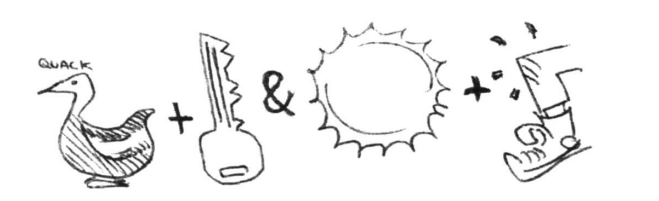
Amalia Vargas is new to Palo City, and to Vista. She didn’t grow up with the other Vista girls, but transferred into its class. She’s part of the reason why they were forced to move into the high school building, actually: Vista is such a good school that it attracted too many kids! Amalia has a sister, St. Isabel, who works for a women’s shelter; Amalia also manages a garage band named VANISH, and is maybe in a relationship with one of its principals, James. She’s not really sure about the status of the relationship: James is certainly acting like they’re an item in terms of jealousy, but they’ve never talked about their feelings for one another. Amalia and Maggie’s journals are both unique in that they incorporate other media into themselves: in Maggie’s case, hand-written song lyrics; in Amalia’s, drawings. Witness:
(Her way of mentioning she saw Ducky and Sunny in line.)
On Christmas Day, Amalia accompanies St. Isabel to the women’s shelter and becomes attached to one of the women’s kids, Mikey, which…will lead to plot-happenings, including pain and growth and all that. As a plus, working with battered women will come in handy when Amalia realizes oh, her boyfriend is an abusive, manipulative, jealous ass who will one day probably be responsible for creating future clients of women’s shelters. Amalia’s journal is one of the more serious of the lot, dealing with abuse and abduction, and when I was reading this at age…12, 13? That was all new to me. This was not a world I knew anything about. Amalia was an eye-opener for me, as was Sunny.
Quotes:
As I’m taking my books out of my locker, Maggie is singing a new lyric she wrote for Vanish. It’s absolutely beautiful. Something about a sad, lonely girl who spends her life only doing what everyone else wants her to do. As I’m listening, my heart is breaking.
Maggie’s songs are so personal. she’s struggling, Nbook. She’s really learning to break away from her Daddy’s-good-little-girl image. I wish her parents were more like Mami and Papi, who don’t put too much pressure on us. Maggie may have all that money, but what’s the point if she’s not allowed to be herself, right?
“Yo,” James calls out, gesturing to me with his head. As I walk toward James, I hear Ducky mutter, “I should try that sometime. So much more efficient than ‘would you come here, please?’” “What was that?” James snaps. (Boy, James should try a little tenderness. And yes, Ducky is named after the Pretty in Pink character….)
I am a total space cadet in class, Nbook. I can’t concentrate. I’m worrying about everything. Whether it’s really okay to cut math. Why James is so moody. What’s happening with Mikey. My school notebooks are filling up with doodles instead of classwork. On top of that, I can’t get Maggie’s lyric out of my mind. I think of the sad girl in the song, the girl based on Maggie.
But it’s not Maggie I’m picturing. I’m seeing someone else. Another girl who does things for others. Who thinks of herself second or third or fourth, but never first. Someone with the initials A.V.
No, Nbook. He didn’t hit me. But he almost did.
…I love this series. There’s a reason it’s survived in my stacks when Boxcar Children, Animorphs, etc did not.
We end round one with Ducky, Oh, Ducky, Ducky, Ducky. Ducky was my invitation into the California Diaries series. Would I have met these girls, considered their stories, had I not encountered them first through Ducky? I don’t think so, to be honest. Sure, when I was book-starved I had no compunction against reading my sisters’ Sweet Valley High books, but buying girls’ books? With an allowance that could easily go to WW2 memoirs, donuts, and Archie Comics double digests? Ducky is the outlier in CD, being both The Resident Dude and being older than the girls. He is….a character. Ducky is his own man, he follows his own script. He’s creative, compassionate, whimsical. He’s like the character who inspired him but without being love-struck for Molly Ringwald. Although Ducky will spend a lot of the series helping the girls through their problems by being Ducky McRae, Omnipresent Uber Driver, he has own problems as well. His parents are off in Italy, scouring Pompeii. He and his brother are living alone, but his brother is a college boy and does not give a rip about anything other than chasing skirts and chasin’ shots. Ducky’s two best friends, Jay and Alex, are…..um, kind of sucking at being friends. Jay has decided to become an uber-jock and sell his brain and soul and identity toward being a stereotype, and Alex has decided to drink himself to death. Ducky is heartbroken over both, and he’ll spend a lot of this book realizing that Jay is a doofus who just needs to be ignored until he grows up, while Alex is the one who really needs Ducky’s attention — not that said attention will help, because Alex is the one who has to decide to fight for himself. Ducky can’t make him want to live. As a dude who…also did not fit in, either in the 1990s or now, I resonated with Ducky immediately, and re-reading him after all these years I love him more as a character than ever. Despite how lovely Ducky is as a person, and a character, some pretty awful things happen in this book — most prominently, one of his friends attempting suicide.
Quotes:
A year ago, McCrae, the Cro Mag comments would have killed you. A year ago, you worried about their opinions. You wanted them to be your friends. HOW many years did it take to realize THEY WERE GOING TO MAKE FUN OF YOU NO MATTER HOW HARD YOU TRIED TO BE LIKE THEM? As if you ever could. So…if you can’t join them, do exactly what they hate. Like dance past them, singing “all you need is love,” and toss them a flower—then watch the look on Marco Bardwell’s face the moment after he catches it and realizes his apelike friends are NEVER going to let him live it down. Ducky, you may be strange but you are a genius.
At least Sunny KNOWS who she is. You can tell by looking at her—the weird hair, the funky layered outfits, the body piercings or magnetic studs or whatever those things are. Even her opinions—loud and clear even when they’re wrong—all of it says THIS IS ME, SUNNY WINSLOW, TOO BAD IF YOU DON’T LIKE IT. Dawn’s like that too. She can obsess a little about the environment and global warming and health foods and yada yada, but you always know where she stands. And Maggie. Serious, intense, attitude-of-the-month Maggie. Committed punk rebel for awhile, preppy good girl until that wore off, star rock singer after that. Always changing but STRONG, never really DRIFTING. Amalia Vargas is another one. Sharp, full of opinions, and so COMMITTED to her artwork. They don’t seem three years younger. They’re such personalities. Definite, clear personalities. I wish I felt like that. I never know how to be. I know how NOT to be. NOT prep. NOT grunge. NOT jock. NOT hightech nerd. Step right up, folks—meet Ducky McCrae, Palo City’s number one NOT! Make your own guess about what he is. EVERYBODY else has an opinion. (Um…thanks, Ducky. I hadn’t read any of the other books so it was nice to get the other characters all precis’d for me like that.)
What HAS Alex become? When I gave him that flower this morning—nothing. No laugh, No wisecrack, no response at all. As if this kind of scene happened every day and he was bored with it. Alex the morph. This is NOT the Alex I grew up with. It’s as if some alien ship came down and sucked out his soul. I stared at him today at lunch, while he wasn’t looking. The same way I used to when we were kids and I’d try to send an ESP message, and most of the time he’d notice I was staring and sometimes he’d even GET the message. And we were convinced we could read each other’s minds, because we always finished each other’s sentences and we liked the same movies and books and CDs and TV shows, and we could look at each other—just look— and both burst out laughing. No one knew why, but WE did, because we’d both be thinking of EXACTLY THE SAME THING. And sometimes at home I’d reach for the phone to call him, and the phone would immediately ring, and it would be him. And we’d talk and talk until Mom would get angry and I’d look at the clock and see that TWO HOURS had gone by and it felt like two minutes. And that person is gone gone gone, lost somewhere between 9th and 10th grade, replaced by a total stranger who doesn’t know I’m alive.
I SHOULD know. It is TOTALLY WEIRD to be 16 and never kissed like that. It is TOTALLY WEIRD to hang out with 13-year-olds. It is TOTALLY WEIRD to live alone in a big house with your brother and your combined filth. Isn’t it? Maybe THAT’S the answer to “WHAT AM I?” TOTALLY WEIRD.
Sunny says, call Jay. I say she’s nuts. He should call ME! Sunny says I’m a guy. He’s a guy. Guys TALK TO EACH OTHER after they fight. They argue and explode and say things girls would never think of saying to each other, and then it all blows over and they play basketball. I tell her I hate basketball. She doesn’t find that funny.
Just got back from the hospital. The smell of the place made you nauseated. Not to mention all the WHITE—white uniforms, white walls, white sheets. It all gave you a headache. But when Sunny Winslow says, “Are you coming to the hospital with me after school or what?” you go with her. Somehow, when SHE demands a ride, you don’t feel like you’re being taken for granted. Unlike some other friends who will remain nameless (his initials are Jay Adams). Plus, you know she’s feeling nervous and upset about her mom, who has lung cancer. As you walked through the hospital corridors, she took your arm and muttered, “I hate this.”
You didn’t know what you were supposed to see. But you knew Sunny needed a lot of yeses and that’s-okays, so you gave them to her. Finally, when you were outside, you put your arm around her and she started laughing. When you asked what was so funny, she just said, “I never cry,” and then burst into tears. You hugged her. You and she rocked back and forth in the parking lot, cars whizzing around you. You realized something then. Something you should have known awhile ago. Why worry about Alex and Jay? You have other friends who need you.
Idea Over Breakfast Here’s a thought: Alex is quiet and miserable. Sunny is loud and miserable. They might actually get along. Maybe they should meet. Upon Further Reflection Over Lunch What are you, nuts? (Sunny and Alex do meet and do get along, if I remember. XD)
The Secret to Contentment, According to Jay Adams: Meet a Girl. The Secret to Contentment, According to Ducky McCrae: worry about how you look in the morning, because even though you can’t bring yourself to wear boring conservative clothes, you don’t want to risk setting off the Cro Mags. And make sure you don’t bounce too much as you’re walking into school, because Marco the Cro Mag king will say you’re flitting, which makes everyone laugh. If you survive THAT, you’re off to a good start, and IF YOU’RE LUCKY you’ll have a few laughs with your 13-year-old friends, the only ones who seem to appreciate you, and when you go home, you’ll find that your brother has not left the milk out of the fridge all day and has actually bought a few groceries and maybe run a load of laundry with some of your stuff in it. THAT’S contentment. And that’s pathetic.
Sunny listened. She did not hang up on you or scream bloody murder. Instead, she said, “I don’t know what you’re talking about. I was calling to say thanks.” A joke, you assumed. But no. She was moved. By the GESTURE. She said that friends don’t always think of perfect solutions, but they try, and that’s what counts. She said her mom has a support group—and what were YOU doing but trying to find her a supportive friend? For a 13-year-old, Sunny is pretty amazing (I think this is what makes this series so great, because we’re not only seeing Sunny-as-she-is in the raw, we’re seeing how she presents herself to different friends, and realizing the truth of CS Lewis’ essay on Friendship, that different people bring out different parts of ourselves who would have never otherwise be seen. Ducky’s Sunny is not someone we can met in full in Sunny’s diary, or Dawn’s diary. Ducky’s Sunny is Ducky’s Sunny, just as D’s Stephen is different than R’s Stephen, or Stephen’s R is different than C’s R.)
The Cro Mags think I’m a sissy bookworm. My teachers think I’m a slacker. My 8th-grade friends look up to me and I let them down. My 10thgrade friends feel betrayed. I’M TRYING TO DO THE BEST I CAN, and my life gets worse every day. I CAN’T TAKE THIS. I need advice. I need to talk to someone. But who? Not Jay. He’ll just tell me I need a girlfriend. Not Ted. He doesn’t have time for me. He’s too busy figuring out creative ways to destroy the house. Mom and Dad are on the other side of the world. And Alex is halfway to Mars. Maybe Dr. Welsch has an opening. Ha Ha. Anyway, enough of this. I have to study Julius [Caesar]. “To be or not to be…” Or is that another play? Whatever.
So you joked with her and reassured her and told her she was great, but your heart wasn’t in it, because all you could think about were Alex’s problems and the Cro Mags and Jay and math class and Julius Caesar and Ghana and YOUR OWN DEPRESSING LIFE, but you told yourself not to be selfish, and you listened to Sunny go on and on, being sarcastic and complaining about her poor, sick mom, and even though you didn’t mean to be rude, you said, “At least YOUR mom is around.” Major, major mistake. Right away you wished you could take that back. You wished you could catch the words in midair, the way a frog uses its tongue to catch a fly. And Sunny was staring at you, her mouth open, and you knew you had just blown it. Your best friendship in the world, flushed down the toilet.
You look forward to coming back to a HOME. A HOME doesn’t stink. SUNNY has a home. You have a HOLE. She has a FAMILY. You have a What? What do you have?
Ted is flabbergasted. You know this because he came into your room this morning and woke you up, saying, “Ducky, I am flabbergasted.” You told him you’d be full of flabbergast too if your little brother had totally cleaned the house out of the goodness of his heart, without asking for so much as a dime.
You could get used to this. Today, friend of the Cro Mags. Tomorrow, who knows? Cigarettes, flannel shirts, and muttering with lots of one-syllable words. Ha. Ducky, you are SUCH a snob.
You have had some weird nights in your life. Driving the girls home when the upperclassmen trashed Ms. Krueger’s house and framed the 8thgraders. Tracking down Sunny on Venice Beach the night she ran away from home. This is weirder somehow. You don’t know why, it just is. So you sit and write. And here you are, still at it. Scared and exhausted. Worried. Why did he DO that?
Think, McCrae. Do what you have to do. DO THE RIGHT THING What seems like a lifetime later Did you? Did you do the right thing? Who knows?
I’m sitting here at 4:30 in the morning, so awake I could run a marathon, writing my brains out because I can’t talk to anybody—considering I’ve already broken a vow of silence, and Ted would be useless about stuff like this even if I COULD tell him, and Mom and Dad don’t like me to call Ghana —so all I CAN do is write, and that should be helping me, because PUTTING IT ON PAPER always makes thoughts clearer, and I’ve filled up a whole journal, wearing out my fingers, examining EVERY POSSIBILITY, dissecting, reasoning, spilling. And after all that, I should have an idea, I should know what path to take, I should have an UNDERSTANDING at least, and maybe a strategy. I’m not a stupid guy. I should have all of that. But I don’t. I really don’t know what to do. Except worry. And hope.
Ah, lord. I love Ducky. I love this series! It’s so good. The way Martin introduces us to these five different people and their emotional issues, and then bounces them off each other and makes us realize that perfectly good people can be awful to one another because they’re just so consumed with themselves they can’t think of anything else….it’s so realistic, so close to home. It brings St. Augustine to mind, his comment that we arecurved in on ourselves and cannot see any others. It’s a universal frailty. Saint or sinner, religious or otherwise — this is a pit we are all subject to fall into, and kudos to Martin for throwing a light onto it that we can appreciate in any context. Although I’m not a parent and can’t really appreciate the stuff contemporary kids are going through, in my naiviete all I can say is that I think this series holds up. Yes, today’s kids are going through different things. But human nature doesn’t change, even if society does, and a lot of the principal issues — kids trying to create their own identities, struggling with death and depression and things in life that suck — are still in effect. There are parts of this series that would be different if they were written today (lots of “SUNNY WHY ARE YOU SNAPCHATTING FROM VENICE WHEN YOU ARE SUPPOSED TO BE IN ENGLISH!!!!!!), I think the emotional core, the substance, is still true, still valid. Really glad I’m re-reading this series. It’s truly like revisiting old, cherished friends.
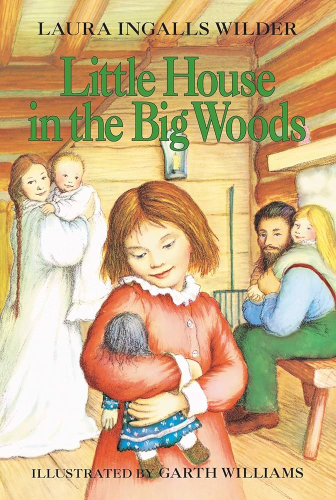
I have a persistent fantasy of living in a little off-grid cabin on the edge of the woods, a fantasy I suspect owes entirely to reading this as a child. It’s a memoir-in-novel form of the author, Laura Ingalls Wilder, growing up in the 1870s frontier — specifically, the edge of Wisconsin, in an area far from roads and houses and people. Although there is a store within a day’s walk, the Ingalls are by and large on their own, surrounded by a deep wilderness filled with bears, wolves, and game — with only their own skills, intelligence, creativity, and a single-shot rifle standing between them and death. Reading this as a kid, I think I was fascinated by how Laura’s entire life was made by hand, from scratch — everything from the starch for laundry to Pa’s bullets. This is described in full detail by Wilder here — tanning hides, smoking meat, butchering a pig, etc. Similarly impressive is the ‘poverty’ in which the Ingalls lived: little Laura’s sister had a baby doll to hold, but Laura had to make do with a corn cob wrapped in a blanket and her own imagination. Receiving her own doll — and an orange! — at Christmas is regarded as a wonderful boon. Of course, though they were money-poor by our standards, the Ingalls had a rich life: their animals, garden, and the bounty of the woods insured full larders, and her family life was cozy and supportive, if strict. Other aspects of frontier culture incorporated are traditional American songs, sung by Pa and his fiddle, and stories of the olden days. This was one of the most educational books I read as a kid: I remember being fascinated by learning about maple syrup tapping, and having to look in my dictionary for what “vension” was. Re-reading this was a pleasure, and I was amused at little memories that floated up, like Pa calling Laura his “little half-pint of cider half-drunk up”.







 Reading Freely