SciFi Prompt #4 — and, the worst novel I’ve read this year

Today’s SciFi prompt is “Little Blue Dot”, or books about coming and going from “this fragile Earth, our island home”.

Contact comes to mind immediately, and given that today is Carl Sagan’s birthday, I can’t imagine a better response.  Contact is a ‘hard’ SF read that’s very accessible to a popular audience: Sagan wanted to depict what a realistic first contact with aliens might be like, achieved through radio waves instead of LGMs floating down from the ethereal planes.   This is one I’ve read several times over the years, and the movie version of it is probably what made Matthew McConaughey one of my favorites – not because I liked his character, but because his questioning of technology and meaning rattled my cage a bit back in 2006, and then came Neil Postman!   The plot features a radio astronomer connected to SETI stumbling upon a signal which leads to  a machine being built and establishing first contact: I’m trying to skate all the way around the plot without revealing much,  but I read it fourteen years ago and it’s never left my mind.

And now, wish-fulfillment and cariacture disguised as a climate change novel!

Imagine The Turner Diaries, but with moral smugness added to the hatefulness. That’s The Lost Cause, a novel so execrable that it’s ruined the author for me. Doctorow has been a favorite SF author for a while now, in part because he’s written so many thoughtful SF novels that touch on politics & policy in the 21st century: Pirate Cinema, for instance, explored intellectual property, and Little Brother was great on the cyber-police state. This, however, is hyperpartisan and obnoxious, overwhelming any potential interest the nascent-solarpunk aspects might give it. The setting is Burbank, 30 years from now: politics have radically changed, with all guns being confiscated and the economy slightly socialized as part of a ‘green new deal’. Our main character opens the story by having to investigate an alarm on his school’s solar panels because an old man with a MAGA hat is destroying them. Why? Because he’s an Old White Guy and that’s just what they do, doncha know. The….story, such as it is, consists of the MC inheriting his Hateful Old White Guy Grandfather’s house and discovering that he has gold and guns, which the main character reacts to like he just found a stash of corpses and CP. Both the feds and grandfather’s old pards are very interested in the stash, especially since there are evidently enough guns (main character can’t even bring himself to say gun, he has to spell it out) to arm a militia. As the story progresses, the Old White Guys decide to violently rebel against the city’s plans to seize a neighborhood via eminent domain (i.e. theft) and build high-density apartments to house all the refugees coming in. The OWGs are not just bad, they’re comically bad, always hatefully against whatever the main character is for — whether that’s immigration, light rail, solar energy — and do stuff like lighting crosses and gassing a city. I suppose it’s par for the course given the polarization of these days, but it’s a shame given Doctorow’s previous thoughtful works: in Attack Surface, his heroine was someone who would have been the villain in Little Brother, but here the baddies are so thin and flimsy they don’t even merit being called strawmen. Hateful, moronic, and wholly un-interesting.

Doctorow needs to get outside, touch some grass, and maybe have a conversation with someone he disagrees with. I’ve never voted for the T-man, myself, but this depiction of his supporters is as ignorant and vicious as his opponents believe he is.

Posted in Reviews, science fiction | Tagged , , , | 8 Comments

The War of the Worlds as witnessed by Teddy Roosevelt

There came suddenly a blinding flash of flame from the pit, and
another and another, and the whole delegation met with a terrible instant death, forty souls in all. The fiery beam also ignited adjacent trees and brought down a portion of a nearby house; and all those who had survived the massacre fled the scene in the wildest of terror.
“So they are monsters,” Wells ejaculates fiercely, “and this is war between the worlds!”

This is one I didn’t mention in the launch post, because it was such a fun find that I wanted to surprise people with it. Wells’ War of the Worlds was set in England, but here the Martian attack was launched across the globe, and now an array of science fiction authors deliver descriptions of the Attack as experienced by Teddy Roosevelt, Pablo Picasso, Mark Twain, and others. Although it suffers a bit from not having a consistent timeline/universe (the two Paris chronicles are in direct opposition, which is appropriate for the riotous French), the variety of stories and voices is fun. Imagine a western invaded by H.G. Wells, or — a version of War of the Worlds that features John Carter on Barsoom! There’s also variety to the structure of the stories: while most are straight tales, others are composites (we learn of Teddy’s adventures in Cuba via a series of letters and journal entries), and one (Emily Dickinson’s) is a literary analysis paper. Because most of the starring characters are significant figures, there’s usually some mention to their work: H.G. Wells appears as a supporting character in someone else’s story, Albert Einstein’s investigation of a Martian machine inspires him to begin thinking of relativity, and so on. There also connections to historical events, like a European martial strike against the ailing Manchu empire in China being interrupted by the machines: the Manchus are overjoyed until they realized the lords from space are there to wreck everyone’s day, not just the Foreign Devils. Often the authors will try to evoke the style of their subject: the “Barsoom” story seems reasonably close to what I’ve read from A Princess of Mars, and I was amused at the idea of trying to marry those two different versions of Mars. (No mention of Lewis’ “Malacandra”.) The authors have some fun with their historic settings: the remains of the grand exposition held in Paris (including the Eiffel tower) are utterly wrecked, and in another story Jules Verne and another character argue over its aesthetic merits. Alas! How will movie-watchers in the future know they’re in Paris without that shot of the city? And of course, there are the in-jokes, like the story featuring Tolstoy being called “Resurrection”, in which a young Stalin appears — though only the history-obsessed who know his original Russian name will recognize him. There’s a lot of fun to be had in this collection, especially for fans of Wells and Verne. Definitely worth picking up!

Quotes/Highlights:

“Well,” Lindley said. “This won’t do. These things done attacked citizens in my jurisdiction, and they killed my horse.”

“Listen, Leo. I appreciate what you done. But I’m an old man. I been kept up by Martians for three nights, I lost my horse and my new hat, and they busted my favorite gargoyle off the courthouse. I’m going in and get some sleep, and I only want to be woke up for the Second Coming, by Jesus Christ himself.”

“Stars do not fall,” I said and waved my cane confidently skyward. “One has to believe that the pale blue sky up there is a solid vault. Otherwise one would believe in revolution.”

“So in 1894, this pinhead predicted that metallic monsters would take over the world at the turn of the century?”
“Well, no, she said Martians would invade at the turn of the century. The metallic monsters won’t really take over for another few decades. And they’ll come from Detroit, not Mars.”

Posted in Reviews, science fiction | Tagged , , , , , | 6 Comments

SciFi Prompt #2: Astronavigation

Today’s prompt for SciFi Month is “AstroNavigation”, or discussing the books that got us into science fiction. I’ve talked about that a bit before, but what follows is a shorter/sweeter iteration.

What book got you into science fiction?   This is a difficult question for me to answer, because while I read a lot of SF as a kid,  I wasn’t conscious of it as a distinct category: I was just reading fun stories, and whether they were about a man trying to survive on an island, or a man trying to survive in an England overrun with Martians didn’t make a huge difference.    I believe the first adult SF novel I read (not an abridged juvenile version like my Verne and Wells reads) was The Positronic Man by Isaac Asimov, which I read thinking it was the source for the Robin Williams movie, Bicentennial Man.  Several years later I picked up Nightfall and other Stories by Asimov (possibly inspired by reading an astronomy work of his) and  fell arse-over-teakettle into his works,  then into science fiction in general. Since then it’s become a primary genre for me (following immediately behind historical fiction), and I’ve read pretty much all of Asimov’s SF save for his Lucky Starr juveniles and End of Eternity. I’d say I have a marked preference for near-future SF like that of Doctorow and Suarez.

Posted in General | Tagged , , , | 5 Comments

SF Month 2024: We Are “Go” for Launch

This month I’ll be participating in SF Month 2024, with a focus on science fiction: in addition to my reading, I’ll also occasionally participate in the prompts that are posted, combining them with Top Ten Tuesdays and What are You Reading Wednesdays as needed. Today’ prompt is our main TBR for this month, which for me is The Left Hand of Darkness by Ursula le Guin. I finally read her for the first time a few weeks back, doing a buddy read with Cyberkitten of The Dispossessed, but Left Hand will give me more experience & will knock off another category in the Science Fiction Book Bingo game hosted by At Boundary’s Edge. The bingo game will orient a lot of my reading, I think, and we’ll see how close I get to a complete sweep. What to expect?

First up, Star Trek. I’d started Firewall (the new Seven novel) but gotten distracted by some paper or other. In addition to that, the new Strange New Worlds novel, Asylum, is dropping on November 5th. That date is easy to remember to remember for some reason. Also, Nana Visitor (Major Kira) just released a book called Open a Channel: A Woman’s Trek which is about how women were shaped by and shaped Star Trek over the years.

Becky Chambers’ Long Way to a Small Angry Planet will probably feature, as will Jumpnauts, a 2024 release that’s also a work in translation.

I’ll also be revisiting a favorite by trying Daniel Suarez’s Delta V, about asteroid mining, which has a sequel called Critical Mass these days. I may also revisit Doctorow, who I’ve not read in a while. I also want to try Ray Bradbury’s The Illustrated Man, a collection of short stories by the master. Oh, and some Firefly.

I think that will do for a start!

If you’re interested in participating, click the banner to find the hosts at Always Room for One More, BookForager, Dear Geek Place, and a Dance with Books.

Posted in General | Tagged , , | 15 Comments

Moviewatch, October 2024

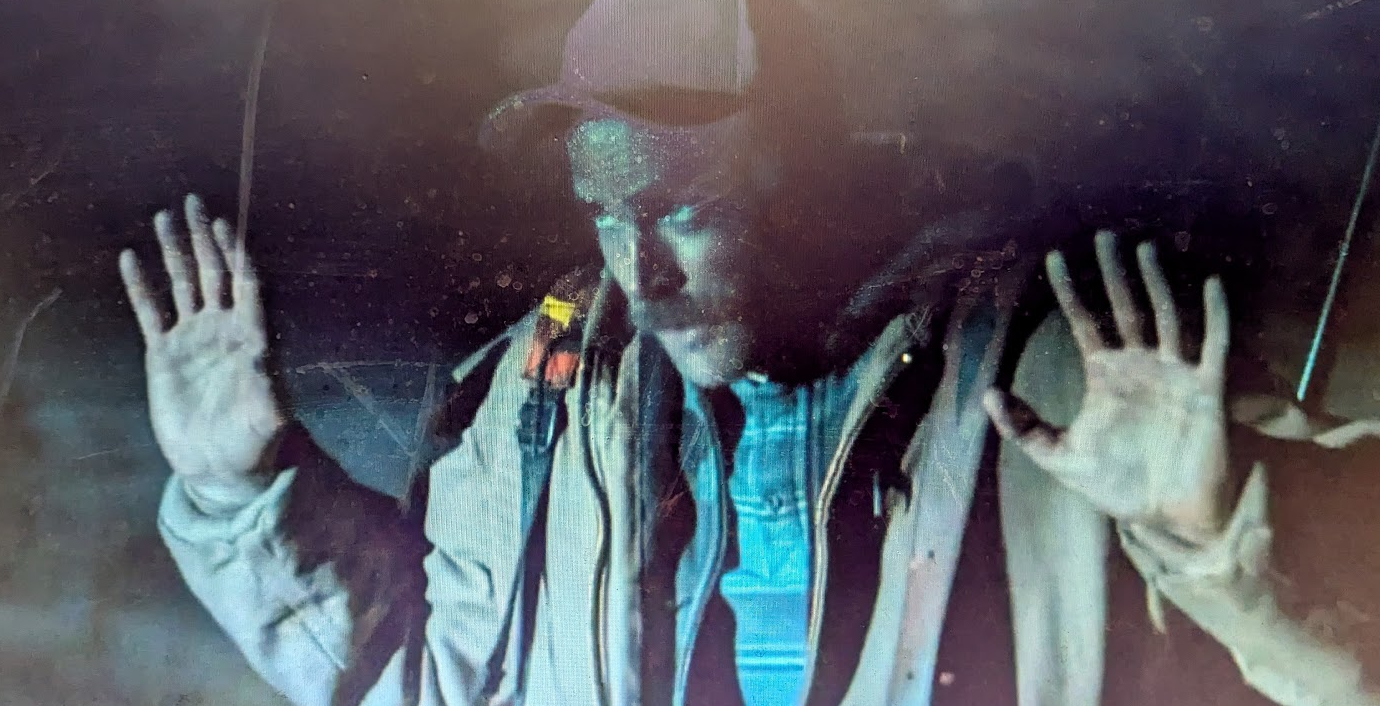
“Dios mio, am I in a musical?!”
The most unintentionally unfunny scene I’ve seen all month. It comes in the middle of an exploring party slowing dying of disease and native attacks in the Amazon.

This month was fairly quiet because my movie-watching friend was in Texas for two weeks. We wound up focusing a bit on horror.

Killer Joe, 2012.  A young adult who is in big trouble with bookies concocts a scheme: hire a hitman to knock off his mother whom everyone hates, then use the insurance money to pay off the hitman and the bookies. Genius! Except that the hitman refuses to work on spec, and insists on the guy’s sister as a ‘retainer’. The bookie-plagued lad has just been beaten up and goes along with it for a few days before changing his mind, but whoopsie! The killer already has mama in the trunk. Compelling acting from Matthew McCounaghey, There are multiple interesting elements — the bookie is the quintessential amiable villain, the sister is a little ‘off’ like River Tam — but it’s the ending I’ll remember. I figured things would go poorly, but I didn’t see them going poorly the way they went. Definitely want to see more of Juno Temple.

The Sixth Sense, 1999. A kid is psychologically disturbed: Bruce Willis tries to help. Unfortunately, this movie was spoiled for me years ago, and I couldn’t experience it the way a first-time viewer should:  as you may or may not know, it has a twist equivalent to the one in Fight Club.   Solid acting and music, and easily the sweetest horror movie I’ve ever seen. (…not that it has any competition…)  I mentioned to a horror-loving friend that I was watching this, and he replied “I can’t wait for you to review Avengers Endgame in 25 years .” I’ve watched exactly one Avengers movie (Avengers) and that was enough. Joke’s on him.

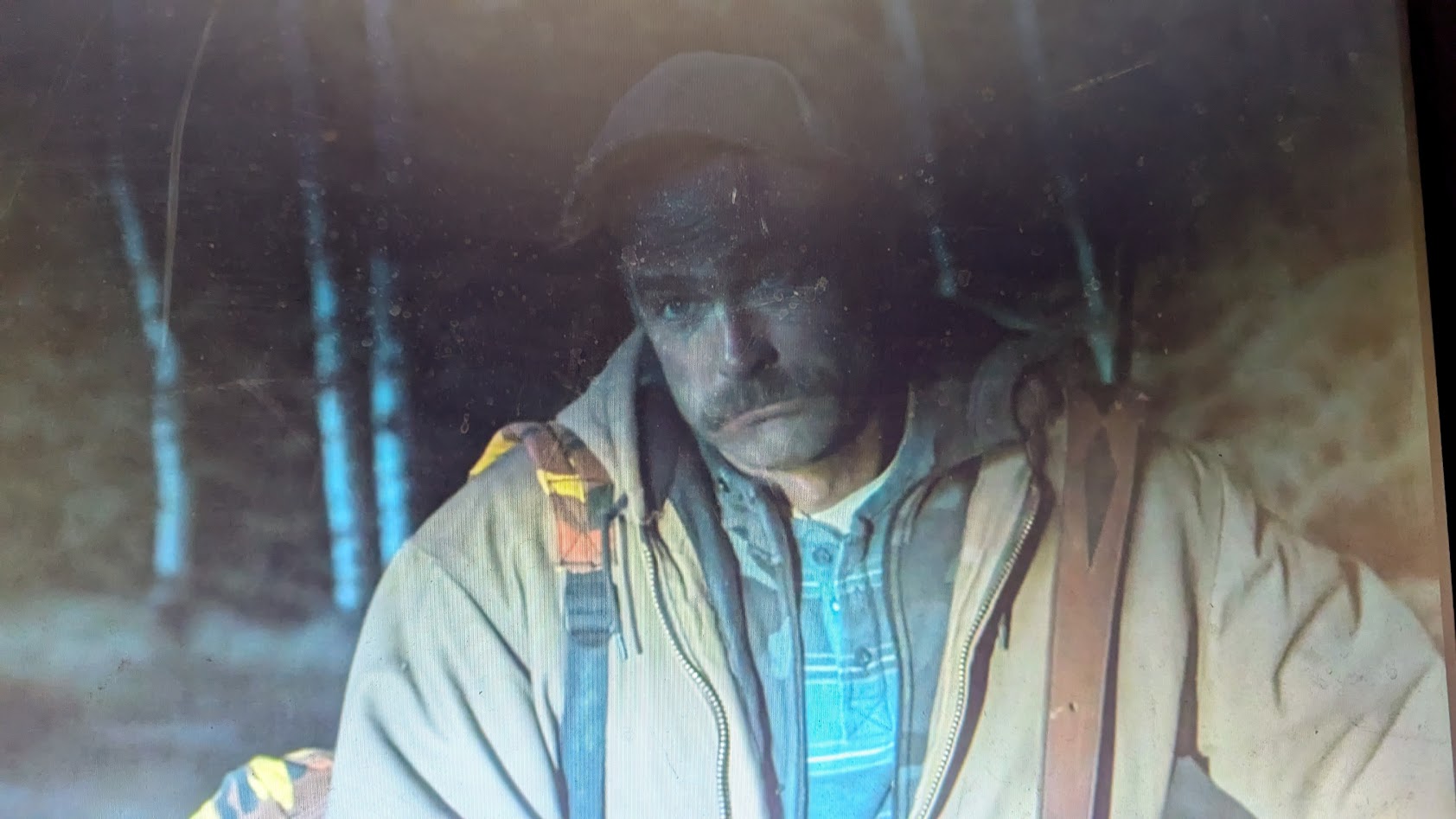
Kinski: Kill. Me. Now.

Aguirre, the Wrath of God. 1972. Pizarro hears of a city of Gold and sends a few troops to investigate. They are led by Aguirre, who proves to be insane. We spend 1.5 hours watching a crew of Spaniards and their enslaved native servants being picked off by the hostile tribes of the Amazonian interior. I had some doubts, historically (there is no way Spain would send two women in a military expedition like this!), but it made for interesting drama and cinematography. My first Werner Herzog film. I spent most of the first hour trying to get over “Spanish” people speaking German, which got especially weird after Aguirre appointed some noblemen as the new Kaiser after announcing that the Hapsburgs were dethroned. Klaus Kinski is…an interesting actor. Evidently he has a reputation. Favorite scene is when a native starts playing a flute and Kinski just stands with an obvious “The hell did I sign up for?” expression on his face.

A Coffee in Berlin, 2012. We follow a young man as he lives a day in Berlin. He tries to slip out on his girlfriend, is invited to lunch by his father who tells him he is a disappointment who will no longer be supported financially, encounters a girl in high school he used to bully but who is now kind of cute, goes to see her in a play, and closes the evening in a bar with a man who remembers living in 1930s Germany and witnessing the Night of Broken Glass — a man who moved away with his family and returned after sixty years, only to find his homeland unrecognizable. The man collapses and dies and the young fellow finally has the cup of coffee he’s been trying to have all day. Interesting movie but hard to precis.

Basketcase, 1982. A horror film that’s…slightly comic at this point, while not losing its disturbing nature. It’s comic because of the practical effects, which I’m sure were most impressive at the time. What’s in the basket? You really don’t want to know.


Late Night with the Devil, 2024. Creepy and interesting film that’s set in Halloween 1977: the host of a late-night show called Night Owls hopes to combat faltering ratings by having on his show — on Halloween Night — a teenager who was the only survivor of a satanic cult’s mass suicide. The panel’s guests include a Uri Gellar standin, a James Randi standin who is impressive in his accuracy (he even has a CSICOP-like organization & the same half-million prize for someone who can prove paranormal activity in controlled conditions), and the aforementioned posessed girl and her guardian/psychologist. The film is presented as the aired episode of the show — with titles, cutaways, and the like — and is even letterboxed, not wide screen. It goes into Exorcist territory, though not all the way, and has some backstory that touches on Bohemian Grove. Iinteresting but disturbing. I was amused by the Randi caricature’s details. A mix of live broadcast and found-foootage.

Laserblast, a 1979 SF film about……
Well, the movie opens with some dude running around the desert with a special ray-gun. He sees some aliens, tries to shoot them, fails, and is killed. Later, a teenager discovers the dude’s ray-gun and the necklace that goes along with it, and begins playing around with it. Turns out the necklace has some One Ring properties and takes over the user. Meanwhile, some small-town cops and a Mysterious Government G-Man are snooping around. There’s lots of explosions, a nice pool scene, and the movie ends. There’s more exposition in the trailer than in the actual movie.

Rosemary’s Baby, 1968.    A young couple moves into a run-down hotel. He wants to move up in his career; she wants babies. Soon, they’re both getting what they want, but the woman (Rosemary) has an unusual pregnancy and her neighbors and husband are acting very strange.  Maybe she’s been abused by a Satanic cult…..?

Posted in General | Tagged | Leave a comment

Selected quotations from The Anxious Generation

Gen Z became the first generation in history to go through puberty with a portal in their pockets that called them away from the people nearby and into an alternative universe that was exciting, addictive, unstable, and—as I will show—unsuitable for children and adolescents. Succeeding socially in that universe required them to devote a large part of their consciousness—perpetually—to managing what became their online brand. This was now necessary to gain acceptance from peers, which is the oxygen of adolescence, and to avoid online shaming, which is the nightmare of adolescence. Gen Z teens got sucked into spending many hours of each day scrolling through the shiny happy posts of friends, acquaintances, and distant influencers. They watched increasing quantities of user-generated videos and streamed entertainment, offered to them by autoplay and algorithms that were designed to keep them online as long as possible. They spent far less time playing with, talking to, touching, or even making eye contact with their friends and families, thereby reducing their participation in embodied social behaviors that are essential for successful human development.

The key factor is the commitment required to make relationships work. When people are raised in a community that they cannot easily escape, they do what our ancestors have done for millions of years: They learn how to manage relationships, and how to manage themselves and their emotions in order to keep those precious relationships going.

No matter the pattern or severity of their story, what is common among parents is the feeling that they are trapped and powerless. Most parents don’t want their children to have a phone-based childhood, but somehow the world has reconfigured itself so that any parent who resists is condemning their children to social isolation.

One out of every four teens said that they were online “almost constantly.” By 2022, that number had nearly doubled, to 46%.[32] These “almost constantly” numbers are startling and may be the key to explaining the sudden collapse of adolescent mental health. These extraordinarily high rates suggest that even when members of Gen Z are not on their devices and appear to be doing something in the real world, such as sitting in class, eating a meal, or talking with you, a substantial portion of their attention is monitoring or worrying (being anxious) about events in the social metaverse. As the MIT professor Sherry Turkle wrote in 2015 about life with smartphones, “We are forever elsewhere.”

The first generation of Americans who went through puberty with smartphones (and the entire internet) in their hands became more anxious, depressed, self-harming, and suicidal. We now call that generation Gen Z, in contrast to the millennial generation, which had largely finished puberty when the Great Rewiring began in 2010. The tidal wave of anxiety, depression, and self-harm hit girls harder than boys, and it hit preteen girls hardest of all.

Experience, not information, is the key to emotional development. It is in unsupervised, child-led play where children best learn to tolerate bruises, handle their emotions, read other children’s emotions, take turns, resolve conflicts, and play fair. Children are intrinsically motivated to acquire these skills because they want to be included in the playgroup and keep the fun going.

Life on the platforms forces young people to become their own brand managers, always thinking ahead about the social consequences of each photo, video, comment, and emoji they choose. Each action is not necessarily done “for its own sake.” Rather, every public action is, to some degree, strategic. It is, in Peter Gray’s phrase, “consciously pursued to achieve ends that are distinct from the activity itself.” Even for kids who never post anything, spending time on social media sites can still be harmful because of the chronic social comparison, the unachievable beauty standards, and the enormous amount of time taken away from everything else in life.

In his textbook on adolescence, the developmental psychologist Laurence Steinberg notes that adolescence is not necessarily an especially stressful time. Rather, it is a time when the brain is more vulnerable to the effects of sustained stressors, which can tilt the adolescent into mental disorders such as generalized anxiety disorder, depression, eating disorders, and substance abuse.

Gen Z are an incredibly isolated group of people. We have shallow friendships and superfluous romantic relationships that are mediated and governed to a large degree by social media. . . . There is hardly a sense of community on campus and it’s not hard to see. Oftentimes I’ll arrive early to a lecture to find a room of 30+ students sitting together in complete silence, absorbed in their smartphones, afraid to speak and be heard by their peers. This leads to further isolation and a weakening of self identity and confidence, something I know because I’ve experienced it firsthand.

The more time a girl spends on social media, the more likely she is to be depressed. Girls who say that they spend five or more hours each weekday on social media are three times as likely to be depressed as those who report no social media time.

This is the great irony of social media: the more you immerse yourself in it, the more lonely and depressed you become. This is true both at the individual level and at the collective level.

Humans are embodied; a phone-based life is not. Screens lead us to forget that our physical bodies matter.

We can’t put the entire burden of policing minimum ages on parents, any more than we would do so when teens try to buy liquor. We expect liquor stores to enforce age limits. We should expect the same from tech companies.

Social media is a fountain of bedevilments. It trains people to think in ways that are exactly contrary to the world’s wisdom traditions: Think about yourself first; be materialistic, judgmental, boastful, and petty; seek glory as quantified by likes and followers. Many users may believe that the implicit carrots and sticks built into platforms like Instagram don’t affect them, but it’s hard not to be affected unconsciously.

We should all be aghast that the average American elementary school student gets only 27 minutes of recess a day.[19] In maximum-security federal prisons in the United States, inmates are guaranteed two hours of outdoor time per day. When a filmmaker asked some prisoners how they’d feel if their yard time was reduced to one hour, they were very negative. “I think that’s going to build more anger,” said one. “That would be torture,” said another. When they were informed that most children around the world get less than an hour a day of outdoor playtime, they were shocked.[20]

In other words, the phone ban ameliorates three of the four foundational harms of the phone-based childhood: attention fragmentation, social deprivation, and addiction. It reduces social comparison and the pull into the virtual world. It generates communion and community. Naturally. Smartphones and their apps are such powerful attention magnets that half of all teens say they are online “almost constantly.” Can anyone doubt that a school full of students using or thinking about their phones almost all the time—texting each other, scrolling through social media, and playing mobile games during class and lunchtime—is going to be a school with less learning, more drama, and a weaker sense of community and belonging?

Posted in quotations | Tagged | Leave a comment

tl;dr

“[In Kurt Vonnegut’s egalitarian dystopia Harrison Bergeron,] anyone with a high IQ is required to wear an earpiece at all times that buzzes loudly every 20 seconds or so with a variety of noises designed to interrupt sustained thinking, thereby bringing the person down to the functional intelligence of the average citizen.When you add it all up, the average number of notifications on young people’s phones from the top social and communication apps amounts to 192 alerts per day, according to one study.[42] The average teen, who now gets only seven hours of sleep per night, therefore gets about 11 notifications per waking hour, or one every five minutes. And that’s just for the apps that are about communication. When we add in the dozens of other apps for which they have not turned off push notifications, the number of interruptions grows far higher. And we’re still only talking about the average teen. If we zoom in on heavy users, such as older teen girls, who use texting and social media apps far more often than any other group, we are now in the ballpark of one interruption every minute. Thanks to the tech industry and its voracious competition for the limited resource of adolescent attention, many members of Gen Z are now living in Kurt Vonnegut’s dystopia.”

The Anxious Generation, Johathan Haidt

I was fortunate enough to read The Shallows by Nicholas Carr and Technopoly/Amusing Ourselves to Death by Neil Postman fairly early, and they both gave me a prudent wariness in regards to how I integrated digital tech into my life: subsequently, I didn’t get a smartphone until 2018, and even now treat it as a tool, rather than an appendage: almost no apps can send me notifications, sound or visual.

Posted in quotations | Tagged | 4 Comments

October 2024 in Review

(Preparing to welcome ghost hunters into former slave quarters at Old Cahawba. The quarters were renovated into a standard house in 1935, after the main residence burned, but a historical commission is “restoring” it to the original design.)

If you’re interested in reading about the building, here’s a page on it that shows how it looked prior to the “restoration”, as well as a photo of the Kirkpatrick mansion.

It’s technically possible, but highly improbable that I finish anything else tonight and tomorrow, so let’s wrap this month up. (Edit: I was wrong. Finished Anxious Generation at lunch.) October was crazy busy with school work, so much so that when the professor sent out a mid-semester survey she was evidently overwhelmed by “PLEASE MAKE IT STOP” feedback and retooled a few of our assignments. Most of my reading tended toward the casual, then, with a nod toward ‘spooky season’ in the form of books about obituaries and cemeteries. I made no progress toward any of my standing challenges, but academia comes first given how much money I’m spending on it. The highlight of the month, of course, was visiting two others at the Resisting the Machine event in Birmingham, and seeing the amazing variety of interesting books on display. Although I’m going to be spending November working on a big grad school project due in December (….planning eight library programs, producing flyers, and researching budgets) I knocked out some minor assignments earlier in the semester so I should have more time now for reading.

Favorite Highlight/Quote:

We humans are like fish dwelling at the bottom of a pond. We perceive the sun’s light filtered imperfectly to the depths. […] The higher we rise, the more clearly we see. The beauty shining through great art — painting, poetry, sculpture, dance, music, architecture, and so forth — calls us out of the depths of our spiritual slumber and up toward the pure light.” (Living in Wonder)

New Acquisitions:
Living in Wonder, Rod Dreher. Preordered months ago, but I bought the hardback to get signed & cancelled the Kindle preorder.
The Medieval Mind of C.S. Lewis, Jason Baxter. Met the author at the Dreher-Kingsnorth event and decided to go ahead and go for it.
The Silmarillion, JRR Tolkien. Friend picked this up at an estate sale and gave it to me.
Greenlights, Matthew McConaughey. Friend picked this up it a thrift store and gave it to me.
The C.S. Lewis Collection: Signature Classics. Eleven of his works in a $3 ebook? Count me in! I’ve read most of them (save for Letters to Malcolm and Reflections on the Psalms) and have half of them in physical form, but it’s always nice to be able to carry around Jack in my pocket.

Pending Reviews
Still trying to get my head around Living in Wonder. Just finished Anxious Generation.

Coming up….

Although I did a ‘SF Sweep’ in September, Vero @ Dark Shelf of Wonders alerted me to a bookish event in November called SciFi Month. I figured I’d throw in with it, since it’s not as if I’ll run out of SF to read any time soon! If you’re interested in participating, click the banner to find the hosts at Always Room for One More, BookForager, Dear Geek Place, and a Dance with Books. Preview of what is coming up will follow on November 1st.

Also, one of the two booktubers I follow, Olive (the other being Marian of Classics Considered), is hosting Nonfiction November for the final time, and given that finality I’d like to participate in that as well, with an eye toward restoring Nonfiction to its proper place on the reading throne after so long a fictional usurpation. That won’t happen, but maybe by December they can reach parity. Does this goal directly contradict the focus on science fiction? Absolutely. Guess we’ll just have to see what happens.

Posted in General | Tagged , , | 2 Comments

WWW Wednesday

Today’s prompt from Long and Short Reviews inquires: what superstitions do I have? To my knowledge, I don’t have any besides the strange compulsion to hold down the left shift key when I’m playing Civilization III, and tap it manically if my unit begins losing. Why my brain decided there was a relationship between my tapping a keyboard and the fate of my computer units, I have no idea. I actively resist it when I play Civ 3, and it has gotten weaker over the years. But as far as knocking on wood, avoiding black cats, not walking under ladders, all that sort of thing — it’s never been an issue for me.

WHAT have you finished reading recently? Living in Wonder, Rod Dreher.

WHAT are you reading now? The Anxious Generation, Jonathan Haidt. On the spike in mental illness exhibited by Gen Z. Also re-reading Crunchy Cons by Rod Dreher to see how my take on it has changed after 11 years.

WHAT are you reading next? I’m participating in both SciFiMonth and Nonfiction November, so something along those lines.

Posted in General | Tagged , | 6 Comments

Top Ten Tuesday: Suspense/Scary Movies I’ve Seen in 2024

Today’s treble-T is a Halloween freebie, so I’m going to highlight the ten most scariest/most suspenseful movies I’ve watched this year. But first! …the tease…

The most exciting thing in my life at the moment is a five-gallon bucket full of human excrement. I should explain. (Paul Kingsnorth, “Learning What to Make of It”. Confessions of a Recovering Environmentalist)

And so! Disturbing, suspenseful, or scary movies I’ve seen this year:

(1) Syk pike  |  Sick of Myself, 2023.   A disturbing film about a young woman (Signe) who falls into a deep well of narcissism: her need for attention is such that she orders anxiety pills off the black market which she knows will make her break out into a skin rash if she takes too many of them — so naturally, she eats them like skittles. The scenes of her taking photos of her disfigured self to share on social media,  her toxic delight  in any attention is profoundly unsettling, though it becomes darkly comic at times, as when she and her partner are being ‘romantic’, shall we say — his “dirty talk” is telling her how he’s visiting her in the hospital, and if she dies he’ll make sure her dad and her ex-friend Anine can’t come because they didn’t come see her in the hospital, that sort of thing.  

(2) Taxi Driver, 1976.   A mentally disturbed and socially awkward veteran who is getting by driving a taxi becomes infatuated with Cybil Shephard, a political campaigner: after disgusts her taking her to a dirty movie (he’s socially oblivious), he hatches a plan to assassinate the man she’s campaigning for, but then encounters a child prostitute (played by Jodie Foster) who he decides to rescue.   Fascinating and disturbing. 

(3)Bronson, 2008. Tom Hardy is Michael Peterson, aka Charlie Bronson, an absolutely violent but weirdly charistmatic serial offender who has spent 30+ years in solitary. The film is framed as Charlie giving a one-man show about his life. Watching this and The Dark Knight Rises, I’m baffled as to how his Shinzon in Star Trek Nemesis could be such an un-interesting character.

(4)Tremors, 1990. After I mentioned I’d watched Dune, a coworker said “I prefer the sand-worms in Tremors.” Upon learning that I’d never watched it, she gave me a 4-disc set with orders to watch at least the first one. Fun horror-comedy in which rednecks are the heroes. My country favorite Reba McEntire is a supporting character as part of a husband-wife prepper team. I never knew how much I needed to hear Reba talking about rifle and shotgun gauges. “BROKE INTO THE WRONG (GORRAM) REC ROOM, DIDN’TYA?!?!”

(5) Monkey Man, 2024. A REALLY interesting film about an Indian orphan whose mother was brutally killed by a cop, who burns for vengeance. He’s a boxer who starts working for a hotel so he can get close to the cop, but after his first attempt fails catastrophically, The Kid regroups at a temple of people who have been persecuted by the cop. Interesting look at modern Mumbai, good acting, all around good time, and rooted in Indian religious culture..

(6) A Clockwork Orange, 1971. Disturbing film about a teenage psychopath who is treated and made to feel revulsed at the thought of violence or lust, but who after his release is continually assaulted by those he offended which (as the movie ends) appears to lead to the mental conditioning failing. If I had known how much sexual violence there was in this, I might not have bothered. It proved quite interesting, but the beginning was….insane.

(7) Cloverfield. Watched without knowing anything about it, which is probably the best way. A “found footage” film that begins as the innocent documenting of a good-bye party (that includes relationship drama) and ends with witnessing a monstrous attack on Manhattan. Gotta wonder how Manhattan audiences reacted to it, only a few years after 9/11. Effective horror-action film save for some implausibilities like the camera’s battery and film lasting for 10+ hours.

(8) The Sixth Sense, 1999. A kid is psychologically disturbed: Bruce Willis tries to help. Unfortunately, this movie was spoiled for me years ago, and I couldn’t experience it the way a first-time viewer should:  as you may or may not know, it has a twist equivalent to the one in Fight Club.   Solid acting and music, and easily the sweetest horror movie I’ve ever seen. (…not that it has any competition…)  I mentioned to a horror-loving friend that I was watching this, and he replied “I can’t wait for you to review Avengers Endgame in 25 years”

(9) Basketcase, 1982. A horror film that’s…slightly comic at this point, while not losing its disturbing nature. It’s comic because of the practical effects, which I’m sure were most impressive at the time.  What’s in the basket?  You really don’t want to know. 

(10) Late Night with the Devil, 2024. Creepy and interesting film that’s set in Halloween 1977: the host of a late-night show called Night Owls hopes to combat faltering ratings by having on his show — on Halloween Night — a teenager who was the only survivor of a satanic cult’s mass suicide. The panel’s guests include a Uri Gellar standin, a James Randi standin who is impressive in his accuracy (he even has a CSICOP-like organization & the same half-million prize for someone who can prove paranormal activity in controlled conditions), and the aforementioned posessed girl and her guardian/psychologist. The film is presented as the aired episode of the show — with titles, cutaways, and the like — and is even letterboxed, not wide screen. It goes into Exorcist territory, though not all the way, and has some backstory that touches on Bohemian Grove. Interesting but disturbing.  I was amused by the Randi caricature’s details. A mix of live broadcast and found-footage. 

Posted in General | Tagged , | 19 Comments