Moviewatch, September 2024

Reagan, 2024.   Biopic released 20 years after the Gipper’s death, this is an adoring take on Reagan’s life, based off of a Paul Kengor book called Crusader.  It’s framed as an aging Soviet  (Jon Voight)  trying to explain the effect Reagan had on the last years of the Soviet empire, and highlights Reagan’s optimism and charisma without shying away from stuff like Iran-Contra. There’s very little policy involved: it more highlights’ Reagan’s hatred of Communist authoritarianism and fervent belief in Americanism – and I suspect that’s on purpose, to combat the bitter cynicism and division of today.  It’s very optimistic, hopeful, and “joyful”.   I thought Quaid did a good job of trying to capture Reagan’s voice and mannerisms.  Greatly appreciated the ways Reagan’s humor was incorporated into the movie, and the casting in general. Saw some favorites like Dan Lauria and Nick Searcy, both of whom were in From the Earth to the Moon. . The book generally tracked with what I know of Reagan’s life — I read Dutch back in 2004/2005, right after he died.    The credit scenes were especially good: NO ONE left the theater during the credit bits with footage from Reagan’s funeral, especially the Nancy scene which had a lot of people crying.   (The Ron-Nancy relationship is a big part of the movie.) 

Rushmore, an early  (1999) Wes Anderson movie in which a high school student who is INCREDIBLY active in school but dismal in grades teeters on expulsion, then falls for one of his teachers, becomes friends with a classmate’s father Bill Murray,  then  nearly destroys both relationships out of jealousy when Bill becomes sweet on the teacher. He  subsequently grows as  a Person.   The student, who I will dub Teenage Stanley Tucci with Hair, is also being pursued (inexplicably) by a very cute nerd girl who he treats with utter coldness. Enjoyable film: I will watch anything with Bill Murray, and this one had a lot of interesting character drama and growth.

California Split, 1974. Elliot Gould and some other guy meet gambling. They do much more gambling.

Freeway, 1996. Reese Witherspoon plays Vanessa, a girl from a….challenged background. After her mother is arrested for prostitution and her molester-stepfather is hauled away for various crimes, Vanessa tries to hitchhike north to LA where her grandmother is, only to be picked up by a serial killer. After an incredibly disturbing sequences of scenes where the serial killer reveals himself as a creepy-necrophiliac-murderer, Vanessa shoots him and then scampers off. Alas, she didn’t do the creep in, and winds up being thrown into the corrections system. Film turns into a weird black comedy that was enjoyable. As a southerner, I got a kick out of Witherspoon’s accent here. (“Git your [gorram] hands off my anatomy!”).

(Lots of language….)

Polyester, 1981. A John Waters film, so that should probably give the general idea — especially as it stars Divine. Divine is “Francine”, a mom to two very screwed up kids and future ex-wife to a man with absolutely no good side besides the fact that he makes money. Francine has a friend who can’t act and who in another life was obsessed with eggs, but she’s come into money and is obsessed with doing what people on the Social Register do — playing polo and tennis, mostly. After Francine realizes her husband is cheating on her, she files for divorce and things get progressively worse until they’re all of a sudden better, and the viewer who has see John Waters before is waiting for the twist. And sure enough, multiple homicides follow.  We watched this because of Hurricane Francine. 

Brazil, 1985. I watched this for the odd pairing of Michael Palin and Robert de Niro, but both have minor parts. It’s something of an SF film, set in a dystopian world beset by bureaucracy and machines. The main character keeps having dreams where he’s a fantasy figure, a hero, but IRL he’s just a cog in the machine. As the movie progresses he begins to resist his own programming and is targeted by the state/machine/etc.   If you are a fan of ductwork,  it’s visible here in abundance. 

Rommel, 2012. German film about the last weeks of Field Marshal Rommel’s life:  his efforts at optimizing Germany’s defensive strategy against the prospect of an Allied invasion are undermined by his being implicated in Operation Valkyrie,  in which Tom Cruise and the Wehrmacht would assassinate Hitler and end the war. (But not without making a deal with Christoph Waltz.)

Philadelphia, 1993. Every time I mention The Philadelphia Story as my favorite movie, people invariably confuse it with this one, so I finally decided to watch it.   Tom Hanks plays an attorney with AIDS who is fired, and files a discrimination lawsuit against his former employers. Denzel Washington, despite his prejudice towards gay men,  takes on the case after witnessing Hanks being a victim of discrimination in a law library. Very well-constructed drama.

Probably the clip that convinced me to watch this. Such great acting from Washington & Hanks.

Stardust Memories, 1980. Woody Allen plays Woody Allen under another name, an increasingly emotionally conflicted director who is no longer satisfied making comedies, but who wants to make seriously depressing films about the human condition that no one wants to watch. The movie is presented in an interesting way in which we see Woody involved in three different relationships, and it’s a bit ‘meta’ in that the decor in his NY apartment reflects his mood at the time. Everyone in this film is a little crazy.

River’s Edge, 1987. Strange teen crime flick in which a teenager kills one of his friends, shows his other friends the body, and they just….carry on. One of them gets obsessed with protecting the murderer, while the other two (including Keneau Reeves) feel like turning him in. Featuring all kinds of things, from nudity to murderous kids with nunchunks. Loosely based on a true story. Or was it this true story?

Gosford Park, 2001. Part of Maggie Smith Memorial Weekend. Downton Abbey meets CLUE, with a VERY packed cast, including talent like Michael Gambon, Stephen Fry, Emily Watson, etc. Reminded me a bit of Rules of the Game, at least the shooting scene. Stephen Fry plays a detective who has an amusing disregard for clues or forensics or…..anything detective-y besides asking questions and posing with a smoking pipe. My introduction to the VERY cute Kelley MacDonald. Well, technically I’ve seen Trainspotting, but that was such a horrible film I’ve managed to purge my memory of everything but the toilet scene, which would be the main motive for wanting to purge the memory.

Weekend, 1956. Goddard, French film.  Um…so there’s this couple who are awful and they want to kill the woman’s father to take his money. They go on a trip to visit him but run into incredible auto carnage, and wind up hitchhiking and meeting imaginary characters, men singing in telephone booths, and cannibals.  It’s….weird. It is very weird. This has replaced Muholland Drive as “The weirdest movie I’ve ever seen”, which itself replaced The Tenant.  Has a tracking shot Martin Scorcese would be envious of.  
Posted in General | Tagged , | Leave a comment

September 2024 in Review

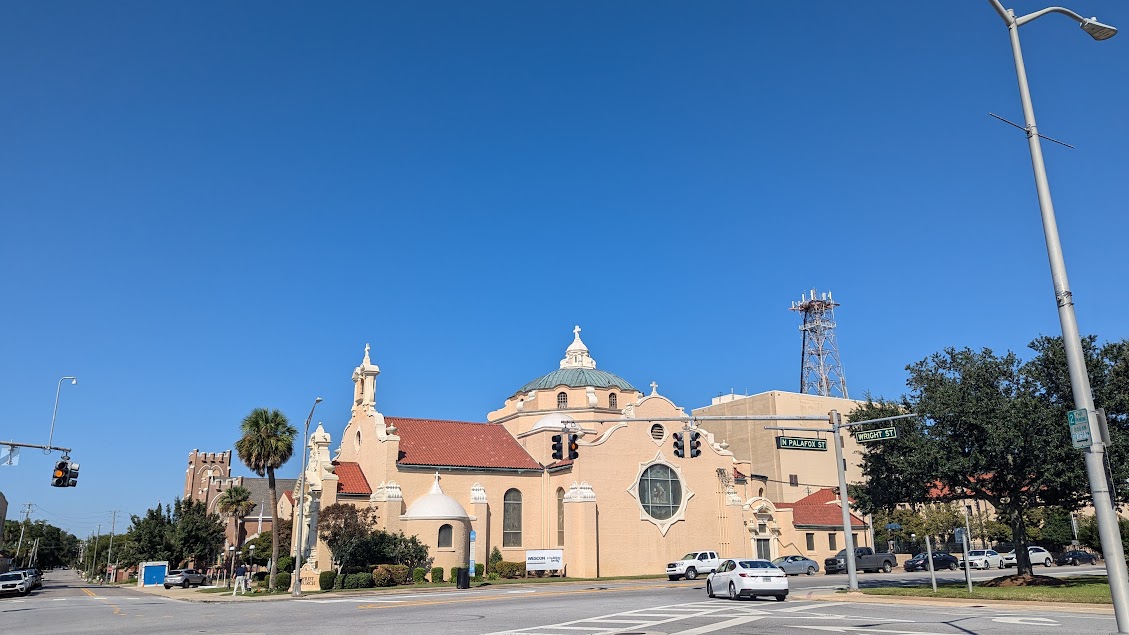
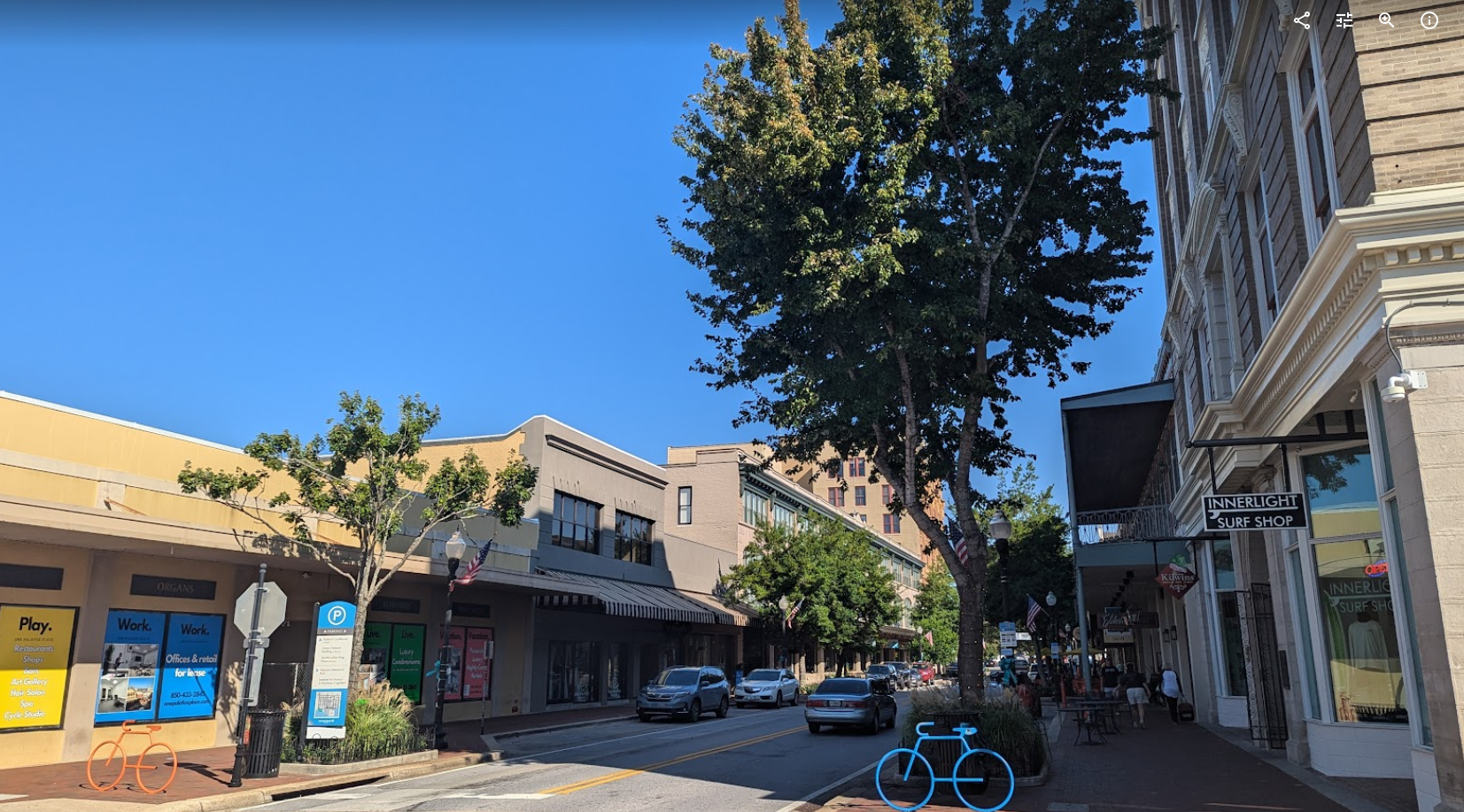
Palofax Street, Pensacola. See ya in November, Florida!

It is entirely possible that I’ll finish another book tomorrow (I’m reading an interesting alt-history novel that’s told via letters, and depicts the failure of the Nazi regime in 1936), buuuut I wouldn’t bet on it given that I have class tomorrow and right now I’m mostly reading papers on library website UX design for an upcoming paper. Anyway, this was a fun month, though again dominated by fiction. Out of curiosity, I checked “Books — The Spreadsheet” on my onedrive, and fiction has completely turned the tables on nonfiction, flipping the usual 60/40 radio in its own favor. Honestly, I think summer (with no grad school) was nonfiction’s best hope at a comeback, but we shall see. I’ll remember September chiefly for my Pensacola trip, although today’s worship service saw me as the only choir member present, meaning that instead of doing one solo of “Dona Nobis Pacem“, I was a one-man choir for over an hour. Oof. Not in 13 years of attendance have I been the only person in the choir!

Favorite Quote/Highlight:

“You mean you ain’t going to drink no more?”
“I mean I’m taking it one day at a time.”
“But if you don’t drink no more, then how come you got beer in your refrigerator?” “Hard to say goodbye.”
“And you got a lot of whiskey under your kitchen sink too.”
“What are you, the Southern Baptist Convention?” (Kinfolk, Sean Dietrich)

Science Survey
DNA is Not Destiny: The Remarkable, Completely Misunderstood Relationship between You and Your Genes, Steven J Heine (Biology)

The Unreviewed:
The Practice of the Precense of God, Brother Lawrence. Just finished this Friday. May wait for a review as a friend of mine and I are re-reading it together.
Hitler’s Heralds: review to be posted in German interwar series.

SF Sweep
The Calculating Stars, Mary Robinette Kowal
The Disposessed, Ursula le Guin
Flash Back, John Turiano
The Last App, Tom Alan

After learning of other bloggers doing a big SF push in November, I decided to ease up on my own and got distracted by zombies on the Titanic instead.

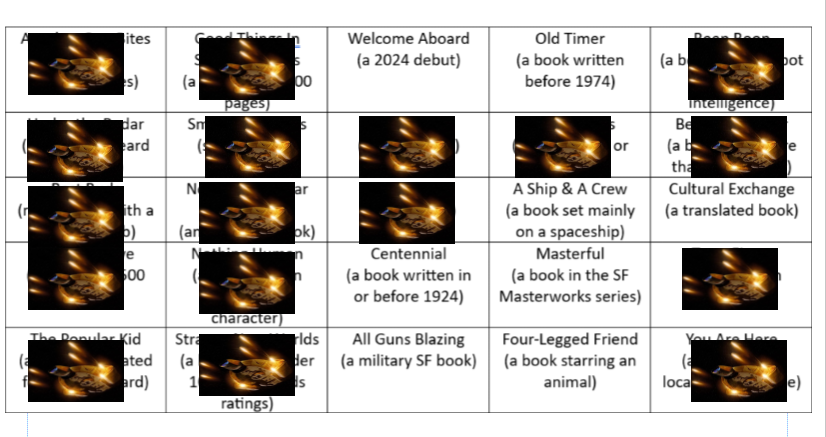
SF Book Bingo:
The Dispossessed (Buddy Read)
Flash Back, John Turiano. (Strange New Worlds: a book with less than a thousand ratings/reviews)

…the Publisher file I use to keep up with this is at work, so I’ll update this in….a few hours.

“…we just say bingo.”
“BINGO! How fun! :D”

New Acquisitions:
The Confessions, St. Augustine. Translated Anthony Esolen. Will replace one instance of Plutarch on my Classics Club list.
Also, an Amy Winehouse magazine, but I don’t think that counts.

Coming up in October
I usually do a nod to German history in early October, but this month I’m going to do a series — following German interwar history from the abortive revolution of 1919, to the creation of Weimar and all that followed, culminating in the rise of the Nazis. Expect one book on the socialist uprising of 1919, one book on the Freikorps, something on Weimar, and then something on the Nazi takeover. I found a book on Bismarck in a little free library recently, so I may throw that in just for fun. Ordinarily, this series would run in the first week of October (tied to October 3rd being the Tag der Deutschen Einheit, in which the GDR and DDR did the whole ‘reunited and it feels so gute thing), but school work is competing for brainspace ATM.

Random funny!

Posted in General | Tagged | 10 Comments

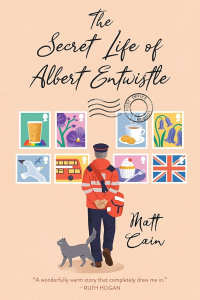
The Secret Life of Albert Entwhistle

Albert Entwhistle has had the same routine for years: he goes to work, making his rounds as the village postman while carefully avoids any prolonged conversation, and then he goes home to spend the evening watching TV with his cat Gracie, whose company offers the only bits of light in an otherwise colorless life. But things are about to change: Albert is only a few months from mandatory retirement, and Gracie is dying of cancer. As the rug is about to be pulled from under him, Albert must be ‘up and doing’ — and soon finds himself connecting to his coworkers, his neighbors, and a man he left behind decades ago — himself, before he shut himself up to the world and began dying that slow death of loneliness. The Secret Life is a story of a man waking up to himself and deciding to “color in” the black and white lines of himself before it’s too late.

This was on Kindle Unlimited, so I snapped it up from the basic premise alone, not realizing there was another and extremely important dimension to the story: the reason Albert is the man he is, a man who avoids society and sticks to the safe and prescribed, is because he’s a man attracted to other men, and grew up in a time when that was grounds for being not only constantly harrassed and beaten, but arrested by the police. He hides who he is from everyone, including himself, retreating into a safe cocoon of TV and cat-petting. As his safety net is unraveling, though, Albert takes stock of his life and realizes what a waste it’s been — and begins reaching out. He is especially haunted by having failed to be courageous in his youth, and subsequently having destroyed a relationship he regards as the love of his life. In ways, this book is somwhat like A Man Called Ove or The Unlikely Pilgrimage of Harold Frye, in that we have an older man trapped in his routines and cautious personality suddenly having to ‘go forth in life’ (as Marley put it to Scrooge), despite the threats of potential rejection. Cain wrote this explicitly as a coming-out story, though, so there’s a lot of emphasis on Albert coming to terms with his own identity and then being bold enough to reveal it to those around him. It’s not all about him, though, because in opening himself to others, he finds others opening their lives to him, and becoming part of their stories: he becomes a mentor to a young woman who is struggling in her own relationship, for instance, and her story has parallels to his in that she thinks her boyfriend is ashamed of her for being a mixed-race single mom and wonders if she should just cut bait and run rather than take the risk of being hurt.

Although I could’ve done with less politics (Cain frequently works in allusions with no relation to Albert’s story), my taste for “curmudgeon regains humanity” stories made this a sweet, surprising read for me. I liked that Cain included interviews with men of Albert’s generation to show how Albert’s experiences aligned with reality.

Related:

He really didn’t understand why he now needed three remote controls, a mobile phone, and a consistent Wi-Fi signal just to watch TV. Is that supposed to be progress?

But then he caught sight of himself in the mirror and stopped. There was no denying that, with his personality-free clothes and short-back-and-sides haircut, anyone who saw him would think he was dull and boring. He looked like the kind of man people would call a “drink of water.” But he didn’t feel like that inside; inside he felt like he was a whole bundle of fun. Or at least I would be, if I could only work out a way of getting the fun out of me.

“But don’t you think it sounds a bit daft?” he argues.
“Oh, so what if it is?” says George. “There are worse things in life than sounding a bit daft.”

Albert could see now that for decades he’d been loosely holding on to an empty, gray life. But today was a new day. As of today, he wanted to take his life in both hands and squeeze it tightly, to get everything he could out of it while he still could. And he was ready to make whatever changes were necessary for this to happen, however difficult they might be.

Posted in Reviews | Tagged , , | 5 Comments

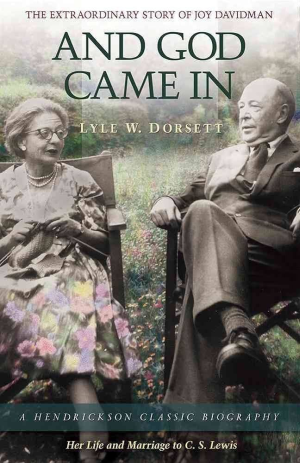
And God Came In

A friend lent this to me, knowing of my love of all things C.S. Lewis. It’s a biography of Joy Davidman, a Jewish-American convert to Christianity who befriended Lewis over letters, then later moved to England and became his great love, writing companion, and wife. Although I knew a fair bit of Joy from the various Lewis books I’ve read over the years, especially the letters and Lewis biographies, the closest I’ve come to a direct biography of her is Becoming Mrs. Lewis, a novelized version of her relationship with Lewis. And God Came In is a small but engaging work, one that emphasizes Joy’s intellectual gifts and love for argument — both qualities of which made the Lewis boys, Jack and Warren, instant fans once they’d met her. We meet Joy as the child of two secular Jews, who have no use for religion and pass that along to their daughter, who — as she ages — becomes interested in the social promises of Communism, and joins a local communist party. Despite this, Joy evinces an inexplicable interest in Jesus and the Crucifixion, and as her intellectual talents begin disassembling the arguments of Marx and Lenin, she simultaneously had an experience with the Divine which would put her on the path to converting to Christianity. Interestingly, she choose the closest church to her, a Presbyterian one, and appears to have taken on its animosity toward the Roman Catholic Church, as her writings frequently attack it and its doctrines and practices. If I’d known Joy had a connection to leftist politics, I’ve long since forgotten it, so reading this portion of her life was interesting. Although Joy loved to write, she found her talent was best applied as a collaborator, and this made her and Lewis into working partners as well as friends when she moved to England to get away from her abusive drunk of a husband who was also having an affair with her sister. I enjoyed encountering her here as a thinker and critic in her own right.

Related:
The Long Loneliness, Dorothy Day. Autobiography of another activist for whom the love of the poor manifested itself in both politics and religion.
Davita’s Harp, Chaim Potok. Secular child of Jewish socialists grows to find meaning through Judaism, not politics.

Quotes:

“Joy had a tendency to view people in one of two ways: either they were her pupils ad she lectured them, or they were her teachers and she pressed them hard for knowledge. As her brother remarked, Joy saw hardly anyone as equal.”

“Nothing had been done to [the Kilns] for about thirty years: the walls and floors are full of holes; the carpets are tattered rags — in fact,” she assumed, only half-facetiously, that the house is being held up by the books that line all the walls and if we ever move a bookcase All Fall Down!”

Posted in Reviews | Tagged , , , , , , , , | Leave a comment

WWW Wednesday + Pensacola Pics

Plus today’s prompt from Long and Short Reviews, but that would make for a long title.

WHAT have you finished reading recently? And God Came In, a biography of Joy Davidman, who became C.S. Lewis’ dearest friend, writing collaborator, and wife.

WHAT are you reading now? Oh, so much. I just bought a new translation of The Confessions yesterday and have been nosing in it for a bit. May save it for Advent, when I usually do a devotional read or two.

WHAT are you reading next? Probably something in German history as I’m prepping for a series of reviews in October that will cover German inter-war history. All Power to the Councils, possibly.

Today’s prompt from Long & Short Reviews is to “describe your sense of humor”. I’m not entirely sure how I would, but I can tell you I am inordinately fond of wordplay, especially puns.

I spent the last weekend in Pensacola, and left it so enamored I’ve already reserved a room for a return trip in November. They have a zoo and I missed it. Here’s a taste of what I saw!

Street scene with trees and a crowd: a bluegrass band is in center
Every Saturday, Palofax Street hosts a multi-block craft/food fair. I had no idea. I found mochi, mead, and a poet for hire.
A cream-colored Spanish revival church
Christ Church, exterior. A Spanish Revival Episcopal church!
Interior of a church, spotlighting a blue dome decorated with golden stars
Christ Church, interior. I attended the 8:00 am service and was blown away by their organ and choir.
Interior of a room decorated to appear to be a bar: a young woman is lecturing
Hannah of Historic Pensacola Village was a wonderful guide to local history. Impassioned and funny, she did a walking tour of nearly an hour.
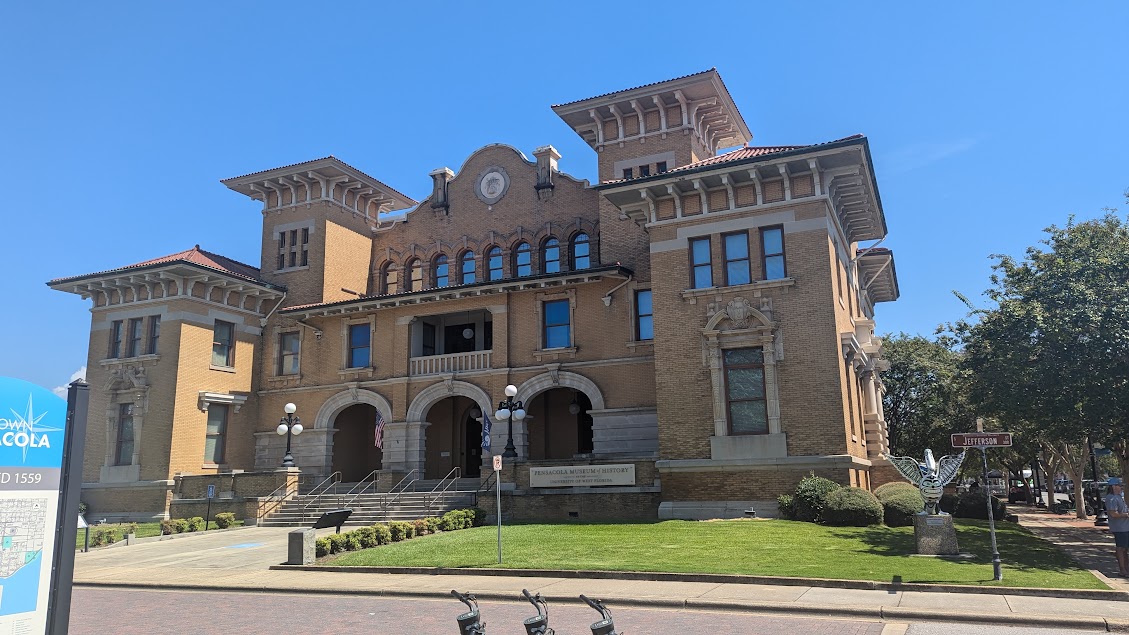
An attractive building housing a museum
Interior shot of a model of the CV Enterprise, with little figures representing sailor
The Big E!
Three blue jets suspended from a ceiling, seen at eye level from a balcony
I’m strictly here for the propeller crew, but seeing Blue Angels this close is pretty cool.
A large propeller driven aircraft
Shot of a Dauntless bomber's cockpit, demonstrating guns
This Dauntless survived Pearl Harbor, sank a Japanese carrier, was landed on Midway Island after Lady Lex was sunk, then became a Marine trainer before a trainee flew it into Lake Michigan. There it sat for 50+ before being pulled out.
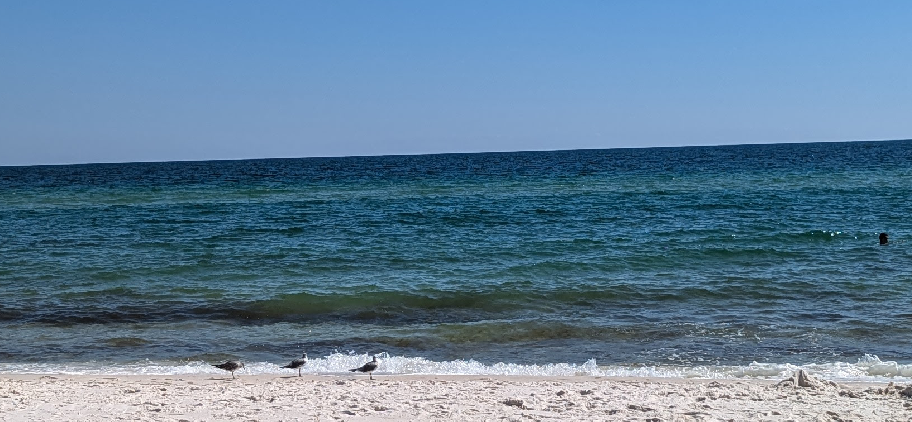
A beach, with three sea gulls contemplating life, the universe, and everything
Perdido Beach

Posted in General | Tagged , , , , , | 10 Comments

Top Ten Books on my Autumn TBR

Hah! As if I have a defined TBR these days, so I’ll front-load this with upcoming releases. First the tease, per usual:

Social media platforms are therefore the most efficient conformity engines ever invented. They can shape an adolescent’s mental models of acceptable behavior in a matter of hours, whereas parents can struggle unsuccessfully for years to get their children to sit up straight or stop whining. Parents don’t get to use the power of conformity bias, so they are often no match for the socializing power of social media. (The Anxious Generation)

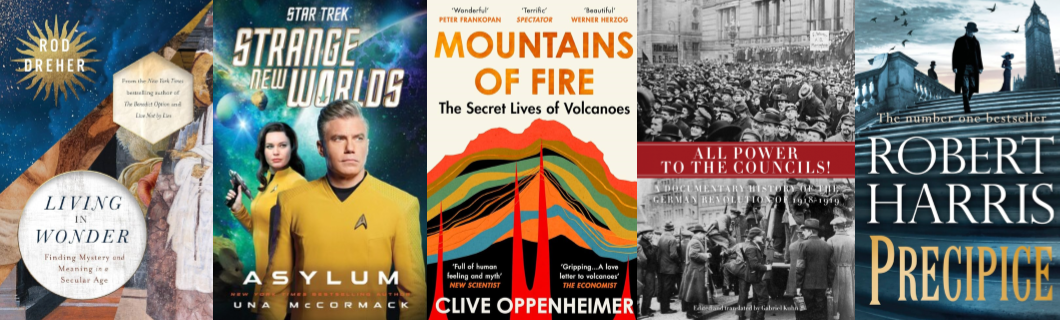
A collage of five book covers: "Living in Wonder", by Rod Dreher; "Strange New Worlds:  Asylum", by Una McCormack;  "Mountains of Fire: The Secret Lives of Volcanoes"; "All Power to the Councils"; and "Precipice" by Robert Harris

(1) The Anxious Generation, Jonathan Haidt. Preordered this in April, haven’t focused on it. Restarted my read of it this weekend.

(2) Living in Wonder, Rod Dreher. On the need for enchantment, and the ways — good and bad — people are seeking it out. Preorder. I’m hoping to catch the book launch in October, since Rod and Paul Kingsnorth are doing an event together in Birmingham.

(3) Precipice, Robert Harris. My library has this on order but it hasn’t come in yet. Robert Harris is a -must-read for varied thrillers.

(4) Star Trek: Firewall, David Mack. The Seven of Nine Voy-Pic bridge novel. Not looking forward to the Picard setting, but Mack is a great author and Seven is one of Voyager’s most interesting characters. I have this one but haven’t finished it.

(5) Star Trek Strange New Worlds: Asylum, Una McCormack

(6) Selma’s Mayor, Jenney Eggertson. This is a biography of Mayor George Evans of Selma, which he had been collaborating on until his sudden death last spring. Mayor Evans was an inspiration to many in this area, myself included.

(7) All Power to the Councils!, Gabriel Kuhn. A history of the socialist uprisings that swept Germany at the end of World War 1. Will be part of a review series covering interwar Germany.

(8) Mountains of Fire, Clive Oppenheimer. I’ve been pecking at this for most of the year. The problem is the chapters are non-successive, so I read at random and have no idea how much of the book I’ve finished. Will have to do a straight re-read.

(9) A Long Way to a Small, Angry Planet, Becky Chambers.

(10) Confessions, St. Augustine. I’ve been meaning to re-read this to see how my take has changed after 12 years, but what sells is is that Anthony Esolen — the masterful translator of the Divine Comedy — published a translation late last year.

Posted in General | Tagged , | 27 Comments

A Nation Interrupted

September 1862: Confederate scouts notice a Union courier riding at high speed. Taking their shot, they drop the rider and investigate as to what’s so important. Turns out that General Lee’s orders for a drive toward Washington via Maryland have been intercepted! Taking advantage of the Union belief that they know what Lee is doing, Lee instead alters his plans and achieves a critical victory, marching on Washington and forcing Lincoln to acknowledge the independence of the Confederate States of America. Humiliated and financially weakened by defeat, the postwar Union fails to live up to its manifest destiny seize colonies hither and yon from Spain, not to mention throw its weight around in the New World and create the Panama Canal. And now….let’s fastforward to World War 2 which begins the same exact way with the same exact European and Japanese characters, for some reason. A Nation Interrupted is a “what if” take on World War 2 that uses some consequences of Southern independence to tell a very different, darker, and increasingly nonsensical version of the war. The story is compelling despite the premises not being so.

World War 2 unfolds here very differently because Spain is still in possession of Cuban and Puerto Rico, which gives Germany the option of deploying from there with the aim of capturing the northern shipping ports (especially New York) that keep sending American material to England.. Hitler, his obsession with the Soviet Union somehow marginalized, decides to focus on the two Americas — the Union first, and then the South once Truman and Eisenhower — outraged by this German aggression against the CSA’s brother-country — declare war in solidarity. Because Hitler is evidently not wasting men and material in Africa and Greece (they’re never mentioned), and more importantly not invading Russia, he has plenty of forces to throw at the ill-prepared American states, who look toward The Bomb as their only hope of salvation.

On the plus side, I was completely absorbed by this story, largely for the original minor characters — a pilot who volunteered for the RAF, then resigned to fight for the US, as well as several Jewish characters who bear witness to Hitler’s ‘final solution’ being enacted in New York and Boston, using Ryker’s and Hart Island as labor & death camps. (A very young Carl Sagan and possibly Asimov would have been caught up in this, unless Asimov managed to escape the Naval base in Maryland before the Nazis took it.) I rather liked the idea of the two American nations existing in perfect peace, not becoming bitter foes like they did in Turtledove’s “Order191/How Few Remains” series, which also begins with an Antietam surprise. I liked how subtle historical details were used in the novel, like the mention of a Boston Braves game: in the 1940s, the Braves hadn’t yet moved to Atlanta. (Actually, that makes me wonder: given that baseball became nationally popular in part due to the Civil War, does that mean the South is baseball-less?) There’s a lot more questions, though. This ranges from minor details like Sherman tanks having that name (Sherman who?) to the global situation in general. Why did the northern Union enter the Great War, and how could it have possibly had the same effect on the peace as it did in our own lifetime, given it had less population to work with? We’re told slavery was phased out and formally abolished in the 1880s, but what does that mean for how African-Americans adjusted to citizenship? The only black character we see is a janitor in the north, though he plays a critical role. Why was Japan hostile toward a United States that has never involved itself in that hemisphere, and WHAT WAS THE SOVIET UNION DOING THIS ENTIRE TIME? And that’s not even going to the ending of the war, which….. I don’t want to spoil but I kind of do. So, I’m going to to insert an image below, and if you want to spoil yourself just click. FUN FACT: the plane below, a Dauntless bomber, survived Pearl Harbor, launched off the Lady Lex and sank a Japanese carrier, was abandoned on Midway Island after the Lex perished, was rescued and used as a trainer by the Marines, then accidentally flown into Lake Michigan (in said training service) before being recovered and touched up a bit. Those guns were rusting for a half-century but they’re the same guns that were firing at Zeros! (I went to a naval aviation museum recently, can you tell? :))

So, 1945. Hitler has complete command of Western Europe,  aside from Britain.  He also has military control over the eastern seaboard down to Virginia, and covers the midwest nearly to Chicago.   The Japanese control parts of the west coast.  But the Americans drop one a bomb and the surviving Nazi/military leadership is like "Welp, that's the war, we surrender unconditionally."

Honestly, I liked the story, but I could not buy the way the premise was executed.

And that’s the end of weekend vacation reviews!

Quotations:

Seventeen days after his narrow victory, President-elect Huey P. Long was assassinated in Baton Rouge by the son of a political rival. Under the provisions of the Confederate Constitution, Vice President-elect Harry S. Truman would now succeed him as the thirteenth president of the Confederate States of America. (The Governor just can’t win for losing!)

Across the Atlantic, spontaneous celebrations had already broken out throughout America. Missing from those who celebrated the historic ceremony was Franklin Delano Roosevelt. Three weeks earlier, on April 12th, the 32nd president of the United States had died from a cerebral hemorrhage at his residence in Georgia. (WHY DOES THE AMERICAN PRESIDENT HAVE A HOUSE IN ANOTHER COUNTRY?)

Posted in Reviews | Tagged , , | 2 Comments

Deck Z

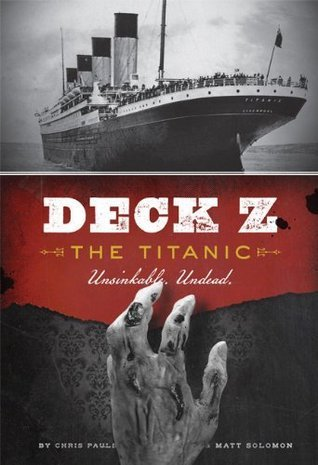
(Don’t worry, I only read two of these.) Captain Smith is preparing for his triumphant final voyage, captaining the Titanic in her first trip across the Atlantic. Unfortunately for him, those nasty Germans are going to muck things up. Smith is blissfully unaware that one of his passengers, Dr. Weiss, is an epidemiologist who has been studying a vicious new plague in Wu- um, China somewhere — that turns its victims into absolute monsters, cannibals who reek of decay. Dr. Weiss wants to find a cure, but he’s recently realize that Imperial Germany has this neat idea of starting a general war in Europe (because they’re the baddies, and surprise invasion is such what one does), and they want to weaponize this awful new virus (“Toxic”) to cripple the Russians and prevent any messy second fronts from breaking out. Dr. Weiss has a sample of the Toxic to test for antidotes, but he can’t do it in a Europe filled with German agents, so he’s hoping for a fresh start in America. Unfortunately for him — and most of the passenger of the Titanic — an Evil German Agent is following him, and — during the ship’s progress — will attack Dr. Weiss and turn the Titanic into the set of The Walking Dead: Lost at Sea.

Although the basic premise is the same as Titanic with Zombies, this is very much its own story, and much closer to “horror-like SF” than fantasy-horror. Unlike TwZ, this is not a replay of the movie, but dominated by mostly new characters — especially Dr. Weiss and his sidekick, a tomboy named Lou(ise) who wants to grow up to be a frog-studying scientist. Dr. Weiss, Captain Smith, and Thomas Andrews are the chief stars, spending most of the novel being action heroes while Bruce Ismay is a blithering idiot on the bridge, at one point destroying the phone so he can countermand Smith’s orders and get the Titanic to New York early. The Titanic crew are mostly vague background, so Officer Lightoller doesn’t get his chance to be rambo the way he did in Titanic with Zombies. Although the Germans are a caricature villain, this was a much stronger novel all around — with a more original execution of the premise, and better writing and characters in general — than TwZ. Personally, my favorite part was Captain Smith suddenly having a history that involved Afghanistan, leading to him having a sword dubbed Kabul that he uses to smite the zombie hordes — side by side of a German scientist with a sword-stick. Great fun, especially Lou who lights up most every scene she’s in. And yes, the Titanic still does the whole “side-swipe the iceberg and go down” thing, although again I’m compelled to wonder about what difference the zombie apocalypse made in the survivor numbers: here, the virus mutates and becomes far more virulent.

Related:
Titanic with Zombies
World War Z
Night of the Living Trekkies

Highlights:

“I’m going to study frogs. Once we save some money.”
“A scientist, eh?” Weiss said with approval. “They allow girls to be scientists in Iowa?” Lou’s eyes narrowed. “The best scientists in Iowa are women.”

“Duty comes before my safety or yours. You’re givin’ into fear,” Smith said firmly. “Don’t be afraid of the fire, Thomas. Otherwise you’ll miss the chance to be forged in it.”

“Run, Captain,” hollered Andrews. “Never!” growled Smith. Finally, the blade slipped free.

Posted in Reviews, science fiction | Tagged , , , | 3 Comments

Titanic with Zombies

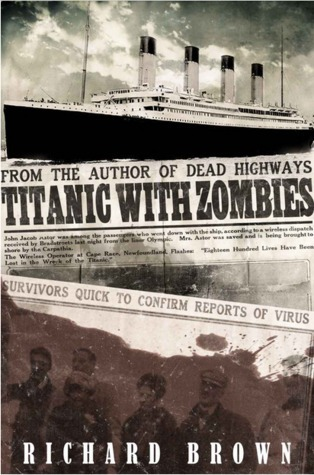
A young woman boards the Royal Mail Ship Titanic, bound for America, idly scratching her neck. She’s been bitten, but she doesn’t know what by. And there was a strange man with a syringe… As the Titanic steams ahead towards its doom, the lads of the White Star Line will soon have another problem on their hands: an appalling outbreak of madness and cannibalism When the young woman collapses on the boat deck, she’s taken to a medbay — but despite being declared ‘dead’, she revives like a bad economic theory and begins gnawing on the medical staff. The White Star’s finest are baffled, and try to contain the Afflicted, but since that wouldn’t be much of a novel there’s a mistake made, an escape effected, and soon Second Officer Charlies Lightoller (“Lights”) is grimly stalking the corridors doing his best Left for Dead run. (At least, between efforts to light his pipe which borders on a running joke.)

This is an odd little story, a mix of historical fiction and horror that manages to be almost comic in its juxtaposition of zombies and the Titanic. The Big Serious Historical Events are still happening in the background, though Lights and another officer are down attacking well-dressed zombie hordes with Webley pistols and fire axes when the ship has its lethal sideswipe with the iceberg, and though they’re distantly aware something serious happened — especially Lights, who gets trapped in a room by a mob of zombies and has to make an escape through the rapidly rising and extremely cold north Atlantic water now filling the deck — they don’t learn of how truly doomed they are until they escape back to the boat deck. I wondered if perhaps the number of people being eaten or zombified meant that more people would be able to escape to the boats (there being less competition) , but the fact that zombie bites took a bit to manifest into full sickness meant that normal-looking people could turn undead, so those in the boats are even more paranoid. The growing epidemic which is filling the corridors with bones and blood also forces Captain Smith to keep the steam engines moving at full blast, in hopes of arriving in New York and finding medical help or more armed men, so there’s even less reaction time to the spotting of the berg than in real life. A lot of dialogue, personality, and scenes appear to have been borrowed from the James Cameron movie, Titanic: Margaret’s Brown appeal to her lifeboat neighbors is nearly word for word as the movie (as I remember it, anyway), and the scene of Thomas Andrews standing at the fireplace in the smoking lounge and then slowly turning is repeated here, only for horror effect: the poor engineer has been bitten is about to fall into the madness. Although my Titanic buff self noticed some historical irregularities (Smith having all four iceberg warnings when only two made it to the board, staff members and Ismay having posession of one of the others) this is Titanic with Zombies, so …strict attention to detail need not apply.

This is a curious book, fun in its way: I don’t know how other serious Titanic buffs would like it, perhaps thinking it a mockery, but I enjoyed it for its goofiness. Given that Lights is a slight hero of mine — he survived the sinking and later participated in the Dunkirk boatlift using his personal sailboat — I also liked seeing him in action hero mode here. I discovered that “Tiitanic but with Zombies” is something of a micro-genre on Aamzon, and have — since I finished this Friday lunch — read another, one that was far more serious.

If you don’t know Lights, this is his portrayal in the Cameron movie, but BE AWARE the movie defames his character: the actor ad-libbed a line that makes him come off rather badly.

Posted in Reviews | Tagged , | 8 Comments

The Story of a Brother Whose Nose Was not Broken and Deserved to Be So

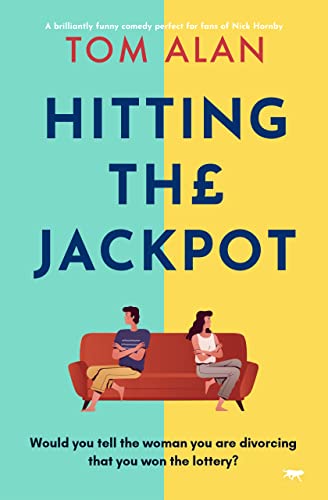
Jack just won the lottery. He should be thrilled. Ecstatic! He’s a millionaire, twice over! Or…whatever he has left after His Majesty’s Revenue and Customs has their way with the check. Problem is, he’s going through a divorce. A freelance English-as-a-second-language teacher may not have to worry about being looted by his ex-wife (what’s she going to take, his bicycle? His forty-year old sedan?), but he has no intentions of letting her take him for hundreds of thousands of pounds. They’ve only been married for a few months, for pete’s sake, and he suspects she was just using him for a work visa. He could try to hide it from her, but she knows perfectly well he always plays the lottery and always uses the same numbers. And she bloody called him right after the numbers were announced, so he knows she knows. So, Jack decides to lie: he forgot to pick up his ticket this week. Of all the luck, right? Only Cindy’s not falling for it, and when Jack confesses to his brother Rich what he’s trying to do, he unwittingly confesses this to Cindy’s new lover, because Rich now knows Cindy in the Biblical way and is breaking numerous rules of the Bro Code and even more rules of Levicitus. Fortunately for Jack and Rich’s relationship, Jack loses the ticket and gets distracted by a new relationship, infatuated by some woman who backed into his new car and destroyed its back end. All’s well that ends with no homicide, right? Only Cindy is looking into ways of claiming the winning on her own, and the ticket is not quite lost. Someone else has got it.

I chiefly read this because I’d just read a Tom Alan and wanted to try another of his works. They’re quite different, aside from the constant political references: The Last App was relatively serious, concerned with a question of how tech changes our lives, while this is is more of a…sitcom episode with gobs of slang and drama. In 17 years of reading in public, I’ll venture to say I’ve never read a book more full of slang, and that’s counting P.G. Wodehouse’s ideolect that saturates every page of a Jeeves and Wooster novel. (Thank you, Anthony Esolen, for that word.) Most of it’s British, but since Cindy is Australian there’s a lot of Australian slang as well and it confuses everyone. Basically, Jack has won the lottery, he wants to hide it from his ex-wife who is boinking his brother, but he’s lost the ticket and doesn’t care because he’s fallen in love with Millie, but then the ticket’s found and it somehow threatens every single relationship until it doesn’t and everyone winds up happy, even that cheating cow Cindy and Rich, the loathesome brother who needs his nose bent.

The novel was…engaging, easy to read, but I didn’t like most of the characters and I really wanted Cindy and Rich to be left at least mildly unhappy and they weren’t. Sure, there’s a happyish ending, but people who cheat on other people should get some comeuppance, not their own happyish ending.This novel is funny, but frustrating, because no one but Jack feels the least remorse about their actions.

Oh, and Jack’s last name is Pott. Jack Pott. Get it? Now I’m off to a weekend in Florida of staring at (potential) tropical storms and Navy airplanes. Oh, and hopefully Spanish artifacts if any have survived.

Highlights:

Ananya Banerjee bustles out from the back, hands flapping, hips threatening the unsteady stacks of chewing gum and football stickers. Cindy steps forward, her gap year in Barcelona has given her a Latin tic of bestowing kisses on people she barely knows, or has only just met, but she pauses – as does Ananya, as if she’s suddenly realised that she’s an Indian shopkeeper who’s spent years trying to learn how to behave with traditional British reserve. The moment is lost, and they stand looking each other up and down, like they’re inspecting fridges in an electrical shop.

When he’s had a think: he got drunk the night he won, not that he remembers it well, but he’s got the evidence of the state of his sweatshirt and chinos and six empty San Miguel bottles. So, where might he have hidden the ticket when in a drunken stupor? You know, not his usual places, but drunken-stupor places…?

The bed was the smallest double imaginable; the mattress was the sort of bit of foam you’d find on a cheap sun lounger in a run-down hotel in Lowestoft. It sagged so spectacularly it was probably marketed as a hammock.

We didn’t argue much – Cindy was too good at it. I remember one tiff; I rather unwisely accused her of always wanting to have the last word. And that was the last word in that conversation. She drained her glass, stood up, walked out of the restaurant, leaving me with two-thirds of a pizza, and the last word. Not that it felt much of a triumph as she proved me wrong, winning the argument with silence and an empty chair.

“He wants to marry his Sheila; he’ll have to pay up or this Sheila ain’t gonna give him an easy Tammy Wynette.’
‘A what?’ Rich’s heard Jack complain about Cindy’s incomprehensible Australianisms. He’s not sure she’s even speaking English any longer.
‘D-I-V-O-R-C-E,’ she spells out for him, twanging her voice like a steel guitar. ‘Keep up, Rich-a-roo.’

“But look, you and Cind! Congratulations! Would never have seen that coming. How is she? Sorry we didn’t make it for the wedding, we wanted to, but there was no way.’
‘No problem, Cindy’s fine…[….] The thing is…’ Jack takes a breath. ‘The thing is – we’re not together anymore. She moved out about five months ago; we’ve agreed to divorce.”

Posted in Reviews | Tagged , | 4 Comments