“Winter TBR” is a difficult thing for someone living in central Alabama, because winter isn’t something that happens. Yes, the leaves do turn brown and fall, it tends to get cloudy and rainy, and we’ll have occasional cold streaks, common enough to be annoying but not steady enough to get used to them. Case in point: the high today is 70 degrees (~21 Celsius), and I’m sweating at work despite having a desk fan aimed right at me. My January reading does tend to be a little more deliberate than the rest of the year, because I like to read a mix and get things off to a good start. But first, the tease!
I thought of the only dance I could. In my head, I sang the Macarena and began the steps. Both hands out. Then flipped them. Crossed my arms. I felt like an idiot. Absolutely must’ve looked like one too. When I got to the part where I shook my hips, the baker had had enough. “Stop, stop, stop!” he said. “I’ll give ye something to eat just to get ye to stop.” (An Unexpected Hero: A litRPG Adventure, Rhett C. Bruno & Jaime Castle)
(1) Some science read involving either weather or climate, to finish off the science survey. It will only be my 14th science read for the year, which is remarkably poor.
(2) The Relentless Moon, second in that “Earth is hit by an asteroid and has to kick off the space race ten years early” series kicked off by The Calculating Stars. I have it on hold and am next up.
(3)Men in my Situation, Per Petterson. The January pick for a book club I may be participating in.
Men in My Situation, Per Petterson’s evocative and moving new novel, finds Arvid Jansen in a tailspin, unable to process the grief of losing his parents and brothers in a tragic ferry accident. In the aftermath, Arvid’s wife, Turid, divorced him and took their three daughters with her. One year later, Arvid still hasn’t recovered. He spends his time drinking, falling into fleeting relationships with women, and driving around in his Mazda. When Turid unexpectedly calls for a ride home from the train station, he has to face the life they’ve made without him.
Don’t that sound like a fun time.
(4) Star Trek: Firewall, David Mack; and (5)Star Trek Strange New Worlds: Asylum, Una McCormack. The fact that I have two new ST releases and haven’t yet read them is an indication of just how mentally busy and time-consuming this past semester was. (Finished with full marks, though, and my prof sent an email asking for permission to use my last project as an example for her future classes. w00t!)
(6) Images of America: Fenway Park. Gift from the lady-friend to celebrate the professor’s email.
(7)Provoked: How Washington Started the New Cold War with Russia, Scott Horton.
(8) The Borrowed Life of Frederick Fife, now that I’ve found it again. Sneaky fella was hiding in a PC parts box. (My beast gave up the ghost during Thanksgiving weekend, and I was doing some parts testing before I decided to just buy a new rig, since I’d planned on a massive upgrade in 2016 anyway..)
(9) Strange Weather in Tokyo, Hiromi Kawakami. Honestly, I want to read this one just for the cover.
(10) Bibliotech: Why Libraries Matter More than Ever in the Age of Google
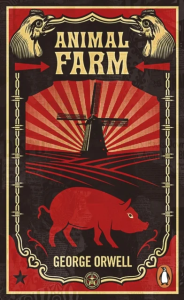
Recently I realized that it had been as many as twenty years since I read AnimalFarm, as I can remember reading it in early high school (1999, 2000 perhaps). A lot of water has flown under the bridge since then, and I don’t simply mean time: I’m much more familiar with the politics and history that Orwell references here than I was in those pre-9/11 days. For those who don’t know, Animal Farm is a satirical fable that essentially tells the story of the Russian Revolution and the Soviet Union in microsmic faction, set on a failing farm in England. Complaining of ill treatment and barely adequate food and shelter, the animals strike out against the owner Mr. Jones in anger, and are successful in driving him away from the farm. Inspired by the dreams of the late Old Major, a boar who denounced human domination of animals and called for revolution, the animals then begin trying to set up their own commune, to be called “Animal Farm”. Here, all animals would be equal: no creature would have too little, and no creature would have too much. And…..enter the human condition. We soon witness a elite forming, with its own intelligentsia to supply The Science and its private forces to bully those capable of thinking for themselves, or who step out of line with the edicts of the increasingly small elite. At first, that elite is the pigs, especially Napoleon and Snowball, but as they vy for influence Snowball disappears and Napoleon begins growing as a tyrant. The other animals are slightly confused because the rules keep changing to favor what Napoleon is doing: wasn’t there one an edict about no animals sleeping in beds? But now the commandment-wall specifies bed with sheets. And wasn’t alcohol forbidden? Now it’s merely forbidden “in excess”, though only the pigs seem to have access to it. As the pigs and their cronies gain power, so too do they rot with vice: small things like keeping the milk and apples for themselves morphs into the pigs — and Napoleon, in particular — becoming worse masters than Old Mr. Jones ever was, but now keeping the farm’s residents mollified with kant and dogma. Having read works like Homage to Catalonia, and Simon Schama’s Citizens which documented the French revolution eating its own children, I could very clearly see Orwell’s targets here and was impressed by the depth of his allusions. Nearly a century after publication, this work has not lost any of its bite — nor has 1984, a similar critique. Unfortunately, this story and elements of it continue to play out: we saw the witch-hunt culture of fear in East Germany and Mao’s “cultural revolution”, for instance, and authorities continue to disregard or creatively interpret law and history as suits their interests.
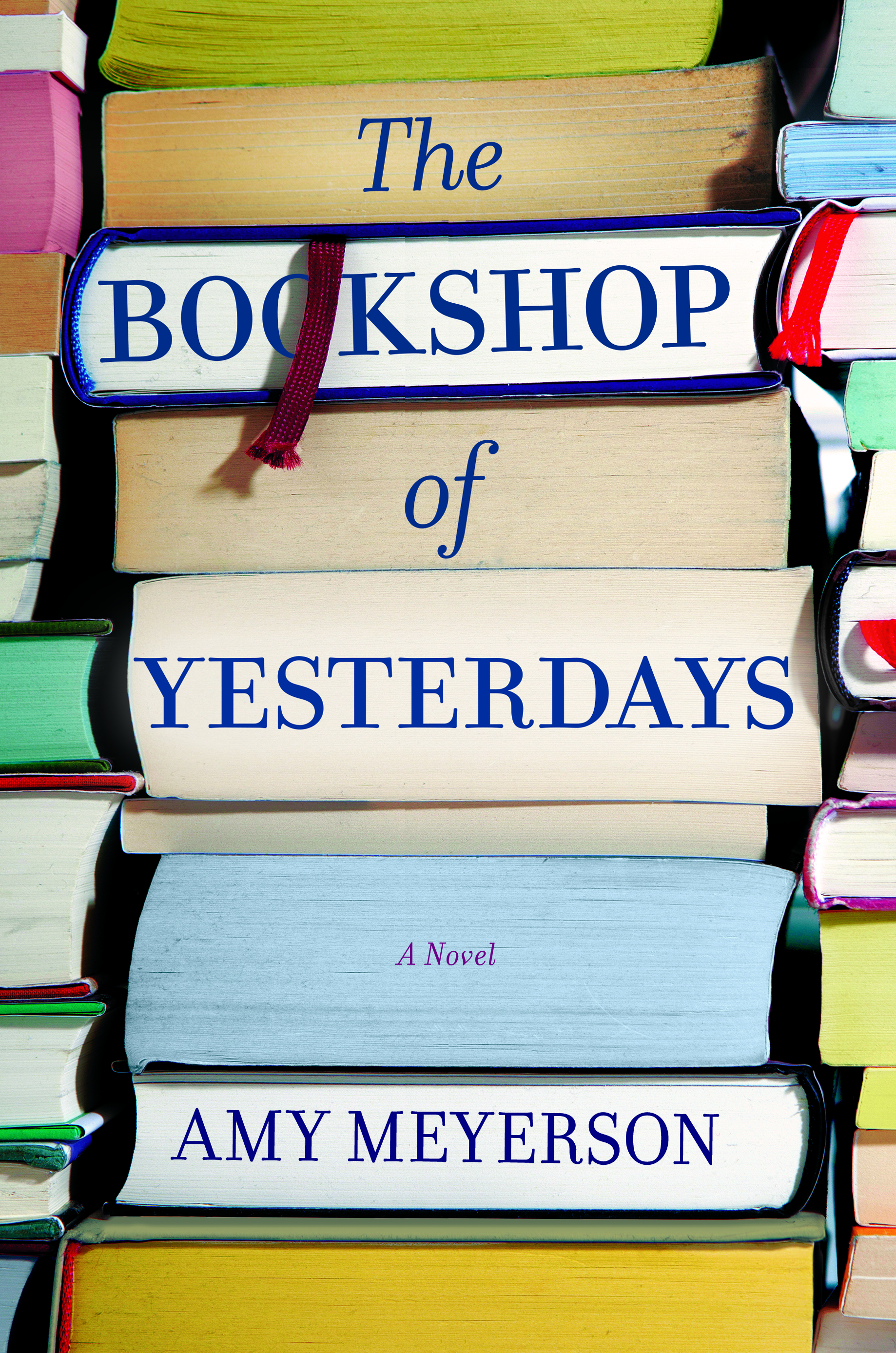
Miranda grew up in sunny California, but her interest in teaching history took her across the country. Now a phone call summons her back: her uncle Billy, who she’s not seen for sixteen years, has died. Returning home to see her parents and attend the funeral, Miranda is staggered to learn that her uncle left her his bookstore, Prospero’s — “where books are treasured above dukedom”. What’s more, he’s left her a book with a riddle in it, a riddle that reminds her of the little literary scavenger hunts he’d send her on as a child. Those ended as she was hitting adolesence, after a mysterious late-night screaming match between Billy and Miranda’s mom. Miranda’s parents are visibly disturbed that the bookstore has been given to Miranda, and any attempt to find out what happened between Billy — and why the store disturbs them so — are met with absolute stonewalling. Still, Billy’s clues lead Miranda not only through the store, but into the past — and boy, are there surprises in store. The Bookshop of Yesterdays is a story of relationships and secrets, and the mystery of what happened, with some assistance from the setting of a bookstore and literary puzzles, were a hook that kept pulling me through this title even though I didn’t like a lot of the characters in it, including the main character whose most ready reaction is angry screaming and withdrawal. While Miranda is spending a long summer trying to make sense of her uncle’s estate and of the past, she’s also in increasingly strained relationships with her now-long distance boyfriend, her mom, and trying to get to know the customers and employees of the bookstore, all of whom regard her with suspicion. Some of these characters are interesting, some not: it’s really the mystery that kept me plugging along, as well as the drama created b the fact that Prospero’s is actively failing and will be bankrupt by the end of the year! This is an enjoyable enough story for those who want a bookish mystery.
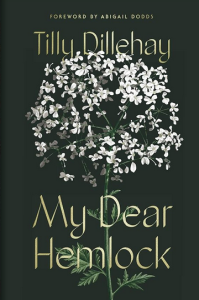
During Advent I like to revisit The Screwtape Letters as a devotional exercise, but this year my ladyfriend discovered My Dear Hemlock, a new Screwtape-esque book that focuses on a female “patient”, and follows her from early young adulthood through her life’s ebb. Because it follows her for decades, the readers get to see how the spiritual temptations and trials of life can change from period to period. We witness our patient here being tempted by outings with a group of vain and materialistic friends in her youth, for instance, when Hemlock is instructed to make the patient vainly think she can be a “good influence” on them, and much later when the patient is stricken with a possibly-terminal disease, Hemlock is advised to make the woman dwell in her fears — not for herself, but for her children, never thinking of how this crisis might stir the waters and create an opportunity for grace to shine through. The span of time covered does to make this more episodic, though: whereas in Screwtape Letters, Wormwood and Screwtape are in the midst of an intense campaign and we see schemes unfolding across multiple levels, here it’s more one-letter, one-battle, and now we jump ahead five years. There is also focus on relationships here that was present in Screwtape, but not to nearly the same degree: the marriage is of great concern to the senior demon, given that it is something like the church in miniature, each partner dying to the other and working for the other’s sanctification — but it could lead to triumphs for the demons, too, for hate and festering bitterness and swearing off love altogether. As with Screwtape, the snares sewn are the subtle ones, and the senior demon warns her ward off of big moves, which can have unexpected consequences: when Hemlock manages to inflict a chronic disease on her patient, she’s horrified to see the patient growing closer to Christ through it, making her more thankful for the support of her family and friends, more mindful of her short time on Earth, more grateful for the moments without pain. I was hoping to integrate some reflections from my and the ladyfriend’s joint discussion of this, but she’s in no-serious-reads-until-school-is-out-mode.
We must do everything in our power to prevent her finding out a standard fact about the male human: he will usually slouch to meet a woman’s disapproval and grow to meet her praise.
Our best marriages occur when a woman is constantly trying the wind’s method, blowing as cold and hard as she can. Husbands universally respond by pulling their coats tighter around them. (In the fable, the sun shines warmly on the man’s face so that he removes the coat voluntarily. It is a dangerous secret, really.)
The humans are all Naamans, certain that their problems are too unique and too knotty for a simple swim in the Jordan.
Here it is very entertaining to take advantage of the human tendency to learn a new obedience one moment and then, in the exact next moment, look angrily around at people who don’t seem as obedient about the same thing.
You asked which is better: to encourage your woman to start a fight with the husband about what he did, or to encourage her to ignore what he did and punish him with silence. The answer is—yes. Honestly, it’s little matter to me which she does, as long as her heart is cooled and hardened toward her husband and the Enemy. So choose the one that comes most naturally to her, and let her flesh do the work.
You see? This way, you get her to pile up months of crusted-over “small” sins. She and her husband will go picking their way around the piles, stepping on old trash left from a silent supper three months ago, and they’ll stop noticing it’s even there. As long as they never begin the habit of confession, they’ll build this delightful tartar of the soul for years. This is how hatred begins, Hemlock. Don’t underestimate it.
Identify the Patient’s ditch and push her into it.
This is what the screen gives the humans. It gives them the same escape. They don’t know when or how they came to be on their phones. They only know they are freed from the plodding, repetitive step of moment after moment. The joys and sorrows of life are muted for them, and they are carried down the road of time without knowing or caring.
You might think that, once you get her friends into the category of enemy, it will occur to her that she should approach them the way the Enemy told her to in his Terrible Talk on the Mountain. But I promise she’ll never make the connection. “Love your enemies,” His nonsensical command, is hard enough when she has a clear enemy. But what about when her “enemy” is just a friend who has forgotten to include her in a text invitation? What about when her “enemy” has slapped her on the cheek by repeating her private prayer request to a third party?
You’ll want to begin by encouraging her in long episodes of worry. Worry is fixated on the future and inspired by the past, and it does very good work ruining the present. All worry is good worry.
Teach her to forget the eyes of the Enemy entirely in her cringing and preening awareness of the eyes of man. Rather than assessing her obedience against His book, against the promptings of His accursed Spirit, encourage her to assess it entirely using these mathematical symbols: <, >, =. Are my children performing better, worse, or as well as these other children? This rubric can replace the question of whether she herself is following Enemy instruction. Her parenting will thus become one long plea for affirmation from others, a plea to be excused for failure and to be admired for success. Every private moment with her children will be overshadowed by the latest public performance. She will miss the pure enjoyment she may feel in them, in their personalities and voices and bodies. [..] The frustrations of such a woman are delicious, her insecurities tasty to the last drop. Her energies are futile and poured out for the enjoyment of us all.
The humans are quite aware of the potential of disease or disorder when it comes to the body. But for some reason, it’s easy to get them to forget the possibility of disorder when it comes to the mind and the emotions. Repress the obvious thought that some emotions—and the fervent beliefs that accompany them—simply do not reflect what is “true” in the oppressive sense meant by the Enemy.
Death is never a real friend. I always say that the less the humans think of death, the better. Death instructs them when it is faced head-on. Only when it is skirted around can it be really beneficial. A human pretending she won’t die is a human who fears death.
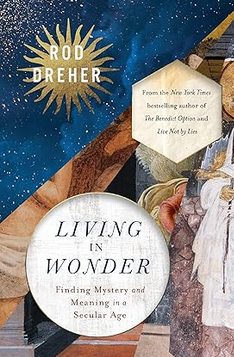
“The world is not what you think it is.” Rod Dreher opens Living in Wonder with that line, one that can rattle the reader when it actually begins sinking in throughout the course of this book. I’ve struggled with writing this review because this is one of the stranger books I’ve read over the tenure of the blog: the struggle lies not in the strangeness but because I don’t know how to think about the strangeness. Dreher is a journalist and author whose books touch on Christianity and culture, and he’s been calling with increasing urgency for Christians to take their place in the world more seriously. Here, though, he looks beyond the temporal into the spiritual — to where we wrestle not with flesh and blood, but with “against principalities, against powers, against the rulers of the darkness of this world, against spiritual wickedness in high places.” These are not factors most of the modern postwest thinks about: we are “material girls in a material world”, convinced that we are singular intelligences rising from dead matter and ruling over it, shaping the world to our will and actively trying to create a new intelligence out of bits of silicon and code. But what if that were not the case? Living in Wonder invites us to consider that there is a spiritual world beyond, that the west’s turning away from it has not lessened our hunger for it, and that certain trends in our current time are the result of people groping in darkness for that something else and finding trouble. This is a fascinating little volume that brings in hermits and saints, technologists and architects, all into a common conversation about the human need for enchantment. It is both an unusual look at modern society and a work of Christian formation, urging a deeper and richer religious practice — one that will sustain Christians against the adversity to come, from both ‘princes and powers.’
I should note from the start that I have an unusual relationship with this book: I’ve been following Rod’s substack long enough that I was ‘present’ for its entire life, from Rod announcing his next book idea, to his sharing interviews as he conducted them, even to voting on what book cover I thought was best. I’ve therefore been living with his thinking and his arguments for a lot longer than from when I acquired the book in October shortly before its release. Dreher begins by pointing out that the contemporary western world is an outlier in human history in its strict materialism, and he traces the rise of that materialism beginning in the medieval era, with the rejection of nominalism. Nomimalism asserted that the material world is inherently meaningless, save for that meaning which we humans assigned to it. It countered the medieval conviction that the material world was inherently saturated with meaning of its own, not simply what human thinking assigned to it: all of creation was endued with something else — immanent with the presence of God. This divorce of the world from its creator, and the driving out of the realm of spirit altogether, became larger and larger through the Protestant rupture and then the Industrial Revolution, the latter of which not only made it easier to believe only in the material world, but opened the door wide to profits and power. As Wendell Berry observed, there are no such things as unsacred places — only sacred and desecrated places. The trees have no dryads, no spirits, reflect no beauty of God: they are merely timber waiting to be harvest. The mountain has no glory, only minerals to mine. Families? What are they but cogs in the machine and then wallets to plunder? The twentieth century’s millions upon millions killed in grim industrial fashion shows what happens when the machine is set upon human beings who, after all, are not persons made in the image of God, but simply animals to be disposed of if they’re inconvenient to a political ideology, whether it be Nazism or the far more murderous state socialism of Stalin and Mao.
Despite the apparent triumph of materialism, people still appear to sense an absence, as though the house is missing a wall, or a roof. In The Enemies of Reason, Richard Dawkins mourned the fact that Europeans had gone from believing in God and saints right back to believing in fae folk and horoscopes: it’s as though we’re primed to believe in something else — or, as Lewis posited, “made for another world”. These days we are looking for the something else from other quarters, Dreher argues — from dabbling in the occult to psychedelics to UFOs. These are not unrelated, either: one book discussed here intimates that UFOs are not physical arrivals from another world, but rather manifestations of some other intelligence that is appearing in a form that we are prepared to accept. One man Dreher interviewed claimed that he saw a shimmering in his kitchen through which stepped two E.T.’s, who began predicting mundane events that would happen shortly: a bird landing on a sill, a car horn going off, etc. This man saw these visitors once a year for several years, and so did his wife. He sought answers from neurologists, who found nothing wrong with him: eventually an exorcism gave him relief from these beings, from whom he felt a strong sense of malice. Dreher also suspects that our experiments with AI may be acting like a high-tech ouiji board through which other beings are trying to insert themselves into, and quotes technologists who are gravely concerned about what they’re creating and yet feel compelled to summon it to life. More disturbing for me were the accounts from people who have taken DMT and report seeing similar beings in whatever plane their brain is going to while under the influence: Dreher thinks that somehow these drugs allow human consciousness to perceive the numinous more directly, but in a chaotic and dangerously exposed way. The threat from LSD and similar substances in not that they don’t do anything real, Dreher writes, but that they do.
Of course, it’s not just baddies out there in the ether: Dreher also discusses miracles and mystic experiences, including his own, and these are part of the fundamental point of the book, which is not merely to argue that the spiritual realm exists, but that it must be taken seriously. Not only does becoming more porous to the enchanted realm enrich the Christian life, something which will be much more important as the world grows more hostile toward Christian faith, but spiritual warfare is happening regardless of whether we believe it or not, and if we’re going to walk through a battlefield it would behoove us to find shelter and return fire from time to time. (Or at the very least, don’t open doors into the spiritual realm when we don’t know what’s on the other side.) Dreher’s own story is a powerful testimony into what living in the “enchanted world” can do: in the last decade he has been drug through several layers of hell, with family drama, heartbreak, excruciating illness, and then divorce. Through this, it has been his Orthodox faith and the way it calls him above the material world, allowing him to see beauty in broken places, to find meaning in suffering and to help other ‘forlorn and shipwrecked brothers‘. One especially powerful story he has shared takes place across several years, as he recounted being confronted by an Italian artist at a book launch years ago, and presented with a hand-drawn portrait of a strange scene involving a saint, St. Galgano: this was first in a series of events about Galgano and the church named in his honor that drove Dreher to write this book, and has become an integral part of Dreher’s religious understanding. Dreher shares some of his practices for making himself more ‘porous’, more open to the voice of God, including the Jesus Prayer that I’m given to understand is a fundamental part of Orthodox prayer life. Another recommendation is dialing back immersion in the digital world: smarthphones, he writes, are disenchantment machines, destroying our ability to be mindful and present in the moment, or attend to anything — mired in the quicksand of push notifications and facebook reels.
This is an intense book. When Rod first started writing about this a couple of years ago, I remember thinking wow, he’s getting into some weird stuff, but the more he interviewed people the less absurd it seemed to be. Looking around the world today, I can almost believe in some being that actively hates a human race made in the image of God and wishes us ill: the increasing absence of beauty in western architecture and art, soaring rates of mental illness, the war on biological reality, plummeting birthrates, the black hole of egoism that both are connected to — the worship of greed and excess, the loathing so many sectors of the population have for each other, the pervasive lust for domination, the fact that politicians keep pushing us closer to nuclear war despite the fact that it means the destruction of a habitable Earth and the extinction of humanity, — I could go on. There’s a reason the closest thing I have to social media these days is goodreads. There is a small part of me that would readily believe that yes, Satan and all of hell are out to enslave humanity and are planning on using technology to do it — but I say that knowing my own deep-seated mistrust of the Machine. Then, too, is my own skepticism: after I escaped the Pentecostal sect I was raised in, I hardened my heart toward religion and the supernatural, and despite having a series of mystical experiences that drew me back to God and then to Christianity, I’ve retained that skepticism for the most part. Reading Dreher and other’s experiences with something beyond has rattled that a bit, even as part of my brain is arguing with their experiences. “Rod is a creative personality and has an increased ability to see patterns when they aren’t there,” “Rod is reporting what someone else reported to him, but how can we know if they’re legit?” “Rod took LSD once as a teenager, so who knows how changed his brain long term?” — that sort of thing. And yet it rattles me, and so did Will Storr’s Will Storr versus the Supernatural, because Storr himself experienced some weird stuff, and my impression when reading his book was that he was actively resisting admitting it, dismissing it all as quantum mechanics or whatever.
In short, I can’t give you a….thoroughly digested review for this book. I can only say it’s interesting as hell, it’s moving, and it’s unsettling. This is one I will revisit after the ladyfriend has finished it (I gave it to her to her just so I’d have someone to talk about the experience with), but I may buy the kindle version so I can have highlights. (The Selections posted yesterday were taken from photos I took of th book’s pages while reading!) There so much in the book this review is missing, simply because I want to get something out there, to get some of my thoughts onto the page so I can better organize my thinking.
Related: If you want to learn more about Rod, WaPo did a story on him while he was researching the Benedict option book that goes into his biography a bit.
“We should know these ways of knowing not simply to tell us about the world but to draw us more intimately into relationship with it. To know the world not as a scholar knows the library but as the lover knows the beloved. This is what it means to live in wonder — to live within enchantment.”
“My argument is that if I could make it snow at will, then I could never experienced being called by the falling snow,” writes Rosa. “If my cat were a programmable robot that always purred and wanted to be cuddled, she would become nothing to me but a dead thing.”
“We cannot think our way back to enchantment or unity with God. We can only find it in participating in his life.”
“Saint Augustine knew it as far back as the fifth century: what we attend to is what we love, and what we love, we will become.”
“Economic and social liberalism — forms of social organization built around satisfying individual desire — have created a world full of narcissists obsessed with their own needs and desires, who no longer know how to give and experience love. Radically lonely, they try to escape their despair through consumption, especially consumption of sex via promiscuity.”
“The lesson is that humanity can take only so much disenchantment. If the disenchanted materialists will not have God, they or their children will one day accept Allah or some other creed — even a political psuedo-religion such as Communism or fascism — that gives them a sense of purpose and meaning.”
“[Generation Z] has been raised in a culture of radical individualism, therapy, and you-do-you self-fulfillment. What they don’t know, but will one day find out, is that a religion you make up yourself has no power to enchant. A religion designed to serve one’s perceived needs is unavoidably self-worship.”
“Put simply, we really are living in a crucible, as the fourth century was for the pagans of Rome. Either we will recover enchanted Christianity or we will succumb to chaos and cruelty.”
“A jig is a tool that manufacturers use to hold materials in place so they can guarantee the precision and accuracy of the finished product. the traditional liturgical and spiritual practices of the Orthodox Church are an example of a cultural jig — the kind of framework that keeps the individual believer in place and makes it more likely that he will be formed, over time, into a faithful and obedient Christian within the Eastern tradition.”
Yoinked from Rod’s substack
“To step inside the little church is like entering a dreamworld. There are Biblical stories painted everywhere, in colors so intense you can almost taste them. The figurative style is austerely Byzantine, in the Orthodox tradition, but the strong lines are dams barely holding back surging seas of glowing color, of the energy of life.”
Beatrice tells [Dante] not to forget that any beauty he sees in her is only a reflection of God and is a sign pointing him to God. This is a common mistake we all make: to love created things as if they were God, as opposed to icons through which Gods light shines. A beautiful thing is only seen rightly if it leads the soul’s eye to contemplate God.”
“To live in beatitude in this life is to live within enchantment.t. It is to begin to see things as God sees them, as much as that is possible in our limited mortal state. This is not to say one lives without suffering. But suffering becomes bearable because we know by faith that all things, good and bad, have ultimate meaning. Beauty has the power to pierce the gloom of hopelessness.”
“We humans are like fish dwelling at the bottom of a pond. We perceive the sun’s light filtered imperfectly to the depths. […] The higher we rise, the more clearly we see. The beauty shining through great art — painting, poetry, sculpture, dance, music, architecture, and so forth — calls us out of the depths of our spiritual slumber and up toward the pure light.”
Because of the holidays I’m doing a lot of house and dogsitting at the moment, and driving more than I usually do: consequently I’m also chewing through some audiobooks! Recently I finished two short Christmas “reads”.
What if Christmas, he thought, doesn’t come from a store? What if Christmas, perhaps, means a little bit more?
First up, Walter Matthau reading The Night the Grinch Stole Christmas. I’m pretty sure anyone reading this knows that story, but just in case: there’s a fellow named The Grinch who lives above a little village called Whoville, populated solely by Whos. The Grinch is not a fan of noise, and the Whos are especially noisy at Christmas, so the Grinch decides to steal Christmas and shenanigans ensue. This story, read by Walter “Grumpy Old Men” Matthau is as wonderful as you might expect. I was cackling the entire time.
Next up, The Best Christmas Pageant Ever!. I watched a theatrical version of this a few years back, but beyond the initial premise (terrible kids bully their way into being the stars of the Christmas play), I’d forgotten everything. Narrator C.J. Critt has a fine voice and delivery for general narration, and her vocals for different characters are varied and not horrifying like Tim Curry’s in A Christmas Carol. The story, for those who haven’t watched the new movie, is about the Herdman family coming to a church because they heard there was food, then bullying their way into the pageant. The Herdmans are raised by a single mother who is always working, so they’re absolutely feral. They’ve also never heard the Christmas story, so Best Christmas Pageant Ever allows readers to experience it through fresh eyes: the bewilderment that an innkeeper wouldn’t find room for a pregnant woman, rage at Herod’s baby-killing, etc. Because the Herdmans don’t have the assumed knowledge how The Characters Should Be, Mary is played more like an emotional Italian mamma, thumping the baby Jesus to make him burp and yelling at strangers to give the baby some space, and the wise men/three kings are not noble arcanes but suspicious foreigners who might very well narc on Jesus to Herod. Unrestricted by convention, the kid’s strong personalities give the performance a burst of unwieldly energy and actually make the audience think more seriously about the Christmas story. Comic, thoughtful, and touching.
WHAT have you finished reading recently? I listened to an Audible reading of A Christmas Carol (Tim Curry, very strange) and finished a version of The Screwtape Letters that’s oriented toward women.
WHAT are you reading now? The Bookshop of Memories and The Borrowed Life of Frederick Fife.
WHAT are you reading next? Not sure. I’m finally done with The Big Project for my class this semester, so now I can focus on serious reads, but the question is do I want to do serious reads.
Today’s prompt from Long and Short Reviews is, “Myths and Legends from Your Area”.
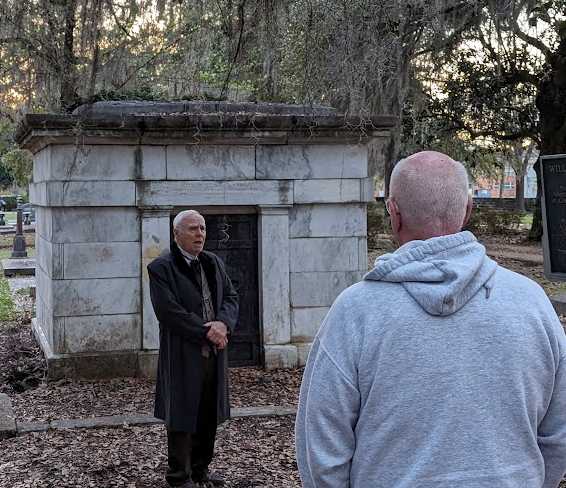
A few things come to mind! My city’s founder, William Rufus King, is buried in the Selma cemetary, Old Live Oak: there’s a story that he was repeatedly unburied and reburied between Cahawba and Selma (Cahawba being the state capital and the county seat, but losing those honors in turn to Montgomery and Selma), and is so unsettled despite resting comfortably in Old Live Oak cemetery that he will attack those who run around his crypt chanting his name, or who try to spend the night in his crypt. This used to be a thing with the high school kids, spending the night in his crypt. Eventually the city sealed the door, though. Spoilsports! Another local ghost story involves a Selma banker, John Parkman, who made some poor investment decisions after the War — and did it with federal money, during a military occupation. He was imprisoned and made his escape, but died in the process. Stories split on how he died: some say he was shot by the Yankees, others that he drowned trying to swim the Cahaba river to safety. Regardless, his spirit — myth has it — found his way home, where he began haunting the place that is now Sturdivant Hall, an art museum. According to the stories, there are certain areas of the property and the house that the servants began avoiding because it felt ominous and they kept seeing Old Master Parkman there. This story was included in Thirteen Alabama Ghosts and Jeffrey. More seriously, there’s a myth that on “Bloody Sunday”, Civil Rights marchers were attacked trying to cross the Edmund Pettus Bridge: that’s an outright falsehood, and easy to demonstrate by looking this photo of a peaceful march across the bridge, followed by this photo of marchers being attacked hundreds of yards away from the bridge. The confusion appears to have followed in the wake of bridge crossing ‘reenactments’ from 1985 on, in which participants cross the bridge and then turn around again. The focus on the bridge has made it a symbol of the Civil Rights movement: thousands of tourists show up each year to walk across the bridge, snap a selfie, and then leave — ignoring sites like the Courthouse where actual events happened.
A Christmas Carol is one of my favorite pieces of literature, ever, not only for its story of Christmas grace and human redemption, but for Dickens’ frequently amusing writing. I recently saw a theatrical production of it (via the Montevallo Main Street Players) and was inspired to see if there were any readings on Audible I hadn’t encountered. Last year I listened to the wonderful version of it by no less than Patrick Stewart, The Best Scrooge Ever. (Stewart’s A Christmas Carol is the one I re-watch every year, and not necessarily during Christmas.) In my search I found this, Tim Curry’s version. It is….definitely an experience, I will say that.
“And call off Christmas!”
When he is simply reading, Curry’s accent makes this an enjoyable experience: when he is doing characters, though, his great talent for voicing villainous characters makes most scenes sound…askew, at best. The Crachitt children sound like demons, or at the very least like they’re demon-possessed. When Curry does Fred laughing, it sounded like I was hearing the concierge from Home Alone 2 or Cardinal Richelieu in The Three Musketeers. Curry was born for malicious characters, and his vocal talents — while serving well the buzzard-like charwoman who undresses a corpse to sell its clothing — don’t lend themselves to beauty, grace, or joy. He plays a little with accents: I’m still developing my ear for English accents, but I heard at least three (RP, Yorkshire, and Cockney).I kept listening to this mostly because it was so fascinatingly weird.
For an audio version of A Christmas Carol, I say Patrick Stewart’s on Audible is the mark to beat. It appears that Curry did voice Scrooge in an animated version of this.
Today’s Top Ten Tuesday concerns books to read during storms, so I’m just going to post the Teaser Tueday and then something completely random.
This is what the screen gives the humans. It gives them the same escape. They don’t know when or how they came to be on their phones. They only know they are freed from the plodding, repetitive step of moment after moment. The joys and sorrows of life are muted for them, and they are carried down the road of time without knowing or caring. (My Dear Hemlock, Tilly Dillehay.)
In fact, labyrinthine regulations and bureaucratic programs favor large corporations with teams of legal experts far more than workers and small businesses. Chesterton was right when he quipped that “Big Business and State Socialism are very much alike.” (Localism: Coming Home to Catholic Social Teaching)
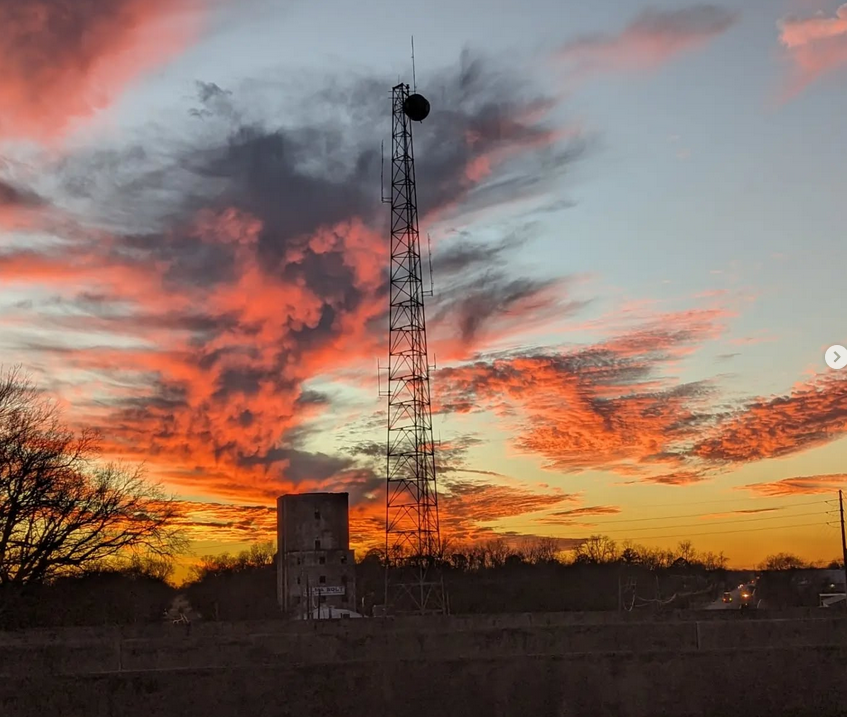
This is something I’ve wanted to do the last couple of years but never got around to doing properly. I have an instagram that’s used almost exclusively for nature shots — flowers, sunsets, that sort of thing. Follow me at QueenCitySon if you like that sort of thing. I promise not to beg you to support my patreon or buy t-shirts with photos on them.
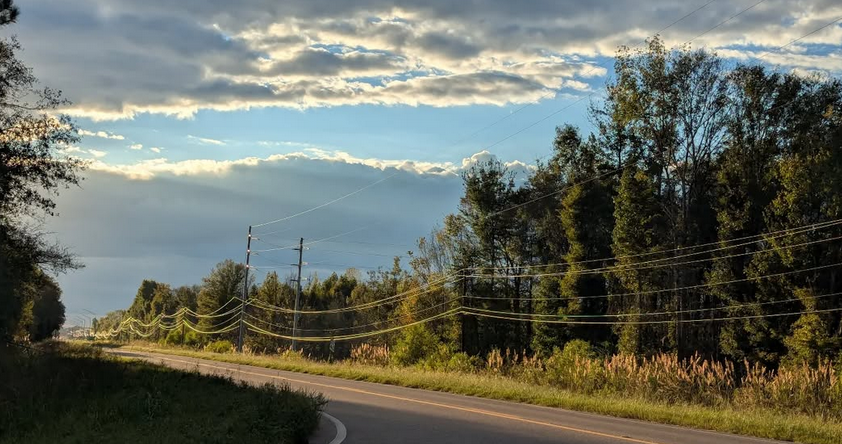
I literally pulled off the road to admire this view. Jan 17 2024.
Elodie Todd Dawson,. in whose memory the mighty oaks that gave Old Live Oak cemetery its name stand. Elodie was married a prominent local, and interestingly was Abraham Lincoln’s sister-in-law. When she died in childbirth at age 37, her husband commissioned a statue for her: not liking her hair, he ordered another statue, costing him $14,000 in all. Most inflation calculators I played with wouldn’t touch it, but one suggested that that amount is nearly half a million. Even more impressive: the amount of gold that was worth $14,000 in 1877 is now worth over a mil and a half. Elodie was known for loving wax makeup that melted in the sun, so whenever she would encounter an unshaded area, she would double-time (in a lady-like fashion) to the next shade. This inspired her husband to plant the entirety of the West Selma Cemetary with shade trees.
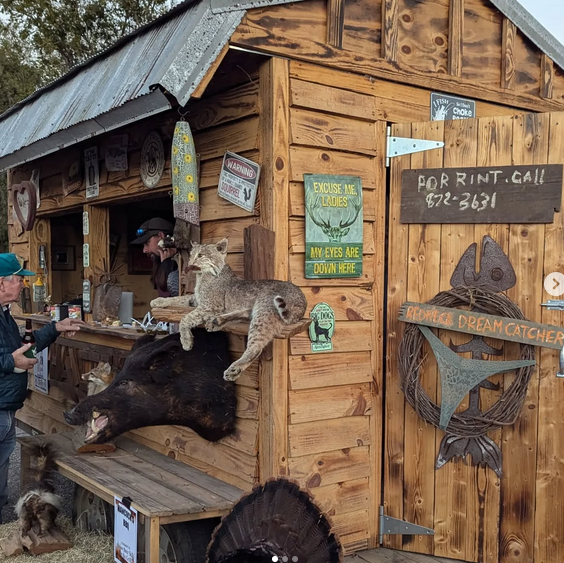
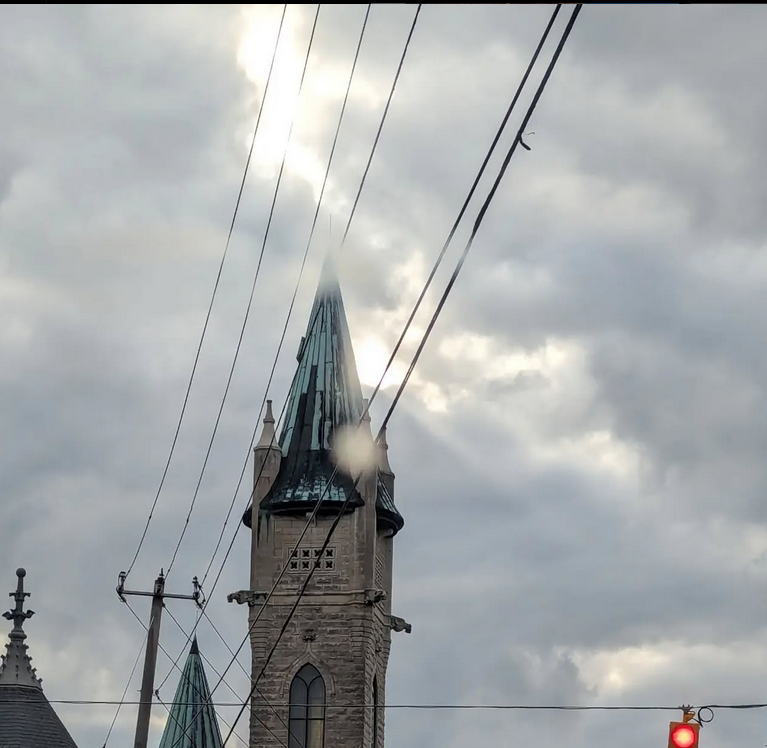
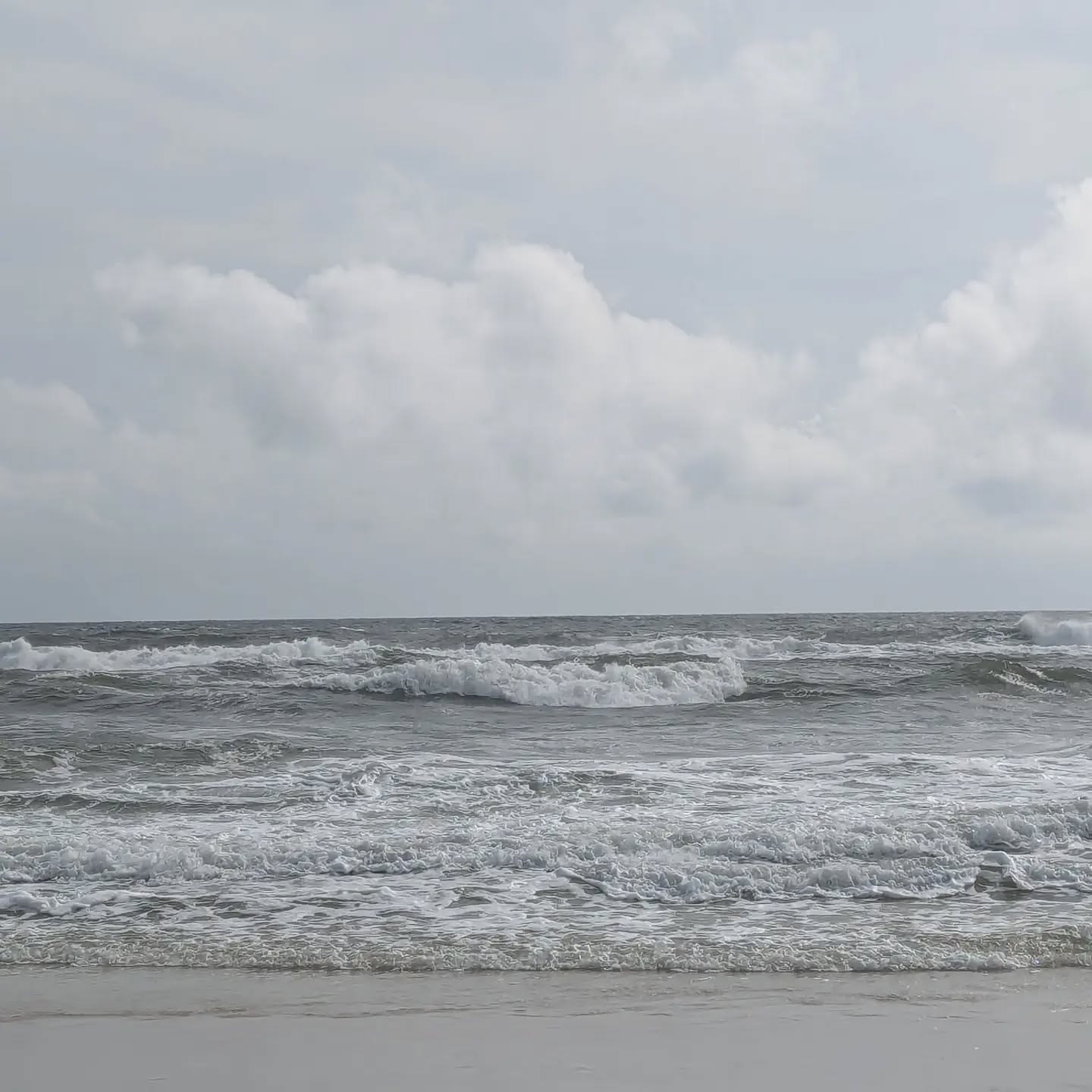
The last time I was privileged to see a sunset from this particular cattle ranch. Honestly, drop the utility poles and it’s fit for a postcard. Oct 2nd. “Attending BBQ on the Green always makes me feel like a Gone with the Wind extra.” Oct 10. Annual fundraiser for Sturdivant Hall, an antebellum mansion that houses an art museum. Will game cookoff, always an interesting experience. “Pensacola, I do declare — I could make you a habit.” Taken on my second trip to Pensacola within a month. Celebrating storytelling and bluegrass and tacos al pastor“Piercing the Heavens”. First Baptist’s spire appears to be breaking the clouds open. Falling hard for the “wild and wasteful ocean”.












 Reading Freely