Hitler’s Heralds: The Freikorps

‘What do we care when a Putsch goes wrong? – We’ll make another before too long!’

I’ve had this review written since September, but had intended to feature it as part of a series on inter-war Germany. That’s not going to happen this year, as I’m certainly not spending Advent reading about Weimar and Nazis!

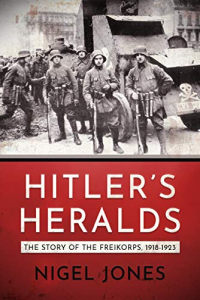
After four years of war, Germany’s army was exhausted and on the brink of revolution, tired of fighting endlessly for a front that never seemed to move. Faced with fresh foes from the United States, courtesy of “He Kept Us Out of the War” Wilson, Germany’s leadership decided to sue for peace — and, seeing how vindictive the Entente’s demands were, German authorities decided to let the demands be someone else’s problem. Specifically, the Social Democrats’ problem, who were trying to form a government even as a leftist revolution began breaking out piecemeal throughout the country. Seeking stability first, the SPD began relying on “Freikorps”, paramilitary units formed of committed veterans and fresh young men who regarded the ‘spectre of communism’ with hostile loathing, to put down insurrections. For months, these mostly-independent Freikorps would range across the country, attacking cities like Munich which had been taken over by revolutionaries, but once the red menace had been put down, the Freikorps weren’t ready to stop fighting. This is an absolutely fascinating history of Germany during a time of near-civil war, frothing with violence and driven by a restless spirit.

Although I faintly remembered a socialist revolution breaking out at the very end of the Great War — one that began with sailors — plainly it’s been a long time since my German history courses at university, or since I visited this particular area in my reading — I had no idea how potent it was. Were it not for the assassinations of two of its prominent leaders, the left may have created its own version of the DDR. After the armistice but before the diktat of Versailles, Germany frothed with militant drama, with violent eruptions seemingly every few weeks, taking over cities like Bremen and Munich. With Russia still embroiled in its own civil war — the Bolsheviks had not yet triumphed over the White Russians, let alone executed their coup over the Mensheviks — militant leftists in Germany thought their time had come. Germany barely had a government and its people had been through the wringer of a four-year war. Because so much of the regular army was demoralized and refused to fight, the provisional government of the SPD began making use of paramilitary forces — some of which organized themselves, some of which were initiated by the government itself. These forces were not ‘regular’ troops, but had their own private cultures and were devoted to their independent Fuhrers. This led to some volatility: one Freikorps, dispatched to help the Baltic states fight for independence from Soviet factions, was successful, but then decided that it might as around stick around and rule a bit: one leader pledged his conquered city to the Tsar, but decided to rule in Nicholas’ stead since the Romanovs were no longer around. Interestingly, one inducement to get the Freikorps to attack leftists outside of Germany proper was the promise — from German authorities, not Baltic — of Baltic estates. Hitler’s lust for the east was not new — and nor was use of the swastika, as one of the Baltic-venturing freikorps wore them on their helmets.

The German government, too, would feel the sting of the Freikorps’ battle-lust and interest in power: in March 1920, one Freikorps seized the city of Berlin itself, intending to establish a new Reich that dismissed Versailles. (Hitler and a comrade were not involved in this, although they’d intended to be — on their arrival they realized the effort was a shambles not worth contributing to.) It was such a poorly planned and almost impulsive action, though, that there was almost no support from the other freikorps. Coordination between the groups had previously proven necessary (especially retaking Munich from the socialists who had begun killing prominent citizens), but the Kapp putsch did little to bring in other groups and the one it contacted happened to be stone drunk celebrating the arrival of their namesake, von Hindenberg. Of course, just as leftist coups created Freikorps reaction, so too did Freikorp actions generate reactions: in the case of the Kapp putsch, workers and revolutionaries took over much of the Ruhr, only to be brutally put down by the regular Army and arriving Freikorps. It’s worth noting that the Beer Hall Putsch occurred in 1923, only three years after this, and in a place (Munich) that had already been part of leftist-Freikorp back and forth fighting: the Nazi attempt to seize power was only one of a series from varying factions and ideologies. Jones closes the book with a chapter on Hitler’s putsch, which was more successful than I realized, taking over several government buildings in Munich. The putsch was the result of Hitler forcing two other paramilitary organizations to cooperate, but their leaders switched sides once the actual fighting began.

This is an all around fascinating book, because the subjects are not all of a kind. It’s good storytelling, though facts are sometimes repeated too quickly, and I found Jones’ probing of the Freikorps zeitgeist to be especially interesting, as he reflects on both the romantic German youth movement and the forge of trench warfare itself.

Note: this book was also published under another title, The Birth of the Nazis. I’m fairly certain, anyway: the table of contents matches this book’s progress to a T.

Related:
Life and Death in the Third Reich, Peter Fritszche. The “Volksgemeinshaft”, which Fritzschze studies in part, apparently originated as a concept with the Youth Movement that’s detailed in Heralds.
Posted in history, Reviews | Tagged , , , , , | 7 Comments

Oceans and fishes and magic needles

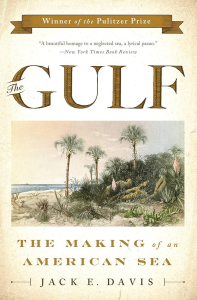
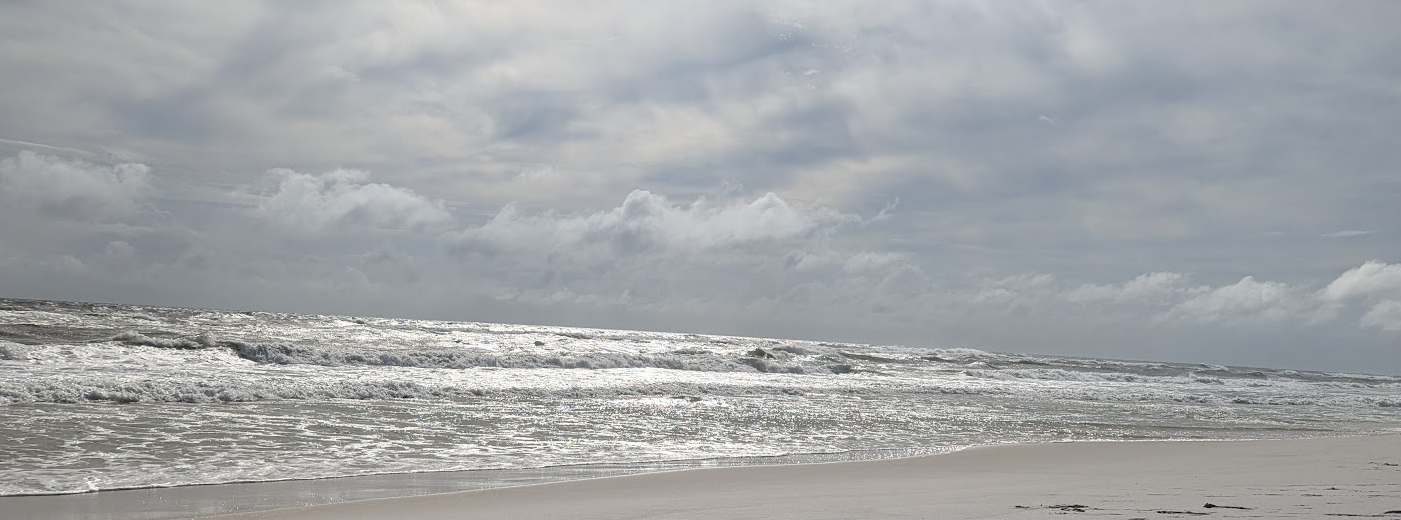
Within the last few weeks I’ve read a couple of science titles, one of which was a big ol’ book that deserves a proper review, but given that my mental energies are entirely focused on my last project for this semester, it probably won’t get. That big ol’ book is The Gulf: The History of an American Sea. Although I’ve lived in a Gulf state (the yee-haw kind, not the terrorist kind) my entire life, being subject to its humidity and hurricanes, I’ve never …read about it properly. Perhaps as with someone who grew up with mountains in the background and takes them for granted, I never looked at it as an object of interest. That changed when I visited Pensacola: on my last visit I was near the Gulf every single day, intoxicated by the energy of the waves and the different beachscapes they made.

The Gulf is a comprehensive history of the Gulf of Mexico, beginning with natural history and its formation, then moving to the various native American tribes that lived around its rim. These were people largely oriented toward the sea, not the land: in the case of Pensacola, the soil was so briny that agriculture wasn’t a practical option. This was a lesson that took European settlers a while to learn, though once they did they dived into fishing with such gusto that several species came close to extinction. Europeans were all over the Gulf, but especially the Louisiana-Florida rim, so Pensacola and New Orleans both have large parts in the early portion of the book. (I was amused to learn that the Mississippi’s mouth is so obscured by its delta that it was repeatedly passed by from ships looking to establish a fort or colony there.)

The further the book gets into the Gulf being aggressively settled and developed, the more diverse its topics get: there’s an entire chapter on how hunting for tarpon from a curiosity to an obsession, which is bizaare because these huge fish weren’t even being reeled in for eating, but purely because they were difficult to catch but impressive to pull out of the water, being huge and glistening silver. (Tarpon flesh evidently doesn’t taste good to most people.) Other chapters cover real estate and land development, literally in that latter case because wetlands were being “reclaimed” for development before people realized oh, wetlands are actually kinda vital for flood control, not to mention local ecosystems. The oil industry rather takes pride of place in the latter half of the book, but the author also covers the rise of tourism and environmental stewardship.

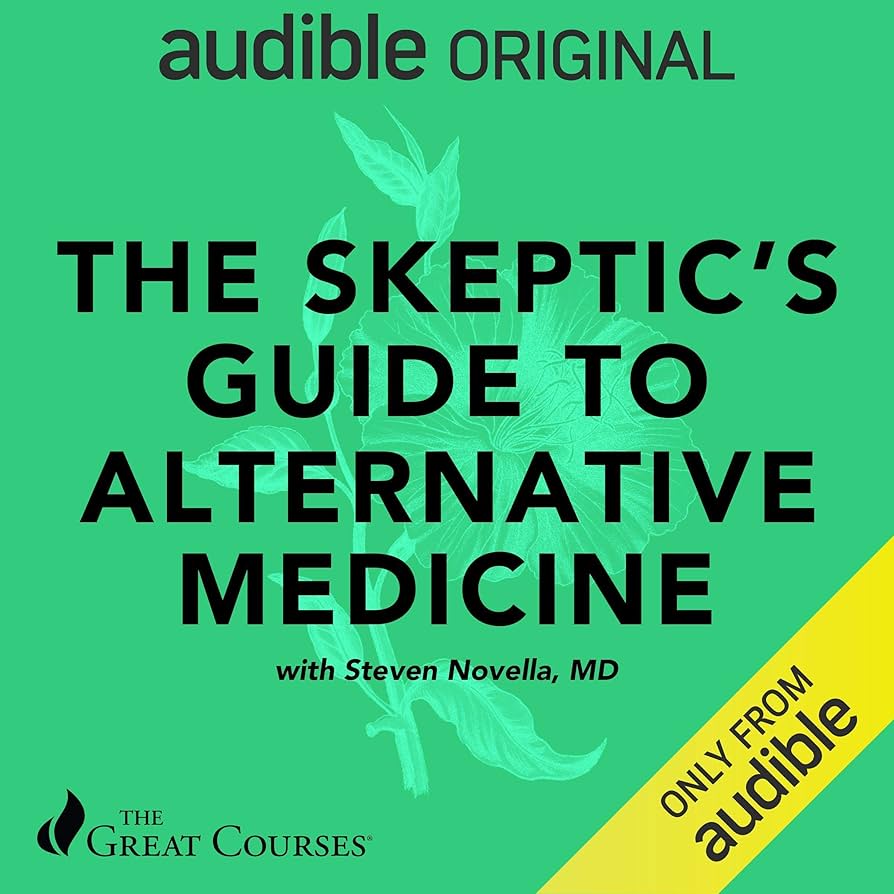
This was definitely a fun read given the sheer amount of varied history contained within: granted, it helped that the same visit where I bought this book was one in which I spent more time near the wind and waves than I did in my hotel room. Another read last month was really more of a listen: The Skeptic’s Guide to Alternative Medicine, presented by Dr. Steven Novella. I’m very familiar with Novella from his podcast, The Skeptic’s Guide to the Universe, in which he, his brothers, and a couple of friends go through the week’s science news, play games like “Science or Fiction”, and discuss dodgy goings-on in the news, like UFO claims. I used to listen to them on a weekly basis (beginning in 2006 on dial-up!), but it’s harder to find time for hour-long podcasts these days. SGU did a book a few years ago, and through that podcast I was pretty much familiar with all of this content. Novella kicks things off by discussing the rise of the scientific approach to health, and the infrastructure that sustains it — research, studies, etc — and then begins applying its standards to various health claims like “healing magnets”, homeopathy, chiropractic, and so on. This was an easy listen for me because I don’t have a dog in the fight. The only medicine he covers that Novella deems has any redeeming aspect at all is chiropractic, and then only certain and very limited aspects of it: the practice began with a man who was serial creator of quackery. Judging by people’s reviews on goodreads and amazon, their enjoyment of the book was directly tied to their emotional investment in the approaches covered.

Posted in history, Reviews, science | Tagged , , , , , , , , , , , , , , , | 2 Comments

The Year of Living Constitutionally

“After Nicolas Cage successfully stole the Declaration,” Kratz said, “we decided we shouldn’t tell people where our vaults are.” (There is a strict local law that all archivists must make at least one reference to the National Treasure film franchise.)

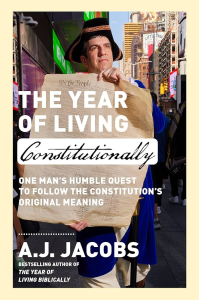
Although I am a fan of A.J. Jacobs’ ludicrous life experiments (trying to take seriously every bit of health advice he was given for a year, trying to literally follow every single rule in the Bible for a year, etc), my eye twitched a bit at this title. I’m a fan of the Constitution, a twenty-year veteran of heaping abuse upon DC regardless of administration for abusing it, and I anticipated that much in this that would annoy me. The Constitution does not apply to individuals, for instance: its entire purpose was to define and limit the scope of the National Government — not people, not the individual States. So harrumph, I said, harrumph! However, the cheap price ($2 on Kindle!), my past affection for Jacobs, and the potential humor to be had in witnessing a band go about in a tricorn hat urging New Yorkers to sign his parchment-paper petition with a quill feather, urged me to try it. While I did find much to annoy, I appreciate Jacobs trying to take the Constitution seriously, and learned quite a bit despite my own familiarity with the founding fathers and their thinking.

Jacobs undertakes several approaches to “living constitutionally”. For one, he decides to do all of his writing with a quill and parchment paper, which entails carrying around a little wooden box to store them in. When he is working at home, he turns off all the lights and works purely by candlelight, to the annoyance of his wife and most of his children, save for one who likes the eccentricity. (That child also loved the fact that Dad also began wearing an 18th century outfit out and about while he was attempting to get people to sign petitions and such.) As Jacobs begins trying to understand rights like “The freedom of assembly”, the right to petition and so on, he tries to exercise said rights in the same fashion that Madison & company would have: he tries to vote by announcing who he is voting for, he creates a petition on a scroll to ask for a Constitutional amendment shifting the presidency to a three-person council instead of an elected monarch, and he “assembles” by inviting people to his home for a dinner to discuss politics, purposely inviting a mix of ideas to foster genuine debate. He also tries to bring back 18th century customs like baking an Election Day cake and preparing some of Martha Washington’s rum punch to give to those at the polls. He also joins up with a group of American Revolution reenactors to further immerse himself in “living history”, and in one of my favorite sections, attempts to get a Congressman to issue him a Letter of Marque so he can go forth on the ocean blue in hopes of intercepting some of America’s enemies.

At the same time that he’s cosplaying the life of an 18th century writer, Jacobs is also reading gobs and gobs of books about the Constitution, both what its ideas meant in their time and how they’ve been applied over the years. He was surprised to discover, for instance, that the Bill of Rights was appended to the Constitution in order to facilitate its passing, and that some of the founding generation regarded it as potentially an issue given that if some rights were specifically enumerated, the government might then assume that it could do as it pleased otherwise. America in the early Republic had a much different culture than our own, with laws that we could now regard as violations of free speech because they governed hurling abuse at the government, or public profanity. Jacobs is also surprised that Congress was meant to be first among equals as far as the government goes, and ends the book convinced that the President and SCOTUS, especially the latter, need to be taken down a few pegs. Although I enjoyed this part of the book for the most part, I wasn’t impressed by Jacobs study given that he doesn’t appear to appreciate the nature of the “Federal” system, especially the fact that the States were meant to be powerful actors in their own rights — with direct control over the Senate, for instance, checking the power of the national government. One amendment he suspiciously never mentions is the Tenth Amendment, which says that “any powers not given to the Federal Government are reserved to the States, or to the people”. In his study of how the Constitution has changed over the years, he also never goes near the Civil War, which dramatically changed the little-c constitution of the Union, making it a national government (by gunpoint) instead of a union of equal States. I don’t know if he sidestepped it because of controversy or something else, but regardless of how much of a Pandora’s box it is, when tackling this subject, it has to be opened.

In short, this was a mixed bag: mostly enjoyable, but with deficiencies — some serious. As much as I enjoyed his attempts to “live history”, it seemed more like a gag than a serious endeavor to understand the thinking of 18th century Americans, especially given how much time he spends judging them by the standards of a self-described “New York liberal”. I liked it far more than I expected, though.

Posted in Politics and Civic Interest, Reviews | Tagged , , , , | 4 Comments

WWW Wednesday &

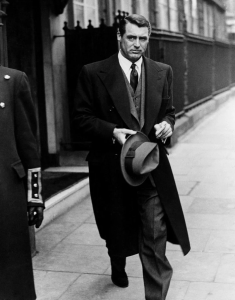
Today’s prompt from Long and Short Reviews is “Soemthing we wish would come back into fashion”, to which I say…..people wearing actual clothes when they’re in public. Not pajama pants, not fuzzy-wuzzy house shoes, and not vulgar t-shirts. Clothes that say, “I am a human being and I choose to comport myself with some modicum of dignity.” Also, men’s hats that are not baseball caps. I like baseball caps — I wear them all the time – but I also have a a black flat cap I wear in winter, and then a brown wide-brimmed “work hat” that makes me look a bit like a cowboy, especially when I wear it with my rugged winter jacket and boots. Also, when people wear tennis shoes with suits it makes me sad. I don’t even wear suits and it makes me sad. Well, enough of my sartorial grousing and on to the books….

WHAT have you finished reading recently? The Year of Living Constitutionally, A.J. Jacobs.

WHAT are you reading now? The Borrowed Life of Frederick Fife and Localism: Coming Home to Catholic Social Doctrine, which includes pieces from some of my favorite authors (Joseph Pearce, Anthony Esolen, and — in an urbanist surprise — Chuck Marohn).

WHAT are you reading next? I’ll be finishing My Dear Hemlock, which is The Screwtape Letters but oriented much more towards women. Reading this along with the lady friend, but I’ve been holding my horses since she hasn’t finished the first half yet.

Posted in General | Tagged , | 6 Comments

Top Ten Freebie: You Get Music

Today’s TTT is a freebie, so I’m going to share some music I’ve loved this past year. But foist, the tease!

This is what the screen gives the humans. It gives them the same escape. They don’t know when or how they came to be on their phones. They only know they are freed from the plodding, repetitive step of moment after moment. The joys and sorrows of life are muted for them, and they are carried down the road of time without knowing or caring. (My Dear Hemlock)

Now, here’s some music I’ve “liked” on YouTube in the last twelve months. Judging by this list you’d think I listen exclusively to country/bluegrass/folk, but that ain’t necessarily so. It’s just what moves me enough that I “smash the like button”.

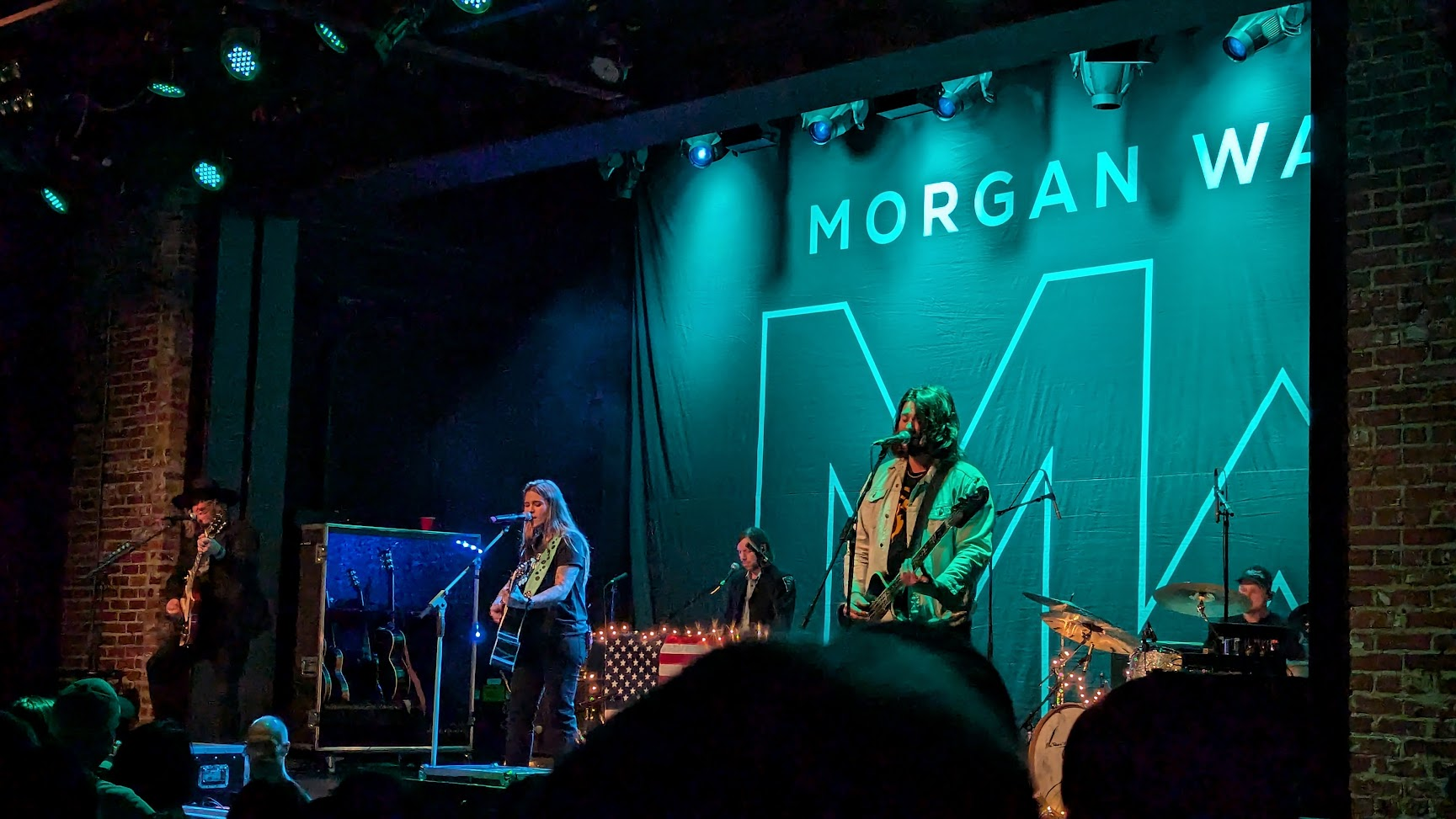
“Morgan Wade?! That’s a surprise!” said no one who has read this blog in the last 2+ years. I’d never gone to a concert before this year, and I wound up going to two Morgan Wade concerts.

Fiddles! Yodeling! Buck-dancing! (Okay, the buck-dancing is in their other videos.)

What a fellowship, what a joy divine,
Leaning on the Everlasting Arms!
What a blessedness, what a peace is mine,
Leaning on the Everlasting Arms!

Mozart dropped a new hit! Nice.

I stumbled upon Beloe Zlato a few years back when I found a video of four women singing a folk song in harmony in the middle of a metropolitan courtyard. Being a fan of traditional folk music, I’ve followed them since.

… Well, I come down here from the mountain top
And I cut you down like an autumn crop
My love for you will never stop
But I pulled you over like a small town cop …
Hay fever’s knockin’ at your door
You can feed the dogs lyin’ on your floor
Took all your gold from your chester drawer
I can drive you crazy, yes, I can

A few years ago I heard Sierra singing Steven Earle’s “The Mountain” and she’s been a favorite since. Skip to 1:15 if you don’t want talky. (That recording of “The Mountain” no longer exists on YouTube, alas for you.)

So, I knew Tulsi Gabbard years ago as an anti-war Democrat, which makes her an endangered species. (Or made. She left the Dems to be independent for a bit and now she’s officially registered with the Republicans, because the neo-con day in the sun is over.) I knew Jocko as a former Navy SEAL and life coach, a dude who dishes out hard advice to his audience, mostly men. Advice like — you’re in adversity? Good. You’ll grown from it. Also, set your alarm for 4:00. You don’t need to sleep in. You need to carpe the diem. Akira the Don has made musical mixes of some of his talks that are good stuff for morning power-walks. The idea that these two know each other is wild.

I can’t be defeated as long as I’m needed
I live for the hope in your eyes
I’m a fool for darkness and a fiend for light
Could you blame me one last time

Sierra Ferrell is one of my favoritist country singers, and Tod was someone I was really into a while. Turns out Ben and Sierra Ferrell have known each other for years, according to people who stalk them on reddit, (I only stalk Morgan.)

That restaurant we were gonna visit, it’s for sale
Time waits for no man, baby
Time can go to hell
I miss you on Tuesdays, our evening drives
I’m on the highway alone and I just close my eyes
I know I’ve made my bed and I’m lying in it
I was hoping you’d come here and lie with me for a minute
I know it’s asking for death
It won’t help me heal
There’s a time to love and a time to heal
A time to love and a time to kill

One of my favorite songs from her new “Obsessed” album. If you’d like, like, you can buy her handwritten lyrics of this for like $200. (I’m not that #obsessed, sorry.)

Lake Street Dive is a band I’ve loved since 2019. I almost went to see them in Iron City last year, but forgot about buying tickets.

Obviously I could give Morgan or Sierra some more love, buuuuuuuuuuuuuuuut Allison Young and Josh….Turner? have been favorites since 2020. (Josh Lee Turner. I googled it. Josh Turner did a good country song called “Would You Go With Me” which is an old favorite.)

And now the one I saved for last because people might think I’m crazy if they saw it earlier. Yes, it’s musical.

Okay. Yes. We’re bored now. We’re all bored. But has it ever occurred to you, Wally, that the process which creates this boredom that we see in the world now may very well be a self-perpetuating unconscious form of brainwashing created by a world totalitarian government based on money? Just a few days ago I met this man whom I greatly admire, he’s a Swedish physicist — and he told me that he no longer watches television, he doesn’t read newspapers, and he doesn’t read magazines. He’s completely cut them out of his life, because he believes we’re living in an Orwellian nightmare and these things are turning us into robots. It seems quite obvious that the whole world is going the same direction. I think it’s quite possible that the 1960s were the last burst of the human being before he was extinguished, and that this is the beginning of the future, that from now on there will simply be all these robots walking around — feeling nothing, thinking nothing! […]

“And when I was at Findhorn I met this extraordinary English tree expert who had devoted himself to saving trees, and he’d just got back from Washington lobbying to save the Redwoods. And he was eighty-four years old, and he always travels with a backpack because he never knows where he’s going to be tomorrow. And when I met him at Findhorn he said to me, “Where are you from?” And I said, “New York.” And he said, “Ah, New York, yes, that’s a very interesting place. Do you know a lot of New Yorkers who keep talking about the fact that they want to leave, but never do?” And I said, “Oh, yes.” And he said, “Why do you think they don’t leave?” And I gave him different banal theories. And he said, “Oh, I don’t think it’s that way at all.” He said, “I think that New York is the new model for the new concentration camp, where the camp has been built by the inmates themselves, and the inmates are the guards, and they have this pride in this thing that they’ve built—they’ve built their own prison—and so they exist in a state of schizophrenia where they are both guards and prisoners. And as a result they no longer have—having been lobotomized—the capacity to leave the prison they’ve made or even to see it as a prison.” And then he went into his pocket, and he took out a seed for a tree, and he said, “This is a pine tree.” And he put it in my hand. And he said, “Escape before it’s too late.”
Posted in General | Tagged , | 7 Comments

Moviewatch: November 2024

Another month gone, another round of movies to reflect on! [*] entries were those that I picked.

Ghostworld, 2001. I…really don’t know what this is about. We follow two teenage girls (one is Scarlett Johanson, the other is the Hollywood-Ugly Enid) who graduate high school with no plans beyond getting an apartment together. Hollywood Ugly Enid is terrible at customer service, though, so she keeps getting fired and is getting into a weird relationship with a man old enough to be her father, Steve Buscemi. That’s really the movie. Main reason to watch would be if you’re a SJ fan and want to see her as developing actress. I just saw her and Steve Buscemi and figured, hey, that’s a winner.

Muriel’s Wedding, 1994. Australian….darkish comedy about a woman who’s honestly a little nutty.  Lots of ABBA music.  Caution: trailer may stick “Waterloo” in your head,

[*] Oppenheimer, 2023.   A dramatic rendering of J. Robert Oppenheimer, the development of the bomb, and some petty politics that followed in the fifties when someone Oppenheimer had offended wanted to strip him of his security clearance on suspicion of being a Soviet agent.  Good drama, though Harry Truman’s voice acting was bizarre: he sounds like he’s from down yonder in Mississippi, not Missouri,  There are literal recordings of Truman from this time, so it’s not as if they couldn’t  have gotten closer. 

[*] Dirty Harry, 1971.  A cop with no tolerance for political nonsense goes after a twisted serial killer.  Some seriously disturbing scenes, especially with the adult-on-child violence.  

[*] The Shape of Things to Come, 1979. I don’t know if this merits B-movie status.  It uses H.G. Wells title for future-casting but has NO connection to it otherwise. Enjoyed the costuming and props but that ….was about it. 

[*] The Philadelphia Story, 1940. Rewatch with the lady-friend. She hasn’t seen this, a grievous error I had to remedy.   Cary Grant, Kathryn Hepburn, and Jimmy Stewart all star in a funny comedy about the feud between divorcees (Grant and Hepburn)  resulting in two newspaper people (including Stewart) being brought in. Stewart falls for Hepburn and realizes that Grant still has feelings for her. So much good acting and comedy. 

The Third Man, 1949. British film set in postwar Vienna, based on screenplay-turned-novella by Graham Greene. Orson Welles means = interesting shots.  Fellow arrvies in Vienna at the invitation of a friend to find out that whoopsie, said friend is dead and  is suspected of being a racketeer. 

Only God Forgives, 2013. Ryan Gosling. Two brothers have a crime thing going on in Thailand, but Gosling’s brother is a pervert who gets himself killed after he violates the wrong man’s daughter. Gosling’s mama shows up in town to chide him for not avenging his godawful brother, and many people die. Not a fan.

Duck Soup, 1933. Political satire starring Groucho as newly-minted dictator of Fredonia. Can’t imagine it was meant as making fun of Hitler, since he only took power in ’33. Funny nontheless, especially the mirror scene. Later saw a bit from the Lucy show in which Lucille Ball and Harpo recreate the mirror scene.

Sherman’s March: “A Meditation on the Possibility of Romantic Love in the South During an Era of Nuclear Weapons Proliferation”, 1986.

The movie has very little to do with Sherman’s match. It’s more about a guy retracing Sherman’s march through Georgia and the Carolinas and getting involved in relationships with women who disappoint his hopes. Interesting to a mid-eighties baby, as it’s a look at the world as it was when I was born.

[*] The Young Messiah, 2016. Drama based on a Roman soldier played by Sean Bean having to hunt down Jesus of Nazareth, age 7. Bean’s character, Severus, was involved in the Bethlehem slaughter (Herod ordering all male babies killed on suspicion that they might be the Chosen One), and has to choose between duty to to orders and his own humanity. Enjoyable enough, but I only watched it for Sean Bean. Jesus speaks RP, naturally.

That Touch of Mink, 1962. Doris Day and Cary Grant star in a romantic comedy about a playboy who meets Doris Day, an out-of-work computer programmer, and falls for her completely. Unexpected cameos from Micky Mantle, Yogi Berra, and Roger Maris.  Some awkward film and editing work (lots of obvious, glitchy cuts), but the writing was fun and I found a lot to like, especially the “You librarians live it up pretty good!” line. 

Dog Day Afternoon, 1975. Al Pacino plays a bank robber who just wanted some money for his partner’s plastic surgery, but things go sideways. Evidently based on a true-ish story. The funny part was Pacino playing a character named “Sonny” besides the guy who played Fredo, making me wonder — my boy, what have they done to my boy?!

The Ruling Class, 1972. Peter O’Toole plays an absolutely insane scion of a prominent aristocratic family who inherits his father’s title after his father’s fake-suicide attempt accidentally turns into a real suicide.  O’Toole is uncomfortably good at portraying someone who is stark raving mad, and the film’s production aids to this: there’s random singing, and sometimes we get visuals as the schizophrenic O’Toole might see them.  Unequal amounts of funny/disturbing. 

The Sugarland Express,  1974. Big ol’ car chase.  Spielberg and John William’s first collab. 

The Boys Next Door, 1985.   Charlie Sheen and that guy from Grease 2 are two graduates with no real plan for their lives.  They decide to visit Los Angeles, and That Guy from Grease 2’s penchant for violence leads to increasingly anti-social behavior. 

Posted in General | Tagged | 5 Comments

November 2024 in Review

Didn’t get home until 2 am but it was still worth it Morgan Wade — Iron City, Birmingham AL.

Holy cow, we’re looking down the barrel of this year’s last month. That went by fast. While I didn’t do as much reading for SciFiMonth as I’d hoped, I think I made a pretty good accounting of myself. I didn’t get finished with the Science Survey, either, but that’ll happen this month. My computer dying disrupted my final weekend, though I plan on getting a replacement system online sometime Dec 1st. Kinda have to, because I need a workhorse PC for my final project (pitching library programs and incorporating presentations, flyers, and a video), and my Chromebook ain’t gonna do it. At least there were Black Friday sales to take advantage of.

Sci Fi Month:
War between the Worlds: Global Dispatches, various authors
The Lost Cause, Corey Doctorow
Firefly: Life Signs, James Lovegrove
The Illustrated Man, Ray Bradbury
Eruption, Michael Crichton & James Patterson
A Long Way to a Small, Angry Planet, Becky Chambers
A Closed and Common Orbit, Becky Chambers

Nonfiction November:
Rise and Reign of the Mammals
Beauteous Truth, Joseph Pearce
American Carnage: Inside the Republican Civil War, Tim Alberta
Hello, Everybody! The Dawn of American Radio, Anthony Rudel
What If? 2, Randall Monroe
Gulf: The Making of an American Sea, Jack E. Davis
The Skeptic’s Guide to Alternative Medicine, Steven Novella

Science Survey:
Rise and Reign of the Mammals (Natural History)
Gulf: The Making of an American Sea, Jack E. Davis (Natural History)

Favorite Highlight of the Month:

While nature is a great teacher, her powers are limited by our receptivity and docility to her lessons. Busyness, overconsumption, impatience, and the distractions of non-essential things are conditions of the Fall, not just city life. Unless you are willing to undergo a conversion of sorts, the sicknesses and abstractions of modernity will follow you onto the land, which has little pity for arrogant or stubborn pupils.(Localism: Coming Home to Catholic Social Teaching)

Science Fiction Book Bingo:

A Ship and Crew: A Long Way to a Small, Angry Planet , Becky Chambers
Old-Timer (A Book Published Before 1974): Illustrated Man, Ray Bradbury

Coming Up:

Advent is nice and tidy this year, running December 1st – December 24th, so I’ll do a little something in that direction, reading about Church history, Christian formation, something like that. The lady-friend and I are going to be reading My Dear Hemlock, a version of Screwtape Letters but written about a female “patient”, together, so that’ll be one thing. I usually re-read Screwtape during Advent so this will be an interesting variant. My focus in Dec will be to post reviews for some works I’ve read this year and not reviewed, but there will also be other stuff up the pike. But, all that will wait until Dec 9 when my final grad school work for this month is due. Yes, even the prospect of my being able to play Cyberpunk 2077 must be deferred until my work is done…..

Posted in General | Tagged | Leave a comment

Tech note

I woke up this morning to discover that my computer’s power issue had resurfaced again. I’ve known some component was on the verge of failure (either motherboard or power supply) for the last month or so, but little adjustments would always bring it back to life so I was hoping it would linger into next year. The motherboard is nearly nine years old and has been in continuous service since, and the power supply is half that. Whoever is at fault, the ol’ girl isn’t powering on and I’m typing this from a laptop which I detest. (Mostly for the keyboard. I need a proper mechanical keyboard.) The timing is dashed inconvenient, as I have a final paper due next week. Anyhoo, if you don’t see me posting the next few days you may safely assume that my current rig has joined the choir invisible, but if push comes to shove I’ll …..sigh…….go to some big city and buy a new system. I’d rather hoped to build my next machine, as my current system is mostly re-built (save for its motherboard + CPU + ram), buuuuuuuuuuuuuuuuuuuuuuuuuuut school doesn’t give me a lot of wiggle room.

Posted in General | 7 Comments

WWW Wednesday & Long and Short Prompt

WHAT have you finished reading recently? Becky Chambers’ A Closed and Common Orbit, about two individuals’ struggle for self-realization.

WHAT are you reading now? Sort of looking at The Borrowed Life of Frederick Fife, which seems cozy and heartwarming and all that, a bit like A Man Called Ove, and also planning on tackling more le Guin during the break.

WHAT are you reading next? There are two recent releases that I’m eying up (We Who Wrestle with God by Jordan Peterson & Provoked by Scott Horton), but I want to finish up the Science Survey with something on weather & climate.

And now, Long and Short Reviews’ writing prompt for today, which is “A Musical I Like”.

As a lifelong singer and choirboy, I love musicals. Until the last couple of years, I would have answered “West Side Story”, which was the first musical I ever encountered, via Music Appreciation in high school. However, back in 2022 my godsister made me watch Shrek: The Musical, and ever since then its music has come across my speakers at least twice a week or so. Here are a couple of my favorites:

Or I could be a poet, and write a different story,
One that tells of glory, and wipes away the lies
And to the skies I’d throw it, the stars would do the telling
The moon would help with spelling, and night would dot the ‘i’s
I’d write a verse, recite a joke, with wit and perfect timing.
I’d share my heart, confess the things I yearn, and do it all while rhyming.
But we all learn. But we all learn.
This one the lyrics don’t do justice: only watching Sutton Foster will do.

Posted in General | Tagged , | 8 Comments

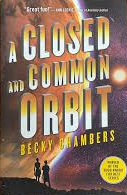
A Closed and Common Orbit

A Closed and Common Orbit follows closely on the heels of Becky Chambers’ A Long Way to a Small, Angry Planet, but departs from the good ship Wayfarer to tell instead two coming-of-age stories that prove conjoined. One character is new: “Sidra”, a ship’s AI who for plot reasons needed to be removed from the ship and transferred into a highly illegal body kit. She is joined by Pepper, a tech whom we met in Long Way and who found the illegal body kit to begin with, agrees to house and help Sidra learn to function within Galactic Community society without giving away her identity as a synthetic lifeform. In the novel’s other track, we meet “Jane 23”, a genetically-bred slave girl living in a society where genetically-enhanced humans live in comfort and splendor on the labor of girls like Jane. As the book develops, an accident will arouse Jane 23’s curiosity about the world outside of her factory, and she will make her escape from the robots who control her and come of age living in a defunct junkyard shuttle with a nurturing AI. This track proves to be Pepper’s origin story, and makes her bond with Sidra all the more interesting: they are both manufactured beings whose very lives provoke an existential crisis. As both characters are dealing with these questions and getting into trouble — readers are also getting a fresh and heavy dose of Chambers’ worldbuilding as we get more familiar with Port Coriol, which is a bit like a smuggler’s planet sort of area. This was a very different book than Long Way, but I enjoyed its sharp character focus even more, even without Kizzy! Definitely planning on continuing with Chambers and this series, but want to focus on le Guin’s Left Hand of Darkness first.

Posted in Reviews, science fiction | Tagged , , , , | 5 Comments