The Fall of Saxon England

The Fall of Saxon England
© 1975 Richard Humble
242 pages


History never rests. In the middle of the first millennium, the great tide of the Roman Empire began at last to recede. Its legions stationed in distant reaches of the realm, like those in Britain, were removed to better protect the heart of Rome from its many enemies.  The Britons were left to their own devices,  and into the vacuum left by Rome swept a multitude of European immigrants: Angles, Saxons, Picts, and Jutes.   Latin was an unknown tongue to them, but they came, they saw, and they conquered. Establishing their own kingdoms the tribes reigned supreme for a few centuries — but then came the Vikings.  Beginning in the late 8th century, the Saxon lands became the object of attention of the Danes, and for two centuries invaders, raiders, and aggressive settlers would pummel the island. Isolated raids gave way to massive armies that broke several of the Saxon kingdoms, while the rest fell under the lead of one man — Alfred the Great — creating a patchy but unified English resistance. His brilliant successes would be undermined by less able successors, however, pitted against wilier foes.  The Fall of Saxon England is a blow-by-blow account of the Viking siege of England, ending with the invasion of William the Bastard.   Hailing from Normandy, itself a Viking-taken area of France, 1066 put an end to Saxon self-rule.  This storied military and political history of an England between Rome and Normandy has a sad end, but many of the actors are brilliant. Of special interest is a section on King Arthur, who the author speculates might have been inspired by Ambrosius Aurelianus.  Highly readable,  Humble delivers an education into how the great Saxon kingdoms, later earldoms, emerged and evolved until the Norman conquest.
Posted in history, Reviews | Tagged , , , , | 5 Comments

The Copperhead

The Copperhead
© 1893 Harold Frederic
108 pages

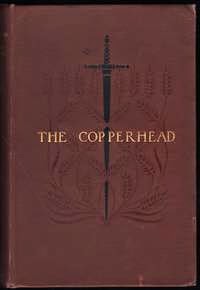
War can destroy a city without the first shell falling on it. Such was nearly the fate of Four Corners, New York, a small farming community in its upper reaches. Far removed from the battlefields of the Civil War, the village nonetheless suffered its injuries.  So far as Abner Beech was concerned, the world consisted of the Four Corners; the South was a distant land, its problems those of its own people. Before the crisis erupted, he was not alone in his sentiment:  most of his neighbors were kindred spirits, one Methodist lunatic excepting. That was Jee Hagadorn, from a long and illustrious line of puritanical scolds. He is, among other things, an Abolitionist, and once the war begins he ascends from the fellow everyone avoids to spearheading the town’s support of the war effort. Abner Beech is astonished at how quickly his neighbors become enthusiastic about the prospect of great hordes of young men lining up to kill one another, and scandalized by the impending doom that lays in store for the Constitution in the wake of Abe Lincoln’s assumption of war powers, and widespread support of it.   Beginning the book as a pillar of the community, Abner quickly falls from grace to become a pariah, spurned at church and forced by his own contrariness to keep to himself on his own farm.  Matters worsen as his own child marches off to war, wooed by the lunatic warmonger’s daughter, and eventually he is subjected to  a torchbearing mob outside his home.  Although the original novel’s Beech is not nearly as sympathetic as his dramatized counterpart  in Copperhead (the viewing of which prompted me to read this),  he is nonetheless heroic in both holding on to his principles, and his in being easy to forgive. The story ends on a happy note, indeed far happier than the movie’s.  Modern readers will find Beech prickly, but the enduring lesson has not changed regardless. War is a sinister thing, able to turn friends into bitter enemies simply for holding the wrong opinion.

Posted in Reviews | Tagged , , , , | 1 Comment

Faith and Treason

Faith and Treason: The Story of the Gunpowder Plot
© 1997 Antonia Frasier
384 pages

       Remember, remember, the Fifth of November, the gunpowder treason and plot….or, as contemporaries called it, the Powder Plot.   Its scale, for the 16th century, was ambitious, especially so for its novelty.  No one-shot assassination, in this scheme at least thirteen conspirators worked together over a course of several months on a plan that would simultaneously involve kidnapping a royal princess and blowing up Parliament – killing, in one fell swoop,  King James, his son the prince,  the royal ministers, and the assembled lords of England. The plan was undone by a mysterious letter, but even its collapse was exciting, featuring explosions and a shootout before legal trials wiped up the last of those involved.  What possessed these men on such a murderous undertaking?  Faith and Treason is an excellent history of the affair, prudent and compassionate. While no one would fault Antonia Frasier for heaping abuse on men who knowingly plotted the death of innocents, who intended to create widespread confusing by massacring the entire government of England and then conspiring with foreign powers to impose order,  she does not. She simply tells the story of what happened with an eye for understanding why, and much of it seems to be misplaced youthful bravado, matched with the Crown’s longstanding persecution of religious minorities and the crushed hope of James’ about-face from earlier tolerance. The tale is a tragedy, not only for the misguided aims of these men who were foolish enough to think anything good could come of obliterating a nation’s entire corpus of leadership, but because it backfired. Despite the urging of the Pope for English Catholics to live in peaceful hope, despite  the general lack of restiveness among their populace, and despite the fact that the closest potential European allies (Isabella and Albert) had little interest in meddling in English affairs, the conspiracy persisted. In its wake, Catholicism bore the taint of treason, and would suffer it for two centuries more.   Fraser’s history is remarkable for its lack of vitriol, and thorough depiction of how the plan came together piece by piece, man by man, and then abruptly fell apart.

Posted in history, Reviews | Tagged , , , | 2 Comments

Progress

I dedicated the month of April to England in part to clear space for reading a little Dickens and a little Austen, and here the month is past and I haven’t read one of either. The month was still a success, though, with lots of history and historical fiction, and more to come. Read of England will carry on until I have read Dickens and Austen, and yesterday I launched into Great Expectations.  This is no self-punishment, because I’m not out of my mood yet and have two more English histories I’d like  to take on before moving on to another big theme.

So far, and note that a couple of these haven’t gotten comments yet but will:

English Classics
…maybe Come Rack! Come Rope!, but does it count if no one has ever heard of it?

English History
Boudica, Vanessa Collingridge
Faith and Treason, Antonia Frasier
The Fall of  Saxon England, Richard Humble

 Fiction, Set in England
Armada, John Stack (Historical)
In a Dark Wood, Michael Cadnum (Historical)
The Other Queen, Phillipa Gregory (Historical)
Ruled Britannia, Harry Turtledove (Alt-History)
The Inimitable Jeeves, P.G. Wodehouse
Bachelors Anonymous, P.G. Wodehouse

Books by English Authors
Medieval Essays, Christopher Dawson.
.
More will follow. After this reading will be fairly mixed until mid-June, when I’m planning for a bounty of books relating to colonial America and the patriotic rebellion of 1776.   More on that later.

Also, the 2015 Reading Challenge continues apace,  and I am twenty books into it. Those taken:

A book with more than 500 pages (Politics on a Human Scale, Jeff Taylor)
A book published this year  (The Empty Throne, Bernard Cornwell)
A book with a number in the title (Selma 1965, Chuck Fager)
A book written by someone under 30 (I Am Malala, Malala Yousafzai)
A funny book (Bachelors Anonymous, P.G. Wodehouse)
A book by a female author (Boudica, Vanessa Collingridge)
A mystery or thriller (The Iron Web, Larken Rose)
A book of short stories (The Inimitable Jeeves, P.G. Wodehouse)
A book set in a different country (Map of Betrayal, Ha Jin)
A nonfiction book (Winter World, Bernd Heinrich)
A book based on a true story (The Marriage Game, Alison Weir)
A book based entirely on its cover (The Internet Police, Nate Anderson)
A book that came out the year you were born (Ender’s Game, Orson Scott Card)
A book with a love triangle (The Other Queen, Philippa Gregory)
A book set in high school (The Chosen, Chaim Potok)
A book with color in title (Green is the New Red, Will Potter)
A book that made you cry (The Pigman, Paul Zinde
A book set in your hometown (Casualties, David Rothstein)
A play (“The Importance of Being Earnest”, Oscar Wilde)
A book you started but never finished (The Human Zoo, Desmond Morris)

Posted in General | 1 Comment

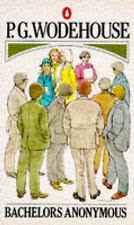
Bachelors Anonymous

Bachelors Anonymous
© 1973 P.G. Wodehouse
191 pages

“It is never agreeable for a man who is engaged to one girl and has just proposed to another to find himself in the company of both of them.”

Ivor Llewellyn and his lawyer Mr. Trout have been through five divorces together, but it’s time to say goodbye. Llewellyn is headed for England, but he leaves with parting advice from his good friend Trout:  for heaven’s sake, man, steer clear of marriage!  Trout’s own secret at avoiding matrimony is simple: he belongs to a discrete club of gentlemen who, when one of their members is headed down the slippery slope of copulation, rescues him.  At the first batted eyelash, the first romantic date, the members of Bachelors Anonymous step in fight off the lady-types and redeem their pal.  While there is no such club in England, Trout suggests that his friend look into employing some reasonably level-headed fellow in London who can help safeguard him from unwanted female affection.  They find such a man in young Joe Pickering, whose heartfelt first play has just been ruined by a diva stealing all of the lines.  In the comedy of errors that follows, however, and a string of coincidences so preposterous that even the characters are boggled at them,   the book ends with at least two marriages.  Wodehouse is a delightful absurdist; there is some pleasure just in the silly situations he comes up with, but the style of the story works to great effective. The characters are often pompous, and Wodehouse sneaks in little barbs that are completely nonsensical, but in a novel of this sort not altogether rout of place. He informs the reader, for instance, that one particular character’s  flight to England arrived on time, thanks to the complete lack of a hijacking.  It’s so apropos of nothing, and yet if the flight was hjacked, it’s the sort of  random happenstances that would fit into a crazy, silly story like this. This is nothing but entertainment, of course, but it’s lively and stylish.

Posted in Reviews | Tagged , , | Leave a comment

In a Dark Wood

In a Dark Wood
© 1998 Michael Cadnum
256 pages


In a Dark Wood tells the story of Robin Hood, the merry thief of Sherwood Forrest, from the perspective of the sheriff whose peace he breaks. Sir Geoffrey of Nottinghamshire may be the High Sheriff, but he’s no villain given to dressing in black, kicking children, and shaking down widows for the king’s tribute.  He is a dutiful functionary of the Realm, obliged to administer the king’s business. Before him lives are weighed in the balance, arguments are settled, taxes taken in. It’s  soul-smothering work, really, and his wife is no relief, taken up as she is with a handsome falconer.  When a prankster takes up residence in the forest flanking the king’s High Way, demanding tolls, Geoffrey is at first annoyed,  and then – interested.  This Robin is no simple thief. He doesn’t seem to be interested in taking great hauls, sabotaging the king’s interest, or persecuting innocent travelers; he’s out to have fun. He must be stopped, of course; the king’s law is perfect and none who thumb their noses at it can get away scot-free.  But Geoffrey shies from becoming the man’s ruin, just as an overtaxed man might feel a pang of regret after suddenly roaring at a giddy child to stop singing. There is something wrong in the silence that erupts.  There are no heroes here, no villains, only men crushed by the burden of responsibility and those free of it finding ways to rescue one another from meaninglessness. It’s an interesting take on Robin Hood that restores the sheriff to his full humanity.

Posted in historical fiction, Reviews | Tagged , , , | Leave a comment

Boudica

Boudica: The Life and Legend of Britain’s Warrior Queen
© 2006 Vanessa Collingridge
390 pages

To the Roman mind, the isles of Britain lay in the shadows between the light of civilized Empire and the dark depths of the unknown Oceanus which encircled the world. Naturally the ambition of the Caesars would be to attempt its capture. Repeated invasions led by both Julius Caesar himself and successors like Claudius created an effective Roman presence in wild Britannia, complete with a few cowed client states. Those who resisted were crushed or humiliated. When one tribe strayed from the straight and narrow leading to Rome, their queen was beaten and her daughters raped.  The name Boudica may ring but a distant bell for Americans, but the avenging queen is a figure of legend in English history. Vanessa Collingridge’s Boudica examines not only the life of this long-dead heroine, but how her legacy of opposing conquest and humiliation has been remembered throughout English history.

Boudica is storied, personable, and sometimes speculative on occasion, but is as thorough as a history about a life so scantily recorded can be. Collingridge offers an expansive background (delivering an entire history of the Roman people that focuses on their frequent altercations with the Gauls), and uses archaeological evidence like coins to supplement the official Roman accounts of the revolt.  The background is useful for casual readers of history in understanding “Celtic” Britain;  as Collingridge points out,  Celtic is a relatively modern label that assumes more unity than actually existed.   The native British and the continental Gauls did share certain a general culture, with similar art and gods, but not only did the Britons view their European relations as a people apart, but even on the island they were divided into a multitude of warring tribes. Contemporary research unearths more questions than answers;  the amount of Roman artifacts lying around Britain decades before Caesar braved the Channel indicates that there was more traffic across the channel than previously thought.  Some attempts to settle questions remain purely in the realm of the imagination;  Collingridge hints that there may have been a famine in areas of the island around the time of the invasion, given the burned remnant of imported French grain.  There is little that is really known about Boudica; even drawing from two Roman histories, we only know her tribe, the assault against her, and her subsequent part played in a rebellion that burned to the ground three Roman settlements, including London.  The importance of Boudica lies not in what she accomplished during her life (the rebellion failed), but how she is remembered.  Female rulers brought nothing but woe to the Romans, but for the English she would regarded as a source of inspiration. This was especially true during the reigns of Queens Elizabeth and Victoria, where her ideal as a roaring, wounded mother helped generate devotion to the Queen as a feminine ideal, and support for her benevolent empire.

Collingridge makes the most out of limited material and tells a good story. This is terra incognita for me, but she does a solid job establishing how sketchy our appreciation of pre-Roman Britain is.

Related:
The British History Podcast,  Episode 10: Boudica’s Rebellion

Posted in history, Reviews | Tagged , , , , | 3 Comments

The Other Queen

The Other Queen
© 2008 Philippa Gregory
448 pages

 Bess of Hardwick has survived three husbands, but her fourth may be too much. Sure, he’s the Lord High Steward, whose family came over on the Norman Mayflower,  but the man’s sentimentality will be his undoing. Sixteenth century England is wracked by reformation and political conspiracy; it’s a time that warrants discretion and pragmatism, not romantic heroics. Look at Scotland, where the lords have just deposed their queen, accusing her of conspiring to blow up her late husband!   Of course, the Earl of Shrewsberry didn’t mean to drive his family, the Talbots, to ruin.  He was asked by the Queen to provide shelter her ousted cousin the Queen of Scots. Is it his fault that she attracts conspiracies  like a flame attracts moths?  And is it his fault that this damsel in distress is so utterly, utterly, lovely? So obviously in need of protection? Such is the story of The Other Queen, of a woman who tears a man’s life apart by undermining his loyalty to both Queen Elizabeth and his own wife. 

At first, keeping a ward of Queen Elizabeth seemed like an honor and a boon. If she had only been a confined guest for a short time, she might have very well been.  Alas for the Talbots  the young queen initially being sheltered from those rampaging Scots quickly becomes an object of suspicion and intrigue. As the English court dithers about what to do with her, she hangs as a millstone around the neck of the Talbots. She’s a very royal creature, Mary;   Queen Consort of France, Queen Regnant of Scotland, and — shall England be added to the list? It could, for Mary has Tudor roots, and that posits a problem for  Good Queen Bess and an opportunity for her enemies. How easy would it be to justify overthrowing a spinster queen reigning over a schismatic church , replacing her with a merry young princess who Europe loves and who is perfectly capable of producing a few proper heirs?  She’s a lightening rod for trouble, this Mary, and maybe it’s just as well that she’s in England, under watchful eyes. Mary’s royal appetites, however — the size of her staff, her curious insistence on bathing her face in white wine —   are going to drive her guardians into bankruptcy if she doesn’t get them killed first. Although the model of saintliness to her hosts, Mary is constantly writing letters and scheming ways to escape to Scotland and regain her throne, or even to claim Elizabeth’s.  England’s leaders aren’t blind to this, and they have a spy within the house that casts suspicion on Shrewsberry himself.  For his part, he is slowly smitten by Mary, and doubly so when people keep asking him pointed questions. What has she done to make them so angry, poor innocent lamb?  Eventually things go south, of course, and this being Tudor England it ends in executions.

 There’s a lot going on this novel. It’s historical fiction, and Tudor drama gives an immediate kind of soap opera drama. Personal and political are mixed;   Elizabeth’s advisers want to keep a close eye on Mary, but her presence in England heightens her threat. Throughout the book the Earl of Shrewsberry is gradually seduced by Mary;  not sexually but in a style reminiscent of courtly love. He wants to be her knight in shining armor, even though her whims are destroying the fortune his wife has painstakingly built up and his defensiveness regarding Mary erodes  his reputation at court.  Mary is playing him like a lyre, though,  as her own chapters reveal to the reader.   I’d expected this to be sympathetic, and the book does make her out to seem a utterly lovely creature much of the time, but…jellyfish are also pretty. They are no less deadly for it, and when Mary is finally tossed into the tower and dispatched the only person I felt sorry for was Bess.  I may give Gregory another try or two;  soap operas aren’t much my style, but she has a great variety of works out there from the looks of it. She certainly succeeds in bringing to life again a long-dead queen.

Posted in historical fiction, Reviews | Tagged , , | 3 Comments

Joe Steele

Joe Steele 
© 2015 Harry Turtledove
448 pages

         
            What if Joseph Stalin was a Democrat? Imagine that the Man of Steel’s parents had emigrated to the United States before he was born, and that instead of rising to power through a Bolshevik revolution, he was voted into high office. In Joe Steele, Stalin wins the 1932 Democratic presidential nomination after his rival FDR perishes in a mysterious fire; after trouncing Hoover in the general elections, he immediately adds the United States to the 1930s’ diverse list of totalitarian hellholes, complete with labor camps and knocks at midnight from men in black.  The sheer magic of being Joseph Stalin is irresistible…and inexplicable.

Joe Steeleis a strange creature; for most of the book, history unfolds as it did in our own time,  despite the fact that Leon Trotsky reigns in Russia instead of good ol’ uncle Joe.  In the United States, Stalin uses the desperation of the Depression to justify four-year programs that are a staggering departure from American governance. He opens his hundred days by nationalizing the banks,  and from the public is uttered not a peep. When the Supreme Court stirs itself to point out that there are no Constitutional grounds whatsoever for the president to take over the banks,  Stalin has his new buddy J. Edgar Hoover arrest  those justices deemed obstructive. Who exactly has the authority to issue an arrest warrant for the Supreme Court?   The staggering implausibility of this is matched only by the fact that all four immediately confess to conspiring with Hitler to undermine the president’s glorious revival of the American enterprise. Stalin’s ability to force people to do exactly what he wants continues throughout the book, and it is never once believable. He is as charismatic as a potato, and while one man can be blackmailed, how can an entire Congress?  And there are precious few consequences for these actions;  aside from the people being thrown into labor camps to cut down trees or dig ditches, the Depression and the War go on as history ordained. This, despite the people like Douglas MacArthur who are lost in military purges.  Men of consequence are being introduced and felled, but history’s course is largely unchanged. Stalin even runs against the same exact people that FDR did.  Only in the last hundred pages does history take an interesting turn when Stalin is forced to invade the Home Islands of Japan. Otherwise, it’s WW2 as usual with the President being really mean.

Turtledove’s books are character driven, allowing readers to soak in an alternative history as the viewpoints live it.  Unfortunately for Joe Steele, there are all of three characters of importance here: a reporter turned political prisoner, the reporter’s presidential speechwriter brother, who seems to drink bourbon every time he is introduced, and Joe himself.  The problem with Joe is that he doesn’t make sense. He has a personal vendetta against Leon Trotsky for….no reason at all.  Joe was born in California; he has as much reason to loathe Trotsky as I do the mayor of Tokyo. His politics are limited to “let me do stuff”:  he despises Communists despite running to help the downtrodden working masses against the evil rich, but makes no reference to any other worldview. Turtledove never even mentions political movements that Joe could have had connections to — no wobblies, no Grange, no nothin’. The only explanation for his being here, the only explanation for him getting away with anything at all, is that Turtledove really wants an American Stalin. But…Joe Steele isn’t.  He has no discernible ties to the American culture he is introduced as a member of. He’s Stalin with a different name, albeit with slightly moderated sociopathy. Quoting founding fathers and hating Soviets doesn’t make a man American, and suspension of disbelief never gets off the ground here. . 
This may have made for a diverting short story, but it hasn’t scaled up well. Harry can coax out an authentically American tyranny; he did it somewhat in the Timeline-191 series.  Size shouldn’t a problem: Joe Steele is larger than The Plot Against America and It Can’t Happen Here, both of which introduced a fascist USA concept. Unless the reader is supremely interested in Stalin,  this book falls flat:   there is no agonizing but sophisticated remolding of the American politics to fit a tyrannical vision, and what significant departures there are don’t arrive until late. Even then, there’s no weight to them, because our characters are after-the-fact observers only.  It doesn’t help matters that there are entire scenes in which nothing at all happens: in one, Charlie walks into Joe’s office, congratulates him on  reelection, and then wanders away. Turtledove is as he is, though, a reliable producer of diverting premises and partially-assembled stories. So what if Joe Stalin were president? He might not kill twenty million people. He might just settle for executing the few thousand who annoyed him.   And that, dear readers, is about as far as it goes. 
Posted in Reviews | Tagged , , | 2 Comments

Ruled Britannia

Ruled Britannia
© 2002 Harry Turtledove
458 pages

1597. The 16th century is drawing to a close, and with it — seemingly — England’s fortunes. Nine years ago the vast Spanish armada triumphed in delivering its army to English shores, where grim veterans easily cast aside the hastily-drawn levies that met them on the beaches. Spain’s daughter reigns as queen, while England’s own languishes in Bell Tower.  The Catholic church has been restored to power over Protestantism, and with such severity that the mention of the English Inquisition can cause a man’s blood to chill.  One of the most popular of English playwrights, enjoyed by even the overseeing Spanish, is one William Shakespeare, who has been asked to write a play celebrating the life of Spain’s aging monarch, Phillip. But what if instead of memorializing the crown occupant, he celebrates the tragedy of Queen Boudica, a Celtic chieftess of yore  who lead her proud Britons in battle against a Roman invader? So begins what must for me be Harry Turtledove’s most fascinating piece to date, a tribute to a master wordsmith via alternate history.

Ruled Britannia stands apart from Turtledove’s other work, being largely dominated by  the one figure of William Shakespeare instead of drawing from an ensemble cast. There is another viewpoint character, the likewise famous Lope de Vega, but Shakespeare is the star.  Even when he is not telling the story, he is present: lines from his work absolutely riddle the dialogue. The language, too, is unusual: Turtledove switches between present-day English for narration, and Elizabethan English for his characters’ conversations.  This requires adjustment on the part of the reader, but like tugging on a boot, it seems natural enough after a little effort. For once, Turtledove’s annoying habit of being repetitive works to the readers’ advantage, helping the arcane vocabulary and spellings (“murther most foul!”) gain familiarity.  Most of the characters are historic personalities, another unusual move for Turtledove, and one of the few exceptions exists in a netherworld of fiction and fact, being one of the real Shakespeare’s characters re-purposed for this set.  Shakespeare doesn’t get up to much within the book, instead, while he  writes and prepares two plays at once, consorting with Spanish nobles and rebellious Englishers in such a fashion as to court death from other side, readers experience life in occupied England.  Tension comes in the form of a string of deaths of men connected with Shakespeare and the scheme to release Boudica’s rebellion onto the unsuspecting dons. The poet is watched both by suspicious Spainards and calculating revolutionaries, neither of whom are afraid of a little villainy in the name of a worthy cause. Faced with death from either side,  Shakespeare ultimately performs for himself, for his own conscience; for he is an Englishman, called to show the mettle of his pasture. His decision whether or not to be the rebellion’s propagandist is never in doubt, and the parts of the play shared with readers are certainly blood-rousing enough. The novel’s last fifth is on rebellion itself, with lots of sword-fighting and enthusiastic yelling.

For the fan of Shakespeare and historical fiction, this is gold — and a most unusual treat for readers of alt-historical fiction. While I could have done without some of the luridness and at least twenty uses of the same phrase (“made a leg”), this is one to remember with fondness.

Posted in Reviews | Tagged , , , , | 1 Comment