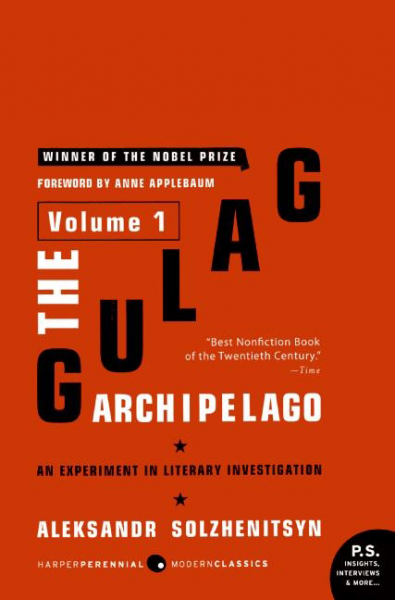
The Gulag Archipelago, Volume I

Archipeleg GULag / The Gulag Archipelago, 1918-1956: An Experiment in Literary Investigation
Volume I (of III)
© 1973, 1974 Aleksandr I. Solzhenitsyn
660 pages
Such was my desire to read The Gulag Archipelago that when I found it on the shelf and observed that it was not one big book, but three big books, I didn’t pause to reconsider.  It’s not just an entry on a list for me; I’ve heard too much about the book and about its author to shy away.   Because it’s a multi-volume work, each collecting several ‘books’, I will be posting about the volumes as I read them, and then attempting a general review at the very end.

Let’s begin with the very obvious. The Gulag Archipelago is vast survey of the Soviet prison state — a state within a state, an internal empire. Its property is not contiguous, but consists of islands of security buildings and camps connected by processing hubs and the roads themselves.  Solzhenitsyn was born the year of the revolution, and became an officer in the Russian army during the “Great Patriotic War”.  Although strongly encouraged to apply for NKVD training, Solzhenitsyn demurred, increasingly uncomfortable with the morality of the state’s actions. His timid research into the means and methods of the gulag system would grant him immediate first-hand evidence, as Solzhenitsyn himself was arrested and subjected to interrogation.

This is not merely a prison memoir. In his opening chapter, Solzhenitsyn renders a complete history of the Gulag system, with every wave of mass arrests chronicled in term. These arrests were not effected simply to purge out heretics to Soviet dogma, or to punish wicked peasants who resisted the seizure of their farms. Whenever the state encountered a problem —  failing infrastructure, ruined crops — it found someone to blame it on.  Quickly given a label — “limiter” for instance, for those who dared to suggest that rail lines only had so much carrying capacity, and that trebling loads would ruin the rails — the traitors would then be dispatched away.  Problem solved! Another brand of  nogoodniks were the “wreckers”, who were responsible every time machinery broke down. Sometimes, the wreckers were responsible even if they did precisely what they were told, like sowing seeds in the snow because Lysenko believed exposed seeds would increased their yield. (They rotted, instead.)

The book’s opening chapters have incredible interest, some of it dark. Solzhenitsyn details all of the various methods of torture and interrogation he and his fellows were exposed to;  the methods were not meant so much to provoke truth as to elicit a confession, as official dogma made truth relative. So long as there was an angle to pursue, a faint argument to make,  a man could be hung with his own words. “Give us the man,” said the state police, “and we’ll make the case.”  Particularly of interest is Solzhenitsyn’s chapter on the “Bluecaps”, the state police themselves, and his thoughts on good and evil.   It would be wonderful, he writes, if there were simply evil people, and we could separate them from the rest of us; but the line between good and evil runs through every human heart, and who among us would cut out his own heart?   This isn’t woolgathering on Solzhenitsyn’s part, as he remembered his own moral compromises just as an officer of the army — his easy arrogance, his thoughtless actions.   Later on in this volume, Solzhenitsyn chronicles the history of show trials and the developing legal codes that would allow official sanction for arresting and executing anyone whom the state saw fit.   In the last part, book two, he follows his own journey to the work camps themselves by writing about the transit camps and the elaborate transportation system; here, as more prisoners are mixed in together, we see spontaneous pecking orders, with the actual criminals (thieves and such) taking the best and sneering at the politicals.  This is quite the change from the Tsarist regime, in which politicals were a minor class of detainee who enjoyed far fewer restrictions than the criminals.  (Of course, the nature of prison-keeping changed from the Tsars:  when Russia was on the eve of evolution, the jailers were regarded with such contempt that gentlemen wouldn’t even shake their hands. After the revolution, jailers were regarded with fear and trembling.)

A third of the way into this epic, I am already beginning to appreciate why Solzhenitsyn’s work is regarded so highly;  the amount of information collected and ordered here is rendered to the reader in a very human voice,  one which recounts all this in sometimes comic, sometimes sad, disbelief.

Volume 2 will follow in September.

Posted in Reviews | Tagged , , , , , , , , | 7 Comments

The Tragedy of Liberation

The Tragedy of Liberation: A History of the Chinese Revolution 1945-1957
© 2013  Frank Dikotter
400 pages

Readers who approach Frank Dikotter’s histories of Maoist China (The Tragedy of Liberation, Mao’s Great Famine, and The Cultural Revolution) should brace themselves going in; like  books about the holocaust, or obscenities like the rape of Nanking,  the sheer amount of human misery is overwhelming.  The Tragedy of Liberation opens at the close of World War 2,  in which China became an area of contention not only between the Nationalists and the Communists, but their respective allies – the United States and China.   After documenting the rout of the Nationalists in that context, Dikotter then takes readers through the early 1950s, and first years of Communist rule as the new party-in-power ruthlessly imposed its will and went to work creating the New Sino-Soviet Man.

As Forgotten Ally indicated, Communist China was a creature formed from the Second World War.   In that book, Rana Mitter noted how the war wrecked Nationalists credibility by their heavy-handedness, and execution of desperate measures like blowing dams to slow down the Japanese. Here, another aspect of the war’s contribution to Mao’s triumph is documented;  we find the Communists being supported by the butcher Stalin, given direct aid by him as well as help in corralling and putting to use Japanese military equipment abandoned in northern China. Chiang Kai-Shek found increasingly little support from the United States as the Japanese retreated, as Truman’s intelligence indicated that the Communists were nothing but isolated bands of guerrillas in the extreme north.

The Communist takeover is told in various chapters of misery.  We begin with the almost-immediate economic implosion, as taxes and legislation imposed such a burden on shops and larger businesses that they practically disappeared.  The  countryside  fared no better, subjected to rapidly increasing control of the farms by the state.  As the farms became progressively worse-managed, they produced less food and hemorrhaged labor.  Production declined for many reasons, two being the supervision of services or tasks by politically appointed incompetents,  as well shoddy care given to communal work, including maintenance of vital tools and the land. But a production crisis at a factory is merely a loss;  a production crisis in farms, in a country that has closed itself off to foreign trade, is famine and death.

Matters grow worse. I referred to The Rape of Nanking earlier; that’s not an accident.  If Mao called for a hundred flowers to boom in China, they had plenty of fertilizer.   The amount of people murdered by  Mao’s Communist party, either directly or at its prompting, bewilders the mind. The numbers don’t register.  Land owners,  peasants, those accused of being close to foreigners, those who fail express sufficient enthusiasm for the Party and the New Democracy — they are only the beginning of a slaughter not seen in Asia since the Khans.  what began as a state sanctioned punishment regime against ‘class enemies’ widened into murderous chaos. The slaughter of innocents by those in power is one matter, however;  the culture of death, degradation, and denunciation which grew as a result of the Party’s enthusiasm for murder is another subject altogether.   Readers of Roman history may remember how the proscription lists of Sulla’s time, in which people were denounced and declared outlaw by the regime — their lives and money forfeit. This occurred in China on a grand scale, as neighbors looted one another. The society itself became tyrannous, as everyone began policing everyone else’s actions, in which the slightest flaw might lead to a death sentence.   Dikotter grimly notes that the Chinese of Mao’s time didn’t have freedom of silence,  let alone freedom of speech: those who failed to say the right things were marked. Even when Mao seemed to relent after the death of Stalin, encouraging dissent, deadly pushback followed.

The Tragedy of Liberation makes for haunting, sobering reading.  I’ve known that Mao’s regime was deadly for years  — deadlier even than Stalin’s, who put Hitler to shame — but to know something in the abstract, and to have the bodies placed before the mind’s eye, are different.

Posted in history, Reviews | Tagged , , , , , , | 5 Comments

The Irish Soldiers of Mexico

The Irish Soldiers of Mexico
© 1997 Michael Hogan
298 pages

And it was there in the pueblos and the hillsides
That I saw the mistake I had made
Part of a conquering army, with the morals of a bayonet brigade
And amidst all these poor dying Catholics —
Screaming children, the burning stench of it all —
Myself and two hundred Irishmen decided to rise to the call
From Dublin City to San Diego,  we witnessed freedom denied
So we formed the St. Patrick Battalion and we fought on the Mexican side.

(“The St. Patrick’s Battalion“, David Rovics)

One discovers the oddest stories through music.  Take this, for instance — the story of a few hundred Irish immigrants to the United States, who shortly after participating in the invasion of Mexico, decided to defend it instead. They fought valiantly in five battles, flying the green flag of St. Patrick,  and their survivors continued to serve Mexico even after the war as a check against brigandry.  To the United States, they are an embarrassment best forgotten, a blotch on the United States’ first military adventure outside of strict self-defense. To Mexico, they are red-headed heroes: they are the San Patricos.  The Irish Soldiers of Mexico  makes the best of scarce resources and supplies generous background information to give the fighting Irish their deserved laurels.

Hogan grounds the decision of the Irish to bolt in both race and religion. Prior to the waves of European immigration in the late 19th century, the early Republic shared England’s pride in its Anglo-Saxon heritage, complete with varying degrees of disdain or contempt for non-Saxons. Prejudice against the Irish was as pronounced as it might be against blacks or Native Americans, at least until so many Irish came over that they begin blending in.   The early Republic was also expressedly  Protestant in its religion,  viewing the Catholic church as Old World and un-American as it was possible to be. Even Maryland, established as a Catholic sanctuary and home to the largest landowner of the founders, Charles Carroll, was quickly taken over by Protestantism.   The abuse incurred by the Irish for both their Celtic blood and their Catholic region kept a barrier up between them and the affection they might have had for their adopted country, and made them sympathetic to the plight of Mexico — what was Ireland, but a poor nation of Catholics, dominated by Anglo-Saxon Protestants who regarded its inhabitants as fit only for serfs?   The abhorrent behavior exhibited by the invading US Army — the same abhorrent behavior exhibited by virtually every invading army anywhere,  in which men are replaced by uniformed chimpanzees bent on looting, raping, and burning —  coupled with the seemingly deliberate attack on Mexican churches forced the Irish to make a decision. Who would they keep faith with? Their paymasters, or the people of Mexico, whose plight was so much like the Irish?

Although this book concerns a military battalion, it is not principally military history; what we know  based on  terse US records and  Mexican records (reduced by fire, unfortunately) is that the San Patricios were particularly noted for their work on the cannons. In one battle, after Mexican troops had exhausted their ammunition, the Irish fought to the last, recovering their compadres’ retreat.  Those San Patricios who were captured were put to death in a gruesome manner — not shot as soldiers, but incompetently hung after standing at attention for four hours, or beaten with the lash in excess of the Articles of War.  Half the book’s volume is given over to notes, and much of its content proper explores the racial and religion aspects of the Irish stand. While this information is slight, this is an often-overlooked chapter in the Mexican war, one that Irish Americans in particular should note with interest.

Related:
Green, Blue, and Grey: The Irish in the American Civil War, Cal McCarthy

Posted in history, Reviews | Tagged , , , , , | 11 Comments

Reproduction of details on the Arch of Titus

When we survey human history, we experience also the wonder of the ancient, the immemorial. We look to a tombstone in a Roman cemetery and read the inscription, sponsa optima, the best of wives, and we feel the pull of kinship across the centuries. We look at the Arch of Titus and see, celebrated on its massive pillars, the destruction of Jerusalem and the raiding of the Temple, and we feel the prickle of astonishment, for those same Jews have returned, and the Roman Empire is long gone, and still there are men who would happily sweep them into the sea. We enter the great library of John Adams, and it feels like a chapel — it is meant to feel like a chapel — and we handle the books that he handled and see his history in the light of the history that he read, from which he learned so much about the persistence of human folly and ambition, and the tenuousness of liberty. 

The study of the past is also, often, an exercise in humility.

p. 150, Life Under Compulsion. Anthony Esolen.

I like this quotation for several reasons.  History has a transcendental effect on me, connecting me with the lives of men and women across the ages; this is particularly effective when one reads within a cultural tradition and can  listen in on a conversation that has taken across over a span of centuries, as minds across the ages respond to one another.  To be deep into history is to have one’s soul stilled; the excitements and fads of the present day don’t register as dramatically, don’t intrude on one’s mind the way they might on the person for whom the present is everything.. One can view a disruption not as the end of the world, but as a passing storm.

Posted in General | 10 Comments

Cities of Gold

Cities of Gold: A Journey Across the American Southwest in Pursuit of Coronado
© 1992 Douglas Preston (Walter Nelson, Photographs)
480 pages

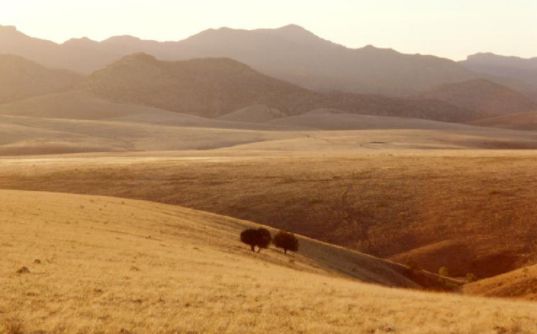
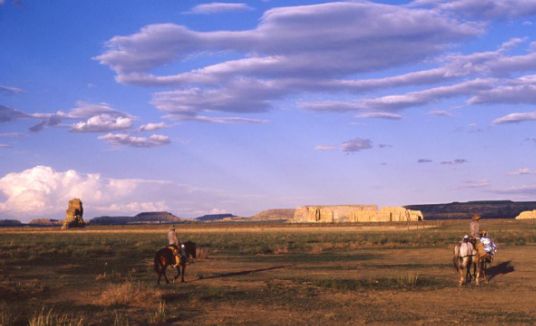
Sometimes, history has got to be pursued from the back of a horse.  Douglas Preston wasn’t sure what took him to New Mexico — he had a nice life in Manhattan before he abruptly decided to move to Santa Fe, to see the adobes washed in red sunlight —  but it took him further still, to the border of Arizona and Mexico.  There, along with a friend and a hired horse wrangler, he purposed to re-create the journey of Francisco  Vázquez de Coronado, the first Spainard to explore the Southwest.   They would discover the Four Corners as the Spanish did, on horseback — carrying their own supplies,  following the water. Their mission — to search what it might have been like to enter into these enormous spaces for the first time, and travel through them to the seven cities of Cibola.  Preston and company were warned against the pursuit; there was a very real chance such a journey would kill them. The desert is kind to no one, and Preston proposed to navigate through sheer wilderness, during the summer, amid a drought.  But fate is kind to fools, drunks, and Americans, and Preston’s royal-flush team prospered through their wits, the kindness of strangers, and a mix of luck and grit.   The product is for me the best piece of travel writing I’ve yet read.

Along for the ride with Preston were a cantankerous neighbor of his, Walter, and a hired woodcutter who professed to be a horse wrangler.  Eusebius’s only virtue for the reader proves to be his comic rage that reveals itself with every mesquite tree, barbed-wire fence, and thrown horse-shoe; the man is as experienced with horses as you or I. (His virtues for the party are practically nil, although his incompetence forced Walter and Doug to become jacks of all trades, which probably saved their lives after the fake-wrangler quit.)  The country they proposed to cross was desperately hostile. The voyage opened in a thick swath of mesquite trees, for instance, which turned a proposed one-day journey into four days of hacking, cussing, and chasing horses.   They crossed mountains so far off  the beaten track that the closest thing to a path was a cut made by the riders of the Pony Express.  Their journey takes them through the detritus of ruined civilizations and communities, the residents and their hopes long-dead — both mysterious Anasazi remains, and the less mysterious array of abandoned silver boomtowns.   They encountered an array of interesting people: rattle-snaker trappers,  ranchers and cowboys, echoes of the dying Old West.  They also spent considerable time visiting with native Americans as they pass through  Zuni and Acoma reservations, learning some of their stories.  While the travelers were sometimes greeted with a shotgun, Doug and Walter certainly didn’t look like tourists after the first few hundred miles of hard riding, and after explaining their mission, virtually everyone offered them hospitality with open arms and admiring eyes — even from old ranchers who lived over a hundred miles from everybody else and did everything around their homesteads themselves.  (The only exception was a man who assured them that nobody named Coronado  came this way because the road hadn’t been built until last year, and anyway that would have been trespassing.)

Cities of Gold expertly mixes adventure, history, photographs, and encounters with interesting people. As Doug and Walter pass through the landscape, so we learn the story of Coronado’s exploration of the Southwest, and the story of the West in general: the trials of the Hopi, Apache, Zuni, and other people through the last two centuries, the triumphs and tribulations of traders, trappers, and gold-strikers;  the rise and fall of the cowboy. But there’s more to the memoir than history, for both the Zuni and the cowboys have something to say about stewardship, of the husbandry of the land. They argue that the land has been much abused by outsiders who came in with great confidence and little knowledge, from the first ranches to the present Forestry Sevice.  Numerous citizens condemn the heavy-handedness of the Forestry Service’s no-burn rule: the attempt to keep so much of the country in stasis is smothering it to death. The antelope herds that once flourished by eating young-growth forests, for instance, have dwindled as the old-growth cedars continue to expand, unchecked by fire.  As this journey was taken in 1989, I don’t know if matters have improved. (What has not improved is Albuquerque traffic, which these two took horses through!)

While my prolonged fascination with the Southwest greased the skids here,  Cities of Gold  is most impressive.  The entire premise is awe-inspiring: this is a journey of a thousand miles on horseback, through thickets and quicksand, over mountains, across barren stretches of salt lakes and desert, through valleys and up mesas.  The people, as mentioned, are fascinating into themselves, both the living and the dead. I did not recognize the name Coronado before I began reading this book, and I learned enormous amounts about him, the native cultures, and the history of the West in general as I followed Doug and Walter through these magnificent, storied landscapes.

Posted in Reviews | Tagged , , , , , , , , , , | 5 Comments

Rousseau and Revolution

Rousseau and Revolution
© 1957 Will and Ariel Durant
1092 pages

“…little did I dream that I should have lived to see such disasters fallen upon her, in a nation of gallant men, in a nation of men of honor, and of cavaliers! I thought ten thousand swords must have leaped from their scabbards, to avenge even a look that threatened her with insult. But the age of chivalry is gone; that of sophisters, economists, and calculators has succeeded, and the glory of Europe is extinguished forever.”

Edmund Burke, on the execution of Marie-Antoinette

In the tenth volume of Will Durant’s  Story of Civilization, we now approach the latter half of the 18th century.  This is an age of titanic personalities, in every field.  Frederick the Great of Prussia, Catherine the Great of Russia,  Samuel Johnson, Goethe, Bach, Schiller, Gibbon, Adam Smith, Rousseau, Voltaire — what an age to be alive in!    For those unfamiliar with Durant’s epochal series, his approach was a symphonic history that covered politics, economics, religion, architecture, music,  and literature. This particular volume opens with Jean-Jacques Rousseau’s critique of reason, and — amid all the politics — examines the influence of the Romantic reaction on the arts and politics, ending with the storming of the Bastille.

This is an age of enormous change; the industrial revolution has spread beyond England, and its social consequences are brewing political revolution, especially in France. It is an age of war, like most ages; Russia, Austria, and Turkey bicker incessantly over the Black Sea, and western Europe sees several wars of succession. The most influential conflict, however,  is the Seven Years War. This saw most of Europe allied against Prussia and England, with from some instability on Russia’s part. While the consequences in Europe were minimal,  this was the war that made England an superpower.  While everyone invaded (and was rebuffed by) Prussia, the English chased the French out of  both India and North America, creating an incredible global empire.  The Seven Years War would set the stage for the American War of Independence, removing as it did America’s great opponent on the continent, and pressuring the British to make the colonies pay for themselves via taxation.

Although the Enlightenment has already provoked its reaction in the form of the Romantic movement in the arts, the ‘age of reason’ itself is not yet spent: it is only now beginning to enter some subjects, like economics.  Irreligion among the intellectual caste is de rigeur, although in the Protestant north, a few individuals (Boswell and Gibbon, for instance) get their subversive kicks by embracing Catholicism, if only temporarily.  Writers like Voltaire and Rousseau write constantly of novel approaches to old problems: Emile, for instance,  is ostensibly about the proper education of a human being. (A curious subject, given that the author sent his own children to an orphanage on their birth.)  In the decline that which had been sustaining public morality, the Church and faith in general, people tried to find new ways of justifying a moral life. Some, like the Marquis de Sade, didn’t bother; they rejoiced in the fact that without God, all things were permissible. Much of the philosophy here, skeptical as it was of the old authority, also rebelled against reason; this was an age of Feeling, of sensibility — hence a larger role here for literature, theater, and other arts in the history. Rousseau in particular is used to epitomize the beginning of the romantic age, for his writings condemned cities, civilization, and material learning as corruptive elements leading the inherently good hearts of men astray. (Burk’s comment about sophisters and economists almost echoes him there.) His emphasis on humanistic morals, however, did not make him a traditionalist; he regarded the Church with suspicion because it threatened patriotism, being an institution which transcended nations. (This was an age of French literature, Italian opera, and German music — every nation had something to be extremely proud of.)  Rousseau is most remembered for his political philosophy, which emphasized the ‘will of the people’.  While sometimes cited as an inspiration for the American revolution, Rousseau did not believe that representative legislatures truly served the will of the people; that had to be effected through full democratic assemblies, and so genuine democracies must remain small.   Rousseau’s emphasis on popular will  and republics put him at odds with Voltaire, who distrusted the populace and smiled upon enlightened kings. In general, Durant noted, the revolutions of the 19th century would follow Rousseau in politics and Voltaire in religion.

Rousseau and Revolution is, like  all of the books in Durant’s series, formidable in its size but not in its writing. Durant, when he shows his personality, is utterly amiable. He is not as personal with his pen here as he was in The Age of Faith or The Reformation, but at times we witness the human being behind the pen, mindful that he is not writing of abstractions but of real people. He cautions the reader to never lose sight of the individual people whose lives were creating what we perceived as larger trends. Accordingly,  Durant writes not just of big things — the epic novels, the epic personalities — but of passing affections, like fashion and frivolities, the concerns of the flesh and blood creatures who then walked abroad. The Durants are gentle and humane authors, students of the very history they write, forgiving of their subjects’ sins and excesses.  We’ll see if that lasts throughout the French Revolution, for this book ends with the storming of the Bastille.

We move now to Napoleon and the end of civilization; or at least, the end of Will and Aerial Durant’s Story thereof.

Posted in history, Reviews | Tagged , , , , , , , , , , , , | 6 Comments

Boomsday

Boomsday
© 2007 Christopher Buckley
336 pages

By day, Cass Devine is a public relations specialist who labors to ensure her clients’ sh-tuff doesn’t stink. By night, she’s a  tax revolutionary, stirring the pot — blogging furiously and urging young people to take to the streets and protest against the social security crisis. In only a couple of years, Social Security will be bankrupt — despite DC’s usual solution of raising taxes on under-thirties even more. Cassandra’s national movement lands her in jail, and turns on senator into a presidential candidate who turns to her as his on-the-lam adviser.  They have an idea:  do that thing in Soylent Green where older citizens voluntarily  have themselves euthanized, but instead of being turned into snacks for the younger generation, the aged are rewarded with generous benefits and tax breaks in the years before their “Voluntary Transition”.    Like They Eat Puppies, Don’t They,  Boomsday is sadly comic, though its characters are not quite as reprehensible on average.The social security problem is one the American public heard a lot about during the Bush years, but oddly has slipped under the radar, at least as a television talking point.

This one is mildly funny, mildly vulgar,  and mildly forgettable.  I liked it more than  They Eat Puppies, but less than Thank You For Smoking.

Posted in Politics and Civic Interest, Reviews | Tagged , , | 4 Comments

The Mexican Frontier

The Mexican Frontier 1821 – 1846: The American Southwest Under Mexico
©  1982 David Weber (University of New Mexico Press)
440 pages

In 1821, the people of Mexico declared their independence from Spain, recognizing that its Napoleonic straits meant that the mother empire had little future left, either at home or abroad.  Once the bid for independence had achieved its aims, the ‘Mexican empire’ spanned everything from Oregon down to South America.  Within thirty years, however, the United States had invaded Mexico, seized its capital, and forced the purchase of nearly forty percent of  its northern land.  Sneaky Americanses!  Wicked! Tricksy! False!

Well, not really.  It wasn’t David Weber’s intention, but having read this history of the Mexican frontier I’m considerably less condemnatory about the treaty of Guadalupe-Hildalgo. Not about the war, of course,  but the treaty itself seems to have only hastened the inevitable break-off of the great northern expanses from Mexico proper. Weber’s history begins with  Mexican independence, then details the decline of institutions in the north as the contest for power in central Mexico continued; with a consequentially distinct frontier culture emerging, one that would constantly struggle for its own autonomy. Central to this history is understanding that young Mexico went through several constitutions in those early years,  constantly struggling to find its way. The breaking-away of the north from central Mexico was partially grounded in dispute over which constitution was legitimate: the more republican 1824 constitution, or the more authoritarian 1832 constitution imposed by the ilk of Santa Ana.

The fractures were only made possible by the precipitous decline of institutions in the north that would have tied states and territories like Texas, New Mexico, and the Californias more firmly to the government in Mexico City. The Franciscan missions, for instance, vanished with the Spanish — in part because they were supported primarily by Spain, in part because many monks were Spaniards more faithful to their patria than their parish,  and in part because  Mexico wanted them out of the way. The missions had all the best land and labor, and if they could be dispatched with, then settlers could move in and hire the newly-emancipated Indians as workers.   Although Mexico officially secularized the clergy — replaced the Franciscans with state-paid priests —  it did this so slowly that  the Church effectively disappeared in the frontier, and with it marriages and schools and other civil functions that the state was slow in restoring.

Another primary institutional failure was that of the military; because central Mexico’s government was so unstable, its  army stayed close to home, either to stave off further intrigues or participate in some. The array of presidios that once guarded the northern frontier, with its independent attachments of cavalry,  was poorly maintained; the soldiers were so scantily paid and armed that not only did civilians have to raise their own militias to defend themselves against Apache raids, but when the militias were on the attack, the presidio cavalry sometimes raided the homes they were supposedly protecting.   In addition, the Mexican government’s economic policies — forcing trade goods in and out of the interior to circulate first through far-distant Vera Cruz — made supplies rare and expensive. The sheer distances between the frontier and Mexico city added to the eroding attachments between a place like California and Mexico;  the ruling city seemed to be as far away and imperious as Spain. Little wonder that in the 1830s, Texas declared and fought for its independence;  California declared independence but accepted a compromise that allowed it more autonomy; and New Mexico rolled with rebellion several times.

Because of Mexico’s instability,  the failure of institutional ties to form or hold, and the sheer distance between cities like  Santa Fe and Mexico City,  the northern expanse of Mexico was increasingly oriented along another axis: it looked east, to America, for cheap, ready, supplies, and  eager settlers and tradesmen. That commercial and cultural Americanization of Mexico’s north made it increasingly America’s west — hence why I suspect now that the treaty which ended the United States’ unjust invasion of Mexico only hastened the inevitable.  At the risk of condoning Polk, the American federal system finally allowed for the ‘home rule’ that the restive north fought for in the 1830s.  Had Mexico not struggled so much to create  a stable government early on, it might have held on to much of what the treaty lost — but it is a difficult thing to create civil society from scratch, let alone when a nation is being constantly invaded by invading Comanche.

Related:
The Spanish Frontier in North America, David Weber

Posted in history, Reviews | Tagged , , , , , , , , | 7 Comments

Top Ten Things You Won’t Find in Today’s Local Newspaper

Working in local history, I spend a lot of face to face time with our microfilm machine. We have reels for papers as far back as the mid-1800s, and there’s no decade in the 20th century I haven’t spent weeks in, looking for obituaries and specific articles.  This is an absorbing experience, one which makes the past more personable:  my mind is taking in the same material as readers decades before me, though in a different form.   While the basic experience doesn’t change, the kinds of things newspapers report on has.

1. Society gossip

In contemporary papers, social reporting is limited to wedding announcements — but in older papers, even tea parties register entries.

2.  Serial Stories

Readers may be aware that a lot of “novels” were originally published as newspaper  or magazine serials. A lot of authors like Dickens and Asimov got their starts writing serialized novels or short stories for literary magazines.

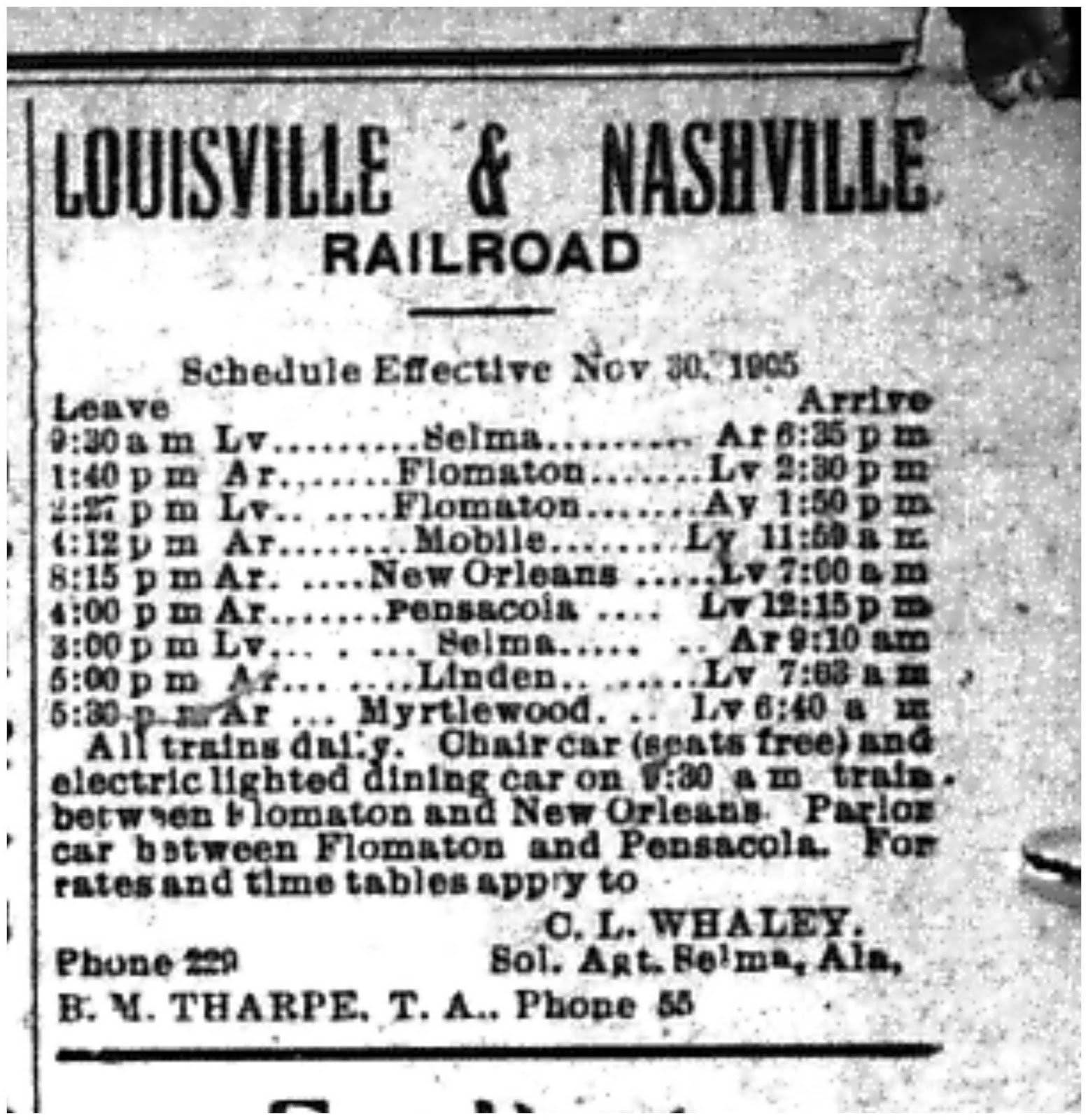
3. Train and Ship schedules


I don’t know if cities in Europe with train service still carry timetables, or if the internet has taken over the role. These are a treasure for realizing how dominant trains once were, though. (Steam boats were still offering twice-weekly passage from Selma in 1906:  the Nettie Quill upriver to Montgomery and the Queen Mary  downriver to Mobile.)

Care for a tren ride down to old Mexico?

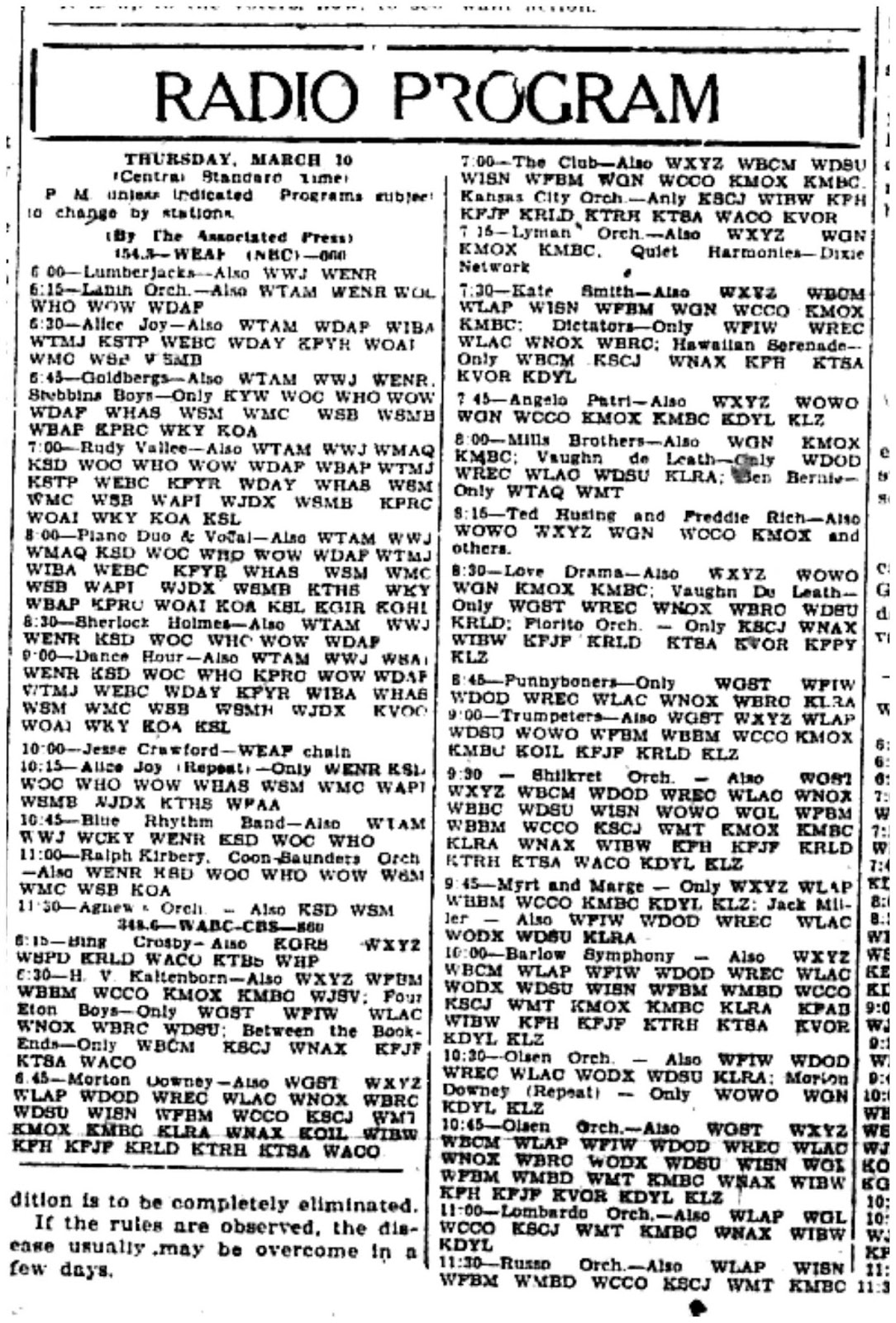
4, Radio logs


When I first started visiting radio websites in the early 2000s, I thought finding lists of the music played during a given hour was an innovation. Nope — that was  being done in the 1930s, by my local paper.

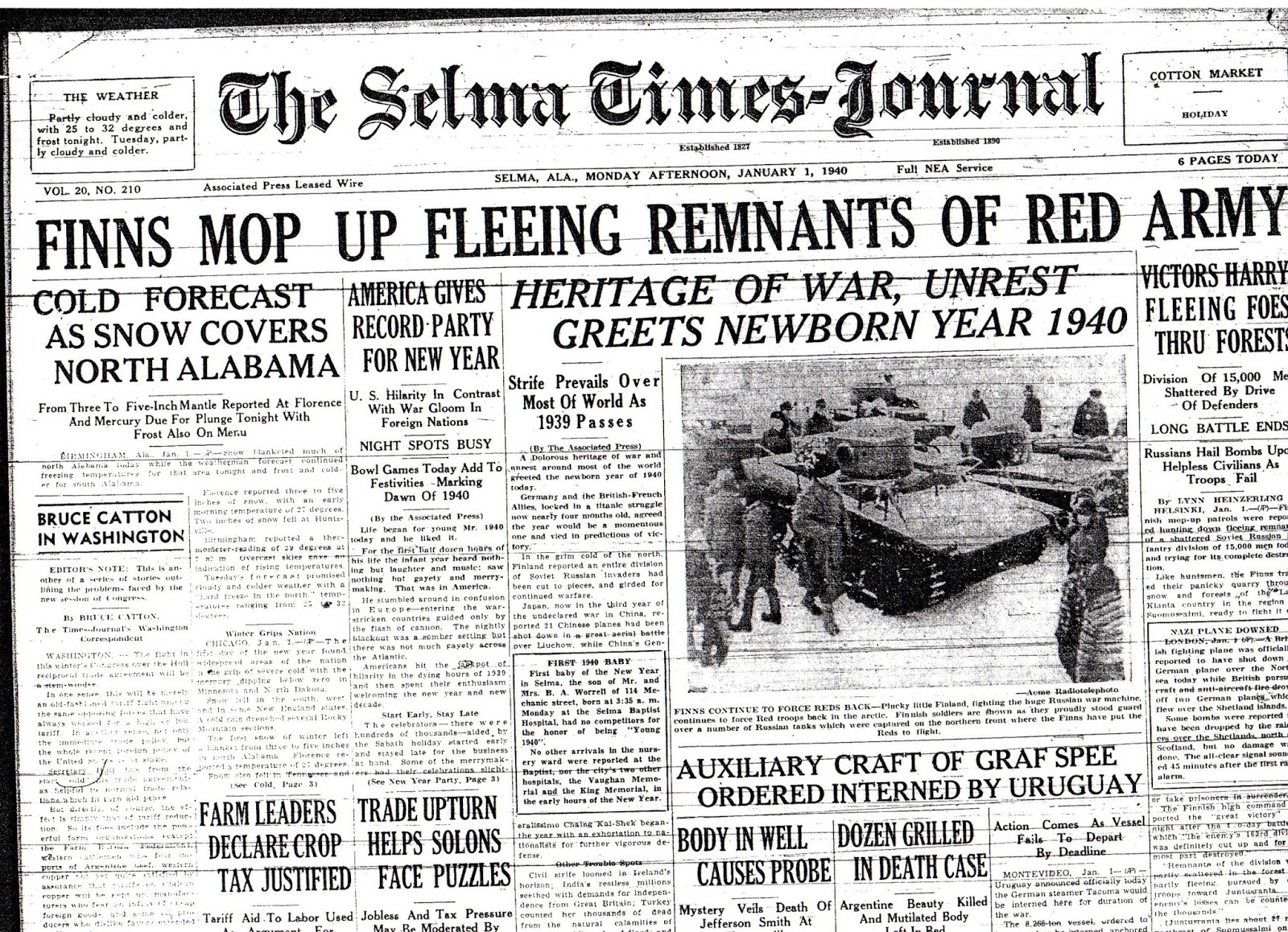
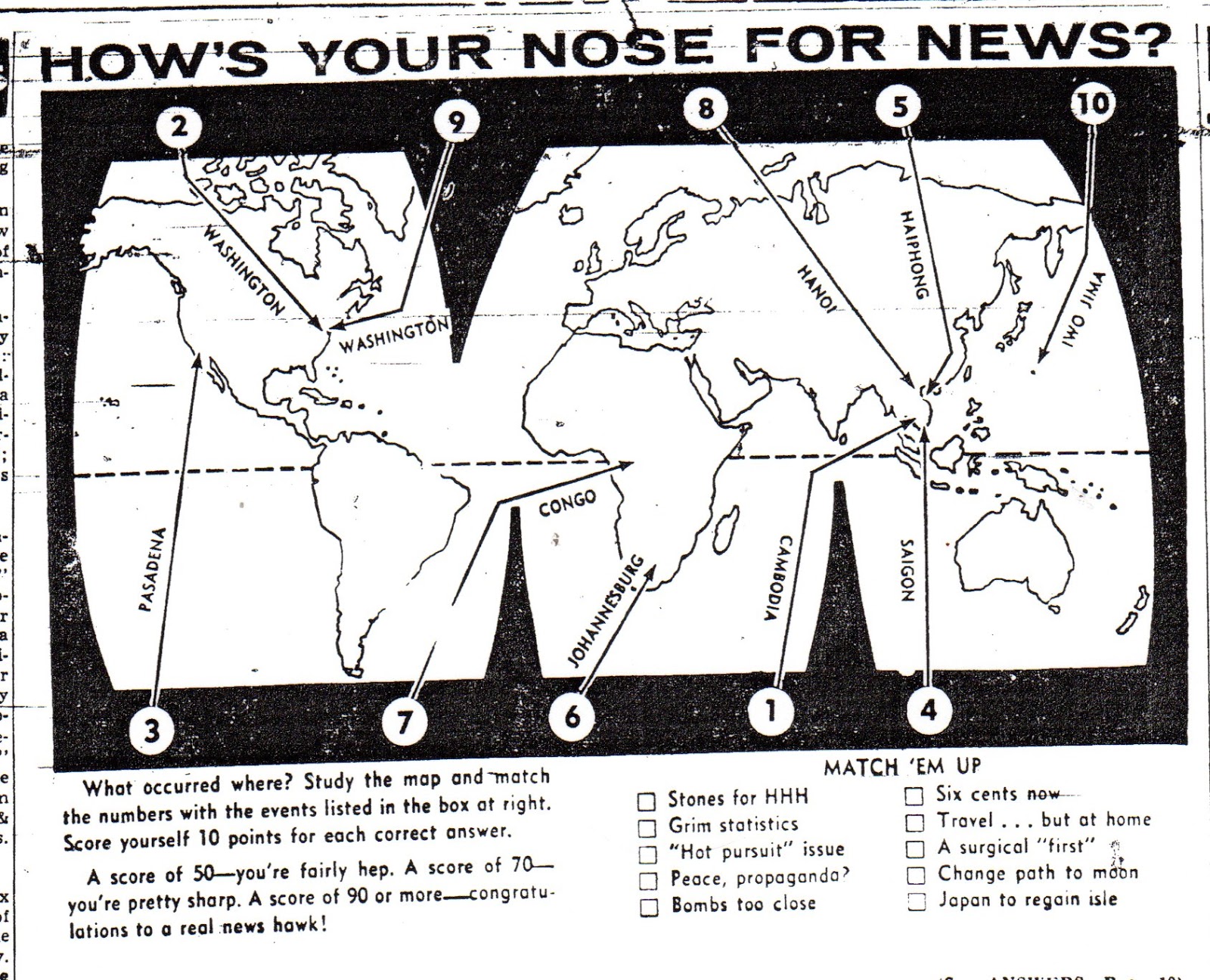
5. World News

When I first began looking through the local newspapers of 1906, attempting to establish when my hometown trolley system ended service (1926),  I discovered that local news was buried within the pages, with national and global news taking priority. This continued at least through the 1970s. There are even weekly quizzes to see how many news stories from around the world the reader recognizes — as he ought, if he is a daily reader of the paper. Today, national news rarely appears, except in the case of disasters and presidential elections;  radio, television, and the internet  provide all of the general news, and the newspaper is left to fill a local niche. Opinion pieces on the news still provide a glimpse of what’s going on outside, however.

6. Discretion

Take a look at this political cartoon of FDR. By 1940 it was known that Roosevelt was partially paralyzed, but the cartoonist doesn’t dwell on it. These days, every detail about people’s personal lives becomes a national obsession if they become newsworthy.

7. Girls Only

Look at that, ladies, your very own page!

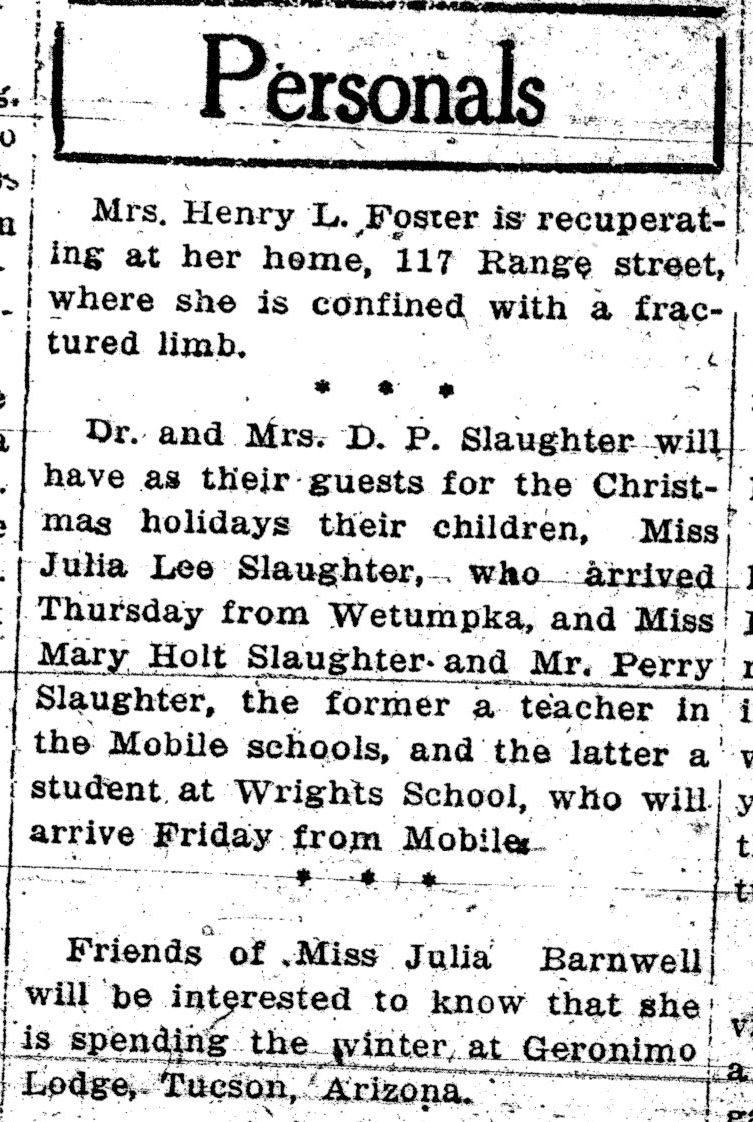
8.  Personal Ads

I’d give her a call, but she probably found a beau by now. I don’t know if I’m cut out to be a step-great-great-grandfather. 
9. Yesterday’s News

Perhaps the oddest consistency in the papers I’ve surveyed is that until the 1970s or so, they feature — on a daily basis — tidbits from the news thirty years ago. (Except the one I discovered below, which was thirty-one years ago.)

10. The use of “solons” to refer to legislators

Solon derives from an ancient Greek lawgiver who is remembered for beginning democratic reform in Athens.  Ah, for the days of literacy, when casual references like this were normal. (I’ve seen this use as far as the 1970s.)

I hope you enjoyed these little looks back in time — and here’s a few extras. 
Bonus:
Giant airships!
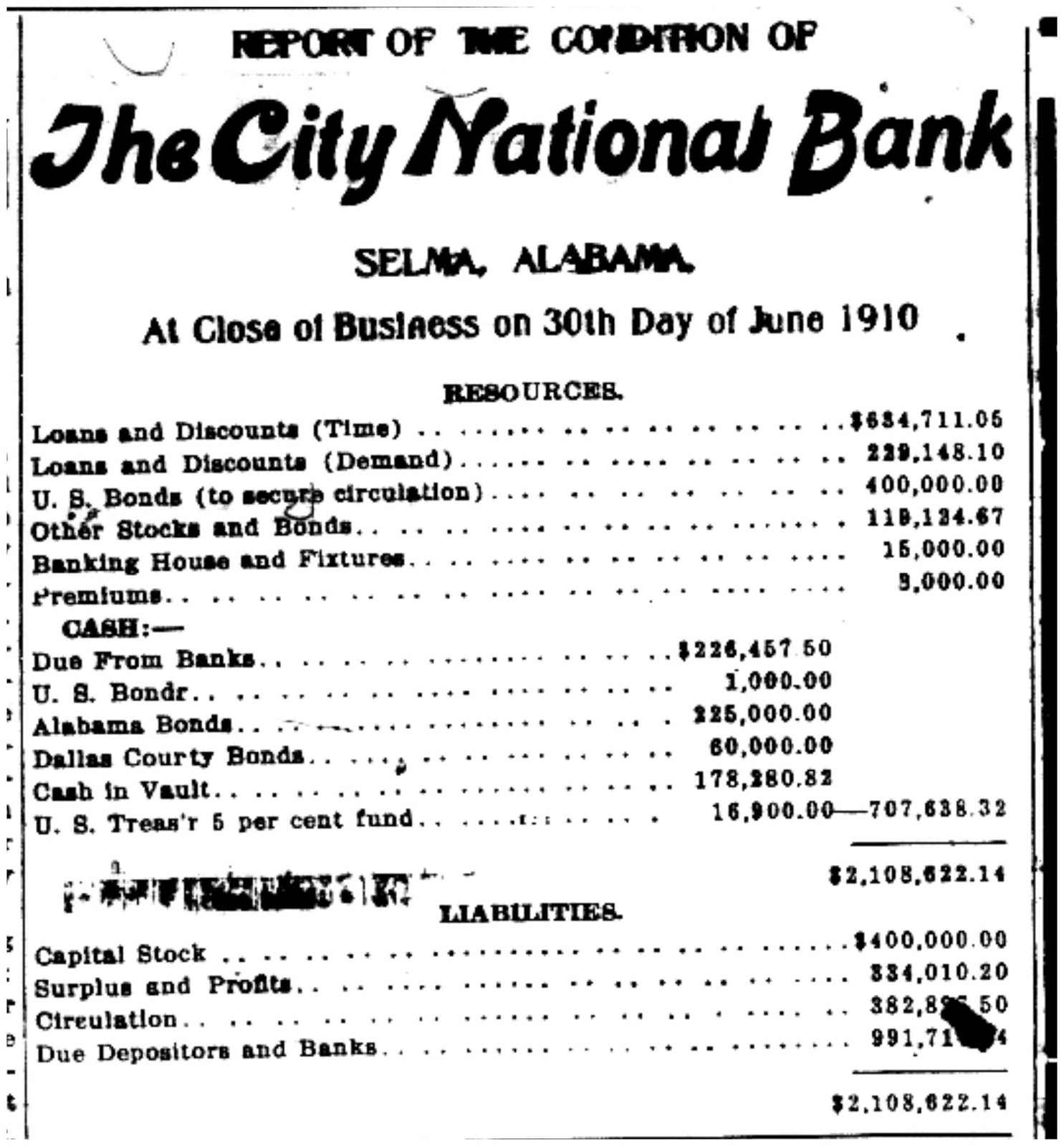
…bank deposits? Sure, why not?
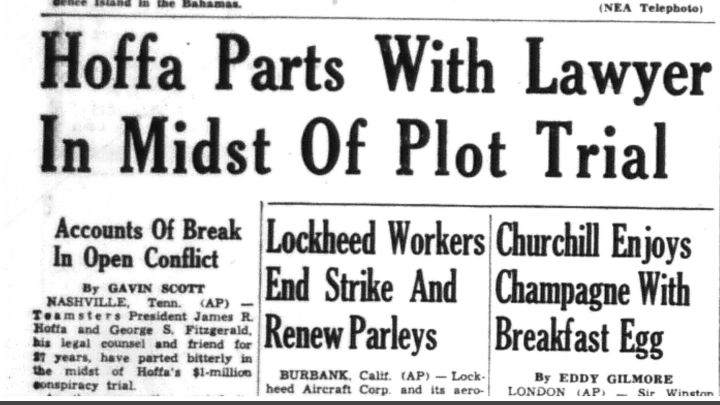
Where’s Hoffa nowadays? Nobody knows…


Posted in General | Tagged | 13 Comments

Crime, private and public sector

Let’s start the week off with two birds and one stone!    

Earlier in the week I was finally able to get access to No Place to Hide, by Glenn Greenwald, on his encounter with Edward Snowden and the stories that led to.  For those hiding under rocks,  Edward Snowden was a civilian contractor working for the NSA until he exposed part of their globe-spanning surveillance apparatus in 2013/2014. While employed by the CIA and NSA, Snowden became increasingly concerned with the scope, ambition, and dubious legality of his employers’ programs, and decided to begin documenting what he was seeing.  After methodically collecting reports for months on end, throughout several assignments, Snowden contacted a reporter with an established reputation for criticizing both the government and a complicit media.    Greenwald, after  recounting his first contact with Snowden,  then shares information from the stories he filed with The Guardian before switching into an argument against the surveillance state, and a condemnation of the establishment media, particularly the Washington Post and the New York Times.

I daresay no one will be surprised to learn that I’m far more a supporter of Snowden than the NSA — not because I believe the NSA is  part of some evil conspiracy, but because I have certain strongly-held believes on the nature and consequences of power, and know that the construction of an inescapable surveillance apparatus is Bad News. When Greenwald says global, he means global;   the book mentions numerous programs, not just the email-tapping ones, and between them they cover pretty much everyone but the crew of the International Space Station.   It can’t all be to fight terrorism: what do terrorists have to do with Brazilian gas companies, and why is NSA surveillance being shared with US agricultural departments?   Those who believe that the NSA are swell chaps who wouldn’t countenance abuse of their data may sleep soundly, but what happens when someone with less scruples is in charge?  As the current administration demonstrates, we no longer require even the pretense of civility from those those who want to operate the beastly machine that is DC.

More recently I read through Kevin Mitnick’s The Art of Intrusion.  Mitnick was partially featured in Cyberpunks, a teenage telephone ‘phreaker’ turned pioneering computer hacker. Since his release from prison Mitnick has used his reputation and experience in intrusion to sell himself as a cybersecurity consultant. The Art of Intrusion collects ‘true crime’ stories of computer-based or related intrusions;   ranging from illicit exploration to digital skulduggery.   A lot of data is omitted for the protection of the persons and companies mentioned, but a lot of the stories seem dated, for the book’s publication year, and others are so technical I am not sure who would be reading them. I did find quite a bit of interest, however, in the chapters on penetration testing and social engineering. I still do not like Mitnick’s term for an art he and his friends practiced, and one which remains a security threat:  obtaining information and access through human, instead of technological, means. Mitnick shares the stories of  analysists, who — performing audits on companies, and attempting to breach their security — were able  access highly sensitive areas within buildings simply by chatting up coworkers and ‘acting’ like they belonged there.  This also involved technical assistance, like a fake id that security guards didn’t vet too closely.    Mitnick claimed in his trial that he relied on social engineering, not computer programs, to access as much as he did, and he has previously authored a book called The Art of Deception that documents the psychological strategies used in this kind of ‘engineering’.  As someone with a work-related interest in security,  I may look around for a copy.

Posted in Reviews | Tagged , , , , , | 5 Comments