Today’s TTT prompt is books with a high pagecount. I’ve read the entire Story of Civilization, so this should be easy. But first, a tease from Gandolfini: Jim, Tony, and the Life of a Legend.
Jim had built an entire character for Bear that he came out of the South,” Patty Woo says, laughing. “None of this was ever discussed. None of this was in the plot. But for Jim, it was important. And then he had to work on his Southern accent, and it became an issue—he got himself a coach, because Jim, from New Jersey, does not have access to an au then tic Southern accent. And now he’s killing himself to be au then tic to it!
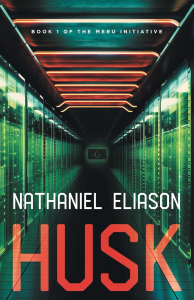
A plague has destroyed much of human civilization, but in Texas, at least, there is a remainder. Before the plague and subsequent collapse, pioneering scientists had created a way for human consciousness to be transferred to a digital world — a playground, almost, where transferred minds could be and do anything they like, and be in connection with all other residents of the digital world Meru. At first, few people were interested, despite the fact the creator had transferred himself and his wife — at least, that is, until a new disease began killing pretty much everybody. People began fleeing the real world into the playground Meru in droves, creating a network of transfer stations across Texas and beyond. While the plague has long gone, “transferring” into Meru has become an adult right of passage — and Isaac is looking forward to his own Transfer, despite it meaning that he can’t cuddle his IRL girlfriend anymore. But then his closest friend Luke urges Isaac not to go through with it, that there’s something more to Meru and its inventor-administrator than meets the eye. After Luke takes drastic action to disrupt the transfer equipment, Isaac finds Luke’s self-sacrificing passion disturbing enough to wonder for himself — and finds himself in a world of trouble. Husk is an interesting SF mystery-thriller with a focus on the possibility of digital immortality/post humanism, and a memorable villain.
I thought at first this would be a book about the lure of digital worlds as an escape from physical reality, a bit like Ready Player One‘s use of the Oasis. It’s certainly easy to see why in a shattered world like that of Husk that people would want to escape to live in some fantasy, one peopled with their family and friends who had also become digital rather than human consciousnesses. Instead, it’s more of a thriller with lots of surprises, set in a daunting world of fortified tech-centers, sometimes connected to the ruins of former cities. Although these tech centers (Alpha, Epsilon, etc) have a shared background, they’re not in communication with one another, and in fact one is outright rebellion against the system that Isaac unwittingly finds himself a part of. Without drifting too much into spoiler territory, Isaac has a narrow escape and finds himself in the wilds where he finds friends and continues searching for answers, a search that will take him through more of this post-collapse world and into constant danger. The novel sometimes waxes philosophic about the nature of consciousness, but not so much the reality of death. Possibly the best element of this novel, aside from the Fallout-esque landscape, was the villain: I’ve tried to steer clear of anything spoilery, but imagine if Big Brother was a distributed machine intelligence, a bit like DAEMON . There’s added emotional weight in the book when Isaac is forced to confront those who think he’s betrayed them, or those he knows betrayed him.
All told, this was a cool find. When I saw it at booksirens I clicked immediately because of the server room cover art, but the premise hooked me and I wound up reading it constantly. I’ll be looking for more from this author, but I understand this is his first novel.
Over time we realized that technology, including the bots, wasn’t really the problem. It was the total surrender to them, especially surrendering what made us human.
“If you only experience the world through a screen, it’s hard to say what world you’re really experiencing. Could be the real one. Could be one someone wants you to think is real. And besides, the best way to trap someone is to let them build the cage. Those walls…not just to keep people out, you know.”
“When has anything we’ve been involved in ever been a cake-walk?” I asked. “[If] we were to organise an actual cake-walk, to pick up cakes as we walked, we’d still lose three men along the way. You should know that by now.”
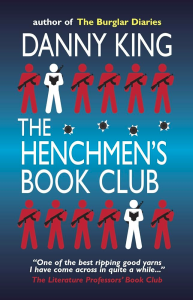
Mark is a henchman who has served the Agency for several years, surviving numerous bosses’ demises at the hands of talented superspies. The overwhelming majority of the time, he and his fellow minions are sitting bored, waiting for something to happen. Mark, being a reader, has an idea: why not start a book club? Such is the premise of The Henchman’s Book Club, a loosely organized novel that sees Mark and other mooks surviving a series of misadventures while occasionally mentioning books. Were it not for the ending, I’d say the books have a fairly marginal role. This is largely a comedy-action book, with fun writing and exaggerated characters. There’s an obvious James Bond expy — the man who keeps ruining Mark’s various bosses’ plans — as well as a foul-mouthed American equivalent. The latter is so violent and obscene another character asks him if he doesn’t have Tourettes. As a parody of action-crime films, its fun enough: I enjoyed the writing far more than the actual plot. There’s an edgy playfulness that sometimes dips into crassness, though, especially in the treatment of women who are femme fatales or eye candy. I’m fairly sure that’s meant to mock the macho posturing of spies and supervillains—especially considering that in Cancelled, most of the characters were women and presented without objectification (the main character’s girlfriend being a partial exception). If you enjoyed spoofs like OSS-117, you may enjoy this.
“WELL, I THOUGHT it was bollocks,” said Mr Cooper, stunning no one. This was Mr Cooper’s assessment of everything: films, music, museums, exhibitions or roller coasters. In fact, if you’d thought of it, spent five years developing it, registered patents to protect it, trademarks and copyrights, then employed a team of highly skilled and dedicated professionals to put it all together, Mr Cooper would take one look at it and dismiss it as bollocks without breaking his train of thought. In this case, we were talking about a book.
But most of all, Bill just missed making a difference; even if that difference was invariably a terrifying plot that threatened to destabilise the entire free world. But like Bill said, it was just nice to be a part of something.
“No,” she replied. “But my father’s Professor Days… or at least, was.” “Who’s your dad now?” I asked. “No, I mean, he’s dead,” Glory amended
If there’s one rule I’ve tried to live my life by it’s never get taken away to be dealt with later. If you’re going to get killed, try to get it done and dusted in the first few minutes because no good ever came of giving disgruntled sadists a few hours to ponder the problem at their leisure.
For whatever reason I’ve been struggling to find inspiration or motivation to review two history books I’ve read in the last month or so, and since they’re similar — early American history — I’m going to regretfully short-round them.
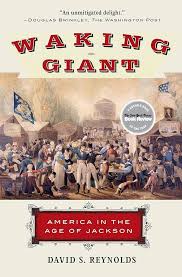
Most recently I finished Waking Giant, a history of Jacksonian America. It proved be quite surprising, because it revealed that a lot of what I regard as characteristic of the late 19th century — immigration, the penny press, etc — had already begun expanding dramatically in the 1830s and 1840s. Irish immigration was especially significant: the number of Catholics roared in this period, moving from Catholicism being insignificant to becoming the Union’s third-largest religion. (By the end of the 19th century, it would move into the number one slot.) Suffrage was expanding to include most white males, at least those who could pay a $1 poll tax, and with that less selective voter base came more varied candidates. Jackson was not a respectable lawyer voted in by other landed lawyers; he was a hero of the people, and they loved him. The author begins by following politics from Madison on to Jackson, allowing us to see the formation of the Whig and Democratic parties and caps the book off by looking at Tyler and Polk. In the middle there’s the expected history of Jackson himself, but also sections on how American culture was changing in this period — diving into religious expression, the popularity of individualist writers like Thoreau and Emerson, and so on. It made for fun reading, but I’m wary of some of its claims and want to read more into the era.
Some highlights:
Andrew Jackson was one of the rarities of American politics: a man whose personal magnetism transcended his flaws. To his opponents, he was ignorant, violent, politically inexperienced, even immoral. But few could deny his courage, his self-reliance, and his ability to rise above adversity.
Many Americans worshipped him—not as a god, but as one of them. He was Everyman writ large. The crowds didn’t just clap or cheer for him. They screamed at the top of their lungs. They mobbed him, they tried to touch him and shake his hand.
Legend has it that after Jackson’s death one of his slaves was asked if he thought the General had made it to heaven. The man responded, “If General Jackson wants to go to Heaven, who’s to stop him?”
Another preacher, Billy Hibbard, attacked Calvinism so strongly that a Presbyterian approached him and said his feelings were hurt. Hibbard replied, “O, I’m sorry you took that,—I meant that for the Devil, and you have stepped in and taken the blow. Don’t get between me and the Devil, brother, and then you won’t get hurt.”
When the revivalist Jesse Lee was asked by two lawyers if he ever misquoted the Bible in his unscripted sermons and had to correct himself, Lee admitted he often made a mistake but did not correct it “if it involves nothing essential.” He gave a pointed example: “The other day I tried to repeat the passage where it says the Devil ‘is a liar, and the father of them’; I got it, ‘The Devil is a lawyer, and the father of them’; but I hardly thought it necessary to rectify so unimportant an error.”
The Log Cabin campaign represented what would become a common phenomenon in American politics: the triumph of illusion over reality. In the twisted melodrama of the 1840 race, Van Buren, the self-made son of a humble farmer and tavern keeper, became a dissipated lord, while Harrison, scion of Virginia’s ruling class, became a plain frontiersman.
Many letters went undelivered. For instance, when Zachary Taylor won the Whig nomination in 1848, he did not know of the victory for weeks, because he refused to pay COD on several official notifications sent to him, and the letters went to the Dead Letter Office in Washington instead.
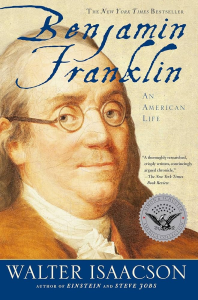
Back in July, I read Walter Isaacson’s biography of Benjamin Franklin, which I enjoyed enormously. Franklin was the first founding father I ever read a biography of, though I was young enough to remember it came with colored drawings. Franklin is quite the character, running away from an apprenticeship and starting over as a kid in Philadelphia, then making so much of a success of himself that he retired at age 42. The chapters on Franklin’s life as a printer were hilarious at times because he was an absolute fiend at marketing: he once predicted the death of a competing printer, then carried on pretending that the man had died and that his firm was lying about it. When the printer did die, Franklin then had the cheek to post an article written by the man’s “ghost” asserting that yes, he did in fact die last year. The man would have been a menace on social media! Although Franklin is largely remembered for his participation in the Revolution and the early Republic, I think he cuts a more interesting figure as a citizen — founding as he did multiple civic organizations, including a lending library and an early fire brigade. There’s a fair bit in here on Franklin’s issue with the Penn family that controlled Pennsylvania, an issue that took him to Britain where he served the colonies — until he realized the King and Parliament were so obdurate that only rebellion could answer their policies. He continued to be amusing, though: when he and Adams journeyed to France, Adams was the serious-minded statesman who studied his French, while Franklin learned his by flirting with ladies at court. Isaacson’s biography was extremely readable, and I intend to read more of his works.
WHAT have you finished reading recently? Cancelled: The Shape of Things to Come, Danny King.
Geri had been a naturalist for less than a year. Before that, she’d worn clothes like Sienna (and most other people) but then, last Solstice, she had fallen in with new friends, software writers like herself, who refused to conform to society and wrote their own rules, which meant in practice slavishly adopting whatever the latest trend was.
WHAT are you reading now? The Henchman’s Book Club, Danny King.
Sienna Clay has a secret: she’s an Auditor. Her job is to investigate her fellow Britons who are accused of thoughtcrime, or whose ancestors may have committed horrors like eating meat. New Britanna’s status as an island of tolerance set apart from the authoritarian nightmare of the Federated States of Europe can only be maintained by zero tolerance of those who don’t toe the line. The accused and convicted (no real difference) are “Cancelled”: their property is seized, their relationships null, their accounts emptied. Sienna is proud of the work she does, though, even if she has to hide it for fear of being beaten to death by those whose lives she or other Auditors have ruined. When she takes a few chances to find information that will help in her current investigation, though, she runs afoul of the very system she’s perpetuating. Cancelled is a darkly humorous satire of cancel culture, one that uses it and technology to create an all-too-believable dystopia.
The world of New Britannia is a strange mix of 1984 and Brave New World, with a population kept docile through both the carrot (legalized drugs, which people use constantly) and the stick – being Cancelled and reeducated. The first half of the novel lets us experience this strange mix of license and tyranny through Sienna, as she struggles with overwork, a callous boss, an increasingly distant girlfriend, and a home operating system that’s peevish and histrionic. Unlike the aforementioned dystopian novels, Cancelled is overt in attacking contemporary ‘progressive’ culture: characters’ influence in society is partially dependent on their Diversity Rating, for instance, with higher scores being given based on skin color, sexual orientation, etc. Straight white men would presumably be the lowest of the low, but claiming different statuses appears common: one person is suspected of “changing” their gender purely to earn a higher DR and thus a better job, but if anyone dares to voice their suspicions they’ll risk being Cancelled. Hyperbole is also mocked: “worse than Hitler” is a common expression, and one man hurls it against Sienna after she refuses to sign a consent form allowing him to consummate his relationship with his girlfriend. (All sexual encounters are strictly governed by contracts: a woman cannot “give consent” unless three of her female friends sign off on the contract.) There’s also a significant degree of outright ignorance: no one knows who Hitler really was, for instance, only that “he knew Churchhill”.
The story that develops from this is interesting, as we witness Sienna fall from a fairly privileged place in life to become the lowest of the low. She should be utterly unlikable at the start, considering she’s a high-tech inquisitor, destroying lives for absurd crimes, but King manages to make her sympathetic. He accomplishes this by having her in two frustrating relationships – one with her girlfriend, who sponges off of her – and one with her house. It has an integrated AI, designed by the girlfriend, that is incredibly peevish. When Sienna is late getting home, for instance, the AI is so annoyed that its prepared dinner for her has grown cold that it locks her out. The fact that it’s been programmed by Sienna’s girlfriend also sees it partially weaponized against her later on. When Sienna’s risks at work don’t pay out and Sienna finds herself cancelled, she’s put through a lot of physical and emotional angst that largely redeem her character as she realized what a monster she had been — and what greater monster she served.
I devoured Cancelled, which should come as no surprise given my scorn for much of what it mocks – identity politics, oikophobia, etc. I also enjoyed the aspects of the dystopia that were not political, like the role of technology: Sienna and company are always plugged in, using smart classes to keep them online, and surveillance is a given, leading to a society where expression is chilled to the point of frigid. (Tellingly, the arts appear to have vanished: all Sienna listens to is AI-generated music.) King tells a good story, and he appears to have numerous titles on KU. Definitely planning on reading more of him, and soon.
Related: The Choice, Claire Ward. A dystopian novel where Britain is run by a literal health Nazi. Probably the only SF novel with an award from Good Housekeeping.
The newspaper world was rough-and-tumble, to say the least. Editors lambasted each other and often came to blows. When in 1835 James Gordon Bennett, editor of the Herald, charged Benjamin Day of the Sun with being an infidel, Day replied that Bennett’s “only chance of dying an upright man will be that of hanging perpendicularly upon a rope.” In January 1836, another editor, James Watson Webb, thrashed Bennett for twenty minutes with a cowhide whip on Wall Street as crowds cheered. (Waking Giant: America in the Age of Jackson)
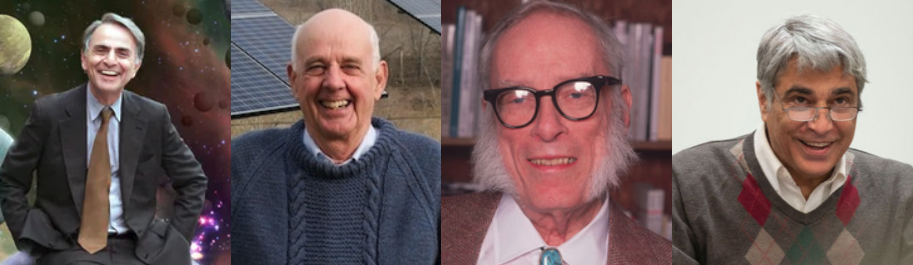
Carl Sagan, Wendell Berry, Isaac Asimov, and Anthony Esolen
Today’s TTT is “books to end a reading slump”, but my tastes are so different than other people’s that it would a pointless exercise. Instead, inspired by this post at the SF&F forum Chronicles, , I’m listing ten authors whose published works I’ve (mostly) read in full.
(1) Bernard Cornwell. The only books by him I’ve not read are the ones he published under a female pen-name.
(2) Isaac Asimov. I’ve read all of his fiction except for juveniles & The Ends of Eternity. I’ve also read a lot of his nonfiction, mostly science and some history with more miscellaneous works like his guide to the Bible and a volume of annotated classical poetry.
(3) Robert Harris. Fairly certain I’ve read everything he’s published: Harris is a prolific author of historical fiction whose settings are incredibly varied: most of his works are standalones, with the exception of a trilogy based on the life of Cicero
(4) Carl Sagan. While I can’t remember my first Sagan work, his Demon-Haunted World is the best contender and I’ve since read everything by him save his work on nuclear winter.
(5) John Grisham. This author of legal thrillers was the first author whose works I ever ‘completed’, though frankly I would have stopped reading him years ago were it not for the fact that one of my family members always gives me his latest at Christmas.
(6) Jeff Shaara. An author of American historical fiction, Shaara has covered everything from the American Revolution to the Korean war; I’ve read everything save the last novel in his second Civil War trilogy (I have no interest in reading about Sherman) and the Korean novel. The quality is inconsistent, but at this point reading him is a habit.
(7) Wendell Berry. I’ve read all of Berry’s Port William novels and short-story collections, and have read most of his nonfiction to boot: the exceptions being Life is a Miracle, The Hidden Wound, and his most recent release.
(8) Frances and Joseph Gies. I include these two together because while they wrote independently sometimes, their solo work stayed within the same subject (medieval social history) that they address in collaboration.
(9) and (10) Anthony Esolen and Brad Birzer. Including them together because they’re both Catholic men of letters who write on literature and culture, though Birzer has also delved into biographies like that of Russell Kirk. They’re both wonderful to listen to as lecturers; Esolen is outright melodic and Birzer is very….soothing.
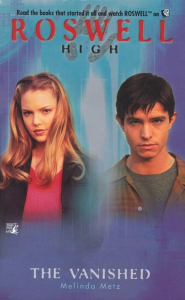
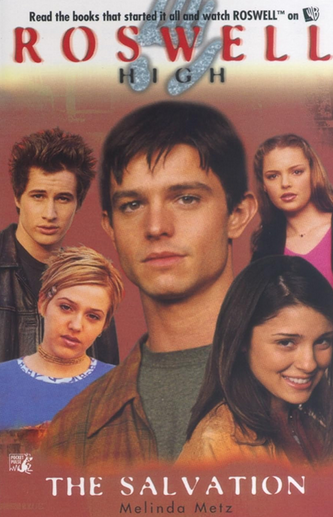
These are just WB stock photos placed on top of generic backgrounds
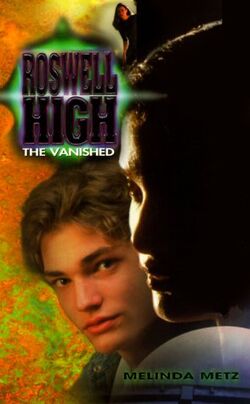
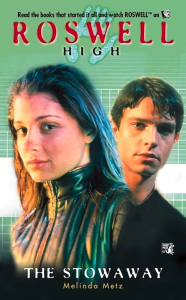
At the end of The Stowaway, the gang formed a psychic link with one another, and then with the alien collective consciousness, in order to create a wormhole to send the villain back home for justice. Unfortunately, at the same they were also all disguised as said villain in order to distract his two monster-minions so said minions would not eat them. In a not-hilarious case of mistaken identity, the wrong man was sent through the wormhole: Alex Manes is now in serious danger of missing his mid-terms. In The Vanished, the gang is suitably upset about this, but it’s not a hugely eventful novel. They go back to the ruins of the Clean Slate Compound to see if there’s anything useful on the the ship, but an unknown car drives them away from the site until the alien kids conjure up a dust storm. When they return, the ship is gone. Like, zoinks, Scoob! They figure there can’t be that many places to hide a big alien ship, and Isabel and Adams’ scattered memories of being mental slaves to the villain indicate that Carlsbad Caverns is the place to go When they arrive, though, they’re in for a surprise — and not the happy “Oooh, we arrived just in time to see the bats fly out” kind. There’s also a little thread of Adam having a growing crush on Liz, which will feature more later. There IS an actual cover design for this one in the same style as the originals, but I don’t think it ever got printed.
They have no personality whatsoever
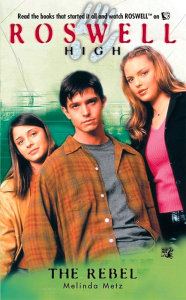
Moving on to The Rebel. The gang has tried twice to bring Alex back from …where ever (why don’t we have a planet name?), but to no avail. The good news is…he’s back! (Somehow, he returned.) Despite the Consciousness indicating to Max that it will be months before they can try another collaborative attempt with him, Alex has just shown up exhausted and terrified with no memories of his time on Whereever. He beelines for the Evans’ house, both because he loves Isabel and wants to see her, and because Max is The Leader of this little enterprise. Mr. Responsible will figure out what to do. What to do about what? Well….maybe the fact that when Alex was in the wormhole being sent back, he felt a terrifying presence of someone else in pursuit, someone who would kill him to get what they wanted. And what do they want? Well, Alex suddenly has another Stone of Midnight, just like the other one that’s been causing so much trouble. Also, another teenage alien has appeared: Michael’s brother, Trevor! After admitting that he hitched a ride in the wormhole and that he belongs to an underground group on Wherever that hates the Consciousness, a rift forms in the group between those who think Trevor is good people and those who are wary or outright suspicious. On the teen drama side, Max keeps zoning out while being connected to the Consciousness, which distresses Liz: its like he’s not there even when he is there. Interestingly, “phubbing” has allowed everyone to experience this now! The emotional alienation is making her vulnerable to responding to Adam’s puppy crush in kind, but then Maria’s brother is kidnapped by…well, I’ll save that for the next paragraph.
Who thought, “Blankly staring teenagers! That sounds like it will entice people to pick up a book!”
One thing I’ve mentioned about the Roswell High series is that it has three villains whose stories fold into the others: The Dark One features all three, very nearly. The Sheriff was killed, but his son Kyle is out for vengeance and is certain that the kids had something to do with it. Worse yet, he has possession of some Clean Slate tool that can snuff out the aliens’ power usage. The kids are scrambling to figure out how to dispatch the Villain, who now has Trevor helping him — in fact, Trevor came through the wormhole to find the villain, who is the leader of Whatever’s rebellion against the Collective Consciousness. Unfortunately, the kids are in a Hitler vs Stalin situation. The Villain is a monster, sure, but so is the Collective Consciousness — as it proves when Isabel, entering her akino, resists connecting to it. She seeks out Trevor’s help, since he insists that it is possible to survive not connecting — he and the Villain are both not part of the Consciousness — and the Consciousness begins torturing Max and even destroying his body in an effort to force Isabel’s hand. Alex, who was previously distracted by the wormhole making him a babe magnet, rallies after he learns that his beloved Isabel is in trouble. The book ends with the Villain being destroyed, but at a cost: Adam is dead and Max is comatose, a complete captive of the Collective Consciousness.
Ahh, Ms. Appleby. Thank you for that little bit of emotion.
And finally, we arrive at The Salvation, the series’ conclusion. The kids are free from both the terror of the sheriff and of the Villain (whose name I continue to omit in case anyone decides to read a 27 year old YA book series), but still have to face the fact that Max is a vegetable. He occasionally rises, puppet-like, to demand the Stones of Midnight, but Michael is keeping them well hidden. While everyone tries to think of a plan to destroy the Consciousness, some emotional drama continues. Maria continues to be heartbroken by Michael’s apparent lack of love for her, and this is made worse by the fact that he and Trevor are talking about returning to Wherever after the Consciousness is destroyed. Did Michael talk to anyone about this? Nope. Ultimately the kids find an approach that works, and Michael changes his mind at the last minute and finally tells Maria he loves her. And everyone lived happily ever after, with smooches all around, until the WB decided to make one series that messed the characters up a bit, and then 20 years later made another series that took the characters and threw them in a canon woodchipper.
And that’s the end! This was a fun series to blitz through, and I was intrigued by the little details I’ve remembered over the years. Having watched the first WB series through several times, there was some annoying mental contamination regarding the characters, varying on the character. The books’ Valenti is so cold and evil that it was easy to retain my middle-school image of him, so unlike William Sadler’s depiction of him. I kept hearing Jason Behr talk when Max was active, though, despite the fact that series-Max is far more subdued and popular than book-Max, who is regarded as highly attractive. (Well, all of the aliens are regarded as highly attractive: I suppose that’s part of the hyperadaptability.) One thing the original show did far better than the books is the use of parents: they’re practically nonexistent, almost wholly background here, while in the books Liz and the Evans’ parents play larger roles and there’s a lot of emotional storytelling that comes out of that. Honestly, reading this has made me want to drag out my Roswell DVDs and dive in again. (“If I disappear for a few days, it’s nothing personal. I’ve just been abducted.” used to be my AIM away message…)
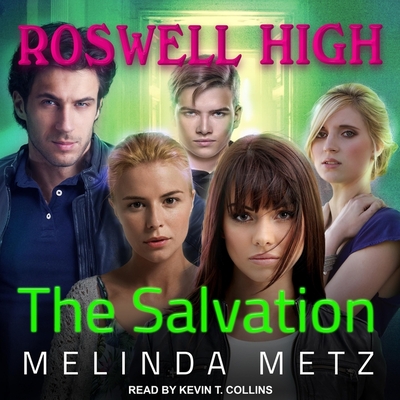
On the subject of grousing about covers, I found a series in this style on accident. I think they’re AI-generated, possibly? Guessing at the characters from left to right Michael, Maria, Liz, Isabella.
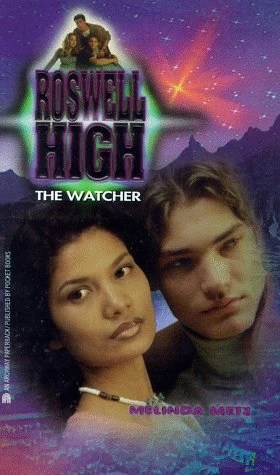
This is without a doubt the worst of the original covers, but I still prefer it to the WB recover.
The Watcher begins pleasantly enough, with relationship drama between the six teens more or less stabilizing. Liz is no longer angry at Max for shying away from a formal relationship on the grounds that it endangers her, Isabel and Alex have become a couple, and Michael and Maria are both getting closer to sorting out their issues. The girls are even bonding looking at one of their classmates’ silly websites, one in which she rates boys on their kissing abilities. But Max…is not doing good. Turns out members of their race bond to the Collective Consciousness during their adolescent period: it joins their mind to all other members of the race, possibly including those who are deceased. If Max doesn’t join the Consciousness, he’ll die. Unfortunately, Earth is too far away from (mystery planet) for Max to join, unless he can use the communication crystals aboard the crashed ship. The gang knows the ship is being held at some Clean Slate Complex, but now they have to not only figure out where the complex is, but find a way to get inside it — and aboard the ship! — without getting shot. The ante has been upped considerably, and when the gang use new powers taught to them by Ray — changing their appearances to mimic guards and even Sheriff Valenti — they descend into the compound and things get even hairier.
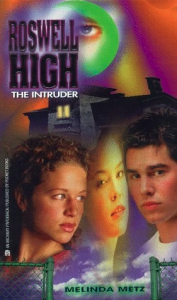
The Intruder is a direct sequel to The Watcher: Isabel has returned alone from the Clean Slate compound, as Ray Iburg was shot by the sheriff (not the deputy) and Michael was fighting to give her time to escape with the communication crystals. Once she gets back, relationship matters deteriorate drastically, teen drama wise. Isabella is not taking the presumed capture of Michael well: he has a special place in her heart. Almost like a brother, and yet someone she’s harbored feelings for as well — seeing a …romantic dream of his involving her didn’t help.(If these kids stopped invading one another’s dreams they’d have far fewer issues.) Despite the sudden drama between Alex and Isabel, the gang has to figure out how to work together and help Michael escape the compound. Michael, meanwhile, is being treated fairly well as a prisoner: there’s no torture, just interviews and tests in which he’s encouraged to explore his abilities. There’s also two new faces: Adam, the last incubated baby alien who Ray Iburg couldn’t save back during the crash, and a teenage girl named Cameron. Cameron claims to be captured by Valenti for having psychic powers. Like The Watcher‘s conclusion, The Intruder is heavy on action thrills from its midpoint on.
Ugh, I HATE the WB covers. This is supposed to be Liz and Max, same as The Watcher’s cover.
At the conclusion of The Intruder, there are some bits of good news. Project Clean Slate has been wiped out, and Sheriff Valenti has been immolated with it. The bad news is that the new guy Adam is the one responsible, and he seemed to take sadistic glee in burning Valenti alive and very nearly bringing the roof down on many of the gang’s heads. The sweet summer child appears to have been replaced by a sadistic monster. While the kids keep feeding him sedatives and discussing what to do, plot uncurrents begin happening under their noses. Isabel suddenly starts acting strangely, very much like Adam — violent, and demanding to know where the late Ray Iburg might’ve kept something valuable. Something like…..the Stone of Midnight that caused so much drama in The Seeker. The kids soon realize that there’s another alien on this planet: the criminal who caused the crash didn’t die, but lived, and he’s a nasty piece of work who is perfectly happy to mentally enslave people to make them do his bidding. The kids come up with a plan to deal with him, but it…um, has unexpected consequences.
So, some thoughts on continuing this series: one, there’s more graphic making out scenes in these books than anything I’ve read since, and the action ramps up insanely fast. These kids go from essentially pranking the sheriff to infiltrating top-secret government bases while at the same time juggling relationship drama and hormones. Also, it’s strange that the kids’ homeworld and species are never named.
WHAT have you finished reading recently? Roswell High: The Vanished.
WHAT are you reading now? Still making good progress through A Waking Giant: America in the Age of Jackson. Politics is only a small part of the book, as it’s more of a broad cultural history.
When the revivalist Jesse Lee was asked by two lawyers if he ever misquoted the Bible in his unscripted sermons and had to correct himself, Lee admitted he often made a mistake but did not correct it “if it involves nothing essential.” He gave a pointed example: “The other day I tried to repeat the passage where it says the Devil ‘is a liar, and the father of them’; I got it, ‘The Devil is a lawyer, and the father of them’; but I hardly thought it necessary to rectify so unimportant an error.”
WHAT are you reading next? More Roswell.
Today’s prompt from Long and Short Reviews is books we had to read for school and didn’t like. That one is challenging, because I don’t especially remember the books I didn’t like. I was a big reader as a kid, and even when we were given something that was outside of my usual scope (The Island of the Blue Dolphins, say), I still found some way to enjoy it. College was different, as I was assigned things like The Nazi Germany Sourcebook for classes like a survey of German history, or novels I didn’t understand at the time like Kokoro and The Leopard. Now, I suspect I would get far more out of the novels.




 Reading Freely