China, Japan, and New Mexico

In the last couple of weeks I’ve finished some books  that haven’t gotten full reviews. Here are some quick shots!
First up: New Mexico, A History. This is…exactly what it says it is, a history of New Mexico. Published to celebrate the state’s 100th anniversary of being part of the union, it begins with the first known human habitation of the area and proceeds to the present day. In broad strokes:  Pueblos and other tribes settle, the Spanish arrive to preach and mine, Mexico revolts, Texas invades, cattlemen and sheep-ranchers fight, rail lines bring farms and tourism, World War 2 brings a lot of military investment,  Indians organize for civil rights, and the cities pursue their own individual identities:  Santa Fe as the ancient and mysterious capital, Albuquerque as the progressive center of business, Las Cruces as a haven for low-income residents, and Roswell as…well, you know Roswell.  If you have an interest in the state, it’s an interesting book, particularly given that New Mexico is home to three cultures which have been rubbing off on one another for centuries.

Next: Embracing Defeat: Japan in the Wake of WW2. When I checked this out I thought it covered the second half of the 20th century, documenting how a war-ravaged empire became a booming democracy whose economic prowess was putting the fear of conquest into people in the 1980s.  The book largely focused on the immediate postwar era, however, on the six years of American occupation in which the Japanese had to figure out what to do in the wake of their worldview being fairly destroyed.  It makes for diverse reading: the author examines new literature and social behavior alongside debates over a political constitution and economic development.
Thirdly, The Heart of the Dragon is a book published in 1985 which surveys Chinese culture.  In the wake of reform, China’s economy was on the rise. threatening even Japan. This survey explores China’s historical legacy and its growing role in the global economy.  China’s culture, not its politics then and now, are the feature;  early chapters cover the arguments between China’s biggest schools of thought (Confucianism, Daoism, and Legalism). The first two had their own differences, but both had an optimistic view of human nature at odds with Legalism — which viewed people as so liable to mischief that only an omnipresent and unyielding mesh of rules could keep them on the straight and narrow.  Although the chapters on agriculture and economics are badly dated,  overall it’s an attractive introduction to Chinese society through the ages.
Posted in history, Reviews | Tagged , , , , , | 1 Comment

These Rugged Days

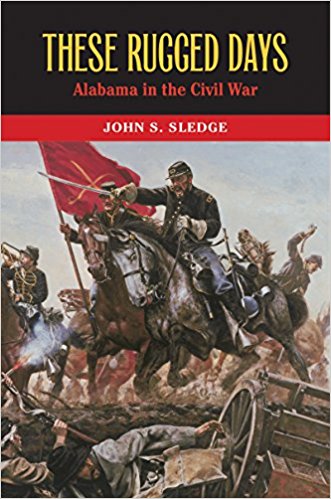
These Rugged Days: Alabama in the Civil War
© 2017 John Sledge
296 pages

Although Alabama was not the site of as many bloody battles as Virginia and Tennessee in the Civil War, it was not a quiet backwater only troubled at the war’s end. From the Confederacy’s birthplace in Montgomery in 1861 to the coup de grâce burning of Selma in 1865, Alabama saw altercations, skirmishes, and at least one major battle throughout the war. These Rugged Days is a personal history of Alabama in the civil war, in which the accounts of battle are made more intimate and entertaining by unique stories from the ground.

When South Carolina seceded from the union, Alabama was one of the first states to follow, and its central location in the deep south seemed to recommend Montgomery as a capital – one supported by two major commercial rivers, no shortage of rich farmland, a secure port, and ample mineral deposits. As an example of like repelling like, however, the politicians who gathered in Montgomery in that humid spring were put off by the clouds of mosquitos. Although the seat of government moved to Virginia, Alabama’s rail lines and rivers were of great interest to the enemy. Union cavalry raided and captured several cities in northern Alabama early on, only to be driven out. Sledge notes that Florence and Huntsville would change hands several times throughout the war. Although many citizens of northern Alabama were unionists, and the first Union troops were careful not to step on toes, the eventual Union reprisals against civilian populations in the wake of guerilla war alienated the military and their civilian hosts against one another. Larger in scale was the siege of Mobile, the port of which  fell in 1864. Mobile was an important port city for the entire South, hosting blockade runners who darted to Cuba and back with supplies long after New Orleans had fallen. The battle of Mobile Bay involved several ironclads, as well as the use of naval mines (or “torpedoes” – this battle gave birth to the expression, “Damn the torpedos, full speed ahead!”).  The city itself, however, would not be taken until 1865.

Sledge opens the book with a story from his childhood, recounting the moment in which history became real: he and a friend discovered a half-buried Spencer carbine along a creek bed, one presumably dropped by an invading Yankee during Wilson’s raid. Throughout These Rugged Days, he draws on stories that add a human touch to the already lively account of daring raids, rebellious farmhands, and steady action. The chapter on Streight’s Raid, for instance, includes several humorous accounts – though the raid was bound for some level of absurdity from the beginning. It was a cavalry raid conducted on mules, who frequently gave their riders trouble and drew amused crowds. The troopers had their own laughs; in one abandoned town, a few newspapermen turned cavalry broke into the town’s news office and printed a broadsheet that presented the arrival of the Yankees as if they were a group of young men come to pay a social call. (“It is unknown how long the general and his friends will stay with us.”) The conclusion of that raid saw the troopers surrender to a force a third of their size after being bloodily harried for days. The rebel commander Nathan Bedford Forrest ‘put the skeer in’ his opponents by sending aides with orders to nonexistent companies and shuffling his two guns to appear like a battery of fifteen. Streight was not amused when he realized how small a force had taken him in. The book concludes with Wilson’s Raid, a large cavalry action that involved a running battle between carbine-carrying Yank cavalrymen fighting against a much smaller Confederate force led by Forrest. They sparred from Montevallo to Selma, where Wilson achieved his aim in burning the city and its naval foundries, which had helped make Mobile such a tough nut to crack. (Selma’s contribution to the naval war were honored in the good ship Selma, which was the last to surrender at Mobile Bay. )

Although there are other books on Alabama in the civil war, These Rugged Days is easily the most entertaining book I’ve read on the subject. The author has obviously inherited his father’s ability to weave a story that keeps audiences spellbound.

Related:
With the Old Breed, Gene Sledge. (Literally related: Gene Sledge is John’s father.)
The Yellowhammer War: The Civil War  and Reconstruction in Alabama

Posted in history, Reviews | Tagged , , , , , , | 5 Comments

The Never Ending Sacrifice

The Never Ending Sacrifice
© 2009 Una McCormack
352 pages

No Star Trek series rivals Deep Space Nine for its moral drama, for its stationary setting meant that characters had to live with the consequences of thir decisions. It told rich stories, and put characters into hard positions. Decisions and their consequences are the theme of The Never Ending Sacrifice, which tells the story of a young boy whose life changed radically when Commander Sisko had to make a hard choice about him, The boy, Rugal, was a Cardassian orphan thought dead by his father, adopted and raised by Bajorans as their own. When the boy’s Cardassian father realized his son was still alive and on the station, he successfully petitioned Sisko for custody. The Never Ending Sacrifice explores the consequences of that decision, as Rugal returns to a Cardassia that will — as DS9’s seven year run unfolds — descend into hell. As Cardassia reels from one government to another, Rugal copes with his homesickness and self-loathing — lashing out against those who want to love him, and courting disaster by seeking purpose in revolution. Ultimately, as Cardassia falls into tragedy — the abyss of the Dominion War, and its eight hundred million dead — a young man surrounded by death finds life to cherish.

My regard for this book see-sawed a bit at first. I was immediately won over by the title, which is that of a Cardassian family epic mentioned in “The Wire”. As Rugal uneasily settled into his new Cardassian life, I was disappointed in the easy “Bad Guy Empire” rendering of Cardassian society, as it seemed less like a coherent state and more of a device to complain about contemporary society. However, McCormack skillfully works in connections to the larger Trek verse that lured me into appreciating it more. Rugal takes inspiration from the words of dissident professor Natima Lang, for instance, who fled Cardassia in “Profit and Loss”; Tekeny Ghemor, the sympathetic reformist gul who was the target of a plot in “Second Skin”, is a constant source of hope — and later on, Rugal’s connections to Ziyal allow him to elicit the help of one Elim Garak. Ultimately, it was McCormack’s ending which fully won me over. Rugal fights the title of the novel by resisting the tendency to pass on old battles to the next generation, and his own decisions to stay or go create a redemptive ending that buried my grumbles. Although this is not quite A Stitch in Time, it’s still very good.

Posted in Reviews | Tagged , , | 6 Comments

North Alabama III: Beautiful Buildings and Curious Stories

Another purpose of my weekend in northern Alabama was to visit cities I’ve heard of, but never visited — Florence, Muscle Shoals, and Decatur.  Muscle Shoals earned a name for itself in the 1970s when it became a center for music production, commemorated in the Lynard Skynard song “Sweet Home Alabama”.   My main goal, however, was to see a bank in Florence which is built as a replica of a unique antebellum home.

The original house was unusual in that its two-story colonnade completely encircled the building. Known as the Forks of Cypress, the house burned in the mid-20th century. The columns stand today and are almost visible from the road — at least, in winter when there’s no leaf cover —  but the grounds are only opened twice a year to the public.   Two buildings have been modeled on the Forks of Cypress: this bank and a private home.   The Regions Bank version strays a bit by having a rear addition that juts beyond the colonnade, but even so it’s a beauty.
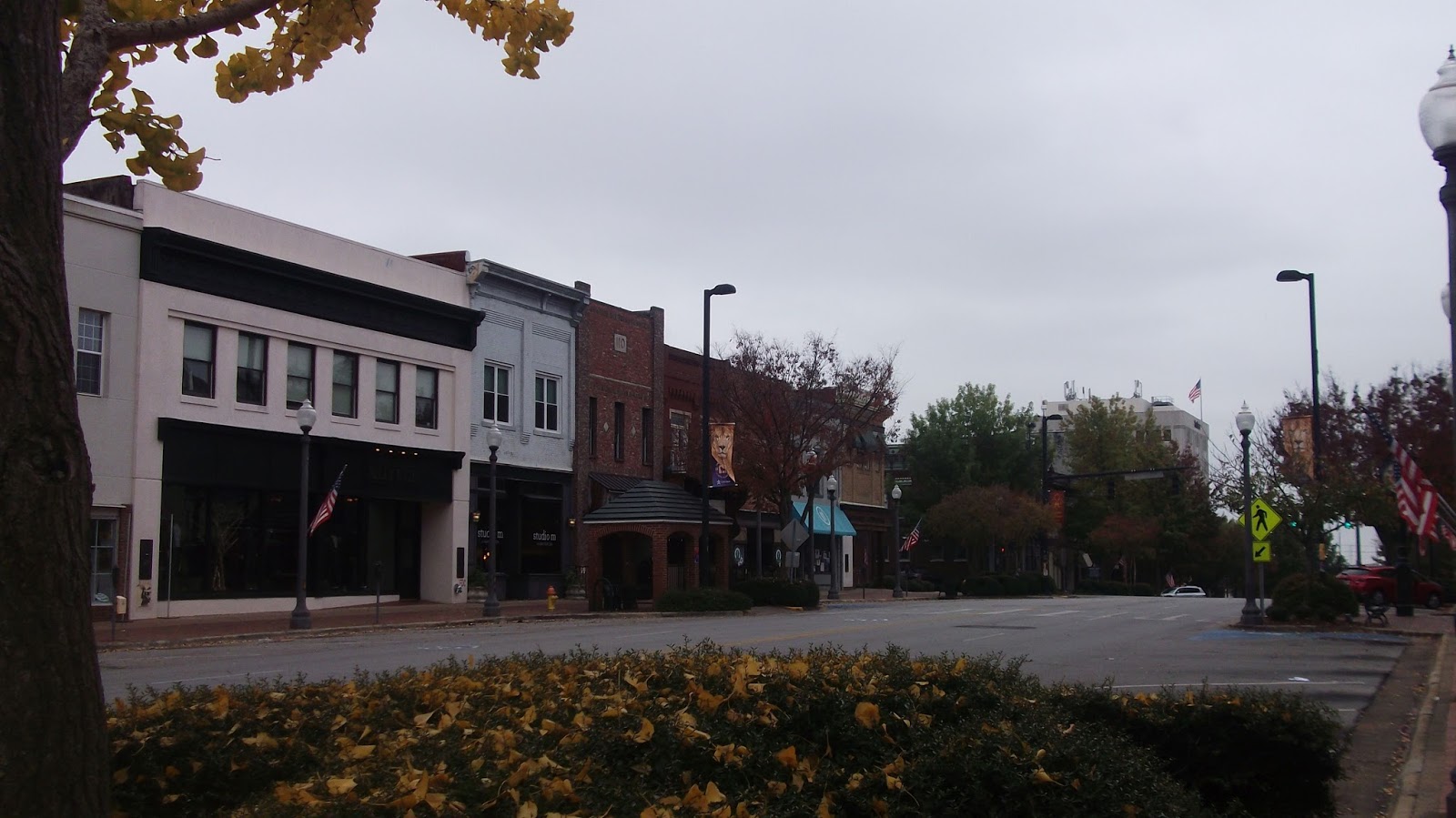
Downtown Florence in general is the picture of main street urbanism. 
I took numerous shots of downtown Florence’s main street,  utterly taken by the buildings’ close-knit variety. This is a city, not  strip malls and collector roads!
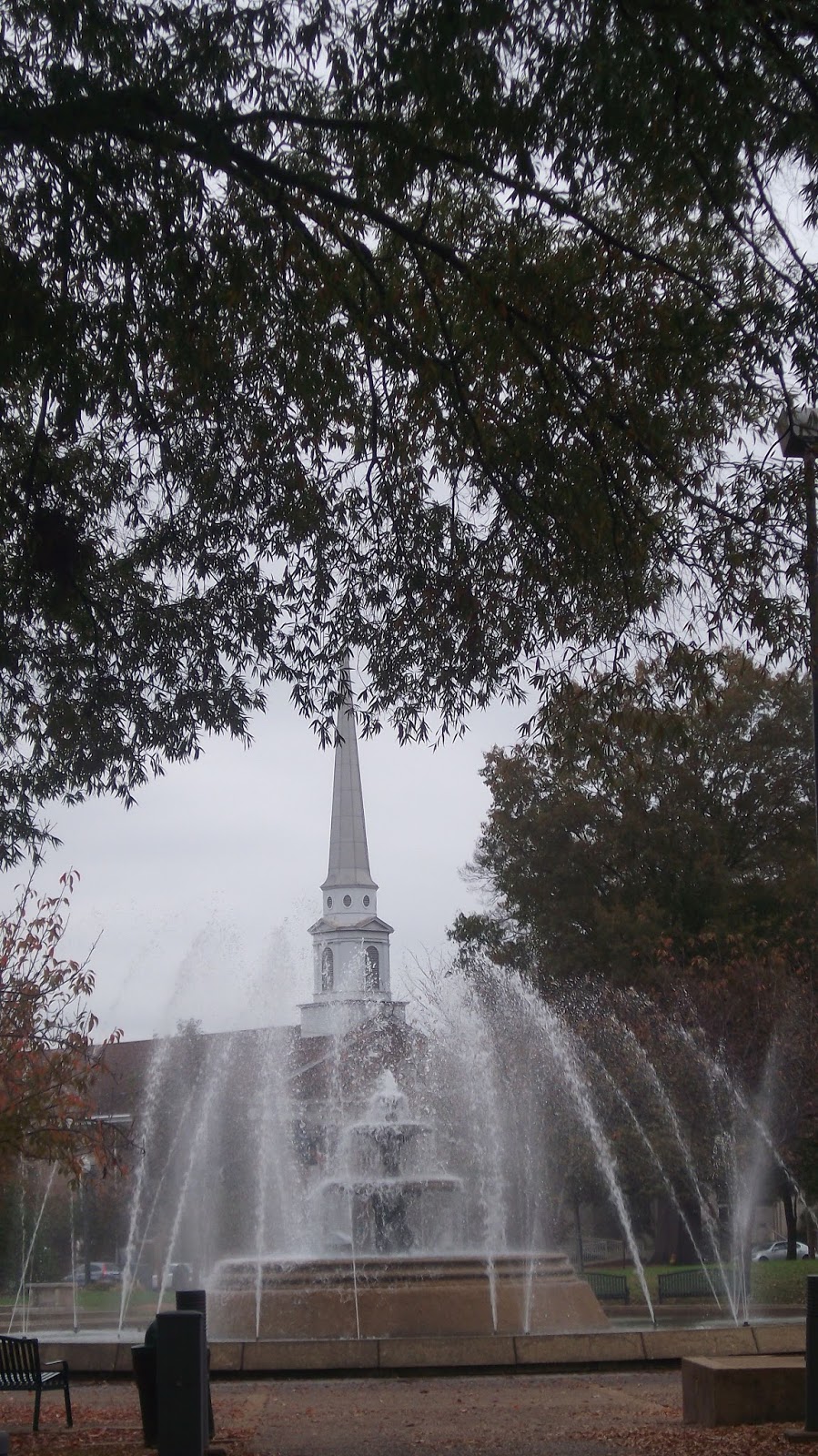
Near Seminary Street, the location of the bank, sits this public park — right in front of the public library, which you can see to the left. 

(Still my favorite shot from the weekend…)
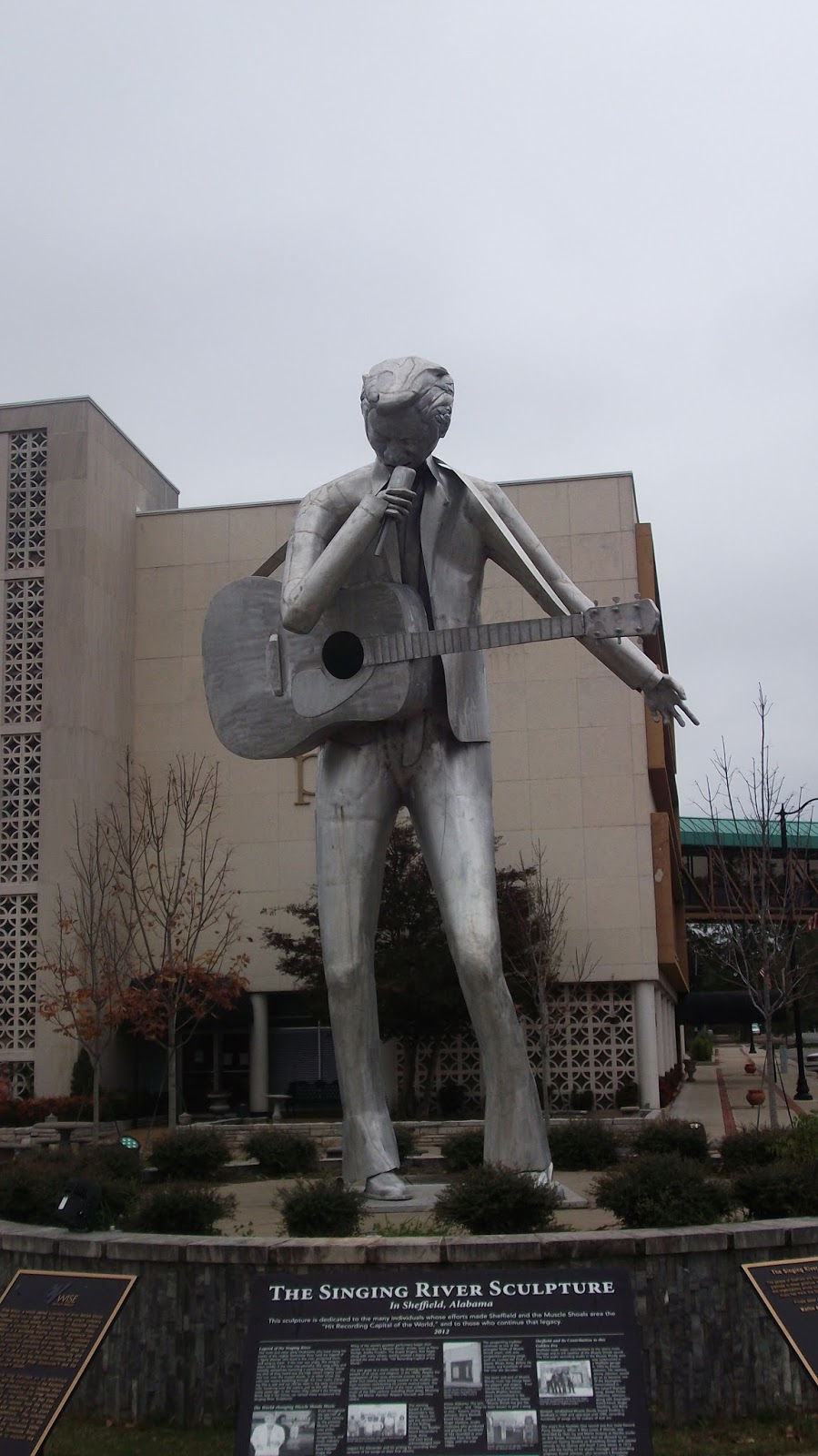
In downtown Sheffield, opposite the river, there is a statue that commemorates the musical scene of the 1970s. 

Downtown Sheffield, which I found only by getting lost trying to find Florence. 
Speaking of getting lost, I did it  soon after this while navigating down to Dismals Canyon. I failed to notice that my highway “continued” via left turn, and wound up going further south than expected. I entered a curious town called “Phil Campbell”.  I stopped for gas and prompted the clerk, “I guess Phil Campbell must have been some kind of man to get the town named after him?”  She didn’t know who he was, though. She didn’t know how to get to Dismal Canyon, either. She said she was from Spruce Pine,  which despite her tone was not in another country, but ten miles up the road. I looked up ol’ Phil when I got home, though, and discovered he was a carpenter who was asked to build a railroad depot and sidings  so that a local businessman could develop a town. Campbell was rewarded by having the new town named after him, Phil and all. Much of the town was destroyed in the 2011 Super Outbreak of tornado which so savaged northern Alabama, but a grand gathering of people named Phil Campbell raised money for its relief.
That story may have some bearing on this mural.
I would definitely return to Florence,  hopefully during a weekday when its main street was active, or perhaps during its spring Renaissance Faire. I have friends who dress up as knights and such and attend there, anyway! 
Posted in Reviews | Tagged | 2 Comments

North Alabama II: Space, the Final Frontier

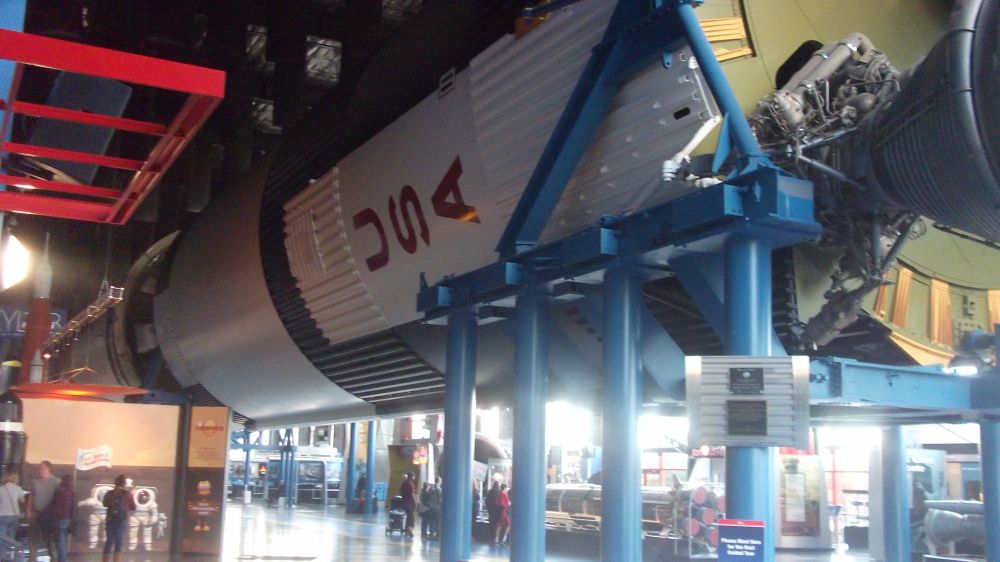
I visited the Huntsville Space and Rocket Center in my childhood, but my memories of it are hazy.  I found it much changed; although the rockets are still there, of course, what little I remember is gone and a lot of new stuff has taken its place.  The museum is divided into three areas:  the Saturn complex (seen above) houses a Saturn V  hanging from the ceiling, alongside which run the majority of the space program exhibits; outside is a rocket park, which shows off the entire family of Redstones, Junos, and Saturns, along with pieces of military equipment that rely on missiles or avionics; and on the other side of the park is the ‘main’ museum, which includes exhibits on invention, avionics, and military hardware, along with a rock climbing wall.  Most of the exhibits are of the electronic interactive kind, in which visitors watch videos, play games, and create a general din of noise.  There are reminders that this is a space museum, however, in the impossible-to-miss mock-up of the international space station. This is used for the “space camp”, which encourages children to become astronauts and has them swim in underwater tanks, that sort of thing.  

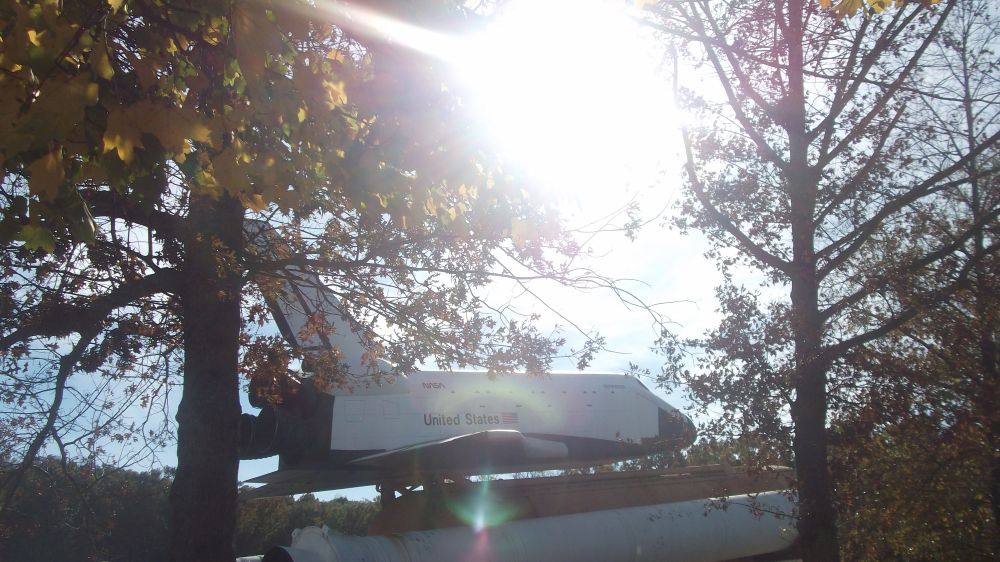
Now, what shuttle is that? It’s not a shuttle, really: it’s called Pathfinder, and is a wood and steel mock-up of a shuttle. Huntsville was unable to get one of the retired shuttles after the program was terminated,  possibly because it already has the remains of Skylab, an Apollo command module,  and the rockers.  Pathfinder passes casual inspection, however — I only looked into it because I knew full well Huntsville hadn’t gotten one of the shuttles.
This is part of the International Space Station replica, parts of which are open for touring. The other parts are reserved for space camp folk, and indeed a few kiddies were about.The walk-through demonstrated how every bit of space is used: there are storage lockers built into the “ceiling”, for instance, and there are cardinal labels (“Overhead”, “Deck”, “Port”, and “Starboard”) painted to keep people oriented.  Our tour guide also demonstrated the toilet, although he only ran the vacuum. Zippers were thankfully not involved.  
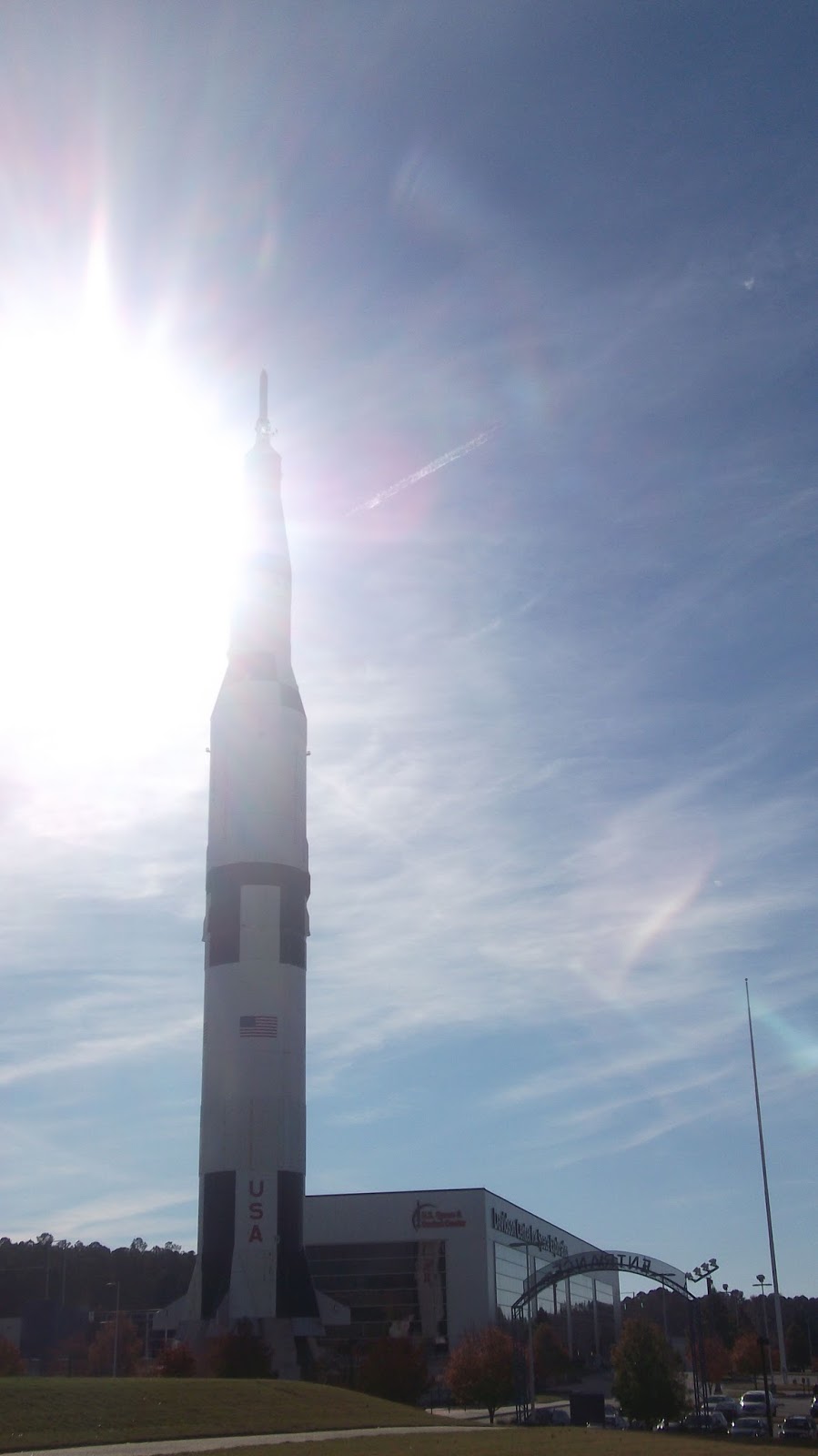
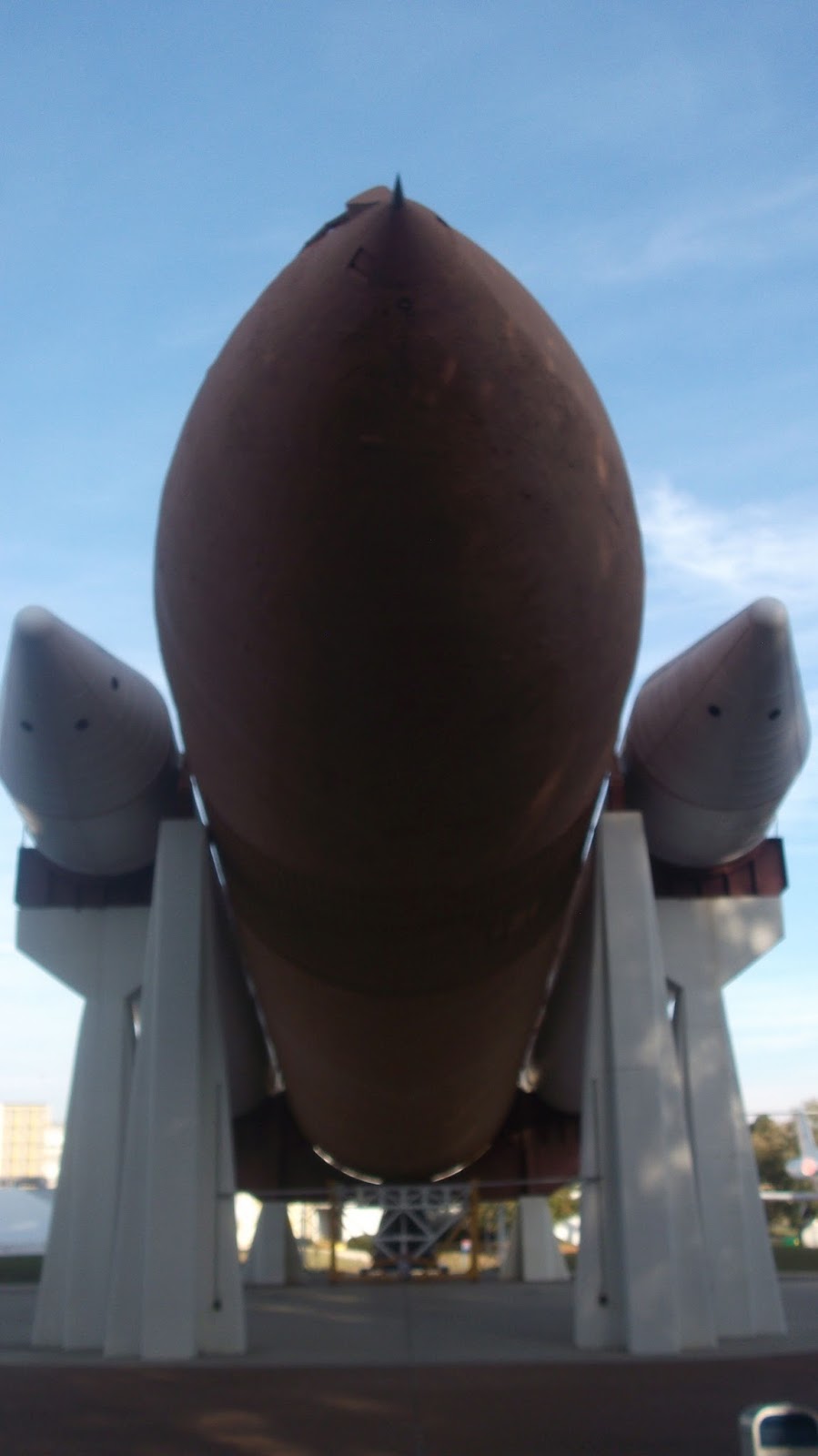
When I visited back in the 1990s, I’m fairly sure the booster stood upright, sans shuttle. This new arrangement allows visitors to stand underneath and ponder how efficiently they would be squished if it were to fall. 
From left to right: the Saturn-I, the Jupiter, the Juno, the Mercury-Redstone, and the Jupiter-C. One of those was only used for the nuclear program, I believe, and the Redstones are most famous for blowing up repeatedly when the United States tried to launch their own probe after Sputnik.
Much larger is the Saturn IB,  built while the Saturn V was still being hammered out. The IB was part of Apollo 7, which saw the command/service module tested in earth orbit. 
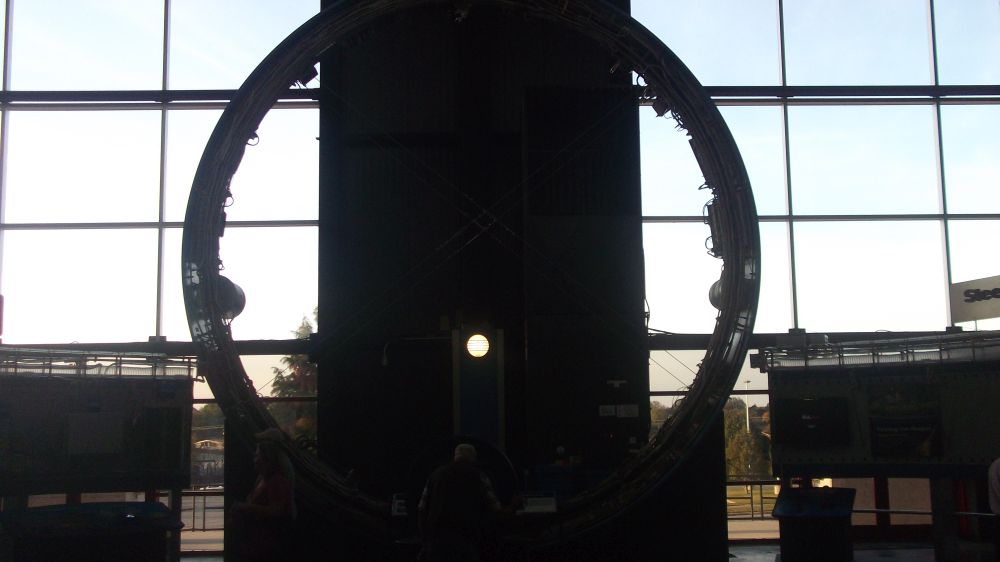
This, however, is the titan that got men to mars. Huntsville has two Saturn Vs: the upright one outside, which is a local landmark, and the one above. It’s flanked on either side by exhibits that detail the evolution of the space program, with particular interested on the five F1 engines that the Saturn relied on. 
Saturn V’s “brain”, the instrument panel. 
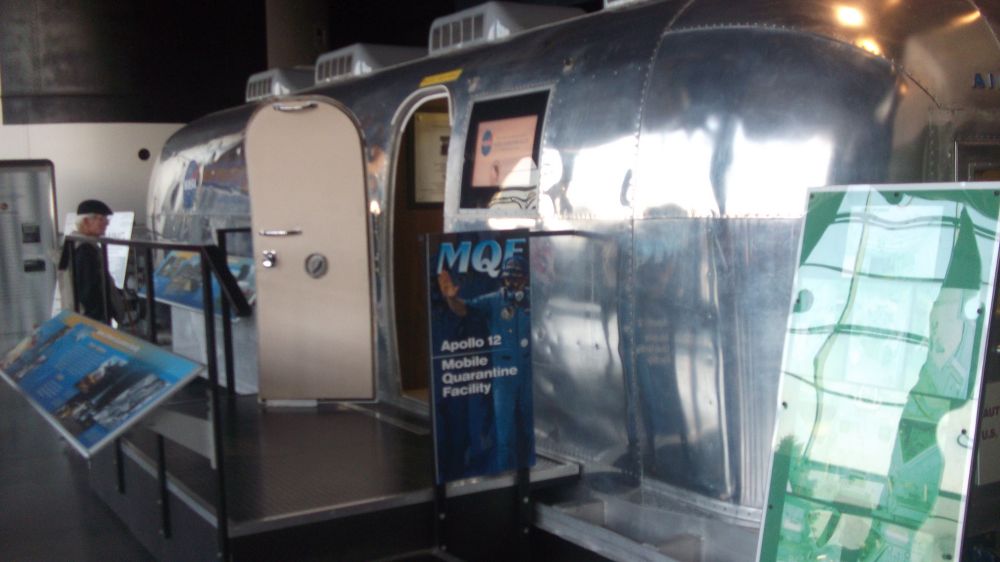
This trailer was used to quarantine astronauts upon their return to Earth, and strangely enough turned up in 2007.  The rocket center used to have another quarantine exhibit, one with a couch. The interior of the trailer has four bunkbeds on the left, and a table with chairs on the right. I asked several employees about the original exhibit, but they were all younger than me and kept pointing me towards the trailer.  (I commented to my friend as we were in line that the people selling tickets probably hadn’t been born the last time I was here.)

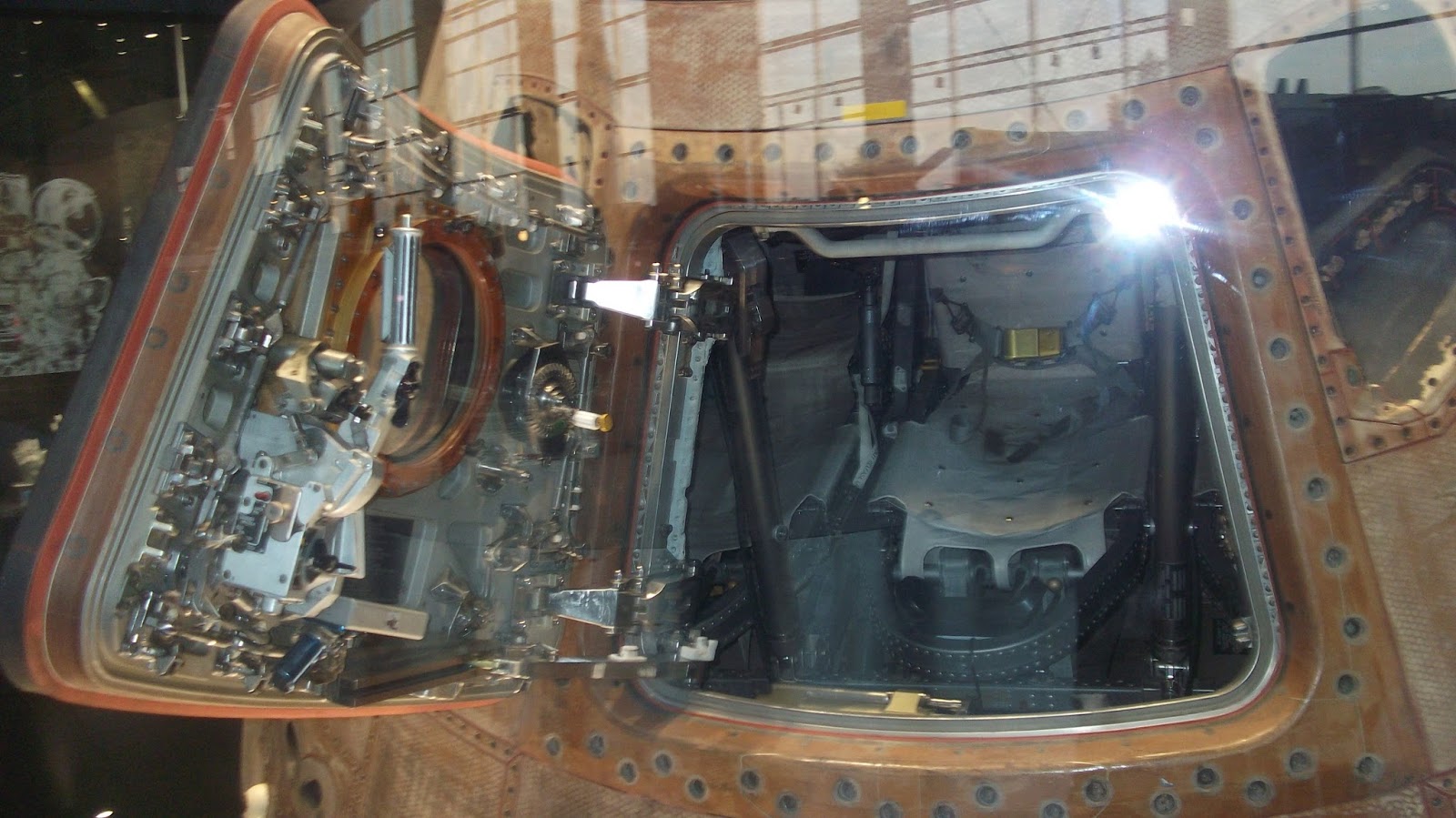
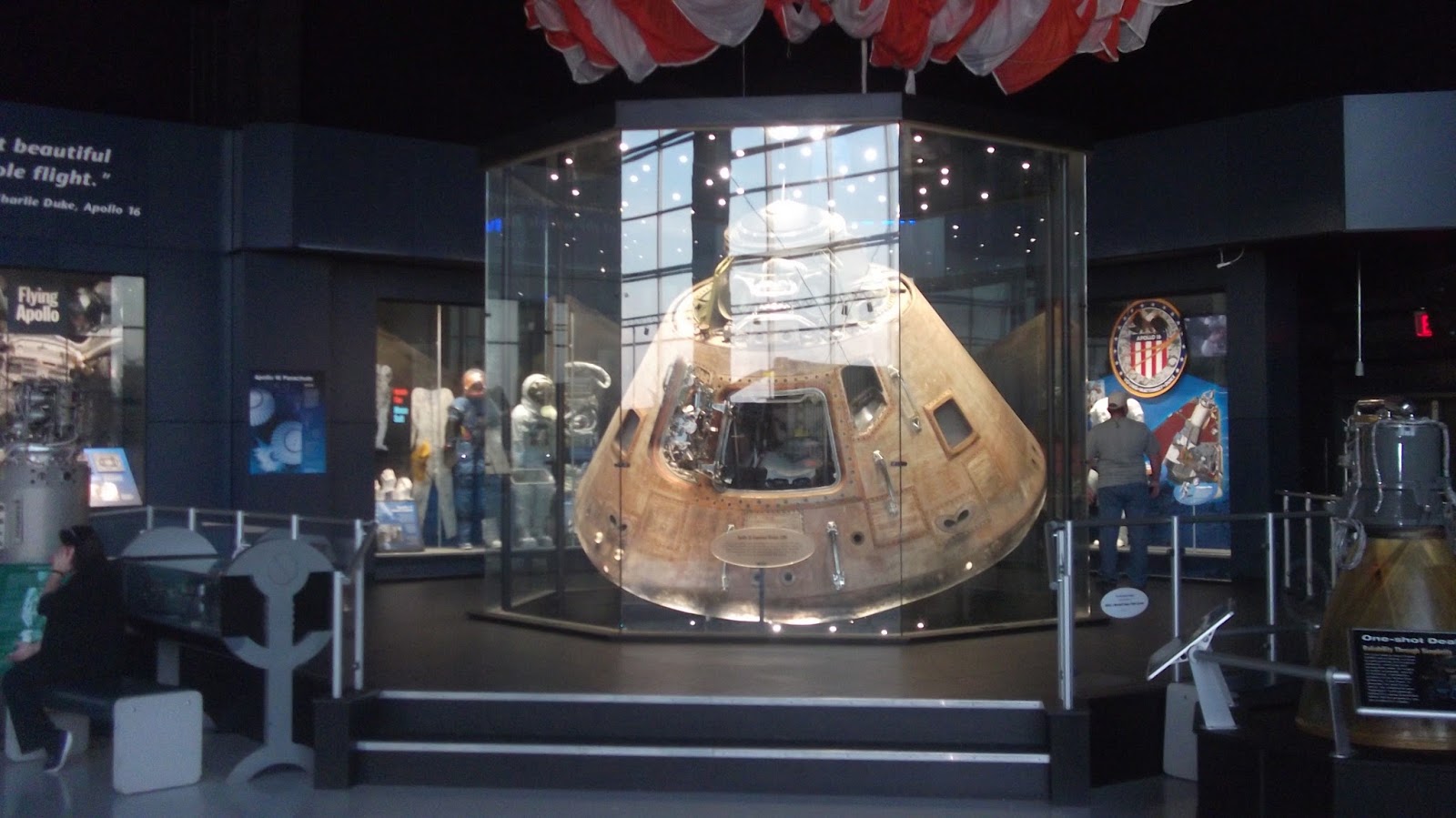
An Apollo command module from Apollo 16. It’s hard to believe three people were in that little capsule, and together they would have fallen into the ocean and bobbled together like a cork awaiting recapture. 
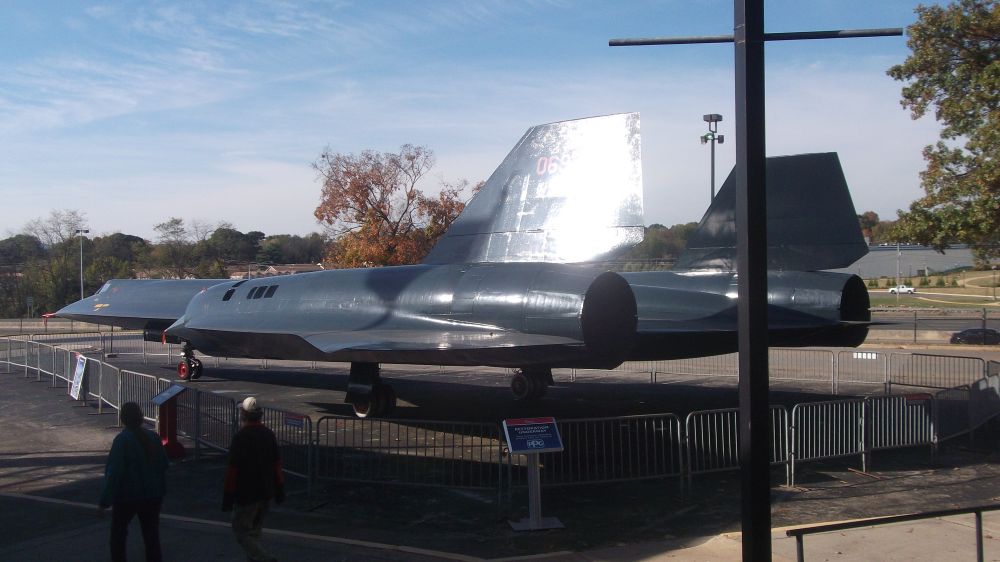
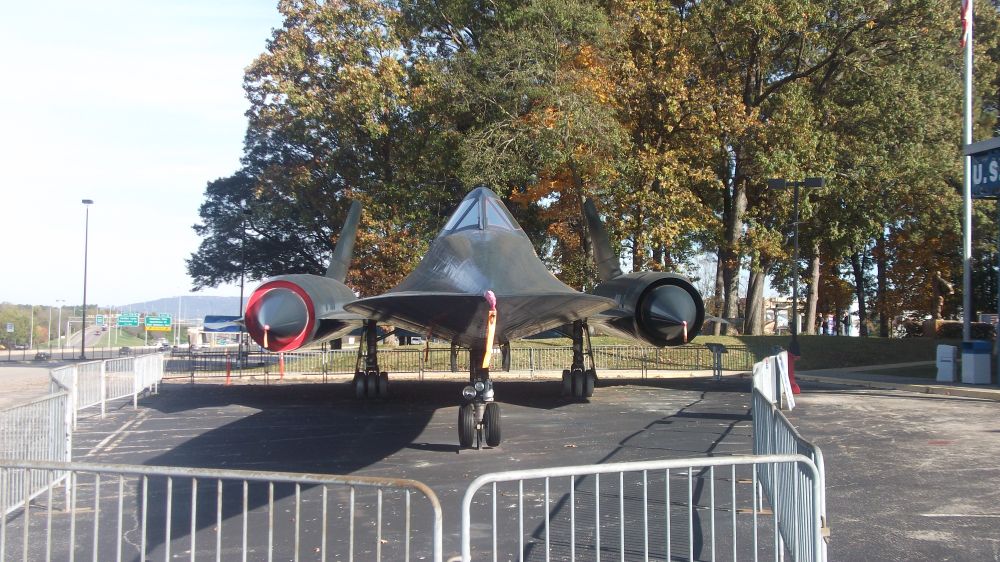
One of the few things that hasn’t changed since my visit in the 1990s is this Blackbird, a CIA project that helped create Groom Lake/Area 51’s reputation. The museum has two “Avengers”, which are Humvees with missile launchers. 
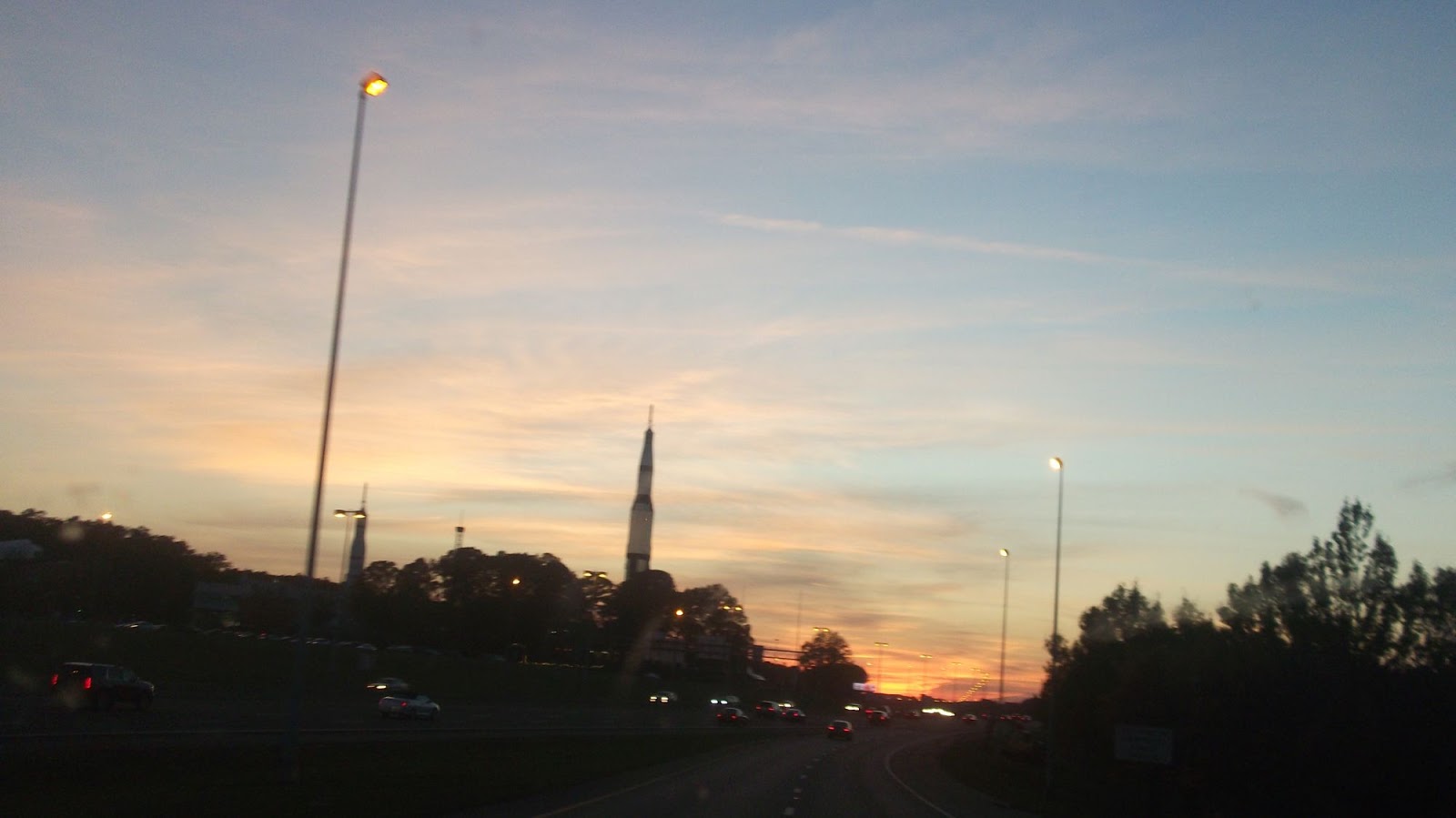
We stayed here until they closed the place down, then drove back to Decatur.   What a sight to drive home to! 

Posted in Reviews | Tagged , | 6 Comments

Northern Alabama I: Cathedral Caverns

Ever since I returned from New Mexico last year, I’ve been trying to see more of Alabama’s own wonders. To that end,  I decided to spend a weekend in northern Alabama, using Decatur as a base camp,  to see various locales in that area of the state.   My list included two natural attractions, visiting two cities I’d never seen before (Decatur and Florence), and trying Persian food for the first time, as Huntsville has the only such restaurant in the state.

Cathedral Caverns is located a half-hour or so east of Huntsville. According to the tour guide, the cave was ‘discovered’ in the 1950s by a man named Jay Gurley, who bought the property and quit his job so that he could explore the caverns and make it possible for tourists to visit it.  
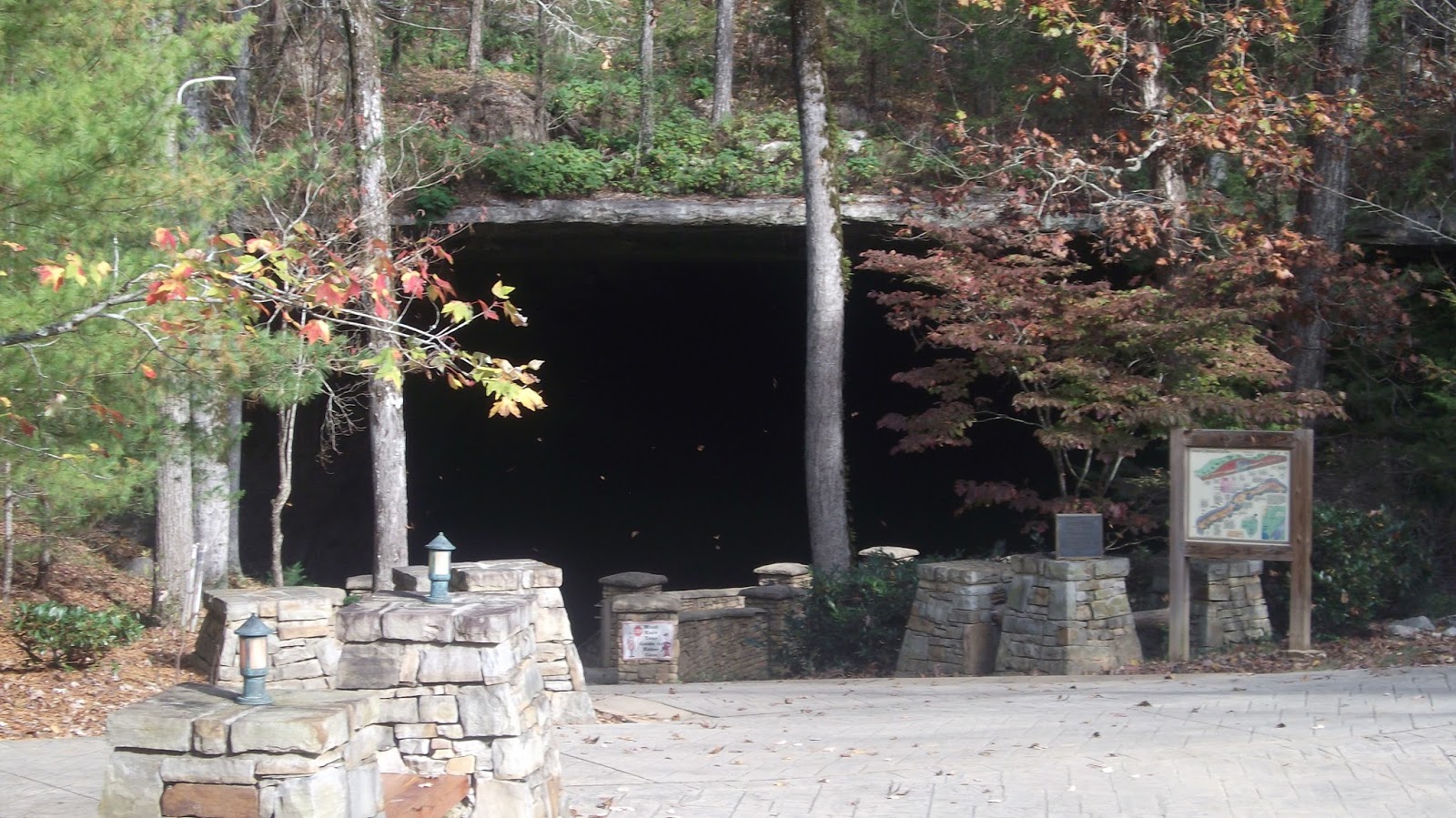
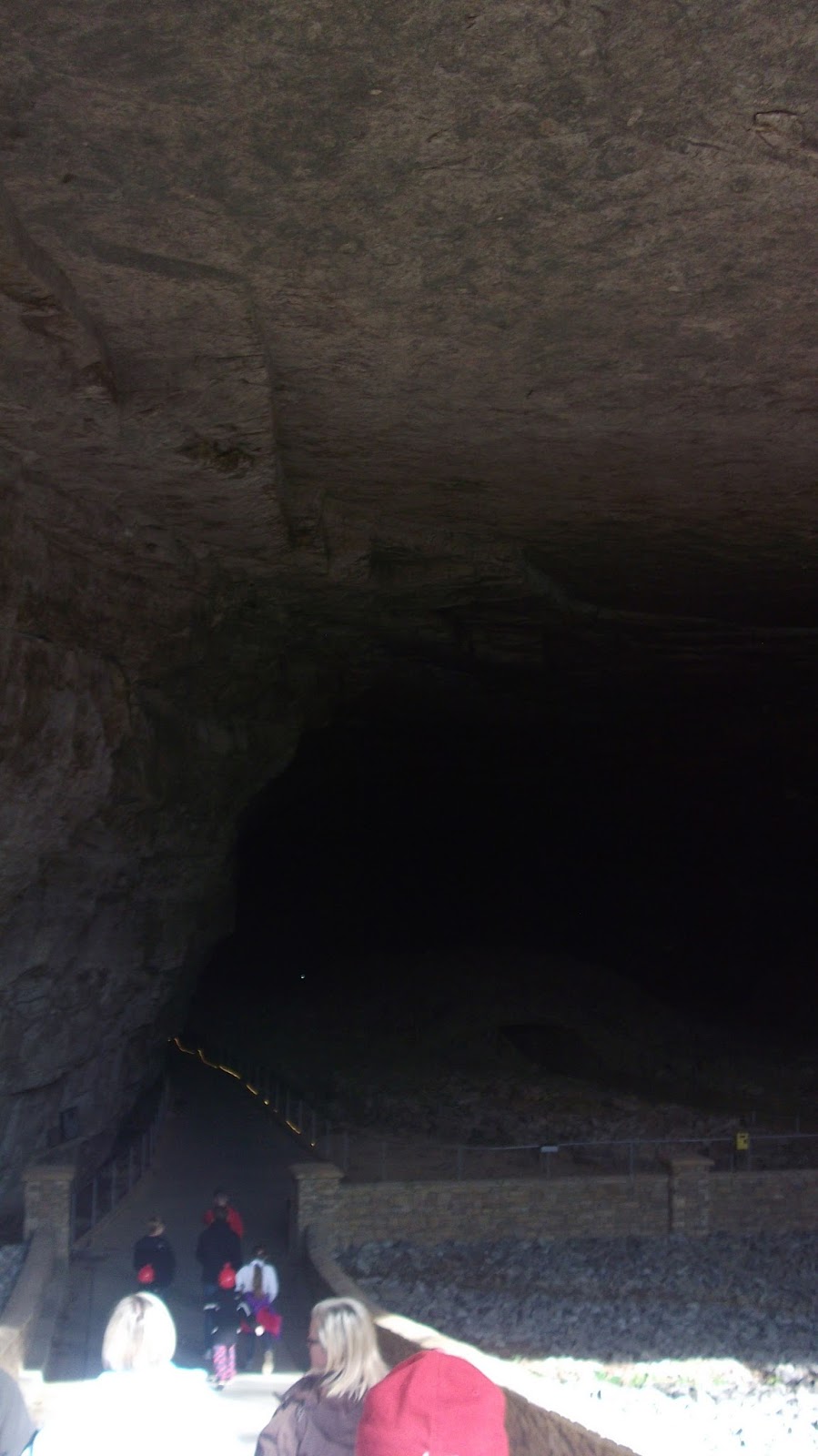
Cathedral Caverns has the largest entrance of any commercial cave in the world, so it’s hard to believe it took so long for settlers to notice it.  The native tribes had noticed it, of course; excavations around the entrance immediately turned up arrowheads, spears, and other assorted artifacts.  Our guide didn’t tell us what tribes the artifacts were thought to belong to, but given the region they could have been Chickasaw or Cherokee.  
Access to the cave is limited; visitors may only enter in the company of a tour guide.  This differs from Carlsbad Caverns, which is open-access.  The cave has some major formations of interest: a gigantic column called “Goliath”, which is much larger than the Hall of Giants’ titular giants; a massive flowstone wall hailed as a Frozen Waterfall; a cathedral like room complete with pipe organ stalagmites;  and obvious signs of ancient marine line, from sharks teeth embedded in the ceiling to the ancient remains of sponges and crustaceans lining the walls. (These had some weird name that sounded like they were from Harry Potter, and I haven’t been able to remember it exactly. It sounded like “snart noggles”.)
Bridge left over from the original trails. I wonder how long it’s been since that was load-tested? 
Flowstone
My camera remains not up to snuff as far as cave pictures go, but my coworker/traveling amigo had better luck:
In the cathedral room.
The tour lasted for just over an hour, with a good pace and an appreciated mix of historical and scientific information.  I was concerned that anything after Carlsbad Caverns would be “meh”, but  the grandeur here made its own mark.  As you can see here, the walkways are wide and (after the entrance) fairly level. There are a couple of spots that would require some care from someone in a wheelchair or stroller, though.

Posted in Reviews | Tagged | 5 Comments

Manhood in the Making

Manhood in the Making: Cultural Concepts of Masculinity
272 pages
© David Gilmore 1991

What is it to “be a man”?  Manhood in the Making  reviews various ethnographic studies that focused on sex and gender roles, throughout the world.  In it, the author argues that despite the general variety of specific male roles, there’s enough overlapping expectations that a ubiquitous – if not universal – vision of man emerges. Common to all is the belief that Manhood is earned,  not assumed.   Preindustrial – that is, traditional – cultures prescribed rituals to graduate mere young males into the canon of Men,  and these rites were not mere words spoken with gravity. Rites of passage often demanded trials in the wilderness, or trials of pain administered by their elders. Strength was demanded: strength in body, strength in character. Strength in character manifests itself slightly differently based on the culture, but a commonality is the ability to endure pain and hardship.  This stoicism does not extend to social interactions, as perceived insults are responded to forcefully. Aggression,  both against one’s fellows and against women — by trying to seduce them —  is a given. Even in societies that were not militaristic, like agricultural tribes, men were still expected and required to be active — to spend their leisure time in the public sphere, competing with other men.

  In some societies, to be a Man was not a permanent achievement, but a temporary status that could be imperiled by shirking. The most common image here is of one as man the warrior — defining and enforcing borders,  risking his life to procure food in the wild or resources from other tribes.  The author’s conclusions are drawn from a survey of global cultures: around the Mediterranean, several spots in Africa, India, Japan, China, South America, and various islands.  The author notes that some island cultures are outliers, with no perceptible gender roles; these societies also seem to lack strong perceptions of personal boundaries or property, freely allowing visitors to roam their houses and flirt with their partners.   The author doesn’t speculate whether this is purely cultural on their part, but an interesting comparison may be drawn from another isolated group of social primates, the bonobos: they, too, are not nearly as aggressive as their chimpanzee cousins across the river.  Gilmore pans evolutionary/biological  explanations in general, favoring a Freudian interpretation that all society is role-playing, and that the role of the aggressive Leader is one most pre-industrial societies promote for their men. 

Although there’s not a strong evolutionary psychology component, the survey in general indicates that manliness is not a cultural veneer that can be scraped off or dispatched, but an elemental part of the male character.  I appreciated the connections Gilmore drew to gang cultures and traditional male behavior, as well as the ambiguity he pointed out as far as manly character goes. For instance, while many societies measure men by how much alcohol they can consume without falling over,  or by how many women they can pursue, other moral cultures abstain from alcohol and restrict sexuality to the pair-bond.  As  the technological mass state continues to develop,  this authentic if volatile part of being human remains, and will go increasingly against the grain.

Related:
Demonic Males: Apes and the Origins of Human Violence, Dale Peterson and Richard Wrangham

Posted in Reviews | Tagged , , , , | 6 Comments

The Hemingway Patrols

The Hemingway Patrols: Ernest Hemingway and his Hunt for U-boats
© 2009 Terry Mort
272 pages
For some people, getting involved in the war effort meant collecting cans. For Ernest Hemingway, it meant patrolling the waters between the Florida Keys and Cuba and looking for U-boats.  The Hemingway Patrols  mixes World War 2, biography, and literary reflection to interesting effect. Although Hemingway’s attempts to identify U-boats, Nazi supply stashes, and potential spies never bore any military fruit,  the very idea is so audacious as to make a good story in itself. (Hemingway must have thought so, as he incorporated some of his experience in a story about men hunting for a U-boat..)  Hemingway Patrols largely focuses on the character of Hemingway himself, his values and approach to life as expressed in both his actions and in his stories.  His own life was a story that he intended to drive with gusto. It wasn’t enough for Hemingway to write about the war as a journalist; he actively hated fascism and other authoritarian movements. (In a crisis, he is quoted, he would look to himself, his family, and his neighbors. The state  could go hang itself.) The author compares Hemingway’s patrol for u-boats to his long fishing expeditions, in which one man and a little tackle would try to wrest a great fish from the sea, exposing himself to the elements as he did.  He lived for that moment when the marlin emerged from the sea, fighting, and even if it escaped that moment itself was worth all the waiting.  Had Hemingway encountered a U-boat he would have found a great fish, indeed, and one unlikely to  allow him to throw grenades inside as he planned. Fortunately for him and his later readers, the equipping of planes with sonar ended the worst days of the U-boat peril.
Although  World War 2 in the Carribean and Gulf Coast is a rarely-explored area, the chief appeal here is for Hemingway fans.  I’ve only read one of his books and a collection of short stories, but was captivated by the idea of a man in a wooden boat hunting for submarines. What a character Hemingway was!
Posted in history, Reviews | Tagged , , , , , | 4 Comments

I, the Constable

I, the Constable
© 2017 Paula M. Block and Terry Erdmann
150 pages

Deep Space Nine once made a throwaway reference to the Mike Hammer novels of Mickey Spillane,  and featured Constable Odo reading I, the JuryI, the Constable,  plays with that a bit more by having Odo play detective on Ferenginar, searching for a missing person.  Odo fills his spare time on the flight writing ‘letters’ to Kira and reading more detective fiction — Raymond Chandler and Dashiell Hammett are named — and arrives on Ferenginar slinging a mix of 20th century detective slang. The trail will lead him to dead bodies and scheming women, and culminate in a local stumbling around in a trench coat and fedora trying to help. If one likes straight mysteries and can tolerate the Ferengi, this is an amusing read. I was hoping the narrative voice would evoke Hammett and Chandler’s style more, beyond a little slang. (“Neither of the two people in the room paid any attention to the way I came in, although only one of them was dead.”)

Posted in Reviews | Tagged , , | 1 Comment

Caves, Columbia, and Canyons (oh my)

What a weekend! I’ve been on the road,  using Decatur as a camp to visit several spots in north Alabama the past few days.  That included some natural wonders — Cathedral Caverns and Dismals Canyon –as well as a few cities I’ve never been to, like Decatur and Florence. I also spent time in Huntsville, which I haven’t visited since the early Clinton years.  One highlight: my first experience with Persian cuisine, in the form of kabob bakhtiari! I’ll be putting a few pictures together (and shopping for a wide-angle lens…) later in the week. Here are some sneak previews, though..
Saturn V, Huntsville

Cathedral Caverns

Florence, Al

Dismals Canyon


Posted in Reviews | Tagged | 3 Comments