Declassified

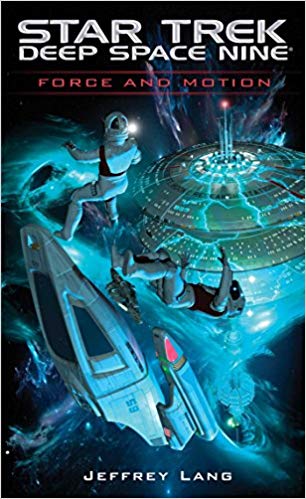
Star Trek Vanguard: Declassified
© 2011 Kevin Dilmore, David Mack,  Marco Palmieri, and Dayton Ward
404 pages

At the edge of Federation space, at its shared border with the Klingons and the Tholian Assembly, lies trouble.  The area known as the Taurus Reach brims with mineral-rich planets supporting humanoid life,  but has remained curiously uninhabited for eons. The Tholians regard it with fearful reverence,  as if something is buried there that should remain so.  Here enter Vanguard Station,  a Starfleet starbase intended to oversee the colonization of the Taurus Reach  — and more secretly, a lab to examine its buried secrets. The ST Vanguard series has combined excellent characters, intriguing scientific mystery and steady drama for five books.  Now, in Vanguard Declassified, we find four more stories of intrigue, set throughout the first four books of the series. Three of the authors are familiar for their contributions to Vanguard, but Marco Palmieri is better known as the editor who is responsible for spearheading the Star Trek Relaunch.

In “Almost Tomorrow”, the Klingons enter the scene for the first time, and a spy is revealed. This features our favorite Machiavellian Vuclan, T’Pyrnn, and a sex scene that’s more awkward than most because she has a malevolent ghost in her head who wants to possess her lover. Oh, you wacky Vulcans.

“Hard News” features a world-weary but determined journalist and his girl Friday, developing a story that will expose a connection between the Orion pirates and some Starfleet intelligence ops. Word to the wise, making Orions grumpy is a bad idea. They’re not Klingons and you won’t see them coming, green skin aside.

“The Ruins of Noble Men” is a  story set in two different time periods; in one, a Vanguard ship is dispatched to a suddenly isolationist colony world  to convince them to come back to the fold. The colony is hiding a secret, though, and  in attempting to establish meaningful communications with them Captain Desai finds herself thinking about an episode from her former boss-lover’s youth, when he had an usual run-in with a Klingon named Gorkon.  (Casual Trek fans may remember Gorkon as the assassinated chancellor in The Undiscovered Country.)

The last story, “The Stars Look Down”, is by David Mack and involves a secret mission to land on a Gorn-controlled world, infiltrate one of their ships, steal/copy data and compromise the original, then get out before the Gorn reprise Cestus III.   Features Quinn, a smuggler-scoundrel in the cut of Han Solo or Mal Reynolds,   along with his SF intel partner Bridy Mac.  This being a David Mack story, there’s intense drama and tragedy. (If you find yourself in a David Mack novel, pray that you are a one-page extra character who is not important enough to matter, either as a tragic death or as a plot driver. Be the guy behind the desk who nods to the main characters as they are running into action. It’s just not safe otherwise.)

The four stories span the entirety of the first five Vanguard books, and between then feature most of the favorite characters from the series.  All four are  enjoyable tales; I was most partial to “Hard News” because of the unsusual first-person perspective and the general story:  I like the pre-ENT Orion pirates. They got a little weird after ENT, with pheromones making people slaves and such. Fewer sex slaves and more organized crime, please, thank you.

Posted in Reviews | Tagged , , | 5 Comments

Short rounds: of cybercities and medicinal ectasy

Recently I’ve read a couple of books that I wasn’t particularly impressed with, but  they weren’t stinkers enough to merit one of those rare-but-fun-to-write negative reviews.  They’re in that “I can manage a paragraph of mixed interest and disappointment” grey zone.

 This had some interesting topics, from growing kidneys to developing Geordi’s VISOR from Star Trek, but I was not impressed at all with the author’s grounding as a science journalist. Trust and regard sailed out the window when he hailed the average increase of height and bodymass following industrialism as proof that humans can evolve much more quickly than previously expected. Um…no, that’s proof that our present geneset can do more when it has better materials to work with, i.e more access to different kinds of food, and less work to do fighting off vicious diseases. Have the South Koreans evolved past their primitive ancestors in the north, or are their shorter northern cousins just malnourished? Kotler also referred to a cure for cancer as a vaccine. Cancer isn’t a microbe you fight off with antibodies! Sure, maybe he was dumbing things down to increase potential leadership, but forgive me if I don’t take the chapter on medicinal ecstasy too seriously after that.. (In the last part of the book, he explores ecstasy and LSD’s potential in helping people deal with end-life terror, as well as PSTD. Steroids are also billed as an anti-aging  superweapon, but by that point I wasn’t really taking the author too seriously.

This is not on the level of Michio Kaku. It’s more like Newsweek fluff pieces.

Next up, Smart Cities! Ooh, cities meets the digital world, two of my favorite topics. This should be outstanding! …well….not quite.  The cover is lively, sure,  but the book is more conceptual than practical  in that the author spends most of his time talking about the city as a living machine in abstract, or weighing top-down city government approaches against apps created by ordinary people.    I wanted to read about different ways smart cities were happening, but they’re only mentioned from time to time as examples of the more elevated debate.  I think I learned more about a smart transit system from Straphangers, in its chapters on Paris’ metro card, then I did here.  Sure. there are mentions of apps for citizens to report problems, and mentions of how other apps can bring the city more to life by leading users to bars and places they’ve never heard of, but these are only teases.  I bought this book last year, started reading it, quickly lost interested, and mounted another assault this week only to find it wasn’t really a hill worth that much worry.  

Ah, well.   They can’t all be life-changing books. 

Posted in Reviews | Tagged , , | 3 Comments

This Is Your Brain on Parasites

This is Your Brain on Parasites: How Tiny Creatures Manipulate Our Brains and Shape Society
© 2016 Kathleen McAuliffe
299 pages

Are you under the influence?  There’s a chance that you may be, even if you haven’t darkened the door of a bar in years. Our bodies are home to a multitude of microbes,  many of them allies of a sort:  in exchange for a moist roof over their heads, they help us digest food, or take up space that would otherwise be available to the disease-causing riff-raff.  Other,s however, are the riff-riff, and they can exert a bad influence on those who let them hang around.  By and large we’re familiar with bacteria that can cause disease, but there are microbes which have more subtle effects —  seemingly causing shifts in our mood, our metabolism, and our ability to think and process information. This is Your Brain on Parasites argues for a parasite-centered perspective on health and evolution,  told in four parts.    She opens by establishing the ubiquity and variety of microbes,  moves to demonstrating how some species can directly manipulate other species’ behavior,  argues that human beings’ mental/emotional state can be likewise influenced by microbes, and finally argues that much of human civilization is indirectly driven by parasites in that an obsession with cleanliness has driven us to create religions, laws, etc.

Whew! That’s a lot to take in in one book. The first two sections are paths well traveled, from 10% Human to Gut. The second section addresses an utterly fascinating aspect of nature, the ability of some species to manipulate others. The creatures documented here aren’t all microbes: parasitic wasps show up hijacking spiders and roaches and putting them to work, the first as a shelter-creator and the second as a beefsteak on the hoof.  The mechanisms for manipulation are not always known. Microbes aren’t comic book villains with glowing towers: they do their work with secretions of chemicals,  sometimes using our own bodies to produce it for them.  By subtle means can one parasite prompt grasshoppers to move en masse toward bodies of water, drowning themselves  Part of the difficulty of studying parasites is that their manipulation of one host is only one part of their life stage, and they usually have a series of hosts to go through to get back to where they can spawn. One parasite common to humans arrives  in the intestines, matures, works its way to the exit, raises hell to make us itchy, and then relies on a probing finger scratching the itch to carry their young out into the world to restart the cycle.  That’s more indirect manipulation, but the author also includes cases in which the presence of certain bacteria are strongly correlated with instances of depression, and others with dangerous, near-deadly behavior.

The last part, attributing everything from sanitation to religion to racism on human attempts to ward off parasites, is…interesting, but an example of how specialists in one field tend to view everything from their particular angle.   The fact that religious dietary laws often barred the very species which carry the most risk for internal parasites is insightful, but  human culture and evolution are rivers fed by many streams. Attributing the motherload to parasites, or cooking, or power, usually tells more about the author’s interests than the actual subject.  On the whole, however,  This is Your Brain on Parasites smartly marches through a lot of linked territory and makes itself of interest to general science readers.

Related:
  • Parasite Rex, Carl Zimmer. A more in-depth treatment of parasites in general, and an inspiration for this book according to the author.  I read this back in 2008 but that was back in days when I posted one great big wall of text about every book I’d read in that week, and few of the ‘reviews’ were more than the same kind of abstract you’d find on an Amazon publisher’ s description. 
  • I Contain Multitudes, Gut, 10% Human
Posted in Reviews, science | Tagged , | 1 Comment

How Adam Smith Can Change Your Life

How Adam Smith Can Change Your Life: An Unexpected Guide to Human Nature and Happiness
© 2014 Russ Roberts
269 pages
\


An economist and a rabbi walk into a bar and co-author a work on the meaning of life. That’s not the opening line to a joke, but a near-description of How Adam Smith Can Change Your Life. This little book gives a modern interpretation of Adam Smith’s Theory of Moral Sentiments, girding it with references to Rabbi Hillel. The contents are surprising, if your association of “economist” is with strictly matters financial, like stocks and trade deficits. Ironically, writes Russ Roberts,  the subjects economists are consulted most on, like the future health of the global economy, is what they’re worst at doing. The heart of economics as originated by Adam Smith is behavioral, however, judging how people use their scarce resources to make the best life possible for themselves — both as individuals, and with other people. The same desire for understanding that Smith applied to humans at the level of nations in The Wealth of Nations is applied more intimately to individual persons here. What do we really want?

The answer isn’t money, though it can help. The Theory of Moral Sentiments contends that what people want most, what actually makes us happy, is to be loved and lovely.  This isn’t about romance or aesthetics; Smith’s use of love encompasses respect, admiration and affection. “Lovely”, too, also has a deeper meaning: it is to be worthy of respect, admiration, and affection. People not only want to be held high in the esteem of others, but they want to have earned that place. Part of Smith’s argument is that each of us has an Impartial Observer in our heads, an ethereally human figure who is constantly watching, judging, and arguing with us.  A conscience, so to speak, a means through which we can evaluate our own actions  or behavior from an outside perspective, to see ourselves as we are being seen.  This conscience is not perfect — it can be lied to and argued with through justifications of our behavior — but unless its voice is smothered and distorted by our own willful actions, it is invaluable. We can strengthen the observer by reflecting on the behavior of others — when we see them acting irrationally, we can turn our analysis on ourselves, to see  that behavior which we dislike present in our own actions.  We can use this impartial observer to help not fool ourselves, to help us become lovelier — and so, loved. The impartial observer rings a bell for me in part because of past readings into primate social behavior, particularly the fact that chimpanzees and such will often act in private in ways that strongly imply they are imagining what the consequences of their being caught in unsocial behavior would be.  I suspect that this observer  is some kind of internal-audit tool of our socially-oriented brains, useful for anticipating how our behavior will be interpreted by others.

Students of schools of Greek philosophy like Stoicism — which regarded moral excellence or virtue as its own reward — will recognize the ‘virtue’ of Smith’s loveliness straightaway.  Epicureans, who regarded simple pleasures as the key to the good life, will also find an ally in Smith, when he asks: “What can be added to the happiness of a man who is in health, out of debt, and has a clear conscience?”.  Smith regarded the chase for fame, power, and gadgets and goods as self-defeating. These itches are insatiable, leading us to constant torment as we try to reach greater and greater levels. Even those who reach the top must find it a hollow victory, judging by the inner lives and outer behavior of celebrities, politicians, and such.  If we understand our core desires, however — this yearning to be loved and lovely — we can be conscious of when we are attempting to fill the real need with ersatz praise,  in admiration for our things rather than ourselves.

Those who have an interest in human flourishing will definitely find this little book worth their attention.

Posted in Reviews | Tagged , , | 11 Comments

Springing forward

At the library I’ve put out the gardening books, which means it’s officially springtime! …at least, in central Alabama.  I’m still not certain we’re past the threat of a sudden frost, but I am looking forward to my annual spring planting, of vegetables that do OK and of flowers that fail completely. (Every year I plant flowers and get green sprouts, but no actual flowers.  Sure, I could buy flowers and plant them, but the joy is watching them grow and..er, flower, not just admiring them after they’ve done it already.)

Recently I requested a science book on NetGalleys and was promptly sent…a third of it.  The third comes from Soonish:  Ten Emerging Technologies that’ll Improve or Ruin Everything,  a bit of futurism/science fusion. The authors are the creators of Saturday Morning Breakfast Cereal, and their artwork is part of the text.   The part accessible via NetGalley only covered the falling costs of space travel, the feasibility of space elevators, and the potential if any in mining asteroids. Although the text itself was a nice mix of information and amusing commentary,  I wasn’t particularly interested in this section of the book. I wanted to read about 3D printing and advances in medicine, and I got cannons that shot things into space.  It was perfectly entertaining, to the degree that I was interested in such things.  Perhaps one day the full book will be cheap enough for my miserly self to buy it.  Until then I have The Inevitable and Tomorrowland,   one of which should address those subjects.

Posted in Reviews | Tagged , | 4 Comments

Gut

Gut: The Inside Story Of Our Body’s Most Underrated Organ
© 2015 Giulia Enders
271 pages

Through the teeth, past the gums, look out stomach, here we come! Gut is a tour of your innards, of the surprisingly clean but bustling twists and turns of the digestive system. “Wait a second,” say you, “I’ve had this tour before. Mary Roach did it in Gulp!”. Well, yes, and she did take you the entire way — from the mouth right out the other end, none the worse for the wear. Gut is different, however. The author is a touch more serious, for one thing; while never lacking in humor, she doesn’t provide a constant effusion of fart and poop jokes. Enders provides more of a thoughtful study of how the gut impacts us, particularly in our microbiome. This is a mix of Roach’s Gulp and I Contain Multitudes: a study of our intestinal habitat and the fauna thereof. I bought this primarily because I was interested in the ways our gut can influence our psychology. I’ve heard reports of there being neural cells active within the gut, and while there is a chapter on the “vagus nerve”, it wasn’t as extensive as I hoped. The author conveys the impression that the nerve collects and conveys feelings of general un-ease and distress within the body, providing the brain with its first reports of problems within. More extensive are the chapters on the bacteria within us — how they change depending on our diet, how they can contribute to our health or diminish it , that sort of thing. This ground was covered more extensively in 10% Human and I Contain Multitudes, but a review of this subject is perfect in a book on the gut: 90% of our bacteria live there, after all.

If you’re interested in the digestive system — and who isn’t, really? — Gut is a quick, fun read that takes its reader more seriously than Gulp, and includes more concrete information from an actual M.D.

Related
10% Human 
I Contain Multitudes 
Gulp 

Posted in Reviews, science | Tagged , , | 5 Comments

Atlas Shrugged

Atlas Shrugged
© 1957 Ayn Rand
1168 pages

Sometimes the chains that bind us are made by our own hands.   Dagny Taggart knew as a young girl that she wanted to grow up to be the master of her family’s railroad system. She began working for it in her youth, and so poured her heart and soul into it that the transcontinental system was an extension of her own self. Regardless of what problems she faced – from suppliers, with labor, or  bungling rules from above —  she was determined keep the trains moving so long as there were trains to move. The rails were her pride and joy, and she could keep them alive no matter who tried to strangle them – even if her enemies were getting more use out of the rails than she was.  Atlas Shrugged  chronicles her fighting defeat as her peers resolve to go on strike – to  let a society  which hisses in contempt for them even as it enjoys the comforts they created – go to ruin.

Atlas Shrugged has achieved notoriety in the decades since its release;  people loved to hate Rand, even those who sympathize with her ideas. I was certainly no fan of her when I decided to try Anthem for its dystopian theme, and then The Fountainhead so I could experience her ideas first-hand  —   the latter novel made me realize Rand’s thinking was more interesting than my prejudices. It was my prejudices, however, that led me to Atlas Shrugged in great excitement. I loved the idea of triumphing over the state through civil resistance, loved the idea of characters telling the establishment what it could do with itself.    So, even though  Atlas Shrugged  had some of the same creative problems as Fountainhead, and I don’t regard Rand’s philosophy of life as attractive in full, I had a terrific time reading it.

A book review of Atlas Shrugged is not the place for an essay on Objectivism’s virtues and flaws, although given how philosophical this novel is, that’s an easy way to drift off course. The Fountanhead focused on egoism and integrity;  Atlas Shrugged is more expansive, and much of the content is characters debating one another. It’s less a novel than a philosophical argument in novel form,  something like Galileo’s Dialogue Concerning the Two World Systems, but with Rand’s  ideological enemies playing the part of Simplicio, the slobbering troll.  Throughout the book, Rand and her characters defend the primacy of reason,   the all-importance of the individual, and the real value of money.   Linking them all is the human mind, which alone creates value and determines truth;  for Rand, it is impossible that material things can corrupt a man. Only a man’s mind can corrupt  him,  and only in making choices can he be flawed or perfect.  (“Perfection” for Rand is not arriving at some ideal state, but never failing to act or decide on the best  discernible choice.) For Rand, material things have no inherent value: a rail system is only as good as the people who created it, as the people who sustain its operations  through their ideas and energy.   Rand’s philosophy covers metaphysics, aesthetics, economics, politics, and..sex, apparently.  What surprised me is Rand’s idealism: although an atheist, she regards the modern academy with the same contempt as she does traditional beliefs. She despises those who say that humans are only animate goo, that nothing we do matters — that nothing we think is real, because logic and reason are an illusion, that everything is relative. This entire book is pregnant with arguments over the Meaning of Life, and the glory of being a thinking being in it.

As a novel, Atlas Shrugged has its problems. The characters aren’t as off as they were in The Fountainhead, but I suspect that’s me getting used to her style. The villains all carry their cards, and unless one is in a vicious mood — a mood delighted in politicians being berated —  the way they’re depicted scuttling about,  alternatively whining and scheming, might grow tiresome.  I was delighted by the plot, however — intrigued by the pirate, curious about Who Is John Galt.  I liked the building tension as the beating heart of the American economy slows, as the lights wink out by one, as Dagny’s  rivals, suppliers, and buyers keep ominously disappearing.  Perhaps the best part is the slow torture of Dagny and her supplier-friend, Hank Rearden: both  are sympathetic but reluctant about the strike.   Dagny loves her rails more than principle, and Hank is saddled with those “family” people who keep him from  being a solitary uberman against the world. They both have their moments of realization, but the moments have to build and build on one another before they snap into place and reveal the futility of running in place. While the United States has not (and may never, I hope) succumbed to all of the legislation here, I am not surprised Rand has remained popular in the decades that followed. Who could not think of Atlas when Nixon began playing with wage and price controls?  Not to mention the TARP deal, in which bankers and auto manufacturers survived  not by producing value, but by exercising “pull”.   Throughout Atlas Shrugged, we see the laws of economics corrupted and dominated by politics, so that those who succeed are the ones who play with the political machine.  Rather reminds one of how the same banks funded Obama and Romney — maintaining their pull no matter who won.

Having now read both of Ayn Rand’s epic novels, my opinion of her has improved from the initial revulsion of hearing her praise selfishness on the radio.  I realized in The Fountainhead that her use of the word was misleading. Her characters are not decadent playboys;  they’re workaholics who enjoy functional luxuries, like a fast car and a warm coat, but for them the goal of life is to do, to create,  to produce — not to  consume, to spend.  I think most people ultimately find more value and meaning in their connections with one another, and I’m not particularly surprised that none of Rand’s main characters, nor she herself, had children.  When objectivist sex is a philosophical drive and not a biological one, it’s only natural that the only thing born are ideas to debate.  However Rand misjudged the character of man in society,  in general I found her ideas  about individual integrity bracing. 

Posted in Reviews | Tagged , , , , | 7 Comments

The Silent Intelligence

The Silent Intelligence: The Internet of Things
© 2013 Daniel Kellmereit, Daniel Obodovski
166 pages

A couple of years ago I created a Digital World label in recognition of the fact that the Internet was no longer a discrete service that one could engage in or detach from – -that it had become instead part of the infrastructure of everyday life.  The Silent Intelligence is a technological/business briefing that expands on that,  documenting  “Machine to Machine” networking  that will allow the tools and infrastructure we use to coordinate with one another automatically – so that the lights in our house, for instance, can be informed by an app tracking our phone that we pulling in the driveway.    This is rapidly aging news now, of course,  given that there are now competing systems for managing home electronics.   After explaining the technological breakthroughs that are making this trend possible, the authors then examine challenges facing the field, and discuss possible areas where it might find the most immediate use, like hospitals and homes.  Imagine if a nurse in a large hospital,  in search of a piece of needed equipment could consult an app on her phone, which would direct her to the closest available piece.   In this  this case each instance of the equipment would be tagged,  almost like Zipcars are now.  Some of the predictions have already come to pass, like Redbox movie rental kiosks that can monitor their inventory and report when they need to be serviced,  and there’s no shortage for opportunities here.   The Patient Will See You Now expanded on this kind of technology in the medical field.    Last year I acquired another book (Smart Cities) whose premise was also introduced here – -the idea that cities would become more “alive” than ever, as  apps and infrastructure talked to each other and allowed for real-time monitoring of pollution, traffic, etc.    Technologically, the 21st century will be a very exciting place to live

The Silent Intelligence is not leisure reading unless someone likes to read about the nuts and bolts of an emerging industry’s technical problems, but it’s one of the first books about the “internet of things” I was able to find. I’m sure more will follow as the built environment is reprogrammed along these lines.

Resistance is futile. Your home will be adapted to serve the Internet of Things

Posted in Reviews | Tagged , , , , | 3 Comments

Quick note

I am deep in the country house/dog sitting for some friends, armed only with my kindle and a few books.  One of these days I’ll get a laptop, but until Monday evening I am PC less. Typing is laborious on a little tablet pad! Alexa refuses to take dictation…what a disgrace she is to helpful AIs everywhere. I have been reading, and am 700 pages in to a novel that is 1000+ pages. Two reviews are ready to roll on Monday. Until then, happy reading..!

Posted in Reviews | 19 Comments

9 Presidents Who Screwed Up America

9 Presidents Who Screwed Up America and 4 Who Tried to Save Her
©  2016 Brion McClanahan
354 pages

It is my dearest hope that by the time Donald Trump leaves the West Wing, the office of the presidency will have been so discredited that no one will take it seriously anymore.   Congress will take serious measures to counter executive overreach, and the American people will somberly reflect that it was a bad idea to allow so much responsibility, expectation, and power to rest on the shoulders of one man. My second dearest hope is that pigs will fly.   Brion McClanahan does what he can to take the American monarchy down a few pegs, though, by devoting half his book to exposing the greatness of a few titans as irresponsible hubris, and hailing a few forgotten men for their diligent work thwarting or ameliorating  the excesses of others.

McClanahan scrutinizes each president based on how effectively they fulfilled their  oath to preserve, protect, and defend the Constitution of the United States.   Because Article II of the Constitution, which creates the office of President, does not include a full job description,  McClanahan relies on debates from the Constitutional convention and the States’ ratification proceedings to determine what was expected of the president.  This figure was not to be a king in democratic clothing, but a guardian of the rule of law: his primary job was to keep  Congress, the only legislative body,  in check – the job that George III failed to do when he allowed Parliament to tyrannize the colonies.   Those who maintain a zealous watch are praised here; the rest, like those who invent new powers for themselves, or accept new powers from Congress through legislative fiat instead of constitutional amendment, or presume on the states or other branches’ prerogatives, or allow the other branches to presume on the same, are condemned.    In general: 19th century presidents were largely faithful to the job, and 20th/21st century presidents sought to re-invent and magnify the office, and did so to the point that the old republic is now ruled by Jabba the State. (I borrow that, with gratitude and a bellylaugh, from Anthony Esolen.)

McClanahan’s critique is thus very strict, and he does not pardon men for doing pursuing good ends through improper means: that is not how the rule of law works. The Constitution is not a dead decree, a sacred writ that forces us to live in perpetuity by an 18th century society’s rules, but neither is it a piece of clay to be molded in any way. Those who wish to change the structure of US Government must do so through amendment, or  – as the North threatened to do, as the South attempted to do – remove themselves and try again.   McClanahan’s strict adherence to the original intent of the Constitution, and the observance of the rule of law, will no doubt earn the most criticism from those who read this, who believe that the government should periodically assume new powers as it “needs” them, without respecting the appropriate procedures.  But those procedures, the rule of law, protect us from merely being controlled by the whims of men.

So, who are the nine?

  • Andrew Jackson, who terminated the Second Bank of the United States through extralegal means, promoted a dubious tariff that picked sectional favorites, and threatened to order the militia into South Carolina to prevent it from seceding in response to said tariffs;
  • Abraham Lincoln, who failed to recognize the legal separation of the southern States from the Union, illegally made use of State militias to invade a foreign power,   presumptuously revoked habeus corpus, instituted a draft, instituted the income tax,  and helped devalue the currency for starters;
  • Theodore Roosevelt, who made the president a celebrity and  inserted himself into the legislative process, assuming powers not granted to him by the Constitution, including to make presidential proclamations.
  • Woodrow Wilson,  who drove legislation, attempted to institute tariffs that picked sectional favorites,  persecuted and jailed Americans for exercising the first amendment, instituted the Federal Reserve, and created powerfully intrusive regulatory bodies with no constitutional sanction;
  • Franklin D. Roosevelt, who created the American conservative movement by violating so much precedent and expanding the power of his office so quickly that critics didn’t even know where to begin countering his illegal intrusions into lives of people and the economy;
  • Harry S. Truman, who turned America into the guardian of the world and helped establish the military-industrial complex’s power over the American future;
  • Lyndon B. Johnson , who continued overreach in both domestic and foreign policy; like FDR before him and Nixon after him, he created agencies that combined  legislative, judicial, and judicial functions, ignoring the wisdom of checks and balances; 
  • Richard Nixon, who continued the same sorry trend  and pawed at the economy as well, and began the steady erosion of the dollar as a unit of real value; and
  • Barack Obama, who greatly expanded Bush’s illegal wire-tapping, droning, and pushed through the Affordable Care Act, which made the sorry debacle of US healthcare even more onerous .

The two most controversial names on the list are Lincoln and Obama; Lincoln,  because most people will refuse to consider that the constitution of the United States – the little c –constitution – was much different in 1860 than in 2018,  that people did consider themselves members of the State of Maryland or the State of Vermont, and that the Union was a debatable issue;  and Obama,  because he was merely burning down a house that had already had its doors and windows pried off  and its interior walls  torn down  by previous presidents.  Oddly, even though McClanahan refers to Obama as the ‘worst’,   the chapter on said president is rather short. Frankly, I think ranking a then-sitting president was a mistake.

There are some general lessons to be learned. In the 20th century, the easiest way to gain enormous power was  through war — either real war, or by couching social programs in the language of war.  Two, the most common violation is the president assuming responsibilities — lawmaking and warmaking — that are Congress’s alone.  The president is not granted the authority to summon militias; only  Congress may do that, and they require a state governors’ request. It doesn’t matter if Congresses passes a law giving itself power to do this or that  —  that’s not how the rule of law works. If they could empower themselves, they should just dispense with the formalities and issue straightforward dicta like honest oligarchs.

Following the rogues’ gallery,  McClanahan then devotes the second half of his book to praising  Thomas Jefferson, John Tyler,  Grover Cleveland, and  Calvin Coolidge.  Jefferson is no surprise,  rejecting anything that smacked of monarchy in presidential treatment and , ending as he did the illegal Alien and Sedition acts.  Tyler will be unknown to most Americans; he was the first vice president to assume the office of president after Zachary Taylor died, and he spent most of his time in office vetoing Congressional actions that had no warrant in the Constitution. He was so consistent at it that both parties grew to hate him. Good on ya, Johnny!   Cleveland  was also solid on reining in Congress, and if nothing else he deserves a standing ovation for doing his best to prevent the United States from enveloping Hawaii. Coolidge, of course, has a deserved reputation for being a calm and steady hand on the rudder, intent on reversing growth as best he could within constitutional limits. The sad truth of political economy is that a bad president can increase his powers in violation of the law through his own will, while a good president’s own scruples forbid him from violating the law to reverse course.

The book ends with a series of suggested amendments which would in theory curtail the power of el presidente, though given how much bureaucratic power is now vested in the sprawl of executive departments, said amendments only only be a start.  These amendments include limiting the president to one term and sharply enforcing Congress’s sole responsibility as a warmaking body.

When I began reading this, I was a little worried about McClananhan’s style, which — when he is lecturing  — can grow abrasive. It’s not a style fit for communicating with people who disagree with you, and I’m happy to report that he largely reins himself in here, though his language grows a little less formal as he comes nearer to the 20th century.  I think he manages to be approachable to those who disagree with him, but very few people care more about rule of law than doing what they think should be done now, and to the devil with the consequences.  That, combined with the fact that human beings frequently revert to some tribal desire for a strong leader who can take charge and restore confidence in the future — whether he’s killing the old shaman for not pleasing the gods, or forcing everyone to buy health insurance to “fix” the cost of insurance — makes me think all human political experiments beyond a certain scale are doomed to failure.

Happy president’s day…

Related:
Recarving Rushmore, Ivan Eland. A very similar but more thorough review of each president based on their contribution to liberty, peace, and rule of law.
The Cult of the Presidency, Gene Healy.  The story of how quiet servants like Tyler and Cleveland were supplanted by celebrities with delusions of grandeur .
The Twilight of the Presidency, George Reedy. A masterful review of how the American monarch is hindered by the sheer expanse of his office

Posted in history, Politics and Civic Interest, Reviews | Tagged , , , , , | 15 Comments