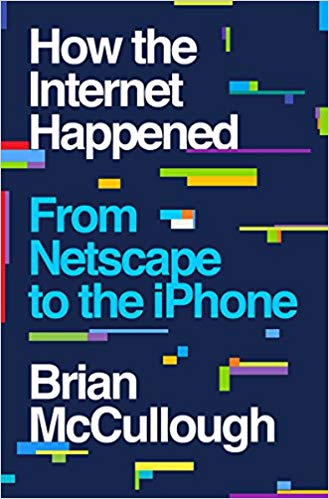
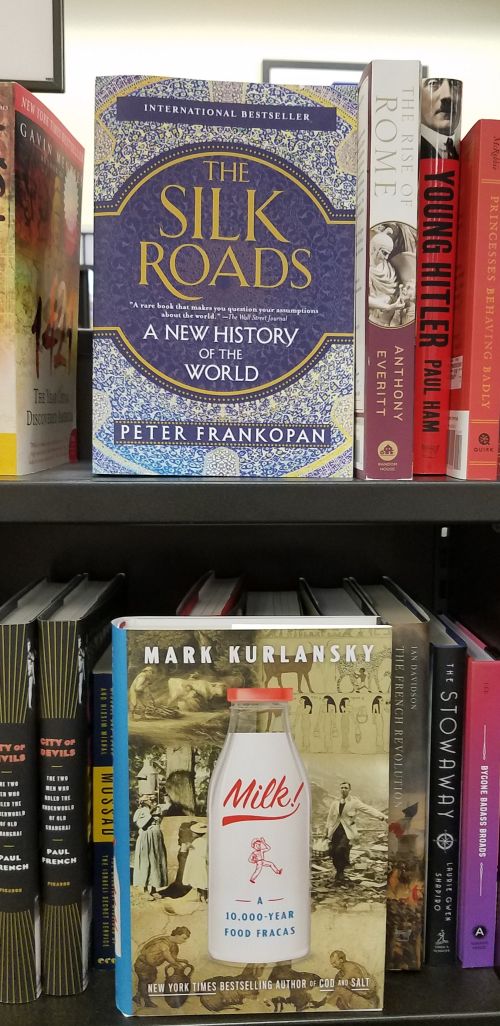
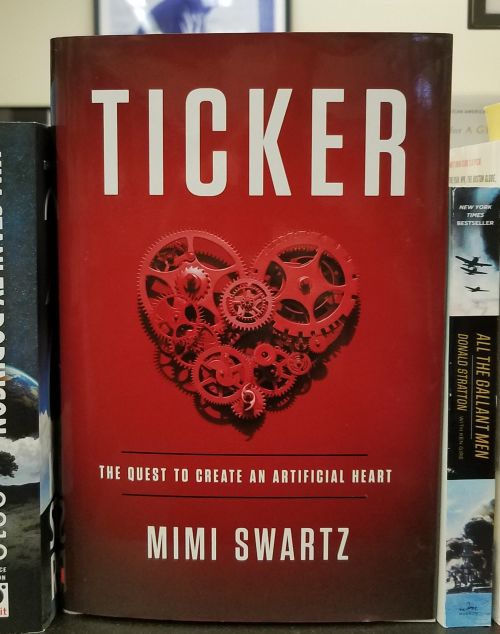
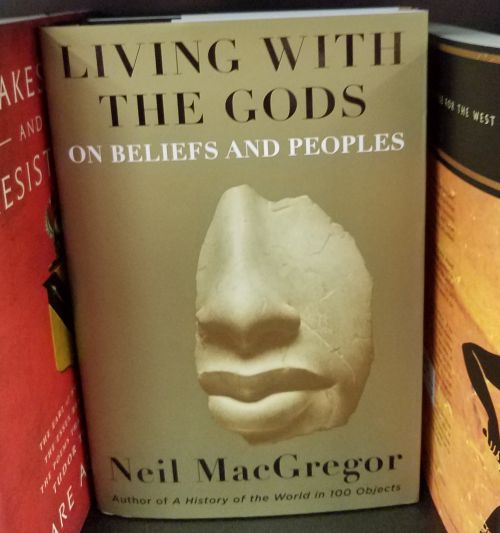
Short rounds: things that are not Star Trek, like North Koreans and Aeneas

Believe it or not, I have been reading books without a Star Trek label appended to them this week. Just recently I finished off Don’t Go There, a short collection of travel pieces that interested me with its mention of visits to Turkey,  Chernobyl, and North Korea.    The actual collection contains these along with trips to Israel, Ghana,  China, and a few other places deemed ‘interesting’. The first piece, a visit to Istanbul that threw the writer and his girlfriend unwittingly into street protests and clouds of tear gas, sets the stage:  the narrator has no idea what he’s doing or why, and seems to stumble into catastrophes just to get a good story to write about.   None  of Fletcher’s trips had any reason or planning to them, most developed miserable complications, and when his girlfriend threatens to leave him, the reader must be sympathetic.  If one endures his laughable ignorance in visiting places like Jerusalem (he is annoyed by religious people and religious references, which would be akin to going to DC when one hates politics), and similar episodes, eventually he ends up in North Korea. It’s about what you’d expect, but he comes away believing the hostages of Kim are not as brainwashed as is commonly held, and that they would be more expressive if they could get away with it.

My other read during the last few weeks has been a volume called From Achilles to Christ: Why Christians Should Read the Pagan Classics.    Markos opens the book with a remonstrance against the Protestant attitude that anything that predated Christ, or anything outside the Bible, is value-less.  Although a Protestant himself, he regards the Catholic church favorably for its integration of the classic western tradition into its own tradition, in effect building upon and continuing the queries of Aristotle and Plato into the nature of the cosmos, ethics, beauty, etc.  Markos’ conviction is the same of CS Lewis’  as expressed in The Abolition of Man, namely that while Christianity is the ultimate truth,  basic truths are also available in other traditions.  The aim of Markos in this volume is to see the truths which the Greco-Roman myths express about the nature of man and meaning. He then guides the reader through the works of Homer, selected works by Greek playwrights and historians, and ends with the Aeneid.    As someone who has been removed from Western Literature I and II for far too long,  I was interested in this chiefly as an accessible  look at Greek literature, a reminder of its stories and writers.  Markos reflects on the themes present in literature, like the struggle between familial duties and loyalty to the polis.  Because the Greek dramatic tradition is in fact a tradition, Markos notes how  differently the same myths might be use by different authors, and examines how the Aeneid is a deliberate Roman tribute to the Illiad and Odyessey,  using its structure, locales, and  elements.  It was not a Latinized copy of the Greek epic, however, but one written with Rome’s own history in mind — and not ancient, but recent, as Aeneas’ story can be read as a tribute to Augustus’ victory over  Marc Anthony and Cleopatra.  Markos also connects the classical heritage to Christianity when he can, argue at times that the Greeks are foreshadowing the advent of Christ.  This is similar to Luc Ferry’s approach in Wisdom from the Myths, in which he argues that the Greek myths and plays constitute a coherent worldview — a Stoic one.   Markos isn’t as insistent as Ferry, however, and the core of the book is merely in seeing what truths the old stories still tell us about ourselves and our relationships to our own polis and the cosmos.

Posted in Reviews | Tagged , , , , , , , | 2 Comments

Yesterday’s News

Recently I had occasion to review the front pages of virtually all of 1918, or at least from January to late September. I didn’t find what I was looking for, in part because the Great War consumed the papers, but I did see a few things of interest that I wanted to share.

This headline is a lot less interesting when you learn that Cyclops is the name of a ship.

The Little Tank That Could

Oh, I bet they’ll “take care” of the Pacific. It’s getting them to leave it alone that will be the problem.

I love puns based on alarmingly racist yet technically innovative epic films!

Somehow I doubt that this will be a reasonable and fact-based biopic. The Academy of Music, the oddly-named theater downtown, ran new shows seemingly every day in the period I searched. Admittedly, this is 1918 and production/postproduction time aren’t nearly as elaborate as they are today.  Take a look at  another:

Aw, remember the days when DC asked Americans for money instead of just taking it  or printing more? 

Trenton redux!

The Spring or Ludendorf Offensive. Reading the papers through from January to late September I was struck by how knife’s-edge the war seemed to be, with panicked reports that the French were in retreat posted side by side with adverts to buy liberty bonds or else subject your children to the Kaiser’s will. By the summer, however, the influx of so many American troops (visible by the reporting) seems to turn the side, not that the liberty bond ads ever noticed.

Because the Bolshies won we now refer to this as the Allied invasion of Russia, but back then the Allies were merely “lending” troops to “Russia”, or whatever constituted Russia in the civil war period.

My pal Klaus is certainly not a spy. He’s just an amateur signals enthusiast. The pickelhaub is a little odd, though, especially at the pool.

You thought working in customer service was bad? Wait until you’re declared the government’sproperty and sent off to fight!

And just as a curiosity:

Posted in Reviews | Tagged | 4 Comments

Rise Like Lions

Star Trek Mirror Universe: Rise Like Lions
© 2011 David Mack
352 pages

“That’s what passes for good news, now? We have a good chance of not dying if we crawl into a hole and keep our heads down? I’d hoped we’d have higher standards by now.”
 “We play the cards we’re dealt,” Eddington said. “The real question is: What are we going to do next?

Rise Like Lions is the triumphant conclusion of the Mirror Universe lit series, opening with a catastrophic defeat for the Rebellion that sees the seemingly victorious Alliance undermined by its success. As the rebellion retreats to shelter what’s left of its men and material, the Klingons and Cardassians’ pride drives them to internecine war, and a long-dead emperor’s secret project to build a new Republic activates. Although the Rebellion receives new life by unifying with a slave revolt from the Romulans and is further strengthened by Spock’s  version of the Foundation,  its leaders remain  divided and can only be saved by…Luc Picard, tomb raider turned  George Washington in Space.  Although readers may object to a few deus ex machina moments, overall Mack’s redemption of the mirror universe is a terrific action novel that redeems the mirror universe.

Star Trek stands apart from most SF series in its unyielding optimism about the nature of man and the future,  which is part of why the Mirror Universe has had such a lingering attraction for trek writers since — allowing them to write our familiar characters as weak and corruptible instead of icons of Federation goodness. Even so, in Trek good wins out:  Rise Like Lions not only features a Miles O’Brien who would prefer to exile himself from power rather than behave like his enemy, but continues to uplift a former tomb raider to make him a model hero.  The soul-deadening violence and general viciousness of the MU stories in general here fast give away to familiar patterns, heroes resisting the darkness and making it flee from them.  A new way is being forged from the wilderness of violence and waste. There are a few epic battles here, all edge-of-the-seat events, although towards the end it becomes apparent that Spock’s secret project is a little overpowered. One of the battles isn’t militarily necessary, but happens because the Rebellion wants to prove to itself that it has moral legitimacy: it’s not fighting to restore the old Terran Empire, but to establish something greater and better, a republic that offers freedom, peace, and respect for all persons.

I like Rise like Lions, and not just because its general theme is redemption, and despite my frequent cynicism about the world I really do live in hope — or want to, anyway.  I appreciate how formerly minor or misunderstood characters like Michael Eddington here play a major stabilizing role (he’s the rebellion’s voice of reason), and characters who are regarded as rather mundane in the ‘real’ universe  (O’Brien and Keiko) here are the heroes.  That was a mark of the series in general, allowing readers to see more of Cal Hudson, Sito Jaxa,  and Eddington than we did on screen.  The book was full of memorable moments,  particularly a assassination that  is utterly unexpected to those who have seen Deep Space Nine. No spoilers,  but if you like Corat Damar already you’re going to want to give him a high five.  Although the ending has a feeling of fulfillment, Mack also tacks on an epilogue that hints that another book may follow if readers are aching to see what happens when the Dominion enters the new arena.

Posted in Reviews | Tagged , , | 4 Comments

Shards and Shadows

Star Trek Mirror Universe: Shards and Shadows
448 pages
© 2009 various authors, ed. Margaret Clark and Marco Palmieri

The mirror universe of Trek is chiefly known for its inhabitants’ general awfulness and triumphant moral chaos. In The Sorrows of Empire, however, Spock killed his captain and seized control of the Empire not for his own gratification, but in pursuit of a dream. In reforming and weakening the Empire and allowing it to be conquered by its enemies, he established the foundation for a new galactic order, seeding the empire with agents conspiring together to create a peaceful republic from the ruins of both the Terran Empire and the Klingon-Cardassian Alliance.  Shards and Shadows consists of over a dozen stories spanning the the mirror universe’s trek tenure,  and Spock’s secret project — “Memory Omega” — is a persistent aspect of the latter stories. The collection draws on not only the Trek shows, but various series of literature like Vanguard, Stargazer, and Titan. It also visits periods not covered in shows or books. One story follows a young officer named Kirk as he seizes the Enterprise from its ruined drunk of a commander, and another visits the ruined planet of Betazed, where a brothel madame named Troi is hiding desperate secrets. 

Below are  a few memorable stories:

  • “Nobunaga” opens the collection with a mindscrew story, one in which the narrator is losing their mind under interrogation and consequently confusing realities. It’s a bit like the TNG episode “Frame of Mind”, or the Roman Polanski film The Tenant.   
  • “The Greater Good”  revisits the world of Talos IV, where Captain Christopher Pike was once captured by telepathic beings and placed into a zoo. That was in our reality. In this reality, whatever happened turned a brilliant young commander into a lifeless shell  — and a ripe target for a rising officer who coveted the Enterprise.  
  • “A Terrible Beauty” features Keiko Ishikawa,   who is definitely more than a botanist and loving wife in this universe.  
  • “For Want of a Nail”:  only one man can stop a centuries-old plan from being unraveled: Reginald Barclay.

I liked this collection more than the previous two, largely because it’s not all torture and genocide; here we have signs that Spock’s plan will at least bear fruit, even if it doesn’t create some uber-federation from the ruins of various nasty polities.  I enjoyed the variety of contributing authors, which included favorites from the Relaunch era (Christopher Bennett and David Mack) as well as authors who were active far earlier, like Michael Jan Friedman. 

Posted in Reviews | Tagged , | Leave a comment

Obsidian Alliances

Star Trek Mirror Universe: Obsidian Alliances
© 2007 Keith DeCandido, Peter David, and “Sarah Shaw”
448 pages

Noticeably absent from Glass Empires were any characters or stories from Deep Space Nine,  the series which revived and expanded the premise of the Mirror Universe. Obsidian Alliances remedies that absence, with three MU stories from both Deep Space Nine and Voyager. The third story is from New Frontiers, which I ignored completely, having zero interest in that (lit-only) series.   The stories are grimmer in general than those in Glass Empires, and again are largely action and personal drama.

In “The Mirror Scaled Serpent”,  two beings from the Delta Quadrant are mysteriously thrown across the galaxy and arrive in the badlands, smack in the middle of a chase scene involving a small resistance craft and a Klingon-Cardassian Alliance warship.   After being “rescued”,  Neelix and Kes are of great interest to both sides: Kes is telepathic, and the Terran Empire destroyed all telepathic species long ago, save for the Vulcans who had the good sense not to expose theirs. Weaponizing Kes could swing the balance of the  war. Chakotay and his Maquis crew are transposed as rebels, with slight tweaks:  B’Elanna Torres is their enemy,  and Kathryn Janeway is now “Kate”, running the rebel engine room with a snarl  even after she’s had her coffee. These are not the Voyagers you know and love, of course; Torres is self-loathing and matricidal,   Harry Kim is an emotionally scarred orphan whose aim in the resistance is to kill Klingons, and Tom Paris is a er..sex slave to Torres.  Neelix and Kes’ characters are largely unchanged, confirming my suspicion that the mirror universe is less a polar opposite of the ‘real’ universe and more of an alternate history where the point of departure happened on Earth somewhere in the past. (Where, who knows? The mirror-Enterprise  title sequences hint that powers like the Nazis won in wars instead of losing, and that some power had taken control of Earth prior to the moon landing.)

The Deep Space Nine story, “Saturn’s Children”, revisits Miles O’Brien, leader of the rebellion, as he struggles with his conscience over the rebellion’s actions in the wake of having spent so much time in the Federation. He knows now that Terrans can be principled and compassionate, instead of acting like  Klingons with better teeth,  and objects to the scorched earth practices of his peer-generals.A disgraced Intendant Kira is forced to serve Chancellor Martok’s bed, but being the Intendant, promptly hatches a plan to return herself to grace and supplant her successor – the ice-cold Intendant Ro Laren.    This stories has a host of characters I was delighted to see  — Ro, of course, but also Sito Jaxa, a two-episode ensign from TNG who disappeared on a secret mission in Cardassian space. Unfortunately, her tenure here is similarly abridged. 

Both tales are enjoyable-enough action stories,  but again I was mostly interested in the characterization,  and sorely disappointed that Ro and Sito played such minor parts.  The continuing growth of the alternate Miles O’Brien is a plus, however.  He’s such a doggedly good everyman character, and I’m glad to know he’s fundamentally decent in any universe. The DS9 tale is also notable for its author, Sarah Shaw, who is in reality David Mack, Destroyer of Worlds.   I didn’t realize this until I searched for Shaw on Memory Alpha: it was very odd to me that I’d never heard of her before or since. According to Mack, he submitted the story under a psuedonym because he’d been asked to contribute to two volumes of the mirror anthology (the first being Glass Empires) but didn’t want to annoy the other authors who’d only gotten to do one story.

Next up: Shards and Shadows, which has contributions from seemingly everyone in Marco Palimeri’s rolodex.  Seriously, there are thirteen authors.

Posted in Reviews | Tagged , , , , | 4 Comments

Glass Empires

Star Trek Mirror Universe:  Glass Empires
© 2007 Greg Cox, Kevin Dilmore, David Mack, Dayton Ward, and Mike Sussman
458 pages

The original series episode “Mirror, Mirror” visited an alternate universe where familiar characters and institutions existed, but as vulgar perversions of themselves: the Federation was a cruel empire that  bullied smaller powers into subordination,  its members preyed on one another for promotion-by-assassination, and man’s animal passions rather than the better angels of his nature ruled the day.   Deep Space Nine revisited this universe, revealing that the Empire had collapsed and that humans were now slaves to a Klingon-Cardassian alliance, and leaders of a new resistance.  Glass Empires is a trilogy set throughout the rise, fall, and aftermath of the Terran Empire — opening with the reign of Empress Hoshi Sato, who leads the Empire’s expansion, continuing with the tale of how Emperor Spock single-handedly destroyed the Empire in an attempt to reform it, and ending with Jean Luc Picard and Vash’s tale of resistance as they are forced to choose between the appearance of cybernetic creatures called the Borg, and the hated Alliance.

Action-wise, I enjoyed all three novels thoroughly.  I was more interested in the characterization than the plots, since the conclusion of  the first story was a given and I’d already read the full novel-sized version of the second story. The third was the only major unknown for me.  A few of Trek’s more interesting characters are here (Shran, the Soong family), and it’s amusing to see once-familiar characters behaving somewhat badly.The Enterprise characters become more interesting in general when they’re evil, unlike the DS9 characters who were just silly. (At least, in the show: the Niners are noshows here.) The collection has some continuity bugs, though, not surprising given how many authors contributed. One story alludes to the family of Khaan Noonien Singh as the original imperial family, but another story mentions that genetic engineering was forbidden, almost as if the writers forgot this was the mirror universe. Maybe Khan and his family forbad genetic engineering to make sure they had no rivals, but if so that should have been mentioned.  Secondly,  as much as I liked the idea of an alternate Wolf 359 where a Klingon-Cardassian fleet is trashed, why were the Borg there? In the original TNG run, Picard was introduced to the Borg by Q, who wanted to punish him for his arrogance;  the Borg then became interested in the Alpha Quadrant after reading the Enterprise’s databanks and began sniffing around.  Here they just show up and start assimilating, as if it were preordained.  The problem with the mirror universe of DS9 and much of these stories is that it’s just not different enough:  the only distinction is that humans created an empire instead of peaceful federation, and interstellar affairs have developed differently as a result.  We’ll see if things improve..

Related:

  • Dark Mirror,  Diane Duane. Easily my favorite Mirror Universe novel, this was published before DS9 ever revisited the mirror universe and builds on the same premise as the original: the Enterprise-D exists, but all of our favorite characters are corrupted and evil.  Humanity itself is darker at its core: when the “real” Picard browses his counterpart’s library, he is appalled at the directions mirror-Shakespeare had taken in his work. 
  • The Sorrows of Empire, David Mack. A full-length version of the middle story here, about Spock doing his Hari Seldon impersonation. 
Posted in Reviews | Tagged , , | 7 Comments

Adieu, England?

By my calendar and clock it’s  growing late on the last day of April, so the month  is nearly ended and with it Read of England.  This year’s RoE was low-energy, despite the early start. I blame the Grand Canyon, of course —  getting ready for a trip west and then spending a week hiking, sleeping, and little else derailed things a bit. And then as soon as I returned, I went out of town again for some dogsitting.  I still have a few RoE targets outstanding that I’ll continue after in May, along with a few other things. But first, recap!

English History
The Birth of Britain Sir Winston Churchill
A Time Traveler’s Guide to Eliabeathan England, Ian Mortimer
Redcoat: The English Soldier in the Age of Horse and Musket, Richard Holmes

English Lives
Shakespeare: The World as Stage, Bill Bryson
Wisdom and Innocence: A Life Of G.K. Chesterton, Joseph Pearce
The Letters of C.S. Lewis, ed. Warren Lewis and Walter Hooper
A Hobbit, A Wardrobe, and a Great War,  Joe Loconte

English Literature
Hornblower Addendum: Five Stories, C.S. Forester
Right Ho, Jeeves!, P.G. Wodehouse
Rifleman Dodd and The Gun, C.S. Forester
Further Up and Further In: Understanding Narnia, Joseph Pearce
Love Among the Chickens, P.G. Wodehouse

Not a bad split, really! Back in March I was concerned that history would take over the pack.

Now, what’s coming?

The Han Solo trilogy, A.C. Crispin.  Crispin is a name I remember from writing Star Trek books (like Sarek)  so I was much amused to find a young Han Solo series penned by her online.  Since Solo will be released later this month, it seemed appropriate to dive into the adventures of young Solo before he did the Kessel Run in twelve parsecs.  And speaking of scoundrels, I saw on Tor recently that there will be FIREFLY BOOKS! One this year, two in 2019.    Shiny.  There will also be a barrage of Trek books, because there was a $1 sale in April and I acquired four new ones to add to the little pile of electronic Trek books I’ve bought on sale and haven’t read yet. Finally there’s a book on classics and the western tradition that I’m nearly done with.

Posted in Reviews | 5 Comments

Encompassing Flagstaff: Geology Overload

Today’s post covers a few of my “driving days”, spanning  the AZ/Nevada border almost to the AZ/New Mexico border.  One of my favorite aspects of driving in Arizona was that sometimes I’d top a hill and see what seemed to be the whole of North America laying  and waiting for me to explore it.

So…it turns out that once you’ve held petrified wood in your hand as a kid and marveled that it’s a rock that looks like wood, the novelty wears off. The Petrified Forest consists of essentially what you see above.

Hiking into the Painted Desert

Come on, the water’s fine!  

Lady, you don’t need a telescope. the crater is literally right there.  This is at the Winslow Crater, where I was tragically denied the opportunity to hike around the rim. Tours stop at three.  
The Pat Shipman Memorial Bridge, over the Colorado River

The Hoover Dam, spanning the Colorado River
And Lake Mead, formed by frustrated Colorado River water. 

Posted in General | Tagged , | 7 Comments

Love Among the Chickens

Love Among the Chickens
© 1906 P.G. Wodehouse
150 pages

“He’s a very young gentlemen, sir,” said Mrs. Medley, in vague defense of her top room.
“And it’s highly improbable,” said Garnet, “that he will ever grow old, if he repeats his last night’s performance. I have no wish to shed blood wantonly, but there are moments when one must lay aside one’s personal prejudices and act for the good of the race. “

Meet Jerry Garnet,  a mildly successful but currently stricken-for-ideas author whose creativity is plagued by the constant distractions of his apartment, chiefly from the musically inclined but ungifted chap upstairs.  Garnet wants to get away, and at just the right time comes his old friend Ukridge, who has just conceived a marvelous idea for getting rich quick: move to the country and keep chickens!  Ignoring a letter from another friend that says, in effect, “Ukridge will be coming to touch you for money, so clear out”,   Garnet affably joins his old companion in what quickly becomes a debacle, but one Garnet doesn’t see coming because he only has eyes for the neighbor’s daughter. P.G. Wodehouse’s first novel, Love Among the Chickens is short and amusing, though not nearly as riotous as his later works. Those familiar with the Wooster stories will recognize the germ of many a Wooster plot here, in schemes that go awry. The biggest, of course, is the notion of keeping chickens: Ukridge is so careless  about what kinds of chickens he gets that he ends up with mostly roosters. Roosters are notoriously poor at laying eggs.

Posted in Reviews | Tagged , | 3 Comments

Encompassing Flagstaff: Atop Mars’ Hill

Overlooking the fair city of Flagstaff is Lowell Observatory, perched atop Mars Hill.  The founder of the Observatory, Percival Lowell, believed based on changing observations of the planet, that it was occupied by a technologically adept civilization, one which had established canals to route water from its own ice caps to fields further away.  He was a wealthy mathematician turned diplomat who had the means to establish his own private observatory, and needed a place which was dry, dark, and high. Flagstaff was ideal.  The inspiring early observations of Mars later proved problematic and the conclusion wholly wrong, but the Observatory has done great work over the years since 1894.. It was featured in Carl Sagan’s Cosmos,  as the place where Vesto Slipher discovered that galaxies were moving (and more quickly with their distance from Earth),  as well as the site of Pluto’s own discovery.   The observatory still does scientific work at its dark-skies campuses further from town, but the original site is by no means retired. Instead, it focuses on public education; I was there for four hours listening to lectures and using telescopes to look at solar flares and the stars.  I also got to see the original Clark telescope, though it wasn’t available for viewing the night I was there. Sometimes the public can look through it, however.

The Clark Telescope, with a dome originally constructed by local bicycle repairmen. 
The Clark. Spectroscopy was invented using equipment attached to this telescope. 
The “Pluto Walk”,  which begins with the Sun and ends at the telescope which discovered Pluto. Between them, signs for the other planets are sprinkled by scale. 
Alas, I missed the Pluto tour, so  I didn’t get to see inside.
This is…not a telescope. It was the original library, now used as the multimedia room or lecture hall. The acoustics are interesting, in that you can hear a pin drop like it’s a fifty-pound weight, conversations from one spot of the room can be heard or not heard in other spots of the room willy-nilly, and if you stand in the right spot you can hear Percival Lowell whispering that there was water on Mars, so hah HAH.
One arc, showing off what’s left of the stacks above.
Now that’s what I call a cherry ride. Percival Lowell’s old wheels are still used in Christmas parades.
Also not an telescope this is Percival Lowell’s mausoleum. I guess on his deathbed he really did wish he’d spent more time at the office. 
Still to come: meteors, painted deserts, petrified trees, and the Canyon.

Posted in science | Tagged , | 4 Comments