Anne of Avonlea

Anne of Avonlea
© 1909 Lucy Maud Montgomery
366 pages

I recently took my niece to see a production of “Annie” at the Alabama Shakespeare Festival, and it put me in a mood to revisit Anne of Green Gables, another red-headed heroine I’d first encountered at the theater.  When I read the actual novel a couple of years ago, I found Anne an utterly charming character,  a match for America’s Tom Sawyer.  That novel ended with a young orphan reaching the cusp of adulthood, finishing her education and preparing to take her place in the community.  Thus Anne of Green Gables (the verdant name of her home) becomes Anne of Avonlea, a woman of her town. Anne of Avonlea follows the course of Anne’s transition from teen to adult,  as she launches a teaching career and sees her theories put to the test against real live children  — and  invests herself more deeply in the village by creating a society for its improvement.  Anne’s increasing maturity also displays itself when she faces dilemmas square in the face, and refuses to quit believing that even schoolroom hellions and village cranks can be reached.  Anne’s sweet spirit and the air of possibility around her make her a popular figure in the village, which is good because she still tends to get into scrapes.  (Most memorably, she climbs on top of a neighbor’s roof to investigate dishes in their pantry for sale during their absence, and plunges midway through, getting thoroughly stuck.)   After two years, however, greater challenges — college and real adulthood — await.  That’s a story for Anne of the Island, however!

Related:

Posted in historical fiction, Reviews | Tagged , , , | 6 Comments

Resistance is Futile? State of the Kindle

(Image borrowed from here)

A few weeks ago I walked into my usual Chinese place for lunch and the proprietor immediately inquired: Where’s your book?  She’s seen me walk in every week for the last six years and get comfortable with a book while waiting on my order. I hadn’t brought one for the same reason that when I went on vacation, I decided to not carry any books as part of my pack-light-and-avoid-checking-bags policy.  I had my Kindle in my carry on bag, and as I stood in the Chinese restaurant, I carried a small library in my pocket — my phone, equipped with the Kindle app.

Seven years ago I did a worried  thinking-out-loud post called “Go Go Gadget Literature?” on e-books and e-readers, detailing my concerns about electronic readers. Five years later, I sheepishly revealed that I’d recently purchased a Kindle fire, mostly to use as a tablet, and had been dabbling with reading books online. I called that one “You Still Can’t Call Me Inspector Gadget“.  I’d become interested in a few titles which were online-only, partially because of NetGalley.  Things have changed, however. I just did a tally, and approximately 41 books from last year were read via my Kindle. That’s less than a third, but seven months into 2018, e-books account for nearly half of my reading. That’s quite a sea change, and one prompted by frequent sales of Kindle books, the relative paucity of nonfiction in my area (I have to drive an hour and a half to a library with enough nonfiction to keep me busy), and my growing ease with android and iphone systems. Seven years ago I had never touched a smartphone; now people hand their devices to me and ask for help  — which is how I learned to use them to begin with.

It’s not that I’ve stopped liking physical books, far from it: they fill my rooms and are scattered around my car. I’m still buying them,  cruising Amazon on a daily basis looking for interesting old or new titles  to be had for cheap . But my space is limited,  the Kindle offers me frequent  steals, and in the three years I’ve had it, I’ve yet to drop or damage my device, or suffer a book being deleted mysteriously by Amazon. I paid a $15 premium on mine at the time to avoid seeing any splash advertisements on the wake screen, so all of my  original objections have never applied.

Ironically, as my work has made me both comfortable and experienced with smartphones and related devices,  I’ve grown to appreciate my Kindle Fire less as a tablet (which is why I originally bought it!).  Kindles use a modified version of Android that is divorced from the Google play store, so a lot of Android-compatible content isn’t available.  My particular Kindle model also doesn’t have any way to expand its memory, so it may be good that its app library is limited.  Earlier in the year I purchased a 2016 flagship smartphone, principally as a camera but equipped with a 64 GB microSD card for photographs and such. Surprisingly, it’s taken over as my e-reader of choice, so that despite my considerable use of Kindle as a software platform, my Kindle device itself has been relegated to marginal use, not being touched for weeks at a time.

Has the use of a Kindle changed me as a reader? Am  I more distracted, less focused?  I honestly don’t think so.   I realize this is subjective, but I think I behave the same way while reading a book on my phone as I do reading a real one.  I don’t stop reading mid-page to check notifications,  both out of deliberate choice (I ignore the itch to check email) and because I’ve arranged things so I won’t be distracted. I turn do not disturb mode on, for instance, as I despise notifications and disable them at every opportunity, whether I’m using my phone or my computer.

It may be too early to speculate, but I think my e-reading activity has leveled off,  My phone has had a few months to do its magic, and while I definitely use it more than my old emergency-use  cellphone (which was usually lost, or dead, and only rarely on my person), I still haven’t become a tech-zombie, shuffling around in public and staring downwards. My phone stays in my pocket until I decide it’s time to read, or time to practice Spanish, or when I need to make a call. (This is rare, as I don’t like phone calls and keep my phone on mute)  I’ve ‘assimilated’ my phone without becoming a drone myself. So…resistance isn’t futile, so long as you’re a crank to begin with.

Posted in General | Tagged | 10 Comments

Just a coincidence!

“Whaat?  No, I’m totally sick. In bed. reading a new book. “
Cartoon was posted in “Into the Wardrobe”, a Lewisian/bookish facebook group.

Posted in General | 3 Comments

What I Read in 2007

Although these days I’m a fairly organized reader, with a Excel spreadsheet and everything,  when I first started yakking about books in 2007, I didn’t even list them. I just posted rambling towers of paragraphs on MySpace.  I’ve been wanting to have a better reference for what I read in the early years, and since it’s a quiet, rainy day, good for parsing paragraphs of superfluous commentary into  legible data…why not?

I should note that not everything I read in 2007 was on this list, because I didn’t start tracking my reading until late May, and from August onwards I was largely tied up with life and work at my new university.  Nothing for most of December ’07 or January ’08 was reported!   This was also a unique moment in my life, as the year before I’d summarily rejected everything in my past and was actively trying to develop my own, independent view of the world.  I’ve been building on that foundation ever since.   Note that science, not history,  is king of nonfiction!   That will change, however:  as I was finishing a degree in history, with a European emphasis,  I read a lot of German, English, and French history later in the year, and would open 2008 with the same.

May 21st, 2007 –  December 12th, 2007

  1. The Rapture, Jerry B Jenkins and Timothy LaHaye
  2. Kingdom Come, Jerry B Jenkins and Timothy LaHaye
  3. The Know-it-All, A.J. Jacobs
  4. The Everything Classical Mythology Book, Lesley Bolton
  5. The Osterman Weekend, Robert Ludlum
  6. Allegiance, Timothy Zahn
  7. Universe on a T-Shirt, Dan Falk
  8. An Intimate History of Humanity, Theodore Zeldin
  9. Before the Dawn, Nicholas Wade
  10. Six Impossible Things Before Breakfast: The Evolutionary Origins of Belief,  Lewis Wolpert
  11. Phantoms in the Brain,  V.S. Ramachandran
  12. The Whale: Mighty Monarch of the Sea, Jacques-Yves Cousteau
  13. Extraterrestrial Civilizations, Isaac Asimov
  14. Hitler’s Shadow War, Donald McCale
  15. Clan of the Cave Bear, Jean M Auel
  16. The Valley of Horses, Jean M Auel
  17. The Tribe of Tiger, Elizabeth Marshall Thomas
  18. Dolphin Days, Kenneth Norris
  19. Nightfall and Other Stories, Isaac Asimov
  20. The Plains of Passage, Jean M Auel
  21. The Stand, Setphen King
  22. The Associate, Philip Margolin
  23. The Mammoth Hunters, Jean M Auel 
  24. Theories for Everything;  John Langone, Bruze Stutz, and Andrea Gianopoulos
  25. The Middle Ages, Dorothy Mills
  26. The German Empire, Michael Stuermer
  27. Lies and the Lying Liars Who Tell Them, Al Franken
  28. A Man Without a Country, Kurt Vonnegut
  29. Rickles’ Book, Don Rickles
  30. Our Endangered Values, Jimmy Carter
  31. Harry Potter and the Sorceror’s Stone, J.K. Rowling
  32. The Complete Idiot’s Guides to Turtles and Tortoises, Liz Palika
  33. The Rising Tide, Jeff Shaara
  34. Slaughterhouse-5, Kurt Vonnegut
  35. Storms from the Sun, Michael Carlowicz and Ramon Lopez
  36. Harry Potter and the Chamber of Secrets, JK Rowling
  37. Harry Potter and the Prisoner of Azkaban, JK Rowling
  38. Harry Potter and the Goblet of Fire JK Rowling
  39. Harry Potter and the Order of the Phoenix, JK Rowling
  40. Harry Potter and the Half-Blood Prince, JK Rowling
  41. Harry Potter and the Deathy Hallows, JK Rowling
  42. Shelters of Stone, Jean M Auel
  43. Pale Blue Dot, Carl Sagan
  44. River Out of Eden, Richard Dawkins
  45. Only Yesterday: An Informal History of the 1920s, FL Allen
  46. Infidel, Ayaan Hiris Ali
  47. Broca’s Brain, Carl Sagan
  48. The Assault on Reason, Al Gore
  49. The End of Faith, Sam Harris
  50. The Darwin Awards, ed. Wendy Nortcutt
  51. Great Tales from English History 2, Robert Lacey
  52. Mephisto, Klauss Mann
  53. Between Dignity and Despair: Jewish Life in Nazi Germany, Marion kaplan
  54. The Hundred Years War, Desmond Sewawrd
  55. Great Tales from English History, Robert Lacey
  56. I Am America (And So Can You), Stephen Colbert
  57. The Luftwaffe: Creating the Operational Air War, James S Corum
  58. The Rise and Fall of the Luftwaffe, David Irving
  59. German into Nazis, Peter Fritzsche
  60. Meditations, Marcus Aurelius
  61. Montgomery: Biography of a City, Wayne Greenshaw
Posted in General | Tagged | 9 Comments

Freedom, Culture, and the Modern Negation of Both

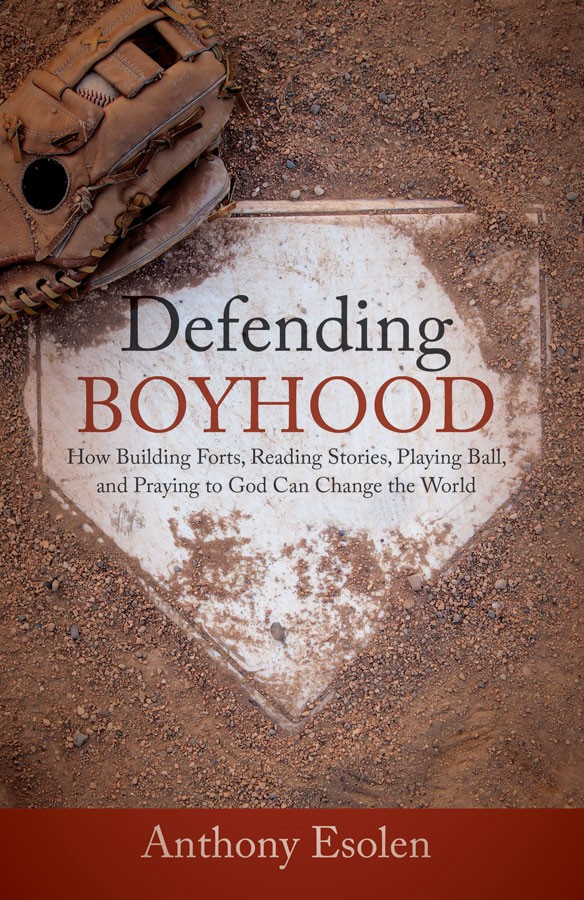
From Anthony Esolen’s “Culture? What Culture”, a speech I heard on Youtube and began to transcribe until I did a google search and realized he’s already posted the full text of it.  The speech is rather long and begins by revisiting an obscure English play.  I’m a great fan of Esolen’s oratory, though  mere text does not convey his voice.

We have just endured the great quadrennial national exam. Neither one of the major candidates referred to the wisdom of the Constitution. Neither one reminded us of what our revered statesmen once said and did. The so-called conservative did not broach the shrewd pessimism of John Adams; the leftist did not turn one page of the pamphlets of Tom Paine. Just as we have lost a sense of the holy, so have we lost our national and cultural memories, for without reverence the past is but a burden of irrelevant particularities, which historians may study if they so choose, but which most of us will cheerfully ignore. And that amnesia is one of the conditions of enslavement. For just as our apparent freedom from worship helps to enslave us to the State and its tentacles in mass entertainment, mass education, and mass technology—since there will be no Sunday against which to judge the everlasting Mondays of modern life—so our apparent freedom from memory only enslaves us to manipulation by what I call the Anticulture, the infantile fads we take in helplessly from our keepers in the media and the schools. A man worshiping God on a Sunday with his brothers in a tumbledown chapel is free, receiving the gift of the world, and giving praise freely in return. A man commemorating the birthday of Stonewall Jackson is free, receiving his heritage in gratitude, and passing it along in turn as a gift to his children.

But when I am in an airport, that most harried image of the eternal tarmac of Hell, crowded without community, noisy without celebration, technologically sophisticated without beauty, and see people engaged in loud conversations not with one another but with a business partner in Chicago or a spouse and children far away, I see not freedom but confinement. And above them all, as if to remind us of our unhappy state, blare the everlasting televisions, telling us What Has Just Happened and What it Means, and preventing us from ever experiencing a moment not of loneliness but of solitude, not of idleness but of peace. It too is a tool of the Anticulture. For culture by its nature is conservative. It remembers, it reveres, it gives thanks, and it cherishes. A farmer tilling the land his father tilled, whistling an air from of old, in the shadow of the church where his people heard the word of God and let it take root in their hearts—that is a man of culture. He might live only fifty years, but he lives them in an expanse of centuries; indeed, under the eye of eternity. How thin and paltry our four score and ten seem by comparison! For we are imprisoned in irreverence. Our preachers are neither the birds nor the old pastor peering over Holy Writ, but the nagging, needling, desire-pricking, noisome voice of the mass educator, or of the headline, or of the television, which could never have won our attention without encouraging in us amnesia, indifference, petulance, and scorn, all destroyers of culture.

Posted in quotations | Tagged , , | 6 Comments

A Crack in Creation

A Crack in Creation:  Gene Editing and the Unthinkable Power to Control Evolution
© 2017 Jennifer Doudna and Sam Sternberg

“No longer at the mercy of the reptile brain, we can change ourselves. Think of the possibilities.” – Carl Sagan

A few years ago I tuned into the middle of a science-news podcast and encountered a panel of otherwise sensible people caught up in an enthusiastic conversation about…crisper? Crisper drawers?  I’d missed something.

What I’d missed was a story about CRISPR, a gene-editing tool with enormous and explosive potential for  medicine and agriculture.  The outgrowth of attempts to use bacteria as microsurgeons,  CRISPR allows for fine-tuned genetic manipulation with reproducable results.  The first half of A Crack in Creation delivers the story of how CRISPR as a tool was discovered, and this history of scientific investigation is followed by the author’s thoughts on the implications. While optimistic about the tool’s applications for agriculture and medicine,   she admits that the potential for abuse in modifying the human genome itself is high.

Humans have been manipulating domesticated populations’ genomes for millennia, of course, but with clumsier methods:   finding animals with expressed traits we favor, and breeding them while taking the rest home to cook.  We have toyed with forcing mutations with chemical and radioactive agents, but the results thereof are unpredictable.  Now,  nearly two decades into the 21st century,  we have the ability to make fine-tuned adjustments, with applications both serious and trivial.  An internal biological weapon used to disarm viruses  and effect cellular repair can instead be used as a tool to remove  and supply whatever genes we desire.

  We’ve already created mosquito populations which have been stripped of the ability to propagate malaria, and — depending on trials and the weight of government oversight —  may use pigs to grow human organs for use in transplants.   As Doudna warns, however,   modifying humans — modifying ourselves — takes us into an area fraught with ethical quandaries.    She speculates that we may wish to discriminate between germ cells (sperm and egg cells, which would be capable of reproducing whatever edits we make) and somatic cells, which constitute the rest of the body.  Unless, of course, eugenics makes a comeback and we decide to create a race of supermen, a la Khan Noonian Singh. Then, germ cells would be fair game. (Okay, the bit about Khan is just me. As one of the principle discoverers of CRISPR, Doudna is seriously concerned about the ethical implications, to the point that she’s had a literal dream about Hitler contacting her with an interest in learning how to use CRISPR.)

Although I’m still trying to understand the mechanics of it (as much as I like biology, genetics is a definite weak point for me),  the potential for this excites me. Medicine is going to go very interesting places in the decades to come.

Posted in Reviews, science | Tagged , , , , , | 9 Comments

Top Ten Tuesday: Best Books of 2018, So Far

This week’s Top Ten Tuesday, hosted by the Artsy Reader Girl, is the best books we’ve read in 2018.

In order of my reading them…

  1. Star Trek the Fall: Ceremony of Losses, David Mack
  2. Poetry Night at the Ballpark, Bill Kauffman
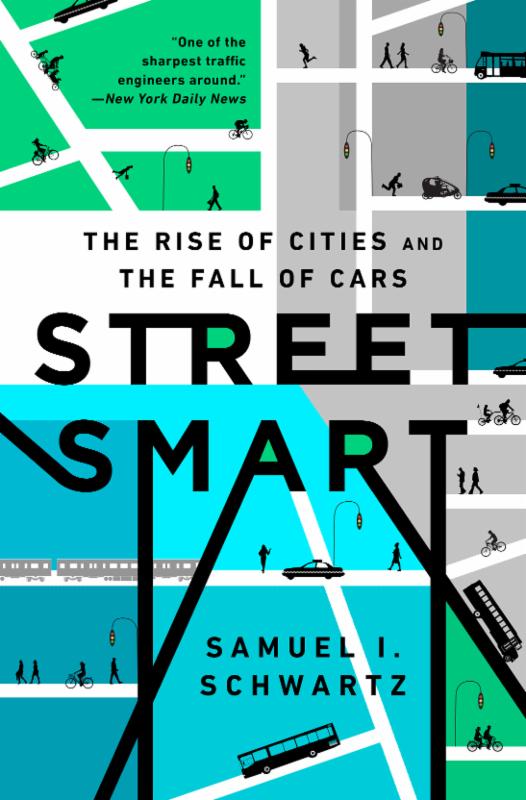
  3. Fares, Please! A Popular History of Trolleys, Horsecars, Streetcars,Buses, Elevateds, and Subways, John Anderson Miller
  4. Fool’s Errand: Time to End the War in Afghanistan, Scott Horton
  5. Verbal Judo: The Art of Persuasion, George Thompson
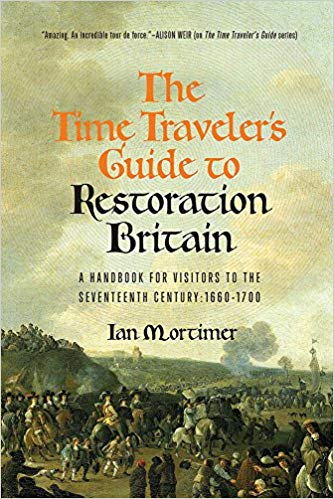
  6. A Time Traveler’s Guide to Medieval England, Ian Mortimer
  7. How Adam Smith Can Change Your Life, Russ Roberts
  8. Exploding the Phone: The Teenagers and Outlaws Who Hacked Ma Bell, Phil Lapsley
  9. Ready Player One, Ernest Cline
  10. Little Brother,  Corey Doctorow
About the books:
Star Trek: Ceremony of Losses  is only part of a series, but features compelling moral drama about a doctor who does the right thing when his government  is being manipulative.
Poetry Night at the Ballpark is a collection of miscellany by a favorite author. I likened it to encountering him at a bar and then having a long, fascinating conversation about a variety of things.
Fares, Please! really speaks for itself. It’s a fun history of public transportation.
Fool’s Errand is a critical history of the Afghanistan war that stirs the water and asks why the hell Americans aren’t more pissed off at the constant bloodshed and waste of this war.  Ooh, did Queen Elizabeth just tweet something passive aggressive about her new daughter in law?  War? What war?
Verbal Judo is a pocket guide to nonviolent communication  and conflict deescalation.  Useful stuff if you work with the public.
A Time Traveler’s Guide to Medieval History was a fun social history of medieval England.
How Adam Smith Can Change Your Mind  interprets Adam Smith’s poorly-known Theory of Moral Sentiments,  to explore the meaning of life in being loved and being lovely.
Exploding the Phone reviews the phone-hacking scene of the fifties to the eighties, when computers made it more difficult and became objects of hacking interest themselves.
Ready Player One is…awesome.
Little Brother  takes the surveillance state, a kid, and a user’s guide to cybersecurity and mixes them together for a YA techno thriller that not only argues for privacy, but gives readers the tools to achieve it against the government’s designs.  That’s my kind of self-government. 
Posted in General | Tagged | 13 Comments

Of Neanderthals and dogs and extinction level events

Time for science short rounds!

Last week I read The Invaders,  a much-anticipated work about how dogs gave humans a competitive edge over their neanderthal cousins. This brief book posits that human beings function like invasive species, and after establishing a few housekeeping facts (the background of climate change, the available evidence for judging human / neanderthal populations and their diets) argues that humans and Neanderthals were competing for the same space in some regions of the globe, rather like wolves and coyotes, and that humans drove neanderthals out because of their advanced tool usage and domestication of wolves. While Neanderthals did use tools and traps, discovered tools to date suggest that the Neanderthals were more ambush predators, hiding and taking their quarry in close quarters. We sapiens used more ranged weapons like thrown spears. The wolf-dogs enter the book’s argument relatively late in the game (~ 50 pages from the book’s end), so this is chiefly a work about sapiens v neanderthal competition is therefore a book more of interest to those curious about ancestral man than his ancestral best friend.

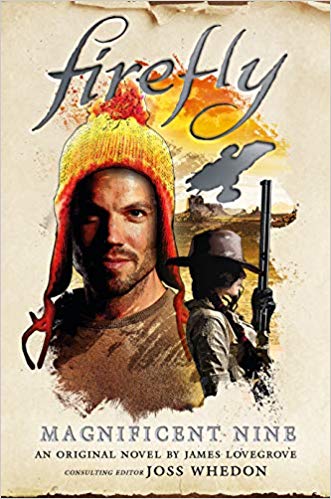
Additionally, I finished listening to What If? Serious Scientific Answers to Absurd Questions, penned by the author of XKCD and read by Wil Wheaton. If you’ve never encountered XKCD before, you probably don’t spend a lot of time on the internet.  It’s a webcomic of “romance,sarcasm, math, and language.”   I can’t vouch for the romance bit, but science and math humor are a constant.  That’s the same of What If? in which the author uses his legit-science background to respond to outlandish questions submitted to his website. What if the Earth suddenly stopped rotating? What if we could drain the oceans? What if everyone was gathered in one spot and jumped at the same time?  Although none of these scenarios are remotely possible,  Munroe disregards this and puts math — and humor — to work  exploring the possibilities.  Naturally,  geek references abound. (River Tam of Firefly is consistently quoted as an expert on how fast it takes to drain a human body of all its blood, assuming adequate suction). Wil Wheaton is golden in his delivery, barely hiding his humor at times when Munroe’s writing is tongue in cheek. There’s an entire chapter on the positive effects of the sun  suddenly not working.   If you’re into science, What If? is great fun. 


Posted in Reviews, science | Tagged , , , | 5 Comments

How the Post Office Created America

How the Post Office Created America:  A History
© 2016 Winifred Gallagher
336 pages

Once the conduit of revolution, then a mainstay of communities both rural and urban, the post office has fallen on rough times as of late.   Amid speculation that its services may be ended altogether, Winifried Gallagher offers a praiseful history of the US postal service, arguing that it helped the colonies establish independence and a national identity, preserved it as its citizens expanded west, and advanced the American dream by opening itself to women and ethnic minorities earlier than any other branch of the federal leviathan.  How the Post Office Created America  delivers a social history of the United States, centered on the post office but not limited to it, Gallagher also explores how the postal service influenced American culture, from  encouraging a republic of letter-writers to the inclusion of Mr. McFeely of Mr. Roger’s Neighborhood. (Kidding about that last one. In a grievious oversight, the author neglects to so much as mention the much-loved postman.)

The story begins with Ben Franklin and Benjamin Rush, who believed that a good postal service was essential to the republican experiment.   A republic needed informed citizens; informed citizens needed ready information. In those days that meant newspapers, and their circulation was promoted by heavily subsidized rates. How subsidized? In a day when a letter cost $0.50 to make it from New York to New Orleans, a newspaper could make the same trip for $0.015.   In days before telegraphs, let alone telephones and the internet,  the mail service was a vital part of everyday life. Alexis de Tocqueville marveled that even in the frontier, rural villages received mail at least once a week.

Gallagher largely focused on the 19th century, that fascinating period in which the early republic transformed  and filled an entire continent. In its beginnings, the postal service consisted of men on horseback, delivering saddlebags to general stores where the proprietor was also the local postmaster.   A century later,  the postal service had massive infrastructure and had literally redrawn the political map, as homes were given distinct addresses and later ZIP codes to allow for efficient and accurate delivery. Gallagher marks key points in the postal service’s evolution,  from the adoption of rural and city free delivery to the implementation of stamps. The postal service’s  pricing scheme inadvertently promoted both cheap paperbacks (they could be shipped as periodicals) and the first reams of junk mail.  The early embrace of the railroad system created a golden age for the post office, and the trains themselves offered the unique ability to sort mail in the process of transportation.  The postal service effectively subsidized the creation of American commercial aviation,  as all of the early airlines relied on mail contracts to establish themselves to the point that they could build passenger service.  As the 19th century gave way to the 20th, the post office became more professional in its organization;  early administrations used it to reward their friends, giving away pork positions to their cronies, but the “spoils” system was largely dismantled in favor of a more meritocratic one, with post office employees required to sit for a civil service examination.

As American society became more technologically complex, with sophisticated transportation and communication networks, the postal service’s   prominence faded. Early on, Americans debating the nature of the post office decided that while it wasn’t a business that had to support itself solely on its income, it did need to support itself as much as possible while at the same time being supported enough by the public to keep pace with rural expansion. In the 20th century,  with the country fully developed and competing networks now in existence, the debate over its future and nature resurfaced.  The hybrid public-private elements of the office created conflicts of interest:   if the institution was expected to support itself like a business, it was only fair that it be allowed the same freedom of action as other businesses, like expanding its services. At the same time, it was hardly proper for a publicly-funded entity to go into competition against private citizens by offering commercial photocopying and banking.  Gallagher notes that the post office has been increasingly weakened by recession and constrained by Congress , to the point that it seems to be headed for insolvency. She urges readers to take stock of the post office’s long, pivotal role in American history and urge their local congresscritter  to take action.

While I strongly doubt the post office will disappear,  business as usual certainly can’t last for long.  The volume of mail sent by Americans continues to fall by the year,  especially  lucrative first class mail.  Parcel delivery is up, as the private  shippers sometimes use the USPS as their last-leg for home deliveries, but that’s only a small contribution to the bottom line.  At any rate, How the Post Office Created America is a fun social history, albeit one written by someone who is not a historian but  who seems to write pop-nonfiction.  That’s not a criticism — I’m a generalist myself, and have to appreciate someone whose books cover attention, the post office, the power of place,  houses, God, heredity,  novelty,  and purses. 

Related “Making of America”-esque books:
The Victorian Internet: The Remarkable Story of the Telegraph, Tom Standage
Empires of Light:  Edison, Tesla, Westinghouse, and the Race to Electrify the World,  Jill Jonnes
The Great Railroad Revolution, Christian Wolmar

Related:
Stagecoach: Wells Fargo and the American West,  Phillip Fradkin. Wells Fargo established itself as a rival against the postal service, which struggled in a way to achieve fast service between California and the eastern US.

Posted in history, Reviews | Tagged , , | 4 Comments

Related Videos: How To Watch TV News

A few years ago I watched an eerie compilation of local newscasters from around the United States all reading the same exact script.  I don’t think this is the same video, but it has the same creep-inducing effect.

A comedian-singer named Remy produced a mocking take on televised news (with CNN  as its specific target)  that highlights the inanity of the 24/7 news cycle, with its barrage of unrelated topics and superficial treatment.

Journalist:   What I mean  is / while we’re reading these trivial mysteries/ People are dying, we’re losing our liberty / They’re inside our — what?! Isn’t that banned?
Anchor: Inside our hardware. I understand! Well, they could be inside your phone at this very moment /
Journalist: Yes!
Anchor:  — Pokemon! This town’s p-
Journalist: NO!

Posted in General | 5 Comments