The Ends of the World

The Ends of the World: Volcanic Apocalypses, Lethal Oceans, and Our Quest to Understand Earth’s Past Mass Extinctions
© 2017 Peter Brannen
336 pages

Earth has tried to kill us five times before, and now it’s at it again. (To be fair, we’re kind of egging it on.)   The Ends of the World is a long natural history of life on Earth which examines five mass extinctions, period in which the majority of life was destroyed. Each time it rebounded as the Earth itself continued to grow, supercontinents forming and breaking up, the air and oceans altering in their chemistry. Although direct causes of species-death vary by incident,   and are sometimes so numerous that it’s rather like the murder suspects on Agatha  Christie’s Orient Express,   climate is a crucial factor in each one. Specifically, author argues that as carbon dioxide goes, so goes the planet.

We live in a moment in time — a period when the Earth is rather comfortable for our species and those we rely on.  That wasn’t the case for most of Earth’s history; oxygen took at least a billion years to arrive, and land-based plants themselves are relatively recent arrivals, appearing 700 million years ago at the earliest.  Even once Earth began to look familiar —  familiar continents, trees,  rabbits, etc — it wasn’t settled    There are geological cycles  — shifts between glacial and tropical epochs, for for instance — at work.   Other cycles involve carbon as it travels between land, sea, and air, and this is a cycle that can play hell with life if it gets out of kilter and…oh, turns the Earth into a hothouse, or acidifies the ocean and kills everything there.  And then there’s vulcanism — not only do mass eruptions offload unwieldy tons of CO2 at once, but sometimes they cover areas the size of the United States or Russia in  two mile-deep tide of lava.   Even a prepper with a bulging bug-out bag and a remote hideout would be hard pressed to come back from that.

Geological forces are usually slow and ponderous — glacial.  But slow forces building up can reach a threshold where everything goes sideways all at once, a catastrophic quantum leap. Think of an earthquake, and the slow-but-accumulating stresses that build up between tectonic plates until they finally slip and a city is reduced to rubble in seconds. Brannen believes this happens with atmospheric and oceanic chemistry, too.   Even when the cause of an extinction seems outside, unavoidable, and sudden — like the asteroid impact that has the primary credit for killing the dinosaurs,  the climate can’t be ignored. The chapter on the K-T extinction argues that the asteroid collision wasn’t responsible for the mass extinction on its own: while it would have  done an enormous amount of local damage,  its real contribution was to cause so much tectonic distress that mass volcanic eruptions and outgassing crippled the atmosphere.

If you have anticipated that the book ends with a few pointed remarks about global warming and the present state of the carbon cycle, well — you’re on the mark. Brannen dedicates the last section of the book debating the ‘sixth extinction’, and humanity’s role in clearing the earth of megafauna and challenging the old super-volcanoes in terms of how much gas can be pumped into the atmosphere.   The debate covered shies away from putting the human-induced extinctions of many species into the category of these documented five.  The five are judged to have been global events, near-complete ecosystem collapses: the only survivors were in weird niches, ecological islands. (Or perhaps on literal islands.) While humans have deliberately killed many species and accidentally obliterated more, we’ve also repopulated the Earth with species under our control: cattle, oxen, sheep,  the like.  Ecosystems have been formed and sometimes destroyed, but we’re not facing  imminent and global collapse.    Even so ,the  author argues, the role of the carbon cycle in previous mass extinctions should be foremost in our mind, because it’s not just a matter of rising seas.  Ocean acidification from CO2 absorption  is the “other” carbon problem, compromising as it does submarine ecosystems like those centered on coral reefs. (This “other” problem comes up a few times in another science/nature book I’m reading, Lost Antarctica.)

Although it’s a little odd to describe a book recording the near-total loss of life on Earth not one but five times as ‘fun’,, Ends of the World kind of is,  a morbid Planet Earth.  I particularly appreciated being able to sit in on debates in the last two chapters, as Brennan interviews various scientists who are contending (politely) with one another for the most accurate and factually-supported theory..  Ends of the World may expose many readers to the carbon cycle, something I’ve heard little about,  and there’s nothing quite like mile-deep sheets of lava rolling over continents to pique the imagination!

Posted in Reviews, science | Tagged , , , | 7 Comments

Sunrise to Sunset at the Grand Canyon

I landed in Arizona  late in the afternoon, but as soon as I’d checked into my motel room and purchased a few supplies at the local WalMart, I headed for the Canyon. It didn’t matter to me that it would be getting dark.  In retrospect, I’m entirely glad I went when  I did — not that driving through unknown country in the dark was fun, but my first view of the Grand Canyon was a twilight view. There’s something about the dawn and dusk — their fleetingness — that makes them especially beautiful.

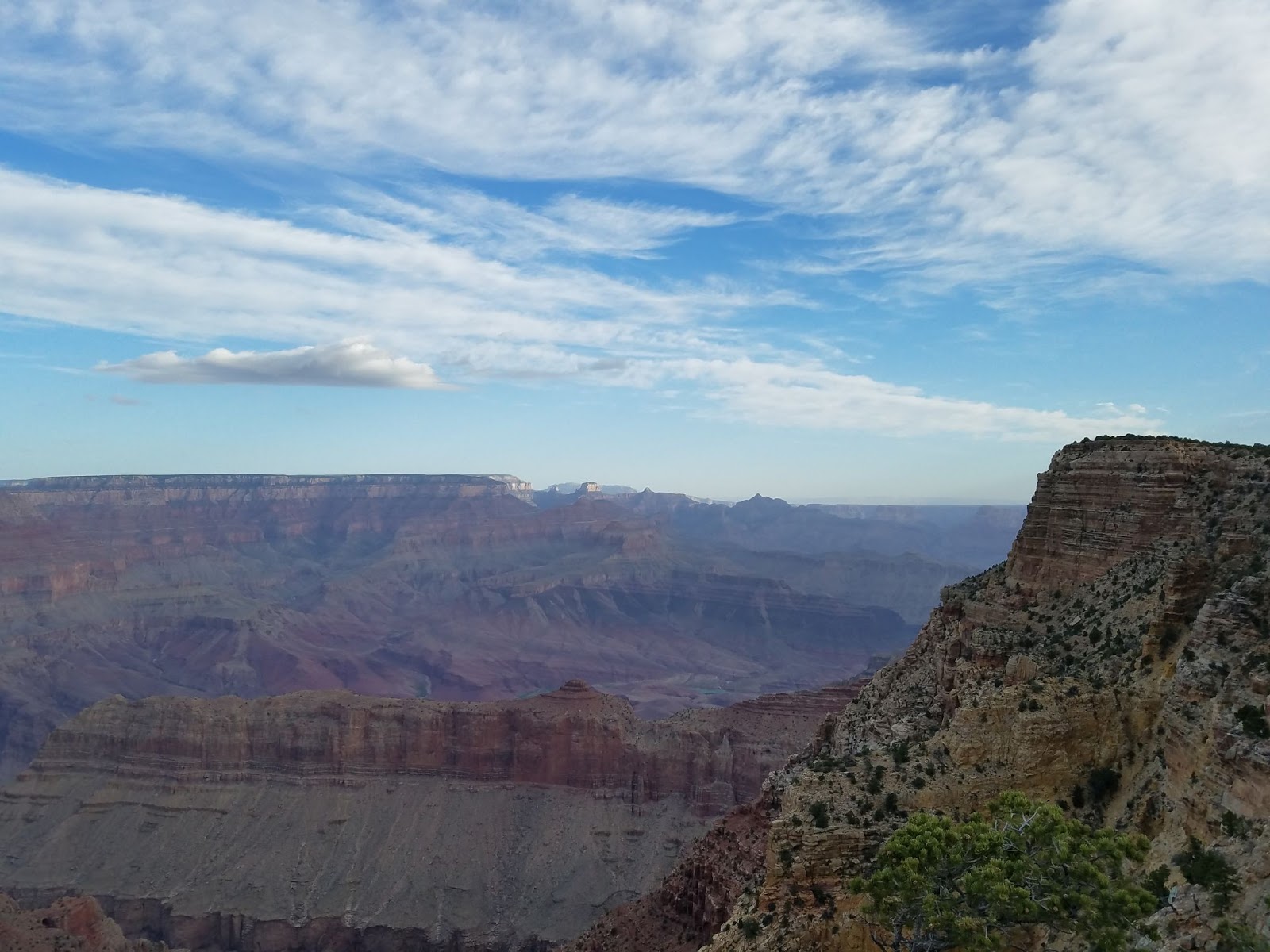
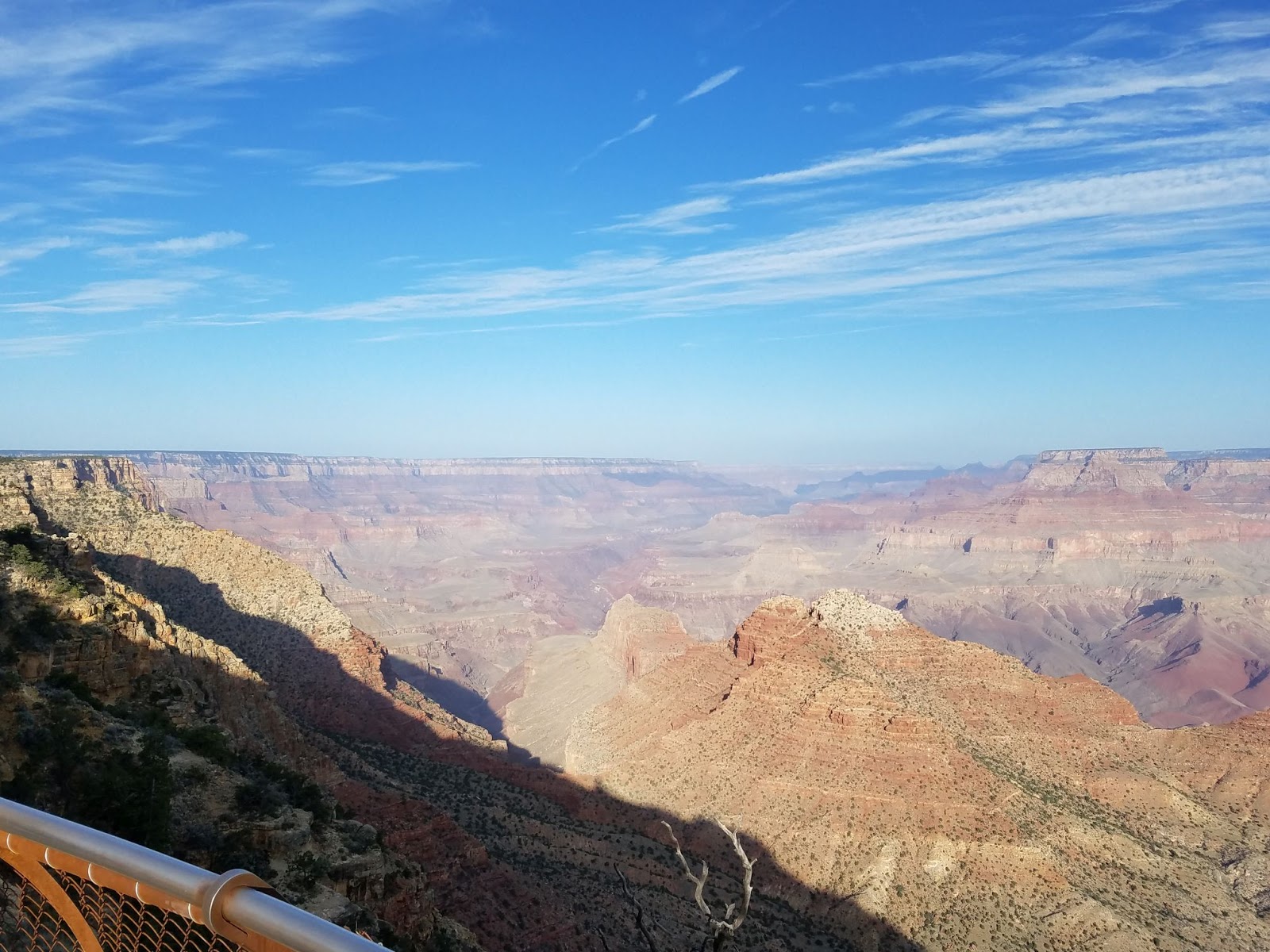
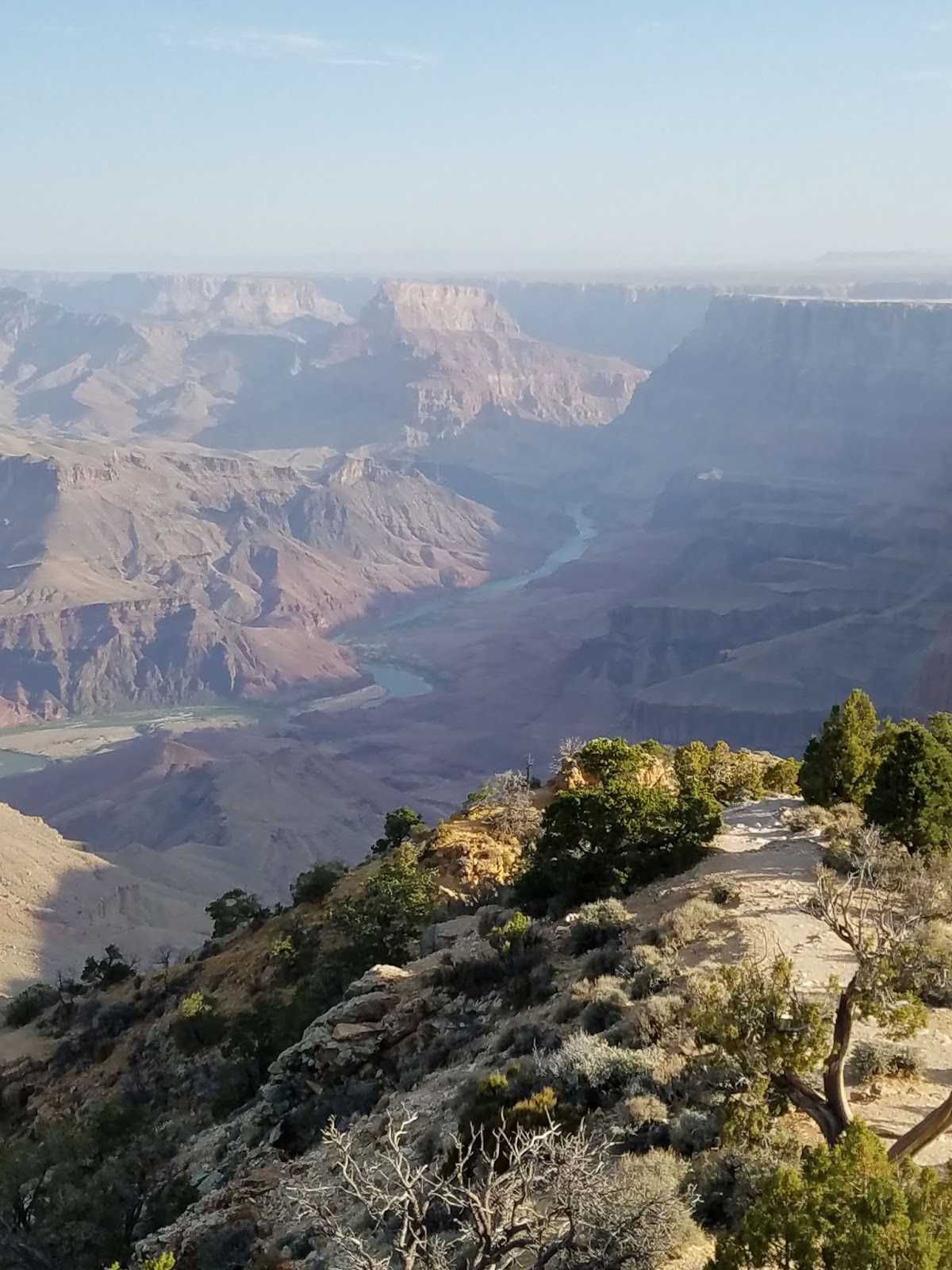
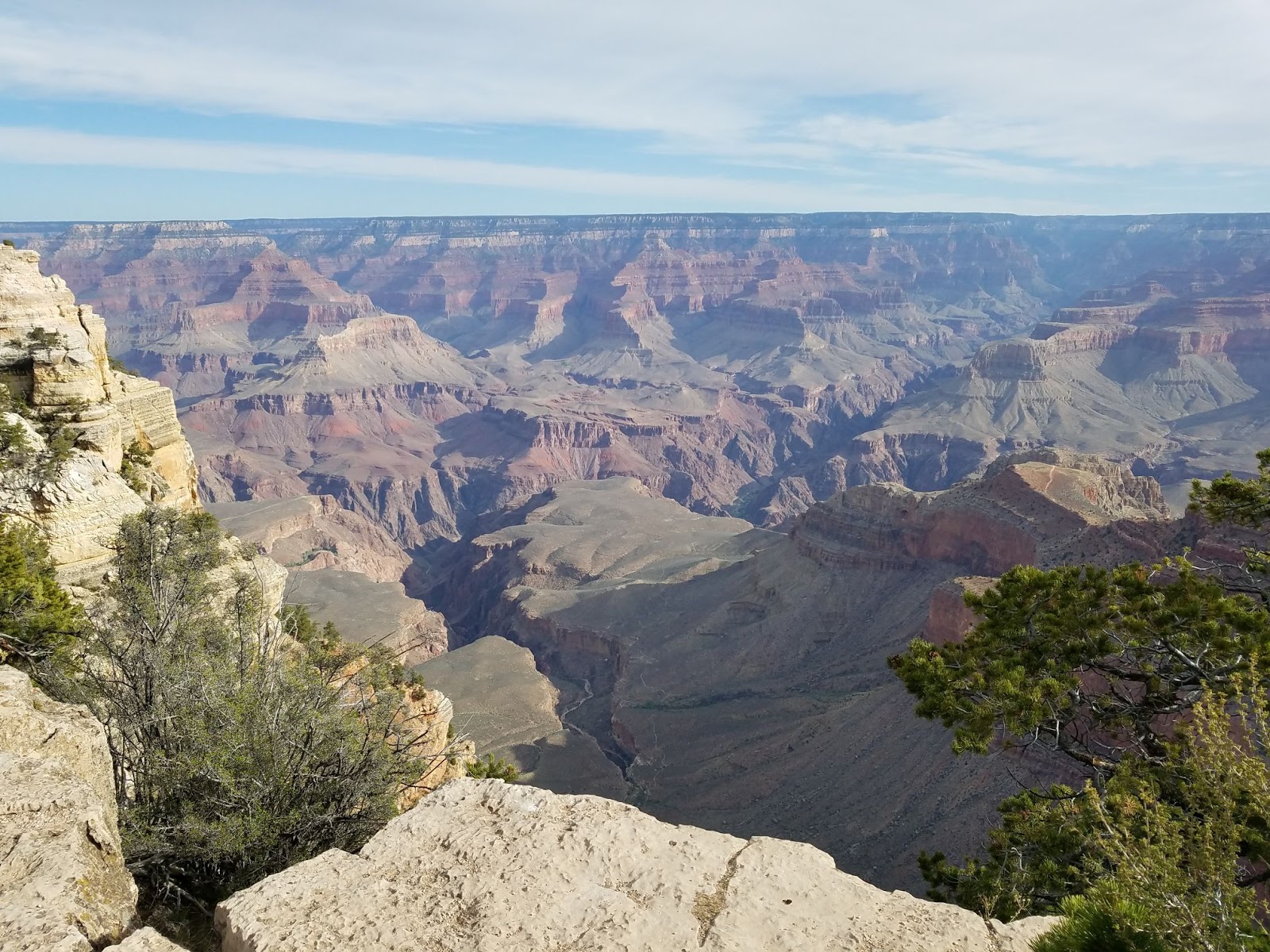
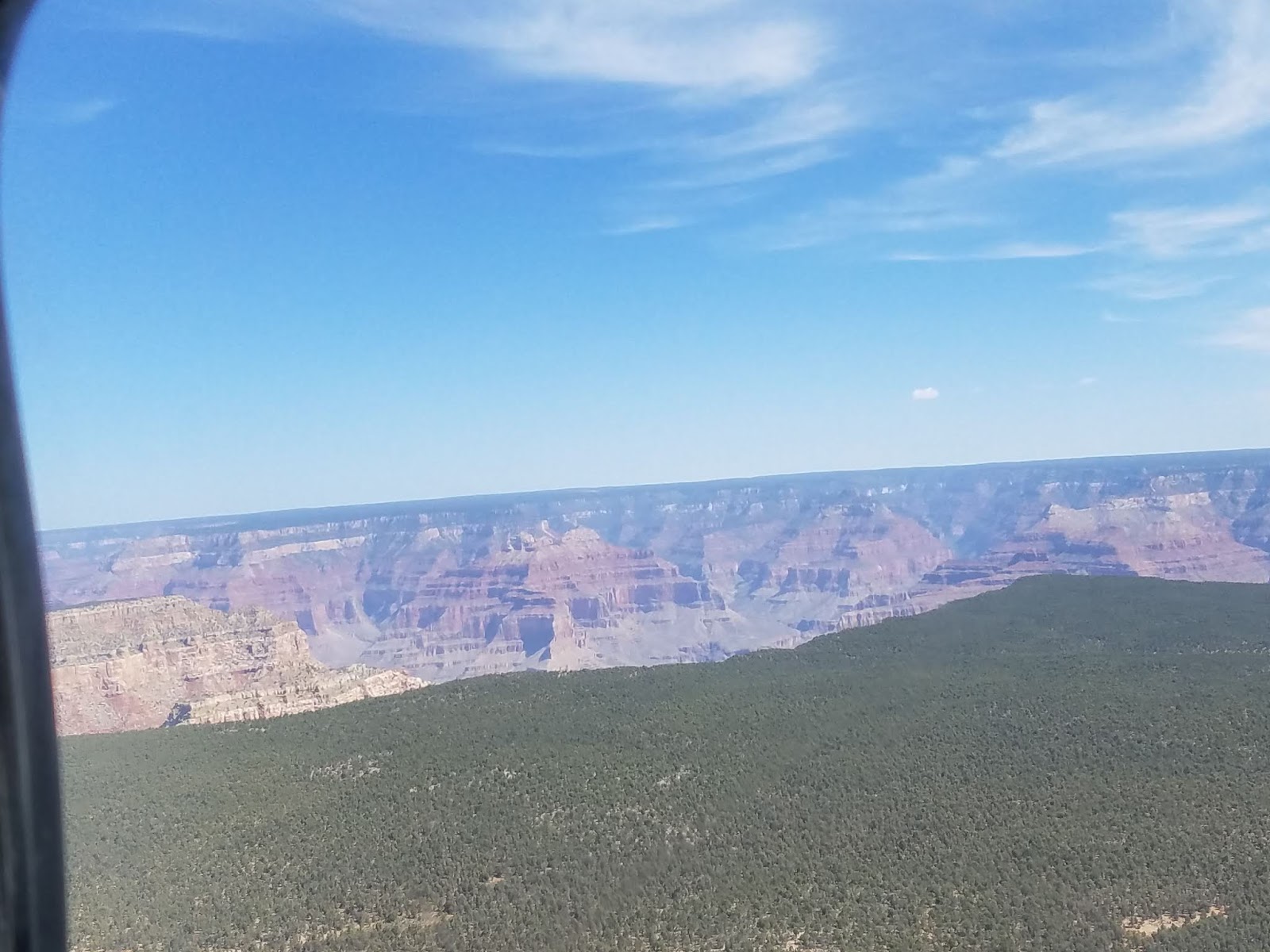
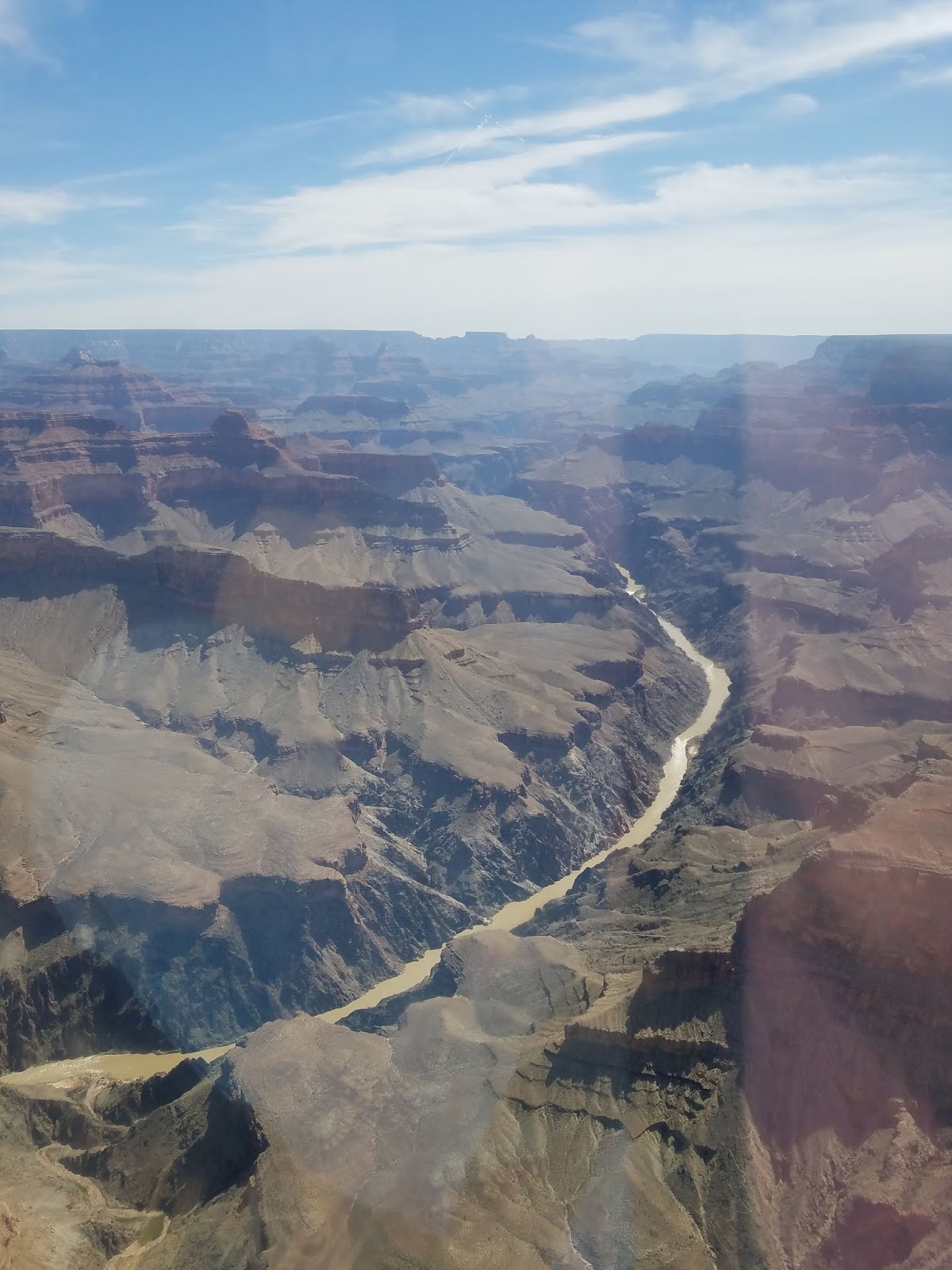
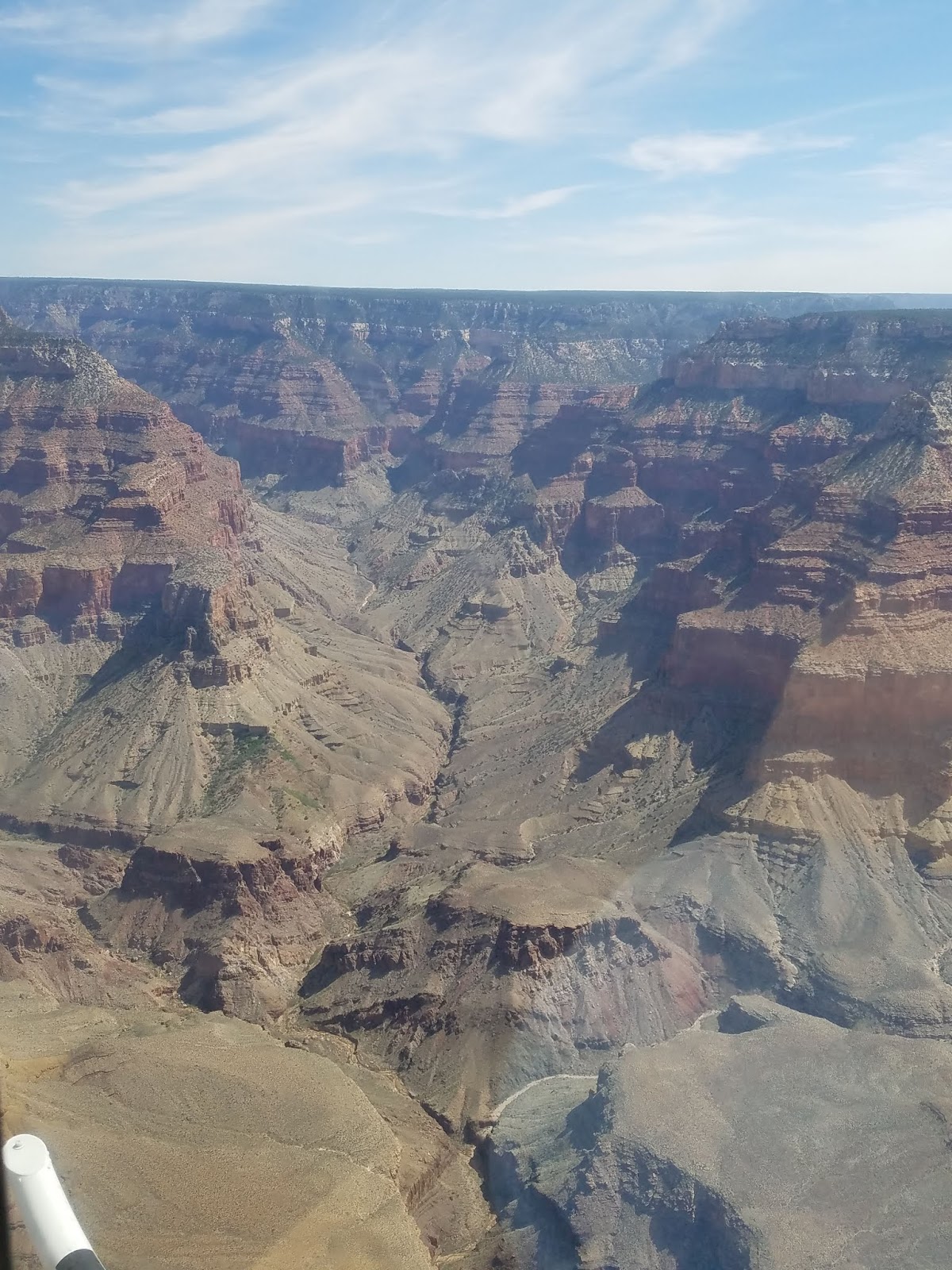
I visited the Canyon three more times that week,  at one time watching the sunrise with a few dozen similarly crazy souls, and have arranged some shots to represent a day spent at the canyon. 

MORNING

Shortly after six a.m, on a cold and windy April morning
On an old mining trail, a young couple stands transfixed by the scenery. 
MID-MORNING
From the observation room of the Desert View Tower, about 26 miles from the visitor’s center
DAY
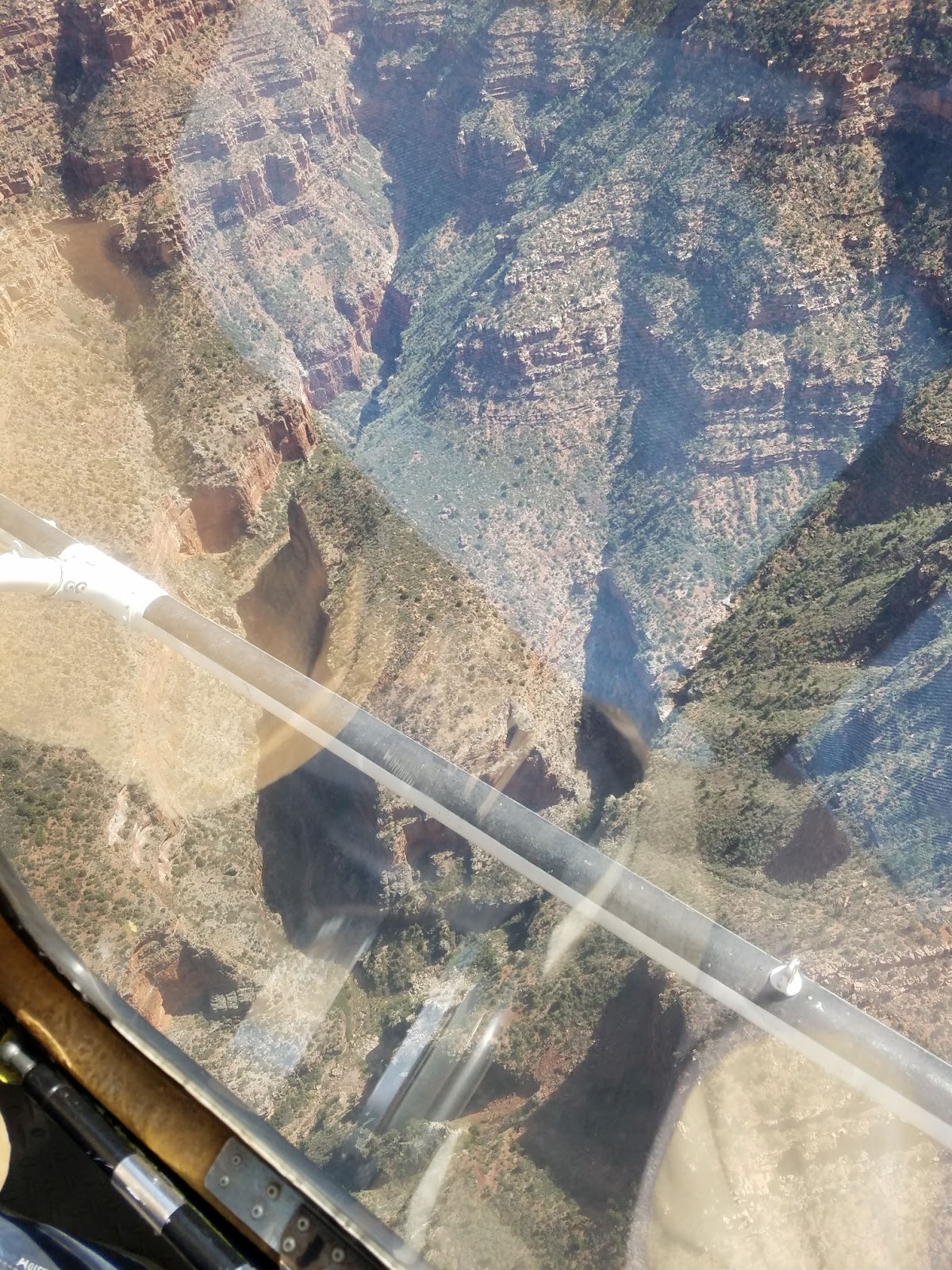
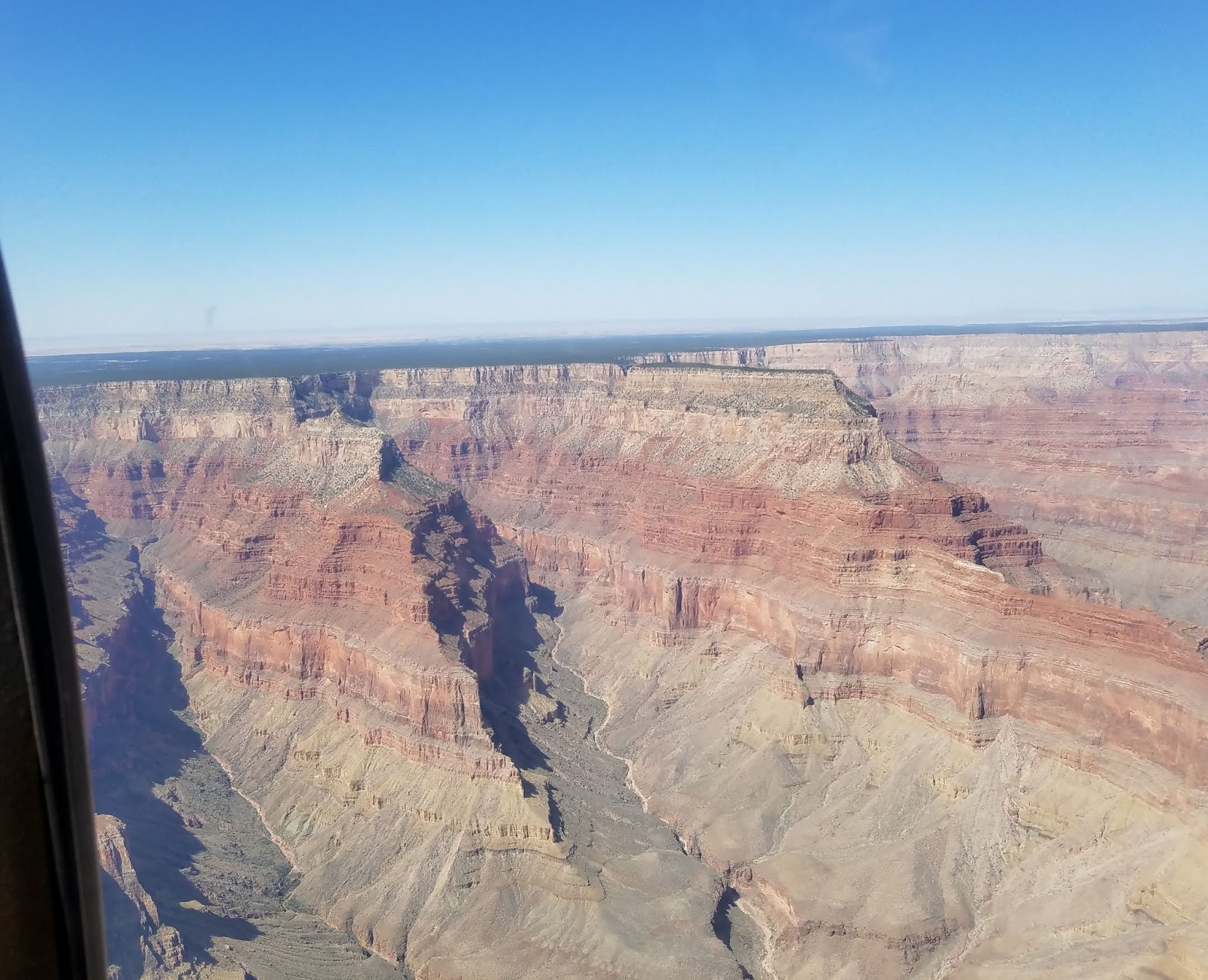
These and the other “DAY” shots are taken from a helicopter.
Of course I looked down. How could I not?
DUSK

These were taken the same day I arrived in Arizona.
This guy either had nerve or brown underwear, because the wind was blowing at ~30 MPH.
I spent that first evening at the Canyon walking along the rim, soaking in the view and shivering a little in the cold. I hadn’t anticipated the wind, and so left my jacket in my car. The clouds rolling in —  there was rain along the north rim — meant that I couldn’t see the stars come out, so I decided to leave while I had enough light to find my car. 
I hope to visit the Canyon again one day, to hike into the interior and spend a night there — but I’d want to have company! 

Posted in General | Tagged , , | 6 Comments

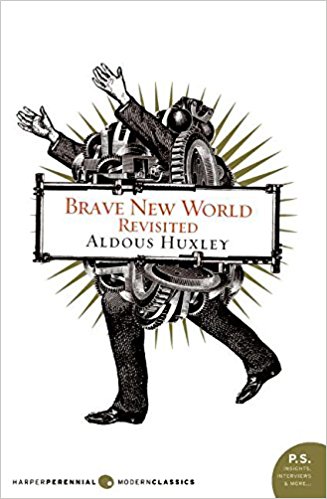
Brave New World Revisited

Brave New World Revisited
© 1958 Aldhous Huxley
144 pages

Aldous Huxley’s Brave New World (1931)  transported readers to a deeply creepy nightmare-vision of the future, in which man had disappeared as an independent being, instead becoming the raw materials for a new, engineered hive creature.  In Brave New World Revisited,  Huxley shares his fear that the technocratic domination of society is proceeding much more quickly than he had anticipated, and then outlines reasons for concern and the vectors by which free minds could be compromised and manipulated.

The crux of the problem, says Huxley, is overpopulation. Viewing a global population of 3 billion in horror, Huxley anticipated not only only mass starvation, but the rise of tyranny across the world.   Rising population would crowd more of humanity in cities, where disease both physical and mental would become an ever-greater threat.  The rising misery, he believed, would have the effect of  fraying civil society so much that Communist orders promosing food for all would be imposed.  Though not a libertarian, Huxley takes Lord Acton’s appraisal of power and human nature to heart. Even an innocent desire for order, he argues, can carry the controlling authority away, resulting in creeping and then  quickly-hardening tyranny. Eugenics is an obvious example, and the subject of his second chapter.

The bulk of the book, after the opening essays on population crises and eugenics, examines ways in which technology might begin to subjugate human psychology.  His original novel was published in 1931, two years before Adolf Hitler took power and achieved the closest thing the world had seen to total technological command of a people;  Hitler not only grasped how mob mentalities could be manipulated, he used the latest in communications technology to constantly convey his message.  Huxley examines the tools of Hitler’s trade, as well as others introduced in the decade after World War 2 that might be the stuff of future empires. These include chemical agents, sleep conditioning, emotional propaganda, and different forms of torture.  In each section, Huxley mentions precursors of them already in-use, like pervasive advertising and the  attempted creation of consequence-free feel-good drugs. 

I knew nothing about Huxley before starting this, but he proves to have  been a thoughtful and well-read man  Some of his concerns about overpulation obviously seem dated, given that the global population is presently 7.6 billion, with consistent declines in starvation rates.Overpopulation means increased demand for everything, not just food, so  it’s still an issue to be concerned about — whether your  concern is resource wars or global warming. The pressure these populations put on governments to “do something” — about a great many things — has resulted in declining self-determination across the board, with all levels of government.  Huxley’s view of the city as a profoundly unnatural environment, one that induces mental diseases, is still argued — see Desmond Morris’ The Human Zoo

Modern readers of this will find, then, some of it dated but a great deal still relevant, as far as human psychology goes;   whatever one makes of shifts in our mores, human nature has not changed since 1958.

Posted in Reviews, Society and Culture | Tagged , , , | 5 Comments

Encompassing Flagstaff: Red Rock State Park

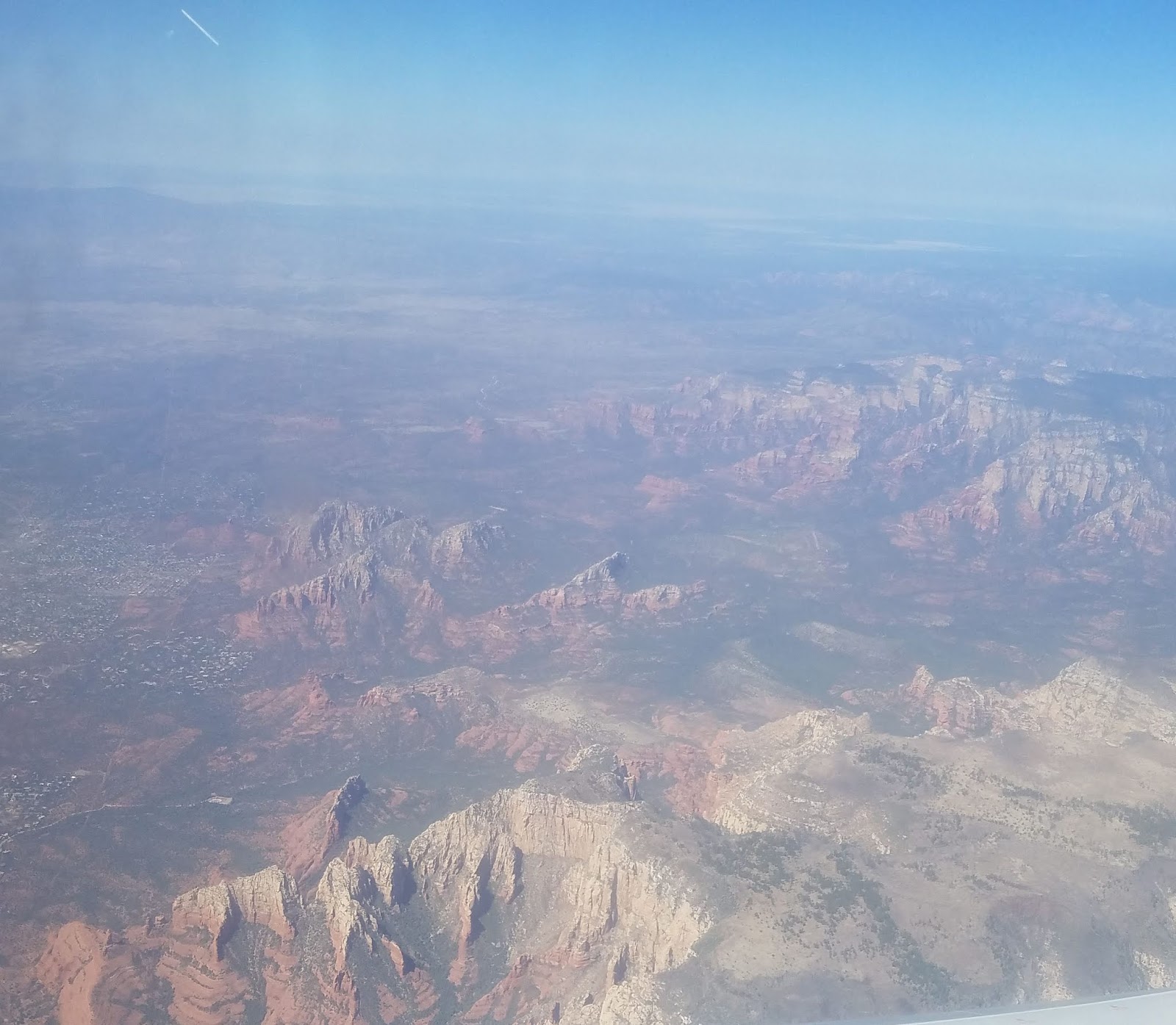
The red cliffs of Sedona, taken from the air on my flight into Flagstaff. I thought this was the Grand Canyon, and…so did most everyone else on the plane. I realized my mistake once I’d driven northwest to the Grand Canyon and realized a plane approaching Flagstaff from the south would be nowhere near the GC..

Working on that video yesterday made me realize…I’d never finished my Encompassing Flagstaff photo collection, so named because during the week of April 7 – April 14, I visited points north, south, east and west of Flagstaff, Arizona, using it as my base.     Previous posts covered a few national park tours, the town itself, and Mars Hill.   Now witness…Sedona! Well, mostly Red Rock State Park.  Sedona has a well-deserved reputation for being fantastically beautiful, as cliffs of red rock overlook the town itself. I got there early in the AM and decided to do some hiking at a state park outside of town, and when I finished I was so tired and the city so fantastically full of people I decided “Nope, going back to Flagstaff”. 

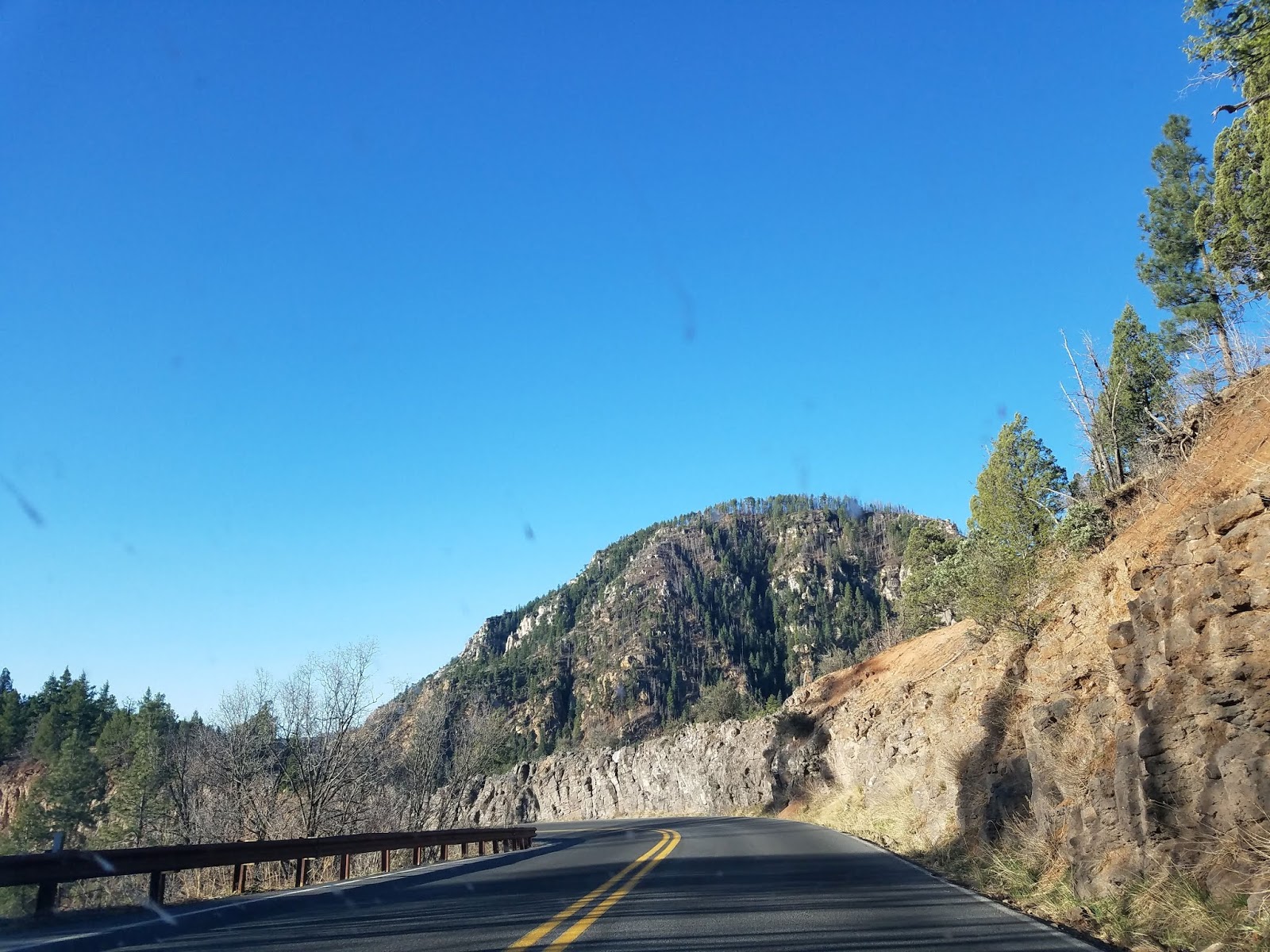
Driving to Sedona. The road south from Flagstaff is extraordinarily pretty, but also extraordinarily inappropriate for multitasking, so I didn’t take many more until I was out of the dangerously beautiful woods and cliffs.
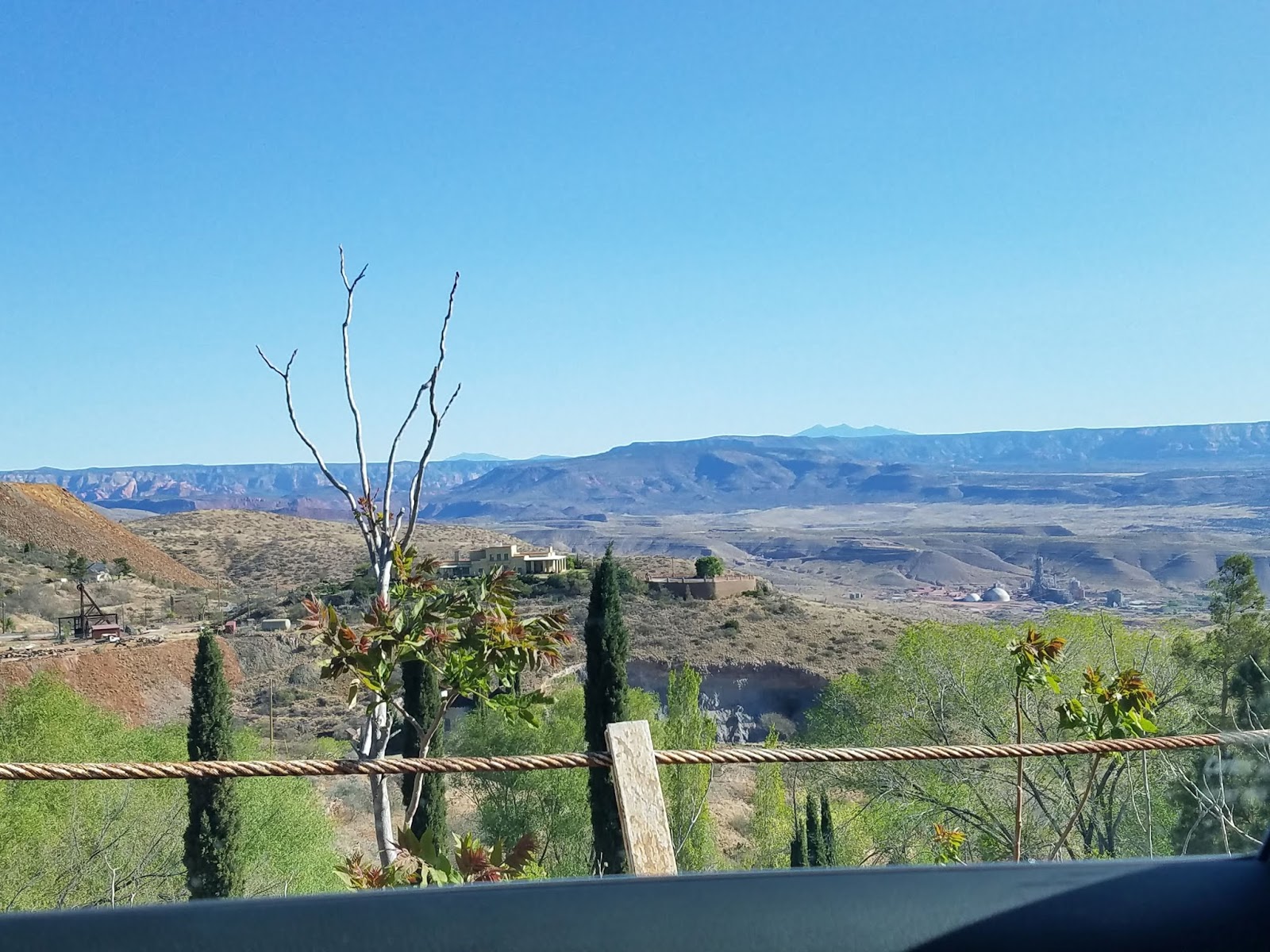
South of Sedona, taken while driving either to or back from Jerome, a place I visited solely on the merits of it being, quote, “cute”. I was there waaaaaaaaaaaaaay too early, but I am a man of principles, namely “Wake up at dawn and see it before the tourist mob shows up!”
Jerome, AZ. Succeeding streets are above you when you visit, and I found this distressing.
Hiking at Red Rock State Park. I went on several different trails out here,  first an easy one to get the lay of the land and then a hill ascent. I then did another hill ascent, because when I am on vacation I sometimes go overboard.  According to my phone, I logged 18K steps this day. 
Wide shot, continued
The House of Apache Fire, which sounds terribly dramatic. It even as a trail named after it.  If I remember the signs correctly, the house was built to imitate indigenous architecture, despite being itself relatively modern (1947).     This is probably the least photogenic way to approach it.  When verifying I was remembering then name correctly I found a page of different shots of the house, taken at a time when the park was much more verdant. 
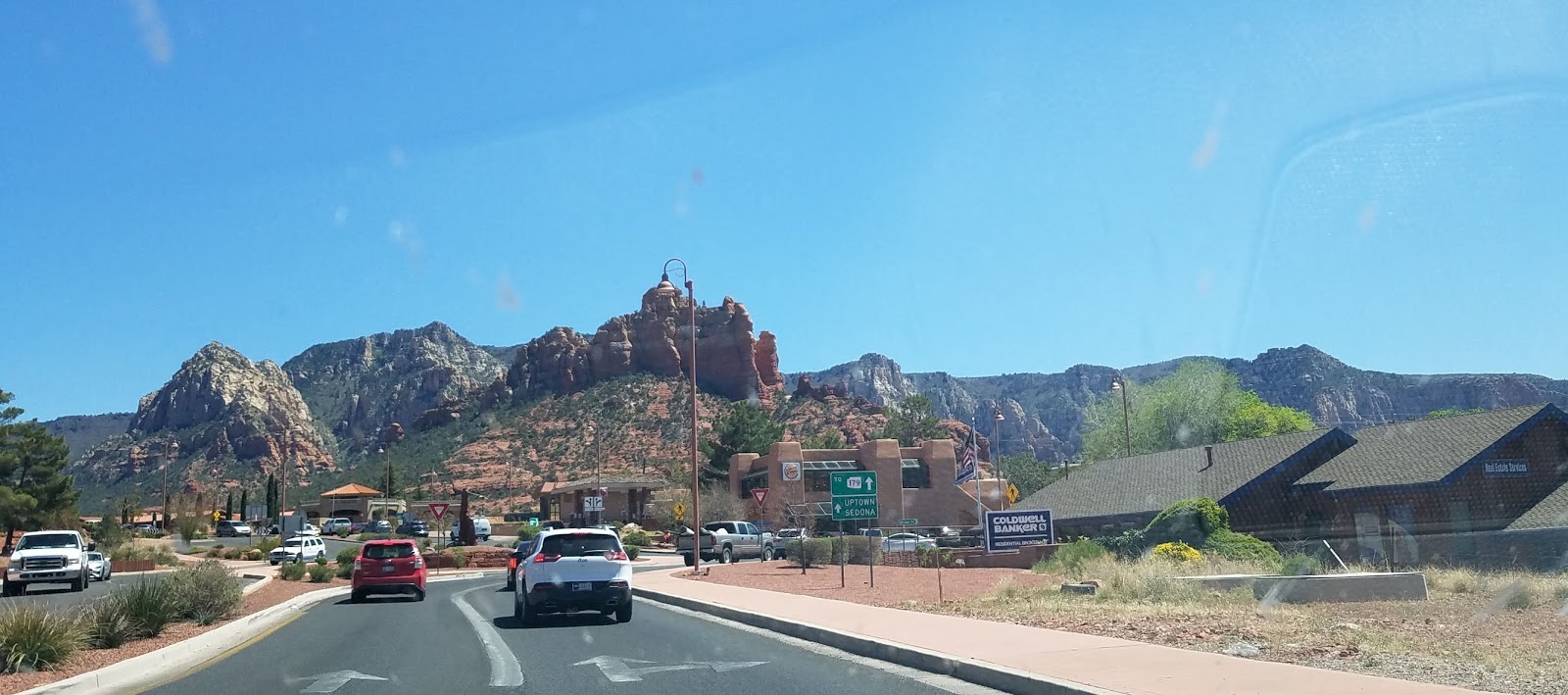
Driving back to Sedona
I actually took this shot because of the Burger King.  To its credit, Sedona must have some kind of building code that forces structures to fit a certain aesthetic. 
Sedona from the air again, this time flying back home
Now that I’ve finally posted my helicopter GC video, I can share some photos. Look for those a little later in the week, possibly tomorrow.

Posted in General | Tagged , | 6 Comments

Flying over the Grand Canyon

In April I visited Arizona for the sole purpose of seeing the Grand Canyon, and took a helicopter tour that left me as awe-struck and mesmerized as I have ever been. Tonight I put together a video of some of my footage taken during the flight.  I hope it conveys even a little of the experience.

Posted in General | Tagged , , | 8 Comments

From Russia with Love

From Russia with Love
© 1957 Ian Fleming
253 pages

I’ve tried three times to read any of Ian Fleming’s Bond novels, because he was an actual intelligence officer writing spy novels. Bond in the abstract is an interesting character, a posh international superspy with cool tech and a drinking habit. However, in practice I’ve fallen asleep during the one Bond movie I’ve watched (Skyfall, apologies) and don’t fare much better with the novels. This particular novel opens in Russia, however, with no Bond in sight, and the plot is introduced quickly. The Russians believe that killing Bond will gravely weaken British intelligence, and recruit a femme fatale to lure him into position so that 007 can be deep-sixed in a scandalous way. Said fatale’s cover story is that she’s a Russian intelligence officer who fell in love with Bond by looking at his photograph, and now she wants to defect so she can be with him in person.

I really should have stopped reading there, but I persisted. (Seriously, who disguises an intel officer by pretending she’s AN INTEL OFFICER?) I should note that I have an active dislike for novels with sex scenes in them — I’ll read science books about sexuality, no problems, but inflict fictional bedroom scenes on me and I’m sloooowly putting the book down — and so I probably shouldn’t have even TRIED a novel with this premise. There’s just endless description of people’s buttocks and breasts and yadayadayada. When Bond meets the fatale she’s literally naked in his bed, and it’s just….preposterous. I’d say “silly”, a la Monty Python, but silly can be charming, whereas this is more like the 2016 US election. This is a rare DNF for me, as I stopped 75% through. There is a train at the end, though, and it’s even the Orient Express

Anyway, I don’t think Fleming is for me. Fortunately there’s plenty of spy novels with more explosives and less anatomical exposition.

Posted in Reviews | Tagged , | 9 Comments

Anne of Avonlea

Anne of Avonlea
© 1909 Lucy Maud Montgomery
366 pages

I recently took my niece to see a production of “Annie” at the Alabama Shakespeare Festival, and it put me in a mood to revisit Anne of Green Gables, another red-headed heroine I’d first encountered at the theater.  When I read the actual novel a couple of years ago, I found Anne an utterly charming character,  a match for America’s Tom Sawyer.  That novel ended with a young orphan reaching the cusp of adulthood, finishing her education and preparing to take her place in the community.  Thus Anne of Green Gables (the verdant name of her home) becomes Anne of Avonlea, a woman of her town. Anne of Avonlea follows the course of Anne’s transition from teen to adult,  as she launches a teaching career and sees her theories put to the test against real live children  — and  invests herself more deeply in the village by creating a society for its improvement.  Anne’s increasing maturity also displays itself when she faces dilemmas square in the face, and refuses to quit believing that even schoolroom hellions and village cranks can be reached.  Anne’s sweet spirit and the air of possibility around her make her a popular figure in the village, which is good because she still tends to get into scrapes.  (Most memorably, she climbs on top of a neighbor’s roof to investigate dishes in their pantry for sale during their absence, and plunges midway through, getting thoroughly stuck.)   After two years, however, greater challenges — college and real adulthood — await.  That’s a story for Anne of the Island, however!

Related:

Posted in historical fiction, Reviews | Tagged , , , | 6 Comments

Resistance is Futile? State of the Kindle

(Image borrowed from here)

A few weeks ago I walked into my usual Chinese place for lunch and the proprietor immediately inquired: Where’s your book?  She’s seen me walk in every week for the last six years and get comfortable with a book while waiting on my order. I hadn’t brought one for the same reason that when I went on vacation, I decided to not carry any books as part of my pack-light-and-avoid-checking-bags policy.  I had my Kindle in my carry on bag, and as I stood in the Chinese restaurant, I carried a small library in my pocket — my phone, equipped with the Kindle app.

Seven years ago I did a worried  thinking-out-loud post called “Go Go Gadget Literature?” on e-books and e-readers, detailing my concerns about electronic readers. Five years later, I sheepishly revealed that I’d recently purchased a Kindle fire, mostly to use as a tablet, and had been dabbling with reading books online. I called that one “You Still Can’t Call Me Inspector Gadget“.  I’d become interested in a few titles which were online-only, partially because of NetGalley.  Things have changed, however. I just did a tally, and approximately 41 books from last year were read via my Kindle. That’s less than a third, but seven months into 2018, e-books account for nearly half of my reading. That’s quite a sea change, and one prompted by frequent sales of Kindle books, the relative paucity of nonfiction in my area (I have to drive an hour and a half to a library with enough nonfiction to keep me busy), and my growing ease with android and iphone systems. Seven years ago I had never touched a smartphone; now people hand their devices to me and ask for help  — which is how I learned to use them to begin with.

It’s not that I’ve stopped liking physical books, far from it: they fill my rooms and are scattered around my car. I’m still buying them,  cruising Amazon on a daily basis looking for interesting old or new titles  to be had for cheap . But my space is limited,  the Kindle offers me frequent  steals, and in the three years I’ve had it, I’ve yet to drop or damage my device, or suffer a book being deleted mysteriously by Amazon. I paid a $15 premium on mine at the time to avoid seeing any splash advertisements on the wake screen, so all of my  original objections have never applied.

Ironically, as my work has made me both comfortable and experienced with smartphones and related devices,  I’ve grown to appreciate my Kindle Fire less as a tablet (which is why I originally bought it!).  Kindles use a modified version of Android that is divorced from the Google play store, so a lot of Android-compatible content isn’t available.  My particular Kindle model also doesn’t have any way to expand its memory, so it may be good that its app library is limited.  Earlier in the year I purchased a 2016 flagship smartphone, principally as a camera but equipped with a 64 GB microSD card for photographs and such. Surprisingly, it’s taken over as my e-reader of choice, so that despite my considerable use of Kindle as a software platform, my Kindle device itself has been relegated to marginal use, not being touched for weeks at a time.

Has the use of a Kindle changed me as a reader? Am  I more distracted, less focused?  I honestly don’t think so.   I realize this is subjective, but I think I behave the same way while reading a book on my phone as I do reading a real one.  I don’t stop reading mid-page to check notifications,  both out of deliberate choice (I ignore the itch to check email) and because I’ve arranged things so I won’t be distracted. I turn do not disturb mode on, for instance, as I despise notifications and disable them at every opportunity, whether I’m using my phone or my computer.

It may be too early to speculate, but I think my e-reading activity has leveled off,  My phone has had a few months to do its magic, and while I definitely use it more than my old emergency-use  cellphone (which was usually lost, or dead, and only rarely on my person), I still haven’t become a tech-zombie, shuffling around in public and staring downwards. My phone stays in my pocket until I decide it’s time to read, or time to practice Spanish, or when I need to make a call. (This is rare, as I don’t like phone calls and keep my phone on mute)  I’ve ‘assimilated’ my phone without becoming a drone myself. So…resistance isn’t futile, so long as you’re a crank to begin with.

Posted in General | Tagged | 10 Comments

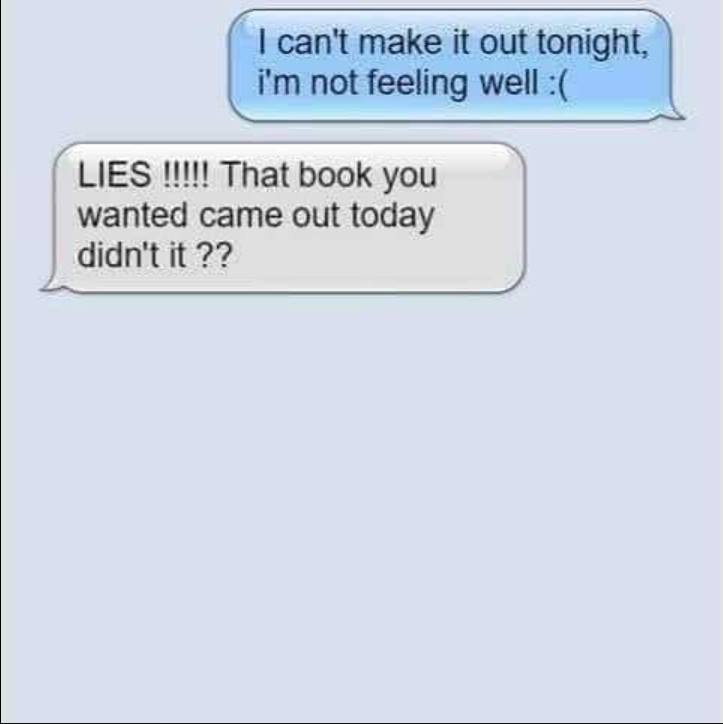
Just a coincidence!

“Whaat?  No, I’m totally sick. In bed. reading a new book. “
Cartoon was posted in “Into the Wardrobe”, a Lewisian/bookish facebook group.

Posted in General | 3 Comments

What I Read in 2007

Although these days I’m a fairly organized reader, with a Excel spreadsheet and everything,  when I first started yakking about books in 2007, I didn’t even list them. I just posted rambling towers of paragraphs on MySpace.  I’ve been wanting to have a better reference for what I read in the early years, and since it’s a quiet, rainy day, good for parsing paragraphs of superfluous commentary into  legible data…why not?

I should note that not everything I read in 2007 was on this list, because I didn’t start tracking my reading until late May, and from August onwards I was largely tied up with life and work at my new university.  Nothing for most of December ’07 or January ’08 was reported!   This was also a unique moment in my life, as the year before I’d summarily rejected everything in my past and was actively trying to develop my own, independent view of the world.  I’ve been building on that foundation ever since.   Note that science, not history,  is king of nonfiction!   That will change, however:  as I was finishing a degree in history, with a European emphasis,  I read a lot of German, English, and French history later in the year, and would open 2008 with the same.

May 21st, 2007 –  December 12th, 2007

  1. The Rapture, Jerry B Jenkins and Timothy LaHaye
  2. Kingdom Come, Jerry B Jenkins and Timothy LaHaye
  3. The Know-it-All, A.J. Jacobs
  4. The Everything Classical Mythology Book, Lesley Bolton
  5. The Osterman Weekend, Robert Ludlum
  6. Allegiance, Timothy Zahn
  7. Universe on a T-Shirt, Dan Falk
  8. An Intimate History of Humanity, Theodore Zeldin
  9. Before the Dawn, Nicholas Wade
  10. Six Impossible Things Before Breakfast: The Evolutionary Origins of Belief,  Lewis Wolpert
  11. Phantoms in the Brain,  V.S. Ramachandran
  12. The Whale: Mighty Monarch of the Sea, Jacques-Yves Cousteau
  13. Extraterrestrial Civilizations, Isaac Asimov
  14. Hitler’s Shadow War, Donald McCale
  15. Clan of the Cave Bear, Jean M Auel
  16. The Valley of Horses, Jean M Auel
  17. The Tribe of Tiger, Elizabeth Marshall Thomas
  18. Dolphin Days, Kenneth Norris
  19. Nightfall and Other Stories, Isaac Asimov
  20. The Plains of Passage, Jean M Auel
  21. The Stand, Setphen King
  22. The Associate, Philip Margolin
  23. The Mammoth Hunters, Jean M Auel 
  24. Theories for Everything;  John Langone, Bruze Stutz, and Andrea Gianopoulos
  25. The Middle Ages, Dorothy Mills
  26. The German Empire, Michael Stuermer
  27. Lies and the Lying Liars Who Tell Them, Al Franken
  28. A Man Without a Country, Kurt Vonnegut
  29. Rickles’ Book, Don Rickles
  30. Our Endangered Values, Jimmy Carter
  31. Harry Potter and the Sorceror’s Stone, J.K. Rowling
  32. The Complete Idiot’s Guides to Turtles and Tortoises, Liz Palika
  33. The Rising Tide, Jeff Shaara
  34. Slaughterhouse-5, Kurt Vonnegut
  35. Storms from the Sun, Michael Carlowicz and Ramon Lopez
  36. Harry Potter and the Chamber of Secrets, JK Rowling
  37. Harry Potter and the Prisoner of Azkaban, JK Rowling
  38. Harry Potter and the Goblet of Fire JK Rowling
  39. Harry Potter and the Order of the Phoenix, JK Rowling
  40. Harry Potter and the Half-Blood Prince, JK Rowling
  41. Harry Potter and the Deathy Hallows, JK Rowling
  42. Shelters of Stone, Jean M Auel
  43. Pale Blue Dot, Carl Sagan
  44. River Out of Eden, Richard Dawkins
  45. Only Yesterday: An Informal History of the 1920s, FL Allen
  46. Infidel, Ayaan Hiris Ali
  47. Broca’s Brain, Carl Sagan
  48. The Assault on Reason, Al Gore
  49. The End of Faith, Sam Harris
  50. The Darwin Awards, ed. Wendy Nortcutt
  51. Great Tales from English History 2, Robert Lacey
  52. Mephisto, Klauss Mann
  53. Between Dignity and Despair: Jewish Life in Nazi Germany, Marion kaplan
  54. The Hundred Years War, Desmond Sewawrd
  55. Great Tales from English History, Robert Lacey
  56. I Am America (And So Can You), Stephen Colbert
  57. The Luftwaffe: Creating the Operational Air War, James S Corum
  58. The Rise and Fall of the Luftwaffe, David Irving
  59. German into Nazis, Peter Fritzsche
  60. Meditations, Marcus Aurelius
  61. Montgomery: Biography of a City, Wayne Greenshaw
Posted in General | Tagged | 9 Comments