Very Good, Jeeves

Very Good, Jeeves
© 1930 P.G. Wodehouse
304 pages


This past Saturday I had a very happy surprise. Taking a break from a day of  sacking my closet, wardrobe, and bookcases to donate to charity and get me closer to my simple-living ideal,  I grabbed a tale of Wodehouse stories to re-read during lunch. Imagine my delight to realize…this was a collection I’d purchased to read one April, then forgotten that I hadn’t already read it.  (I have quite a bit of Wodehouse, and they all blur together in the imagination.)

Now, I’ve reviewed other Wodehouse story collection before, and he like Bernard Cornwell is so consistent that my comments, both descriptive and appraising, would only copy past reviews.   With a few adjustments, I could literally paste-in my review for Right Ho Jeeves, as the difference lies in one being a novel and the other (this) a collection of stories.   In short, Wodehouse has a brilliant way with the English language, which is never funnier than in his hands,  and he tells amusing stories about a society wastrel and his Machiavellian butler, who works endlessly to keep his young master out of trouble,  i.e. marriage and useful employment. Jeeves’ solutions also have a way of destroying tacky articles of clothing and art that Bertie insists on dragging home. In a full-length novel there are multiple schemes from different people afoot, sometimes conflicting with one another and sometimes complementing one another.    What one values most (language aside) from a Wodehouse novel is how innocent they are, providing  mirth and drama without a hint of malice.  (A few months ago, an article called “P.G. Wodehouse: Balm for the Modern Soul”  made me especially appreciative of this.)

There’s a full run-down of the stories on Wikipedia if you’re curious. 

Posted in Reviews | Tagged , , | 2 Comments

The Shining

The Shining
© 1977 Stephen King
447 pages

A recovering alcoholic and recently fired schoolteacher has taken a short-term gig as the winter caretaker of a luxury hotel nestled in the Colorado mountains.  The hotel is forced to close for the season every fall because of unpassable roads and frequent blizzards, but someone is needed to ensure that the howling winds don’t compromised the building and expose it to the elements. But the real danger of the Overlook Hotel isn’t outside…it’s inside.   It is a building with a dark past, with a history of murders and suicides — and even from outside it strikes its three new residents as ominous.  Jack, the caretaker, his wife Wendy, and their son Danny are in for a long, harrowing winter. Whatever lurks in the hotel is awakened and strengthed by the presence of the family, and especially by the son Danny who has some ability to read thoughts and receive impressions about the future.

Imagine a haunted house that can’t be escaped from, a house where the haunts are not transparent figures rattling dishes and moaning,  but rather persistent voices in your head driving you to madness, and frightening images invading your mind —  images of the past, howling laughter and screams,  blood and bodies from long-disappeared crime scenes suddenly seeming as if they’ve just happened.  When the story begins,  Jack and Wendy are optimistic: this will be a way to get back on their feet financially, an easy source of income, and a quiet space for Jack to finish working on his play and continuing his recovery from alcoholism. They can mend the fences in their relationship, and give their troubled boy the attention he needs.   But as the winter progresses,  both Jack and his son come under increasing mental and emotional stress,  one of them losing his mind completely.  The long descent into madness ends in horror, bloodshed, and desperate flights from mortal threats both physical and fantastic.

The Shining is an excellent story of creeping terror,   allowing readers to experience the unraveling of  sanity from multiple perspectives,  at least until one character is completely possessed by the hotel and becomes another malignant force.  What makes this effective is that the horror is not overt  — no ghosts, no wailing. It’s a smothering feeling, a corner turned to see something that shouldn’t be there — like fresh blood from an  decades-old crime scene, the shadow of a body in a tub that should not be there. As unsettling things accumulate, the characters are still going through mundane activities — exploring the past of the hotel,  working on  a play, putting up shingles — until there’s an over-the-edge point and it descends into a more outright thriller.

Posted in Reviews | Tagged , | 6 Comments

The Wisdom of Whimsy

Just spotted a podcast about the importance reading whimsy in the modern age — definitely giving that a listen tonight!

Source: “The Wisdom of Whimsy

“The world can feel awfully grim these days. My news app makes me nervous. But here’s the thing: Binge-watching the world burn will not make us able to save it. First, we must learn to love all the ordinary goodness of life, fill our souls with friendship, beauty, virtue. Before we can fight darkness we must be acquainted with the light.
This is why I think whimsical art is so important. 
Some people say lighthearted art isn’t worth our time. That the world is too dark and difficult to focus on lighthearted things. However, we have to love what is good before we’re brave enough fight for it. Whimsical art teaches us to love goodness, to celebrate innocence and kindness and loveliness. And that love of goodness energizes us to do defend it.”

Posted in Reviews | 7 Comments

An Iron Wind

An Iron Wind: Europe Under Hitler
©  2016 Peter Fritzsche
376 pages

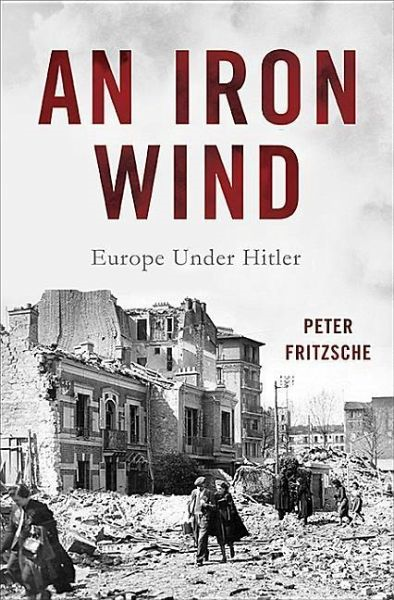
That crowds that cheered Neville Chamberlain’s return to England with a promise of peace in his hand are easy to condemn in hindsight. But no one in the 21st century experienced the Great War that loomed in that crowd’s mind — the war that emptied villages, destroyed families, and snuffed out millions of young lives before their time.   Modern technology promised to complete what the Great War had started: military strategies, aviation experts, and the common chatter of civilians were uniform in their belief that mass bombings would obliterate the continent.  Those fears were both new and rational: World War 2 was the first time the general populace looked at the prospects for war and realized that THEY would be the target, not just the men at the front lines.  But while civilians would be the greatest casualties in the war to come,  the conflict would be much different than expected,  nothing like a twenty-year-old re-run.   What Hitler sought was less a return of the German Empire, and more of the imposition of a new world order.  In An Iron Wind, Peter Fritzsche  uses the letter and literature written during the war to experience the first attempts to create this malicious order.  

An Iron Wind is definitely not a conventional history of World War 2, and not only because it focuses on society rather than politics and military movement.  The book often seems like a gathering of esoterica, at least until the Holocaust-heavy second half, because Fritsche  covers sundry topics like the imposition of German time zones in France,  patterns of graffiti throughout the war, and the spike in popularity of Tolstoy’s War and Peace  which followed Hitler’s invasion of Soviet Russia.  Fritzsche often emphasizes, however, Hitler’s break with the past and his desire to create a new vision of the state.  Hitler mocked Switzerland as a museum antique, a fragile artifact of Victorian democracy that needed to accept the new way or prepare to be crushed by it.  Fritzsche offers a view of the Holocaust that its atrocities were a deliberate baptism in blood for the new way Hitler wanted to create; to  kill millions by cold, efficient bureaucracy —  with deliberation and a vast array to dedicated infrastructure – was to forcefully reject all the mores of the past, and particular ideals like universal brotherhood. While fascism in Italy and Spain could coexist with the church, linked by common enemies like communism,  Nazism regarded Christianity as enfeebling.   Hitler and like-minded ideologues promoted a view of Germany as being encircled by enemies and riddled from within by others;  his mission was to awaken and mobilize German to the threat, marshalling them for combat, with victory at any cost.  Fritzsche  also suggests that when Hitler launched his invasion of Poland,  it was for him less a battle between states than a fight between tribes, as the conflict allowed him to target not just the Polish state (which he methodically disassembled), but diverse groups like the Romani (“gypsies”)  which he held in contempt. 

Although this is by no means essential reading for World War 2,  it does explore topics that are obscure enough to have not been mentioned much elsewhere, but still have relevance for understanding the plight of people who were trying to make sense of what was happening both at home and across the continent. 

Posted in history, Reviews | Tagged , , | 7 Comments

Frankenstein

Frankenstein: The Modern Prometheus
© 1818 Mary Shelley
288 pages


“Shall I respect man when he contemns me? Let him live with me in the interchange of kindness; and, instead of injury, I would bestow every benefit upon him with tears of gratitude at his acceptance. But that cannot be; the human senses are insurmountable barriers to our union. Yet mine shall not be the submission of abject slavery. I will revenge my injuries: if I cannot inspire love, I will cause fear; and chiefly towards you my arch-enemy, because my creator, do I swear inextinguishable hatred. Have a care: I will work at your destruction, nor finish until I desolate your heart, so that you shall curse the hour of your birth.”
An attempt to reach the North Pole is interrupted by the sight of eerie figures chasing one another upon the ice, and they have a tale of misery to recount.  The man rescued by the ship, Victor Frankenstein,  was an enthusiast of natural philosophy, and specifically the the power to create life.    Captain Walton of the polar exploration vessel had been yearning for the friendship of someone who wanted to probe nature’s darkest mysteries, but Frankenstein’s story proved to be one of warning rather than encouragement.  After relating his early fascination with occult figures and scientists alike, Frankenstein describes the horror he experienced when he succeeded in actually bringing a cobbled-together man to life, and how it pursued him across Europe, driven by despair and wrath at having been created.  The monster himself also appears in the story, both through Frankenstein’s recollection — the two have a confrontation in which the monster recounts his pitiful life thus far and charges Frankenstein with giving him a companion that he can flee into exile with — and aboard the ship as the last, before he disappears in a wintry haze. 
I read Frankenstein in one sitting, which I hadn’t expected to do.  The monsters of Halloween have never had a great appeal for me, so most of this — besides the scientist making a man —  was completely new.  This Norton critical edition proved highly readable,  supported with annotations to explain period-specific references or vocabulary which now borders on archaic. There’s no getting around this book being a warning about the reckless pursuit of knowledge at any cost;  beyond Frankenstein’s attempt at creating life, which only resulted in a string of bloody murders and the destruction of both creature and creation,   there’s also the frequently-mentioned destruction of native American societies, specifically Mexico and Peru, as a result of enthusiastic exploration.  Captain Walton himself proves to be someone who can learn from other’s mistakes, as — faced with hostile polar conditions that threaten his ship and crew — he retreats to England.  There were certainly surprises here, like the description of the creature as “beautiful” — save for his eyes. (I wonder if, given that eyes were regarded as windows to the soul, if repulsive eyes hinted at the beast’s depravity or brutishness.)    
This Norton critical edition is particularly helpful in understanding the book. While I only read the story proper,  it also contains a short essay on different versions of the story — one edit implies the monster dies, another leaves his future shrouded in a storm — as well as period responses and related poetry. 

Posted in Reviews, science fiction | Tagged , , , , | 8 Comments

Church of Spies

Church of Spies: The Vatican’s Secret War Against Hitler
© 2015 Mark Riebling
384 pages

The Catholic Church was one of Hitler’s earliest enemies, barring its members from participating in the Nazi party and publicly condemning Hitler’s early actions once he had been appointed — not elected — to  power.  But then, as the war between Hitler and the west began in earnest, the Church fell silent.   This silence was not cowardice, Mark Riebling argues here, but strategy.   With its people and churches already under attack by the Nazi government,  the pope elected during the early days of crisis (March 1939)  chose work more in silence, attempting to connect the German resistance to western governments, and aid them  with intelligence and shelter. A goal ever in mind was the overthrow of Hitler — by assassination if necessary, as Catholic doctrine sanctioned the death of oppressive dictators provided plans were in place to  preserve order. 

Having previously learned about the role of the Catholic church in the German resistance, I wanted to read a more detailed history of it.  The book was certainly eye-opening in chronicling how early Pius XII wanted to move against Hitler,  working with members of the German army to attempt an early assassination.  The military contacts’ interest never quickened into action, however, and after the war actually began, it was far harder both to find German officers willing to plunge their nation into a leadership crisis in wartime, and to find western audiences. After the fall of France and the beginning of the submarine and bombing siege of Britain, Churchill was especially cold toward representatives of a “decent Germany”.

After this promising start the book quickly lost steam for me,  recounting various resistance groups ties to the church; we learn that the White Rose movement began by distributing Catholic sermons decrying Hitler, and that the people involved in the Heydrich assassination were given refuge in a church, hidden in the tombs by priests.  The mention of any Jews given shelter by the Church is barely mentioned here, but presumably is covered better by The Pope’s Jews.  Of perhaps more interest is the  ideas Vatican authorities supported for a postwar Europe, one which would stymie destructive internal conflicts via a shared economic community, and politics based on subsidiarity, a key piece of the Catholic social doctrine.  Subsidiarity is still endorsed by the European Union in theory, but how well it is practiced is arguable.

Church of Spies is intriguing, but disappointing.

Related:
German Resistance to Hitler, Peter Hoffman
An Honourable Defeat: A History of German Resistance to Hitler, Anton Gill
The Scarlet and the Black, a film in which Gregory Peck portrays the true story of a priest in Rome who  hid thousands of Jews and sheltered Allied prisoners.

Posted in Reviews | Tagged , , | 5 Comments

The Iran Wars

The Iran Wars: Spy Games, Bank Battles, and the Secret Deals that Reshaped the Middle East
© 2016 Jay Solomon
352 pages
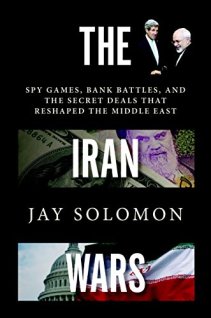
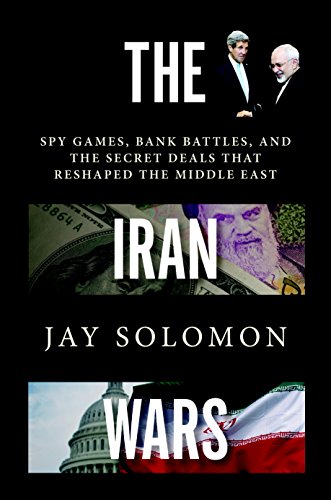
When the young people of Iran hit the streets in protest about suspicious election returns in 2009, the United States was unexpectedly quiet. For years DC’s establishment had voiced ominous desires to effect regime change in Iran, and now an opportunity had presented itself.  All that was needed was a little stoking of the fires, passing of intelligence and funds to the right people. And yet..nothing happened, and soon the leaders of the “Green Movement” were in jail.  What no one realized then was that the Obama administration had already begun its efforts to move toward some kind of concordance with Iran, and that this silence was a show of  good faith, an indication that the administration was serious about its efforts to establish a working relationship with the Islamic Republic. Much of DC’s foreign policy in the middle east from 2001 to 2016 was conducted with an eye towards Iran,  including the American response to Syria, and The Iran Wars follows two presidents’ attempts to find a solution to the Iranian problem, through war,  finance, and diplomacy.

The middle east is a complicated place, to say the least,  with active ethnic, religious, and political conflicts. Iran’s role in all this is poorly understood by many Americans;  in addition to Persians and Arabs being two  separate  ethnic groups with a competitive history, the version of Islam which is the state religion in Iran is a minority everywhere else, and viewed with contempt by Saudi-held Arabia, al-Queda and its would-be successor, ISIS.  Iran’s sole ally in the Arab world, Syria,  is an important support for it, and a  source of continuing conflict between Iran and the west.

The events of September 11, 2001, as tragic as they were, presented an opportunity for American-Iranian relations to begin anew, with a common enemy in al-Queda and its drug trade. What opportunity there may have been, never developed by skeptical aides,  was dead by the time DC chose to invade Iraq,  with the intent of weakening Iran’s influence in the region by freeing its Shiite majority from Saddam’s rule and giving them the opportunity to protest against the ayatollahs. Instead, that Shiite majority aligned with Iran more closely as sectarian war erupted in the region, That  conflict was promoted by both Syria and Iran to prevent American power from growing in Iraq, as Assad promoted Sunni militias in the north and Iran promoted Shiia power in the south. Their role in promoting Iraqi instability made both enemies in DC and abroad.  Still worse,  Iran counted itself the implacable foe of Israel and pursued nuclear capabilities, with the possibility of militarization.

Although some in DC ominously hinted that military options were fully on the table for addressing Iran,  with so many resources mired in two civil wars, few actually proposed it.  Bush chose instead to develop a third option: disrupting Iran’s nuclear program through cyber warfare. (See Countdown to Zero Day for a comprehensive history of that.) Solomon only barely mentions this, but moves quickly on to Obama’s two-track attempt to reach some kind of concordance with Iran.  Obama moved to isolate Iran financially by working with China and the powers of Europe to effect heavy sanctions and remove Iran from the global economy, while at the same time reaching out to the Iranian people through public speeches, and Iranian leadership through an Omani intermediary who saw his vocation as being a broker of peace between DC and Iran.

Both tracks meant compromise, as DC had to give more than it would like to prove to both its international partners and Iran that it was serious about effecting a deal. It also meant  that Obama felt compelled to intervene in Libya to indicate to Iran that he was serious about enforcing red lines, but had to walk back his threats against Assad so as not to drive the Syrian ruler’s allies from the negotiating table. Although the deal itself was hailed as a triumph, with one historian optimistically chronicling it in a volume called Losing an Enemy,  Jay Solomon concludes this history with a warning.  If DC and Iran do truly establish a lasting peace, there will be disruption to contend with. The Saudi family in particular  may aggressively court other alliances, and whatever influence DC has over its codependent partner will lessen. The Iran wars are not over, writes Solomon; this deal, as promising as it sounds, is only the start of a new chapter.

Solomon was quickly proven correct, and in 2018  it is sad to read about the years of dogged labor Kerry, Obama, Mohammad Zarif, and Sultan Qaboos  poured into making the deal, including the long labors with Europe and China, now squandered, and US diplomatic credibility seriously reduced.  For me, this was a valuable book to read,  illustrating why Obama reacted toward Syria as he did, and why Syria is such an obsessive target for the west in the first place.

Related:

Posted in history, Reviews, World Affairs | Tagged , , , , , , , | 8 Comments

Oktoberfest and Octoberfright

Well, dear readers, it’s October again.  I’ll be opening with a nod to German history, this time with a WW2 emphasis as I’m trying to address my TBR pile of doom.  I’m sure it will go down smoothly  with a Bavarian beverage or two. Then I’ll be shifting into mystery and horror as we approach Halloween, with the hope — fingers crossed — of finishing Frankenstein.  

Previous “Octoberfest” reads:
A Mighty Fortress: A New History of the German People,  Steven Ozment
German Resistance to Hitler, Peter Hoffman
The Lady from Zagreb, Philip Kerr (Fiction)
They Thought They Were Free: The Germans, 1933 – 1945, Milton Mayer
If the Dead Rise Not Philip Kerr (Fiction)
Germany: Unraveling an Enigma, Paul Nees

Previous “Octoberfright” reads, all fiction:
Dracula, Bram Stoker
World War Z: An Oral History of the Zombie War, Max Brooks
Night of the Living Trekkies,  Kevin David Anderson
Carrie, Stephen King
Christine, Stephen King

Posted in Reviews | 6 Comments

Within Arm’s Reach

Within Arm’s Length: The Extraordinary Life and Career of a Special Agent in the United States Secret Service
© 2014, 2018 Dan Emmett
320 pages

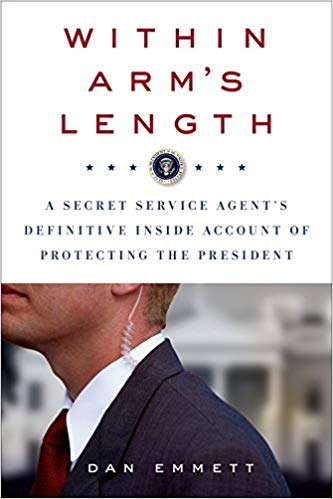
Dan Emmett was a kid when he witnessed President Kennedy’s assassination on television, but instead of being shaken by the abrupt loss, he was intrigued by another person shown on the tape – -a man who, as the shots hit Kennedy, was climbing over the seats in an effort to shield the president with his own body.  After a tour of duty with the Marines, Emmett applied to join the service that he thought so admirable as a child, and served in it for over ten years, protecting three presidents as well as numerous other..  Although not all agents protect the president, he was one of those who did, and in this memoir he tells a little bit about the training and the job.  Readers interested in learning more about the men under protection should not expect to find much of interest here; Emmett considers tell-alls not only unprofessional, but vulgar.  Instead, he writes about the training and some of the practices of the secret service, like having a tail car with a camera for the express purpose of capturing a president’s death on camera if it does happen. Secret service agents are expected to be extraordinarily competent, proficient in both combat and triage, and those who work with the presidential detail also have to be diplomats, especially if they’re charged with the initial site inspection and preparation for a presidential visits and have to convince local officials to make adjustments in their practices.  Although service agents are regarded as brave, Emmett writes that the intensive training makes responses like jumping in front of the president reflexive. Even so, their choice of occupation is courageous. The presidential detail itself is physically brutal, as agents sometimes forgo meals and sleep in an effort to keep up with a traveling president’s schedule. Most burn out within five years, and — like Emmett — retire to join another government service.  In Emmett’s case, that was the CIA, but of course he says even less about it.

Posted in Politics and Civic Interest, Reviews | Tagged , , , | 5 Comments

Build Your Own PC for Dummies

Build Your Pwn PC For Dummies
© 2009 Mark Chambers
336 pages

Both my increasing interest in learning how to work with computer hardware, and my nephew’s desire to build a gaming computer,  have led to me watching hours of build videos on YouTube, and scrounging around the internet for helpful resources. Although this book was published in 2009, it has a long history of solid reviews, and I was able to find a used copy which included a working DVD.     This beginner’s guide to building a PC first assures reader that it’s not nearly as difficult process as they imagine, and requires minimal tools — usually, just a Phillips-head screwdriver.   Because building a PC is an inherently sequential process —  beginning with the case and motherboard, and building from there —  the book’s organization follows that process.  The initial chapters cover the first steps:   deciding on what kind of machine to build,  finding a case and motherboard that will meet the need, and installing essentials like the power supply,  processor, and RAM.  Once the hard drive is installed, the author shifts to optional-but-likely add-ins like DVD drives, graphics and sounds cards, and other accessories.  The video is divided into similar stages.

Obviously, a book on computer hardware from 2009 is going to be dated at this point, and arguably it was dated upon release given that it includes a chapter on floppy disks, when retail PC builds had stopped carrying  units with floppy disk drives at least three years before. (My family purchased a PC in 2004/2005 that had no floppy disk reader, just USB ports and a never-used reader for zip cards. ) Still,  storage and data transfer (SATA cables were still nosing into the market here)  are the only real age-related weaknesses. The book is designed to be read independent of any other sections, so each starts with the same advice about grounding yourself to prevent any static electricity discharges. The author always uses a joke to introduces these, which gets old quickly if you’re reading it through.  The jokes are not as pervasive on the video, but they’re there. 

Although certain elements of this are badly dated, the basic process remains current, and I think it would be helpful to someone introducing themselves to the idea of building a PC.  Fixing Your Computer: Absolute Beginner’s Guide has more more information on the actual components and what their advertised specs mean, though. 

Posted in Reviews | Tagged , , | 6 Comments