The Little Way of Ruthie Leming

The Little Way of Ruthie Leming: A Southern Girl, A Small Town, and the Secret of a Good Life
© 2013 Rod Dreher
292 pages
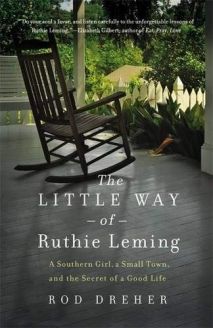
ruthie

What is a meaningful life, but one lived in close connection with others?     Journalist Rod Dreher was forced to consider this when he endured a family tragedy: his little sister Ruthie at age 40, was diagnosed with lung cancer despite having never smoked.  Compared to him, she was the perfect child:   she fit into her family and her community like a hand in a glove, and her life was the very image of wholesome: married to her high school sweetheart (a fireman) , mom of three bright, happy, girls, and beloved of her students.    Dreher, meanwhile, was the black sheep of the family —  always yearning for more, and anxious to leave the family place behind. And yet when he returned home to be with Ruthie,  he witnessed the love that she had invested in people over the years bear fruit, the community rallying around her, supporting her family in its darkest hour.   This story of an ordinary woman with an extraordinary impact on those around her thus becomes an argument for people devoting themselves to what matters: the people around them, not abstractions.

The Little Way is a heartbreaking and beautiful story, but it’s harder for me to review it because I know now that it’s only part the story: I know that it continued in How Dante Can Save Your Life, because Dreher was not able to recapture the life his sister had led when he moved back home to reintegrate himself into the family & local community. Interestingly, though, Little Way  offers a forewarning — to Rod himself, though perhaps he didn’t grasp it at the time. When having a heart-to-heart with his father, Rod learned that the old man —  whose commitment to the family place, the local community, and the family itself was total and absolute — regretted  having not pushed the boundaries in his own youth,    regretted letting himself be pushed onto one track when his talents beckoned him down another.   Dreher here realizes his father had made an idol of family — but this is exactly what Dreher struggles with later,  what Dante helps him realize.    However important that lesson, it’s this middle of the story that still speaks to many.   We are a nation of increasingly lonely, depressed, and anxious people — and this is no accident, because year by year we become ever-more absorbed into ourselves….or into the the role we think we play in some abstract political drama, nevermind the lack of any real work we put into our local places.  Health is membership; belonging.

Although I’m sure this was a difficult story for Dreher to tell, I’m grateful that he did: his sister is a powerful witness for the virtues of a simple, ordinary life, lived in love.

 

Posted in Reviews | Tagged , , , | 2 Comments

Wisdom Wednesday: The Little Way

Inspired by recently reading The Little Way of Ruthie Leming, I’m sharing some related excerpts from one of my favorites, Bill Kauffman.

” [Walt Whitman] understood that any healthy political or social movement has to begin, has to have its heart and soul, at the grass roots. In Kansas, not on K Street.

“And it has to be based in love. Love not of some remote abstraction, some phantasm that exists only on the television screen—Ford Truck commercials and Lee Greenwood songs—but love of near things, things you can really know and experience. The love of a place and its people: their food, their games, their literature, their music, their smiles.

“I am a localist, a regionalist. To me, the glory of America comes not from its weaponry or wars or a mass culture that is equal parts stupidity, vulgarity, and cynical cupidity—one part ‘The View,’ one part Miley Cyrus, and a dollop of Rush Limbaugh—rather, it is in the flowering of our regions, our local cultures. Our vitality is in the little places—city neighborhoods, town squares—the places that mean nothing to those who run this country but that give us our pith, our meaning.”  – Bill Kauffman, “Love is the Answer to Empire

““The Little Way. That is what we seek. That — contrary to the ethic of personal parking spaces, of the dollar-sign god — is the American way. Dorothy Day kept to that little way, and that is why we honor her. She understood that if small is not beautiful, at least it is always human.”  – Bill Kauffman, Look Homeward, America!

Posted in quotations | Tagged , | Leave a comment

An Antidote to Chaos

12 Rules for Life: An Antidote to Chaos
© 2018 Jordan Peterson
402 pages

12rules

Life is pain. We can surrender to it — or we can make it meaningful. Clinical psychologist Jordan Peterson here offers a prescription to those facing the abyss, or even sinking into it, with twelve rules whose simple expression belies their more complex meanings.  Peterson’s philosophy draws from human tradition and the natural world alike,  and as expressed here it seeks to help readers understand the  ongoing drama between order and chaos in society and our souls, and to find a way of coping meaningfully.

On their face, the rules seem simple enough ordinances: “Stand up straight”, “Speak the truth — or at least, don’t lie”.  But there are those that, on the surface, seem odd to include: “Don’t disturb children who are skateboarding”.     Why is that a priority?  As it happens, however, each rule is just the sunlight flashing off an iceberg; it gets your attention and makes the underlying thoughts memorable, for under each rule is an essay on some aspect of the human condition. These essays provide considerable school for thought, and draw on human literature (especially Russian classics and the Bible), philosophy, and evolutionary history. The first rule, for instance, telling readers to “stand up straight”, is an introduction to Peterson’s thinking and urging readers to take responsibility for their lives — to take themselves seriously, to view the human struggle as a battle they are engaged in, as a battle they have a part in.  His explication of this involves a digression on the social dynamics of lobsters, and relating psychology which has a helpful side lesson: those who act defeated perpetuate their own misery and isolation.   The rule about not disturbing skateboarding children addresses more social concerns,  of our steadily creating childish creatures who are adult only in age;   constantly robbed of danger, challenge, or trouble, and so denied any opportunity to grow as persons.

I’ve found Peterson personally fascinating in the years since I’ve known his name and been familiarizing myself with his work, in part because his philosophy defies easy categorization. Take religion, for instance:  Peterson’s often uses Biblical stories in his themes, as he considers our self-hatred via the downfall of Cain, who killed his brother Abel.  Although Peterson unquestionably takes the meaning of religious stories seriously,   especially that of the Crucifixion — Peterson’s advocacy of responsibility sees Jesus’ death as the pinnacle of responsibility, of someone meeting not only his suffering head on, but those of the world’s —  this isn’t a book of Christian apologetics, and in interviews Peterson states that his own coming-to-terms with Christianity and God is less about fact-claims and more about what it means to live as if God exists.  He chooses to, in part because we must be oriented toward something if we are not drift aimlessly.

I found 12 Rules for Life  absolutely invigorating, with much to appreciate —   from his call for personal integrity to the the approach of living in triage. None of us are in ideal situations;  even those born into wealth, good looks, and optimal health will face their dragons.  I think Peterson has especially salient appeal to those who read him while enduring long nights of the soul, who are struggling with depression and nihilism and need something — a handhold in the dark, a glimpse of light — to  base their efforts to escape it on.   I believe it was Bacon who remarked that some books are to be tasted, some to be swallowed, and others to be chewed and digested.  12 Rules for Life is definitely the latter for me.

Related:
Marian’s three-part review and followup

Posted in Reviews | Tagged , , | 7 Comments

Of stars and saints (again)

(“Again” because last year I had a similar post called ‘Of stars and saints‘.)

Recently I’ve finished two books which were aimed at more youthful audiences (middle/high school, not sure), so I’m presenting them together.

notagoodcover

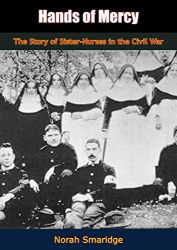
The first is Hands of Mercy: The Story of Sister-Nurses in the Civil War, which covers the service of various orders of nuns throughout the war, as they  ministered to the dying, the dead, and those innocents caught in the crossfire.  One of my earlier ACW books aroused my interest in the role that nuns played on the battlefield; I was especially struck by how they served both sides faithfully, and were greatly admired by the mostly-Protestant armies for their commitment to aide despite the fact that they were often in real danger — and sometimes perished.  Hands of Mercy proved an enjoyable introduction to their story, though it has no  references and is of very limited use to the adult reader.


universeAsimov’s To the Ends of the Universe simply takes on astronomy and cosmology, and I read this to complete my science survey for 2020: I’ve been missing cosmology since June, and this is…close enough.  First published in 1967, it’s an overview how humanity’s appreciation of the Cosmos has continued to grow — both our understanding of the outside universe, as we slowly realized  our planet is one in a multitude within a galaxy, which itself is only one of a multitude of galaxies —  and of the forces that shape the world around us.    I imagine it’s badly dated in a lot of the particulars, considering how much of physics has changed in the 20th century. One interesting quirk of the book is Asimov’s usage of ‘eon’  to mean ‘billion’; I’ve never seen that before!
Posted in Reviews, science | Tagged , , , , | 2 Comments

This Republic of Suffering

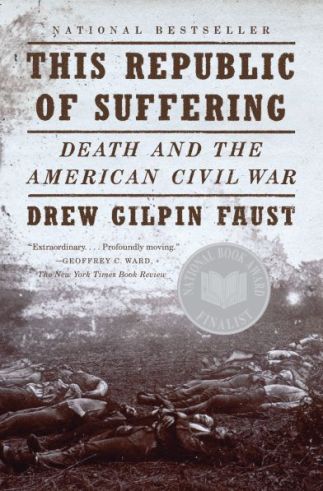
This Republic of Suffering:  Death and the American Civil War
© 2008 Drew Gilpin Faust
401 pages


death


Oft in dreams I see thee lying
On some battle-plain
Lonely, wounded, even dying —
Calling, but in vain

Weeping sad and lonely
Hopes and fears, how vain
When this cruel war is over —
Hoping that we’ll meet again.


(“Weeping Sad and Lonely“, a song sung across the lines with such fervor that some camp commanders banned it.)

No other war has had the outsized role on American history as the ‘war for the union’, as it was called at the time.  Hundreds of thousands died, still more were wounded, and not a house was without its mourners — especially in the South, where as many as 3/4ths of the men might be off,  the yeomen reaping the bloody whirlwind that the planters had sown.   This Republic of Suffering surveys how the enormous death rates in the war were handled — emotionally, logistically, etc —  across the continent.  It’s dark reading, to be sure, but draws from so much of Civil War societies that I think it an essential part of anyone’s efforts to understand the war and its role.

Gilpin begins with the act of dying itself;  Victorian Americans were far more intimate with dying than we are today; not only was disease a more pervasive threat, but people generally died at home, in the presence of loved ones, and their expiration was fraught with theological meaning.  All wanted to die a ‘good death’, to surrender peacefully to their Maker and not go out fighting and resisting the judgment of eternity.   Death was often sudden and inexplicable in the war;  a sudden ambush, a stray artillery shell, might sweep from the Earth young soldiers who thought themselves removed from danger.  To die without having made one’s peace was a fearsome thing, and letters written home — either from the dying soldiers, or from their comrades in arms who took the sad duty of informing survivors of their boy’s demise —  sought to assure those reading that the victim had accepted Death gracefully — and gone to a better place.

More disturbing than the thought of dying without preparing for the same was the act of killing — for most soldiers were taught that to kill was a mortal sin,  and many struggled to take life–  especially given that distances were often close enough that soldiers could directly link their firing a musket with another man’s death. Once the killing started, however, for many it became a routine, or even pleasurable. Some shrunk from violence, some embraced it, and bloodlust was far more likely to erupt when warring soldiers were of different ethnicity:  southern soldiers and freedmen-in-arms were especially savage toward one another.  The war unleashed a lot of casual violence;  Sherman’s army is depicted here as shooting an old man on a mule who wouldn’t move off the road, and we learn of ‘contraband camps’ where escaping slaves were  penned in by the Union army, sometimes to die of exposure and neglect. I’d never heard of these before reading Reluctant Witnesses earlier in the week, though some  camps seem to have been better than others.   Although ministers earnestly tried to help bereaving communities find meaning in their losses, those who worked directly with the dead — soldiers, gravediggers, grave registration units, doctors, etc–  were subjected to so much of it that they had to become dead and unmoved by the losses they were witness to.

There’s no shortage of interest in this book for someone who wishes to understand the Civil War experience, but especially intriuging for literary types is the content on Walt Whitman and Ambrose Bierce. I’ve not encountered much of Whitman’s poetry, but I left this incredibly impressed by Whitman as a man; he regularly visited wounded soldiers to offer them gifts and comfort, and volunteered in hospitals as an assistant.   Bierce’s inability to escape the memories of the dead and dying influenced his writing — though we are told, by soldiers and nurses alike, that  the horror of a battlefield is beyond words, defying the richness of human vocabulary. It cannot be captured, nor can it be forgotten.  There are also chapters of more mundane interest, like the growth of the government as it had to respond to new challenges – creating an organized approach to assaying and burying the dead, as well as paying pensions to the survivors of the slaughtered.

This Republic of Suffering is sad, but essential, reading.


Posted in history, Reviews | Tagged , , | 3 Comments

The Great Ron Paul

The Great Ron Paul: The Scott Horton Interviews, 2004-2019
© 2019 ed. Scott Horton
315 pages

opal
Selected quotes

Who is Ron Paul?    That question was on posters across my university campus in 2008, and I couldn’t help but be curious.   A social democrat at the time, I appreciated his foreign policy and unequivocal stand on civil liberties, but was otherwise disinterested.   I’ve grown to appreciate him considerably more over the years, but I bought this particular collection because my robust appreciation for Scott Horton, the voice in the wilderness.

A few years back I heard an interview with Horton on American foreign policy, and I’ve followed his work avidly ever since.  Scott has been doggedly reporting on foreign policy misadventures since 2003,  with thousands of recorded interviews at his website.  One of the few politicians Scott admires is Ron Paul,  who for years was a lone beacon of resistance in DC, continually trying  call attention to DC’s destructive and wasteful foreign policy, as well as its destructive and wasteful policies at home.  Although he’s since retired from politics,  Paul remains an important figure in the libertarian movement, having inspired many young people, and he continues to comment on the news via his daily Liberty Report.   The Great Ron Paul collects his interviews with Scott Horton from the onset of the Iraq invasion through to the present year. In this collection, Horton and Paul cover foreign policy, the financial meltdown of 2007-2008,  the Obama administration’s successes and failures, and respond to the goings- on of the day, usually with a connection to their respective interests.

Horton and Paul both have their pet subjects: Horton’s is foreign policy, and Paul’s is monetary policy. One of those, frankly, is a lot easier for me to get excited about (I read fewer books on monetary policy than I do astrophysics),   so I’m glad there’s a back and forth here between the two leading topics.   DC’s distortionate role on money and markets is absolutely worth understanding:  the Fed’s ability to print money at  will allows it to wage war across the globe for decades, evading pushback by making the financial consequences another generation’s to bear. Although I’ve enjoyed Paul’s perspective when I’ve heard interviews with him, I’ve not read much of his writing before, beyond The Revolution (2008), and so was able to gain a new appreciation for him as not only one of few men in Congress who stood on principle, but as someone genuinely interested in working with ‘the other side’. Paul frequently partnered with Dennis Kucinich, for instance,   and maintains that if Liberty is to prevail, a genuine revolution in thinking would be required, influencing the policies of both halves of the RepuliCrat party.   Concerned about the poor and homeless, Democrats? Go after occupational licensing laws and legislation  that smothers  every housing option but “Single family detached McMansion”.  Support sound-money measures that would stop inflation from devouring the income of the least of us. Republicans concerned about fiscal responsibility?   …okay, nevermind. Republicans concerned about  security threats? Stop creating legions of bin Ladens in  multi-trillion dollar debacles started to prevent future Hitlers.  This reaching both sides is especially important to me because I came into libertarianism via the left — after realizing that the government simply could not do what it said it could do, and in its labors to try, it only made matters worse or made itself a vehicle for cronyism.

Although I already appreciated both of these men,  reading this collection was a solid reminder of why — and  my appreciation for Horton especially grew after I learned that he used to run an pirate radio station where he worked with members of the left to share information about DC’s chronic foreign policy fiascos.   His speech on alternative media was one of my favorite pieces, lambasting the Clinton-Bush consensus that perverted free trade into cronyism, and self-determination into constant invasions and management of people abroad.  This same speech pointed out how twitter, google, facebook,  and the other social media giants are silencing criticism on the left and right.   Instead of being  an information network that can take us anywhere, the internet is turning into another corrupt cul-de-sac, ending in a familiar place: enthrallment to the State,   worshiped by socialists on the left and the tribal nationalists on the right.   These two are an interesting pair — the grandfatherly Ozzie-Nelson -like Ron, and the youthful rebel Horton — but their commitment to communication, not condemnation, makes them much easier to recommend to people than someone like Lew Rockwell, who writes on the warpath.


P.S.: Ron Paul’s 85th birthday was yesterday,  something I didn’t realize until after I’d finished the book. Nice coincidence, that!

Related:
Fool’s Errand: Time to End the War in Afghanistan, Scott Horton. Excellent history of the Afghan boondoggle.

Posted in Politics and Civic Interest, Reviews | Tagged , , , | 3 Comments

Selections from 40 interviews across 15 years on liberty & empire


opal
Review of book

“We’ve had lots of Coast Guard members in the Persian Gulf, because they’re over there protecting terminals and things. If we’re thinking about the responsibility of the federal government protecting us, why wouldn’t we have the Coast Guard in the Gulf of Mexico around our ports, checking on unusual things? I think that the emphasis should be, are we protecting our country or are we policing the world?”

“We should concentrate on freedom, not only because it’s morally correct that government shouldn’t be telling us how to live our lives, and we don’t have a right to tell other countries how to live, but for the very practical reasons that if you want peace and prosperity, you have to vote for liberty.”.

“When I talk to groups, both conservative and liberal groups, I always acknowledge and say, ‘You may well disagree with me on this. But I’m going to win the argument. Not so much that I’m going to convert my colleagues here in the Congress about the foreign policy, but we’re going to run out of money.’ Eventually, empires just collapse, as did the Soviet system. They collapse because they can’t economically be supported, and finally, they just run out of wealth. That’s what will happen to us.”.

Horton: Well, and that is sort of a common symptom of empires, right? As more power gets centered in the executive branch, the congressmen know that really their power comes from being close to the president, rather than standing their own ground against him?

Paul:  The fact that some of these candidates will be able to raise $100 million to run their campaigns tells you that as far as companies are concerned it’s a good investment. A Halliburton has a lot of incentive to pump in money to the campaign. What about a drug company who gets monopoly control over sale of drugs? They must think it’s a good investment as well. There are many companies involved in the military-industrial complex. The real evil isn’t the spending of somebody’s own money to help a candidate. The real evil is the fact that the government is so big and has so much to auction off, and there is such an incentive and there are so many benefits by being friendly to the people who are in power, that government is bought on a continuous basis.

They try to separate them into two factions. One is the foreign policy and one is domestic policy. I argue that you can’t separate the two. So if you want more money in our economy and the retired people to take care of themselves, and you have a free market, you want less war and less spending overseas.

We need to look at what we do from the perspective of what would happen if somebody did it to us.

Posted in quotations | Tagged , | 1 Comment

Wisdom Wednesday: To Live Deliberately


hdt

“I went to the woods because I wished to live deliberately, to front only the essential facts of life, and see if I could not learn what it had to teach, and not, when I came to die, discover that I had not lived. I did not wish to live what was not life, living is so dear; nor did I wish to practise resignation, unless it was quite necessary. I wanted to live deep and suck out all the marrow of life, to live so sturdily and Spartan-like as to put to rout all that was not life, to cut a broad swath and shave close, to drive life into a corner, and reduce it to its lowest terms.”


This quotation, more than any other, speaks to the way I try to live my life — mindfully,  simply,   longing  and looking for meaning —  fearful of the prospect that I might drift into merely existing, being carried away by the current of popular distractions and momentary obsessions.  It’s why I aspire to voluntary simplicity, why my Saturdays are often spent contemplating what else I can let go of  and surrender to thrift shops the next day, why I weigh my interest in meaningful hobbies against the amount of time I’d have to spend working to afford them.   I hope one day to be able to say “I did it. I found the balance”,     to die as neither a mindless consumer-creature nor a lonely, inward-fallen philosophical recluse like Thoreau.


Posted in quotations | Tagged , , | Leave a comment

Shiloh 1862

Shiloh 1862
© 2012 Winston Groom
448 pages

shiloh

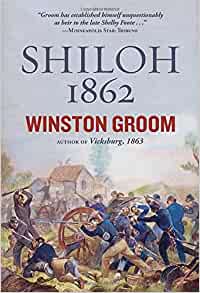
Although I’ve been aware of the small Winston Groom collection of Civil War books in my home library for years, I’ve never thought to read them because I invariably associate Groom with Forrest Gump; not exactly the expected pedegree for an historian. But Friday afternoon I made a snap decision to visit the Shiloh battlefield, and Groom’s  Shiloh 1862 seemed the best guide available.   The book proved a pleasant surprise, with extensive background information and much drawing-from first hand resources. That’ll learn me to judge a book by its author, I suppose!

Shiloh 1862 proved extremely readable; it’s narrative-driven popular history, with lots of human interest stories (sourced from diaries of the time) and biographies of some of the more prominent generals.  Groom first explores the background of the battle itself — why it was fought, and where. The ‘why’ begins before the conflict even starts, with Groom chronicling the sectional conflicts within the States , particularly the growing sense in the South that the north was out to ruin it with tariffs and attacks on the plantation-slavery system that controlled southern politics.   Groom notes that in April 1862, the war was not quite a year old, and many still thought one good battle would end the conflict,  as if it were a duel for honor, and the parties might retire once shots had been discharged.   The Federal army in the west had  already been successful in undermining the long-term success of the Confederacy by April 1862, in  establishing control of the Tennessee River and sending the Confederate army in retreat from Kentucky as a consequence. Now,   using the river, the Federal army moved to invade the deep south itself —  by landing in southwestern Tennessee, 20 miles from a prominent rail intersection in Mississippi. A strike against the rails in Corinth would sever the South’s only complete east-west line, and make it easier for the Federal army to establish control of the Mississippi river, splitting the Confederacy in two.  The Confederate army in the west moved to crush the growing Federal force before it grew larger and fortified.    Thus the armies converged on the plains and hills around Pittsburg Landing, a site chosen by he Federals because the undulating terrain and marshy areas that greatly restricted avenues of attack. Perhaps because the terrain itself was so forboding, the Federal army’s masters did not bother to fortify — and they didn’t take seriously hints that the southerners were on the move.

The Confederate army, led by General Albert Sidney Johnson,  aimed to strike hard and fast at the dozing Yanks, to push them away from their river-lifeline and into the swamps.  Weather and logistical hiccoughs bogged the army down, though, by at least a full day – a ‘fatal’ delay, Groom notes for reasons we later understand.  The terrain made it difficult to maintain reliable communications, and once a Union patrol encountered the marching force at Farley Field and the battle commenced,  Johnston was forcibly reminded of Napoleon’s maxim: no plan survives contact with the enemy.  The Confederates had intended  to maximize pressure on the Union left, driving them away from the river — but through miscommunication, instead devoted most of their resources to the Union right.  Once a massive artillery battery finally broke the Union center — after six hours of stolid defense by midwestern farmboys —  the Federal army was pushed into a tight circle around the  landing —  and there, across the water in the late afternoon,  were reinforcements from General Buell — and back at the hornet’s nest,  the Confederate general lay dying. His successor, General Beauregard, believed the Yankees whipped — and, also believing that Buell had marched to Decatur (185 miles away), he was content to call it a day.  The next morning.  the enlarged and reinvigorated Union army launched a punishing counterattack that saw the Confederates pull back from their previous day’s gains.  After two days of hard fighting, all that had been accomplished were thousands of deaths – – nearly 24,000 casualties.

Groom captures the chaos and desperation of the military aspect, but it’s not the only part of the story. He also covers the battle’s effects on the people who lived around the landing, the farmers whose livelihoods and homes were destroyed, whose children were at risk.  So much firepower was active across those woods and plains that there was seemingly no safe place to be; one wounded man, trying to limp to the rear to be tended to, return to his captain and pled: “Cap, give me a rifle. This blamed battle ain’t got a rear!”.   Another young soldier, helping his best friend off the field, was shocked to discover when they found shelter that his soon-to-perish friend had been  shot seven times. A prevailing theme is that of confusion,  which started as the armies tried to get into place and worsened as the action started:  men fought in regiments that were not theirs, and  often times officers would command makeshift brigades of whatever troops happened to be in the vicinity. The Hornet’s Nest defenders were a makeshift bunch: one Union participant wasn’t even a combatant, but in the initial southern move he’d been separated from  his father — leading an Ohio unit —  and the young musician quickly had to pick up a musket and fight for his life alongside men he’d never seen before.   Perhaps no story captures the confusion better than one Union officer seeking out a major and pleading with him for direction —  where are our men, where do we go — only to hear the major’s soft reply and realize: he was a Confederate officer,  just as dazed and at a loss as his ‘enemy’.  (This early, Confederate uniforms were varied and sometimes confusing: blue state militia uniforms might be mistaken as Federal uniforms, and get them fired on. One sad instance of that appears here, when regiments from Arkansas and Louisiana attacked one another.)

A joy to read despite its brutal subject, Shiloh 1862 has been a lesson for me in several ways. I’ll have to look into more of Groom’s work if my ACW mood persists!  I actually read part of this book on the battlefield itself, though my progress in the book rarely aligned with my progress touring.


Posted in history, Reviews | Tagged , , | 10 Comments

Reading on the Road: Shiloh’s Bloody Hill

shiloh003
The world was suddenly out of kilter, as though the beauty of the bright Tennessee sunrise was merely a prelude to death, and that nature, with all her morning splendor, was mocking mankind’s folly.” – Winston Groom, Shiloh 1862.

During my Friday lunch hour, I had a wild idea: why not visit the battlefield of Shiloh?  Like….tomorrow?    I’d wanted to travel there in April because of the anniversary of the battle, but with COVID that wasn’t an option.   An hour later I had booked a room in northern Alabama, an hour from the site, and after a half hour for research and fifteen minutes to pack, I’d taken off work the rest of the day and was on my way. Amazingly,   the only thing I forgot was binoculars.

shilohchurch

Replica of the church “Shiloh” for which the battle is named

I used to immerse myself obsessively in the Civil War,  not only reading books about it, but watching movies like Shenandoah, Gettysburg, and The Blue and the Grey — to name three favorites —  playing games,  collecting music of the era,  and  always managed to work in a request to visit a Civil War object of interest during our family vacations….whether that was Vicksburg on our Texas trip, or Andersonville on our tour of Georgia.   This was the first time I’d gotten to visit a preserved battlefield, however, and it was a sobering experience with a few pleasant surprises.

shiloh27

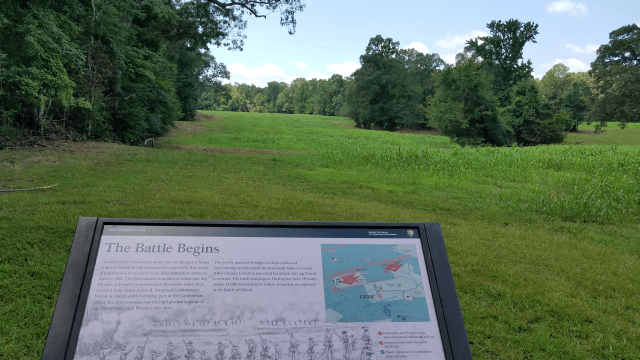
I cannot speak highly enough of the park’s commitment to helping the public understand the battle — from the excellent movie played in the visitor’s center, to the stellar lecturer-guides,  to the signs. The  understanding I’ve gleaned is this:   Shiloh was part of a Union effort in the west to divide the Confederacy in two, connected to its campaign to control the Mississippi river. The area around Pittsburg Landing  on the Tennessee river   was ideal for amassing troops, with plenty of cleared areas for camps  and drilling,  a bountiful supply of water, and terrain that ensured any enemy would have to approach from one direction.  Twenty miles south lay Corinth, and there a convergence of southern rail lines that, if destroyed, would help break  the western and southern halves of the Confederacy.

ladning

Former river landing

The Confederacy,  which was already losing control of the Tennessee river,  needed to destroy the growing Union army before it became unstoppable.  On Sunday morning, April 6,  General Albert.S. Johnston launched an attack on the  dozing Union lines. His initial plan was to push the Union away from the river landing and towards the swamps to their back…which would disrupt them further and turn retreat into a rout.   A Union patrol encountered the Confederate army far earlier than expected,  and as the battle developed the Union was pushed into a tight circle around  Pittsburg Landing, instead of being manipulated away from it.  Although the Confederates believed that the battle was over,  with only some mopping-up action needed, overnight General Buell’s troops reinforced Grant via the landing  and launched a punishing counterattack which left both armies exactly where they were the day before….only now, 24,000 men were dead on the field, including General Johnson, who perished mid-afternoon on the first day.    The battle around Shiloh church was the first massive conflict of the war, one that presaged the horrors to follow at Antietam, Gettysburg,  and Cold Harbor  — and more men died in these two days  than had died in all previous American wars combined. A common theme repeated in literature is how awful and confusing the battle was for those who fought in it: it was common for people to become separated from their regiments, for  officers to command strangers.

shiloh017
Part of the largest battery of artillery ever assembled on the North American continent until that time  — aimed at the Hornet’s Nest, the Union center.

deer

Although I’d gone to see the battlefield, also included in the park is a hiking trail leading to some mounds left by a Mississippi-culture tribe. The mounds are also directly accessible  by road, but then you miss the chance to see deer!

shilohview

The view from the mounds is compelling, too.   I was absolutely impressed by the park’s staff and upkeep — they even cut paths of grass shorter for those who want to trek out to the edges of fields to look at monuments .The park is massive, and not every feature of it is obvious from the roadside: when I visited monuments at the far end of Duncan Field, for instance, I moved to the treeline to try to imagine what it might have looked like, 150+ years ago — and I spied a mossy path leading to another monument, out of sight in the woods!

iowa

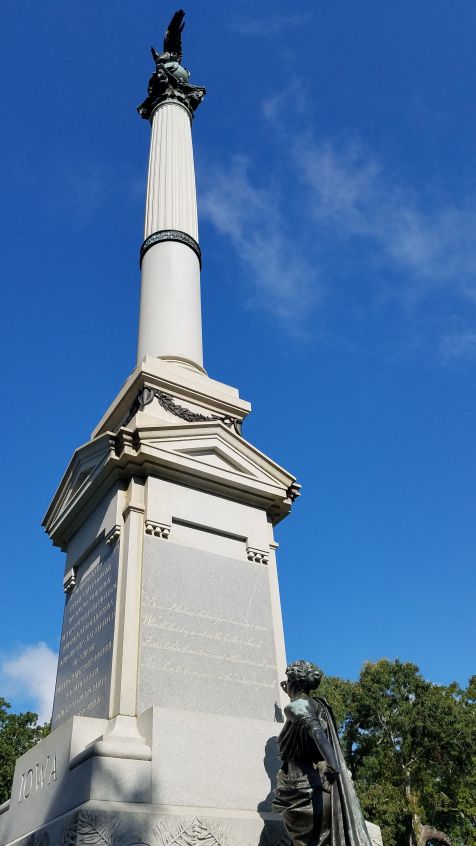
Iowa’s monument was far and away my favorite, mostly for this touch.


morbid

They memorialized their dead with the thing that killed them — a minieball.

thedead


Posted in General | Tagged , , | Leave a comment