Gary Noesner served as an FBI hostage negotiator for decades, helping defuse many high profile incidents. Below are some of his toughts on communication and persuasian, taken from his memoir Stalling for Time.
SELECTIONS
Among negotiators, this process of trust building is called the “behavioral change stairway.” You listen to show interest, then respond empathetically, which leads to rapport building, which then leads to influence.
Fred taught us that the key to successful negotiation was to discern the subject’s motivation, goals, and emotional needs and to make use of that knowledge strategically.
Too much action might trigger a firefight, which is what Webster calls the “paradox of power”—the harder we push the more likely we are to be met with resistance.
Dr. Mike Webster says, “People want to work with, cooperate with, and trust people that they like.” It’s hard to like someone who is threatening you or challenging you.
We know that people want to be shown respect, and they want to be understood. Listening is the cheapest, yet most effective concession we can make.
I protested, saying we might well be able to get things back on track, but they were adamant, violating a core principle of the FBI negotiation program: never confuse getting even with getting what you want.
The very first thing I talk about when training new negotiators is the critical importance of self-control. If we cannot control our own emotions, how can we expect to influence the emotions of another party?
Having read extensively about the Ruby Ridge and Waco debacles, I couldn’t help but be curious about the “other side’s” perspective: the state’s. How did the FBI and ATF make such astonishingly bad judgment calls? In search of answers, I found Gary Noesner’s Stalling for Time, his brief memoirs of working as an FBI negotiator in the eighties and nineties, his highest profile case being the first month of the Waco siege. By the time his career ended, Noesner had visited all fifty states and forty different countries. Engaging in its own way, Noesner also shares insights about communication and persuasion along the way, reminding me of the skills taught by ABQ police officer George Thompson, elaborated on in his book Verbal Judo.
Noesner was riveted by the media of his youth which portrayed FBI agents as superpotent knights of truth, justice, and the American way. He joined the bureau as a clerk, and with the help of an agent who was mentoring him, became an agent in his own right. His mentor stressed the power of communication and persuasian as part of the agency’s toolkit, both to prevent situations from escalating and to make subjects more readily available to volunteer information. Having absorbed those lessons, Noesner was quick to volunteer for the new negotiation teams the FBI formed in the late seventies, and in the eighties he both handled his own cases and advised on others. Much of his early work dealt with overseas terrorism. Throughout this time, Noesner realized that the FBI’s negotiation and tactical teams had to work in concert: both performed better together. Negotiators with armed men behind them could work with confidence, and their “stalling for time” allowed situations to defuse themselves, or else gave the tactical teams more time to gather information on how to do their part without any hangups — or provided information directly.
Noesner was not involved in Ruby Ridge, but he followed the siege via newspaper and was horrified at the sloppy work there. The rules of engagement prescribed by the commanding agent, Dick Rogers, were reckless and asking to turn into trouble for both sides. When the ATF started an even larger cock-up in Waco, Texas, Noesner was asked to assist — and was astonished to find that not only Dick Rogers had retained his job, but that he was even more confident about taking care of the Waco situation in the same way. By Noesner’s account, Rogers commanded the tactical teams, and Noesner the negotatiors: unfortunately, the agent in charge of both didn’t desire to coordinate the two, and allowed them to run separate, conflicting strategies. The most obvious example of this would be Noesner’s efforts to establish a rapport with the Davidians by providing them milk immediately being undermined by Rogers’ team cutting power. Noesner’s frustration with the increasing aggressive tactics of Rogers saw him removed from the negotiating team, replaced by someone who was just as enthusiastic about Revelations as Koresh — and eager to explain Why He was Wrong. Despite growing success from negotiations — a steady trickle of Davidians leaving the complex — ultimately the affair would end with dozens dead, including children. Noesner wasn’t in Texas when everything went sideways and fire consumed the Davidian complex, but he was so disgusted by the spectacle, by both Rogers’ mishandling and Koresh’s intransigence, that he walked out of work in disgust. Despite helping a prison riot reach a successful conclusion shortly thereafter, Noesner writes that he was in a funk for months afterward. The incident did prompt the FBI to be more mindful of the ‘paradox of power’, in which greater force creates greater resistance, and to take negotiation teams more seriously. This bore fruit at an incident in Montana, when the FBI were able to conclude the Freeman affair without gunshed. Easily the most interesting part of that siege was Randy Weaver (from Ruby Ridge) arriving to help mediate, hoping to help his ideological kindred spirits holed up in their ranch from making the same mistakes he did. The FBI didn’t take him up on his offer, though Noesner believed Weaver sincere.
Stalling for Time made for compelling reading, given the variety of incidents and Noesner’s frequent sharing of insights into the art of persuasion. Noesner comes off here as extremely sympathetic, earnestly trying to reach a peaceful resolution and always horrified when the tactical teams get overly rowdy.
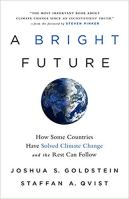
It is past time for the global community to take climate change seriously. In order to make any progress, we need to actively reduce emissions by 3% per year. Accomplishing such a goal is beyond lifestyle tweaks like cycling to work or wearing a sweater instead of cranking up the heat. Instead, we need to make a change at the source, by rethinking our energy policy. A Bright Future argues that responding to the threat of climate change can be an opportunity for life-expanding reinvention, not a burden to endure — and it suggests that the answer has been staring us in the face all along.
Coal-fired electrical plants are far and away the largest concentrated polluters on the planet, used across the world for cheap, available energy, the very albumen of developing economies. There are relatively cleaner fossil fuel alternatives, like oil and gas, but shifting to these primarily would only slow emissions growth — not reduce it. Renewable have their advantages, but are too unreliable to form the backbone of an industrial economy: even large arrays like Europe’s continent grid experience highly variable output as the weather fluctuates. There is an alternative, though; a fuel source that allows for reliable, clean, and efficient production throughout the year — a source that allowed Sweden to largely decarbonize their economy, and in such a way as to increase their quality of life rather than decrease it. They call it kärnkraft, but you know it better as nuclear energy.
Nuclear energy has a massive PR problem in the west, despite its sterling safety record. After the early chapters arguing the need for energy reorientation, and the inadequacy of ‘clean’ fossil fuels and renewables to the challenge, Goldstein and Qvist present their argument for the re-embrace of nuclear energy, addressing concerns about safety, pollutants, etc. Their defense of nuclear redoubles as a continued attack on the alternatives — after examining three high profile nuclear accidents, Qvist & Goldstein compare nuclear’s body count to that created by oil&coal accidents, and ditto for environmental harm. Solar, too, gets its nose bloodied given the toxicity of its array materials once it reaches the end of its lifecycle. The authors suspect that Cold War dread, the mystique of radiation from SF films throughout the year, and the intense media coverage of nuclear’s outliers have contributed to making nuclear seem more dangerous than it is. In reality, thousands upon thousands of reactor hours have been accumulated by land-based plants and nuclear navies since nuclear energy became a possibility. Accidents are extreme outliers.
Nuclear energy has already proven itself a superior energy source, and it’s only going to get better. Most nuclear plants in operation today in France, Sweden, etc are second-gen designs. Russia, China, and India are actively pursuing nuclear energy to power their expansion, using safer-still third gen designs, and in both the west and east fourth-gen plants are being designed and prototyped. Reorienting global energy production to nuclear will necessitate standardization; the authors suggest following France’s model, where one or two designs are simply repeated over and over again. Fourth-gen plants using modular designs (fission meets IKEA!) will increase standardization and cut costs tremendously.
As an argument for nuclear energy, A Bright Future is excellent. Frankly, no politician who won’t admit it as an option should be taken seriously. The claim that it will decarbonize our economies is harder to embrace, however, given that transportation and industry (which often uses its own power plants) account for about the same amount of emissions as energy production. It may be that getting that segment decarbonized is enough by itself to do the trick, but I’m uncertain. The authors don’t examine other contributors aside from a brief mention that electric cars will play an important part. On the whole, this book is most impressive, and I especially appreciated how the authors lured readers in by allowing them to first appreciate the promise and potential of kärnkraft before revealing the translation. It was a clever little trick that might enable readers to take nuclear energy more seriously, having examined its virtues without their preconceptions at play.
Today’s quotes are drawn from Suspicious Minds: Why We Believe Conspiracy Theories, by Rob Brotherton. I’m especially happy to have to finished it, because now I can get Elvis out of my head. It was a stellar book, an end-year top ten candidate.
“When we do bad things, we are good at rationalizing our behavior as a momentary lapse or a reasonable and justified response to circumstances. When other people do bad things, though, it’s because they are just bad to the bone; we assume that evildoers are driven primarily by sadism and malice, inflicting harm for the sheer pleasure of doing so, while their victims are wholly innocent. The result is that, like Santa Claus, we have an irresistible compulsion to sort people into just two categories: good or bad, saint or sinner, naughty or nice. [….]
“There is no ‘us versus them.’ They are us. We are them. By painting conspiracism as some bizarre psychological tick that blights the minds of a handful of paranoid kooks, we smugly absolve ourselves of the faulty thinking we see so readily in others. But we’re doing the same thing as conspiracists who blame all of society’s ills on some small shadowy cabal. And we’re wrong. Conspiracy-thinking is ubiquitous, because it’s a product, in part, of how all of our minds are working all the time.”
On Thursday, September 24th, I was off work pending the results of a COVID test; I didn’t think much of it, since I only go to 4 places these days and am masked at all of them except for the gym. I didn’t have a fever, or aches, or anything like COVID symptoms I’d heard of, so I wasn’t particularly concerned. Being off work that day worked out well enough, because I was starting a dogsitting gig at lunch that would last for two weeks. Now, instead of burning my lunch hour driving from the library to the house, letting the dogs out, and hoping they’d come back in so I could leave for work on time — eating in a hurry as I waited — I could just go to the house in the late morning, wholly at my leisure. I didn’t bring much with me, just a weekend bag and some taco fixings, because I figured it would be better to get the lay of the land and figure out what I needed to bring for a two-week stay in the house. Immediately after I arrived, I received a call: I was positive for COVID. “Well, crap”, I said to the doctor. “Yes,” he replied.
That left me with a dilemma. My host was on the road to Houston: should I tell her? I’d already been in the house, I reasoned, trying to figure out which bedroom I was meant to use and where everything was. I had eight animals to tend to, with a daily list of things to stay ahead of the chaos they’d create on their own — a litter box to clean twice daily, pills to deliver, etc. The house was dark and I didn’t know where the switches were, so receiving that call only doubled my disorientation. The afternoon was spent with a lot of texts and phone calls to alert people who I’d been in contact with since Sunday (when I recalled feeling oddly tired after the gym), and trying to figure out what I was supposed to do for the next two weeks. Fortunately I was able to arrange a time with my housemates to raid my home in their absence for foodstuffs and books, both equally important. Friends and family also brought me books & food from time to time: I was near both a WinnDixie and a Subway, so it was easy for me to order something and then have someone pick up my order when they were getting groceries for themselves. I wound up telling my host the next day, once she’d arrived and settled in, and she was utterly gracious: her adult daughter even volunteered to bring by supplies if needed. (I was able to return the favor, sort of: my host was later pinned down in Houston by the hurricane, and I was able to stay several more days beyond what we’d originally planned.)
More like “Inside Two Dogs”.
The first weekend was the hardest, as I was simultaneously still coming to terms with the house and its many furry occupants, as well as getting used to being a social pariah. I sorely missed the usual weekend things I do, the company I’d ordinarily keep. My supply-raiding window coincided with one of those events, and it pained me to drive by and see my friends gathering and know I could not be among their number. My friends kept my spirits up by calling and texting me, though, and once the first week started in earnest I established a routine: reading during the day, and watching Netflix only after supper. I was away from my computer, and didn’t want Netflix to become the new sinkhole. I have to fight my tendency to lock-in to the computer, purposely avoiding mine until I’ve gotten stuff done. The schedule worked out: I read over a dozen books in that time, doing serious damage to the the TBR pile, and re-watched most of my favorite episodes from ST TNG, ST DS9, and ST VOY. I also rewatched the first four seasons of The Office, finally got around to The Irishman, and realized: I just don’t care about Narcos Mexico season 2. If I couldn’t watch it during a three week quarantine, I’m not watching it.
I suppose I asked for that given my username.
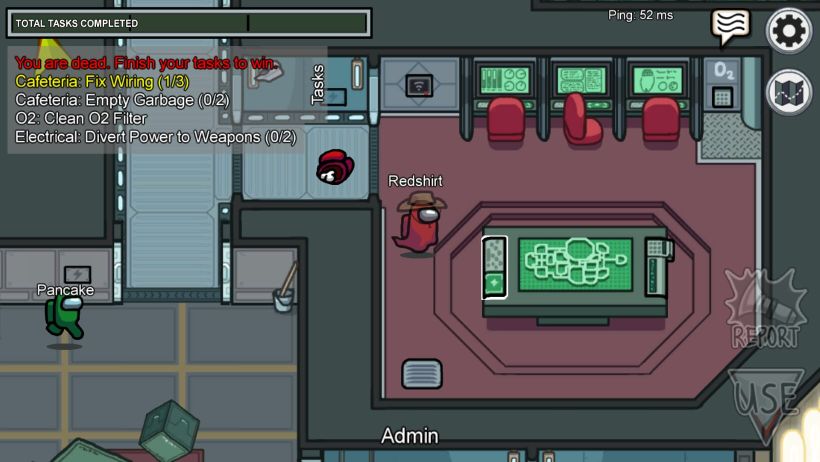
I also played a lot of Among Us, since I could do it on my phone. Suffice it to say I’ve memorized the Skeld map, I’ve a good chance of winning Imposter rounds, and I’ve had numerous strangers propose to me in chat because for some reason this is a thing in Among Us. If you haven’t heard: this is a game in which players are little crewmen on a spaceship, but one of them is an alien whose mission it is to kill everyone and sabotage the ship. The regular players try to do little tasks on the ship, the Imposter hunts them and kills them. The regular players try to figure out who the imposter is before it’s too late. I blame CallmeKevin for introducing me to it.
Quarantine…so tough.
On Friday, I received the good news: I’m COVID free. I still don’t feel up to spec energy wise, and my visits to the gym have made me realize that between the lack of exercise and the illness itself, I’m not the terror of the track that I was a month ago. When I emerged, I noticed that Walmart had given up on pretty much all of its corona measures: the cattle gates are gone, the impotent stickers on the floor asking customers to treat the aisles as one-way are gone, and the sign urging people to wear a mask is gone. The overwhelming majority of customers are still masked from what I can tell between my two trips, presumably out of habit: it’s been a few months since Walmart introduced those measures. Winn-Dixie is still enforcing its mask habit, as is Subway — though they no longer block the counter with tables. On Saturday I celebrated my freedom with a friend, dining out at my favorite Mexican restaurant and drinking a margarita that cost as much as my food. They and several other businesses I visited during this celebratory trip are still asking for masks, but I don’t think they require them: I saw people in both without masks, and the employees were not bothered. I’ve been more careful with my mask since emerging, though I’m still not convinced they’re particularly efficacious.
Tomorrow will mark my return to work. I’m told that they’ve been overwhelmed in my absence, and it’s nice to know my size 14 shoes are hard to fill. I’m rather dreading tomorrow, as Mondays are always super busy — and I also have three weeks’ of beard growth that I have to shave off now because of the dress code. Alas, corona beard, you were fun to have. I have a bunch of corona reviews I’ve yet to do, but I haven’t done any reading this weekend: not only have I had other things on my mind, but my head is a bit tired. I’ve been postponing my German lump-review in hopes of adding another to it (Collapse in the West or something like that), but I’m crawling through the title. I think my poor head is just tired after tackling so much history these past three weeks.
In the end, I’m grateful for those friends who kept me sane, grateful that I serendipitously was dogsitting for the same exact interim that I was in quarantine, and grateful that my personal COVID experience was extremely mild, considering others are on ventilators. I have several elderly friends in hospital now because of it. I’ve a lot of work to catch up on, from goodreads tags to blog updates and actual work-work. Apparently no one else wants to create the reports I generate for the library board, and they’re meeting this week!
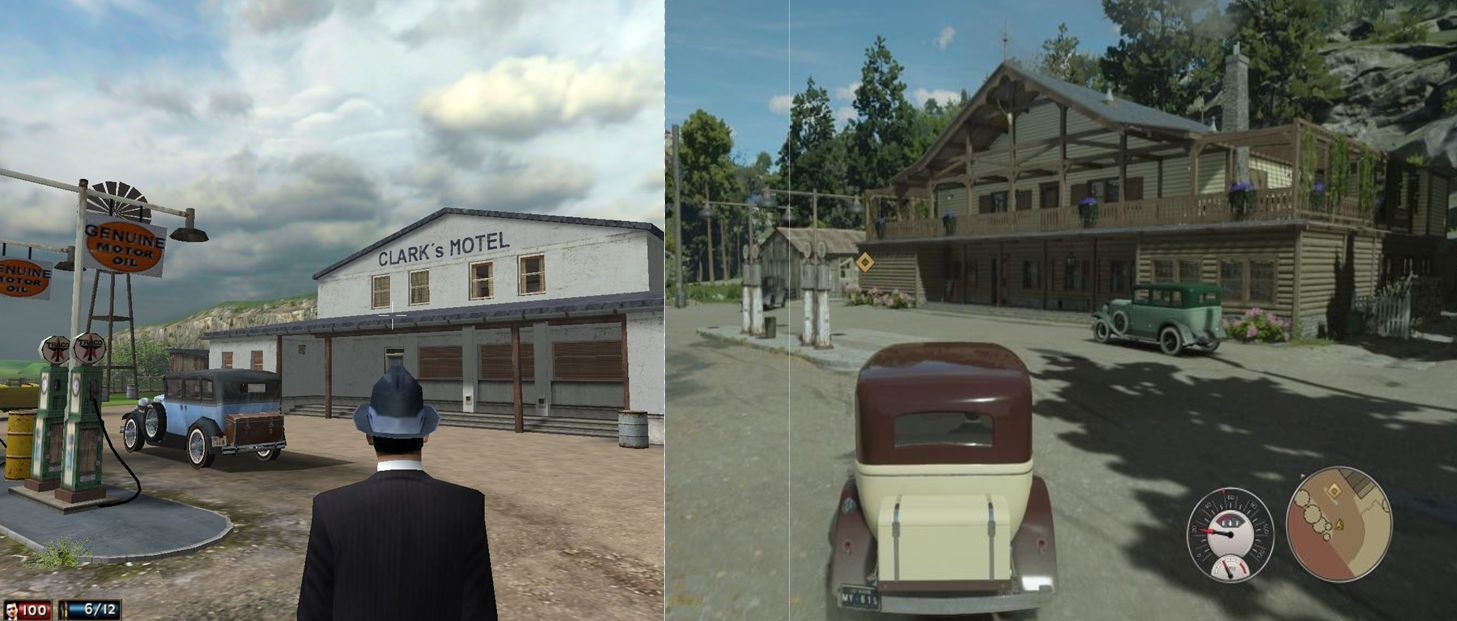
Eighteen years ago (!!!!!) I fell in love with a game: Mafia, by Gathering of Developers. A third-person shooter set in 1930s America, telling the story of a young cab driver who is drawn into a crime family. The setting, the city of Lost Heaven, utterly absorbed me with its working trolleys, el-lines, and drawbridges, and the story was one of the best I’ve ever encountered. It was for Mafia 2 that I finally held my nose and installed Steam for the first time, though neither of Mafia’s sequels ever came close to the original for me. I’ve continued playing and replaying the original — simply for the atmosphere — long after it’s been left in the dust, gameplay & graphics wise. And now….now it’s been remade with modern gameplay elements and modern graphics.
Playing this game is absolutely surreal, because it’s technically a new game — and I yet I know its map. There are differences between the two Lost Heavens, but when I played an early missio, I ignored the on-screen routing in favor of my known shortcuts, and made it there easily. When I wanted to drive across the map to Oak Hill, I ignored the map and found my way easily enough. There are marked differences, however; not just in the flavor of the street (there are far more details in DE-Lost Heaven). For instance, Oak Hill, based on Nob Hill in San Francisco, was an unapproachable mansion district in the original game: there were two roads in, and both were annoying. One was an incredibly steep path that many vehicles couldn’t make, and the other was a very long, winding path on the opposite side of the hill. Now there’s a tunnel that makes the steep path easier, as well as a third road that goes down through some slums
.
So far I have played the first few missions, up to Fairplay; I’ve also fooled around in Free Ride. I’m getting used to the ‘new’ characters; they’re the same ones I know, but their voice actors are different. Salieri lacked a certain gravitas at first, but I’m warming to his new actor, and frankly I can’t tell Paulie and Sam apart most of the time. They both sound like they’re imitating Joe Pesci & Steve Buscemi at the same time. I LOVE the new dialogue and expansions to existing missions: for instance, during “Ordinary Routine”, Tommy got to go inside a place and collect money from a business instead of just shuttling Paulie and Sam around. Inside, Tommy was sworn at in Italian (or Sicilian). Based on the cognates in the subtitle, the little old lady was calling him a blood-sucker. I was greatly disappointed to discover that the elevated lines & trolleys, while present in the world, are not accessible to the player. The el-lines access stairs are closed, and the trolleys open their doors to let people out — but the player has no ability to pass through the door. The mundane ability to ride around the city on trolleys & elevated lines was one of my favorite features in Mafia, and the el-lines were useful for losing the cops: they didn’t patrol up there, so it was easy to lose the heat after doing something innocuous like borrowing a car. Parts of Free Ride are reminiscent of Mafia 2; players are teleported out of water, and taxis can be driven but not operated for money. I understand that on the PC version there’s an updating pending which will allow players to operate taxis again. I hope, if they’re going to be updating the game, they add trolley transit once again. RDR2 managed it in St. Denis!
Next week, once I’m back to my own home and out of my quarantine quarters, I plan on exploring the story more, and may do some updates here on what I think of it. So far I’m quite pleased despite a few omissions.
This week I’ve been finishing the Vanguard series, set in the Original Series timeline and unfolding concurrently with the first three seasons of Star Trek. The first novel opened with the Enterprise enroute to its “Where No Man Has Gone Before” mission, and the third ends with the Enterprise taking part in the final battle, shortly after Defiant is attacked by the Tholians and disappears — into the mirror universe. The “real” Vanguard finale is Storming Heaven, but Dayton Ward — Mack’s partner in the Vanguard series — also provides an epilogue of sorts, In Tempest’s Wake, that focuses on Enterprise’s role in the finale. It’s told as a flashback, with a grizzled reporter visiting a captain-in-exile and trying to put together the pieces of what happened. As you may recall from previous previews, the Vanguard series is one of scientific mystery and interstellar politics; the Federation and the Klingons are competing to exploit the knowledge and tech of a long-vanquished civilization, the Shedai, and the nearby Tholians who regard the Shedai’s territory with dread and fear are working to make sure that the inferior Warms don’t reawaken the beast. In Storming Heaven, we have solid character drama, as civilian scientists and Starfleet argue over the morality of their actions in the Vanguard project, as they are throwing ancient power around recklessly; this sets the stage nicely for Carol Marcus’ deep distrust of Starfleet in TWOK, and the fact that an entire solar system went kablooey as a result of experiments (and was then covered up by Starfleet) also feeds into TWOK, by explaining why no one expected to find Khan on Ceti Alpha 5. Although I’ve grown gradually disinterested in the storyline, reading more for the characters, Storming Heaven was a solid finale. In Tempest’s Wake was more of an epilogue, telling the story from the Enterprise’s POV. Everything ends in a Big Ol’ Battle, as the Tholians assemble a massive fleet to stop Starfleet from unleashing unfathomable power.
I’m sorry, but this is an awful cover.
Fast-forwarding into the 24th century, Enigma Tales borrows its title from a traditional Cardassian literary format, murder mysteries in which everyone is guilty, to explore the theme of societal guilt. We find a Cardassian a decade removed from its ruination at the end of the Dominion war, and growing into a flourishing democracy. But a previously unnoticed data file threatens to throw a dark light on the icon of Cardassian democracy, Professor Natima Lang, and some suspect that Castellan Garak (yeah, plain simple Garak is an interstellar head of state now) is trying to ruin her for his own ends. Enter Kate Pulaski, who promptly starts an incident. The Cardassians are my favorite Trek species, largely because we saw such a variety of them on DS9 — we saw dissidents, scientists, and artists — that challenged the “Japan with grey scales” stereotype they were originally developed as. The Cardassians are very…human, unlike the perpetually smug Vulcans and the eternal soccer hooligans of the Klingons. I was especially impressed by Garak’s ongoing moral battle: despite his past as a member of the Obsidian Order, who undoubtedly committed many murders and performed much mischief, he wants desperately to believe that both he and Cardassia can be redeemed. I’m an absolute sucker for that kind of story.
We come in peace! (Shoot to kill, men.)
During quarantine I’ve been alternating between reading books and watching Star Trek. To date I’ve watched all of my favorite episodes from TNG and VOY, and am currently plowing through the Dominion War story in DS9. This starts in season 2 and continues until the end of the series (season 7), so it’s a lot. I’ve just started season 7, skipping the episode where Jadzia Dax is randomly killed by Gul Dukat, who for some reason became the Antichrist. I really don’t like what they did with him at the end of that series!
This WW is taken from a Star Trek novel, Storming Heaven by David Mack
“Be glad for all the places you get to be, and everyone you meet along the way. It’s human nature to focus on beginnings or endings, and that’s why we often lose sight of where we are and what we’re doing, in the moment. But the present moment—the ever-present now—is all we ever really have. Our past is already lost, gone forever. Our future might never come. And as you get older and time feels like it’s speeding up, you even start to feel the now slipping away. And that’s when you realize just how quickly things can end—when you’re busy thinking about what was or what’ll never be.”
France roils in revolution, its armies are opposed to most of Europe, and on the seas the Royal Navy is hunting its prey. A large French fleet is out and about — doing what, no one is sure. But they’re French, so it’s probably nothing good. A severe storm has scattered Admiral Nelson’s fleet hither and yon, and three of his frigates are in search of both their admiral and their quarry. The Louisa, under the command of Captain Charles Edgemont, is dispatched to Toulon in hopes of finding the admiral. Lord Nelson isn’t there, but he was — and so were the French. Following tips from Neapolitan fisher-folk, Edgement sails across the Med, in defiance of orders and in pursuit of answers. He will find them, and by his daring push the Royal Navy into one of its most astonishing naval victories ever.
As a longtime fan of Horatio Hornblower, I was delighted to discover another scribbler of Napoleonic tales — and largely won over by this story of adventure at sea, although it has some social peculiarities. The good captain is married to a Quaker, who somehow tracks him down and joins him at sea. This has the happy effect of allowing him to explain sea terminology to us through his conversations with his wife, although her arrival is implausible, to say the least. The bulk of the story follows Edgemont’s attempts to find either the French or his admiral, while at the same time dodging pirates and trying to keep his useless ex-first lieutenant from doing something foolish like challenging his replacement to a duel. Edgemont is a thoroughly likable character, and I appreciated the consistent humor that Worrall worked into the story. There were plot oddities — the improbable arrival of Mrs. Edgemont, and a few equally strange changes in the command structures of various ships — but on the whole, I thoroughly enjoyed this and will be trying another of Worrall’s novels.
On Wednesday I will have my COVID retest, annnnd I hope to have an answer by Thursday or Friday if I am fit for public consumption. I hope so: being in quarantine is a bit like being in a nursing home. You can’t leave, no one comes to visit, and that toddle out to the mailbox followed by lunch is as exciting as the day gets. At least I have books!
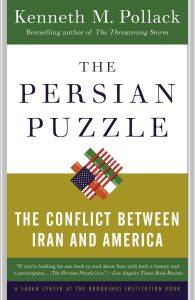
First up, The Persian Puzzle, a history of Iranian-American relations from a CIA insider. The author’s connection to DC’s mischief-makers gave me some pause, but I’ve read a history like this from an Iranian insider, so it’s only fair. Pollack opens with a history of Iranian history, with a particular focus on its abuse by the Brits & Russians, who parceled the country between themselves: at first it was valuable for its closeness to India, but after the Great War began, its petroleum resources made it a valuable tug-of-war object. The United States entered the picture in earnest after WW2, out of concern than that the Iranian king would in his attempts to play one side against the other, make Iran a Soviet satellite. That led to DC joining Britain in trying to manage Iranian politics. What follows is a history of familiar ground — though, not surprisingly, Pollack downplays the US role in the shah’s abuses. Instead, he argues that Pahlavi was largely empowered and driven by the oil economy, to the point that DC had little real influence on him after he was fixed in power in the 1950s. Pollack also argues that DC was largely dragged into Iranian politics thereafter, placing much of the blame on Khomeini’s aggressive foreign policy, in which he intended to export the revolution across the middle east and ‘redeem’ Baghdad and Jerusalem. Had I not just read Black Flag, in which a Lebanese author supported that contention from her own perspective, my well-earned contempt for the CIA might have had me looking more askance at Pollack’s view. Persian Puzzle is a useful perspective to pair with others, and I was intrigued to see that in 2004 he promoted the same view that Obama would adopt, a dual-track engagement and containment policy that worked to isolate Iran diplomatically while offering a way forward.
Next up, Command and Control, a history of the growth of nuclear arms in DC and Russia, juxtaposed with a two-day history of a deadly accident at a Titan 2 base in Damascus, Arkansas. I’d never heard of the Damascus accident, so I was particularly caught up in the blow-by-blow history of that sad affair, and alarmed to learn how many nuclear accidents there have been over the years. As Schlosser notes, regardless of the training and the mechanical fail-safes, the sheer amount of nuclear arms coupled with human fallibility means that the odds of an accident happening are not insignificant. The Damascus incident was kicked off by a technician dropping a socket wrench — which made an improbable bounce and kicked off a chain of events that saw the entire site closed. Considering how many are known, it’s impressive that nothing more deadly has happened: Schlosser shares stories of plane crashes and accidental bomb-drops that left me shaking my head in disbelief. The other track of the book, covering the slow-at-first- and then astonishingly quick growth of nuclear arms, along with the changes in pop culture and government strategy, is also of great interest.
Last was The Secret Life of Backyard Bugs, which is a photo-heavy survey of various bugs, insects, and spiders and their life cycles. The authors have their preferences — a third of the book is devoted to butterflies and moths — but they include useful tables on what things to plant to promote greater insect biodiversity.
To follow this week: a post that’s alllllllll about Germans.












 Reading Freely