Death and madness in China

The Cultural Revolution: A People’s History
© 2016 Frank Dikotter
433 pages

In twenty-five years of reading history, I know of no man who has instigated more human suffering and death at a broader scale than Mao Tse-tung, the rebel turned architect of a nightmare state. He is rivaled only by Lenin and Stalin, Hitler being a pale and overly medicated imitation, and any book on the cultural revolution serves an example as to why. I’ve long put off reading this title, because the Cultural Revolution horrifies and disturbs me like little else. Episodes like it have happened before; Byzantine iconoclasm, Puritanism, the French revolution — some zeal seizes the mob and its wrathful energy is poured out on the impure past, and beauty is destroyed to make society conform to an abstract ideal. But the cultural revolution was total, murderous bedlam, instigated by Mao to solidify his own position by turning the first generation of Chinese children raised under his regime against his interior rivals to shore up power after destalinization swept Russia.. But the fire he kindled consumed its own, and in A Cultural Revolution we receive not only the full scope of the endless, stupefyingly horrible brutality, but witness too flashes of hope — people’s growing alienation from the state, and their rebellion in the face of starvation. Although Dikotter’s dispassionate record of abuse after abuse doesn’t scourge the soul as effectively as say, The Rape of Nanking, or Wild Swans, it’s sufficient enough that I don’t want to dwell on it at length. The chaos and carnage are horrific, as is the realization that these were not just 20-somethings being set on teachers and the like, but schoolchildren — children given the whip by ideology and set on their elders. Wild Swans had already communicated much of the awfulness for me, but Dikotter’s broader review made me aware of how the Revolution wasn’t one frenzied episode, but rather a series of related outbreaks that finally exhausted themselves when Mao’s lieutenant mysteriously died after Mao caught wind that he was planning to murder the murderer-in-chief. Of particular interest to me were the brief looks at how man adapts to living in a tyrannical society, in which his neighbors are the agents of his oppression — the people who would turn him in for doing the wrong thing, or not having the wrong opinions.

SELECTIONS

“But in an odd twist of fate, the attempt to replace individual rewards with moral incentives during the Great Leap Forward had already produced a nation of entrepreneurs. People had not simply waited to starve to death. In a society in disintegration, they had resorted to every means available to survive. So destructive was radical collectivisation that at every level the population tried to circumvent, undermine or exploit the master plan, covertly giving full scope to the profit motive that the party was trying to eliminate. As the catastrophe unfolded, claiming tens of millions of victims, the very survival of an ordinary person came to depend on the ability to lie, charm, hide, steal, cheat, pilfer, forage, smuggle, trick, manipulate or otherwise outwit the state.”

“Zhai Zhenhua was one of the girls from an elite middle school who joined the Red Guards. The first time she saw a friend remove her belt to beat a victim until his clothes were drenched in blood, she recoiled. But she did not want to fall behind, so she persevered. At first she avoided eye contact with a human target, justifying the beatings by imagining how they were plotting the return of the old society. But after a few beatings she got the hang of it. ‘My heart hardened and I became used to the blood. I waved my belt like an automaton and whipped with an empty mind.’”

At one point a quiet man who was an expert in experimental phonetics was declared a counter-revolutionary in the middle of a study session. Everybody was stunned. The team leader used the occasion to announce triumphantly that even a person who had never spoken about political matters could be an enemy in his heart, and such inner convictions could no longer be concealed from the proletariat.”

“But despite the house raids, the book burnings, the public humiliations and all the purges, not to mention the ceaseless campaigns of re-education, from study classes in Mao Zedong Thought to May Seventh Cadre Schools, old habits died hard. The Cultural Revolution aimed to transform every aspect of an individual’s life, including his innermost thoughts and personal feelings, but in many cases it managed to exact only outward compliance. People fought deception with deception, lies with lies and empty rhetoric with empty slogans. Many were great actors, pretending to conform, knowing precisely what to say when required.

Related:
The Tragedy of Liberation, Frank Dikoetter
Wild Swans, Chang Jung. A memoir of the Revolution, which destroys the lives of the subject’s parents, despite their status as True Believers as far as Mao and the party went
The Rape of Nanking, Iris Chang. If you want to read about more death. Perhaps the suffering Chinese people endured at the hands of Japan hardened them and allowed them to be just as brutal to each other twenty years later.
Posted in history, Reviews | Tagged , , , , , | 13 Comments

The Lost Classics

The Lost Classics
© ed. Jim Casada
1950s-60s pieces by Robert Ruark from Field & Stream and other magazines
260 pages

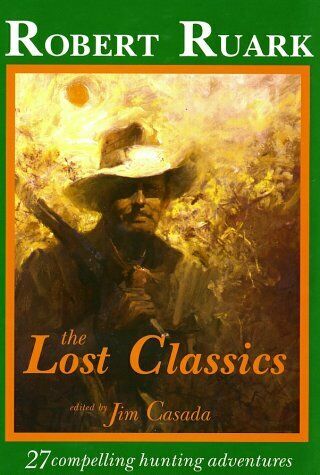
A hunt for southern literature outside the Faulkner/O’Connor domain brought me to the happy surprise that was The Old Man and the Boy, a collection of Field and Stream articles that combined outdoors adventures and sage advice on life. The stories, or reminiscences, were absolutely charming, and I’m not surprised to learn that Ruark considers them as having made his career as a writer. The Lost Classics is a posthumous collection of Old Man and the Boy stories which were not included in either of the two anthologies prepared by Ruark himself, in addition to many more pieces written by Ruark about his hunting adventures in the United States and broad, as well as a scattering of essays about Ernest Hemingway, to whom he was often compared. If I’d known how small the Old Man and the Boy section was, I may not have ordered this; as it was, though, I discovered that Ruark’s travel adventures beyond the fields and marshes of the Carolinas were fairly entertaining, even if they don’t hold a patch on the Old Man’s charm.

The Lost Classics opens with ten or so Old Man and the Boy stories, each just as delightful as those contained in the original collection. They are based off Ruark’s boyhood, spent with a lovable old codger who mixes down-home country wisdom with a surprisingly educated wit and a fun flair for the dramatic. Although hunting and fishing expeditions often frame a given story, there’s usually some broader point to be made. One memorable piece, “Of Buffalo and Bobwhites”, Ruark recounts how he proudly came home after bagging most of a covey of quail, only for his grandfather to scowl at him and deliver an entire lecture (“Sit down. I aim to declaim.”) on the history of North American bison, and how greedy and thoughtless over hunting had destroyed not just the buffalo population, but the entire lifestyle of the Plains natives. The lesson is plain: if you like shooting quail, respect them and only shoot a few, so the covey can renew itself next year. Although the Old Man claims to despair of having to preach and teach to his young ward (“You are turning me into a regular Billy Sunday”), the Boy’s passion for complaining offers ample opportunity for teaching moments. When the Boy complains that it’s cold, or rainy, the Old Man teaches him how to make the most of the opportunity those conditions afford: the cold, gloomy day proves to be perfect for duck-hunting, as so few spots of water are unfrozen that the ducks are drawn like magnets to the few open areas. That rainy day, in addition to giving everything that needed it a good wash, also allows time for cleaning guns, repairing nets, etc. The Old Man is a comic lecturer, though, gently mocking the Boy and providing grins along with the sage advice.

I was less interested, but pleasantly surprised by, the two-thirds of the book which were not Old Man stories. Many of them are simply hunting episodes set in Kenya and India, aside from one piece celebrating the fishing in New Zealand, but they sometimes integrate wisdom from the Old Man, both in terms of practical skills (leading targets to shoot accurately) and general life lessons. All of the pieces are slightly autobiographical, and Ruark grew more interesting with every essay; the Boy who hated school may have squirmed at regimentation, but he read Shakespeare at age 10 for fun, and paid his way through college with a little bootlegging. His life had several interesting parallels with Ernest Hemingway’s, and he and “Papa” struck up a friendship: Hemingway advised Ruark to just write things how they were, and to hell with the critics. If they could write, Papa huffed, they wouldn’t be critics. Ruark’s pieces on Hemingway and his writing were a wholly unexpected, but fascinating, aspect of this collection.

Regrettably, this will be a hard volume to get your hands on, if you are interested: there are no reasonably priced copies online, as far as I can tell, and I was fortunate to be able to order one through our interlibrary loan system. It’s not a huge loss for Ruark fans to not read this, as there’s far more Old Man and the Boy content readily available, and Ruark had African stories a-plenty. The Hemingway articles are the most unique among the lot.

Posted in Reviews | Tagged , , , , | 3 Comments

Double play: Mobile & Latin America

This past week has seen a little progress on the ol’ TBR front, as I knocked out three books from the list, including The Network and those below.

First up was E.O. Wilson’s Why We Are Here: Mobile and the Spirit of a Southern City, which proved interesting for the apparent mismatch between the author and the genre. Wilson is a legendary Alabama biologist, known for pioneering work in sociobiology and for his many books on insects. Why We Are Here, though, is not in that genre. The book itself doesn’t fall into any Dewey decimal category with ease; Wilson offers a hometown boy’s appreciation of the city’s culture and history, but his biography and other interests make it something else altogether: an early fascination with insects, even black widow spiders, made him a naturalist, and he offers a review of Mobile’s outstanding natural heritage as well as its human history. Wilson is joined by Alex Hill, a photographer, who smartly contributes full-page prints that show off the delta’s wild beauty and the people and places that have made Mobile over the years. Alabama’s port city is the Alabama metro that interests me most, but which I’ve spent the least time in.

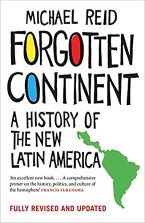
Further south than Mobile, this week I finished reading The Forgotten Continent, a history of Latin America. Reid bases the work off his previous reporting in the region, and focuses mostly on continental Latin America, with the Caribbean receiving only an occasional mention. Reid refers to Latin America as forgotten because aside from Mexico and chatter about migrant caravans, it’s rarely mentioned in American foreign policy: George W. Bush had intended to build on Clinton’s engagement with the region, but was derailed by the middle east, and Obama had the twin foreign policy issues of a booming China and his own mideast garbage fire. Reid begins with the pushes for independence in the 19th century, before tracking the tumultuous histories of Mexico and its southern neighbors. For the casual reader, some areas are easier to follow than others: I felt distinctly in over my head in the many chapters on the Americas’ monetary policy issues, especially where the IMF was concerned. Reid is optimistic that the populist fervor that led to so many dictatorships in the south has burned itself away, and that civil society is rebuilding itself in most places, with exceptions like Venezuela and Cuba. Forgotten Continent is information-dense, and the reader stays submerged: when Reid shifts topics he still stays firmly in the weedy details. As I make steady progress on the TBR and CC-2, I’m hoping to learn more about this area.

Coming attractions: a couple of years ago I donated money to Scott Horton to crowdfund his book-in-progress, which has been released as Enough Already: Time to End the War on Terrorism. A copy of it should materialize in my PO box any day now. Fool’s Errand, his history of the Afghan forever war, was intended to be part of this project but was separated and expanded. Horton is also turning the gist of each chapter into a youtube video, so check out the playlist here. Horton has a radio show and podcast and has interviewed thousands of people since 2003 on geopolitics and American foreign policy.

Posted in history, Reviews, World Affairs | Tagged , , , , , , | 15 Comments

“Love”

“Love is the only bow on Life’s dark cloud. It is the morning and the evening star. It shines upon the babe, and sheds its radiance on the quiet tomb. It is the mother of art, inspirer of poet, patriot and philosopher. It is the air and light of every heart – builder of every home, kindler of every fire on every hearth. It was the first to dream of immortality. It fills the world with melody – for music is the voice of love. Love is the magician, the enchanter, that changes worthless things to Joy, and makes royal kings and queens of common clay. It is the perfume of that wondrous flower, the heart, and without that sacred passion, that divine swoon, we are less than beasts; but with it, earth is heaven, and we are gods.”

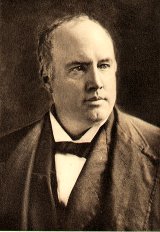
Robert G. Ingersoll was a famous orator of the 19th century, delivering lectures on religion, history, literature, etc. He is chiefly remembered today for his speeches against religion, but I took to him as a lay philosopher, a quintessential American who somehow fused the best of the 18th and 20th centuries together, preaching about love and liberty while firing broadsides against monarchy, superstition, etc. Back in 2010 I posted a brief biography about him online; a year before that I also posted a far more flowery tribute to him. I woke up with this quotation in my head, the old favorite brought to mind by Valentine’s Day.

Posted in quotations | Tagged | Leave a comment

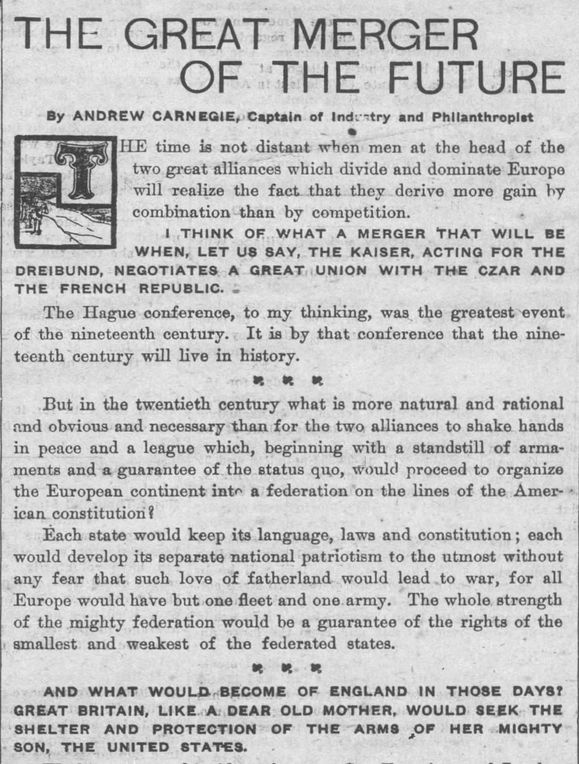
Yesterday’s News: Carnegie & Brexit circa 1902

Inspired by The Network, I’ve been perusing my local paper’s older archives and looking for mentions of Signor Marconi. I thought it might be interesting to see how his invention was received at the time. I was amused to find this huffy piece:

Whoopsie! On the same page was an interesting piece contributed by non other than Andrew Carnegie, who calls for a general European merger. Interestingly, the Scottish emigre doesn’t consider Great Britain a likely participant, writing that it should instead seek the companionship of its daughter-nation:

Posted in General | Tagged | 6 Comments

The Network

The Network: The Battle for the Airwaves and the Birth of the Communications Age
© 2015 Scottt Woolley
280 pages

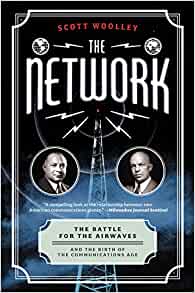
Few things fascinate me as much as cities in the United States and Europe, circa 1880 – 1930: they were being remade year by year, as unprecedented new technologies arrived on scene and were incorporated into the urban fabric, radically changing society as they became less novelties and more infrastructure. Telecommunications were part of that story, and more than any other novelty of the industrial city, they are still quickly changing us today: every year makes the digital world more expansive, intrusive, and impactful. Its story begins with a hopeful Italian named Marconi, who narrowly missed death by choosing to sail to America not on the Titanic, but the Lustiania — and concludes with the first forays of the telecom industry into satellites. The Network is less about how radio revolutionized society, however, focusing instead on the legal and political fights that the telecom industry had to endure while rising from primitive telegraphs to the space age.

The Network is dominated by not by Marconi, as expected, but someone I’d never heard off, an immigrant named David Sarnoff. Like Pan Am’s Juan Trippe, he built the radio-tv telecommunications industry around himself, presiding over it from its infancy to maturity though his involvement with Marconi, the Radio Corporation of America, NBC, and other firms. The transition from wireless telegraphy to radio, and all that followed, was not an easy one: in the 1910s, a state of the art wireless set was impossible to build legally because the ideal device would incorporate mechanisms from multiple patent-holders. The government ‘helped’ here during the Great War by building ideal devices anyway, forcing patentholders into a pool at gunpoint. Whatever aid given to the industry by war was reversed by the FCC’s presumptuous, panicky kneecapping of the nascent FM industry: believing an increasing period of solar activity would cripple FM sets by causing interference, the FCC dictated narrow ranges for new FM sets and transmitting restrictions that forced stations to grow in adverse conditions. (The predicted solar activity had no discernible effect.) It wouldn’t be the first time the FCC nearly smothered the future here. In addition to the legal battles, Woolley also communicates a little of the technical evolution of telecommunications , but virtually nothing of radio’s cultural mark. The narrative also jumps decade to decade so that we experience milestones, but not the in-between; I often felt a little disoriented after each jump, since the industr(ies) would grow significantly in the interim.

Although the book wasn’t quite what I was looking for, I still learned quite a bit: although I knew that telephony had grown into divergent but related industries (radio, tv, internet, etc), I didn’t realize how interconnected they were even once they’d established themselves: RCA’s “radio” shows were relayed via AT&T’s phone lines to other stations to create national networks, even after FM transmittal would have allowed for more powerful direct broadcasting; this was one reason Sarnoff was keenly interested in using satellites to bounce radio signals from transmitting stations to receiving stations,so to bypass the forced reliance on its telecom rival’s infrastructure. In the future I’ll be looking for Hello, Everybody! The Dawn of the Radio Age; it may be more of what I’m looking for.

Related:
Empires of Light: Edison, Tesla, Westinghouse, and the Race to Electrify the World, Jill Jones. Again a history of patent wars and technical innovation, less attention on changing society.
The Victorian Internet, Tom Standage. On telecom’s granddaddy, telegraphy.

Posted in history, Reviews | Tagged , , , , , | 8 Comments

The Bird Way

The Bird Way: A New Look at How Birds Talk, Work, Play, Parent, and Think
© 2020 Jennifer Ackerman
368 pages

When reading an introduction to a book on anthropology, one can’t help but be impressed by the variety of human cultures: we have all found many ways to be human.  After reading The Bird Way,  I can only say the same thing about our avian neighbors.  Many generalizations about birds prove to only be true about populations that  have been previously studied; when a variety of species across the world are examined, birds show off a staggering variety of behaviors and abilities. Here,  Jennifer Ackerman examines avian intelligence,  childrearing, courtship, communication, and  play. 

Why do birds sing?   Most reading this might answer that male birds sing to advertise themselves and defend their territory – and this is, in fact, typical behavior for many birds in the temperate zones of the northern hemisphere.  But in other regions like the tropics, female birds sing with gusto – and that realization has made temperate aviologists backtrack and listen more carefully to their familiar roosts, where – having put aside the idea that singing is purely about territory and sex,  the quieter, more infrequent voice of temperate ladybirds is suddenly obvious.   The realization that assumptions about birds have been based on a small subset of birds familiar to western scientists sets the stage for the book, which reviews the wide array of bird gifts and tactics.   

The review of behavior is fascinating in itself,  which is why animal documentaries are such a hit in general – but Ackerman goes beyond to write on what these behaviors tell us about bird species. We learn that Australia is a hotbed of novel bird behavior, for instance, and is regarded by scientists as the origin point for birdsong itself. We learn of varied behavior that comes not just from biological differences, but cultural ones – for young birds learn their songs from their parents, and older birds can learn new ways to exploit available food sources, and pass it on to others. Birds in general, not just corvids, are quite clever – and surprisingly playful. Perhaps playful experimentation is how they familiarize themselves with the world, and learn how to change things to their advantage. Ackerman reviews some truly  surprising information, pointing out how some birds who use brushfires to hunt by purposely spreading the fires to flush out fresh quarry. In the examples cited, the species in question picked up burning sticks from the fire zone, flew to an area beyond the firebreak created by firemen, an let the sticks go to create fresh blazes.  Many birds remember what happens in their environment and apparently plan accordingly, and their senses often surpass our own. What looks like a bizarre jumping-up-and-down habit to us is, in a bird’s eye, an artful somersault that uses sound and vision in sythensis to mesmerize an object d’amor.  Human eyes can’t perceive either the speed of the acrobatics, or the ultraviolet change in coloration as the bird performs its act.  Bird language’ complexity is also often hidden from human hears,  so rapid-fire that we miss the nuances.           

Of all the bird books I’ve read in the last year, The Bird Way  is by far the strongest. I’m now more than a little curious about Ackerman’s previous work, The Genius of Birds.

Related:
The Thing with Feathers, Noah Strycker
Becoming Wild: How Animal Cultures Raise Families, Create Beauty, and Achieve Peace, Carl Safina
What the Robin Knows: How Birds Reveal the Secrets of the Natural World, Jon Young          

Posted in Reviews, science | Tagged , | 8 Comments

Top Ten PC Games I Love

Today’s top ten is a “love” freebie, so I’m going to leave the reservation entirely and do…favorite PC games.  PC gaming  is my most timesinky hobby beyond reading,  its chief competitor and hindrance.

thesims
Sim-me in his ‘apartment’.   20 years later I actually have that Jack Vettriano portrait, as well as the Sinatra poster. No saxophone, though.

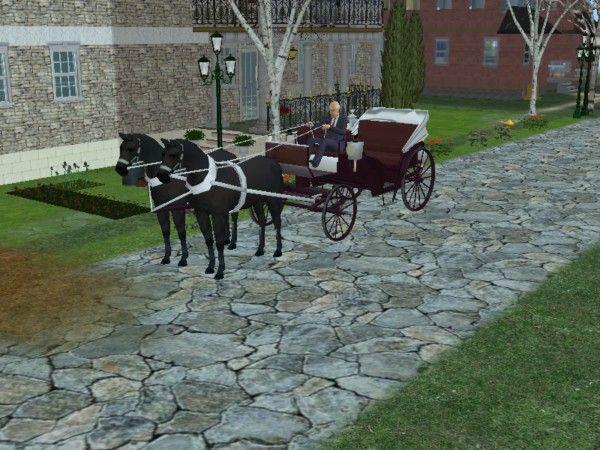
The Sims, by which I include most of its PC iterations.  I bought the original game on release, and it generously fed my imagination; I played The Sims 2 nearly every week from autumn 2004 to spring 2018, when it was finally supplanted by The Sims 4.  These games have been a playground for me —  especially The Sims 2, which I’d modded so extensively that one of my neighborhoods was a weird medieval-western fusion that grew out of a peak oil premise.

queensbluff2
You thought I was kidding.

neustadt

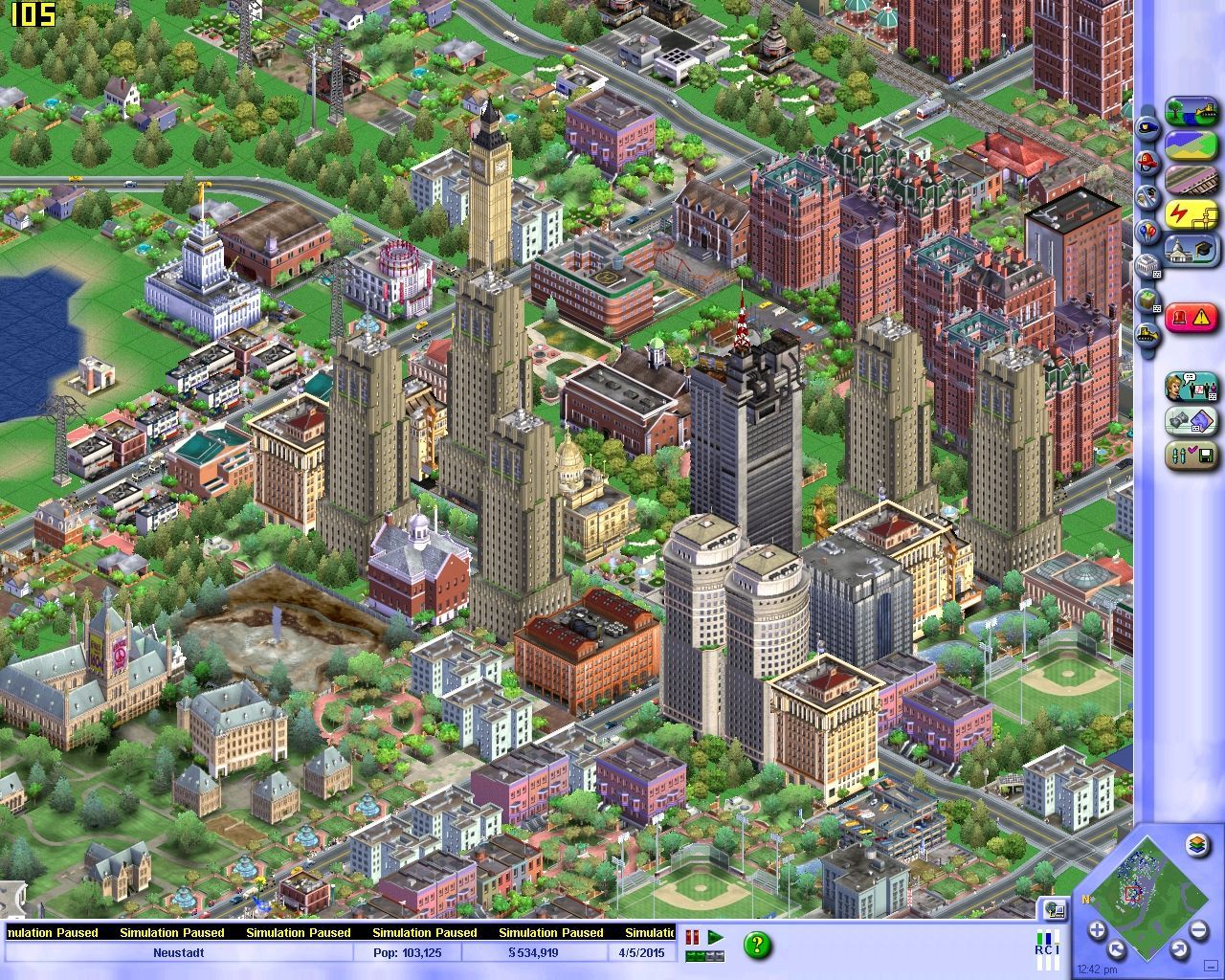
SimCity 3000   This series was my introduction to PC gaming, period, and is probably why I read books on garbage and electrical infrastructure.  I loved its music and integration of ‘politics’, using citizen petitioners and lobbyists to ask the mayor to enact some agenda or another. It was unnecessary, but made the gameworld feel more real.

A Walk Downown

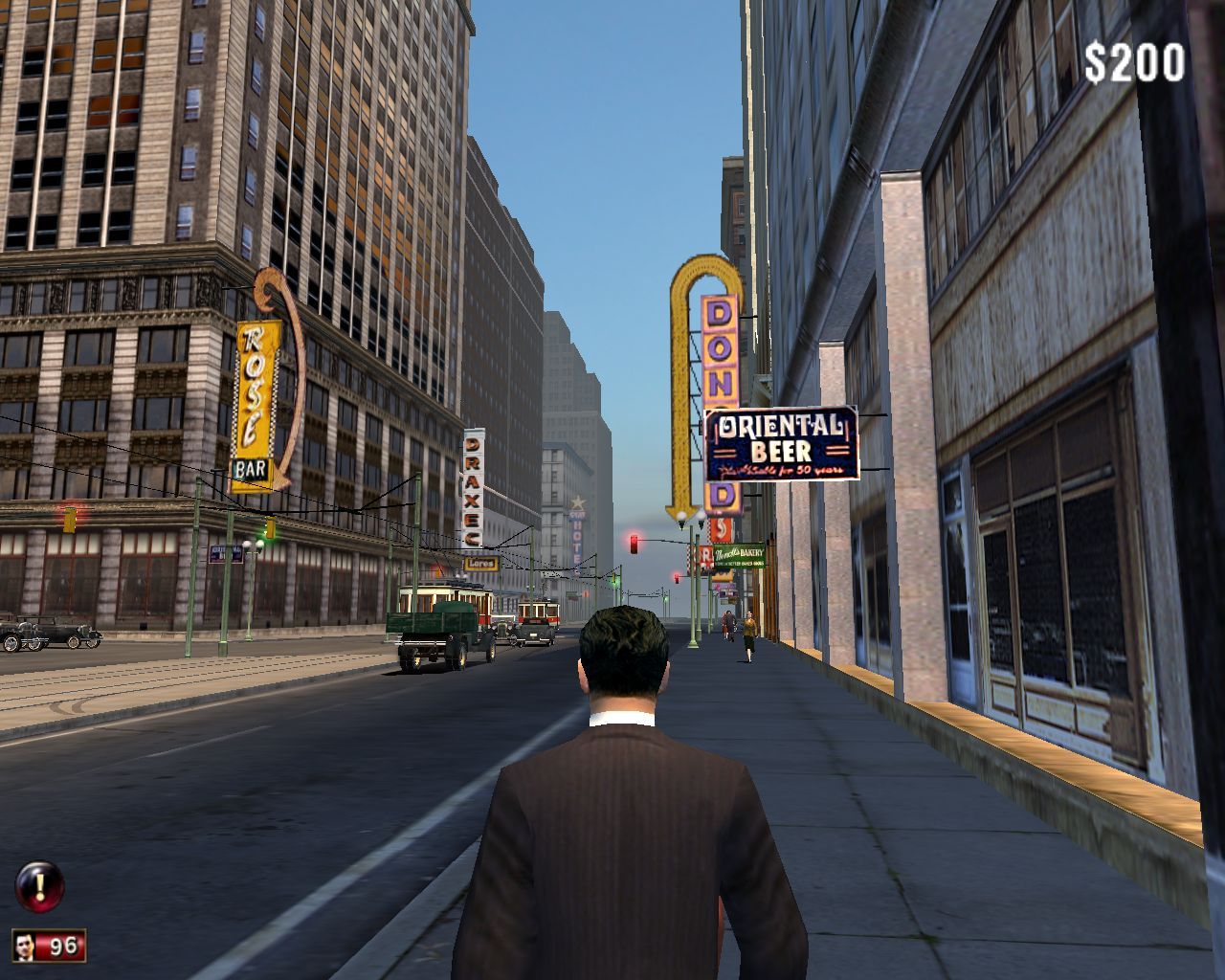
Mafia:    Before RDR2, my fictional world of choice was 1930s Lost Heaven,  an American metropolis with functioning el-lines, trolleys, and draw bridges.   Its story followed a young cab driver, Thomas Angelo, who inadvertently became involved in a mob war and was forced to choose sides,  becoming a footsoldier for the Salieri family.   The game’s atmosphere, wonderful music, and compelling story left me feeling wounded in the end when my character was betrayed by a close friend.  Mafia 2 was fun, but never lived up to the original for me.

Star Trek Elite Force:   My first FPS,  which legitimately scared me the first time I played it. You really don’t want to look around the corner and see Borg drones coming at you.  I spent many summer nights staying up late playing this online,   being shot by strangers and liberally using explosives to make up for my 56K connection while yakking about the newest episode of Voyager. This game led me to join a gaming clan, StarFleet,  and help lead its Armada division.   Speaking of..

armsaa

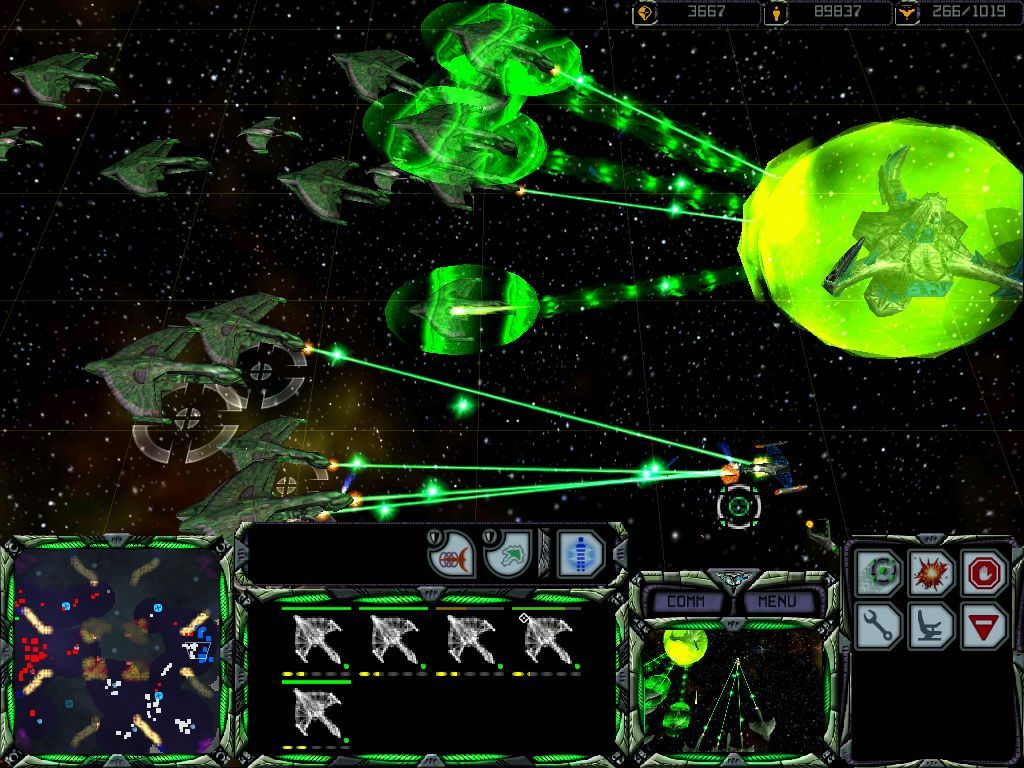
Star Trek Armada.   Possibly my first RTS?  That or Age of Kings.  Armada allowed for four genuinely unique factions,  with admirable sound design far superior to its sequel, Armada 2 — which also ruined faction balance by making  2/3s of its included races effectively the same, and the Borg weren’t that much different.

bag

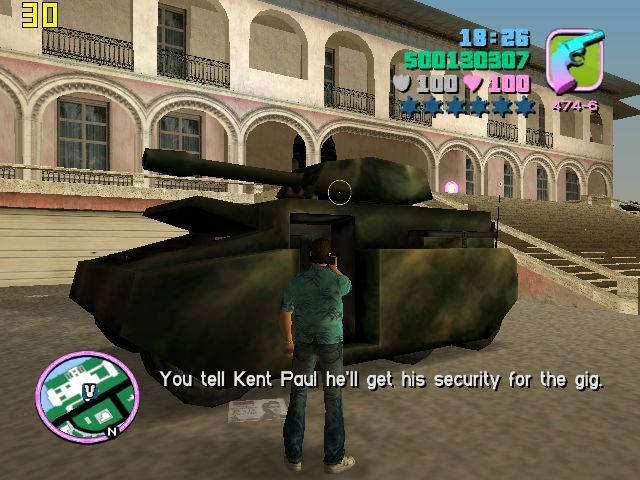
GTA Vice City. The first GTA game I ever owned, and the one that introduced me to the wonder of eighties music.   Maybe it’s the sunshine or the retro appeal, but Vice City remains my favorite.  It’s based on 1980s Miami, and the main character has a story something like Tony Montana’s,  but there are other preferences to period movies. The lawyer comes from Carlito’s Way, for instance.  Oddly enough, most of my playtime in Vice City has arguably come from listening to podcasts while doing taxi missions.

civ3

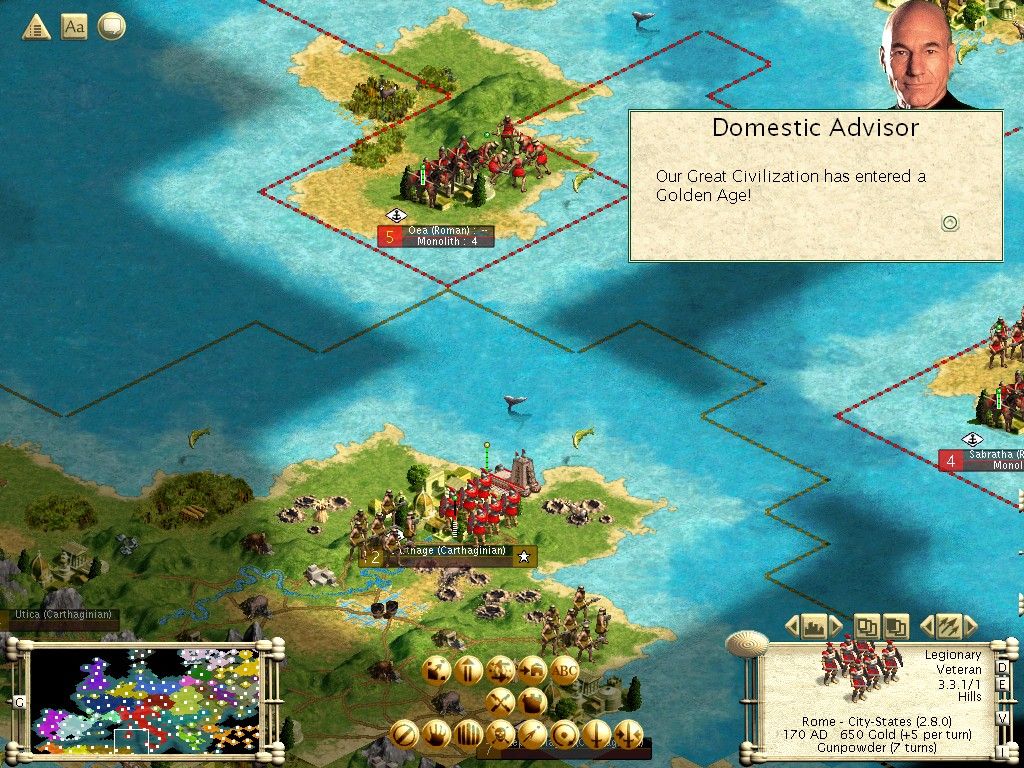
Civilization III.    As a history geek,  I took a surprisingly long time to get into the Civ series, and Civ3 was my first — and still the one I return to again and again.   If you can’t tell from the screenshot above, I heavily modded my game. I’ve never gotten “into” any of the sequels, but I think Civ 6 might get me if I could just give it the time it deserves. I love its design (more homey than Civ 5’s faux-realism), but good lord does it have a lot under the hood,  game mechanics wise.

On Top of the World

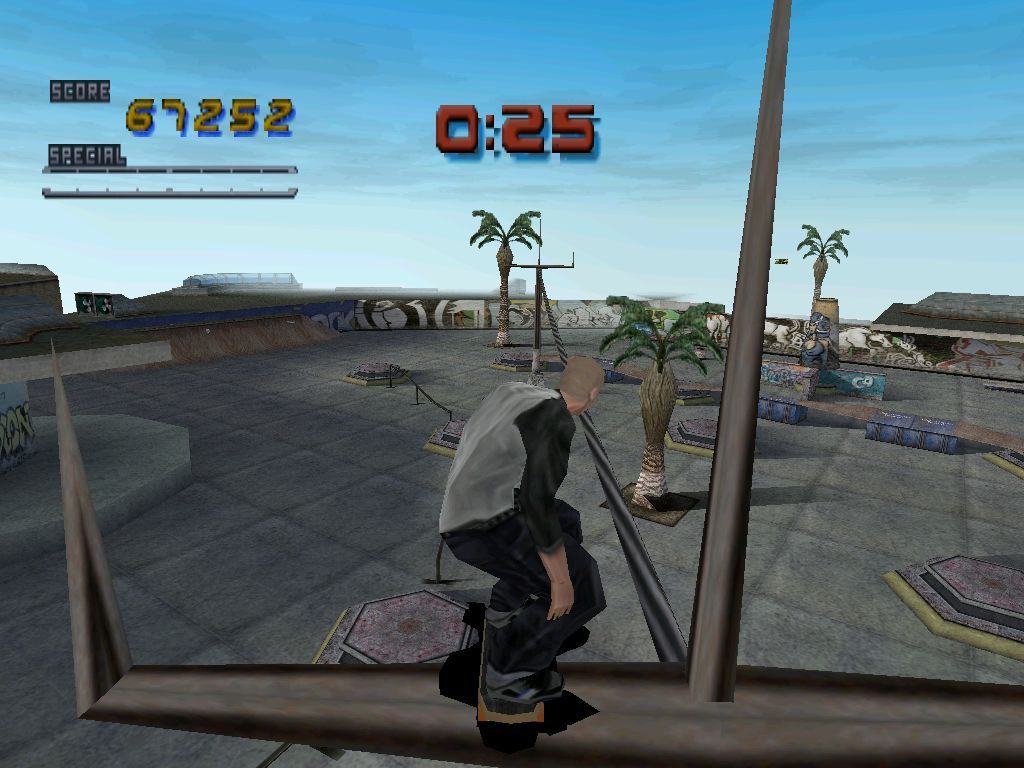
Tony Hawk’s Pro Skater 2.   I played a demo of this obsessively until I could play the main game, and despite not having a gamepad I managed to do quite well, contorting my figures into bizarre positions to pull off tricks.   It’s the only sports game I’ve ever played and enjoyed in my 20+ years of PC gaming.

beingbuilt

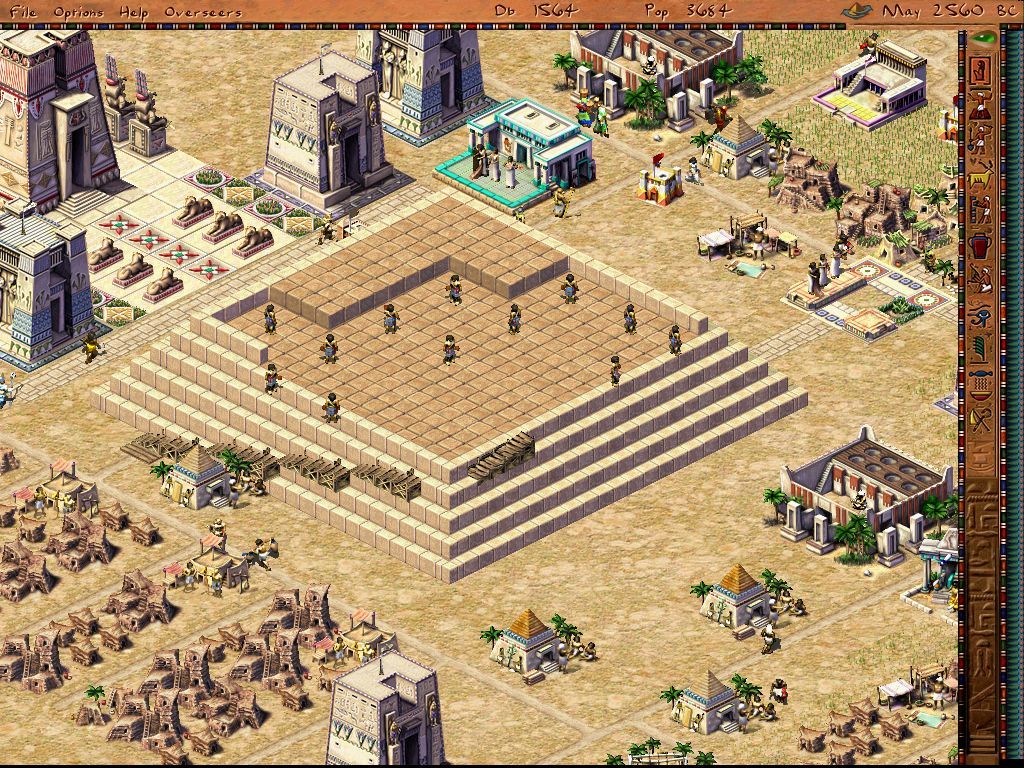
Pharaoh.  My first Impressions city-builder, and still my favorite, Pharaoh taught me the joy of managing historic supply chains,   trying to fine-tune my cities so that the wheat from my fields went to the granaries and the straw went to the brickworks along with clay, so I could build pyramids and the like.  Lots of micromanagement and stress, great music.

enterprize

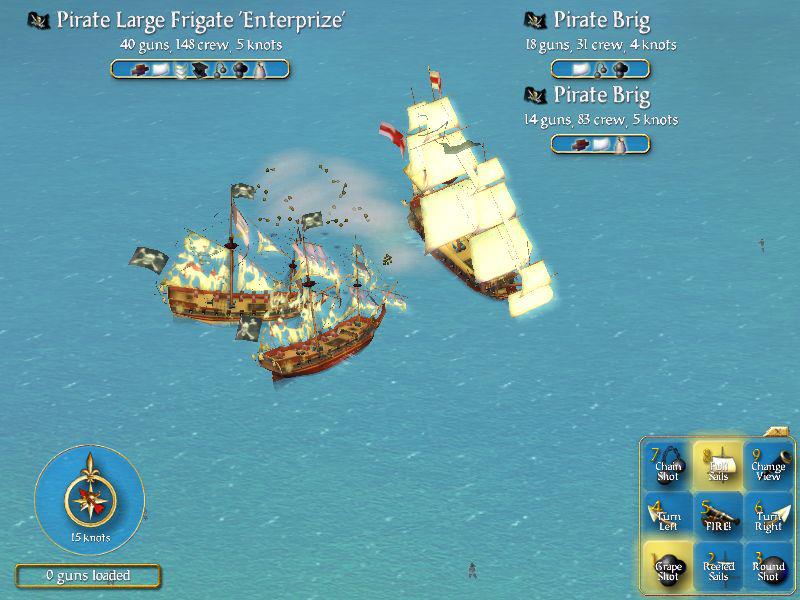
Sid Meier’s Pirates. Yarrrr!    This game single-handedly taught me Caribbean geography.   What are ye in the mood for, sailor?   Cruise the sparkling waters of the Caribbean,   taking ships as ye please — or dance with the guv’nor’s fetching daughter after ye’ve landed an army and sacked the palace!   Or maybe it’s bounty-hunting and treasure-seeking ye be after? It’s all here!  Pirates remains one of my “something to play while listening to  podcasts” games.

Note:  If I were making a list of top ten video games, I’d drop two items and include Pokemon (I played gens 1- 3) and of course Red Dead Redemption 2.    RDR2, for what it’s worth, would lasso its way into the top three, for my absolute delight in it is matched only by a few other games.

Posted in General | 9 Comments

The Miracle of New Orleans

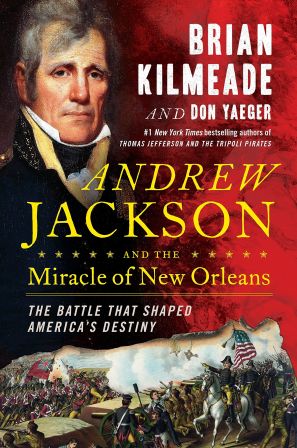
Andrew Jackson and the Miracle of New Orleans
2017 Brian Kilmeade
256 pages

I know precious little about the war of 1812, saved that it involved the United States invading Canada, D.C. being burned, and….something about New Orleans? That ….something is the subject of The Miracle of New Orleans, a pop-history book celebrating Andrew Jackson’s improbable victory defending that city from a British invasion. Kilmeade also reviews Jackson’s role in the Creek war, which began his military career and influenced his thinking as he rose to prominence in the early Republic. Stronger in substance than Washington’s Secret Six, and delivered with no less flash, The Miracle of New Orleans‘s mix of biography and history make the battle’s importance better known.

I’ve never been a fan of Andrew Jackson; populism, like fire, both draws and worries me — and from what I’ve read elsewhere, Jackson’s regard for the rule of law was problematic. Miracle of New Orleans introduced me to Jackson before he came to power, though, when he was struggling to make a name for himself. Made an orphan by the British during the revolution, Jackson burned for vengeance against them — and his first foray into military leadership during the Creek war made further opportunities available to him. Although Jackson is booed and hissed at today for his role in Indian removal, Miracle of New Orleans provides context that complicates summary judgement. Jackson, like many in the States, was hardened against the Creeks after hearing about the massacre of New Orleans, especially given the Redsticks’ potential threat if they worked more closely with European powers who wanted to keep the young upstart nation in its place. Jackson was especially concerned about the threat Great Britain posed; the Brits already disputed American possession of Louisiana, claiming as they did that that territory (and New Orleans, key to the entire Mississippi river) belonged to Spain, and had never been France’s to sell. If the Brits attacked New Orleans to ‘secure’ it, not only would those living between the Mississippi river and the Appalachians have their lifeline cut, but expansion across the river would be impossible.

Once the war broke out, aggravated by the British and French both harassing American shipping and conscripting American sailors into their armies, Jackson’s was one of the loudest voices urging DC to worry about the west. He was also one of the few, since DC was more interested in launching a failed invasion of Canada, and passively watching the eastern seaboard. Congress’ dithering saw Jackson march from Nashville into Louisiana (not an easy feat in the early 19th century) on his own credit and resources, and then receive orders to disband the volunteers, seize their arms, and go back east. Jackson earned the devotion of his men by keeping them together as they retreated, and it wouldn’t be the first time he proved himself a genuine leader of men, one who men gave their service to rather than demanding it as his due. After frustrating later British attempts to use Mobile and Pensacola as invasion points, Jackson waited for the British at New Orleans and planned the battle nursing a useless arm and abdominal pain that kept him doubled over. Although outnumbered and outclassed by the opposing army, Jackson’s skillful use of the terrain, audacity, and British blunders allowed him to deliver an outstanding victory to the American people. A war that had already officially ended in an ignominious stalemate now carried the aura of a triumph.

As its title hints, The Miracle of New Orleans is not dry, sober history; Kilmeade writes for a lay audience and keeps things personable and exciting. Miracle appears more adequately documented than did Washington’s Secret Six, and it squares with what I’ve read of the Creek war to date. Both the battle itself and the context in which it fit are given their due, and there’s no denying Kilmeade brings to life an often forgotten episode of history. I’m hesitant to recommend a history by a tv personality (I’m a terrible snob that way), but it presented much more than I’d expected. I’m hopeful that a more formal history of the War of 1812 will give me a better base of understanding, though.

Posted in history | Tagged , , , , , , | 9 Comments

Selections from Beyond Tenebrae

For Marx, man is at heart economic. For Darwin, man is biological. For Freud, man is psychological. Each of these things is true. But man—a complexity and mystery even to himself—is all of these things and so much more.

True education seeks wisdom, not mere knowledge or technical skill. It does not believe in shaping the person for the here and now, but for the eternal.

Conservatism, [Kirkl argued, did not mean “stand pat-ism.” It meant conserving what is dignified, humane, good, and beautiful. It meant searching for timeless truths and making them palatable for each generation. It meant defending that which the world all too often forgets.

By engaging the minds and ideas of the past, the student [of the liberal arts] becomes liberated from immersion in or enslavement to the things of this world—the things of the immediate moment, problem, or generation. A liberal education thus inspires its students. “A crassly modern education, over weighted with economics, may educate us to be good clerks; only a curriculum in the broad humanities can educate us to be good human beings,” Peter Viereck wrote in the late 1940s. “By harmonizing head and heart, Apollo and Dionysus, the Athenian classics train the complete man rather than the fragmentary man.”

The conservative, therefore, never views history as progressive but as revelatory. That is, history reveals when and where the virtues have become manifest, and where the vices have predominated. With human nature as a constant, mankind neither becomes better nor becomes worse. He merely restrains or not, creates or not, embraces the virtues or does not. In his highest capacity, man embraces the greatest virtue, love—the willingness to surrender himself for the good of another.

Politics at best sustains a community, protecting it from immediate disorders, but rarely can it do more than restrain the evil within man. When politics attempts to shape, it almost always fails, creating distortions in human persons and communities.

In the words of Bell: “the whole cult of comfort is petty, ignoble, unworthy of human nature, absurd.” To chase it, he argued, is to chase the unnatural. Rather than elevating us, it will ultimately only degrade. Rather than embracing our humanity, we will sink into subhumanity. We will circle the abyss without even knowing that our footing is insecure.

As Lewis wrote: “Friendship is the greatest of worldly goods. Certainly to me it is the chief happiness of life. If I had to give a piece of advice to a young man about a place to live, I think I should say, ‘sacrifice almost everything to live where you can be near your friends.’”

“Books, [Sister Madleva Wolff] noted more seriously and with love, “are my friends. Here they are again, shelf upon shelf, the poets from Beowulf and Langland to Eliot and Millay and Daniel Berrigan on the left of the fireplace, the mystics on the right. Lead me not into digression or we shall never emerge from this room.”

“That’s where all of us are standing now, he thought. On the fat kindling of past sins. And some of them are mine. Mine, Adam’s, Herod’s, Judas’s, Hannegan’s, mine. Everybody’s. Always culminates in the colossus of the State, somehow, drawing about itself the mantle of godhood, being struck down by wrath of Heaven.” (Canticle for Leibowitz)

Our true loyalties, as Cicero and those (like Kirk) who followed him argued, are with all of humanity, from Adam to the last living man. Our real citizenship resides elsewhere, and we are merely sojourners in the here and now. Indeed, it must be stressed vehemently that the very essence of the humanities exists to promote what is essentially human, not accidentally so.

Posted in General, quotations, Religion and Philosophy | 2 Comments