If October was a fun month, November was more of a …work month, as I was focused either on school projects (powerpoint presentation done tonight, final paper due Tuesday, yaaay) or tackling TBR titles. Presently, I need twelve more TBR titles down to hit my soft goal of 80 TBR books for the year, which is the majority of the pile: what remains is a solid foundation for next year’s Mount TBR to accumulate upon should be fairly easy to finish off in 2024. Last month I mentioned that I was thinking about sacking books I own, but have access to via libraries (obtaining grad school access to a university library has greatly expanded my options). I decided to go ahead and do that, and the titles are denoted with an asterisk.
Climbing Mount Doom: The Outlaw Ocean, Ian Urbina Hellfire, James Holland Devil’s Pact, James Holland The Moral Animal, Robert Wright The Pilgrim’s Regress, C.S. Lewis The Color of Law, Richard Rothstein The Excluded Americans: Homelessness and Housing Policy, James Tucker Asimov’s Inferno, Roger Allen. If I couldn’t get into this while spending 3 weeks recovering from a transplant, I ain’t gonna. Asimov’s Paradise. Likewise. *Life after Google: The Fall of Big Data and the Rise of the Blockchain Economy, George Gilder *Teaching as a Subversive Activity, Neil Postman. *Tucket’s Travels: Francis Tucket’s Adventures in the West, Gary Paulsen *The Sunne in Splendour, Sharon Kay Penman *The Secret Chord, Geraldine Brooks
The Unreviewed: Uhtred’s Feast, Bernard Cornwell. This is largely a book of medieval-esque recipes, with three short stories involving Uhtred. The short stories were enjoyable, especially the one set during Uhtred’s youth before his family was killed and he captured by the Danes.
The Moral Animal, Robert Wright. This one will probably get a review, as it’s one of my favorite topics — evolutionary psychology. The problem is that I read this slowly and piecemeal and didn’t take notes, and I’ve read into evo-psych so often previously that there weren’t many new ideas for me to fixate on and dive into.
Feminism against Progress. Review for this one is pending: I’ve just been fixated on a big social media, activism, and democracy project the last few weeks that limited my TBR progress and reading in general.
anti-social media: how facebook disconnects us and undermines democracy. I may give this one a full review, but coming on the heels of Chaos Machineand The People vs Tech, it was a bit redundant for me. (I read the three back to back instead of spread out because of a class project on social media and activism.) I had very high hopes going in because Siva Vaidhyanathan was mentored by NEIL POSTMAN, but Vaidyanathan had a tendency to go off on irrelevant political tangents — devoting most of a page to explaining a reference to ‘The Alamo’ to a history of it that sounds like it was written by the dictator Santa Anna’s Ministerio de Propaganda. I think I may try more of Vaidhyanathan, at least his Anarchist in the Library, which…er, sounds like me.
Coming up in December…. The final assault (for 2023) on Mount Doom will begin. Once more into the breach, dear friends, once more, or close the wall up with our unread! Given that Advent starts Sunday, there may be a book or two on consumerism — something that started with Waste Away. I do like the fact that amid the superficial commercial whoring-out of Christmas there stands Advent in reproach.
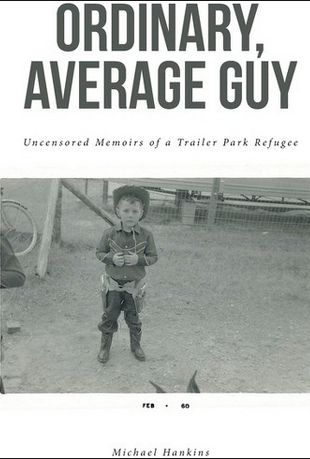
Ahh, boyhood. A time for digging out forts in the sides of hills, running from water moccasins at the creek, and repeatedly bashing .45 ACP rounds to see what’s inside. I stumbled upon this book while researching a Selma suburb for a patron: it’s the childhood memories of an Air Force brat who lived everywhere from Florida to Alaska, including several years just outside of Selma in a trailer park near the now-defunct Air Force training base, Craig Field. Although I initially bought the book to experience the Selma stories, Hankins experienced life all over the country, from the Texas desert to the wilds of Alaska. He wrote this, he says at the outset, to prove that the average Joe has something to say, and to give his kids and grands some idea of their family’s life from the 1950s to the 1970s. The stories are presented largely chronologically, delivered in a personal tone, and run the gamut. Early on, it’s boyish antics: exploring, setting off explosives, building, tinkering, and getting into fights over girls with guys who will later become best friends. After the move to Alaska, where Hankins comes to maturity, we switch to stories about outdoors adventures (and misadventures, like escaping floods and moose), cars, guns, etc. He also includes one story written about his father and mother crash-landing a small plane into the mountains and then having to spend a bitterly cold night waiting for rescue. This is an easy read and enjoyable for me, but I’ll admit to be being predisposed to like it: my father worked at the same Air Force base, and my first six years of life were spent in a trailer park not a mile away from Hankins’ home, so I both knew the area and was utterly fascinated by seeing it differently in better years through his eyes — something he makes even better by including photos from the period!
Highlights:
Many kids, including myself, found M-80s the perfect propellant for homemade mortars. I’d take a piece of pipe then hammer a good portion of it into the ground. A lit M-80 would be dropped in the open end with a round rock to follow. With a loud explosion, the projectile would go flying completely out of sight. I always pointed my mortar into the woods to avoid hitting anyone, forgetting all about the resident moose, bear, and porcupines.
Today is C.S. Lewis Reading Day, hosted by Pints with Jack, and participants are asked to share their favorite Lewisian quotes. I’m going to go with twelve Lewis quotes that are especially meaningful to me personally, or insightful enough that they’ve lodged in my mind.
When I first read Chesterton, I did not know what I was in for. God is, if I may say it, quite unscrupulous.
Surprised by Joy
The most dangerous thing you can do is to take any one impulse of your own nature and set it up as the thing you ought to follow at all costs. There’s not one of them which won’t make us into devils if we set it up as an absolute guide. You might think love of humanity in general was safe, but it isn’t. If you leave out justice you’ll find yourself breaking agreements and faking evidence in trials ‘for the sake of humanity’ and become in the end a cruel and treacherous man.”
Mere Christianity
Of all tyrannies, a tyranny sincerely exercised for the good of its victims may be the most oppressive. It would be better to live under robber barons than under omnipotent moral busybodies. The robber baron’s cruelty may sometimes sleep, his cupidity may at some point be satiated; but those who torment us for our own good will torment us without end for they do so with the approval of their own conscience.
God in the Dock
If we are all going to be destroyed by an atomic bomb, let that bomb when it comes find us doing sensible and human things—praying, working, teaching, reading, listening to music, bathing the children, playing tennis, chatting to our friends over a pint and a game of darts—not huddled together like frightened sheep and thinking about bombs. They may break our bodies (a microbe can do that) but they need not dominate our minds…
Present Concerns: Journalistic Essays
The safest road to Hell is the gradual one – the gentle slope, soft underfoot, without sudden turnings, without milestones, without signposts.
The Screwtape Letters
The process of living seems to consist of coming to realize truths so ancient and simple that, if stated, they sound like barren platitudes. They cannot sound otherwise to those who have not had the relevant experience; that is why there is no teaching of such truths possible and every generation starts from scratch
The Collected Letters of C.S. Lewis
The books or the music in which we thought the beauty was located will betray us if we trust to them; it was not in them, it only came through them, and what came through them was longing. […] For they are not the thing itself; they are only the scent of a flower we have not found, the echo of a tune we have not heard, news from a country we have not yet visited. Do you think I am trying to weave a spell? Perhaps I am; but remember your fairy tales. Spells are used for breaking enchantments as well as for inducing them. And you and I have need of the strongest spell that can be found to wake us from the evil enchantment of worldliness which has been laid upon us for nearly a hundred years.
The Weight of Glory
To love at all is to be vulnerable. Love anything and your heart will be wrung and possibly broken. If you want to make sure of keeping it intact you must give it to no one, not even an animal. Wrap it carefully round with hobbies and little luxuries; avoid all entanglements. Lock it up safe in the casket or coffin of your selfishness. But in that casket, safe, dark, motionless, airless, it will change. It will not be broken; it will become unbreakable, impenetrable, irredeemable. To love is to be vulnerable.
The Four Loves
Indeed, if we consider the unblushing promises of reward and the staggering nature of the rewards promised in the Gospels, it would seem that Our Lord finds our desires not too strong, but too weak. We are half-hearted creatures, fooling about with drink and sex and ambition when infinite joy is offered us, like an ignorant child who wants to go on making mud pies in a slum because he cannot imagine what is meant by the offer of a holiday at the sea. We are far too easily pleased.
The Weight of Glory
We may be sure that the characteristic blindness of the twentieth century—the blindness about which posterity will ask, ‘But how could they have thought that?’—lies where we have never suspected it, and concerns something about which there is untroubled agreement between Hitler and President Roosevelt or between Mr. H. G. Wells and Karl Barth. None of us can fully escape this blindness, but we shall certainly increase it, and weaken our guard against it, if we read only modern books. Where they are true they will give us truths which we half knew already. Where they are false they will aggravate the error with which we are already dangerously ill. The only palliative is to keep the clean sea breeze of the centuries blowing through our minds, and this can be done only by reading old books. Not, of course, that there is any magic about the past. People were no cleverer then than they are now; they made as many mistakes as we. But not the same mistakes. They will not flatter us in the errors we are already committing; and their own errors, being now open and palpable, will not endanger us. Two heads are better than one, not because either is infallible, but because they are unlikely to go wrong in the same direction.
Present Concerns: Journalistic Essays
There are only two kinds of people in the end: those who say to God, ‘Thy will be done,’ and those to whom God says, in the end, ‘Thy will be done.’
The Great Divorce
Those of us who have been true readers all our life seldom fully realize the enormous extension of our being which we owe to authors. We realize it best when we talk with an unliterary friend. He may be full of goodness and good sense but he inhabits a tiny world. In it, we should be suffocated. The man who is contented to be only himself, and therefore less a self, is in prison. My own eyes are not enough for me, I will see through those of others.
Today’s treble-T is “Top Ten Books Set in _________”. I haven’t thought of a topic yet, so I’ll edit this later. And now, the Tuesday tease!
If we let ourselves, we shall always be waiting for some distraction or other to end before we can really get down to our work. The only people who achieve much are those who want knowledge so badly that they seek it while the conditions are still unfavourable. Favourable conditions never come.
The Weight of Glory, C.S. Lewis
“Bart associated his responsible bill paying with having good credit, made possible by his regular income from the landfill. Yet his habit of financing large purchases, such as family vacations, simultaneously made his earned income, whether ‘twenty thousand…or a hundred and fifty thousand’ somewhat irrelevant. The more he paid off his debts, the more his credit allowed him the opportunity to spend however he liked, leaving him at risk of over-extending his family’s finances.”
Waste Away: Living and Working in a North American Landfill
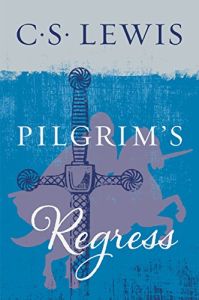
First up, C.S. Lewis’ The Pilgrim’s Regress. Lewis dashed this off immediately after converting to Christianity in 1933, and it’s a fictional and fantastical rendering of his own journey throughout the twenties as he fell away from his childhood faith, explored modern philosophies and the occult, and finally found himself back where he’d started. This isn’t a book I’d planned to read, because over the years I’ve encountered Lewis panning it himself in letters and such to his friends: he wrote it too quickly and it was much too abstract, he commented. I found it at an estate sale for free, though. From its title and premise it definitely reminds one of The Pilgrim’s Progress, but whereas Progress was ‘just’ theological, Lewis has his fellow John running across ‘secular’ philosophies as well — though, depending on one’s definition of religion, Fascism and Socialism can both function as a religion, something I realized when exploring the latter back in ’08/’09. As with Bunyan, different philosophies and ideas are represented through personalities — but the story around them isn’t as interesting as Bunyan’s, and the story is more rushed: most people come and go with the turn of a page. The plot is largely driven by Lewis dreaming about a man named John, who grows up in a little place with a severe absent landlord who has many rules and threatens horrible punishments for breaking said rules, even those that seem benign. John is driven from his home, Puritania, not just by his fear and hate of the Landlord, but in pursuit of something beautiful — an Island — out there. His hunt for the island, Lewis’ ‘stabs of joy’, takes him all over the realm, meeting rationalists and idiots, noble warriors and dwarven savages, over and round and attempting to find a way to cross a great chasm. There’s a little woman named Mother Kirk who says she can help.
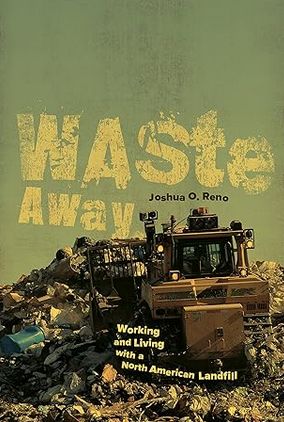
I’m something of a garbage book connoisseur, so on learning that I’d missed one in the last few years, naturally I had to hunt it down. It’s…an anthropological study of the men who work in landfills, and occasionally of the people who live around them. Imagine someone getting very pompous and academic about talking about people who work trash, and…well, there you are. That’s the book. There are several paragraphs given over to the importance of gloves, and the end-of-day ritual in which one’s gloves are disposed of, signifying both one’s freedom from the job of landfill worker, and the eternal cycle of trash: that which handled trash has now become trash — “the garbage keeps coming” is one mantra of the landfill managers. The book is less about trash and the handling thereof, and more about the men who work in the landfill, and those who live around it — who have, in the post industrial age, seen their cities dry up and had to trade keeping the roads paved by becoming the site of a mega landfill which they now attribute to rising health problems in the area. The most interesting chapter to me was “Smells Like Money”, in which we learn of how workers justify the indignity of handling other people’s trash (even Canadians‘) with the money they make, and how some who were pushed from the working to the ‘middle’ class in terms of income try to live up to expectations, creating a hedonic debt cycle that they can’t seem to escape from. Reno worked at the landfill as part of his graduate dissertation, but unlike Lawrence Oulett’s Pedal to the Metal, Reno is not only known to the landfill workers as a grad student but sticks out from them. (Oulett had driven trucks before he began studying drivers, so he blended right in.) Consequently, he catches a fair bit of hazing from the other san-men. Personally, though I have a great interest in the broader subject of waste and sanitation, Ifound Waste Away to be much too much impressed with itself.
As part of A Week with Jack, I’m going to respond to a few questions inspired by C.S. Lewis’ relationship with literature. These questions were presented to the reader at the end of The Reading Life, an anthology of Lewisian essays on literature, reading, and the meaning/value thereof. You are invited and welcome to participate, to whatever degree you feel comfortable.
List the ten books that have most shaped who you are today and write down a few sentences per book of how they have shaped you.
Neil Postman’s Technopoly has had a huge yet understated effect on my life and thought: it was the book that made me think about how our use of technology changes us, and it’s why despite being a tech geek, I’m also a quasi-luddite who only bought a smartphone in 2018, and then largely to serve as a camera. Erich Fromm’s essay “Ennui and Affluence”, included in For the Love of Life and then expanded into its own book, To Have or to Be?woke me up to the unhappiness caused by not just consumerism, but to material attachment, and along with Walden was the reason I began exploring voluntary simplicity and lived like a monk in college. The Meditationsby Marcus Aurelius and The Consolations of Philosophy by Alain de Botton are must mentions, introducing me to a life inclined towards wisdom, and in Aurelius’ case, my engagement with his thinking made me realize and appreciate what religion felt like — the attempt to discern order in the Cosmos and then live by it. A Life of her Own by Emile Carles, which I read for a French history class, had a huge effect on my political thinking, introducing me to the libertarian left. The Death and Life of Great American Cities is one of the most important books I’ve ever read, introducing me to the concept of emergent order, and serving as the unwittingly catalyst for my transformation from a conflicted progressive into a conflicted libertarian. Robert Putnam’s Bowling Alone, like Kunstler’s Geography of Nowhere, brought into focus something I’d been aware of, but in a hazy, “can’t quite put my finger on it” sort of way, and it led to me engaging with conservative though, which I was starting to realize was more varied and substantive in quarters than I’d realized.
Lewis often describes the gift of reading as the opportunity to “see through others’ eyes.” Which books have you read that have revealed to you a very different view of the world from your own? How did these experiences change you? Which books should you read that would open up other worlds you are not familiar with—allowing that the differences could be cultural, racial, religious, historical, or something else?
This is a harder question to answer. given how many books I’ve read over the years — close to two thousand during this blog’s tenure. I’ve read books that would give me another perspective before — Destiny, Disrupted is a world history through Muslim eyes, for instance, and one of my favorite books in the for Dummies series is a British book whose history of the American Revolution allowed me to see the English perspective. I sometimes read war memoirs from different sides: Black Edelweissremains one of the most chilling I’ve read, demonstrating how perfectly normal, middle-class Germans could willfully choose Hitler, not because they believed in him but because he was viewed as a necessary evil, a safeguard against worst fates like takeover by Communist gangs.
Lewis highly values re-reading old books, even books from childhood. Which books have you re-read, and why did you choose to re-read them?
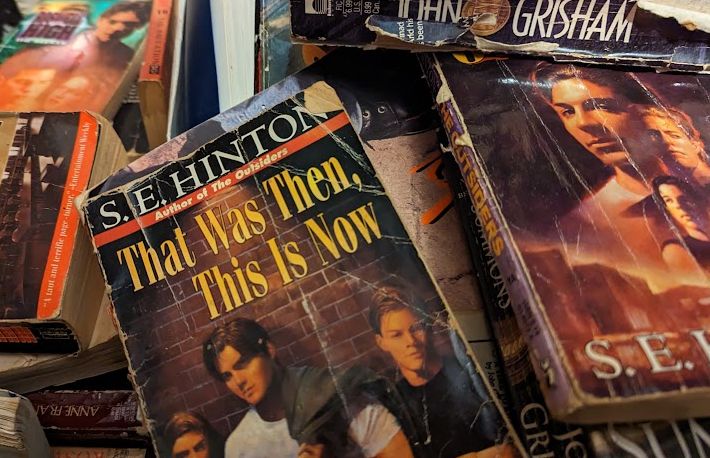
I’ve re-read quite a few books from my youth, largely because I wanted to re-experience the stories again. Tom Sawyer and The Call of the Wild are books for me that will never grow old. Recently I re-read books from the 1990s, but not for any serious reason; it was more to dip into neon nostalgia for a little bit.
Which books have you read more than twice? How have these books affected you? Write down your earliest childhood memories of books that transported you and created in you a love of books? Have you re-read these titles lately? Were they still magical? How did these early experiences influence you?
The few. The battered. The very, very well-read.
I’ve read many books more than once. Before I became a working adult, I’d chronically re-read the books I had, so much so that those titles are a….wee bit battered. Now, as an adult, I rarely re-read books, but there are exceptions. I regularly re-read C.S. Lewis’ Surprised by Joy and The Screwtape Letters, the former because I enjoy Jack’s company and the latter as a devotional exercise of sorts. Asimov, Bill Kauffman, and Anthony Esolen are also revisited on a regular basis. Ditto Wendell Berry: I love putting on a chapter of my Jayber Crow audiobook and revisiting Port William. As far as books that transport me some place else — oh, Robinson Crusoe! I don’t remember how old I was when I read it — eight, maybe. It was a child’s version, but I was absolutely fascinated by it, and still remember walking down the street reading it, unable to wait to get to my ‘spot’ –a little area between some huge mounds of sand and the woodline, where there were a multitude of blackberry bushes and honeysuckles. It was cool in the summer heat, no one could see me behind the sand, and I could lose myself in reading. I also had a private spot in the woods behind a swamp that I’d forged a path to using..um, “borrowed” cinder blocks. Alas, I lost it when the woods were logged.
List the “old books” you will commit to read as a break from reading all contemporary ones.
While I’m not going to take a break from new reads, there are a few books from 2013 I’d like to re-visit: Crunchy Cons, which I read as a progressive moving into libertarianism, but which was about the conservative counterculture; The Death and Life of Great American Cities, not only because it was brilliant and mind-blowing but because I never reviewed it; The Age of Absurdity, which I read in the same year and again failed to review; and several of those world-view changing titles like small is beautiful.
What do you think of the genre of books called fairy stories or books of fantasy and magic—of which Lewis had much to say? Which titles have influenced you most and what do you think they have taught you about the “real” world?
I have enjoyed them, but they’re not a staple. I think I resonate more with Narnia and Middleearth because of who the authors were, and from the fact that they were drawing deeply from Western and Christian culture/lore to create this stories. Likewise for Mercedes’ Lackey “500 Kingdoms” series, which takes as its premise that The Tradition (of stories) is always trying to recreate itself by pushing people who fit certain types (like a stepmother or an orphan) into tropish storylines. Aesthetically, I like the world of Tolkienseque fantasy very much – -the psuedo-medieval setting is always easy to understand.
Lewis writes movingly about the discovery of his favorite author, George MacDonald. Who would you say is your favorite author, and what role has he or she played in your life?
A few years ago I would have described Isaac Asimov as my favorite author, simply because I’d read so much of him. These days, though, I’m torn between Wendell Berry and Jack himself. I could write essays on either — on my appreciation of Berry’s unique critiques about the industrial state, the destruction of human communities and the human person in the modern age, his beautiful recreation of the same in his Port Williams books, etc. Lewis had similar critiques about modernity, though he wasn’t so much thinking of a shift from agriculture to industrialism, or the takeover by agriculture by the machine: not only did that presumably happen at a different scale in England, but it was only starting in earnest in the US when he died. I think I’ll say Lewis, not because I like Berry less but because I feel I know more of Lewis: I’ve read his biography, his letters, his diaries, countless essays. Lewis isn’t just an author to me, he feels like a friend, one whose company I frequently seek out.
This month some bloggers have been participating in Nonfiction November, a series of queries hosted by “Based on a True Story“. The last question asks for nonfiction titles that have recently found themselves on our to-be-read pile. I think it’s supposed to be the last ten books or so, but I’m going to publicly shame myself in the hopes of doing better. Consider this my “Books I Have to Read Before I Can Buy Any More Books, At Least Until my Resolve Weakens and I Surrender Like the Craven Addict I am”. Those with a purchase date past six months (everything after High Price of Materialism) are technically old enough to be Mount Doom titles, and will be considered such in 2024.
America Calling: A Social History of the Telephone to 1940, Claude S. Fischer.
Hit Refresh: The Quest to Rediscover Microsoft’s Soul and Imagine a Better Future for Everyone, Satya Nadella
Goodbye, Darkness: A Memoir of the Pacific War, William Manchester. Technically a re-read.
Antisocial Media: How Facebook Disconnects us and Undermines Democracy. Purchased for class.
The Master Switch: The Rise and Fall of Information Empires. Purchased for class.
A Brief History of Nakedness, Philip Carr-Gomm. I was going to pair it with Naked at Lunch, but now it’s just standing awkwardly in the corner holding a magazine in front of itself.
The High Price of Materialism, Tim Kasser. Waiting for Advent so I can be all subversive and countercultural.
Plato, not Prozac: Applying Eternal Wisdom to Everyday Problems, Lou Marinoff
Live, From New York! An Uncensored History of Saturday Night Live, Tom Shales.
Sons of the Waves: The Common Seaman in the Heroic Age of Sail, Stephen Taylor. Purchased for Read of England.
The Stonemason: A History of Building Britain, Andrew Ziminski. Purchased for Read of England.
The Royal Society and the Invention of Modern Science, Adrian Tinniswood. Purchased for Read of England.
The Club: Johnson, Boswell, and the Friends Who Shaped an Age, Leo Damrosch. Purchased for Read of England.
The Vision: Reflections on the Way to the Soul, Kahlil Gibran
Human Scale Revisited: A New Look at the Classic Case for a Decentralist Future, Kirkpatrick Sale
Against the Machine: Being Human in the Age of the Electronic Mob, Lee Siegel
The Lost City: The Forgotten Virtues of Community in America, Alan Ehrenhalt
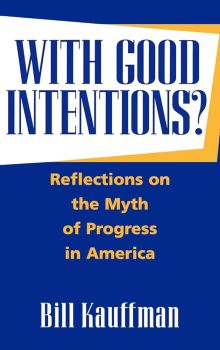
Wait, wait, wait. Before I comment on this book, I want to say first that patience is a virtue, and so is persistence. I stumbled on Bill Kauffman nine years ago, possibly via Front Porch Republic, and was immediately taken in by his charismatic contrariness and his beguiling command of archaic words and forgotten American literature. I immediately set my+ sights on reading Everything Bill Has Written, but was frustrated by not being able to find any copies of With Good Intentions? Reflections on the Myth of Progress for sale, or available via interlibrary loan. Disappointed but determined, I have for nine years kept an intermittent vigil, occasionally checking for used copies online that weren’t ridiculously priced — and finally, a couple of weeks ago, I saw one, and snatched it up immediately. (Current copies are selling for $55-$75. I purchased at $9. Ho, ho, ho.)
With Good Intentions is odd among Kauffman’s published works, appearing not as a monograph but as a collection of six essays of varying length linked by a theme, that of resistance to various ‘improvements’ of the 20th century, from women’s suffrage to the interstate system. Although progress tends to be a four-letter word in a Kauffman book, as he associates it with the destruction of cities to ‘save’ them and the ever-expanding growth of the beast on the Potomac, here not only does he include changes that he personally has no issue with, but he’s not the one arguing against them. Instead, Kauffman assays contemporary arguments and responses (for and against) and presents them to the reader with his own commentary — commentary which is more subdued than his usual style, and given that each piece ends with its own section of end-notes, the collection is more formal than one would expect from Batavia’s finest. To be sure, he’s still there: in quoting one person, he forewarns the reader that they use enough passive construction “to make Strunk turn White”. Kauffman is usually on the side of the opponents of change, especially of the interstate system and the standing military, but in the case of female suffrage he’s more fascinated by why some women opposed it: “Red Emma” Goldman, who no one would ever confuse with a traditionalist, despised it in part because she regarded the female sex as far more meddling and obnoxious, eager to interfere in the lives of others. (Readers who object should consider that pre-suffrage female activism was a huge part of the Temperance movement .) I was intrigued by Kauffman’s assertion in Ain’t my Americathat the standing military is enormously disruptive of the family, and thus anti-conservative, and here his commentary makes that case more forcefully. Presumably present readers would take most issue with the concept of child labor laws being opposed, but contemporaries make an excellent point that is not now sufficiently appreciated: this was when the State began asserting and assuming ownership of children, irrespective of the family’s interests or the parents desires — a road which has led to some places like the Inglorious People’s Republic of Californistan wanting to abduct children from parents who objected to their tweens wanting to chemically and surgically destroy their bodies under the influence of transmania. Good people often bad policy make, Kauffman remarks.
Fans of Kauffman will enjoy this on the off chance they can find it, but I wouldn’t use it to introduce Kauffman to anyone: he’s more restrained and formal here, and I only had to consult a dictionary once while reading
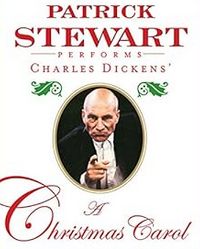
When I saw that Audible had a version of “A Christmas Carol” performed by Patrick Stewart, there wasn’t a chance in the world I would not listen to it. I made myself wait until after Thanksgiving, though, because I’m a stickler about such things. If I lived in a universe in which Stewart had not delivered a singular performance of Scrooge in the movies, I would have still leapt at this given his marvelous vocal talent regardless. As I assume everyone reading this knows the gist of “A Christmas Carol”, I won’t bother rehashing the story. It’s enough to say that Stewart fully delivers here, performing all the characters and sound effects. I must say, listening to Patrick Stewart make clock and ringing bell noises was an interesting start to the Christmas season. Stewart gives all of the characters a distinct voice, playing a bit with different accents: they sounded fine to my American ears, but I imagine British listeners might have different opinions — just as I severely roll my eyes when I hear someone putting on a southern drawl. Because of Stewart’s involvement in a Christmas Carol movie as well as this, I couldn’t help but compare his performance of Scrooge proper — and this audiobook’s Scrooge is a bit different — Stewart delivers lines in a higher register, with a bit more timidity. I much prefer the movie version, but this was utterly enjoyable, and no more so than when I got to hear Stewart pretending to be a child singing a Christmas hymn.
Now, to versions of A Christmas Carol. I understand there are different partisans, but I’ll die on the hill that Stewart’s is the best — all of the acting is superb, and to it is added the wonderful music of Stephen Warbeck.
Twelve seconds of Patrick Stewart singing “God Rest Ye Merry Gentlemen”
The first time I ever attended the Christmas morning service at a liturgical church (an Episcopalian), we sang this and I was pleased beyond measure.
Fezziwg’s Party, one of my favorite scenes in the movie to watch.
Fran’s Theme, heart-rending in its wistfulness despite its shortness:
Giving thanks is very meet and right, and just so to do, so — here’s one of my very favorite hymns in honor of the day.
Not here for high and holy things we render thanks to Thee But for the common things of Earth, the purple pageantry Of dawning and of dying days, The splendor of the sea
The royal robes of autumn moors, the golden gates of spring, the velvet of soft summer nights, the silver glistering of all the million million stars, the silent song they sing,
Of faith and hope and love undimmed, undying still through death, the resurrection of the world, what time there comes the breath of dawn that rustles through the trees, and that clear voice that saith:
Awake, awake to love and work! The lark is in the sky, the fields are wet with diamond dew, the worlds awake to cry their blessings on the Lord of life, as he goes meekly by.
Come, let thy voice be one with theirs, shout with their shout of praise; see how the giant sun soars up, great lord of years and days! So let the love of Jesus come and set thy soul ablaze,
To give and give, and give again, what God hath given thee; to spend thyself nor count the cost; to serve right gloriously the God who gave all worlds that are, and all that are to be.