Mr. Bensington proposed originally to try this stuff, so soon as he was really able to prepare it, upon tadpoles. One always does try this sort of thing upon tadpoles to begin with; this being what tadpoles are for.
The Food of the Gods, H.G. Wells
“If you’re a specialized intellect, what’s your specialization?” “You. I was created to study you.” That did not sound good. “What do I call you?” “Call me Jon.” “I’m not calling you Jon. Jon is my name.” “It’s our name.”
Influx, Daniel Suarez
The endpoint of a three-century struggle for ‘progress’, understood as individual separateness, has culminated in a political effort to eliminate all meaningful sex differences through technology. Though conceived of as an idealistic project, in practice this largely serves corporate interests. And it dresses in feminist garb a commercially driven effort to deregulate all of human nature, which will enslave our minds in digital fantasies even as it monetises our bodies via biotech.
Feminism against Progress, Mary Harrington
In Nicholson’s hands, the dead shimmered with life. You could taste their cornbread.
The Dead Beat: Lost Souls, Lucky Stiffs, and the Perverse Pleasures of Obituaries
Metatropolis collects five short stories from a “shared future”, all in or about the future of the city. That vision is not one of growth, however, but of retraction and collapse. Expect nothing like the Sprawl here. I was drawn to this collection for both the urban connection (cities are technological revolution made visible, and casting a long shadow)and for the editor and contributor, John Scalzi. Initially, I shelved the book after realizing it wasn’t about smart cities (dystopian or otherwise), but decided to give the premise a shot. The shared future is not quite post-apocalyptic, but factors like climate change and peak oil have essentially turned America into a failed state: local forces like cities and gangs have far more presence and power than the essentially nonexistence threat of DC. The collaborative nature of the project is visible not only in its shared histroy, but in the common themes, like the central place of ecological management, and the potential that tech has to create more distributed rather than command/hierarchical activity. Strong collection on the whole, with some weak spots.
In “In the Forests of the Night”, we encounter an anarchist ecovillage/green city built in the lava tubes of Cascadia, which has drawn the attention of two very different personalities: a female special agent in the employ of we-don’t-know-who, and a mysterious but very charismatic man who simply calls himself Tyger. There are other eco-villages out there, but they’re falling under attack by (insert villain sting) Capital. This piece introduces us to the future these stories are all set in, one in which the United States proper has more or less fallen apart, both due to climate change and the fact that the corporations it charted have more power. I was very interested in the eco-village, but the author focuses more on the interplay between three characters (Tyger, the female agent targeting the town, and the town’s security chief). I liked the premise and the fascinating setting, but the mystery of Tyger is never explained, nor does the plot make sense.
“Schotastic City” shifts us inland, to a dying Detroit where a bouncer is introduced to an opportunity for odd jobs by his barkeeping friend, and unwittingly drawn into into a revolutionary movement. This story explores distributed political activity and green urbanism. Haunting are the scenes set in The Wilds, suburbs now being reclaimed by nature, having been abandoned by all but the most desperate given their distance from economy activity. “The Red in the Air is Our Blood” follows this, and is oddly similar, being set in Detroit and following a character who becomes part of an eco-oriented intentional community. It’s rather short. Both of these stories demonstrate that society is in a stage of decay and reclamation: a new world has not been created, the old world is not entirely dead, but those who have lived in both are actively trying to create the one by scavenging the other.
“Utere Nihil Non Extra Quiritationem Suis”, by editor John Scalzi,follows a young slacker whose lazy approach to school sees him assigned a job as a waste technician at a pig farm in New St. Louis. This is by far the easiest story to get into, in part because it’s a straightforward tale — though it helps that we’ve already gotten used to the idea of these cities as closed communities. The nature of the closure is not merely for security, but as we see here is also useful for ecological management: the pig farm is arranged so that no energy is waited, for instance. That creates tension and drives the story, because people living outside of New St. Louis want the resources and systems that created its prosperity — and while there are some in the city who would be willing to share, allowing tech (including genetically modified animals) to filter out without discipline would be disastrous.
“To Hie from Far Celenia” is the most unusual of the lot, as it features a virtual-reality overlay ‘game’ in which people navigating meatspace can “see” instead that world in the form of a techno-fantasy RPG, where people can assume different identies and real-world tasks appear in the form of quests and the like.In this story, the law is investigating the possibility that the game is being used for a criminal, terroristic reason as well. This was interesting to a degree but got increasingly more abstract.
Related: Amazon’s “Warmer” collection, which I largely disliked (save for a couple of stories) but is also environmental-SF. Daniel Suarez’s Daemonand Freedom(tm), especially relevant to the last story. Jim Kunstler’s “World Made by Hand” series, in which peak oil has led to collapse of the industrial-technological order, but is set far enough from that collapse that some stable communities have already formed.
Cyberspace. A consensual hallucination experienced daily by billions of legitimate operators, in every nation…A graphic representation of data abstracted from banks of every computer in the human system. Unthinkable complexity. Lines of light ranged in the nonspace of the mind, clusters and constellations of data. Like city lights, receding
Neuromancer is a rare book — bewildering, beautiful, horrifying, disorienting. It’s the story of Case, a ruined hacker who is approached by a woman with a job offer. In the recent past, he made the mistake of stealing from the people he was meant to be stealing for, and as a penalty they destroyed his ability to jack into cyberspace, the realm in which he and everyone lives and moves and has their being: he’s stuck in meatspace, without the ability to work, and far worse….derpived of the stimulation, the rush, he gets from jacking in. But this woman’s boss says he can give that back to Case — for a job.The job begins as a simple case of theft, but grows into an adventure with the highest of stakes.
Without dipping too much into the plot, there are strings upon strings being pulled for the benefit of an artificial intelligence, which a megacorporation has created. Although this is a world where light and flesh, machine and bone, mind and code intermingle in ways both horrifying and mesmerizing (like the flash of an atom bomb, brilliant but broadcasting death), there are still some rules. You can have robotic organs, lab-grown muscles, customized faces, even experience the world through your girlfriend’s eyes– but artificial intelligence is right out. It seems AI is one demon that this world doesn’t want to let out of the bottle, one gollum it intends to keep dismantled.
What makes Neuromancer such an interesting read, though, is less its story and more its world and the way it’s presented to the reader. Cyberspace and the virtual are always present — in every line, every page. As with The Shockwave Rider, I’m both at a loss as to how Gibson managed to imagine the digital world so readily, especially when his knowledge of computers was fairly minimal: I read recently in Astounding that when Gibson brought a computer back to a shop complaining of nose, he was informed that it was merely the device’s fan. Gibson was surprised that a computer would need something so pedestrian. I’m also envious of people who read this book before the 1990s jacked us all in. The interlace between the real and the virtual allows for frequent and dramatic scene switches: Case might be talking to one set of people in meatspace, an entirely new set when he’s jacked in, and it’s so easy to toggle in and out that the reader is in for a wild ride. The writing itself is marvelously immersive, somehow making the reader experience the overstimulation and mixed ugliness and beauty of this world. It’s bewildering, confusing, but a wild ride the reader doesn’t quite want to get off of.
Definitely reading more Gibson!
Quotes:
The sky above the port was the color of television, tuned to a dead channel.’
We have sealed ourselves away behind our money, growing inward, generating a seamless universe of self.
“Autonomy, that’s the bugaboo, where your Al’s are concerned. My guess, Case, you’re going in there to cut the hard-wired shackles that keep this baby from getting any smarter. And I can’t see how you’d distinguish, say, between a move the parent company makes, and some move the Al makes on its own, so that’s maybe where the confusion comes in.” Again the nonlaugh. “See, those things, they can work real hard, buy themselves time to write cookbooks or whatever, but the minute, I mean the nanosecond, that one starts figuring out ways to make itself smarter, Turing’ll wipe it. Nobody trusts those ——, you know that. Every Al ever built has an electro-magnetic shotgun wired to its forehead.”
For thousands of years men dreamed of pacts with demons. Only now are such things possible. And what would you be paid with? What would your price be, for aiding this thing to free itself and grow?
The lengths you will go to in order to accomplish your own destruction.
Tonight a friend of mine and I watched The Island of Lost Souls, a 1932 adaptation of H.G. Wells’ The Island of Dr. Moreau. The island references Wells in the credits, and largely follows its plot although a shift in the setting (from 1896 to 1932) creates an opportunity for the plot to be wrapped up much more tidily — which it does, making for an easier and happier, but less philosophically interesting, story. Despite being nearly a century old, its costume effects and sound design make it a chilling and effective horror film.
Because the film is set the present day (1932), the Prendick character is allowed to fire off a wireless telegram to his fiance after being initially rescued, which raises questions when his rescue ship arrives in port sans rescuee — and leads to a ship being dispatched to investigate after the captain reveals he threw the man he rescued off at an uncharted island. On the island, the plot proceeds mostly as it does in the book, with one significant departure: Moreau (who is sometimes called Morrow, depending on the character) has successfully created a Woman creature, and he wants to test her out on the Prendick character. Prendick and the woman’s attraction to one another gives Prendick’s rebellion against his captor-host another dimension, though once his fiance arrives she’s conveniently left to fall victim to Plot Happenings.
Whereas in the book, we see Prendick left alone on the island with the Beast People and beginning to sink to Moreau’s level — falling from viewing them with compassion to viewing them with contempt — and later becoming some misanthrope at sea, the arrival of his fiance (played by the very photogenic Leila Hyams, wow) gives him the opportunity to skedaddle, letting Moreau fall victim to his own creations when Plot Things happen. This is much less pessimistic than H.G. Well’s original, and thus has less to say about the influence of power and fear on the human character — but it makes for a more enjoyable story, I will say. Enjoyed it throroughly.
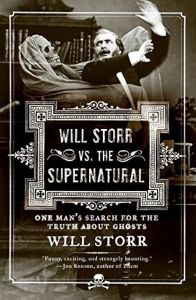
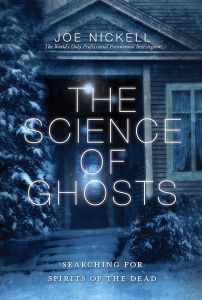
This past week I’ve finished two books about ghost-hunting: one from “the only full-time professional paranormal investigator”, Joe Nickell, and the other from journalist Will Storr. I’ve read both men before: Nickell’s Real Life X-Filesfrom 2008, and Storr only earlier this year. Nickell is essentially a debunker, though he would dispute that, and Storr is a journalist with an enormous tolerance for submerging himself in unusual circumstances amid unusual people.
Storr’s Adventures with the Enemies of Sciencewill be remembered as one of my favorite books of 2023, for its fascinating blend of science and weirdness. Will Storr vs the Supernatural is more Storr recounting his adventures with ghost hunters, exorcists, and shrinks, in which he has a few encounters of his own that rattle his own disbelief. Unlike Adventures, though, there’s not as much back and forth with Storr trying to inform his understanding of of those holding on to marginalized beliefs by talking to scientists who are more versed in the area. Instead, Storr encounters a series of people with wildly different interpretations of their experiences, or with ghosts in general, and by the end he’s so shell-shocked by one particular visit (involving a mentally unwell woman projecting her beliefs in ghosts on her autistic child, in a situation that screams child abuse) that he dismisses everything as either crazy people or quantum physics. It’s far from the thoughtful Storr of Adventures — the one who could hang out with people who talk to the voices in their heads, then explore schizophrenia as a kind of neurodivergence. This is especially interesting given that he himself records experiences within the book — a cold hand on his back, a feeling of dread and malice so deep that he feels compelled to leave a room — so that even though I don’t believe in ghosts myself, Storr gave off “trying to convince himself” vibes by declaring everything was quantum physics. There are some interesting chapters in here ,though, particularly his interview with a psychologist who has studied the psychology of paranormal belief, and explains that people can prime themselves and actually induce feelings in themselves — so that if something happens, the brain not only interprets it through a lens of belief, but actively experiences it through that lens. One interesting commonality among those interviewed is a denouncement of oujia boards: priests, witches, and ordinary ghost hunters alike viewed them as dangerously chaotic. Similarly, everyone agreed that paranormal activity usually needed to feed off of human activity to manifest itself — whether that be people fooling around with oujia boards ,or being in an emotionally aroused state to begin with.
Joe Nickell’s The Science of Ghosts is more straightforward “This is the report, and this is why it’s nonsense” writing, with different kinds of hauntings grouped together (Civil War ghosts, theater haunting, etc). Nickell introduces each section with context, so we get a history of the spiritualism movement of the late 19th century before examining those specific claims. Nickell’s background and interests make him a keen investigator: he has performed as a magician, for instance, experiments with photographic effects, and has a background in folklore that he uses to analyze ghost stories from a different angle than most. When flipping through the book at the post office, I was surprised to encounter the familiar visage of Robert G. Ingersoll, a masterful orator of the late 19th century who was known for his skeptical lectures — evidently so much so that one person claimed his ghost was using her hand to rebut himself after his death and urge sinners to return to God. Nickell conducts a literary analysis of the “ghost” Ingersoll and the genuine article and points out how stylistically and grammatically dissimilar they are. Several of the cases were proven as frauds in their own lifetimes, but are nonetheless still believed in — like the Fox sisters, who admitted they were putting audiences on, but whose confession is regarded as forced or done for ulterior motives. The book is really just a series of cases and commentary, though, not a deep dive into the various environmental or psychological factors that lead to perfectly rational people believing in hauntings.
Coming up: Neuromancer, dead people, Star Trek, and more SF.
Another assignment this week in my SLIS class was to record and reflect on our experiences with media throughout the course of a day. Again, since the topic is relevant to the general theme of Reading Freely, I share it here!
My mornings begin with email, my main source of news. I subscribe to different outlets like The New York Times and The Spectator, and they send out different pieces throughout the day. I generally look over the headlines and then click if I see one that interests me, like The New Yorker’s “What Was Hamas Thinking”, or The Spectator’s “Return of the Hawks: Israel Redefines the GOP Primary”. I also receive substack newsletters, some of which are commentary on the news. I prefer reading news via email, because news websites are visually distracting, and the easy access to other articles drains my attention from the article I’ve clicked on. There are some news sites I visit, though, in part because they’re more of a “once a week” source instead of a daily source. One example is al-Monitor, a website collecting news from the Middle East.
My phone, a Pixel 6, is not a source of news, as I don’t have any news or social media apps on it. I sometimes see articles when I go “back” from the home screen, but this newsfeed appears to be curated from my Google account, and thus tech and gaming news always dominate. The top story today, for instance, is about updates to Google Assistant and Google Wallet; immediately below that is a review of Cities Skylines 2.
I sometimes encounter news in areas where I’m not intending to, like reddit. Reddit is a website where people can follow different ‘subreddits’ that collect discussion around a given topic, like PC repair, the Boston Red Sox, or Star Trek. Reddit frequently inserts topics from subreddits I don’t subscribe to into my feed, so today I spot a screenshot of an AP news headline about President Biden endorsing a bill to send money to both Ukraine and Israel. One of the reasons I quit using Twitter early in 2023 was because it politicized my feed too much. I frequently see the headlines at work, on Yahoo and MSN’s news portals, but I don’t monitor news unless there’s severe weather happening.
When I get home on this particular today, I’m too tired from a long day of helping patrons and trying to solve technical issues to do thing serious like listening to a podcast that would touch on the news. Instead, I listen to music, read, and eventually fall asleep watching YouTube. Sometimes I watch news on YouTube, or commentary on the news. One channel I like because of its international perspective is WION, or “World is One News”. During baseball season, I also watch highlights from the teams I follow (Red Sox & Braves), and search for news for particular players, like Shohei Ohtani.
In general, I think my media consumption is more active than passive, as I actively seek out news from specific sources, either for quality or for a balance of perspectives, and I deliberately get my news in ways that lets me focus and reflect on it. However, I’m also aware of what in anthropology might be referred to as the observer effect — the tendency of a subject to alter its behavior when it knows it’s being observed. In my case, I suspect if someone were recording my screen for 24 hours and I was unaware, there would have been a lot more idle browsing of reddit and news-reaction videos on YouTube.
One of my class assignments this week is to go 24 hours without touching my phone, and since that aligns fairly well with some of the books I‘ve written about here over the years, I thought I might share my reflection here as well as in the virtual classroom we’re using.
I was looking forward to this experiment because I regard myself as a phone minimalist, but figured there would be hidden dependencies that this day without a phone might expose.
My first anticipated challenge was waking up. Although I frequently wake up well before my alarm clock goes off, on the foregoing night I’d stayed up rather late watching a documentary on cave disasters, and would have most likely slept in if left to my own devices – or left without them, in the case of my turned-off phone! Fortunately, I had options ranging from a battery-powered clock with physical bells to my Nest Hub. I chose the latter, though it felt a little like cheating considering it was still a digital device. My morning proceeded without any other real differences, save for the music-less drive into town. It wasn’t until I arrived at work that little disruptions began accumulating.
It didn’t help that the morning was unusual: the City is changing life insurance providers, so members of the library staff had to go to City Hall next door and fill out paperwork to update beneficiaries and the like. The form asked for information about my prospective beneficiaries that I didn’t know offhand and couldn’t find out without my phone, so I had to take the paperwork with me to return later this week. On the walk back to the library, the shutterbug in me noticed a particularly attractive potential shot of morning light in the trees, but not having my phone I could only stand and admire it. Upon arriving back at work, I accessed MyBama (e-learning portal) to check the discussion boards, only to be greeted with the news that a one-time password had been sent to my phone.
I use two-step verification for most everything, from Amazon to Gmail, and realized that was going to constitute a problem. I don’t have a fixed workstation: at my library, the reference staff alternate positions throughout the day, and I work from my personal OneDrive as a result – and now I had no way to access it. Fortunately, I didn’t have anything due today as far as local history and genealogical queries go, so I just worked on new ones that I hadn’t created files for yet, and emailed them to myself with my work address at the end of day to add to my OneDrive once I was home. At lunch I finished the paperback novel I was reading, and couldn’t simply switch to reading the Kindle app on my phone as I otherwise would have. Fortunately, I do work at a library.
The afternoon was busy enough that I didn’t have time to notice my inability to check for messages and phone calls, and the evening was much the same. Once I arrived at home, I was able to ‘cheat’ a little with regards to the one-time password and logging into MyBama: I use the Google Messages app, and have it setup to connect to my phone via bluetooth, so if my phone is nearby, I can ‘text’ people on the computer without touching the phone.
What did the day’s exercise reveal about my habits and phone use? I missed a few conveniences without the phone, but was generally able to find ways around them – – remembering to bring a paperback book with me to read at lunch, for instance. My phone use is already so sparing, though – I’d venture to say that 90% of the time I’m holding it, it’s to read Kindle titles– that not too much was different. The only serious obstacle was two-step verification on emails and the like, which is not something I can bypass. I suspect a more serious (and interesting) challenge would be a day without a computer, though that’s not one I could do on a workday. This is also the same lesson I drew back in 2019: I’m possibly just as addicted as the phone nuts I frequently mock/bewail/etc, but my addictions are fed through a 40 inch computer monitor instead of a tiny little square.
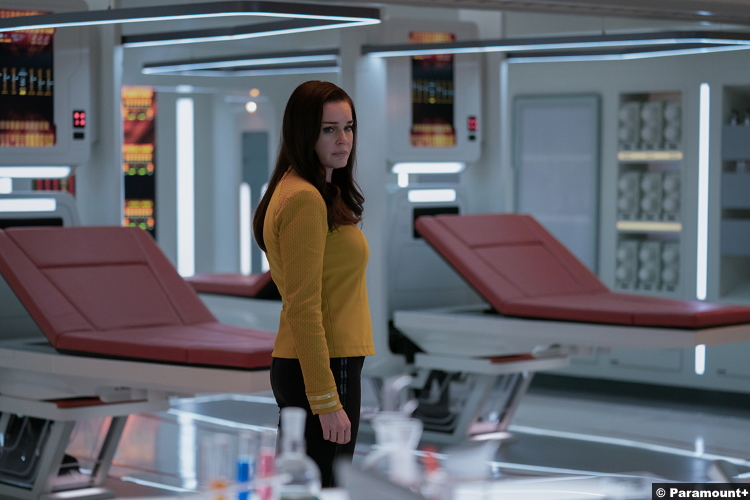
“I have to fly this shoebox into an electrical maelstrom, go looking for a scientist in a jungle where it never stops raining, avoid corrupting a primitive, Prime Directive-protected indigenous culture, and then somehow get this hunk of junk back into orbit without getting vaporized by the Klingons. If I were making wishes, I’d ask you to make the Kepler invulnerable, invincible, and invisible.” “In five hours I can give you less fragile, mildly intimidating, and vaugely nondescript.”
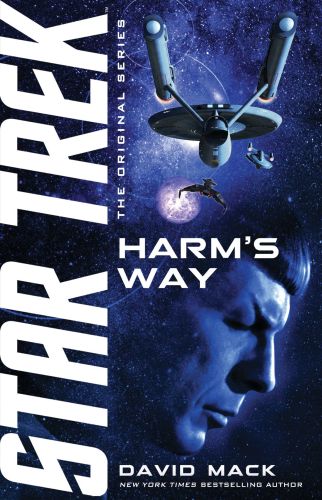
ST TOS: Harm’s Way
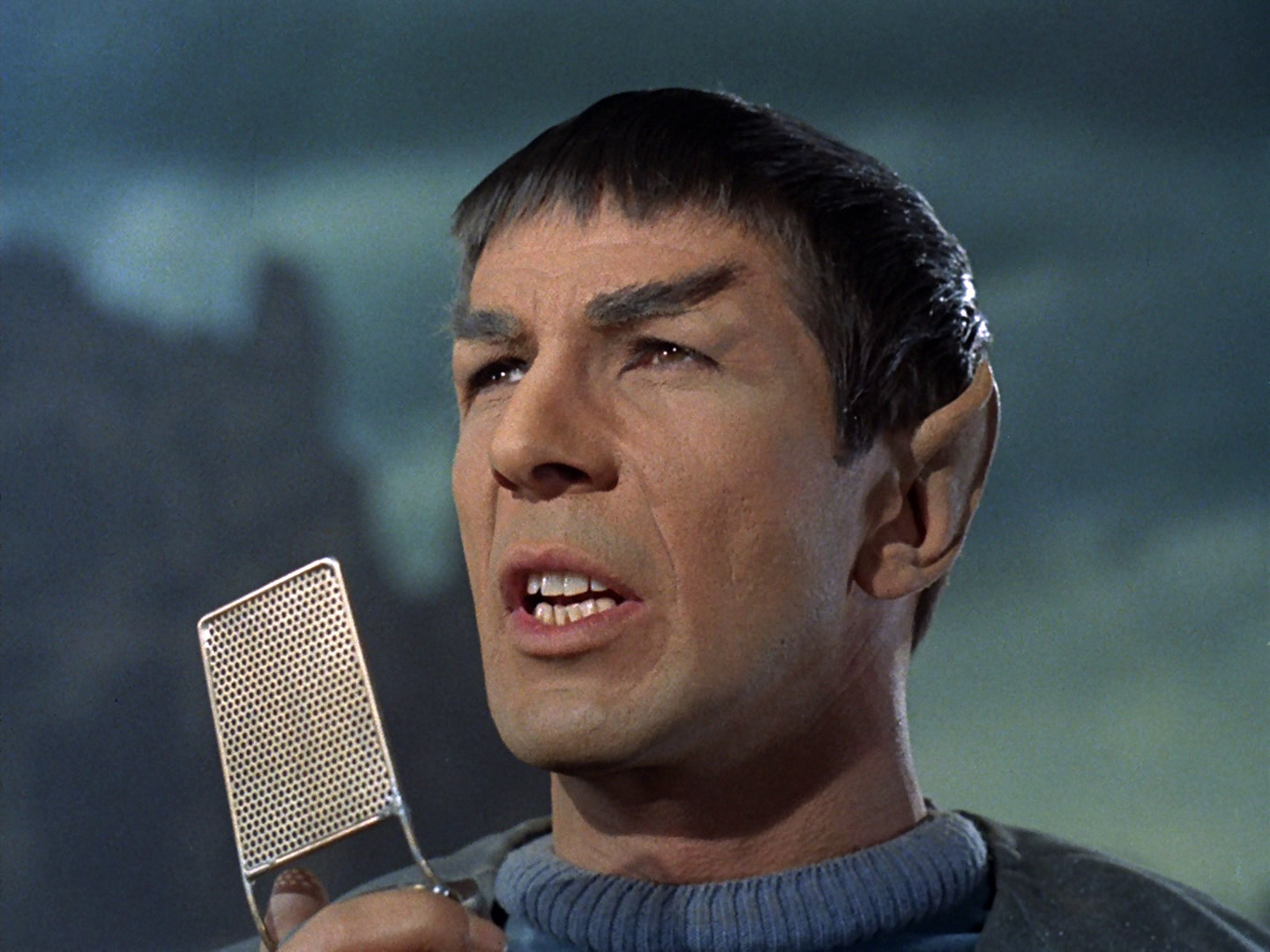
“You are not a trusting soul, old man.” “How do you think I got to be so old,” Boyce replied. “Clean living?”
ST TOS: Child of Two Worlds
‘I’ve never done a séance before. Um… they’re not dangerous, are they? It’s just that I have been warned … ’ ‘Trust me,’ he says. ‘All I ask is that you put your life in my hands.’
Will Storr vs the Supernatural
“Will you come forward and tell us your name?’ she says. ‘Rarrrrrrrgggggggghhhhhhharrrrrrr!’ says Steve, even louder than before. ‘Please be gentle on the medium,’ says Penny. ‘Hoooooooaaaaaarrrrrrgghhhhh,’ says Steve, louder still, his neck jutting out and his head moving from side to side, like a riled T-Rex in an old Hollywood film.
[Pike] looked over at Boyce. “I don’t suppose you had a chance to do a full psychological analysis while she was choking you?”
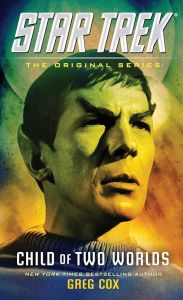
The Enterprise is a plague ship enroute to an independent world for a rare medical ingredient when it answers a distress signal and things get…complicated. As in, this couldn’t be worse, could it? complicated, because the rescue creates a no-win diplomatic scenario that puts Enterprise in the sights of both the independent world (which they need to keep the crew alive) and the Klingons — with an away team exposed to mob nuttiness on the planet, and the Enterprise‘s effectiveness declining by the hour and more and more of her crew become incapacitated with the space-plague, to the point where yeomen are being tasked to bridge stations. Sometimes it just doesn’t pay to get out of bed.
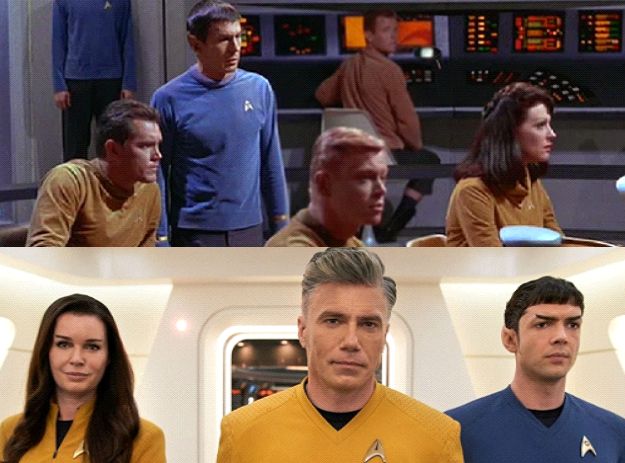
Greg Cox is one of the earliest Trek writers I ever encountered (his Assignment: Eternity from 1998 was the first adult ST title I read), and unlike others from that period I’ve continued thoroughly enjoying his work even as Treklit became more artistically sophisticated in the mid-2000s Relaunch era. Cox has a particularly good handle on the TOS characters, but here he throws a curve: we’re on Pike‘s Enterprise, shortly after “The Cage”. Reading this after Strange New Worlds is a decidedly odd experience, almost like watching two similar movies on the same film, their images interlaced and vying for dominance. Pike, Una, and Spock are all here, but which actor I see and hear behind their lines varies from scene to scene. There’s an interesting mix of book-lore and anachronisms: Una’s background as an Illyrian, created by D.C. Fontana, is here — but not her name, which didn’t appear untilthe ST Legacies trilogy, so (amusingly) she’s referred to as Number One every single time she appears. This is hand-waved as her real name being too long for most people to handle, so she suggests people merely call her Number One. Sure, she could go by Majel or Rebecca, but that’s for normies. Cox also tries to accommodate odd details from the pilot, like writing Pike as someone with a preference for hard copies. One wonders if that inspired John Jackson Miller to give Pike a history with a Luddite colony in The High Country. Another curiosity is Cox employing phrases like ‘hyperdrive’ and ‘laser pistol’ which are both charmingly raygun gothic and deliberately anachronistic, presumably to press the point that this is a different era in Trek history.
Storywise, Cox creates an opportunity for Spock to shine by making him the foil of the woman whose existence causes all of the plot problems, as they’re both caught between worlds and cultures. We’ll be skirting the edges of spoiler territory here, but the woman in question was abducted during a Klingon attack on the independent planet a decade before, and effectively raised as a Klingon, self-consciously leaning into stereotypes in the way that Worf would a generation later. The trouble starts when her sister tracks her town and ‘rescues’ her — and only grows, because the indie planet insists that Enterprise return THE WOMEN!!! to them (it’s an election year, so returning the grown-up abductee will be great optics for the incumbent), while the Klingons are insisting the same, but less for principle and more because Klingons gotta Klingon. Spock’s struggling with his own identity works well with this woman who rejected her heritage out of self-preservation, but who now has a real choice as to who to be, and the tight action-adventure thriller made this one a fun romp. It even has a Klingon boarding party on the Big E!
Coming up: …well, same as yesterday. Star Trek, Neuromancer, and other SF! I have another Pike novel (Burning Dreams) warming up.
There are, alas, very few Pike books just yet. Anson Mount is fast making him my favorite captain.
Scarcely five days after the Enterprise barely escaped an encounter with a giant machine capable of devouring entire planets, a rattled Jim Kirk has another foul assignment land on his desk. A scientist has gone missing on a planet within the Neutral Zone, and his team was pursuing a lead that, should it fall into any hands — not just the wrong ones – -could create genetic weapons of enormous destruction. The last time something like this appeared on the radar, Starfleet and the Klingons both glassed the planet involved with torpedoes to ensure its destruction. How dangerous does something have to be for Starfleet to choose the nuclear option? Now, Enterprise and a Klingon ship are racing toward an encounter that could disrupt the fragile peace between the Federation and the Empire, and potentially unleash a nightmare into the Alpha Quadrant. No rest for the weary, captain!
In Harm’s Way pulls off a nice trick in creating an ST TOS novel that intersects a bit with Vanguard(a series authored in large part by David Mack, with Dayton Ward and Kevin Dilmore also contributing), but without being a Vanguard novel and thus allowing Jean-Luc-off-the-street to pick this up and enjoy the story without knowing any of the background. The novel is rich with story: the primary thread is that of the away team, led by Commander Spock, who are attempting to find the missing scientist and recover his data while avoiding any prime directive violations. Said team is also try to avoid the Klingons, who landed their own away team and couldn’t care less about prime directive violations as they merrily shoot anything that looks like it might fry up nicely. If two large away teams trying to find the same thing without finding each other sounds like an impossible task, well — you’re not wrong. In orbit, Enterprise is playing hide and seek with the Klingon ship, captained by Kang, because neither party is supposed to be in the Neutral Zone. Kirk, who is psychologically worn out by the haunting death of Captain Decker in “The Doomdsay Machine”, isn’t coping with the additional stresses of this mission very well, and has determined that it’s best just to avoid the Klingons — especially since there’s another Starfleet ship in the area, a secret one dispatched by Station 47 itself, which has a crew of officers with Lower Decks style personalities: they’re not The Right Stuff, but they’re fun to read, especially as they try to work with the more straightlaced Enterprise officers. Evidently they’re in their own Seekers series, so don’t be surprised to see that show up next year. The humor is particularly welcome given that Harm’s Way shifts to horror towards the end, as Starfleet and the Klingons both battle against an Eldrich abomination with an army of murderous mind-controlled natives. It’s unusually gory for a Trek novel, when most people tend to die in nice sanitary ways.
David Mack delivers yet again, which is no surprise: I’ve never failed to thoroughly enjoy one of his books. He knows how to create an action tale in a vivid background, with humor and character drama thrown in. The dialogue is especially interesting, and I liked Mack’s treatment of the Klingons: there are several in here, and they’re not all the bloodlusty Space Vikings they tend to get reduced to.
Coming up — Neuromancer, Star Trek, and more as this month-long celebration of SF continues.

 Reading Freely