Wednesday blogging prompt: bookish memes

Today’s prompt is memes that remind us of books, but when I opened Ye Olde Warehouse of Saved Memes, I found that I mostly save political, cultural, and Star Trek memes, so I’m just going to go with “memes that intersect with books, mostly”.

After a book buying spree..
This is one of my favorite meme formats of recent years.
My motivation for dispatching Mount Doom. That, and I didn’t want to die by “falling pile of books”.
It’s true. I can’t even go into a big-box bookstore without trying to straighten things.
“Oh, no, it’s him. That man with the long blonde hair who thinks he’s better than everyone else. I think his name is Lucius.”
“Actually, it’s Legolas.”
(Studio C: Lord of the Potter)
Posted in General | Tagged | 9 Comments

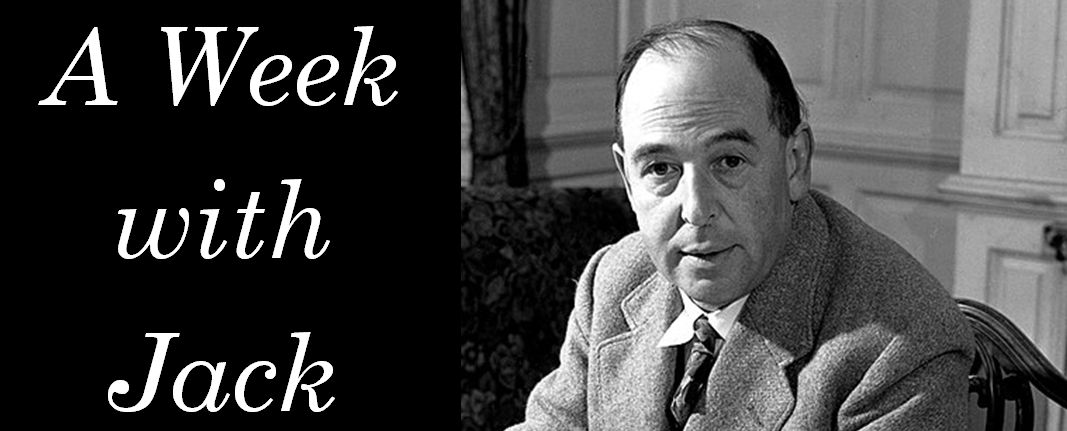
A Week with Jack

Pipes and brandy at the ready. It’s time to visit with Jack.

For the last few years I’ve had the Best of Intentions of doing a CS Lewis-themed week, set between November 22nd and November 29th, the anniversaries of his death and birth, respectively. That didn’t happen, but this year — it shall! I was given extra incentive this year because Pints with Jack, a Lewisian podcast I listen to, is hosting “C.S. Lewis Reading Day” on November 29th, Jack’s birthday. The current plan is to post 2-3 Lewis-related reviews between now and the 29th, and then on the 29th post some of my favorite Lewisian quotes. One of the reviews will be a new title (The Pilgrim’s Regress, from Mount Doom), and the other two are re-reads for me. I’ll also post some bookish reflections inspired by questions in The Reading Life, a collection of Jack’s essays on literature and reading. There’ll be other stuff mixed in, of course — a review for Feminism against Progress is in the works, I’m halfway through Hitler’s American Friends, and I’m steadily working on the ol’ TBR.

Posted in General | Tagged | Leave a comment

Racism, medieval feasting, and housing

Between work and school projects my list of read-but-unreviewed titles is growing, so…alas, it’s short rounds time.

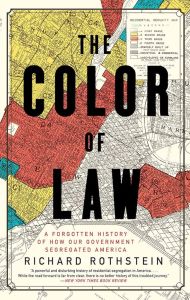
First up, The Color of Law, on how housing segregation was purposely pursued, not merely tolerated, by the federal government — primarily through zoning and redlining, but occasionally through more creative measures like “condemning” empty lots and declaring that the city was seizing them for use as parkland. I already knew the FHA is responsible for why the United States is eaten up with asphalty sprawl like a stage-5 cancer patient, but Color makes them even more hateable by demonstrating how explicit “no sales to blacks” rules were part of FHA and then VA policy. Rothstein also covers other ways federal policy has directly undermined black homeownership — by driving interstates through entire neighborhoods, for instance. Motives for creating and enforcing the segregated housing varied from the pretending-to-be-respectable claim that segregation avoided racial strife by avoiding racial mixing to the more honest self-interested fears about property values, to the good ol’ lizard brain fears of crime, especially rape. While Rothstein was presumably not writing to give an angry libertarian more fuel for the anti-FHA fire, I look forward to incorporating the racial aspects the next time I go Ron Swanson on someone.

Uhtred’s Feast by Bernard Cornwell and Suzanne Pollak, consists of three short stories about Uhtred of Bebbanberg bracketing a bunch of recipes for medieval Anglo-Saxon style cooking. I just read the short stories, being far removed from wild boars and mead. I enjoyed the stories, naturally, especially the one set during Uhtred’s youth, before he was captured by the Danes. Hard to recommend it generally, though, given the mixed content — people who are into stabbing, speech-making, and backhanding bureaucrats are not necessarily into cooking medieval style.

And wrapping up this short round is The Excluded Americans: Homelessness and Housing Policy, which is exactly as exciting as it sounds. It’s a 40-year old book brimming over with graphs, tables, and frightening words like “P-factor” and “regressive analysis”. William Tucker opens by reviewing factors that homelessness is commonly attributed to (poverty, joblessness, etc) and then looking for those that are most clearly and consistently tied to it. Although the book is extremely dated at this point as far as the data it employs, there are nonetheless some interesting lessons to be gleaned. Although it was common to attribute rising homelessness to the Reagan administration reducing housing assistance authorizations, Tucker points out that there is a difference between authorizations (which can take years to actually be used) and expenditures. While Reagan did dramatically reduce future authorizations, the actual outlays of funds for housing assistance increased during his administration. Tucker delves into the economics of the housing market, pointing out that historically, lower income citizens have always found housing in older buildings but the available stock of that has been greatly reduced by ‘urban renewal’, which destroyed wide swathes of housing stock which were insufficiently replaced — echoes of something that happened in the early Progressive movement, when residential hotels were attacked and closed on various grounds, ranging from the usual ‘Ew, poor people‘ to ‘Harrumph, harrumph, middle class people who live in hotels aren’t growing in responsibility the way real homeowners do’. The author is very critical of rent control, which — while sounding like a way to maintain affordable prices — privileges current owners and squelches new investment. Unfortunately, despite how dated the book’s data is, the core problems are still the same: despite issues with homelessness on the west coast, for instance, city leaders are still resisting permitting ADUs, microhomes, etc.

Posted in Politics and Civic Interest, Reviews | Tagged , , , | 4 Comments

Tuesday Thanking and Teasing

Today’s TTT is reasons we’re thankful for books, so I’m just going to go with books I’m thankful for for random reasons. But first, a tease. And yes, there are books reviews coming. Maybe in short round form, but they’re a-comin’.

Excessive perspiration was seen not as a sign of impending dehydration but as a social gaffe; ruling over all hot-weather activity was the dictum that horses-sweat–men-perspire–ladies-glow.

Cool: How Air Conditioning Changed Everything

The most potent theories, though, involve religion. This is as it should be because, at the deepest level, every human culture is religious—defined by what its inhabitants believe about some ultimate reality, and what they think that reality demands of them. The reality doesn’t have to be a personal God: It can be the iron laws of Marxism, the religion of blood and soil, the Gaia hypothesis, the church of the free market, the cult of the imperial self. But Bob Dylan had it right: You gotta serve somebody, and every culture does.

Bad Religion: How We Became a Nation of Heretics, Ross Douhat

This marketisation of sexual desire has been under way now since the 1960s. And digital culture has accelerated those ways we’re able to buy sexual stimulation, or sell ourselves as commodities. The resulting hellscape of sexual anomie is the true face of what calls itself ‘sex-positive’ feminism, a movement that doesn’t seem to have prevented Gen Z from slumping into a ‘sex recession’.

Feminism against Progress

And now, thanking!

(1) Isaac Asimov’s Black Widower series, a source of not only fun mysteries to muddle through, but vicarious dinner debate and discussion that I never grow tired of.

(2) P.G. Wodehouse, for his exquisitely playful use of the English language, and his stories which never fail to buoy my spirits.

(3) Bill “Fossicking about in Tramontane Sinkholes ” Kauffman, one of the very few authors who makes me consult a dictionary. This week I’ve extra reasons to be grateful — I spotted a used copy of his last book I’ve not read listed for sale and picked it up. Took ten years to find one that wasn’t priced beyond reasonable limits!

(4) For science writers like V.S. Ramachandran, Carl Sagan, Rob Dunn, and Ed Yong, whose gift for describing and explaining the natural world fills my mind with wonder and awe.

(5) For authors like J.K. Rowling, whose stories filled with charm and courage arrayed against darkness and fear have cheered me for nearly twenty years now.

(6) For authors like Michael Connelly, whose character details frequently lead me to try new music and movies. I only know “”Harlem Nocturne” because of Harry Bosch.

(7) For authors like Daniel Suarez, William Gibson, and Blake Crouch who can take a science or technical concept and expand it into a story that makes me believe for a few moments as though I’m experiencing the future.

(8) For authors like Alain de Botton and Anthony Esolen, who can articulate and express with eloquence feelings I have and can almost see, darting around in my psyche like some ocean fish, but never focus on.

I explained — with the excessive exposition of a man spending a lonely week at the airport — that I was looking for the sort of books in which a genial voice expresses emotions that the reader has long felt but never before really understood; those that convey the secret, everyday things that society at large prefers to leave unsaid; those that make one feel somehow less alone and strange.
Manishankar wondered if I might like a magazine instead.”

Alain de Botton, A Week at the Airport

(9) For authors like Michael Korda, Albert Marrin, Bernard Cornwell, and Robert Harris — whose nonfictional or fictional offerings make the past come alive again.

And finally,
(10) For authors from Buddha to Wendell Berry whose insights help me understand myself and society better.

Posted in General | Tagged , | 6 Comments

Nonfiction November, Part II

I forgot about Nonfiction November’s weekly prompts, so here’s another twofer!

Week 3 (11/13-11/17) Book Pairings:

This week, pair up a nonfiction book with a fiction title. Maybe it’s a historical novel and the real history in a nonfiction version, or a memoir and a novel, or a fiction book you’ve read and you would like recommendations for background reading. You can be as creative as you like! (Liz)

The Four Winds (fiction) and The Worst Hard Time (nonfiction) are an obvious pair, both dealing with the Dust Bowl. American Dirt (fiction) and The Beast (nonfiction) both address why people are attempting to flee Mexico, and the violent horrors they face trying to make their way into the United States.

Week 4 (11/20-11/24) Worldview Shapers

One of the greatest things about reading nonfiction is learning all kinds of things about our world which you never would have known without it. There’s the intriguing, the beautiful, the appalling, and the profound. What nonfiction book or books have impacted the way you see the world in a powerful way? Is there one book that made you rethink everything? Do you think there is a book that should be required reading for everyone?

I’m writing a reflection on this to be posted later in the week for a special theme that will run Nov 22 to Nov 29 (guesses welcome on what connects those dates), so I won’t say too much here. Many books have had a huge effect on my thinking and worldview, and because I’ve been “reading in public” here since May 2007, I can go back and see my initial reactions to most of them. A few of the heavy hitters off the top of my head: Neil Postman’s Technopoly made me begin thinking critically about technology in my early twenties, helping me dodge the phone-addict bullet’; Erich Fromm’s To Have or to Be? was my first blush with anti-consumerism; Jim Kunstler’s Geography of Nowhere gave me the vocabulary to understand why I hated some cities and loved others, and gave me an obsession with understanding how the built environment impacts human flourishing; Marcus Aurelius’ Meditations gave me a love for living philosophically; and The Death and Life of Great American Cities introduced me to emergent order and unwittingly served to push me from “conflicted progressive” to “conflicted libertarian”. It did this not by itself, but by adding a match to the growing pile of doubts I’d accumulated from college forward.

Posted in General | Tagged | 3 Comments

The city with more bikes than cars

I’ve heard of Freiberg before, but one of my favorite channels recently just did a video on it. Enjoy (if you can while intensely coveting, like myself). I’m planning for a bunch of city-related reading in 2024!

Posted in General | Leave a comment

Devil’s Pact


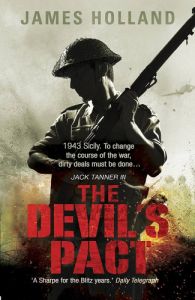
Jack Tanner is just a working class lad from the west country. He doesn’t belong aboard a transport plane, waiting for his turn to jump into the darkness with an aim of landing somewhere in Sicily, hopefully to meet the Allies’ contact on the ground who can facilitate the imminent invasion of the same. It’s time for il duce to be bid arrivederci. That contact is a member of the Society of Honor, and the Allies’ curious collaboration with the Italian Mafia is explored somewhat in this book, giving an otherwise straightforward combat novel an interesting twist along with the usual Jack Tanner versus the Eminently Fraggable Officer thread that’s been used in most of the Tanner novels. It’s especially grating here, as Tanner and his immediate superior Major Peploe both have to contend with a new commander who is both craven and incompetent — not something someone you want leading you into an invasion against the combat veterans of the Wehrmacht.

Devil’s Pact has an odd beginning, in that Tanner is separated from his unit and tasked with escorting someone via paratroop drop to meet a Man of Honor in Sicily; after managing the mission despite things going sideways, Tanner evacuates and we leave behind the small-group action that defined the early novels in this series, going into the fullscale invasion of Sicily after some time back at camp, in which Tanner realizes that some loathsome officer from his early days has just been named his new commander, and still worse — some of the new arrivals to his unit are from the old homestead, and threaten to blab the secrets of a past Tanner is extremely taciturn about. The new officer, instead of focusing on the invasion, is instead wholly fixated on getting rid of Tanner – -again, not good when Germans in fortified positions are concerned, and such pettiness will cost more than a pound of flesh.

The Devil’s Pact was a solid end to this series, assuming Holland isn’t planning on writing any more. The setting of Sicily was fairly new to me (though Jeff Shaara visited it in his The Rising Tide, one of the first books I read on the blog), and I especially enjoyed the presence of the Mafia to add an interesting wrinkle to the Allies’ mission. Another appreciation is that the “Krauts and Eyeties”, as the Brits so lovingly refer to their opponents, are not reduced to Evil League of Evil-esque villains. The Italian officer is wholly sympathetic, unlike Tanner’s nemesis. My only grouse is that Tanner (and the reader, vicariously) don’t get to tackle and punch repeatedly the loathesome officer who gives Tanner such grief. I really hated him.

Posted in historical fiction, Reviews | Tagged , , , , | 1 Comment

Blogging prompt: criticize your favorite

Today’s prompt from Long and Short Reviews is to criticize our favorite film, show, or book. Hmm…

Star Trek Strange New Worlds:

See Boims’ face? That’s my “Strange New Worlds” face.

Strange New Worlds has rocked my world the last two years, and especially the last season. Although I’ve been a Trekkie for thirty years now, between the Abrams movies, the spiritless disappointments that were Discovery and Picard, and the murder of the Treklit extended universe to accommodate DSC/PIC novels, my enthusiasm for Trek was hanging on by a “at least there are older Trek books I haven’t read” thread. Then Strange New Worlds happened, and my phone and computer have SNW wallpapers and I’m thinking about writing ST fanfic. However, I can probably manage a couple of critiques: First, Jim Kirk, who isn’t an officer on Enterprise, has probably had more screentime than his brother George who is an officer aboard the ship. I actually like Wesley’s Kirk, but given that George dies young, I’d like SNW to let us get to know him. Similarly, Ortegas hasn’t gotten much love beyond her running away with “Lotus Eaters”. Her actress shines anytime she’s allowed to, so I’m hoping she gets some more attention in season 3. Thirdly, I’m a little wary about how they’re going to try to keep lore consistent as they push closer to “The Cage”: we’ve not seen either of the older doctors who appeared in “The Cage” or “Where No Man Has Gone Before”, and Dr. M’Benga’s apparently junior position in The Original Series is gonna need some explaining.

Posted in General | Tagged , | 4 Comments

Top Ten Authors I’ve Never Read

Today’s TTT, hosted by the Artsy Reader Girl, is authors we’ve not read. I’m going to be straining a little here- my fiction reading is so specialized (almost entirely historical or science fiction) that I’m not really plugged into who is popular…or who even exists!  But first, teases — these both from Uhtred’s Feast, a curious little volume that’s mostly an Anglo-Saxon recipe book but with three Uhtred short stories and occasional bits of background from Cornwell.

Strangely, not that I am old, I remember the women and never think about the victories. The memories of the women bring me comfort, while the victories are sour with the stink of blood, the death of friends, and the recollection of terror.

‘The Battle of Maldon’ […] was a description of a battle between Byrhtnoth, leader of an army of East Saxons, and a Viking band that hd taken up residence on Northey Island in the River Blackwater, which is not that far from Ashingdon. The Vikings won (again), but I recall a teacher telling us that the poem was ‘fanciful’ because the East Saxons on the bank of the river could have never heard a challenge shouted from Northrey Island; it was too far. That drove me and a few friends to Maldon, where we proved such a challenge was indeed audible, that expedition being the only serious original research I have ever undertaken.

Uhtred’s Feast

And now, authors I’ve not read!

1) Scott Turow.   When I began souring on John Grisham in the early 2010s, I looked for comparable authors and was told that Turow also writes legal fiction. I’ve yet to read him. 

2)  George R.R. Martin and 3) Robert Jordan   Considering how much stabby-stabby historical fiction I read, this epic of politics and fantasy in a pseudo-medieval setting should be right up my alley,  but I’v never taken the bait for these.  

4) Frank Herbert, author of the Dune series. I have the first one but have yet to seriously engage with it.

5) The Sisters Bronte. I’ll probably try Wuthering Heights at some point, if only for the Classics Club or Read of England.

6) PT Deutermann. I’ve heard great things about his historical fiction, but I’ve not yet managed to give him a shot.

7) Hilary Mantel. And not going to. I started Wolf Hall and returned it almost immediately. I cannot abide people who think they’re above punctuation.

8) Liu Cixin, author of Three Body Problem.

9) Phillipa Gregory. Given how many HF novels she has on both medieval England and Rome, two areas my historical reading spends a lot of time in, it’s odd that I haven’t really tried her.

And now to end, a bunch of nonfiction authors all in one go:

10) Arnold Toynbee, Daniel Boorstin, Paul Johnson — three historians who I’ve not gotten round to despite my interest in exploring their work — and Hannah Arendt, a historian/political philosopher who wrote The Origins of Totalitarianism.

Posted in General | Tagged , , | 14 Comments

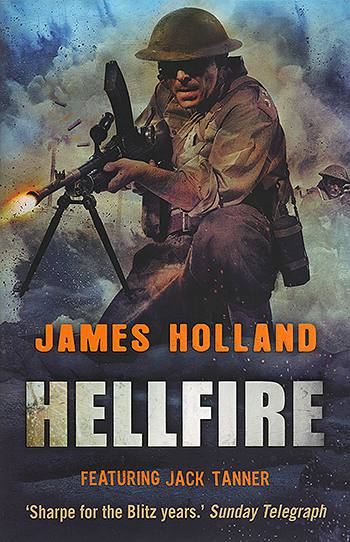
Hellfire

August, 1942. The English and the Germans have been trading punches with bloody noses for a while now, and while American tanks and G.I’s are on the way, the Desert Fox is still plenty dangerous — as he proves when the Luftwaffe assassinates the newest head of the Eighth Army before he even starts his job. CSM Jack Tanner is on medical leave in Cairo following an argument his back lost with an exploding shell, waiting for doctors to give him the all-clear. After looking up an old friend, Jack is asked to pitch in: British intelligence suspects there’s a German spy ring active in the city, and they could use someone with Jack’s street savvy to help sort out who it is. Hellfire is a fun mix of investigation and commando derring-do, and a departure from formula: unlike the first three books in this trilogy, there are neither obstructive British officers or an odiously evil, see-how-I-twirl-my-mustache-and-chuckle-with-menace Nazi present. Instead, Jack’s challenge is the ordinary: the hostile environment of northern Africa, the practiced and competent menace of the Afrika Korps, and…ooh, la la, a lady spy.

Jack Tanner surely gets around World War 2: he began The Odin Mission in Scandinavia, and now he’s arrived in Africa after visits in France and Crete. This series has always focused on small-group combat action, but here Holland mixes things up in several ways: Jack is out of commission at the beginning, engaging instead in some cloak and dagger investigation while waiting to heal up: finding the German spies, especially their potential mole, will become an increasingly important part of the story over all. Jack is thrown into a major battle (Alam el Halfa, I think), and then the book ends with some commando-esque antics that are more in line with the rest of the series. Personally, I liked the variety, and the growing emotional weight that the spy thread adds to the story. It’s utterly absorbing on the whole, so much so that I was late coming back to work from lunch two days running, not minding the clock at all as I read of ominious tanks rumbling in the night, skies made daylight-bright with sustained explosions, and a woman torn between her hatred for the Soviet Union and her unexpected love for an Englishman.

Very much looking forward to the last book, The Devil’s Pact.

Related:
Foxes of the Desert, Paul Carrell. A German history of Rommel’s campaigns in Africa
Operation Compass, a short history of an early Anglo-Italian dustup in Africa

Posted in historical fiction, Reviews | Tagged , , , , , | 4 Comments