December 2023 in Review

I don’t anticipate finishing off any books in the next couple of days, so I’m posting this early to make room for all the obligatory end-year posts, which will follow in the days to come. First up, I HIT MY MOUNT DOOM GOAL! The month was marked by an obsessive focus on it, and I’m delighted to announce that it paid off. And yes, I did technically hit the limit by deciding to discard a few more that I could find in my university library. The 80-title goal I had doesn’t account for every single book, but now the remaining books are a scant few, a mere handful, hardly noticable. Or, they will be, when I actually cart them off to goodwill. Mostly what’s happened is that they’ve migrated from my shelf into boxes sitting on the shelf. Now, a bookful news: on a whim, I wrote to one of my favorite authors, Bill Kauffman, to bid him a merrie Christmas. I’ve mentioned here that he’s the author I’d most like to have a beer with, and — upon his writing back — I learned that he and his wife are pondering a trip Southward to pay homage to Eudora Welty and other southern writers, so I may yet enjoy a pint or two with him. We shall see!

Climbing Mount Doom:
A Craftman’s Legacy: Why Working With Our Hands Gives us Meaning, Eric Gorges and Jon Sternfield
The Victorians, A.N. Wilson. A first: this one got destroyed by rain when I forgot the backpack it was in wasn’t my waterproof one. I was 140 pages in. Enjoyable enough as far as I’d gotten, though I was preparing to rip into the author upon review for referring to Adam Smith’s ethics as being the basis for Scrooge. Never heard of the Theory of Moral Sentiments, Mr. Wilson?
The War of 1812, John Mahon. A very detailed but quite readable history of the 1812-1815 conflict between the US and Britain, which incorporates the Napoleon and Creek Wars as well.
The Commercial Revolution, 1000 to 1500, Joseph Gies. Considering how much I love reading the Gies’ medieval social histories, this was a surprising struggle — perhaps because of the tight focus on banking.
Swimming with Serpents, Sharmon Ramsey. An unusual but disappointing historical fiction novel set in colonial Alabama, about two young people whose love is interrupted by the Fort Mims massacre during the Creek War.
All the King’s Men, Robert Penn Warren
The War on Boys, Christina Hoff Summers.
Cemetery Road, Greg Iles
The Master Switch, Tim Wu. Review to follow. Fascinating history of how technological innovations are often delayed by corporate obstruction for decades.
A Tree Grows in Brooklyn. My library has a copy, so away it goes.
McMafia. Gave this is a try and could see reading it in the future. In the future I can get it from the university library. In the present I want my shelf cleared, kthxbai.
The End of Power:  Why Being in Charge Isn’t What it Used to Be, Moises Naim. Started reading this one, wasn’t into it, saw I had library access to it if I change my mind. Ciao!
The Sun in the Church: Cathedrals as Solar Observatories,  J.L. Heilbron. Did a little readin’, did a little skimmin’.

Reading Dixie:
Wooden Churches: A Celebration
Swimming with Serpents, Sharmon Ramsey
The War of 1812, John Mahon
All the King’s Men, Robert Penn warren
Cemetary Road, Greg Iles

Posted in General | Tagged | 8 Comments

Reads to Reels: All the King’s Men

This won’t be a traditional RtR because it will be a very quick take. Last weekend I watched two different versions of All the King’s Men after finishing the novel, as well as Kingfish, a nonfiction film about the life and death of Huey P. Long starring John Goodman. Both of the movies have solid acting, though Broderick Crawford was more respectable and conventional in his demeanor than I took Willie to be. I was not expecting to watch the 2006 version because it was panned by critics, but when I saw clips of  Penn’s version on YouTube I had to try it. Frankly, I loved it. Both movies take some departures from the novel, especially in Stark deciding to run for governor ‘hisself’ instead of supporting McMurphy, as he does in the book.  I’m posting this mostly to invite readers to compare the delivery of the same ‘scene’ in both movies. I really like the Penn version though it starts off a little clumsy. Penn has more…populist charisma, I’d say, more of an ability to react spontaneously — whereas Crawford is just delivering lines. He’s delivering them well, but he’s delivering lines.  The setting: Willie Stark has just realized he was being played like a fool, used to split the hick vote so the establishment’s candidate could cruise to victory. He’s offended, angry, and ready to split skulls.

“I’m not gonna lie to ya. He didn’t start thinking bout the hicks and all he was gonna do for them, no. He was out for number one. But one day it came to him, he couldn’t do anything for himself without the help of the people. Listen to me, you hicks — yeah, you’re hicks too, and they fooled you like they fooled me a thousand times. Listen to me and lift up to your eyes to God’s blessed, un-fly-blown truth. You’re a hick, and nobody ever helped a hick except a hick himself!”

“Listen to me, you hicks! That’s right, I’m not the only one here, You hicks, too! They fooled you just like they fooled me a THOUSAND times. It’s time I fooled THEM, them big-city striped-pants lickspittle hick-haters! I’m running for guvnor on my OWN! I’m coming for them, and I’m COMING FOR BLOOD! Nail up Joe Harrison! Nail up McMurphy! You give me the hammer, and I’ll do it. I’ll nail they hides to the BARN DOOR! “

And the trailer for Kingfish, since I can’t find any clips for it online. Which is too bad — the “Evangline” speech alone makes me want to go on a Huey Long pilgrimage.

And for good measure, here’s the Kingfish ‘hisself’.

Posted in Reviews | Tagged , , | 3 Comments

Cemetery Road

Marshall McEwan (who is not Marshall McLuhan, disappointingly) ran away from small-town Mississippi to become a journalist in D.C. He found great success there as  a talking head on what passes for TV news, talking down with great condescension about the place that gave him birth as East Coast prats drank their wine and nodded approvingly. But then his dad, who runs the Bienville Watchman,  begins declining — and so did the paper the family had run for generations. Were it not for his mother, he might have just stayed in DC, being a self-absorbed careerist and hiding from his pain, but thanks to momsie he felt compelled to move back home and take care of the patriarch and the family enterprise, a century-old newspaper the old man’s dementia was running into the ground. McEwan finds relief from responsibility and his incredibly tense paternal relationship by (1) having an affair with his best friend’s wife, who he has pined for since they were kids and figures that’s excuse enough and (2) inciting the wrath of a barely-concealed secret society who run all political and business affairs in Bienville. When his friend and mentor Buck Ferris is most foully moirdered after discovering something that will wreck a multimillion dollar business deal,  Marshall girds his loins, starts his press, and prepares to anger men who have been running things since the 19th century. Iles’ ability to create an utterly compelling drama with complex character relationships here does battle with weird sex scenes, cardboard cutouts of antagonists, and endless Author on Board pontificating. I acutely disliked the novel and yet found myself continuing to read it. There’s some draw from learning about this cabal that controls the town — a social club of vested financial interests unafraid of arranging ‘accidents’ to get rid of troublemakers — and from the complex character relationships. Marshall and his best friend have….an interesting relationship, in that they’re both infatuated with the same woman and have opposing interests in town, and yet endured the Terror War together and are bonded in a way.  Marshall’s enemies are not remotely interesting in themselves: they are cigar-smoking, brandy-drinking stock villains taken right from the Hackneyed Handbook of Modern Drivel. Marshall and his father also have a rough relationship, being driven apart by the drowning of Marshall’s brother Adam, and then the drowning of Marshall’s son Adam. The interesting and the eye-rolling spar throughout the novel, and the interesting prevails enough that I finished the thing despite occasional impulses to chuck it into the Goodwill box. The worst part is that while the novel could address serious themes – idealism and avarice, sacrificing principle for ‘The Greater Good’, etc, we don’t really get that. Instead we get a selfish and largely unlikable main character, who, when he is tempted, immediately finds the temptation removed and has the choice made for him, which is absolutely unsatisfying. His actions are motivated not by agonized attempts to do Good, but to not get himself or his narcissistic partner in bed killed. Greg Iles has done far superior work, and with less discussion of characters’ genitalia.

Posted in Reviews | Tagged , , , , | Leave a comment

Teases! Lists! It’s Tuesday!

This week’s TTT is most recent additions to our book pile, but I did that for Nonfiction November. I’m going to diverge a bit and go with “Top Ten Books 2023 Added to my Goodreads Wanna Read List”. But first, teasing!

“We’re not saints, young man. My only virtue is that I’ve never pretended to be one.”

“Most people sell their souls in small pieces, my friend. You’ve kept yours intact long enough to sell at a high price.”

Cemetery Road, Greg Iles. 

Top Ten Goodreads Wannareads from 2023:

The Anxious Generation: How the Great Rewiring of Childhood is Causing an Epidemic of Mental Illness, Jonathan Haidt. Preordered.

Distracted by Alabama: Tangled Threads of Natural History, Local History, and Folklore I bought this for a friend for her birthday and am hoping to read it this week while I’m dogsitting for her…

Vanished Kingdoms: The History of Half-Forgotten Europe, Norman Davies. Guessing this will feature times when Sweden and Poland were continental powers to be reckoned with.

Networks of New York: A Field Guide to Urban Internet Infrastructure

The Path: What Chinese Philosophers Can Teach Us About the Good Life

Blood Passion: The Ludlow Massacre and Class War in the American West

The Power of Meaning: Finding Fulfillment in a World Obsessed with Happiness

The Enchantments of Mammon: How Capitalism Became the Religion of Modernity

Data Driven: Truckers, Technology, and the New Workplace Surveillance

Posted in General | Tagged , | 5 Comments

Wishing you a merry Christmas

Deck the Wills with boughs of holly
Falalalalalalalala

Despite the radio silence ’round these parts the last week, I have not been on a ‘break’: Greg Iles’ Cemetery Road has kept me engrossed, I’m working on an online SQL class, and I’ve also been making merrie: the choir performed for nearly two hours tonight singing Christmas songs, and I saw a wonderful rendition of “A Christmas Carol” at the always superb Alabama Shakespeare Festival in Montgomery. Before the show they played period music while members of the cast wandered among the audience, chatting in-character. (Mrs. Crachitt was utterly charming and I’m on a hunt to find her actress, because I want to see everything she’s in now.) After tomorrow’s activities (church, brunch with godfamily and friends) I intend to wrap up with Mr. Iles tomorrow and get the new year off to a running start. Until then, I wish you a hearty and healthy Christmas, full of food, family, and friends. May we cherish those around us, and all the more as we consider those we have lost in the last year. 

Posted in General | Tagged | 6 Comments

Teasin’ Tuesday with the Kingfish

Today’s TTT is books we hope Santa Claus brings. In my case, I’m trying to finish off Mount TBR, so I sincerely hope he does not bring me a blooming thing. I still want to do So, some teases from All the King’s Men:

“Yeah,” I said, “I heard the speech. But they don’t give a damn about that. Hell, make ’em cry, make ’em laugh, make ’em think you’re their weak erring pal, or make ’em think you’re God-Almighty. Or make ’em mad. Even mad at you. Just stir ’em up, it doesn’t matter how or why, and they’ll love you and come back for more. Pinch ’em in the soft place. They aren’t alive, most of ’em, and haven’t been alive in twenty years. Hell, their wives have lost their teeth and their shape, and likker won’t set on their stomachs, and they don’t believe in God, so it’s up to you to give ’em something to stir ’em up and make ’em feel alive again. Just for half an hour. That’s what they come for. Tell ’em anything. But for Sweet Jesus’ sake don’t try to improve their minds.”

Upon my return I found the call in my box. It was Anne’s number, then Anne’s voice on the wire, and, as always, the little leap and plunk in my heart like a frog jumping into a lily pool. With the ripples spreading round

Posted in General | Leave a comment

Short rounds: The Office, sword-making, and love in the time of yellow fever


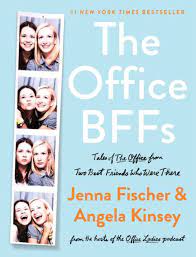
The Office BFFs, Jenna Fischer and Angela Kinsey.   Foes on the show, but IRL best friends Jenna and Angela here deliver a very personal memoir of not just the show, but of their friendship over the years – forged as two young women first began finding success together on a show that bounced from near-cancellation to cultural dominance, tested when  their lives began going in different directions,  but made all the stronger by the triumphs and reverses they encountered together.  The women don’t go show-by-show, instead organizing the book into bigger categories like “Women of the Office”, “The Holidays”, “Big Pregs, Little Pregs, and Fake Pregs”, but it does largely skew chronological.    Jenna and Angela’s is not a casual friendship: they’re not just show buddies, but intimate parts of one another’s lives: their kids go to the same school, they celebrate holidays together, and each woman has been there for the other in medical emergencies, like when Jenna broke her back. There’s a lot of inside scoops on set goings-on: my favorite being the seemingly cursed episode that Bryan Cranston (Say. My. Name.)  directed in which the cast was very nearly killed after a series of less-lethal accidents.   I listened to the audiobook on my there-and-back-again drives to Natchez, and can report that the book was recorded with the women together, so the back-and-forth is smooth – and there are audiobook bonuses in which Kate Flennory plays the piano and Rainn Wilson leaves a voicemail for Angela.  Rainn and Angela have an….interesting relationship. Absolute delight for an Office fan.

A Craftsman’s Legacy:   Why Working With Our Hands Gives us Meaning,  Eric Gorges. This is a book adopted from a TV show, in which Gorges talks to craftsmen and artisans about their work The work is more varied than the cover implies, because it ranges from the Manly Man stuff like metal-shaping and sword-forging to glass-blowing and weaving. Gorges talks to each artisan at length about the demands and of the work, and of each craft’s unique attributes – like the intimate connection between the potter and the clay – and on artisanry in general: the continuing pursuit of perfection, and the meaning found in continuing a legacy skill, in passing the craft on and contributing to it.

Wooden Churches: A Celebration, Rick Bragg. This is largely a photo collection, but with a long preface from Bragg about wooden country churches. 

Swimming with Serpents,  Sharman Ramsey.   A…weird kind of romance set during the Creek war. The frontleaf promises us action at the Fort Mims massacre, but only its aftermath appears.   The author is effective in showing how confusing loyalties were – with settlers of varying ethnicities and  Creek  populations with opposing goals, so that brothers might be on two different sides of the conflict. 

Posted in General, Reviews | Tagged , , , , , , , | 2 Comments

Visiting with Huey on the Mississippi

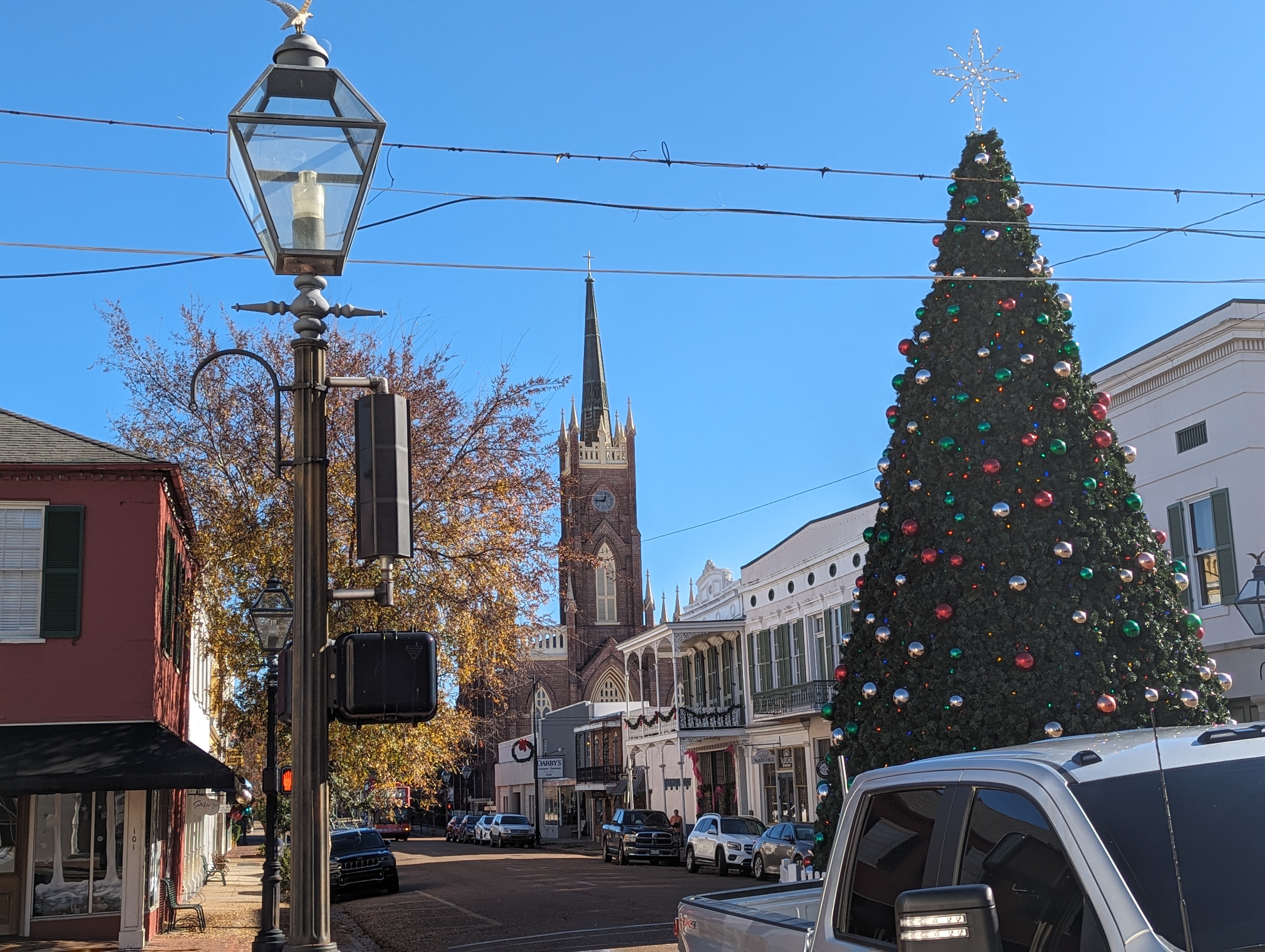
Good morning from the Mississippi river. For the last few days I’ve been in Natchez, enjoying the sights of a rare southern town that has not lost its soul to Progress: its city streets are marked by people and shops, not pockmarked by parking lots, and the streets are so dog-gone Christmassy it feels like I’m in a Hallmark movie. Well, considering that no less than three Hallmark Christmas specials have been filmed here, that is only appropriate. Amid the visitations to native American sites, necropolises, and the grand mansions testifying to Mississippi’s antebellum wealth, I have also been reading All the King’s Men by Robert Penn Warren, a novel inspired by the life of Governor/Senator Huey Long, the latter of Louisiana. Reading this in Baton Rouge would have been more appropriate, I suppose, but there’s always the future.  Long was a unique southern politician, somebody that today would be described as a left-wing populist: one movie about his life refers to him as the Karl Marx of the hicks. Hitting his political stride in the 1920s and ’30s, he attacked big money and corrupt politicians who sheltered them, and aimed to become an authoritarian and corrupt politician in his own right — albeit one for the poor whites and blacks of the state, creating programs to build roads and bridges, schools and hospitals. Then, approaching national politics and threatening Franklin Roosevelt, he was shot.

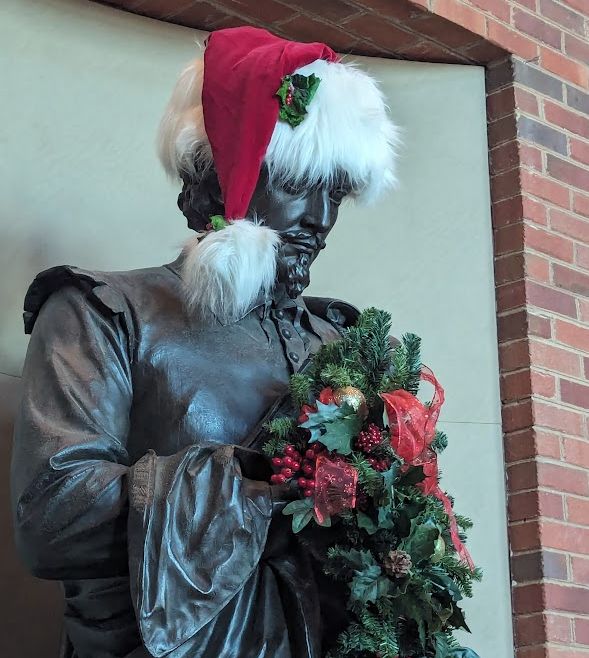
All the King’s Men uses a fictional character named Willie Talos (or Willie Stark, in most editions) to relive Long’s rise and fall, as seen through the eyes of Jack Burden, a newspaper man who enters into Stark’s employ as a kind of adjutant; making connections for him, digging up information on political rivals, that sort of thing. The book is not about Stark: it is merely dominated by him, as Jack and his two closest friends the Stantons all have their lives warped around him. David Stanton, an idealist who regards Stark as the worst sort of politician, is offended by Jack’s friendship with and support of, Stark. Anne Stanton, who Jack has been in love with for most of his life, is both troubled and charmed by him, and hopes to convince him to support her own ideas for promoting the social welfare in the form of a children’s home. Anne is a key character in the novel, as Jack’s love for her amid her involvement with Stark tests who he is and what he really values. Another important part of the story is Stark’s stepfather, who is actually his biological father though he doesn’t know it: the Judge isn’t merely against Stark, he’s a political antagonist who Burden will play a part in destroying. The book proved an absorbing character drama, and Warren shows off a flair for writing. I will share some excerpts (and some photos) once I am home. For now, I have a few more places to see, a malt shoppe to visit, and then a long drive back to Sweet Home Alabama.

Posted in Classics and Literary, General, Reviews | Tagged , , , , | Leave a comment

2023 in Other Media: Music

2020 Musical Wrapup | 2022 in Other Media: Music)

I’m going to go ahead and post this because I don’t think another musician will Rock My World in the next 15 days. It could always happen, but I’ll edit if that’s the case. 2023 wasn’t a huge year for discovering new artists, as I mostly listened to those I already loved. My absolute favorite from 2022, Morgan Wade, released her second album in the late summer. “Psychopath” marked a departure from moody/dark country and took her closer to the fields of rock and pop. Accordingly, she announced a tour with Joan Jett and Alanis. Allison Young, who was one of the many artists who made 2020 tolerable to me, teamed up with Joshua Lee Turner to form a band called “The Bygones”. My favorite production by them so far is a cover of “Honey Pie” by the Beatles, which is utterly adorable, but YT won’t let me embed it. Trying another video:

Favorites-since-2019-even-though-McDuck-left-them Lake Street Dive did a cover of “The Neighbor Song” that I loved the sound of Rachael Price in. Granted, Rachael Price could read the phone book and I’d think “ooh, la la”. Going to try embedding a video that will give you a hit of LSD even if it’s not the song I intended. Even better if it does, because has McDuck. (McDuck was a big part of my first LSD experience, “Walking on Broken Glass“, in 2019.)

As mentioned, Morgan did a second album with a very different sound than her original “Reckless“. It was all over the place, musically. Interesting, she has at least two songs that reference Ernest Hemingway. That’ll be a trivia question one day, surely.


But I’m drunk on Hemingway dreams
Fitzgerald ain’t got nothing on me (Nothing on me)
Like the Bible, make you believe
You were blind (You were blind), but you’re gonna see

For comparison, check out “Losers Look a Lot Like Me“, which is melancholy in lyrics despite the very catchy, up-beat sound — and her original sound, embodied in a song like “Mend“. Love that West Virginian accent — in her mouth, or in Sierra Ferrell’s, whose revitalization of the Old Time sound has thrilled me for the last few years.

She can fiddle and she can saaang, and she’ll conduct the audience with her bow. Listen to those boots!

On the exact opposite end of the spectrum — away from the raw and real to the wholly artificial and produced — this was a year AI-generated music arrived and fascinated me. Part of me knows it’s fake, part of me knows it’s unfair to the voice actors whose talents are being used without their permission to create new content, but at the same time….”MY FAVORITE CHARACTERS ARE SINGING!!!”

I listened to an absurd amount of RDR2 AI covers this year. This is “Sadie Adler” singing a song from the game, but there are also productions of ‘her’ singing 1980s country tunes like “That’s the Night the Lights Went Out in Georgia”, and of other members of the gang singing songs that are all over the place. Some fit the theme of the game (“The Highwayman”), and others are wildly anachronistic (Arthur and John singing “Old Town Road“, for instance, or Sean “I Was Born Boirnin’ Down Manor Houses” McGuire singing ‘Come Out, Ye Black and Tans”). There’s also the non-RDR2 stuff, like Frank Sinatra singing Green Day and Amy Winehouse.

Far and away the biggest musical moment for me was Star Trek Strange New Worlds‘ musical episode, “Subspace Rhapsody”. I have listened to its songs every week since the episode aired, and I was so mesmerized by it that it inspired a post. My three favorites were “Status Report”, “How Would That Feel?“, and of course — “We Are One”. The musical episode is notable because it’s not a novelty episode: there’s serious character development throughout, especially in Christine Chapel and Spock’s songs which are set to the same basic tune but at very different pitches — and are very different moods. Season 2 sold me on La’an and her actress, Christina Chong — a professional singer. She stars in “How Would That Feel?”

Also in the realm of “music from other media”, I loved the entire soundtrack of Mon Oncle, and much of Stardew Valley. The latter’s “Feast of the Winter Star” is so gosh-darn Christmassy.

Try listening to the first 35 seconds and then finding the will to stop it. I dare ya.

Now, on the subject of new-to-me artists…..a friend sent me this music video and said “I’ve known you for fifteen years, this is your jam.” She was correct. Laufey is my jam.

What’s a girl to do?
Lying on my bed staring into the bluе
Unrequited, terrifying
Lovе is driving me a bit insane
Have to get this off my chest, I’m telling you today

In August, I heard of Oliver Anthony the same way everyone else did — but I’m surprised YT didn’t reccommend him before, since “one man, one guitar, lots of feelings” is one of the main bits of youtube I listen to — especially on channels like Western AF and Gems on VHS. At a Halloween party one of the guests and I went on an Oliver Anthony karaoke tear for a bit. Fun was had by all. Remy, the libertarian Weird Al, did an immediate parody mocking government employees. More my speed, though, was another friend who knows of my love for the Harmony Club recommending Ashley McBryde’s “Cool Little Bars”. I’ve liked most of what I’ve heard from McBryde, like “Gospel Night at the Strip Club” and “Whiskey and Country Music“. (What do you mean, country music has a drinking problem? It can stop anytime it wants.)

Rounding off the list is a piece I heard through Jazz Hop Cafe, a channel that does wonderful mood mixes. I’ve listened to their “Coffee to Go” once per day for most of the year — I’ve heard it over a hundred times, at least. One piece I heard first in one of their mixes is “Riding my Bike to the End of the World”, which has a lofi jazz sound with occasional bike bells. It’s not the sort of thing one can sing along with (unless you can do bicycle bell noises) , but I like listening to it.

Wait, wait. I can’t post this without mentioning the utterly catchy (and funny) Charlie Parr piece, “I Ain’t Dead Yet”. Just listen to the first 5 seconds and see if you can stop.

When I go down that funeral road
There’s gonna be a big old band
And they’re gonna play all my favorite songs
While they plant me in the sand
Well I ain’t dead yet
Lemme hear that music now
I sure can’t hear it
When I’m locked in that box
Underneath the ground
I ain’t dead yet
Gimme my flowers now
Posted in General | Tagged , | Leave a comment

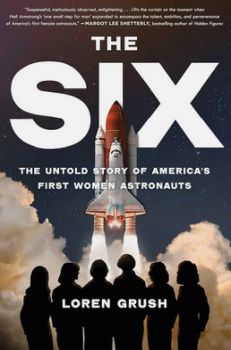
America’s first female astronauts

© 2023
432 paages

When NASA was formed and began looking for astronauts, they settled on test pilots as the initial base: such men were already known quantities, with proven physical and intellectual gifts that could be applied to the pioneering work of Mercury and beyond. Although the Lovelace clinic tested a group of women (funded by Jackie Cochrane, holder of multiple aviation records) and maintained that female astronauts had advantages of reduced size and weight compared to men, NASA had no interest in complicating matters. Jet pilots, meaning men, continued to be the focus of NASA’s interests to put an American in space. After the moon landing prompted a shift in NASA’s mission, though, the parameters shifted: NASA wanted a diverse array of mission specialists for Skylab and the in-the-works shuttle program, and that meant people who weren’t military — who might be oceanographers or surgeons, say. The Six opens with how its subjects reacted to the Apollo program and came to be drawn to the idea of being an astronaut, and then after following their lives into the 1970s, we shift into their ASCAN phase and then follow each woman’s first mission. The result is a very enjoyable history of the early Shuttle period that occasionally drifts into gossip and whining, but is on the whole solid.

As someone who has read 48 astronaut-related books to date, I was familiar with half of the women here — Ride and Reznik appear prominently in other memoirs like Mike Mullane’s, for instance. Even so, it was good to get a direct focus on them, because I didn’t know anything about Sally Ride other than her status as an overachiever and something of a jock. The biographical was especially welcome for Kathryn Sullivan, for instance, since her Handprints on Hubble, was utterly work-focused and said precious little about who she was as a person.The book makes clear that considerable care went into choosing the first female astronaut: all of the women were accomplished, but — as with John Glenn becoming The Face of the Mercury 7 – NASA also needed someone who was good on camera, who wouldn’t be bullied by reporters but could return their volleys with grace. That was Ride, and it helped that she was the most accomplished using the new Shuttle’s operating arm, which would be crucial to deploying a package in her first mission. Although the six were connected together through their status as pioneers who had to put up with reporters asking asinine questions and a level of discomfort from the boys whose club they were invading, ultimately the shape of their training made them forge closer bonds to the people on their respective crews. Rhea Seddon, for instance, got so close to her trainer Hoot Gibson that they became NASA’s first astronaut newlyweds. Unfortunately, the author sometimes drifts into soap-opera territory, informing us that _____ began seeing ______, not realizing that ______ was now kind of into him, etc. We’re talking about six members of the largest astronaut class in history, who are completing their training as the Space Shuttle, which will create an entirely new era in NASA history, is itself being finalized — and Grush keeps resorting to locker-room gossip. (The same thing happened with Astounding, a history of early American SF that kept readers apprised of the authors’ sex lives. Why? Why?) 

Given the subject matter, some degree of editorializing is present and perfectly predictable, so that most contemporary readers can read it and feel so very good for having The Right Opinions and shaking their heads in union at Those Awful Chauvinists who didn’t think a pregnant woman had any business in a T-38.  It’s not constant, though, and there’s so much good content on early shuttle missions I generally forgot about the author’s occasionally attempts to lecture and gossip. “The Frog and Prince” mission is especially interesting, given that the Shuttle was carrying a French payload specialist, and a Saudi princeling: despite the crew’s worries about getting along with a Saudi, especially the women, the only awkwardness came from NASA’s bureaucrats meddling so as to not cause offense to the oil-lords of Aramco. The book goes forward to ’86 and the body-blow that was the Challenger explosion, which claimed the lives of Judy Reznik and her crewmates, including America’s first citizen in space — teacher Christa McAuliffe.

I for one thoroughly enjoyed this history of six accomplished women who were a key part of making the early Shuttle program such a success: the author’s occasionally tendencies to gossip and opine are a very minor part of this joint biography of six accomplished, driven women and the cause of discovery they served.

Highlights:

With the Shuttle system fully assembled in front of her, Sally didn’t feel like she was standing before an inanimate spacecraft, but rather a monstrous breathing animal. The Shuttle’s liquid propellants periodically vented like steam from a kettle, causing the vehicle to hiss and moan as if it were alive. It took all of Sally’s will to focus on just moving forward.

Some [astronaut candidates] tried attempts at humor. When one candidate was asked why he wanted to be an astronaut, he responded: “My father was an astronaut. My grandfather was an astronaut. My great-great-grandfather was an astronaut.” “Have you ever had amnesia?” one interviewer asked Sally. “I don’t know. I can’t remember,” Sally joked.

On August 21, 1981, George Abbey was standing in his office on the eighth floor of Building 1 when he heard a noise outside his window. He turned to see a man dangling from a rope, dressed in overalls. It wasn’t just any man, though. The stranger unbuttoned the straps of his overalls to reveal a Superman costume. The Man of Steel then pounded on the glass while singing “Happy Birthday” to George, who that day was turning forty-nine. As soon as the dangling crooner finished the song, he rappelled to the ground and disappeared from sight. George just stood there and blinked.

“We have liftoff!” Crip called out. In that moment, Sally knew she was no longer in the driver’s seat of her life. “All of a sudden, I felt totally helpless, totally overwhelmed by what was happening there,” she said later. “It was just very, very clear that for the next several seconds, we had absolutely no control over our fates.” Completely at the mercy of NASA’s army of engineers and mechanical prowess, Sally surrendered herself to the space shuttle Challenger as it burst forth through the clouds, thrusting its precious cargo into the stratosphere. The Shuttle twisted through the air, rolling onto its back as it took a glorious swan dive into the sky.

But as she looked down at the nighttime side, watching the twinkling lights of the world’s cities and infrastructure below, a thought struck her: “Right down there in one of those little patches of light right now, there could be a little girl looking up at the sky and pointing upward and saying to her mother, ‘Look, mommy, it’s a satellite.’ And she’s pointing at me.” It reminded her of when she was a little girl, pointing out satellites in the sky to her parents. Now she was that satellite in the sky. And perhaps that girl down on Earth could one day travel to space like Kathy did—or even farther.

“Up here, Ellison, the sun’s shining in,” Mike said over their headsets. “At least we’ve got the crew arranged right for people who like the warm and cool—got you out of the sun.” Flight controllers spoke into Judy’s ear, asking her for a communications check. Feeling particularly amped that morning, she yelled in reply, “COWABUNGA!”

Related:
Fighting for Space: Two Pilots and their Historical Battle for Female Spacecraft, Amy Shira Teitel
Through the Glass Ceiling to the Stars, Eileen Collins. The first female ISS commander.
Handprints on Hubble, Kathryn Sullivan. Interview with Sullivan from early 1970s.
Fly Girls: How Five Daring Women Defied the Odds and Made Aviation History, Keith O’Brien

Posted in history, Reviews | Tagged , , , , , | 4 Comments