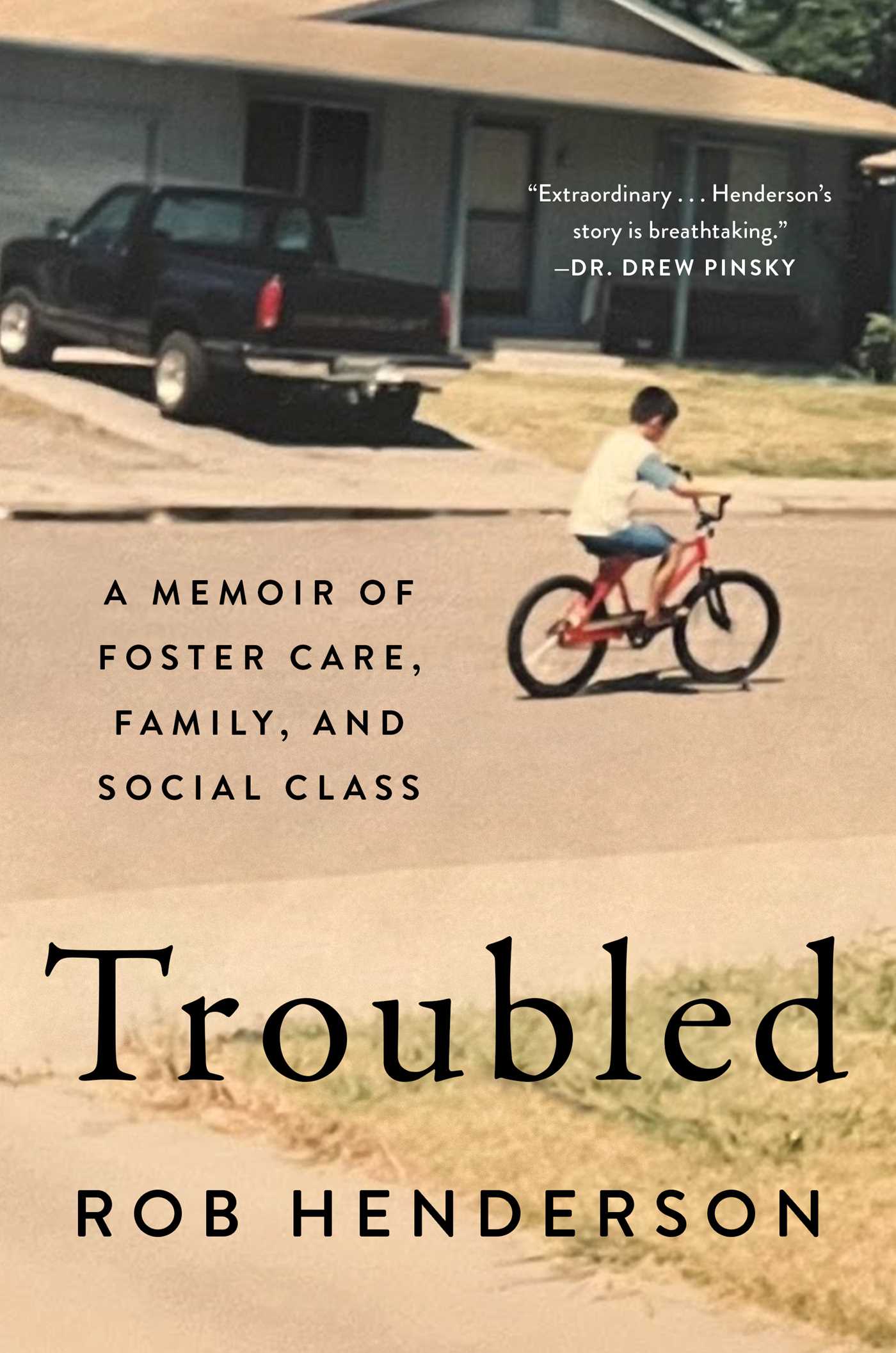
Troubled

Each of my three names was taken from a different adult. […] These three adults have something in common: All abandoned me.

Selected Quotations

Imagine that your first memory is that of being three years old and seeing your mother, a drug addict who ties you to chairs to get high without interruption, being arrested. Imagine being bounced around ten different foster homes before you were driving age. That is Rob Kim Henderson’s story, of a boy born into absolute chaos who escapes falling into it through his own curiosity and the occasional positive influence of older adults who recognize some potential in him, who found stability and growth in an adoptive family and then the US Air Force. In many ways, this is a memoir similar to J.D. Vance’s Hillbilly Elegy, in commenting on self-perpetuating cultures of poverty and social-moral chaos; both boys came of age amid violence, crime, and substance abuse, both found a guardian who offered them some stability despite the guardian’s own limits, and both ultimately found a way out of poverty and self-destructive behavior through the order and discipline that once marked the armed forces, culminating in educations at Yale. They differ, though, that Henderson not only reflects on the culture of poverty itself, but on how it’s effectively promoted by the luxury beliefs of the elites.

Troubled is, in large part, simply a memoir of a boy growing up in extremely adversarial circumstances and miraculously avoiding the worst consequences despite engaging in plenty of criminal and self-destructive behavior, behavior that would led his friends into prison or worse, death. It’s harrowing reading, as he was genuinely born into chaos: his mother was an immigrant from Korea who raised in in a car at one point, and his father is a complete unknown: the foster system was little better, as he was either one child among a dozen, raising one another in a feral sort of way, or used as menial labor. (He realized in retrospect that one family, the Martinez’, fostered young boys explicitly for that purpose: they never took in teenagers who would resist being turned into drudges.) As he neared his teen years, he was adopted by a young family who promptly fell apart after his mother fell in love with a woman, but who nevertheless gave him a modicum of stability. One of his peers told him he was lucky that his mother’s marriage ended that way: it meant his mother was never bringing home strange men who would abuse him, a fate that befalls too many foster and stepkids. Instead, she had a partner who was loving and supportive, even if she was suffering from her own gambling addiction. Although Henderson encountered a few men who offered him positive role models, like coaches, he writes that most of the male guidance he got came through literature: in fact, his curiosity about the world that led him to read was his salvation. There is also a slight role played by luck: the amount of instances where he could have been arrested for violent behavior alone is incredible, and his decision joining the Air Force and thereby developing more structure in his life that would take him out of poverty was almost impulsive.

What makes Troubled special, though, is the commentary that sometimes breaks through the surface of the narrative for most of the book, and is Henderson’s entire focus in the last chapters. Because Rob was a bright, inquisitive kid, when he left the culture of poverty behind him and went to places like the Air Force and Yale, he began comparing his life to those of his new colleagues — I can’t say peers, because he felt as though they were from different worlds. His reflection led him to realizing that stable family structure counted far more than mere income in setting the stage for a child’s life, and he asserts that public policy should be geared toward promoting families rather than making individuals more materially prosperous, and there’s an example in the book of a family receiving a windfall through an insurance settlement that ultimately goes to waste. A poor kid from a stable home can climb, but one reared in chaos will be lucky not to fall further — from basic psychological problems to the failure to develop skills for functioning in society. To his own experiences he adds in data from studies about kids from poor families versus kids from foster families that demonstrate how dramatically worse outcomes are for kids from broken families. Adding to this is his concept of ‘luxury beliefs’, which are beliefs espoused by the elite class because they’re politically fashionable, but which when applied in the lives of the poor, are utterly disastrous. He points out that the elites rarely practice what they preach, and when they do they do so in ways that shelter them from the worst consequences; it’s easy to talk about banning the police when you live in a safe neighborhood with security systems; when you’re a mother who has to worry about her kids being mugged by gangbangers on the way home from school, or still worse inducted into gangs, it’s altogether different While Henderson doesn’t delve into the public policy choices that incentivize socially ruinous decisions (like making it more profitable for a woman to have children from multiple fathers, rather than to be the baby-mama to one man, or even more radical, to marry a man and create a stable household), I can imagine him building on this. In the two weeks that I’ve known of his writing, I’ve enjoyed his articles and interviews enormously. We have now sunk as deep into the mire of the sexual revolution as we may go, I think — surely we cannot do worse than now, with Gen-Z seeming to give up on the enterprise altogether in a haze of SSRIs and porn — and it’s long past time for those most affected by it to begin lifting their voices in reproach.

Related:
The author’s substack, with articles like “Nobody Expects Young Men to Do Anything — and They Are Responding by Doing Nothing“.
Author interview with Michael Malice on “Your Welcome”.
Hillbilly Elegy, J.D. Vance

Posted in Reviews, Society and Culture | Tagged , , , , , , , , | 1 Comment

Quotes from Rob Henderson’s “Troubled”

Each of my three names was taken from a different adult. Robert was the name of my biological father, who abandoned my mother and me when I was a baby. I have no memory of him. In fact, the only information I have about him is contained in a document given to me by the social worker responsible for my case when I was being shuffled around to different foster homes in Los Angeles. My middle name, Kim, is from my birth mother. It was her family name. She succumbed to drug addiction soon after I was born, rendering her unable to care for me. I have only two memories of her. I haven’t seen her since I was a child. And my last name: Henderson, which comes from my former adoptive father. After my adoptive mother separated from him, he severed ties with me to get back at her for leaving him. He figured that this would hurt me, and that my emotional pain would transmit to my adoptive mother. He was right. These three adults have something in common: All abandoned me.

The majority of jail inmates report being raised by single parents or non-parental guardians. Two of my childhood friends landed in prison, and another one would have if he hadn’t been shot to death first. Studies indicate that in the US, 60 percent of boys in foster care are later incarcerated, 3 while only 3 percent graduate from college. 4 What this means is that for every male foster kid like me who obtains a college degree, twenty are locked up.

Making good choices is hard enough, even in the best of circumstances. Just because you know something will benefit you doesn’t mean you’ll actually do it. As a kid, I knew a lot of the choices I was making in the moment were unwise. I just didn’t care. Knowledge alone isn’t enough. For children, having a stable environment with two parents who implement rules, provide attentive care, and cultivate a sense of security goes a long way. Even when you present opportunities to deprived kids, many of them will decline them on purpose because, after years of maltreatment, they often have little desire to improve their lives.

A team of psychologists found that compared to children raised in wealthier families, children raised in lower-income families are no more likely to engage in risky behaviors or commit crimes as adults. However, compared with children raised in stable environments, children raised in unstable environments are significantly more likely to engage in harmful or destructive behaviors later in life. Holding family income constant, the researchers found that the association between childhood instability and harmful behaviors in adulthood remained significant. 10 Plainly, being poor doesn’t have the same effect as living in chaos.

I’ve come to believe that upward social mobility shouldn’t be our priority as a society. Rather, upward mobility should be the side effect of far more important things: family, stability, and emotional security for children. Even if upward mobility were the primary goal, a safe and secure family would help achieve it more than anything else. Conventional badges of success do not repair the effects of a volatile upbringing.

I thought back to my first day in high school, and how my neighbor offered to sell me drugs. Now here I was at this fancy college, and this senior is offering to sell drugs, too. Later, I’d observe rampant drug and alcohol use on campus. This was at odds with the widespread belief, which I held at the time, that poverty was the primary reason for substance abuse.

Out of twenty students, only one other student besides me was not raised by both birth parents. Put differently, 90 percent of my classmates were raised by an intact family. I felt a sense of vertigo upon learning this, because it was so at odds with how I’d grown up. Later, Iread a study from another Ivy League school—Cornell—which reported that only 10 percent of their students were raised by divorced parents. This is a sharp juxtaposition with a national divorce rate of about 40 percent, which itself is quite low compared to the families I’d known in Red Bluff.

I had an apartment off-campus on Chapel Street. To get there, I had to walk through a lot of poverty—people suffering from drug addiction, homelessness, mental illness, and so on. Sometimes when I’d walk through those areas, I would think about my birth mother, the foster homes I’d lived in, and the people I’d met in rehab. And then I would think about my classmates: At Yale, more students come from families in the top 1 percent of income than from the bottom 60 percent, 4 and here they were ensconced in one of the richest universities in the world, claiming that they were in danger. Broadcasting personal feelings of emotional precarity and supposed powerlessness was part of the campus culture. Conspicuously lamenting systemic disadvantage seemed to serve as both a signal and reinforcer of membership in this rarefied group of future elites.

Frankly, I found that college extends adolescence to a laughably old age. It was surreal to hear people say that college students are adults when they are vastly outnumbered by working-class and poor people who face the full brunt of reality before they even turn eighteen. Interestingly, studies have found that people with adverse childhood experiences—physical or emotional abuse, neglect, poverty, parental divorce, and so on—seem to age faster. Children with stressful lives tend to get their adult teeth earlier, reach puberty sooner, and undergo accelerated changes in their brain structure.

Many students and graduates of top universities are terrified of being seen as what they really are. We don’t leave messes for other people to clean up, it’s those other elite students from that other school. We’re not xenophobic, it’s those unenlightened people who didn’t go to a fancy college. We haven’t cultivated an ideologically rigid environment, go back to where you came from.

My classmate and I discussed various moral dilemmas, and he said he would push a man off a bridge to stop a train from hitting five people. I asked if he would murder his mother to save five strangers. He promptly responded that he would. I doubted anyone I knew outside of college would have said yes to that question. I later read a study that found that upper-class people are more likely to endorse utilitarianism and the belief that “the ends justify the means.” One reason for this is that affluent people score relatively low on measures of empathy and favor cold calculations for decision-making.

Gradually, I developed the concept of “luxury beliefs,” which are ideas and opinions that confer status on the upper class at very little cost, while often inflicting costs on the lower classes. 

But top universities are also crucial for induction into the luxury belief class. Take vocabulary. Your typical working-class American could not tell you what heteronormative or cisgender means. But if you visit an elite college, you’ll find plenty of affluent people who will eagerly explain them to you. When someone uses the phrase cultural appropriation, what they are really saying is, “I was educated at a top college.” Consider the Veblen quote, “Refined tastes, manners, habits of life are a useful evidence of gentility, because good breeding requires time, application and expense, and can therefore not be compassed by those whose time and energy are taken up with work.” Only the affluent can afford to learn strange vocabulary, because ordinary people have real problems to worry about.

The chief purpose of luxury beliefs is to indicate the believer’s social class and education. When an affluent person expresses support for defunding the police, drug legalization, open borders, looting, or permissive sexual norms, or uses terms like white privilege, they are engaging in a status display. They are trying to tell you, “I am a member of the upper class.

White privilege is the luxury belief that took me the longest to understand, because I grew up around a lot of poor white people. Affluent white college graduates seem to be the most enthusiastic about the idea of white privilege, yet they are the least likely to incur any costs for promoting that belief. Rather, they raise their social standing by talking about their privilege. In other words, upperclass white people gain status by talking about their high status. When policies are implemented to combat white privilege, it won’t be Yale graduates who are harmed. Poor white people will bear the brunt. The upper class promotes abolishing the police or decriminalizing drugs or white privilege because it advances their social standing, not least because they know that the adoption of those policies will cost them less than others. 

Reflecting on my experiences with alcohol, if all drugs had been legal and easily accessible when I was fifteen, you wouldn’t be reading this book. My birth mom was able to get drugs, and it had a detrimental effect on both of our lives. That’s something people don’t think about: drugs don’t just affect the user, they affect helpless children, too. All my foster siblings’ parents were addicts, or had a mental health condition, often triggered by drug use. But the luxury belief class doesn’t think about that because such consequences seldom interrupt their lives. And even if they did, they are in a far better position to withstand such difficulties. A well-heeled student at an elite university can experiment with cocaine and will, in all likelihood, be fine. A kid from a dysfunctional home with absentee parents will often take that first hit of meth to self-destruction. This is perhaps why a 2019 survey found that less than half of Americans without a college degree want to legalize drugs, but more than 60 percent of Americans with a bachelor’s degree or higher are in favor of drug legalization. 14 Drugs are frequently considered a recreational pastime for the rich, but for the poor they are often a gateway to further pain.

Similarly, a 2020 survey found that the richest Americans showed the strongest support for defunding the police, while the poorest Americans reported the lowest support. 15 Throughout the remainder of that year and into 2021, murder rates throughout the US soared as a result of defunding policies, officers retiring early or quitting, and police departments struggling to recruit new members after the luxury belief class cultivated an environment of loathing toward law enforcement. 1

The luxury belief class appears to sympathize more with criminals than their victims. It’s true that most criminals come from poor backgrounds. But it’s also true that their victims are mostly poor. And the perpetrators tend to be young men, and their targets are often poor women or the elderly. Moreover, because there are many times more victims than there are criminals, to not stop criminals is to victimize the poor. Yet the movement to abolish the police is disproportionately championed by affluent people. A key inhibition against crime is the belief that our legal system is legitimate. Which means that those who promote the idea that we live in an unjust society also help to cultivate crime. The poor reap what the luxury belief class sows. Consider that compared to Americans who earn more than $75,000 a year, the poorest Americans are seven times more likely to be victims of robbery, seven times more likely to be victims of aggravated assault, and twenty times more likely to be victims of sexual assault. 17 And yet, as I write this, many affluent people are calling to abolish law enforcement.

Before my first year of college, I had never even been to a musical. No one I knew from Red Bluff had ever been to one. But it seemed like everyone on campus had seen Hamilton, the acclaimed musical about the American founding father Alexander Hamilton. I looked up tickets: $400. This was way beyond my budget. So in 2020, I was pleased to see that five years after Hamilton’s debut, it was available to view on Disney+. But suddenly, the musical was being denigrated by many of the same people who formerly enjoyed it, because it didn’t reflect the failings of American society in the eighteenth century. The creator of Hamilton, Lin-Manuel Miranda, even posted on Twitter that “All the criticisms are valid.” This reveals how social class works in America. It is not a coincidence that when Hamilton tickets were prohibitively expensive, affluent people loved it, and now that it can be viewed by ordinary Americans, they ridicule it. Once something becomes too popular, the elites update their tastes to distinguish themselves from ordinary people. 

“Don’t you ever feel like a sucker for serving?”
I paused, unsure what to say. I didn’t feel like a sucker. But I would come to understand what he was getting at. “Something’s off about the whole thing. We swear that oath about upholding the Constitution. Then these rich kids who are the same age as us when we enlisted are actively undermining it. Pretty weird.” “Undermining how?” I asked. “The first two amendments,” he continued. “The general opinion at these schools is that the first needs a major overhaul and the second should be completely dismantled. Seems like we basically got duped into believing we are upholding American values while the future ruling class are figuring out ways to undermine them.

The luxury belief class claims that the unhappiness associated with certain behaviors and choices primarily stems from the negative social judgments they elicit, rather than the behaviors and choices themselves. But, in fact, negative social judgments often serve as guardrails to deter detrimental decisions that lead to unhappiness. In order to avoid misery, we have to admit that certain actions and choices are actually in and of themselves undesirable—single parenthood, obesity, substance abuse, crime, and so on—and not simply in need of normalization. Indeed, it’s cruel to validate decisions that inflict harm, especially on those who had no hand in the decision—like young children.

Successful people tell the world they got lucky but then tell their loved ones about the importance of hard work and sacrifice. Critics of successful people tell the world those successful people got lucky and then tell their loved ones about the importance of hard work and sacrifice.

In the US, 11 percent of kids from families in the bottom income quintile obtain bachelor’s degrees, compared with less than 3 percent of children who have been in foster care. 5 6 In other words, a poor kid in the US is nearly four times more likely to graduate from college than a foster kid.

We now live in a culture where affluent, educated, and well-connected people validate and affirm the behaviors, decisions, and attitudes of marginalized and deprived kids that they would never accept for themselves or their own children. And they claim to do this in the name of compassion. It’s fine if Antonio and I skip class and ruin our futures, but it’s definitely not fine if their kids do so. Many of the people who wield the most influence in society have isolated themselves and their children from the world I grew up in, while paying lip service to the challenges of inequality.

The reason I got where I am is because I had something I was running away from and something I was running toward. I was running away from the turbulence of my youth and running toward social mobility—money, education, esteem. I managed to channel my energy to striving to accomplish my goals. Upon obtaining a few totems of achievement, I came to realize that they are flawed measures of success. External accomplishments are trivial compared with a warm and loving family. Going to school is far less important than having a parent who cares enough to make sure you get to class every day. But it is important to remember that even if every foster kid graduates from college, that wouldn’t necessarily make them happier. A 2018 study found that people typically pursue higher levels of education because they believe it will lead to more leisure time. But, in fact, more educated people tend to have less leisure time. They earn more money, but also work more hours. This upends their expectations and ends up having a net zero effect on overall happiness.

Posted in quotations | 1 Comment

AI killed the internet star, ooh wah ooh

Quoting from “Here lies the internet, killed by generative AI” on the amount of ai-generated trash that is now beginning to overwhelm real content, including children’s videos that parents use to babysit their kids. What will be the cognitive/developmental consequences of that? This is an issue I’m starting to se in the library: several patrons tried to print out images and biographies for black history month these past few weeks that were AI-generated, including a ‘color’ photo of a woman from the 18th century!

Now that generative AI has dropped the cost of producing bullshit to near zero, we see clearly the future of the internet: a garbage dump. Google search? They often lead with fake AI-generated images amid the real things. Post on Twitter? Get replies from bots selling porn. But that’s just the obvious stuff. Look closely at the replies to any trending tweet and you’ll find dozens of AI-written summaries in response, cheery Wikipedia-style repeats of the original post, all just to farm engagement. AI models on Instagram accumulate hundreds of thousands of subscribers and people openly shill their services for creating them. AI musicians fill up YouTube and Spotify. Scientific papers are being AI-generated. AI images mix into historical research. This isn’t mentioning the personal impact too: from now on, every single woman who is a public figure will have to deal with the fact that deepfake porn of her is likely to be made. That’s insane.

YouTube for kids is quickly becoming a stream of synthetic content. Much of it now consists of wooden digital characters interacting in short nonsensical clips without continuity or purpose. Toddlers are forced to sit and watch this runoff because no one is paying attention.

[…]

All around the nation there are toddlers plunked down in front of iPads being subjected to synthetic runoff, deprived of human contact even in the media they consume. There’s no other word but dystopian. Might not actual human-generated cultural content normally contain cognitive micro-nutrients (like cohesive plots and sentences, detailed complexity, reasons for transitions, an overall gestalt, etc) that the human mind actually needs? We’re conducting this experiment live. For the first time in history developing brains are being fed choppy low-grade and cheaply-produced synthetic data created en masse by generative AI, instead of being fed with real human culture. No one knows the effects, and no one appears to care. Especially not the companies, because…

OpenAI has happily allowed pollution.

Posted in General | Tagged | 2 Comments

February 2024 in Review

February continued 2024’s atypicalness, with fiction continuing to outstrip nonfiction by a healthy margin. Granted, I was in bed for over a week, meaning novels, comedy sketches, and soup were my fare instead of histories, lectures, and fajitas, and even after I returned to work I was still resorting to easier reading. Nonfiction is warming up, though, and I imagine it’s going to put fiction’s outfielders to work.

Lenten Fare:
The Lies of Our Time, Anthony Esolen

Science Survey:
The Hidden Life of Deer: Lessons from the Natural World, Elizabeth Marshall Thomas
The Royal Society and the Invention of Modern Science, Adrian Tinniswood
In the Company of Trees, Andrea Fereshsteh

Classics Club:
A Good Man is Hard to Find and Other Stories, Flannery O’Connor

Reading Dixie:
A Good Man is Hard to Find and Other Stories, Flannery O’Connor
The World’s Largest Man, Harrison Scott Key
Twain’s Feast, Nick Offerman.

TBR Cleanup:
Dark Age Ahead, Jane Jacobs. A brief look at some worrying trends in contemporary society: though now twenty years dated, 
Live from New York: The Uncensored History of Saturday Night Live

The Unreviewed: 
– The Lies of Our Time, Anthony Esolen. At this point I need to do a “Anthony Esolen Week” in which I post nothing but reviews for his books which I’ve read but not reviewed properly.
– Dark Age Ahead, Jane Jacobs. Will try to post a blurb on this.
– Twain’s Feast, Nick Offerman. Offerman, better known as Ron Swanson,  uses a menu from one of Mark Twain’s parties with his friends to host his own party with a similar menu, using the foodstuffs as a means to examine different areas of American life and history — racism, ecology, etc. Some of the foodstuffs like prairie chickens were hard to come by, and others were surprises for Offerman’s Hollywood friends: I can’t imagine Wanda Sykes ever predicted she’d eat racoon from a gourmet chef. Definitely worth trying if you’re a serious Twain fan: I had no idea how varied his life was, and now realize I need to look into a Twain biography. I had this hazy notion of him working as a river pilot and then deciding writing stories was more fun than the constant stress and anticipation of drowning or dying in a boiler explosion.
+ One more that actually has a scheduled review for Reasons Yet to Be Revealed. Tune in Monday, March 25 to catch on.

New Acquisitions
Lies of Our Time, Anthony Esolen. Released end of 2023.
The Atlas of Beauty: Women of the World in 500 Portraits. Physical, used. On my interest list since reading Humans of New York.
Bad Therapy: Why the Kids Aren’t Growing Up, Abigail Schrier. (Preorder, delivered yesterday. Reading now.)

Coming up in March
The usual suspects, plus Lent and a theme week at the close.

Posted in General, Reviews | Tagged , , | Leave a comment

Movie Watch: February

Favorites in bold, rewatches excepting.

GROUNDHOG DAAAAAAAAAAAAAAAAAAAAAAY!, 1993.  This is possibly my very favorite movie, its only competition being Philadelphia Story with Jimmy Stewart, Cary Grant, and Katherine Hepburn.  Bill Murray plays a jerk of a reporter who finds himself repeating the same day over and over again. Eventually he learns to love and be lovely. 

Team America: World Police, 2004.  A parody of supermarionation action/spy series like Thunderbirds,  which simultaneously ridicules both post 9/11 jingoism and Hollywood liberals.  Unexpectedly obscene in parts.

5 Card Stud, 1968. A card cheat is lynched after being exposed at a poker game, and soon thereafter the men involved begin dying.  Completely by coincidence, a preacher dressed in black who decorates his church with a “Vengeance is mine, sayeth the Lord; I shall Repay” sign appears.  Who could it possibly be?  Solid acting from Dean Martin and Robert Mitchum.

The Babe, 1992.   John Goodman plays Babe Ruth,  a little boy in a big man’s body, who loved partying and loved playing ball.  It’s fun, and is largely honest about Ruth’s hedonism, though when he arrives holding a baby for his wife to adopt, the film doesn’t mention that said baby was his from one of his other liaisons.

“Aren’t you going to give Ruth credit for anything?!”
“….He run OK for a fat man.”

Cobb, 1994.    Tommy Lee Jones is wonderfully manic as Ty Cobb,  as defamatory as the movie is.  The facts of the movie are absolute trash, but  Jones is just hilarious driving through a blizzard chugging whisky and ramming the car in front of him, or going crazy at a casino because he spots the cigarette girl he was sweet on (well, randy for)  standing next to another man.  The drama of the movie is interesting –  TLJ-Cobb struggling with his inner doubts while preaching his greatness,   the libelous Al Stump  torn between hatred and grudging admiration.  When I go to Georgia to listen to Morgan Wade do an acoustic set in April, I plan on visiting Cobb’s museum to pay respects to the Georgia Peach.

Black Orpheus, 1959.   A woman arrives in Rio to celebrate Carnival, being stalked by someone who wants to murder her. She falls in love with a trolley driver/guitar player who promptly ditches his axe-crazy fiance to be with her, but then  – well, it’s based on a Greek tragedy, so use your imagination. Lots and lots and lots and lots of dancing. Seriously,  even more dancing than West Side Story

A Man Called Ove, 2016. A widower is intent on killing himself and rejoining his wife, but keeps being interrupted by the bloody neighbors who can’t back up a car properly, don’t know how to bleed a radiator, and  keep putting metal in the glass recycling bin. Idiots!  Heartwarming story that I’ve read the novel of (and watched the American adaptation of), about a man who manages to find meaning his life beyond mourning and self-absorption.   Although the American movie is easier to get into given the language barrier, I think Ove works much better as a drama – in part because it doesn’t assume the viewer is an idiot who needs every plot thing explained to them.

Bicycle Thieves, 1948.  A man struggling to keep his family fed just found a job that requires a bicycle. His bicycle is stolen. Pathos ensues. Wonderful acting, especially from his son. Set in postwar Italy. 

Kill Bill Vol 1, 2003. Uma Thurman kills over a hundred people in a quest to Kill Bill. She has not yet killed Bill.  Great music. Lots of cartoonish blood.  Interesting incorporation of Japanese animation to bridge scenes or explore backstory.  

Hoffa, 1992.  Jack Nicholson is Jimmy Hoffa,  the man who made the Teamsters union and who was ultimately undone by business dealings with the mob.  Great movie.   My favorite scene is Hoffa berating RFK, of course, but I also loved the shot of Hoffa being taken to jail,  the cop car threading its way through an unbroken tunnel of commercial trucks, their drivers cheering and lending moral to support to Jimmy. 

Warning: so much language.
“Guy needs his brudder elected president of the United States to get a job, yer a joke. You wouda been a bond salesman somewheres. […] You don’t impress me, and yer office don’t impress me, and your FAMILY don’t impress me. Buncha rum-runnmers. “

It appalls some of my friends that I have Hoffa’s tirade memorized. For the record, I’ve watched actual Hoffa-v-Bond Salesman footage, and it’s eerie how close Jack Nicholson got in the dramatization of this show. I love Pacino, but Nicholson was the perfect Hoffa, and even Jimmy’s son said so.

Coffy, 1973.  Pam Grier plays a nurse whose sister’s life has been destroyed by drugs  so she poses as a call girl to find the men who sold her said drug  – and murder them.  Tasteless in its gratuitous nudity and violence, but  entertaining.  One of the first ‘blaxploitation’ movies.

“What kind of animal do you take me for? No, I didn’t kill him — but I did kidnap his wife!!
– one of these four guys. (Language.)

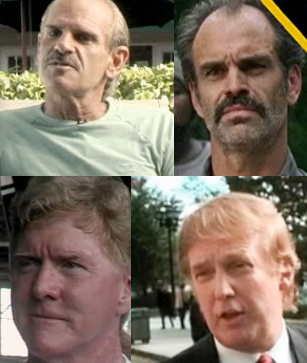
Coaine Cowboys Reloaded, 2006. A documentary about the rise of the Miami drug trade. Unexpectedly funny because of Trump and Steven Ogg’s doppelgangers. 

Fever Pitch, 2005. A man with a perfectly acceptable passion for the Red Sox has his commitment to the team challenged by Drew Barrymore, but she eventually sees reason. The curse of the Bambino is broken.

I will pause my contempt for Jimmy Fallon to enjoy this scene. SO GOOD! SO GOOD! SO GOOD!


42, 2013. Biopic of Jackie Robinson, who was the first black man to play in the major leagues.  Human dignity, baseball, Harrison Ford– what’s not to love?  There’s even a train.

Fever Pitch, 1997. Colin Firth has an obsession with Arsenal FC that he only begins to realize might be filling the void that is an otherwise meaningless life after he gets entangled in the bedsheets (and a relationship) with a new coworker, played by Ruth Gemmell. This was a better movie than the American, even without the Red Sox, because the drama is more serious and intense. Jimmy Fallon is never believable as a fanboy who grows up, being Jimmy Fallon, whereas in Colin Firth’s arguments with his friend you can see he’s actually arguing with himself, trying to convince himself to sort out his priorities.

Raising Arizona, 1987. Nicholas Cage is a repeat-offender c-shop robber whose cop wife Ed can’t have a baby. So they steal one. There are complications.

Posted in General | Tagged | 2 Comments

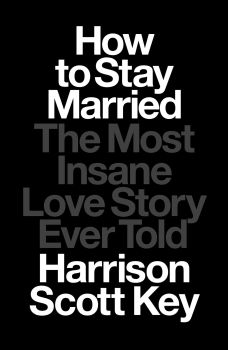
How To Stay Married

On an ordinary day, a book called How to Stay Married would have never broached my radar, given the dismal marriage prospects of eccentric librarians, but as it happened one of my favorite authors mentioned Harrison Scott Key last week and commented that this was a shift from Key’s usual “funny” books: it was, instead, his attempt to live and grow through the horror and sorrow of marital infidelity. The cowritten memoir –for the wandering wife has her own chapter — is a compelling mixture of humor and gut-wrenching despair, with little threads of commentary about other things like church woven in, as well as deeper insights about human nature that could be lifted from Solzhenitsyn. That’s part of the reason a bachelor like myself can read and be moved by this book, so much so that I imagine it will be on the year’s top ten list.

How to Stay Married doesn’t follow a simple construction, though it’s cohesive and very effective in how events are presented: believe me when I say that his not writing about their wedding until the last quarter of the book makes perfect sense once a reader is deep in the story. This is not a book that presents Key as a martyr: indeed, as he and Lauren begin their initial approach at restoring their union, he takes a hard look at himself and confesses the way he suspects he has failed as a person and as a husband. I mentioned when reading The World’s Largest Man that there were already premonitions of their faltering union, and Key delves into the mutual exercise in papering-over tension that he and his wife both engaged in for years. In brief, her background gave her a lot of emotional baggage going in, and he was too consumed by his work and too quick to revert to jokes to realize the growing sickness in their marriage. When the mask finally dropped, he reeled with which instincts to follow — fight, flight, or freeze, and found support in an intimate group of friends who helped him discern what was best for all parties, particularly their three girls. The struggle for reconciliation is not a simple one: both make it clear they were wandering in the darkness of their own souls and occasionally being beaten up by monsters along the way, but through stubbornness and grace — they found a place to grow again.

Being an outsider to Wendell Berry’s country of marriage, there’s a lot in this I can only appreciate at a theoretical level. Key’s painful memoir — he began writing the day she told him, as writing is the way he processes both the world within him and without him — drives home what a radical institution marriage is in the present world. Not for nothing does traditional Christian theology regard marriage as the proto-church, for it involves a total dying to self, and we witness and experience that death throughout this. Not that it’s a book clouded in darkness: it’s often hilarious, sometimes in a gallows humor kind of way. That combination of joy and sorrow, of despair and hope, is constant here, the two legs striding along and carrying the reader along. Even without being married there is enormous merit in Harrison’s observations as he tries to find his way, supported by his friends and his and his wife’s family: he recognizes Solzhenitsyn’s truth about the line between good and evil running between every human heart, for instance, and recognizes too the importance of communal connection, the perils of self-idolization which both he and his wife pursued, finding themselves in a self-made hell. Both Harrison and Lauren’s best and worst selves slug it out throughout this work, and it was heartening to see people volunteering themselves to go through pain because they knew it would spare their daughters, or because their still-obdurate love for the other kept them pushing forward despite the temptation of easy escape, the open doors shining with light but leading to nothingness.

This is one of those books I’m going to remember, and will plan on visiting Key’s other works.

Selected Quotations

Posted in Religion and Philosophy, Reviews, Society and Culture | Tagged , , , | 2 Comments

Selections from “How to Stay Married”

Harrison Scott Key’s How to Stay Married will, presumably, make the year’s top ten list for me, despite the fact that the closest I’ve come to being married is being confused with someone’s fiance. It’s the story of a marriage, and an affair, and….an affair that came back, and of mercy and self-loathing and all kinds of things. Simultaneously funny and wretching all at the same time, and written with consent (and assistance) by the architect of the affair.

SELECTED QUOTES

It is early afternoon. She holds a McDonald’s Coke. I would like to be holding a bucket of wine, but this seems bad form for our first session of marriage counseling. She is here and I am here but we are not here together.

What happened was, my wife for a billion years—the mother of our three daughters, a woman who’s spent just about every Sunday of her life in a church—snuck off and found herself a boyfriend. Not cool. Her boyfriend, I mean. He has a decorative seashell collection and can’t even grow a beard. I am not making this up.

Books cannot grant you vengeance against your wife’s lover. That’s what baseball bats are for.

I spent mornings trying to write a book, and we spent nights trying to make a baby. We made three people before I made a single book

When it comes to her interior life, she gives nothing away. You want to know how I feel? Just ask. You’ll wish you hadn’t. Ask me how things are going, and thirty minutes later you’re just hoping for an aneurysm so I’ll stop. I have to be funny just so people won’t run away when they see me coming, and many still do.

It would take me years to understand this, but the understanding began in that church hallway, that a good person is a temporary and imaginary creature, as make-believe as unicorns and fire-breathing cows, because the best of us are often the worst, full of proud and viperous snakes, believing ourselves gods. The dragons did not just live in history and myth. They lived inside me.

Some churches, they sign you up for the faith before you even have a chance to think it through, but in our church, it was DIY Jesus. You had to compare your life to the various rules and guidelines of the handbook, discern exactly how you’d effed things up, and then, once you were fully aware of your effedness, step forward during the altar call in front of everybody and politely request to be dunked. If you didn’t want to, well, fine. Burn in hell if you want. It’s a free country.

Growing up, I was taught to say my prayers at bedtime: If I die before I wake, I pray the Lord my soul to take. You have to admire a religion that has the balls to remind children they might die in the night.

 I’ve prayed for my wife more than just about anyone else, because God says to pray for your enemies, and marriage can sometimes be a war of attrition and one of siege, sometimes cold, occasionally hot. But at the prayer breakfast, I could not pray the prayers I needed to pray, even though I knew Lauren was already drifting away from me. I hoped God could hear those prayers trying to break free of my heart, tight as a gorilla fist. Maybe that’s all prayer is: wanting to pray and hoping God sees you wanting. And that’s when I let go.

Love is never a bad call. It might seem impossible. It might even seem silly when every atom in your body screams for blood. But how else, other than with love, can a broken thing be made whole again?

I once attempted to flirt with her our freshman year of college, complimenting her sandals before class. She didn’t respond, just glared at me with a scowl that would’ve liquefied helium, for which I repaid her many years later by marrying into her family and sitting next to her every Thanksgiving.

In grad school, I was dumped by a seminary student, who explained that God did not want us to be together.
“Did God tell you this?” I said.
“Yes.”
“Does he have a deep voice, like Barry White? I’ve always wondered.”

You can’t help but laugh at these people, who behave exactly like people. When Adam and Eve break the rules and eat the fruit and their eyes are opened and human history begins and God shows up and asks if they did the One Thing He Asked Them Not to Do, Adam, the first man, paterfamilias of all humankind, the archetype for every loving husband in human history, rats out his wife and disappears into the shrubbery.

Was I so strong as my father, my grandfather, to refuse bitterness?

Did Chad deserve mercy? Is it possible to express mercy with a pitching wedge to the skull? How does one walk humbly while dragging a dead body into a gully?

When you get to the end of hope, comedy is all you have left.

We talked for a good two hours about everything: the sad state of matrimony today, their marriages, mine. Jason asked me not to shoot myself.
“I’m not sure it’s me I want to shoot.”
“Don’t bang your secretary,” Soren said.
“I don’t have a secretary.”
“Good.”

“I think I’m going to start seeing other women,” I said to my best friend, Mark, one day, over the phone, updating him on the magical adventure of my marital separation.
“Are you sure that’s a good idea?”
“No. But I need some way to get Lauren off my mind.”
“Have you tried alcoholism?”

No one really talks about marriage struggles. Not Christians. Not the real struggles. Sex, pain, anger, loneliness. Not a word. You’d think they would. Christians love to talk about sin and struggle, but we look past the many nightmares of marriage like an army of the blind.

If you want to stay married, the first thing you’re going to need is to be insane. Because staying married is insane. Getting married is not. Getting married is fun. In the weeks and months before the wedding, you’re in passionate love with this glorious gift of a human: the ring, the announcement, the engagement photos where you hold hands and close your eyes and lean in and touch your foreheads together like a pair of telepathic freaks, that part is fun. Staying married is not fun. Staying married is like being kicked repeatedly in the head by a mule who loves you, and the mule is God.

Parents are like arms. You can swing it with one but two work best and three would be weird.

People who don’t have children don’t know that they’re missing the pleasure of watching a concert where half of the children appear never to have heard of music at all.

Who are we? What is our duty to each other in this nasty and brutish life?

One of my favorites, Alain de Botton, once wrote, “Compatibility is an achievement of love; it must not be its precondition.” That is marriage, in the end: two of you, being you, warring against the worst parts of you, making space for the best to grow, and learning to see that some parts of your spouse are not your favorite, and letting those parts be anyway. Hating those parts is no grounds for divorce. The only thing worth divorcing, in most cases, is the hatred itself, and your inborn desire to shape the world to your will like some kind of Marvel villain.

They hug us. They feed us. We feed them. They feed our children and we feed theirs and they feed Gary when we’re out of town and when they’re out of town, we feed their cats. All we’re doing is feeding each other, basically, with hymns and prayers and sermons thrown in there to remind us why.

The human heart is a terrain that cannot be mapped by reason alone. Virtue cannot solve the riddle of marriage. All I really know is this: the most powerful force in the universe is love and the strangest is forgiveness. I will never fully understand either but then I still don’t know exactly how elevators work and I enjoy elevators all the time.

Posted in quotations | Tagged , , | 5 Comments

Live, from New York — It’s SATURDAY NIGHT!

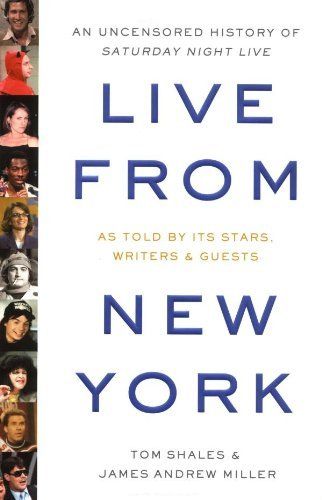
At the end of 2022, a friend of mine discovered that his former roommate had left a boxed set of SNL’s first five seasons — or at least, season two of the same. He was a teenager when SNL first aired and grew up it, and offered to introduce me to it, since I’d never seen anything of SNL. I was immediately smitten by Jane Curtin and Gilda Radner, and became fond of the Weekend Update routine. After plowing through season 2, I found a full boxed set on eBay, and we subsequently finished seasons one through four, my friend explaining the various seventies references and jokes that would have gone over my head entirely. I bought this volume to learn more about the early years of the show, though it covers everything up to the early 2000s. The subtitle is important, because lines from interviews constitute nearly the whole of the book, so there’s no narrative beyond what the interviewees contribute themselves. That largely works, though it does create some frustrating gaps: for instance, they mention Gerald Ford’s cameo in passing, but not how that happened. Still, the interviewees are largely good at delivering the general story of how things happened. I was surprised to learn that the show was created just to fill up space after Carson pulled permission to air his reruns on late Saturday nights: interesting that something so creative and culturally significant originated as an airwave band-aid. I imagine this book is of great interest to serious fans of the show, but once we’d left the era of the Not Ready for Prime Time Players, mostly what kept me powering through was recognizing names that gained more fame later on, sometimes in part because of the exposure the show gave them. Although Lorne Michaels created the show with the intention of using unknowns, later showrunners purposely hired comics who already had an audience, though this could trap the show into depending on one or two particular people instead of a strong ensemble, with severe consequences if they left. Learning how the show worked — or didn’t, sometimes — was interesting, as were the lives of the cast and writers, and the office politics. I was not surprised to learn that drug and alcohol abuse were rampant, though not everyone partook: Jane Curtin was as straight-edge as her character in “Weekend Update”. More than once, hosts took the stage and conducted the show under heavy influence. My favorite factoid was learning that Dan Akroyd and John Belushi bought a building with a ground-story bar, and after the show they’d just go there and hang out with friends: this was an incredibly cool incidence given that I watched the show in a ground-story bar space that served as a private spot for socializing. This was a fun-enough volume, though I imagine I would have enjoyed it more consistently if I’d seen the show beyond the original cast. (And technically, I still haven’t finished it….once I have, no more new Gilda.) My exposure to the show outside of these DVDs has just been ocassional clips, which don’t communicate the full experience of the show — the sometimes strange, sometimes awesome music, gags like having a monster ‘attack’ the studio audience, that sort of thing. Jim Breuer’s “Joe Pesci Show” is a favorite from later years, especially the clip where John Goodman is somehow pulling off a Robert de Niro impersonation despite weighing twice again as much.

Posted in history, Reviews | Tagged , , , , , | Leave a comment

Top Ten Tuesday

Today’s treble-T is covers with things found in nature, so off to the science shelves I go. Et voila!

Time for Tuesday teases!

I have changed the names of many characters in this book, because most of those people own guns.

Boredom, I knew, was a dangerous thing. For some children, it led to experiments with sex, and drugs, and alcohol, and lighting one another on fire, sometimes with the alcohol. For some of us, the never-ending rural ennui led to destructive habits with literature.

The World’s Largest Man, Harrison Scott Key

[Washington Park’s] prime tenant was a team with the wonderful designation of the Brooklyn Bridegrooms, so named because several of its members chose to marry shortly after the team was formed.

After several years of suffering, the team’s marketing officials tried to make the most of the situation by offering “Croix de Candlestick” pins to fans who stayed through the rare extra inning night games, which showed a snow-capped version of the team’s monogram and had the Latin motto Veni, Vidi, Vixi (slightly changed to “I came, I saw, I survived”). 

Ballpark: Baseball in the American City, Paul Goldberger

Genesis never disappoints, crammed as it is with nudity, murder, and many delicious set pieces involving nudity and murder in addition to DIY boatbuilding instructions.

You can’t help but laugh at these people, who behave exactly like people. When Adam and Eve break the rules and eat the fruit and their eyes are opened and human history begins and God shows up and asks if they did the One Thing He Asked Them Not to Do, Adam, the first man, paterfamilias of all humankind, the archetype for every loving husband in human history, rats out his wife and disappears into the shrubbery.

How To Stay Married, Harrison Scott Key

Posted in General | Tagged , | 10 Comments

Lovers and Other Strangers

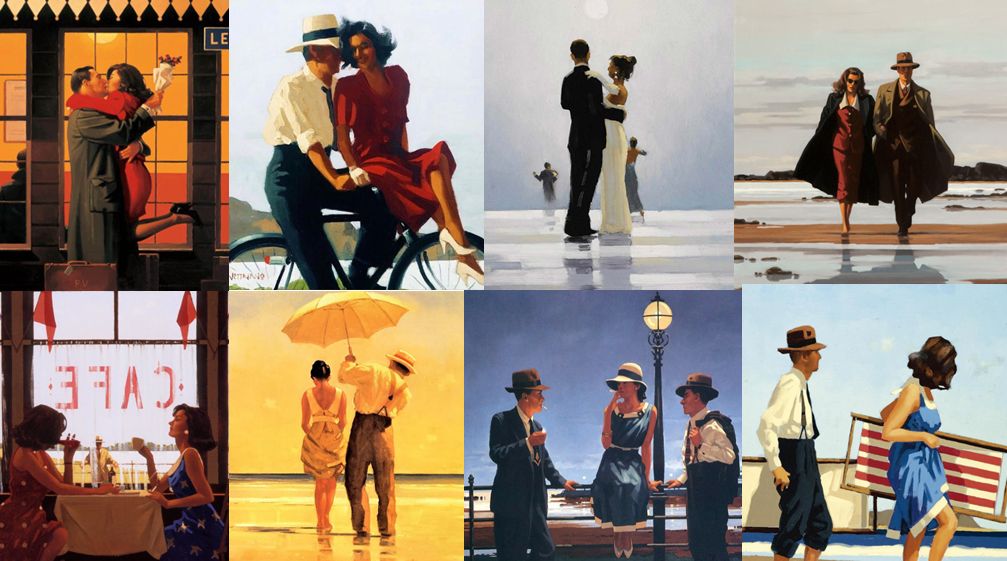
Where is this place, this retroland of glamour and sleaze? Where are these tenebrous backrooms and beachfronts vivid with bunting? Not of our time, surely, yet the details of their composition — a provative pose, a yearning expression, a cigarette held just so — are certainly of our world, a kind of limo where past and present elide, a dance to the music outside of time.

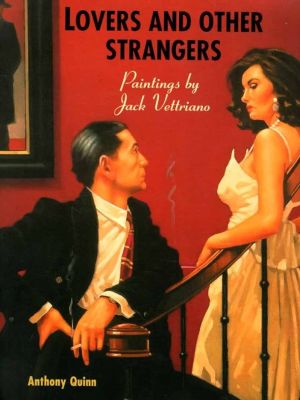
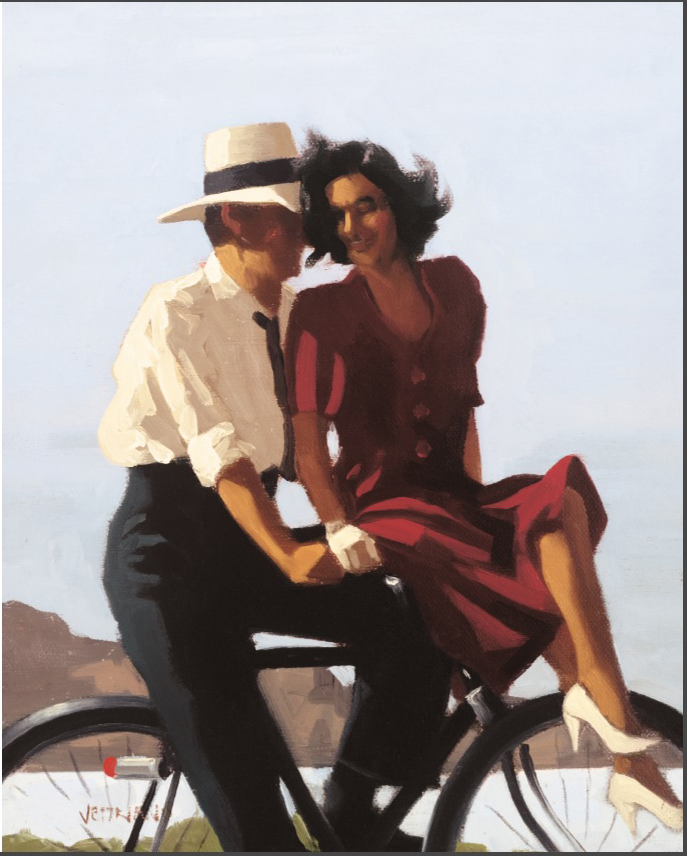
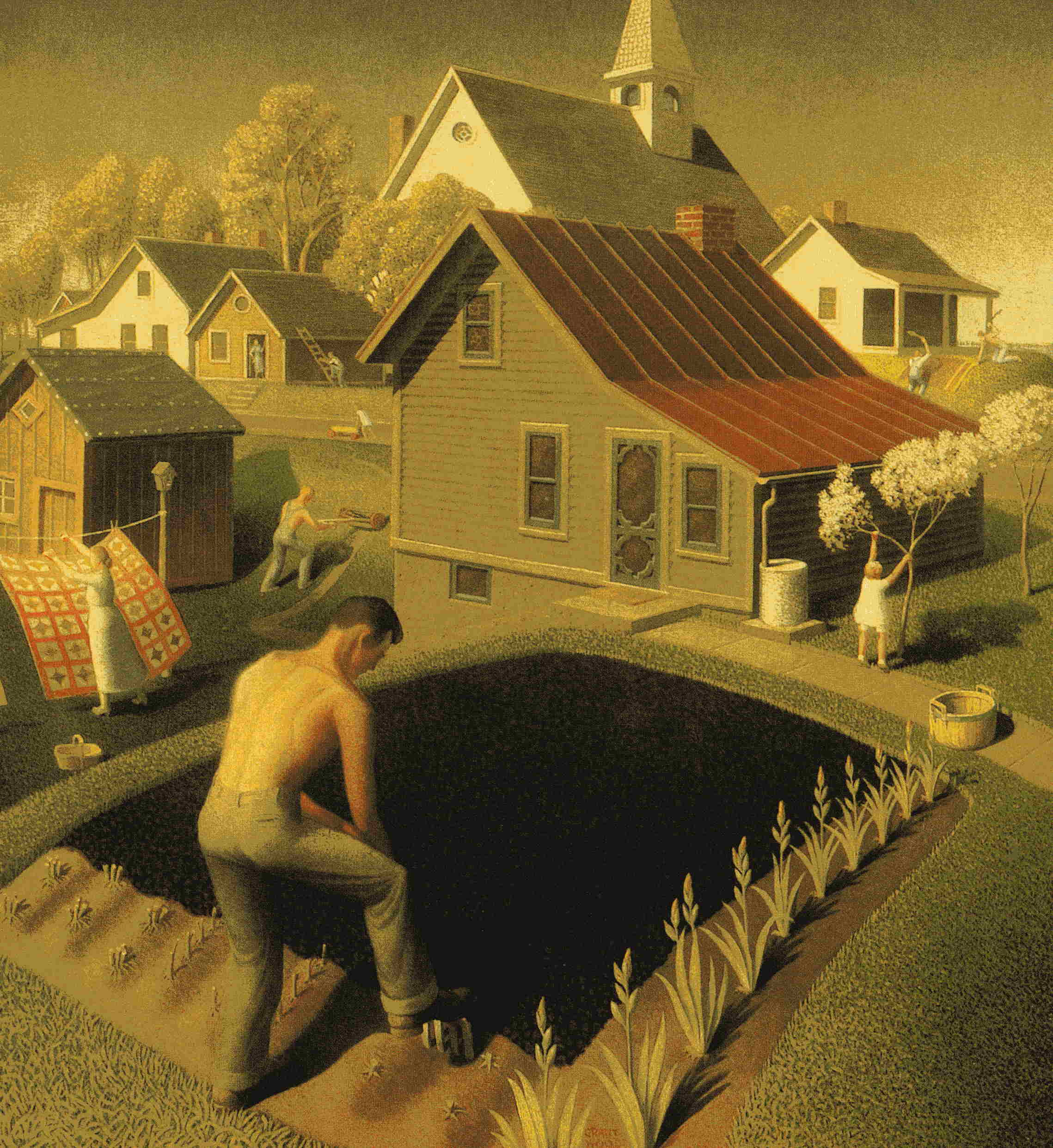
Perhaps twenty years ago now, while looking for modded content for The Sims*, a painting to place in game caught my eye. It was of a man and woman at a train station, the man in a somber grey suit and the woman in a bright red dress, their embrace ending a long separation. It was called “Back Where You Belong“, and led to my becoming a fan of Jack Vettriano, a miner who taught himself to paint. A print of that painting and another, “Lazy Hazy Days” now decorate my bedroom, and until very recently (when I hung a print of Grant Wood’s “Spring in Town”) he was the only artist to be featured there. Lovers and Other Strangers collects a hundred of Vettriano’s paintings into a single volume, prefacing them with a biography of the artist, and commentary on his work. There are a few other collections like this on Amazon, all with a theme: another is “A Man’s World” and focuses just on male subjects. This particular collection, as the name hints, is marked chiefly by the ‘torments of romance’, and so incorporates some of my favorite pieces like the aforementioned, plus “Dance Me to the End of Love”, “The Singing Butler”, etc. I’ve included a collage of some of my favorite pieces collected in this volume below, and as you can see Vettriano’s paintings all have a historic setting — though he’s not limited to a particular timeframe. In addition to his characters’ dress, which speaks to past eras like the 1940s, Vettriano’s backgrounds also add to the nostalgic feel, given the frequency of settings like train stations, booming factories, and cozy cafes that have been replaced in modern America by fields of asphalt, the rustbelt, and remarkably ugly fast food chains whose decor says one thing only: give us your money and get out. Romance, love, and even eroticism are a strong part of Vettriano’s work; while he doesn’t paint couples exclusively (many of his works have a sole male or female character, or depict casual socialization between groups of men, etc), they’re arguably his most memorable — sometimes for the beauty, sometimes for the pathos. There’s palpable emotion in a lot of his work, like sorrow, heartbreak, and wistfulness along with the joy and warmth of other paintings. One thing I noticed in studying the gallery in this book is how often there’s a voyeur-type figure in the paintings — spotted in a mirror, hovering in the background. Given the intimate moments we’re witnessing, like a man smoking a cigarette in bed, a letter dangling from his hand and despair on his face — I wonder if that figure is meant to be the viewer, in some way. I’m glad to have stumbled on a copy of this, as there were a few in here that I haven’t seen before despite actively following Vettriano and plotting to fill my entire living space with prints of his work for twenty years.

* Fun fact: things came round full circle, as I made a “Back Where You Belong” painting to include in houses for The Sims 4.

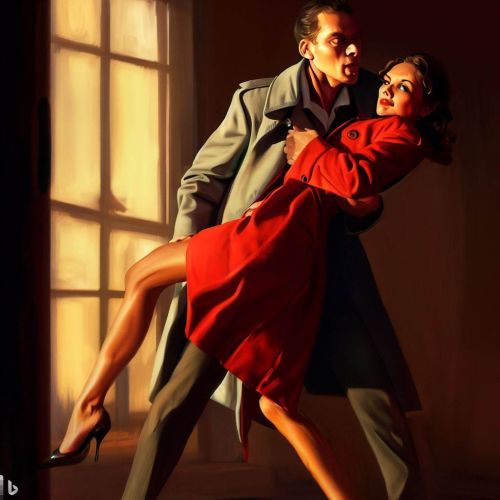
For frights and giggles, here was an early experiment of mine with Bing Image Creator, attempting to recreate “Back Where You Belong” with Frank Sinatra and Amy Winehouse.

Posted in Reviews | Tagged , | 2 Comments