April 2024

Well, April didn’t quite go the way I’d expected. A lot of equipment turnover at the library + beginning of big archives project at the library + end-of-term assignments meant that after a few history reads, the only thing I read was easy-on-the-brain historical fiction. Speaking of historical fiction, Mssr Sharpe will ride again this October with Sharpe’s Storm, and Robert Harris will be releasing Precipice in autumn as well, which appears to be set immediately before the Great War. Just yesterday I heard of an author who I’ll be checking out more of, Brian Panowich: evidently he does crime/noir set in the South. Funnily enough I heard of him via the Morgan Wade Fan Club, because in one of his books he tells people to listen to her. I concur, here’s a playlist.

Read of England:
Life Below Stairs: The True Lives of Edwardian Servants. Technically read in March.
Elizabeth’s London, Liza Picard
The Club: Johnson, Boswell, and the Friends Who Shaped an Age, Leo Damrosch
Sons of the Waves: Common Seamen in the Heroic Age of Sail, Stephen Taylor
No King, No Country, Wayne Grant
A Morbid Taste for Bones, Ellis Peters
Longbow, Wayne Grant
Warbow, Wayne Grant
Broken Realm, Wayne Grant
The Ransomed Crown, Wayne Grant
The Dangerous Years, Max Hennessey
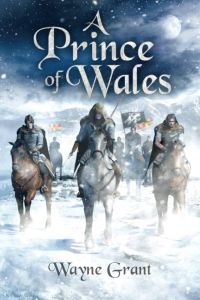
A Prince of Wales, Wayne Grant
To So Few, Russell Sullman

The Science Survey:
The Fall of Roman Britain: Why We Speak English. Sort of. Interestingly enough, this tackles a historical question with scientific tools — analyzing genes and climatic change evidence, etc, along with archaeological inquiries and some general history. I think I can get away sticking it into the Archaeology & Anthropology slot.
The Science of Baseball,Will Carroll. Again, sort of. I’ll stick it in physics and call it SAFE! Review to come.

Unreviewed:
I Judge You By Your Bookshelf, Grant Snider. This is a collection of cartoons about books, reading, writing, and poetry.

Diary of a Tokyo Teen, upcoming. Also largely graphical.

The Science of Baseball,Will Carroll. Literally just finished right before bed April 30. Will probably short-round it with Tokyo Teen.

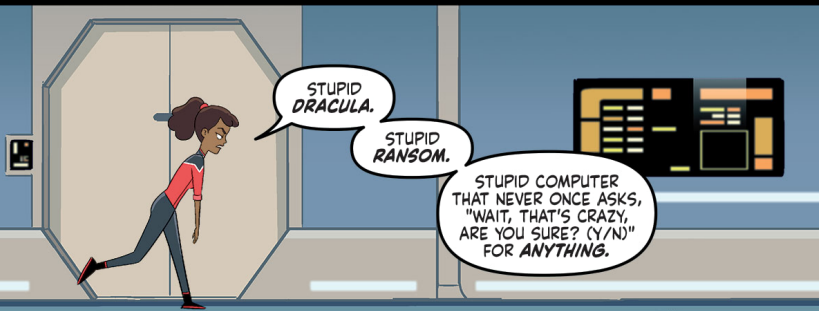
Star Trek Lower Decks #1: This is a frustratingly short but fun LOWER DECKS! LOWER DECKS! LOWER DECKS! comic in which the LD peeps actually create a mix of Dracula + Moriarty. Solid adaption of art and storytelling, but too short. Its ending is like commercial break without the resolution of the second half. Even worse, Amazon is being all sneaky tricksy hobbitses and offering the first one on KU, but not the other two.

Classics Club and Reading Dixie:
(shrug)

Coming up in May:

My plan was to devote May to all things medieval, but so much of my RoE reading was set therein that I’m going to let May be unplanned, random, and fun.
Posted in General | 1 Comment

Moviewatch: April 2024

Bonnie and Clyde, 1963. Two poor teenagers set forth on a fund-raising tour of the midwest. Highly romanticized, but fun, with a great soundtrack.   

Harold and Maude, 1971.       A morbid young man who goes to funerals for fun meets an aged woman who also attends them despite not knowing the deceased, and they become friends – and more.   There’s an interesting dynamic between the two – a young boy fixated on death, an old woman who celebrates life. 

Mildred Pierce, 1946.    Joan Crawford  stars as Mildred Pierce, a woman whose husband abandons her, but who makes a success of herself in the restaurant business. Unfortunately, her oldest daughter Vera is the most toxic  female character I’ve ever seen,  someone who Scarlett O’Hara would bow before.   Wonderful writing, great acting.   Ann Blyth is incredibly hatable and Joan’s adoration of the girl who treats her abysmally drives the movie. I undersand the book is even more depressing. 

Mommy Dearest, 1981.  Faye Dunaway (who played Bonnie in Bonnie and Clyde) here steals the show as Joan Crawford, or at least her adopted daughter Christina’s version of her. Christina writes Crawford as an insane and abusive narcissist. It’s a captivating movie in part because Dunaway’s acting is so over the top that she basically shoves the woman who wrote the book out of the spotlight entirely.   I’d just seen Mildred Pierce, so hearing Dunaway do the scene about her ungrateful beast of a daughter – with Christina looking on – was most interesting.

Beowulf and Grendel, 2005.  Gerard Butler is Beowulf, the doughty Geat, come to Daneland to destroy the monster Grendel.   The film takes the approach of humanizing Grendel – he appears as a massive human with a lot of bodyhair, and it opens with him watching the Danes kill his father and developing a hatred for them. Also stars Stellan Skarsgård, another of my favorite actors. (He was excellent as Boris in Chernobyl, part of which I rewatched around the anniversary of the explosion.)

Deerskin, 2019. A French film in which a man who is having issues with his wife spends a ridiculous sum on a deerskin jacket and then becomes obsessed by it, resulting in a series of murders. Described as “comedy/horror”.

Walk the Line, 2005. Joaqin Phoenix is Johnny Carter in a movie that’s about Cash’s rise from a struggling farm in Arkansas to becoming one of the biggest names in country music, struggling with his love for one woman — June Carter — and substance abuse. Solid acting all the way around, and the music is good. I haven’t heard June Carter by herself enough to judge Reese Witherspoon’s performance. I was quite impressed by her singing, though. 

The Last King of Scotland, 2006. Young British doctor goes to Africa to help the poor. Becomes personal physician to a genocidal dictator. Well, these things happen. My favorite moment of utter confusion was hearing Ugandans sing “Bonnie Banks O’Loch Lomond”.

Buckaroo Bonzai, 1984. Um. Peter Weller is a physicist/test pilot/singer who suddenly becomes privy to the fact that Earth is being invaded by little green men (or normal-sized brown men). A campy SF comedy.

Fried Green Tomatoes, 1991. A story about the bond between two women forged after a man who they both loved (one as a sister, one as a potential wife) dies. One of my favorites, and a re-watch. I visited the filming location in Juliette just last week, which inspired my re-watch.

The Time Bandits, 1984. Um…not sure what to say about this. Done by Terry Gilliam, featuring Michael Palin,  John Cleese and and Sean O’Connery. The story is…lord, just watch the trailer.  A small boy is kidnapped by time-traveling robbers who visit Napeolon, archaic Greece,  the Titanic, and see John Cleese as Robin Hood. 

Broadway Danny Rose, 1984. Woody Allen is a ‘talent manager’ whose best acts seem to leave him. Case in point:  his singer Lou is a star in the waiting, but he has alcohol issues. While trying to manage things between Lou and his goomah, he unwittingly attracts the ire of two Italian mobsters. In the end he loses Lou despite making him a star, but he possibly gets the girl.

Amélie, 2001.   A young waitress begans engaging in the lives of those around here – encouraging two lonely people to date,   returning a hidden box to the man who hid it as a boy,   etc.   Wonderful music and sharp characters:  the lead actress, Audrey Tautou, is one I’ll be looking for again given her expressiveness and occasional similarity to Audrey Hepburn, who I rather adore.  French movie.

Posted in General | Tagged , | 6 Comments

To So Few

The enemy is coming.  There is no more time.

France has fallen, the British army barely got out of Europe running from Hitler’s panzers, and now Britain stands alone. Only her brave lads in the Hawker Hurricanes stand between Hitler and global domination! …well, the guys in the Spitfires, too. Arrogant gits. To So Few is a novel of the Battle of Britain — or at least, it’s a novel of air combat in the summer of 1940: I never got the sense that the RAF was being hammered every day and coming frightening close to being used up; instead, combat is steady and they spend an unusual amount of time protecting convoys rather than their airfields. A young airman named Harry Rose is transferred to the front line, despite only having twelve hours of flight time in Hurricanes, but he knows what he’s doing and he’s anxious to prove his mettle. His father fought in the last one, and Harry wants to know he’s made of at least the same stuff as the old man. As the summer progresses, Harry and the other members of Exalibur squadron face death on the daily, meeting the German fighters and bombers in the air over Britain — and Harry falls in love with a young WAAF officer named Molly. As the name of his squadron hints, this is a rather romantic and sentimental story: Harry and Molly are especially earnest in talking about how wonderful the other is, and Harry — one of Excalibur’s flying knights — declares her to be his Lady after she bestows upon him a Favour. There’s an interesting mix of gritty real-world detail — the flash of light of canopies, the smell in the cockpit after firing, the maneuvers needed to keep a Hurricane from stalling in a dive — with very idealized descriptions of the noble crusade against the wretched Hun. It works to a degree because Harry is young, and his head is full of Boy’s Own type reading, but some readers may find it a bit florid. The growing relationship between Harry and Molly has that same stilted feeling: there’s literally more romance here than in romance books I’ve read, like The Littlest Library. It’s weirdly refreshing in a way — not innocent, per se, but sort of….mystiful. Harry’s in love, but he’s also in love with being in love, if that makes sense. I have a strong tolerance for sentiment and idealism when it comes to World War 2, especially the Battle of Britain, but even so it was thick to the point of syrupy at times, especially the “Oh Harry / “Oh, Molly” bits.) That said, this isn’t a ‘juvenile’ novel: most of the guys do a great deal of drinking, skirt-chasing, and swearing, and Harry only abstains from the drinking because his father died of liver poisoning. The combat portions , which are substantial, are much more cleanly written and far more enjoyable. Enjoyable on the whole, but I gave my permission to start skimming through the sicky-sweet romance stuff.

Highlights:

Don’t look at me with those trusting eyes, those eager, shining faces. If I have to, I will send you to your deaths, and you’ll not be the first, God help me. Because it’s what I may have to do. Will I have to write to your parents one day, too? I hope you’re able to learn what our hard-earned experience has taught us. If you can learn, maybe you’ll live. If you don’t, there’s no hope at all.  For you, or for any of us.  If I could give you more time, I would, but, God help me, I need you now. The enemy is coming.  There is no more time.

Jerry can appear out of what seems to be a clear, empty sky in just a few seconds. One second the mirror’s empty, and then, before you can say ‘bugger me with a broomstick,’ he’s there, and he’s trying to pump lead right up your arse. Not the best cure for constipation, believe me.

A coffin for the dead members of its crew, the Heinkel dived a further thousand feet before the fire burnt through the main spar. The wings folded, and the remnants of the bomber fell vertically down. A molten pyre dripping fiery blobs, spiralling into the sea.  Above it, the two survivors hung disconsolately beneath their canopies.

“Yes, sir, thank you,” they chorused together. They looked like a couple of schoolboys (but then, hadn’t they all?), and for a fleeting moment, he felt a wave of unhappiness wash over him.  Would they learn and survive, or…would they just become more faces and names to remember in those quiet, pensive moments when he was alone?

Posted in historical fiction, Reviews | Tagged , , , , | 3 Comments

Top Ten Reasons We’d DNF’d a Book

Today’s TTT is picky reasons we’ve DNF’d books. Despite the number and variety of books I read, I’m rather picky about the ones I commit to, let alone buy, so it’s rare for me to DNF a book. I will see what I can muster. I found five books that I mentioned DNFing. But first, a tease!

“Yes, sir, thank you,” [the new pilots] chorused together. They looked like a couple of schoolboys (but then, hadn’t they all?), and for a fleeting moment, he felt a wave of unhappiness wash over him.  Would they learn and survive, or…would they just become more faces and names to remember in those quiet, pensive moments when he was alone? (To So Few: A Novel of the Battle of Britain)

Kelly sighed. ‘It’s never been my habit to refuse when I’ve been told to volunteer, sir.’ The admiral’s smile grew wider and he rose.
‘A very good idea, too,’ he said briskly. (The Dangerous Years)

And now, the – actually, no. Graphical tease!

yay Kindle Unlimited I can read Lower Decks comics now

(1) Hayduke Lives, Ed Abbey. Abbey is one of my favorite essayists and I’m sure he was a load of fun to stay up all night in the desert with — drinking, watching shooting stars, and complaining about the government — but this was just stream-of-consciousness rambling and an absurd amount of literary dwelling on breasts. I was within 40 pages of finishing when I gave up.

(2) Mating in Captivity, a book on managing intimacy and desire in relationships. DNF’d after the author shared that she’d advocated one couple divorce so they’d find each other sexy again.

(3) Capitalist Punishment, Vivek Ramaswamy. This proved to be written for investors, and I’m a poor librarian who, if he had money to ‘invest’, would much rather spend it on an off-grid cabin in the woods.

(4) What the Dormouse Said. Too much LSD, not enough personal computing.

(5) The Oil Kings. I still have this, still want to finish it, but holy mackerel does it document a lot of meetings between politicians, the Saudis, and oil men.

Posted in General | Tagged , | 9 Comments

The Fall of Roman Britain

When we speak of the fall of the Roman empire, we’re usually engaging in hyperbole: Rome’s decline in Europe was more of a slow decay and transformation. In Britain, though, first Rome was there and then it wasn’t — and seemingly overnight, the Romanized Britons were displaced by German tribes, chiefly the Angles and Saxons. The Fall of Roman Britain takes the unusual approach of examining historical questions via scientific means: attempting to track population movements through comparative carbon-dating and genetic comparison, linguistics, and climatic fluctuations to try and understand the great migratory push that saw the Germanic tribes pushing across the Danube into Roman territory, etc. The scientific means are not the only ones, though: Lambshead also incorporates the history of western Rome’s political chaos. Fundamentally, Lambshead attacks two questions: why Roman Britain failed so dramatically and so thoroughly, and why the Anglo-Saxons so completely supplanted the native Britons. To reduce both down: the attempt to create a Roman Britain never fully developed, in part because Britain was isolated from the continent and in part because the civic infrastructure that needed to grow was collapsing on the continent itself, replaced instead by pure military dictatorship, which in Britain deformed the economy such that when Rome began withdrawing troops, the economy collapsed with it. As to the second question, Lambshead argues that the Britons, with a strong aversion to cities, were separated into many isolated pockets (something substantiated by genetic studies that undermine a ‘general’ Celtic gene pool): the Saxons brought with them a more collaborative and cohesive culture, resulting in the establishment of warring kingdoms, not simple tribes. (Honestly, if you feel like cheating you can just skip to page 200 or so, because Lambshead does a summary of his cross-disciplinary studies.) Personally, I don’t know enough about late-Roman Britain or sub-Roman Britain — especially its economy — comment on its substance, but I was most interested in the notion of the Britons being a quilt of distinct genetic groups rather than a more mixed group. This subject warrants more digging, though I’m more interested in the establishment of Anglo-Saxon ‘Britain’ than anything else.

Posted in history, Reviews, science | Tagged , , , , , | 3 Comments

A Prince of Wales

Gwynedd calls for aid! A few years ago, the rightful king of Gwynedd, Lylwelyn, marched to the assistance of the Earl of Chesire, largely out of friendship to the Earl’s men Roger and Roland. Now, ambushed after a parlay with the uncles who have stolen his lands, the prince has asked for that favor to be returned. Roland quickly discovers that the war-band he led during the recent unpleasantness has been defeated by victory: its men, once proud warriors, have again fallen into drunken vagrancy, spending their time pawing women and drinking themselves to sleep. After marching them out into the country to sweat away the ale and get back to fitting form, Roland and the boys head for Wales — where they find one of Lylwelyn’s uncles has hired the Vikings hanging around Ireland to serve as extra muscle. Roland and Lylwelyn have an idea, though, one that requires using Roland’s Danishness for all it’s worth. With no skulduggery going on at home, Millie nearly vanishes as a character — a bit like Senator Amidala in Revenge of the Sith. Still, Roland doesn’t have the book all to himself: there’s a sideline where one of Sir Roger’s best men’s bastard son shows up looking for the father he’d never known, hunted by his unwitting stepfather who realized he’d been cuckolded years ago and decided to take it out on the boy, leading to Sir Roger and a few of the house guards having to fetch him, only to run into their own Welsh problems, and soon enough everyone is stabbing and running and trying hard not to die. Fun enough. It looks like the next novel focuses on young Declan, who Roland grew up squiring with and who is Sir Roger’s new Master of Sword.

“I am done with women!” the boy said flatly. Sir Roger smiled in the dark.  Any boy who would ride across Wales and risk his life for love was not likely done with women.

“We’ve a problem.”
“Well, spit it out, man.  Bad news doesn’t improve with age.”

Behind the horse came men, leaping off the bank and onto the gravel bar. Most were weaponless and all were terrified.  [He] had seen routs before—had seen men run like this from his Dub Gaill. Something in the smoke had broken these men and it was coming his way.

“Well, my lord, it is like the beginning of a good battle poem—outnumbered hero, grave danger, little hope of victory.”
“It is that,” Llywelyn said dryly.
“But by the end of the poem, the hero always triumphs, lord!” Llywelyn laughed.
“Well, let’s hope we get to that part soon.”

Posted in historical fiction, Reviews | Tagged , , , , , , , | 1 Comment

The Dangerous Years

Hard to believe, but the bloody war’s over. Lieutenant Kelly McGuire distinguished himself as much as he was able, but it wasn’t much of a naval war, the Great One. But while the big war might be over, peace isn’t quite the word for parts of the world at the moment, especially the bit around the Black Sea. Russia is killing millions of its own in a civil war, and the government of Turkey is about to fall to Ataturk, who like the shah of Iran decades later will decide that Progress and Modernity depend on mandatory rules about the hats people are allowed to wear. Worse yet, Kelly’s girl back home has stopped writing him, apparently frustrated by the fact that he still doesn’t want to get hitched — worried that the admiralty will decide that an officer married to anyone but the service doesn’t merit promotion. With so many young officers being dumped into civvie life, it’s a chance he can’t take, even knowing he might lose the woman he’s known all his life. Charley’s a fine girl, but his life, his love and his lady is the sea. Sure enough, he’s assigned to a new posting, but between hurricanes and another war in China, there’s no shortage of threats to life and limb on offer, including a man-eating widow in Shanghai who is especially dangerous to young officers nursing broken hearts and bruised egos. Kelly is no more the young lad he was in The Lion at Sea: his relationship with Charley is especially complex here, and interestingly his old antagonist from academy days becomes practically a comrade-in-arms here, and Kelly matures from an ambitious young man to an officer whose shoulders are burdened not just with epaulets, but concern over his crew — either in battle or in the pay line, since struggling economies make it hard for working-class sailors to keep their families fed. All this growing up makes since when a reader sits back and realizes that this volume is covering the entire inter-war period, beginning with the surrender of the High Seas Fleet (Hochseeflotte) at the end of the War, and ending with the rise of Hitler. I liked that Hennessey made it episodic, and this novel was particularly interesting because so many of the incidents it covers are bits of history I’ve never heard of, like the Invergorden mutiny. China in this era is extremely chaotic: not united, but on the path to being so with nationalism fueling different figures like Kai-Chek. This was thoroughly enjoyable, and I’m sorry it’s been four years since I visited Hennessy: he’s good with characters, dialogue is snappy, and the action is always solid.

Highlights:

Kelly sighed. ‘It’s never been my habit to refuse when I’ve been told to volunteer, sir.’ The admiral’s smile grew wider and he rose. ‘A very good idea, too,’ he said briskly.

“I’m a great one for humanity. It’s people I don’t like very much.”

‘Might not come to massacre,’ Verschoyle said cheerfully. ‘They might not kill everybody. Just you.’

‘Can’t face their ancestors without their heads,’ Balodin said dryly. ‘They’d lose face.’ He gave a stiff smile. ‘No pun intended, of course.’

‘You seem to be very much the strong silent type, Commander.’
‘It’s a strong silent service, Mrs. Withinshawe.’

Captain Harrison didn’t make life any easier. He was a rigid disciplinarian punctilious about side parties and greetings and, a man of private means, it was his delight to point out to Kelly that, unlike most married officers, he preferred not to spend too much time ashore. ‘I’ve been married thirteen years,’ he liked to say, ‘but my wife has learned to do without me.’ ‘Perhaps she prefers it that way,’ was the first lieutenant’s opinion.

“Everything’s permissible there. Even meetings between old lovers, and you and I will always be a special case. We once committed murder together and that forges a link that’s difficult to break.’

“You may be hell on wheels as a sailor, Kelly, but as a hearts and flowers type you’re an absolute dead loss.”

Related:
The Lion at Sea, McGuire’s first appearance. WW1 naval antics
Falling into Battle, Andrew Wareham. More WW1 naval.

Posted in historical fiction, Reviews | Tagged , , , , , , , , | 6 Comments

The Ransomed Crown

Sir Roland Inness is returning to the hills he fled from as an outlaw, as a boy who’d slain three Norman men-at-arms for murdering his father and burning his home. He comes here not merely to pay respects to the dead, but to ask for his people’s support: the Midlands are burning, caught by a growing war between the usurping dog John and those loyal to King Richard, and the hope of continuing resistance at Chester needs men to help defend it. Will the Danes put aside their hatred of the Normans and unite with the Earl of Cheshire against a still worse threat? Well, that decision is made somewhat easier when de Ferrers, the man who made Roland an orphan, orders an invasion of the Danish hills and forces them to rally behind the flag. Matters grow worse, though: the King, attempting to return to England from the Crusades, has been captured by enemies on the Continent, and the Holy Roman Emperor is demanding more than a king’s ransom for his return. Richard’s arrival in England was the only thing giving those resisting John and his allies hope — and from inside the siege line, things look grim indeed. As Roland and Declan try to keep their lord’s people safe, Robin of Loxley and his brother-in-arms Friar Truck are outlaws in Sherwood, stealing wagons to keep the people of the Midlands from starving — and Millie is again serving as a spy, attempting to figure out who is undermining the loyal cause. Given how many of these I’ve read recently, this review threatens to sound like copy-paste beyond this point: it continues being solidly enjoyable, and as Grant points out in his afterword, this is as close as the series has come to being grounded on real events. Grant comments that there’s no reason to think the real de Ferrers was a particularly bad man, he just had the bad luck to be the Earl of Derbyshire when Grant needed a villain. Richard’s captivity and the subsequent wringing of England to pay his ransom did happen, though here it’s not developed as strongly as it might be: it’s happening in the background and the characters talk about how awful it is, but the reader is more focused on the spy drama and Roland’s attempts to break the siege of Cheshire. This is another fine addition to the series that will mostly be remembered for Roland’s recovery of his brother, who in the first novel he was compelled to entrust to the church for safety.

Would that men could be as content with their lot as were dogs!  But the nature of man was to strive, and in their striving, men were capable of the most admirable feats and the most appalling wickedness.

Oren slapped him on the shoulder and sighed. “I might have talked you out of your allegiance to this Sir Roger, but the most beautiful girl in England?  I can see it is a lost cause.”

“What the Prince expects and what the situation allows are not always the same, my lord.”

He had been trained to the blade since he was a boy and had a reputation as one of the finest swordsmen in the Midlands.  Surely he would overmatch some peasant who was more accustomed to killing with a longbow from ambush.  But as he watched Roland close the distance, a nagging thought struck him.  In all his years of training, he had never faced a man who meant to kill him.

Posted in historical fiction, Reviews | Tagged , , , , , | Leave a comment

April 23: Shakespeare and St George

April 23rd is the feast day of St. George, the patron saint of England, and for that reason I devote April’s reading to naught but English literature, English history, etc. I am not entirely sure how a man killing dragons in Turkey managed to become the patron saint of England, but the wisdom of our ancestors is in the tradition, and my unhallowed hands shall not touch it or the country’s done for*. By curious coincidence, it is also the death date of William Shakespeare, and — traditionally — Shakespeare’s birthday. They come together in Shakespeare’s “Henry V”.

Dishonour not your mothers; now attest
That those whom you call’d fathers did beget you.
Be copy now to men of grosser blood,
And teach them how to war. And you, good yeoman,
Whose limbs were made in England, show us here
The mettle of your pasture; let us swear
That you are worth your breeding; which I doubt not;

For there is none of you so mean and base,
That hath not noble lustre in your eyes.
I see you stand like greyhounds in the slips,
Straining upon the start. The game’s afoot:
Follow your spirit, and upon this charge
Cry ‘God for Harry, England, and SAINT GEOOOOOORRRRGE!!’

[*] That’s a Dickens reference.

Posted in General | Tagged | Leave a comment

Top Ten Unread Books on my Shelf

….hmm. Well, I dispatched Mount Doom last year, so I don’t have that many. The Shahnameh and The Houses We Live In, plus The Origin of Feces is hiding somewhere. I think Taxi, a collection of interviews with Cairo cab drivers, is also at the post office. I’m going to go with Top Ten Books I Really Owe A Review. But first, the tease!

He winked at her when he handed over the reins. “The English breed fast horses and beautiful girls, my lady.  I enjoyed sampling one of the two.” Millicent mounted quickly and looked over her shoulder at the bold young Welshman. “It is well you chose the one you could handle, my lord,” she said, wheeling the horse around and digging her heels into its flanks. (The Broken Realm)

He looked again at the land, silent, lonely, and lovely in the crisp northern air. The shadows of the anchored ships of the Grand Fleet suggested a maritime Valhalla full of ghostlike shapes frozen into a crystal silence in which the leaden water was the only thing that stirred. (The Dangerous Years)

Brought up on a diet of Bede, Gildas and King Arthur stories, we ‘knew’ that powerful warrior kings stormed ashore at the head of large, heavily armed warbands, sacking the cities, putting the villas to the flame and their Romanised inhabitants to the sword. Modern archaeological research tells a different tale. Pryor (2004) reflects a consensus of many modern historians when he writes, ‘To me the notion of Anglo-Saxon invasions is an archeologically absurd idea.’ To quote Fleming (2010), ‘By 420 Britain’s villas had been abandoned. Its towns were mostly empty, its organised industries dead, its connections with the wider Roman world severed; and all with hardly an Angle or Saxon in sight.’ And it happened in a single generation
(The Fall of Roman Britain: Why We Speak English)

Let’s start with the aged veterans of the Read-but-Unreviewed. In a 2016 New Years Resolutions post, I mentioned six books I’d read but not reviewed that I still want to review. In the last eight years, I’ve managed to review two of the six, Happy City and Cult of the Presidency. My zeal for reviewing Gone Tomorrow: The Hidden Life of Trash has faded over the years, leaving…

(1) The Death and Life of Great American Cities. Jane Jacobs. This book had such an effect on my thinking — being the catalyst for a mental sea change before I’d reached the halfway point — that it’s a shame I’ve never been able to review it.

(2) The Age of Absurdity, Michael Foley. A recommendation from Cyberkitten. I’ve re-read this one several times but never reviewed it.

(3) The Once and Future King: The Rise and Fall of Crown Government, F.H. Buckley. Examines how one-man dominance is returning in Anglo-American constitutions.

(4) Unnatural Selection: How We are Changing Life Gene by Gene, Emily Monosson. This was a fascinating NetGalley advance copy, so not reviewing it was especially wicked of me.

(5) Freedom and Virtue: the Conservative-Libertarian Debate, ed. George Carey. A collection of essays from different authors discussing overlap and opposition between libertarianism and conservative thinking of the time. My own political thinking is complicated and conflicted, so I found it especially provoking reading.

(6) This Brave New World: India, China, and the United States, Anja Manuel. Fascinating comparison of India and China, and an argument for how DC should approach its relationships with both powers.

(7) Life Under Compulsion: Ten Ways to Destroy Humanity Of Your Child, Anthony Esolen
(8) In Defense of Boyhood, Anthony Esolen.

(9) We Have Been Harmonized: Life in China’s Surveillance State, Kai Strittmatter

(10)The Four Loves, C.S. Lewis. I’ve read this book three times in the last four years.

Posted in General | Tagged , | 7 Comments