Today’s prompt from Long and Short Reviews is…..WILL YOU WATCH THE SUPER BOWL? The Super Bowl is literally the only football game I watch all year, any year: ever since 2012, I have attended a friend’s Super Bowl Party. The fun thing is that of the 5-6 regular guests, only one of us cares about NFL football at all; another guest only cares about college football, and the rest of us don’t care at all. For us, it’s an occasion to eat, drink, and scream at the TV. Fun story: last year we had streaming issues and thought we found it streaming on youtube; when the Halftime Show arrived, we were confused to see last year’s singer again, and those who had planned on getting irate every time the cameras swooned over Taylor Swift and her boyfriend were confused and frustrated that she wasn’t showing up at all. They had so been looking forward to being angry! Then we realized: WE WERE REWATCHING LAST YEAR’S GAME! This caused a bit of a rift between the P’O’d guy (the only one who cares about the NFL) and the rest of us, who thought it was hilarious that the same teams playing had led us into effectively missing The Big Game. This year it’s Bahston vs Seattle, so we won’t get fooled again.
And now, WWW Wednesday!
WHAT have you finished reading recently? Badlands, CJ Box. Part of his Cassie Dewell series. Also, technically, the APLS Guidebook for Library Board Trustees. Riveting stuff, that.
WHAT are you reading now? I’m still pecking at With Malice Toward None, but as mentioned I’m taking this week off from serious reads to relax a little. I’m also reading Cory Doctorow’s latest, a book on why the internet has gotten markedly bad in the last 10-15 years. (I’m bad at relaxing from serious reads.)
WHAT are you reading next? More Box or Connelly, I think.
Welcome to the first week of February! I am starting to feel a bit burned out on all the heavy history I’ve been reading, and am planning on reading some detective thrillers or other relaxing fiction this week.
Teaser Tuesday
“We don’t even know what our population is,” he said in answer to the question Cassie asked. “It’s growing that fast. A few months ago, I would have said thirty-five to forty thousand in the county. There are over ten thousand units in the main camps alone. But I was talking to the director at the water treatment facility and he says they’re handling sewage now for sixty thousand plus. Imagine that,” he said with a snort, “We guess how many residents we have by the sewage they produce.” – THE BADLANDS, CJ BOX
Don’t worry, I won’t be going on another multi-month long Box tear. There’re only six books in the Cassie Dewell series. That’s like, a week and a half of reading at most.
Classics Club Spin #43
The Classics Club Spin prompts us to take twenty of our upcoming CC reads, number them, and then wait for the spin to ‘pick’ a number. We are then compelled to read the book chosen. I have a slight problem in that I don’t have 20 books remaining on my list, just 16 or so, so I told Chatgpt to pick ten books at random: the way I’ll play with the rules is that if 1-10 are chosen, I’m fine; if 11 through 20 are chosen, I just subtract ten. It’s a bit like aces in blackjack, but without losing money. So, my list:
Resurrection — Leo Tolstoy
Paradise Lost — John Milton
On the Nature of Things — Lucretius (trans. Anthony Esolen)
“The 1980s are now calling to ask for their foreign policy back. Because the Cold War has been over for 20 years! ” – Barack Obama, 2012
“The West is leading Ukraine down the primrose path, and the end result is that Ukraine is going to get wrecked.” —John J. Mearsheimer, 2014
“I knew Scott knew a lot of stuff. I didn’t know he could just sit there and go three hours like a James Michtener novel getting into the details, but without losing the audience. ” – Bob Murphy, 2024
“The title is PROVOKED, not JUSTIFIED.” – Scott Horton, 2024
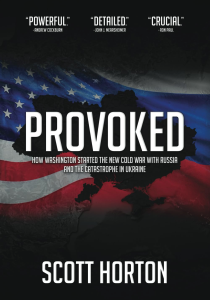
Coming of age amid 9/11 and the terror war made me obsessed with DC’s foreign policy – understanding its actions in the world, and their consequences. The government’s line that “[terrorists] hate us for our freedoms” fell apart pretty quickly for me, as I read Zinn and Kinzer and began seeing how often DC has behaved like a bully while hiding under virtue’s cloak. Over the years I began realizing that news stories I encountered as fragments – war in Chechnya, some fracas over Georgia in 2008 – were really part of a larger story, and it was a story that made more sense as I encountered more pieces and puzzling out the order of them. Provoked is Scott Horton’s attempt to tell that story within a larger history of all that DC has done within Eurasia since the dissolution of the Soviet Union. It is a doorstopper of a book with over ten thousand endnotes, and some chapters that carrying a thousand endnotes on their own. The names, events, and interlocking crises can feel overwhelming at times, but Horton’s clear passion and command of the subject made this a much easier read than might be expected. I do not know how the Russo-Ukraine war, nearing its fourth year, will end – but Provoked is a solid introduction to how it started.
The western narrative regarding the war is a very tidy, neat, and emotionally suasive one. Poor, innocent Ukraine was shamelessly attacked by the nogoodnik Putin, intent on recreating the Russian Empire as though he’d been possessed by the spirit of Kaiser Wilhelm II. Horton regards this narrative as simplistic and naive, and – to those in authority doing the telling – self-serving. The history begins with the promising end of the 1980s: Reagan and Gorbachev agreeing to destroy 90% of the world’s nuclear arms; the fall of the wall in Germany; the dissolution of the Soviet Union observed by a savvy George H.W. Bush who promised not to dance on the remains of the Berlin wall. There were many in the United States who argued for a return to being a ‘normal country’ – but that did not happen. Blame it on the military industrial complex, or the hubris of DC’s elite who viewed this as America’s time to step fully into the sun and become the world power – the global peacemaker and arbiter of order. This had already begun by the end of Bush I’s administration, and the aggrandizement only intensified with every succeeding president. Horton attributes this to the ‘iron triangle’, a joint effort of think tanks, lobbying firms, and the defense industry.
We learn of Clinton openly sending people to involve themselves in Russia’s first elections, of dumping foreign aid carelessly into the hands of men who would become Russia’s oligarchs, and of Clinton taking advantage of Russia’s sudden withdrawal to begin meddling in Bosnia. At first, this Bosnian adventure seems like a strange detour, nowhere near the gates of Kiev or the Kremlin, but it serves two purposes in Horton’s narrative. First, it shows that rather than winding down NATO or becoming a “normal country,” DC chose to bask in its unipolar moment and rebrand itself as a global peacekeeper—resolving disputes largely in its own interests. NATO, in turn, became a tool to keep Europe aligned with DC’s strategic vision, just as the European Union was starting to take shape. It would be a bit and bridle keeping Europe trotting to DC’s lead. Second, the stated justification for U.S. and NATO intervention in the Balkans—the protection of an ethnic minority from a belligerent majority—is exactly the precedent Vladimir Putin cited when he announced the invasion of the Donbass to protect the lives of Russian Ukrainians from a hostile government.
I am not going to attempt to precis a book this large and so overflowing with details, but one running theme for me was how invasive and often destructive DC’s elites have been. I have been a cranky libertarian for fifteen years now; before that I was reading Howard Zinn and Stephen Kinzer. I thought I was as cynical about DC as it was possible to be, but Horton treated me to a new course in stunned outrage. Learning about the US role in how Russia stumbled from Soviet cronyism to kleptocratic cronyism was one thing, but seeing Clinton aiding and abetting jihadist groups in Yugoslavia – and ditto Bush in Chechnya later on – made me furious, frankly. In pursuit of “global dominance”, under the color of spreading “democracy”, DC has armed and funded bad actors year after year. There’s one shocking statement in here where, witnessing the Taliban takeover of Afghanistan, a state department official muses that this situation could work quite well for us: Afghanistan might become another Saudi Arabia. We get oil and stability; the women get burkas. In addition to the main geopolitical coverage – covering how DC essentially resurrected NATO’s reason for being by antagonizing Russia into belligerence – Scott also looks at the way DC’s propaganda machine has managed public opinion at home. One golden example of this is the Washington Post crying foul because Trump was ending support to an “anti-Assad” group in Syria. The group? al-Queda. So much for “never forget”.
It should be noted that Horton writes not in defense of Russia’s actions, but as an explanation of how Putin came to a tipping point where he decided expending men and material to secure Russian interests in the Donbass was more prudent than not. It is an exercise in literary realpolitik. But just as Ron Paul was hissed at by John McCain for suggesting that US foreign policy had led to terrorism becoming an active threat, so too are any critics of the DC-Brussels narrative dismissed as Putin apologists. As Horton said in an interview about the book, though, “The title is Provoked – not Justified.” Time and again we see DC deliberately shoving its weapons into Russia’s personal space – in Georgia in 2008, and especially in Ukraine in 2014. The Maidan ‘coup’, or ‘revolution’ – which noun the reader uses depends on how seriously they take DC and its corporate media allies’ version of the facts – is most important here, because it led directly to the 2022 move by Russia. The democratically elected president of Ukraine was overthrown and a hostile anti-Russia figure installed in office: Russia, in response to a declared enemy on their borders, rushed to secure its bases in Crimea. Ever since then, Russians in the Donbass regions – regions appended to Ukraine by the Soviets, not historically connected to Ukraine – have been antagonized by ‘their’ government in Kiev. Readers may say Russia should have operated through diplomatic channels, but when the DC-Eurocracy is actively promoting anti-Russians on Russia’s borders, why are they surprised when Russia retaliates? DC even promoted Islamic terrorists within Russia during the early War on Terror! Provoke a bear, and it swats back angrily; it does not matter to the bear that you think it is somewhere it ought not to be. This is most visible when Hillary Clinton declared that Russia was doing things in NATO’s backyard – because NATO had pushed its backyard into Russia’s patio. Pray tell, what relation do Poland and Ukraine have to the North Atlantic?
Provoked is not an easy book: in size, in density, or in its challenge to mainstream narratives. There are many for whom Russia is simply the villain, full stop, and its geostrategic interests and fears do not concern them a wit. I doubt this book will sway them—not as though they’d pick up a 700-page book contra to their own opinion to begin with. But for those willing to sit with complexity, Horton offers something vital: a way to understand Putin’s actions without excusing them. The “Provoked, not Justified” distinction matters. One can recognize that DC spent three decades treating Russia like a defeated enemy rather than a potential partner, even laughing at its application to join NATO, and that it armed jihadists and staged coups and pushed NATO right up to Russia’s doorstep—and still condemn the invasion of Ukraine. Understanding why someone does something is not the same as endorsing it. But if we don’t understand the provocations, we’re left with a Saturday-morning-cartoon version of geopolitics where Putin is just a villain coldly swiveling around in his wingtip chair, stroking a cat, and that shallow narrative makes it impossible to prevent the next disaster.
I’ve listened to Scott’s podcast for years, so I thought I knew how the pieces fit together, more or less—but Scott goes into deep detail on ancillary things like Bosnia and the Balkans, all new terrain for me. Even those who think they know this story will find Provoked teaches them something. And for those coming to it fresh, willing to question what they’ve been told? It will both enrage and edify. For anyone trying to understand how the post–Cold War world curdled into a new cold war—and why Ukraine became the flashpoint—this is a daunting but monumentally useful account.
NOTE: Read in June 2025. Re-read in stages in the last six months. This is a big ol’ book.
January was….a serious month, movie-wise. Lot of emotional intensity. Perhaps that’s right for a month often defined by people taking stock of the past, looking for the future, and deciding how to navigate the bridge betwixt them. I almost had another for this list, but I fell asleep and woke up in February.
Train Dreams, 2025. I started my year off on an….interesting note. Rod Dreher recommended this movie to me (or, to his substack subscribers in general – although I’ve spoken with him a few times we do not exchange cinematic correspondence), describing it as something like a Wendell Berry story. As I watched, I could hear Berry in my mind: “‘That which cannot be helped must be endured,’ Mat said, and he was a man who knew.” Readers of Berry, of course, know the tragedies Mat Feltner endured; that line is one of the reasons Port William grows and grows and grows the more one reads its stories. Train Dreams is a story of endurance, and like Rod I will try desperately to avoid spoilers: let us say it is the story of a man who had happiness and a simple life, and yet lost it and was forced to endure and grapple for meaning in the present while haunted by the past. Excellent writing, acting, and cinematography. Like Wonka, I will venture to say this movie will be on my top ten list despite how early in the year it is. If you like thoughtful movies, deep character focus, and reflections on suffering, I can recommend this. It is NOT a “Friday night with beer and pizza” kind of film, though. I loved the writing and, like Rod, looked for the book which this is based. (It underwhelmed.) Will be looking into Joel Edgerton: he plays this gentle, melancholy Job so well. I cannot BELIEVE he was also in Great Gatsby: I did not recognize him at all. William Macy also appears in very fine form. Word of warning, this may be a movie to watch with kleenex: I had an allergic reaction that caused some eyeball leaking.
“There was Apostle Frank, a faller who spoke about the Bible with such familiarity as to suggest he’d been there when it was all written down.”
“This world is intricately stitched together, boys. Every thread we pull, we know not how it affects the design of things. We are but children on this Earth, pulling bolts out of a Ferris wheel thinking ourselves to be gods.”
“Beautiful, ain’t it?” “What is?” “Everthin’. Every last bit of it.”
“My family is…everywhere there’s a smiling face. Never been somewhere I didn’t have some family. Except for Kansas. That state is a collection of savage lunatics.”
“They told me about you, you know. The people who recommended you. Said you was different.” “Ain’t everybody different?” “No.”
“Sometimes it feels like the sadness will eat me alive. Sometimes it feels like it happened to somebody else.”
“I had more questions than answers…like nobody’d ever died before.”
“The world needs a hermit in the woods as much as it needs a preacher in the pulpit.
Home Again, 2017. Reese Witherspoon is a single mom who just hit forty; at least she has her late movie-producer’s daddy’s house. And guesthouse. At her 40th birthday party, she meets 3 aspiring filmmakers who are being kicked out of their digs, and her mother volunteers the guesthouse because one filmmaker is obsessed with mom’s acting career and knows how to flatter her. This is a sweet film about “found family”. Ladyfriend and I watched this because it was my turn to pick and I saw Reese Witherspoon.
Shall We Dance?, 1996. (Shall we ダンス?) A middle-aged Japanese accountant, going through the motions of a comfortable but joyless life, notices a woman gazing down from a ballroom dance studio during his evening commute. On impulse, he begins taking dance lessons. The effect on his spirits is immediate—and so noticeable that his wife grows suspicious. The film gently explains that ballroom dancing carries social stigma in Japan—public physical intimacy between spouses is rare, let alone with strangers—so dance here becomes a small, subversive act of self-discovery. While there is tension involving one of the instructors, this is not a story about infidelity; dance itself is the affair. Warm, funny, and humane, the film is enriched by small character touches, especially Mr. Aoki, an accountant by day who transforms into a passionate Latin dancer by night. A lovely, sweet movie about joy rediscovered. The trailer for the American version appears to lean more heavily into comedy than character drama, but I am still interested in watching it, if only for Stanley Tucci’s take on the memorable Mr. Aoki.
Our Little Sister, 2015. Three adult daughters receive word that their father, who had left their mother for another woman, has died. They travel to attend his funeral and there meet their effectively orphaned half-sister, Suzu. Although there’s obviously resentment toward their father for abandoning them, the sisters – Sachi, Yoshiko, and Chika – don’t hold it against young Suzu. Suzu, for her part, is deeply bothered by her father being a twice-over adulterer, who is described by his older daughters as “Kind, but useless” – a man who had a habit for falling for needy women. Plotwise, this is not a film in which A Succession Of Things Happen Leading to A Dramatic Conclusion: it’s more of….an immersion into the life of these women, watching how they sort out their own issues and their issues with others around one another. (This two hour movie was more like a 3.5 one for me, because I kept pausing to google things or query chatgpt. I learned a lot about chopsticks.) A very ‘human’ film, if that makes sense. My first but probably not my last Hirokazu Kore-eda.
Lincoln, 2012. I have resisted this film for some time, but the star talent onboard – Sally Field, Jared Harris, James Spader, David Straitharn, TOMMY LEE JONES! – combined with my current historical obsession finally put it before me. Daniel Day Lewis does an excellent portrayal of Abraham Lincoln attempting to pass the 13th amendment to ban slavery in early ‘65 during the war. Lewis is good at conveying Lincoln’s ‘folksiness’, his humor, his charisma, his expressed humility. There’s a lot of great acting going on, with a wide and deep bench: I laughed far too much at Sally Field (Mrs. Lincoln) sassing Tommy Lee Jones. Jared Harris was a surprise as Sam Grant, I will say. I love so many of these actors, making this a grand time despite its historical inaccuracies: the Capitol is shown in full form despite its new Dome still being under construction during the war years. (Definitely do not recommend watching movies with a history major.)
Lincoln: There was Jefferson City lawyer who had a parrot who started each day with TODAY IS THE DAY THE WORLD SHALL END, AS SCRIPTURES HAVE FORETOLD! Until one day the lawyer shot him – for peace and quiet, I presume – thus fulfilling, for the bird at least, his prophecy. Me: XD Everyone in Lincoln’s Oval Office: O_O
Tommy Lee Jones: It’s late. I am old. I am going home. Me: Hear hear!
Lincoln: The compass, I learnt when I was surveying, it’ll point you true north from where you’re standing – but it’s got no advice about the swamps, the deserts, and the chasms you’ll encounter along the way. If in pursuit of your destination, you plunge ahead heedless of obstacles, and achieve nothing more than to sink in a swamp… what’s the use of knowing true north?
Student: Sir, I don’t understand. Giamatti: THAT’s glaringly apparent. Student: Sir, I can’t fail this class! Giamatti: Oh, don’t sell yourself short! I truly believe you can!
The Holdovers, 2023. Paul Giamatti plays a curmudgeon (I’m sold already) who is forced to spend Christmas break with a rascal student named Tully (first name Marcus, last name Cicero?) Although at first they knock heads, as the weeks pass they develop a genuine bond – both men having their own inner demons. A sweet and delightful movie.
“Mr. Koontz, for most people, life is like a henhouse ladder – shitty and short. You were born lucky. Maybe one day you entitled little degenerates will appreciate that.”
“Stop RIGHT there. You know the gym is strictly off limits. This is your Rubicon. Do not cross the Rubicon.” “Alea iacta est!!”
(Giamatti is kissed) Female Teacher: Mistletoeeeeee!! Giamatti: You know, Aeneas brought mistletoe with him when he searched for his father in the underworld.
Giamatti: There is nothing new in human experience, Mr. Tully. Every generation thinks it invented debauchery, or suffering, or rebellion, but Man’s every impulse and appetite, from the disgusting to the sublime, is on is display right here [in this hall of antiquities]. All around you! So, before you dismiss something as boring or irrelevant, remember – if you truly want to understand the Present, or yourself, you must begin in the past. You see, history is not simply a study of the past: it is an explanation of the present.
The Young Mr. Lincoln, 1939. Henry Fonda plays the Young Mr. Lincoln. Directed by John Ford, this depicts “Honest Abe” as a twenty-something studying law and venturing into politics. We then see him stand against mob justice and demonstrate quick wit in courts of law, disarming his opponents with humor before he wallops them with argument. Most of the movie follows Lincoln through his ‘first trial’, a murder, and his future antagonist Judge Stephen Douglas presides. This is a nice nod for the history majors watching, though in truth Lincoln’s first case was a boring land-border dispute. There are some liberties taken with courtroom procedure; I was yelling “Objection! Defense counsel is testifying!” at the screen.
Lincoln: I’m not sayin’ you fellers aren’t right. Maybe these boys do deserve to hang. With me handlin’ their case, you probably don’t have much to worry about on that score. All I’m askin’ is,….. let it be done with some legal pop, some show! Mac: We’ve gone to a heap of trouble to not have at least one hangin’!
Lincoln: Trouble is, when men go to takin’ the law into their own hands, they go to hangin’ just for fun. We do things together we wouldn’t do ourselves.
Mary Todd: Well, Mr. Lincoln, I will say – you are a man of honor. You said you wanted to dance with me in the worst way, and that was the worst way I have ever danced. Shall we go outside instead of – dancing?
Enola Holmes, 2020. The ladyfriend thought I might like this, and she was right – what with the Sherlock connection, combined with bicycles and trains. Henry Cavill plays a young Sherlock Holmes, but he is not the main character. His sister Enola is: she was raised by their mother, Helena Bonham Carter, who is brilliant but eccentric; after HBC disappears, Sherlock’s big brother Mycroft takes over as Enola’s ward and tries to shove her in a boarding home, only she’s more interested in solving the mystery. Sherlock is her accomplice, though not very overtly: he tries to toe the line between being a dutiful brother to Mycroft and a helpful brother to Enola. Given the date of the movie, there’s abundant silliness – a teenage girl beating grown men in fights because she was taught jiu jitsu, that sort of thing – but I enjoyed it. The fourth wall is absent altogether.
After the Storm, 2016. A return to Kore-eda. A divorced writer, Ryota, has sunk into fairly low ground in life, throwing away his meager earnings as a private detective at the bicycle racing track. Between his gambling debts and his inability to commit to the detective job – he prefers working part-time and pretending he’s writing another great novel – his circumstances are pretty dismal, and everyone – his mother, his sister, his ex-wife, and his son – are disappointed in him. Knowing that his ex-wife Kyoko is about to bar him from seeing his son if he doesn’t pony up 100,000 yen, Ryoto has a desperate idea: use the arrival of an imminent typhoon to trap Kyoko and their son with him at his mother’s apartment. Surely he can get through to her before the dawn? This is a fairly melancholy and philosophical film, but as with Our Little Sister there’s pleasure in the saturation of real moments. This is not an action film, it’s not driving us somewhere – and yet the story does arrive. It’s ultimately about dealing with disappointment – not being crippled by it, but learning how to continue to strive. It’s sad, but sweet.
“At my age, making new friends just means going to more funerals.”
“It’s not that easy growing up to be the man you want to be.”
“Missing him after he’s gone won’t bring him back. You have to deal with people while they’re here.
“I’m not who I wanted to be, yet….but it doesn’t matter. What matters is to live my life trying to be the person I want to be.”
What kind of future was I dreaming of? Farewell to me from yesterday…
I can now say I have held a baby goat. I did not expect to do so at the library. This ‘Angel’ was a week old.
The first month of 2026 is now ‘in the books’ so to speak. In Alabama, winter finally came in and made itself comfortable — taking off its boots and growing to be a pest, ordering us to leave the water running and forcing us to leave bed early because we had to deice the car windshield. While my usual habit is for January to be a fairly diverse month, a showcase for the different kinds of books I read throughout the year, that did not happen this year. January was dominated by history: it was the only nonfiction I read! What I’ll remember most is diving into the catalogue of Los Angeles Theatre Works.. I listened to three of their two-hour plays this month, and angrily DNFd another. (The DNF was a play about Benedict Arnold, and I was really enjoying it until George Washington began making appearances: he’s portrayed as foul-mouthed and generally crass. As much as I enjoyed Richard Dreyfuss as Arnold, making Washington sound like a vulgar bar rat was enough for me to pull the plug.) I also enjoyed two of the Harry Potter full cast audio editions, both of which were great fun, as well as another play that I’ve seen on stage several times, “The Importance of Being Earnest”. The play is hilarious, of course, and Stephen Fry here features as Lady Bracknell, which was as entertaining as you can imagine.
In book news, Rod Dreher announced that his book proposal for The Totalitarian Temptation (or as he preferred, Warning to Weimar America) has been picked up by someone. It will be interesting to watch him “write” a book again from a substack window: he’s been writing about his Weimar reading for months now. It will be especially interesting when compared to his Live Not By Lies, on soft totalitarianism. (Criminy, I never reviewed that! Need to give it a reread. His premise is that American society meets many of the conditions Hannah Arendt argued fostered a totalitarian society — particularly widespread atomization, loneliness, and a meaning crisis.
Coming up in February…
Well, Harry Potter and the Goblet of Fire releases a full-cast audio edition, so I’ll be jumping on that. It should be longer than the three preceding ones, though, so I probably won’t wolf it down so quickly. Black Baseball in Alabama has been ordered by my library but not yet shipped, so I may see that one coming in. Michael Shermer just released a book called Truth: What It Is and How to Find It, which I want to read but am realizing I still haven’t read his last book on conspiracy thinking yet.
The aim of the Christian, after all, is to practice humility. This sounds nice on the surface, but in order to be humble, you first have to be humiliated, and none of us wants that part. – Paul Kingsnorth, “Of Slugs and Saints“.
“This world is intricately stitched together, boys. Every thread we pull, we know not how it effects the design of things. We are but children on this Earth, pulling bolts out of a Ferris wheel thinking ourselves to be gods.” (Train Dreams, movie)
“It sounds silly to say but I think a surprising amount of a good life is noticing what makes you feel worse and not doing it. Put simply, most of a good life is refusing to do what is bad.” – Tommy Dixon, “What is Social Media Good For?“
“Our discourse is so trivialised…I don’t think we can have something as serious as democracy when discourse is as trivial as ours. […] We’re in this strange paradox whereby people are less informed by politics and more interested in it.” “The Slopification of Literature“, Unherd. James Marriott.
Long-term illness, like baptism, is a form of rebirth. All of the saints in the Christian tradition speak to this reality, again and again. ‘It is absurd’, declared St Anthony the Great, ‘to be grateful to doctors who give us bitter and unpleasant medicines to cure our bodies, and yet to be ungrateful to God for what appears to us to be harsh, not grasping that all we encounter is for our benefit and in accordance with His providence.’ How could sickness be ‘providential’? It is hard to think of a notion that is likely to meet with more mockery or confusion in today’s world. But the Christian understanding has always been that illness can serve a purpose. Suffering changes you. Sickness knocks you down. Pride becomes harder when you’re largely useless to the world. I have been a Christian for years now, but I have never felt closer to Christ than I have these past three months. – Paul Kingsnorth, “Going Down, Coming Up“.
My thoughts, left unattended, behave like unruly children in a grocery store. They pull everything off the shelves. To be present with another person is a discipline, not a default setting. I begin to see how poorly I love, how naturally I love myself first and best, and how insistently Christ calls me to reverse the order. – Kenneth B, “Confession is Ruining my Self-Righteousness“.
When our heart is filled with anger when others are wrong the devils rejoice. We shouldn’t feel anger at others but sorrow towards their sin. Our calling is not to fight the evil in others but the evil in ourselves. – Alexandru Constantin, “An Apology to my Readers“
The question with fiction is not if it will shape you, but how? The fiction you read is molding your thoughts, behaviors, and attitudes, whether or not you realize it. It is incumbent upon the storyteller to direct its creation—and thereby, its readers—towards goodness, truth, and beauty, since storytellers are not only the custodians of the imagination; they are the custodians of the soul. – Liana Graham, “The Slopificiation of Women’s Literature“
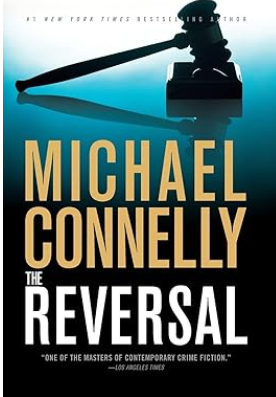
Mickey Haller has been asked to do the unthinkable: to cross the aisle and serve as a prosecutor. The reason is simple: an old case is being re-tried, and for propriety’s sake, the City of Los Angeles wants to bring in someone who can work the case without any old prejudices and without suspicion of trying to hide any old mistakes. Mickey agrees on two terms: one, his ex-wife Maggie McPherson be his assistant counsel; and two, he gets to choose the police investigator who helps him build the case. His choice? Harry Bosch, the star of Connelly’s prior novels and Mickey’s half-brother. Haller and Bosch have run into each other a few times at this point in their respective series, but this is truly a family reunion with each brother’s daughters getting to be friends and sometimes sheltering together when it appears the case might be getting personal.
The Reversal is a legal novel, by and large, with some ‘creepy’ elements in that the accused has strange nocturnal habits; he parks in strange places around the city, sitting alone with a burning candle. Bosch has the grim suspicion that the accused was in fact a serial killer, and that the man is visiting sites related to his prior kills. Haller has a lot of his own plate, revisiting evidence that’s decades old, and trying to figure out what angle the defense might take. The pace is fast, spurred on by a judge with no tolerance for time-wasting theatrics, or for lawyers who play games – and the more the story develops, the more dangerous the circumstances grow for those involved in the case. The ending is right out of left field and is more in Bosch’s ballpark.
This was an enjoyable return to Bosch & Haller, though I imagine readers’ reactions to the end will vary wildly.
John Adams: “If you [John Quincy] do not rise to the head of not only your profession, but of your Country, it will be owing to your own Laziness, Slovenliness, and Obstinacy.”
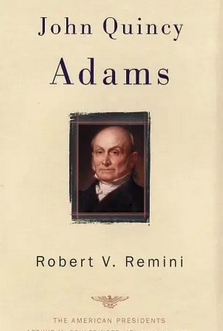
In his biography of Abraham Lincoln, Jon Meacham referred to John Quincy Adams — hereafter referred to as Quincy, following John Adams’ practice — as “the personification of the nation’s story”. That’s a hell of a epithet, one so striking I had to scribble it down. I am somewhat familiar with the Adams clan, beginning from John himself all the way to Henry Adams, and tend to like them, especially John and Quincy, who were bookish, moralistic, and prone to irritating people. After reading a series of books on John and Abigail Adams years ago, I’ve always intended to tackle their eldest son — and am glad this history project is giving me additional drive to do it. I’m beginning with a shorter one in The American Presidents series (they’re all about 200 pages), but can readily imagine follow-ups and circle-backs.
Bless John Quincy Adams: he had ‘tiger parents’ who rode him incessantly and insisted he had to be the very best. John Adams himself came from humble circumstances and made himself a notable through hard work and an invictus-like attitude; he expected more from his son, who grew in more privileged soil. His mother Abigail was equally demanding, and little Quincy was pressed into public service at the tender age of 14, assisting America’s diplomatic mission to Russia. Diplomacy would mark his early political life; even after he returned to America and graduated from Harvard, he would achieve early distinction serving Presidents Madison and Monroe, in the latter case helping to formulate the Monroe Doctrine that declared the Americas closed to future colonization. Remini’s book puts this doctrine into context: as the peoples of South America began rebelling against their Spanish overlords, the Republican administrations of Madison and Monroe saw a new chapter beginning in American life. The rule of the Old World’s monarchies in the New was over; now it was time for American republics to shine. This was not an example of early American ‘imperialism’; it was Republican idealism, and an idealism that Adams’ own presidency would exhibit when he tried to send ambassadors to a pan-American conference to discuss matters of mutual importance. President Quincy would be so hindered by the already-sectional Congress that by the time his ambassador arrived (one died en route) the Conference was already over.
Quincy is a fascinating president to study; despite his diplomatic accomplishments before, and his storied career in Congress after the office, he was not an effective president. He was marred from the beginning: he ran against a man who he’d actually defended, Andrew Jackson, but despite Jackson winning the popular vote the electoral college was undecided with no majority: Henry Clay cast the decisive vote to give Adams the presidency, and when Clay was awarded with a Cabinet position the opposition cried foul and accused Adams of conducting a corrupt bargain. Never mind that Clay hated Jackson and would have never voted contrary; the circumstances were such to give energy to the accusation. Quincy also dealt with difficult issues in office, from diplomatic affairs to the apparent willingness of Georgia to declare war on the Creek nation on its own if the federal government wouldn’t get around to evicting them. Adams had a strong sympathy for the plight of the Creeks, especially given that one treaty signing over land was created by such a brigand than the Creeks killed the man upon learning what he’d done to them, and acted in a way that annoyed everyone. To make matters worse, he signed off on the ‘Tariff of Abomination’ which would lead to a sectional crisis during Jackson’s administration when South Carolina threatened to secede over tariffs that transparently made the South pay premiums to protect the North and Northwest’s emerging industries.
What makes this interesting, though, is that Quincy’s commitment to integrity made his job worse: he retained people in office who hated him and actively campaigned against him or undermined his policies because they were effective in their posts: he would not remove people for purely political reasons, and his inherited postmaster general was so devoutly Jacksonian in bias that Jackson made the man a Supreme Court justice after Old Hickory hisself was in office. Adams also retained the Founding-era contempt for politicking, and refused to do things like appear at the 50th anniversary of Bunker Hill, or the opening of a canal. He was a man of intelligence and integrity who refused to court public opinion — and lost the next election rather handily. Despite suffering the losses of his father and two sons in this period, Adams was nonetheless courted to become a legislator, and there he achieved lasting glory as a stalwart against the expansion of slavery. It is his actions there that he is largely remembered.
Several volumes in this series have been fascinating, but this one was especially so for me because I was familiar with Quincy already. I didn’t know how much family tragedy he encountered: Remini remarks that alcoholism was a family curse, claiming one of Quincy’s brothers and two of Quincy’s sons. (His son Charles Frances famously overcame his namesake uncle’s predilection for the bottle and became an accomplished diplomat himself, though Southerners may wish contrariwise.) While one is reluctant to start fossicking around in psychology, the intense social pressure the Adams clan put on one another is no doubt part of the problem. Quincy was told by his father that he had no barriers to success beyond his own moral degradation, and he himself administered that same moral whip to his sons. Remini, while sympathetic to Quincy, regards him as a failure as a father and husband for failing to see his sons than anything other than scions of an accomplished house who were obligated to live up to their reputation. The man told his sons not to come home for Christmas when he saw their Harvard report cart and viewed it unsatisfactory. All the same, Remini regards Quincy as a man of unparalleled integrity whose adamant stance against the expansion of slavery redeemed his reputation for the ages.
This is the first book on JQA I’ve read, but I doubt it will be the last. The man is both difficult and interesting, a combination ripe for future reading.
WHAT have you finished reading recently? John Quincy Adams, Robert V. Remini. Also finished listening to a production of The Importance of Being Earnest that featured Stephen Fry as Lady Bracknell.
WHAT are you reading now? About to finish The Reversal, a Michael Connelly novel that features both of his series characters (Bosch and Haller), and I am listening to John Cleese perform The Screwtape Letters. I’m also still working through With Malice Towards None, a Lincoln biography.
WHAT are you reading next? I have Valiant Ambition, about George Washington and Benedict Arnold, checked out — but I don’t know if I can get to it before it expires. I also need to read some nonfiction that isn’t history: history accounts for 100% of my nonfiction reading this year. I’m expecting a le Guin piece on writing in the mail today — Steering the Craft. It’s fairly short and possibly consists of writing exercises in part.
Today’s TTT is “Top Ten Bookish Discoveries Made in 2025”, which is not a topic I feel confident I’ll be able to fulfill, but we shall see. First up, the Teaser Tuesday.
Abigail [Adams’] biting words only prompted John Quincy to come to [his fiancée] Louisa’s defense. He and he alone, he responded, must be accountable for his choice of a wife. If he waited until his mother approved of his selection, he would certainly be doomed to perpetual celibacy. JOHN QUINCY ADAMS
(1) The delight of game warden stories. CJ Box’s Joe Pickett series consumed my reading for 2.5. months and led to not only another game warden series, but to game warden nonfiction. CJ Box is a proper menace.
(2) I’m getting to be a bad Star Trek fan. Not only did I only read two ST novels last year, but I didn’t even finish watching the long-awaited season 3 of Strange New Worlds. I am slowly remedying that: I am halfway through.
(3) 2025 would be remembered as the year of Paul Kingsnorth (an ecological/social critic who is also an Orthodox mystic who lives on an off-grid farm) were it not for my CJ Box obsession. I read through all of Paul’s nonfiction works in 2025, including his most recent release and alleged magnum opus, Against the Machine.
(4) Donald Honig as a baseball historian. I’ve read three of his books detailing baseball from the 1920s to the 1950s.
(5) A YA novel series I read in high school is a lot ‘spicier’ than anything I’ve read as an adult.
(6) Most of James Gandolfini’s filmography, thanks to a biography I read of him, Gandolfini. I watched as many of his movies as I could find last year.
(7) Bell Irwin Wiley as a Civil War social historian. I’d read Wiley before but really got into his works back in 2025.
(9) HARRY POTTER FULL CAST AUDIO EDITIONS ARE AS WONDERFUL AS CHOCOLATE FROGS. I listened to one in December and two this month; I intend to listen to the rest as they come out. Yes, I’ve read the series multiple times; yes, I’ve watched the movies multiple times; yes, I’ve listened to Jim Dale and Stephen Fry both read audio books of the series; yes, I’ve watched CallMeKevin play all the games (a bean!!). It doesn’t matter, I love these productions.
(10) Dead presidents. So…..finding an interesting chap on youtube led to my dormant Civil War obsession from high school being reignited, which led to me reading about the prelude to the Civil War, leading to me reading a lot about the presidents from the 1830s to the 1850s, leading to me reading antebellum history for one, two, three months now. Ah hah hah.
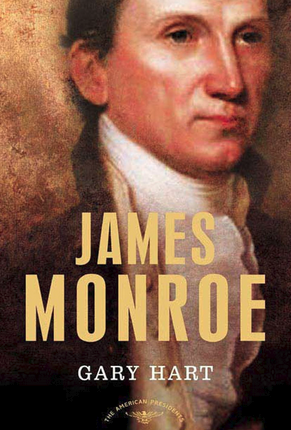
What do I know of Jimmy Monroe? I retain from Founding Rivals some notion of Monroe as a fundamentally military man, in opposition to his strictly-political allies like Jefferson and Madison, and that he was the last of the “Virginia Dynasty”. As it turns out, while Monroe did not theorize about politics as much as his more literary predecessors, he was quite good at practicing it. An early biographer argued that Monroe was unique among the founding generation in that he did not have a ‘retiring’ idea of America; he saw navigating European relations a vital part of creating a future for the fledgling nation. Managing both the departments of State and War during the War of 1812 made that grimly clear. Navigating relations could take different forms, of course — working with his Sec. State John Quincy Adams to propagate the Monroe Doctrine, which declared the Americas off-limits to future colonization — as well as navigating Russian claims along the West Coast, and figuring out how to respond to the burst of Bolivarian republics as South America began driving the dons out. Given how acrimonious relation had been between the Federalists and Republicans, Monroe’s ability to work with men like Adams and Jackson is a pleasure to witness. Monroe and Adams were rivals, but accomplished collaborators — prompted by Monroe’s realism and Adams’ inherited sense of duty and responsibility. Monroe strikes me in this book as an independent actor: despite being a soldier devoted to his commander in chief, Monroe was not afraid to push back against some of Washington’s policies, and he exchanged letters with Jefferson, another mentor, arguing about foreign policy. After leaving office, Monroe was greeted with tragedies — the deaths of his wife and son-in-law — and died in near poverty some five years after Thomas Jefferson — but, like Jefferson and Adams, on July 4th. All told, this is a very compact but readable and fair guide to Monroe’s presidency, and it has some fun surprises like Jackson seizing Pensacola just because he could, and Monroe having to break up a duel between two men whose spat began with the apparent quoting of Shakespeare.
Quotes
Though an ardent revolutionary, Paine had complained to the Directory against the execution of the French king and had been incarcerated in the Luxembourg prison for his troubles. Monroe secured his release and gave him lodgings on the condition that Paine refrain from pamphleteering against U.S. policy. Paine returned Monroe’s hospitality by promptly using confidential conversations with Monroe as grist for his anti- Washington mill.
The story is told of a ministerial dinner at which the British minister Sir Charles Vaughan saw the French minister Count de Serurier, directly across from him, bite his thumb every time Vaughan made a remark. “Do you bite your thumb at me, Sir?” Vaughan finally challenged. “I do,” was the Frenchman’s reply. They promptly withdrew and were at sword points in an adjoining hall when President Monroe arrived and threw up their swords with his own. Their carriages were called, and Monroe sent them, separately, away.
John C. Calhoun perhaps best described the workings of Monroe’s mind: “Tho’ not brilliant, few men were his equal in wisdom, firmness and devotion to his country. He had a wonderful intellectual patience, and could above all men, that I ever knew, when called on to decide an important point, hold the subject immovably fixed under his attention, until he had mastered it in all of its relations. It was mainly to this admirable quality that he owed his highly accurate judgment. I have known many much more rapid in reaching a conclusion, but few with a certainty so unerring.”
I’m trying to figure out if thumb-biting was legitimately offensive, or if these guys just took Romeo and Juliet very seriously. For those who don’t get the reference:
ABRAHAM: Do you bite your thumb at us, sir? SAMPSON: I do bite my thumb, sir. ABRAHAM: Do you bite your thumb at us, sir? SAMPSON: [Aside to GREGORY] Is the law of our side, if I say ay? GREGORY: No. SAMPSON: No, sir, I do not bite my thumb at you, sir, but I bite my thumb, sir. GREGORY: Do you quarrel, sir? ABRAHAM: Quarrel sir! no, sir. SAMPSON: If you do, sir, I am for you: I serve as good a man as you. ABRAHAM: No better!


 Reading Freely