Top Ten Books 2024 Added to my Goodreads Wannaread

Some mood music!

Well, look at this! A Christmas Eve top ten Tuesday. Merry Christmas, one and all! Today’s TTT concerns books we hope Santa brings, but I’m just going to go with books I added to my wanna read list on goodreads. And then, I’ll look at the same list I did last year to see how many I actually read. But first, the Tuesday tease!

You can’t influence fate, or change what’s out of your control. But you can choose what you yourself do with the cards you’re dealt. (The Death of Mrs. Westaway, Ruth Ware)
Kolyma Tales, Varlam Shalamov. Rod Dreher declared this collection of gulag short stories the best Russian short fiction since Chekov.

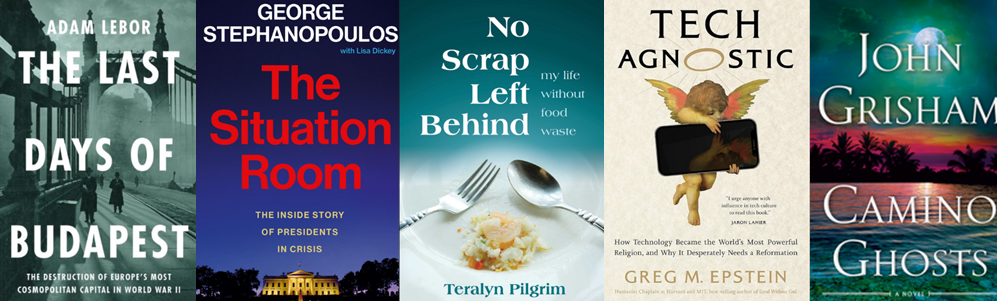
Tech Agnostic: How Technology Became the World’s Most Powerful Religion, Greg Epstein. See his piece in the Boston Globe, “My Name is Greg, and I’m a Tech Addict“.

The Last Days of Budapest: The Destruction of Europe’s Most Cosmopolitan Capital, Adam LeBor

Misreading Scripture with Individualist Eyes, Randolph E. Richards

No Scrap Left Behind: My Year Without Food Waste, Teralyn Pilgrim

The Situation Room: The Inside Story of Presidents in Crisis, George Stephanopolous

Magic Pill: The Extraordinary Benefits and Disturbing Risks of the New Weight Loss Drugs, Johann Hari

Camino Ghosts, John Grisham.

The Future of Buildings, Transportation and Power, Roger Duncan and Michael Webber

Supremacy: AI, ChatGPT, and the Race that Will Change the World, Parmy Olson

And now, let’s take a look at last year’s post! Of the ten in that list, I read three: Distracted by Alabama and The Anxious Generation. I’m still working on a review for Anxious Generation. Remaining, then are:

Vanished Kingdoms: The History of Half-Forgotten Europe, Norman Davies. Guessing this will feature times when Sweden and Poland were continental powers to be reckoned with.

Networks of New York: A Field Guide to Urban Internet Infrastructure

The Path: What Chinese Philosophers Can Teach Us About the Good Life

Blood Passion: The Ludlow Massacre and Class War in the American West

The Power of Meaning: Finding Fulfillment in a World Obsessed with Happiness

The Enchantments of Mammon: How Capitalism Became the Religion of Modernity

Data Driven: Truckers, Technology, and the New Workplace Surveillance

Posted in General | Tagged , | 5 Comments

Thinking About 2025

2024 is winding down, and blogwise it feels like it’s already crashed into bed, has covered itself with comforters, and has no plans to stir until spring has come. I’ve been oddly busy with Christmas merriment, and don’t see any break there until the end of this week. Even so, the imminent arrival of the New Year bids thinking about.

(1) The Classics Club. I still have sixteen books left on my CC, and 2025’s the final year on that so I need to get cracking. The two most daunting prospects are The Shahnameh and Democracy in America. Democracy would be a logical beginning given the inauguration coming up.

(2) Rereads. I’ve mentioned before that 2013 was a huge year in reading for me, not in terms of number but rather because of the quality of the reads and their timing, because my entire worldview was being reappraised and reconfigured, rather like it had been in 2006. Some of the books I read that year, like The Life and Death of Great American Cities, fundamentally changed my thinking, and I’m interested in seeing what I think of these mind-changing books now. I’d like to re-read at least five titles: Crunchy Cons, The Death and Life of Great American Cities, The Plain Reader, small is Beautiful, and any Wendell Berry essay collection. Death and Life is one book I never properly reviewed at the time, in part because it was such a game changer.

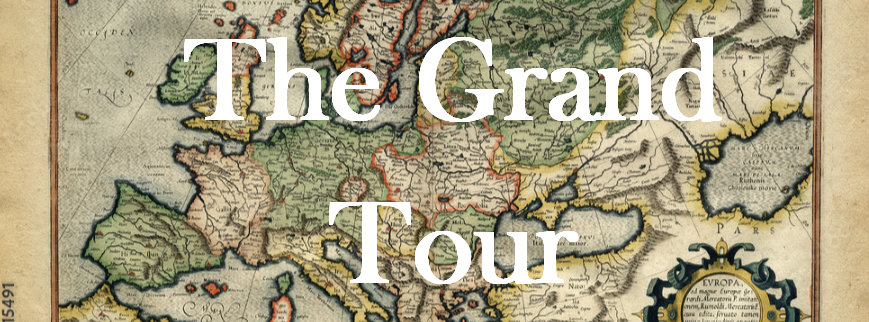
(3) European history outside the “big three”

I read a lot of European history, but it’s almost always related to England, France, or Germany. I know almost nothing of Spain save for isolated episodes (Age of Discovery, Napoleonic wars), my Italian history is entirely Roman or WW2 related, I’m continually fascinated to stumble upon facts like Portugal had a long fascist period, or that Sweden and Poland were once serious continental powers, and Eastern Europe is….a complete unknown to me, aside from what I’ve learned trying to understand Russo-American relations since 2008 or so. This, despite having read Durant’s epic Story of Civilization! So, what I’d like to do, grad school and ladyfriend permitting, is read more broadly across European history. I’m naming the challenge after something that young people of means used to do before they settled into their adult responsibilities, touring the Continent’s artistic treasures — especially those in Italy. I’m going to be “traveling” more broadly than that, beginning with Iberia and meandering easterly. We’ll see if my route makes any sense at all!

(4) Science Survey. The Science Survey continues, of course, nevermind my only barely completing it this year (technically I haven’t finished it yet, but there’s days yet). Oddly, I haven’t developed a formal prospects list like I usually do: Crossings, about how human-made roads shape ecology, is on my list, and that’s really about it.

Honestly, the Classics Club challenge alone will be a hard ask for this year, so I’m probably not going to be participating in many challenges outside of these, unless Alex of At Boundary’s Edge does another fun SF challenge.

As far as general goals, I want to repeat my two unofficial goals from last year: keep purchased books under 10% and keep unreviewed books to a minimum. I’m currently standing at four, which is so much better than that one year when over ten percent of my reading was un-commented-upon here. The problem with this year’s un-reviews is that they’re really good ones, so I’m going to try to get something out for them before January 1st. Speaking of, here’s a very nebulous idea of what is coming:

January:
Usually a varied “fun month” to kick things off. I might do a nod to US presidents around January 20th.

February:
Possibly a tip of the hat to l’amour and relationships in the middle of the month.

March:
Lenten devotional reading, followed by Opening Day! Baseball will be back at bat at the month’s end.

April:
Read of England, but of course!

May:
(shrug)

June & July:
American Revolution tribute and possibly Space Camp, the latter depending on if I can find more reads.

August, September
(shrug)

October:
German history & possibly something appropriate for Halloween, depending on my mood.

November:
I’m assuming there will be a big SF challenge.

December:
Advent kicks off November 30.

Posted in General | Tagged , | 8 Comments

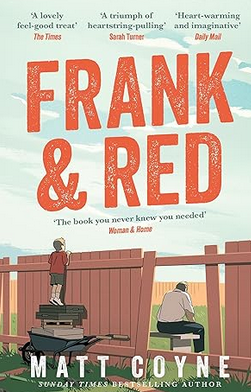
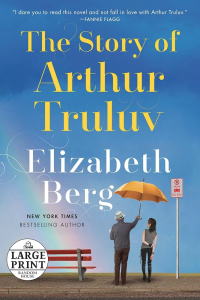
Frank and Red and Arthur and Maddy and —

This week I’ve read three books about lonely old men finding connection. I already posted a review for The Borrowed Life of Frederick Fife, but here are two more. They were both absolutely lovely, and featured friendships and connection across generational gaps.

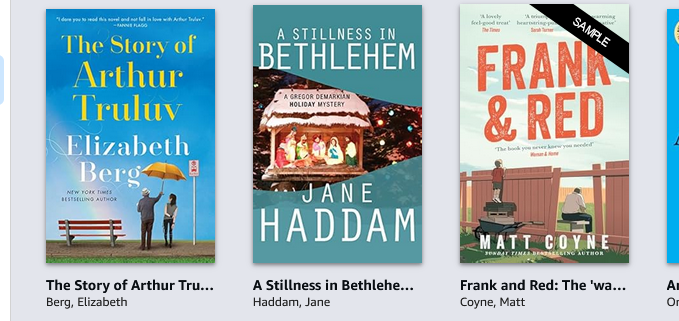
Frank is a lonely widower who, since his wife died, has become a stranger to virtually everyone. His son and he fought bitterly after the funeral, and since then Frank hasn’t left his house or yard. He relies on the nice chaps next door to pick up groceries and supplies and the like. His only company is his dead wife, who, contra “being dead” insists on appearing in the house and chatting with him. Although he’s certain he’s going mad, and confident that the wife he’s seeing is just a figment of his imagination, he’ll take being able to talk to her over being ‘sane’. And then, his elderly neighbor — the best neighbor ever, never seen or heard from — dies and a young mom and her son move in. And the son, Red? Red is friendly. And worse, persistent. Frank and Red is the story of a cross-generational friendship about two lonely people who, despite one of them being an obnoxious chatterbox and the other being a foul-tempered grump, find friendship and are able to move the other to face the challenges in their life. While Frank serves as a begrudging father figure to the boy (offering advice that that horrifies the mom and boy’s teachers, but works nontheless), Red’s curiosity about what happened between Frank and his own son pushes Frank outside of his comfort zone.

The Story of Arthur Truluv begins much less bitterly: here again we have a slightly lonely widower, but Arthur is not a bitter recluse. His life lacks the deep satisfaction that came from marriage with his sweet Nola, but he has a routine, and he does keep his neighbor company from time to time, rocking on her front porch and ocassionally going to dinner. Every day, Arthur goes to the cemetery and has his lunch with Nola, sitting near her grave and talking to her as he would if she were sitting there with him, picnicking in the necropolis. Arthur is a sensitive soul who also seems to hear what the other dead have to say, and he listens to to them. One day he happens to spot a young lady, a teenager, who is also a regular visitor to the cemetery, and they strike up an unlikely friendship. As it happens, the teenager Maddy could use a friend at the moment: she’s always been a bit of an outsider in class, and she was dating a lout who was using her for pleasure rather than being invested in a relationship with her, and now he’s tossed her aside like a used tissue. And….she’s pregnant. Arthur Trulov is a beautiful story about cross-generational friendships, as Maddy finds support in not only Arthur, a man with the affection of a grandfather but who was denied the opportunity, but in Lucille as well, who goes through a tragedy of her own. Together these three wounded souls find a way through the adversities of life.

Highlights from Frank and Red:

He looked at Marcie accusingly. ‘That’s your fault. You moved the curtain.’ ‘Franklin, I’m a figment of your imagination. How the hell did I move it?!’

‘As is a tale, so is a life. Not in how long it is, but how good it is.’

‘Okay,’ Red said after a minute. ‘I’ll go again. I spy with my little eye something beginning with L.’ ‘
‘Is it the last dying embers of my will to live?’ Frank replied.
‘Nope!’ said Red, delighted that Frank was apparently now fully involved. ‘Guess again.’ There was another long minute. ‘It’s lamp post! See? The lamp post over there.’ Red pointed towards the street. ‘Your turn.’

Life is a big hole, unless you fill it with things, people and experiences and stuff. And that’s what you need to do.

Frank’s clothes were scattered in tiny mounds all over their bedroom and bathroom, as though a gang of old men dressed in Marks and Spencer’s trousers and shirts had been raptured where they stood.

Highlights from Arthur Truluv:

Arthur is eighty-five years old. He guesses he does want to live to be one hundred, even without Nola. It’s not the same without her, though. Not one thing is the same. Even something as simple as looking at a daffodil, as he is doing now—someone has planted double-flowered daffodils at the base of a nearby headstone. But seeing that daffodil with Nola gone is not the same, it’s like he’s seeing only part of it.

Everybody has thoughts that shame them. You can’t control them coming in. But you don’t have to let them all out. That’s the crux of it. That’s what made for civilization, what was left of it, anyway.

He changes his shirt and combs his hair, inspects his teeth. As he’s going out the door, he tells Gordon, “I’ll be back. Guard the house. Shoot if necessary.” The cat yawns. “You don’t exactly inspire confidence,” Arthur says.

Nola used to get perturbed with his quiet. “Oh!” she’d say, sometimes. “I just wish you’d make yourself a little livelier!” Once when she said that, it was at dinner and he rose up from the table, took in a deep breath, and yodeled good and loud for a full half minute. And Nola stared at him in amazement. “I didn’t know you knew how to yodel!” she said. And he said, “Now you do.” “Why didn’t I know you could yodel?” she asked, and he said it didn’t really come up that much, the need to yodel.

Life is such a funny thing. It’s so funny. So arbitrary-seeming, but sometimes he just can’t help but think that there really is a grand plan. In a way, it reminds him of square dancing, how you can see the pattern fully only by looking at it from above, by not being a part of it.

Frank had then made the case for the fact that mobile phones were the worst thing that had happened to humanity since it had crawled out of the mud, and told Red he would rather set fire to himself than own one of those godforsaken things. ‘You know there’s more computer stuff in them than NASA took to land on the moon. And what do we use them for? You see ’em out front there, walking down the street, the gormless buggers, their heads buried in the things. There could be a hole in the road the size of the Grand Canyon and they’d walk straight into it and still be tippy-tapping away on YouTubes and Instantgran and Arsebook. And not even bloody words: smiley faces and L.O.L. and D.F.S. and God knows what else. People don’t talk to each other anymore; it’s all texting.

And if it had come as a surprise to find out that adults did not know everything, it was even more of a shock to find out that, in fact, it was worse: adults were idiots. Yeah. They pretended to be super clever, walking about wearing suits and drinking coffee and eating salad, and driving and tying their own shoelaces, but when it came down to it, they were nowhere near as clever as they pretended to be.

Posted in Reviews | Tagged , | 7 Comments

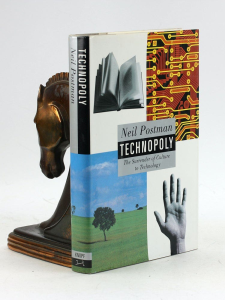
Worth reading: Smash the Technopoly!

From “After Babel”, a substack written in part by Jonathan Haidt. This is a guest post from Professor Nicholas Smyth, who teaches a course called “Ethnics and the Internet”.

“One thing I’ve been learning is that opposition to smartphones and to social media is definitely not just a “kids these days” phenomenon, because the kids themselves are often far more jaded and angry about digital technology than I am.

“On day one, I always put Jon’s question to my class: if you could erase the smartphone and social media from ever having existed, would you do it? Over the past three years, 81% of them have said ‘yes’.1 These students are of course not representative of the general student population, but even if the real number were something like 50%, something very funny is going on. I ask them: can you think of a new technology, at any point in history, where half of its primary users quickly wished that it had never been invented?

“[…]What other tech is like this? The only clear analogue my students usually come up with is the nuclear bomb. Famously, creators and possessors of the bomb often fervently wished they could put that genie back into that bottle. Yet, what does it say about the smartphone and social media that their clearest analogue here is a technology that could easily destroy the entire surface of the earth several times over? “

“My students, upon encountering McLuhan’s idea, immediately see that the smartphone and its typical apps must also be communicating such messages. This year, they offered these examples: your voice matters, people want to see you, you can be popular. It doesn’t matter how many educational podcasts or instructional videos someone consumes, they are holding a device which is delivering these unconscious messages, and those messages are changing them. And readers of this blog know that those changes are not always for the best.”

Posted in News and Views | Tagged | 5 Comments

WWW Wednesday

WHAT have you finished reading recently? The Borrowed Life of Frederick Fife, a charming story about a lovely old man on the verge of homelessness who, after an accident, find himself taken for someone else and wakes up in a warm, cozy nursing home with fun characters and food on the regular.

WHAT are you reading now? I’m trekking through Accidental Hero, a “LitRPG” story in which a guitarist finds himself inexplicably in a medieval fantasy realm, albeit with a video game interface giving him quests and stats.

WHAT are you reading next? It’s Christmastide and the end of the year, who on Earth knows? Three possibilities:

Posted in General | Tagged , | Leave a comment

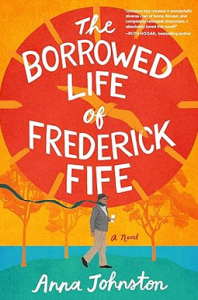
The Borrowed Life of Frederick Fife

Frederick Fife is a warm-hearted old soul who’s something of the polar opposite of say, Ebeneezer Scrooge: he has the milk of human kindness in every vein and flowing out of his ears, but he’s penniless and soon to be homeless. Then one day he spies a man who could be his twin looking quite unwell, having fallen out of a wheelchair near the river. Fred tries to help him, but after a hard trip Fred is concussed and his doppelganger is in the river. Fred awakes to find himself dressed in another man’s robes, and in another man’s life. He tries in vain to tell them the truth, but they all assume “Bernard’s” dementia is just getting worse. The nursing home has good, regular food; a comfortable chair; and people to talk to. Although it doesn’t sit too well with him, the news that “Frederick Fife’s” body has been pulled out of the river prompts Fred to give in and begin enjoying himself — and then Bernard’s estranged daughter shows up.The Borrowed Life of Frederick Fife is an impressive debut: although its story of human connection would be a hit by itself, Johnston adds to that the topics of dementia, elder care, and alcoholism — all of which are not simply thrown in, but instrumental to making the hit an absolute home run.

Fred, it should be noted, is the sweetest and most adorable of characters. He is the anti-Scrooge, the anti-Ove. Well, maybe not the anti-Ove, bcause Ove could be sweet in his way — but neither character were open to the hearts of others. Fred is a man who has loved, and deeply, and though the cruelities of life — his beloved Dawn’s miscarriage, their inability to have kids, and her death from cancer — might have rendered others cold and cynical, Fred has continued living with gratitude and warmth. Problem is, he has no one to be warm to: he has no relatives, no family, and he’s bankrupt from Dawn’s medical bills. His being confused for “Bernard Greer”, a notorious sourpuss, suddenly gives Fred not only material shelter, but people who to be a friend to. He becomes fast friends with Albert, for instance, a man deep in the throes of dementia but who is absolutely merry and dotes on his wife, Val, seeing her with the same eyes his infatuated teen self did decades ago. Fred has an enormous affect on the life of those in the nursing home, patients and staff alike: one young couple on the nursing staff are brought together by his advice!

This novel is three stories of unequal weight: primarily, we’re following Fred as he begins learning about Bernard was and adapts his behavior to better fit in. Bernie had an issue hearing, for instance, and sometimes wet the bed. We get one nurse’s point of view: overworked Denise is increasingly aware that her husband is cheating on her — with her friend, yet! — and falling into the bottle even as she tries to figure out why Bernard is suddenly so much more friendly. Eventually she and Fred/Bernard’s stories become conjoined. More powerfully, though, we follow a young girl growing up and watching her big sister be stricken with leukemia, finding no support from her father who is a tyrannical grump with a habit of lashing out with things. This, we learn in time — when Hannah appears in Fred’s room — is Bernard’s long estranged daughter, who hates Bernie for abandoning her and her mother at her sister’s funeral. Fred is thus put into a hell of a pickle: does he dare pretend to be Bernard and help this woman forgive her father, whose returned and unsent letters indicate that he hated himself for what he did and yearned for reconnection with his daughter?

This is an “all the feels” kind of book, one that smartly incorporates Johnston’s history working in elder care. I do hope Johnston writes more: this title reminded me of Rachel Joyce, who I discovered and fell over the moon for this year.

Posted in Reviews | Tagged , | 9 Comments

Top Ten Winter TBRs

“Winter TBR” is a difficult thing for someone living in central Alabama, because winter isn’t something that happens. Yes, the leaves do turn brown and fall, it tends to get cloudy and rainy, and we’ll have occasional cold streaks, common enough to be annoying but not steady enough to get used to them. Case in point: the high today is 70 degrees (~21 Celsius), and I’m sweating at work despite having a desk fan aimed right at me. My January reading does tend to be a little more deliberate than the rest of the year, because I like to read a mix and get things off to a good start. But first, the tease!

I thought of the only dance I could. In my head, I sang the Macarena and began the steps. Both hands out. Then flipped them. Crossed my arms. I felt like an idiot. Absolutely must’ve looked like one too. When I got to the part where I shook my hips, the baker had had enough. “Stop, stop, stop!” he said. “I’ll give ye something to eat just to get ye to stop.” (An Unexpected Hero: A litRPG Adventure, Rhett C. Bruno & Jaime Castle)

(1) Some science read involving either weather or climate, to finish off the science survey. It will only be my 14th science read for the year, which is remarkably poor.

(2) The Relentless Moon, second in that “Earth is hit by an asteroid and has to kick off the space race ten years early” series kicked off by The Calculating Stars. I have it on hold and am next up.

(3) Men in my Situation, Per Petterson. The January pick for a book club I may be participating in.

Men in My Situation, Per Petterson’s evocative and moving new novel, finds Arvid Jansen in a tailspin, unable to process the grief of losing his parents and brothers in a tragic ferry accident. In the aftermath, Arvid’s wife, Turid, divorced him and took their three daughters with her. One year later, Arvid still hasn’t recovered. He spends his time drinking, falling into fleeting relationships with women, and driving around in his Mazda. When Turid unexpectedly calls for a ride home from the train station, he has to face the life they’ve made without him.

Don’t that sound like a fun time.

(4) Star Trek: Firewall, David Mack; and (5) Star Trek Strange New Worlds: Asylum, Una McCormack. The fact that I have two new ST releases and haven’t yet read them is an indication of just how mentally busy and time-consuming this past semester was. (Finished with full marks, though, and my prof sent an email asking for permission to use my last project as an example for her future classes. w00t!)

(6) Images of America: Fenway Park. Gift from the lady-friend to celebrate the professor’s email.

(7) Provoked: How Washington Started the New Cold War with Russia, Scott Horton.

(8) The Borrowed Life of Frederick Fife, now that I’ve found it again. Sneaky fella was hiding in a PC parts box. (My beast gave up the ghost during Thanksgiving weekend, and I was doing some parts testing before I decided to just buy a new rig, since I’d planned on a massive upgrade in 2016 anyway..)

(9) Strange Weather in Tokyo, Hiromi Kawakami. Honestly, I want to read this one just for the cover.

(10) Bibliotech: Why Libraries Matter More than Ever in the Age of Google

Posted in General | Tagged , | 15 Comments

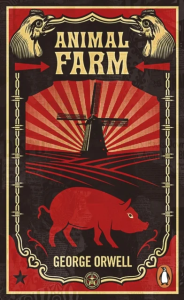
Animal Farm

Recently I realized that it had been as many as twenty years since I read Animal Farm, as I can remember reading it in early high school (1999, 2000 perhaps). A lot of water has flown under the bridge since then, and I don’t simply mean time: I’m much more familiar with the politics and history that Orwell references here than I was in those pre-9/11 days. For those who don’t know, Animal Farm is a satirical fable that essentially tells the story of the Russian Revolution and the Soviet Union in microsmic faction, set on a failing farm in England. Complaining of ill treatment and barely adequate food and shelter, the animals strike out against the owner Mr. Jones in anger, and are successful in driving him away from the farm. Inspired by the dreams of the late Old Major, a boar who denounced human domination of animals and called for revolution, the animals then begin trying to set up their own commune, to be called “Animal Farm”. Here, all animals would be equal: no creature would have too little, and no creature would have too much. And…..enter the human condition. We soon witness a elite forming, with its own intelligentsia to supply The Science and its private forces to bully those capable of thinking for themselves, or who step out of line with the edicts of the increasingly small elite. At first, that elite is the pigs, especially Napoleon and Snowball, but as they vy for influence Snowball disappears and Napoleon begins growing as a tyrant. The other animals are slightly confused because the rules keep changing to favor what Napoleon is doing: wasn’t there one an edict about no animals sleeping in beds? But now the commandment-wall specifies bed with sheets. And wasn’t alcohol forbidden? Now it’s merely forbidden “in excess”, though only the pigs seem to have access to it. As the pigs and their cronies gain power, so too do they rot with vice: small things like keeping the milk and apples for themselves morphs into the pigs — and Napoleon, in particular — becoming worse masters than Old Mr. Jones ever was, but now keeping the farm’s residents mollified with kant and dogma. Having read works like Homage to Catalonia, and Simon Schama’s Citizens which documented the French revolution eating its own children, I could very clearly see Orwell’s targets here and was impressed by the depth of his allusions. Nearly a century after publication, this work has not lost any of its bite — nor has 1984, a similar critique. Unfortunately, this story and elements of it continue to play out: we saw the witch-hunt culture of fear in East Germany and Mao’s “cultural revolution”, for instance, and authorities continue to disregard or creatively interpret law and history as suits their interests.

Related:
1984, George Orwell
My Disillusionment in Russia, Emma Goldman

Posted in Classics and Literary, Politics and Civic Interest, Reviews | Tagged , , , , | 7 Comments

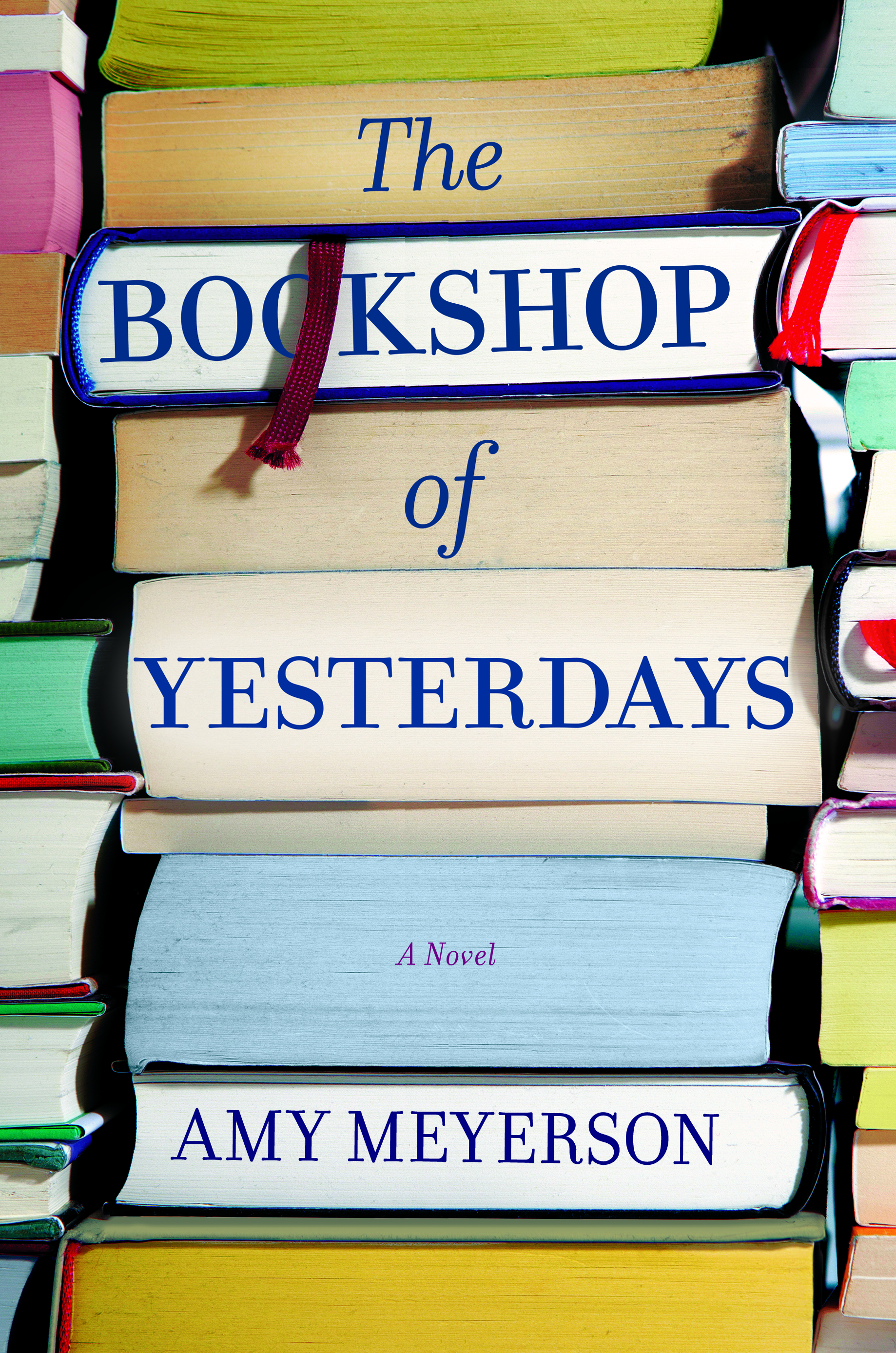
The Bookshop of Yesterdays

Miranda grew up in sunny California, but her interest in teaching history took her across the country. Now a phone call summons her back: her uncle Billy, who she’s not seen for sixteen years, has died. Returning home to see her parents and attend the funeral, Miranda is staggered to learn that her uncle left her his bookstore, Prospero’s — “where books are treasured above dukedom”. What’s more, he’s left her a book with a riddle in it, a riddle that reminds her of the little literary scavenger hunts he’d send her on as a child. Those ended as she was hitting adolesence, after a mysterious late-night screaming match between Billy and Miranda’s mom. Miranda’s parents are visibly disturbed that the bookstore has been given to Miranda, and any attempt to find out what happened between Billy — and why the store disturbs them so — are met with absolute stonewalling. Still, Billy’s clues lead Miranda not only through the store, but into the past — and boy, are there surprises in store. The Bookshop of Yesterdays is a story of relationships and secrets, and the mystery of what happened, with some assistance from the setting of a bookstore and literary puzzles, were a hook that kept pulling me through this title even though I didn’t like a lot of the characters in it, including the main character whose most ready reaction is angry screaming and withdrawal. While Miranda is spending a long summer trying to make sense of her uncle’s estate and of the past, she’s also in increasingly strained relationships with her now-long distance boyfriend, her mom, and trying to get to know the customers and employees of the bookstore, all of whom regard her with suspicion. Some of these characters are interesting, some not: it’s really the mystery that kept me plugging along, as well as the drama created b the fact that Prospero’s is actively failing and will be bankrupt by the end of the year! This is an enjoyable enough story for those who want a bookish mystery.

Posted in Reviews | Tagged , | Leave a comment

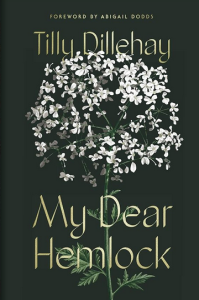
My Dear Hemlock

During Advent I like to revisit The Screwtape Letters as a devotional exercise, but this year my ladyfriend discovered My Dear Hemlock, a new Screwtape-esque book that focuses on a female “patient”, and follows her from early young adulthood through her life’s ebb. Because it follows her for decades, the readers get to see how the spiritual temptations and trials of life can change from period to period. We witness our patient here being tempted by outings with a group of vain and materialistic friends in her youth, for instance, when Hemlock is instructed to make the patient vainly think she can be a “good influence” on them, and much later when the patient is stricken with a possibly-terminal disease, Hemlock is advised to make the woman dwell in her fears — not for herself, but for her children, never thinking of how this crisis might stir the waters and create an opportunity for grace to shine through. The span of time covered does to make this more episodic, though: whereas in Screwtape Letters, Wormwood and Screwtape are in the midst of an intense campaign and we see schemes unfolding across multiple levels, here it’s more one-letter, one-battle, and now we jump ahead five years. There is also focus on relationships here that was present in Screwtape, but not to nearly the same degree: the marriage is of great concern to the senior demon, given that it is something like the church in miniature, each partner dying to the other and working for the other’s sanctification — but it could lead to triumphs for the demons, too, for hate and festering bitterness and swearing off love altogether. As with Screwtape, the snares sewn are the subtle ones, and the senior demon warns her ward off of big moves, which can have unexpected consequences: when Hemlock manages to inflict a chronic disease on her patient, she’s horrified to see the patient growing closer to Christ through it, making her more thankful for the support of her family and friends, more mindful of her short time on Earth, more grateful for the moments without pain. I was hoping to integrate some reflections from my and the ladyfriend’s joint discussion of this, but she’s in no-serious-reads-until-school-is-out-mode.

Related:
The Screwtape Letters, Jack himself
The Gargoyle Code, Fr. Dwight Longenecker

Highlights:

We must do everything in our power to prevent her finding out a standard fact about the male human: he will usually slouch to meet a woman’s disapproval and grow to meet her praise.

Our best marriages occur when a woman is constantly trying the wind’s method, blowing as cold and hard as she can. Husbands universally respond by pulling their coats tighter around them. (In the fable, the sun shines warmly on the man’s face so that he removes the coat voluntarily. It is a dangerous secret, really.)

The humans are all Naamans, certain that their problems are too unique and too knotty for a simple swim in the Jordan.

Here it is very entertaining to take advantage of the human tendency to learn a new obedience one moment and then, in the exact next moment, look angrily around at people who don’t seem as obedient about the same thing.

You asked which is better: to encourage your woman to start a fight with the husband about what he did, or to encourage her to ignore what he did and punish him with silence. The answer is—yes. Honestly, it’s little matter to me which she does, as long as her heart is cooled and hardened toward her husband and the Enemy. So choose the one that comes most naturally to her, and let her flesh do the work.

You see? This way, you get her to pile up months of crusted-over “small” sins. She and her husband will go picking their way around the piles, stepping on old trash left from a silent supper three months ago, and they’ll stop noticing it’s even there. As long as they never begin the habit of confession, they’ll build this delightful tartar of the soul for years. This is how hatred begins, Hemlock. Don’t underestimate it.

Identify the Patient’s ditch and push her into it.

This is what the screen gives the humans. It gives them the same escape. They don’t know when or how they came to be on their phones. They only know they are freed from the plodding, repetitive step of moment after moment. The joys and sorrows of life are muted for them, and they are carried down the road of time without knowing or caring.

You might think that, once you get her friends into the category of enemy, it will occur to her that she should approach them the way the Enemy told her to in his Terrible Talk on the Mountain. But I promise she’ll never make the connection. “Love your enemies,” His nonsensical command, is hard enough when she has a clear enemy. But what about when her “enemy” is just a friend who has forgotten to include her in a text invitation? What about when her “enemy” has slapped her on the cheek by repeating her private prayer request to a third party?

You’ll want to begin by encouraging her in long episodes of worry. Worry is fixated on the future and inspired by the past, and it does very good work ruining the present. All worry is good worry.

Teach her to forget the eyes of the Enemy entirely in her cringing and preening awareness of the eyes of man. Rather than assessing her obedience against His book, against the promptings of His accursed Spirit, encourage her to assess it entirely using these mathematical symbols: <, >, =. Are my children performing better, worse, or as well as these other children? This rubric can replace the question of whether she herself is following Enemy instruction. Her parenting will thus become one long plea for affirmation from others, a plea to be excused for failure and to be admired for success. Every private moment with her children will be overshadowed by the latest public performance. She will miss the pure enjoyment she may feel in them, in their personalities and voices and bodies. [..] The frustrations of such a woman are delicious, her insecurities tasty to the last drop. Her energies are futile and poured out for the enjoyment of us all.

The humans are quite aware of the potential of disease or disorder when it comes to the body. But for some reason, it’s easy to get them to forget the possibility of disorder when it comes to the mind and the emotions. Repress the obvious thought that some emotions—and the fervent beliefs that accompany them—simply do not reflect what is “true” in the oppressive sense meant by the Enemy.

Death is never a real friend. I always say that the less the humans think of death, the better. Death instructs them when it is faced head-on. Only when it is skirted around can it be really beneficial. A human pretending she won’t die is a human who fears death.

Posted in Religion and Philosophy, Reviews | Tagged , | Leave a comment