Prompt: most memorable road trip

Daily writing prompt
Think back on your most memorable road trip.

Oh, this is an easy one. New Mexico, 2016. Not only was it my first time on an airplane, and my first time out of the South, but it was my first time taking a vacation somewhere as an adult: my last time had been 2004, when my parents and I did a drive to Houston and back. New Mexico was also the first time I’d planned a vacation, and it was fairly ambitious: I was landing in a new city, then commencing a thousand mile driving tour of the state, with different hotels almost every single night until I ended up in ABQ. My memory of that week is extraordinarily sharp — in part, I suspect, because I was suddenly immersed in complete novelty: everything about New Mexico was startlingly different to me as an Alabama boy. Some pics from back then, though they were taken on a digital camera that was already a relic. I long to go back to New Mexico, or at least the southwest, but every time I’ve begun planning, some thing like COVID happens.

The view from Carlsbad Caverns
San Felipes, ABQ
Santa Fe
Sante Fe again
White Sands
A very large array I found

Posted in General | Tagged , , | 10 Comments

Before we Forget Kindness

One of the more charming reads from last year was Before the Coffee Gets Cold, a short novel that falls into a mysterious genre called ‘magical realism’, as I’ve since learned. The setting and premise were simple yet inexplicable: in a small cafe in Tokyo, there is a single chair in the cafe that can take you to that same cafe at another point in time, under certain conditions and rules. The past can’t be changed, but — perhaps you can, by saying things that needed to be said, or asking questions that should have been voiced before. This collection seems shorter than the original, with only four stories, but there’s a good variety of pathos to be found here. We meet a young elementary school student who wishes he hadn’t cried at his parents’ divorce; a pair of unrequited lovers; a father and daughter estranged by her decision to elope with a man she barely knew but who her father could read like a book; and a young widow who wants her late husband to name their baby. As with the original, the novel’s narrative voice is directly philosophical, reflecting on the nature of regret, say, or the confusion and division within the human heart and the apparent fickleness that creates: these observations go hand in hand with the interior struggles we’re seeing as the characters make their journey into the past. Although the general tone is “sad but sweet”, there is some humor: possibly my favorite story involved two characters who delighted in speaking in the formal language of Samurai tales, which the translator renders as Shakespearean.

Posted in Reviews | Tagged , , , , , | 1 Comment

Primate Made

Longtime readers to this blog know that the mismatch between human biology and the world we have made for ourselves is a pet topic of mine,  given its implications for human flourishing.  Primate Made focuses on modernity’s effects on the human body, and begins with the key point that  DNA, while being the ‘recipe’ for making us,  is dynamic and its expression can change based on our lifestyles and experiences.   The author opens by pointing out that human beings were ‘uncivilized’ hunter-gathers for the overwhelming majority of our natural history,  and our bodies are still those of the ancient tribesmen who stalked prey on the plains.  

Cregan-Reid begins his documentation of how our bodies’ recipe began fluctuating with the agricultural revolution, which offered generally steady but less nutritionally varied supplies of food, resulting in  shorter, less hardier humans. This was not a hard-coded evolutionary change:   we have seen the same shift happen in Korea, where authoritarian economic policies have resulted in North Koreans being smaller on average than their former kinsmen, living in more economically liberal South Korea.  The fruits of industrialism and capitalism have allowed for much better diets, and average human height has recovered in suit.  Every rose has its thorns, though, and most of the book focuses on how modernity affects our waistlines,   feet,  back, and mind  – all to the bad, as you might imagine. While some of this was predictable (the waistline bit),   his chapters on how our feet have been enfeebled by constant shoe use was interesting, especially  given how some problems tend to begin with the feet and radiate up to our backs. What comes up again and again is the fact that we sit entirely too much: we need to move much more than we do, preferably in areas that will give our feet a proper workout and counter their flattening.    The chapter on teeth and diet were fascinating, and intermittent fasting gets a shout-out — though, despite the section on fasting, he never goes into metabolic syndrome which is closely connected. Although some of this was old hat, I still learned quite a bit: for instance, our mandibles don’t get as much exercise as they’re designed for, and subsequently don’t develop as large as they might, leading some to some of our wisdom teeth problems. I  also appreciated that Cregan-Reid touched on mental and emotional aspects of modernity,    like the frustration that children (especially boys) experience with sedentary education. Not for nothing did Desmond Morris call his own book on this subject The Urban Zoo:    we’re all  pacing in our own tiny enclosures!

This was a fairly interesting read, and the author includes end-chapter summaries for the twitter-patted: he also proposes ways we can resist the worst distortions, like taking standing/walk breaks at work, and not grazing all day and giving ourselves breaks from constant stimulation. This strikes me as a servicable guide and a good read to understanding the ways our bodies are ill-suited for being cooped up in boxes all day, and a nice kickoff to the year’s science reading.

Highlights:

Your DNA, the code that instructs the assembly of the right amino acids into the right proteins at the right times in the right order and in the right places tens of trillions of times over, giving you a body, is not like a computer script. The code is not perfect, reliable or definitive. Instead, DNA sequences are more like the dialogue in a play. There may be a script, but the outcome depends on the environment in which those instructions are performed. Versions of Romeo and Juliet can vary in quality and tone, from the most ornate productions by the Royal Shakespeare Company to an elementary school performance.

[A]pproximately 10 percent of all the humans who have ever existed are alive today.

While early humans probably consumed about ten tablespoons of sugar per year, in the modern Western diet that is more likely to be the amount consumed daily.

To put it another way, if the timeline for human-like species were condensed into a nine-to-five working day you would need to wait until 4.58pm for the Agricultural Revolution. Even the smallest cities weren’t built until well into 4.59pm. The Industrial Revolution? You would have to have been keen-eyed to notice it. It began at 4:59 and 58 seconds. Nearly all the technology we know and interact with would have come and gone in about the time it takes to sneeze. As a result, our bodies are in shock from these changes. Modern living is as bracing to the human body as jumping through a hole in ice. Our bodies are defending and deforming themselves in response.

These children’s bodies are rejecting sedentariness and almost our first response is discipline, expulsion or a psychoactive pill.

We are unique among species because instead of waiting for evolution to provide us with the right tools for the job, our cognition reversed the process. Other apes’ hands have adapted to their environment, but humans used their primitive hands to make an environment in which those hands, fingers and thumbs became the ideal apparatus for interacting with it.

Posted in Reviews, science | Tagged , , , , , , | 8 Comments

WWW Wednesday

WHAT have you finished reading recently? Sword Brethren, the start of a new historical fiction series about a man whose childhood home and title were stolen from him at age fourteen, forcing him to create a new life as a warrior-monk fighting in eastern Europe.

WHAT are you reading next? Primate Change, a science book about how human biology is being affected by modernity. Reccommendation from Cyberkitten, I believe.

WHAT are you reading next? Possibly Lonely Vigil, about the coastwatchers in the Solomons. The ladyfriend I recently watched Father Goose, in which Cary Grant plays a coastwatcher.

Posted in General | Tagged | 5 Comments

Sword Brethren

Richard Fitz Simmons is a young lad who has just lost everything. After he narrowly defends himself against some highwaymen he arrives home to find that his father has accidentally died in a hunting accident and his uncle is taking over. But why did Uncle bring a small army with him? Richard and his father’s German steward take off for London in hopes of telling the King about this outrageous perfidy, but the King is Mr. Outrageous Perfidy himself, John. Chased by murderous men, Richard takes a desperate chance and finds himself in the Holy Roman Empire, in service to a prominent merchant — but this is only the first step on a path that will lead to Richard into becoming a warrior of renoun, telling his story to a scribe in Prince Nevsky’s court. This was an ARC sent to me via Booksirens, and it seems quite promising: although featuring a teenage main character, it’s not the kind of family-friendly medieval adventure that Wayne Grant delivers in his Broken Bow series, which has a very similar plot. This is much more graphic and edgy, and takes readers into an area not often seen in medieval historical fiction — eastern Europe during the Northern or Baltic crusades. The main character is quite sympathetic, a lad with the strength and valor of a man twice his age, quick to defend those in peril, even if saddled with a temper. Frequently, his sense of righteousness and honor gives him into violent trouble. My only issue with the book is Richard’s irreligiosity, which is out of place given the setting, and especially given that he’s serving in a holy order. Although I had some quibbles with it, I enjoyed Sword Brethren and will be continuing in the series as the author creates it.

Related:
The Last Kingdom, Bernard Cornwell. Family killed, land stolen, boy becomes warrior of great renoun.
Longbow, Wayne Grant. Family killed, land stolen, boy comes warrior of great renoun.

Posted in historical fiction, Reviews | Tagged , , , , , | 2 Comments

Top Ten 2025 Releases

2025’s inaugural Top Ten Tuesday from the Artsy Book Girl is book releases we’re looking forward to in 2025. I don’t follow book releases unless a particular author I like has announced one (hence my knowing about Anxious Generation and Living in Wonder last year, and having them preordered), so I’m just going to trawl Amazon’s upcoming page for the most part. But first, tease!

Your DNA, the code that instructs the assembly of the right amino acids into the right proteins at the right times in the right order and in the right places tens of trillions of times over, giving you a body, is not like a computer script. The code is not perfect, reliable or definitive. Instead, DNA sequences are more like the dialogue in a play. There may be a script, but the outcome depends on the environment in which those instructions are performed. Versions of Romeo and Juliet can vary in quality and tone, from the most ornate productions by the Royal Shakespeare Company to an elementary school performance. (Primate Change: How the World We Made is Remaking Us)

And now, some 2025 books that I’m either looking forward to, or which sounded interesting:

Ace in the Hole, third in the Black Badge series about an undead gunslinger who roams the Wild West at the order of the White Throne, dispatching werewolves, vampires, and the like. This series introduced me to Rhett C. Bruno & Jaime Castle, whose work I’ve continued to enjoy.

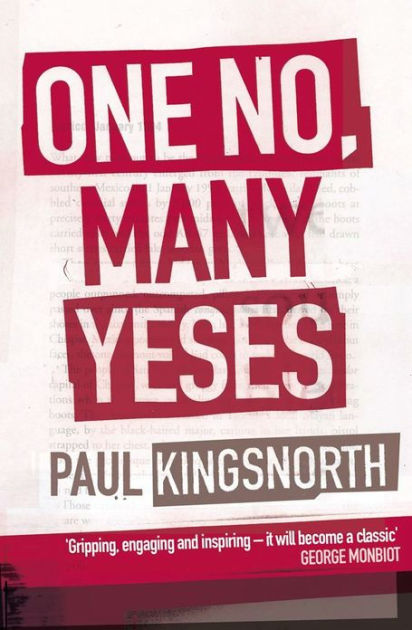
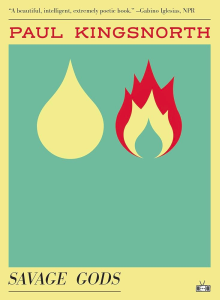
Against the Machine, Paul Kingsnorth. The publisher blurb:

In Against the Machine, Kingsnorth recounts how the Machine, a combination of technological, political, economic, and spiritual forces, is destroying the life support systems of the Earth itself. He examines the Machine’s way of homogenising the mosaic of human cultures and using humans as fodder in a techno-industrial juggernaut. Most importantly, he identifies how this “progress” and its ideologies put humanity in a headlong plunge towards what looks to be a glorified nihilism disguised as “freedom.”

In the age of the Machine, it takes effort to remain truly human. Drawing on deep readings of philosophers, poets, and mystics like Ivan Illich, Wendell Berry, and Simone Weil, Kingsnorth reminds us what humanity requires: a healthy suspicion of entrenched power; connection to land, nature and heritage; a deep attention to matters of the spirit; heterodox tolerance, freedom of expression and an appreciation of beauty. Against the Machine is the spiritual manual for Kingsnorth’s fellow madmen.

When the Moon Hits Your Eye, John Scalzi. Presumably an SF comedy about the Moon turning to cheese.

Those are the ones I personally know about. Now, to the booklists!

The Technological Republic: Hard Power, Soft Belief, and the Future of the West

Embers of the Hands: Hidden Histories of the Viking Age

On the Hippie Trail: Istanbul to Kathmandu and the Making of a Travel Writer

The Sirens’ Call: How Attention Became the World’s Most Endangered Resource

Good Soil: The Education of an Accidental Farmhand

Bandwidth: The Untold Story of Ambition, Deception, and Innovation That Shaped the Internet Age and Dot-Com Boom

Waste Land: A World in Permanent Crisis

Posted in General | Tagged , | 14 Comments

The Best of 2024 – Year in Review!

Without a doubt, 2024 will be remembered on this blog as The Year of Fiction. I am a nonfiction reader. Nonfiction has always dominated my public reading, from 2006 forward, and it’s never been close: usually nonfiction leads by margins like 70/30 or 60/40. In 2024, however, the tables turned: fiction led nonfiction all year, and by the same 60/40 margin — and more surprisingly, it wasn’t historical fiction or science fiction doing the work, but general fiction, which constituted 18% of my reading all by its itty-bitty self.

One of my goals for 2024 was to keep my bought-books percentage under 10%, which I’m happy to report I did: library books and Kindle Unlimited were the overwhelming majority of my reading, supplemented by ‘previously owned’ titles and some free-with-Audible subscription action as well. I read 3 KU titles (on average) a month, so I’d say it’s paying for itself. As far as the medium wars go, the long dead heat between ebooks and physical definitely changed this year:

Most-Highlighted Kindle Titles:
Anxious Generation, 69.
Family Unfriendly, 66
Bad Therapy: Why the Kids Aren’t Growing Up, 61.
Scarcity Brain, 63
American Carnage, 53

I was pretty good about reviewing most books, but the books I didn’t review were good ones. Oof. Will see if I can post reviews for those this quarter.

We begin with General Fiction, with 34 titles. This is….well, weird. Historical fiction and science fiction usually constitute the bulk of fiction, with some remainder being things like thrillers. This year, though, for whatever reason, I was really into fiction. Not only did I discover some new favorite authors, but I think the fiction high also led to me discovering a lot of new blogs and bloggers this year. Obviously, the chief standout is Rachel Joyce, who I’ve loved every single time I’ve picked up one of her works. The Unlikely Pilgrimage of Harold Frye and The Music Shop were my favorites, but all of them were wonderful reads with strong characters and stories that involved human connection. I also waded a bit into the waters of Japanese literature: What You are Looking For is in the Library was one of my top ten favorites for the year, and Before the Coffee Gets Cold is part of a series that I will be continuing this year. Another notable author I found this year was Ruth Ware: I picked up one of her books because it had an IT focus, and wound up reading four by her during the year.

Science Fiction displaced historical fiction, a feat that’s not as remarkable as fiction supplanting nonfiction, but noteworthy all the same. It ended with 29 titles, or 34 if we count tie-ins like Star Trek. I’m tolerably sure this was SF’s best year to date, actually. Finding Becky Chambers’ work via other book bloggers was an SF highlight: I found her Monk and Robot stories charming, but I really liked her Wayfinders series.Her SF has an interesting mood which I described as ‘cozy’. She’s in the neighborhood of an emerging subgenre, “solarpunk“, which is very ecological/sustainability focused. I made my introduction to two of SF’s greats, Ursula le Guin and Frank Herbert, and revisited an old favorite, Ray Bradbury. Chambers’ A Closed and Common Orbit is my favorite of the year, I think, with The Illustrated Man nipping at its heels. (I know that probably has classic SFs clutching their chests, but while I liked Dune and The Disposessed, and while they’re greater works artistically, I enjoyed Chambers more.) Another memorable favorite was SHELLI, a detective-thriller involving an android.

History, longrunning queen of the stacks, may rest assured that she’s still queen of the nonfiction stacks, with 24 titles. The books were a varied lot, too, covering topics like baseball and video games along with the usual stabby-shooty-politics stuff. My favorite among them was The Dixie Frontier, a social history of the south during the late 1700s & early 1800s, when places like Alabama and Mississippi were the frontier. Also notable were Ballpark, a history of baseball parks within the American city; Brutal Reckoning, a massive history of the Creek nation and its role in early American history; Life Below Stairs, a social history of Edwardian servants; Hello, Everybody!, on early American radio; and Hitler’s Heralds, on the paramilitary organizations that were used to put down bolshevik power-grabs and then attempted their own — twice!

Historical Fiction had a good year, I think, with 17 (9.2%) titles, and interestingly most of the authors featured were new to me! Wayne Grant was the highlight of this category, as I tried a novel of his set during the English Civil War, and then read through most of an entire series by him set during the Crusades. They’re not on the level of Cornwell or Kane, of course, but were fun historical adventures nontheless. The Broken Realm was my favorite of these, following two young veterans who arrive home to find that their home has been occupied by an enemy, taking advantage of the brewing struggle for power between John, his mother, and the King, Richard. While I checked in with my usual band of authors: Cornwell, Hennessey, Harris, and Shaara, there were a host of newbies like Rachel Joyce, Helen Simonson, and Russell Sullman.

In Society and Culture, I read quite a few good titles: Troubled was far and away the best, being a memoir of the author’s escape from familial chaos and the foster system which left him with sharp criticisms of “luxury beliefs” espoused by the monied elite that sound nice but have terrible effects on we mere plebs. Bad Therapy was also excellent, and reviewing it will be one of my goals for this first quarter.

Religion and Philosophy was marked by the release of Living in Wonder, the booklaunch of which I attended. That was a first for me, and I greatly enjoyed meeting the author — again, not something I’ve done previously. (I met three authors at that booklaunch: Rod Dreher Paul Kingsnorth and Jason Baxter, whose books I read subsequently.) Related, I have to mention one of my favorite books of this year which is more in the miscellaneous category, How to Stay Married: it’s the memoir of a man discovering his wife was having an affair with someone, and their struggle to rebuild their relationship. I mention it here because religion is part of the story, but also because I found the book via Rod.

In Politics and Civic Awareness, I was small but mighty: of the seven titles I read, five were really good and the other two were fine. Anxious Generation and Confessions of a Recovering Environmentalist would vie for the best.. The first looked at the effects of smartphones and social media on Gen Z, and the latter was a collection of essays about nature, mysticism, and the corporatization of environmentalism .

While a strange year for my reading, in terms of nonfiction taking such a backseat, it was enjoyable nontheless, leading me to some great authors and new bookish friends. 2025 is off to a strong start already, and I’m looking forward to what it might bring!

Posted in General | 6 Comments

Biking and Brotherhood

Although my dad had stopped biking long before I came on the scene, there were enough photos of him and my uncles sitting on their engines to make me a sucker for shows like Sons of Anarchy and books like Under and Alone. Biking and Brotherhood has been on my interest list for a while, but watching Bikeriders recently and then spotting this on KU sold it. Biking is a straightforward memoir by Dave Spurgeon as to how he took up riding, then became an early member of a Toledo-based MC that was later absorbed into a national organization on par with the Hells Angels. Spurgeon’s career as an outlaw biker ended when he was arrested for numerous charges, including possession of an narcotic with intent to sell, and has something of a twist ending.

Biking and Brotherhood, as a memoir, is an interesting collage of gearhead talk, reminiscences of long drives, party goings-on, and tense altercations with other motorcycle gangs. Although Spurgeon’s life was saturated with petty crime — fights, drug use, more traffic and firearm expenses than one can shake a fist at — he never goes in-depth into outright criminal behavior the MC gets involved in, besides admitting that a lot of brothers (especially in other chapters) engaged in drug dealing on the side. This is largely stories of hanging with the boys, drinking and snorting cocaine to excess, getting in fights, and sometimes having adventures like nearly dying in the Everglades because of a failing airboat. Still, something had to be going on, since when he’s arrested at age 38 he has multiple vehicles, $40,000 in cash (in 1989), and what sounds like more guns than my local shop — and while he was evidently a superb bike mechanic, he doesn’t evidence any kind of steady work, either in text or by the fact that he was able to take off for weeks at a time to head for bike rallies or wait in Florida for the weather in Ohio to stop sucking.

As a memoir, this was fun reading despite its repetition and my growing sense that there were things on on that Spurgeon doesn’t talk about, more to the life beyond rides and late nights and gleeful bar brawls. Perhaps that hopes to Spurgeon’s new life as an evangelist, as he embraced Christianity: accounts of 1%er life like Under and Alone have made it obvious that some MCs get up to some savage, often disturbing things, though admittedly the experiences are over a decade apart. I most enjoyed reading about Spurgeon’s obsession with his machines (he did a lot of his own fabrication and “chopping”, not content to ride a prebuilt) and the close ties he shared with his fellow easy riders.

Related:
Under and Alone: the True Story of the Undercover Agent Who Infiltrated America’s Most Violent Outlaw Motorcycle Gang, William Queen
The Rebels: A Brotherhood of Outlaw Bikers, Daniel Wolf. I’m glad I went back and re-read this review, because the study delves deeply into feelings and thoughts that Spurgeon hints at here, but couldn’t express.

Posted in Reviews | Tagged , , , , , , | 3 Comments

Strange Weather in Tokyo

© 2001 Hiromi Kawakami
Translated 2012 Allison Markin Powell
Read by Allison Hiroto, ~ 6 hrs

There’s no resisting that cover! Tsukiko is a young woman on the cusp of middle age, not far from sailing into her forties. One night at her local sake bar, she puts in a order for snacks and hears an older man requesting the same exact thing. Their eyes meet, and she realized he’s familiar: he was a former teacher of hers! Though she can’t quite remember his name, Tsukiko and “Sensei” strike up a conversation and spend the next several hours together downing sake. This is the beginning of an unusual friendship between two isolated people — a young woman who does nothing but work and drink, and a retired widower who lives in a home filled with clutter he can’t get rid of. Strange Weather in Tokyo doesn’t have a formal plot, as such, but rather consists of episodes in Tsukiko and Sensei’s friendship as they continue to bump into each other at the bar and bond over long, booze-soaked conversations. As time passes and the seasons change, the relationship deepens to the point that they’re going on mushroom-hunting excursions together, and at the cherry-blossom festival Tsukiko’ unexpected jealousy towards Sensei spending the evening with a former colleague implies that for her, at least, the relationship has taken on another layer. Indeed, part of the attraction of this novel is being able to witnesses the slow, plant-light growth of the character’s affection for one another, and a relationship that feels real and substantial despite the age gap. I listened to the audiobook, and — given the fact that the novel is told in the first person — its presentation made the story even more absorbing and intimate.

Posted in Reviews | Tagged , , , , , , , | 11 Comments

My Holiday in North Korea

The “hermit kingdom” of North Korea, which is essentially a cult masquerading as a country, is one of the creepiest and most inhumane places on Earth. Wendy Simmons chose to go there, though, and shares her frustrating, confusing, and soul-troubling observations here. The Kim-cult is not an area where tourists can go around willy-nilly: instead, they are assigned handlers who schedule every moment of their day except those hours they’re in their dingy hotel rooms. This is less of a tourist experience, then, and more of a show conducted for a captive audience, presenting a very specific version of the country to outside visitors — one that fails to impress Simmons on any account, aside from being deeply weird.

My Holiday is Simmons memoir of her week spent in “NoKo” as she styles it, being shephereded from place to place and given either strange and prolonged lectures on the Greatness of the Dear Leader (who is still in charge of the country despite being dead), or the evils inflicted upon NoKo by The American Imperialists. (Simmons reports that some guides smiled apologetically after referring to her as an American Imperialist, but not many.) She’s taken to various museums or exhibit halls where the featured items often baffle her, especially a museum displaying gifts given to the Korean dictators from other dictators or global potentates. Some of is random crap, others artifacts like elephant tusks that horrify her. As with James Franco’s character in The Interview, she’s being shown a specific version of the country, but despite NoKo trying to put on its best foot to awe visitors, Simmons is usually underwhelmed. A library that supposedly has all the world’s records in it, for instance, has a viewing room that consisted of 1980s boomboxes and bootleg cassette tapes. (Amusingly, the Interview shenanigans break out while Simmons is in-country.) What is impressive is how creepy NoKo is at putting on displays: when a trip to a factory is cancelled, the guides announce that there is now time to watch a football game: as Simmons endures the match, she’s creeped out to see crowds of Koreans marching in and then suddenly becoming rowdy spectators at the match, like it was a part they were playing: some vast performance being put on for the benefit of Simmons and a few other visitors.The marching Koreans becomes something Simmons gets used to: performance and pretense are a huge part of the experience, from schools to factories.

Although this is a constantly funny book — with humor coming from both the NoKo’s absurd behavior and Simmons’ bafflement — there’s also sadness and anger here. Simmons is more than ready to escape North Korea, worn down by the frustration of dealing with its weirdness and its guides whose humanity keeps trying to break through the programming but is always pushed back down into robot-land.

Related:
Korea Reborn, a history of the Korean War and a celebration of the friendship between Seoul and DC.

Posted in Reviews, World Affairs | Tagged , , , , | 7 Comments