WWW Wednesday

WHAT have you finished reading recently? Camino Ghosts, John Grisham.

WHAT are you reading now? The Brass Verdict, Michael Connelly.

WHAT are you reading next? Will probably return to the Romanov book.

Note: I scheduled this post on Tuesday, given that we’re expecting severe thunderstorms, quite possibly producing tornados. Selma was ravaged by one two years ago in January 2023, so I hope the prediction fizzles out. If I don’t respond to comments, though, assume I’ve lost power or possibly been thrown into Oz.

Posted in General | Tagged | 12 Comments

Top Ten Things Characters Said

More like “first top ten things characters said that I remembered”. But first, the Tuesday tease.

“Do you have a birth certificate?”
“No.”
“May I ask why not?”
“I was a baby. I wasn’t in charge of the paperwork.” (Camino Ghosts, John Grisham)

Yes, this was going to be his best novel so far, although sadly it was drawn directly from life – his own. It was about a failing poet, Gordon Comstock, in his early thirties, working in a dusty bookshop and living alone in an attic bedsit – halfway to the workhouse already. Good prose, he believed, should be like a windowpane, but in this case it would have to be a mirror. (The Last Man in Europe: A Novel)

And now, some quotes that have taken up long-term residency in my head. (Believe me, it was hard keeping Cornwell restricted to two.)

A Far Better Rest:

“They’ll hang the fellow at Tyburn, and there will be an end to it.”
“If he is found Guilty.”
“Indeed. Your legal acuity never ceases to amaze me.”
“I do not intend that he shall be found Guilty.”
“A commendable position for the Counsel for the Defense. Bravissimo.”

Yoda: Dark Rendezvous:

“It’s always so easy to avoid other people’s vices, isn’t it?”

White Fang:

“An’ right here I want to remark,’ Bill went on, ‘that that animal’s familiarity with camp-fires is suspicious an’ immoral.’
‘It knows for certain more’n a self-respectin’ wolf ought to know,’ Henry agreed

Sharp’s Havoc:

”What I don’t understand,” Sharpe persevered, “is why she ran away.”
“She’s probably in love,” Hogan explained airily. “Nineteen-year-old girls of respectable families are dangerously susceptible to love because of all the novels they read.”

The Lion at Sea

‘You are a wart,’ the sub-lieutenant of the gunroom had told him firmly. ‘An excrescence. An ullage. A growth. You probably imagine that when signalled “House your topmast”, you should reply, “fine, how’s yours?” and doubtless the only time you’ll show any enthusiasm for the navy will be on full-belly nights when we’re entertaining visitors.’

‘arry Potter and the Philosopher’s Stone:

“We could have been killed — or worse, expelled!”

The Brave Cowboy

“Where’re your papers?”
“My what?”
“Your I.D. — draft card, social security, driver’s license.”
“Don’t have none. Don’t need none. I already know who I am.”

Jayber Crow

One Saturday evening, while Troy was waiting his turn in the chair, [he said] “They ought to round up every one of them [war protesters] and put them right in front of the communists, and then whoever killed who, it would all be to the good.”
There was a little pause after that. Nobody wanted to try and top it. I thought of Athey’s reply to Hiram Hench.
It was hard to do, but I quit cutting hair and looked at Troy. I said “‘Love your enemies, bless them that curse you, do good to them that hate you.’”
Troy jerked his head up and widened his eyes at me. “Where did you get that crap?”
I said, “Jesus Christ.”
And Troy said, “Oh”.
It would have been a great moment in the history of Christianity, except that I did not love Troy.

Death of Kings

“Oh, lord, I am so many things! A scholar, a priest, an eater of cheese, and now I am chaplain to Lord Uhtred, the pagan who slaughters priests. That’s what they tell me. I’d be eternally grateful if you refrained from slaughtering me. May I have a servant, please?”

The Silver Chair

This is my password,” said the King as he drew his sword. “The light is dawning, the lie broken. Now guard thee, miscreant, for I am Tirian of Narnia.”

Posted in General | Tagged , | 8 Comments

Camino Ghosts

In The Guardians, readers were teased with a voodoo-cursed cabin that..ended up never being visiting again, causing me to wonder why on Earth it had been included to begin with. Camino Ghosts revisits not that cabin, but the general premise of voodoo curses. The hurricane that savaged the area in Camino Winds has so changed some of the barrier islands near Camino that one of them, “Dark Island” is now an attractive option for development. Centuries ago, it was home to a population of escaped slaves, whose numbers were especially bolstered after a slave-ship was destroyed by a severe storm and its survivors washed up there. Fiercely independent, they resisted any attempts at the American government at bringing them under DC’s control, and rumors are that the island is cursed to kill any white man who steps foot on it. The island was abandoned by the mid-20th century, but its last resident to leave is still alive and alleges ownership of the island. As development companies appear to go to war in court to claim title to it, Mercer decides to write the survivor’s story. (Mercer is the generally forgettable main character of the Camino books.) The result is an unusual thriller story for Grisham, one with an initially eerie air that gradually evaporates in favor of legal drama and padding (ye gods, the padding) before returning in an flimsier way. It’s one of Grisham’s vanishingly rare stories with a genuinely happy ending: usually we’re left with endings like The Rainmaker or The Brethren, when the baddie is stopped but escapes justice, or worse endings like that of Sooley, which Grisham’s house should have been egged over.

My chief gripe with this book was also the thing that made it most interesting: the premise of a extralegal community whose sovereignty was maintained by a voodoo curse. I’ve been reading Grisham long enough to know he’s a lazy writer, frankly, and I was not surprised at the lack of worldbuilding on the island, resulting in the survivor-heir complaining that the federal government had never tried to build schools or water or yadayadayada on the island while at the same time being all proud and spooky over the curse that would make any whites drop dead, regardless of their intent. (The ‘curse’ even claims some pilots who flew too low over the island taking photographs.) The original islanders literally made a habit of killing anyone who came to it, and those who visited even after the islanders had all died or left also died because of the black magic, so why on earth is she angry that…no one wanted to come to the island? Grisham never touches on what kind of interactions the islanders had in the 20th century with mainland Florida, government or commercial, so it’s like their isolation exists only to the degree that it’s relevant for the survivor’s ire, or for the general spookiness. And speaking of, Grisham never touches on whether the curse is real or not, though he writes it as though it were: the survivor, in order to expedite an attempt to find her people’s cemetery and prove her claim of residence, “Lovely” uses the voodoo she learned from her forbears to dispel the curse. Personally I would’ve brought in an exorcist rather than Miss Cleo, if you’ve got ‘spirits’ killing people for trespassing.

In short, this was a book with a fun premise, one that someone like Stephen King could absolutely hit a homer on, but one which is frankly wasted on Grisham given his dislike of research, his absent worldbuilding, and the amount of padding present in the book. If it were reduced to actual story, we’d have 150 pages or so: fruitless sidetracks like Mercer and her Dumb Husband’s Inability to Paint a House, as well as The Never-eending Commentary on Lovely’s Robes and Turbans give it more extra baggage than a serial divorcee.

Posted in historical fiction, Reviews | Tagged , , , , | 2 Comments

The Half-Blood Heir

Nathaniel Perry survived the Battle of Waterloo, despite the odds: two thirds of his unit have answered the last post and call, but he got through with just a bullet through the calf. Newly promoted to Major, he’s contemplating his future: with peace breaking out there’s no place for him in England, and he can’t survive on a major’s pension: if he stays with the Army, the only opportunity for advancement is India. Enter the lawyers, though, with interesting news: Perry’s grandfather, a man he never met, is close to dying and wants to see his son. Turns out Pops is a lord, the 11th of something-or-other, and while his estate is poor he’s worth nearly a million pounds and has numerous business interests, including the opium trade. No more Indian fever for the major, here, now he has another battle: gorse and high society.

The Half Blood Heir is an odd book for me: I’ve read Andrew Wareham’s military fiction and enjoyed them, but this is a much different story. It’s …..extremely low key. We follow Nat as he learns of his inheritance and begins tending to practicalities: finding a valet, kitting himself out in a fashion that won’t offend his new peers, thinking about the upcoming season and finding a wife, assessing issues with the land, meeting tenants, etc: think of the sort of thing Robert, Matthew, and Lady Mary do when they’re tending to estate matters and you’ll have the idea. A plot does happen eventually, as Nat discovers that there are some legal issues with debt and dodgy loans, but mostly the attraction here is the sheer amount of historical details crammed in — the vagaries of seasonal fashion, of matters, the different types of horses. If you’re a history nut, that’s interesting: if you’re here for story, though, ehm…there’s not all that much. There’s not even any romantic drama: Nat literally marries his cousin and doesn’t even go to the Season to enjoy being fussed at by great lords’ daughters who want to reel him in! The main reason I kept reading, to be honest, was that I enjoyed the language — which you can preview in the quotes below.

Highlights:

“Marry inside the realms of nobility would be my advice, Major. Look for a clever young lady. Brains will outlast beauty, in my experience.”
“I might even look for love, my lord.”
“Don’t recommend that, Major. Your father did so, and look where that landed him!”

“I see a number of articles arriving from Scott, Samways.”
“Country wear, sir. The colours and cut are a little different. It will be wise, I suspect, to be better dressed than my lord, and perhaps to match Lord Alderley, who will likely be a Town Smart. Not in terms of height of fashion, I am sure, but simply in quality, Major, we should be the equal of any.”
“If that is so, should we not turn up in a phaeton, as is the habit of the young men of the Ton?”
“No, sir. We are not to imitate the foolish idlers, those who habitually dwell in Town the year round, unable to face the so-called hardships of country existence. We do not have to go to great lengths in our attire and behaviour to draw attention to us. It is already the case that we are known to be born to a title, and to possess wealth that places us within the upper one hundred of Society. When the Season commences, sir, you will be inundated with invitations. You are the most eligible bachelor in England, sir, courtesy of inheritance and birth. As such, we may ignore the habits of other, lesser mortals.”
“I stand rebuked, Samways. Are you serious in that last statement, by the way?”

She preferred coffee but there were those who thought it unsuitable for a young maiden, the bean apparently liable to inflame the passions.

“She enquired whether I was yet with child and if she should produce maternity wear! I did explain we were less than a fortnight wed!” “Possibly she is used to rural habits among her clientele, my love. Not at all uncommon for the lesser mortals to show an excess of enthusiasm in such matters.”

“He is a rigorously honest gentleman.”
“Makes a change, Lawyer. Not too many of them about, these days.”

Posted in historical fiction, Reviews | Tagged , , , , | Leave a comment

February 2025 in Review

Thrift shop find

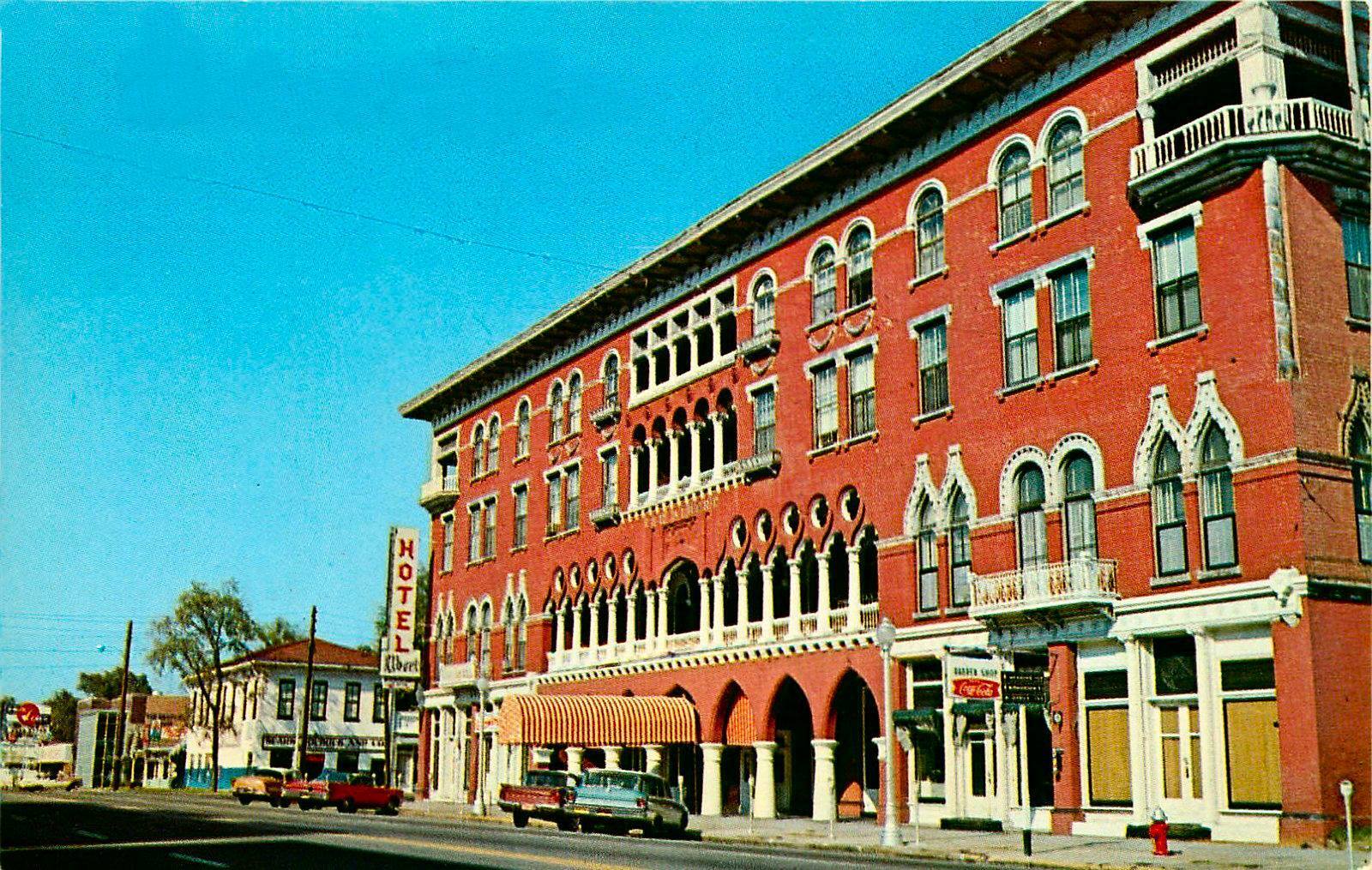
Well, hello to the end of another month. I for one welcome March, tornadoes and all: I am very ready for spring! This was an unusual month for me personally because I had no computer for most of it: mine abruptly stopped powering on after only a month and a half of use, and while it was under warranty getting free repairs meant mailing it off to California. That meant more time reading, though I also fell into a homesteading hole on YouTube and discovered a new-to-me favorite channel, Anne of All Trades. I was also interviewed for an hour over Selma history for some kind of documentary: I’m not sure what kind, but I’m happy to yak about the Hotel Albert or Benjamin Sterling Turner, even if on camera. (Fun fact, if you click that Hotel Albert link you can see a digital library I’ve been developing the last few months.) February was also black history month for all the kids, so the library has been overwhelmingly busy the last few weeks with kids doing poster projects and the like. (It’s still going today: I had five requests in fifteen minutes.) Whenever someone came in requesting Mae Jemison I made a point of mentioning she did a cameo on Star Trek and suggesting it would be fun to include a still from that. I also greatly enjoyed watching speeches from the Alliance for Responsible Citizenship, a compelling international conference that featured an interesting mix of religious leaders, historians, artists, scientists, journalists, etc. There were familiar personalities and authors there (Bishop Robert Barron, Mary Harrington, Niall Ferguson) as well as a lot of new names that I’ll be digging into. I must say, a conference that includes Coptic archbishops, country/folk singers, and charts about global energy sounds like my kind of party.

Science Survey:
The Ends of the Earth, Neil Shubin
Conversations with Carl Sagan, ed. Tom Head

New Acquisitions:
Cathedral, Forge, and Waterwheel. Technically this isn’t “new”: I read it back in November 2008, and count it as one of those books that altered my worldview, destroying the facile Victorian nonsense about the medieval era being one of intellectual stagnation.
Technopoly, Neil Postman. Another worldview-maker from 2008 that I want to revisit.
The Ends of the Earth, Neil Shubin. My only new purchase (the rest were used copies) and it was using gift card loot.
One No, Many Yeses, Paul Kingsnorth. Paul’s visits with people resisting…not globalization, per se, but something broader. Would be an interesting one to pair with Jihad vs McWorld, which I’ve meant to read for years.
Real England: The Battle against the Bland, Paul Kingsnorth. Will save for April and Read of England.

All of these save for Shubin are used paperbacks. I’m trying to heed Kingsnorth’s admonition that “matter matters“.

The Grand Tour:
Lisbon: War in the Shadows of the City of Light (Portugal)
The Mature Flâneur (Portugal)

I also read a third of Spain: Trials and Triumphs of a Modern European Country and am…figuring on continuing, but frankly it’s not all that interesting. It’s been more about party politics and less about culture, but I’ll keep pecking at it.

Coming up in March:

Lent begins March 5, and Opening Day is March 27: my baseball reading may start before that, though, since April is Read of England. I also plan to post a review today

Posted in General | Tagged | 4 Comments

Moviewatch: February 2025

My movie-watching buddy is going out of town this weekend, and I anticipate being wholly absorbed by The Sims 2 Legacy Edition Friday night, so I think I’ve watched my last movie for this month. Interestingly, all of my movies this month were watched with either my main cinema buddy or the ladyfriend (2).

FEBRUARY

Nights of Cabiriai, 1957.  An Italian lady of the night is thrown into a river and her money stolen by her last john – or should I say, her last giovanni?  – and nothing good happens. 

Blow Out, 1981. John Travolta is a sound engineer who accidentally records evidence of a politically explosive murder.  Thriller with a downer ending, but if you’re into ‘70s & ‘80s audiotech it’s promising. 

The Baader Meinhof Complex. 2008. Obnoxious young activists pretend to be socialists and steal and blow up stuff. Most of them get shot. Play stupid games, win stupid prizes.

The Illusionist, 2010. A beatiful but melancholy animated film, the screenplay of which was done by Jacques Tati (Mon Oncle), about a musician in the 1950s whose work is being supplanted by rock and roll and blockbuster movies. While performing in Scotland, he meets a young woman who has  a childlike wonder about his illusions and believes him to be a real magician she follows him as he pitches his tent in Edinburgh,  sleeping in the bed he rents while he makes do on the couch.  Her belief in him seems to give his career a little new life, but as time passes, they both ‘put away childish things”.  There is an amusing Mon Oncle cameo in the film. 

Saturday Night, 2024. A dramatization of the chaos leading to SNL’s first-ever episode. The cast is solid,  especially the guy playing Akyroyd who  was eerily good. 

Tammy and the Bachelor, 1957. A sheltered young woman who was raised by her granddad, Walter Brennan,    discovers the survivor of a plane wreck in the rver, and nurses him back to life.   She develops feelings for the man, Pete,, despite his being a bit older than her, and is crushed when he leaves. However, Walter Brennan is arrested for  bootlegging and tells her to go to Pete’s family house.  There she discovers him to be the scion of a wealthy southern family with a failing estate, which he is applying experimental farm techniques in hopes of reviving. 

Better Man, 2024.  A young boy with a talent for showmanship and a lust for fame achieves stardom by joining a boy band before setting out on his own, but his egoism and inner demons see him alienate his friends and get caught in a cycle of self-destructive drug abuse; his self-loathing and abusive behavior grow even as his fame does.  Said pop star is portrayed by an anthropomorphized chimpanzee because the real-life pop star whose story this is based on viewed himself as ‘less evolved’ than other people. 

Lunatic Farmer, 2025.  Part-biopic, part documentary about Joel Salatin’s Polyface Farms, which is organically and traditionally oriented. 

Silence of the Lambs, 1991.  An FBI trainee with a promising background is asked to profile a notorious serial killer and cannibal, only to realize she’s been sent in to convince said cannibal to help the FBI profile another serial killer currently at large.  Great character drama and thriller: I’m a Jodie Foster fan and enjoyed her West Virginia accent. It sounded like she’d worked on it. 

Pixote, 1980. This was described to me as “Oliver Twist, but set in Brazil”.   After a man is pushed into the street,  the police scoop up as many street kids as they can, including young Pixote:  from there we witness abuse after abuse, and Pixote become ever more drawn into violence. This is an odd film to describe: as drama it was extremely successful, but it was a horrific film to watch.

Posted in General | Tagged | 4 Comments

Short rounds: politics!

As mentioned yesterday I’m feeling burnt out between all the serious stuff I’ve been binging, global affairs, and ongoing drama with my computer (it was finally repaired and sent back from the manufacturer, but arrived in such a state that I had to take it to a local shop to be re-repaired), and really can’t get into review mode at the moment. However, I’m doing well on my goal of not leaving any books unreviewed this year and want that to continue, so here goes.

In The Return of Great Powers, CNN reporter Jim Sciutto reviews the outbreak of the Ukrainian war and the prospects of a Chinese invasion of Taiwan. These are not as unrelated as a casual reader might suppose, as both Russia and China have been growing in confidence and assertiveness in the last fifteen years, increasingly willing to test the rules of the international order in pursuit of their own national interests. Here Sciutto covers the first two and a half years of the war in Ukraine, as well as developments on the Chinese side that indicate they’re maintaining high interest in taking Taiwan. Despite the fact that most war models show devastation on both sides with no actual conquest of Taiwan, China continues to design its war machine around neutralizing American advantages. Unlike Ukraine, writes Sciutto, there is more than American honor and lives at stake with defending Taiwan, which plays a vital role in the manufacturer of silicon chips and other important components Of the Ukraine war, Sciutto remarks that it’s an interesting mix of 21st century tech and early 20th century attrition. Most of the text is Sciutto interviewing officials and working their remarks into a general narrative, and he follows the same general line of thought (or non-thought) that one gets from the media at large, like confusing non-interventionism with isolationism. One unintentionally funny line was Zelensky, in late January 2022, huffily responding to the Biden administration and telling them that he lived in Ukraine and knew more of what was going on after they warned about sustained and rising Russian militarization.

One No, Many Yeses is a much different work, featuring a much different Paul Kingsnorth than I’m used to. While the Kingsnorth I read is mystical and more interested in compost than politics, this Kingsnorth is twenty years younger and still in set-the-world-on-fire mode. The book chronicles his global journeys tracking the “Global Resistance Movement”, which is not as unified as its name suggests; it is instead a blanket label thrown over a host of similarly-inspired but distinct reactions to the disruption of local societies by globalization. These disruptions not only changed local culture and economies, to the detriment of those protesting, but changed the balance of power so that more power shifted from people in their everyday lives to politicians and financial potentates ruling over the masses, managing and moving them around in the name of their best welfare and the common good. Although Paul originally began hanging out with people like the zapatistas out of solidarity for their protests against the nature-devouring global hegemon, he admits later in the book that he discovered that the protesters’ deep local connections — the way they lived deep within a culture, were vital members of it, could not conceive of themselves outside a culture that was itself wedded to the land around them — was far more intoxicating. Although twenty years old, the ongoing rise of populism — now rising in long-developed countries — testifies to its enduring reference, especially the contempt for bureaucratic grandees in isolated power centers running roughshod over the lives of ordinary people.

Posted in history, Politics and Civic Interest, Reviews, World Affairs | Tagged , , , , , | 1 Comment

WWWednesday + Favorite Hobby Prompt

Today’s prompt from Long and Short Reviews is “What is your favorite hobby and why?” But first, WWWednesday!

WHAT have you finished recently? Both Return of the Great Powers and One No, Many Yeses, late last week.

WHAT are you reading now? The Last Tsar and the Selma architectural book. The problem with the architectural book is that — being the local history librarian — I keep wanting to research stuff it brings up. I also started The Half-Blood Heir, some historical fiction by Andrew Wareham, for a more ‘fun’ read. It’s about a major at the end of the Napoleonic wars who is struggling to figure out a path forward in peacetime receiving a letter that tells him, “Harry, yer a gen’l’man”.

WHAT are you reading next? ….something fun/relaxing. The only fiction I’ve done this month was 1984. I had started The End of the World is Just the Beginning, on the consequences for the ‘rules-based-international-order- as Americans are less and less interested in being the global sheriff in town, but I’m feeling burnt out at the moment; I can’t even stir myself to short-round the two books I mentioned above.

So, favorite hobby? That’s hard to say: there’s reading and writing, of course, but I do that constantly so I don’t know if it’s a hobby so much as a state of being. Before my ankle injury, walking and hiking were favorite ways to spend the weekend, and I’m also a raging shutterbug.

Posted in General | 13 Comments

Teaser Tuesday

Today’s TTT is favorite books set in another time, but I read entirely too much historical fiction to want to pore through and pick favorites.

I sat facing a flowering bougainvillea that covered the terrace, a shower
of pink blossoms on the ground next to it. After just a few seconds, I had
the impulse to take pictures with my phone. Hand in pocket, I stopped
myself. Was I even really seeing the flowers? Was I going to take a picture
so that I could look at the flowers later? When we click a photo, don’t we
mentally move on to the next thing? As if we are speed-dating reality, like
constantly swiping left on some dating app? Instead of click and move on,
why not just hang out with whatever strikes us as beautiful, then later,
remember the feeling? So, I kept my phone in my pocket, settled in and just
enjoyed the flowers. (The Mature Flaneur)

This quote stood out to me because it reminds me so much of Erich Fromm’s To Have or to Be, or his essay in For the Love of Life, where he wrote about the consumer/possessive impulse and how it often leads us to destroy things to own them. His example was actually a plucked flower, which is why it comes to mind with this. Freya India also writes on this a bit in her “You Don’t Need to Document Everything“.

Posted in General | Tagged , | 7 Comments

The Mature Flâneur

While rooting around for books for The Grand Tour, I spotted ‘flâneur’ and immediately went for the bait. I know this word from back in 2012 when I was an ardent Francophile and was reading books like French Women Don’t Get Fat and French Kids Eat Everything. It’s a beautiful word, meaning to meander or stroll through a city without intention, merely walking and observing and letting the life of the city take you where it will. For some reason I thought the author was going to flâner from Lisbon to Norway — i.e. walk — but that’s not the case. This is more of a travel memoir with frequent tangents — and that’s the point, since part of the attraction of flâneuring about is to be open to unexpected discoveries. After leaving Lisbon and Paris, though, there is very little strolling going on: there are instead train rides, EV treks to the Artic, and even kayaking. As Ward and his wife explore Lisbon, the Alps, etc, the reader is treated to all kinds of interesting sidetrails: rebellious art in Paris that resulted in an explosion of buildings decorated by female nudes; a library in Porto that inspired JK Rowling; the role of Wild Men in Europe’s mythology; the history and culture of the Sami people, who range across Scandinavia but who are treated most justly in Norway, etc. Portugal has a larger presence than any other country, bookending the collection of tales: this possible owes to Ward’s Portuguese wife, or perhaps his fondness for Portuguese vino. (I was surprised and amused to learn that ninety percent of European grapes are grafted on to American rootstocks because of aphid protection. That must be so very difficult for the French to live with.) It’s an entertaining read, for the most part, and interesting: Ward isn’t visiting the usual tourist spots in Europe, but rather pointing out strange and wonderful things he finds off the beaten track. It was nice bit of vicarious wandering, unpredictable and varied.

When we checked into our hotel, the Funken Lodge (more swanky than
funky), we were given the polar bear briefing by a cheerful young Irish
woman named Lisa. She told us bears only wander inside the town itself a
couple of times a year. “So, if you see a bear, immediately run into the
closest house or car. Everyone in town is very trusting, and no one locks
their doors,” she said with a smile.

It’s because of these early graves that it is now illegal to die in Svalbard.

Posted in Reviews | Tagged , , , , , , | 4 Comments