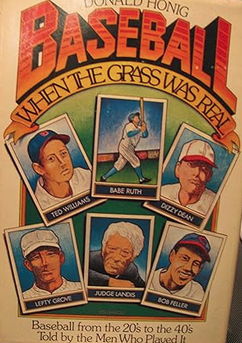
One of my favorite reads from last year was more of a listen:The Glory of their Times, featuring audio of old-time ballplayers telling stories from the early days of baseball. Baseball When the Grass was Real is a pseudo-sequel to that, featuring oral histories from the 1930s & 1940s. albeit with a different author. Donald Honig floated the idea to Lawrence Ritter, but the Glory author wasn’t up for another project of such ambition. Although this audio book doesn’t have the actual recordings of these men talking, its narrator Stephen McLaughlin has a good range of accents, voices, cadences, etc and delivers an enjoyable experience. Honig’s selection of players offers more range than Ritter’s original, including stories from players in the Negro Leagues as well as the perspective of scouts and umpires. While none of the subjects are household names the way Gehrig or Williams might be, larger-than-life players often appear in the stories. We experience Branch Rickey’s first meeting with Jackie Robinson, and the subsequent partnership they worked out to break the color wall in pro ball, through the eyes of one of Rickey’s scouts who had been told to investigate Robinson’s prospect and was caught completely by surprise when he heard Rickey’s pitch. (He thought Rickey was planning to create his own Negro League team and wanted a pivotal shortstop!) Ernest Hemingway also makes a splash, getting drunk with a few ballplayers, challenging one to a besotted boxing match that destroys his living room, and then challenges the man to a duel at dawn. Swords or pistols, his pick! (Hemingway recanted the idea in the morning….) There’s a lot of like in this collection, assuming you enjoy listening to ball players talk about their youth – and as one wryly commented, “The older you get, the better you ‘were’”. One thing that leapt out to me was that the Cardinals have evidently always had a strong farm system, and they used it sneaky, too: one player revealed that not only had the Cards been watching him since elementary school, when he attended public tryouts where they were present, they immediately cut him on day one so that no other scouts could eyeball him and realize his strengths. Instead, they approached him at home with a deal. Quite enjoyable collection of memoirs!
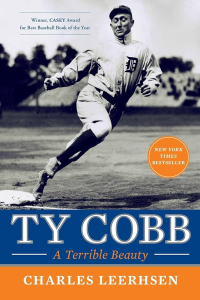
I’ve known the name Ty Cobb since I was a kid: baseball is an anomaly in that it’s the only sport I’ve ever cared enough to read about, both as a boy and now in my dotage. I encountered Cobb early, along with Cy Young and Babe Ruth, and I think his status as a Georgia boy locked him in as a favorite, despite – or perhaps because of – his pugnaciousness. A researcher doesn’t have to dip very far into papers to find Cobb getting into fights on the field, or going into Achilles-in-his-tent mode because of some foolish act on his manager’s part. Whatever his flaws, though, in the latter half of the 20th century Cobb was turned by the popular ‘mind’ and mythmaking sportswriters into an absolute monster – a literal killer, a vicious racist who couldn’t see a black man on the street without flying into a murderous rage, a man who filed his spikes and separated fielders from their limbs every game. Although Cobb’s short temper had already resulted in a Cobbiracture in his own lifetime, his infamy today largely owes to the lies, damned lies, and half-truths invented and perpetuated by Al Schmuck, a third-string sportswriter who was haphazardly assigned to help Cobb compose his memoirs in his dying days. Ty Cobb: A Terrible Beauty is both a full appraisal of the real man – his virtues and vices – and a long-overdue takedown of Schmuck’s literary dribblings.
Ty Cobb is a legend in baseball history, the first man to be inaugurated into the Baseball Hall of Fame – by near-unanimous decision. He was also one of the first baseball players to become a media personality – a celebrity, in other words, and navigating that novel challenge would mark his early career. Cobb was born in rural Georgia, and was neither a redneck nor a patrician, though arguably closer to the latter. His mother’s “people” owned land, and his father was very respectable middle-class, active in the newspaper business as well as state and local politics. Young “Tyrus” was obsessed with baseball and already possessed a wicked temper at an early age, and when he began pursuing professional ball in nearby Royston, it was largely because his father was tired of arguing with him about it and figured a season of that life would get the bug out of his system. Instead, Cobb’s obsession and energy opened a door to the Detroit Tigers, where he would play ball for the majority of his professional career.
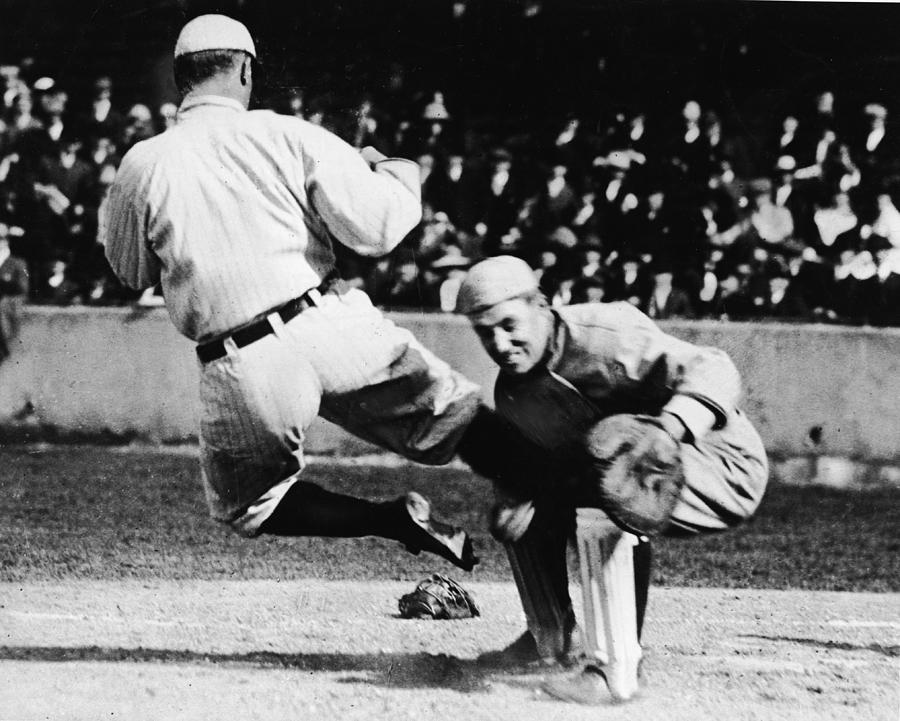
Key to understanding Cobb’s approach to baseball, and his success in the ‘field’ (so to speak), is that he played during the ‘dead ball’ era where homers were oddities and the mainstay was ‘inside baseball’. Not only were the balls themselves constructed differently from later Spaldings – with rubber cores and looser strings – but there were far fewer rules applied to them. Balls got dirty, soft, and unpredictable – and they were used for most of the game, unlike today when over a hundred balls a game are discarded – usually, given to fans. Most of the action took place in the infield, and psychology and strategy played larger roles than Babe and Ted Williams swinging for the fences. Cobb excelled at this aspect of the game, using his natural aggression to create ‘mental hazard’ for the opposition. (One wonders if he ever had Nathan Bedford Forrest’s “put the skeer in `em” in mind.) One author likened Cobb to compressed steam: he was always writhing, pushing, scheming. The pushing is literal: he used to give the plate-bags little kicks to aid and abet his base-stealing, scooching them closer to the next base.) Cobb resented references to ‘natural talent’: his success in baseball owed to constant work and thought. When he began with the Tigers, the other players showed up drunk or hungover: Cobb spent his evenings reading and thinking – thinking about how to use other fielders’ reflexes against them. Although the threat of physical aggression was certainly part of creating ‘mental hazard’, Leehrsen writes that Cobb’s variety of base slides were largely oriented towards avoiding contact with the baseman. This wasn’t because Cobb didn’t want to hurt anyone (his quick fuse and frequent fighting put the lie to that!) but because avoiding contact was the obvious way to avoid being tagged out. The famous photo that portrays Cobb evidently sliding into base with his legs poised to deliver a groin kick to the unhappy fielder is a quirk of perspective: in reality, the baseman offered, Cobb was kicking the ball out of his hand. (The two immediately got into a fight and were both fined.)
Although Cobb’s reputation for violence was definitely not unwarranted — whatever quick temper he had was made far worse by the prolonged and aggressive hazing he was subjected to during his second year on the Tigers — he was not the monster the newsmen made of him in his own lifetime, let alone after he died and his legacy was left undefended against the manipulations of opportunistic hacks like Schmuck. In the TV show I’ve Got A Secret, contestants kid Cobb about sharpening his spikes, which he takes with the face of a man who has heard this a thousand times before. Cobb said in interviews that his cleats hit other players maybe three times in his career, and he’s on record as advocating for officials to inspect players’ spikes prior to games. A lot of stories about Cobb’s violence — including three homocides — are completely made up, or in the case of his confrontations with hotel staff, deliberately given racially charged light. If Cobb were the violent racist he was alleged to be, it seems strange that he was a vocal advocate for integrating the major leagues, attended Negro League ballgames, and had such a warm relationship with his black valet that the man named his child after Cobb. Although I knew a bit about Cobb’s life — broad outlines, anyway — I appreciated the amount of non-baseball information here, including Cobb’s active reading life. He always appeared to be in the middle of two books, with a special fondness for titles about Napoleon, and even though he was concerned reading would ruin his eyes, he couldn’t keep himself away from the page. There were a lot of suprises, like how when Cobb was just starting out with the Tigers, how he would spend the offseason performing on stage. Evidently, his psych-out tactics in the ballpark had some dramatic roots that flowered differently on the stage.
Although Ty Cobb is the star here, A Terrible Beauty frequently mentions the exaggerations and outright fabrications of Al Schmuck, who Doubleday picked to assist the aging and dying Cobb in creating his memoirs. What Doubleday didn’t know, or ignored, was the fact that Schmuck was such a lazy and sloppy writer that several institutions — including the Readers’ Digest — would refuse his pieces outright. Schmuck’s books are riddled with factual inaccuracies, some so significant that one wonders how he had the gall to call himself a sportswriter. A Terrible Beauty is a direct attack on Schmuck, who Leehrsen began doubting slightly and wound up holding in contempt by the time he’d fully dove into the Cobb story. The only deep dive Schmuck did in relation to Cobb, he writes, was raiding the back of the man’s liquor cabinet.
I’ve been wanting to get to this biography ever since I watched the entertaining-if-libelous Cobb movie starring Tommy Lee Jones, and am glad I finally got to dive into it. I already appreciated Cobb as a ballplayer, but Leehrsen’s research offered a view of a complex and interesting man, one who had his shortcomings but is inspirational in his obsession for excellence.
Cobb was learning something about himself that spring: […] he was the kind of person who would rather have the wind in his face than at his back. ‘I LIKE opposition’, he would observe years later. The many extra challenges he endure that spring and beyond seemed to help bolster his will and focus his mind. His great talent was not blocking out adversity, but letting it come through unfiltered and turning it into fuel. As Cobb’s historical figure, Napoleon Bonaparte,said:’Adversity is the midwife of genius.’ When Connie Mack once put it another way: ‘Don’t get Cobb mad.’ Anger made him better. [..] In this way he made his enemies, and his worries, complicit in his quest for greatness. Whatever did not kill Cobb would make him a .350 hitter — and in some years a .400 one.
WHAT have you finished reading recently? I just finished reading Ty Cobb: A Terrible Beauty, and a review will go live at 11 AM today.
WHAT are you reading now? I’m halfway through Fenway 1912, a history of the Red Sox’s first year in their new stadium. I’m also closing in on the final hour of Baseball when the Grass Was Real, an oral history of baseball in the 1930s & 1940s.
WHAT are you reading next?
Join us next week and we’ll find out together!
And now, this week’s prompt from Long and Short Videos: our favorite TV shows and why. Hmm, boy. This…..is going to be difficult.
(1) Boy Meets World. I grew up with this show. I lived vicariously through Cory, Shawn, and Topanga. William Daniels is my inner-ideal for mentor.
(2) Star Trek Deep Space Nine. My first experience with Star Trek was the original from the 1960s, which I experienced in a hospital room in the early 1990s. After the hospital I could only experience Star Trek intermittently, in weird ways: I’d watch VHS tapes or motel room episodes, or novels. It wasn’t until Deep Space Nine that I got to experience Star Trek properly. Perhaps that explains my long attachment to it, but it helps that DS9 was a wholly different show from any Trek before or since: focused on a community and character drama, rather than the Thing of the Week. Deep Space Nine was not merely entertainment. It was provoking and serious. There’s a reason my Star Trek merch is divided 2/3rds between DS9 stuff and Strange New Worlds stuff. (SNW is the third.)
Deep Space Nine is also responsible for me discovering Frank Sinatra and swing music in general.
(3) Home Improvement. I absolutely loved Tim Allen in this, and to this day I have to stop myself from yelling “DOES ANYONE KNOW WHAT TIME IT IS?” when the library is about to close. Agh, agh, agh.
(4) How I Met Your Mother. As a Millennial, this was my Friends.
“LEGEND — and I hope you’re not lactose intolerant because the last part of that word is DAIRY. LEGENDARY, TED!”
(5) The Sopranos.
Whatevah happened to Gary Coopah? The strong, silent type? THAT was an American.
In the early 2000s, I became interested in The Mafia. Once I started working, I started renting Sopranoes VHS tapes and DVDs. It took me ten years to finish the series, but ever since then it’s been playing on auto-repeat in my head. The acting in this show was incredible by itself, but the writing! Madonne!
(6) Little Mosque on the Prairie. This early WoT Canadian comedy focused on a Muslim community in the middle of the Canadian prairies. It’s a bit like Vicar of Dibley in being a “small town religious comedy”, but the main characters are actually religious and not Anglicans. Wonderful characters. I’m rewatching it for the 3rd or 4th time, this time with the ladyfriend. I began watching…um, unofficial versions of this on YT as it aired and bought all the DVD sets.
(there are almost no clip compilations for LMOP on youtube)
WARNING: This review contains a prominent spoiler for Three Inch Teeth and Shadows Reel. Proceed with caution, pilgrim.
“See what happens when good people spend too much time around you? They kidnap their local sheriff.”
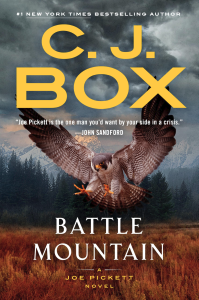
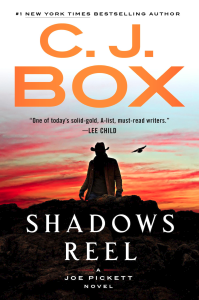
Joe Pickett and Nate Romanowski are both wounded men, having come close to losing all that was dearest to them at the hands of a sociopath, Dallas Cates, who in prison teamed up with a former covert operator for DC who has now turned his skills and cruelty against the government itself. Nate in particular has lost his wife and business partner, Liv, and abandoned his daughter Kestrel to the Picketts’ care so he can regain his ferality and wreck revenge on Dallas’ partner in evil, Axel Soledad. Nate and Geronimo thought they’d killed him in an alley fight, but evidently not: he’s still alive if not kicking, and actively planning on wiping out a large contingent of government officials and military-industrial leaders who are gathering for an annual “let’s pretend to be cowboys” conference in remote northern Wyoming. Joe has just been asked by the governor to go looking for a missing outfitter in those very parts, a man whose assistant happens to be the governor’s son-in-law – and whose disappearance the governor would prefer to keep under his hat for the moment. Joe and Nate’s paths will undoubtedly converge on Battle Mountain, but trouble is also waiting for them at home – and Sheridan will get her chance to shine.
I approached Battle Mountain with a little wariness, in part because Axel Soledad is a troublesome antagonist, sometimes very hatably effective and sometimes overused, especially the way he reliably gins up mooks from the ranks of college kids who like larping as activist and want to take down the system, man. I realize college kids can be naive even in their cynicism, but given how many allies Soledad betrays or abandons at some point you’d think some word of mouth would start hampering his recruiting ability. (There’s also the fact, of course, that now I have to wait an entire year for another Joe story after my two-month drive through two and a half decades of them.) Adding enormously to the tension is the fact that Soledad’s greater organization has a lot of shadow operators, including the sheriff in Saddlestring who threatens Mary-Beth and Kestrel. There’s also a possibly rogue FBI agent roaming around, one who claims to be on Joe and Nate’s side – but neither would trust a goonie boy any further than Kestrel could throw them. (If Nate were to throw a goonie boy, I’m pretty sure it would be off the side of a cliff and the goon in question would go pretty far.) This was almost all straight action, and had a great climax.
Today’s TTT is authors who live in my state/region! But first, a tease:
Hit `em where they ain’t, run when you really shouldn’t, keep going when you ought to stop. It was the modern age and his game was the baseball equivalent of modern art. It was at once a dramatic break from the past and a comment on it. It made people nervous. His game looked ugly until it looked bold and smart. (TY COBB: A TERRIBLE BEAUTY)
Please excuse my Publisher abomination
(1) Kathryn Tucker Windham. I have to begin with KTW because she’s a legend in Alabama and especially in Selma. KTW moved to the Selma area from Wilcox County in the 1970s, I believe, working as a journalist. She was a pioneer in that, and one of her books — Odd Egg Editor— has some of her early writing, as being both “The Girl” and “The New Kid”, she got only the scraps of news leads. She had a delight in folklore and oral history, and became famous for her collections of southern ghost stories. I had the good fortune to listen to her telling stories at Old Cahawba (Alabama’s first capital and now ghost town) as a kid, and plowed through all of her ghost stories. She also volunteered at the library after she retired from journalism, and was responsible for creating the Annual Tale-Tellers Festival in Selma, which features gifted storytellers. I’ve laughed myself sick every time I’ve gone.
(2) Rick Bragg. Bragg is one of Alabama’s most-read living authors, and like KTW began in journalism. Bragg is most known for his trilogy about growing up in Alabama’s northern counties, creating books that are both tragic and hilarious. My introduction to him was his The Best Cook in the World.
“I remember this time, up in Rich Bundrum’s barn loft, we found this case of dynamite,” Jack said, and then he paused and shook his head, as if realizing now what he should have then: that there are no good endings to stories that begin with ‘we found this case of dynamite’.
Beyond his family trilogy, Bragg has also released several collections of his newspaper columns, as well as other works.
(3) Harper Lee. Harper Lee isfamous for To Kill a Mockingbird, so I won’t go into any details. She comes from a small town called Monroeville, which — because it was also the home of Truman Capote, her friend — styles itself the Literary Capital of Alabama.
(4) Truman Capote. I have not read Capote’s most famous work, In Cold Blood, but I can’t mention his friendship with Harper Lee and not mention him, can I? I did read his Breakfast at Tiffany’s.
(5) Wayne Flynt. Also in Harper Lee’s company is Alabama historian Wayne Flynt, whom I’ve had the pleasure of talking to on several occasions when he has given booktalks at the library. In addition to formal histories about Alabama or its working poor, he’s also done a couple of books on his relationship with Harper Lee.
(6) Eugene Sledge, aka The Sledgehammer. Gene Sledge’s memoir about World War 2, With the Old Breed, was part of the inspiration for HBO’s The Pacific. Sledge later taught biology at the University of Montevallo.
(7) John Sledge. John is Gene’s son, and has written numerous histories relating to Mobile, as well as a general history of Alabama in the Civil War.
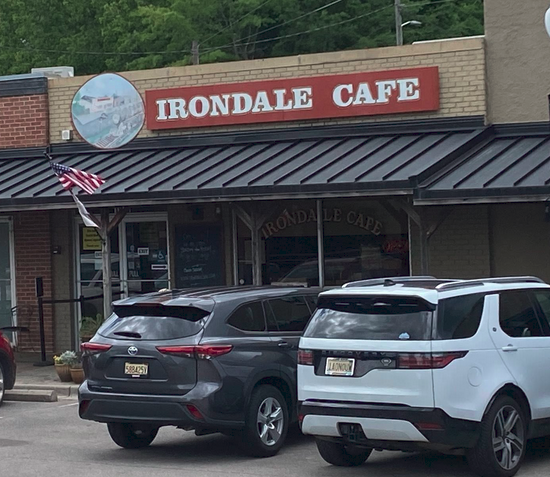
(8) Fannie Flagg. Flagg wrote Fried Green Tomatoes at the Whistlestop Cafe, made more famous by a movie. The cafe was based on one operated by two women in Irondale, Alabama, and it still stands: I was there just on Sunday!
(9) Sean Dietrich isn’t really from Alabama, but we’ve adopted him as ours. “Sean of the South” writes a daily column and substack that’s chiefly human interest/humor/chicken soup for the soul kind of stuff, and has also penned several novels, all of which I’ve loved.
(10) Winston Groom. I’m not sure how eager we should be to claim this one, but the author of Forrest Gump is ours. I read this back in high school back when someone on the football team discovered that “Forrest Gump is a DIRTY book” and …well, at least half the class read it to find out how different it was from the movie. I don’t remember much, but I also read the sequel in which Forrest creates New Coke.
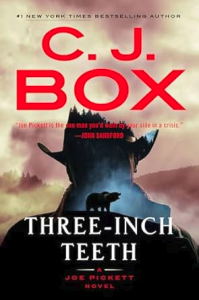
Joe Pickett’s future son-in-law just got eaten by a bear. Granted, like most men Joe was a little wary about idea of son-in-laws in general, but Sheridan was fond of the boy and he’d rather no one get eaten by bears, especially his daughter’s friends. Unfortunately, as game warden it gives him a work problem as well as a dad problem: now he has to call in the Predator Attack Team to hunt down this beast with an appetite for human blood, and even as far as grizzlies go, this one is a proper terror, with multiple attacks being reported. While Joe is stealing into the woods hoping the last thing he hears is not the 30-mph rush of a grizzly coming to make him a Sloppy Joe sandwich, an even worse predator is released into the wild. Dallas Cates, the sociopathic rodeo star who beat Joe’s daughter and left her for dead, the man who had planned to torture Joe by killing his family one by one, is again free from prison – and he’s meaner and even more amoral than ever. He’s intent on revenge, and plans on using the grizzly attacks to mask his attacks on a list of six people he blames for ruining his and his family’s life – a list that includes both Joe and Nate Romanowski. (Imagine the stupidity of trying to kill Nate Romanowski!) This novel deftly mixes game warden business with the crime/action thrillers, since Joe’s family has been left in the dark about Dallas being released: they have no idea the savage is on the loose, but Joe’s experience with grizzlies and bears in general has him baffled at the string of bear attacks. To paraphrase him, there’s either bears working in concert, a bear with magic powers, or something else entirely going on. As it happens, it’s something else entirely. As with other intense personal fights to the death, there is blood paid for the resolution, but it’s effective all the way down to the end.
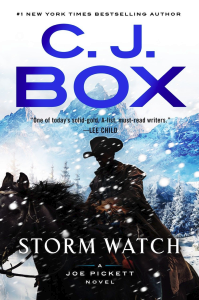
While out and about doing Game Warden-type things, Joe Pickett notices something odd. There’s a movable building of some sort hidden away on a ranch property, and a man who appears to be stuck with his head in the window. When Joe approaches to see what sort of mischief is being carried out here, he realizes to his horror that the window is a fan, and the man’s upper body has been shoved into it. When he calls it in to the property owner, the man can’t seem to decide whether he’s more outraged over a trespasser, or tight-lipped about the utility of the building. At the same time, a bad winter blizzard is moving in, and there’s not much that can be done. There’s an air of mystery around the body, one that thickens with the snow as the sheriff and governor both tell Joe to lay off and mind his business – and the man proves to be a Chinese national who was teaching at the University of Wyoming. At the same time, Nate Romanowski, everybody’s favorite falconer and libertarian crank, is approached by a man who intimates he’d like Nate to join him in a little conspiracy-type thing with fellow-minded men. Unfortunately for Mystery Man, Nate hasn’t survived as long or as much as he has by being a gullible naif. Improbably, these stories converge into a fairly wild story that involves geopolitics and Chinese conspiracies. While the premise of this one bordered on far fetched, the delivery was solid as usual, and I continue to like Sheridan’s increasing presence in the novels: unlike April and Lucy, at this point she’s more of an actor than supporting cast.
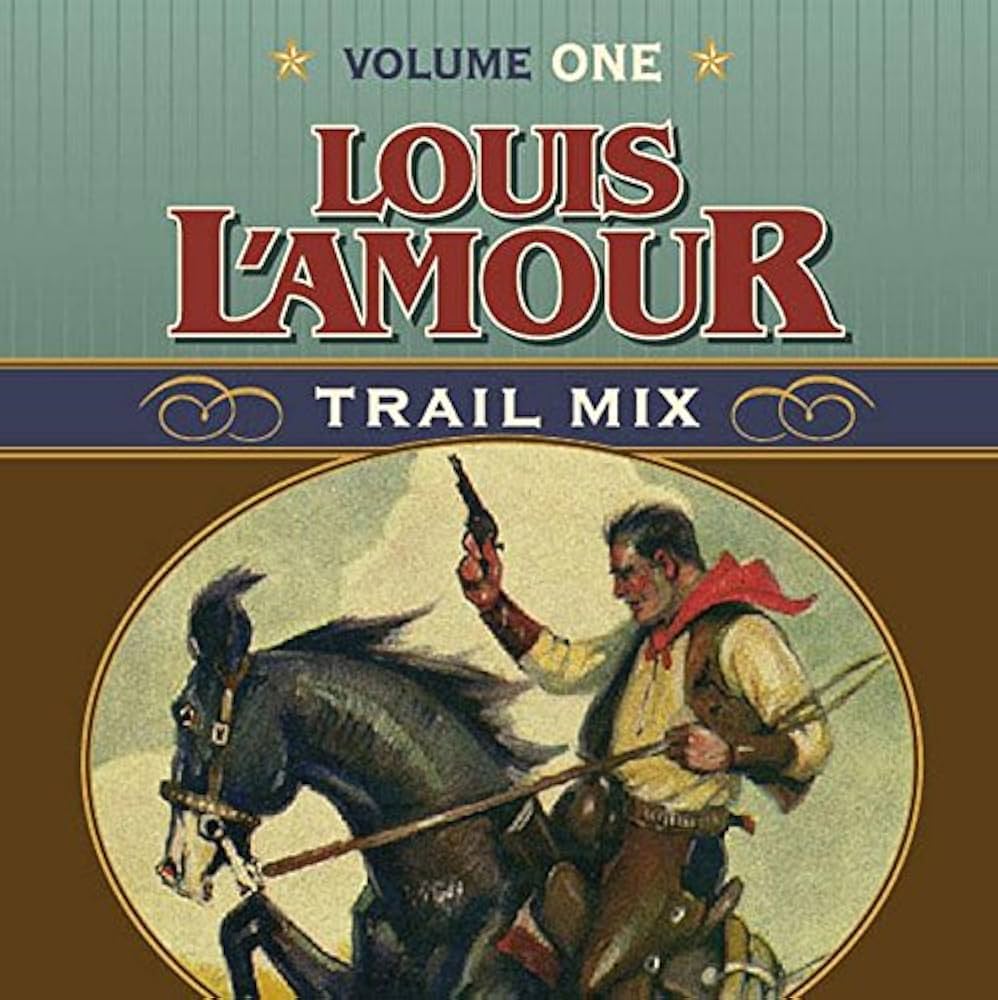
I’m going to short-round a bunch of Paul Doiron books and just comment on them in general, since the quality is fairly consistent from book to book. But first, on Willie Nelson’s birthday, I searched his name in Audible just to see what was there, and to my delight saw that he’d not only narrated a few Louis L’Amour short stories, he’d been joined by Johnny Cash and Kris Kristofferson. The Highwaymen! Nelson and Cash doing a western would have been amazing alone, but together? Wow. The first volume of “Trail Mix” was only a few hours long, and I listened with delight while playing..er, Stardew Valley. (There’s some mood whiplash for you.) The Audible presentation is more of an audio drama, since not only are there multple voice actors, but there are direct and ambient sound effects, so the listener is hearing the rumble of hooves, dogs barking outside a ranch, etc. The Highwaymen don’t appear in full on all of the short stories, though they are in the first and longest one, “Riding for the Brand”. Here, a man named Jed Ashbury assumes the identity of a murdered heir to a ranch to protect it from the man whose men committed the murder. Although the ranch’s people (we learn later ) have an idea that this vigorous outsider is not, in fact, the young heir, he’s such a good man and boss that they prefer his well-intended deceit to the villain of the piece. In another, a group of six men travel the plains to get vengeance on a man who killed one of their own in a bar brawl, and are outraged by the fact that their pursuee seems to be playing with them — preparing campsites for them to use, in fact! When they crest the ridge, they realize things are not what they seem. Willie Nelson has a great voice for reading westerns.
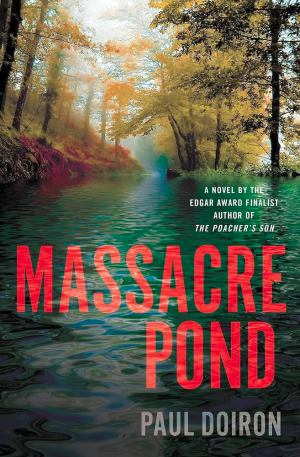
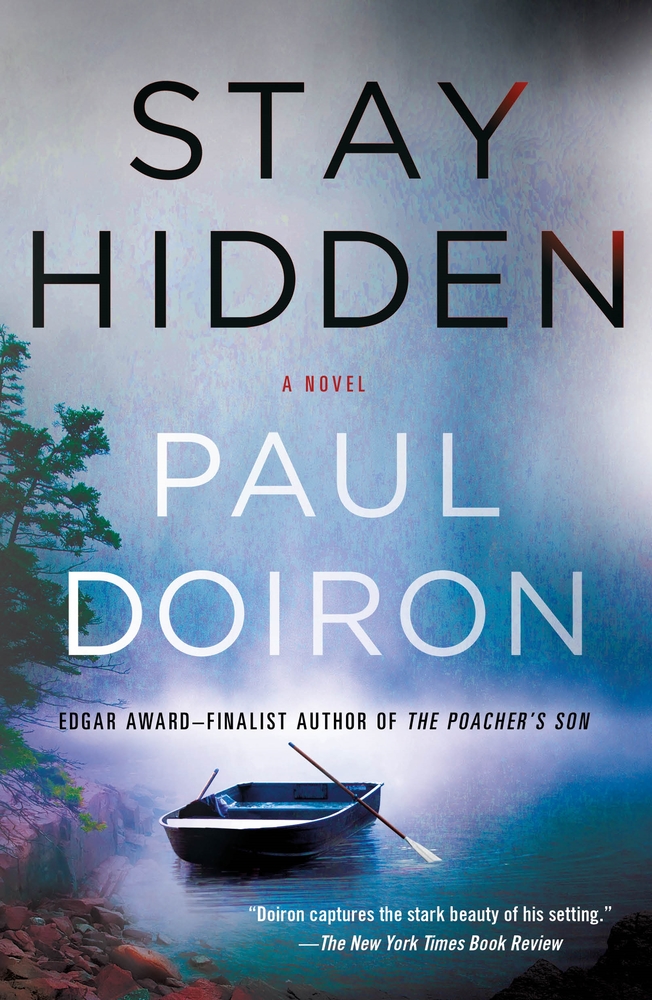
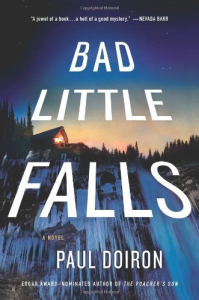
And now, for a few Paul Doiron short rounds! I should note these are not order of publication. My library doesn’t have all of his books, so some I’m getting in the library, some via ebook etc. I’m approaching the end of what’s available to me, so aside from a few posts next week this will probably be it. Paul Doiron’s game warden books are set in Maine, which is not a state I knew much about beyond it being a bunch of woods and mountains perilously close to Canada. While I found this via the warden connection to my Joe Pickett obsession of the last two months, they’re very different series: Doiron keeps things much more closely grounded to game warden business, with nary a Mexican cartel or government conspiracy to be had. Despite that, there’s no lack of interest, and in fact I’ve enjoyed the more character-focused storytelling. Mitch is no Joe Pickett: while they both came from an unstable familial background, Mitch begins the series younger than Joe and has a lot of growing up to to, evidence by a series of poor decisions like sleeping with the sister of a murder suspect, or pursuing law and order while under the influence of painkillers and whiskey. He does, however, mature. Although I mentioned in The Poacher’s Son that the Maine setting wasn’t as interesting to me as Wyoming, it has grown on me because of some of the later books I’ve read — one of which used islands and fog to superb dramatic effect, and another of which had Mitch commenting on different types of now and making the stuff come alive for me in a way I wouldn’t think possible, given that my only experience with snow involves weekend dustings that melt within 24 hours.
Game Warden Mike Bowditch just got a call about some dead moose on a lady’s property. Moose is a confusing word: it can be singular or plural. In this case, it’s plural. Four dead moose, an entire family. A dead moose is something, but four dead moose is a real inconvenience. When Mike arrives at the scene, he realizes that someone has shot these moose not for meat, but purely for the joy of killing – or for spite. It turns out there are ten dead moose on the property, and the property in question is owned by a woman who bought up half the county with the intention of turning it into a national park – loggers, hunters, and recreationists be damned. Although Mike is first on the scene, his local lieutenant is not a fan of this whippersnapper who keeps getting himself involved in murder investigations and decides to relegate him to the sidelines. Fortunately, that keeps Mike from getting stuck on the railroad the LT and his investigator pursue – down the wrong track. The property owner decides to use Mike as her liaison to the investigators, since she witnesses the slight acrimony between him and the lead investigator and suspects Mike will be more straightforward than diplomatic with her. Whoever killed the moose isn’t satisfied, though: not only is the woman’s lakeside home sprayed with gunfire, but her young daughter is frequently harassed. This book demonstrates Mike’s ability to bond with people who are not his supervisors, as well as his inability to let go of something that’s bugging him — rather like Joe Pickett!
Game Warden Mike Bowditch just got a call about a young woman striking a deer. When he arrives at the scene, he finds blood – but no deer, and no woman. Although he does due diligence and searches the site for clues, it’s a miserable night and he doesn’t resist it when a state trooper arrives and orders him to shove off. (Having a cop-killing father does not make someone especially popular with other LEOs.) The mystery continues to haunt Mike, though: something about it seems sketchy as hell, nevermind the state trooper’s assertion that the woman must have called for a friend to pick her up and fled the scene. He keeps getting in trouble with his superiors for butting in to areas where he’s not wanted — he’s a game warden, not a detective — but his momentary lapse in pursuing his gut is something he’ll regret all book long, as the missing woman is eventually discovered brutally murdered, in ways that recall another murder a few years before.
Two recent college grads, a pair of young women, have gone missing on the Appalachian Trail. Game Warden Mike Bowditch and his kinda-sorta girlfriend Stacey (the daughter of his mentor, that’s not weird or anything) are both called in to help with the search. This area of the AT is particularly treacherous, with narrow trails along rims that lead directly into the drink, and the increasing rumor of aggressive coyote activity. It’s also peopled by some odd characters, like an intense and unfriendly man named Nissen who holds the record for fast-trekking the AT. Although everyone’s nerves are on edge from the prospect of finding two dead students, Stacey is especially erratic and disappears halfway through the story to pursue her own lead, effectively ghosting Mike and causing both him and her retired warden father no end of worry. With multiple suspects emerging, this one is a thriller to the end.
A bayou bistro in the North Woods? The idea wasn’t so far out. The Appalachian Trail serves as a natural conduit for southern culture to the wilds of New England. And Mainers have a deep love of country music, which always surprises visitors who expect—I don’t know—sea chanteys. The way I had always thought of it was that we were just hillbillies with a different accent.
Of the Mike Bowditch novels I’ve yet read, Stay Hidden is fairly easily my favorite. Its one of the later ones, when Mike’s habit of putting his nose too far into the case has been recognized as a talent rather than a nusiance: he’s been promoted to warden-investigator, and this is his first case. It’s set on an island off of Maine, rather than maineland proper (yuk yuk yuk yuk): the island is rather insular, referring to the continent as America, and dominated by two families. A visiting tourist, a writer-in-residence, has gotten herself shot while hanging white laundry too close to the treeline during deer season. (The predominant American deer is the whitetail, which ‘flags’ when it’s on the run.) The case should be pretty open and shut: take the statement of the kid who said he accidentally shot her and see what the prosecutors have to say. Only, when Mike arrives, everyone on the island has changed their story: now the kid didn’t shoot the woman, he found her on accident. Because of the island’s location and Maine’s weather, Mike is quickly isolated — alone on the island, left to his own resources. His partner, a detective with the state police, is trapped by a court case but will arrive by ferry in a few days, but with every moment that goes by the case gets weirder. The dead woman, for instance, arrives on a ferry — still alive and kicking. Turns out someone was impersonating her, and doing a rather good job of it. There’s also the fact that Mike is staying in a home where he never sees the host, but communicates with them only through hand-written letters — and one of the people signing the letters is dead. This was a great thriller, using the fog and island setting to great effect and further bolstered by memorable characters.
This book is set earlier in the series when Mitch is still in impulsive bad-decision mode. Mike has been remanded to Downeast, a poor area of Maine largely populated by drug addicts. His mentor suggested he check in with a local professor, and after having dinner with the man — an environmentalist who is known for his obsession with primitive skills — Mitch is called to help with a man who has just stumbled to a cabin amid a growing blizzard, already frost-bitten. The man manages to communicate that there’s someone else still out there, and so Mitch and the other local authorities risk literal life and limb (and noses and ears) to find the guy. Mitch realizes that these two yokels were two trouble-makers he saw earlier in the day, accused drug-runners who were giving a distractedly cute McDonalds clerk a hard time. Frostbit Man happens to be her brother, and Mike falls into an incredibly ill-conceived relationship with her at the same time that they both fall off the AA wagon. It was entertaining enough, but boy is Mike a bonehead in this one.
Game Warden Joe Pickett has been told about a dead moose on someone’s property, and has gone to investigate to see if it’s natural causes or someone winging a moose out of season and then living the poor creature to die in flight. When he arrives at the location, though, he’s horrified to learn that the corpse is not a moose, but a human being: a fly fisherman guide who has a shack not too far away. When he investigates the man’s cabin, he discovers evidence that the poor man was tortured with ordinary house tools before being set alight, and our horrified warden has to wonder what on earth could have transpired. At the same time, Mary-Beth has discovered a bizarre donation at the library: a photo album from the year 1937 belonging to a senior Nazi official, one who collected shots of himself hob-nobbing with Hitler and other Nazi elites, along with his activities in the Reich that year. How on Earth did a top Nazi’s private photos find their way not only to America, but to a little town library in the middle of Wyoming? When suspicious sorts are spotted in town, Joe and Mary-Beth realize their two discoveries are linked: someone wants that album, and they’ll kill to get it. Meanwhile, Nate Romanowski’s wife was beaten and his falcons stolen by an amoral cretin who is using falcon sales to Saudi emirs to bankroll evil – and, as it turns out, the cretin is going to be a villain with some staying power.
Well, this is as strange a Thanksgiving novel as anyone could ask! While Joe and Marybeth are looking forward to the return of their daughters to the new family home – Joe’s last one was burnt by a vengeful ex-con and the state dragged their feet on building a new “game station” – discovering another murder just down the road throws a pall over Turkey Day, as does the fact that Nate, who was supposed to be at the table with his wife Liv and their daughter Kestrel, is instead involved in hunting down a former special operative who is now embittered against DC and wants to foment riots using antifa as his useful (and newly armed) idiots. Fortunately, Nate – who is just as close to fifty as Joe is now – has backup in the form of another falconer named “Geronimo”, and the two will make their way through metropolises filled with sons and daughters of privilege LARPing as black-clad social justice warriors chasing a villain with the appropriately memorable name of Axel Soledad. The central mystery to this one was very interesting to a WW2 history fan, and I enjoyed Nate having a ‘wingman’ for a change.




 Reading Freely
:max_bytes(150000):strip_icc()/GettyImages-852964852-10969d048cc244d8b3bd565412faefb2.jpg)