One by one

In the past few days I’ve knocked out several categories for the 2015 Reading Challenge, including:

A Book Older than 100 YearsBeowulf,   the story of a hero from another land who conquers a monster,  his mother , and his own fear of death against a horde-guarding dragon.  I used Seamus Heaney’s translation, which seemed to be the best judging by reviews, and found it far shorter than I expected.

A Book You Were Supposed to Read in High School:  Grendel is a mid-20th century retelling of Beowulf through the eyes of the fearsome beast our doughty Geat  rendered ‘armless.  This was assigned to me in 12thgrade English, though we never read it because the teacher was a Guardsman and we were taught by a series of substitutes.  I never gave away the book, though, because I paid $12 for it, and when a book is assigned to me reading it becomes a point of honor. Anyhoo, Grendel was a curious choice for my teacher. As it turns out the fearsome beast is a teenager:   clumsy, chronically mired in an existential crisis, and fairly miserable on the whole.  Aside from a few philosophical conversations with the dragon, Grendel spends the book crashing through the woods, spying on the Danes, feeling sorry for himself, and occasionally screaming at the heavens. Though I endured this in the hope that Beowulf would show up and put him out of his misery, I must say the ending line did make me feel…almostsorry for him. Almost.

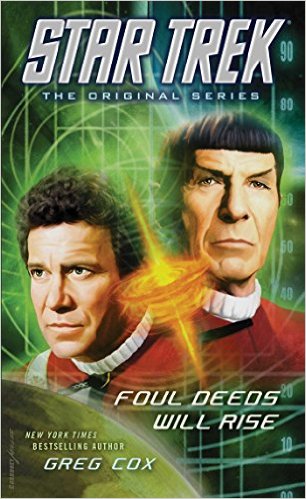
A Book Based on a Television Show: Star Trek: Foul Deeds Will Rise,  based heavily on “The Conscience of the King” and touching on another though to name it would give away  the whodunit.

A Book By an Author Who You Love, But Which You Haven’t Read:   Zebra Derby, Max Shulman. Yes, despite saying “anything by Asimov or Wendell Berry” for months now,  last night I spotted my copy of Max Shulman’s Large Economy Size and realized – hey, I’m awfully fond of Shulman, and I haven’t read the third novel in that collection, so why not?  It’s a short bit of postwar satire in which a returning soldier struggles to find his place in the new world. Through his misadventures Shulman pokes fun at door-to-door salesmen, Communists,   psychologists, bureaucrats, and entrepreneurs . It’s not nearly as funny as the soldier’s previous misadventures (Barefoot Boy With Cheek), erring as it does on the side of randomness, but I still like Shulman. 

What’s next? Probably either Book on the Bottom of Your To-Read List,  for which I have a nonfiction contender I’ve been meaning to read for several years now, but have never actually picked up, or A Book with Magic, as I’m  plodding through The Two Towers.   Sure, I could use a Narnia book for the magic, but scavenger hunts are no fun when there’s no challenge.

Posted in Reviews | Tagged , , , , , | 2 Comments

Foul Deeds will Rise

Foul Deeds Will Rise
© 2014 Greg Cox
384 pages


            A galaxy can be a small world. When James T. Kirk attended a performance of The Tempest put on by volunteers nursing refugees in the middle of a war zone, he didn’t expect to encounter a woman  who tried to kill him. Admittedly, he has that effect on women, but  the last time he laid eyes on Lenore Karidian, she was being hauled off to an insane asylum after the killing blast she meant for Kirk dispatched her father instead.  It’s been over twenty years since, but there she is on the stage, immersed in Shakespeare once more.    But is it her only repeat performance?  Kirk has come to help mediate peace between two planets locked in a bitter war, and whatever fragile hope for bloodshed’s end is lost when the leading counselors for both sides find themselves murdered on Kirk’s own ship.  The murders are utter copies of Lenore’s past crimes, when in her youth she sought to kill anyone who could identify her disguised father as a war criminal.  Although Ambassador Kevin Riley – Kirk’s colleague and former crewman, previously poisoned by Lenore and saved only by Dr. McCoy’s swift action – is quick to believe the femme fatale is up to her old tricks, Kirk suspects there is more to the  story.  The stakes grow after both sides in the war somehow learn that Karidian had a criminal past, and explode into fury against the Federation they blame for harboring a known criminal. Even as two of his officers are arrested by an alien military,  a raging mob takes innocent aid workers hostage. Even worse,  Spock and Scotty – said arrestees – were on the brink of discovering a conspiracy that threatened not only the peace, but the lives of millions.  Foul Deeds will Rise is a classic Trek tale,  an action-mystery reminiscent of the shows themselves, complete with abundant references to Shakespeare.  Plotwise, Cox’s writing is perfectly entertaining, with action unfolding in three different locations at one point, all building together to the same finale, with the occasional fun bit of dialogue thrown in.  It does seem odd that a murder investigation on a starship would involve virtually no reference to security tapes being checked, but how nice it is to see a mystery solved by sleuthing instead of computers!
Posted in Reviews | Tagged , , | Leave a comment

The Classics Club

For the past year or so I’ve been aware of a book/blogging community known as the Classics Club, whose members have pledge to read a list of fifty or so “classics” within five years, and share their thoughts about them with other members of the group. Although that sort of thing seems right up my alley, I’ve not joined in yet because I didn’t too much like having to choose the books in advance.  On reflection, however,  I realized that I’m going to be reading classics, anyway: I might as well have company in doing it.  So, here’s my official throwing-in announcement: below is the list of titles I expect to read before September 22nd, 2020.

These move generally from western civ classics to American literature, including southern literature.

  1. The Epic of Gilgamesh, trans. Danny Jackson
  2. The Aenid, Virgil
  3. The Histories, Herodotus
  4. The Conquest of Gaul, Julius Caesar
  5. The Decline and Fall of the Roman Empire, Vol. I, Edward Gibbon
  6. One Thousand and One Nights, trans. Husain Haddawy
  7. The Three Musketeers, Alexandre Dumas
  8. The Hunchback of Notre Dame, Victor Hugo
  9. The Prince, Machiavelli 
  10. Inferno, Dante
  11. The Brothers Karamazov, Fyodor Dostoeyesky
  12. The Seven-Storey Mountain,  Thomas Merton
  13. War and Peace, Leo Tolstoy
  14. The Gulag Archipelago, Alexander Solzhenitsyn
  15. The Hiding Place, Corrie ten Boom
  16. Dracula, Bram Stoker
  17. Frankenstein, Mary Shelley
  18. The Swiss Family Robinson, Robert Louis Stevenson
  19. Canterbury Tales, Chaucer
  20. Sense and Sensibility, Jane Austen
  21. Emma, Jane Austen
  22. The Picture of Dorian Gray, Oscar Wilde
  23. Brideshead Revisited, Evelyn Waugh
  24. The Vicar of Wakefield, Oliver Goldsmith
  25. Great Expectations, Charles Dickens
  26. Oliver Twist, Charles Dickens
  27. The Pilgrim’s Progress, John Bunyan
  28. Lord of the Flies, William Golding
  29. Down and Out in Paris and London, George Orwell
  30. The Federalist Papers, various
  31. The Education of Henry Adams, Henry Adams
  32. .Life on the Mississippi, Mark Twain 
  33. Up from Slavery, Booker T. Washington
  34. The Red Badge of Courage, Stephen Crane
  35. Death Comes for the Archbishop, Willa Cather
  36. O Pioneers!  Willa Cather
  37. White Fang, Jack London
  38. Moby-Dick, Herman Melville
  39. The Jungle, Upton Sinclair
  40. A Farewell to Arms, Ernest Hemingway
  41. The Sun Also Rises, Ernest Hemingway
  42. East of Eden, John Steinbeck
  43. The Grapes of Wrath, John Steinbeck
  44. Catch-22, Joseph Heller
  45. The Martian Chronicles, Ray Bradbury
  46. I Know Why the Caged Bird Sings, Maya Angelou
  47. The Invisible Man, Ralph Ellison
  48. Love Among the Ruins, Walker Percy
  49. The Moviegoer, Walker Percy
  50. 2001: A Space Odyessey, Arthur C. Clarke
Posted in General | Tagged , | 10 Comments

A Week in Narnia

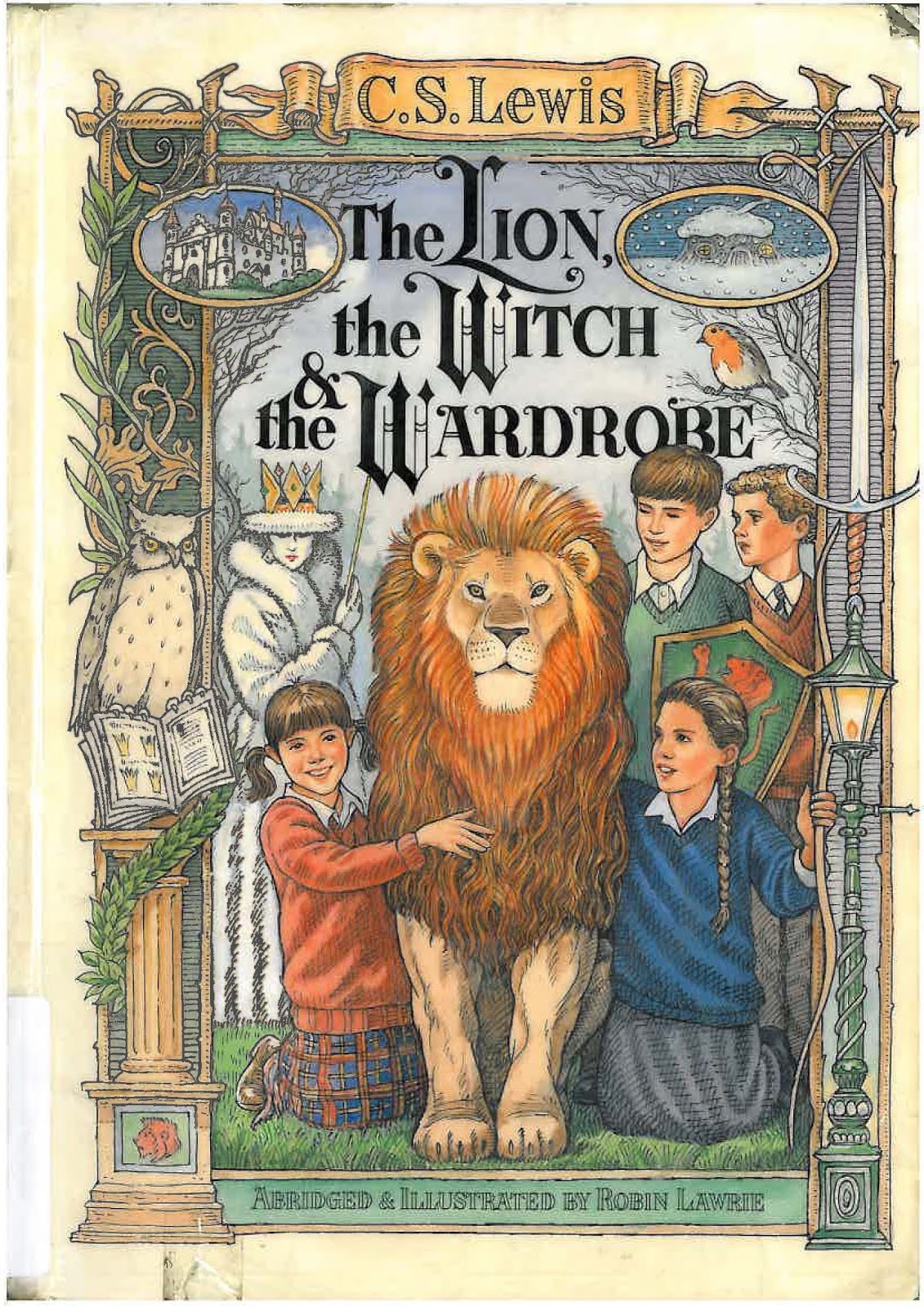
On last Friday I enjoyed The Lion, the Witch, and the Wardrobe, reading it for the first time since the O.J. Simpson trial. I never liked fantasy as a child; it took Redwall and Harry Potter to coax me into not holding my nose any time I came near a work with dragons and magic in it (not that Redwall has any of the latter, just a bunch of mice with crossbows and monks’ habits). I enjoyed it then tolerably well enough, just not enough to pursue the series. I’ve remained familiar with Narnia, however, because so many other people love it and through them I receive constant reminders about the book’s plot and meaning. (It helps that most of the basics are right there in the title.)    The Christian allegory was a lot more obvious this time around, but what I didn’t remember is Lewis’ general charm. My favorite part of the book, in fact, was its dedication:

My Dear Lucy,  I wrote this story for you, but when I began it I had not realized that girls grow quicker than books. As a result you are already too old for fairy tales, and by the time it is printed and bound you will be older still. But some day you will be old enough to start reading fairy tales again. You can then take it down from some upper shelf, dust it, and tell me what you think of it. I shall probably be too deaf to hear, and too old to understand a word you say, but I shall always be
 your affectionate Godfather, C.S. Lewis 

I don’t think I’ve ever read a dedication I liked more. I technically read this as part of the 2015 reading challenge (a book from my childhood), something that does not require reading through the entire series.  Like the Pevensie children, however, that first visit through the wardrobe was not to be my last, and I’ve spent the entire last week reading through the series. I’ve found it delightful for many reasons, not because I’m a sucker for stories  about redemption. I mentioned in my comments on the books themselves the graceful way Lewis connected Christian and European themes together, using symbols from Greek mythology and creatures plucked from various bestiaries to tell an essentially Christian story. It’s most salient in the first and last books, of course, what with the sacrifice of Aslan to redeem a traitor and destroy the Witch’s hold on Narnia, and then the Apocalypse — but present in more subtle ways throughout the series.  Lewis’ writing is commendable; terribly funny at times, and sweet in others. I roared when he referred to an inept headmaster being put into Parliament so she would stop getting in the way of things, and thought some of his characters utterly delightful, especially the mouse Reepicheep — his bravado was matched only by Aslan’s, and Aslan had REASON to be fearless. Speaking of which, I thought Lewis handled him better as a character than could be imagined. Other fiction featuring Jesus tends to be respectful to the point of static (Jesus just quotes himself from the New Testament), or irreverent to the point of being unrecognizable (done hilariously in Lamb).  Lewis’ Aslan, despite being Jesus in another world,  is neither a copycat nor a fraud; he acts in his own way in a fictional world, but he acts in ways that accord with a revered character; Aslan is revered in his own right, for his own reasons. His appearances are vanishingly brief, but regular enough that Narnians and the reader live in expectation of him; when he arrives he acts decisively. His appearance at a pivotal moment is a warning, or routs evil when his followers have done all they can do;  even when he does not make a personal appearance he is revealed to have been working in the background.  He is stern to the good, merciful to those who stumble, and swift to  strike the obstinately malevolent.  Aslan never lingers around enough to become mundane, nor absents himself so long that he becomes a mere memory. He is Aslan, always watching and waiting for the right moment to bound into the story and change lives.

For me, this week spent in Narnia was a wholly unexpected pleasure. I never intended to be hooked, and I’m glad I was!  This next week I’ll continue working on the reading challenge, with two or three possible entries lined up, while in the distance looms a series I want to do on the ancient near east, with books on Sumer, Babylon, Persia, and Egypt lined up.

========================================================
Some quotations…

“For in Calormen, story-telling (whether the stories are true or made up) is a thing you’re taught, just as English boys and girls are taught essay writing. The difference is that people want to hear the stories, whereas I never heard of anyone who wanted to read the essays.”

“It isn’t Narnia, you know,” sobbed Lucy. “It’s you. We shan’t meet you there. And how can we live, never meeting you?”
“But you shall meet me, dear one,” said Aslan.
“Are -are you there too, Sir?” said Edmund.
“I am,” said Aslan. “But there I have another name. You must learn to know me by that name. This was the very reason why you were brought to Narnia, that by knowing me here for a little, you may know me better there.”

“We’ve got to start by finding a ruined city of giants,” said Jill. “Aslan said so.”
“Got to start by finding it, have we?” answered Puddleglum. “Not allowed to start by looking for it, I suppose?”

“I’m on Aslan’s side even if there isn’t any Aslan to lead it. I’m going to live as like a Narnian as I can even if there isn’t any Narnia. So, thanking you kindly for our supper, if these two gentlemen and the young lady are ready, we’re leaving your court at once and setting out in the dark to spend our lives looking for Overland. Not that our lives will be very long, I should think; but that’s a small loss if the world’s as dull a place as you say.”

“This is my password,” said the King as he drew his sword. “The light is dawning, the lie broken. Now guard thee, miscreant, for I am Tirian of Narnia.”

Posted in Reviews | Tagged , , , | 3 Comments

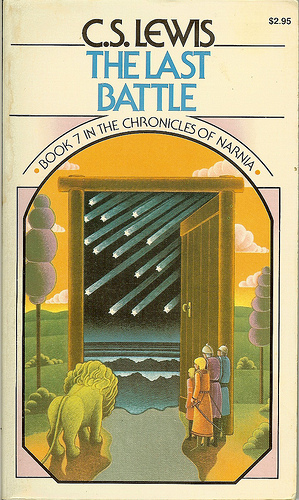
The Last Battle

The Last Battle
© 1956 C.S. Lewis
184 pages

“This is my password,” said the King as he drew his sword. “The light is dawning, the lie broken. Now guard thee, miscreant, for I am Tirian of Narnia.”

In The Magician’s Nephew, the great lion Aslan sang Narnia into existence and commissioned a human boy to plant a special tree to protect it against evil. But now the Tree has fallen, and a  Lie reigns.  The story begins with a malevolent ape and his witless donkey companion discovering the skin of a lion. Shift, the ape, has an idea:  skin the lion, dress the donkey in it, and use this guise to awe the woodland folk into doing his bidding!  Hundreds of years have passed since anyone saw the great Lion, Aslan himself,  and the lie succeeds — to the destruction of Narnia.Consumed by avarice, Shift begins ordering the destruction of Narnia’s enchanted forests in the name of “Aslan”, selling it piecemeal to the dreaded Calormen and even inviting their soldiers into Narnia. The king Tirian, captured early after falling for the deceit himself, is in no place to prevent his people being massacred and his cities destroyed. At this hour of greatest crisis, Jill and Eustace are called into Narnia to take up the Lion’s banner one more time. For this is the last battle, the great battle, and one where Narnia’s foe is not a mere witch presuming power, or a greedy horde of warlords, but a winged beast that smells of death and devours everything in its path. Although Narnia’s enemies have always cloaked themselves in deceit — the Witch as a Queen, most consistently — here lie is compounded upon lie. No sooner do our party of heroes  (Eustace, Jill, the rescued Tirian, and a unicorn to begin with) unravel part of the diabolical plot than does the Ape add another. Yet the Ape is being controlled by another party, and they still by another.  Some Narnians are frightened by all this, and run away; some decide the battle isn’t worth bothering with, and retreat into their own narrow issues (like the dwarves, who become nasty little chauvinists). Our heroes know only one thing: they are between the paws of Aslan, and they would rather perish fighting the Ape and his death-god than betray the lion.  So it goes, and such is this literary version of  the Book of Revelation, with its antichrist, astronomic fireworks, and all-consuming finale.   Virtually all of the major characters throughout the series make appearances, making it a glorious reunion of sorts, The Last Battle is darker and more intense than the other books, however, and if I read it as a child I probably would have had nightmares about it.  The witch of previous books was evil, but in a Disney villain way;  the baddies here are positively revolting, between the Ape perverting good to evil and the death-thing invoked by the Calormen.  While I can imagine future re-reads of various Chronicles books, The Last Battle  is a little too rapturous.

Look for a Narnia wrapup tomorrow!

Related:
The Great Divorce, C.S. Lewis
Lord of All, Robert Hugh Benson

Posted in General, Reviews | Tagged , , , , , | Leave a comment

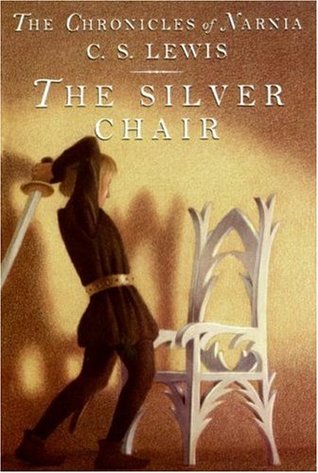
The Silver Chair

The Silver Chair
© 1953 C.S. Lewis
217 pages

Escaping from bullies in their oppressively modern boarding school, Eustace Scubbs and his friend Jill Pole opened a door and promptly fell into Narnia. Visits to Narnia always come unexpectedly, and never without purpose.  Though only a year has passed since Eustance’s sea voyage with Caspian, Lucy, Edmund, and their Narnian comrades, a lifetime has passed for the friends left behind. Young Caspian is now an aged, bearded king driven to despair over his son, ten years missing. According to story, he was last seen in the company of a beautiful woman, dressed in green, while hunting for a serpent which killed his mother. A dozen of Narnian lords have ventured into the northern wastes where the Prince was last seen in the hopes of finding him, to no avail: they never come back. Now it’s time to send in the A-Team:   Aslan, and the heroes he has chosen.  Armed with four signs and a very pessimistic frog-thing,  Eustace and Jill journey into the land of the giants and discover the truth of the prince’s captivity.  If only they listened more;  they might have known that the lady in green who greeted them in the giant lands, and referred them to a Giantish city (“they’d love to have you for the August feast”) was up to no good.  Previous Narnian adventures have seen innocents in distress rescued, mysterious objects returned to their rightful owners, beasts dispatched, spells broken   — but now the heroes, like Odysseus, must descend into the Underworld, fighting their own fears along the way. Jill, like the other children thrown into Narnia’s animal-dramas, proves resilient. Despite missing clue after clue, they continue to rise to the occasion — as they do when the Witch, having captured them deep within the bowels of the Earth, attempts to enchant them into believing her realm is the summation of reality, and that their memories of Aslan and the skies above are mere dreams. Pleasant dreams, to be sure, but dreams nontheless.   Some dreams, however, have more weight than reality, and so they fight on.

Posted in Reviews | Tagged , , , , , | Leave a comment

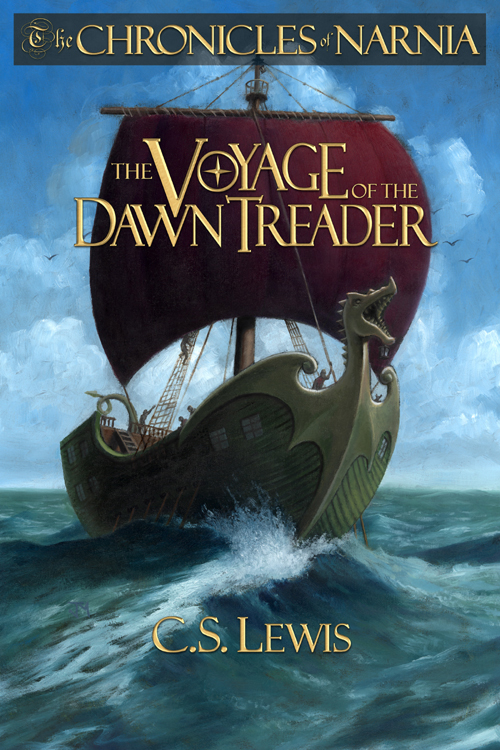
The Voyage of the Dawn Treader

The Voyage of the Dawn Treader
© 1952 C.S. Lewis
223 pages


            There are unwanted gifts, and then there are unwanted gifts that pull your only son into a fantasy world of dangerous creatures, powerful enchantments, and the odd supernatural beging.  These last are usually called books, but a certain portrait of a ship at sea can do the same thing. At any rate, that’s what happened to Edmund and Lucy Pevensie, along with their obnoxious cousin Eustace.  One moment they were sitting in a guest bedroom, staring at it, and the next they were on the ship with the boy-prince whose throne they’d help win.  With his country at peace, regal Caspian decided to set out to find some lost countrymen, and perhaps discover the End of the World. So begins The Voyage of the Dawn Treader,  a tale of Narnian adventures at sea.  There’s no enormous stakes here, just the call of the open ocean, a thirst for adventure slaked only by salt spray as a ship of merry friends sails into the unknown.  They have a serious mission in discovering the fate of several nobles who were sent on fools’ errands by the wicked regent who attempted to kill Prince Caspian. The forlorn peers have met various fates; some, eaten by dragons; others turned to gold; still others captivated by spells.  The character of  Eustace makes for a particularly entertaining tale, not because he’s a delight because he’s such a boor. He’s a very modern boy, Eustace, raised by parents who know better than everyone else, and whose head is filled with practical things like the workings of watermills, and no cranial capacity given over to dragons.  It’s a pity, for when he was turned into a dragon it might have helped to know what such a thing was!  The humorless Eustace is completely out of place in this magical world, although he takes the existence of talking, combative mice in stride.  The mishaps and adventures aren’t mere amusement;  each carries with it some moral import. This is most obvious on the isle of Deadwater, where the party encounters a pool of water that turns anything immersed in it into gold; the wealth is tantalizing and deadly. Aslan makes infrequent appearances, offering mercy or a warning to those who err.  Lewis’ interweaving of Christian themes and European myths continues,  with an ending that makes plain Aslan’s significance. 
Posted in General, Reviews | Tagged , , , , , , | 8 Comments

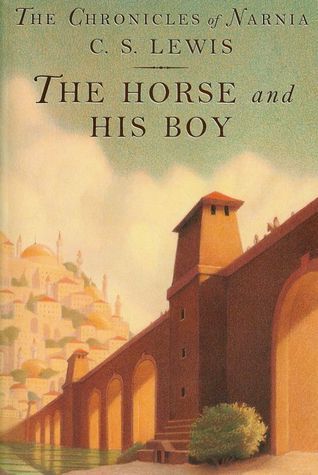
The Horse and his Boy

The Horse and his Boy
© 1954 C.S. Lewis
199 pages

“For in Calormen, story-telling (whether the stories are true or made up) is a thing you’re taught, just as English boys and girls are taught essay writing. The difference is that people want to hear the stories, whereas I never heard of anyone who wanted to read the essays.” 
p. 35


Far below the green hills of Narnia lays a vast desert, and just south of it, the mysterious land of Calorman.  Here a shipwrecked baby was rescued by a fisherman, one not unkind but not terribly loving, either — a man who called the boy his son, but was willing to sell him as a slave to the first rich warlord ambling by his house.  Informed of the warlord’s cruelty by the lord’s talking horse, the boy and said horse decide to run away together — to go north, beyond the desert to the legendary land of Narnia. In The Horse and his Boy we find a Narnia tale where it is merely a dreamt-of destination to the extreme north, where Edmund and his sister appear as visitors from afar, paying their respects to another king.  The visit of Susan stirs part of the plot, as her beauty drives the Calorman prince insane with lust and he decides to invade Narnia to take her by force after his first lock-her-up-and-marry-her plan didn’t work. Shasta’s dream of trekking north, surviving the desert wastes, takes on new importance; having learned of the wicked prince’s secret plan, he must somehow warn Narnia of the invasion-in-the-making.  Calorman, with its deserts and turbaned warriors wielding scimitars, brings to mind “The Orient” — perhaps inspired by the Ottoman Empire, a chronic threat to southern Europe. Through the story we moved from the ‘exotic’ to the more familiar, complete with Aslan’s presence. He is neither named nor known until the conclusion of the story, where exhausted characters on the brink of lost spirit learn that he has been there all long, and will see them through to the end.  Of the Narnia books I’ve read so far, The Horse and his Boy is the most traditionally plotted;  the characters start one place, they end up another, and along the journey they grow up– not physically, but they transcend fear and vanity to act decisively and nobly.  (Even the horse, who was already grown but needed some emotional maturity.)

Posted in Reviews | Tagged , , , , , | Leave a comment

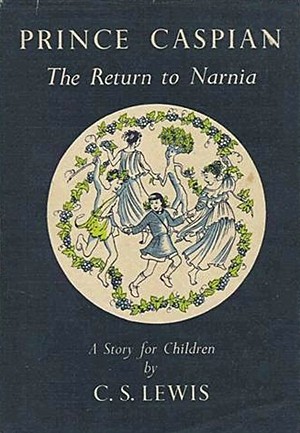
Prince Caspian

Prince Caspian: The Return to Narnia
© 1951 C.S. Lewis
195 pages
        

  Once upon a time four children stumbled through an ordinary-looking wardrobe into another  world altogether, a place called Narnia where they became its kings and queens and fought great battles under the banner of a noble lion, its creator and champion.  Then they returned to their own ordinary lives, but not for long. A year after their return, the four siblings – Peter,  Lucy, Edmund, and Susan – found themselves snatched from a train station and deposited on a mysterious island.  They soon discovered that they had returned to Narnia, more than a millennium after their former reign. Their beloved talking animal friends had been slain or driven into hiding; their former favorite places were in ruins and surrendered to wilderness; their lord Aslan was absent, and cruel men ruled in their stead.   From a lone dwarf in the wild, the Penvensies learn what has happened since their departure, and decide to go to the aid of young Prince Caspian, the last human defender of Old Narnia.   Prince Caspian is a story in two parts; first, Caspian’s revolt against the evil kingdom he was technically heir to, the desperate war against his tyrannical uncle, and his grasping-at-straws move that called the four legends from the past to come to his aide.  The battle that follows has plenty of heroics, but most satisfying is the  character of Edmund; the once nasty boy who betrayed his family to the White Witch  is selfless here, the model of ‘nobility’.  It is a tale simple, fast, and sweet, with both gentle humor and adventure to stir the heart. 
Posted in Reviews | Tagged , , , , , , | Leave a comment

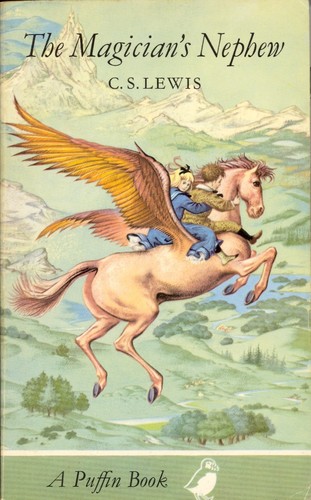
The Magician’s Nephew

The Magician’s Nephew
© 1955 C.S. Lewis
183 pages
        
 Diggory and Polly were just two kids on vacation exploring a forbidding-looking attic. They didn’t intend to witnesss Creation, let alone accidently unleash evil into it. Like the more familiar Lion, Witch, and the Wardrobe –   for which this serves as a prequel  — The Magician’s Nephew retells a Christian story, this time of the Creation and Fall, incorporating creatures and symbols from other western traditions as well. The trouble begins when Diggory’s uncle, a man with a taste for the occult, discovers a way to send beings into another world. He’s tolerably sure he knows of a way to fetch them back, but not positive enough to test it on himself – that’s what nephews are for. Diggory and Polly, having discovered the warlock-wannabe’s lair, become his unwilling test subjects and are thrown into a mysterious netherworld that allows travel between different places like our own Earth and Narnia. One world proves a desperate landscape, lit by a dying sun and filled with lifelessness reigned over by a wax-still woman. A nearby bell teases visitors; ring it and heaven knows what will happen, but let it be still and the prospect of what might have been will agonize them forever. Over the warnings of the far more sensible Polly, Diggory rings the bell – and awakes a creature who will one day be known as the White Witch.   The meat of the story of Narnia fans happens halfway through, when the Witch, the children, and a few innocent bystanders fall into a world which is without form and void – until they hear singing. The dream-weaver is Aslan, the great lion, and his songs call life into being. The witch ruins things, but in the end the children are able to accomplish a mission for Aslan which sends her into retreat at least for a little while.  As with its predecessor, The Magician’s Nephew abounds in symbols, creatures, and objects from across the western imagination. A  forbidden tree in the midst of the garden, for instance, hangs low with not just any fruit, but silvery apples reminiscent of Eris’ Apple of Discord.   The garden appears long after the ‘fall’ of the novel; this is not a Chrstian story reold with different characters, but in a different way altogether; unlike  Lion, wherein Aslan did all the heavy lifting, here  he human characters, principally Diggory, to prove capable of growing beyond their mistakes through accomplishments more impressive than great physical deads.  Narnia continues to be a lovely, enchanting story.
Posted in Reviews | Tagged , , , , , | 1 Comment