And now, the News

There seem to be very few reasons not to despair of the human race. If asked why it has decided to tell us all this, and is driving us more than a little made as a result, the news will soberly reply that it has no choice, It simply has a duty to tell us ‘the truth’.   Yet this isn’t entirely true.  In any nation at any given point there is a welter of conflicting evidence about what is going on in the land. Some people will be drawn to murdering partners who have been unfaithful with a meat cleaver, but the majority will tearfully and angrily muddle along. Some people will riot and vomit in the streets, break shop windows, and run off with looted spirits, but most will be keener to trim back the flowers in the garden or keep things tidy in the kitchen.  There is a plethora of headlines that would both be true and yet impossible to run:

“Man abandons rash plan to kill wife after brief pause.”
“65 million people go to bed every night without murdering or hitting anyone.”

We should remember that the news is ultimately only one set of stories about what is happening out there, no more and no less.  

Our nation isn’t just a severed hand, a mutilated grandmother, three dead girls in a basement, embarrassment for a minister, trillions of debt, a double suicide at a railway station and a fatal five-car crash by the coast. 

It is also the cloud floating right now unattended by the church spire, the gentle thought in the doctor’s mind as he approaches the patient’s bare arm with a needle, the field mice by the hedgerow, the small child tapping the surface of a newly hard-boiled egg while her mother looks on lovingly, the nuclear submarine patrolling the maritime borders with efficiency and courage, the factory producing the first prototypes of a new kind of engine, and the spouse who, despite extraordinary provocation and unkind words, discovers new reserves of patience and forgiveness. 

This, too, is reality, The news we are given about the nation is not the nation.

The News: A User’s Manual, Alain de Botton. pp. 43-45

Posted in quotations, Reviews | Tagged , | 4 Comments

Pilgrim’s Progress

Pilgrim’s Progress in Today’s English
© 1678 John Bunyan,   retold 1971 James Thomas
285 pages

Years ago I read Pilgrim’s Progress,  the story of one Christian’s spiritual journey made physical. The story begins when a man named Graceless, soon to be called Christian, learns from a book that his city is doomed to destruction.  Weeping, he is given hope by a passing stranger, Evangelist, who tells him there is a way out of this doom. Through the narrow wicket gate there is a road, passing by a cross, that leads to the Celestial Kingdom. If he follows it, he will find a land where joys shall never end – but the going will not be easy. There will be monsters along the way, fellow travelers who both support and distract,  misleading trails, and dens of scum and villainy.   Loaded with a burden, Christian sets forth, albeit without his unwilling wife and children.  Although there is a fantastical structure – Christian traveling from a land ruled by a princess of darkness to a kingdom of grace and love – with fight scenes, the work is largely conversation and argument.  The biblically  well-versed will notice characters quoting from or alluding to the Psalmists and the Epistles even the characters are not conscious of it.  Biblical metaphors are here made physical: Christian literally dons ‘the armor of god’, and enemies of the soul literally attack our journeyman, like the giant Despair.  

As a child I read this for the adventure, and much of the theological debate was lost on me (if even included in a kid’s version), but naturally now I’m reading more for substance.  I was astonished  by the amount of imagery I remembered from my youth. . I found Bunyan’s writing largely communicative; he made a relatively opaque passage in Romans about the Mosaic law’s relation to sin more comprehensible, for instance. It’s the work of Protestant rather than traditional theology, with a long-defeated monster called Pope appearing alongside his co-loser, Pagan. Given that the book is mostly discussion, it’s obviously more attractive as a devotional rather than as a fantasy-adventure.  I suspect the ‘modern’ retelling is slightly abridged, but it’s the only version my library has.

Posted in Reviews | Tagged , , , , , | 1 Comment

Words worth Reading

From A Literary History of Ireland:

“Of all the tribes of the Celts, and indeed of all their neighbours in the west of Europe, the children of Milesius have been at once blessed and cursed beyond their fellows, for on the shores of their island alone did the Roman eagle check its victorious flight, and they alone of the nations of western Europe were neither moulded nor crushed into his own shape by the conqueror of Gaul and Britain. 

Undisturbed by the Romans, unconquered though shattered by the Norsemen, unsubdued though sore-stricken by the Normans, and still struggling with the Saxons, the Irish Gael alone has preserved a record of his own past, and preserved it in a literature of his own, for a length of time and with a continuity which outside of Greece has no parallel in Europe.” 

p. 17 © 1899 Douglas Hyde

I literally chanced upon this passage when I pulled the first Irish-lit volume I spied on the shelves and opened it up.   Happy St. Patrick’s Day!

Posted in quotations | Tagged , | 2 Comments

Armed and Dangerous

Under and Alone: The Hunt for One of America’s Most Wanted Criminals
© 2007 William Queen and Douglas Century
224 pages

When William Queen started as an ATF agent in the Los Angeles area, all the cops around agreed on one thing:  enemy #1 was that psycho who lived in the mountains, Mark Stephens.  He wasn’t part of a gang, and he didn’t have a pattern. He simply appeared from the wilderness every few weeks to stick pistols into the mouths of dope dealers and demand his money.  While he hadn’t managed to kill anyone yet, he was an object of terror to cop and criminal alike, and daredevil Queen knew this was a man that needed taking down.   Armed and Dangerous is a semiautobiographical account of the months Queen spent working on a case against Stephens,  with reports of other busts mixed in, like that of a raid against a gang of skinheads.   To infiltrate them, Queen used a persona he’d been playing around with, that of a southern biker with fondness for dope and tenuous ties to a Klan-based organization. (That persona would become his full-time identity later on when he infiltrated the Mongols, recorded in Under and Alone)

 Although Queen’s account builds toward finally convincing his bosses that infiltrating the mountain wilderness and hunting for Stephens’ camp is worthwhile, Stephens’ actual arrest is tame  after the dangerous climb and the escape amid a forest fire.  What isn’t tame is William Queen himself,  a Vietnam special forces vet who tried racing until it proved too expensive a hobby.  He’s definitely an adrenaline junkie, but happily his energies are targeted against actual psychopaths instead of blowing up people’s homes to serve warrants, warrior-cop style.   This is a fast read, and not as substantial as Under and Alone, but fitting if you’re in the mood for eighties cops heroics.

Related:
Under and Alone: the True Story of the Undercover Agent Who Infiltrated America’s Most Violent Outlaw Motorcycle Gang, William Queen

Posted in Reviews | Tagged | Leave a comment

Spring Cleaning

The wind is blowing, the trees are in leaf, and I sense spring is on the way. Well, good! Not that this winter has been particularly bad, but spring has far better scenery.  I spent this past weekend cleaning while listening to an audio version of The Importance of Being Earnest, and then took in a local play at the Alabama Shakespeare Festival. The play was “White Lightning“, and celebrated the moonshine-running origins of stockcar racing. The closest I’ve come to watching NASCAR is watching Cars, but I enjoyed the play enormously, featuring as it did one of my favorite ASF actors, Rodney Clark.

There’s actually a book on this subject called Driving with the Devil that — so help me — I might actually go for. Not that I’m suddenly all afire about racing, but who can’t appreciate a history of rescuing ardent spirits from the law?

Continuing and completing the spree of science books lately was E.O. Wilson’s  The Social Conquest of Earth.  The book examines ‘eusociality’ as practiced by both humans and insects.  Eusociality involves a trascendent social order that is sustained by passing generations, with a high degree of specialization.   Wilson is one of the grand old men of biology, the effective founder of the sociobiological discipline. After dealing with the whole of natural human history in chapter one, Wilson uses his extensive insect experience to explain what eusociality is and how it might have evolved. He then speculates on what biological basis culture, art, etc. might be derived from.  I found parts of the book, like the extended debate between inclusive fitness and kin selection as evolutionary drivers, a touch esoteric, and probably would have enjoyed the book more if I’d hadn’t gone into it expecting to read more than about humans and termites.

Shortly before that, I read Unnatural Selection, comments for which are forthcoming. This week I’m finishing up a social history of the Scotch-Irish, called….The Scotch-Irish: A Social History.    It was part of an intended nod toward St. Patrick’s day, though there’s no way in blazes I’m finishing The Year of the French in time for tomorrow.

Posted in Reviews, science | Tagged , , | 2 Comments

Dixie’s Forgotten People

Dixie’s Forgotten People: the South’s Poor Whites
© 1979 Wayne Flynt
200 pgs

Just poor people is all we were, tryin’ to make a living out of black land dirt..

When Franklin Roosevelt referred to the forgotten man, he was likely thinking of those men in the city’s breadlines. The South, however, was home to a host of forgotten men: poor whites, who lost in the land-grab and who industrialism largely left behind. Dixie is a quick survey into the realm of rural white poverty,  succeeded wholly by Flynt’s own Poor But Proud. Despite its brevity,  it provides both flavor and substance.

Myths about displaced Norman cavaliers fleeing England to restore the old order in the South not withstanding, most poor whites came from the same stock as those men who became the masters — at least those in the ‘core south’, where Flynt primarily draws from.  They emerged as economic losers, families who either arrived late and got the leftovers or soil that had already been picked clean, or who were out-done by the rising gentry creating their vast fiefdoms.  The Civil War left them with even more crushing poverty in the form of tenant farming, and the ruined south was hard to transform into the “new”, industrialized south.  A fierce contempt for accepting charity from outsiders frustrated well-meaning missionaries and social reformers, but they were not altogether left behind.  Some tried to escape rural poverty by working in the mills, which were often more dangerous and no guarantor of comfort, and others lobbied for more political power.   Some even overcame racism to create an race-blind tenant farmers union;  from such a union came the latter Civil Rights marching song, “We Shall Overcome”.   Racial cooperation in the realm of labor was one of the dashed hopes of the 19th century populist age, however.  The world wars were kind to the South, bringing more industry and money, but the interwar years consisted of an economic slump so dismal that the Great Depression wasn’t even noticed.   While the South as a whole became more productive with the advent of machinery,  added jobs constituted only a quarter of those lost to the machines. After World War 2, the Southern economy finally quickened, but many still remain left behind — especially in Appalachia, which receives a section unto itself.

Dixie’s Forgotten People isn’t two hundred pages of labor struggles with a southern twang, though, for he also shares the genuine life of the people. Using interviews with adults remembering their youth, Flynt records here folk stories and music. The music shared is that which is fraught with meaning — melodies that comment on the plight of the family, of working for nothing but trouble, of hoping for rest and relief in the world to come.  The religion of the rural poor was overtly otherworldly,  constantly challenging the elite with the threatening promise that one day the first would be last, and the meek would inherit the earth.  (If “meek” is the  right word for  estatic snake handlers and Pentecostal preachers in unions..) Some of that culture even became mainstream, in the form of country-western, but as it became popular it lost the edge born of desperate poverty and anger. (This is a trend that has fast continued, with ‘country’ singers slipping into the pop charts with ease, a la Taylor Swift.)   Despite their poverty, the subjects retain a spine — they are, to borrow Flynt’s later title, ‘poor but proud’.  Some of that pride, in racial myths, is misplaced, but much of it is legitimate, invested in the rich musical and artistic heritage that was saved from homogeneity by the mountains of Appalachia and dismal transportation.  Now, with interstates and cookie-cutter suburbs sprawling across the South’s coastal plains and rugged hills, one wonders if that heritage itself will become the forgotten Dixie instead of just its poor — lost to ticky-tacky McAmerica,

In short, Dixie’s Forgotten People was a quick and varied survey, albeit one supplanted by the weightier Poor But Proud.  Considering that most people think of that obscene film Deliverance when they think of the country poor, Flynt’s time spent with them is well needed among American readers.

Related:

Posted in history, Reviews | Tagged , , , , , , , | 3 Comments

All Other Nights

All Other Nights
© 2009 Dara Horn
400 pages

Why is this night different than all other nights?  Well, for starters, Joseph Rappaport is going to poison his uncle, on suspicion that he is plotting to kill Abraham Lincoln.   That move is the beginning of Rappaport’s career as an intelligence agent, using his family connections to infiltrate a Southern spy ring.  All Other Nights  is the enthralling story that emerges as he descends deeper into the shadows, finding – even as his body collects injuries from narrow escapes – a purpose worth living for.   Although running away from an arranged marriage at his father’s hands puts Rappaport into the ranks of the Union army,   it is when he tasked with seducing and marrying a young woman undermining the Federal campaign that the story fully begins.

Romance and work are a poor mix, as Rappaport soon finds. He wins the affections of his dazzling spy-rival,  a star of the theater who excels in sleight of hand. Her theft of his heart, however, is no parlor trick. The war makes a tragedy of their love, however,  doomed as their work was toward mutual self-destruction.  Joseph is soon broken in heart and body, marooned in the Tennessee wilderness.   A chance connection leads him to realize that not all hope is lost, however, and soon he is back in Virginia,  at the side of the Confederate Secretary of State, Judah Benjamin. His masquerade is two-fold, however;  while posing as a Confederate agent and gathering information for the Union, his true purpose in returning to Richmond is to find the family he helped destroy and save them and what little he feels of his soul from further ruin.

What a fascinating novel this is!  There’s a touch of small-world coincidence, but it’s handled deftly enough.  Joseph’s Jewish heritage isn’t just character flavoring;  the book opens at a Passover seder, the remembrance of Hebrews escape from Egyptian bondage the call for retribution.  Most of what Rappaport does throughout the novel is escape – flee the obligations his father seeks to impose on him,  out-run the consequences of his own actions – but  once he loses an eye he begins to see his way more clearly,  embracing a new life for himself even as Richmond burns.  The story thus combines historic espionage (ciphers, messages hidden in riding crops) and agonizing soul searching. There’s romance here, but unlike other authors Ms. Horn doesn’t force a play-by-play on the readers. She teases, as characters gaze at one another longingly, and then discretely moves on.  It has substance, too too, for Jacob’s is a love discovered accidentally and kindled slowly.  The final scene is a true finish, one that complete’s Jacob’s growth as a man capable of decision, not merely running or obeying masters above.

This is one of the best Civil War novels I’ve read in a long, long time.
 

Posted in historical fiction, Reviews | Tagged , , , , | 6 Comments

The Wisdom of the Myths

Wisdom from the Myths: How Greek Mythology Can Change Your Life
© 2014 Luc Ferry
416 pages

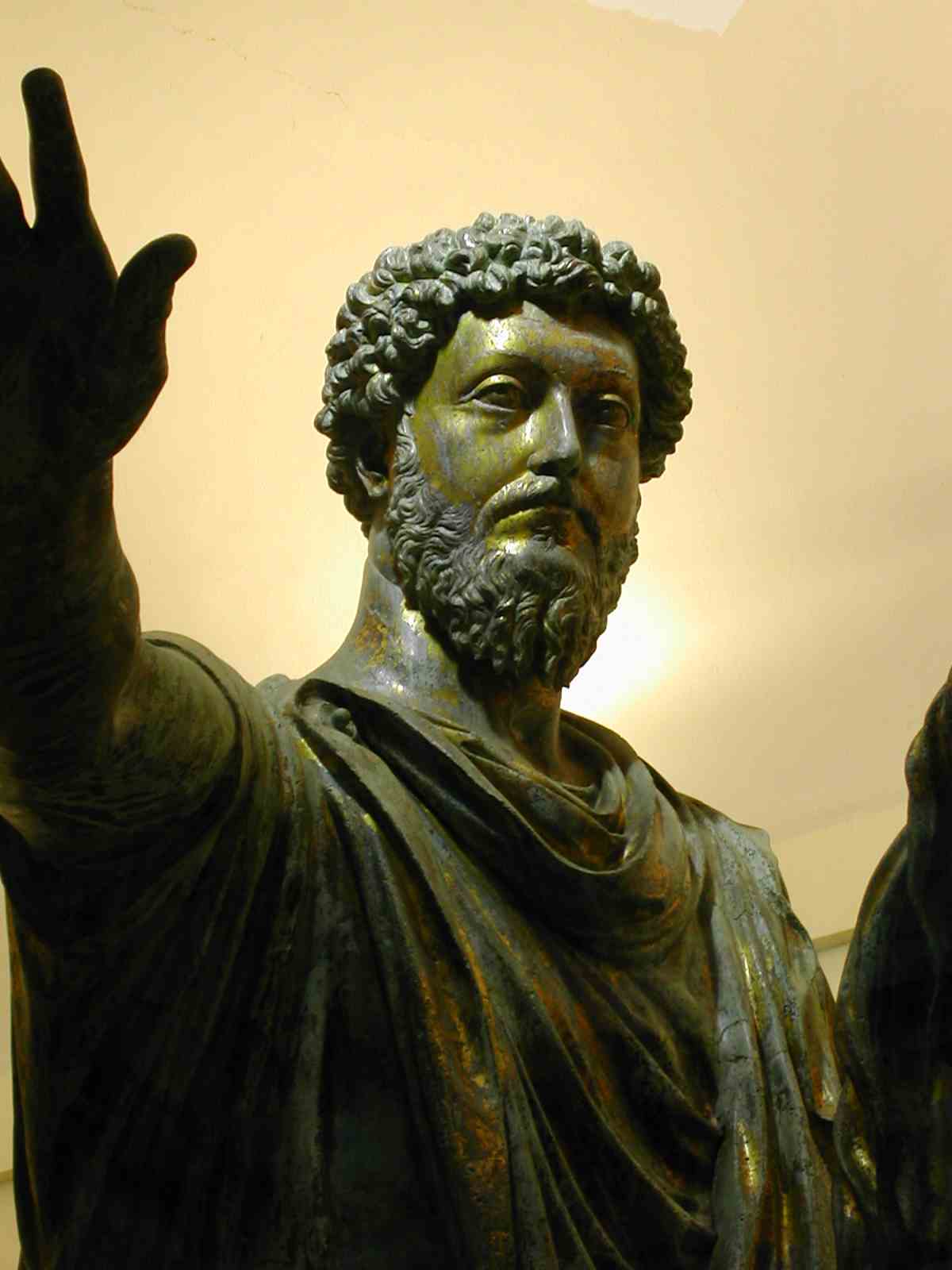
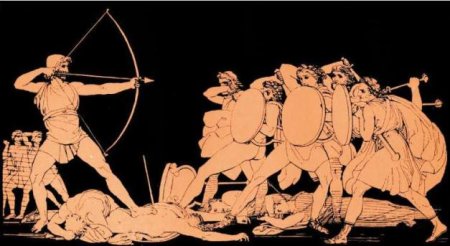
Well over a year or so ago, in a mood to read about the classical tradition, I happened upon Wisdom from the Myths: How Greek Mythology Can Save Your Life. Well, that seemed serendipitous, to say the least, despite the fact that the last time I read Ferry he was rather underwhelming.  That mood passed, but it’s come round again, and so this weekend I enjoyed Ferry’s introduction to the Greek mythos. Wisdom from the Myths is two things;  Ferry retells the major stories of Greek mythology, patching them together from Homer and the dramatists, but brings them together to argue that they constitute a coherent worldview.  This is one of an orderly  universe in which man has a definite role as a member of a polis. (Odysseus’ journey is read then as a spiritual one, with the hero confronting the death of his identity when tempted by Calypso. He may remain with her as an immortal, but in so doing would destroy every aspect of what makes him human — his identity as a father, a son, a husband, a king…a mortal, whose glory is in living well in the face of death.) The cosmos’ order is nearly self-correcting in that most negative behavior results in self-destruction, though it does seem to require the occasional hand from Zeus through his agents, Heracles and those who are aware of this unitive order.  As in A Brief History of Thought, Ferry turns again and again to Stoicism, which he views as the fulfillment of this worldview.  Ferry is not a Stoic, but quite sympathetic. He’s unusual in that he champions a secular worldview but takes mythology and philosophy seriously, as more than just-so stories and naval-gazing.  He manages to go almost the entire book without overly arcane references, a triumph for an academic.   I enjoyed this far more than A Brief History of Thought, at least as a recap of Greek mythology with a Stoic bent, but the title is overblown.

Posted in Reviews | Tagged , , , , , | 3 Comments

Spin Me Right Round, Baby

Every so often the Classics Club does a ‘spin’ challenge, in which players post a list of twenty books from their classics-to-be-read pile, number it, and wait. After we’ve had a few days to post the list, the folks at the Classics Club blog issue a number. Whatever number they draw, that’s the book to be read next.   So, here’s twenty items from my list, and I await Monday with anticipation!

  1. The Aenid, Virgil
  2. The Histories, Herodotus
  3. The Conquest of Gaul, Julius Caesar
  4. One Thousand and One Nights, trans. Husain Haddawy
  5. The Hunchback of Notre Dame, Victor Hugo
  6. Inferno, Dante
  7. Lord of the Flies, William Golding
  8. The Pilgrim’s Progress, John Bunyan
  9. Brideshead Revisited, Evelyn Waugh
  10. Great Expectations, Charles Dickens
  11. The Education of Henry Adams, Henry Adams
  12. Life on the Mississippi, Mark Twain 
  13. Up from Slavery, Booker T. Washington
  14. Death Comes for the Archbishop, Willa Cather
  15. O Pioneers!  Willa Cather
  16. White Fang, Jack London
  17. Moby-Dick, Herman Melville
  18. The Jungle, Upton Sinclair
  19. East of Eden, John Steinbeck
  20. The Moviegoer, Walker Percy
Posted in Reviews | Tagged , | 8 Comments

Fin Gall

Fin Gall: A Novel of Viking-Age Ireland
© 2013 James Nelson
290 pages

When a Danish longboat happened upon a small Irish craft on the rough seas , it found more than quick booty.  Onboard the boat was the Crown of the Three Kingdoms, a priceless artifact more precious for its political import than for its jewels. Whomever was granted the Crown gained the allegiance of the major kingdoms of Ireland; what price in gold or influence would the Irish tribes pay to have it restored?  Alas for the crew of the Red Dragon, the Irish weren’t the only ones fighting among themselves– for Dubh-linn, a booming Danish ship-fort, has been taken by the Norwegians!  So begins Fin Gall, a story of medieval war and adventure amid frantic infighting.

 In a surprisingly crowded field of Viking fiction,  Fin Gall distinguishes itself through its Irish setting and the well-crafted naval scenes.   The fractious nature of Ireland, made worse by competing Scandinavian clans crafting alliances with and against the Irish tribes, provides the basis of the plot. One Irish lord has been named chief, another resents it; one Norse lord wants to dominate Ireland,  an underling resents it;  much backstabbing ensues. The Red Dragons spend the book tripping over entangled alliances,  brawling, and hustling away.   The lead character, Thorgrim Nightwolf, is an interesting sort, so cunning that his men think he can transform into a wolf and gain a foretaste of the future through his dreams. His motives throughout the novel are refreshingly decent:  though he has come to Ireland to raid and plunder, he spends most of the book trying to keep his son Harold and an elder relation safe from Norwegians, Irish princes, and women. There’s a lot of pungent boasting, though not quite as riotous as Cornwell’s, and two back-to-back sex scenes which little changes but the name of the Irish lass involved.  Those Irish ladies are the weakest point here: they both encounter captive Danes, both help them escape for private motives, and both wind up randomly sleeping with the Dane in question.  The play-by-play is not especially awkward, but anything beyond “And they went to bed” is more information than I care to read.   After much danger has been out-lived, through both wit and luck, the book ends with a nice hook for the next novel: Dubh-Linn.

I’ll definitely be pursuing this series, as both of its ‘hooks’ are well-set for me. Most Viking fiction I’ve read takes place far inland, but this had a multitude of maritime scenes, and they made the savage sea really come alive. I also appreciated the way the Irish were handled here in general,  aside from the two women who blurred together.  They will probably become more distinct in further books, especially considering that one is a princess with a Danish in the oven.

Related:

Posted in historical fiction, Reviews | Tagged , , , , , | 2 Comments