Reader mudpuddle recently mentioned that he and other users were finding themselves unable to comment on blogs without being Google users themselves. I don’t know if that was a result of Google making a change, but I suspect it must have been since non-Googlers have been allowed to post here before. I found the setting to enable anyone to post, including anonymous users. That may mean more spam, but we’ll see. I can always turn on that irritating captcha thing if need be.
“If you are not sleepy, tell us one of your lovely, little tales to while away the night.” Shahrazad replied, “With the greatest pleasure”:
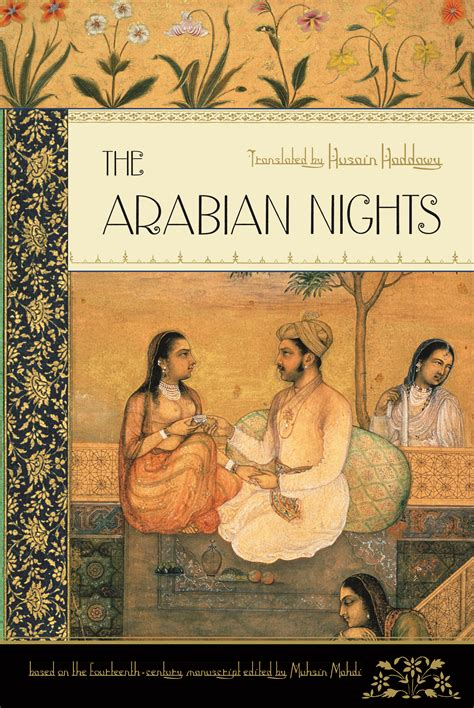
Tales from The Arabian Nights proved an interesting challenge, because most collections of them in English are only selections, and their contents are highly variable. The first set I started didn’t mention Aladdin or Sinbad, the two stories which have the most name recognition in the west. My reading of the Arabian nights was thus divided between two volumes, the respective translators being Hussein Hadaway and Edward William Lane.
The Arabian nights open with the framing story of two brother-kings in Persia and India visiting one another and discovering that both of their wives are cheating on them. After retreating into the country to think things over, they spy a demon who keeps his human wife locked in a box buried in the desert in an effort to keep her faithful, only to have his efforts spoiled by her finding other men to sleep with anyway. The brothers sleep with her before lamenting the unfaithfulness of womankind, and return to their respective realms, where one resolves to never keep a wife. Instead, each day he marries a virgin, sleeps with her, and then kills her after the fact. This goes on for quite some time until his vizier’s daughter, Shahrahzad, volunteers herself for marriage with a plan in mind. Using her extensive knowledge of literature and poetry, on her wedding night she begins telling a story that so ensnares the mind of her husband that he begs her to continue, and night after night puts the thought of killing her away until he can hear the end.
The tales of the Arabian nights are not one long story with many chapters like War and Peace; instead, one story will unfold to have many stories inside it, or a character introduced in one story will then be followed in another story, ensnaring the reader in a multitude of threads. They’re replete with magic, of course; demons are as common as cattle, but I suspect the translation of that particular word is awkward because the demons are not necessarily servants of a great evil power. The first one we meet is just a fellow burying his bride in a glass box in the middle of the wilderness, nothing diabolical there. In the first collection I read, once the caliph Harun al-Rashid shows up in a story, most of the stories that follow involve his court. (al-Rashid threatens his vizier Jafar with death every time they discover something untoward going on in the kingdom. Not exactly the happy little man from Disney’s Aladdin.) There are a lot of surprises here: Aladdin is set in China, of all places, but I suppose he could have been one of China’s distant western minorities, like a Muslim Uyghur. Some of the stories are also far more salacious than I would have expected, given the image of Islam as straitlaced, but these stories emerge from popular culture which eludes heavy state censorship by its oral nature.
The Arabian Nights will probably rank among my favorite, or at least the most memorable, books in this Classics Club challenge. The stories are rich in odd scenarios and characters, like the chance meeting of three one-eyed dervishes, or the discovery that the colorful fish in a pond introduced in one story are actually the citizens of a town which was cursed, and the stories-within-stories trick gets amusing, almost like a running joke. Of course each dervish, characters in a story, has to tell how they got there, and one of them has another story inside that story — Shahrazad’s ability to weave all these together is amazing.
“How does the trail look?” Christine asked. “Ask me at the bottom,” I said, feeling a certain queasiness in my stomach. There was no turning back; we had to get to the water, and the water was down there, at the base of Hoskinninni Mesa. There was a short silence. “You want to rest longer?” Frank asked. Christine jerked her lead rope knot-free and pulled her horse around. “Hell no,” she said, “Let’s get this over with.” I thought, I’m marrying a woman who has far more courage than I do.
p. 75
Last year I read Douglas Preston’s excellentCities of Gold, his re-tracing the steps of Spanish explorers of North America, complete with horses and occasional disasters. While staying in Flagstaff in April this year, I discovered a sequel to that work, Talking to the Ground. Here, Preston, his fiance, and his soon-to-be- stepdaughter travel across Arizona, Utah, and New Mexico as they follow a journey from Navajo legend, riding in the shadow of four sacred mountains. If Cities of Gold mixed horse travel and history, Talking to the Ground does the same for travel and mythology. All of the locales Preston and his family ride to are introduced in the creation myth of the Navajo, in which a being called Monster Slayer had to rid the world of horrific monsters born of a prolonged war between the sexes; the geologic formations are considered the remains of the monsters, and of the monster slayer and his sibling.
Although Preston, his wife, and their daughter Selene do not encounter nearly as much peril and problems as Preston did on his previous trip, this is no easy lope. As before, Preston and his fellow riders carry everything necessary with them, and plan their trip with a strict eye as to where they can find water. There were no telephones, no ranger stations, no safety net: if horses fell attempting to navigate down a hillside, or the family was caught by surprise by hail or dust storms, they were on their own. Perhaps because Preston still carried his experience from the previous trip, the family encounters few troubles beyond days in which water is far too scarce for their and their horses’s liking; they often journey in rain, but not a horse escapes (a constant problem in Cities of Gold) or is injured. The meat of this book is less travel misadventures than Preston’s retelling of stories from Navajo mythology and history, offered both as what he knows, and as he receives it while visiting with people — Navajo families and individuals eking out a living for themselves still — along the way. Everyone is surprised to encounter this family traveling along horseback, as most tourists arrive by car and roar off as quickly as they arrive.
A common theme of the conversations is how strongly the Navajo feel themselves connected to their land — sustained by it, not just from the food it produces with their care but by its very existence. They explain its importance to Preston as like the Bible or the Constitution: the land is the bedrock of te Navajo experience. Without it, they have no life, no identity. The horrifying misery of the Long Walk is recounted here, an episode of early foreign policy blundering as the American government decided to solve the problem of New Mexican-Navajo inter-raiding by clearing out the Navajo and forcing them to march across the land and make a new life for themselves in a barren place with only marginal supplies, creating an effective concentration camp in the wilderness with conditions so gruesome that the government did the unthinkable and admitted the mistake. Over and over again the Navajo muse that the mysterious collapse of another people — the Anasazi — may about to repeat itself as heedless development and consumption play havoc with natural cycles and hasten collapse.
While this horse journey across the Southwest didn’t have nearly the same appeal for me as Cities of Gold, it was nontheless enjoyable, and complements House of Rain, another tour in pursuit of the Anasazi, very well.
Considering I’ve only made it to the end of NaNoWriMo twice before, I’m enormously pleased to have reached the goal even before the two-week mark this year. While my story isn’t finished, I’m in the final act of it and will continue advancing it for the rest of the month — though not at the same pace! For now it’s time to relish the win, and do a little of the reading I’ve been neglecting these last two weeks!
On this date one hundred years ago, western civilization stopped the greatest bloodletting ever witnessed in Europe. Although the Great War is often dismissed as a mere prologue to World War 2, it deserves special place in the western memory, for it was there that future historians may begin their postmortem when western civilization’s decline and fall is written. The millions of young men who perished fighting one another cast a long shadow, and the evils this war unbottled have never been shut up again. The war was horrific beyond imagining. In the United States the date has been taken over by “Veteran’s Day”. yet another holiday for honoring the modern god of the state. It should have remained Armistice Day, and better yet Remembrance Day, for its memory should haunt us. It should give us all pause in our every dealing with other nations.
In remembrance, I offer a song which I have listened to every November 11th since I first encountered it, as a reminder
Well how do you do young Willie McBride?
Do you mind if I sit here down by your graveside?
And rest for a while in the warm summer sun
I’ve been walking all day and I’m nearly done
I see by your gravestone you were only nineteen
When you joined the great fallen in nineteen sixteen
Well I hope you died well. and I hope you died clean —
Or young Willie McBride, was it slow and obscene?
Did they beat the drum slowly, did they sound the fifes lowly
Did they sound the death march as they lowered you down?
And did the band play the last post and chorus? Did the pipes play the flowers of the forest?
Did you leave a wife or a sweetheart behind?
In some faithful heart, is your memory enshrined?
And though you died back in nineteen sixteen —
In some faithful heart are you forever nineteen?
Or are you a stranger without even a name
Enclosed forever behind a glass frame
In an old photograph. torn, battered, and stained
And fading to yellow in a brown leather frame?
Did they beat the drum slowly, did they sound the fifes lowly
Did they sound the death march as they lowered you down?
And did the band play the last post and chorus? Did the pipes play the flowers of the forest?
Well the sun now it shines on the green fields of France
There’s a warm summer breeze, it makes the red poppies dance
And look how the sun shines from under the clouds —
There’s no gas no barbed wire, there’s no gun firing now
But here in this graveyard it’s still no man’s land
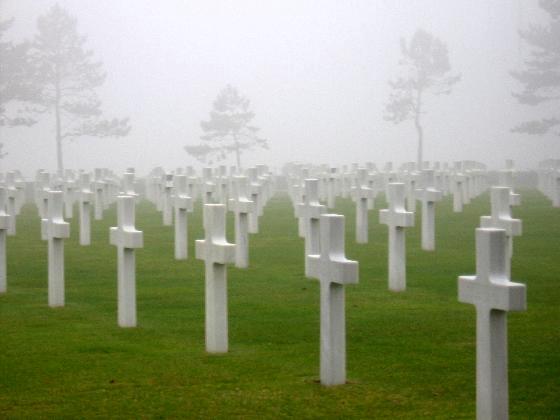
The countless white crosses stand mute in the sand
To man’s blind indifference to his fellow man
To a whole generation that were butchered and damned
Did they beat the drum slowly, did they play the fifes lowly
Did they sound the death march as they lowered you down?
And did the band play the last post and chorus? Did the pipes play the flowers of the forest?
Ah, young Willie McBride, I can’t help wonder why —
Do those that lie here know why did they die?
And did they believe when they answered the call…
Did they really believe that this war would end war?
Well the sorrow, the suffering, the glory, the pain —
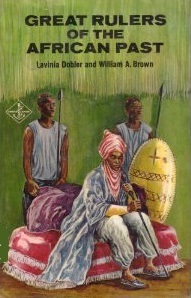
Most of African history is a complete unknown for me; what few kings I can name outside of Egypt and Carthage are familiar to me only through the Civilization series, namely Shaka and Mansa Musa. While in the future I would like to do a study series and get to know the cradle of humanity better, this brightly-illustrated book will serve a taste. It is a history of five men — three Muslim, one Christian, one whatever-makes-you-stop-bothering-me — who created legacies for themselves, either by conquering far and wide or by relentlessly attempting to connect to the outside world and enrich themselves through trade and courting scholars and technicians. Three of these lives unfold in northwest Africa, along the Senegal and Niger rivers; one is set close by, near Lake Chad; and one is alone in being set in the Congo. This book’s size and style indicate it was intended for younger readers, say perhaps middle schoolers, and there are explanations of important places and people which surface, like Mecca — which two kings here make pilgrimages to.
The men chronicled are:
Mansa Musa of Mali, a pious and highly admired king who journeyed to Mecca;
Sunni Ali Ber, forger of the Songhai Empire, who built an empire nearly the size of Western Europe, but disappeared abruptly on campaign
Askia Muhammad, general of the armies to Ali Ber’s successor-son, whose political cluelessness so angered his Muslim subjects that they encouraged Muhammad to seize the throne
Affonso I, a young prince of Congo who converted to Christianity after Portugal initiated first contact between Europe and southern Africa; he was alone in his family in taking the new religion seriously
Idris Alaoma, another king who died in battle, but not before he discovered gunpowder weapons in Egypt and arranged to have some brought home
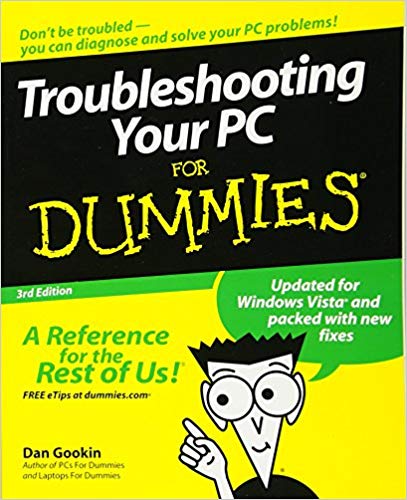
As soon as I opened this package I knew I’d goofed. “Now Updated to Support Vista!”? …well, it’s by the same author as the version I thought I was buying, and I do in fact have a Vista machine which I’ve refused to let die because it can play games that simply don’t play nice with Windows 10. Even if the specific steps are different, the general steps may still apply today. So I read it, and…well, I’ll have to be more careful about buying used books in the future. Troubleshooting Your PC for Dummies, 3rd edition, is definitely a intro computer users’ guide; while it assumes users are generally familiar with using Windows, it doesn’t get into the kind of specifics that the most recent edition does.
The above shot is from the table of contents for Troubleshooting and Maintaining Your PC All in One For Dummies, 3rd Edition, notTroubleshooting Your PC for Dummies, 3rd Edition As you can see, it’s a methodical walk-through of everything that happens during the startup sequence, (I assume) offers information on how to figure out if it’s bad RAM or a failing power supply or whatever. The similarly titled but drastically book I’ve just read was far more basic, explaining what common errors meant, reviewing the proper method of uninstalling programs (instead of just deleting their files), running antivirus and system restores , guiding readers to their Control Panel — helpful to beginners who have never explored beyond the desktop and their documents folders.
Although I still want to add a guide like this to my tech resource library, it won’t be this one, given the relatively shallow level of information and the constant attempts at humor which must have been a for Dummies specification. What’s worse, some of the information is…not quite right. For instance, the author tells readers that if the User Account Control window pops up, they’re probably in the middle of something they shouldn’t be doing. As someone who frequently customizes games — adding clothing and objects to The Sims, say, or custom maps to Civilization — the UAC was a chronic nuisance, refusing to allow even my admin account to unpack files from compressed folders into the Program Files directory, even after I authorized it. I wound up creating a “landing” folder in a directory UAC wasn’t so touchy about, unpacking items there, then moving them from the landing to their intended directory (with UAC demanding I confirm the action, not to be ignored). There’s probably a way to turn UAC off, but I wouldn’t want to disable Windows calling foul on any actual intrusions. In sound troubleshooting, the author suggests a system restore before users have even made sure that a volume problem isn’t just limited to one file, or one program.
Happy Monday! (Or Monday evening, depending on where you are…)
My NaNoWriMo is off to a promising start, as I’ve been logging just over 4,000 words per day, well over the 1667 minimum average requirement. That is completely unprecedented for me; usually I have a strong first couple of days, and two weeks in I’m struggling and just typing stream of consciousness garbage to make any wordcount headway at all. I think the amount of time the particulars of this story have been rattling around in my head has helped grease the runners, so to speak, and I’m going to ride this lead as far as I can. Having a five-point overview with a partial sketch of the narrative also helps. Essentially I have an ensemble group of four factions (a fifth will be introduced at the climax) and am visiting each faction-figure once in turn, a la Harry Turtledove. I’m 1.5 “turns” in.
Last week I finished a couple of books that I won’t be dwelling on in a full review. I should at least mention them, however. The first, Fear, is a history of the first year of the Trump administration, or rather a review of some of the more alarming episodes of that period like the twitter war with the Kim cult, the creation of an economic policy cut from 18th century mercantilist playbooks, and the ongoing chaos of interior organization. Like Fire and Fury this is less an expose than a recap, as we’ve all seen this unfold in public and even Trump supporters I know aren’t sure how to make sense of everything that comes out of DC these days.
The second book I finished in the week was Bikeonomics, a bit of bike advocacy which hails bicycles’ salulatory effect on health, the urban environment, and the bottom line . Unfortunately, I’ve encountered all that before through On Bikes, so it was a bit of preaching to the choir for me.
The Bicycle Diaries combines travel and climate-change advocacy, both literally as a trip and throughout the book. As Kroodsma makes his way through Mexico, Central America, and the mountainous roads of South America, he talks to locals, from retired presidents to impoverished farmers, about the ways their landscape is changing and discusses with them the ways climate change will further alter their homes, health, and livelihood. The book is thus a tour of these regions by bike and a survey of the various ways climate will affect the future, as seemingly every place he visits is imperiled either by development or by climactic alteration.
Although Peruvian villagers aren’t exactly a primary source of problematic emissions, developing countries and their poor are the most at risk to future changes, and Kroodsma wanted to increase awareness on all fronts – communicating what he knew to people young and old as he cycled, learning from his discussions with people about their experiences. This a tale with great appeal, from the travel descriptions of varied landscapes (the beautiful Andes, salt flats the size of New Jersey, stupefyingly rich forests, to the candid interactions with people from the poor and marginalized to the wealthy and powerful. Kroodsma is continually amazed by the hospitality of strangers over the course of the year, and challenged by the fact that many people seem happy with their lives despite having so little. The spread of the internet into very remote places was also a pleasing surprise, as it meant more opportunities at less expense. The virtue of bicycles comes up quite often, as you might imagine — from their travel merits (making it easier for Kroodsma to interact with people), to their environmental impact, to their role in making cities more livable places.
It’s November first, and that means it’s National Novel Writing Month! Every November for the last nineteen years, hundreds of thousands of people across the world devote themselves to the goal of writing a 50,00 page story. I did this successfully in 2013 and 2014, though in the years that followed I’ve either failed or not started. This year I’m more prepared than I’ve ever been, with a story based on a scenario I designed for Heroes of Might and Magic II a…long time ago. We’re talking pre-9/11 here. I have an outline, a map, a dramatic climax, a horrifying plot twist….all I lack is an ending. One bridge at a time, though. Here’s the plot synopsis I posted on NaNoWriMO’s forums:
“A storm is brewing over the twisted mountains of Akkadia. In the north, the merchant-prince Ali has returned to find his clan’s camps destroyed, his farms and mills burned, and his young family dead. There are no survivors to expose who has done this, but Ali knows only man powerful and treacherous enough to attack the Brotherhood: Sargon.
To the far southwest, separated from the land by a great ocean, an ancient wizard has been awakened from his sleep to learn that his daughter was kidnapped. Though once an advisor to the ruler of men, the tragically slain and long-mourned-over Khan , the wizard retreated to his frozen island kingdom after a great war decades ago, despairing of mankind, and has long left the people of the mainland in peace, however much they fear his power. But now they have taken his daughter, envying her power and beauty, and they must pay. Who could it be? Rumor has it that one king on the mainland is anxious for an heir: the sonless Sargon. In the southeast, the murder of the king nearly destroyed the small kingdom of Okan, as brothers fought against one another to claim the crown. Now, the two survivors look with bitterness to the north, and prepare to avenge their dead father — for the man whose hands were red with blood wore the ring of that jealous northern neighbor…Sargon.
Decades ago, Sargon left his homeland and tried to find adventure in the north. He found a land riven in war against darkness, squabbling states beset by an army of foul beasts and sinister magic that would command even the dead. The war left much of the land wasted and barren, and many quit it in despair. But Sargon was ambitious and resilient, and from the ruins he built an empire for himself, his dominion limited only by the lifeless mountains in the north, the cursed swamps to the south, and the dragon-guarded ocean to the west. He has never known complete peace, but a lifetime of war has made Sargon its master. From his castle in the barrens, Sargon reigns happy — and unsuspecting.
Might, guile, and magic are soon to be arrayed against the warlord, but there are darker storms a-brewing, and evil waiting to be waked. “
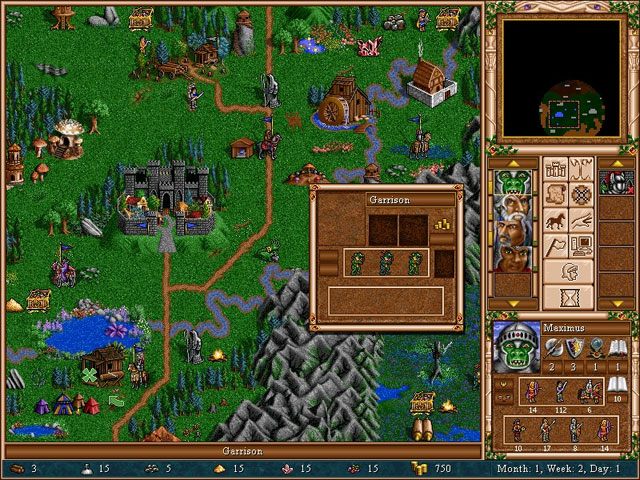
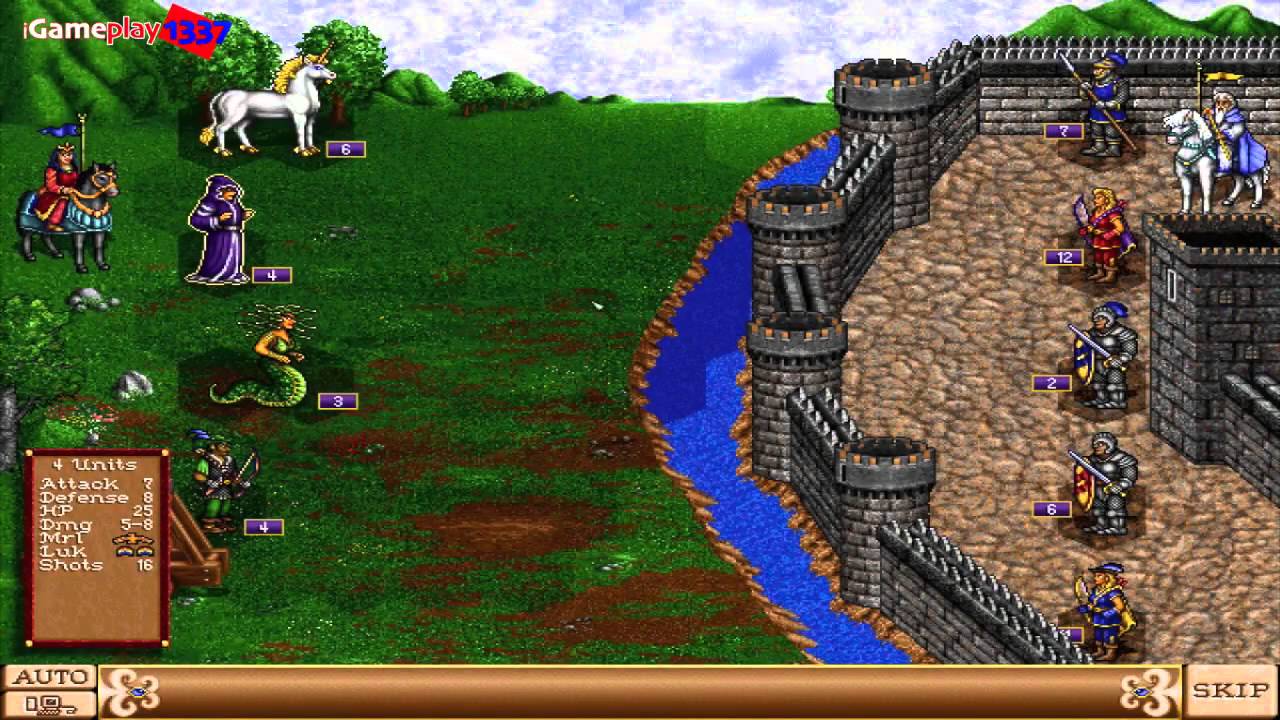
As hinted from some of the names, I’m drawing on Earth’s history and landscapes for inspiration, using a range from the Mesopotamia to the Indus for the areas mentioned in the story. (I also recently read The Prince in part to give me ideas for Sargon’s ruthless performance as a ruler.) Just for laughs, here’s a couple of screenshots from Heroes of Might and Magic 2. These aren’t my own, and they aren’t from my scenario which was on a computer long lost to me. (It disappeared into a storage shed long before I had any inkling that data could be recovered…) The story is inspired only by the plot of my scenario, not by game mechanics. It’s been so long since I played HoMM2 I can’t even remember most of the units, beyond the usual suspects of dragons, genies, and sword-wielding skeletons.