Status Anxiety

Status Anxiety
© 2004 Alain de Botton
 306 pages
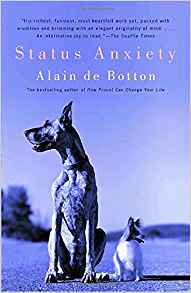
Who said “comparison is the thief of joy”?  If they hadn’t, Alain de Botton would, as here he argues that most of our misery comes from the constant comparison of ourselves to others — to their lives, their wealth, their accomplishments.  A book addressing that — marshaling philosophy, art, and religion to diagnose and combat the problem — is arrestingly relevant these days, as it’s never been easier to compare ourselves with our friends, our neighbors, and the people who we went to high school with and who are doing so much more with their lives than we are.  That said, however, it’s incomplete, treating  the human concern for status as something wholly new, something spawned by modern economies and the decline of religious perspectives which once reminded us again and again that we are more than the sum of our parts, that our true valuation lies in something else — like our being created in the image of God, for instance, and possessing inherent dignity. (It should be noted that de Botton is not himself a believer in any creed; he simply appreciates the strengths of religiosity for people and societies, and is presently engaged in creating a secular substitution he calls the School of Life. It sounds a bit like one of those things participants describe, then add “But it’s not a cult.”)  My chief gripe here is that I believe concern for status stems not from economy, but from biology, and de Botton never goes near this.  If chimpanzees constantly wrestle for status within their tribes,  it’s not a farfetched idea to me that humans do something like that as well, and that this instinct has been made a constant obsession by the factors he mentions. That said, I rather liked de Botton’s prescriptions, from Stoic philosophy to an engagement with music, literature, and other art that reminds us of our common frailty.    He’s still one of my favorite people to read, with a graceful pen and a thoughtful mind.
Posted in Reviews | Tagged , , | 3 Comments

Well, this is unsettling

In the last couple of months I’ve received spam comments that were eerily good at sounding human. Only the fact that they have nothing at all to do with the posts gives away that they’re spam, but what really gives me pause is the fact that I don’t see the hook. There’s no link to anything in any of these.  Maybe that’s because they haven’t been approved as comments, but I’m not convinced that’s the case.

Posted in General | 7 Comments

The measure of a man

I am presently reading Status Anxiety by Alain de Botton, and in it he quotes a bit from Michel de Montaigne which is worth sharing.

“A man have have a great suite of attendants, a beautiful palace, great influence and a large income. All that may surround him, but it is not in him…Measure his height with his stilts off; let him lay aside his wealth and his decorations and show himself to us naked….What sort of soul does he have? Is his soul a beautiful one, able, happily endowed with all her functions? Are her riches her own or are they borrowed? Has luck had nothing to do with it? ….That is what we need to know; that is what the immense distances between us men should be judged by.”

p. 188.

I couldn’t help but be reminded from a quote from Marcus Aurelius, too:

“Everything in any way beautiful has its beauty of itself, inherent and self-sufficient: praise is no part of it. At any rate, praise does not make anything better or worse. This applies even to the popular conception of beauty, as in material things or works of art. So does the truly beautiful need anything beyond itself? No more than law, no more than truth, no more than kindness or integrity. Which of these things derives its beauty from praise, or withers under criticism? Does an emerald lose its quality if it is not praised? And what of gold, ivory, purple, a lyre, a dagger, a flower, a bush?”

Posted in quotations | Tagged | 2 Comments

The Big Ones

The Big Ones: How Natural Disasters Have Shaped Us (and What We Can Do About Them)
© 2018 Lucy Jones
256 pages

Earth is not a peaceful place; even it were stripped of all life, it would still teem with energy, from vast tectonic plates below, to the rolling seas and fantastic lightening storms above.  Much of that energy is put to use by human ingenuity, but sometimes it lashes out in displays that destroy hundreds or thousands of lives and undermine what we’ve built. The Big One reviews some of the greatest recorded disasters to strike human civilization, mixing science and history, and closes with some general advice  to the public on how to think about disaster preparation and emergency management.

Jones’ background is in seismology, so it’s probably no surprise that most of the disasters chronicled here are earthquakes. But disasters that  make history — the ‘big ones’ that people remember  — are rarely by themselves. The great San Francisco earthquake, for instance, did great direct damage, but its greatest impact was the fires it helped create and feed.  Likewise, for the Fukushima affair; the earthquake and tsunami that struck Japan were formidable in themselves, but they compromised and accelerated the demise of a nuclear reactor and led to an altogether different kind.  The most recent ‘big ones’ covered in this book are the Christmas 2004 tsunami that affected sixteen countries and killed nearly three hundred thousand people, and the Fukushima event.  There are some here which have nearly no name recognition (like the massive earthquake that struck immediately after the chaos of the Cultural Revolution in China, and some I’ve seen mentioned in other books, like the earthquake and fire that destroyed over eighty percent of Lisbon in 1755. 

In addition to discussing the science behind disasters — why they happened, what specific forces are causing various calamities, why some earthquakes are more disastrous than others  — Jones also addresses the long-term effects of these disasters when possible. The timing of the Lisbon earthquake — on All Saint’s Day, during the morning when all the churches were full of faithful parishioners celebrating the memory of saints present and pass —  could not have been better timed for mass death, and it shook the faith of many, just as the Holocaust would centuries later.   Japan and China’s traditional way of explaining disasters, as distortions of yin and yang, would be challenged by “big ones’ during the dawn of modernity as well.  The disasters around the Mississippi — a great flood and then Katrina — also  bring up a discussion of race, and the US government’s first forays into federal emergency management. Jones defends FEMA during Katrina, however, arguing that the great failures there happened on the ground, as both the city and state officials were not communicating with one another or with FEMA enough to be at all effective.   In one of the few non-earthquake examples,  Jones points to greater international information-sharing as a result of the 2004 tsunami.   (Which…was triggered by an earthquake. We’re really never far removed from that!)

All said, this is an interesting history of how  a few earthquakes have altered nations’ responses to disaster response, driving the desire to learn about them and find realistic politics to cope with the aftermath — topped with advice to citizens at the end that’s a little generic (“Educate yourself”). It’s not as wide-ranging as I’d hoped, since most of the disasters were earthquakes, but keeping this subject in mind is good for any citizen today. Future disasters will effect proportionally more people, as the global population swells and concentrates, and as the globe becomes fully industrialized we will have more distortive effects on the environment.  Emergency awareness and management should be near to the forefront not just for citizens, but for every level of government.

Posted in history, Politics and Civic Interest, Reviews, science | Tagged , , , | 8 Comments

Happy City

Happy City: Transforming Our Lives through Urban Design
© 2013 Charles Montgomery
368 pages

City air makes one free, but — happy? Throughout the 20th century, Americans fled the urban centers seeking Arcadian bliss. They didn’t find it, and despite an abundance of material wealth the nation continues to writhe in anxiety.  We’re addicted to medication, legal or otherwise;  many live lives of quiet desperation, and others lash out violently in scenes that horrify the imagination.  The suburban experiment was a failure from the start, says Charles Montgomery, because we were made for one another. In leaving the cities to decay, we uprooted ourselves from the social fabric which sustains us. It doesn’t have to be this way; we can come home to the village, even to the city. We can restore our cities to the picture of health, and ourselves in the bargain. Montgomery’s Happy City is a masterful work,  bringing together Greek philosophy, urban economics, and social commentary.

Why care about the city? Globally, the human race is half-urbanized, using a loose definition for urban that includes suburban sprawl. The semi-urban forms we choose to live in can either contribute  to our well-being by meeting our needs, or they can serve to frustrate us. Montgomery opens  with a review of what constitutes ‘happiness’  and its connection to the urban form. There are sound objective reasons for wanting to make the setting of most human lives ‘better’;  traditionally-planned cities are more economically productive and allow for both greener and healthier lives by making it easy for people to walk or bike to work, for instance. Montgomery touches on these arguments, but he’s not just writing to city planners or mayors who hold the fate of others in their hands. He writes to appeal to the common citizen, someone less interested in return-on-investment breakdowns and more concerned with the quality of everyday life.  Being able to walk to work or shops is good for our bones and good for the air, but it’s also good for our spirits; we’re not dependent on a car, we’re out in the fresh air, we’re seeing and being seen.  There are material pleasures to consider, of course; the concentration of diverse restaurants and stores in dense neighborhoods, and the bliss of pedaling down to the library through leafy streets , but there is more to the human experience than simple sensuality…even though there’s nothing like a well-placed park to relax stressed brains.

We are political creatures, wrote Aristotle, not because we like to vote and share “Hooray For Our Side” memes on Facebook, but because people like other people. We like to watch people; we like to bump into them   We don’t like to be crowded against people, however; there are tricky dynamics at work that the design of cities and the buildings within have to account for. There’s a big difference, for instance, between apartment buildings that are designed around impersonal corridors, and those designed around suites that allow people to occupy a goldilocks area between the private and public realms. The front porch of southern homes in the US had the same effect in detached housing, allowing just the right amount of engagement and privacy. Montgomery is sneaky, exposing readers to brief chats about building codes  and housing policy while offering touching stories about people coming together to make their lives together.  In one neighborhood, for instance, residents turned an intersection into a public square by painting it and filling it with places to sit and talk.  They did this over the protests of the municipal government, which had steadily ignored residents’ request for traffic-calming measures at that intersection.  A happy city is one where people can be agents in their own lives. Montgomery also stresses that a happy city is one that works for everyone, where even the poor and marginalized can feel like members of the city, and not just clients of its social services office. He goes into many examples of how even something mundane like traffic infrastructure can frustrate or quicken the ability of a person to thrive.  

Happy City is a supremely thoughtful book on what makes happy, and why urban design is important  in cultivate it.  America is plainly in a bad way judging by the politicians we favor with success.  Maybe we don’t know what we want — from one another, from the places we live. I think Happy City can help with directions. When I first heard someone speak on the importance of the urban form to human flourishing, I was blown away by the insight — and that came from a grating critic. Montgomery is far more amiable, though not less impassioned.  The book itself offered a look at places that were healthy and growing more so, and both the information it provides and the examples it shows are tremendously encouraging.  

As a final note, this review has been a work in progress since  2015, and the state of it above is more or less the state it’s been in since then. I’ve read the book twice since then, and re-skimmed it a few times more, and every time I just can’t hit the button.  Maybe I just don’t want to stop thinking about the book? At any rate, it’s one of my very favorites. 


Related:
Bowling Alone, Robert Putnam
The Great Good Place, Roy Oldenburg, both on the human need for connection and ‘place’.
The Geography of Nowhere, James Howard Kunstler, a history of suburban malaise
Walkable CityPedaling Revolution, and Straphanger 
It’s a Sprawl World After All, Douglas Morris, focusing on sprawl’s impact on the human need for community.
The Death and Life of Great American Cities, Jane Jacobs; Thoughts on Building Strong Towns, Chuck Marohn; and Suburban Nation, Andreas Duany
Posted in Politics and Civic Interest, Reviews | Tagged , , , , | 5 Comments

The Skeptic’s Guide to the Universe

The Skeptics’ Guide to the Universe: How to Know What’s Really Real in a World Increasingly Full of Fake
© 2018 Dr. Steven Novella, Bob Novella,  Cara Santa Maria, Jay Novella, and Evan Burnstein
512 pages

…wow.  Okay, so…back in 2006 I found a weekly podcast that was so consistently good that, even on a dial-up connection,  I had no problem spending four or five hours every week downloading it, just for an hour of content. It was The Skeptic’s Guide to the Universe, hosted by several brothers and a couple of friends, sharing science, skeptic, and tech news, playing games, etc.  It often featured scientists like Neil deGrasse Tyson and Richard Dawkins as interviewees,  and was for a long time my absolute favorite podcast.   I still listen to it on a regular basis thirteen years later, and I never had any doubt that I’d buy and read this book.  However, I didn’t.  Instead, I discovered that there was an audible version…..featuring the primary host of the show, Steven Novella.    So I listened to SGU Audible, instead, and — well, it was delightful, and even opens with the SGU theme music.  Here’s the short version: The Skeptic’s Guide to the Universe is the best guide to critical thinking since Carl Sagan’s The Demon-Haunted World, and even surpasses Sagan as far as depth of content goes.  If you’re a regular listener of SGU, there’s added appeal is not only choice of narrator, but the fact that it ends with the entire SGU panel talking about the podcast and the creation of the book.

When this book calls itself “The Skeptic’s Guide to the Universe”, it’s not kidding. This is not a one-off work to take advantage of the podcast’s popularity, filled with little more than transcripts of old interviews. It’s a fat ol’ book, with a table of contents that runs three pages. It opens with core concepts that everyone should keep in mind, moves to logical fallacies and the like,   tackles pseudoscience both historical and contemporary,  addresses the media and Hollywood, and — by way of ending — dips into the grim results of persistent irrationality before offering ways to change ourselves and the world. Make no mistake: the target of this Skeptic’s Guide is the reader, and that’s obvious from the very beginning when Novella addresses the frailty of memory, as well as other mental snags like our  hyperactive pattern recognition.  The skeptical “rogues” as they term themselves are no strangers to mistakes, as Novella shares later on;  we all have blind spots. I was also taken with the section on trying to communicate with people; one tactic Novella suggests is finding common ground between the skeptic (on a particular issue) and the believer, or something they both disbelieve in — and trying to find a connection from there.  The focus of Novella and company is to find a path to the truth, not prove oneself’s right.

As much as I enjoyed listening to a familiar voice for nigh sixteen hours, framed by familiar music, given the sheer amount of content I find myself wishing now I had read the physical book. For one thing, it’s harder to take notes on an audio book, especially when you’re out doing laps or playing Civilization III. (I was playing Civ3 more often than doing laps, alas.) I’m going to keep my eyes open for a used copy and possibly revisit this one. It’s an excellent resource as well as a fun read, and the panel discussion at the end of the audiobook indicated there are more books on the way.  I’m eagerly anticipating them!

Posted in Reviews, science | Tagged , | 9 Comments

Odd Egg Editor

Odd-Egg Editor
© 1990 Kathryn Tucker Windham
170 pages

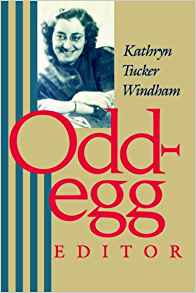
Anyone who grew up in Selma, Alabama, prior to 2011 had heard of Kathryn Tucker Windham, and odds were they cherished her.  A master storyteller, she inspired an annual Tale-Tellin’ Festival that survives today.  Odd-Egg Editor is a brief memoir of her newspaper days, before she became a local legend.  Beginning with the Montgomery Advertiser in the 1940s,  covering the police beat,  Tucker expanded her career to land a position in Birmingham and later settled in her hometown of Selma just as the civil rights movement was warming up in the 1960s.   This memoir has a lot of little stories, with colorful characters — a playful judge who once busied himself creating spitballs during testimony,  an inveterate escapee named Billie Jean who counted herself a friend of the cops and her regular judge– as well as a few sadder stories.  The title of the book comes from Tucker being assigned all the odd stories at the Montgomery Advertiser, and is itself a colorful collection. One could easily read it as two decades of journalism from  mid-20th century Alabama , but I was drawn to it for the author’s voice. Although she was too advanced in age to do a lot of storytelling during my youth, I heard her a time or two at Cahaba Day festivals. Even in her last years she was a volunteer at the Selma-Dallas County Library,  firmly ensconced in the town she loved and which loved her back.  I enjoyed this account of her getting started — of overcoming prejudice against her as a young woman invading male spaces like  the cop beat and the governor’s hunting camp — very well.

Kathryn Tucker Windham, from the second-floor balcony of the Selma-Dallas County Library
Related:
Posted in history, Reviews | Tagged , , , , , , | 4 Comments

Our Time Has Come

Our Time Has Come: How India is Making Its Place in the World 
©  2018 Alyssa Ayres
360 pages

The India of the 21st century is more than  the word’s back office;  by some measures, it has already overtaken Japan as the world’s third largest economy,  and as the world’s second largest country,  its expansion has only begun, with millions more Indians waiting to rise from poverty.   Our Time Has Come is written not by an Indian national, but by an American student who first visited the world’s largest democracy in the early nineties, and saw India’s transformation as it moved away from the failures of socialism and embraced both greater freedom for its citizens, and the technologies of the future.  Now a senior fellow of the Council on Foreign Relations, Ayres reviews the way that India has established a growing role for itself as a world power, and makes recommendations for US policy.

India is less a new power than an old power made new again, Ayres points out in an introductory chapter which reviews the former economic weight of India some two thousand years ago.  India, like China, has a long memory —   and as a postcolonial nation, India’s pride in its own heritage is made stronger by determination not to enveloped by another power once more.   Although Ayres has a section on India’s growing economic importance in the world,  I found India’s strategic and diplomatic expansion far more interesting.    India sees itself as reclaiming its former role as a world leader, and is careful to protect its independence.  It has an especially interesting role at the United Nation, where it’s quite supportive of peacekeeping missions and democracy-building….but reliably refrains from voting for measures which single out one nation or another for abuse, viewing such measures was non-constructive.  India also refrains from taking up joint efforts with other nations on a private basis — preferring missions under the UN flag. (Speaking of which, India is stretching its legs militarily, and intends to establish itself as the predominant power in the Indian Ocean.) Ayers stresses that DC should approach India as a partner, not an ally who will necessarily support DC’s every move:   India and DC’s interests will align more often than not, but respecting India’s need for independence is crucial to building a healthy relationship.    Related is the recommendation that DC adopt the practice of consulting India on a habitual basis when working in the region  — both for its intelligence resources and to build a relationship of mutual trust that makes diplomacy between the two more reflexive and open than occasional and formal.  More controversially,  Ayers recommends that instead of trying to balance focus on Pakistan and India that DC double down on India.  Pakistan is an unreliable partner in the best of times, and now that the Afghan war appears to be winding down (knock on wood), it may be possible to take this advice.  One disconcerting tidbit in this book is China’s chilly regard towards India; while India is eager to move forward in trade and cooperation, China is far less amicable.

Although I found this book quite interesting,  I’m an admitted foreign policy wonk. It’s quite readable, but it goes into a lot of details that might put readers with just a vague curiosity about India off.

Highlights:
“Pakistan sees any sign of Indian involvement with Afghanistan as a threat to its own interests, and as a result has refused to allow India transit access to Afghanistan and beyond—even though connecting Afghans to the region’s largest market would help stabilize Afghanistan’s economy and bring much-needed economic security to the entire region.”

“When the Bush Administration made its breakthrough with India in 2005–2006, some in the Administration and many beyond hoped that India might become effectively allied with the U.S. in its foreign and defense policy. That was an illusion. We can now see clearly that India, a great civilization with thousands of years of history and the self-confidence that comes with it, will pursue its own interests as a 21st century great power. We will not become formal treaty allies. We’ll align on many issues, but we will not be ‘aligned.'”

Related:
Brave New World: India, China, and the United States, Anja Manuel. Another foreign policy guide, but this one appraises both India and China’s merits and weaknesses, and stresses that DC need to tread carefully in not favoring one over the other. I really need to properly review this one this year, because it was a favorite.

Posted in Politics and Civic Interest, Reviews, World Affairs | Tagged , , , , | 2 Comments

Top Ten Tuesday: 10 Recent Additions to my To-Read List

Today the Artsy Reader Girl is hosting top ten lists on recent additions to TBR piles. These are books which are either on my to-read Goodreads list,  are Amazon bookmarks, or were books I took a photo of in the bookstore so I could look for reviews later.

Them: Why We Hate Each Other — and How To Heal, Ben Sasse
Sadly relevant and badly needed, going by the premise. I looked inside while shopping and it had chapter on the decline of civic culture and institutions, meaning it doesn’t just blame social media. (That’s part of the problem, but I’m eager to see what Sasse says. )

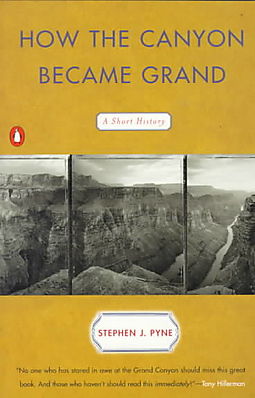
How the Canyon Became Grand and In the Hands of the Great Spirit: The 20,000-Year History of American Indians
Spotted at the Grand Canyon Visitor’s Center. I’d arrived early to watch the sun rise over the Canyon (an experience I recommend, but DRESS WARMLY!), and was waiting for my helicopter flight over the canyon.(Also an experience I recommend. It’s absolutely unforgettable.)

The City of Tomorrow: Sensors, Networks, Hackers, and the Future of Urban Life,  Carlo & Ratti

Antisocial Media: How Facebook Disconnects Us and Undermines Democracy
Although facebook has its uses, it and social media make stable democracy and accurate-enough-to-be-useful news extremely  difficult.

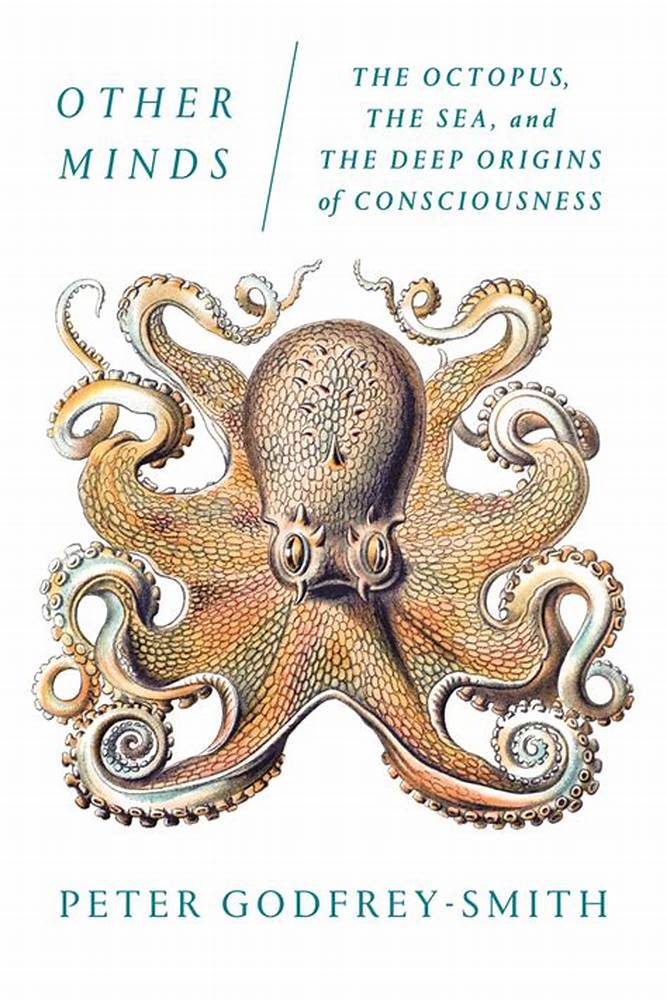
Other Minds: The Octopus, the Sea, and the Deep Origins of Consciousness, Peter Godfrey-Smith
…I’ve given embarrassingly little thought to octupi.  Usually when animal intelligence comes up, it’s always dolphins and chimpanzees.

Human Scale Revisited: A New Look at the Classic Case for a Decentralist Future, Kirkpatrick Sale
The original Human Scale was one of my favorite books of 2014, and I look forward to seeing its updated edition.

Darwin Comes to Town: How the Urban Jungle Drives Evolution
One of my favorite segments of Planet Earth II was the episode on animal life within major cities, and this seems to be devoted to that topic.


The Dictator’s Handbook: Why Bad Behavior is Almost Always Good Politics
I probably don’t need to read this given that it will just validate something I already believe (that power is unfailingly corruptive), but it may have new angles beyond the usual ones.

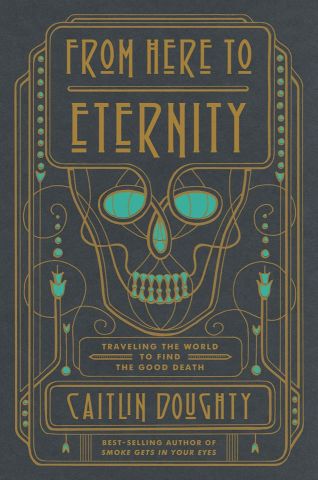
From Here to Eternity: Traveling the World in Search of the Good Death, Caitlin Doughty
A thoughtful reflection on global traditions about death and dying, I think. I was very much impressed by Doughty’s memoir of how she overcame her own fear of death by working in the funeral service.

Posted in General | Tagged | 16 Comments

The Whale

The Whale, or, Moby-Dick
© 1851 Herman Melville
630 pages

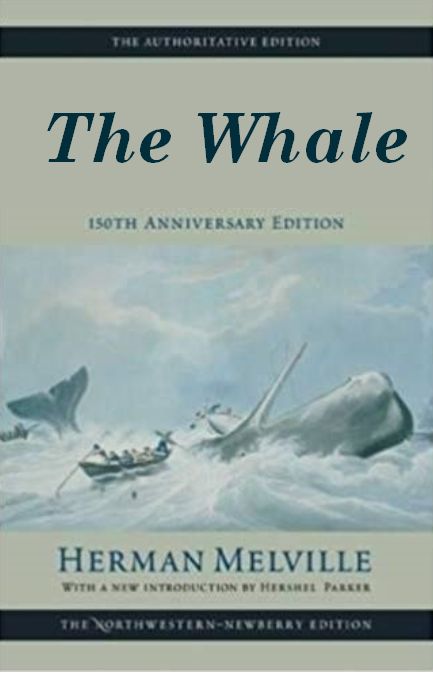
The Whale, alternatively called Moby-Dick,  is a comprehensive  19th century guide to whaling and whales from a novelist who decided to take a hand at writing nonfiction. Such a thing was not unusual in those days, as many people were amateur naturalists — Darwin, for instance, originally intended to be a country parson who dabbled in geology.  Melville used his prior whaling experience and considerable passion for the subject as the basis of his research, though — novelist as he was — he could  not help but insert a splash of narrative into the  scientific survey.   It’s an interesting distraction, of course, but even the spectre of an obsessed captain with a pegleg in search of revenge doesn’t cover over the fact that Melville, for all his interest in the subject, is still…off. He insists that whales are fish, for instance.   The fictional element is quite interesting in its own right, of course,   featuring an young chap with a hunger for adventure befriending a strange man from the far corners of the world, and then being thrown into the rough and tumble world of whaling while the ship sails towards its doom, badgering every other ship it meets with queries on whether they’ve seen The Whale or not.  This fictional aspect has a mythic quality about it, especially given the origins of the name Ahab — a king who angered God by turning to idolatry and who was later destroyed and his body tossed to the dogs in judgment.  Returning, however, to the main course — whales, their behavior,  the hunting of them —  I wish Melville had imposed more organization.  While there’s  a great deal of information here, I don’t quite understand why it’s still regarded as a classic of scientific literature, alongside The Origin of Species and On the Motions of the Heavenly Spheres.

Please note that the above paragraph is a thoroughly tongue-in-cheek ribbing of Moby-Dick, a book that would be as short as The Old Man and the Sea if the voluminous content about whales, whaling, whale-boats, and Wales were removed and the story left alone  I enjoyed this book and this review for all the wrong reasons!

Posted in Reviews | Tagged , , , , | 15 Comments