The USS Alabama

Images of America: USS Alabama
© 2013 Kent Whitaker & Battleship Memorial Park
128 pages


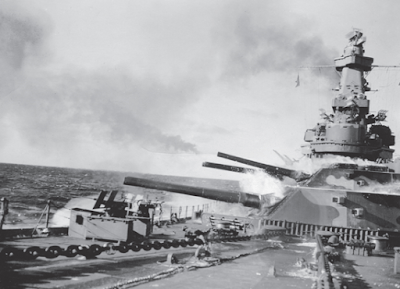
When visiting downtown Mobile, one can’t help but notice the enormous battleship parked in the bay.  It’s the USS Alabama, tenth to bear the name, and its proud history is recounted in this Images of America book which is as thorough as can be hoped for.  Not only does Kent Whitaker (on behalf of Battleship Memorial Park in Mobile) deliver a full history of the ship (which operated in both theaters of World War 2, earning numerous battle stars) and photographs which explore life aboard her, but  the book explores the histories of other ships named Alabama (including the CSS Alabama, sunk by the Kearsage after an illustrious career sinking Yankee shipping) as well as the particular story of how the Alabama came to be rescued from the scrapheap by children, and found instead a home in the port of its namesake state. 

Given that this Images of America book is image-heavy, I thought I’d share a few.

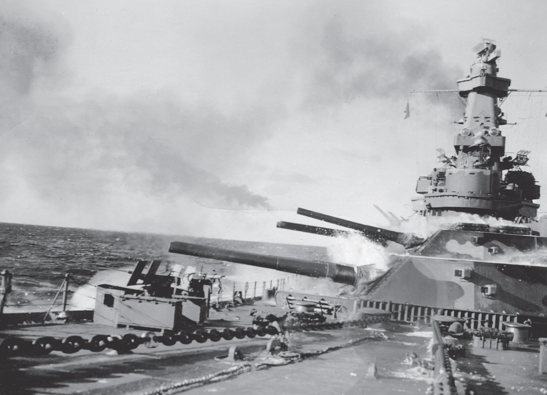
 The Alabama at work

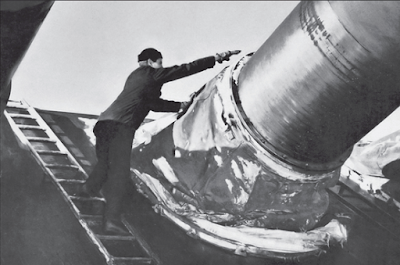
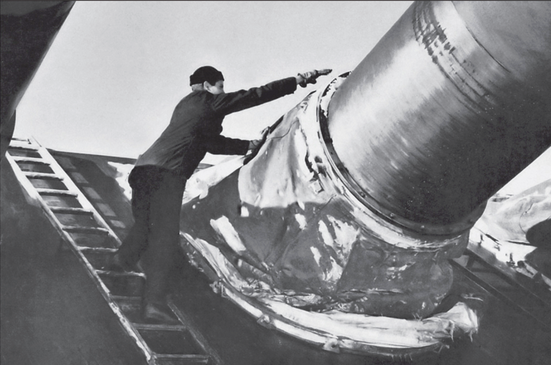
Cleaning the “big guns”, which…are very big indeed. 

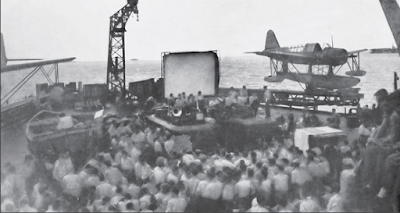
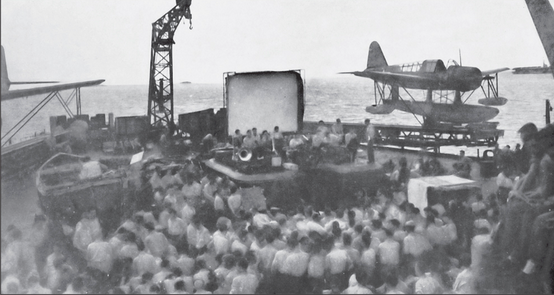
Social life aboard the ship
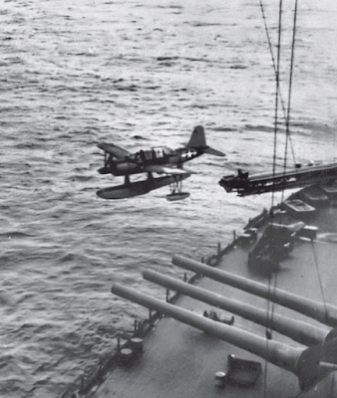
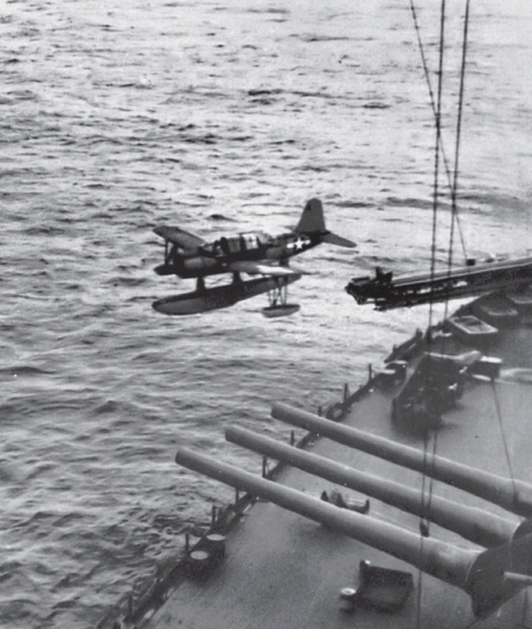
One of the two Kingfisher planes being launched by catapult. These were used for artillery spotting and for search and rescue operations. 
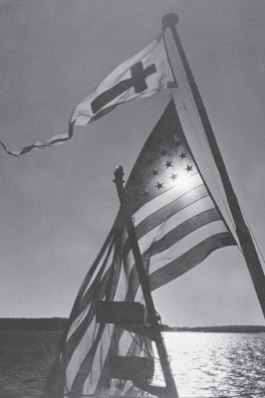
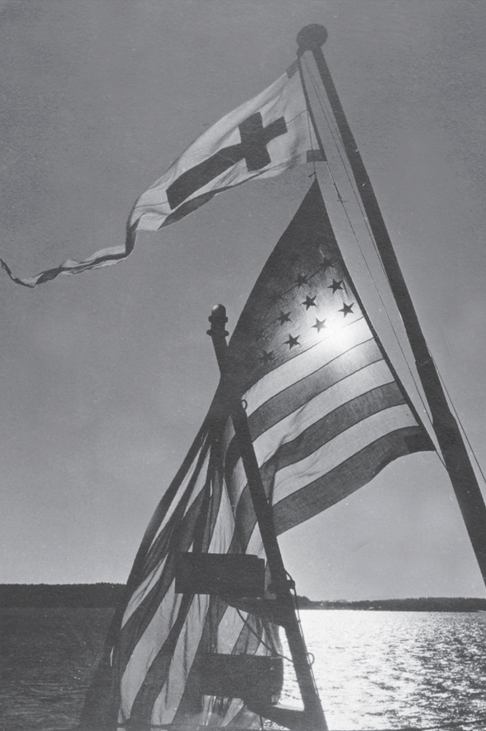
The cross pennant indicated that religious services  were in progress.


Posted in history, Reviews | Tagged , , , , , | 5 Comments

Walkable City Rules

Walkaable City Rules: 101 Steps to Making Better Places
© 2018 Jeff Speck
312 pages

In Walkable Cities, Jeff Speck argued for the virtues of a city optimized for pedestrian travel, and offered ten general guidelines  for making it happen — from checking forces that destroy walkability, to further empowering pedestrians through connections to other transportation.  That pitch was made to popular audiences, but its success allowed Speck to produce a sequel which went into more detail. That sequel is Walkable City Rules, a collection of one hundred (and one) ways to humanize the  modern city. These rules are not idealistic goals; they have already  been put into practice, and there’s nothing here that some city can’t take home.  The rules offer a variety of positive steps cities can take, supported by data to make a case for implementing them.

Speck begins this book with  ways for concerned citizens, public officials, and planners to “sell” walkability to their audience — on the merits of  wealth, health, equity, climate change, and community — before moving to the array of urban design tweaks . Making a city walkable is a complex challenge — not because walkable cities in themselves are difficult to make, but because the last half-century of development has not had walkability in mind, and cities now have to contend not with a blank slate, but vast acreages of badly designed urbanism.  Complexity lies in the fact that walkability is not a matter of good sidewalks; walkability is all about connections between where people are and where they want to be.  That means the question of walkability has a great deal to do with housing, for instance, which is why mixed used development  and inclusionary zoning (mixing affordable  developments in with the more lucrative ones) are so important.   It means that commerce has to be nurtured in the right ways, too, by reducing one-way streets and having parking policies that ensure quick lot turnover.

 Speck often pitches his advice to cities on the basis of making the most of what they have, converting a superfluity of extra-wide lanes into a more modest number devoted to cars, making room for bike lanes and trees. (Trees are vital to a city, Speck argues — not only does their presence slow down cars, but depending on placement they can serve as a barrier between cars and pedestrians, while at the time providing shelter to said pedestrians.)     But the advice isn’t all about engineering: Speck also addresses politics, by advising would be reformers to turn the fire chief into an ally instead of an adversary, and  to avoid thinking of pedestrians, cyclists, and motorists as opposing factions: instead,  he advocates using the language of “people walking”, “people biking”, and “people driving” to emphasize that  human behavior is dynamic and most of us will shift in how we use the city throughout the day — driving to work, say, and then walking a block or two for errands or lunch.

There’s a lot in here, and admittedly it isn’t for everyone: Speck commented in an interview that it’s really meant for the Strong Towns audience, that is —  city planners, engineers, officials, and citizens passionate about  implications of the built environment for civic life, public health, and private flourishing.  I was, however, disappointed in Speck’s occasional abuse of “teabaggers” — and surprised, given that Speck opens the book with an argument for walkability on the merits of fiscal responsibility. Considering that most of the damage done to cities in the last half century has precipitated by ill-advised federal policies (interstates gutting cities, for instance),  wooing libertarians with walkability would be a cinch.  Instead,  Speck indulges in the same unhelpful us-vs-them mentality he warned his readers against.   Considering his camaraderie with members of the Strong Towns movement, however (who vary from sweater-vested Republicans to Oregon hippies), I don’t think it’s deep-seated contempt.  In any case, the good ideas argued for in this book far surpass hiccups in the sales pitch.

Related:

Posted in Politics and Civic Interest, Reviews | Tagged , , , | 5 Comments

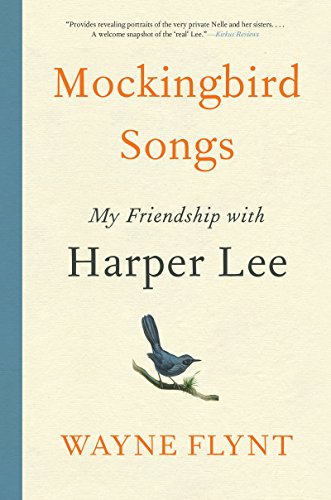
Mockingbird Songs

Mockingbird Songs: My Friendship with Harper Lee
©  2017 Wayne Flynt
251 pages

When I read Poor but Proud by Wayne Flynt some years ago, I never imagined I’d meet the author, let alone help him carry in boxes of books for a book-signing. Such are the perks of working in a small town library. On his last visit here, Flynt shared excerpts from Mockingbird Songs, a collection of letters between he and Harper Lee, bound together by commentary from Flynt about his and “Nelle’s” growing friendship.    They first met through the Flynt family’s friendship with Harper’s sister Louise, but Flynt and Lee were such admirers of the others’ work (and both coconspirators to keep letter-writing alive), that they developed an epistolary friendship of their own that would grow into a full one, complete with Flynt reading  to a bed-stricken Lee whose eyesight was much diminished.  The letters can be both warm and snarky, with most of the snark being levied against those who tried to capitalize on Lee (the town of Monroeville and Charles Shields, an unauthorized biographer, are particular targets). Flynt comments that despite Lee’s reputation as standoffish and intensely private,  the woman he knew was outstandingly warm and brilliantly funny. The two were mutual friends of Kathryn Tucker Windham, the storyteller par excellence of Alabama,  and I enjoyed encountering stories about her, as well — the best being her funeral instructions, in which she informed whatever minister hired to perform the service that people would want to tell stories afterward, so hurry things along.
Posted in Reviews | Tagged , , , | 3 Comments

Locked In (and Unlocked)

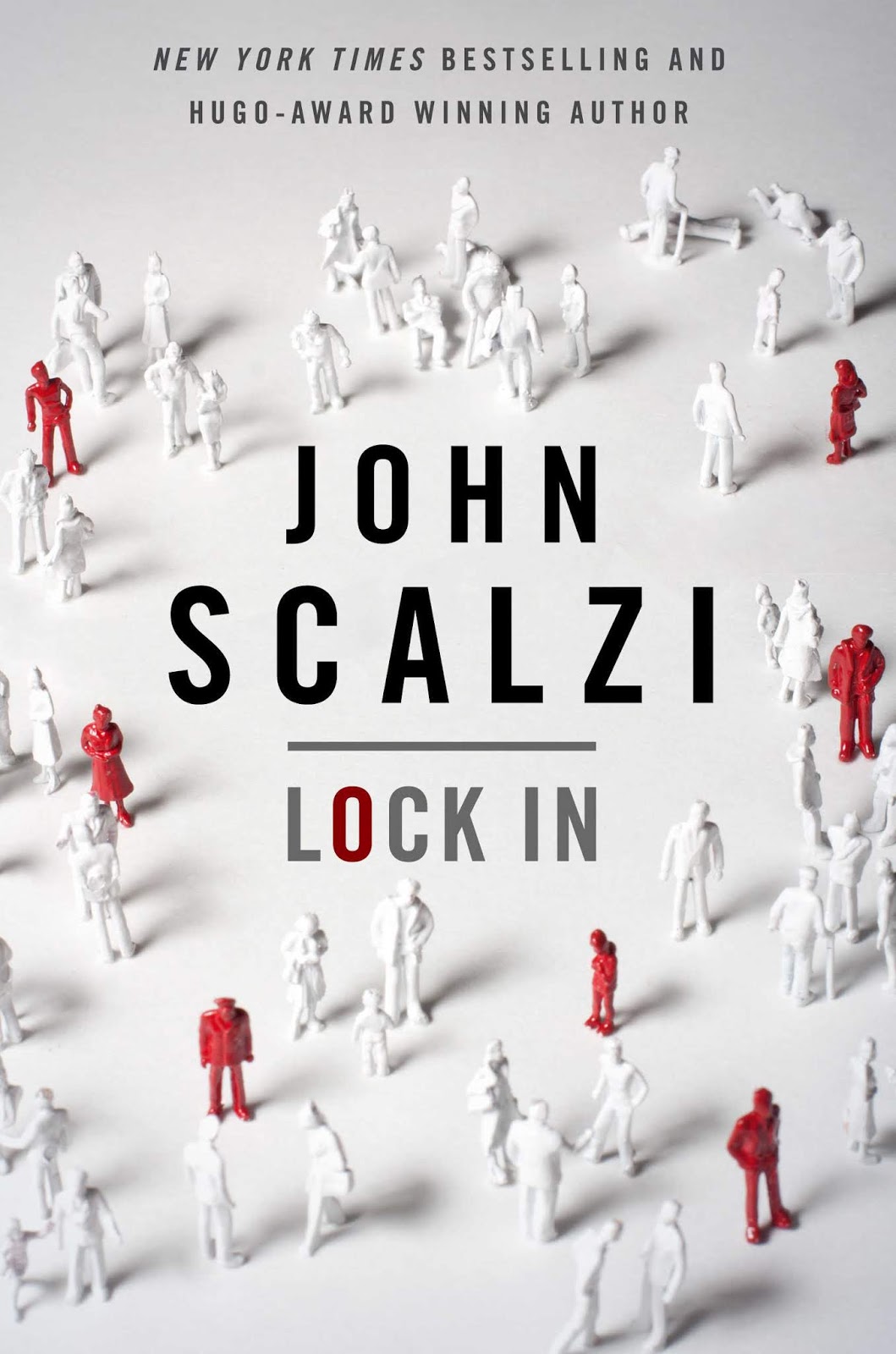
Lock In
and Unlocked, a bonus novella
pub. 2014 John Sclazi
336 pages
Read by Wil Wheaton

It looks, from the outside, like a simple case. There’s a body with a knife in it, recently planted. There’s a man in the room who was in there when said body developed a sudden case of knife-in-chest. Obviously he did it, or at least he saw it happen.   But it’s not a simple case, because the suspect might have had someone in his head at the time.  

…right, that bears more explaining.  25 years ago, a disease swept the planet and reduced the global population by a billion, between the people it killed outright and those it left trapped in their own bodies, their brains so altered by the virus they can no longer  make use of their voluntary nervous systems.  One of the most prominent victims of the disease was the president’s  wife, and  in grief the chief executive threw everything the United States had at the disease.  The three trillion devoted to finding a cure, however, delivered something else: it delivered ways for the locked-in to experience the world through the eyes, ears, and other senses of humanoid robots, or even other humans –  when not otherwise escaping their bodies into the digital playground known as the Agora.   The ability of the locked in to borrow someone else’s body is why this murder is going to get complicated, especially after it turns out that someone’s body can be borrowed without their permission. 

Enter Chris Shane,  one of the first  to use those humanoid robots now known as Threeps, who works for the FBI investigating crimes relating to the locked-in population, commonly known as Hadens after the most famous victim of the disease.   Along with a chain-smoking detective who also has a Haden connection,  they’ll find that the truth is far more complicated still. A police mystery develops, through technological twists and turns,  into a general thriller, and Shane finds a way — with the help of the Navajo nation — to expose the truth.   Although I was worried from the start that the plot would be a little too complex to follow via audiobook,  I was able to keep up fairly well, and the premise is so fascinating in itself that I thoroughly enjoyed the ‘oral history of Haden’s syndrome’ which followed the novel proper. (It’s a World War Z esqe  narrative based on  interviews with doctors, reporters, politicial figures, engineers, etc which explains the backstory in full. It’s a lot more interesting to read after the novel, however,  rather than spoiling the emerging world beforehand.)

Scalzi’s book makes for a fun mystery in itself, especially for those of us who prefer near-future SF.   There are many SF references, of course, the biggest being that the humanoid robots are called Threeps after the first person to use one spotted herself in a mirror sand said “I look like C-3P0!” Lock In‘s world is essentially our own,  except for the mind-controlled robots. The autonomous vehicles so common here are nosing their way into society now, and I daresay it won’t be long before we have glasses or implants to experience the  ubiquitous “digital world” without the use of phones.  The emergence of Hadens victims as a distinct ‘ethnic’ group, or at least a subculture, is particularly fascinating, and I plan to read the next book in this series.

Regarding the audiobook specifically: Wheaton is fantastic, but  there was some obvious line-patching in which the volume and tone of one sentence suddenly didn’t flow with the others. That’s the first time I’ve heard any problems in an Audible presentation, but didn’t detract too much from Wheaton’s otherwise standard-stellar performance.  Unlocked uses numerous different actors for the interviewees, a choice I’m most impressed by. It would have been easy and cheap just to have a pair of male and female authors reading the lines, but the different actors give their personas real distinction, and often definite personality — the stunned doctor and the jaded criminal were especially memorable.

Posted in Reviews, science fiction | Tagged , , , , | 5 Comments

A Forest in the Clouds

A Forest in the Clouds
© 2018 John Fowler
336 pages

John Fowler’s A Forest in the Clouds is his account of studying gorillas alongside famous naturalist Dian Fossey.   Although I picked it up for the gorillas (as one would), the memoir is overwhelmed by Fossey, who by Fowler’s account was an astonishingly eccentric and belligerent woman who viewed the science lab as a necessary evil to allow her to live on the mountain near the wildlife she loved.  Fowler presents Fossey as a  mercurial  control freak who regarded any gathering of students as a potential mutiny and waged a private war against local poachers.  Fowler contends that Fossey had little use for most people, especially the locals who she constantly verbally abused (employing both sounds imitating the gorillas and a polyglot mishmash of profanities to do so), and the amount of time readers spend in this unpleasant company does not make for an enjoyable  book. The narrative is easy to read, but the poor gorillas are nearly relegated to the background;  Fowler writes about what they’re doing often enough, but there’s little to learn about them here, besides the fact that their noses can be used like fingerprints, and they have no qualms about peeing all over a human they’re affectionately holding on to.  I’ve never read anything else about Fossey, so I don’t know if Fowler’s memory is perfect or exaggerating Fosser any. I’ll say this, though: my attempt to find background info on the African setting let me to this stunning photo.

Posted in Reviews, science | Tagged , , , | 6 Comments

Alone Together

Alone Together: Why We Expect More from Technology and Less From Each Other
© 2011 Sherry Turkle
384 pages

Alone Together has been on my to-read list since it was released, though it’s taken me years to actually read it.  It took so long because I have a wariness of reading books which I know I’ll agree with beforehand, unless I’m in need of more thorough information about a subject – but recent citations of this book have brought it front and center and coaxed me into reading it.  Sherry Turkle has been studying human-machine interactions since the computer age began entry into consumer products, from a psychological point of view. Alone Together builds on her previous thoughts on the subject (produced in the eighties and nineties) to suggest that we have grown accustomed to treating things as people, and people as things
. 
I had my doubts about finishing this book at the start, because the first half proved to focus mostly on human-robot interactions, from the primitive (children and their Speak-n-Spells)  to the elaborate,  of people finding comfort in the ‘company’ of robotic dogs with programming designed to simulate personality and liveliness. Turks takes readers then through the changing relationships of the early internet age, as people created new identities for themselves online, and began having relationships – friendly, romantic,  adversarial – with other ethereal identities. Many people who found their ‘real’ lives less than fulfilling (because of their appearance, their poverty, their location)  began disconnecting from one to immerse themselves in  the others.  
There was an important difference between online relationships and “IRL” ones, however: online relationships were far more convenient. A conversation could be ended by closing a window;  an identity could be altered at will.  This posed interesting questions and concerns, especially to those who developed deep friendships with personalities they only knew from behind the screen;   how could they know if the person they’d been hearing the woes of was real, or just a character being played by someone else for curiosity‘s sake, or to express their own problems in another guise?  How much could these relationships be counted on when the parties could simply disappear without a trace?  
When smartphones and social media entered our lives, the odd nature of online relationships increasingly began to define our real ones. Now it was our family and friends whose messages we felt free to ignore;  it was our real-life profiles that we were putting on display.   Ignoring flashing IMs on a computer screen when we’re trying to focus on something else is one thing; ignoring people we’re with  to continually dip into another world is quite another. Turkle suggests that never-present behavior like this has grown to be endemic, as she records the frustrations of teenagers who have fought for their parents’ attention their entire lives. 
There’s a lot of unpack in a book like this,  which is disturbing throughout.  The unsettling content begins with lonely seniors finding some ersatz  version companionship in robotic pets,  whirring dogs and synthetic babies who ‘need’ their attention and make them feel both useful and connected to something.  It returns in full in the latter third of the book, when Turkle focuses on smartphones. I’ve mentioned the teens lifelong struggle to pull their parents away from their phones, but the kids themselves often report to Turkle how overwhelming their own phones are to them.  They may receive a hundred messages an hour, all of which demand a response, and one of them asked aloud – not of anyone, merely voicing his exhaustion — “How long do  I have to do this?” 
A book like this is valuable, I think, for making us aware of our own attentive flightiness. Social media isn’t going anywhere, and here’s no question it adds to people’s lives. But those who are  at all concerned about the way technology molds our minds, or those who are interested in living with intention, rather than simply being  passive in letting technology shape our behavior rather than the other way around will find it helpful, if sometimes discouraging. 


Posted in Reviews | Tagged , | 9 Comments

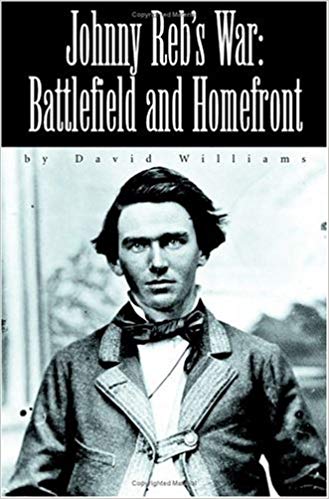
Johnny Reb’ s War

Johnny Reb’s War: Battlefield and Homefront
pub. 2001 David Williams
102 pages

Johnny Reb’s War is a curious collection of two historical articles by David Williams, the contents of which were later encompassed by his impressively depressing People’s History of the American Civil War as well as Bitterly Divided: The South’s Inner Civil War. The two articles review the miserable conditions of the Confederate army (starving, barely clothed, and shoeless by 1862) on the eve of Antietam, as well as the prolonged plight of the southern poor in Georgia at home. The two intersect nicely, because the wretched conditions at the front, combined with the fact that their wives and children were starving, sick, and being plundered by their own government, led to crippling desertion; Jefferson Davis estimated in 1864 that as much as two thirds of the entire army had simply given up.

Those who have never explored this part of the Civil War before, of course, are in for surprises — they will learn, from a source who is by no means sympathetic to the southern cause, that most southern combatants were poor yeomen who rallied to the Confederate banner only when Lincoln announced an invasion; that the wealthy planters who voted for secession not only exempted themselves from fighting in the war, but drastically weakened the army by focusing on cash crops they could only sell to the ‘enemy’, rather than food to supply their countrymen; and that the Confederate government bankrupted its moral support fairly quickly by imposing subscription, suspending habeaus corpus, and not checking corruption.

Williams provides a long train of stories and scathing comments pulled from contemporary newspapers and letters, but — as with Williams’ previous works — I find myself wishing I could find similar information from different sources to get better perspective.  However, this was absolutely worth reading just for the  excuses southern soldiers would render to their superiors for killing livestock in Maryland. One insisted he’d been attacked by the pig and had been obliged to kill the porker in self-defense;  another claimed he’d felt sorry for all the dislocated animals after the battle and decided to put them out of their misery.   A related chuckle came from the report of a Confederate officer who detailed how Lee ordered a man executed for stealing a civilian hog; Stonewall Jackson left the execution to fate by putting the man into the frontlines. When the man survived Antietam, the recording officer noted that the accused had lost his pig, but saved his bacon.

Posted in history, Reviews | Tagged , , | Leave a comment

Of Caesar, Aeneas, and Selma

This past week I’ve been dogsitting in the country, and if you’ve never enjoyed a rural sunset with a glass of wine and Chloe Feoranzo playing in the background, it’s an experience I can recommend. While I was away, February ended, and I realized I hadn’t commented on either of my classics club readings for the month…mostly because I couldn’t think of that much to say about them, really.  I’d already read the ‘story’ of the Aeneid last year or so, and had been watching videos on it in preparation, and by the time I experienced story in verse I was tired of it.   Of The Conquest of Gaul…well, it’s exactly as it says it is, a military history of the invasion of “Gaul”, which here means western Europe and a weekend in Britain, with some sociological sketching on the Gauls and Germans by Caesar.  I found that more interesting than the military business, frankly, especially the fact that the German tribes  viewed agriculture with suspicion and frequently uprooted their own people who settled, lest they grow soft and corrupt.

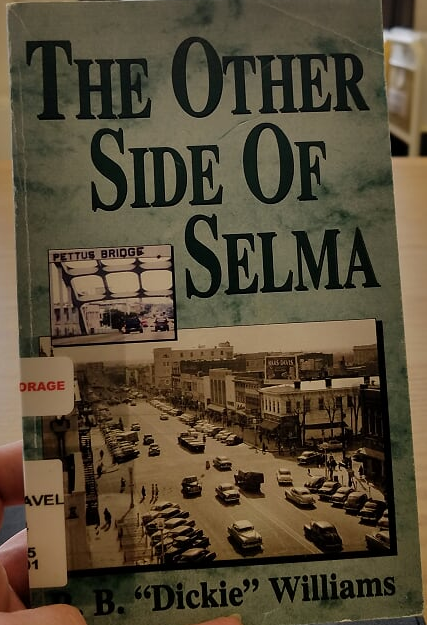
More pleasantly, I re-read a book I stumbled upon ages ago, called The Other Side of Selma.  Though I grew  up here,  I never experienced Selma as a town and place until after college. Before then, I only traveled the commercial sprawl north of the city,  and entered the ‘real’ city only when I needed to visit the library.  The Other Side of Selma introduced me to it as a beloved city, however — a place where people lived and loved, not merely a place for politicians to visit prior to elections and make speeches at. Its author, Dickie Williams, grew up in Harper Lee’s hometown of Monroeville, but often traveled north to Selma for supplies. When he came of age, he began working at Swift’s drug store on Broad Street,, and there began to collect stories he’d heard — mostly funny,   like of a barber in the Hotel Albert who used to entertain people with sayings and tales from the old country of Russia, only to later be exposed by an actual Russian who visited the city and declared the barber’s “Russian” to be  farcical gibberish.  Others are personal, like Williams’ account of being asked by a woman in town how these diaphragms for women were inserted and used.  (This was in the fifties, so young Dickie was highly embarrassed to say the least.)    When I first read this, it made Selma come alive for me in a way it never had been: for the first time, I could imagine the Hotel Albert as a place that people went in and out of, where there were businesses and life, instead of  it being just the name of a building what once was and now isn’t.  I don’t know if that makes any sense, but my interest in re-experiencing that initial joy drove me to find one of two university libraries in the state that have a copy of this book so I could sit and read it. Unexpectedly, it seemed to have more hunting stories than anything else!     Interesting how we can latch on to one aspect of a book and so exaggerate it in our memories.

Posted in Reviews | Tagged , , , , | 3 Comments

Ten of the Most Disturbing Quotes from Alone Together

I recently finished Alone Together and wanted to share some quotes from it while I collect my thoughts. It proved more disquieting than I’d anticipated.  Note:  as I am on my Chromebook until tomorrow evening (I’ve been dogsitting) I’m posting these quotes sans exterior marks so I don’t have to manually adjust all the interior quotation marks.

=================
1. I leave my story at a point of disturbing symmetry : we seem determined to give human qualities to objects and content to treat each other as things.

2. The comparison with pets sharpens the question of what it means to have a relationship with a robot. I do not know whether a pet could sense Miriam’s unhappiness, her feelings of loss. I do know that in the moment of apparent connection between Miriam and her Paro, a moment that comforted her, the robot understood nothing. Miriam experienced an intimacy with another, but she was in fact alone. Her son had left her, and as she looked to the robot, I felt that we had abandoned her as well.

3. A “place” used to comprise a physical space and the people within it. What is a place if those who are physically present have their attention on the absent? At a café a block from my home, almost everyone is on a computer or smartphone as they drink their coffee. These people are not my friends, yet somehow I miss their presence.

4. We are overwhelmed across the generations. Teenagers complain that parents don’t look up from their phones at dinner and that they bring their phones to school sporting events. Hannah, sixteen, is a solemn, quiet high school junior. She tells me that for years she has tried to get her mother’s attention when her mother comes to fetch her after school or after dance lessons. Hannah says, “The car will start; she’ll be driving still looking down, looking at her messages, but still no hello.”

5. The media has tended to portray today’s young adults as a generation that no longer cares about privacy. I have found something else, something equally disquieting. High school and college students don’t really understand the rules. Are they being watched? Who is watching? Do you have to do something to provoke surveillance, or is it routine? Is surveillance legal? They don’t really understand the terms of service for Facebook or Gmail, the mail service that Google provides. They don’t know what protections they are “entitled” to. They don’t know what objections are reasonable or possible. If someone impersonates you by getting access to your cell phone, should that behavior be treated as illegal or as a prank? In teenagers’ experience, their elders—the generation that gave them this technology—don’t have ready answers to such questions.

6 Longed for here is the pleasure of full attention, coveted and rare. These teenagers grew up with parents who talked on their cell phones and scrolled through messages as they walked to the playground. Parents texted with one hand and pushed swings with the other. They glanced up at the jungle gym as they made calls. Teenagers describe childhoods with parents who were on their mobile devices while driving them to school or as the family watched Disney videos.

7 Children have always competed for their parents’ attention, but this generation has experienced something new. Previously, children had to deal with parents being off with work, friends, or each other. Today, children contend with parents who are physically close, tantalizingly so, but mentally elsewhere.

8. Brad says that digital life cheats people out of learning how to read a person’s face and “their nuances of feeling.” And it cheats people out of what he calls “passively being yourself.” It is a curious locution. I come to understand that he means it as shorthand for authenticity. It refers to who you are when you are not “trying,” not performing. It refers to who you are when you are in a simple conversation, unplanned.

9. These young men are asking for time and touch, attention and immediacy. They imagine living with less conscious performance. They are curious about a world where people dealt in the tangible and did one thing at a time. This is ironic. For they belong to a generation that is known, and has been celebrated, for never doing one thing at a time.

10. A 2010 analysis of data from over fourteen thousand college students over the past thirty years shows that since the year 2000, young people have reported a dramatic decline in interest in other people. Today’s college students are, for example, far less likely to say that it is valuable to try to put oneself in the place of others or to try to understand their feelings.29 The authors of this study associate students’ lack of empathy with the availability of online games and social networking.


Posted in General | Tagged | 3 Comments

The Gatekeepers

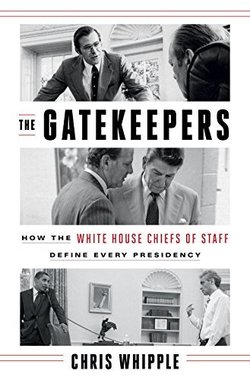
The Gatekeepers: How the White House Chiefs of Staff Define Every Presidency
pub. 2017, Chris Whipple
384 pages

True confession: I never paid that much attention to the chief of staff position within the White  House until I started watching The West Wing, a show marked by its characters’ constant movement and work.  In The Gatekeepers, Chris Whipple introduces readers to the office as created by Eisenhower and Nixon, and then reviews how subsequent chiefs have played a pivotal role in executive success or failure.

Whipple traces modern chiefs of staff to Eisenhower’s administration. Formerly commander of the Allied forces in Europe in World War 2, Eisenhower was no stranger to a complex, demanding job –and he imposed a little of the organization from the army onto the executive office, relying on a chief to vet  requests and control access to his office.   This proves throughout the book to be a critical role played by the chief, though it wasn’t until Nixon that a formal WH staff organization was created.  An abundance of advisers only makes a wash of noise out of otherwise useful information, and distractions keep the executive from accomplishing much of anything. Whipple demonstrates how a good chief of staff can bring order to chaos — demonstrating to a new-to-town Bill Clinton, for instance, that his office was leaching productivity by wandering from topic to topic within the day, rather than focusing on anything at all.  The chief also directs the flow of information by controlling access to the Oval Office: under an active chief, there might be an astonishingly short list of people permitted to access the office at will (a Cabinet officer or two), while others wait for appointments and the chief as chaperone. 
Another vital role of the chief is as the advisory who will and must say to the most powerful man on the planet — “No.”   Some people in DC are evidently aware of the bubble they live in, and aware that the White House can become host to its own private bubble only dimly aware of the reality  abroad and in the world. (The insulating effects of the Oval Office were explored to great effect in The Twilight of the Presidency).   A good chief of staff is aware  of limits to how much is possible, and pushes back when needed, serving to check his bosses’s overreach. This doesn’t always happen, and some of the saddest and most expensive mistakes of modern American history happen because no one pushed back enough.  Because the position of chief is so intense,  they rarely last more than two years — so even an effective chief can quickly give way to one that’s not quite up to the task.

I found The Gatekeepers an utterly fascinating work, and one largely nonpartisan — though Whipple does seem protective of the Clintons,   he doesn’t shy away from documenting the disorder that popped up there.  It’s certainly an interesting lens to see presidencies through — viewing, for instance, Carter’s ineffectiveness as owing to the utter lack of a chief at all for much of his administration.  Although the book doesn’t cover the current administration very much (nor can it, given the publication date),   given the current executive’s willfulness and the highly irregular nature of his own staffing decisions, it is unlikely that a future version of this book would regard its chiefs a success stories.

Posted in history, Reviews | Tagged , , | 7 Comments