How we communicated on 9/11

Pagers, Pay Phones, and Dial Up: How We Communicated on 9/11

I largely avoided social media and the internet yesterday because of the significance of the day. It wasn’t anything pious, a deliberate remembrance;  but I knew what the topic would be, and I just wanted to turn the volume down, so to speak. Today, however, I spotted an article on how we shared the news, circa 2001, and it struck my interest. As I processed the news all day in school,  I distinctly remember worrying about whether the Internet would still be working.   It was, as I remember reading the news online (not something I usually wasted valuable internet time on) and talking about the news at 3DO’s forums, which were the center of my internet existence then.     The article has an insightful conclusion, in which the author suggests that an event like 9/11, if experienced through today’s social media, would not have the same unitive effect, as people would be absorbed by their private experiences of the news,  gleaned from their own various sources (facebook, reddit, 4chan,  twitter, etc),  instead of drawn together.

Quotes:

“The attacks of September 11 might have been the first global catastrophe experienced in real time by hundreds of millions of people around the world. The first footage came almost immediately, from WNYW-TV Fox 5 on its morning show Good Day New York. CNN had a live feed trained on the Twin Towers at 8:49, barely three minutes after the first plane hit.”  […]

“Over the next hour, President Bush was rushed aboard Air Force One, which rocketed into the sky, a move that protected him yet ultimately compromised his access to information. Back then, the president’s plane had no satellite or cable TV nor access to email, so the plane relied on the equivalent of old rabbit-ear TV antennas to pick up local TV coverage as it flew over the southeastern United States. As Fleischer told me, “It put us in a very different spot than most Americans that day. People around the world were riveted to their television sets. We had it intermittently on Air Force One … When you’re in the air, you’re cut off.”

Sonya Ross, the AP reporter in the presidential press pool on 9/11, recalls, “We didn’t know where we were going, but they must’ve been circling, because we kept watching the local feed of a Florida station going in and out. That was our tiny window into the outside world.”

Think about that: For much of the day, those aboard Air Force One with the President of the United States were less informed than the average American sitting at home watching CNN.”

And most startling:
“Eighteen years ago, 9/11 split our lives—dividing the world into before and after. It’s hard not to wonder, given all that has come since and the tools, apps, and social media that have grown to dominate our culture, whether today we wouldn’t simply fit even an event at the scale of 9/11 into our existing routines and rituals. Whether, rather than uniting together in a national moment, we would all put ourselves at the center of the story instead. It seems likely that today we would turn not to one another for comfort, to grieve as a nation, but instead each burrow even deeper into our now ever-present phones, scrolling, clicking, liking, and emoji-ing as the tragedy unfolded.”

Posted in history | 2 Comments

The Courage to Start

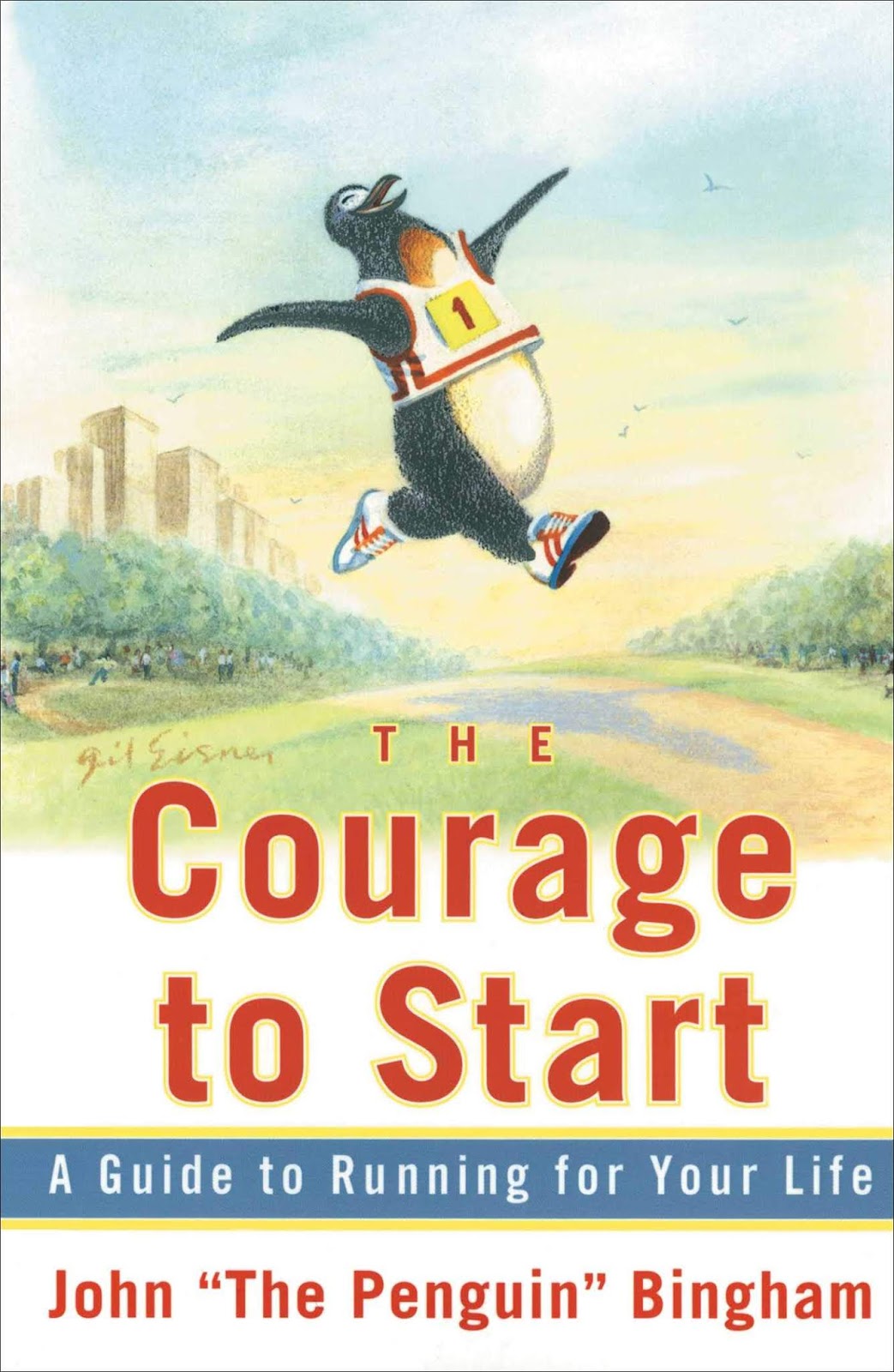
The Courage to Start: A Guide to Running For Your Life
© 1999 John Bingham
208 pages

John Bingham loved running as a kid. He wasn’t any good at it – he flailed his arms and wouldn’t impress any stopwatch-yielding kindergarten teachers with his time – but he found it an innate pleasure.  Every advancing year in elementary school, however, made him increasingly self-conscious about his physical limitations, to the point that he stopped running altogether.  He focused on his music, preferring to take part in physical activities only vicariously, by watching athletes on tv. As  the years passed and his waist grew wider, he occasionally gave thought to running again —  until one day he stood in his garage and just did.  For 20 seconds. The next day he did it again, for a little longer, and the next – until before long, he was running marathons alongside his librarian-wife, who also began running for moral support but soon surpassed even him in passion and strength.

When I bought The Courage to Start, it was under the impression that it was about his journey from an obese couch potato to a mostly-healthy runner, but that isn’t accurate at all.  Bingham doesn’t mention weight loss, and his only mention of diet and nutrition is when he mentions that starting a running habit made him shift to thinking of food in utilitarian terms: as fuel rather than a source of fun, relaxation, or comfort.   The Courage to Start is purely about running – what you need to get started,   what preconceptions you’ll need to ignore to continue, and what joy it can bring to your life.  Bingham’s message is simple: if you want to run, run.    Don’t worry about the fact that you can’t go further than the edge of your driveway without your lungs mutinying:    just do it again once they’re rested.   Bingham’s discovery was that his body responded to movement: the more he did it, the better he got.   He  provides a nine-week schedule for newbies from the couch to regular running status, but it only suggests “movement”, and Bingham suggests that readers do a mix of walking and running that feels right to them.   (The Beginning Runner’s Handbook has a more detailed schedule to guide walkers into running.)     The latter part of the book is taken up with racing and the fruits thereof –   the courage to endure.

Is The Courage to Start for you? Well, if you’re on the fence about running and you want to start but lack the nudge, then it will probably do the trick. If you’re simply considering it, probably not: Bingham’s book strikes me as written to someone who already has the bug. Aside from the chapter on what to look for in running shoes, there’s not a lot of hard advice;  Courage is more a work of encouragement than education.


health

Posted in history, Reviews | Tagged , | 1 Comment

A purloined book survey

I’m shamelessly stealing this from Cyberkitten!
What is your average monthly budget for books?

Officially, my entertainment budget allots $20 for books.  It is usually exceeded a little bit. $30 would be fairer, but I’ve decided to place myself under an Amazon/Steam interdict until Christmas.
What’s the most you’ve ever spent in a bookstore?
I have technically spent $50 in a bookstore, but that was spending gift cards. Mostly in bookstores (BooksAMillion is the one I frequent), I drink coffee and look at new arrivals, taking pictures of ones I like until I find used copies of them.  I DO buy Star Trek books and the odd magazine, though.  Whenever I find an indie bookstore on vacation, I try to find a book to buy in support.

Are you willing to pay full price for a brand-new release or wait until there’s a sale?

I almost ALWAYS buy books used or on sale because I’m a self-proclaimed Cheap Bastard.   There are exceptions, however:   I will preorder a Kindle book if the price is right ($12 or under) for certain authors or series.   I’ve preordered all of the Firefly novels, for instance.
Would you rather buy one new book or several less expense used copies?

Depends entirely on the book. I’d be drawn to spending money on several used ones unless the new book in question was from a great author on a great subject.

What do you think is a reasonable price for a hardback, a paperback or an e-book?

I can’t justify spending more than $12 on an ebook, or over $20 for real books even new. I mostly buy used or take advantage of Kindle sales.
Is a signed book worth more to you? How about a 1st Edition?

A signature would only matter if I had obtained it personally, in some exchange with the author, and then mostly to strengthen the memory.

What is your most valuable book?

Probably my copy of Glimpses of World History by Jawaharlal Nehru.  Used copies were selling for $80 – $150 for years, and then someone offered one for $25 and I snatched it up.  I just did a price check and looks like a re-print has pushed down prices, but at the time…

Would you pay more for a different cover or a specific edition of a book that you like better?

Probably not, although I will spring for an original cover if a reprint has been marred by a television drama’s actors.

What physical characteristics does a good quality book have?

Heft, paper thickness, paper texture,  font choice.

If you won the Lottery what bookish things would you be spending on?

If I won the lottery I’d buy land deep in the country where my house couldn’t be seen from a public road. I’d probably build a house centered around a library/reading room with relatively small areas on either side of it.  I’m into simple living, so my actual living quarters wouldn’t need much.

Posted in history | 6 Comments

Year of No Sugar

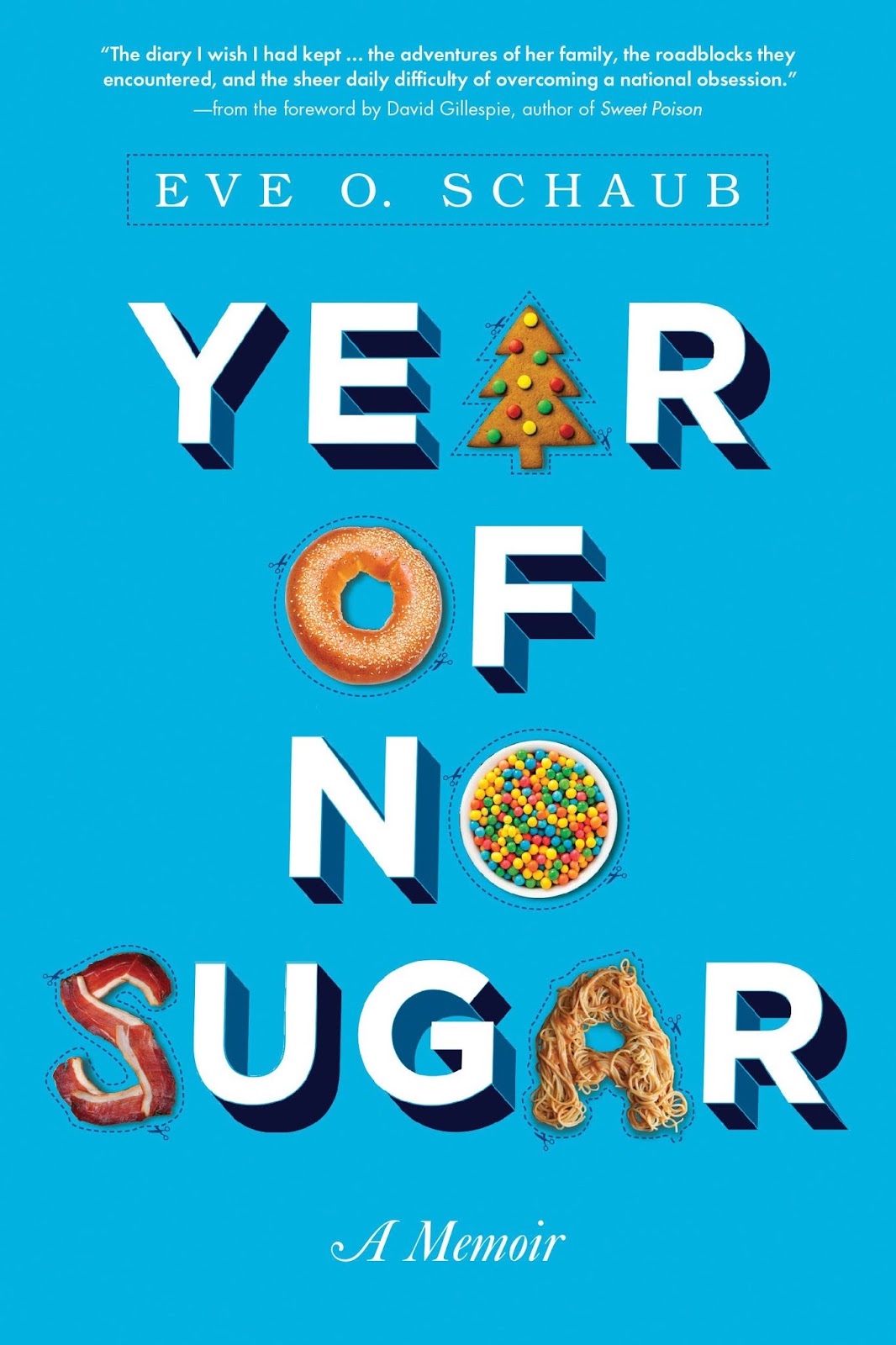
Year of No Sugar
pub. 2014 Eve O. Schaub
320 pages

one

Eva Schaub’s life was changed at a birthday party for children, when a conversation with a fellow mom  made her aware of something called “corn syrup”,  Being the curious sort,  she looked into it and discovered to her further confusion that corn syrup was in seemingly everything from the salad dressing to the bread aisle. Still worse, when she ventured online, she found there were medical researchers arguing that the constituent element of corn syrup, fructose, had such a destructive effect on  the human body that it should be regarded as a poison.  In the spirit of science,  Eve and her health-conscious husband decided that they and heir children would live a year without sugar — just to see if it were possible.  From that beginning, however,  another story matures, one about a family’s changing relationship with food.

Schaub begins her post-sugar reflection with a brief recap of the science that led her to this decision.  Fructose seemingly does nothing positive for the body; it does not satisfy hunger pangs,  and the part of our body that will interact with it is the  liver – which handles like a poison. The fatty agents produced by the liver in the process derail the body’s ability to use insulin effectively, setting heavy consumers on a path towards obesity and diabetes. And then there’s cancer…

If high amounts of fructose were like nicotine, they’d be easy to avoid.  Fructose, however, is in seeming everything that wasn’t just hunted or gathered.  In the beginning, Schaub is forced to nearly empty her kitchen and pantry to get the added sugar out.   As the year progresses, Schaub and her family learn different ways of adjusting;  frozen bananas run through a juicer, for instance,  are readily acceptable as an ice cream substitute.    Although holidays and birthdays were extraordinarily difficult, the family muddled through with the use of once-a-month  dessert cheats, and the continuing discovering of substitutes like dextrose for baking. (Dextrose is a sugar, chemically speaking,, but it doesn’t have the destructive effects of fructose;  the Schaubs weren’t low-carbing, they were just avoiding a particular kind of sugar that damage human bodies.)

The real substance of the book is the Schaubs’ evolving relationship with food.  They begin in ignorance, despite being health nuts, they knew nothing about the ubiquity of sugar in their food, even the supposed healthy stuff like bread and salads. Early on they were forced to become hyperaware of what was in everything they ate, to the despair of waiters who were forced to look up the nutritional info for every dish the Schaubs were considering.  Making their own meals at home – and thinking about how they could improvise around the need for sugar in baking or jams —  made the Schaubs, even the youngest daughter just beginning school, active participants in the choosing and creation of their food.  Food was no longer a consumer good, but a product made by hand. Even after the year ended, in the final reflection, Schaub believes that will not change.  Even though they began tolerating a little more sugar on the challenge’s completion – a weekly desert, a guilt-free imbibing of salad —  they had lost the taste for overly sweet things,  and their daughters’ discovered love for cooking would not disappear.

Year of No Sugar is entertaining, and for those who have never encountered the arguments against sugar,  it may serve well as an elevator version that shifts to a memoir about thinking more deeply about food.    Although those interested in the science that makes fructose problematic would be better consulting The Case Against Sugar or Lustig’s own Sweet Poison,  Schaub’s story will find a definite audience among those who enjoy the works of Michael Pollan, say, or Joel Salatin  — who are disturbed by their relationship with food and wish to change it.


Related:
Why We Get Fat;  Good Calories, Bad Calories; The Case Against Sugar. Gary Taubes
In Defense of Food, Michael Pollan
.The Telegraph (UK) also has an article drawing on Lustig’s original “Bitter Truth” lecture. 
Sugar: The Bitter Truth”, Robert Lustig. Working on 9 million views.
Salt, Sugar, Fat: How the Food Giants Hooked Us, Michael Moss


health

Posted in history, Reviews | Tagged , | 12 Comments

Health Week 2019

health

Welcome to Health Week!    I haven’t done anything like this before, but lately I’ve been focusing a lot on personal cross-training, as well as trying intermittent fasting with an eye of breaking through an old plateau,  and so diet and fitness have been on my mind.  The library is also partnering with a local hospital and the University of Alabama at Birmingham to do a “Medical Matters” lecture series from now until December.  Some purchases and loans all came in around the same time, so  I figure why not make a theme out of it?  It’s well in keeping with RF’s theme of the flourishing life, which can’t ignore our physical well-being.

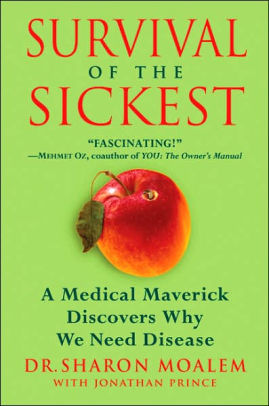
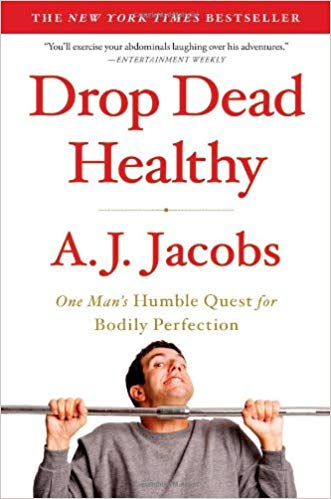
First up will be The Year of No Sugar, followed by (in an order TBD): Spark: The Revolutionary  New Science of Exercise and the Brain; Survival of the Sickest: The Surprising Connection Between Diseases and LongevityThe Courage to Start, the diary of a man who jogged his way out of obesity – starting with a lope down his driveway; and  the presumably hysterical Drop Dead Healthy by A.J. Jacobs, who before has read the entirety of the Encyclopedia Britannica and followed every rule in the Bible over the course of a year.

This kicks off today and ends….whenever I finish the five books!   I don’t expect to be able to read all of them before next Saturday:  the Jacobs book may not even arrive next week. (Earliest due day is 11 Sept, latest projected is 18 Sept.)   I’ll swing as they’re thrown.


Posted in General, history | Tagged | 6 Comments

The dance of nature

So to be crystal clear: everything out there is influencing the evolution of everything else. The bacteria and viruses and parasites that cause disease in us have affected our evolution as we have adapted in ways to cope with their effects. In response they have evolved in turn, and keep on doing so. All kinds of environmental factors have affected our evolution, from shifting weather patterns to changing food supplies—even dietary preferences that are largely cultural. It’s as if the whole world is engaged in an intricate, multilevel dance, where we’re all partners, sometimes leading, sometimes following, but always affecting one another’s movements—a global, evolutionary Macarena.


From Survival of the Sickest: The Surprising Connections Between Disease and Longevity.

Posted in history, quotations, science | Tagged , , | 2 Comments

Of Romans, manly saints, and the beginning of the end

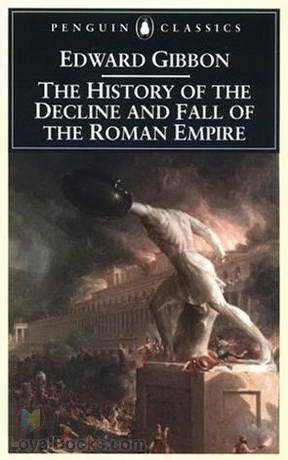
I spent much of August crawling through the first volume of Edward Gibbon’s The Decline and Fall of the Roman Empire.  I was very careful, in making my list, that I specified “Volume I”: I  had little interest in trying the several thousand pages of that history and have…sadly…..less interest now.  The problem is not in the writing – Gibbon’s prose deserves its praise – but in the subject.  If someone remotely pleasant or admirable appears, they are quickly dispatched, thrust across the river Styx before the reader has properly made their acquaintance. For the most part the subjects here are rotten specimens of humanity, and I did not enjoy reading about them.   Naturally in this first volume, we don’t get around to Gibbon’s analysis – the condemnation of lead pipes and unmanly religion —   but already an obvious factor appears: the  disappearance of civil government, which was replaced by the armed might of the Praetorian guard.

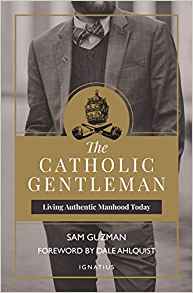
I followed this up with The Catholic Gentleman, which I purchased largely to support the author, Sam Guzman.  I’ve followed Guzman’s blog of the same name with varying regularity over the years, as his topics of interest often intersect my own: virtue, traditional music, and whiskey.   The book is chiefly about the former, however.   As the name suggests, it blends aspects of books on being a gentleman – thoughts about manners and dress —  with Catholic spirituality. There are thus chapters on prayer, on being a servant-leader as a father,  and on combating personal vice – particularly pervasive addictions like pornography.   Guzman provides a fairly well rounded guide to a masculinity inspired by virtue, though obviously it’s going to be mostly of interest to Christians and particularly Catholics.

Given how slowly I crawled through Gibbon, I can’t say I’m particularly excited to try The Histories, which is another great long chronicle of facts, this time knit together with less artful prose.  On the other hand I’m very close to finishing The Federalist Papers – 15  essays away! —  which I’ve been chewing on since  late June.   If you’re keeping score at  home, that means assuming I complete the Final Boss Level of my reading challenge – two enormous Russians back to back —  I’ll be done with the Classics Club come 2020.     But nevermind that, I have to hit Herodotus and the Russians first,  as well as Hugo. It’s going to be an interesting experience,.

Posted in history, Reviews | Tagged , , , , , | 7 Comments

Stoic advice on overcoming anger

In the last couple of weeks I’ve  read a few books on nonviolence communication and  conflict management (How To Be Your Own Bodyguard; Verbal Judo (re-read); and How to Survive Aggressive People).    Tonight, in a similar vein,  I encountered a post from Medium.com that recapped reflections from Stoic authors on how to address anger — that most crippling of human emotions, which leads to the ruin of relationships and nations alike.  Medium  isn’t merely recycling one-liners from the books, either, as one of their contributing authors (Donald Robertson, How To Think Like a Roman Emperor) is a practicing Stoic who  has also done more formal work on Cognitive Behavioral Therapy, which has stoic links.   The entire article is worth reading, but I wanted to share a couple of them which are especially salient, or which are not often enough expressed.   Medium has a more extensive article available here.

1.Recognize it is your opinion that is making you angry.

We often think it is the other person’s action that is making us angry. But, in fact, it is our opinion of their actions that is making us angry. Suppose someone calls you an idiot. Instead of becoming angry you can just ignore him: “After all it is his opinion. I am not an idiot because he thinks I am one. If he thinks I am an elephant I am not going to be an elephant and I am not going to be upset. Why should I get upset because he thinks I am an idiot?” If you are angry because you are stood up, remember it is your opinion that you should not be stood up that’s making you angry. You can get rid of your anger simply by changing your mind about things — ”It’s no big deal if I am stood up”.

2. Recognize anger has consequences.

The first flush of anger feels good. When we vent our anger, we feel elated and righteous. But what we fail to recognize is that anger has consequences. It can damage our reputation. But our anger can have legal, moral or material consequences. Before you express your anger, take a moment to understand the consequences of expressing it.

11.Recognize that you have the power to endure.
We get angry because we can’t ‘stand it anymore’. But you have the resources to cope with the situation without getting angry. Think of your internal resources such as endurance and patience. Use them. You don’t have to act helpless and be pushed around either by what others have done or by your own anger.

16. Develop a contrary habit.

Anger can become a habit. Once you are angry it gets easier to get angry the next time. How do you get out of the habit of anger (or avoid it becoming a habit)? Epictetus has some good advice here: Develop a contrary habit. For example, laughter is a contrary habit because you cannot laugh and be angry at the same time. So, whenever you are angry, find something funny in the situation and smile about it. Or you can simply laugh at your own self-importance expressed as anger.


Posted in history, quotations | Tagged , , | 7 Comments

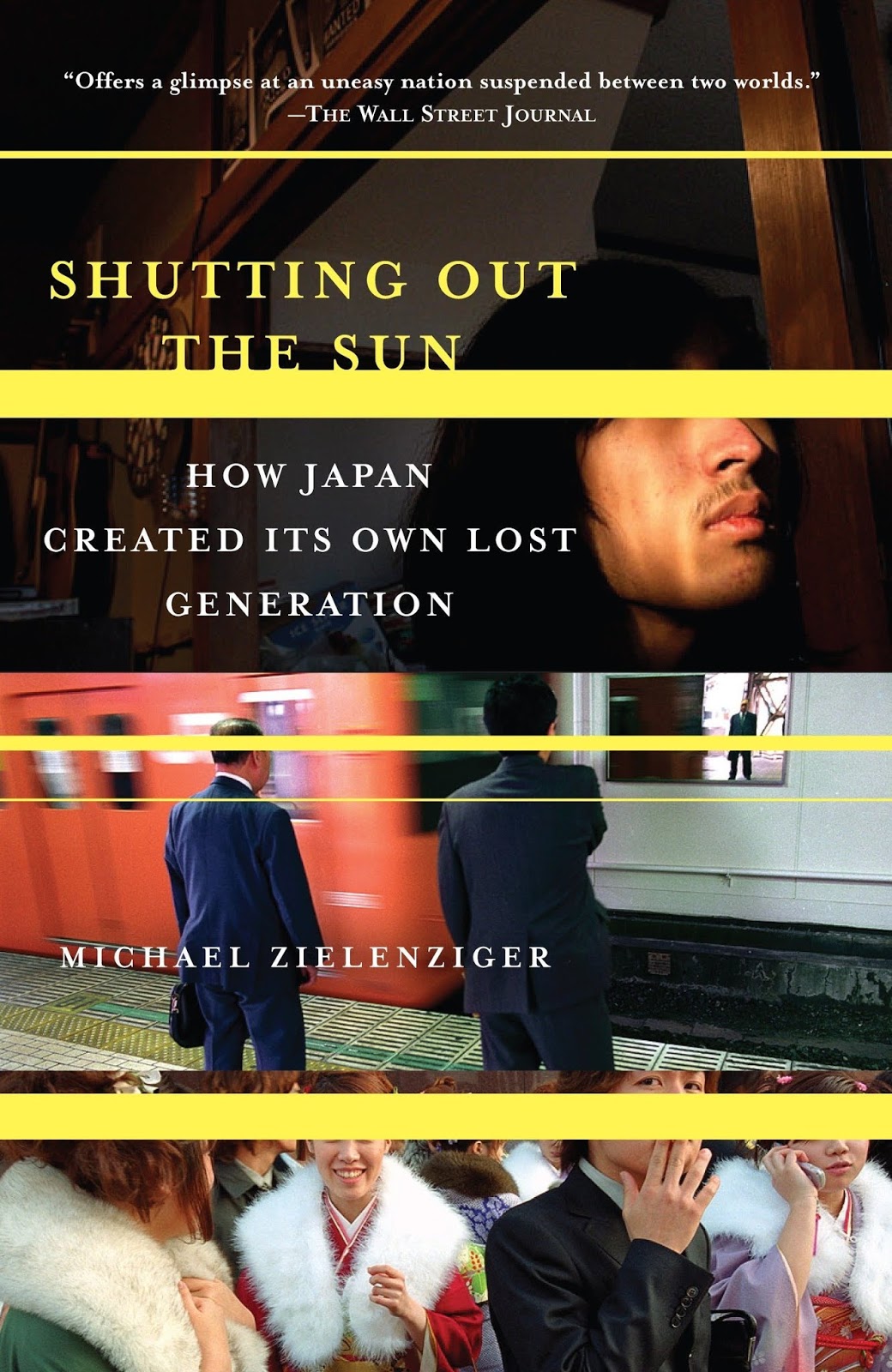
Shutting Out the Sun

Shutting Out the Sun: How Japan Created Its Own Lost Generation
© 2006 Michael Zielenziger
352 pages
Shutting Out the Sun introduces itself with what readers will assume is its subject: the plight of an increasing number of young people who, for whatever reason, choose to withdraw into their bedrooms and cease to communicate with the outside world, ignoring even their parents.  These persons, called hikkikimori,  are merely part of Shutting Out the Sun, however, and readers who venture forward expecting a study of them will find that most of the time they are out of sight, mentioned a few times after the first chapter but never examined in  fine detail.  The true subject of Shutting Out the Sun is Japan,  which in 2006 was still mired in economic stagnation and rapidly being overshadowed by India and China.    Japan is a country in a profound cultural crisis,  writes Michael Zielenziger, and if it does not adapt to the realities of 21st century globalization, it faces the danger of becoming a hikkikimori nation: one  so withdrawn from economic and diplomatic activity it may as well not exist.  

In the 1980s, Japan’s economic prowess was such that  many in the west feared its future influence.   People drove Japanese cars, their kids were obsessed with Japanese video games, and their homes were increasingly filled with goods from Sony. And then…in 1989…the future fell to pieces, at least for Japan, and it entered a recession that was still going in 2006 when Zielenziger published Shutting Out the Sun.   But it wasn’t just the economy that was struggling. Japan’’s entire society was stagnating, argues Zielenziger; the same factors that had undermined its economic growth were also  driving its young people to isolate themselves from the world,  and skyrocketing Japan’s suicide rates.   

The root of the probem, Zielenziger believes, is that Japan never really embraced liberal democracy;   its prewar order simply adopted democracy as the new way that traditional authority asserted itself. Democracy was imposed from on high, from the American military authorities and Japan’s own leaders.  Democracy was never conceived as a challenge to existing order, the way it was in America, England,  and France;   and the bones of democracy like a widespread belief in human rights distinct from government never developed.    Elements of Japanese culture which had previously bound the nation together – immense social pressure towards conformity, for instance —  continued. This time,  the Japanese people were marshalled to rebuild Japan and flourish economically.  

The urgent need to recover economically produced a distortion in Japanese culture, however;  Japanese men became obsessed with work,  developing a ‘salaryman’ approach that meant they were out of the home for the majority of the day:   they worked long hours, then socialized with their business partners late into the evening, retiring home only to sleep.   The intense pressure to succeed drove many men to drink in excess,  and their  constant absence from the home didn’t do their marriages any favors.   Zielenziger goes so far as to suggest that for the Japanese salaryman, his traditional fealty to his family has been displaced, and is now centered on his firm.  

Kids were likewise pressured to succeed, and to conform; many of the hikkimori introduced in the opening relate tales of persistence bullying enabled by authority figures who assumed verbal and physical abuse meant that the kid in question  had done something to disrupt the group.   As Japan connected to the outside world through television and the internet, however,  kids who were abused were also tortured by the fact that there were other societies out there where things weren’t like this – where  people weren’t obsessed with academic excellence all the time, where there was room in life for leisure.   The intense pressure from their peers and family, however, meant that young Japanese who wanted something different were constantly suppressed in their efforts to find it. Unable to conform and unable to stand and resist, many chose to flee – into their rooms, or  if they were old enough, into neighboring countries like Thailand or South Korea.  Even those who wanted to conform often found they couldn’t:  how could they succeed as Japan entered a recession that went on for a decade? 

That recession was largely caused by Japan’s culture of conformity, Zielenziger suggests:   Japan focused so much on itself that it did not watch the world around it, and those who wanted to try new ideas were generally suppressed. Because Japan’s status quo was so successful – growing GDP, little crime, no underclass —  any perceived challenges to it, like a poor-performing company or a new firm that threatened to disrupt things – were actively mitigated.  Firms that would have gone bankrupt for failing to adapt in the western world were instead propped up, and up and comers suppressed by the government.  So change-resistant was Japan, writes Zielenziger , that even in the early 2000s many businesses were still circulating interoffice memos by paper and only grudgingly tolerating the entrance of computers into their offices.   Email was dismissed as unprofessional.  

Zielenziger finds Korea as useful counter-example;   westerners  who first visited Korea as missionaries and doctors were not driven away;  they stayed and their interactions with Korea changed it.  Korea grew in response to its interactions with the outside world,  and despite his secular Jewish status, Zielenziger finds Korea’s embrace of Christianity particularly interesting, contending that it promoted a view of people as individual persons, not merely members of a collective, and that it further set limits to the state by defining it as something separate, instead of conflating it and society.   Korea’s democracy grew from below, instead of being imposed from above by a military hierarchy. While he does not suggest that Japan should convert to protestant Christianity,  he does wonder if Japan would have gone another way had it had more substantial interaction with the western world rather than merely taking its tools to use on behalf of a chiefly feudal order.  

As the length of this review suggests, Shutting Out the Sun  offers a lot to consider.   The problem in evaluating it, for me, is that I know very little about modern Japanese culture, either from personal experience or from other reading, so  I don’t know if this is insightful  or completely off the mark. I do know it makes for disturbing reading, between the kids walling themselves off from the world, the parents drinking or killing themselves from prolonged misery, and  the looming hints that Japan is actively dying  and no one can shake the stupor.


Posted in history, Reviews | Tagged , | 6 Comments

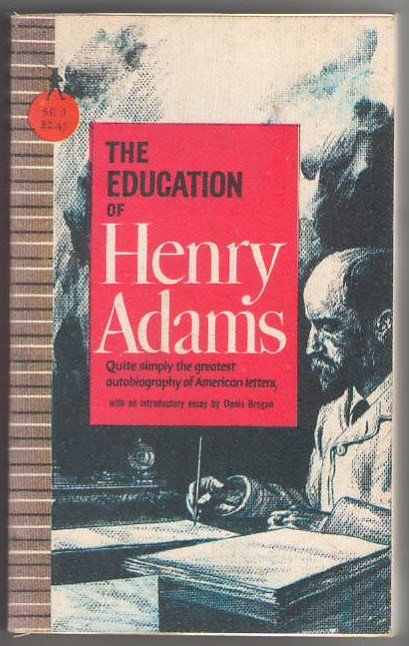
The Education of Henry Adams

The Education of Henry Adams
© 1918 Henry Adams
324 pages


Who is Henry Adams, and why would anyone read about his education?    Personally, I discovered this book through a personal interest in his family; Henry’s great-grandfather was John Adams, and his grandfather was John Quincy.    Even his father, Charles Frances, played an important role in public life as the United States’ ambassador to England, a difficult post during the War between the States.  This is quite the legacy, and The Education makes it clear how heavily that family heritage sat on Henry’s shoulders. Perhaps it’s not surprising that, during his life, he was most known as an historian and political journalist.  But An Education isn’t about historical methods or interview skills; Adams’  meaning of education has little to do with school at all.  These are more the reflections of an extremely thoughtful man whose impressions turn more and more to gloom as the 19th century runs its course and the world begins a new chapter.

When I say An Education has little do with school,  it helps that the subject absolutely hated school. He hated it as a boy, when he’d much rather be outside playing or inside reading;   he found it useless as a teenager, even after enrolling at prestigious Harvard; and  when he traveled abroad and dabbled in classes at a German university, that too he found wanting.   It probably didn’t help that he generally found himself wanting;  unlike his grandfathers who had a pivotal role to play in the creation and establishing of the early Republic,   Adams saw no place for himself. He was more a child of the 18th century, or even the 17th,  deeply stepped in literature and law, and the world was quickly changing to favor new learning — that of railroads, dynamos, and finance.   Adams’ situation in his younger life will fascinate many readers; as a boy, he does his Latin exercises in the same room that the Free Soilers and nascent Republicans are discussing politics;   later still, the teenaged Henry accompanies his father to England, where he serves as a diplomatic aide. Throughout his life, he’s ever a member of Washington society, regularly rubbing shoulders with presidents and senators — and he’s never shy to express opinions on them.

Adams, despite the burden of responsibility he felt as part of his upbringing in the young Republic’s most accomplished family,  and the  growing pessimism as he looked to the future more dominated by factories and empire,   is often funny. I don’t know if he intended to be, but what else can a reader do but chuckle when he declares plantation masters as good for nothing but “bad temper, bad manners, poker, and treason“?  In his travels abroad, he spends considerable time in England, Germany, and Italy, but France is snubbed. Enthusiastically snubbed. He wanted absolutely no French influence on his education, and “To save himself the trouble of drawing up a long list of all that he disliked, he disapproved of the whole, once for all, and shut them figuratively out of his life. France was not serious, and he was not serious in going there.””   Considering how romanticized France and especially Paris are,   Adams’ thoroughgoing scorn of the same is almost refreshing.

Although The Education of Henry Adams isn’t for everyone, if you have an interest in the 19th century,  American or European, the reflections here bear investigating.  Here is a life that began in the early Republic, its subject literally being taken by the hand to school by John Quincy Adams, and by the end of the book, the 20th century is underway with Theodore Roosevelt at the helm.  Adams’ experience during the war — the slow disintegration of order, and the horror of realizing his friends from Boston and Virginia were now killing one another with hate in their eyes —  is especially somber to read.  Abroad, too, Adams’ experience sees Germany quicken from a disorganized, lovely mess into the German Empire,  while Italy is still struggling to be born as a nation.   I couldn’t help but be sad when I realized Adams died in 1918 — he’d lived to see the worst war then imaginable turn the beautiful places he so frequently haunted in Europe into fields of death; the dynamo he viewed with fearful wonder would be the western world’s first attempt at suicide.

Related:
“Looking Back at an Education“, review of same at The Frugal Chariot

Posted in Reviews | Tagged , , , | 4 Comments