This is something of a catch-up post. I’ve been slowly reading The Dictator’s Handbook, an impressively cynical analysis of political science, and had hoped to finish it by Election Day so I could post an amusingly-timed review. Between the hurricane and my own fatigue of the topic, though, I’ve just been plodding. I need to finish it up, though, because I’ve had three library holds come in simultaneously, as well as two books arrive in the mail. Oh, and one of my preorders (Kindle) was just delivered.
In read-but-not-reviewed, during the power outage I finished re-reading Prelude to Foundation and Harry Potter and the Philosopher’s Stone. The latter is noteworthy because it’s actually the British edition. I didn’t realize how attached I was to the distinctive font and illustrations of the first American editions until I began reading that one. I bought it to see if the vocabulary was very much different in that one, but the only thing I noticed was “jumper” instead of ‘sweater” — and I don’t even know if the American first edition even used sweater! Prelude was a re-read from twelve years ago, and this time I noticed how Asimov deliberately did more world-building and sociological commentary, creating distinct regional cultures on Trantor and using it to more firmly tie the Foundation and Empire books together. New to me was David McCullough’s The Pioneers, a history of the settlement of the Ohio-Indiana region which focused on a couple of families who were instrumental in establishing its institutions. It was more biographical than topical, I thought, without much dwelling on the challenges of frontier life. Perfectly enjoyable, but not as stellar as I expect from McCullough.
And what’s up the pike? Well, I’m reading The Dictator’s Handbook and a charmingly-titled book called Un— Yourself, which mostly consists of “Stop whining and do something about it”-type advice. In holds, I’ve got Palaces for the People, on “social infrastructure”; Blood, Bones, and Butter which I will leave to your imagination because it’s more amusing that way; and Talking to Strangers. Firefly Generations is an ebook preorder that just zapped its way onto my phone, and two new books for the Pile of Doom are Big Roads (a history of the interstates) and Whole Earth Discipline, the latter a title on sustainable living that involves big cities and nuclear energy.
It’s a good thing I still don’t have internet access at home, because I wouldn’t have a chance at tackling all this were I to be distracted by youtube!
Today’s TTT should be especially fun, and perhaps more varied than these lists usually go – -we’re talking about Nonbookish Hobbies!
PC Gaming. A hobby, a vice, call it what you will; if I’d put as much time into anything as I’ve put into gaming over the years I’d be a master. I don’t know if my perfect mastery of Mafia’s vehicle physics counts. I mostly play games that let me fart around, either by exploring an open world (GTA, Mafia, RDR2) or by giving me a sandbox to play with (The Sims, SimCity 3000, ). I tend to play games I get a lot of mileage of: many of my favorites I’ve played regularly for nearly twenty years, and I don’t mean series but games themselves. (Civ3, The Sims 2,and Mafia).
Photography. Although I’m not a serious shutterbug (I don’t own a camera with detachable lenses, and I can’t tell you the first thing about exposure or shutterspeed, anything like that), I occasionally have a good eye for shots and am perfectly willing to wake up at four am on a vacation so I can take advantage of the right light. This frequently dovetails nicely with…
Hiking. Although my area of Alabama is fairly featureless, there are a few trails within driving distance and more than I can count in northern Alabama. I’ve enjoyed hiking since middle school, when I joined the Boy Scouts (ever so briefly, the local troop didn’t do much besides play kickball). A coworker of mine and I try to go out at least once a month.
Cycling. This one is more occasional, as my area isn’t particularly cycle-friendly: the few times I’ve tried cycling into town I’ve nearly been hit by large trucks and the like. I keep my eyes open for quiet country roads that I can wheel about on, though!
Singing. I don’t know if singing counts as a hobby so much, but I do it every day, and have been since I was a kid in church. I favor older musical styles that emphasize melody and lyrics, so I’m especially given to Sinatra standards, hymns, and folk songs. My interest in folk music was inspired by both Star Trek (“The Minstrel Boy”, featured in TNG “The Wounded”) and Civil War reenactments.
Cooking/baking. This is a newer hobby, something I’ve been interested in trying for years but never did until late last year when I wanted to impress a woman. I’ve been trying new recipes this year and keeping notes in an Excel spreadsheet, and am looking forward to contributing to our ongoing obesity and diabetes crises in December by giving everyone cookies.
History. “History” is an odd one because it interlaces with a lot of my other hobbies; reading being the prize example, but it’s also mixed up with my singing interests. I often listen to historical recordings, or recreations of what earlier music might’ve sounded like. For me, knowing the literature and songs that formed people’s minds in earlier decades and centuries is an important part of understanding them. I also visit history museums and sites when I can, and if I can get moving on a video project I have in mind, then history will also form the backbone of another minor hobby, since it would be the subject.
Writing has been a lifelong passion, presumably fed by my similarly-aged passion for reading. Although my brain is constantly playing with stories in my head, I absolutely hate reading every attempt at fiction I’ve ever made. Maybe it’s the equivalent of hearing yourself talk in a recording? Mostly I scratch my writing itch here, though I also do Nanowrimo from time to time.
Cinema, or “movies” if I’m not being pretentious. I know everyone likes movies, but when I’m watching I pay attention to the production side — to how shots are created, to sound design, to plotting and the like. I also enjoy watching cinema-related channels that discuss this sort of thing on youtube. I’m not much for the big blockbuster titles; I’ve seen few superhero movies since The Dark Knight Rises, and my last Avengers title was…The Avengers. My favorite films include The Philadelphia Story, Groundhog Day, and West Side Story. Not very highbrow, I know, but I like what I like. Two I’ve seen for the first time this year that I’ll absolutely watch again are Noises Off! and Clue.
PCmodding/repair. I got into messing around with PC innards after my nephew bought an oversized graphics card to upgrade his computer, and I wished I could have helped him avoid that expensive mistake. So last year I learned, and I practiced on both my PC and some older units I had lying around, replacing a hard drive here, an optical there, and upgrading several parts in my own PC. This particularly hobby has stalled in 2020 because I was saving for a new car (and am now paying for a new car), and my next potential upgrade requires buying several parts together. (If I want a better chip I need a better class of motherboard, and if I buy a new motherboard I can’t use my existing RAM, but new DDR4 sticks.) There’s also the problem of diminishing returns: the only upgrade that would have a significant and instantly noticable effect on my life would be switching to an SSD. I plan on doing this once the price for a 2-terabyte SSD isn’t so high. (Here’s hoping for black friday luck!)
So hey, it turns out having COVID is really good for working on one’s literary goals. I realized when trying to reconcile my list with goodread’s that I never reported reading The Demon’s Brood: A History of the Plantagenet Dynasty here, which was technically a TBR since I bought in March for Read of England, and then never got to it. That was a September read!
TBR Scheduled for November Atomic Awakening: A New Look at the History and Future of Nuclear Power, James Mahaffey Forgotten Continent: A New History of the New Latin America, Michael Reid
Reward Books Purchased: The Big Roads: The Untold Story of the Engineers, Visionaries, and Trailblazers Who Created the American Superhighways, Earl Swift Whole Earth Discipline: An Ecopragmatist Approach, Stewart Brand
Well, when my coworkers and I bid each other goodnight on Wednesday, we didn’t realize it would be nearly a week before we came back! Although we knew the system was headed our way, we’ve had so many gulf systems impact us this year that it was difficult getting worked up over yet another. We did the library equivalent of battening the hatches (throwing tarps over our bookcases in leak-prone areas) and went our separate ways.
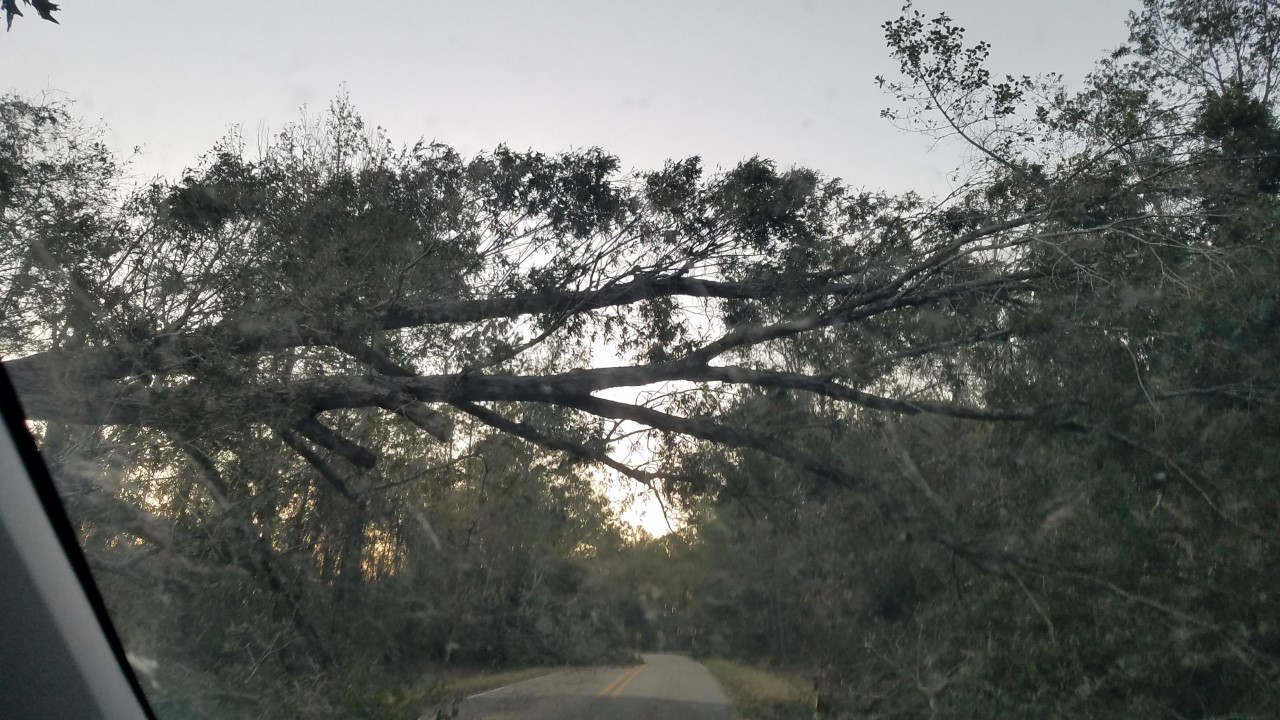
Tree slalom, soon to be added to rural sports like hunting and mudding
I fully expected Zeta to be nothing but wind and lots of rain, same as the other hurricanes that have come our way this year. The wind picked up before midnight, and we lost electricity roughly around that time. I still remember the wind from Hurricane Ivan, back in 2004, and the ominous constant popping of trees in the pine forests around my grandmother’s house. This time, the wind itself drowned out any sounds of falling timber: it sounded like the sustained rumble of a passing train, and at first I thought it was: where I live, it’s not unusual to hear the trainyard, either from passing freighters or from cars crashing into one another as a train is built. But this roar lasted nearly three hours, with more distinct bursts of wind.
While one of my housemates monitored the storm on their phone, the other pair of us stood watch on the porch in hopes of being forewarned if a tree was about to fall. The wind was exhilarating at first, but with so much stuff flying around we wound up standing just inside the house with our heads peeking out. By three o’clock, the worst in our area was over. Having been surprised by the wind, I was relieved that nothing had fallen on the house or our cars — especially my new one!
The road is completely covered by trees. That dirt area to the side goes up a hill where some people live (and who were trapped there by treefalls further up the dirt path) , but I could get around the side here.
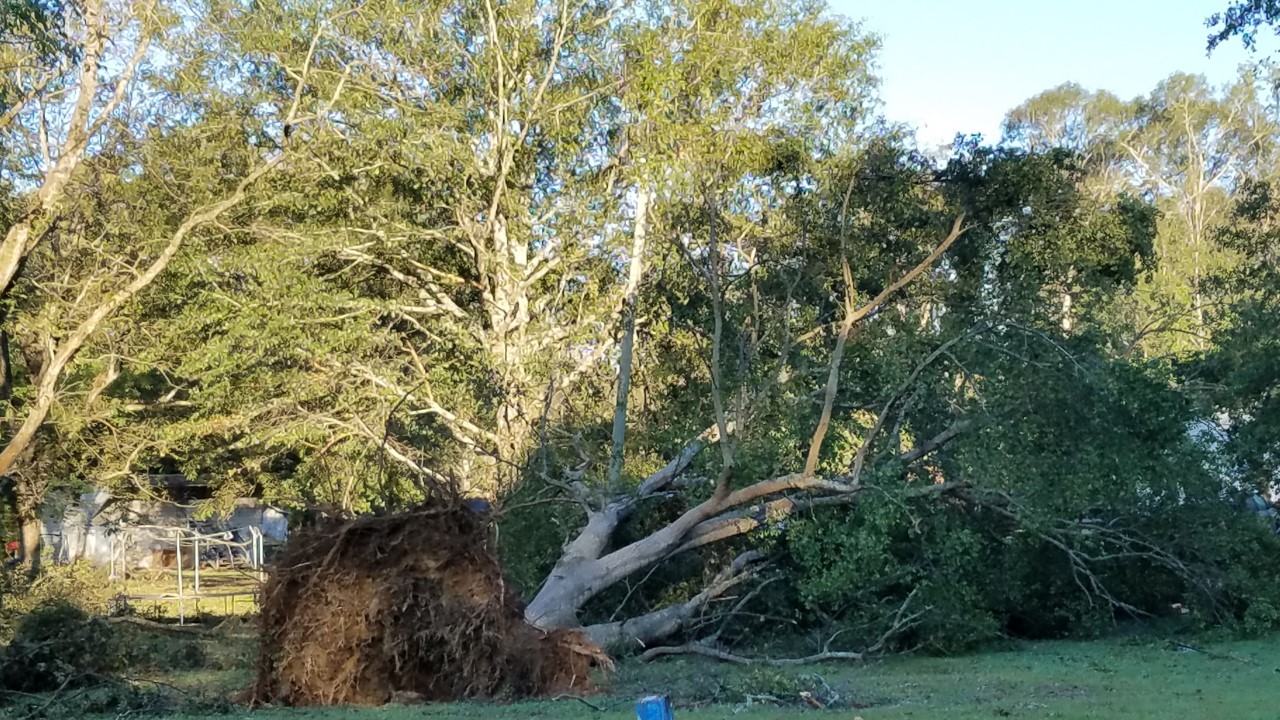
From phone calls throughout the night and early the next morning, I realized that I’d been stupidly lucky: many of my relatives had trees on their homes or cars, and at the “family home” (where my grandparents began keeping house and having kids, now one of my aunts lives there), the big shed was wiped out when the massive pecan fell. Everyone was out of power, and a lot of roads were impassible. I therefore kept put that day, reading The Pioneers by David McCullough and cooking up all the breakfast sausage in my fridge to prevent wastage. I avoided using my phone, but late that evening once I’d learned that one highway was clear, I went for a drive there to recharge. I found that one town in Elmore was apparently untouched, with its lights shining bright, so I used that to start checking on people and check in.
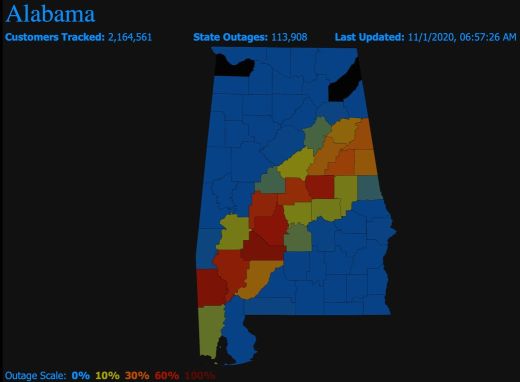
Guess what path the hurricane followed.
Because I still had water and gas, I sat far more comfortably than most who are or were still powerless: my eldest sister, for instance, is reliant on electricity for her well water, and since her county was one of the two hardest hit, she’s been having to fill up jugs of water from other places for daily cooking and cleaning, and use a propane setup to heat them. (I think for Christmas I’ll give her a rain barrel…). On Thursday night, I checked a few stores that stock camping supplies in hopes that they had a fireside percolator: they didn’t, but they might have originally. The camp stoves and propane/butane canisters were all sold out in the three places I checked. I did buy instant coffee for the first time; I found it tolerable when I tried it Friday morning.
Not even Ivan felled this many trees in our county.
My Zeta experience has been relatively mild: no damage to my home, and no serious inconveniences that I wasn’t prepared for already by having a gas cooking setup and canned goods at the ready. I rather enjoyed being able to talk to neighbors on my morning walks, who would otherwise be inside planted in front of televisions and the like, and I spent of the weekend hanging out with powerless friends and enjoying the “eat it before it thaws and ruins” feasts of sausage and the like. Part of me liked the roughing it, seeing the house lit with lamps and watching the stars come out, no longer drowned by the many amber lights of my neighborhood. That said, I was veryrelieved to come home from a night with friends on Friday night to find lights on….if only for music!
Zeta hit last night. Surreal 3 hrs, I will say. Total power loss in county. Will be days before I’m back online. No damage to my home but many friends and famy were not so lucky. I’ve been cleaning up my yard today, dragging tree sized limbs into woods. Drove to a walmart several counties away to use wifi and charge my phone on the drive. Hope to post from pc before next week.
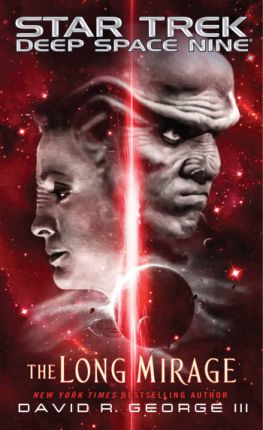
Bajor is a planet in crisis, as a sect which argues that that Prophets are not gods is growing in prominence, commingling with the revelation that one of Bajor’s moons is a construct, with an apparent connection to the wormhole. Into this controversy, Kira Nerys has re-appeared after several months missing in the wormhole, where she experienced years of another life, one spent freeing slaves in Bajor’s distant past. Onboard Deep Space Nine, things are less fractious, but trouble could be in the offing: as Quark and Ro Laren travel in search of a missing Morn, and Nog works to save a friend from oblivion, a Jem He’Dar cruiser is on course for the station from the Gamma Quadrant. Although I haven’t kept current with the Niner relaunch books since The Fall series (read in 2017-8, pub. in 2013), through recaps and a strong emphasis on character-stories, David R. George III kept me nose deep in this one.
Three separate stories hurtle along in The Long Mirage, but what invested me as a reader who knew nothing of what was going on was the characters. Kira, Ro, Quark, and Nog are the primaries here, and one of the subplot concerns the fate of Vic Fontaine, which delighted me to end. Vic is the arguably sentient lounge singer who everyone on DS9 regards as a friend, but something went wrong after the original DS9 was destroyed, and one of the threads involves both holoengineering and the Vegas mob. One of the reasons I haven’t kept current with Niner lit despite it being my favorite series is that I’m profoundly un-interested in the long-running Bajoran religious drama arc that’s been going for what seems like a decade. But because Kira had reappeared from the wormhole in the midst of it, and feeling as though she was there for a reason but uncertain what it could be, I found it compelling if only for her part in it. The B&C plots unexpectedly converge, and it’s in the Ro-Quark arc that I found the novel at its most compelling, in showing off how these characters have matured so greatly in the last ten years.
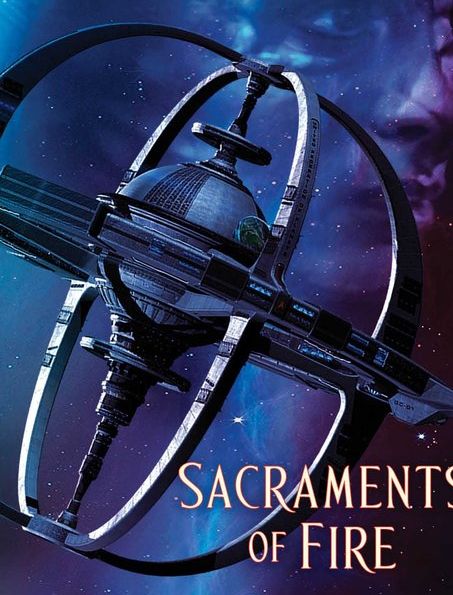
The Long Mirage is far and away my favorite Trek novel this year, something of a feat given how much of its backstory I needed to absorb through recaps and my own googling. (The book directly follows Sacraments of Fire and Ascension.) It helps to center on some of my favorite characters, of course (Kira and Ro, especially), but the amusing link between Quark’s attempts to find Morn, and Nog’s mission to recover Vic, really gave the book’s last half new energy.
Oh, and this is what the new station looks like. Love how it evokes the original!
Napoleon is an unavoidable figure of European history, and enjoys no shortage of admirers even today. For years he dominated a continent, using native talents given abundant opportunities opened by the revolution to make himself and his family into Europe’s leading royal family — for a time. Napoleon is a highly accessible survey of his his life and work, with a focus more on politics than military matters, which also examines (in brief) his enduring legacy, as l’empeurer continues to fascinate us.
Much of Bonaparte’s origins are well known to educated readers: his family upbringing on a small island named Corsica, linked to Italy by culture by annexed by France only a few years before Bonaparte’s birth. Between masters Corsica was an independent Republic, and the Bonapartes established themselves as prominent members thereof. That exercise in republican government had been crushed by the time Napoleon came of age, but it left its mark — and when he began working for his and Corsica’s future, it was through the new French Republic, in service as an artillery officer. The French revolution overthrew the nobility and church, and gave French society the chance to recreate itself. although it mostly committed itself to a prolonged spat of self-destruction. Napoleon’s rise to power through his proven talents on the battlefield during the early Wars of the Coalition is fairly boilerplate, but Forrest also introduces readers to Napoleon as a young man, a pseudo-intellectual, writing revolutionary tracts. Napoleon’s pretensions would grow once he’d become First Consul and Emperor, having himself included in the ranks of the French academy.
Napoleon is only a brief survey, so military campaigns are not considered in depth; battles like Abukir, Jena, Austerlitz, etc are dispatched in a sentence or two. Waterloo proves an exception, earning a few paragraphs. Forrest keeps context in view, providing commentary on the ever-evolving Empire, beginning as it did with a militant republic and taking on another form altogether. Forrest notes with surprise that the French people weren’t fussed in the least about the last vestiges of the Republic being scrapped and a new monarchy imposed. Possibly this owes to Napoleon’s new creature in the Empire, which mixed revolutionary ideas with some nods to the past. One example of this would be the Concordant with Rome, which ended the revolutionary efforts to destroy every aspect of Christian culture and Catholic influence from France, but at a price: the Church would henceforth be markedly subordinate to the State, and those bishops who had actively resisted the revolution were barred. Only quisling clericals were allowed to remain in their offices. Although Napoleon was not a friend of republican government or Enlightenment-era liberalism, his status as a usurper meant that he had to obtain legitimacy through compentency, and his commitment to staffing the Empire with the most able men he could find (so long as they were loyal) created the buzz of a meritocracy in Napoleonic Europe. As Forrest notes, during Napoleon’s hundred day comeback tour, l’empereur acknowledged his imperial abuses and pledged himself to the straight and narrow, resuming the good fight against the resurrected abuses of the Bourbon restoration. This, Forrest argues, is part of the Corsican’s enduring popularity in France: he was reinvented as a standard bearer of republicanism against the heavy weight of inefficient and arbitrary traditional authority in Europe.
Although I hadn’t expected to read this book (a patron ordered it via ILL and it caught my eye before I sent it back), and although I’m not a fan of Napoleon, I rather enjoyed this survey. I especially appreciated Forrest’ efforts to deliver a full picture of Napoleon, his times, and the nature of the empire he and so many others forged, rather than being bogged down with countless reviews of military maneuvers.
Scene: A visionary academic, Hari Seldon, has attracted the attention and wrath of the Emperor, and is fleeing for his life with the assistance of “Chester Hummin”, a journalist. The two men take refuge in a dismal diner and Hummin urges Seldon to help him stop the slow death of the Galactic Empire.
Quote:
“Hummin said, ‘Well, then, you’re part of the decay. You’re ready to accept failure.’ ‘What choice have I?’ ‘Can’t you try? However useless the effort may seem to you to be, have you anything better to do with your life? Have you some worthier goal? Have you a purpose that will justify you in your own eyes to some greater extent?
Seldon’s eyes blinked rapidly. ‘Millions of worlds. Billions of cultures. Quadrillions of people. Decillions of interrelationships — And you want me to reduce it to order.’ ‘No. I want you to try. For the sake of those millions of worlds, billions of cultures, and quadrillions of people. Not for the Emperor. Not for Demerzel. For humanity.’ ‘I will fail,’ said Seldon. ‘Then we will be no worse off. Will you try?’
And against his will and not knowing why, Seldon heard himself say, ‘I will try.’ And the course of his life was set.
p. 57-58, Prelude to Foundation. Isaac Asimov. Reading this at supper Tuesday night, I realized with a start that when I first read this twelve years ago, I was Hummin, full of idealism, energy, and optimism. Now I’m definitely across the table, right next to Seldon, in much need of a Hummin (or a Jordan Peterson) to lead me away from cynicism and apathy.
Back in September and early October when I was under quarantine, I didn’t have computer access, so I couldn’t take many notes or write reviews when things were fresh on my mind. I tried to post comments intermittently, but some titles I still haven’t gotten around to.
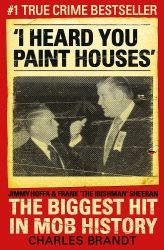
I Heard You Paint Houses, based on interviews with Bufalino associate Frank Sheerman, claims to answer the question: what happened to Jimmy Hoffa? Hoffa was an iconic labor leader in the 60s — whose mob affiliation eventually made him the eternal hide and seek champion, for 45 years running, when he disappeared in 1975. Sheeran, who became claims he became jaded to killing and taking what he needed while in combat in WW2. Already a hustler in his teens, after the war he used his position as a driver to steal part of his cargo and sell it on the side — one time emptying out an entire truck. After developing a reputation as a toughguy who knew who to respect and how to keep his mouth shut, Sheeran seems to have become a favored task-man of the Bufalino crime family boss, who later lent his services to Jimmy Hoffa, the teamsters boss who helped fund Mafia rackets and utilized their talent and tactics to help his own goals. I quickly lost interest in this after Sheeran proved more enthusiastic about sharing his apparently accomplished sex life than mob details, but plugged along until the end.
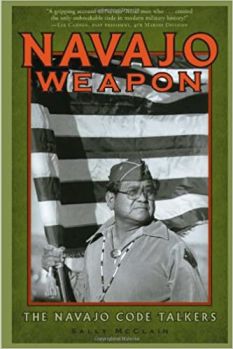
Navajo Weapon, lent to me by someone I’ve not seen since corona hit in March, is a history of the Navajo codetalkers, consisting largely of the men recounting their experiences in training and then in the field, connected with some narrative by the author, who also edited the interviews to flow chronologically. I was surprised to learn that the Army had experimented with creating a cipher based on native languages in WW1, too, and that one of the reasons the Navajo were chosen is that German ‘students’ had traveled in the US in the interwar years and begun familiarizing themselves with some eastern native languages. Navajo belonged to an entirely different lingual family, and was safe. I was pleasantly surprised to learn, according to the interviews here, that interracial/cultural incidents were minimal: only one trainer caused an issue.
Who Killed the Constitution, by historians Tom Woods and Kevin Gutzman, examines ten episodes in 20th century American history in which the rule of law was warped by political expediency or ambition to favor instead the rule of will. As the history indicates, the corrosion of the Republic into our current sad spectacle was not the work of one man, but every branch of government periodically and — consistently.
Ring of Steel covers The Great War from the German and Austrian perspective. Although I read this chiefly to learn about the German homefront, Austria-Hungary’s messy composition made a prolonged war on multiple fronts especially challenging: because the Dual Monarchy contained so many different ethnicities, many of which were eager to be at one another’s throats, the Monarchy’s military administrators had to be careful which troops they sent against which enemies: men who would be doughty and loyal on one front would be unenthused and unreliable on another. I was mildly surprised that the German government did make some tepid efforts to keep the peace, or at least keep the war restrained to a local one instead of a general conflict, but that this was overwhelmed by their desire — in the advent of Willie II undoing the work of Bismark and allowing France and Russia to become besties — to retain the one ally they had, problematic as it was. Also surprising was that Germany took France’s animus for granted, but was surprised by England’s ‘treachery’. Although this is a general history, Watson also engages in some analysis, arguing that Germany’s decision to recommit to unrestricted submarine warfare was its costliest mistake of the war. Overall, this was most impressive.
The German War by Nicholas Stargardt has a similar aim, but given the context is more depressing on the whole. Stargardt points out that Hitler was territorialiy ambitious from the beginning: in the early thirties, he presented his inner circle with various scenarios, all of which involved attacking Czechoslovakia. Regardless of whatever else happened, Czechslovakia — formed from the broken remnants of the Austrian-Hungarian empire — would be taken and its Germans joined to the fatherland. Hitler hoped that the western powers wouldn’t go to war over something as trivial as Poland, and was indignant that they did. I found The German War dispiriting, in part because it makes plain how so many Germans knew perfectly well something was happening in the east: the attitude expressed was often ‘better you than me’.
Finally, and still in Germany, I revisited Stasiland, one journalist’s account of interviewing various people who lived in Eastern Germany and whose lives were touched by the dark shadow of the Stasis, the socialists’ secret police whose network of spies and informants dwarfed that of Soviet Russia or Nazi Germany. I was introduced to the Stasi through Das Leben der Andern, the story of an accomplished Stasi man who realizes part of his regime’s corruption. The stories are mostly human interest, conveying a sense of what it was like to live under constant surveilliance and fear, to have one’s life so open to abuse and manipulation. Also explored was the weird disconnect between what socialist authorities proclaimed was truth, and what Germans subject to their rules could tell with their own eyes. The booming prosperity of western Germany, and of western Berlin, testified to the lies that would eventually bankrupt the socialist scheme and send the Union and the East German government to a long overdue grave. I was amused to see the same psychology at work in East Germany as in Nazi Germany: people saw abuses by the state, and fretted to themselves — if only Herr Hitler/Herr Honecker could see what those other men are doing!
Today the TTT is revisiting a subject from 2013, our favorite books which have been reccommended to us.
Desert Solitaire, anonymous commentator. Years ago someone suggested I read Ed Abbey’s ” Desert Solitaire”, and that book’s descriptions of the southwest were such that I had to visit it several times for myself.
The Age of Absurdity, Cyberkitten. Does a review count as a recommendation? I say it does.
Jayber Crow, The Art of Manliness essential reading list. I may have already encountered Wendell Berry before reading what became My Favorite Novel, but it’s the reason I’ve explored so much of his work since then.
Where the Crawdads Sing, everyone at The Book Bunch, the reading/tea circle I’m a part of at the library. Part nature writing, part character novel.
Inside a Dog, a priestly friend with a love for cardigan Welsh corgies.
The Death and Life of Great American Cities….this one is on every urban planning booklist out there.
Ship of Rome, Cyberkitten. The first in a fun series of ancient Roman historical naval fiction.
A Sand County Almanac, biologist friend of mine who shared it with me after I sent her a quote from Where the Crawdads Sing which was actually quotingthe Alamanc!







 Reading Freely