Present Concerns and even more Lewis quotes

Although Present Concerns’ title makes it sound as though it consists of essays by Lewis written about 1940s issues,   the contents still speak to our present day.  One of the passages, quoted to me from a friend, leapt out to me as so applicable to a world deep in the abyss of covid-19, that I had to find and buy the collection for myself immediately.  I found and relished the essay I was after (“On Living in the Atomic Age”),  along with a medley of others  — each just as quotable as the next.  Some  fall into predictable Lewisian themes: there are three on the importance of a traditional liberal education,  for instance, as Lewis writes to its importance for both the person who is strengthened by them and the effects of liberal education on preserving democracy,  but there are also the novelties, like his thoughts on sex in literature.  Lewis often turns an apparently mundane topic into a theme of greater interest; one of the essays is a reflection on bicycles, for interest,  wherein Lewis uses his evolving relationship with bicycles (un-enchantment, enchantment, disenchantment, re-enchantment) to explore how humans relate to the world in  general, including with one another in close bonds.    It’s  a fascinating little collection, and well worth finding for Lewis readers. 

DEMOCRATIC EDUCATION
“I am a democrat because I believe in the Fall of Man. I think most people are democrats for the opposite reason. A great deal of democratic enthusiasm descends from the ideas of people like Rousseau, who believed in democracy because they thought mankind so wise and good that everyone deserved a share in the government. The danger of defending democracy on those grounds is that they’re not true. And whenever their weakness is exposed, the people who prefer tyranny make capital out of the exposure.[…] I don’t deserve a share in governing a hen-roost, much less a nation. Nor do most people—all the people who believe advertisements, and think in catchwords and spread rumours. The real reason for democracy is just the reverse. Mankind is so fallen that no man can be trusted with unchecked power over his fellows. Aristotle said that some people were only fit to be slaves. I do not contradict him. But I reject slavery because I see no men fit to be masters.”

IS ENGLISH DOOMED?”
“The effect of removing this education has been to isolate the mind in its own age; to give it, in relation to time, that disease which, in relation to space, we call Provincialism. The mere fact that St Paul wrote so long ago is, to a modern man, presumptive evidence against his having uttered important truths. The tactics of the enemy in this matter are simple and can be found in any military text-book. Before attacking a regiment you try, if you can, to cut it off from the regiments on each side.”

IS HISTORY BUNK?
“‘We call a man free whose life is lived for his own sake, not for that of others. In the same way philosophy is of all studies the only free one: because it alone exists for its own sake’”

There will always be people who think that any more astronomy than a ship’s officer needs for navigation is a waste of time. There will always be those who, on discovering that history cannot really be turned to much practical account, will pronounce history to be Bunk. Aristotle would have called this servile or banausic; we, more civilly, may christen it Fordism.

ON CHIVALRY
“The medieval ideal brought together two things which have no natural tendency to gravitate towards one another. It brought them together for that very reason. It taught humility and forbearance to the great warrior because everyone knew by experience how much he usually needed that lesson. It demanded valour of the urbane and modest man because everyone knew that he was as likely as not to be a milksop. In so doing, the Middle Ages fixed on the one hope of the world. It may or may not be possible to produce by the thousand men who combine the two sides of Launcelot’s character. But if it is not possible, then all talk of any lasting happiness or dignity in human society is pure moonshine. […] If we cannot produce Launcelots, humanity falls into two sections—those who can deal in blood and iron but cannot be ‘meek in hall’, and those who are ‘meek in hall’ but useless in battle—for the third class, who are both brutal in peace and cowardly in war, need not here be discussed.

VARIOUS AND SUNDRY

“Friends are not primarily absorbed in each other. It is when we are doing things together that friendship springs up—painting, sailing ships, praying, philosophising, fighting shoulder to shoulder. Friends look in the same direction. Lovers look at each other: that is, in opposite directions. To transfer bodily all that belongs to one relationship into the other is blundering.”

“The true aim of literary studies is to lift the student out of his provincialism by making him ‘the spectator’, if not of all, yet of much, ‘time and existence’. The student, or even the schoolboy, who has been brought by good (and therefore mutually disagreeing) teachers to meet the past where alone the past still lives, is taken out of the narrowness of his own age and class into a more public world. He is learning the true Phaenomenologie des Geistes; discovering what varieties there are in Man.

“There is in all men a tendency (only corrigible by good training from without and persistent moral effort from within) to resent the existence of what is stronger, subtler, or better than themselves. In uncorrected and brutal men this hardens into an implacable and disinterested hatred for every kind of excellence.”

“Democracy demands that little men should not take big ones too seriously; it dies when it is full of little men who think they are big themselves.”

“If you want a man to refuse the nasty medicine that he really needs, there is no surer way than to ply him daily with medicines no less nasty which he perceives to be useless.”

“In the last few years I have spent a great many hours in third-class railway carriages (or corridors) crowded with servicemen. I have shared, to some extent, the shock. I found that nearly all these men disbelieved without hesitation everything that the newspapers said about German cruelties in Poland. They did not think the matter worth discussion: they said the one word ‘Propaganda’ and passed on. This did not shock me: what shocked me was the complete absence of indignation. They believe that their rulers are doing what I take to be the most wicked of all actions—sowing the seeds of future cruelties by telling lies about cruelties that were never committed. But they feel no indignation: it seems to them the sort of procedure one would expect. This, I think, is disheartening. But the picture as a whole is not disheartening. It demands a drastic revision of our beliefs. We must get rid of our arrogant assumption that it is the masses who can be led by the nose. As far as I can make out, the shoe is on the other foot. The only people who are really the dupes of their favourite newspapers are the intelligentsia. It is they who read leading articles: the poor read the sporting news, which is mostly true. Whether you like this situation or not depends on your views.
Posted in Reviews, Society and Culture | Tagged , , , | 9 Comments

Diabolical fragments: selections from Screwtape

I recently re-read The Screwtape Letters for Advent, and would have posted a review but realized I rather liked the draft review I’d written in 2013 more, so now I’m trying to graft the best of one onto the other, and we’ll see how it turns out. In the meantime, here are some choice quotes!

“Think of your man as a series of concentric circles, his will being the innermost, his intellect coming next, and finally his fantasy. You can hardly hope, at once, to exclude from all the circles everything that smells of the Enemy, but you must keep on shoving all the virtues outward until they are finally located in the circle of fantasy, and all the desirable qualities inward into the Will. It is only so far as they reach the Will and are there embodied in habits that the virtues are really fatal to us.” 

“It is, no doubt, impossible to prevent his praying for his mother, but we have means of rendering the prayers innocuous. Make sure they are always very ‘spiritual’, that he is always concerned with the state of her soul and never wit her rheumatism. Two advantages will follow. In the first place, his attention will be kept on what he regards as her sins, by which, which a little guidance from you, he can be induced to mean any of her actions which are inconvenient or irritating to himself. […] In the second place, since his idea about her soul will be very crude and often erroneous, he will, in some degree, be praying for an imaginary person, and it will be your task to make that imaginary person daily less and less like the real mother.[…]   In time, you may get the cleavage so wide that no thought or feeling from his prayers for the imagined mother will ever flow over into his treatment of the real one.” 

“By the very act of arguing, you awake the patient’s reason; and once it is awake, who can forsee the result?  Even if a particular train of thought can be twisted so as to end in our favour, you will find that you have been strengthening in your patient the fatal habit of attending to universal issues and withdrawing his attention from the stream of immediate sense experiences. Your business is to fix  his attention on the stream. Teach him to call it ‘real life’ and don’t let him ask what he means by ‘real’.” 

“[…]the safest road to Hell is the gradual one – the gentle slope, soft underfoot, without sudden turnings, without milestones, without signposts.”  

“Your patient has become humble; have you drawn his attention to the fact? All virtues are less formidable to us once the man is aware that he has them, but this is especially true of humility. Catch him at the moment when he is really poor in spirit and smuggle into his mind the gratifying reflection, ‘By jove! I’m being humble’, and  almost immediately pride – pride at his own humility – will appear.” 

“[…] nearly all vices are rooted in the future. Gratitude looks to the past  and love to the present; fear, avarice, lust, and ambition look ahead.” 

“Men are not angered by mere misfortune but by misfortune conceived as injury. And the sense of injury depends on the feeling that a legitimate claim has been denied. The more claims on life, therefore, that your patient can be induced to make, the more often he will feel injured and, as a result, ill-tempered.” 

Posted in quotations | Tagged , , | 1 Comment

Wisdom Wednesday: Live despite Death

Recently a friend was kind enough to bring this article to my attention. It’s from C.S. Lewis, written in 1948 to address the growing fears of his contemporaries, who were shaken by the spectre of Hiroshima and unnerved by the growing tensions between the United States and the Russians. At any moment the world could go up in a radioactive puff: what were we then to do? The below passage consists of excerpts from Lewis’ full article. I found this exact arrangement online, and have since read the essay in full. It’s worth finding!

ON LIVING IN THE ATOMIC AGE

In one way we think a great deal too much of the atomic bomb. ‘How are we to live in an atomic age?’ I am tempted to reply: ‘Why, as you would have lived in the sixteenth century when the plague visited London almost every year, or as you would have lived in a Viking age when raiders from Scandinavia might land and cut your throat at night; or indeed, as you are already living in an age of cancer, an age of syphilis, an age of paralysis, an age of air raids, an age of railway accidents, an age of motor accidents.

In other words, do not let us begin by exaggerating the novelty of our situation. Believe me, dear sir or madam, you and all whom you love were already sentenced to death before the atomic bomb was invented… It is perfectly ridiculous to go about whimpering and drawing long faces because the scientists have added one more chance of painful and premature death to a world which already bristled with such chances and in which death itself was not a chance at all, but a certainty.

If we are all going to be destroyed by an atomic bomb, let that bomb when it comes find us doing sensible and human things—praying, working, teaching, reading, listening to music, bathing the children, playing tennis, chatting to our friends over a pint and a game of darts—not huddled together like frightened sheep and thinking about bombs. They may break our bodies (a microbe can do that) but they need not dominate our minds…

What the atomic bomb has really done is to remind us forcibly of the sort of world we are living in and which, during the prosperous period before, we were beginning to forget. And this reminder is, so far as it goes, a good thing. We have been waked from a pretty dream, and now we can begin to talk about realities…

It is our business to live by our own law not by fears: to follow, in private or in public life, the law of love and temperance even when they seem to be suicidal, and not the law of competition and grab, even when they seem to be necessary to our own survival. For it is part of our spiritual law never to put survival first: not even the survival of our species. We must resolutely train ourselves to feel that the survival of Man on this Earth, much more of our own nation or culture or class, is not worth having unless it can be had by honorable and merciful means.

Nothing is more likely to destroy a species or a nation than a determination to survive at all costs. Those who care for something else more than civilization are the only people by whom civilization is at all likely to be preserved. Those who want Heaven most have served Earth best. Those who love man less than God do most for man….

Let the bomb find you doing well.

Posted in quotations | Tagged | 5 Comments

The 12 Days of Christmas Book Tag

Ruth at A Great Book Study shared a fun little book game called “The Twelve Days of Christmas”, where a book is used to fit the lyrics of the song. She did a Little House on the Prairie spin! I had to try it out.

A Partridge in a Pear Tree — a book that involves agriculture
The Unsettling of America, Wendell Berry

2 Turtledoves — book about a long-lasting relationship
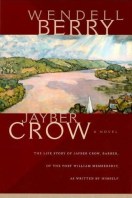
Jayber Crow, Wendell Berry.

3 French Hens — a book that takes place in France
A Far Better Rest, Susanne Alleyn. (A retelling of Tale of Two Cities from Sydney Carton’s perspective.)

4 Calling Birds — a book where people talk on the phone
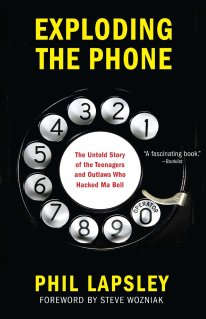
Exploding the Phone: The Untold Story of the Teenagers and Outlaws who Hacked Ma Bell, Phil Lapsley

5 Golden Rings — a book with multiple romances
Gone with the Wind, Margaret Mitchell. In Scarlett’s case…her husbands, Ashley, and herself.

6 Geese A-laying: a book with a birth or that features babies
The Lost Gospel of Mary, Frederica Mathews-Green.

miriam

7 Swans A-swimming: a book where someone goes swimming:
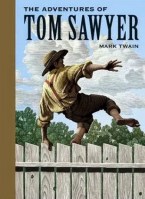
Tom Sawyer, Mark Twain

8 Maids A-Milking — a book with cows
Cattle: An Informal Social History, Laurie Winn Carlson

9 Ladies Dancing — a book with a dance scene
Pride and Prejudice, Jane Austen

10 Lords A-leaping — a book about athletes
For the Love of the Game, Michael Shaara. An aging pitcher who’s about to be put out to pasture has one last game to prove himself.

11 Pipers Piping — a book with someone playing a musical instrument
Frank: The Voice, James Kaplan

Feeling the words, and remembering how Billie could tell you her whole life story in the glide of a note, Frank began to sing the lyrics as if he really meant them, and something happened.

The girls, dancing with their dates, began to stop mid-step and stare at him.

12 Drummers Drumming: a book with characters in the military
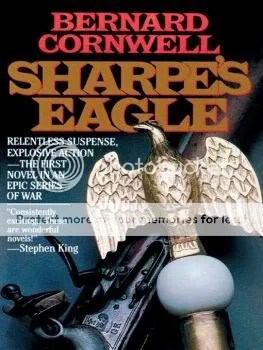
Sharpe’s Eagle, Bernard Cornwell.

Posted in General | Tagged | 3 Comments

Books on my Winter TBR

This week, the Artsy Reader Girl is taking a look at our Top Ten Books on Winter TBRs! What are you reading as Christmas approaches and hope for a corona-free future looms?

Ends of the Earth: The Polar Regions of the World, Isaac Asimov. Ho, ho, ho.

In Search of Zarathrusta: Across Iran and Central Asia in Search of the World’s First Prophet, Paul Kriawaczek. Hopefully an introduction to the highly impactful but often overlooked influence of Zoroastrianism on global faith.

Heaven and Hell: A History of the Afterlife, Bart Ehrman. Based on reviews I suspect this won’t be nearly as comprehensive as its sweeping title suggests, but we’ll see.

The World Ending Fire, Wendell Berry. Collected essays.

Live Not by Lies: A Manual for Christian Dissidents, Rod Dreher.

Mama’s Last Hug: Animal Emotions and What They Tell Us About Ourselves, Frans de Waal.

The Old Man and the Boy, Robert Ruark

Rebecca, Daphne de Maurier.

Forgotten Continent: A New History of Latin America, Michael Reid

Star Trek: The Weight of Worlds, Greg Cox. There’s always Star Trek.

Posted in General | Tagged | 13 Comments

Nutcracker novel giveaway!

Fellow book blogger Marian H is hosting a giveaway for her new book, Drosselmeyer’s Dream, a fantasy novel inspired by The Nutcracker. How perfect for Christmas! I haven’t visited this story since childhood, so I’m curious myself to see what it involves…

Posted in General | 3 Comments

You are not so smart, and animals are not so dumb: a science twofer

Last week I read You Are Not So Smart, an often interesting if sometimes trivial review of how mental shortcuts get us in trouble. My reading of Suspicious Minds led into this, and they shared some common ground. The shortcuts assayed are not as obvious as prejudice and logical fallacies, though those do pop up. All told, there are nearly fifty subjects covered, to varying length and skill — ranging from the genuinely interesting to the somewhat obnoxious. Think of the series, “Adam Ruins Everything” to get a sense of the tone of some of these. Some of the bright lights were the article on priming, or how we’re subconsciously manipulated , and the ever-worth-contemplating Dunning-Kreuger effect. I appreciated the collection on the whole, because no amount of reminders about our mental foibles is ever enough, whether we receive nudges through quotes and quips or in this case through pop-science articles. Here we are reminded of the fluidity of memory; of how rarely other people actually think about us, and the absurdity of constantly dwelling on how we’re perceived by others; and the ease in which we slip into conformity with the slightest pressure — conforming even when we attempt to rebel.

More generally engaging, but offering about the same amount of content in a different subject, was Peter Wohlleben’s Hidden Lives of Animals. Wohlleben is a German forester whose decades spent studying and working for the health of intact woodlands was put to excellent use in The Hidden Lives of Trees, probably my favorite science read of 2019. His take on animals’ interior lives — not just their emotions, but their sensations and the commonalities between our experiences — is not as stellar. There’s no shortage of interesting topics covered here, but there are so many and they’re dispatched with such haste that I left disappointed. While Wohleben is a talented writer and observer, that haste also resulted in anthropomorphizing his subjects here all too often, as when he suggested that dogs are modest and turn away when they poop so they can pretend you’re not watching them. (Or, perhaps since they’re in a vulnerable position, they’re turning their backs to an entity they’re sure won’t attack them to better monitor threats from other directions. This is my own guess, not that I’ve ever seen a dog turn away from me to poop.) Here contained are many entertaining stories about animals matching human expressions of emotion, and often shadows of purpose and intent; Wolhleben uses them to assert that emotions are the language of the unconscious, that instinct and will are not nearly as cleanly-cut as we’d like. I suspect this book will prompt me to read How Emotions are Made (one of my dust-gathering science TBR titles) sooner than later.

Forthcoming: a review for Spillover, and I’m hoping to add Frans de Waal’s book on animal emotions and Asimov’s book on the polar regions of the world to finish up my science reading for the year.

Posted in Reviews, science | Tagged , | 5 Comments

Christmas Tales and Counting Buzzards

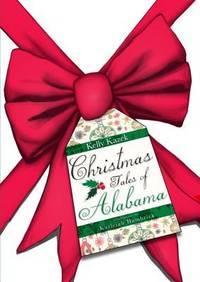
Christmas Tales collects various human interest stories around the State of Alabama that have a Christmas connection — though perhaps human interest isn’t the right word, seeing as many of these stories involve animals! The stories were collected by a journalist, Kelly Kazek, who traveled throughout the state who talk to those who remember certain figures and events. As one might expect from an Alabama collection, authors like Harper Lee, Truman Capote, and Fannie Flagg make appearances; but so do more unexpected celebs like Glenn Miller, and these are far outnumbered by the far more humble subjects. These include Walt Kagle, a rural weatherman who made preternaturally accurate predictions; a dog named Fred who became the town mascot, complete with a newspaper column; a ‘local’ reindeer that made a splash on the big screen when it starred in Prance; and numerous others. The stories are all on the sweet, sentimental side, often featuring the kindness of strangers towards one another. It made for cozy, light Christmas reading and gave me a few leads to pursue in a project I’m planning, to find and visit a point of interest in every one of Alabama’s 67 counties.

In a similar vein but far shorter was Kathryn Tucker Windham’s Count Those Buzzards, a small collection of folk superstitions. The title comes from a belief that one could tell one’s fortune by the number of buzzards flying around, in a he-loves-me-he-loves-me-not sort of fashion. I’ve never heard of the majority of these, and was amused by many of the beliefs, wondering where on earth they could have com from. Windham includes blank pages at the end of the collection for writing down other superstitions. I read this largely because Windham is a Selma luminary, very fondly remembered nearly ten years after her death. She was a journalist, photographer, keeper and teller of stories.

Tagged , , , | 6 Comments

Wisdom Wednesday: Now will never come again

This past month some friends and I have been sharing, anonymously, thoughts on the pandemic and its influence on our growth as people — reflecting on how it’s changed us, how we’ve risen to the challenge (or not). I ended my written reflection by commenting that I hoped 2020 had made me take to heart the lesson offered by Robert Merrick in the 17th century, a lesson that Jean-Luc Picard also offered in the 24th.

Gather ye rosebuds while ye may,
   Old Time is still a-flying;
And this same flower that smiles today
   Tomorrow will be dying.

The glorious lamp of heaven, the sun,
   The higher he’s a-getting,
The sooner will his race be run,
   And nearer he’s to setting.

That age is best which is the first,
   When youth and blood are warmer;
But being spent, the worse, and worst
   Times still succeed the former.

Then be not coy, but use your time,
   And while ye may, go marry;
For having lost but once your prime,
   You may forever tarry.

Posted in quotations | Tagged | Leave a comment

Silent Night: The Christmas Truce

Silent Night: The Remarkable Story of the Christmas Truce
© 2002 Stanley Weintraub
240 pages

One of the most extraordinary stories to come out of the Great War is that of the Christmas Truce, a spontaneous outbreak of caritas in which English, Scottish, and German soldiers decided to stop fighting in observance of the holiday. It’s a bit difficult to sing about peace on Earth, and goodwill towards men while lining up artillery shots on them. The peace was not one ordered or condoned by leadership, but one that stemmed from the fighting men’s own moral convictions, and recognition of the insanity of this conflict that was only a few months old. Why should an English machinist want to murder a German baker, or a German longshoreman do violence to a French carpenter, just because some old ass with a mustache said? Let the Asquiths and Wilhelms live in the mud and dodge rats and kill each other if they want war.

Silent Night is replete with heartwarming anecdotes about men recognizing one another as fellow Christians and laying down their arms, sometimes advancing into the unknown middle ground with gifts in hand and only sweet hope defending them from the other side’s bullets. As such, it makes splendid Christmas reading for those who enjoy history: as a history book in its own right, however, it’s short on context and general narrative. We just read about one instance after another until at the end, Weintraub goes into an interesting bit of alt-history speculation, pondering what might have happened if Christ had triumphed over Caesar and the Christmas Truce had led to a general armistice and peace talks. There’s no connections drawn to Christian pacifism or anything like that, just the record of instances. What I most appreciated about the history, though, was recognizing that the Christmas truce was spontaneous and bottom-up: fighting simply petered out, and as different sectors fell quiet and began to get chummy with the other side, other units took inspiration from that and observed the spirit of Christmas as well. (And observe they did, with singing, drinking, and gift-giving!)

Two titles exploring resistance to the war from the front:

Related:
Conscience: Two Pacifists, Two Soldiers, One Family
To End All Wars: A Story of Loyalty and Rebellion

Posted in history, Reviews | Tagged , | 5 Comments